EP0814628A2 - Vorrichtung und Verfahren zur mobilen Kommunikation von Arbeitsmaschinen - Google Patents
Vorrichtung und Verfahren zur mobilen Kommunikation von Arbeitsmaschinen Download PDFInfo
- Publication number
- EP0814628A2 EP0814628A2 EP97105839A EP97105839A EP0814628A2 EP 0814628 A2 EP0814628 A2 EP 0814628A2 EP 97105839 A EP97105839 A EP 97105839A EP 97105839 A EP97105839 A EP 97105839A EP 0814628 A2 EP0814628 A2 EP 0814628A2
- Authority
- EP
- European Patent Office
- Prior art keywords
- communication
- data
- interface
- radio
- transmission protocol
- Prior art date
- Legal status (The legal status is an assumption and is not a legal conclusion. Google has not performed a legal analysis and makes no representation as to the accuracy of the status listed.)
- Granted
Links
Images
Classifications
-
- H—ELECTRICITY
- H04—ELECTRIC COMMUNICATION TECHNIQUE
- H04W—WIRELESS COMMUNICATION NETWORKS
- H04W88/00—Devices specially adapted for wireless communication networks, e.g. terminals, base stations or access point devices
- H04W88/02—Terminal devices
- H04W88/06—Terminal devices adapted for operation in multiple networks or having at least two operational modes, e.g. multi-mode terminals
Definitions
- the invention relates to a device and a method for mobile communication of work machines, consisting of a first computer terminal connected to a work machine, terminal software, a communication interface connected to the computer terminal with a radio data interface, and a second computer terminal, terminal software, one connected to the computer terminal Communication interface with a radio data interface, the computer terminals exchanging data with one another via radio.
- the communication interfaces use a standardized transmission protocol for the transmission of data and the communication interfaces each have a plurality of standardized transmission protocols for a plurality of communication methods and use the appropriate transmission protocol for the selected communication method.
- the communication interface has the function of inserting the user data into the standardized transmission protocol of the communication method used in each case.
- the user data transmitted in digital form can be assigned and processed further by the receiving unit in accordance with the use.
- Mobile communication can take place both between machines and with one or more control centers.
- the communication methods used for mobile communication can be carried out manually, for example by actuating a selector switch, using a keyboard or in some other way. It is also conceivable to automate the selection based on predetermined decision parameters.
- the decision parameters here are the availability of a radio line, transmission quality, costs, amount of data that can be transmitted individually or in combination and different weightings, which are processed by a corresponding software program and where, after definition of a communication method, the communication interface uses the corresponding standardized transmission protocol by means of an appropriate instruction.
- the defined transmission protocol consists of at least one function block filled with user data to be transmitted and further upstream, intermediate or downstream function blocks.
- further computer terminals can participate in the communication.
- One of the computer terminals can be organized as a control center or central unit for the communication from or with other computer terminals, which means that certain display, Evaluation, command and control functions are available which can be transmitted via the mobile communication to one or more of the computer terminals participating in the mobile communication.
- One or more of the computer terminals can optionally also be releasably connected to the work machine or the control center together with the terminal software and the communication interface with a radio data interface.
- Such a portable computer terminal makes it possible to use a computer terminal on several different machines for mobile communication.
- the method according to the invention consists of the method steps of selecting one from a plurality of communication methods, entering the user data to be transmitted from a communication interface into a transmission protocol defined for the selected communication method, fitting the defined transmission protocol into the predefined native link layer, for example for the Modacom method, and to transmit the complete Native Link Layer to the receiving device.
- a transmission protocol defined for the selected communication method for example for the Modacom method
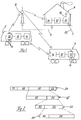
- FIG. 1 shows the mobile work vehicles 2, 4 and a control center 6, which are in radio communication with one another directly or via a radio communication aid, such as the radio tower 8, or at least partially ground-based transmission means such as cable 9.
- a radio communication aid such as the radio tower 8
- at least partially ground-based transmission means such as cable 9.
- a radio communication aid such as the radio tower 8
- at least partially ground-based transmission means such as cable 9.
- Each unit participating in the mobile communication is connected to a computer terminal 10 including terminal software, a communication interface 12 connected to it and a data radio interface 14.
- the computer terminals 10 are themselves in turn connected to a periphery via one or more connecting lines 16, wherein the periphery can consist of sensors, actuators and / or input and output and storage media on the machine side.
- the data available in the computer terminal 10 such as the current position, operating data of the work machine, fill levels of operating resources, fill levels of collection containers, order completion status, defect reports, etc., can be automatically software-controlled as user data, made available for transmission by the operator of the respective work machine or by radio remote query will.
- control center 6 In the same way as, for example, operating data from mobile units, instructions, queries, evaluations, cross-references or other data can be provided in a control center 6 for the communication with the mobile work machines 2, 4 for the communication.
- the computer terminal 10 of the control station 6 has lines 18 to connected input / output and / or storage media, not shown, or connections 20 to external host computers, on which, for example, expert systems are available for access by the computer terminal 10 of the operator 6 stand.
- the user data are transmitted from the computer terminal 10 to the communication interface 12, which enters the user data into the transmission protocol 50 required for the respectively selected transmission method by means of a corresponding radio data interface.
- the definition of a transmission protocol can include different areas, which can be conceptually divided into two categories: for example, on the first application-specific level it is possible to define the scope of all information that can be transmitted, such as telemetry data, operational congestion information, disposition data, process data and information for communication control, or methods of assigning digital data to information can be defined, such as at which position in the user data packet which information is contained.
- the formatting of the information for example in binary code or in ASCII format, or the possible direction of transmission for information from a mobile work vehicle to a specific other mobile vehicle or to a control center or from a control center to one or more specific work vehicles can also be defined will.
- These examples of the possible definitions by a transmission protocol are not exhaustive, but are only meant as examples. These definitions are independent of the physical transmission method and only refer to the user data.
- the physical transmission method requires a communication method-specific transmission protocol, which is defined by the transmission method selected in each case.
- the transmission protocol is set up for any physical transmission method and has no logical connection to it, although it must be assumed that the physical transmission method is packet-oriented, such as Modacom or Mobitex.
- FIG. 2 shows an exemplary structure of an application-specific transmission protocol 50.
- the application-specific transmission protocol 50 is composed of a sequence of bits, the respective serial number of which is assigned a certain defined meaning. The number of bits used for a particular element of the transmission protocol should be proportionate to the variance of the potential information transmitted with the defined bit sequence.
- the application-specific transmission protocol 50 represents the session layer, which is divided into the elements address 52 and user data 54.
- the user data 54 as the presentation layer in turn is divided into a sub-identifier 56 and the application-specific data 58, which represent as an application layer .
- the conversion of the user data from the user dialog can be carried out in the application-specific transmission protocol using appropriately programmed software.
- the application-specific transmission protocol 50 must be embedded in a communication method-dependent, communication method-specific transmission protocol 62, which is in each case specific for the selected communication method.
- further transmission-specific data such as the length of the data record to be transmitted, transmitter identification, transmission time etc. are entered in the communication method-specific transmission protocol 62.
- the native link layer 64 is defined within the communication-specific transmission protocol 62, in which further information fields 66, 68 and 70 are defined.
- FIG. 2 relates to the configuration of an application-specific one Transmission protocol 50 in a Modacom communication method, but the system described can be transferred to other communication methods without difficulty by a person skilled in the art.
- the user data embedded in the communication-specific transmission protocol 62, 64 can then be transmitted to the receiving station 14 via the data radio modem or adapter corresponding to the selected communication method will.
- the receiving points 14, which consist of the communication hardware and the data interface communicate via a communication method-specific transmission protocol 62, which enables a conversion into the application-specific transmission protocol 50 by the communication interface 12.
- the user data can then be read out from the application-specific transmission protocol 50 without difficulty.
Landscapes
- Engineering & Computer Science (AREA)
- Computer Networks & Wireless Communication (AREA)
- Signal Processing (AREA)
- Mobile Radio Communication Systems (AREA)
- Communication Control (AREA)
Abstract
Description
- Die Erfindung betrifft eine Vorrichtung sowie ein Verfahren zur mobilen Kommunikation von Arbeitsmaschinen, bestehend aus einem mit einer Arbeitsmaschine verbundenen ersten Computerterminal, einer Terminalsoftware, einer mit dem Computerterminal verbundenen Kommunikationsschnittstelle mit einem Datenfunkinterface, sowie einem zweiten Computerminal, einer Terminalsoftware, einer mit dem Computerterminal verbundenen Kommunikationsschnittstelle mit einem Datenfunkinterface, wobei die Computerterminals miteinander über Funk Daten austauschen.
- Aus der DE 195 14 223 ist es bekannt, zwischen Arbeitsmaschinen und einem Leitstand in Form eines Leitrechners Daten über Funk auszutauschen. Dazu sind die zur Teilnahme am Datenaustausch vorgesehenen Arbeitsmaschinen sowie der Leitstand jeweils mit einem Computerterminal sowie zugehöriger Terminalsoftware, einer mit dem Computerterminal verbundenen Kommunikationsschnittstelle mit einem Datenfunkinterface und geeigneten Funkgeräten und -antennen zur Funkübertragung der Nutzdaten ausgestattet. In der genannten Schrift wird stillschweigend vorausgesetzt, daß sich die Funkübertragung eines einzigen Kommunikationsverfahrens bedient. In der Praxis zeigt sich jedoch, daß es verschiedene Kommunikationsverfahren gibt wie beispielsweise Modacom, Mobitex, GSM, SMS, Betriebs- oder Bündelfunk, die unter jeweils vorgegebenen Betriebsbedingungen Vorteile, aber auch Nachteile aufweisen können. So kann es passieren, daß aufgrund geographischer oder baulicher Gegebenheiten oder wegen Bewuchses mit Bäumen die Funkkommunikation gestört ist, keine freie Leitung erreichbar ist, aufgrund der physikalischen Eigenschaften des Übertragungsverfahrens wie beispielsweise der Wellenlänge nur eine beschränkte Menge von Daten in einer bestimmten Zeit übertragen werden kann oder bestimmte Kommunikationsverfahren aufgrund der Gebührenstruktur des Service-Providers teurer sind als andere Verfahren. So ist es wünschenwert, bei der mobilen Kommunikation nicht nur auf ein bestimmtes Kommunikationsverfahren festgelegt zu sein.
- Es ist deshalb die Aufgabe der vorliegenden Erfindung, eine Vorrichtung und ein Verfahren zu schaffen, das eine mobile Kommunikation von Arbeitsmaschinen untereinander oder mit einem Leitstand ermöglicht, das unterschiedliche Kommunikationsverfahren ermöglicht.
- Die Aufgabe wird gelöst, indem die Kommunikationsschnittstellen für die Übertragung von Daten ein standardisiertes Übertragungsprotokoll verwenden und die Kommunikationsschnittstellen jeweils über mehrere standardisierte Übertragungsprotokolle für eine Mehrzahl von Kommunikationsverfahren verfügen und zum gewählten Kommunikationsverfahren das jeweils passende Übertragungsprotokoll verwenden. Die Kommunikationsschnittstelle hat die Funktion, die Nutzdaten in das standardisierte Übertragungsprotokoll des jeweils eingesetzten Kommunikationsverfahrens einzufügen. Bei standardisiertem Übertragungsprotokoll können die in digitaler Form übertragenen Nutzdaten von der empfangenden Einheit verwendungsgerecht zugeordnet und weiterverarbeitet werden. Die mobile Kommunikation kann dabei sowohl zwischen Arbeitsmaschinen untereinander als auch mit einem oder mehreren Leitständen erfolgen.
- Die Kommunikationsverfahren, die für die mobile Kommunikation eingesetzt werden, können manuell, beispielsweise durch Betätigen eines Wählschalters, einer Tastatureingabe oder auf sonstige Weise erfolgen. Es ist auch denkbar, die Auswahl nach vorgegebenen Entscheidungsparametern zu automatisieren. Als Entscheidungsparameter kommen dabei Verfügbarkeit einer Funkleitung, Übertragungsqualität, Kosten, übertragbare Datenmenge einzeln oder in Kombination und unterschiedlicher Gewichtung in Betracht, die durch ein entsprechendes Softwareprogramm abgearbeitet werden und wo nach Festlegung für ein Kommunikationsverfahren die Kommunikationsschnittstelle durch eine entsprechende Anweisung das entsprechende standardisierte Übertragungsprotokoll anwendet.
- Das definierte Übertragungsprotokoll besteht aus zumindest einem mit zu übertragenden Nutzdaten besetzten Funktionsblock sowie weiteren vor-, zwischen- oder nachgeordneten Funktionsblöcken. Neben dem ersten und zweiten Computerterminal können weitere Computerterminals an der Kommunikation teilnehmen. Eines der Computerterminals kann als Leitstand oder Zentraleinheit für die Kommunikation von oder mit anderen Computerterminals organisiert sein, was bedeutet, daß auf diesem Computerminal bestimmte Anzeige-, Auswerte-, Befehls- und Kontrollfunktionen vorhanden sind, die über die mobile Kommunikation an eines oder mehrere der an der mobilen Kommunikation teilnehmenden Computerterminals übermittelbar sind. Einer oder mehrere der Computerterminals können wahlweise auch samt Terminalsoftware sowie der Kommunikationsschnittstelle mit Datenfunkinterface lösbar mit der Arbeitsmaschine oder dem Leitstand verbunden sein. Durch ein solches tragbares Computerterminal wird es möglich, ein Computerterminal auf mehreren unterschiedlichen Maschinen zur mobilen Kommunikation zu benutzen.
- Das erfindungsgemäße Verfahren besteht aus den Verfahrensschritten, aus mehreren Kommunikationsverfahren eines auszuwählen, die zu übertragenden Nutzdaten von einer Kommunikationsschnittstelle in ein für das gewählte Kommunikationsverfahren definierte Übertragungsprotokoll einzutragen, das definierte Übertragungsprotokoll - beispielhaft für das Modacom-Verfahren - in das vorgegebene Native Link Layer einzupassen und das komplette Native Link Layer an das Empfangsgerät zu übertragen. Für andere Kommunikationsverfahren gilt entsprechendes.
- Die Erfindung wird im folgenden anhand eines Ausführungsbeispiels erläutert. Es zeigen:
- Figur 1
- einen skizzierten Aufbau einer Vorrichtung zur mobilen Kommunikation von Arbeitsmaschinen,
- Figur 2
- einen beispielshaften Aufbau eines Übertragungsprotokolls
- In Figur 1 sind die mobilen Arbeitsfahrzeuge 2, 4 sowie ein Leitstand 6 zu sehen, die direkt oder über eine Funkkommunikationshilfe wie beispielsweise den Funkturm 8 oder auch zumindest teilweise erdgebundene Übertragungsmittel wie Kabel 9 miteinander in Funkverbindung stehen. Als mobile Arbeitsmaschinen kommen einzelne oder beliebig viele Land-, Bau- oder forstwirtschaftliche Fahrzeuge, aber auch Kommunalfahrzeuge, Fahrzeuge von Distributions- und Transportdiensten und sonstigen Anwendungen mit oder ohne angehängter Technik in Betracht. Jede an der mobilen Kommunikation teilnehmende Einheit ist mit einem Computerterminal 10 samt Terminalsoftware, einer damit verbundenen Kommunikationsschnittstelle 12 sowie einem Datenfunkinterface 14 verbunden. Die Computerterminals 10 sind selbst wiederum mit einer Peripherie über eine oder mehrere Verbindungsleitungen 16 verbunden, wobei die Peripherie aus arbeitsmaschinenseitiger Sensorik, Aktorik und/oder Ein- und Ausgabe- sowie Speichermedien bestehen kann. Die im Computerterminal 10 vorhandenen Daten wie beispielsweise die aktuelle Position, Betriebsdaten der Arbeitsmaschine, Füllstände von Betriebsmitteln, Füllstände von Sammelbehältern, Auftragserledigungsstatus, Defektmeldungen, etc. können als Nutzdaten automatisch softwaregesteuert, per Befehl des Bedieners der jeweiligen Arbeitsmaschine oder per Funkfernabfrage für die Übertragung bereitgestellt werden.
- In gleicher Weise wie beispielsweise Betriebsdaten von mobilen Einheiten können Anweisungen, Abfragen, Auswertungen, Querverweise oder sonstige Daten in einem Leitstand 6 für die Kommunikation mit den mobilen Arbeitsmaschinen 2, 4 für die Kommunikation bereitgestellt werden. Das Computerterminal 10 des Leitstandes 6 verfügt über Leitungen 18 zu daran angeschlossenen, nicht näher dargestellten Ein-/Ausgabe- und/oder Speichermedien oder über Verbindungen 20 zu externen Hostrechnern, auf denen beispielsweise Expertensysteme für den Zugriff durch das Computerterminal 10 des Leistands 6 zur Verfügung stehen.
- Nach der Bereitstellung werden die Nutzdaten vom Computerterminal 10 an die Kommunikationsschnittstelle 12 übertragen, die die Nutzdaten durch ein entsprechendes Datenfunkinterface in das für das jeweils gewählte Übertragungsverfahren benötigte Übertragungsprotokoll 50 einträgt. Die Definition eines Übertragungsprotokolls kann verschiedene Bereiche umfassen, die sich begrifflich in zwei Kategorien unterscheiden lassen: so ist es auf der ersten applikationsspezifischen Ebene beispielsweise möglich, den Umfang aller Informationen zu definieren, die übertragen werden können, wie beispielsweise Telemetriedaten, Einsatzstausinformationen, Dispositionsdaten, Prozeßdaten und Informationen zur Kommunikationssteuerung, oder es können Verfahren der Zuordnung digitaler Daten zu einer Information definiert werden wie beispielsweise, an welcher Position im Nutzdatenpaket welche Informationen enthalten sind. Auch kann die Formatierung der Information, wie zum Beispiel binär codiert oder im ASCII-Format, oder die mögliche Übertragungsrichtung für eine Information von einem mobilen Arbeitsfahrzeug zu einem bestimmten anderen mobilen Fahrzeug oder zu einem Leitstand oder von einem Leitstand zu einem oder mehreren bestimmten Arbeitsfahrzeugen festgelegt werden. Auch kann ein Verfahren der Zuordnung einer Information zur sendenden Einheit zur Identifikation beim Empfänger vorgesehen werden. Diese Beispiele der möglichen Definitionen durch ein Übertragungsprotokoll sind nicht erschöpfend, sondern nur beispielhaft gemeint. Diese Definitionen sind unabhängig vom physikalischen Übertragungsverfahren und beziehen sich nur auf die Nutzdaten. Das physikalische Übertragungsverfahren bedingt als zweite Ebene ein kommunikationsverfahrensspezifisches Übertragungsprotokoll, das durch das jeweils gewählte Übertragungsverfahren definiert wird. Das Übertragungsprotokoll wird einem beliebigen physikalischen Übertragungsverfahren aufgesetzt und besitzt keine logische Verbindung zu diesem, wobei vorausgesetzt werden muß, daß das physikalische Übertragungsverfahren paketorientiert ist, wie beispielsweise Modacom oder Mobitex.
- In Figur 2 ist ein beispielhafter Aufbau eines applikationsspezifischen Übertragungsprotokolls 50 gezeigt. Das applikationsspezifische Übertragungsprotokoll 50 setzt sich zusammen aus einer Abfolge von Bits, deren jeweiliger laufender Nummer eine bestimmte definierte Bedeutung zugemessen wird. Die Anzahl der Bits, die für ein bestimmtes Element des Übertragungsprotokolls eingesetzt werden, sollte im angemessenen Verhältnis zur Varianz der potentiellen mit der definierten Bitsequenz übertragenen Informationen stehen. Das applikationsspezifische Übertragungsprotokoll 50 stellt den session-layer dar, das sich aufteilt in die Elemente Adresse 52 und Nutzdaten 54. Die Nutzdaten 54 als presentation-layer teilen sich wiederum auf in einen Subkenner 56 sowie den applikationspezifischen Daten 58, die als application-layer darstellen. Die Umsetzung der Nutzdaten aus dem Benutzerdialog kann in das applikationsspezifische Übertragungsprotokoll durch eine entsprechend programmierte Software erledigt werden. Außerdem muß das applikationsspezifische Übertragungsprotokoll 50 in einen kommunikationsverfahrensabhängigen, kommunikationsverfahrensspezifischen Übertragungsprotokoll 62, das jeweils spezifisch ist für das gewählte Kommunikationsverfahren, eingebettet werden. Im kommunikationsverfahrenspezifischen Übertragungsprotokoll 62 sind zusätzlich zum applikationsspezfischen Übertragungsprotokoll 50 weitere übertragungsspezifische Daten wie Länge des zu übertragenden Datensatzes, Sender-Identifikation, Übermittlungszeit etc. eingetragen. Beispielhaft für das Modacom-Kommunikationsverfahren wird innerhalb des kommunikationsspezifischen Übertragungsprotokoll 62 der Native Link Layers 64 definiert, in dem weitere Informationsfelder 66, 68 und 70 festgelegt sind. Das in Figur 2 gezeigte Ausführungsbeispiel bezieht sich auf die Ausgestaltung eines applikationsspezifischen Übertragungsprotokolls 50 in einem Modacom-Kommunikationsverfahren, die beschriebene Systematik kann aber von einem Fachmann ohne Schwierigkeiten auf andere Kommunikationsverfahren übertragen werden.
- Nachdem das kommunikationsverfahrensspezifische Übertragungsprotokoll 62, 64 vom Datenfunkinterface 14, welches Teil der Kommunikationsschnittstelle 12 ist, bereitgestellt wurde, können die in das kommunikationsspezifische Übertragungsprotkoll 62, 64 eingebetteten Nutzdaten dann über das dem gewählten Kommunikationsverfahren entsprechende Datenfunkmodem bzw. -adapter der oder den Empfangsstellen 14 übertragen werden. Durch die Wahl des Kommunikationsverfahrens kommunizieren die Empfangsstellen 14, die aus der Kommunikationshardware und dem Datenfukinterface bestehen, über ein kommunikationsverfahrensspezifisches Übertragungsprotokoll 62, welches eine Umsetzung in das applikationsspezifische Übertragungsprotokoll 50 durch die Kommunikationsschnittstelle 12 ermöglicht. Aus dem applikationsspezifischen Übertragungsprotokoll 50 können die Nutzdaten dann ohne Schwierigkeiten herausgelesen werden.
Claims (10)
- Vorrichtung zur mobilen Kommunikation von Arbeitsmaschinen, bestehend aus einem mit einer Arbeitsmaschine verbundenen ersten Computerterminal, einer Terminalsoftware, einer mit dem Computerterminal verbundenen Kommunikationsschnittstelle mit einem Datenfunkinterface, sowie einem zweiten Computerterminal, einer Terminalsoftware, einer mit dem Computerterminal verbundenen Kommunikationsschnittstelle mit einem Datenfunkinterface, wobei die beiden Computerterminals miteinander über ggeignete Funkgeräte und -antennen Daten austauschen,
dadurch gekennzeichnet,
daß die Kommunikationsschnittstellen für die Übertragung von Daten ein standardisiertes Übertragungsprotokoll verwenden und die Kommunikationsschnittstellen jeweils über mehrere standardisierte Übertragungsprotokolle für eine Mehrzahl von Kommunikationsverfahren verfügen und zum gewählten Kommunikationsverfahren das jeweils passende Übertragungsprotokoll verwenden. - Vorrichtung nach Anspruch 1,
dadurch gekennzeichnet,
daß die mobile Kommunikation sowohl zwischen Arbeitsmaschinen untereinander als auch mit einem oder mehreren Leitständen durchgeführt wird. - Vorrichtung nach Anspruch 1 oder 2,
dadurch gekennzeichnet,
daß die Kommunikationsverfahren manuell vorgewählt werden. - Vorrichtung nach einem oder mehreren der Ansprüche 1 bis 3,
dadurch gekennzeichnet,
daß die Kommunikationsverfahren automatisch nach vorgebenen Auswahlkriterien von einer Steuerungssoftware vorgewählt werden. - Vorrichtung nach einem oder mehreren der Ansprüche 1 bis 4,
dadurch gekennzeichnet,
daß das definierte Übertragungsprotokoll aus zumindest einem mit zu übertragenden Nutzdaten besetzten Funktionsblock sowie weiteren vor-, zwischen- oder nachgeordneten Funktionsblöcken besteht. - Vorrichtung nach einem oder mehreren der Ansprüche 1 bis 5,
dadurch gekennzeichnet,
daß neben dem ersten und zweiten Computerterminal weitere Computerterminals an der Kommunikation teilnehmen. - Vorrichtung nach einem oder mehreren der Ansprüche 1 bis 6,
dadurch gekennzeichnet,
daß eines der Computerterminals als Leitstand oder Zentraleinheit für die Kommunikation von oder mit anderen Computerterminals organisiert ist. - Vorrichtung nach einem oder mehreren der Ansprüche 1 bis 7,
dadurch gekennzeichnet,
daß einer oder mehrere der Computerterminals samt Terminalsoftware sowie der Kommunikationsschnittstelle mit Datenfunkinterface lösbar mit der Arbeitsmaschine verbunden sind. - Vorrichtung nach Anspruch 8,
dadurch gekennzeichnet,
daß das eine oder mehrere der Computerminals auf unterschiedlichen Arbeitsmaschinen genutzt werden können. - Verfahren zur mobilen Kommunikation von Arbeitsmaschinen, bestehend aus der Bereitstellung von Daten durch ein Computerterminal, der Übermittlung an ein Datenfunkinterface und der Datenfunkübertragung durch ein Kommunikationsverfahren auf ein Empfangsgerät,
dadurch gekennzeichnet,
daß ein Kommunikationsverfahren aus mehreren Kommunikationsverfahren auswählbar ist, die zu übertragenden Nutzdaten von einer Kommunikationsschnittstelle in ein für das gewählte Kommunikationsverfahren definiertes kommunikationsspezifisches Übertragungsprotokoll eingetragen werden, und dieses mittels des gewählten Kommunikationsverfahrens an das Empfangsgerät übertragen wird.
Applications Claiming Priority (2)
| Application Number | Priority Date | Filing Date | Title |
|---|---|---|---|
| DE19624019 | 1996-06-17 | ||
| DE19624019A DE19624019B4 (de) | 1996-06-17 | 1996-06-17 | Vorrichtung und Verfahren zur mobilen Kommunikation von Arbeitsmaschinen |
Publications (3)
| Publication Number | Publication Date |
|---|---|
| EP0814628A2 true EP0814628A2 (de) | 1997-12-29 |
| EP0814628A3 EP0814628A3 (de) | 2000-08-02 |
| EP0814628B1 EP0814628B1 (de) | 2003-08-06 |
Family
ID=7797100
Family Applications (1)
| Application Number | Title | Priority Date | Filing Date |
|---|---|---|---|
| EP97105839A Expired - Lifetime EP0814628B1 (de) | 1996-06-17 | 1997-04-09 | Vorrichtung und Verfahren zur mobilen Kommunikation von Arbeitsmaschinen |
Country Status (3)
| Country | Link |
|---|---|
| EP (1) | EP0814628B1 (de) |
| DE (2) | DE19624019B4 (de) |
| DK (1) | DK0814628T3 (de) |
Cited By (1)
| Publication number | Priority date | Publication date | Assignee | Title |
|---|---|---|---|---|
| EP1083760A3 (de) * | 1999-09-09 | 2002-05-02 | Ingenieurbüro für Umweltelektronik und Automatisierung ENZ | Verfahren und Anordnung zur Nachrichten- und Datenübermittlung über ein zellulares Mobilfunktelekommunikationsnetz |
Families Citing this family (3)
| Publication number | Priority date | Publication date | Assignee | Title |
|---|---|---|---|---|
| DE19750361A1 (de) * | 1997-11-14 | 1999-05-20 | Bosch Gmbh Robert | Verfahren zur Übertragung von Informationen bzw. Endgerät zum Empfang von Daten |
| DE102018102432A1 (de) | 2018-02-05 | 2019-08-08 | Claas E-Systems Gmbh | Verfahren zum telemetrischen Datenaustausch zwischen mindestens einer landwirtschaftlichen Arbeitsmaschine und einem Leitrechner sowie landwirtschaftliche Arbeitsmaschine dafür |
| DE102018116800A1 (de) | 2018-07-11 | 2020-01-16 | Claas Selbstfahrende Erntemaschinen Gmbh | Verfahren zur Erstellung einer Netzabdeckungskarte mittels einer landwirtschaftlichen Arbeitsmaschine |
Family Cites Families (10)
| Publication number | Priority date | Publication date | Assignee | Title |
|---|---|---|---|---|
| DE2927885A1 (de) * | 1979-07-11 | 1981-01-29 | Bosch Gmbh Robert | Funkanlage mit einer zentralstation und mehreren, vorzugsweise mobilen sende-/empfangsstationen |
| US4787028A (en) * | 1985-09-03 | 1988-11-22 | Ncr Corporation | Multicommunication protocol controller |
| FR2593984B1 (fr) * | 1986-02-04 | 1993-05-07 | Cimsa Sintra | Procede et dispositif de transmission de donnees alphanumeriques par voie radio |
| US5602854A (en) * | 1991-05-13 | 1997-02-11 | Norand Corporation | Wireless personal local area network utilizing removable radio frequency modules with digital interfaces and idle sense communication protocol |
| DE4026426C2 (de) * | 1990-08-21 | 1999-02-11 | Siemens Ag | System zur Datenübertragung |
| DE9319508U1 (de) * | 1993-12-18 | 1994-02-17 | Hetronic Steuersysteme GmbH, 84085 Langquaid | Funkfernsteuerung |
| DE9403627U1 (de) * | 1994-03-01 | 1994-05-11 | Mcs-Micronic Computer Systeme Gmbh, 12101 Berlin | Anordnung zur drahtlosen Zustandsmeldung von Automaten |
| EP0679006A2 (de) * | 1994-04-22 | 1995-10-25 | Siemens Aktiengesellschaft | Verfahren und Anordnung zur Bearbeitung von Signalen in Telekommunikationsendgeräten |
| FI104870B (fi) * | 1994-12-12 | 2000-04-14 | Nokia Mobile Phones Ltd | Tiedonsiirtomenetelmä |
| DE19514223B4 (de) * | 1995-04-15 | 2005-06-23 | Claas Kgaa Mbh | Verfahren zur Einsatzoptimierung von Landmaschinen |
-
1996
- 1996-06-17 DE DE19624019A patent/DE19624019B4/de not_active Expired - Fee Related
-
1997
- 1997-04-09 DE DE59710528T patent/DE59710528D1/de not_active Expired - Lifetime
- 1997-04-09 DK DK97105839T patent/DK0814628T3/da active
- 1997-04-09 EP EP97105839A patent/EP0814628B1/de not_active Expired - Lifetime
Cited By (1)
| Publication number | Priority date | Publication date | Assignee | Title |
|---|---|---|---|---|
| EP1083760A3 (de) * | 1999-09-09 | 2002-05-02 | Ingenieurbüro für Umweltelektronik und Automatisierung ENZ | Verfahren und Anordnung zur Nachrichten- und Datenübermittlung über ein zellulares Mobilfunktelekommunikationsnetz |
Also Published As
| Publication number | Publication date |
|---|---|
| DE59710528D1 (de) | 2003-09-11 |
| EP0814628A3 (de) | 2000-08-02 |
| DE19624019B4 (de) | 2005-03-03 |
| DK0814628T3 (da) | 2003-12-01 |
| EP0814628B1 (de) | 2003-08-06 |
| DE19624019A1 (de) | 1997-12-18 |
Similar Documents
| Publication | Publication Date | Title |
|---|---|---|
| DE69531689T2 (de) | Verfahren zur uberwachung von telefon und/oder datennetzwerken insbesondere mobilen telefonnetzen | |
| DE3924452C2 (de) | Verfahren zum Bestimmen der Adresse und der Anzahl von Knotenstationen in einem lokalen Netzwerk | |
| DE3382775T2 (de) | Elektronisches Dokumentenverteilnetzwerk mit gleichmässigem Datenstrom. | |
| DE69834260T2 (de) | Verfahren und anordnung zur wiederholer verwaltung | |
| DE4033352C2 (de) | ||
| EP0685723A2 (de) | Vorrichtung zur Diagnose von Kraftfahrzeugen | |
| DE19625002A1 (de) | Fahrzeugkommunikationssystem | |
| DE4303643A1 (de) | Röntgenanlage | |
| EP1096350B1 (de) | Servicesystem und Verfahren zur Wartung und Kontrolle der Funktionsweise einer Komponente, insbesondere einer Funktions- oder Antriebskomponente | |
| DE4335832B4 (de) | Funksteuersystem sowie Verfahren zum sicheren drahtlosen Fernsteuern | |
| DE69722572T2 (de) | Datenkommunikationsadapter | |
| WO2023036597A1 (de) | Verfahren und system zur steuerung einer übertragung von daten in abhängigkeit wenigstens eines attributs einer datei | |
| EP0814628B1 (de) | Vorrichtung und Verfahren zur mobilen Kommunikation von Arbeitsmaschinen | |
| DE3938950C2 (de) | ||
| EP1327873B1 (de) | Ferndiagnosesystem für ein Kraftfahrzeug | |
| WO1998017040A1 (de) | Verfahren und einrichtung zum datenaustausch zwischen einer zentralen einheit und einer datenendeinrichtung | |
| DE102006020811A1 (de) | System und Verfahren zur autonomen Wechselwirkung zwischen benachbarten Sensoren in einem Netzwerk von Sensoren | |
| EP2225734A1 (de) | Verfahren und system zur übertragung von daten | |
| EP1469363A1 (de) | Anzeige von Informationen über ein Anlagenteil einer Industrieanlage auf einem mobilen Display | |
| DE69906786T2 (de) | Satellit telekommunikationssystem mit speicherung von nachrichten in elektronische briefkasten | |
| EP1702199B1 (de) | Inbetriebnahme einer anwendung in einem mobilen klienten | |
| DE19923167A1 (de) | Verfahren zur Positionsbestimmung von Transporteinrichtungen für Güter | |
| DE69427329T2 (de) | Anordnung und Verfahren zur Planung und Test einer RTI Anlage | |
| EP0920783B1 (de) | Verfahren zur funknetzplanung | |
| DE10062323A1 (de) | Vorrichtung zum Überwachen einer Anlage |
Legal Events
| Date | Code | Title | Description |
|---|---|---|---|
| PUAI | Public reference made under article 153(3) epc to a published international application that has entered the european phase |
Free format text: ORIGINAL CODE: 0009012 |
|
| AK | Designated contracting states |
Kind code of ref document: A2 Designated state(s): BE DE DK FR GB IT |
|
| PUAL | Search report despatched |
Free format text: ORIGINAL CODE: 0009013 |
|
| AK | Designated contracting states |
Kind code of ref document: A3 Designated state(s): BE DE DK FR GB IT |
|
| 17P | Request for examination filed |
Effective date: 20010202 |
|
| 17Q | First examination report despatched |
Effective date: 20010411 |
|
| GRAH | Despatch of communication of intention to grant a patent |
Free format text: ORIGINAL CODE: EPIDOS IGRA |
|
| GRAH | Despatch of communication of intention to grant a patent |
Free format text: ORIGINAL CODE: EPIDOS IGRA |
|
| GRAA | (expected) grant |
Free format text: ORIGINAL CODE: 0009210 |
|
| AK | Designated contracting states |
Designated state(s): BE DE DK FR GB IT |
|
| REG | Reference to a national code |
Ref country code: GB Ref legal event code: FG4D Free format text: NOT ENGLISH |
|
| REF | Corresponds to: |
Ref document number: 59710528 Country of ref document: DE Date of ref document: 20030911 Kind code of ref document: P |
|
| GBT | Gb: translation of ep patent filed (gb section 77(6)(a)/1977) |
Effective date: 20031023 |
|
| REG | Reference to a national code |
Ref country code: DK Ref legal event code: T3 |
|
| PG25 | Lapsed in a contracting state [announced via postgrant information from national office to epo] |
Ref country code: BE Free format text: LAPSE BECAUSE OF NON-PAYMENT OF DUE FEES Effective date: 20040430 |
|
| ET | Fr: translation filed | ||
| PLBE | No opposition filed within time limit |
Free format text: ORIGINAL CODE: 0009261 |
|
| STAA | Information on the status of an ep patent application or granted ep patent |
Free format text: STATUS: NO OPPOSITION FILED WITHIN TIME LIMIT |
|
| 26N | No opposition filed |
Effective date: 20040507 |
|
| BERE | Be: lapsed |
Owner name: *CLAAS K.G.A.A. Effective date: 20040430 |
|
| PGFP | Annual fee paid to national office [announced via postgrant information from national office to epo] |
Ref country code: DE Payment date: 20140311 Year of fee payment: 18 |
|
| REG | Reference to a national code |
Ref country code: FR Ref legal event code: PLFP Year of fee payment: 19 |
|
| PGFP | Annual fee paid to national office [announced via postgrant information from national office to epo] |
Ref country code: DK Payment date: 20150424 Year of fee payment: 19 Ref country code: GB Payment date: 20150423 Year of fee payment: 19 |
|
| PGFP | Annual fee paid to national office [announced via postgrant information from national office to epo] |
Ref country code: FR Payment date: 20150422 Year of fee payment: 19 Ref country code: IT Payment date: 20150424 Year of fee payment: 19 |
|
| REG | Reference to a national code |
Ref country code: DE Ref legal event code: R119 Ref document number: 59710528 Country of ref document: DE |
|
| PG25 | Lapsed in a contracting state [announced via postgrant information from national office to epo] |
Ref country code: DE Free format text: LAPSE BECAUSE OF NON-PAYMENT OF DUE FEES Effective date: 20151103 |
|
| REG | Reference to a national code |
Ref country code: DK Ref legal event code: EBP Effective date: 20160430 |
|
| GBPC | Gb: european patent ceased through non-payment of renewal fee |
Effective date: 20160409 |
|
| REG | Reference to a national code |
Ref country code: FR Ref legal event code: ST Effective date: 20161230 |
|
| PG25 | Lapsed in a contracting state [announced via postgrant information from national office to epo] |
Ref country code: GB Free format text: LAPSE BECAUSE OF NON-PAYMENT OF DUE FEES Effective date: 20160409 Ref country code: FR Free format text: LAPSE BECAUSE OF NON-PAYMENT OF DUE FEES Effective date: 20160502 |
|
| PG25 | Lapsed in a contracting state [announced via postgrant information from national office to epo] |
Ref country code: IT Free format text: LAPSE BECAUSE OF NON-PAYMENT OF DUE FEES Effective date: 20160409 |
|
| PG25 | Lapsed in a contracting state [announced via postgrant information from national office to epo] |
Ref country code: DK Free format text: LAPSE BECAUSE OF NON-PAYMENT OF DUE FEES Effective date: 20160430 |