EP0815450B1 - Composes et methodes de depistage de l'infection par trypanosoma cruzi - Google Patents
Composes et methodes de depistage de l'infection par trypanosoma cruzi Download PDFInfo
- Publication number
- EP0815450B1 EP0815450B1 EP96910433A EP96910433A EP0815450B1 EP 0815450 B1 EP0815450 B1 EP 0815450B1 EP 96910433 A EP96910433 A EP 96910433A EP 96910433 A EP96910433 A EP 96910433A EP 0815450 B1 EP0815450 B1 EP 0815450B1
- Authority
- EP
- European Patent Office
- Prior art keywords
- ala
- polypeptide
- ala glu
- differs
- glu pro
- Prior art date
- Legal status (The legal status is an assumption and is not a legal conclusion. Google has not performed a legal analysis and makes no representation as to the accuracy of the status listed.)
- Expired - Lifetime
Links
- 206010001935 American trypanosomiasis Diseases 0.000 title claims description 136
- 241000223109 Trypanosoma cruzi Species 0.000 title claims description 114
- 208000015181 infectious disease Diseases 0.000 title claims description 72
- 238000000034 method Methods 0.000 title claims description 72
- 150000001875 compounds Chemical class 0.000 title description 9
- 108090000765 processed proteins & peptides Proteins 0.000 claims description 244
- 102000004196 processed proteins & peptides Human genes 0.000 claims description 211
- 229920001184 polypeptide Polymers 0.000 claims description 199
- 230000000890 antigenic effect Effects 0.000 claims description 127
- 238000006467 substitution reaction Methods 0.000 claims description 73
- 150000001413 amino acids Chemical class 0.000 claims description 69
- 239000012472 biological sample Substances 0.000 claims description 59
- 235000001014 amino acid Nutrition 0.000 claims description 44
- 238000001514 detection method Methods 0.000 claims description 41
- 239000000523 sample Substances 0.000 claims description 40
- 210000002966 serum Anatomy 0.000 claims description 39
- VBRDBGCROKWTPV-XHNCKOQMSA-N Ala-Glu-Pro Chemical compound C[C@@H](C(=O)N[C@@H](CCC(=O)O)C(=O)N1CCC[C@@H]1C(=O)O)N VBRDBGCROKWTPV-XHNCKOQMSA-N 0.000 claims description 38
- BFEZQZKEPRKKHV-SRVKXCTJSA-N Glu-Pro-Lys Chemical compound C1C[C@H](N(C1)C(=O)[C@H](CCC(=O)O)N)C(=O)N[C@@H](CCCCN)C(=O)O BFEZQZKEPRKKHV-SRVKXCTJSA-N 0.000 claims description 37
- 108010005233 alanylglutamic acid Proteins 0.000 claims description 37
- 239000003153 chemical reaction reagent Substances 0.000 claims description 36
- 239000007787 solid Substances 0.000 claims description 33
- 125000006853 reporter group Chemical group 0.000 claims description 24
- RLMISHABBKUNFO-WHFBIAKZSA-N Ala-Ala-Gly Chemical compound C[C@H](N)C(=O)N[C@@H](C)C(=O)NCC(O)=O RLMISHABBKUNFO-WHFBIAKZSA-N 0.000 claims description 23
- SNGZLPOXVRTNMB-LPEHRKFASA-N Pro-Ser-Pro Chemical compound C1C[C@H](NC1)C(=O)N[C@@H](CO)C(=O)N2CCC[C@@H]2C(=O)O SNGZLPOXVRTNMB-LPEHRKFASA-N 0.000 claims description 23
- YYKZDTVQHTUKDW-RYUDHWBXSA-N Phe-Gly-Gln Chemical compound C1=CC=C(C=C1)C[C@@H](C(=O)NCC(=O)N[C@@H](CCC(=O)N)C(=O)O)N YYKZDTVQHTUKDW-RYUDHWBXSA-N 0.000 claims description 22
- 244000045947 parasite Species 0.000 claims description 20
- HKXSZKJMDBHOTG-CIUDSAMLSA-N Lys-Ser-Ala Chemical compound OC(=O)[C@H](C)NC(=O)[C@H](CO)NC(=O)[C@@H](N)CCCCN HKXSZKJMDBHOTG-CIUDSAMLSA-N 0.000 claims description 19
- 108010065920 Insulin Lispro Proteins 0.000 claims description 18
- BOJYMMBYBNOOGG-DCAQKATOSA-N Lys-Pro-Ala Chemical compound [H]N[C@@H](CCCCN)C(=O)N1CCC[C@H]1C(=O)N[C@@H](C)C(O)=O BOJYMMBYBNOOGG-DCAQKATOSA-N 0.000 claims description 18
- ULWBBFKQBDNGOY-RWMBFGLXSA-N Pro-Lys-Pro Chemical compound C1C[C@H](NC1)C(=O)N[C@@H](CCCCN)C(=O)N2CCC[C@@H]2C(=O)O ULWBBFKQBDNGOY-RWMBFGLXSA-N 0.000 claims description 18
- MHHQQZIFLWFZGR-DCAQKATOSA-N Pro-Lys-Ser Chemical compound [H]N1CCC[C@H]1C(=O)N[C@@H](CCCCN)C(=O)N[C@@H](CO)C(O)=O MHHQQZIFLWFZGR-DCAQKATOSA-N 0.000 claims description 18
- SRTCFKGBYBZRHA-ACZMJKKPSA-N Ser-Ala-Glu Chemical compound [H]N[C@@H](CO)C(=O)N[C@@H](C)C(=O)N[C@@H](CCC(O)=O)C(O)=O SRTCFKGBYBZRHA-ACZMJKKPSA-N 0.000 claims description 18
- 241000024188 Andala Species 0.000 claims description 16
- 241000222722 Leishmania <genus> Species 0.000 claims description 16
- KDXKERNSBIXSRK-UHFFFAOYSA-N Lysine Natural products NCCCCC(N)C(O)=O KDXKERNSBIXSRK-UHFFFAOYSA-N 0.000 claims description 16
- IWNOFCGBMSFTBC-CIUDSAMLSA-N Pro-Ala-Glu Chemical compound [H]N1CCC[C@H]1C(=O)N[C@@H](C)C(=O)N[C@@H](CCC(O)=O)C(O)=O IWNOFCGBMSFTBC-CIUDSAMLSA-N 0.000 claims description 16
- 235000004279 alanine Nutrition 0.000 claims description 15
- 108010092854 aspartyllysine Proteins 0.000 claims description 15
- 210000004027 cell Anatomy 0.000 claims description 14
- 239000008194 pharmaceutical composition Substances 0.000 claims description 14
- QNAYBMKLOCPYGJ-REOHCLBHSA-N L-alanine Chemical compound C[C@H](N)C(O)=O QNAYBMKLOCPYGJ-REOHCLBHSA-N 0.000 claims description 13
- 210000004369 blood Anatomy 0.000 claims description 13
- 239000008280 blood Substances 0.000 claims description 13
- 239000004472 Lysine Substances 0.000 claims description 12
- 238000012216 screening Methods 0.000 claims description 11
- 239000002671 adjuvant Substances 0.000 claims description 9
- NZWDWXSWUQCNMG-GARJFASQSA-N Asp-Lys-Pro Chemical compound C1C[C@@H](N(C1)C(=O)[C@H](CCCCN)NC(=O)[C@H](CC(=O)O)N)C(=O)O NZWDWXSWUQCNMG-GARJFASQSA-N 0.000 claims description 8
- MHHUEAIBJZWDBH-YUMQZZPRSA-N Gly-Asp-Lys Chemical compound C(CCN)C[C@@H](C(=O)O)NC(=O)[C@H](CC(=O)O)NC(=O)CN MHHUEAIBJZWDBH-YUMQZZPRSA-N 0.000 claims description 8
- QUGRFWPMPVIAPW-IHRRRGAJSA-N Ser-Pro-Phe Chemical compound OC[C@H](N)C(=O)N1CCC[C@H]1C(=O)N[C@H](C(O)=O)CC1=CC=CC=C1 QUGRFWPMPVIAPW-IHRRRGAJSA-N 0.000 claims description 8
- 108010031719 prolyl-serine Proteins 0.000 claims description 8
- 238000009007 Diagnostic Kit Methods 0.000 claims description 7
- CQZDZKRHFWJXDF-WDSKDSINSA-N Gly-Gln-Ala Chemical compound OC(=O)[C@H](C)NC(=O)[C@H](CCC(N)=O)NC(=O)CN CQZDZKRHFWJXDF-WDSKDSINSA-N 0.000 claims description 7
- 239000011230 binding agent Substances 0.000 claims description 7
- 229960005486 vaccine Drugs 0.000 claims description 7
- 108091028043 Nucleic acid sequence Proteins 0.000 claims description 6
- 239000013604 expression vector Substances 0.000 claims description 5
- 241000588724 Escherichia coli Species 0.000 claims description 4
- 125000003295 alanine group Chemical group N[C@@H](C)C(=O)* 0.000 claims description 4
- 241000238631 Hexapoda Species 0.000 claims description 3
- 210000001175 cerebrospinal fluid Anatomy 0.000 claims description 3
- 210000002381 plasma Anatomy 0.000 claims description 3
- 210000003296 saliva Anatomy 0.000 claims description 3
- 210000002700 urine Anatomy 0.000 claims description 3
- KZNQNBZMBZJQJO-UHFFFAOYSA-N N-glycyl-L-proline Natural products NCC(=O)N1CCCC1C(O)=O KZNQNBZMBZJQJO-UHFFFAOYSA-N 0.000 claims description 2
- KIZQGKLMXKGDIV-BQBZGAKWSA-N Pro-Ala-Gly Chemical compound OC(=O)CNC(=O)[C@H](C)NC(=O)[C@@H]1CCCN1 KIZQGKLMXKGDIV-BQBZGAKWSA-N 0.000 claims description 2
- 240000004808 Saccharomyces cerevisiae Species 0.000 claims description 2
- 210000004962 mammalian cell Anatomy 0.000 claims description 2
- 108010025153 lysyl-alanyl-alanine Proteins 0.000 claims 3
- FZIJIFCXUCZHOL-CIUDSAMLSA-N Lys-Ala-Ala Chemical compound OC(=O)[C@H](C)NC(=O)[C@H](C)NC(=O)[C@@H](N)CCCCN FZIJIFCXUCZHOL-CIUDSAMLSA-N 0.000 claims 2
- CWFMWBHMIMNZLN-NAKRPEOUSA-N (2s)-1-[(2s)-2-[[(2s,3s)-2-amino-3-methylpentanoyl]amino]propanoyl]pyrrolidine-2-carboxylic acid Chemical compound CC[C@H](C)[C@H](N)C(=O)N[C@@H](C)C(=O)N1CCC[C@H]1C(O)=O CWFMWBHMIMNZLN-NAKRPEOUSA-N 0.000 claims 1
- KPDTZVSUQCBOAE-HTFCKZLJSA-N (2s)-2-[[(2s)-1-[(2s)-2-[[(2s)-2-[[(2s)-2-aminopropanoyl]amino]propanoyl]amino]propanoyl]pyrrolidine-2-carbonyl]amino]propanoic acid Chemical compound C[C@H](N)C(=O)N[C@@H](C)C(=O)N[C@@H](C)C(=O)N1CCC[C@H]1C(=O)N[C@@H](C)C(O)=O KPDTZVSUQCBOAE-HTFCKZLJSA-N 0.000 claims 1
- QUIGLPSHIFPEOV-CIUDSAMLSA-N Ala-Lys-Ala Chemical compound [H]N[C@@H](C)C(=O)N[C@@H](CCCCN)C(=O)N[C@@H](C)C(O)=O QUIGLPSHIFPEOV-CIUDSAMLSA-N 0.000 claims 1
- IPZQNYYAYVRKKK-FXQIFTODSA-N Ala-Pro-Ala Chemical compound C[C@H](N)C(=O)N1CCC[C@H]1C(=O)N[C@@H](C)C(O)=O IPZQNYYAYVRKKK-FXQIFTODSA-N 0.000 claims 1
- WHUUTDBJXJRKMK-VKHMYHEASA-N L-glutamic acid Chemical compound OC(=O)[C@@H](N)CCC(O)=O WHUUTDBJXJRKMK-VKHMYHEASA-N 0.000 claims 1
- 230000001419 dependent effect Effects 0.000 claims 1
- 229930195712 glutamate Natural products 0.000 claims 1
- 238000004519 manufacturing process Methods 0.000 claims 1
- 238000003259 recombinant expression Methods 0.000 claims 1
- 230000004936 stimulating effect Effects 0.000 claims 1
- 101100189913 Caenorhabditis elegans pept-1 gene Proteins 0.000 description 40
- 239000000427 antigen Substances 0.000 description 40
- 108091007433 antigens Proteins 0.000 description 40
- 102000036639 antigens Human genes 0.000 description 39
- 125000003275 alpha amino acid group Chemical group 0.000 description 36
- 238000003556 assay Methods 0.000 description 30
- 230000009257 reactivity Effects 0.000 description 29
- 108090000623 proteins and genes Proteins 0.000 description 27
- 102000004169 proteins and genes Human genes 0.000 description 25
- 235000018102 proteins Nutrition 0.000 description 24
- 238000002965 ELISA Methods 0.000 description 18
- 206010047505 Visceral leishmaniasis Diseases 0.000 description 15
- 238000002835 absorbance Methods 0.000 description 15
- 230000027455 binding Effects 0.000 description 15
- 239000000203 mixture Substances 0.000 description 15
- 238000012360 testing method Methods 0.000 description 15
- 239000002299 complementary DNA Substances 0.000 description 13
- 238000012986 modification Methods 0.000 description 13
- 230000004048 modification Effects 0.000 description 13
- 102220550572 Proteasome maturation protein_L19E_mutation Human genes 0.000 description 11
- 208000004554 Leishmaniasis Diseases 0.000 description 10
- LOKCTEFSRHRXRJ-UHFFFAOYSA-I dipotassium trisodium dihydrogen phosphate hydrogen phosphate dichloride Chemical compound P(=O)(O)(O)[O-].[K+].P(=O)(O)([O-])[O-].[Na+].[Na+].[Cl-].[K+].[Cl-].[Na+] LOKCTEFSRHRXRJ-UHFFFAOYSA-I 0.000 description 10
- 239000002953 phosphate buffered saline Substances 0.000 description 10
- 206010011668 Cutaneous leishmaniasis Diseases 0.000 description 9
- 238000002474 experimental method Methods 0.000 description 9
- 239000000758 substrate Substances 0.000 description 9
- 230000036770 blood supply Effects 0.000 description 8
- 239000006166 lysate Substances 0.000 description 8
- 210000004379 membrane Anatomy 0.000 description 8
- 239000012528 membrane Substances 0.000 description 8
- 230000035945 sensitivity Effects 0.000 description 8
- 239000000872 buffer Substances 0.000 description 7
- YBJHBAHKTGYVGT-ZKWXMUAHSA-N (+)-Biotin Chemical compound N1C(=O)N[C@@H]2[C@H](CCCCC(=O)O)SC[C@@H]21 YBJHBAHKTGYVGT-ZKWXMUAHSA-N 0.000 description 6
- 241001465754 Metazoa Species 0.000 description 6
- DTQVDTLACAAQTR-UHFFFAOYSA-N Trifluoroacetic acid Chemical compound OC(=O)C(F)(F)F DTQVDTLACAAQTR-UHFFFAOYSA-N 0.000 description 6
- OHDRQQURAXLVGJ-HLVWOLMTSA-N azane;(2e)-3-ethyl-2-[(e)-(3-ethyl-6-sulfo-1,3-benzothiazol-2-ylidene)hydrazinylidene]-1,3-benzothiazole-6-sulfonic acid Chemical compound [NH4+].[NH4+].S/1C2=CC(S([O-])(=O)=O)=CC=C2N(CC)C\1=N/N=C1/SC2=CC(S([O-])(=O)=O)=CC=C2N1CC OHDRQQURAXLVGJ-HLVWOLMTSA-N 0.000 description 6
- 230000028993 immune response Effects 0.000 description 6
- 238000011534 incubation Methods 0.000 description 6
- 238000005406 washing Methods 0.000 description 6
- 208000024699 Chagas disease Diseases 0.000 description 5
- 241000124008 Mammalia Species 0.000 description 5
- 102000002278 Ribosomal Proteins Human genes 0.000 description 5
- 108010000605 Ribosomal Proteins Proteins 0.000 description 5
- 230000009260 cross reactivity Effects 0.000 description 5
- 102000013415 peroxidase activity proteins Human genes 0.000 description 5
- 108040007629 peroxidase activity proteins Proteins 0.000 description 5
- 238000002360 preparation method Methods 0.000 description 5
- 238000001179 sorption measurement Methods 0.000 description 5
- 102000004190 Enzymes Human genes 0.000 description 4
- 108090000790 Enzymes Proteins 0.000 description 4
- CEXINUGNTZFNRY-BYPYZUCNSA-N Gly-Cys-Gly Chemical compound [NH3+]CC(=O)N[C@@H](CS)C(=O)NCC([O-])=O CEXINUGNTZFNRY-BYPYZUCNSA-N 0.000 description 4
- 229940098773 bovine serum albumin Drugs 0.000 description 4
- 239000011248 coating agent Substances 0.000 description 4
- 238000000576 coating method Methods 0.000 description 4
- 238000003745 diagnosis Methods 0.000 description 4
- 201000010099 disease Diseases 0.000 description 4
- 208000037265 diseases, disorders, signs and symptoms Diseases 0.000 description 4
- 230000002163 immunogen Effects 0.000 description 4
- 230000007170 pathology Effects 0.000 description 4
- XLYOFNOQVPJJNP-UHFFFAOYSA-N water Substances O XLYOFNOQVPJJNP-UHFFFAOYSA-N 0.000 description 4
- MTCFGRXMJLQNBG-REOHCLBHSA-N (2S)-2-Amino-3-hydroxypropansäure Chemical compound OC[C@H](N)C(O)=O MTCFGRXMJLQNBG-REOHCLBHSA-N 0.000 description 3
- WEVYAHXRMPXWCK-UHFFFAOYSA-N Acetonitrile Chemical compound CC#N WEVYAHXRMPXWCK-UHFFFAOYSA-N 0.000 description 3
- 108091003079 Bovine Serum Albumin Proteins 0.000 description 3
- AYFVYJQAPQTCCC-GBXIJSLDSA-N L-threonine Chemical compound C[C@@H](O)[C@H](N)C(O)=O AYFVYJQAPQTCCC-GBXIJSLDSA-N 0.000 description 3
- 241000178949 Leishmania chagasi Species 0.000 description 3
- 241000222727 Leishmania donovani Species 0.000 description 3
- 206010057168 Leishmania infections Diseases 0.000 description 3
- 239000000020 Nitrocellulose Substances 0.000 description 3
- 206010035226 Plasma cell myeloma Diseases 0.000 description 3
- DBMJMQXJHONAFJ-UHFFFAOYSA-M Sodium laurylsulphate Chemical compound [Na+].CCCCCCCCCCCCOS([O-])(=O)=O DBMJMQXJHONAFJ-UHFFFAOYSA-M 0.000 description 3
- 230000005540 biological transmission Effects 0.000 description 3
- 230000015572 biosynthetic process Effects 0.000 description 3
- 229960002685 biotin Drugs 0.000 description 3
- 235000020958 biotin Nutrition 0.000 description 3
- 239000011616 biotin Substances 0.000 description 3
- 230000001684 chronic effect Effects 0.000 description 3
- -1 cofactors Substances 0.000 description 3
- 238000012875 competitive assay Methods 0.000 description 3
- 230000000295 complement effect Effects 0.000 description 3
- 239000000975 dye Substances 0.000 description 3
- 210000004408 hybridoma Anatomy 0.000 description 3
- 230000003053 immunization Effects 0.000 description 3
- 201000000050 myeloid neoplasm Diseases 0.000 description 3
- 210000004897 n-terminal region Anatomy 0.000 description 3
- 239000013642 negative control Substances 0.000 description 3
- 229920001220 nitrocellulos Polymers 0.000 description 3
- 239000004033 plastic Substances 0.000 description 3
- 229920003023 plastic Polymers 0.000 description 3
- 125000002924 primary amino group Chemical group [H]N([H])* 0.000 description 3
- 238000000746 purification Methods 0.000 description 3
- 238000009589 serological test Methods 0.000 description 3
- 239000000243 solution Substances 0.000 description 3
- 210000004989 spleen cell Anatomy 0.000 description 3
- 238000003786 synthesis reaction Methods 0.000 description 3
- YRNWIFYIFSBPAU-UHFFFAOYSA-N 4-[4-(dimethylamino)phenyl]-n,n-dimethylaniline Chemical compound C1=CC(N(C)C)=CC=C1C1=CC=C(N(C)C)C=C1 YRNWIFYIFSBPAU-UHFFFAOYSA-N 0.000 description 2
- 108010054576 Deoxyribonuclease EcoRI Proteins 0.000 description 2
- 238000012286 ELISA Assay Methods 0.000 description 2
- 241000282412 Homo Species 0.000 description 2
- 108010001336 Horseradish Peroxidase Proteins 0.000 description 2
- 102000004856 Lectins Human genes 0.000 description 2
- 108090001090 Lectins Proteins 0.000 description 2
- 206010024229 Leprosy Diseases 0.000 description 2
- 102100034574 P protein Human genes 0.000 description 2
- 101710181008 P protein Proteins 0.000 description 2
- ISWSIDIOOBJBQZ-UHFFFAOYSA-N Phenol Chemical compound OC1=CC=CC=C1 ISWSIDIOOBJBQZ-UHFFFAOYSA-N 0.000 description 2
- 101710177166 Phosphoprotein Proteins 0.000 description 2
- 229920001213 Polysorbate 20 Polymers 0.000 description 2
- 239000004793 Polystyrene Substances 0.000 description 2
- 208000010362 Protozoan Infections Diseases 0.000 description 2
- IQFYYKKMVGJFEH-XLPZGREQSA-N Thymidine Chemical compound O=C1NC(=O)C(C)=CN1[C@@H]1O[C@H](CO)[C@@H](O)C1 IQFYYKKMVGJFEH-XLPZGREQSA-N 0.000 description 2
- 101710120037 Toxin CcdB Proteins 0.000 description 2
- KZSNJWFQEVHDMF-UHFFFAOYSA-N Valine Chemical compound CC(C)C(N)C(O)=O KZSNJWFQEVHDMF-UHFFFAOYSA-N 0.000 description 2
- 230000001154 acute effect Effects 0.000 description 2
- 238000001042 affinity chromatography Methods 0.000 description 2
- 125000000539 amino acid group Chemical group 0.000 description 2
- 238000004458 analytical method Methods 0.000 description 2
- 238000002820 assay format Methods 0.000 description 2
- 210000004899 c-terminal region Anatomy 0.000 description 2
- 239000000969 carrier Substances 0.000 description 2
- 238000003776 cleavage reaction Methods 0.000 description 2
- 230000021615 conjugation Effects 0.000 description 2
- 238000001962 electrophoresis Methods 0.000 description 2
- 239000012634 fragment Substances 0.000 description 2
- 125000000524 functional group Chemical group 0.000 description 2
- 230000004927 fusion Effects 0.000 description 2
- FDGQSTZJBFJUBT-UHFFFAOYSA-N hypoxanthine Chemical compound O=C1NC=NC2=C1NC=N2 FDGQSTZJBFJUBT-UHFFFAOYSA-N 0.000 description 2
- 238000002649 immunization Methods 0.000 description 2
- 238000010166 immunofluorescence Methods 0.000 description 2
- 230000006872 improvement Effects 0.000 description 2
- 239000003112 inhibitor Substances 0.000 description 2
- 230000005764 inhibitory process Effects 0.000 description 2
- 238000002347 injection Methods 0.000 description 2
- 239000007924 injection Substances 0.000 description 2
- 239000002523 lectin Substances 0.000 description 2
- HQKMJHAJHXVSDF-UHFFFAOYSA-L magnesium stearate Chemical compound [Mg+2].CCCCCCCCCCCCCCCCCC([O-])=O.CCCCCCCCCCCCCCCCCC([O-])=O HQKMJHAJHXVSDF-UHFFFAOYSA-L 0.000 description 2
- 238000010369 molecular cloning Methods 0.000 description 2
- 108020004707 nucleic acids Proteins 0.000 description 2
- 102000039446 nucleic acids Human genes 0.000 description 2
- 150000007523 nucleic acids Chemical class 0.000 description 2
- 239000008188 pellet Substances 0.000 description 2
- 239000000256 polyoxyethylene sorbitan monolaurate Substances 0.000 description 2
- 235000010486 polyoxyethylene sorbitan monolaurate Nutrition 0.000 description 2
- 229920002223 polystyrene Polymers 0.000 description 2
- 239000004800 polyvinyl chloride Substances 0.000 description 2
- 229920000915 polyvinyl chloride Polymers 0.000 description 2
- 239000013641 positive control Substances 0.000 description 2
- 230000002285 radioactive effect Effects 0.000 description 2
- 230000007017 scission Effects 0.000 description 2
- 229940083575 sodium dodecyl sulfate Drugs 0.000 description 2
- 238000002415 sodium dodecyl sulfate polyacrylamide gel electrophoresis Methods 0.000 description 2
- 235000019333 sodium laurylsulphate Nutrition 0.000 description 2
- 241000894007 species Species 0.000 description 2
- 238000010561 standard procedure Methods 0.000 description 2
- 239000006228 supernatant Substances 0.000 description 2
- 201000008827 tuberculosis Diseases 0.000 description 2
- 125000003088 (fluoren-9-ylmethoxy)carbonyl group Chemical group 0.000 description 1
- DHBXNPKRAUYBTH-UHFFFAOYSA-N 1,1-ethanedithiol Chemical compound CC(S)S DHBXNPKRAUYBTH-UHFFFAOYSA-N 0.000 description 1
- AZQWKYJCGOJGHM-UHFFFAOYSA-N 1,4-benzoquinone Chemical compound O=C1C=CC(=O)C=C1 AZQWKYJCGOJGHM-UHFFFAOYSA-N 0.000 description 1
- TVZGACDUOSZQKY-LBPRGKRZSA-N 4-aminofolic acid Chemical compound C1=NC2=NC(N)=NC(N)=C2N=C1CNC1=CC=C(C(=O)N[C@@H](CCC(O)=O)C(O)=O)C=C1 TVZGACDUOSZQKY-LBPRGKRZSA-N 0.000 description 1
- GUBGYTABKSRVRQ-XLOQQCSPSA-N Alpha-Lactose Chemical compound O[C@@H]1[C@@H](O)[C@@H](O)[C@@H](CO)O[C@H]1O[C@@H]1[C@@H](CO)O[C@H](O)[C@H](O)[C@H]1O GUBGYTABKSRVRQ-XLOQQCSPSA-N 0.000 description 1
- 240000005528 Arctium lappa Species 0.000 description 1
- 239000004475 Arginine Substances 0.000 description 1
- 206010003445 Ascites Diseases 0.000 description 1
- 208000031504 Asymptomatic Infections Diseases 0.000 description 1
- 108090001008 Avidin Proteins 0.000 description 1
- DWRXFEITVBNRMK-UHFFFAOYSA-N Beta-D-1-Arabinofuranosylthymine Natural products O=C1NC(=O)C(C)=CN1C1C(O)C(O)C(CO)O1 DWRXFEITVBNRMK-UHFFFAOYSA-N 0.000 description 1
- LSNNMFCWUKXFEE-UHFFFAOYSA-M Bisulfite Chemical compound OS([O-])=O LSNNMFCWUKXFEE-UHFFFAOYSA-M 0.000 description 1
- 241000191796 Calyptosphaeria tropica Species 0.000 description 1
- 241000283707 Capra Species 0.000 description 1
- BVKZGUZCCUSVTD-UHFFFAOYSA-L Carbonate Chemical compound [O-]C([O-])=O BVKZGUZCCUSVTD-UHFFFAOYSA-L 0.000 description 1
- 102000014914 Carrier Proteins Human genes 0.000 description 1
- 108010078791 Carrier Proteins Proteins 0.000 description 1
- 108020004635 Complementary DNA Proteins 0.000 description 1
- FBPFZTCFMRRESA-KVTDHHQDSA-N D-Mannitol Chemical compound OC[C@@H](O)[C@@H](O)[C@H](O)[C@H](O)CO FBPFZTCFMRRESA-KVTDHHQDSA-N 0.000 description 1
- 108020004414 DNA Proteins 0.000 description 1
- 241000701959 Escherichia virus Lambda Species 0.000 description 1
- LFQSCWFLJHTTHZ-UHFFFAOYSA-N Ethanol Chemical compound CCO LFQSCWFLJHTTHZ-UHFFFAOYSA-N 0.000 description 1
- WQZGKKKJIJFFOK-GASJEMHNSA-N Glucose Natural products OC[C@H]1OC(O)[C@H](O)[C@@H](O)[C@@H]1O WQZGKKKJIJFFOK-GASJEMHNSA-N 0.000 description 1
- MOJKRXIRAZPZLW-WDSKDSINSA-N Gly-Glu-Ala Chemical compound [H]NCC(=O)N[C@@H](CCC(O)=O)C(=O)N[C@@H](C)C(O)=O MOJKRXIRAZPZLW-WDSKDSINSA-N 0.000 description 1
- UFHFLCQGNIYNRP-UHFFFAOYSA-N Hydrogen Chemical compound [H][H] UFHFLCQGNIYNRP-UHFFFAOYSA-N 0.000 description 1
- UGQMRVRMYYASKQ-UHFFFAOYSA-N Hypoxanthine nucleoside Natural products OC1C(O)C(CO)OC1N1C(NC=NC2=O)=C2N=C1 UGQMRVRMYYASKQ-UHFFFAOYSA-N 0.000 description 1
- 108060003951 Immunoglobulin Proteins 0.000 description 1
- ONIBWKKTOPOVIA-BYPYZUCNSA-N L-Proline Chemical compound OC(=O)[C@@H]1CCCN1 ONIBWKKTOPOVIA-BYPYZUCNSA-N 0.000 description 1
- KZSNJWFQEVHDMF-BYPYZUCNSA-N L-valine Chemical compound CC(C)[C@H](N)C(O)=O KZSNJWFQEVHDMF-BYPYZUCNSA-N 0.000 description 1
- GUBGYTABKSRVRQ-QKKXKWKRSA-N Lactose Natural products OC[C@H]1O[C@@H](O[C@H]2[C@H](O)[C@@H](O)C(O)O[C@@H]2CO)[C@H](O)[C@@H](O)[C@H]1O GUBGYTABKSRVRQ-QKKXKWKRSA-N 0.000 description 1
- 241000222740 Leishmania braziliensis Species 0.000 description 1
- 241000222697 Leishmania infantum Species 0.000 description 1
- 239000006137 Luria-Bertani broth Substances 0.000 description 1
- 229930195725 Mannitol Natural products 0.000 description 1
- BZLVMXJERCGZMT-UHFFFAOYSA-N Methyl tert-butyl ether Chemical compound COC(C)(C)C BZLVMXJERCGZMT-UHFFFAOYSA-N 0.000 description 1
- 241000699666 Mus <mouse, genus> Species 0.000 description 1
- 241000699670 Mus sp. Species 0.000 description 1
- 241000187479 Mycobacterium tuberculosis Species 0.000 description 1
- 241000283973 Oryctolagus cuniculus Species 0.000 description 1
- 241001494479 Pecora Species 0.000 description 1
- 201000005702 Pertussis Diseases 0.000 description 1
- 241000276498 Pollachius virens Species 0.000 description 1
- ONIBWKKTOPOVIA-UHFFFAOYSA-N Proline Natural products OC(=O)C1CCCN1 ONIBWKKTOPOVIA-UHFFFAOYSA-N 0.000 description 1
- 241000941437 Psychodopygus amazonensis Species 0.000 description 1
- 241001468601 Psychodopygus panamensis Species 0.000 description 1
- 241000700159 Rattus Species 0.000 description 1
- 108020004511 Recombinant DNA Proteins 0.000 description 1
- 230000018199 S phase Effects 0.000 description 1
- MTCFGRXMJLQNBG-UHFFFAOYSA-N Serine Natural products OCC(N)C(O)=O MTCFGRXMJLQNBG-UHFFFAOYSA-N 0.000 description 1
- FAPWRFPIFSIZLT-UHFFFAOYSA-M Sodium chloride Chemical compound [Na+].[Cl-] FAPWRFPIFSIZLT-UHFFFAOYSA-M 0.000 description 1
- 241000256248 Spodoptera Species 0.000 description 1
- 229920002472 Starch Polymers 0.000 description 1
- 229930006000 Sucrose Natural products 0.000 description 1
- CZMRCDWAGMRECN-UGDNZRGBSA-N Sucrose Chemical compound O[C@H]1[C@H](O)[C@@H](CO)O[C@@]1(CO)O[C@@H]1[C@H](O)[C@@H](O)[C@H](O)[C@@H](CO)O1 CZMRCDWAGMRECN-UGDNZRGBSA-N 0.000 description 1
- 230000005867 T cell response Effects 0.000 description 1
- AYFVYJQAPQTCCC-UHFFFAOYSA-N Threonine Natural products CC(O)C(N)C(O)=O AYFVYJQAPQTCCC-UHFFFAOYSA-N 0.000 description 1
- 239000004473 Threonine Substances 0.000 description 1
- 241000255985 Trichoplusia Species 0.000 description 1
- 241001655264 Trypanosoma cruzi cruzi Species 0.000 description 1
- 108090000848 Ubiquitin Proteins 0.000 description 1
- 241000251539 Vertebrata <Metazoa> Species 0.000 description 1
- 239000002253 acid Substances 0.000 description 1
- 230000004913 activation Effects 0.000 description 1
- 230000004520 agglutination Effects 0.000 description 1
- 238000007818 agglutination assay Methods 0.000 description 1
- 125000003172 aldehyde group Chemical group 0.000 description 1
- WNROFYMDJYEPJX-UHFFFAOYSA-K aluminium hydroxide Chemical compound [OH-].[OH-].[OH-].[Al+3] WNROFYMDJYEPJX-UHFFFAOYSA-K 0.000 description 1
- 150000001412 amines Chemical class 0.000 description 1
- 125000003277 amino group Chemical group 0.000 description 1
- 229960003896 aminopterin Drugs 0.000 description 1
- BFNBIHQBYMNNAN-UHFFFAOYSA-N ammonium sulfate Chemical compound N.N.OS(O)(=O)=O BFNBIHQBYMNNAN-UHFFFAOYSA-N 0.000 description 1
- 229910052921 ammonium sulfate Inorganic materials 0.000 description 1
- 238000012870 ammonium sulfate precipitation Methods 0.000 description 1
- 235000011130 ammonium sulphate Nutrition 0.000 description 1
- 230000005875 antibody response Effects 0.000 description 1
- ODKSFYDXXFIFQN-UHFFFAOYSA-N arginine Natural products OC(=O)C(N)CCCNC(N)=N ODKSFYDXXFIFQN-UHFFFAOYSA-N 0.000 description 1
- 210000003719 b-lymphocyte Anatomy 0.000 description 1
- 230000001580 bacterial effect Effects 0.000 description 1
- 239000011324 bead Substances 0.000 description 1
- 235000021028 berry Nutrition 0.000 description 1
- WQZGKKKJIJFFOK-VFUOTHLCSA-N beta-D-glucose Chemical compound OC[C@H]1O[C@@H](O)[C@H](O)[C@@H](O)[C@@H]1O WQZGKKKJIJFFOK-VFUOTHLCSA-N 0.000 description 1
- IQFYYKKMVGJFEH-UHFFFAOYSA-N beta-L-thymidine Natural products O=C1NC(=O)C(C)=CN1C1OC(CO)C(O)C1 IQFYYKKMVGJFEH-UHFFFAOYSA-N 0.000 description 1
- 230000001588 bifunctional effect Effects 0.000 description 1
- 239000002981 blocking agent Substances 0.000 description 1
- 230000015556 catabolic process Effects 0.000 description 1
- 230000007910 cell fusion Effects 0.000 description 1
- 239000001913 cellulose Substances 0.000 description 1
- 229920002678 cellulose Polymers 0.000 description 1
- 238000005119 centrifugation Methods 0.000 description 1
- 238000006243 chemical reaction Methods 0.000 description 1
- 239000007795 chemical reaction product Substances 0.000 description 1
- 239000003795 chemical substances by application Substances 0.000 description 1
- 238000004587 chromatography analysis Methods 0.000 description 1
- 239000007979 citrate buffer Substances 0.000 description 1
- 238000010367 cloning Methods 0.000 description 1
- 230000002860 competitive effect Effects 0.000 description 1
- 238000009833 condensation Methods 0.000 description 1
- 230000005494 condensation Effects 0.000 description 1
- 239000000356 contaminant Substances 0.000 description 1
- 238000007796 conventional method Methods 0.000 description 1
- 239000003431 cross linking reagent Substances 0.000 description 1
- 230000037029 cross reaction Effects 0.000 description 1
- 238000011257 definitive treatment Methods 0.000 description 1
- 238000012217 deletion Methods 0.000 description 1
- 230000037430 deletion Effects 0.000 description 1
- 239000003599 detergent Substances 0.000 description 1
- 230000029087 digestion Effects 0.000 description 1
- 239000003085 diluting agent Substances 0.000 description 1
- 238000010790 dilution Methods 0.000 description 1
- 239000012895 dilution Substances 0.000 description 1
- 230000000694 effects Effects 0.000 description 1
- 238000002330 electrospray ionisation mass spectrometry Methods 0.000 description 1
- 230000002708 enhancing effect Effects 0.000 description 1
- 238000006911 enzymatic reaction Methods 0.000 description 1
- 238000011156 evaluation Methods 0.000 description 1
- 108010052305 exodeoxyribonuclease III Proteins 0.000 description 1
- 239000000284 extract Substances 0.000 description 1
- 238000000605 extraction Methods 0.000 description 1
- 239000000835 fiber Substances 0.000 description 1
- 239000011152 fibreglass Substances 0.000 description 1
- 239000012530 fluid Substances 0.000 description 1
- 238000005194 fractionation Methods 0.000 description 1
- 238000004108 freeze drying Methods 0.000 description 1
- 238000002523 gelfiltration Methods 0.000 description 1
- 239000011521 glass Substances 0.000 description 1
- 239000008103 glucose Substances 0.000 description 1
- 230000035931 haemagglutination Effects 0.000 description 1
- 230000036541 health Effects 0.000 description 1
- 208000019622 heart disease Diseases 0.000 description 1
- 210000004754 hybrid cell Anatomy 0.000 description 1
- 229910052739 hydrogen Inorganic materials 0.000 description 1
- 239000001257 hydrogen Substances 0.000 description 1
- 125000002887 hydroxy group Chemical group [H]O* 0.000 description 1
- 208000026278 immune system disease Diseases 0.000 description 1
- 238000003018 immunoassay Methods 0.000 description 1
- 102000018358 immunoglobulin Human genes 0.000 description 1
- 238000013383 initial experiment Methods 0.000 description 1
- 230000003834 intracellular effect Effects 0.000 description 1
- 238000007918 intramuscular administration Methods 0.000 description 1
- 238000001990 intravenous administration Methods 0.000 description 1
- 238000002955 isolation Methods 0.000 description 1
- BPHPUYQFMNQIOC-NXRLNHOXSA-N isopropyl beta-D-thiogalactopyranoside Chemical compound CC(C)S[C@@H]1O[C@H](CO)[C@H](O)[C@H](O)[C@H]1O BPHPUYQFMNQIOC-NXRLNHOXSA-N 0.000 description 1
- 150000002540 isothiocyanates Chemical class 0.000 description 1
- 108010045069 keyhole-limpet hemocyanin Proteins 0.000 description 1
- 238000002372 labelling Methods 0.000 description 1
- 239000008101 lactose Substances 0.000 description 1
- 239000004816 latex Substances 0.000 description 1
- 229920000126 latex Polymers 0.000 description 1
- GZQKNULLWNGMCW-PWQABINMSA-N lipid A (E. coli) Chemical compound O1[C@H](CO)[C@@H](OP(O)(O)=O)[C@H](OC(=O)C[C@@H](CCCCCCCCCCC)OC(=O)CCCCCCCCCCCCC)[C@@H](NC(=O)C[C@@H](CCCCCCCCCCC)OC(=O)CCCCCCCCCCC)[C@@H]1OC[C@@H]1[C@@H](O)[C@H](OC(=O)C[C@H](O)CCCCCCCCCCC)[C@@H](NC(=O)C[C@H](O)CCCCCCCCCCC)[C@@H](OP(O)(O)=O)O1 GZQKNULLWNGMCW-PWQABINMSA-N 0.000 description 1
- ZLNQQNXFFQJAID-UHFFFAOYSA-L magnesium carbonate Chemical compound [Mg+2].[O-]C([O-])=O ZLNQQNXFFQJAID-UHFFFAOYSA-L 0.000 description 1
- 239000001095 magnesium carbonate Substances 0.000 description 1
- 229910000021 magnesium carbonate Inorganic materials 0.000 description 1
- 235000019359 magnesium stearate Nutrition 0.000 description 1
- 239000006249 magnetic particle Substances 0.000 description 1
- 239000000594 mannitol Substances 0.000 description 1
- 235000010355 mannitol Nutrition 0.000 description 1
- 239000000463 material Substances 0.000 description 1
- 230000001404 mediated effect Effects 0.000 description 1
- 239000002609 medium Substances 0.000 description 1
- 239000004005 microsphere Substances 0.000 description 1
- 239000002480 mineral oil Substances 0.000 description 1
- 235000010446 mineral oil Nutrition 0.000 description 1
- 201000000626 mucocutaneous leishmaniasis Diseases 0.000 description 1
- 230000009854 mucosal lesion Effects 0.000 description 1
- 238000007911 parenteral administration Methods 0.000 description 1
- 210000003200 peritoneal cavity Anatomy 0.000 description 1
- 239000012071 phase Substances 0.000 description 1
- 229920000642 polymer Polymers 0.000 description 1
- 229920000136 polysorbate Polymers 0.000 description 1
- 238000001556 precipitation Methods 0.000 description 1
- 230000002265 prevention Effects 0.000 description 1
- 244000000040 protozoan parasite Species 0.000 description 1
- 230000004044 response Effects 0.000 description 1
- 238000004007 reversed phase HPLC Methods 0.000 description 1
- CVHZOJJKTDOEJC-UHFFFAOYSA-N saccharin Chemical compound C1=CC=C2C(=O)NS(=O)(=O)C2=C1 CVHZOJJKTDOEJC-UHFFFAOYSA-N 0.000 description 1
- 239000004576 sand Substances 0.000 description 1
- 238000003345 scintillation counting Methods 0.000 description 1
- 239000006152 selective media Substances 0.000 description 1
- 230000000405 serological effect Effects 0.000 description 1
- 230000035939 shock Effects 0.000 description 1
- 239000011780 sodium chloride Substances 0.000 description 1
- 239000011343 solid material Substances 0.000 description 1
- 238000010532 solid phase synthesis reaction Methods 0.000 description 1
- 238000011895 specific detection Methods 0.000 description 1
- 238000004611 spectroscopical analysis Methods 0.000 description 1
- 239000008107 starch Substances 0.000 description 1
- 235000019698 starch Nutrition 0.000 description 1
- 238000007920 subcutaneous administration Methods 0.000 description 1
- 238000010254 subcutaneous injection Methods 0.000 description 1
- 239000007929 subcutaneous injection Substances 0.000 description 1
- 239000000126 substance Substances 0.000 description 1
- 239000005720 sucrose Substances 0.000 description 1
- 239000000454 talc Substances 0.000 description 1
- 235000012222 talc Nutrition 0.000 description 1
- 229910052623 talc Inorganic materials 0.000 description 1
- WROMPOXWARCANT-UHFFFAOYSA-N tfa trifluoroacetic acid Chemical compound OC(=O)C(F)(F)F.OC(=O)C(F)(F)F WROMPOXWARCANT-UHFFFAOYSA-N 0.000 description 1
- HNKJADCVZUBCPG-UHFFFAOYSA-N thioanisole Chemical compound CSC1=CC=CC=C1 HNKJADCVZUBCPG-UHFFFAOYSA-N 0.000 description 1
- 229940104230 thymidine Drugs 0.000 description 1
- 241001515965 unidentified phage Species 0.000 description 1
- 239000004474 valine Substances 0.000 description 1
- 239000013598 vector Substances 0.000 description 1
- 230000009278 visceral effect Effects 0.000 description 1
Images




Classifications
-
- C—CHEMISTRY; METALLURGY
- C07—ORGANIC CHEMISTRY
- C07K—PEPTIDES
- C07K14/00—Peptides having more than 20 amino acids; Gastrins; Somatostatins; Melanotropins; Derivatives thereof
- C07K14/435—Peptides having more than 20 amino acids; Gastrins; Somatostatins; Melanotropins; Derivatives thereof from animals; from humans
- C07K14/44—Peptides having more than 20 amino acids; Gastrins; Somatostatins; Melanotropins; Derivatives thereof from animals; from humans from protozoa
-
- A—HUMAN NECESSITIES
- A61—MEDICAL OR VETERINARY SCIENCE; HYGIENE
- A61P—SPECIFIC THERAPEUTIC ACTIVITY OF CHEMICAL COMPOUNDS OR MEDICINAL PREPARATIONS
- A61P33/00—Antiparasitic agents
- A61P33/02—Antiprotozoals, e.g. for leishmaniasis, trichomoniasis, toxoplasmosis
-
- G—PHYSICS
- G01—MEASURING; TESTING
- G01N—INVESTIGATING OR ANALYSING MATERIALS BY DETERMINING THEIR CHEMICAL OR PHYSICAL PROPERTIES
- G01N33/00—Investigating or analysing materials by specific methods not covered by groups G01N1/00 - G01N31/00
- G01N33/48—Biological material, e.g. blood, urine; Haemocytometers
- G01N33/50—Chemical analysis of biological material, e.g. blood, urine; Testing involving biospecific ligand binding methods; Immunological testing
- G01N33/53—Immunoassay; Biospecific binding assay; Materials therefor
- G01N33/569—Immunoassay; Biospecific binding assay; Materials therefor for microorganisms, e.g. protozoa, bacteria, viruses
- G01N33/56905—Protozoa
-
- A—HUMAN NECESSITIES
- A61—MEDICAL OR VETERINARY SCIENCE; HYGIENE
- A61K—PREPARATIONS FOR MEDICAL, DENTAL OR TOILETRY PURPOSES
- A61K38/00—Medicinal preparations containing peptides
-
- A—HUMAN NECESSITIES
- A61—MEDICAL OR VETERINARY SCIENCE; HYGIENE
- A61K—PREPARATIONS FOR MEDICAL, DENTAL OR TOILETRY PURPOSES
- A61K39/00—Medicinal preparations containing antigens or antibodies
-
- G—PHYSICS
- G01—MEASURING; TESTING
- G01N—INVESTIGATING OR ANALYSING MATERIALS BY DETERMINING THEIR CHEMICAL OR PHYSICAL PROPERTIES
- G01N2333/00—Assays involving biological materials from specific organisms or of a specific nature
- G01N2333/435—Assays involving biological materials from specific organisms or of a specific nature from animals; from humans
- G01N2333/44—Assays involving biological materials from specific organisms or of a specific nature from animals; from humans from protozoa
-
- Y—GENERAL TAGGING OF NEW TECHNOLOGICAL DEVELOPMENTS; GENERAL TAGGING OF CROSS-SECTIONAL TECHNOLOGIES SPANNING OVER SEVERAL SECTIONS OF THE IPC; TECHNICAL SUBJECTS COVERED BY FORMER USPC CROSS-REFERENCE ART COLLECTIONS [XRACs] AND DIGESTS
- Y02—TECHNOLOGIES OR APPLICATIONS FOR MITIGATION OR ADAPTATION AGAINST CLIMATE CHANGE
- Y02A—TECHNOLOGIES FOR ADAPTATION TO CLIMATE CHANGE
- Y02A50/00—TECHNOLOGIES FOR ADAPTATION TO CLIMATE CHANGE in human health protection, e.g. against extreme weather
- Y02A50/30—Against vector-borne diseases, e.g. mosquito-borne, fly-borne, tick-borne or waterborne diseases whose impact is exacerbated by climate change
Definitions
- the present invention relates generally to the diagnosis of T. cruzi infection and leishmaniasis.
- the invention is more particularly related to the use of one or more T. cruzi antigenic peptides, or antibodies thereto, in methods and diagnostic kits to screen individuals and blood supplies for the presence of antibodies to T. cruzi.
- the invention is also directed to vaccine compositions for immunizing an individual to prevent Chagas' disease.
- T. cruzi Trypanosoma cruzi
- Infections with this parasite can cause Chagas' disease, which can result in chronic heart disease and a variety of immune system disorders. It is estimated that 18 million people in Latin America are infected with T. cruzi , but there is no definitive treatment for the infection or its clinical manifestations.
- T. cruzi infection has been problematic, since accurate methods for detecting the parasite that are suitable for routine use have been unavailable.
- the infection may remain quiescent and the host may be asymptomatic.
- serological tests for T. cruzi infection are the most reliable and the most commonly used.
- Such diagnoses are complicated, however, by the complex life cycle of the parasite and the diverse immune responses of the host.
- the parasite passes through an epimastigote stage in the insect vector and two main stages in the mammalian host. One host stage is present in blood (the trypomastigote stage) and a second stage is intracellular (the amastigote stage).
- the multiple stages result in a diversity of antigens presented by the parasite during infection.
- immune responses to protozoan infection are complex, involving both humoral and cell-mediated responses to the array of parasite antigens.
- Leishmania infections Similar difficulties arise in the diagnosis of Leishmania infections.
- Leishmania species are transmitted to humans and other mammals by the bite of a sand fly or through blood transfusions with contaminated blood.
- VL is generally caused by L. donovani in Africa and India, L. infantium in Southern Europe, or L. chagasi in Latin America.
- high levels of parasite specific antibodies are observed prior to the detection of antigen specific T cell responses (Ghose et al., Clin. Exp. Immunol. 40 :318-326, 1980).
- This antibody response has been used for serodiagnosis (commonly by immunofluorescence techniques) of infection with L. chagasi and L. donovani.
- Those serodiagnosis methods currently available for diagnosing VL typically use whole or lysed parasites. Such methods are prone to inaccuracy and cross-reaction with a variety of other diseases, and fail to detect some cases of the potentially fatal disease early enough to allow effective treatment.
- the present invention provides methods for detecting T. cruzi infection in a biological sample, comprising (a) contacting the biological sample with a first polypeptide comprising at least 7 consecutive residues of the portion of SEQ ID NO: 1 between the lysine at residue 137 and the alanine at residue 247, or an antigenic variant thereof that differs only in conservative substitutions or modifications, with the proviso that the first polypeptide contains no more than five consecutive residues of the portion of SEQ ID NO:1 between amino acid 1 and amino acid 136: and (b) detecting in the biological sample the presence of antibodies that bind to the polypeptide, thereby detecting T. cruzi infection in the biological sample.
- T. cruzi infection in a biological sample comprising (a) contacting the biological sample with a first polypeptide comprising the amino acid sequence Pro Ser Pro Phe Gly Gln Ala Ala Ala Gly Asp Lys, or an antigenic variant thereof that differs only in conservative substitutions or modifications; (b) contacting the biological sample with a second polypeptide comprising an amino acid sequence selected from the group consisting of Ala Glu Pro Lys Ser Ala Glu Pro Lys Pro Ala Glu Pro Lys Ser, or an antigenic variant thereof that differs only in conservative substitutions or modifications, and Ala Glu Pro Lys Pro Ala Glu Pro Lys Ser Ala Glu Pro Lys Pro, or an antigenic variant thereof that differs only in conservative substitutions or modifications; and (c) detecting in the biological sample the presence of antibodies that bind to the first or second polypeptide, thereby detecting T. cruzi infection in the biological sample.
- methods for detecting T. cruzi infection in a biological sample comprising (a) contacting a biological sample with a polypeptide comprising the amino acid sequence Pro Ser Pro Phe Gly Gln Ala Ala Ala Gly Asp Lys, or an antigenic variant thereof that differs only in conservative substitutions, and further comprising an amino acid sequence selected from the group consisting of Ala Glu Pro Lys Ser Ala Glu Pro Lys Pro Ala Glu Pro Lys Ser, or an antigenic variant thereof that differs only in conservative substitutions, and Ala Glu Pro Lys Pro Ala Glu Pro Lys Ser Ala Glu Pro Lys Pro, or an antigenic variant thereof that differs only in conservative substitutions; and (b) detecting in the biological sample the presence of antibodies that bind to the polypeptide, thereby detecting T. cruzi infection in the biological sample.
- polypeptides comprising at least 7 consecutive residues of the portion of SEQ ID NO:1 between the lysine at residue 137 and the alanine at residue 247, or an antigenic variant thereof that differs only in conservative substitutions with the proviso that the polypeptide contains no more than five consecutive residues of the portion of SEQ ID NO:1 between amino acid 1 and amino acid 136.
- polypeptides comprising (a) the amino acid sequence Pro Ser Pro Phe Gly Gln Ala Ala Ala Gly Asp Lys, or an antigenic variant thereof that differs only in conservative substitutions; and (b) an amino acid sequence selected from the group consisting of Ala Glu Pro Lys Ser Ala Glu Pro Lys Pro Ala Glu Pro Lys Ser, or an antigenic variant thereof that differs only in conservative substitutions, and Ala Glu Pro Lys Pro Ala Glu Pro Lys Ser Ala Glu Pro Lys Pro, or an antigenic variant thereof that differs only in conservative substitutions.
- DNA sequences encoding the above polypeptides, expression vectors comprising these DNA sequences and host cells transformed or transfected with such expression vectors are also provided.
- diagnostic kits for detecting T. cruzi infection in a biological sample comprising (a) a first polypeptide consisting essentially of at least 7 consecutive residues of the portion of SEQ ID NO:1 between the lysine at residue 137 and the alanine at residue 247, or an antigenic variant thereof that differs only in conservative substitutions or modifications; and (b) a detection reagent.
- diagnostic kits for detecting T. cruzi infection in a biological sample comprising (a) a first polypeptide comprising the amino acid sequence Pro Ser Pro Phe Gly Gln Ala Ala Ala Gly Asp Lys, or an antigenic variant thereof that differs only in conservative substitutions or modifications, and a second polypeptide comprising an amino acid sequence selected from the group consisting of Ala Glu Pro Lys Ser Ala Glu Pro Lys Pro Ala Glu Pro Lys Ser, or an antigenic variant thereof that differs only in conservative substitutions or modifications, and Ala Glu Pro Lys Pro Ala Glu Pro Lys Ser Ala Glu Pro Lys Pro, or an antigenic variant thereof that differs only in conservative substitutions or modifications; and (b) a detection reagent.
- the present invention provides a pharmaceutical composition comprising:
- the present invention provides a pharmaceutical composition comprising:
- diagnostic kits for detecting T. cruzi infection in a biological sample comprising (a) a recombinant polypeptide comprising the amino acid sequence Pro Ser Pro Phe Gly Gln Ala Ala Ala Gly Asp Lys, or an antigenic variant thereof that differs only in conservative substitutions or modifications, and an amino acid sequence selected from the group consisting of Ala Glu Pro Lys Ser Ala Glu Pro Lys Pro Ala Glu Pro Lys Ser, or an antigenic variant thereof that differs only in conservative substitutions or modifications, and Ala Glu Pro Lys Pro Ala Glu Pro Lys Ser Ala Glu Pro Lys Pro, or an antigenic variant thereof that differs only in conservative substitutions or modifications; and (b) a detection reagent.
- the present invention provides methods for screening for Leishmania or T. cruzi infection in a biological sample, comprising (a) contacting the biological sample with a polypeptide comprising the portion of SEQ ID NO:1 between the arginine at residue 1 and the alanine at position 143, or an antigenic variant thereof that differs only in conservative substitutions; and (b) detecting in the biological sample the presence of antibodies that bind to the polypeptide, thereby detecting Leishmania or T. cruzi infection in the biological sample.
- this invention provides a diagnostic kit for detecting leishmaniasis or T. cruzi infection, comprising (a) a polypeptide comprising amino acids 1 through 143 of SEQ ID NO:1, or an antigenic variant thereof that differs only in conservative substitutions; and (b) a detection reagent.
- compositions comprising the above polypeptides and a physiologically acceptable carrier, and vaccines, comprising the above polypeptides and an adjuvant, are also provided.
- methods for detecting the presence of T. cruzi infection in a biological sample comprising (a) contacting a biological sample with a monoclonal antibody that binds to a polypeptide consisting essentially of at least 7 consecutive residues of the portion of SEQ ID NO:1 between the lysine at residue 137 and the alanine at residue 247, or an antigenic variant thereof that differs only in conservative substitutions; and (b) detecting in the biological sample the presence of T. cruzi parasites that bind to the monoclonal antibody.
- this invention provides methods for detecting the presence of T. cruzi infection in a biological sample, comprising (a) contacting a biological sample with a monoclonal antibody that binds to a polypeptide comprising an amino acid sequence selected from the group consisting of Ala Glu Pro Lys Ser Ala Glu Pro Lys Pro Ala Glu Pro Lys Ser, or an antigenic variant thereof that differs only in conservative substitutions, and Ala Glu Pro Lys Pro Ala Glu Pro Lys Ser Ala Glu Pro Lys Pro, or an antigenic variant thereof that differs only in conservative substitutions; and (b) detecting in the biological sample the presence of T. cruzi parasites that bind to the monoclonal antibody.
- this invention provides methods for detecting the presence of T. cruzi infection in a biological sample, comprising (a) contacting a biological sample with a monoclonal antibody that binds to a polypeptide comprising the amino acid Gly Asp Lys Pro Ser Pro Phe Gly Gln Ala Ala Ala Gly Asp Lys Pro Ser Pro Phe Gly Glu Ala; and (b) detecting in the biological sample the presence of T. cruzi parasites that bind to the monoclonal antibody.
- Figure 1 shows the DNA sequence of the TcE cDNA.
- Figure 2 depicts the deduced amino acid sequence of the TcE cDNA. with the tandemly arrayed copies of the seven amino acid repeat unit underlined.
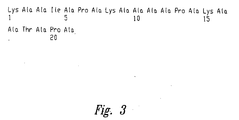
- Figure 3 shows the amino acid sequence of TcEr, a polypeptide that contains the three degenerate seven amino acid repeat units present in TcE.
- FIG. 4 depicts the amino acid sequence of TcD, with the sequence of an antigenic TcD polypeptide underlined.
- FIG. 5 shows the amino acid sequence of PEP2.
- FIG. 6 illustrates the results of an ELISA comparing the reactivities of T. cruzi (Tc) infection sera with lysate (Lys), TcD, and TcE.
- Tc T. cruzi
- Figure 7 illustrates the results of a competition ELISA of T. cruzi infection sera on TcE in the absence (-) or presence of 5 ⁇ g of synthetic control (CON) or the TcEr peptide.
- FIG 8 illustrates the results of an ELISA evaluating the reactivities of T. cruzi (Tc) infection sera on lysate (Lys). TcD. and TcEr. The reactivities of sera from visceral Leishmaniasis patients (AVL), cutaneous Leishmaniasis (CL), and uninfected normal (N) control sera on TcEr are also shown.
- ADL visceral Leishmaniasis patients
- CL cutaneous Leishmaniasis
- N uninfected normal
- the present invention is generally directed to compounds and methods for detecting and protecting against T. cruzi infection in individuals and in blood supplies.
- the compounds of this invention generally comprise one or more antigenic epitopes of T. cruzi proteins.
- polypeptides comprising an antigenic epitope of a 35 kD T. cruzi homolog to the eukaryotic ribosomal protein L19E are disclosed.
- the sequence of the 35 kD T. Cruzi homolog (referred to herein as TcE) is set forth in Figure 2, as well as in SEQ ID NO:1.
- the term "polypeptide” encompasses amino acid chains of any length, wherein the amino acid residues are linked by covalent peptide bonds.
- the use of antigenic epitopes from additional T. cruzi proteins, in combination with an epitope of TcE. to enhance the sensitivity and specificity of the diagnosis is also disclosed.
- an "antigenic variant” is a polypeptide that differs from the recited polypeptide only in conservative substitutions, such that it retains the antigenic properties of the recited polypeptide.
- a “conservative substitution” is one in which an amino acid is substituted for another amino acid that has similar properties, such that one skilled in the art of peptide chemistry would expect the secondary structure and hydropathic nature of the polypeptide to be substantially unchanged. In general, the following groups of amino acids represent conservative changes: ala.
- substitutions include changes among valine, threonine and alanine, and changes between serine and proline.
- Polypetides disclosed herein may also, or alternatively, contain other conservative modifications, including the deletion or addition of amino acids that have minimal influence on the antigenic properties, secondary structure and hydropathic nature of the polypeptide.
- the polypeptide may be conjugated to a linker or other sequence for ease of synthesis or to enhance binding of the polypeptide to a solid support.
- Polypeptides comprising an antigenic epitope of the T. cruzi L19E homolog are disclosed.
- the 35 kD L19E homolog may be isolated by screening a T. cruzi expression library for clones that express antigens which possess the following properties: (1) strong reactivity with sera from T. cruzi -infected patients, (2) reactivity with sera from T. cruzi -infected patients whose infections cannot be detected using an antigenic epitope of the TcD antigen and (3) lack of reactivity with normal and heterologous patient sera ( i . e ., sera from patients with other pathologies, such as leishmaniasis, leprosy and tuberculosis). Accordingly, a T.
- cruzi amastigote cDNA expression library may be first screened with pooled sera from T. cruzi -infected individuals. Clones that express proteins which react with the pooled sera may then be subjected to a second screen using sera from T. cruzi -infected individuals whose infection cannot be detected with antigenic polypeptides derived from an antigenic epitope of the T. cruzi TcD antigen. Finally, clones that express proteins which react with the sera in the first two screens may be subjected to a third screen using normal or heterologous patient sera.
- bacteriophage library may be plated and transferred to filters.
- the filters may then be incubated with serum and a detection reagent.
- a detection reagent is any compound capable of binding to the antibody-antigen complex, which may then be detected by any of a variety of means known to those of ordinary skill in the art.
- Typical detection reagents for screening purposes contain a "binding agent," such as Protein A, Protein G, IgG or a lectin, coupled to a reporter group.
- reporter groups include, but are not limited to, enzymes, substrates, cofactors, inhibitors, dyes, radionuclides, luminescent groups, fluorescent groups and biotin. More preferably, the reporter group is horseradish peroxidase. which may be detected by incubation with a substrate such as tetramethylbenzidine or 2.2'-azino-di-3-ethylbenzthiazoline sulfonic acid.
- Plaques containing cDNAs that express a protein that binds to an antibody in the serum may be isolated and purified by techniques known to those of ordinary skill in the art. Appropriate methods may be found, for example, in Sambrook et al., Molecular Cloning: A Laboratory Manual.
- TcE T . cruzi L19E homolog
- Figure 1 A cDNA encoding the T . cruzi L19E homolog (i.e. , TcE) that was isolated using the above screens is shown in Figure 1, and the deduced amino acid sequence of the TcE cDNA is shown in Figure 2.
- the N-terminal portion of TcE (the region not underlined in Figure 2) is homologous to the eukaryotic ribosomal protein L19E. Following the region of L19E homology are sixteen copies of a tandemly arrayed seven amino acid repeat, which are underlined in Figure 2.
- Antigenic regions of TcE may generally be determined by generating polypeptides containing portions of the TcE sequence and evaluating the reactivity of the polypeptides with sera from T. cruzi -infected individuals using, for example, an enzyme linked immunosorbent assay (ELISA). Suitable assays for evaluating reactivity with T. cruzi -infected sera are described in more detail below.
- Portions of TcE containing at least 7 amino acids from the tandem repeat region i.e. , residues 137-247 in Figure 2 have generally been found to be antigenic. Accordingly, polypeptides comprising at least a 7 amino acid portion of the sequence between residues 137 and 247 of TcE, and antigenic variants thereof, are disclosed.
- the antigenic polypeptides contain at least a 14 amino acid portion, and more preferably at least a 21 amino acid portion, of the TcE sequence between residues 137 and 247.
- the N-terminal region of TcE that is homologous to L19E i . e ., residues 1-136
- the polypeptide generally contains no more than about 5 consecutive amino acids from the N-terminal region.
- the antigenic polypeptide is TcEr, a 21 amino acid peptide that comprises three degenerate 7 amino acid repeat units. The sequence of TcEr is provided in Figure 3.
- combination polypeptides comprising antigenic epitopes of multiple T. cruzi peptides are disclosed.
- a "combination polypeptide” is a polypeptide in which antigenic epitopes of different T. cruzi peptides, or antigen variants thereof, are joined though a peptide linkage into a single amino acid chain.
- the epitopes may be joined directly ( i.e. , with no intervening amino acids) or may be joined by way of a linker sequence (e.g. , Gly-Cys-Gly) that does not significantly alter the antigenic properties of the epitopes.
- the combination polypeptide comprises an antigenic TcE epitope along with an antigenic epitope derived from the T. cruzi TcD antigen (disclosed in U.S. Patent No. 5,304,371) and/or the PEP2 antigenic epitope (discussed. for example, in Peralta et al., J. Clin. Microbiol. 32 :971-74, 1994).
- Preferred TcE epitopes for use in combination peptides are as described above.
- the TcD antigenic epitope preferably has the amino acid sequence Ala Glu Pro Lys Ser Ala Glu Pro Lys Pro Ala Glu Pro Lys Ser or the amino acid sequence Ala Glu Pro Lys Pro Ala Glu Pro Lys Ser Ala Glu Pro Lys Pro, and the PEP2 epitope preferably has the amino acid sequence Gly Asp Lys Pro Ser Pro Phe Gly Gln Ala Ala Ala Gly Asp Lys Pro Ser Pro Phe Gly Gln Ala (provided in Figure 5).
- Combination polypeptides of this invention may also contain a TcD antigenic epitope in combination with PEP2, with or without an antigenic epitope of TcE.
- TcE epitope at one end of the combination polypeptide provides superior binding to a solid support. Accordingly, for polypeptides tha contain a TcE epitope, that epitope is preferably located at either the N-terminal or the C-terminal end of the combination polypeptide.
- polypeptides of this invention may be generated using techniques well known to those of ordinary skill in the art.
- Polypeptides having fewer than about 100 amino acids, and generally fewer than about 50 amino acids can be synthesized using, for example, the Merrifield solid-phase synthesis method, where amino acids are sequentially added to a growing amino acid chain. See Merrifield, J. Am. Chem. Soc. 85 :2149-2146, 1963.
- Equipment for automated synthesis of polypeptides is commercially available from suppliers such as Applied Biosystems. Inc., Foster City, CA.
- the 22 amino acid PEP2 polypeptide, or portions thereof may be synthesized by this method.
- antigenic epitopes of TcE or TcD which preferably contain 1 to 3 repeat units of those proteins, may be prepared using an automated synthesizer.
- the polypeptides of this invention may be prepared by expression of recombinant DNA encoding the polypeptide in cultured host cells.
- the host cells are E. coli, yeast, an insect cell line (such as Spodoptera or Trichoplusia ) or a mammalian cell line, including (but not limited to) CHO, COS and NS-1.
- the DNA sequences expressed in this manner may encode naturally occurring proteins, such as TcE and TcD, portions of naturally occurring proteins, or antigenic variants of such proteins.
- Expressed polypeptides of this invention are generally isolated in substantially pure form.
- the polypeptides are isolated to a purity of at least 80% by weight, more preferably, to a purity of at least 95% by weight, and most preferably to a purity of at least 99% by weight.
- purification may be achieved using, for example, the standard techniques of ammonium sulfate fractionation, SDS-PAGE electrophoresis, and affinity chromatography.
- T. cruzi infection may be detected in any biological sample that contains antibodies.
- the sample is blood, serum, plasma, saliva, cerebrospinal fluid or urine. More preferably, the sample is a blood or serum sample obtained from a patient or a blood supply.
- T. cruzi infection may be detected using any of the polypeptides or combination polypeptides discussed above, or antigenic variants thereof. More specifically, the polypeptide or polypeptides are used to determine the presence or absence of antibodies to the polypeptide or polypeptides in the sample, relative to a predetermined cut-off value.
- the assay involves the use of polypeptide immobilized on a solid support to bind to and remove the antibody from the sample.
- the bound antibody may then be detected using a detection reagent that binds to the antibody/peptide complex and contains a detectable reporter group.
- Suitable detection reagents include antibodies that bind to the antibody/polypeptide complex and free polypeptide labeled with a reporter group ( e.g.
- a competitive assay in which an antibody that binds to the polypeptide is labeled with a reporter group and allowed to bind to the immobilized antigen after incubation of the antigen with the sample.
- the extent to which components of the sample inhibit the binding of the labeled antibody to the polypeptide is indicative of the reactivity of the sample with the immobilized polypeptide.
- the solid support may be any solid material known to those of ordinary skill in the art to which the antigen may be attached.
- the solid support may be a test well in a microtiter plate or a nitrocellulose or other suitable membrane.
- the support may be a bead or disc, such as glass, fiberglass, latex or a plastic material such as polystyrene or polyvinylchloride.
- the support may also be a magnetic particle or a fiber optic sensor, such as those disclosed, for example, in U.S. Patent No. 5,359,681.
- the polypeptide may be bound to the solid support using a variety of techniques known to those in the art. which are amply described in the patent and scientific literature.
- the term "bound” refers to both noncovalent association, such as adsorption, and covalent attachment (which may be a direct linkage between the antigen and functional groups on the support or may be a linkage by way of a cross-linking agent). Binding by adsorption to a well in a microtiter plate or to a membrane is preferred. In such cases, adsorption may be achieved by contacting the polypeptide, in a suitable buffer, with the solid support for a suitable amount of time. The contact time varies with temperature, but is typically between about 1 hour and 1 day.
- contacting a well of a plastic microtiter plate (such as polystyrene or polyvinylchloride) with an amount of polypeptide ranging from about 10 ng to about 1 ⁇ g, and preferably about 100 ng, is sufficient to bind an adequate amount of antigen.
- Nitrocellulose will bind approximately 100 ⁇ g of protein per cm 3 .
- Covalent attachment of polypeptide to a solid support may generally be achieved by first reacting the support with a bifunctional reagent that will react with both the support and a functional group, such as a hydroxyl or amino group, on the polypeptide.
- a bifunctional reagent that will react with both the support and a functional group, such as a hydroxyl or amino group, on the polypeptide.
- the polypeptide may be bound to supports having an appropriate polymer coating using benzoquinone or by condensation of an aldehyde group on the support with an amine and an active hydrogen on the polypeptide ( see, e.g. , Pierce Immunotechnology Catalog and Handbook (1991) at A12-A13; Jerry March, Advanced Organic Chemistry (2d. ed. 1977) at 820-823).
- the assay is an enzyme linked immunosorbent assay (ELISA).
- ELISA enzyme linked immunosorbent assay
- This assay may be performed by first contacting a polypeptide antigen that has been immobilized on a solid support, commonly the well of a microtiter plate, with the sample, such that antibodies to the polypeptide within the sample are allowed to bind to the immobilized polypeptide. Unbound sample is then removed from the immobilized polypeptide and a detection reagent capable of binding to the immobilized antibody-polypeptide complex is added. The amount of detection reagent that remains bound to the solid support is then determined using a method appropriate for the specific detection reagent.
- the immobilized polypeptide is then incubated with the sample, and antibody (if present in the sample) is allowed to bind to the antigen.
- the sample may be diluted with a suitable diluent, such as phosphate-buffered saline (PBS) prior to incubation.
- PBS phosphate-buffered saline
- an appropriate contact time i . e ., incubation time is that period of time that is sufficient to permit detect the presence of T. Cruzi antibody within a T. cruzi -infected sample.
- the contact time is sufficient to achieve a level of binding that is at least 95% of that achieved at equilibrium between bound and unbound antibody.
- the time necessary to achieve equilibrium may be readily determined by assaying the level of binding that occurs over a period of time. At room temperature, an incubation time of about 30 minutes is generally sufficient.
- Unbound sample may then be removed by washing the solid support with an appropriate buffer, such as PBS containing 0.1% Tween 20TM.
- Detection reagent may then be added to the solid support.
- An appropriate detection reagent is any compound that binds to the immobilized antibody-polypeptide complex and that can be detected by any of a variety of means known to those in the art.
- the detection reagent contains a binding agent (such as, for example, Protein A, Protein G, immunoglobulin, lectin or free antigen) conjugated to a reporter group.
- Preferred reporter groups include enzymes (such as horseradish peroxidase), substrates, cofactors, inhibitors, dyes, radionuclides, luminescent groups, fluorescent groups and biotin.
- binding agent to reporter group may be achieved using standard methods known to those of ordinary skill in the art. Common binding agents may also be purchased conjugated to a variety of reporter groups from many sources (e . g ., Zymed Laboratories, San Francisco, CA and Pierce, Rockford, IL).
- the detection reagent is then incubated with the immobilized antibody-polypeptide complex for an amount of time sufficient to detect the bound antibody.
- An appropriate amount of time may generally be determined from the manufacturer's instructions or by assaying the level of binding that occurs over a period of time.
- Unbound detection reagent is then removed and bound detection reagent is detected using the reporter group.
- the method employed for detecting the reporter group depends upon the nature of the reporter group. For radioactive groups, scintillation counting or autoradiographic methods are generally appropriate. Spectroscopic methods may be used to detect dyes, luminescent groups and fluorescent groups. Biotin may be detected using avidin, coupled to a different reporter group (commonly a radioactive or fluorescent group or an enzyme). Enzyme reporter groups may generally be detected by the addition of substrate (generally for a specific period of time), followed by spectroscopic or other analysis of the reaction products.
- the signal detected from the reporter group that remains bound to the solid support is generally compared to a signal that corresponds to a predetermined cut-off value.
- This cut-off value is preferably the average mean signal obtained when the immobilized antigen is incubated with samples from an uninfected patient.
- a sample generating a signal that is three standard deviations above the predetermined cut-off value is considered positive for T. cruzi antibodies and T. cruzi infection.
- the assay is performed in a flow-through or strip test format, wherein the antigen is immobilized on a membrane such as nitrocellulose.
- a detection reagent e.g. , protein A-colloidal gold
- a detection reagent then binds to the antibody-polypeptide complex as the solution containing the detection reagent flows through the membrane.
- the detection of bound detection reagent may then be performed as described above.
- the strip test format one end of the membrane to which polypeptide is bound is immersed in a solution containing the sample.
- the sample migrates along the membrane through a region containing detection reagent and to the area of immobilized polypeptide. Concentration of detection reagent at the polypeptide indicates the presence of T. cruzi antibodies in the sample. Such tests can typically be performed with a very small amount ( e . g ., one drop) of patient serum or blood.
- the antibodies are detected using a polypeptide comprising at least a 7 amino acid portion, preferably a 14 amino acid portion, and more preferably at least a 21 amino acid portion, of the sequence between residues 137 and 247 of TcE, or an antigenic variant thereof.
- a polypeptide comprising at least a 7 amino acid portion, preferably a 14 amino acid portion, and more preferably at least a 21 amino acid portion, of the sequence between residues 137 and 247 of TcE, or an antigenic variant thereof.
- the N-terminal region of TcE that is homologous to L19E i.e., residues 1-136
- the antigenic polypeptide is TcEr.
- the sensitivity may be significantly improved by using one or more additional T. cruz i antigens in combination with the TcE epitope.
- antigenic epitopes from TcD and/or PEP2 may be mixed with the TcE polypeptide.
- a TcD antigenic epitope may be combined with PEP2, in the absence of TcE antigen.
- these assays may be performed using sets of distinct polypeptides.
- one of the polypeptides contains an antigenic epitope of TcE and the other contains an antigenic epitope of TcD.
- one of the polypeptides contains an antigenic epitope of TcE and the other contains PEP2 or an antigenic portion thereof.
- one of the polypeptides contains a PEP2 antigenic epitope and the other contains an epitope of TcD.
- the assays may also be performed using three polypeptides, one containing a TcE epitope, one containing a TcD epitope and a third containing a PEP2 epitope.
- the antigenic polypeptides are immobilized by adsorption on a solid support such as a well of a microtiter plate or a membrane, as described above, such that a roughly similar amount of each polypeptide contacts the support, and such that the total amount of polypeptide in contact with the support ranges from about 10 ng to about 100 ⁇ g.
- a solid support such as a well of a microtiter plate or a membrane, as described above, such that a roughly similar amount of each polypeptide contacts the support, and such that the total amount of polypeptide in contact with the support ranges from about 10 ng to about 100 ⁇ g.
- the remainder of the steps may generally be performed as described above.
- combination polypeptides are employed.
- a combination polypeptide is a polypeptide in which antigenic epitopes of different T. Cruzi peptides are joined though one or more peptide linkages into a single amino acid chain. Any of the above antigenic epitopes, or antigenic variants thereof, may be incorporated into a combination polypeptide.
- a combination polypeptide could contain a TcE epitope linked to a TcD epitope; a TcE epitope linked to PEP2; a TcD epitope linked to PEP2; or a TcE epitope, a TcD epitope and PEP2 linked together within the same polypeptide.
- Methods are also disclosed for screening a biological sample for T. cruzi and/or Leishmania species.
- the biological sample is analyzed for antibodies to TcE, or certain portions thereof.
- the assays may be performed as described above, except that the polypeptide employed comprises amino acids 1 to 143 of TcE, as represented in Figure 2.
- the N-terminal portion of this antigen (amino acids 1-136) has been found to react with antibodies to Leishmania. Any species of Leishmania may be detected using this sequence, including L. major , L. tropica, L. chagasi , L. donovani , L. infantum, L. guyanesis, L. braziliensis, L. amazonensis and L. panamensis.
- the inclusion of amino acid sequence from the tandem repeat portion of TcE results in the detection of antibodies specific for T. cruzi as well. Additional amino acids from the portion of TcE between amino acid 145 and the carboxy terminus may also be included.
- the antigen employed in the screen for both T. cruzi and Leishmania is the full length TcE protein, shown in Figure 2. Antigenic variants of TcE, or a portion thereof comprising at least amino acids 1-136 and a repeat unit, may also be employed.
- the parasite may be identified using methods specific for either T. cruzi or Leishmania. For example, any of the methods described above may be employed to detect the presence of T. cruzi in the sample. Any of the methods known to those in the art may be employed to detect Leishmania.
- Methods are also disclosed for detecting T. cruzi in a biological sample using monospecific antibodies (which may be polyclonal or monoclonal) to polypeptides comprising epitopes of one or more of TcE, TcD and PEP2.
- monospecific antibodies which may be polyclonal or monoclonal
- polypeptides comprising epitopes of one or more of TcE, TcD and PEP2.
- Preferred epitopes are those recited above, and antigenic variants thereof.
- Antibodies to these purified or synthesized polypeptides may be prepared by any of a variety of techniques known to those of ordinary skill in the art. See , e . g ., Harlow and Land, Antibodies: A Laboratory Manual , Cold Spring Harbor Laboratory, 1988. In one such technique, an immunogen comprising the antigenic polypeptide is initially injected into any of a wide variety of mammals ( e .
- the polypeptides of this invention may serve as the immunogen without modification.
- a superior immune response may be elicited if the polypeptide is joined to a carrier protein, such as bovine serum albumin or keyhole limpet hemocyanin.
- the immunogen is injected into the animal host. preferably according to a predetermined schedule incorporating one or more booster immunizations, and the animals are bled periodically.
- Polyclonal antibodies specific for the polypeptide may then be purified from such antisera by, for example, affinity chromatography using the polypeptide coupled to a suitable solid support.
- Monoclonal antibodies specific for the antigenic polypeptide of interest may be prepared. for example, using the technique of Kohler and Milstein, Eur. J. Immunol. 6 :511-519, 1976, and improvements thereto. Briefly, these methods involve the preparation of immortal cell lines capable of producing antibodies having the desired specificity (i.e ., reactivity with the polypeptide of interest). Such cell lines may be produced, for example, from spleen cells obtained from an animal immunized as described above. The spleen cells are then immortalized by, for example, fusion with a myeloma cell fusion partner, preferably one that is syngeneic with the immunized animal. A variety of fusion techniques may be employed.
- the spleen cells and myeloma cells may be combined with a nonionic detergent for a few minutes and then plated at low density on a selective medium that supports the growth of hybrid cells, but not myeloma cells.
- a preferred selection technique uses HAT (hypoxanthine, aminopterin, thymidine) selection. After a sufficient time, usually about 1 to 2 weeks, colonies of hybrids are observed. Single colonies are selected and tested for binding activity against the polypeptide. Hybridomas having high reactivity and specificity are preferred.
- Monoclonal antibodies may be isolated from the supernatants of growing hybridoma colonies.
- various techniques may be employed to enhance the yield, such as injection of the hybridoma cell line into the peritoneal cavity of a suitable vertebrate host, such as a mouse.
- Monoclonal antibodies may then be harvested from the ascites fluid or the blood. Contaminants may be removed from the antibodies by conventional techniques, such as chromatography, gel filtration, precipitation, and extraction.
- Monospecific antibodies to polypeptides comprising epitopes of one or more of TcE, TcD and PEP2 may be used to detect T. cruzi infection in a biological sample using one of a variety of immunoassays, which may be direct or competitive. Briefly, in one direct assay format, a monospecific antibody may be immobilized on a solid support (as described above) and contacted with the sample to be tested. After removal of the unbound sample, a second monospecific antibody, which has been labeled with a reporter group, may be added and used to detect bound antigen. In an exemplary competitive assay, the sample may be combined with the monoclonal or polyclonal antibody, which has been labeled with a suitable reporter group.
- the mixture of sample and antibody may then be combined with polypeptide antigen immobilized on a suitable solid support.
- Antibody that has not bound to an antigen in the sample is allowed to bind to the immobilized antigen, and the remainder of the sample and antibody is removed.
- the level of antibody bound to the solid support is inversely related to the level of antigen in the sample. Thus, a lower level of antibody bound to the solid support indicates the presence of T. cruzi in the sample.
- Any of the reporter groups discussed above in the context of ELISAs may be used to label the monospecific antibodies, and binding may be detected by any of a variety of techniques appropriate for the reporter group employed.
- Other formats for using monospecific antibodies to detect T. cruzi in a sample will be apparent to those of ordinary skill in the art, and the above formats are provided solely for exemplary purposes.
- Vaccines and pharmaceutical compositions are also disclosed for the prevention of T. cruzi infection, and complications thereof, in a mammal.
- the pharmaceutical compositions generally comprise one or more polypeptides, containing one or more antigenic epitopes of T. cruzi proteins, and a physiologically acceptable carrier.
- the vaccines comprise one or more of the above polypeptides and an adjuvant, for enhancement of the immune response.
- compositions and vaccines may be administered by injection (e.g. , intramuscular, intravenous or subcutaneous), intranasally (e.g. , by aspiration) or orally. Between 1 and 4 doses may be administered for a 2-6 week period. Preferably, two doses are administered, with the second dose 2-4 weeks later than the first.
- a suitable dose is an amount of polypeptide that is effective to raise antibodies in a treated mammal that are sufficient to protect the mammal from T. cruzi infection for a period of time.
- the amount of polypeptide present in a dose ranges from about 1 pg to about 100 mg per kg of host, typically from about 10 pg to about 1 mg, and preferably from about 100 pg to about 1 ⁇ g. Suitable dose sizes will vary with the size of the animal. but will typically range from about 0.01 mL to about 5 mL for 10-60 kg animal.
- the type of carrier will vary depending on the mode of administration.
- the carrier preferably comprises water, saline, alcohol, a fat, a wax or a buffer.
- any of the above carriers or a solid carrier such as mannitol, lactose, starch, magnesium stearate, sodium saccharine, talcum, cellulose, glucose, sucrose, and magnesium carbonate, may be employed.
- Biodegradable microspheres e.g ., polylactic galactide
- adjuvants may be employed in the vaccines of this invention to nonspecifically enhance the immune response.
- Most adjuvants contain a substance designed to protect the antigen from rapid catabolism, such as aluminum hydroxide or mineral oil, and a nonspecific stimulator of immune response, such as lipid A, Bordella pertussis or Mycobacterium tuberculosis.
- lipid A lipid A
- Bordella pertussis or Mycobacterium tuberculosis lipid A
- Such adjuvants are commercially available as, for example, Freund's Incomplete Adjuvant and Complete Adjuvant (Difco Laboratories, Detroit, MI) and Merck Adjuvant 65 (Merck and Company, Inc., Rahway, NJ).
- This Example illustrates the isolation of a cDNA encoding TcE and the preparation of TcE using the cDNA.
- RNA was isolated from the amastigote stage of the T. cruzi strain MHOM/CH/00/Tulahuen using the acid guanidium isothiocyanate method.
- An unamplified cDNA expression library was prepared from this RNA using the ZAP-cDNA unidirectional cloning kit (Stratagene, Inc., La Jolla, CA). Briefly, the first cDNA was constructed using an oligo dT primer with Xho I adapters. Following synthesis of the second strand. Eco RI adapters were added and the double-stranded cDNA was digested with Xho I and ligated into the unizap phage lambda predigested with Eco RI and Xho I.
- Overlapping clones were generated by exonuclease III digestion and single-stranded templates were isolated after infection with VCSM 13 helper phage.
- the DNA was sequenced by the dideoxy chain termination method or by the Taq di-terminator system, using an Applied Biosystem automated sequencer, Model 373A. Forty-two clones that expressed proteins which reacted with the sera were then isolated from this screen.
- the isolated clones were further screened by the above procedure using heterologous patient sera from Leishmania -infected individuals.
- the members of the P protein family showed cross reactivity with the heterologous sera, and were not pursued further.
- the remaining clones were then screened with sera from individuals that were infected with T. cruzi , but whose infections could not be detected using the antigenic epitopes of TcD.
- the clones that had sequence similarity with eukaryotic ribosomal proteins were strongly reactive with the TcD negative sera.
- the L19E homolog was unique in that its homology to the eukaryotic ribosomal protein was confined to the N-terminal portion of the protein. This homolog (TcE) was exceptionally reactive with the test serum.
- the sequence of the cDNA encoding TcE is shown in Figure 1, and the predicted amino acid sequence is provided in Figure 2.
- TcE Full length TcE was produced and purified from E . coli transformed with an expression vector containing the cDNA insert encoding TcE.
- a transformed bacterial colony was used to inoculate 20 ml of LB-broth and grown at 37°C overnight.
- a 500 ml culture was then inoculated with the uninduced overnight culture at a 50:1 dilution. This culture was grown at 37°C until the A560 was approximately 0.4 to 0.5, IPTG was then added to a final concentration of 2 mM and the culture was allowed to grow for 4 hours.
- the cells were harvested by centrifugation, lysed, and fractionated into a pellet and soluble components.
- TcE which remained in the soluble supernatant was fractionated by sequential ammonium sulfate precipitations. Purification to homogeneity was accomplished by preparative SDS-PAGE electrophoresis, followed by excision and electroelution of the recombinant antigen.
- This Example illustrates the preparation of a polypeptide that comprises an antigenic epitope of TcE. While the minimum sequence representing the antigenic epitope of TcE is one 7 amino acid repeat, a peptide sequence having three degenerate repeats was selected for study in order to maximize reactivity.
- the TcEr polypeptide was synthesized on an ABI 430A peptide synthesizer using FMOC chemistry with HPTU (O-Benzotriazole-N,N,N',N'-tetramethyluronium hexafluorophosphate) activation.
- HPTU O-Benzotriazole-N,N,N',N'-tetramethyluronium hexafluorophosphate
- This Example illustrates the detection of T. cruzi infection using compounds and methods of this invention.
- the assays described below were performed in ELISA format.
- TcE antigen was purified from induced E. coli extracts as described above for serological evaluation of patient sera by ELISA.
- the ELISA assay was performed as follows. Microtiter plates were coated overnight at 4°C with 25 ng per well of recombinant TcE in 50 ⁇ l of coating buffer. After washing with PBS/0.1% TweenTM 20 (PBS-T). 50 ⁇ l of sera (diluted 1:100) were added and incubated for 30 minutes at room temperature. An additional wash step was performed with PBS-T. Protein A-horseradish peroxidase conjugate was diluted 1:10.000 in PBS-T, and 50 ⁇ l of the diluted conjugate was added to each well and incubated for 30 minutes at room temperature.
- the wash step with PBS-T was again repeated, and 100 ⁇ l of substrate (ABTS/H 2 O 2 , Zymed Kit, Catalog No. 00-2011) was added per well and incubated for 30 minutes at room temperature under low light.
- the colorimetric reaction was terminated with 100 ⁇ l of 5% sodium dodecyl sulfate (SDS) and absorbance was read at 405 nm.
- SDS sodium dodecyl sulfate
- TcE therefore has the ability to complement TcD, thereby increasing diagnostic sensitivity.
- TcE The specificity of TcE was further evaluated using sera from Leishmania -infected individuals, as well as normal sera. Cross-reactivity with sera from Leishmania -infected individuals (AVL) was observed. as shown in Figure 6. Accordingly, the full-length TcE antigen may be used to screen patients for the presence of either T. cruzi or Leishmania infection. Following a positive result using TcE, however, additional tests specific for either T. cruzi or Leishmania will need to be performed in order to distinguish between the two parasites.
- TcEr TcEr peptide was used in an inhibition study, where its ability to compete for the binding of T. cruzi -infected sera to TcE was measured.
- a competition ELISA was performed as follows. Microtiter plates were coated overnight at 4°C with 25 ng per well of recombinant TcE in 50 ⁇ l of coating buffer. After washing with PBS-T, 50 ⁇ l of serum obtained from a T. cruzi -infected individual (diluted 1:100 and preincubated with 5 ⁇ g of peptide for 1 hour at room temperature) was added and incubated for 30 minutes at room temperature.
- TcEr represents the immuno-dominant B cell epitope of TcE.
- TcEr reactivity was also evaluated, along with the sero-reactivity compared to lysate and TcD.
- ELISAs were performed in which microtiter plates were coated overnight at 4°C with 100 ng per well of T. cruzi lysate, 250 ng per well of recombinant TcD peptide (i.e ., the polypeptide having the 15 amino acid sequence underlined in Figure 4, with a Gly-Cys-Gly sequence attached to the amino terminus) or 25 ng per well of synthetic TcEr peptide in 50 ⁇ l of coating buffer. After washing with PBS-T. 50 ⁇ l of serum from a T.
- cruzi -infected individual (diluted 1:100) was added and incubated for 30 minutes at room temperature. Bound antibody was detected using the protein A-horseradish peroxidase and the absorbance was measured at 405 nm. The results from this experiment are depicted in Figure 8. Using three standard deviations above the average mean of normal sera as a criteria for scoring patient sera as positive, 66 of 69 (95.6%) T. cruzi infected serum samples were positive when tested with TcEr, and had an average absorbance value of 1.16.
- FIG 8 also shows the reactivity of TcEr with sera from visceral leishmaniasis patients (AVL), cutaneous leishmaniasis (CL). and uninfected normal (N) control sera. All 16 AVL infection sera which were positive on the full-length TcE antigen were negative when the assay was performed with TcEr. Therefore, the cross-reactivity of the heterologous Leishmania infection sera with TcE was directed against the non-repeat L19E homology domain.
- the assays were repeated using multiple polypeptides, each of which contained an epitope from a different T. cruzi antigen.
- the TcD and TcE polypeptides were combined, as were the TcD and PEP2 polypeptides.
- the PEP2 polypeptide in all of these experiments consisted of the 22 amino acid sequence shown in Figure 5, with a Gly-Cys-Gly sequence attached to the amino terminus, and the TcD peptide was as described above. The reactivity of these combinations was evaluated using the ELISA format, and was compared to the reactivities of each of the polypeptides individually.
- the ELISA assays were performed as follows. Plastic 96-well plates (Corning Easy Wash High Binding. Coming Laboratories. Coming. NY) were coated with 50 ⁇ l of the peptide or mixture of peptides.
- the TcD peptide employed in these assays have the sequence Ala Glu Pro Lys Ser Ala Glu Pro Lys Pro Ala Glu Pro Lys Ser, and was present in the 50 ⁇ l at a concentration of 10 ⁇ g/ml.
- the PEP2 sequence was the 22 amino acid sequence shown in Figure 5, and this peptide was present in the 50 ⁇ l at a concentration of 2.5 ⁇ g/ml.
- the TcEr polypeptide had the sequence shown in Figure 3, and 25 ng was present in the 50 ⁇ l.
- the peptides were diluted in 0.05 M carbonate buffer (pH 9.6). Plates were incubated for 1 hour at 37°C and maintained at 4°C until use for up to 1 month. For use, sensitized wells were washed with 0.01 M phosphate buffered saline (pH 7.2) containing 0.3% Tween 20 (PBS/T). Positive control, negative control, and unknown serum samples were diluted 1:20 in PBS/T containing 0.5% bovine serum albumin, and 50 ⁇ l was added to each well. After 30 minutes of incubation at room temperature, wells were washed six times with PBS/T.
- the ELISA test that employed a mixture of PEP2 and the TcD peptide had a sensitivity of greater than 99%.
- the specificity of the TcD/PEP2 test was evaluated using sera from individuals living in an area of endemicity for Chagas' disease who had negative T. cruzi serology, as well as sera from patients with other pathologies. In these samples, 2 of 81 assays were positive, but no false-positive results were found among the 37 serum samples from individuals with other pathologies.
- the other pathologies represented in this study were cutaneous leishmaniasis. visceral leishmaniasis, leprosy, and tuberculosis. All cutaneous and visceral leishmaniasis serum samples were negative in the mixed peptide assay.
- the mixtures containing the TcD polypeptide and either PEP2 or TcEr were more sensitive and specific in these assays than any of the individual peptides. This was due to the fact that these polypeptides display complementary reactivities. As shown in Table 4, below, many of the patient sera that were either negative or had low antibody titers to TcD reacted relatively strongly with PEP2 and/or TcE. Reactivity of Serum Samples with T. cruzi Antigens Absorbance (405 nm) Patient No.
- TcD PEP2 TcE c4 0.067 0.598 2.245 53 0.015 0.494 0.146 40 0.016 0.105 0.895 56 0.001 0.184 0.088 76 0.027 0.920 0.695 139458 0.26 1.95 1.63 ch14 0.10 1.25 0.07 103 0.40 1.33 0.30
- TcD was mixed with PEP2 or a fragment of PEP2. Specifically, the fragments of PEP2 containing residues 2 through 12 or residues 2 through 15 were employed. In each case, the portions of PEP2 were reactive, either alone or when mixed with TcD, but the 22 amino acid PEP2 sequence demonstrated superior reactivity. Thus, mixtures employing the 22 amino acid PEP2 sequence are more sensitive for T. cruzi infection than mixtures using the shorter sequences.
- peptide D/E detected 41 of the 44 positive samples (93%) and the mixture of peptides D/E and D/2 detected all of the 44 positive serum samples (100%). Neither of the peptides produced a positive result in the assays of clinically normal serum samples from the United States. Since the "endemic normal" samples were only clinically normal (i.e. , serodiagnostic assays had been performed), the positive result produced by the mixture of peptides D/E and D/2 may indicate an undiagnosed infection.
- the above assays were repeated using a mixture of the TcD peptide, TcEr, and PEP2.
- all of the 44 T. cruzi -positive serum samples resulted in absorbances at 450 nm that were greater than three standard deviations above the average mean, and none of the normal serum samples from the United States yielded a positive result.
- Two of the negative samples from endemic regions of Brazil produced a positive result but, again, this may be the result of undiagnosed infections. Accordingly, the tripeptide mixture detected 100% of the positive serum samples, and showed a high specificity.
Landscapes
- Health & Medical Sciences (AREA)
- Life Sciences & Earth Sciences (AREA)
- Chemical & Material Sciences (AREA)
- Molecular Biology (AREA)
- Immunology (AREA)
- Engineering & Computer Science (AREA)
- Organic Chemistry (AREA)
- Medicinal Chemistry (AREA)
- General Health & Medical Sciences (AREA)
- Biomedical Technology (AREA)
- Biochemistry (AREA)
- Hematology (AREA)
- Urology & Nephrology (AREA)
- Tropical Medicine & Parasitology (AREA)
- General Physics & Mathematics (AREA)
- Proteomics, Peptides & Aminoacids (AREA)
- Physics & Mathematics (AREA)
- Analytical Chemistry (AREA)
- Microbiology (AREA)
- Cell Biology (AREA)
- Biotechnology (AREA)
- Pathology (AREA)
- Toxicology (AREA)
- Zoology (AREA)
- Gastroenterology & Hepatology (AREA)
- Biophysics (AREA)
- Genetics & Genomics (AREA)
- Food Science & Technology (AREA)
- Virology (AREA)
- Veterinary Medicine (AREA)
- Chemical Kinetics & Catalysis (AREA)
- General Chemical & Material Sciences (AREA)
- Nuclear Medicine, Radiotherapy & Molecular Imaging (AREA)
- Pharmacology & Pharmacy (AREA)
- Animal Behavior & Ethology (AREA)
- Public Health (AREA)
- Peptides Or Proteins (AREA)
- Medicines Containing Antibodies Or Antigens For Use As Internal Diagnostic Agents (AREA)
- Agricultural Chemicals And Associated Chemicals (AREA)
- Preparation Of Compounds By Using Micro-Organisms (AREA)
Claims (43)
- Polypeptide comprenant au moins 7 résidus consécutifs de la partie de la SEQ ID NO:1 entre la lysine au niveau du résidu 137 et l'alanine au niveau du résidu 247, ou un de ses variants antigéniques qui diffère seulement par des substitutions conservatrices, sous réserve que le polypeptide ne contienne pas plus de cinq résidus consécutifs de la partie de la SEQ ID NO:1 entre l'amino-acide 1 et l'amino-acide 136.
- Polypeptide suivant la revendication 1, comprenant en outre la séquence d'amino-acides Lys Ala Ala Ile Ala Pro Ala Lys Ala Ala Ala Ala Pro Ala Lys Ala Ala Thr Ala Pro Ala, ou un de ses variants antigéniques qui diffère seulement par des substitutions conservatrices.
- Polypeptide comprenant au moins 7 résidus consécutifs de la partie de la SEQ ID NO:1 entre la lysine au niveau du résidu 137 et l'alanine au niveau du résidu 247, ou un de ses variants antigéniques qui diffère seulement par des substitutions conservatrices, ledit polypeptide comprenant en outre une séquence d'amino-acides choisie dans le groupe consistant en Ala Glu Pro Lys Ser Ala Glu Pro Lys Pro Ala Glu Pro Lys Ser, ou un de ses variants antigéniques qui diffère seulement par des substitutions conservatrices, et Ala Glu Pro Lys Pro Ala Glu Pro Lys Ser Ala Glu Pro Lys Pro ou un de ses variants antigéniques qui diffère seulement par des substitutions conservatrices.
- Polypeptide suivant la revendication 3, comprenant en outre la séquence d'amino-acides Pro Ser Pro Phe Gly Gln Ala Ala Ala Gly Asp Lys ou un de ses variants antigéniques qui diffère seulement par des substitutions conservatrices.
- Polypeptide comprenant au moins 7 résidus consécutifs de la partie de la SEQ ID NO:1 entre la lysine au niveau du résidu 137 et l'alanine au niveau du résidu 247, ou un de ses variants antigéniques qui diffère seulement par des substitutions conservatrices, ledit polypeptide comprenant en outre la séquence d'amino-acides Pro Ser Pro Phe Gly Gln Ala Ala Ala Gly Asp Lys, ou un de ses variants antigéniques qui diffère seulement par des substitutions conservatrices.
- Polypeptide comprenant :a) la séquence d'amino-acides Pro Ser Pro Phe Gly Gln Ala Ala Ala Gly Asp Lys, ou un de ses variants antigéniques qui diffère seulement par des substitutions conservatrices ; etb) une séquence d'amino-acides choisie entre le groupe consistant en Ala Glu Pro Lys Ser Ala Glu Pro Lys Pro Ala Glu Pro Lys Ser, ou un de ses variants antigéniques qui diffère seulement par des substitutions conservatrices, et Ala Glu Pro Lys Pro Ala Glu Pro Lys Ser Ala Glu Pro Lys Pro, ou un de ses variants antigéniques qui diffère seulement par des substitutions conservatrices.
- Polypeptide suivant la revendication 5 ou 6, comprenant en outre la séquence d'amino-acides Gly Asp Lys Pro Ser Pro Phe Gly Gln Ala Ala Ala Gly Asp Lys Pro Ser Pro Phe Gly Gln Ala, ou un de ses variants antigéniques qui diffère seulement par des substitutions conservatrices.
- Méthode pour détecter une infection par T. cruzi dans un échantillon biologique, comprenant les étapes consistant :a) à mettre en contact un échantillon biologique avec un premier polypeptide suivant la revendication 1 ou 2 ;b) à détecter dans l'échantillon biologique la présence d'anticorps qui se lient au polypeptide, en détectant ainsi l'infection par T. cruzi dans l'échantillon biologique.
- Méthode suivant la revendication 8, comprenant en outre la mise en contact de l'échantillon avec un second polypeptide comprenant une séquence d'amino-acides choisie dans le groupe consistant en Ala Glu Pro Lys Ser Ala Glu Pro Lys Pro Ala Glu Pro Lys Ser, ou un de ses variants antigéniques qui diffère seulement par des substitutions conservatrices, et Ala Glu Pro Lys Pro Ala Glu Pro Lys Ser Ala Glu Pro Lys Pro, ou un de ses variants antigéniques qui diffère seulement par des substitutions conservatrices.
- Méthode suivant la revendication 8 ou 9, comprenant en outre la mise en contact de l'échantillon avec un polypeptide supplémentaire comprenant la séquence d'amino-acides Pro Ser Pro Phe Gly Gln Ala Ala Ala Gly Asp Lys, ou un de ses variants antigéniques qui diffère seulement par des substitutions conservatrices, ou la séquence d'amino-acides Gly Asp Lys Pro Ser Pro Phe Gly Gln Ala Ala Ala Gly Asp Lys Pro Ser Pro Phe Gly Gln Ala.
- Méthode suivant la revendication 8, dans laquelle le premier polypeptide comprend en outre une séquence d'amino-acides choisie dans le groupe consistant en Ala Glu Pro Lys Ser Ala Glu Pro Lys Pro Ala Glu Pro Lys Ser, ou un de ses variants antigéniques qui diffère seulement par des substitutions conservatrices, et Ala Glu Pro Lys Pro Ala Glu Pro Lys Ser Ala Glu Pro Lys Pro, ou un de ses variants antigéniques qui diffère seulement par des substitutions conservatrices ; et/ou la séquence d'amino-acides Pro Ser Pro Phe Gly Gln Ala Ala Ala Gly Aap Lys, ou un de ses variants antigéniques qui diffère seulement par des substitutions conservatrices ; et/ou la séquence d'amino-acides Gly Asp Lys Pro Ser Pro Phe Gly Gln Ala Ala Ala Gly Asp Lys Pro Ser Pro Phe Gly Cln Ala, ou un de ses variants antigéniques qui diffère seulement par des substitutions conservatrices.
- Méthode suivant l'une quelconque des revendications 8 à 11, dans laquelle l'échantillon biologique est choisi dans le groupe consistant en le sang, le sérum, le plasma, la salive, le liquide céphalorachidien et l'urine.
- Méthode suivant l'une quelconque des revendications 8 à 11, dans laquelle le premier polypeptide est lié à un support solide.
- Méthode suivant la revendication 13, dans laquelle l'étape de détection comprend :a) l'élimination de l'échantillon non lié du support solide ;b) l'addition d'un réactif de détection au support solide ; etc) la détermination de la quantité de réactif de détection liée au support solide, par rapport à une valeur d'exclusion prédéterminée, et, d'après la valeur obtenue, la détection de l'infection par T. cruzi dans l'échantillon biologique.
- Méthode suivant la revendication 14, dans laquelle le réactif de détection comprend un groupe rapporteur conjugué à un agent de liaison.
- Kit de diagnostic pour détecter une infection par T. cruzi dans un échantillon biologique, comprenant :a) un premier polypeptide suivant la revendication 1 ou 2 ; etb) un réactif de détection.
- Kit suivant la revendication 16, comprenant en outre un second polypeptide comprenant une séquence d'amino-acides, choisie dans le groupe consistant en Ala Glu Pro Lys Ser Ala Glu Pro Lys Pro Ala Glu Pro Lys Ser, ou un de ses variants antigéniques qui diffère seulement par des substitutions conservatrices, et Ala Glu Pro Lys Pro Ala Glu Pro Lys Ser Ala Glu Pro Lys Pro, ou un de ses variants antigéniques qui diffère seulement par des substitutions conservatrices.
- Kit suivant la revendication 17, comprenant en outre un troisième polypeptide comprenant la séquence d'amino-acides Pro Ser Pro Phe Gly Gln Ala Ala Ala Gly Asp Lys, ou un de ses variants antigéniques qui diffère seulement par des substitutions conservatrices.
- Kit suivant la revendication 18, dans lequel le troisième polypeptide comprend la séquence d'amimo-acides Gly Asp Lys Pro Ser Pro Phe Gly Gln Ala Ala Ala Gly Asp Lys Pro Ser Pro Phe Gly Gln Ala, ou un de ses variants antigéniques qui diffère seulement par des substitutions conservatrices.
- Kit suivant la revendication 16, dans lequel le premier polypeptide comprend en outre une séquence d'amino-acides choisie dans le groupe consistant en Ala Glu Pro Lys Ser Ala Glu Pro Lys Pro Ala Glu Pro Lys Ser, ou un de ses variants antigéniques qui diffère, seulement par des substitutions conservatrices, et Ala Glu Pro Lys Pro Ala Glu Pro Lys Ser Ala Glu Pro Lys Pro, ou un de ses variants antigéniques qui diffère seulement par des substitutions conservatrices.
- Kit suivant l'une quelconque des revendications 16 à 20, dans lequel le premier polypeptide comprend en outre la séquence d'amino-acides Pro Ser Pro Phe Gly Gln Ala Ala Ala Gly Asp Lys, ou un de ses variants antigéniques qui diffère seulement par des substitutions conservatrices.
- Méthode pour la détection d'une infection par T. cruzi dans un échantillon biologique, comprenant les étapes consistant :a) à mettre en contact un échantillon biologique avec un polypeptide suivant la revendication 6 ou la revendication 7 dépendant de la revendication 6 ;b) à détecter dans l'échantillon biologique la présence d'anticorps qui se lient au polypeptide, en détectant ainsi l'infection par T. cruzi dans l'échantillon biologique.
- Méthode de dépistage d'une infection par Leishmania ou T. cruzi dans un échantillon biologique, comprenant les étapes consistant :a) à mettre en contact un échantillon biologique avec un polypeptide comprenant la partie de la SEQ ID NO:1 entre le glutamate au niveau du résidu 1 et l'alanine en position 143, ou un de ses variants antigéniques qui diffère seulement par des substitutions conservatrices ; etb) à détecter dans l'échantillon biologique la présence d'anticorps qui se lient au polypeptide, ce qui permet de détecter l'infection par Leishmania ou T. cruzi dans l'échantillon biologique.
- Méthode suivant la revendication 22 ou 23, dans laquelle le polypeptide est lié à un support solide
- Méthode suivant la revendication 24, dans laquelle l'étape de détection comprend :a) l'élimination de l'échantillon non lié du support solide ;b) l'addition d'un réactif de détection au support solide ; etc) la détermination de la quantité de réactif de détection liée au support solide, par rapport à une valeur d'exclusion prédéterminée, ce qui permet de dépister l'infection par Leishmania ou T. cruzi dans l'échantillon biologique, ou de détecter l'infection par T. cruzi dans l'échantillon biologique.
- Méthode suivant la revendication 25, dans laquelle le réactif de détection comprend un groupe rapporteur conjugué à un agent de liaison.
- Méthode suivant la revendication 25, dans laquelle l'échantillon biologique est choisi dans le groupe consistant en le sang, le sérum, le plasma, la salive, le liquide céphalorachidien et l'urine.
- Kit de diagnostic pour la détection d'une infection par Leishmania ou T. cruzi, comprenant :a) un polypeptide comprenant les amino-acides 1 à 143 de la SEQ ID NO:1, ou un de ses variante antigéniques qui diffère seulement par des substitutions conservatrices ;b) un réactif de détection.
- Kit suivant la revendication 28, dans lequel le réactif de détection comprend un groupe rapporteur conjugué à un agent de liaison.
- Séquence d'ADN isolée codant pour le polypeptide suivant l'une quelconque des revendications 1 à 7.
- Vecteur d'expression recombinante comprenant la séquence d'ADN de la revendication 30.
- Cellule-hôte transformée avec le vecteur d'expression suivant la revendication 31.
- Cellule-hôte suivant la revendication 32, qui est choisie dans le groupe consistant en E. coli, une levure, des lignées de cellules d'insectes et des lignées de cellules de mammifères.
- Composition pharmaceutique comprenant le polypeptide recombinant suivant l'une quelconque des revendications 1 à 7 et un support physiologiquement acceptable.
- Composition pharmaceutique comprenant :a) un premier polypeptide comprenant les 7 résidus consécutifs de la partie de la SEQ ID NO:1 entre la lysine au niveau du résidu 137 et l'alanine au niveau du résidu 143, ou un de ses variants antigéniques qui diffère seulement par des substitutions conservatrices ;b) un second polypeptide comprenant une séquence d'amino-acides choisie dans le groupe consistant en Ala Glu Pro Lys Ser Ala Glu Pro Lys Pro Ala Gly Pro Lys Ser, ou un de ses variante antigéniques qui diffère seulement par des substitutions conservatrices, et Ala Glu Pro Lys Pro Ala Glu Pro Lys Ser Ala Glu Pro Lys Pro, ou un de ses variants antigéniques qui diffère seulement par des substitutions conservatrices ; etc) un support physiologiquement acceptable.
- Composition pharmaceutique suivant la revendication 35, comprenant également un polypeptide supplémentaire comprenant la séquence d'amino-acides Pro Ser Pro Phe Gly Gln Ala Ala Ala Gly Asp Lys, ou un de ses variants antigéniques qui diffère seulement par des substitutions conservatrices.
- Composition pharmaceutique comprenant :a) un premier polypeptide comprenant les 7 résidus consécutifs de la partie de la SEQ ID NO:1 entre la lysine au niveau du résidu 137 et l'alanine au niveau du résidu 143, ou un de ses variants antigéniques qui diffère seulement par des substitutions conservatrices, ou une séquence d'amino-acides choisie dans le groupe consistant en Ala Glu Pro Lys Ser Ala Glu Pro Lys Pro Ala Glu Pro Lys Ser, ou un de ses variants antigéniques qui diffère seulement par des substitutions conservatrices, et Ala Glu Pro Lys Pro Ala Glu Pro Lys Ser Ala Glu Pro Lys Pro, ou un de ses variants antigéniques qui diffère seulement par des substitutions conservatrices ;b) un polypeptide supplémentaire comprenant la séquence d'amino-acides Pro Ser Pro Phe Gly Gln Ala Ala Ala Gly Asp Lys, ou un de ses variante antigéniques qui diffère seulement par des substitutions conservatrices ; etc) un support physiologiquement acceptable.
- Composition pharmaceutique suivant la revendication 36 ou 37, dans laquelle le polypeptide supplémentaire comprend en outre la séquence d'amino-acides Gly Asp Lys Pro Ser Pro Phe Gly Gln Ala Ala Ala Gly Asp Lys Pro Ser Pro Phe Gly Gln Ala, ou un de ses variants antigéniques qui diffère seulement par des substitutions conservatrices.
- Vaccin pour stimuler la production d'anticorps qui se lient à T. cruzi, comprenant le polypeptide recombinant suivant l'une quelconque des revendications 1 à 7 ou une composition pharmaceutique suivant l'une quelconque des revendications 35 à 38 et un adjuvant.
- Méthode pour détecter une infection par T. cruzi dans un échantillon biologique, comprenant les étapes consistanta) à mettre en contact un échantillon biologique avec un premier polypeptide consistant essentiellement en au moins 7 résidus consécutifs de la partie de la SEQ ID NO:1 entre la lysine au niveau du résidu 137 et l'alanine au niveau du résidu 247, ou un de ses variants antigéniques qui diffère seulement par des substitutions conservatrices ; ou à mettre en contact l'échantillon biologique avec un anticorps monoclonal qui se lie :(i) audit premier polypeptide ;(ii) à un polypeptide comprenant une séquence d'amino-acides choisie dans le groupe consistant en Ala Glu Pro Lys Ser Ala Glu Pro Lys Pro Ala Glu Pro Lys Ser, ou un de ses variants antigéniques qui diffère seulement par des substitutions conservatrices, et Ala Glu Pro Lys Pro Ala Glu Pro Lys Ser Ala Glu Pro Lys Pro, ou un de ses variants antigéniques qui diffère seulement par des substitutions conservatrices ; ou(iii) un polypeptide comprenant la séquence d'amino-acides Gly Asp Lys Pro Ser Pro Phe Gly Gln Ala Ala Ala Gly Asp Lys Pro Ser Pro Phe Gly Gln Ala; etb) à détecter dans l'échantillon biologique la présence d'anticorps qui se lient au polypeptide, en détectant ainsi l'infection par T. cruzi dans l'échantillon biologique ou la présence de parasites T. cruzi qui se lient à l'anticorps monoclonal.
- Méthode suivant la revendication 40, dans laquelle l'anticorps monoclonal est lié à un support solide.
- Méthode suivant la revendication 41, dans laquelle l'étape de détection comprend :a) l'élimination de l'échantillon non lié du support solide ;b) l'addition d'un réactif de détection au support solide ; etc) la détermination de la quantité de réactif de détection liée au support solide, par rapport à une valeur d'exclusion prédéterminée, et, d'après cette quantité, la détection de l'infection par T. cruzi dans l'échantillon biologique.
- Méthode suivant la revendication 42, dans laquelle le réactif de détection comprend un groupe rapporteur couplé à un anticorps.
Applications Claiming Priority (3)
| Application Number | Priority Date | Filing Date | Title |
|---|---|---|---|
| US403379 | 1995-03-14 | ||
| US08/403,379 US5756662A (en) | 1995-03-14 | 1995-03-14 | Compounds and methods for the detection of T. cruzi infection |
| PCT/US1996/003380 WO1996029605A2 (fr) | 1995-03-14 | 1996-03-12 | Composes et methodes de depistage de l'infection par trypanosoma cruzi |
Publications (2)
| Publication Number | Publication Date |
|---|---|
| EP0815450A2 EP0815450A2 (fr) | 1998-01-07 |
| EP0815450B1 true EP0815450B1 (fr) | 2002-07-17 |
Family
ID=23595554
Family Applications (1)
| Application Number | Title | Priority Date | Filing Date |
|---|---|---|---|
| EP96910433A Expired - Lifetime EP0815450B1 (fr) | 1995-03-14 | 1996-03-12 | Composes et methodes de depistage de l'infection par trypanosoma cruzi |
Country Status (13)
| Country | Link |
|---|---|
| US (2) | US5756662A (fr) |
| EP (1) | EP0815450B1 (fr) |
| JP (1) | JPH11502923A (fr) |
| AR (1) | AR002282A1 (fr) |
| AT (1) | ATE220797T1 (fr) |
| AU (1) | AU5362696A (fr) |
| BR (1) | BR9607531A (fr) |
| CA (1) | CA2215104A1 (fr) |
| DE (1) | DE69622385T2 (fr) |
| DK (1) | DK0815450T3 (fr) |
| ES (1) | ES2180754T3 (fr) |
| PT (1) | PT815450E (fr) |
| WO (1) | WO1996029605A2 (fr) |
Families Citing this family (53)
| Publication number | Priority date | Publication date | Assignee | Title |
|---|---|---|---|---|
| US5756662A (en) * | 1995-03-14 | 1998-05-26 | Corixa Corporation | Compounds and methods for the detection of T. cruzi infection |
| BR9503451A (pt) * | 1995-07-26 | 1997-09-30 | Mendes Rodolfo Pereira | Processo de preparação de um antígeno derivado de um mocroorganismo causador de doença infecciosa e/ou parasitária processo de preparação de um antígeno de T cruzi antígeno derivado de midroorganismo causador de doença infecciosa e/ou parasitária antígeno derivado de T cruzi causador de doença de chagas composição a base de um antígeno derivado de microorganismo causador de doença infecciosa e/ou parasitária composição a base de antígeno de T cruzi utilização do antígeno derivado de microorganismo causador de doença infecciosa e/ou parasitária em testes sorológicos e vacinas utilização de antigeno derivado de T cruzi causador de doença de chagas em teste sorológico e vacinas processo para detecção de anticorpos anti antigeno de microorganismo causador de doença infecciosa e/ou parasitária e kit para sorodiagnóstico confirmatório para doença infecciosa e/ou parasitária |
| US5916572A (en) * | 1995-11-14 | 1999-06-29 | Corixa Corporation | Compounds and methods for the detection and prevention of T. cruzi infection |
| US6228372B1 (en) | 1997-04-15 | 2001-05-08 | Corixa Corporation | Compounds and methods for the detection and prevention of T. cruzi infection |
| US6054135A (en) * | 1996-11-14 | 2000-04-25 | Corixa | Compounds and methods for the detection and prevention of T. cruzi infection |
| US6419933B1 (en) | 1995-11-14 | 2002-07-16 | Corixa Corporation | Compounds and methods for the detection and prevention of T.cruzi infection |
| NZ337697A (en) | 1997-03-11 | 2001-06-29 | Stichting Dienst Landbouwkundi | An ex vivo animal or challenge model as method to measure protective immunity directed against parasites and vaccines shown to be protective in said method |
| US6699722B2 (en) | 2000-04-14 | 2004-03-02 | A-Fem Medical Corporation | Positive detection lateral-flow apparatus and method for small and large analytes |
| CA2498604A1 (fr) * | 2002-09-20 | 2004-04-01 | Akzo Nobel N.V. | Vaccin de parasite vivant attenue |
| CA2555989A1 (fr) | 2004-02-24 | 2005-09-01 | Innogenetics N.V. | Methode de determination des risques qu'a un sujet de contracter une maladie neurologique |
| US7888135B2 (en) * | 2004-04-23 | 2011-02-15 | University Of Georgia Research Foundation, Inc. | Diagnostic assay for Trypanosoma cruzi infection |
| US8329411B2 (en) * | 2004-04-23 | 2012-12-11 | University Of Georgia Research Foundation, Inc. | Diagnostic assay for Trypanosoma cruzi infection |
| EP1959996A2 (fr) | 2005-12-12 | 2008-08-27 | AC Immune S.A. | Anticorps monoclonal |
| US7833534B2 (en) * | 2006-04-10 | 2010-11-16 | Infectious Disease Research Institute | Compounds and methods for diagnosis and treatment of leishmaniasis |
| MY153248A (en) | 2006-07-14 | 2015-01-29 | Ac Immune Sa | Humanized antibody against amyloid beta |
| EP2046833B9 (fr) | 2006-07-14 | 2014-02-19 | AC Immune S.A. | Anticorps humanisé contre l'amyloid beta |
| US7749717B2 (en) * | 2006-10-19 | 2010-07-06 | Abbott Laboratories | Methods for the detection and diagnosis of Trypanosoma cruzi infection |
| KR101450356B1 (ko) | 2006-11-24 | 2014-10-15 | 에이씨 이뮨 에스.에이. | 알츠하이머와 같은 아밀로이드 또는 아밀로이드-유사 단백질과 관련된 질환의 치료를 위한 n-(메틸)-1h-피라졸-3-아민, n-(메틸)-피리딘-2-아민 및 n-(메틸)-티아졸-2-아민 유도체 |
| US8048420B2 (en) | 2007-06-12 | 2011-11-01 | Ac Immune S.A. | Monoclonal antibody |
| NZ581835A (en) | 2007-06-12 | 2012-09-28 | Ac Immune Sa | Monoclonal anti beta amyloid antibody |
| US8613923B2 (en) | 2007-06-12 | 2013-12-24 | Ac Immune S.A. | Monoclonal antibody |
| ES2529174T3 (es) | 2007-06-12 | 2015-02-17 | Ac Immune S.A. | Anticuerpos humanizados para amiloide beta |
| BRPI0818623A2 (pt) | 2007-10-05 | 2017-05-23 | Ac Immune Sa | composição farmacêutica, e, métodos para reduzir a carga da placa na camada de célula de gânglio retinal de um animal, para reduzir a quantidade de placas na camada de célula de gânglio retinal de um animal, para diminuir a quantidade total de amilóide-beta solúvel na camada de célula de gânglio retinal de um animal, para prevenir, tratar e/ou aliviar os efeitos de uma doença ocular associada com anormalidades patológicas/mudanças no tecido do sistema visual, para monitorar doença ocular residual mínima associada com anormalidades patológicas/mudanças nos tecidos do sistema visual, para predizer responsividade de um paciente, e para reter ou diminuir a pressão ocular nos olhos de um animal |
| AU2008311367B2 (en) | 2007-10-05 | 2014-11-13 | Ac Immune S.A. | Use of anti-amyloid beta antibody in ocular diseases |
| US20090203037A1 (en) | 2007-12-27 | 2009-08-13 | Abbott Laboratories | Anti-T. Cruzi Antibodies and Methods of Use |
| WO2009158729A2 (fr) * | 2008-06-27 | 2009-12-30 | The Infectious Disease Research Institute Inc. | Composés et procédés pour le diagnostic et le traitement de la maladie de chagas |
| AR073452A1 (es) | 2008-07-03 | 2010-11-10 | Infectious Disease Res Inst | Proteinas de fusion que comprende dos o mas antigenos de leishmania y su uso en el diagnostico y tratamiento de leishmaniasis |
| EP2311823A1 (fr) | 2009-10-15 | 2011-04-20 | AC Immune S.A. | Composés de 2,6-diaminopyridine appropriés pour le traitement de maladies liées à des protéines amyloïdes ou pour le traitement de maladies oculaires |
| AU2011239966B2 (en) | 2010-04-16 | 2014-05-08 | Ac Immune S.A. | Novel compounds for the treatment of diseases associated with amyloid or amyloid-like proteins |
| EP2377860A1 (fr) | 2010-04-16 | 2011-10-19 | AC Immune S.A. | Nouveaux composés pour le traitement des maladies associées aux protéines amyloïdes ou similaires |
| EP2598882B1 (fr) | 2010-07-30 | 2017-07-26 | AC Immune S.A. | Anticorps humanisés sûrs et fonctionnels pour utilisation dans le traitement de l'amyloïdose |
| MY164376A (en) | 2010-10-07 | 2017-12-15 | Univ Leuven Kath | Phosphospecific antibodies recognizing tau |
| JP6027011B2 (ja) | 2010-10-26 | 2016-11-16 | エーシー イミューン ソシエテ アノニム | 疎水性部分によって修飾されたペプチドを含むリポソームベースの構築物 |
| KR101981351B1 (ko) | 2011-10-07 | 2019-09-02 | 에이씨 이뮨 에스.에이. | 타우를 인식하는 포스포특이적 항체 |
| RU2644242C2 (ru) | 2012-04-05 | 2018-02-08 | Ац Иммуне С.А. | Гуманизированное тау-антитело |
| EP2859017B1 (fr) | 2012-06-08 | 2019-02-20 | Sutro Biopharma, Inc. | Anticorps comprenant des résidus d'acides aminés non endogènes spécifiques d'un site, leurs procédés de préparation et leurs procédés d'utilisation |
| WO2014004639A1 (fr) | 2012-06-26 | 2014-01-03 | Sutro Biopharma, Inc. | Protéines de fc modifiées, comprenant des résidus d'acides aminés non naturels spécifiques de site, leurs conjugués, leur préparation et leurs procédés d'utilisation |
| EP2890402B1 (fr) | 2012-08-31 | 2019-04-17 | Sutro Biopharma, Inc. | Acides aminés modifiés comprenant un groupe azido |
| WO2014150877A2 (fr) | 2013-03-15 | 2014-09-25 | Ac Immune S.A. | Anticorps anti-tau et leurs procédés d'utilisation |
| WO2015006555A2 (fr) | 2013-07-10 | 2015-01-15 | Sutro Biopharma, Inc. | Anticorps comprenant plusieurs résidus d'acides aminés non naturels site-spécifiques, des procédés permettant leur préparation et leurs méthodes d'utilisation |
| UA125204C2 (uk) | 2013-09-05 | 2022-02-02 | Аб2 Біо Са | Застосування il-18-зв'язувального білка (il-18bp) при запальних захворюваннях |
| EP3055298B1 (fr) | 2013-10-11 | 2020-04-29 | Sutro Biopharma, Inc. | Acides aminés modifiés comprenant des groupes fonctionnels de tétrazine, procédés de préparation et procédés d'utilisation associés |
| US10882905B2 (en) | 2015-03-05 | 2021-01-05 | Ab2 Bio Sa | IL-18 binding protein (IL-18BP) and antibodies in inflammatory diseases |
| WO2017218698A1 (fr) | 2016-06-15 | 2017-12-21 | Sutro Biopharma, Inc. | Anticorps à domaines ch2 modifiés, compositions les contenant et leurs procédés d'utilisation |
| GB201807367D0 (en) | 2018-05-04 | 2018-06-20 | Univ Newcastle | Biomarker |
| US20230095053A1 (en) | 2020-03-03 | 2023-03-30 | Sutro Biopharma, Inc. | Antibodies comprising site-specific glutamine tags, methods of their preparation and methods of their use |
| US20230173021A1 (en) | 2020-05-06 | 2023-06-08 | Ab2 Bio Sa | IL-18 Binding Protein (IL-18BP) In Respiratory Diseases |
| EP3943097A1 (fr) | 2020-07-24 | 2022-01-26 | AB2 Bio SA | Thérapie à base de cellules car t |
| US20250179131A1 (en) | 2022-03-04 | 2025-06-05 | Ab2 Bio Sa | Il-18 binding protein (il-18bp) in the treatment of vexas |
| EP4547701A1 (fr) | 2022-07-01 | 2025-05-07 | Sutro Biopharma, Inc. | Mutants d'il-12 à toxicité réduite, leurs compositions et leurs procédés d'utilisation |
| WO2024044780A1 (fr) | 2022-08-26 | 2024-02-29 | Sutro Biopharma, Inc. | Variants d'interleukine-18 et leurs utilisations |
| WO2024098023A2 (fr) | 2022-11-04 | 2024-05-10 | Sutro Biopharma, Inc. | Polypeptides et conjugués d'interféron alpha |
| WO2026043823A2 (fr) | 2024-08-19 | 2026-02-26 | Sutro Biopharma, Inc. | Anticorps comprenant des résidus d'acides aminés non naturels spécifiques à un site, leurs procédés de préparation et leurs utilisations |
Family Cites Families (6)
| Publication number | Priority date | Publication date | Assignee | Title |
|---|---|---|---|---|
| US4870006A (en) * | 1986-07-24 | 1989-09-26 | Codon | Antigenic material for a chagas' disease detection system |
| WO1990002564A1 (fr) * | 1988-09-12 | 1990-03-22 | Codon | Vaccin de diagnostic utilisant des proteines homologues a des proteines de thermochoc de trypanosoma cruzi |
| BR9006039A (pt) * | 1990-11-28 | 1992-07-14 | Fundacao Oswaldo Cruz | Processo para preparacao de antigeno conjugado a atividade enzimatica,composicao a base de conjugado enzima-antigeno para utilizacao em diagnostico imunologico e kits de diagnostico imunologico da doenca de chagas a base da dita composicao,para aplicacao individual e/ou em inqueritos epidemiologicos |
| US5304371A (en) * | 1992-02-14 | 1994-04-19 | Lasys Corporation | Peptide for diagnosing and immunizing against T. cruzi infection |
| TW246717B (fr) * | 1992-07-10 | 1995-05-01 | Abbott Lab | |
| US5756662A (en) * | 1995-03-14 | 1998-05-26 | Corixa Corporation | Compounds and methods for the detection of T. cruzi infection |
-
1995
- 1995-03-14 US US08/403,379 patent/US5756662A/en not_active Expired - Lifetime
-
1996
- 1996-03-12 CA CA002215104A patent/CA2215104A1/fr not_active Abandoned
- 1996-03-12 ES ES96910433T patent/ES2180754T3/es not_active Expired - Lifetime
- 1996-03-12 EP EP96910433A patent/EP0815450B1/fr not_active Expired - Lifetime
- 1996-03-12 AU AU53626/96A patent/AU5362696A/en not_active Abandoned
- 1996-03-12 PT PT96910433T patent/PT815450E/pt unknown
- 1996-03-12 DK DK96910433T patent/DK0815450T3/da active
- 1996-03-12 AT AT96910433T patent/ATE220797T1/de not_active IP Right Cessation
- 1996-03-12 WO PCT/US1996/003380 patent/WO1996029605A2/fr not_active Ceased
- 1996-03-12 DE DE69622385T patent/DE69622385T2/de not_active Expired - Fee Related
- 1996-03-12 JP JP8528478A patent/JPH11502923A/ja active Pending
- 1996-03-12 BR BR9607531A patent/BR9607531A/pt not_active Application Discontinuation
- 1996-03-15 AR ARP960101762A patent/AR002282A1/es not_active Application Discontinuation
-
1997
- 1997-09-15 US US08/929,414 patent/US5942403A/en not_active Expired - Lifetime
Also Published As
| Publication number | Publication date |
|---|---|
| DE69622385T2 (de) | 2003-03-06 |
| AU5362696A (en) | 1996-10-08 |
| DE69622385D1 (de) | 2002-08-22 |
| WO1996029605A3 (fr) | 1996-11-21 |
| WO1996029605A2 (fr) | 1996-09-26 |
| US5756662A (en) | 1998-05-26 |
| DK0815450T3 (da) | 2002-10-28 |
| EP0815450A2 (fr) | 1998-01-07 |
| CA2215104A1 (fr) | 1996-09-26 |
| ATE220797T1 (de) | 2002-08-15 |
| AR002282A1 (es) | 1998-03-11 |
| JPH11502923A (ja) | 1999-03-09 |
| MX9707020A (es) | 1998-06-30 |
| BR9607531A (pt) | 1998-01-06 |
| ES2180754T3 (es) | 2003-02-16 |
| US5942403A (en) | 1999-08-24 |
| PT815450E (pt) | 2002-12-31 |
Similar Documents
| Publication | Publication Date | Title |
|---|---|---|
| EP0815450B1 (fr) | Composes et methodes de depistage de l'infection par trypanosoma cruzi | |
| EP0824699B1 (fr) | Composes et procedes pour diagnostiquer la leishmaniose | |
| CA2284251A1 (fr) | Composes et procedes de diagnostic et de traitement de l'infection par ehrlichia | |
| EP0874992B1 (fr) | Composes et procedes de detection et de prevention d'infections par t. cruzi | |
| WO2000000615A2 (fr) | COMPOSES ET PROCEDES SERVANT A DIAGNOSTIQUER ET A TRAITER L'INFECTION PAR $i(EHRLICHIA) | |
| EP1155322B1 (fr) | Composes et methodes pour detecter une infection par trypanosoma cruzi | |
| EP0834567A2 (fr) | Composés et méthodes pour le diagnostique et le traitement d'infections à Babesia microti | |
| US6228372B1 (en) | Compounds and methods for the detection and prevention of T. cruzi infection | |
| WO1999029869A1 (fr) | COMPOSES ET PROCEDES DE DIAGNOSTIC ET DE TRAITEMENT DE L'INFECTION AU $i(B. MICROTI) | |
| CA2628315C (fr) | Compositions et procedes pour la detection d'une infection par trypanosoma cruzi | |
| MXPA97007020A (en) | Compounds and methods for the detection of infection by t. cr | |
| US20080107692A1 (en) | Compositions and methods for the detection of trypanosoma cruzi infection | |
| MXPA97008121A (en) | Compounds and methods for the diagnosis of leishmania | |
| WO2008057961A2 (fr) | Compositions et procédés pour la détection d'une infection par trypanosoma cruzi | |
| MX2008005541A (en) | Compositions and methods for the detection of trypanosoma cruzi infection |
Legal Events
| Date | Code | Title | Description |
|---|---|---|---|
| PUAI | Public reference made under article 153(3) epc to a published international application that has entered the european phase |
Free format text: ORIGINAL CODE: 0009012 |
|
| 17P | Request for examination filed |
Effective date: 19971014 |
|
| AK | Designated contracting states |
Kind code of ref document: A2 Designated state(s): AT BE CH DE DK ES FI FR GB GR IE IT LI LU MC NL PT SE |
|
| AX | Request for extension of the european patent |
Free format text: AL PAYMENT 971014;LT PAYMENT 971014;LV PAYMENT 971014;SI PAYMENT 971014 |
|
| 17Q | First examination report despatched |
Effective date: 19991012 |
|
| GRAG | Despatch of communication of intention to grant |
Free format text: ORIGINAL CODE: EPIDOS AGRA |
|
| RAP1 | Party data changed (applicant data changed or rights of an application transferred) |
Owner name: CORIXA CORPORATION |
|
| GRAG | Despatch of communication of intention to grant |
Free format text: ORIGINAL CODE: EPIDOS AGRA |
|
| GRAH | Despatch of communication of intention to grant a patent |
Free format text: ORIGINAL CODE: EPIDOS IGRA |
|
| GRAH | Despatch of communication of intention to grant a patent |
Free format text: ORIGINAL CODE: EPIDOS IGRA |
|
| GRAA | (expected) grant |
Free format text: ORIGINAL CODE: 0009210 |
|
| AK | Designated contracting states |
Kind code of ref document: B1 Designated state(s): AT BE CH DE DK ES FI FR GB GR IE IT LI LU MC NL PT SE |
|
| AX | Request for extension of the european patent |
Free format text: AL PAYMENT 19971014;LT PAYMENT 19971014;LV PAYMENT 19971014;SI PAYMENT 19971014 |
|
| REF | Corresponds to: |
Ref document number: 220797 Country of ref document: AT Date of ref document: 20020815 Kind code of ref document: T |
|
| REG | Reference to a national code |
Ref country code: GB Ref legal event code: FG4D |
|
| REG | Reference to a national code |
Ref country code: CH Ref legal event code: EP |
|
| REG | Reference to a national code |
Ref country code: IE Ref legal event code: FG4D |
|
| REF | Corresponds to: |
Ref document number: 69622385 Country of ref document: DE Date of ref document: 20020822 |
|
| ET | Fr: translation filed | ||
| REG | Reference to a national code |
Ref country code: DK Ref legal event code: T3 |
|
| REG | Reference to a national code |
Ref country code: GR Ref legal event code: EP Ref document number: 20020403362 Country of ref document: GR |
|
| REG | Reference to a national code |
Ref country code: CH Ref legal event code: NV Representative=s name: BOVARD AG PATENTANWAELTE |
|
| LTIE | Lt: invalidation of european patent or patent extension |
Effective date: 20020717 |
|
| REG | Reference to a national code |
Ref country code: PT Ref legal event code: SC4A Free format text: AVAILABILITY OF NATIONAL TRANSLATION Effective date: 20021016 |
|
| REG | Reference to a national code |
Ref country code: ES Ref legal event code: FG2A Ref document number: 2180754 Country of ref document: ES Kind code of ref document: T3 |
|
| PGFP | Annual fee paid to national office [announced via postgrant information from national office to epo] |
Ref country code: SE Payment date: 20030221 Year of fee payment: 8 Ref country code: NL Payment date: 20030221 Year of fee payment: 8 Ref country code: AT Payment date: 20030221 Year of fee payment: 8 |
|
| PGFP | Annual fee paid to national office [announced via postgrant information from national office to epo] |
Ref country code: IE Payment date: 20030224 Year of fee payment: 8 Ref country code: FI Payment date: 20030224 Year of fee payment: 8 |
|
| PGFP | Annual fee paid to national office [announced via postgrant information from national office to epo] |
Ref country code: MC Payment date: 20030225 Year of fee payment: 8 Ref country code: CH Payment date: 20030225 Year of fee payment: 8 |
|
| PGFP | Annual fee paid to national office [announced via postgrant information from national office to epo] |
Ref country code: DK Payment date: 20030226 Year of fee payment: 8 |
|
| PGFP | Annual fee paid to national office [announced via postgrant information from national office to epo] |
Ref country code: PT Payment date: 20030310 Year of fee payment: 8 Ref country code: LU Payment date: 20030310 Year of fee payment: 8 |
|
| PG25 | Lapsed in a contracting state [announced via postgrant information from national office to epo] |
Ref country code: GB Free format text: LAPSE BECAUSE OF NON-PAYMENT OF DUE FEES Effective date: 20030312 |
|
| PG25 | Lapsed in a contracting state [announced via postgrant information from national office to epo] |
Ref country code: ES Free format text: LAPSE BECAUSE OF NON-PAYMENT OF DUE FEES Effective date: 20030313 |
|
| PGFP | Annual fee paid to national office [announced via postgrant information from national office to epo] |
Ref country code: GR Payment date: 20030327 Year of fee payment: 8 |
|
| PLBE | No opposition filed within time limit |
Free format text: ORIGINAL CODE: 0009261 |
|
| STAA | Information on the status of an ep patent application or granted ep patent |
Free format text: STATUS: NO OPPOSITION FILED WITHIN TIME LIMIT |
|
| 26N | No opposition filed |
Effective date: 20030422 |
|
| PG25 | Lapsed in a contracting state [announced via postgrant information from national office to epo] |
Ref country code: DE Free format text: LAPSE BECAUSE OF NON-PAYMENT OF DUE FEES Effective date: 20031001 |
|
| GBPC | Gb: european patent ceased through non-payment of renewal fee |
Effective date: 20030312 |
|
| PG25 | Lapsed in a contracting state [announced via postgrant information from national office to epo] |
Ref country code: LU Free format text: LAPSE BECAUSE OF NON-PAYMENT OF DUE FEES Effective date: 20040312 Ref country code: IE Free format text: LAPSE BECAUSE OF NON-PAYMENT OF DUE FEES Effective date: 20040312 Ref country code: FI Free format text: LAPSE BECAUSE OF NON-PAYMENT OF DUE FEES Effective date: 20040312 Ref country code: AT Free format text: LAPSE BECAUSE OF NON-PAYMENT OF DUE FEES Effective date: 20040312 |
|
| PG25 | Lapsed in a contracting state [announced via postgrant information from national office to epo] |
Ref country code: SE Free format text: LAPSE BECAUSE OF NON-PAYMENT OF DUE FEES Effective date: 20040313 |
|
| PG25 | Lapsed in a contracting state [announced via postgrant information from national office to epo] |
Ref country code: MC Free format text: LAPSE BECAUSE OF NON-PAYMENT OF DUE FEES Effective date: 20040331 Ref country code: LI Free format text: LAPSE BECAUSE OF NON-PAYMENT OF DUE FEES Effective date: 20040331 Ref country code: DK Free format text: LAPSE BECAUSE OF NON-PAYMENT OF DUE FEES Effective date: 20040331 Ref country code: CH Free format text: LAPSE BECAUSE OF NON-PAYMENT OF DUE FEES Effective date: 20040331 |
|
| REG | Reference to a national code |
Ref country code: ES Ref legal event code: FD2A Effective date: 20030313 |
|
| PG25 | Lapsed in a contracting state [announced via postgrant information from national office to epo] |
Ref country code: NL Free format text: LAPSE BECAUSE OF NON-PAYMENT OF DUE FEES Effective date: 20041001 |
|
| PG25 | Lapsed in a contracting state [announced via postgrant information from national office to epo] |
Ref country code: GR Free format text: LAPSE BECAUSE OF NON-PAYMENT OF DUE FEES Effective date: 20041006 |
|
| PG25 | Lapsed in a contracting state [announced via postgrant information from national office to epo] |
Ref country code: PT Free format text: LAPSE BECAUSE OF NON-PAYMENT OF DUE FEES Effective date: 20041015 |
|
| EUG | Se: european patent has lapsed | ||
| REG | Reference to a national code |
Ref country code: CH Ref legal event code: PL |
|
| REG | Reference to a national code |
Ref country code: PT Ref legal event code: MM4A Free format text: LAPSE DUE TO NON-PAYMENT OF FEES Effective date: 20040930 |
|
| NLV4 | Nl: lapsed or anulled due to non-payment of the annual fee |
Effective date: 20041001 |
|
| REG | Reference to a national code |
Ref country code: IE Ref legal event code: MM4A |
|
| PG25 | Lapsed in a contracting state [announced via postgrant information from national office to epo] |
Ref country code: PT Free format text: LAPSE BECAUSE OF NON-PAYMENT OF DUE FEES Effective date: 20040312 |
|
| REG | Reference to a national code |
Ref country code: FR Ref legal event code: PLFP Year of fee payment: 20 |
|
| PGFP | Annual fee paid to national office [announced via postgrant information from national office to epo] |
Ref country code: IT Payment date: 20150224 Year of fee payment: 20 |
|
| PGFP | Annual fee paid to national office [announced via postgrant information from national office to epo] |
Ref country code: FR Payment date: 20150309 Year of fee payment: 20 |
|
| PGFP | Annual fee paid to national office [announced via postgrant information from national office to epo] |
Ref country code: BE Payment date: 20150311 Year of fee payment: 20 |