EP0815745A1 - Verfahren zur Bewahrung von Lebensmitteln mittels Edelgasen - Google Patents
Verfahren zur Bewahrung von Lebensmitteln mittels Edelgasen Download PDFInfo
- Publication number
- EP0815745A1 EP0815745A1 EP97201846A EP97201846A EP0815745A1 EP 0815745 A1 EP0815745 A1 EP 0815745A1 EP 97201846 A EP97201846 A EP 97201846A EP 97201846 A EP97201846 A EP 97201846A EP 0815745 A1 EP0815745 A1 EP 0815745A1
- Authority
- EP
- European Patent Office
- Prior art keywords
- gas
- gases
- air
- mixes
- food
- Prior art date
- Legal status (The legal status is an assumption and is not a legal conclusion. Google has not performed a legal analysis and makes no representation as to the accuracy of the status listed.)
- Withdrawn
Links
Images















Classifications
-
- A—HUMAN NECESSITIES
- A23—FOODS OR FOODSTUFFS; TREATMENT THEREOF, NOT COVERED BY OTHER CLASSES
- A23B—PRESERVATION OF FOODS, FOODSTUFFS OR NON-ALCOHOLIC BEVERAGES; CHEMICAL RIPENING OF FRUIT OR VEGETABLES
- A23B2/00—Preservation of foods or foodstuffs, in general
- A23B2/70—Preservation of foods or foodstuffs, in general by treatment with chemicals
- A23B2/704—Preservation of foods or foodstuffs, in general by treatment with chemicals in the form of gases, e.g. fumigation; Compositions or apparatus therefor
-
- A—HUMAN NECESSITIES
- A23—FOODS OR FOODSTUFFS; TREATMENT THEREOF, NOT COVERED BY OTHER CLASSES
- A23B—PRESERVATION OF FOODS, FOODSTUFFS OR NON-ALCOHOLIC BEVERAGES; CHEMICAL RIPENING OF FRUIT OR VEGETABLES
- A23B11/00—Preservation of milk or dairy products
- A23B11/60—Preservation of cheese or cheese preparations
- A23B11/65—Preservation of cheese or cheese preparations by addition of preservatives
- A23B11/652—Inorganic compounds; Inert or noble gases; Carbon dioxide
-
- A—HUMAN NECESSITIES
- A23—FOODS OR FOODSTUFFS; TREATMENT THEREOF, NOT COVERED BY OTHER CLASSES
- A23B—PRESERVATION OF FOODS, FOODSTUFFS OR NON-ALCOHOLIC BEVERAGES; CHEMICAL RIPENING OF FRUIT OR VEGETABLES
- A23B4/00—Preservation of meat, sausages, fish or fish products
- A23B4/14—Preserving with chemicals not covered by groups A23B4/02 or A23B4/12
- A23B4/16—Preserving with chemicals not covered by groups A23B4/02 or A23B4/12 in the form of gases, e.g. fumigation; Compositions or apparatus therefor
-
- A—HUMAN NECESSITIES
- A23—FOODS OR FOODSTUFFS; TREATMENT THEREOF, NOT COVERED BY OTHER CLASSES
- A23B—PRESERVATION OF FOODS, FOODSTUFFS OR NON-ALCOHOLIC BEVERAGES; CHEMICAL RIPENING OF FRUIT OR VEGETABLES
- A23B5/00—Preservation of eggs or egg products
- A23B5/08—Preserving with chemicals
- A23B5/10—Preserving with chemicals in the form of gases, e.g. fumigation; Compositions or apparatus therefor
-
- A—HUMAN NECESSITIES
- A23—FOODS OR FOODSTUFFS; TREATMENT THEREOF, NOT COVERED BY OTHER CLASSES
- A23B—PRESERVATION OF FOODS, FOODSTUFFS OR NON-ALCOHOLIC BEVERAGES; CHEMICAL RIPENING OF FRUIT OR VEGETABLES
- A23B7/00—Preservation of fruit or vegetables; Chemical ripening of fruit or vegetables
- A23B7/14—Preserving or ripening with chemicals not covered by group A23B7/08 or A23B7/10
- A23B7/144—Preserving or ripening with chemicals not covered by group A23B7/08 or A23B7/10 in the form of gases, e.g. fumigation; Compositions or apparatus therefor
- A23B7/152—Preserving or ripening with chemicals not covered by group A23B7/08 or A23B7/10 in the form of gases, e.g. fumigation; Compositions or apparatus therefor in a controlled atmosphere comprising other gases in addition to CO2, N2, O2 or H2O ; Elimination of such other gases
-
- A—HUMAN NECESSITIES
- A23—FOODS OR FOODSTUFFS; TREATMENT THEREOF, NOT COVERED BY OTHER CLASSES
- A23B—PRESERVATION OF FOODS, FOODSTUFFS OR NON-ALCOHOLIC BEVERAGES; CHEMICAL RIPENING OF FRUIT OR VEGETABLES
- A23B9/00—Preservation of edible seeds, e.g. cereals
- A23B9/16—Preserving with chemicals
- A23B9/18—Preserving with chemicals in the form of gases, e.g. fumigation; Compositions or apparatus therefor
- A23B9/22—Preserving with chemicals in the form of gases, e.g. fumigation; Compositions or apparatus therefor in a controlled atmosphere comprising other gases in addition to CO2, N2, O2 or H2O
-
- A—HUMAN NECESSITIES
- A23—FOODS OR FOODSTUFFS; TREATMENT THEREOF, NOT COVERED BY OTHER CLASSES
- A23C—DAIRY PRODUCTS, e.g. MILK, BUTTER OR CHEESE; MILK OR CHEESE SUBSTITUTES; PREPARATION THEREOF
- A23C19/00—Cheese; Cheese preparations; Making thereof
- A23C19/02—Making cheese curd
- A23C19/05—Treating milk before coagulation; Separating whey from curd
- A23C19/054—Treating milk before coagulation; Separating whey from curd using additives other than acidifying agents, NaCl, CaCl2, dairy products, proteins, fats, enzymes or microorganisms
-
- A—HUMAN NECESSITIES
- A23—FOODS OR FOODSTUFFS; TREATMENT THEREOF, NOT COVERED BY OTHER CLASSES
- A23C—DAIRY PRODUCTS, e.g. MILK, BUTTER OR CHEESE; MILK OR CHEESE SUBSTITUTES; PREPARATION THEREOF
- A23C19/00—Cheese; Cheese preparations; Making thereof
- A23C19/06—Treating cheese curd after whey separation; Products obtained thereby
- A23C19/068—Particular types of cheese
- A23C19/0682—Mould-ripened or bacterial surface ripened cheeses
-
- A—HUMAN NECESSITIES
- A23—FOODS OR FOODSTUFFS; TREATMENT THEREOF, NOT COVERED BY OTHER CLASSES
- A23G—COCOA; COCOA PRODUCTS, e.g. CHOCOLATE; SUBSTITUTES FOR COCOA OR COCOA PRODUCTS; CONFECTIONERY; CHEWING GUM; ICE-CREAM; PREPARATION THEREOF
- A23G1/00—Cocoa; Cocoa products, e.g. chocolate; Substitutes therefor
- A23G1/02—Preliminary treatment, e.g. fermentation of cocoa
-
- A—HUMAN NECESSITIES
- A23—FOODS OR FOODSTUFFS; TREATMENT THEREOF, NOT COVERED BY OTHER CLASSES
- A23G—COCOA; COCOA PRODUCTS, e.g. CHOCOLATE; SUBSTITUTES FOR COCOA OR COCOA PRODUCTS; CONFECTIONERY; CHEWING GUM; ICE-CREAM; PREPARATION THEREOF
- A23G1/00—Cocoa; Cocoa products, e.g. chocolate; Substitutes therefor
- A23G1/04—Apparatus specially adapted for manufacture or treatment of cocoa or cocoa products
- A23G1/18—Apparatus for conditioning chocolate masses for moulding
-
- A—HUMAN NECESSITIES
- A23—FOODS OR FOODSTUFFS; TREATMENT THEREOF, NOT COVERED BY OTHER CLASSES
- A23C—DAIRY PRODUCTS, e.g. MILK, BUTTER OR CHEESE; MILK OR CHEESE SUBSTITUTES; PREPARATION THEREOF
- A23C2240/00—Use or particular additives or ingredients
- A23C2240/20—Inert gas treatment, using, e.g. noble gases or CO2, including CO2 liberated by chemical reaction; Carbonation of milk products
Definitions
- the present invention relates to a method of preserving foods using noble gases.
- the ability of the noble gases helium (He), neon (Ne), argon (Ar), krypton (Kr), xenon (Xe) and radon (Ra) to enter into chemical combination with other atoms is extremely limited. Generally, only krypton, xenon and radon have been induced to react with other atoms, which are highly reactive such as fluorine and oxygen, and the compounds thus formed are explosively unstable. See Advanced Inorganic Chemistry , by F.A. Cotton and G. Wilkinson (Wiley, Third Edition). However, while the noble gases are, in general, chemically inert, xenon is known to exhibit certain physiological effects, such as anesthesia. Other physiological effects have also been observed with other inert gases such as nitrogen, which, for example, is known to cause narcosis when used under great pressure in deep-sea diving.
- Doebbler G.F. et al, Fed. Proc. Vol. 26, p. 650 (1967) describes the effect of pressure or of reduced oxygen tension upon several different enzymes using the gases Kr, Xe, SF 6 , N 2 O, He, Ne, Ar and N 2 . All gases were considered equal in their effect.
- enzyme activities can be inhibited in several ways.
- many enzymes can be inhibited by specific poisons that may be structurally related to their normal substrates.
- many different reagents are known to be specific inactivators of target enzymes. These reagents generally cause chemical modification at the active site of the enzyme to induce loss of catalytic activity, active-site-directed irreversible inactivation or affinity labeling.
- Enzymatic Reaction Mechanisms by C. Walsh (W. H. Freeman & Co., 1979).
- certain multi-enzyme sequences are known to be regulated by particular enzymes known as regulatory or allosteric enzymes. See Bioenergetics , by A.L. Leninger (Benjamin/Cummings Publishing Co., 1973).
- nitrogen is used as an inerting ;or non-reactive gas, to displace oxygen in order to prevent oxidation or limit respiration.
- carbon dioxide is used as a microbiocidal or microbiostatic agent, or as in the case of certain beverages, to provide an effervescent effect.
- Carbon dioxide is also often used as an inerting gas.
- oxygen is used as such or as the active component in the inclusion of air to permit aerobic respiration or to prevent the development of anaerobic conditions which might permit the growth of pathogenic microorganisms.
- U.S. 4454723 describes a refrigerated trailer cooled by sprinkler water with concomitant release of inerting nitrogen from a cryogenic source, for inerting the respiration of produce.
- CH 573848 also describes the inerting activity of nitrogen in the preparation of coffee packages.
- U.S. 4515266 exemplifies the importance of package type in gas packaging applications.
- a modified atmosphere packaging high barrier film is used in the packaging, and a preservative atmosphere is introduced into the package.
- the essence of the packaging process is that it allows preservative gases, such as nitrogen gas for inerting, to be introduced, but at the same time prevents air from getting into the package which would allow oxygen to contact the food and which would then cause degradative oxidation of the food product.
- U.S. 4522835 shows that gases whose molecules contain oxygen can often be reactive in food systems, herein including oxygen, carbon dioxide and carbon monoxide.
- Preservation of color in poultry, fish is claimed by reducing oxygen content to produce myoglobin/hemoglobin versus the ordinary oxidized states of oxymyoglobin/hemoglobin, and finally adding carbon monoxide to produce carboxymyoglobin/carboxyhemoglobin, then storing under carbon dioxide to maintain the thus improved color. Storage under inert nitrogen is possible, as is further reoxidation using oxygen.
- EP 354337 claims the use of carbon dioxide as an antibacterial agent in the preservation of foods.
- SU 871363 illustrates the complexity of gas packaging methodologies, as specific regimes of preparation and gas applications are often recommended.
- This patent describes the storage of plums in nitrogen, oxygen and carbon dioxide mixtures in three separate steps. 1st, 2-2.5 wks at 0°C in 78-82% nitrogen + 10-12% oxygen + 8-10% carbon dioxide; 2nd, for next 2.5-3 wks at -1°C in 93-95% nitrogen + 3-5% oxygen + 2-4% carbon dioxide; 3rd, remainder of storage period at -2°C in 90-92% nitrogen + 2.5-3.5% oxygen + 4.5-5.5% carbon dioxide.
- cherries are better kept under a limiting respiratory mixture of carbon dioxide 5-8% + oxygen 4.5-5.5% + nitrogen bal. It is important that the fruit be picked at the correct maturation stage, and kept chilled at 0 to -1°C, also to lower respiration.
- WO 9015546, CA 2019602, AU 9059469 each describes the importance of the climacteric state of foods, that is the ethylene-induced maturation phase of the product.
- JP 55029426 use a complex mixture of 20-99.5% nitrogen and/or carbon dioxide + 80-0.5% ethanol vapor where residual oxygen is 10%. In an impermeable package, this is claimed to prevent sticky-substance forming fungi growth.
- Consignado et al. 1976 compare the sugar content of stored coconuts under air versus nitrogen, and find that sugar content is not surprisingly correlated with availability of oxygen for respiration.
- JP 2010077 describes the use of a mixed gas source to supply a gas packaged product with a mixture of nitrogen:carbon dioxide:ethylene 60:30:1 where the small amount of argon present is inert.
- JP 3058778 (89192663) describes storage and maturation of alcoholic drinks in an argon headspace. Deterioration can be prevented and maturation can be promoted or delayed by regulating the packaging density of argon.
- the utility of the argon lies in its displacement of oxygen, i.e., inerting.
- JP 58101667 (88019147) describes sealing of citrus drink in vessels under pressure using an inert gas such as argon, so that bubbles are released upon opening which then cling to pulp.
- JP 60134823 discloses a process whereby packaging of liquid food by is accomplished by feeding sterile liquid into the package under pressure with an inert gas, either nitrogen or argon.
- JP 62069947 (88051660) discloses long term preservation of shiitake mushrooms in the dark in a container in a mixture of nitrogen: carbon dioxide:argon:nitrous oxide. Argon is described therein as an inert gas.
- JP 63273435 describes preserving roasted chestnuts in a permeable container in a mixture of argon, carbon dioxide, nitrogen and nitrous oxide.
- the container is permeable to argon, therefore, it can have no utility.
- JP 7319947 (730618) claims fruit juice preservation with noble gases.
- argon, helium and nitrogen are described as inert gases.
- JP 77027699 describes a process for freezing and storing under pressure, the pressure being applied as carbon dioxide or nitrogen or argon or hydrogen, all being considered equally inert.
- U.S. 4054672 (JP 7169757) describes the defrosting of frozen foods under a pressure of 2-5 atmospheres, preferably under carbon dioxide or nitrogen or helium or argon, all being inert, non-reactive and non-oxidizing.
- JP 89192663 claims preservation of alcoholic beverages with argon, specifically sake and wine in containers, wherein argon is considered as a superior inerting agent due to its higher solubility than nitrogen.
- U.S. 3096181 describes a food processing method and apparatus used in gas-packaging of tomato juice or liquid food products or vegetable concentrates, wherein any inert gas from the group of nitrogen, argon, krypton, helium, or mixtures thereof, are equally inert and useful at or above ambient pressure, after steam sterilization.
- U.S. 3498798, CA 867629 describe a package for potato crisps which is impermeable and in which an inert gas is used to displace oxygen as the functionally useful step. It is disclosed that any of nitrogen or carbon dioxide or argon or neon may be used equivalently.
- U.S. 3535124 discloses a process for fresh fruit juice preservation in a dispenser using carbon dioxide, wherein preferably the juice is sprayed through an inert atmosphere.
- U.S. 3587203 describes the gas packaging of tossed salad cut and prepared ready to eat, where it is stored in an inert atmosphere in order to prevent oxidative discoloration.
- U.S. 3715860 describes a method of gas packaging wherein inert fluid passage through an impermeable container functions to remove oxygen and prevent spoilage.
- U.S. 4152464 describes a method and apparatus to sterilize packages which includes applying sterile any inert gas into an enclosed space.
- U.S. 4205132 describes the storage of lyophilized bacteria. Storage requires the complete absence of oxygen, preferably using argon inerting because argon commercially contains very low levels of oxygen.
- U.S. 4229544 describes the storage of dormant living microorganisms by gas packaging in nitrogen, argon or helium, where all are equivalent.
- U.S. 4391080 describes a gas packaging machine in which the essence of the invention is the filling of the package through the machine with sterile inert gas.
- U.S. 4524082 describes the preparation of concentrated egg white or salted whole egg product under inert atmospheres.
- U.S. 4627336 also describes a gas packaging apparatus which requires the flushing of inert gases to replace air.
- U.S. 4835937 describes a food packaging process involving flushing and filling with inert gas.
- U.S. 4901887 claims a beverage dispenser which is pressurized with an inert gas.
- Cooling of foods by direct injection of gases is described in DE 2147880, ZA 7106193, FR 2107946, GB 1371027, where any of nitrogen, oxygen, argon, or even Air may be used equivalently.
- a process is claimed in EP 146510, SE 8306164, NO 8404468, FI 8404402, DK 8405347 for extrusion of porous foodstuffs by compression, heating and extrusion in an inert atmosphere, e.g. nitrogen or carbon dioxide.
- an inert atmosphere e.g. nitrogen or carbon dioxide.
- EP 289777, AU 8814003, JP 1020056, US 4895729 claim the packaging of cut or segmented fresh fruit pieces by flushing with O2-containing gas, sealing, cold shocking, refrigerating, wherein the preferred mixture is 5-50% oxygen and the balance is any inert gas from the group nitrogen, helium, argon or hydrogen.
- BE 881368, DE 2903300, NL 8000353, GB 2042320, FR 2447155, US 4289148, CA 1127037, CH 642519, NL 177974, IT 1130237 describe the improvement of packing capacity of tobacco by applying pressure using either nitrogen or argon then heating.
- ES 8500634 discloses a method of vinification without using preservatives, using inert or non-reactive gas to displace oxygen to prevent aerobic microbial growth. Any of nitrogen, carbon dioxide, or the noble gases are deemed equally useful.
- GB 1331533, FR 2089899, BE 765637, DE 2031068, CH 522734 describe a method of improving the keeping properties of alcoholic beverages produced by fermentation which prevents the destructive action of oxygen by displacing oxygen during or after fermentation and/or at any process stage and/or during storage under preferably nitrogen, but Ar or other noble gases may be used, all being equivalently inert.
- IT 1190200 describes the use of an inert gas atmosphere upon agricultural products to prevent attack by aerobic microorganisms.
- SU 249965 describes storage of brined meat e.g. ham under e.g. Ar as an inerting process.
- SU 825619 describes a tank for storing wine in inert gas atm with filling controls. First the tank is filled with carbon dioxide, then wine is fed by pump or inert gas sprayer.
- WO 8600503, DE 3425088, AU 8546026, EP 189442, DE 3448380 each disclose use of gas in the heating of liquid food products while maintaining pressure to prevent loss of aroma and prevent boiling.
- an inert gas and non-reactive such as nitrogen or a noble gas.
- FR 2225095 describes the gas packaging of roasted coffee where the coffee is degassed in inert and non-reactive gas, preferably carbon dioxide, for 12-48 hrs, impermeable packets are filled with the coffee, a 50-90% partial vacuum is drawn, followed by injection of a preservative gas, where either argon or nitrogen at preferably less than ⁇ 1 atm may be used equivalently.
- a preservative gas where either argon or nitrogen at preferably less than ⁇ 1 atm may be used equivalently.
- FR 2642275 Storage of refrigerated butter under an inert atmosphere is claimed in FR 2642275, where the gas may be nitrogen or others.
- Rzhavskaya 1967 describes the utility of nitrogen in preventing oxidation of whale fats due to displacement of oxygen.
- Shejbal, 1979a,b describes the use of nitrogen in preservation of cereals and oilseeds by inerting.
- Terebulina et al., 1983 describes lipid oxidation of rice in air as controllable by displacement of oxygen to prevent repiration and oxidation.
- the noble gases are described as being useful in the preservation of living organs, cells, and tissues, primarily due to the high solubility and penetrability of the gases.
- Ikegami et al., 1979 compare sperm motility and viability in nitrogen, argon, helium and carbon dioxide, where thermal factors are most important.
- SU 507187 discloses improved preservation of bone transplants in a mixture of argon and formalin.
- the function of the argon is claimed as inerting.
- argon is perceived of and has been clearly described in both patent and in literature citations to be an inert and non-reactive gas, capable of affecting biological systems, such as food products, medical tissues, chemical reactions, enzymes, and food storage parameters only by means of displacing more active gases, such as oxygen.
- argon has been conventionally considered to be the equivalent of nitrogen as an inert and non-reactive gas, and is presently differentiated for use in the food industry solely based upon such commercial factors as cost, availability, and purity.
- JP 52105232, (80002271), 1059647 describe the use of a gas mixture containing argon for preserving roasted chestnuts by retarding the growth of anaerobic molds, and extends this preservation to include rice cakes, bread, cakes in 80-20:30:70 argon:carbon dioxide, describing that this prevents growth of molds and anaerobic microorganisms.
- the data provided are self-conflicting, holding that neither high nor low levels of argon have effects, but that intermediate values do, in a simple experiment in which significant data are not presented, no tests or controls for oxygen levels were conducted, and no demonstration of the described anaerobicity of the molds tested was made. In fact, the data do not show an improvement for argon, and may be interpreted as simply proposing the substitution of argon for nitrogen as an inert and non-reactive gas.
- JP 55111755 describes the preservation of cereals or vegetables in nitrogen + carbon dioxide, optimally containing also helium or argon (1-10 preferably 4-6% in the mixture) in 5-70% carbon dioxide in 95-30% nitrogen.
- This description is made to allow for the inclusion of noble gases as contaminants in other gases, however, the disclosed benefit of the noble gases is demonstrably impossible as reducing the content of the noble gas in the mixture cannot and does not improve the possible benefit.
- Argon and helium are described specifically to help color and glossiness. At the levels described, no improvement is possible, and even repetition of these experiments can show no effect.
- U.S. Patent 3183171 describes the control of fungal growth by noble gases.
- mixtures of carbon dioxide, carbon monoxide, oxygen, water vapor, or nitrogen with helium, xenon, krypton, neon, argon or a mixture of these, or a noble gas fraction constituting between three and ninety-five percent were used.
- Inhibition of growth rate is described for most mixes containing argon, xenan, krypton, or neon, while enhancement of growth rate is claimed when helium is added to certain mixtures.
- the very limited data were obtained solely for Neurospora crassa , as hyphal length increase over time.
- U.S. Patent 3,183,171 is based upon data presented Neurospora crassa . This patent did not demonstrate that hypha growth is equivalent to growth of the organism. By contrast, in accordance with the present invention; as will be described hereinafter, it has been discovered that enzymes responsible for fugal growth are inhibited and it is evident that the data of U.S. Patent 3,183,171 describes effects for the control of hypha growth and not for the enzymatic control of microorganism growth. Thus, it is not possible from U.S. Patent 3,183,171 for the artisan to comprehend that effective control of microbial growth is possible with noble gases.
- nitrous oxide is described in US 3398001, where during preparation and packaging of frozen avocados, freezing in nitrous oxide or nitrogen, followed by packaging in nitrogen using and oxygen level of ⁇ 2%, gave good preservational results.
- a two-step treatment process for fresh fruits and vegetables is disclosed in EP 0422995 whereby nitrous oxide (10-100%) in admixture with oxygen and/or carbon dioxide is applied to vegetables for a time period in a first phase of treatment, followed by a separate second phase application of a gas mixture which contains nitrous oxide (10-99%) admixed with oxygen or carbon dioxide or nitrogen, which by action of the nitrous oxide then confers preservation.
- nitrogen or argon are equally inert and non-reactive gases which may be freely used to complement in bulk any given gas mixture without effect.
- Nitrous oxide has been shown to prevent ethylene formation and to provide significant fungistatic activity. For example, data are clearly presented in FR 2191850 proving the effective dissolution of nitrous oxide into the fruit/vegetable whereby it may be present to have an effect.
- EP 0422995, AU 9063782, CA 2026847, ZA 9005704, FR 2652719, BR 9004977, JP 03206873, PT 95514 each describes a two-step treatment for preserving fresh vegetables by exposure at refrigeration temperature to an atmosphere of nitrous oxide and/or argon (other noble gases are specifically claimed to be inert) and optimally oxygen.
- Mixtures used variously include high titers of nitrous oxide, oxygen, carbon dioxide or nitrogen.
- results disclosed are not generally reproducible, and, in fact, are due entirely to careful control of processing hygiene, and the effects of carbon dioxide on microbes.
- the results presented are generally not significant and do not control for the known effects of carbon dioxide, oxygen and nitrogen alone or in mixtures without noble gases. It is clearly not apparent from the data disclosed that any observed effect is in fact due to argon or to the specific mixture claimed. The effects may be rationally be concluded to be due to the other components alone or in partial combination.
- EP 354337 describes an effect of carbon dioxide upon bacterial systems. Such effects are widely known and understood as being caused by the depressive effect of carbon dioxide upon ordinary repiratory processes, which cannot be interpreted as being specifically antienzymatic. The observed results in US 4946326 can be largely attributed to the simple depression of respiration by carbon dioxide.
- JP 89/192663 describes the use of argon as an inert gas in the storage of liquors
- JP 88/51660 discloses the use of argon as an inert gas in the storage of mushrooms.
- JP 87/108025 describes the use of a mixed gas including nitrogen, carbon dioxide, argon and nitrous oxide to store roasted chestnuts.
- JP 70/66269 discloses a method of processing orange, lemon, group and pineapple juice and for preserving such juices by dissolving inert or non-reactive gases, such as nitrogen, argon and helium in the juice to a saturation level.
- an object of the present invention to provide a method for inhibiting enzymes which cause microbial organisms to grow in food and/or on food.
- a method of preserving a food by contacting the same with a noble gas, a mixture of noble gases or a gaseous mixture containing at least one noble gas.
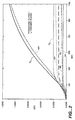
- Figure 1 illustrates weight change in tomatoes at room temperature due to gas uptake for different gases.
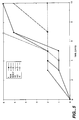
- Figure 2 illustrates the effect of different gases as indicated on the enzyme tyrosinase at 25°C.
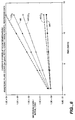
- Figure 3 illustrates the effect of noble gas atmospheres upon the growth of A. alternata .
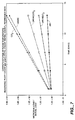
- Figure 4 illustrates the effect of noble gas atmospheres upon the growth of E. coli .
- Figure 5 illustrates the effect of different atmospheres as indicated upon the shelf-life of apples.
- Figure 6 illustrates the effect of different atmospheres as indicated upon the microbial load for carrots stored at room temperature.
- Figure 7 illustrates the effect of different atmospheres as indicated upon the microbial load for carrots stored at room temperature.
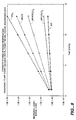
- Figure 8 illustrates the effect of different atmospheres as indicated upon the microbial load for carrots stored at room temperature.
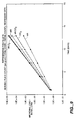
- Figure 9 illustrates the effect of different atmospheres as indicated on the microbial load for refrigerated fish fillets.
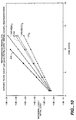
- Figure 10 illustrates the effect of different atmospheres as indicated on the microbial load for refrigerated fish fillets.
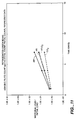
- Figure 11 illustrates the effect of different atmospheres as indicated on the microbial load for refrigerated green beans.
- Figure 12 illustrates the effect of different atmospheres as indicated on the microbial load for refrigerated green beans.
- Figure 13 illustrates the effect of different atmospheres as indicated on the microbial load for refrigerated green beans.
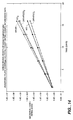
- Figure 14 illustrates the effect of different atmospheres as indicated on the microbial load for green beans stored at room temperature.
- Figure 15 illustrates the effect of different atmospheres as indicated on the microbial load for green beans at room temperature.
- Figure 16 illustrates the effect of different atmospheres as indicated on the microbial load for lettuce at room temperature.
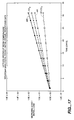
- Figure 17 illustrates the effect of different atmospheres as indicated on the microbial load for lettuce stored at room temperature.
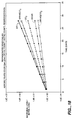
- Figure 18 illustrates the effect of different atmospheres as indicated on the microbial load for refrigerated mixed salad.
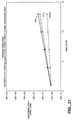
- Figure 19 illustrates the effect of different atmospheres as indicated on the microbial load for refrigerated shrimp.
- Figure 20 illustrates the effect of different atmospheres as indicated on the microbial load for refrigerated shrimp.
- Figure 21 illustrates the effect of different atmospheres as indicated on the microbial load for refrigerated smelt.
- Figure 22 illustrates the effect of different atmospheres as indicated on the microbial load for refrigerated smelt.
- Figure 23 illustrates the effect of different atmospheres as indicated on the microbial load for strawberries at room temperature.
- Figure 24 illustrates the effect of different atmospheres as indicated on the microbial load for strawberries at room temperature.
- Figure 25 illustrates the effect of different atmospheres as indicated on the microbial load for strawberries at room temperature.
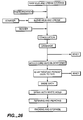
- Figure 26 illustrates a process for making blue cheese.
- Figure 27 illustrates a method of making cheddar cheese.
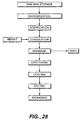
- Figure 28 illustrates a process of making mozzerella cheese.
- Figure 29 illustrates a process of making cottage cheese.
- Figure 30 illustrates the effect of argon at different temperatures on the rennet/skim milk system.
- Figure 31 illustrates the effect of oxygen at different temperatures on the rennet/skim milk system.
- Figure 32 illustrates the effect of nitrogen on the Oftentimes, a diet, a diet, a diet, or a diet.
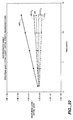
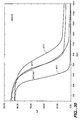
- Figure 33 illustrates the effect of the present invention in enhancing the rennet/skim milk system at 30°C.
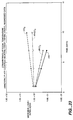
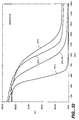
- Figure 34 illustrates the effect of the gases of the present invention in enhancing the rennet/skim milk system at 35°C.
- argon and the other noble gases possess profound and significant properties in improving the preservation of foodstuffs in gas-packaging applications. These improvements are manifested at all levels, including the chemical, enzymatic, microbiological and consumer quality perception levels.
- the present invention has wide utility and application in preserving food.
- gases and gas mixtures of the present invention act in at least three ways: 1) by controlling of endogenous (product origin) and exogenous (process origin and microbial origin) enzymes responsible for food degradation, 2) by controlling of the growth of spoilage microorganisms, and 3) by controlling chemical oxidations and other chemical reactions.
- the present invention provides a method whereby any food may be contacted with any of argon and the other noble gases xenon, krypton, neon and helium during packaging or storage, preferably gas packaging or controlled atmosphere storage.
- the present method provides a surprisingly superior method of preservation as evidenced by superior control of degradative chemical and oxidative reactions, control of degradative and oxidative enzymatic reactions, and control of degradation of important consumer quality perception parameters.
- the present invention provides the first demonstration that noble gases and noble gas-based mixtures significantly and quite surprisingly increase the shelf-life of a wide variety of food products through concerted action upon chemical, biochemical and microbial degradation parameters.
- numerous degradation parameters including enzyme activity from within the food product, from external application during processing, from microbial secretion, and including microbial growth rate, and including oxidative chemical processes and certain other processes.
- noble gases or noble gas-containing mixtures can inhibit all of the above.
- noble gases or noble gas-containing mixtures can inhibit all of the above, even when applied at low pressures or in solution.
- the present invention thus provides, in part, a method of gas packaging food using noble gases or of storing of food under noble gases, alone or in mixtures. It also provides a method for improved preservation of foods.
- the present invention thus has broad applicability to any problem or condition arising from food product storage or processing where the limitation of degradation, oxidation, food spoilage or deterioration is desirable.
- the term "noble gas” means neon, krypton, argon or xenon. Each of these gases may be used singly or in combination with each other. Because of its low solubility in water and its high volatility, however, helium is not preferably used. Radon is not generally useable because it is dangerously radioactive. However, any gas or gas mixture, including nitrogen, oxygen, carbon dioxide, nitrous oxide, carbon monoxide, or combinations of these gases may be used as supplementing gases or "carrier gases" in the atmosphere used. Notably, helium may be used as either a noble gas or a carrier gas. The composition of the appropriate gas mixture to use is determined by the nature of the product or process to be regulated, its most common spoilage flora and the packaging material of choice.
- the present gases and gas mixtures can inhibit microbial enzymes, both endogenous and exogenous.
- the present gases and gas mixtures also inhibit the other enzymes present in the product, that is endogenous enzymes and enzymes introduced during the processing of the product.
- the present gases and gas mixtures also inhibit chemical oxidation and certain other degradative chemical processes. The combination of the above mentioned inhibitions surprisingly improves the shelf-life of the product.
- oxygen In the case of living products, such as fresh horticultural commodities, a minimum level of oxygen is necessary to allow respiration and avoid anaerobic fermentation of product, responsible for the generation of off-flavors. In other products, oxygen significantly causes oxidative degradation to produce undesirable color changes and other substantive changes. Addition of noble gases to oxygen-containing atmospheres significantly alters the resultant effect of oxygen.
- the present invention also may be used to control the growth of microorganisms on foods.
- the present invention also provides method of maintaining or improving the flavor, texture, color or appearance of food.
- the present invention provides a method of specifically maintaining or improving the color of food, such as foods having vivid colors such as red, yellow, green, orange and purple.
- the red color of red shrimp or radishes or the green color of beans or broccoli may be preserved in accordance with the present invention.
- the present invention also provides a method of preserving or maintaining pigmented compounds, such as caretenoids, flavenoids, anthocyanins or chlorophyll, whether in naturally occurring foods, synthetic foods or foods pigmented with these compounds or the compounds themselves.
- pigmented compounds such as caretenoids, flavenoids, anthocyanins or chlorophyll
- the present invention provides a method of inhibiting aerobic and anaerobic bacteria, yeast, mold and/or fungi growth on foods.
- pressures are used of from near vacuum, i.e., about 10 -8 torr, to about 100 atmospheres. However, it is generally preferred that a pressure be used between about 0.001 to about 3 atmospheres. Further, a range of temperatures may be used from about 0°C to about 120°.
- the present invention may be used to preserve all types of food, including but not limited to meats such as processed meats or poultry, vegetables, fruits and various types of baked goods, and, in particular cheese and chocolate.
- Microbes and enzymes known to be important in the degradation of each individual product were selected for examination and scoring from the literature.
- 26 microorganisms were assayed under at least 105 mixtures containing noble gases, and under 8 controls.
- the controls were 100% air, 100% carbon dioxide, 100% nitrogen, 100% oxygen, and commonly used gas-packaging mixtures made up of various fractions of nitrogen, oxygen, and carbon dioxide. These latter bracket the range of common application gas mixtures.
- the assay mixtures consisted of series of two-component ("A" + “B” ) mixtures of Ar, Xe, Kr, and Ne wherein each gas was made to constitute 0.1, 1.0, 5.0, or 100% of component "A", then another noble gas was used to constitute the rest of component "A", and then this first "A" component mixture was added to a base gas which constituted the second component "B” in the proportions 100:0, 95:5, 90:10, or 50:50.
- Base gases were various, but were most often argon; oxygen; nitrogen; or mixtures of nitrogen, carbon dioxide and oxygen in proportions commonly used in gas-packaging.
- one typical gas mixture would be Ar:Xe 99:1 (component "A") 95% of total, with air (component "B”) 5% of total.
- a very large number of gas mixes were assayed for activity against microorganisms.
- Each of the microorganisms was plated after dilution series to result in growth of single-colonies under sterile conditions. Standard ATCC cultures were employed and maintained as reccomended. Assays were conducted by inoculating 125 cc serum vials prepared with 25 cc of appropriate media after that vial had been gently evacuated and thoroughly purged with nitrogen to remove all residual gases, then thoroughly purged with the test gas. Appropriate controls were run for sterility and optimum growth conditions. Daily growth plate area coverage measurements were made, backed up by less frequent total cell counts. Results were interpreted as growth/day vs. air, overall growth/air for aerobic microorganisms, and vs. appropriate atmospheres for anaerobes. Periodic measurement of carbon dioxide and oxygen levels in the vials were also made.
- Results below show daily counts for one vial of Alternaria alternata , and graphed growth area comparisons for one set of gases for A. alternata and one set for of Escherichia coli .
- the results clearly demonstrate selective effects of different gazes in inhibiting the growth of each species.
- the results are generalizable across gases, but each species varies in its tolerance of quantitative amounts of gas. Gases are also clearly differentially effective depending upon their fractional composition in a mix, that is different mixes of gases show different effects upon the same microorganism. These mixes show effects that are synergistic with respect to the additive activity of their components.
- the present invention it has been surprisingly discovered that it is possible to directly affect the rate of oxidation of chemicals or chemical preparations. That is, in accordance with the present invention, it has been discovered that certain gases can directly affect the oxidation rate of chemicals and not merely slow oxidation only as function of physical and inert displacement of oxygen.
- the present invention is effected by contacting the chemicals or chemical preparations during at least a protion of storage thereof to a noble gas, a mixture of noble gases or a gaseous mixture containing at least one noble gas.
- Enzymes both endogenous to the product or secreted by the microorganisms found in the product are often strongly inhibited by noble gases.
- the effect of the noble gases are summarized by class below.
- An example of this inhibition is in the very strong inhibition of oxidases.
- the follwing Table summarizes the maximum inhibition of enzymes activity realized with various noble gases under various storage conditions.
- Examples are fresh apple slices and shredded lettuce.
- Sections A-D represent the four parameters of spoilage: microbes, enzymes, chemical, reactions and quality parameters for customer perception: Sections E-H are the responses provided for each of sections A-D, respectively.
- the present invention may be used advantageously to preserve the aroma and flavor of any food, it has been found to be particularly advantageous to use the present invention to preserve the freshness, aroma and flavor of cheese or chocolate.
- liquid or solid chocolate or a precursor thereof can be preserved by inhibiting oxidative degradation thereof by saturating or substantially saturating the chocolate or the precursor thereof during at least one processing step therefor and/or storage step thereof with at least one noble gas, a mixture of noble gases or a gas mixture containing at least one noble gas.
- the effect of oxidative inhibition is provided not only by displacement of oxygen but also by action of the noble gas at the molecular level.
- the term "noble gas” means any one of argon, krypton, xenon or neon. Helium does not word and radon is radioactive and not useful. Preferably, argon or mixtures containing argon are used. Further, any of these gases may be used singly, or in combination with each other or in admixture with inert gases, such as nitrogen.
- the present invention may be practiced during any single stage, any combination of stages or throughout all stages of chocolate production, processing and/or storage. Further, it may be utilized in conjunction with the subsequent production of any product containing chocolate. For example, the present invention may be used to great advantage in the production and/or processing of chocolate liquor, cocoa cake from processing, chocolate powder, chocolate beans or nibs, candies, cocoa butter or any other intermediate finished chocolate product or confectionery.
- the present invention may also be used for preserving a chocolate precursor.
- precursor is meant any natural product such as cacao beans or raw cocoa which may be used as a source of chocolate.
- the present invention affords a variety of surprising advantages.
- surprising improvement and/or enhancement is noted in the profile of chemical components, flavor, fragrance (aroma), thermostability (temper), shelf life, consistency, color, texture, overall appearance and customer appeal.
- improvements and/or enhancements of at least 20% in many or all of these categories is observed using the present invention.
- the effect of the present invention may be obtained even with the application of very low pressures or partial pressures of one or more noble gases, the effect generally increases with increasing pressures or partial pressures of the noble gases. While pressures from about 10 -8 torr to 100 atm. may be used, in general, pressures of from 10 -2 atm. to about 10 atm. are more commonly used. However, it is preferred to use from about 10 -1 atm. to about 3 atm. of pressure. It is more preferred still to use from about 0.5 atm. to about 2 atm. of pressure. Generally, excellent results may be obtained at ambient or about 1 atm. of pressure.
- the present method is effective particularly at the pressures found in typical process steps, such as 12,000 psi in a pressurizing step, and 3 to 6 atm. in the roasting step, for example.
- the present invention may be used advantageously in conjunction with any single stage or multiple stages of chocolate production and/or processing.
- the general process for the production of chocolate will now be described.
- the present invention may be used in conjunction with any or all of these steps or with any steps with those required for the production of products containing chocolate.
- cocoa beans are picked, often by hand; 2) the beans are fermented, in piles or trays; 3) the fermented beans are stored and/or transported to a processing facility; 4) the beans are cleaned, washed, brushed, and undesirable particles are separated out by airlift separators and magnetic separators 5) the fermented beans are roasted in hot air flow ovens, or by convection 4) or micronizer treatments 6) the roasted beans are sterilized; 7) the sterile beans are subjected to alkalization by treatment with K 2 CO 3 in order to confer desired color; 8) the alkalized beans are winnowed to remove shells, and the nibs are separated and retained, by a combined breaker/sieve/airlift 9) cocoa is produced through expeller/extrusion or more commonly through milling of beans and nibs through grinding and use of heat (both external and from friction); 10)
- the moisture content is critical and needs to be maintained between 0.8-1.8%, or at an even narrower range of between 1-1.5%.
- pressing can be by expeller extrusion screw pressing.
- Solvent extraction can also be carried out; 13) the cake is then ground ("kibbled") in various mills and cooled to yield cocoa powder.
- the composition of the cocoa powder (Table 1) is critical, especially the fat or butter content and composition (Table 2). Lecithin content and deodorization effects are also important.
- a viscometer is used to measure butter . Replacement fats may be used, measured as cocoa butter equivalents (e.g.
- Subsequent steps may be used to utilize chocolate in the production of confectionery. These steps may include addition of cocoa butter replacements, addition of antibloom agents such as sorbitan and polyoxyethylene fatty esters (Span/Tween), tempering and cooling, molding, drop and roller deposition, aeration, flake and bark formation, vermicelli production, lamination, hollow rotation, foiling, shelling, molding, enrobing, cooking, coating and panning.
- antibloom agents such as sorbitan and polyoxyethylene fatty esters (Span/Tween)
- the present invention entails contact, and preferably the saturation of, chocolate with the gases of the present invention, preferably with argon, at any stage, more preferably at every stage, of its production in order to inhibit the oxidative degradation of the chocolate.
- the chocolate when in the form of a liquid or the precursor is generally in liquid form, the following will apply.
- a gas selected from the group consisting of argon, krypton, xenon and neon or a mixture thereof is sparged into the chocolate and/or injected above the liquid chocolate or precursor in order to saturate or substantially saturate the same with said gas or gas mixture, it is possible to substantially improve the color and/or the flavor and/or the aroma and/or the shelf life of the chocolate, particularly when said saturation or substantial saturation is maintained throughout the volume of the storage container and during substantially all the time that the chocolate is stored in said container.
- substantially saturate means that it is not necessary to completely and/or constantly saturate the liquid chocolate or precursor with the gas or gas mixture (i.e., having the maximum amount of gas solubilized in said wine). Usually, it is considered necessary to saturate said wine to more than 50% of its (full) saturation level and preferably more than 70%, while 80% or more is considered the most adequate level Of saturation of the chocolate. Of course, supersaturation is also possible. This means that if during the storage life of the chocolate in the container, the chocolate is not saturated with noble gas at least from time to time or even quite longer if it remains generally substantially saturated, results according to the invention are usually obtained.
- said gases can be diluted with some other gases, in order to keep for example the invention economically valuable.
- Said diluent gases are preferably selected from the group comprising nitrogen, oxygen, nitrous oxide, air, helium or carbon dioxide.
- oxygen-containing gas or another reactive gas such as carbon dioxide
- their degradative properties are such that these properties will mask the effect of noble gases, certainly in mixtures where they comprise 50% vol. or more and possibly 30% vol. or more.
- those mixes comprise 0% to 10% vol. of these other gases
- the noble gases referred to above are still extremely effective, while between 10% vol. and 20% vol. they are usually still effective, depending on the type of gases and conditions, which might be easily determined by the man skilled in the art.
- the effect of noble gases consisting of Ar, Ne, Kr, Xe in the mixture is linearly proportional to its concentration in the mixture, which evidences that nitrogen and/or helium have no effect on substantially preventing oxidation of the chocolate.
- the mixture of noble gas and nitrogen and/or helium can thus comprise any amount (% volume) of nitrogen and/or helium: however, in practice, the lesser the proportion of noble gas selected from the group consisting of Ar, Ne, Kr and Xe, the larger the time required to achieve saturation or substantial saturation of the chocolate.
- argon is preferred because it is cheaper than the other active gases.
- mixtures of argon and/or krypton and/or xenon are at least as effective as argon alone. It has also been unexpectedly found that mixtures comprising between 90 to 99% vol. argon and 1 to 10% Xe and/or Kr are usually the most effective as exemplified in the further examples (whether or not they are diluted with nitrogen, helium, or nitrous oxide).
- Xe is the most efficient gas according to the invention, followed by Kr, Ar and Ne.
- suitable mixes either pure or diluted with N 2 , He, N 2 O (or even air, oxygen or a small amount of hydrogen) are the Ne/He mix comprising about 50% vol. of each, and the Kr/Xe mix comprising about 5-10% vol. Xe and about 90-95% vol. Kr, with a small amount of argon and/or oxygen (less than 2% vol.) or nitrogen (less than 1% vol.).
- the temperatures at which the invention is carried out is usually between about 0°C to 60°C, and preferably about 10°C and 30°C.
- the injection of the gas or gas mixture into the wine and/or into the container e.g. by sparging is usually done at about 1 atmosphere but is still quite operable at 2 or 3 atmospheres, while saturation is increased at higher pressures.
- the pressure of the gas above the wine in the container shall be, in any case, preferably lower than 10 atmospheres and it is usually acceptable to maintain it lower than 3 atmospheres.
- Saturation or substantial saturation of the chocolate can be measured by various methods well-known by the man skilled in the art, including but not limited to thermogravimetric analysis or mass change weighting.
- Samples generally are completely evacuated as a control for zero % saturation. Such samples may then be completely saturated by contact with noble gases such that no additional noble gas will disappear from a reservoir in contact with the sample. Such saturated samples may then have their gas content driven off by trapped evacuation or by increase in temperature, and said gas sample identified quantitatively and qualitatively. Analysis is of trapped gases, reservoir gases, or some other headspace of gases, not directly of the sample.
- Direct sample analysis methods are available, and include comprehensive GC/MS analysis, or by mass or thermal conductance or GC analysis and comparison with calibrated standards.
- GC/MS gas chromatography/mass spectrometry
- GC/MS is applied to the gas itself, as in the headspace above a sample.
- the technique may be used either to determine the composition and quantity of gas or mixture being released from a sample, or conversely the composition and quantity of a gas or mixture being absorbed by a sample by following the disappearance of the gas.
- GC/MS methods include, for example, the use of a 5 Angstrom porous layer open tubular molecular sieve capillary glass column of 0.32 mm diameter and 25 meter length to achieve separation, isothermally e.g. at 75°C or with any of several temperature ramping programs optimized for a given gas or mixture e.g. from 35-250°C, wherein ultra-high purity helium or hydrogen carrier gas is used at e.g. 1.0 cc/min flow rate, and gases are detected based upon their ionicity and quantitative presence in the sample, and characterized by their unique mass spectra.
- Appropriate experimental conditions might include, for example, completely evacuating a given sample under vacuum to remove all absorbed and dissolved gases, then adding a gas or mixture to the sample and measuring a) the rate of uptake of each component as disappearance from the added gas, and/or b) the final composition of the gas headspace after equilibration. Both measurements are made by GC/MS, and either method can be used in both batch and continuous modes of operation.
- a simplification of this analysis entails the use of a GC only, with a thermal conductivity detector, wherein adequate knowledge of the gas saturation process and preparation of calibration curves have been made such that quantification and characterization of gases and mixtures can be accomplished without mass spectral analysis.
- Such instruments are relatively inexpensive and portable.
- thermogravimetric analysis which is highly precise, wherein a sample is saturated with gas and mass changes are correlated to thermal change.
- substantially saturate means that it is believed that it is not necessary to completely and/or constantly saturate the chocolate with said gas or gas mixture (i.e., having the maximum amount of gas solubilized in said chocolate). Usually, it is considered necessary to saturate said chocolate to more than 50% of its (full) saturation level and preferably more than 70%, while 80% or more is considered the most adequate level of saturation of the chocolate. Of course, supersaturation is also possible. This means that if during the storage life of the chocolate in the container, the chocolate is not saturated with noble gas at least from time to time or even quite longer if it remains generally substantially saturated, results according to the invention are usually obtained.
- said gases can be diluted with some other gases, in order to keep for example the invention economically valuable.
- Said diluent gases are preferably selected from the group comprising nitrogen, oxygen, nitrous oxide, air, helium or carbon dioxide.
- oxygen-containing gas or another reactive gas such as carbon dioxide
- their degradative properties are such that these properties will mask the effect of noble gases, certainly in mixtures where they comprise 50% vol. or more and possibly 30% vol. or more.
- those mixes comprise 0% to 10% vol. of these other gases
- the noble gases referred to above are still extremely effective, while between 10% vol. and 20% vol. they are usually still effective, depending on the type of gases and conditions, which might be easily determined by the man skilled in the art.
- the effect of noble gases consisting of Ar, Ne, Kr, Xe in the mixture is linearly proportional to its concentration in the mixture, which evidences that nitrogen and/or helium have no effect on substantially preventing oxidation of chocolate.
- the mixture of noble gas and nitrogen and/or helium can thus comprise any amount (% volume) of nitrogen and/or helium: however, in practice, the lesser the proportion of noble gas selected from the group consisting of Ar, Ne, Kr and Xe, the larger the time required to achieve saturation or substantial saturation of the chocolate.
- argon is preferred because it is less expensive than the other active gases.
- active gases Ar, Kr, Xe, and Ne
- argon and/or krypton and/or xenon are at least as effective as argon alone. It has also been unexpectedly found that mixtures comprising between 90 to 99% vol. argon and 1 to 10% Xe and/or Kr are usually the most effective as exemplified in the further examples (whether or not they are diluted with nitrogen, helium, or nitrous oxide).
- Xe is the most efficient gas according to the invention, followed by Kr, Ar and Ne.
- suitable mixes either pure or diluted with N 2 , He, N 2 O (or even air, oxygen or a small amount of hydrogen) are the Ne/He mix comprising about 50% vol. of each, and the Kr/Xe mix comprising about 5-10% vol. Xe and about 90-95% vol. Kr, with a small amount of argon and/or oxygen (less than 2% vol.) or nitrogen (less than 1% vol.).
- the temperatures at which the invention is carried out is between about 0°C to about 600°C or more.
- a temperature from about 200°C to about 600°C is usually used, while for most processing and storage steps, a temperature between about 20°C and about 40°C.
- the gas or gas mixture is also possible to introduce the gas or gas mixture as a cryogenic liquid, which is either vaporized and heated before using it or used as such to freeze the chocolate or precursor thereof.
- the injection of the gas or gas mixture into the coffee and/or into the storage container is usually done at about 1 atmosphere but is still quite operable at 2 or 3 atmosphere, while saturation is increased at higher pressures.
- the pressure of the gas above the chocolate in the storage container shall be, in any case, preferably lower than 3 atmosphere and it is usually acceptable to maintain it lower than 2 atmosphere. A slight overpressure (between 1 or 2 atmosphere) is usually sufficient.
- the gases or gas mixes according to the invention are entirely effective near vacuum or between vacuum and atmospheric pressure, provided that such gas can saturage or substantially saturate the chocolate, the effect of said gas or gases or gas mixes being a fraction of its effect at 1 atmosphere.
- a higher pressure may be used up to 100 atmosphere but usually less than 10 atmosphere and preferably between 1 and 6 atmosphere.
- the optimal method is to saturate or substantially saturate the product with noble gas selected from the group defined hereabove as completely as possible.
- Samples generally are completely evacuated as a control for zero % saturation. Such samples may then be completely saturated by contact with noble gases such that no additional noble gas will disappear from a reservoir in contact with the sample. Such saturated samples may then have their gas content driven off by trapped evacuation or by increase in temperature, and said gas sample identified quantitatively and qualitatively. Analysis is of trapped gases, reservoir gases, or some other headspace of gases, not directly of the sample.
- Direct sample analysis methods are available, and include comprehensive GC/MS analysis, or by mass or thermal conductance or GC analysis and comparison with calibrated standards.
- GC/MS gas chromatography/mass spectrometry
- GC/MS is applied to the gas itself, as in the headspace above a sample.
- the technique may be used either to determine the composition and quantity of gas or mixture being released from a sample, or conversely the composition and quantity of a gas or mixture being absorbed by a sample by following the disappearance of the gas.
- GC/MS methods include, for example, the use of a 5 Angstrom porous layer open tubular molecular sieve capillary glass column of 0.32 mm diameter and 25 meter length to achieve separation, isothermally e.g. at 75°C or with any of several temperature ramping programs optimized for a given gas or mixture e.g. from 35-250°C, wherein ultra-high purity helium or hydrogen carrier gas is used at e.g. 1.0 cc/min flow rate, and gases are detected based upon their ionicity and quantitative presence in the sample, and characterized by their unique mass spectra.
- Appropriate experimental conditions might include, for example, completely evacuating a given sample under vacuum to remove all absorbed and dissolved gases, then adding a gas or mixture to the sample and measuring a) the rate of uptake of each component as disappearance from the added gas, and/or b) the final composition of the gas headspace after equilibration. Both measurements are made by GC/MS, and either method can be used in both batch and continuous modes of operation.
- a simplification of this analysis entails the use of a GC only, with a thermal conductivity detector, wherein adequate knowledge of the gas saturation process and preparation of calibration curves have been made such that quantification and characterization of gazes and mixtures can be accomplished without mass spectral analysis.
- Such instruments are relatively inexpensive and portable.
- thermogravimetric analysis which is highly precise, wherein a sample is saturated with gas and mass changes are correlated to thermal change.
- the present invention may be used in conjunction with any apparatus or device which is used either directly or indirectly in the production or storage of chocolate or products subsequently produced therefrom containing chocolate.
- the present invention may be used in conjuction with separators; magnetic separators; destoners; fluid bed roasters, where beans are heated by convection; probat roasters, where beans are prewarmed, roasted and cooled by convection; Buhler STR 2 roasters, micromizers, tornado roasters, particularly model 2600 RS; winnowing machines, for sieving beans; triple liquor mills, cocoa mills, particularly Type MPH 411; Wieneroto W45C, Petzhold + Injection Unit Type PIA; Petsomat-Single Tower; LBCT System: Dutching Plant; liquor presses; cocoa butter extractors, particularly those of a continuous nature; powder cooling and stabilizing systems; cocoa butter deodorizing plants; Buhler Automatic Hopper System, Mixing and Double Refining Systems; Groen Crumb System Pilot Plants; Conche pots, particularly four-pot conches; Petzholdt Superconche type PVS; Rotary conche; Frisse Double-Overthrow Conche; Tourell-Gar
- Tables 1 and 2 are provided hereinbelow.
- Table 1 provides an analysis of cocoa powder using commonly quoted amounts of constituents.
- Table 2 provides an analysis of triglyceride composition of cocoa butters from the main growing areas.
- ANALYSES OF COCOA POWDER VARIOUS QUOTED FIGURES
- Natural 1 2 3 Remarks Moisture, & 3.0 3.5 3.5 4.3 Should not exceed 5.0%
- Coca butter 11.0 10.0 23.5 21.5 depends on pressing pH (10% suspension) 5.7 7.1 6.7 6.8 Depends on alkalization Ash, % 5.5 8.5 6.3 7.7 Depends on alkalization Water, soluble ash, % 2.2 6.3 - 5.8 Depends on alkalization Alkalinity of water soluble ash as K 2 O in original coco, % 0.8 2.9 1.8 2.5
- Chloride As NaCl
- the treatments were repeated wherein 5% air was admitted. The treatments were repeated wherein 10% air was admitted. The treatments were repeated wherein 20% air was admitted.
- Argon was nearly as good (80 - 90%) in improvement of the process as Kr and Xe, and is preferable because of its lower cost. Where final product is valuable and gas volume used would not be excessive, combining argon with Kr or Xe as 90:10 - 95:5 - 99:1 percentage mixtures give better improvement still.
- the present invention may be used advantageously not only in conjunction with processes for producing chocolate, but also in storing chocolate or precursors thereof.
- the present invention may also be used to advantage in the production and/or storage of chocolate-containing products.
- the term "substantially” generally means at least 75%, preferably at least about 90%, and more preferably about 95%. This refers to not only duration of storage but also the volume of the containing means.
- any or all of the steps of cheese-making may be controlled to great advantage by contacting cheese or a cheese precursor substance in any single step or combination of steps of a cheese-making process with a gas containing at least one noble gas.
- cheese precursor substance means any starting material or intermediate products used or formed in a cheese-making process or any intermediates, in particular, resulting from processes such as those of Figures 1-4.
- surprising improvements to cheese manufacturing process may be made by contacting, saturating or blanketing the same with noble gases, preferably argon, and, particularly, in any step where the milk/cheese or precursor of cheese might otherwise be exposed to air or oxygen.
- noble gases preferably argon
- argon enhances the development of acidity after inoculation with microbes or enzymes, thereby decreasing the acidification time of the milk, and controls the rate of coagulation by enhancing the activity of rennet and decreases maturation time by continuing to enhance the activity of the enzymes.
- noble gases enhance the activity of flavoring and curing enzymes during the ripening step so as to yield a higher quality and more consistent product and generally act to improve and preserve desirable color, aroma and flavor characteristics of the cheese.
- the present invention may be used in conjunction with any and/or oil steps of the cheese-making process, such as those described above.
- the present invention may be used in the production of any variety of cheese from any part of the world.
- cheeses as roquefort, cheddar, brie, camembert, mozzarella, feta, stilton and havarti may be produced in accordance with the present invention.
- a method of improving the aromas and/or the flavor of cheese or constituents thereof entailing, injecting a gas or a gas mix into the cheese and/or precursor thereof in containing means or into containing means, the gas or gas mixture containing an element selected from the group consisting of argon, krypton, xenon and neon and a mixture thereof, substantially saturating the cheese or precursor thereof with the gas or gas mixture; maintaining the saturation substantially throughout the volume of the storage container and during substantially all the time that the cheese or precursor is stored in said container.
- the term "substantially saturate” means that it is believed that it is not necessary to completely and/or constantly saturate the cheese or precursor with said gas or gas mixture (i.e., having the maximum amount of gas solubilized in the cheese or precursor).
- supersaturation is also possible.
- results according to the invention are usually obtained. While it is believed that it is important that the entire volume of the container be saturated or substantially saturated with one of the above gas or a mixture thereof, it is quite possible to obtain the results according to the invention if a part of the volume is not saturated during preferably a limited period of time or is less saturated or substantially saturated than other portions of the volume of the cheese or precursor in the container.
- said gases can be diluted with some other gases, in order to keep for example the invention economically valuable.
- Said diluent gases are preferably selected from the group comprising nitrogen, oxygen, nitrous oxide, air, helium or carbon dioxide.
- oxygen-containing gas or another reactive gas such as carbon dioxide
- their degradative properties are such that these properties will mask the effect of noble gases, certainly in mixtures where they comprise 50% vol. or more and possibly 30% vol. or more.
- those mixes comprise 0% to 10% vol. of these other gases
- the noble gases referred to above are still extremely effective, while between 10% vol. and 20% vol. they are usually still effective, depending on the type of gases and conditions, which might be easily determined by the man skilled in the art.
- the effect of noble gases consisting of Ar, Ne, Kr, Xe in the mixture is linearly proportional to its concentration in the mixture, which evidences that nitrogen and/or helium have no effect on substantially preventing oxidation of the cheese or precursor.
- the mixture of noble gas and nitrogen and/or helium can thus comprise any amount (% volume) of nitrogen and/or helium: however, in practice, the lesser the proportion of noble gas selected from the group consisting of Ar, Ne, Kr and Xe, the larger the time required to achieve saturation or substantial saturation of the cheese or precursor.
- argon is preferred because it is cheaper than the other active gases.
- mixtures of argon and/or krypton and/or xenon are at least as effective as argon alone. It has also been unexpectedly found that mixtures comprising between 90 to 99% vol. argon and 1 to 10% Xe and/or Kr are usually the most effective as exemplified in the further examples (whether or not they are diluted with nitrogen, helium, or nitrous oxide).
- Xe is the most efficient gas according to the invention, followed by Kr, Ar and Ne.
- suitable mixes either pure or diluted with N 2 , He, N 2 O (or even air, oxygen or a small amount of hydrogen) are the Ne/He mix comprising about 50% vol. of each, and the Kr/Xe mix comprising about 5-10% vol. Xe and about 90-95% vol. Kr, with a small amount of argon and/or oxygen (less than 2% vol.) or nitrogen (less than 1% vol.).
- the temperatures at which the invention is carried out is usually between about 0°C to 60°C, and preferably about 10°C and 30°C.
- the injection of the gas or gas mixture into the cheese or precursor and/or into the container is usually done at about 1 atmosphere but is still quite operable at 2 or 3 atmospheres, while saturation is increased at higher pressures.
- the pressure of the gas above the cheese or precursor in the container shall be, in any case, preferably lower than 10 atmospheres and it is usually acceptable to maintain it lower than 3 atmospheres. Saturation or substantial saturation of the cheese or precursor can be measured by various methods well-known by the man skilled in the art, including but not limited to thermogravimetric analysis or mass change weighing.
- Samples generally are completely evacuated as a control for zero % saturation. Such samples may then be completely saturated by contact with noble gases such that no additional noble gas will disappear from a reservoir in contact with the sample. Such saturated samples may then have their gas content driven off by trapped evacuation or by increase in temperature, and said gas sample identified quantitatively and qualitatively. Analysis is of trapped gases, reservoir gases, or some other headspace of gases, not directly of the sample.
- Direct sample analysis methods are available, and include comprehensive GC/MS analysis, or by mass or thermal conductance or GC analysis and comparison with calibrated standards.
- GC/MS gas chromatography/mass spectrometry
- GC/MS is applied to the gas itself, as in the headspace above a sample.
- the technique may be used either to determine the composition and quantity of gas or mixture being released from a sample, or conversely the composition and quantity of a gas or mixture being absorbed by a sample by following the disappearance of the gas.
- GC/MS methods include, for example, the use of a 5 Angstrom porous layer open tubular molecular sieve capillary glass column of 0.32 mm diameter and 25 meter length to achieve separation, isothermally e.g. at 75°C or with any of several temperature ramping programs optimized for a given gas or mixture e.g. from 35-250°C, wherein ultra-high purity helium or hydrogen carrier gas is used at e.g. 1.0 cc/min flow rate, and gases are detected based upon their ionicity and quantitative presence in the sample, and characterized by their unique mass spectra.
- Appropriate experimental conditions might include, for example, completely evacuating a given sample under vacuum to remove all absorbed and dissolved gases, then adding a gas or mixture to the sample and measuring a) the rate of uptake of each component as disappearance from the added gas, and/or b) the final composition of the gas headspace after equilibration. Both measurements are made by GC/MS, and either method can be used in both batch and continuous modes of operation.
- a simplification of this analysis entails the use of a GC only, with a thermal conductivity detector, wherein adequate knowledge of the gas saturation process and preparation of calibration curves have been made such that quantification and characterization of gases and mixtures can be accomplished without mass spectral analysis.
- Such instruments are relatively inexpensive and portable.
- thermogravimetric analysis which is highly precise, wherein a sample is saturated with gas and mass changes are correlated to thermal change.
- the term "substantially saturate” means that it is believed that it is not necessary to completely and/or constantly saturate the coffee with said gas or gas mixture (i.e., having the maximum amount of gas solubilized in the cheese or precursor). Usually, it is considered necessary to saturate said coffee to more than 50% of its (full) saturation level and preferably more than 70%, while 80% or more is considered the most adequate level of saturation of the cheese or precursor. Of course, supersaturation is also possible. This means that if during the storage life of the cheese or precursor in the container, the cheese or precursor is not saturated with noble gas at least from time to time or even quite longer if it remains generally substantially saturated, results according to the invention are usually obtained.
- said gases can be diluted with some other gases, in order to keep for example the invention economically valuable.
- Said diluent gases are preferably selected from the group comprising nitrogen, oxygen, nitrous oxide, air, helium or carbon dioxide.
- oxygen-containing gas or another reactive gas such as carbon dioxide
- their degradative properties are such that these properties will mask the effect of noble gases, certainly in mixtures where they comprise 50% vol. or more and possibly 30% vol. or more.
- those mixes comprise 0% to 10% vol. of these other gases
- the noble gases referred to above are still extremely effective, while between 10% vol. and 20% vol. they are usually still effective, depending on the type of gases and conditions, which might be easily determined by the man skilled in the art.
- the effect of noble gases consisting of Ar, Ne, Kr, Xe in the mixture is linearly proportional to its concentration in the mixture, which evidences that nitrogen and/or helium have no effect on substantially preventing oxidation of cheese or precursor.
- the mixture of noble gas and nitrogen and/or helium can thus comprise any amount (% volume) of nitrogen and/or helium: however, in practice, the lesser the proportion of noble gas selected from the group consisting of Ar, Ne, Kr and Xe, the larger the time required to achieve saturation or substantial saturation of the cheese or precursor.
- argon is preferred because it is less expensive than the other active gases.
- active gases Ar, Kr, Xe, and Ne
- argon and/or krypton and/or xenon are at least as effective as argon alone. It has also been unexpectedly found that mixtures comprising between 90 to 99% vol. argon and 1 to 10% Xe and/or Kr are usually the most effective as exemplified in the further examples (whether or not they are diluted with nitrogen, helium, or nitrous oxide).
- Xe is the most efficient gas according to the invention, followed by Kr, Ar and Ne.
- suitable mixes either pure or diluted with N 2 , He, N 2 O (or even air, oxygen or a small amount of hydrogen) are the Ne/He mix comprising about 50% vol. of each, and the Kr/Xe mix comprising about 5-10% vol. Xe and about 90-95% vol. Kr, with a small amount of argon and/or oxygen (less than 2% vol.) or nitrogen (less than 1% vol.).
- the optimal method is to saturate or substantially saturate the product with noble gas selected from the group defined hereabove as completely as possible.
- Samples generally are completely evacuated as a control for zero % saturation. Such samples may then be completely saturated by contact with noble gases such that no additional noble gas will disappear from a reservoir in contact with the sample. Such saturated samples may then have their gas content driven off by trapped evacuation or by increase in temperature, and said gas sample identified quantitatively and qualitatively. Analysis is of trapped gases, reservoir gases, or some other headspace of gases, not directly of the sample.
- Direct sample analysis methods are available, and include comprehensive GC/MS analysis, or by mass or thermal conductance or GC analysis and comparison with calibrated standards.
- GC/MS gas chromatography/mass spectrometry
- GC/MS is applied to the gas itself, as in the headspace above a sample.
- the technique may be used either to determine the composition and quantity of gas or mixture being released from a sample, or conversely the composition and quantity of a gas or mixture being absorbed by a sample by following the disappearance of the gas.
- GC/MS methods include, for example, the use of a 5 Angstrom porous layer open tubular molecular sieve capillary glass column of 0.32 mm diameter and 25 meter length to achieve separation, isothermally e.g. at 75°C or with any of several temperature ramping programs optimized for a given gas or mixture e.g. from 35-250°C, wherein ultra-high purity helium or hydrogen carrier gas is used at e.g. 1.0 cc/min flow rate, and gases are detected based upon their ionicity and quantitative presence in the sample, and characterized by their unique mass spectra.
- Appropriate experimental conditions might include, for example, completely evacuating a given sample under vacuum to remove all absorbed and dissolved gases, then adding a gas or mixture to the sample and measuring a) the rate of uptake of each component as disappearance from the added gas, and/or b) the final composition of the gas headspace after equilibration. Both measurements are made by GC/MS, and either method can be used in both batch and continuous modes of operation.
- a simplification of this analysis entails the use of a GC only, with a thermal conductivity detector, wherein adequate knowledge of the gas saturation process and preparation of calibration curves have been made such that quantification and characterization of gases and mixtures can be accomplished without mass spectral analysis.
- Such instruments are relatively inexpensive and portable.
- thermogravimetric analysis which is highly precise, wherein a sample is saturated with gas and mass changes are correlated to thermal change.
- STEP RIPENING 45 min 90°F/32°C 500 g Direct Set Starter 1890 ml Whole Milk Culture Warm 1890 ml whole milk to 90°F using a double boiler system. Keep an aluminum foil lid on the milk while it is heating to avoid contamination by air bound microbes. Remove reaction vessel and beaker that is acting as a double boiler from the hot plate. The temperature will stay at 90°C for the necessary length of time. Add 500 mg Direct Set Starter culture and stir thoroughly into the milk. Cover and leave the milk at 90°C for 45 minutes.
- STEP STIRRING THE CURDS 100°F Pour the curds back into a pot and stir them briskly with a slotted spoon separating any curd particles that have matted together.
- STEP PRESSING 2 hr, 15 min 90-100°F/32°-38°C Ladle Line a 2-pound cheese mold with a piece of sterilized coarse cheesecloth. Place the curds into it. Add followers to the mold and press the cheese for 10 minutes at 15 pounds pressure. Turn the cheese over and press at 30 pounds pressure for 10 minutes. Flip the mold over and press at 40 pound pressure for 2 hours. Turn the mold over and press at 50 pounds pressure for 12 hours.
- STEP AIR-DRYING Remove the cheese from the press and gently peel off the cheese cloth. Place the cheese on a clean dry cheese board. Turn the cheese several times a day until the surface is dry to the touch.
- STEP SLICING THE CHEESE At the end of the second day slice the cheese into eighths using a sharp knife. Gas package the slices making sure to add a wet paper towel (folded) for moisture. Store in an incubator set at 12°C.
- STEP RIPENING 60 min 90°F/32°C 500 g Direct Set Starter 1890 ml Whole Milk Culture Warm 1890 ml whole milk to 90°F using a double boiler system. Keep an aluminum foil lid on the milk while it is heating to avoid contamination by air bound microbes. Remove reaction vessel and beaker that is acting as a double boiler from the hot plate. The temperature will stay at 90°C for the necessary length of time. Add 500 mg Direct Set Starter culture and stir thoroughly into the milk. Cover and leave the milk at 90°C for 60 minutes.
- SALTING 3 hr Cut 1/2 block of store bought blue cheese into small chunks. Mix the blue cheese chunks into the curd. Sprinkle 1/2 teaspoon of salt over the curd mix and gently mix it in. Sprinkle another 1/2 teaspoon of salt onto the curd and gently mix it in. Let the curds rest for 5 minutes.
- STEP RESALTING THE CHEESE AND REGAS PACKAGING Day 6 Remove the cheese slices from the gas packages in order to salt them. Remember to shake off the excess salt. Regas package cheese. Return packages to incubator. STEP: POKE HOLES AND REGAS PACKAGING Day 13 Using a thick needle poke 3 holes into each slice of the blue cheese. Regas package and cheese. Return packages to incubator.
- Figure 1 schematically depicts a process of making blue cheese from raw milk.
- the raw milk is pasteurized to form, with starter, blend milk and cream which is then coagulated with rennet.
- mould is cured into block forms and then subjected to a resting period with cooling to 15°C.
- the block forms are subjected to a brine bath and then sprayed with a white mold and then ripened and package.
- Figure 2 schematically depicts a process for making cheddar cheese from raw milk.
- the raw milk is pasteurized to form, with starter, to form blendmilk and cream which is then coagulated with rennet.
- rennet After coagulation, scalding and drainage, whey is separated and then the product is subjected to milling and cooling, weighing and salting, molding and pressing and drying with subsequent wrapping.
- Figure 3 illustrates a process for producing mozzarella cheese from raw milk. After pasteurization, acidification and coagulation of the raw milk with rennet, the intermediate is drained to afford whey. Then, the (curd) intermediate is stretched, cooled, salted and packaged.
- Figure 4 illustrates a process for producing cottage cheese from raw milk. After pasteurization, blend milk and cream is coagulated with starter and the intermediate is drained to afford whey. The curd is washed, cooled, mixed with cream and packaged.
- Figure 5 illustrates the effect of argon at different temperatures on the rennet/skin milk system. Temperatures of 30°C, 35°C and 45°C were used.
- Figure 6 illustrates the effect of oxygen at different temperatures on the rennet/skim milk system. Temperatures of 30°C, 35°C and 45°C were used.
- Figure 7 illustrates the effect of nitrogen at different temperatures on the rennet/skim milk system. Temperatures of 30°C, 35°C and 45°C were used.
- Figure 8 illustrates the relative effects of various gases on the rennet/skim milk system at 30°C.
- Figure 9 illustrates the relative effects of various gases on the rennet/skim milk system at 35°C.
- the noble gases and gas mixtures containing the same as described above have an effect at each of the four stages of : 1) acidification, 2) coagulation, 3) ripening and 4) packaging.
- the processes may be controlled by temperature and pressure and the present gases exhibit surprisingly good effects in normal process ranges. Further, the effect of the present invention is particularly useful when the process is being run at less than optimal ranges of operating conditions.
- argon is quite adequate, and argon is economically advantageous for use in steps 1) and 2) and preferred therefor, however not for step 3) as the gas volumes would generally be too large.
- any of the methods of the present invention may utilize a noble gas, mixture of noble gases or mixture containing at least one noble gas also containing one or more other gases, such as nitrogen, oxygen, air, carbon dioxide, nitrous oxide or carbon monoxide or any condition thereof.
- offstream gas mixtures such as about 90:10(Kr/Xe).
- the present invention also specifically contemplates the use of mixtures of deoxygenated air, i.e., having generally less than about 15% by volume, preferably less than about 10% by volume, of air and at least one noble gas in an amount sufficient to offset the oxidizing effect of the oxygen therein.
- the present gases and gas mixtures exhibit an improved food shelf-life at ambient, refrigeration, freezing or cooking temperatures, such as from about -190°C to about 260°C.
- the present gases and gas mixtures are advantageously used to increase the shelf-life of fresh horticultural commodities, such as fruits and vegetables or fresh poultry such as chicken, and related products, such as eggs. Additionally, the present invention may be used to advantage to increase the shelf-life of baked and par-baked bakery products, such as bread and doughs, and even of flavorings, spices, and fragrances, including extracts, leaf and ground spices.
- the present invention may be used to advantage in enhancing the shelf-life in storage of fermented food products, such as cheese, yoghurts and yeasts and of dairy products, such as milk, cheese and butter.
- the present gases and gas mixtures are also advantageously used in increasing the shelf-life of processed and ready-to-eat foods, such as pizza, potato chips, pretzels, nuts and other so-called snack foods.
- the effects of the present invention may be used to increase shelf-life of any food, regardless of whether the atmosphere is added during and/or after cooking.
- the effect of the present invention may be obtained in conjunction with vacuum packaging with the atmosphere added thereafter.
- the present gases or gas mixtures are demonstrated to increase shelf-life of these products when processed under high pressure of these atmospheres and then stabilized at 1 atm.
- the present gases or gas mixtures are effective when the noble gas or mixture of gases is dissolved in liquid before, during or after processing.
- the present gases or gas mixtures are effective when the noble gas or mixture is added as a liquid, especially as during a freezing under liquefied gas.
- the present gases or gas mixtures act to control the activity of enzymes important in food product degradation, including enzymes endogenous in the food, endogenous to microbial metabolism, exogenously applied during processing of the food, and exogenously secreted by the microorganism.
- the present gases or gas mixtures act to control oxidation of food products.
- the present gases or gas mixtures act to increase the shelf-life of food products whether these are fresh, unprocessed, processed, cooked, smoked, canned, or salted.
- the present invention is effective using any means allowing contact between the gas and the food product including: flushing; injecting; sparging; application of vacuum followed by gas flushing; pressurization; introduction into an impermeable or semipermeable film covered or formed container containing product and sealed; having gas continuously flushed through, on, or around a food product; under septic or sterile conditions; wherein the container is pressurized or not; wherein the container is of a bulk, shipping, or individual serving type; wherein the container is a formable pouch, injectable pouch, sealable pouch, formable tray, vacuum formable tray or pouch, heat formable tray or pouch, or film covered tray; wherein the container is frozen, refrigerated or kept at ambient temperature, or later cooked.
- the present invention provides a process for controlling the enzymes which cause microbe to grow in food and/or food by contacting said food with noble gas and/or mixtures of noble gases and/or noble gas-containing mixtures.
- a process for controlling enzymes secreted by spoilage microorganisms in and/or on food by contacting said food with a noble gas and/or mixtures of noble gases and/or noble gas-containing mixtures.
- a process for controlling enzymes in and/or on food by contacting said food with a noble gas and/or mixtures of noble gases and/or noble gas-containing mixtures.
- a process for preserving color and/or appearance of a food product by contacting said food with a noble gas and/or mixtures of noble gases and/or gas-containing mixtures.
- a process for controlling the non-enzymatic chemical oxidation reactions of a food product by contacting said food with a noble gas and/or mixtures of noble gases and/or gas-containing mixtures.
Landscapes
- Life Sciences & Earth Sciences (AREA)
- Engineering & Computer Science (AREA)
- Chemical & Material Sciences (AREA)
- Food Science & Technology (AREA)
- Polymers & Plastics (AREA)
- Zoology (AREA)
- Wood Science & Technology (AREA)
- Chemical Kinetics & Catalysis (AREA)
- General Chemical & Material Sciences (AREA)
- Biotechnology (AREA)
- Microbiology (AREA)
- Food Preservation Except Freezing, Refrigeration, And Drying (AREA)
- Storage Of Fruits Or Vegetables (AREA)
- Packages (AREA)
Applications Claiming Priority (7)
| Application Number | Priority Date | Filing Date | Title |
|---|---|---|---|
| US86317292A | 1992-04-03 | 1992-04-03 | |
| US863172 | 1992-04-03 | ||
| US98246492A | 1992-11-27 | 1992-11-27 | |
| US98249292A | 1992-11-27 | 1992-11-27 | |
| US982464 | 1992-11-27 | ||
| US982492 | 1992-11-27 | ||
| EP93908882A EP0586690B1 (de) | 1992-04-03 | 1993-03-31 | Verfahren zur bewahrung von lebensmitteln mittels edelgasen |
Related Parent Applications (1)
| Application Number | Title | Priority Date | Filing Date |
|---|---|---|---|
| EP93908882A Division EP0586690B1 (de) | 1992-04-03 | 1993-03-31 | Verfahren zur bewahrung von lebensmitteln mittels edelgasen |
Publications (1)
| Publication Number | Publication Date |
|---|---|
| EP0815745A1 true EP0815745A1 (de) | 1998-01-07 |
Family
ID=27420422
Family Applications (2)
| Application Number | Title | Priority Date | Filing Date |
|---|---|---|---|
| EP97201846A Withdrawn EP0815745A1 (de) | 1992-04-03 | 1993-03-31 | Verfahren zur Bewahrung von Lebensmitteln mittels Edelgasen |
| EP93908882A Expired - Lifetime EP0586690B1 (de) | 1992-04-03 | 1993-03-31 | Verfahren zur bewahrung von lebensmitteln mittels edelgasen |
Family Applications After (1)
| Application Number | Title | Priority Date | Filing Date |
|---|---|---|---|
| EP93908882A Expired - Lifetime EP0586690B1 (de) | 1992-04-03 | 1993-03-31 | Verfahren zur bewahrung von lebensmitteln mittels edelgasen |
Country Status (5)
| Country | Link |
|---|---|
| EP (2) | EP0815745A1 (de) |
| CA (1) | CA2109812C (de) |
| DE (1) | DE69317182T2 (de) |
| ES (1) | ES2112983T3 (de) |
| WO (1) | WO1993019629A1 (de) |
Cited By (3)
| Publication number | Priority date | Publication date | Assignee | Title |
|---|---|---|---|---|
| EP1423021A4 (de) * | 2001-07-25 | 2006-01-04 | Pactiv Corp | Verpackungen mit geänderter atmosphäre sowie verfahren zu ihrer herstellung |
| US8158339B2 (en) | 2008-07-07 | 2012-04-17 | Rich Products Corporation | Method of preserving a platelet concentrate under elevated xenon concentration and pressure with refrigeration |
| EP4285738A1 (de) * | 2022-06-01 | 2023-12-06 | Challenger Industrial Solutions GmbH | Anlage und verfahren zur herstellung eines pastösen lebensmittels |
Families Citing this family (24)
| Publication number | Priority date | Publication date | Assignee | Title |
|---|---|---|---|---|
| DE4415184A1 (de) * | 1993-10-22 | 1995-04-27 | Hubert Verhaag | Verfahren und Vorrichtung zur Behandlung von Frischfleisch und Pflanzen |
| JP2822155B2 (ja) * | 1994-10-05 | 1998-11-11 | 誠一 大下 | 切り花の保存方法及び保存装置 |
| DE19511223A1 (de) * | 1995-03-27 | 1996-10-02 | Linde Ag | Verfahren zur Reifung von Lebensmitteln |
| US5693354A (en) * | 1996-05-01 | 1997-12-02 | L'air Liquide, Societe Anonyme Pour L'etude Et, L'exploitation Des Procedes Georges Claude | Method of disinfecting fresh vegetables by processing the same with a liquid containing a mixture of argon:carbon dioxide |
| GB9722748D0 (en) * | 1997-10-29 | 1997-12-24 | Safeway Stores | Preservation of meat,processed and cooked meats and meat products |
| GB9727427D0 (en) * | 1997-12-30 | 1998-02-25 | Safeway Stores | Preservation of pasta and pasta products |
| GB9807852D0 (en) * | 1998-04-15 | 1998-06-10 | Safeway Stores | Preservation of pizza |
| GB9808117D0 (en) * | 1998-04-18 | 1998-06-17 | Safeway Stores | Preservation of food |
| GB9808115D0 (en) * | 1998-04-18 | 1998-06-17 | Safeway Stores | Preservation of chicken and chicken products |
| ES2220211B1 (es) * | 2003-05-13 | 2005-11-01 | Universidad De Huelva | Agente conservador como inhibidor de la melanosis (ennegrecimiento del cefalotorax y extremidades de los crustaceos) mediante el empleo de atmosferas modificadas conteniendo dioxido de azufre (so2). |
| ES2245599B1 (es) * | 2004-06-17 | 2006-12-16 | Jose Manuel Mier Ruiz | Sistema para proteccion de alimentos o bebidas en envases abiertos. |
| US8697159B2 (en) | 2010-01-25 | 2014-04-15 | General Mills, Inc. | Coated food product and method of preparation |
| JP6046727B2 (ja) | 2011-09-26 | 2016-12-21 | アドバンスド プリザベイションズ テクノロジーズ リミテッド ライアビリティー カンパニー | 生体組織の保存方法 |
| US20150305396A1 (en) * | 2012-12-07 | 2015-10-29 | Cougar Packaging Concepts | Food packaging method and apparatus |
| RU2513495C1 (ru) * | 2013-07-24 | 2014-04-20 | Олег Иванович Квасенков | Способ производства консервированного салата "американка" |
| RU2521406C1 (ru) * | 2013-08-12 | 2014-06-27 | Олег Иванович Квасенков | Способ производства консервов "салат картофельный с рыбой" |
| RU2521405C1 (ru) * | 2013-08-12 | 2014-06-27 | Олег Иванович Квасенков | Способ получения консервов "салат картофельный с рыбой" |
| RU2520060C1 (ru) * | 2013-08-12 | 2014-06-20 | Олег Иванович Квасенков | Способ производства консервов "салат из овощей и языка" |
| RU2520077C1 (ru) * | 2013-08-12 | 2014-06-20 | Олег Иванович Квасенков | Способ производства консервов "салат овощной с грибами" |
| RU2520075C1 (ru) * | 2013-08-12 | 2014-06-20 | Олег Иванович Квасенков | Способ производства консервов "салат овощной с трепангами" |
| RU2521303C1 (ru) * | 2013-08-27 | 2014-06-27 | Олег Иванович Квасенков | Способ производства консервов "салат зимний" |
| US10702571B2 (en) | 2015-12-03 | 2020-07-07 | The University Of North Carolina At Pembroke | Materials for cathepsin B enhancement and methods of use |
| US11559069B2 (en) | 2018-04-13 | 2023-01-24 | Incuvator Fund I, Llc | Sanitizing package-ready pre-quantified units of food |
| CN109042866A (zh) * | 2018-08-09 | 2018-12-21 | 贵州光秀生态食品有限责任公司 | 一种板栗储藏方法 |
Citations (9)
| Publication number | Priority date | Publication date | Assignee | Title |
|---|---|---|---|---|
| US3183171A (en) * | 1962-07-24 | 1965-05-11 | Union Carbide Corp | Process for controlling the growth rate of fungi |
| JPS52105232A (en) * | 1976-02-26 | 1977-09-03 | Teikoku Sanso Kk | Preserving method of food |
| JPS53100681A (en) * | 1977-02-15 | 1978-09-02 | Toshiba Corp | High output fluorescent lamp |
| JPS5494779A (en) * | 1978-01-10 | 1979-07-26 | Toshiba Corp | Annular fluorescent lmap |
| JPS58193651A (ja) * | 1982-05-06 | 1983-11-11 | Fuji Oil Co Ltd | ココアリカ−の殺菌処理法 |
| JPS60110663A (ja) * | 1983-11-10 | 1985-06-17 | 呉羽化学工業株式会社 | 食品の包装方法 |
| DE3446829A1 (de) * | 1984-12-21 | 1986-07-03 | Westfälische Fleischwarenfabrik Stockmeyer GmbH & Co KG, 4414 Sassenberg | Wurst mit gasgeschaeumter wurstmasse und verfahren zu ihrer herstellung |
| JPS63273435A (ja) * | 1987-04-30 | 1988-11-10 | Daioo:Kk | 焼栗の長期保存方法 |
| EP0346201A2 (de) * | 1988-06-07 | 1989-12-13 | L'air Liquide, Societe Anonyme Pour L'etude Et L'exploitation Des Procedes Georges Claude | Aufbewahrungsverfahren für frische Fische oder Seeprodukte |
Family Cites Families (1)
| Publication number | Priority date | Publication date | Assignee | Title |
|---|---|---|---|---|
| CA1301533C (en) * | 1987-03-31 | 1992-05-26 | William Duncan Powrie | Preservation of cut and segmented fresh fruit pieces |
-
1993
- 1993-03-31 ES ES93908882T patent/ES2112983T3/es not_active Expired - Lifetime
- 1993-03-31 DE DE69317182T patent/DE69317182T2/de not_active Expired - Fee Related
- 1993-03-31 EP EP97201846A patent/EP0815745A1/de not_active Withdrawn
- 1993-03-31 WO PCT/EP1993/000806 patent/WO1993019629A1/en not_active Ceased
- 1993-03-31 CA CA002109812A patent/CA2109812C/en not_active Expired - Fee Related
- 1993-03-31 EP EP93908882A patent/EP0586690B1/de not_active Expired - Lifetime
Patent Citations (9)
| Publication number | Priority date | Publication date | Assignee | Title |
|---|---|---|---|---|
| US3183171A (en) * | 1962-07-24 | 1965-05-11 | Union Carbide Corp | Process for controlling the growth rate of fungi |
| JPS52105232A (en) * | 1976-02-26 | 1977-09-03 | Teikoku Sanso Kk | Preserving method of food |
| JPS53100681A (en) * | 1977-02-15 | 1978-09-02 | Toshiba Corp | High output fluorescent lamp |
| JPS5494779A (en) * | 1978-01-10 | 1979-07-26 | Toshiba Corp | Annular fluorescent lmap |
| JPS58193651A (ja) * | 1982-05-06 | 1983-11-11 | Fuji Oil Co Ltd | ココアリカ−の殺菌処理法 |
| JPS60110663A (ja) * | 1983-11-10 | 1985-06-17 | 呉羽化学工業株式会社 | 食品の包装方法 |
| DE3446829A1 (de) * | 1984-12-21 | 1986-07-03 | Westfälische Fleischwarenfabrik Stockmeyer GmbH & Co KG, 4414 Sassenberg | Wurst mit gasgeschaeumter wurstmasse und verfahren zu ihrer herstellung |
| JPS63273435A (ja) * | 1987-04-30 | 1988-11-10 | Daioo:Kk | 焼栗の長期保存方法 |
| EP0346201A2 (de) * | 1988-06-07 | 1989-12-13 | L'air Liquide, Societe Anonyme Pour L'etude Et L'exploitation Des Procedes Georges Claude | Aufbewahrungsverfahren für frische Fische oder Seeprodukte |
Non-Patent Citations (7)
| Title |
|---|
| COLLOMB ET AL.: "Optimisation des conditions d'entreposage des öchantillons de fromage en laboratoire à l'aide d'analyses chimiques", SCHWEIZERISCHE MILCHWIRTSCHAFTLICHEFORSCHUNG, vol. 21, no. 1, 1992, pages 6 - 11, XP000390973 * |
| DATABASE WPI Derwent World Patents Index; AN 77-73631, XP002044480 * |
| DATABASE WPI Derwent World Patents Index; AN 78-73421, XP002044482 * |
| DATABASE WPI Derwent World Patents Index; AN 79-65468, XP002044481 * |
| DATABASE WPI Derwent World Patents Index; AN 85-181496, XP002044478 * |
| DATABASE WPI Derwent World Patents Index; AN 88-363951, XP002044479 * |
| PATENT ABSTRACTS OF JAPAN vol. 8, no. 30 (C - 209) 8 February 1984 (1984-02-08) * |
Cited By (4)
| Publication number | Priority date | Publication date | Assignee | Title |
|---|---|---|---|---|
| EP1423021A4 (de) * | 2001-07-25 | 2006-01-04 | Pactiv Corp | Verpackungen mit geänderter atmosphäre sowie verfahren zu ihrer herstellung |
| US8158339B2 (en) | 2008-07-07 | 2012-04-17 | Rich Products Corporation | Method of preserving a platelet concentrate under elevated xenon concentration and pressure with refrigeration |
| EP4285738A1 (de) * | 2022-06-01 | 2023-12-06 | Challenger Industrial Solutions GmbH | Anlage und verfahren zur herstellung eines pastösen lebensmittels |
| WO2023232916A1 (de) * | 2022-06-01 | 2023-12-07 | Challenger Industrial Solutions Gmbh | Anlage und verfahren zur herstellung eines pastösen lebensmittels |
Also Published As
| Publication number | Publication date |
|---|---|
| CA2109812A1 (en) | 1993-10-14 |
| EP0586690B1 (de) | 1998-03-04 |
| ES2112983T3 (es) | 1998-04-16 |
| DE69317182D1 (de) | 1998-04-09 |
| CA2109812C (en) | 2004-03-30 |
| DE69317182T2 (de) | 1998-06-25 |
| WO1993019629A1 (en) | 1993-10-14 |
| EP0586690A1 (de) | 1994-03-16 |
Similar Documents
| Publication | Publication Date | Title |
|---|---|---|
| CA2109812C (en) | Method of preserving foods using noble gases | |
| US6342261B1 (en) | Method of preserving foods using noble gases | |
| Lück | Food applications of sorbic acid and its salts | |
| KR100909109B1 (ko) | 신선편이 과일의 제조방법 | |
| Singh et al. | The major types of food spoilage: an overview | |
| RU2431417C1 (ru) | Способ обработки пищевого продукта | |
| Faccia et al. | Shelf life extension of Italian mozzarella by use of calcium lactate buffered brine | |
| CN105520149B (zh) | 一种天然抗氧化剂组合物、制备方法及应用 | |
| HUP0002850A2 (hu) | Eljárás friss gyümölcs tartósítására és az eljárás terméke | |
| KR100515973B1 (ko) | 식품 보존제 조성물 및 이를 포함하는 식품 | |
| JPH07157A (ja) | 希ガスを用いた食品の加工、保存方法 | |
| KR102103699B1 (ko) | 실온유통이 가능한 매실피클의 제조방법 | |
| KR20200031820A (ko) | 육즙 및 팽창이 제어된 햄 및 이의 제조 방법 | |
| KR20230147508A (ko) | 김치 및 이의 제조방법 | |
| Handary | Food and beverage: natural shelf-life solutions | |
| Inácio | Effect of High-Pressure as a Non-thermal Pasteurisation Technology for Raw ewes' Milk and Cheese Safety and Quality: Case Study on Serra da Estrela Cheese | |
| RU2360423C1 (ru) | Способ консервирования икры лососевых рыб | |
| EP3876740B1 (de) | Verringerung der mikrobiellen kontamination in milchprodukten durch phospholipase | |
| RU2818113C1 (ru) | Способ посола филе деликатесных рыб | |
| RU2815880C2 (ru) | Снижение микробной контаминации молочных продуктов с помощью фосфолипазы | |
| US20060099315A1 (en) | Method for making a cake or culinary preparation that can be preserved for a long time at room temperature and is ready to eat | |
| Hayet | Final Year Dissertation | |
| JP2010124759A (ja) | バナナ加工品 | |
| SahityaRani | Microbiological deterioration of milk and milk products | |
| Paine et al. | Other processed foods |
Legal Events
| Date | Code | Title | Description |
|---|---|---|---|
| PUAI | Public reference made under article 153(3) epc to a published international application that has entered the european phase |
Free format text: ORIGINAL CODE: 0009012 |
|
| AC | Divisional application: reference to earlier application |
Ref document number: 586690 Country of ref document: EP |
|
| AK | Designated contracting states |
Kind code of ref document: A1 Designated state(s): CH DE ES FR GB IT LI |
|
| 17P | Request for examination filed |
Effective date: 19980707 |
|
| 17Q | First examination report despatched |
Effective date: 20000605 |
|
| RAP1 | Party data changed (applicant data changed or rights of an application transferred) |
Owner name: L'AIR LIQUIDE, S.A. A DIRECTOIRE ET CONSEIL DE SUR |
|
| STAA | Information on the status of an ep patent application or granted ep patent |
Free format text: STATUS: THE APPLICATION HAS BEEN WITHDRAWN |
|
| 18W | Application withdrawn |
Effective date: 20030813 |