EP0817030A2 - Universeller Kommunikationsmechanismus für Anwendungen in einem Multitaskingsystem - Google Patents
Universeller Kommunikationsmechanismus für Anwendungen in einem Multitaskingsystem Download PDFInfo
- Publication number
- EP0817030A2 EP0817030A2 EP97303905A EP97303905A EP0817030A2 EP 0817030 A2 EP0817030 A2 EP 0817030A2 EP 97303905 A EP97303905 A EP 97303905A EP 97303905 A EP97303905 A EP 97303905A EP 0817030 A2 EP0817030 A2 EP 0817030A2
- Authority
- EP
- European Patent Office
- Prior art keywords
- application
- message
- applications
- device driver
- function call
- Prior art date
- Legal status (The legal status is an assumption and is not a legal conclusion. Google has not performed a legal analysis and makes no representation as to the accuracy of the status listed.)
- Withdrawn
Links
Images



Classifications
-
- G—PHYSICS
- G06—COMPUTING OR CALCULATING; COUNTING
- G06F—ELECTRIC DIGITAL DATA PROCESSING
- G06F9/00—Arrangements for program control, e.g. control units
- G06F9/06—Arrangements for program control, e.g. control units using stored programs, i.e. using an internal store of processing equipment to receive or retain programs
- G06F9/46—Multiprogramming arrangements
- G06F9/54—Interprogram communication
- G06F9/544—Buffers; Shared memory; Pipes
Definitions
- the present invention relates generally to communication between application programs in a multitasking environment such as the MICROSOFT WINDOWS operating system environment.
- MICROSOFT WINDOWS
- WINDOWS are registered trademarks of Microsoft Corporation.
- the invention relates to a universal communication mechanism that allows computer-implemented applications of potentially dissimilar memory addressing modes to share information with one another in a convenient fashion, and without requiring each application to know the addressing mode of the other in order to share information such as messages and data.
- the invention is implemented as a WINDOWS virtual device driver (VxD) that applications can access through standard API function calls to effect the desired inter-application communication transparently.
- VxD virtual device driver
- WINDOWS 3.x (WINDOWS 3.1 and WINDOWS For Workgroups) runs in the '386 enhanced mode.
- the WINDOWS operating system can support both 16 bit and 32 bit WINDOWS applications and DOS applications.
- the DOS applications run in the "virtual-86" mode of the microprocessor.
- most application programs for the IBM-PC and PC compatibles were DOS programs that were, by design, constrained to operate within a 640K memory space.
- the virtual-86 mode of the '386 processor can simultaneously mimic one or more virtual DOS machines, allowing one or more DOS applications to load concurrently and independently of one another.
- the virtual-86 mode permits each DOS application to have its own memory space, which appears to the DOS application as if it has the entire use of a conventional DOS machine.
- WINDOWS 95 operating system a 32 bit memory mode has been added to the palette of addressing mode choices that a program may have.
- the available addressing modes are fundamentally incompatible with one another.
- the virtual-86 mode is based on the standard segmented memory architecture of the INTEL microprocessor family. (INTEL is a registered trademark of Intel Corporation.)
- a 20 bit address is calculated by a particular merging of two 16 bit values, a segment value and an offset value. Through this addressing mode, an application program can access a 1 megabyte memory space. Its combination with the offset value results in a 20 bit address.
- the WINDOWS 16 bit addressing mode differs from the virtual-86 mode in several respects.
- the segment value (called the "selector” value in this mode) does not represent a linear memory address. Rather, it represents an offset into a "descriptor table" that provides a 32 bit base address in linear memory. The offset address is then added to the base address to generate a 32 bit address. In this way, the WINDOWS 16 bit addressing mode can access up to 16 megabytes of linear (virtual) memory.
- the WINDOWS 32 bit addressing mode is different still.
- the 32 bit address is simply the flat concatenation of two 16 bit words producing a 32 bit linear address.
- the present invention provides a universal communication mechanism that allows application programs of different memory addressing modes to communicate with one another, even if they do not know the addressing mode of the other. More specifically, the invention provides a communication mechanism for passing information within an operating system environment between computer-implemented applications running in the environment that employ different memory addressing modes.
- the communication mechanism comprises a device driver that is coupled to the operating system environment and that provides an application program interface for communicating with the applications through a set of predefined function calls.
- the device driver has a message handler that is responsive to these function calls.
- the device driver includes a message buffer for establishing buffered communication between the sending application and the receiving application.
- a mapping mechanism determines the addressing mode of the sending application and translates the addressing mode of the sending application into a predefined addressing mode.
- This mapping mechanism is used by a message transfer mechanism that copies the message from the sending application into the message buffer.
- the message transfer mechanism then signals the receiving application to ask the driver to copy the message being communicated to the receiving application's buffer. In this way a copy of the message being communicated is passed from sending application to receiving application without requiring the receiving application to know the addressing mode of the sending application.
- Figure 1 illustrates an exemplary computer system in which the universal communication mechanism of the invention may be employed.
- Figure 1 shows a collection of individual computers 20 that may be connected to a local area network or LAN 22.
- the local area network is coupled through a suitable Internet server device 24 to a plurality of remote computers 26 forming part of the Internet or enterprise wide area network.
- the exemplary system presented here is simply intended to show one possible hardware architecture to support the invention. In its most elemental form, the invention can be implemented on a single standalone computer, such as any one of computers 20 without its connection to the LAN 22. Other computer system topologies are also possible within the scope of the invention.
- Figure 1 depicts three variants of the WINDOWS operating system, namely WINDOWS 3X (depicted at 28 ), WINDOWS 95 (depicted at 30 ) and WINDOWS NT (depicted at 32 ).
- the WINDOWS 3X operating system runs on top of the MS-DOS operating system, as illustrated.
- the universal communication mechanism permits information to be passed, within the operating system environment, between computer-implemented applications running in the environment. Specifically, the universal communication mechanism allows these applications to pass information even though the applications themselves employ different memory addressing modes. For purposes of explaining the invention in its presently preferred form, three different addressing modes will be illustrated: the virtual-86 or DOS addressing mode, the WINDOWS 16 bit addressing mode and the WINDOWS 32 bit addressing mode. Thus in Figure 1, each computer 20 runs multiple application programs (one of each is illustrated and designated V-86, W-16 and W-32), respectively. Again, it should be emphasized that the universal communication mechanism can be deployed on one computer or multiple computers and that the number of application programs and addressing mode of those programs is not limited to what has been illustrated here.
- the universal communication mechanism is preferably implemented as a virtual device driver (VxD) that conforms to standard MICROSOFT WINDOWS programming practices.
- VxD virtual device driver
- the virtual device driver is installed preferably on the hard disk 34 of computer 20 so that it couples to the operating system as a virtual device driver.
- Application programs running in the operating system environment may access this virtual device driver to utilize its universal communication mechanism services. Because the universal communication mechanism is implemented as a virtual device driver, the application programs may access it without themselves requiring extensive program modification. The only modification would be to make the appropriate function calls to the virtual device driver.
- FIG 1 illustrates three ways.
- the universal communication mechanism may be supplied on a floppy disk 36 , CD-ROM 38 or other suitable data storage medium. These two media have been illustrated because they are currently the most popular modes of software delivery. There will undoubtedly be others in the future.
- the universal communication mechanism can also be delivered electronically. This has been illustrated diagrammatically in Figure 1 as follows.
- the communication mechanism may be stored on hard disk 40 and then transferred through a suitable file transfer protocol to hard disk 42 over a communication link 44. From hard disk 42 the universal communication mechanism may be transferred to hard disk 46 and sent through device 24 to hard disk 34 . Once transferred from a source hard disk to a destination hard disk the copy on the source hard disk may be erased, if desired.
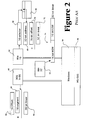
- Figure 2 illustrates three application programs running in the WINDOWS operating system environment. Specifically, Figure 2 illustrates a DOS application 48 running in the virtual-86 addressing mode, a 16 bit WINDOWS application 50 and a 32 bit WINDOWS application 52 .
- the WINDOWS operating system 54 is shown running on top of and in conjunction with the MS-DOS operating system 56.
- the WINDOWS operating system e.g. WINDOWS 95 and WINDOWS NT
- dispense with the need for a separate MS-DOS operating system layer e.g. WINDOWS 95 and WINDOWS NT
- DOS application 48 uses a 20 bit address to access memory.
- the 20 bit address is calculated by combining a 16 bit offset address 58 and a 16 bit segment address 60 to arrive at the 20 bit linear address 62.
- the 20 bit address is obtained by shifting the segment address 4 places to left and then summing it with the offset address.
- the 16 bit WINDOWS application 50 uses a 32 bit linear address that is determined as follows.
- a 16 bit selector address 64 is used to access a descriptor table 66.
- the descriptor table is a lookup table from which a 32 bit base address 68 is obtained. To this base address the 16 bit offset 70 is added to arrive at the 32 bit linear address 72.
- the 32 bit WINDOWS application 52 employs a flat 32 bit linear address 74 that may be considered as consisting of a 16 bit most significant word MSW and a 16 bit least significant word LSW.
- Passing memory between applications 48, 50 and 52 is significantly complicated by the fact that these three applications use entirely different addressing modes. Between two applications of the same addressing mode it is relatively straightforward to pass information (subject to any restrictions due to protection) by simply copying it from source to destination, or by passing a pointer to allow one application to access the other application's data memory. However, with applications employing different addressing modes, this simple exchange of information cannot take place unless the effects of these different addressing modes has been taken into account. The conventional way to do this is to write or modify the application programs to (a) determine the addressing mode of its communicating partner and (b) make appropriate translations so the data are not corrupted. Practically speaking, this means that all application programs must be specifically written (or modified to include) this communication capability). This is not practical, given the plethora of current application programs.
- the universal communication mechanism of the invention solves the problem through a virtual device driver with which the application programs communicate using standard application program interface (API) function calls to the virtual device driver.
- API application program interface
- the device driver 76 couples to the WINDOWS operating system 54, making the device driver accessible to the application programs 48, 50 and 52 through the standard WINDOWS API protocol.
- the device driver has an application program interface module 78 that allows the application programs to invoke several functions useful in effecting application-to-application communication. These functions comprise:
- the device driver 76 has a message handler module 80 that actually performs the functions requested by the applications through the application program interface 78 .
- the message handler includes a mapping mechanism 82 that is configured to determine the addressing mode of the sending application and to translate that addressing mode into a flat address comparable to the flat address of the 32 bit WINDOWS application.
- the mapping mechanism is able to determine the addressing mode of the sending application by interpreting existing WINDOWS operating system parameters; the sending application does not need to be specially programmed or modified to provide this information.
- the actual application-to-application communication is handled through a message buffer comprising part of a data store 84 that is administered by the device driver.
- a message buffer for the requested communication is instantiated as part of a data structure used to store other pertinent information about the requested communication.
- the message handler 80 includes a transfer mechanism 86 that extracts the required transfer information from the application program that invoked the function call. This information is stored in the data store of which the message buffer is a part.
- the transfer mechanism 86 uses the mapping mechanism 82 to record, for later use, the addressing mode of each application as it registers (via the REGISTER function call). After extracting the necessary information from the sending application and storing it in data store 84, the transfer mechanism then signals the receiving application so that it may (through a RECEIVE function call) ask the virtual device driver to access the message buffer to copy the information for its own use.
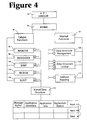
- Figure 4 illustrates the presently preferred software configuration as a virtual device driver.
- Figure 4 shows the hierarchical relationships among the various subsystems of the preferred embodiment.
- Figure 4 illustrates the software components that make up the functional components illustrates in Figure 3.
- Kernel module 88 interfaces with the API handler module 90 .
- the API handler module defines the API interface 78 ( Figure 3) and establishes standard WINDOWS device driver interfacing with the application programs.
- Kernel module 88 provides the remaining functions of the universal communication mechanism, including management of the data store and message buffer 84 ( Figure 3).
- the Kernel module may be hierarchically subdivided into a group of callable functions, represented by block 92 , and internal functions, represented by block 94.
- the callable functions comprise those that an application program may request through the API interface.
- the internal functions comprise various support functions that are called or utilized by the callable functions. For purposes of illustration, these functions have been categorized as data structure management functions 106 , data structure lookup functions 108 and address mapping functions 110.
- the kernel module maintains the data store and message buffer 84 ( Figure 3).
- the kernel module software defines a kernel data structure 112 in the form a C language struct comprising a number of different elements. The presently preferred data structure is shown in the Appendix.
- the data structure management functions 106 are responsible for creating instances of the kernel data structure when an application registers (by invoking the REGISTER function) and when the application deregisters (by invoking the DEREGISTER function).
- the data structure management functions also maintain and update information in the data store during operation of the universal communication mechanism.
- REGISTER function 96 and DEREGISTER function 98 have been provided with circled numerals 1 and 2, respectively, with like circled numbers on the data structure management functions 106. This indicates that the register and deregister functions call upon the data structure management functions during operation. A similar notation has been used throughout Figure 4.
- the data structure lookup functions 108 are accessed by each of the callable functions (except for the SLEEP function) to access data in the data store.
- the data lookup functions provide services to lookup a registered application by its ASCII name or by its virtual memory handle. Such lookup operations are performed during routine operation of the universal communication mechanism.
- the address mapping functions 110 are called by register function 96 each time an application seeks to register (by invoking the REGISTER command).
- the address mapping functions 110 provide the functionality of the mapping mechanism 82 ( Figure 3).
- FIG. 5 illustrates the internal operation of the REGISTER function 96 .
- the REGISTER routine begins (Step 200 ) by acquiring the handle of the application seeking to register.
- the handle is mapped to a flat address mode (Step 202 ). This is done to compensate for the fact that different applications may employ different addressing modes that are not directly compatible with one another.
- the details of the address mapping procedure are shown in the pseudocode listing entitled "Map Flat.”
- the routine proceeds to verify that the handle supplied by the application is a valid one (Step 204 ). If not valid, an error message is generated and the routine terminates.
- the routine generates an instance of the kernel data structure 112 ( Figure 4) to represent the application seeking to register.
- a handle to this newly added data element is added to the linked list maintained as part of the kernel data structure (Step 206 ).
- the application handle and application status are stored in the newly created data element (Step 208 ). It is possible that an application seeking to register may have previously registered through a previous call to the register function 96.
- the register function tests for this at step 210 and discards the previous registration at step 212 if a previous registration is found. In this way, the kernel data structure is maintained current.
- the register function In addition to storing the application handle and application status, the register function also makes a copy of additional application information that is needed to post a communication message to the intended recipient. This is performed at step 214 . Specifically, the routine stores the selector and offset address values needed to perform the WINDOWS "PostMessage” routine, as well as the WINDOWS handle for "PostMessage” routine and the message number for that routine. The amount of data the kernel should reserve for messages is also stored at this time.
- the REGISTER routine ends at Step 216 .
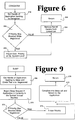
- the DEREGISTER routine shown in Figure 6 decommissions a previously effected registration.
- the DEREGISTER command ensures that all housekeeping functions are performed and that the kernel data structure instance generated by the registration command are removed from the linked list data structure.
- the application handle of the application seeking to deregister is acquired. If the priority of the application was boosted through some operature during the time the application was registered, this is detected at Step 220. If the priority was boosted while registered, the execution priority is adjusted at Step 222 , to place the application in the state it had been prior to registration. Then the kernel handle is removed from the linked list (Step 224 ) and the routine returns at Step 226. Removing the kernel handle from the linked list, in effect, decommissions the registration of the application so that the records maintained through registration are no longer accessible for update or searching.
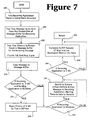
- the SEND command is shown in the flowchart of Figure 7.
- the SEND function first locates the record of the receiving application from the kernel data structure by performing a text search upon the receiving application's name (Step 228 ). If an entry for the receiving application is not found in the data structure, an error message is sent and the send routine returns.
- the message to be send is tested to ensure that it does not exceed the size of the message buffer of the receiving application. This is done by comparing the length of the message to be sent with the recorded size of the message buffer maintained as one of the records in the kernel data structure 112 . If the message will not fit within the message buffer, an error message is generated and the SEND routine returns.
- Step 232 the routine next tests (at Step 232) whether there is sufficient room in the message buffer for the incoming message).
- the message buffer may already contain data waiting to be accessed, hence the entire message buffer may not be available for storing the message to be sent. If the message buffer will not hold the incoming message, a "Buffer Full" busy signal is sent (Step 232) , allowing the sending application to try again later.
- Step 234 Having determined that the message buffer is adequate to hold the message to be sent, the message is then copied into the message buffer at Step 234 .
- Step 234 a series of decisions are performed to properly notify the receiving application that there is data waiting for it to receive. The technique for accomplishing this depends on the addressing mode of the receiving application. Steps 236 through 246 handle these details.
- the receiving application is a virtual-86 application
- the sending application is a WINDOWS application
- the priority of the virtual-86 application is boosted so that it will run. This is tested for and handled in Steps 236 and 238 .
- the receiving application is a WINDOWS application
- a message is posted to the receiving application to alert it that there is data to receive. This is done by switching to the system virtual machine.
- Steps 240 and 242 These steps are illustrated at Steps 240 and 242.
- the receiving application is a virtual-86 mode application, the procedure detects this and allows any SLEEP request previously sent to be completed, allowing the application to receive data. This is illustrated in Steps 244 and 246. After the application has been notified that there is data to receive, the routine returns at Step 248 .
- the SLEEP request allows a message to be sent to a virtual-86 DOS application, without requiring the DOS application to run continuously, while polling for messages sent to it. While a polling technique could be used, the running DOS application would consume processor cycles that could otherwise be used elsewhere.
- the SLEEP request allows the DOS application to sleep (consuming no unnecessary processor cycles) until awakened or interrupted to receive the message.
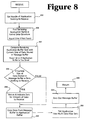
- the RECEIVE routine complements the SEND routine, taking up where the SEND routine left off to pass a copy of the data in the message buffer to the application buffer of the receiving application.
- This routine is illustrated in Figure 8. It begins at Step 250 by getting the handle of the application seeking to receive information. The routine searches through the linked list records of the kernel data structure to locate the application by name (Step 252) . If the application name is not found, an error is reported and the routine returns. Next, the buffer size of the receiving application is compared with the current size of the data stored in the kernel message buffer (Step 254 ). If the application buffer is too small to contain the message stored in the message buffer, an error is reported and the routine returns. If the current size of the data stored in the message buffer is zero, there is nothing to receive and the routine simply returns with an indication that there is zero bytes of data to receive. This is shown at Steps 256 and 258.
- the data stored in the message buffer is copied to the application buffer at Step 260 and a message is returned to the application, telling it how much data was sent (Step 262 ).
- the SLEEP routine is shown in Figure 9. As previously noted, the SLEEP routine allows messages to be sent to virtual-86 DOS applications, without requiring those applications to constantly run, polling for messages. The SLEEP routine implements a more efficient messaging technique, where a DOS application is suspended until there is a message for it.
- the SLEEP routine begins by getting the handle of the application seeking to declare a sleep condition and checking to see that the application is registered (Step 268 ). If the application is not registered, an error message is generated and the routine returns. If the application is currently running in the operating system's virtual machine (called the "system virtual machine"), then the SLEEP request is rejected at Step 270. This prevents the application from locking up the system virtual machine in which all WINDOWS applications coexist. Next, in Step 272, if the priority of the application has been boosted while registered, this condition is detected and the priority of the application is lowered at Step 274 . This enhances system performance and efficiency.
- the SLEEP event is scheduled at Step 276.
- the SLEEP event may be scheduled to place the DOS application in suspension for a predetermined number of milliseconds (specified as an argument to the SLEEP function call) or for an indefinite time-until awakened by a message for that application.
- the routine After placing the application in a suspended "sleep" condition, the routine returns at Step 278 .
- the universal communication mechanism of the invention has many uses in solving communications problems between dissimilar applications running in an operating system environment.
- the invention may be used to facilitate communication between the application components of a key management system used to implement Internet traffic security.
- the Applicants' assignee has developed a packet-oriented key distribution system known as the Simple Key management for Internet Protocol (SKIP) system that greatly simplifies one of the most difficult problems in Internet security, namely how to establish and change traffic encryption keys.
- SKIP Simple Key management for Internet Protocol
- the SKIP system utilizes the fact that if each principal (IP node) in a network has a certified public key, then each principal shares a mutually authenticated key which is computable, based solely on knowledge of the other principal's certificate. Whereas the public key is distributed in the form of a public key certificate, the two communicating principals share a mutually authenticated secret that is not communicated explicitly to either principal. Each principal then computes the secret, based on knowledge of the other principal's identity and the public key certificate.
- the shared secret may be computed using the Diffie-Hellman algorithm, for example. For information on the Diffie-Hellman algorithm see W. Diffie and M. Hellman, "New Directions in Cryptography," IEEE Trans. Info. Theory, IT-22, pp. 644-654, 1976.
- IP packets are encrypted (or authenticated) using a randomly generated packet key.
- the packet key is in turn encrypted.
- the process used to encrypt the packet key can be cached for efficiency, allowing traffic keys (i.e., packet keys) to be modified very rapidly, even on a per packet basis, if required. This greatly reduces the computational overhead of conventional public key operation. Furthermore, because the keys are communicated in packets themselves, there is no need to incur the overhead and complexity of a pseudo-session layer underneath the IP layer.
- the key manager of the SKIP system runs asynchronously in background and that presents a difficulty.
- MICROSOFT WINDOWS provides a "cooperative" multitasking environment, in which a WINDOWS application may run until it relinquishes control to another WINDOWS application. Thus a running WINDOWS application could prevent the key manager from running when needed.
- the universal communication mechanism of the invention solves the problem, by allowing the key manager to be implemented as a virtual-86 DOS application.
- Virtual-86 DOS applications run in separate virtual machines and they are scheduled separately from WINDOWS applications.
- a virtual-86 DOS key manager can run asynchronously in background, without being preempted by a concurrently running WINDOWS application.
- the universal communication mechanism offers an effective solution to make the SKIP key management system work.
- the key manager may be implemented as a virtual-86 DOS application without limiting the other portions of the system from being implemented as other virtual-86 DOS applications, 16 bit WINDOWS applications and 32 bit WINDOWS applications, depending on the particular system requirements.
- These application components can readily communicate with one another through the API function call services of the universal communication mechanism of the invention.
Landscapes
- Engineering & Computer Science (AREA)
- Software Systems (AREA)
- Theoretical Computer Science (AREA)
- Physics & Mathematics (AREA)
- General Engineering & Computer Science (AREA)
- General Physics & Mathematics (AREA)
- Computer And Data Communications (AREA)
- Stored Programmes (AREA)
Applications Claiming Priority (2)
| Application Number | Priority Date | Filing Date | Title |
|---|---|---|---|
| US672528 | 1984-11-19 | ||
| US08/672,528 US6535929B1 (en) | 1996-07-02 | 1996-07-02 | Universal communication mechanism for applications running in a multitasking environment |
Publications (2)
| Publication Number | Publication Date |
|---|---|
| EP0817030A2 true EP0817030A2 (de) | 1998-01-07 |
| EP0817030A3 EP0817030A3 (de) | 1998-12-30 |
Family
ID=24698935
Family Applications (1)
| Application Number | Title | Priority Date | Filing Date |
|---|---|---|---|
| EP97303905A Withdrawn EP0817030A3 (de) | 1996-07-02 | 1997-06-06 | Universeller Kommunikationsmechanismus für Anwendungen in einem Multitaskingsystem |
Country Status (3)
| Country | Link |
|---|---|
| US (1) | US6535929B1 (de) |
| EP (1) | EP0817030A3 (de) |
| JP (1) | JPH1069391A (de) |
Cited By (1)
| Publication number | Priority date | Publication date | Assignee | Title |
|---|---|---|---|---|
| US6708271B1 (en) | 1999-08-18 | 2004-03-16 | Denso Corporation | Interactive multi-module system having a communication manager for achieving linked operation of plurality of modules and for defining whether and how an individual module can access a particular function |
Families Citing this family (23)
| Publication number | Priority date | Publication date | Assignee | Title |
|---|---|---|---|---|
| EP0935192A1 (de) * | 1998-02-09 | 1999-08-11 | Sony Europa B.V. | Verfahren und Vorrichtung zur Kommunikation zwischen Anwendungsprogrammen und einem Netzwerk |
| US6782537B1 (en) * | 1999-09-23 | 2004-08-24 | International Business Machines Corporation | Establishing a communicator across multiple processes in a multithreaded computing environment |
| US7325030B2 (en) * | 2001-01-25 | 2008-01-29 | Yahoo, Inc. | High performance client-server communication system |
| JPWO2002080447A1 (ja) * | 2001-03-29 | 2004-07-22 | ソニー株式会社 | 情報処理装置 |
| US7055152B1 (en) * | 2001-08-15 | 2006-05-30 | Microsoft Corporation | Method and system for maintaining buffer registrations in a system area network |
| US7552265B2 (en) * | 2002-01-23 | 2009-06-23 | Xerox Corporation | System and method for providing context information |
| US7367029B2 (en) * | 2002-08-01 | 2008-04-29 | Xerox Corporation | Method and system for handling data |
| US7584471B2 (en) * | 2002-09-23 | 2009-09-01 | Telefonaktiebolaget L M Ericsson (Publ) | Plug-in model |
| US8612992B2 (en) * | 2003-04-09 | 2013-12-17 | Jaluna Sa | Operating systems |
| ES2315469T3 (es) * | 2003-04-09 | 2009-04-01 | Virtuallogix Sa | Sistemas operativos. |
| EP1503286B1 (de) * | 2003-07-30 | 2014-09-03 | Jaluna SA | Vernetzung mehrerer Betriebssysteme |
| US8024742B2 (en) * | 2003-09-30 | 2011-09-20 | Jaluna S.A. | Common program for switching between operation systems is executed in context of the high priority operating system when invoked by the high priority OS |
| US7099969B2 (en) * | 2003-11-06 | 2006-08-29 | Dell Products L.P. | Dynamic reconfiguration of PCI Express links |
| US8423643B2 (en) * | 2003-11-19 | 2013-04-16 | International Business Machines Corporation | Autonomic assignment of communication buffers by aggregating system profiles |
| US20050114549A1 (en) * | 2003-11-26 | 2005-05-26 | Durham David M. | Mechanism for extensible binary mappings for adaptable hardware/software interfaces |
| CA2789262C (en) | 2005-04-28 | 2016-10-04 | Proteus Digital Health, Inc. | Pharma-informatics system |
| US8646052B2 (en) * | 2008-03-31 | 2014-02-04 | Intel Corporation | Method and apparatus for providing a secure display window inside the primary display |
| US8271784B2 (en) | 2009-10-15 | 2012-09-18 | International Business Machines Corporation | Communication between key manager and storage subsystem kernel via management console |
| US9110793B2 (en) * | 2009-11-03 | 2015-08-18 | International Business Machines Corporation | Inner process |
| US20140012704A1 (en) | 2012-07-05 | 2014-01-09 | Google Inc. | Selecting a preferred payment instrument based on a merchant category |
| US9092767B1 (en) | 2013-03-04 | 2015-07-28 | Google Inc. | Selecting a preferred payment instrument |
| US9858572B2 (en) | 2014-02-06 | 2018-01-02 | Google Llc | Dynamic alteration of track data |
| CN110162415B (zh) * | 2019-05-05 | 2023-09-01 | 腾讯科技(深圳)有限公司 | 用于处理数据请求的方法、服务器、装置及存储介质 |
Family Cites Families (10)
| Publication number | Priority date | Publication date | Assignee | Title |
|---|---|---|---|---|
| US5175855A (en) * | 1987-07-27 | 1992-12-29 | Laboratory Technologies Corporation | Method for communicating information between independently loaded, concurrently executing processes |
| EP0366583B1 (de) | 1988-10-24 | 1995-08-30 | International Business Machines Corporation | Verfahren zum Austauschen von Daten zwischen Programmen in einem Datenverarbeitungssystem |
| EP0422310A1 (de) * | 1989-10-10 | 1991-04-17 | International Business Machines Corporation | Verteilter Mechanismus für die schnelle Planung von gemeinsamen Objekten |
| US5604885A (en) * | 1991-02-01 | 1997-02-18 | Texas Instruments Incorporated | Apparatus and method enabling a computer to transfer control between two program segments that call one another but operate in different modes |
| US5327558A (en) * | 1992-04-30 | 1994-07-05 | Motorola, Inc. | Method for asynchronous application communication |
| EP0588046A1 (de) * | 1992-08-14 | 1994-03-23 | International Business Machines Corporation | Standard IEEE 802.2 virtueller Gerättreiber |
| US5341476A (en) | 1992-12-23 | 1994-08-23 | Abbott Laboratories | Dynamic data distribution network with sink and source files for particular data types |
| US5414848A (en) * | 1993-04-01 | 1995-05-09 | Intel Corporation | Method and apparatus for sharing a common routine stored in a single virtual machine with other virtual machines operating in a preemptive muli-tasking computer system |
| US5459869A (en) * | 1994-02-17 | 1995-10-17 | Spilo; Michael L. | Method for providing protected mode services for device drivers and other resident software |
| US5784615A (en) * | 1994-12-13 | 1998-07-21 | Microsoft Corporation | Computer system messaging architecture |
-
1996
- 1996-07-02 US US08/672,528 patent/US6535929B1/en not_active Expired - Lifetime
-
1997
- 1997-06-06 EP EP97303905A patent/EP0817030A3/de not_active Withdrawn
- 1997-07-02 JP JP9177409A patent/JPH1069391A/ja active Pending
Cited By (1)
| Publication number | Priority date | Publication date | Assignee | Title |
|---|---|---|---|---|
| US6708271B1 (en) | 1999-08-18 | 2004-03-16 | Denso Corporation | Interactive multi-module system having a communication manager for achieving linked operation of plurality of modules and for defining whether and how an individual module can access a particular function |
Also Published As
| Publication number | Publication date |
|---|---|
| US6535929B1 (en) | 2003-03-18 |
| JPH1069391A (ja) | 1998-03-10 |
| EP0817030A3 (de) | 1998-12-30 |
Similar Documents
| Publication | Publication Date | Title |
|---|---|---|
| US6535929B1 (en) | Universal communication mechanism for applications running in a multitasking environment | |
| US5396614A (en) | Method and apparatus for a secure protocol for virtual memory managers that use memory objects | |
| US6615230B2 (en) | Data access right management apparatus in a data-independent computer system | |
| EP0205945B1 (de) | Datentransfer und Puffersteuerung mit mehrfachen prozesstransparenten Speicherbetriebsarten | |
| US5475817A (en) | Object oriented distributed computing system processing request to other object model with code mapping by object managers located by manager of object managers | |
| US4685125A (en) | Computer system with tasking | |
| US4649473A (en) | Flexible data transmission for message based protocols | |
| US5062040A (en) | Handling of notification of asynchronous events by user and stub processes of a distributed process executing on a plurality of processors of a multi-processor system | |
| US6112263A (en) | Method for multiple independent processes controlling access to I/O devices in a computer system | |
| JP3364587B2 (ja) | 通信システムで比較的大きなデータ・オブジェクトの伝送を制御するシステムと方法 | |
| US7093021B2 (en) | Electronic device for secure authentication of objects such as computers in a data network | |
| JP3515423B2 (ja) | サーバ・パフォーマンスを改良するためのシステムおよび方法 | |
| US5060150A (en) | Process creation and termination monitors for use in a distributed message-based operating system | |
| KR100612059B1 (ko) | 분할 처리 환경에서의 자원 조절을 위한 방법, 컴퓨팅 시스템 및 그에 관한 기록 매체 | |
| US6523065B1 (en) | Method and system for maintenance of global network information in a distributed network-based resource allocation system | |
| JPS63201860A (ja) | ネツトワーク管理システム | |
| JP3974913B2 (ja) | 待機リソースの使用を管理するための方法 | |
| US6108689A (en) | Method and system for processing messages in a distributed computing environment | |
| Watson | Chapter 2. Distributed system architecture model | |
| WO2006035730A1 (ja) | 情報処理装置、通信処理方法、並びにコンピュータ・プログラム | |
| Chesson | The network UNIX system | |
| Dannenberg et al. | A butler process for resource sharing on spice machines | |
| EP0205948B1 (de) | Verteilter Datenverwaltungsmechanismus | |
| JPH06348512A (ja) | 資源管理コンピュータ・システム | |
| JP2002505477A (ja) | スタックベースのセキュリティ要求 |
Legal Events
| Date | Code | Title | Description |
|---|---|---|---|
| PUAI | Public reference made under article 153(3) epc to a published international application that has entered the european phase |
Free format text: ORIGINAL CODE: 0009012 |
|
| AK | Designated contracting states |
Kind code of ref document: A2 Designated state(s): DE FR GB NL SE |
|
| PUAL | Search report despatched |
Free format text: ORIGINAL CODE: 0009013 |
|
| AK | Designated contracting states |
Kind code of ref document: A3 Designated state(s): AT BE CH DE DK ES FI FR GB GR IE IT LI LU MC NL PT SE |
|
| 17P | Request for examination filed |
Effective date: 19990406 |
|
| AKX | Designation fees paid |
Free format text: DE FR GB NL SE |
|
| 17Q | First examination report despatched |
Effective date: 20020326 |
|
| GRAH | Despatch of communication of intention to grant a patent |
Free format text: ORIGINAL CODE: EPIDOS IGRA |
|
| STAA | Information on the status of an ep patent application or granted ep patent |
Free format text: STATUS: THE APPLICATION IS DEEMED TO BE WITHDRAWN |
|
| 18D | Application deemed to be withdrawn |
Effective date: 20030116 |