EP0817059B1 - Zusatz-Adressenübersetzungspuffer zur Unterstützung von Datenzugriffen in entfernten Adressenräumen - Google Patents
Zusatz-Adressenübersetzungspuffer zur Unterstützung von Datenzugriffen in entfernten Adressenräumen Download PDFInfo
- Publication number
- EP0817059B1 EP0817059B1 EP97304324A EP97304324A EP0817059B1 EP 0817059 B1 EP0817059 B1 EP 0817059B1 EP 97304324 A EP97304324 A EP 97304324A EP 97304324 A EP97304324 A EP 97304324A EP 0817059 B1 EP0817059 B1 EP 0817059B1
- Authority
- EP
- European Patent Office
- Prior art keywords
- remote
- page table
- memory
- table entries
- rpte
- Prior art date
- Legal status (The legal status is an assumption and is not a legal conclusion. Google has not performed a legal analysis and makes no representation as to the accuracy of the status listed.)
- Expired - Lifetime
Links
Images


Classifications
-
- G—PHYSICS
- G06—COMPUTING OR CALCULATING; COUNTING
- G06F—ELECTRIC DIGITAL DATA PROCESSING
- G06F12/00—Accessing, addressing or allocating within memory systems or architectures
- G06F12/02—Addressing or allocation; Relocation
- G06F12/08—Addressing or allocation; Relocation in hierarchically structured memory systems, e.g. virtual memory systems
- G06F12/10—Address translation
- G06F12/1027—Address translation using associative or pseudo-associative address translation means, e.g. translation look-aside buffer [TLB]
-
- G—PHYSICS
- G06—COMPUTING OR CALCULATING; COUNTING
- G06F—ELECTRIC DIGITAL DATA PROCESSING
- G06F12/00—Accessing, addressing or allocating within memory systems or architectures
- G06F12/02—Addressing or allocation; Relocation
- G06F12/0223—User address space allocation, e.g. contiguous or non contiguous base addressing
- G06F12/0284—Multiple user address space allocation, e.g. using different base addresses
Definitions
- the present invention relates generally to a computer system and to a translation lookaside buffer and to a method of operating such a system.
- a distributed computer system 100 that includes a plurality of processor clusters 102.
- Each cluster 102 will typically include one to four symmetric processors 104 that are coupled via a common bus 106 to a local memory store 108.
- One or more of the clusters may also include secondary memory 110 (non-volatile memory such as magnetic disc storage). Access to the local memory store 108 (and secondary memory 110, if present) shared by all the processors in the cluster 102 is governed by a memory controller 112 that also can send requests via a network 114 to pull in pages of data stored in the memory stores or secondary memory of other clusters 102 or other devices coupled to the network 114.
- Each processor 104 in a cluster 102 includes its own local cache memory 120 that must be kept coherent (i.e., consistent) with the contents stored in the cache memories of the other processors in the system.
- Each processor 104 in a cluster 102 also includes a translation lookaside buffer (TLB) 122, the purpose of which will be explained below.
- TLB translation lookaside buffer
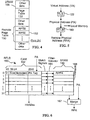
- Figs. 2 and 3 application programs typically access data using virtual addresses. For instance, every process running in a computer system may have a virtual address space of 4 Gigabytes, using address values ranging from 0 (zero) to OFF FFF FFF 16 (4,284,967,295 10 ). However, the amount of primary physical memory in the system will generally be much less than N x 4 Gigabytes, where N is the number of simultaneously active processes. Rather, each process will generally use only a very small fraction of its full address space during any short period of time, and each "page" of virtual memory address space that is actively being used will be mapped into a page of primary physical memory 108 using a data structure called a page table 130. A "page" is typically sized between 1K and 16K bytes, with 4K bytes being a frequently used page size.
- the page table 130 which is divided into pages called page table pages 132, typically contains a distinct entry, called a page table entry (PTE) 134 for each page of virtual memory that has been defined to store data or instructions.
- PTE page table entry
- the PTE 134 for a particular virtual memory page directly or indirectly includes a tag 136 that identifies the virtual page to which it applies, and a physical memory page address (PPA) 138 that identifies where the corresponding physical memory page is located primary memory 108 or secondary memory 110.
- PPA physical memory page address
- the translation look aside buffer (TLB) 122 stores the PTEs most recently used by the processor.
- the TLB 122 in each processor not only acts as a cache memory for PTEs, it is also the device that translates virtual addresses into physical addresses.
- the high order X-N bits of the address (where X is the number of bits in each address and 2 N is the number of bytes in each page) of the virtual address are compared with the tags of the PTE's in the TLB 122.
- the TLB If the high order address bits match the tag of a valid PTE (i.e., a PTE in the TLB 122 whose valid flag 140 is set to "1" or True), then the TLB generates a physical address value (PA) in which the X-N high order bits of the virtual address are replaced with the physical page address (PPA) 138 in the PTE.
- PA physical address value
- the PTE 134 required to translate a virtual address is not currently located in the TLB 122, a request is sent to the memory controller 112 to locate and send that PTE to the TLB. After the required PTE 134 is stored in the TLB 122 the virtual address to physical address translation process described above is performed by the TLB 122.
- the processor 104 accesses the addressed data directly in its cache memory 120. If the addressed data is not in cache memory 120, the memory controller 112 retrieves the addressed data from primary memory 108 and stores it in the cache memory 120. Then the processor 104 accesses the addressed data from its cache memory 120.
- the PTE 134 corresponding to the virtual address specified by the program being executed will have its valid flag 140 set to False, indicating that the PTE cannot map the address to a primary physical memory page, but other flags 142 in the PTE will indicate that the page is stored in local secondary memory 110.
- the PTE for translating a virtual address is found to be invalid, this is called a "page fault.”
- the operating system of the cluster 102 will request the memory controller 112 to retrieve the specified page from secondary memory 110 and store it in a free page in primary memory 108.
- the PTE is updated to indicate the page's new location in primary memory 108 and its valid flag is set to True, and then the application program requiring that data resumes execution using the page of data that has just been swapped in to primary memory.
- Figs. 1 and 4 many present day server computers are symmetric multiprocessor systems that use a bus based "snoop scheme" to maintain cache coherence.
- This architecture typically accommodates 4 to 16 processor systems reasonably well.
- applications such as database decision support, Web servers, multimedia storage and retrieval servers, online transaction processing, computer clusters, and the like, there is a need to scale to systems having more than 4 or 16 processors.
- a distributed system 100 having multiple symmetric processor clusters 102 can be used for such applications.
- WO 95/16964 discloses an address translation means for a distributed memory massively parallel processing system. This includes means for defining virtual addresses for processing elements (PEs) and memory relative to a partition of PEs under program control. Address references generated by a PE within a partition in virtual address mode are converted to logical addresses and physical addresses for routing on the network.
- PEs processing elements
- EP-A-497600 discloses a memory access method for a multiprocessor system, in which each processor is capable of accessing the local memories of other processors. This is performed by first executing an address conversion into an intermediate real address forming the address space shared by the system, and then executing an address conversion from the intermediate real address into a real address of the memory which is the object of the accessing operation.
- US 5230045 discloses a system in which virtual addresses from multiple address spaces are translated to real addresses in main memory by generating for each virtual address an address space identifier (AID) identifying its address space. Then, the virtual address and its AID are used to obtain the real address. If a processor's local cache does not have data for a virtual address and cannot translate the virtual address to a real address, the local cache provides the virtual address on a bus. A dedicated VLSI map cache is connected to the bus for receiving virtual addresses and providing real addresses.
- AID address space identifier
- US 5117350 discloses a computer system having plural nodes interconnected by a common broadcast bus.
- the system has dynamically configurable memory which may be located within the system address space of a distributed system architecture.
- the memory in the system address space is addressable by system physical addresses which are isolated from the physical addresses for memory in each node.
- the node physical addresses are translatable to and from the system physical addresses by partition maps located in partition tables at each node.
- US 5247629 discloses a multiprocessor system having global data replication in each of the local memories, each associated with one of the processors. This is performed by translating global data logical addresses into addresses conventionally defined as real. This is then followed by a translation of the real address into a physical address generally differing for each local memory.
- the first method uses "message passing" to extend scalability, and the second method uses a "shared memory” paradigm.
- the present invention falls is the latter class.
- each cluster 102 is perceived as a single node whose address space is extended to include a global address space.
- a remote page table 150 (or portions of a remote page table) can be stored in the local memory 108/110 of each cluster 102.
- the remote page table 150 contains remote page table entries (RPTEs) 152, each of which is used to translate a range of physical addresses into a range of remote physical addresses. From the viewpoint of each cluster, the global address space is considered to be a "remote physical address space".
- each RPTE 152 may differ from the size of the address space associated with each PTE 132. Thus, it is possible that one RPTE 152 might used to map a large address space (e.g., 256 Mbytes) from physical address space to remote physical address space (also sometimes called the global address space).
- a large address space e.g., 256 Mbytes
- Translating a physical address to a remote physical address can be slow because of the need to first access the page in primary memory 108 that stores the corresponding RPTE 152 in the remote page table 150, and then translate the address using appropriate software. If the cluster's memory 108 does not store the page of the remote page table containing the required RPTE, that page of the remote page table 150 will first need to be downloaded from an appropriate remotely located processor or cluster in the distributed system 100. Once the required RPTE 152 is found and the address translation into a remote physical address (RPA) is performed, then a request is transmitted via the network 114 to load a copy of the page being addressed into the requesting cluster's local memory 108.
- RPA remote physical address
- the present invention provides mechanisms for speeding the translation of physical addresses into the remote physical addresses, and also for reducing the need to load pages of the remote page table 150 into local memory 108.
- a computer system includes a data processor, a primary translation lookaside buffer (TLB) for storing page table entries and translating virtual addresses into physical addresses, local memory for storing data and computer programs at specified physical addresses, and remotely located memory coupled to the data processor by a computer network for storing data at specified remote physical addresses.
- the computer system further includes a remote translation lookaside buffer (RTLB), also called an auxiliary TLB, that stores a plurality of remote page table entries. Each remote page table entry represents a mapping between a range of physical addresses and a corresponding range of remote physical addresses.
- the primary translation lookaside buffer translates a virtual address asserted by the data processor into a physical address.
- the RTLB determines whether the physical address matches at least one of the remote page table entries stored in the RTLB, and selects one of those remote page table entries when at least one match is found. Then, a remote physical address is generated by combining a portion of the selected remote page table entry with a portion of the physical address.
- Each remote page table entry stored in the RTLB includes address range size data indicating how large a physical address range is mapped into remote physical addresses by that remote page table entry. Two or more of the remote page table entries stored in the RTLB can map overlapping physical address ranges.
- the RTLB's selection circuitry includes circuitry for selecting a single remote page table entry in accordance with predefined RPTE selection criteria when two or more of the remote page table entries match the physical address.
- Each remote page table entry stored in the RTLB has an associated index position in the RTLB.
- the predefined RPTE selection criteria is to select the one of the two or more remote page table entries that match the physical address having a lowest index position in the RTLB.
- Fig. 1 is a block diagram of a distributed computer system having a number of multiprocessor clusters interconnected by a communications network.
- Fig. 2 depicts data structures associated with page tables for virtual memory management.
- Fig. 3 depicts the structure of a page table entry.
- Fig. 4 depicts data structures associated with a remote page table.
- Fig. 5 schematically depicts the process by which a virtual address is translated first to a physical address, and then to a remote physical address in accordance an embodiment of the present invention.
- Fig. 6 depicts the structure of an embodiment of a remote lookaside translation buffer (RTLB).
- RTLB remote lookaside translation buffer
- Fig. 7 depicts the structure of a remote page table entry.
- Fig. 8 depicts how overlapping entries in a remote lookaside translation buffer are utilized.
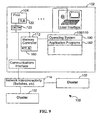
- Fig. 9 is a block diagram of a one node of a distributed computer system.
- the embodiment of the invention when the memory controller 112 is called upon to translate a physical address (PA) into a remote physical address (RPA), instead of having to retrieve the corresponding remote page table entry 152 from memory 108 and then convert the address using software, the embodiment of the invention provides the memory controller 112 with a secondary or auxiliary TLB, herein called a cluster TLB or remote TLB (RTLB) 160.
- a secondary or auxiliary TLB herein called a cluster TLB or remote TLB (RTLB) 160.
- the RTLB 160 works in much the same way as the regular TLB 122, except that its job is to store a set of remote page table entries (RPTEs) and to convert a physical address (PA) into a remote physical address (RPA) in hardware in a single processor clock cycle.
- the RLTB 160 speeds up the process of converting a physical address (PA) into a remote physical address (RPA) considerably both by caching RPTEs and by performing the address conversion in hardware instead of software.
- a physical address is converted by the RTLB into a remote physical address only if the physical address does not correspond to a location in either the local primary memory 108 or the local secondary memory 110.
- the RTLB 160 includes a content addressable memory (CAM) 162, a filter-selector 164, a static random access memory (SRAM) 166, and an address bit merge circuit 167 for generating the remote physical address (RPA) output by the RTLB 160.
- CAM content addressable memory
- SRAM static random access memory
- RPA remote physical address
- the CAM 162 and SRAM 166 together store 32 RPTEs, with the CAM 162 storing the tag portion of each RPTE 152 and the SRAM 166 storing the remote physical address portion of each RPTE.
- the RPTEs in this embodiment utilize variable address space size entries.
- the size of the address space represented by each RPTE 152 is governed by the size value stored in the CAM portion of the entry. In particular, each bit of the size value masks out a corresponding bit of the PA tag.
- the size value is fully decoded, meaning that if the Nth bit of the size value is set equal to 1, then all of the size bits less significant that the Nth bit are also set equal to 1.
- the size of the address space represented by the RPTE is increased by an additional factor of 2.
- the smallest address space that can be represented by an RPTE is one page (e.g., 4K bytes), and the largest address space that can be represented by an RPTE is 64K pages (e.g., 256 Mbytes).
- the RTLB 160 of the present embodiment allows the entries in the RTLB to be arranged so that a specified physical address can be simultaneously matched by more than one entry. That is, simultaneously valid RPTEs in the RTLB can represent overlapping address ranges. This is directly contrary to normal TLB operation, in which all valid PTEs must represent non-overlapping address ranges. As will be explained below, the ability to have RPTEs representing overlapping address ranges is useful in a number of contexts, such as when working with very large remotely stored files and very large remotely stored databases.
- the 32 entries in the RTLB are organized into four groups of eight entries (entries 0:7, 8:15, 16:23 and 24:31). While the physical address ranges of the RPTEs in any one group may overlap, it is the responsibility of the operating system 180 (see Fig. 9) to make sure that the RPTEs in different groups do not have overlapping address ranges.
- the contents of the RTLB are controlled by the operating system 180 of the associated processors 104. That is, the operating system decides what RPTEs to store in the RTLB 160, which RPTEs to evict from the RTLB, and where to position the RPTEs within the RTLB 160. For most purposes, the operating system updates the contents of the RTLB using criteria similar to the criteria used to determine the contents of the TLB 122. However, in order to use the "overlapping address range" feature of the RTLB 160, the operating system must also include additional criteria for positioning overlapping address range entries within the same group of entries in the RTLB, and within each such group must also store the larger address range entries at higher index positions than the smaller address range entries.
- the entire RTLB is treated as a single group of RPTEs.
- matches in lower index positions still override matches in higher index positions, and thus the operation system must still store larger address range entries at higher index positions than the smaller address range entries.
- a match signal equal to True is generated for a particular CAM entry if (A) the valid bit is set, and (B) all the upper address bits not masked by the Size value match the PA tag value in the CAM.
- the four sub-hit signals correspond to the four groups of CAM entries.
- the match values generated by the CAM are transmitted to a filter-selector 164.
- a first RPTE would be used to indicate the position of the entire file at the first location
- a second RPTE stored at a lower index position in the same group as the first RPTE would be used to indicate the position of the file segment that has been moved. If a physical address is presented to the RTLB that corresponds to the large file, but outside the moved segment, then only one match signal is generated, and that one match signal is passed by the filter-selector 164 to select a corresponding entry in the SRAM 166.
- the filter-selector 164 never passes more than one match signal to the SRAM 166.
- the SRAM 166 portion of the RTLB 160 stores one remote physical page address (RPPA) 168 for each entry (RPTE) stored in the RTLB.
- the remote physical page address 168 consists of a node-ID 170, a remote physical page address 172, and a size value 174 that together indicate the location of the data being addressed by a processor.
- the node-ID 170 indicates the node of the system 100 at which the addressed data is stored
- the remote physical page address 172 indicates the address of the page or memory block at that node where the addressed data is stored
- the size value 174 indicates the size of the memory block addressed by the remote physical page address 172.
- the size value 174 also indicates how many of the least significant bits of the remote physical page address 172 must be replaced with corresponding address bits of the physical address being translated before sending out a page request to the network 114. For instance, if size value 174 were equal to 4, then the address of the remote page being addressed is generated by replacing the four least significant bits of the remote physical page address 172 with the corresponding four bits of the physical address being translated by the RTLB.
- the merge circuit 167 generates either a remote physical address or a remote physical page address, depending on the requirements of the network 114, by concatenating a portion of the remote physical page address stored in the selected RPTE with a portion of the asserted physical address.
- the number of address bits used from the asserted physical address depends on the size of the address range mapped by the selected RPTE. When the size of the address range mapped by the selected RPTE is equal to one page, only the low order address bits of the asserted physical address are used to specify a location within the specified remotely stored page and no address bits from the asserted physical address are used to generate the remote physical page address.
- the size value 174 is used by the merge circuit 167 to determine how many high order address bits to use from the selected RPTE and how many low order address bits to use from the asserted physical address.
- S is the size value
- the page size is 4096 bytes
- the number of address bits in the remote physical page address 172 is 24, then the merge circuit 167 concatenates 24-S of the high order bits from the remote physical page address 172 with 12+S of the low order bits from the asserted physical address to generate a 36-bit remote physical address (plus a 12 bit node-ID, which is unaffected by the size value).
- the merge circuit 167 concatenates 24-S of the high order bits from the remote physical page address 172 with S bits from the asserted physical address (i.e., the S bits just above the address bits used to specify a location within a page) to generate a 24-bit remote physical page address.
- Each remote physical page address 168 also includes a set of control flags 176 that can be used to govern the mode of memory access being requested.
- the control flags 176 may be used to indicate "read only” access or "read/write” access to the specified remote memory block.
- An embodiment of the invention provides support for mapping a file, locking a portion of it in memory and then using that portion without having to lock the entire file in memory. For instance, initially the application using the large file or database can use a first call with a special "Initial_Map” flag to indicate the entire file that needs to be memory mapped. Then through a second call it can open various "windows” into the file and lock those "windows” in memory for as long as it needs to work on them. This method of using the RTLB is demonstrated by the following pseudocode.
- the remote memory mapping command MMAP and un-mapping command DEMMAP are procedures provided by the operating system 180 and that are available for use by application programs 182 when working with remote files and databases.
- the MMAP and DEMMAP procedure calls would be generated by other operating system procedures in response to application procedure calls requesting use of specified remote files and file portions.
- the mapping of the entire file with a first MMAP command uses an "INITIAL_MAP" flag, indicating that the file need not be locked in memory and that the file can be accessed on a read-only basis at a specified range of global addresses.
- the file portion mappings using a "WINDOW_MAP” flag indicate portions of the file that need to be locked in memory so that the requesting cluster can access and modify its contents.
- the DEMMAP commands with the "WINDOW_MAP” unlock previously locked file portions, and the DEMMAP command with the "INITIAL_MAP” flag eliminates the mapping between physical addresses and global addresses for the large file.
- the RTLB's selection circuitry selects the one of the matching remote page table entries having a lowest index position in the RTLB.
- the RTLB's selection circuitry could select the one of the matching remote page table entries having a highest index position in the RTLB.
- other RPTE selection criteria could be used.
- the number of maskable address bits in the PA tag could be more or less than the 16 maskable address bits provided in the embodiment described above. By providing a larger number of maskable address bits, the size of largest address range mappable by a single RPTE would be increased.
Landscapes
- Engineering & Computer Science (AREA)
- Theoretical Computer Science (AREA)
- Physics & Mathematics (AREA)
- General Engineering & Computer Science (AREA)
- General Physics & Mathematics (AREA)
- Memory System Of A Hierarchy Structure (AREA)
Claims (12)
- Ferngelegener Übersetzungsvorgriffspuffer (remote translation lookaside buffer - RTLB) (160) für die Verwendung in einem Computersystem (100), welches einen Datenprozessor (104) hat, einen primären Übersetzungsvorgriffspuffer (translation lookaside buffer - TLB) (122) zum Speichern von Seitentabellen- bzw. Seitentableaueinträgen (PTE (134), und zum Umwandeln virtueller Adressen in physikalische Adressen, mit einem lokalen Speicher bzw. Arbeitsspeicher (108), der mit dem Datenprozessor verbunden ist, um Daten und Computerprogramme unter spezifizierten physikalischen Adressen zu speichern, und mit ferngelegenem Speicher, welcher über ein Computernetzwerk (114) mit dem Datenprozessor verbunden ist, um Daten an spezifizierten ferngelegenen physikalischen Adressen zu speichern, wobei der ferngelegene Übersetzungsvorgriffspuffer (RTLB 160) aufweist:Speicherraum (162, 166) zum Speichern einer Mehrzahl von ferngelegenen Seitentabelleneinträgen RPTE (168), wobei jeder ferngelegene Seitentabelleneintrag RPTE eine Zuordnung bzw. Abbildung von einem Bereich physikalischer Adressen zu einem entsprechenden Bereich ferngelegener physikalischer Adressen repräsentiert, undeine Anpassungsschaltung (162), um zu bestimmen, ob eine zugeordnete physikalische Adresse mit zumindest einem der ferngelegenen Seitentabelleneinträgen, welche in dem Speicher gespeichert sind, zusammenpaßt,eine Auswahlschaltung (164), die mit der Anpassungsschaltung verbunden ist, um einen der ferngelegenen Seitentabelleneinträge, welche in dem Speicher gespeichert sind, in Reaktion auf eine vorgebrachte physikalische Adresse auszuwählen, wenn die Anpassungsschaltung eine positive Feststellung trifft, undeine Ausgangsschaltung (167), um eine ferngelegene physikalische Adresse zu erzeugen, indem ein Teil des ausgewählten ferngelegenen Seitentabelleneintrags RPTE mit einem Teil der zugeordneten physikalischen Adresse kombiniert wird.
- Ferngelegener Übersetzungsvorgriffspuffer nach Anspruch 1,
wobei der ferngelegene Seitentabelleneintrag, welcher in dem Speicher einschließlich Daten (114) über die Größe des Adreßbereiches gespeichert ist, welche anzeigen, in welcher Größe ein physikalischer Adreßbereich durch jeden der ferngelegenen Seitentabelleneinträge in ferngelegene physikalische Adressen abgebildet wird,
wobei zwei oder mehr der ferngelegenen Seitentabelleneinträge, die in dem Speicher gespeichert sind, überlappende physikalische Adreßbereiche abbilden können,
wobei die Auswahlschaltung eine Schaltung aufweist zum Auswählen eines einzelnen der ferngelegenen Seitentabelleneinträge entsprechend vordefinierter RPTE-Auswahlkriterien, wenn die Übereinstimmungsschaltung feststellt, daß zwei oder mehr der ferngelegenen Seitentabelleneinträge zu der zugeordneten physikalischen Adresse passen. - Ferngelegener Übersetzungsvorgriffspuffer nach Anspruch 2, wobei
die ferngelegenen Seitentabelleneinträge, die in dem Speicher gespeichert sind, jeweils eine zugeordnete Indexposition in dem Speicher haben, und
die vordefinierten RPTE-Auswahlkriterien dazu dienen, den einen der zwei oder mehr der ferngelegenen Seitentabelleneinträge auszuwählen, welcher mit der zugeordneten physikalischen Adresse zusammenpaßt und die niedrigste Indexposition in dem Speicher hat. - Ferngelegener Übersetzungsvorgriffspuffer nach Anspruch 2, wobei
die ferngelegenen Seitentabelleneinträge, welche in dem Speicher gespeichert sind, jeweils eine zugeordnete Indexposition in dem Speicher haben, und
die vordefinierten RPTE-Auswahlkriterien darin bestehen, daß einer der zwei oder mehr ferngelegenen Seitentabelleneinträge, welcher mit der zugeordneten physikalischen Adresse zusammenpaßt, in dem Speicher eine höchste Indexposition hat, ausgewählt wird. - Computersystem, welches über ein Computernetzwerk (114) mit einem ferngelegenen Speicher verbunden ist, um Daten an spezifizierten ferngelegenen physikalischen Adressen zu speichern, wobei das Computersystem aufweist:wobei der ferngelegene Übersetzungsvorgriffspuffer aufweist:einen Datenprozessor (104), einschließlich eines primären Übersetzungsvorgriffspuffers TLB (122) für das Speichern von Seitentabelleneinträgen PTE (134) und zum Umwandeln virtueller Adressen in physikalische Adressen,einen lokalen Speicher (108), der mit dem Datenprozessor verbunden ist, um Daten und Computerprogramme an spezifizierten physikalischen Adressen zu speichern, undeine Speichersteuerung (42), um den Zugriff auf den lokalen Speicher und den ferngetegenen Speicher zu verwalten, wobei die Speichersteuerung einen femgelegenen Übersetzungsvorgriffspuffer (160) aufweist,RPTE-Speicher (162, 166) zum Speichern einer Mehrzahl von ferngelegenen Seitentabelleneinträgen RPTE (168), wobei jeder ferngelegene Seitentabelleneintrag (RPTE) eine Zuordnung bzw. Abbildung zwischen einem Bereich physikalischer Adressen und einem entsprechenden Bereich ferngelegener physikalischer Adressen repräsentiert, undeine Übereinstimmungsschaltung (162), um zu bestimmen, ob eine vorgebrachte physikalische Adresse mit zumindest einem der ferngelegenen Seitentabelleneinträge, die in dem RPTE-Speicher gespeichert sind, zusammenpaßt bzw. übereinstimmt,eine Auswahlschaltung (164), die mit der Übereinstimmungsschaltung verbunden ist, um in Reaktion auf eine vorgebrachte physikalische Adresse einen der ferngelegenen Seitentabelleneinträge, die in dem RPTE-Speicher gespeichert sind, auszuwählen, wenn die Übereinstimmungsschaltung eine positive Feststellung trifft, undeine Ausgangsschaltung (167), um eine ferngelegene physikalische Adresse zu erzeugen durch Kombination eines Teiles des ausgewählten ferngelegenen Seitentabelleneintrages mit einem Teil der vorgebrachten physikalischen Adresse.
- Computersystem nach Anspruch 5, wobei jeder der ferngelegenen Seitentabelleneinträge, die in dem RPTE-Speicher gespeichert sind, Daten (174) über die Größe des Adreßbereiches umfaßt, welche anzeigen, in welcher Größe ein physikalischer Adreßbereich durch den jeweiligen ferngelegenen Seitentabelleneintrag auf ferngelegene physikalische Adressen abgebildet ist,
wobei zwei oder mehr der ferngelegenen Seitentabelleneinträge, die in dem RPTE-Speicher gespeichert sind, überlappende physikalische Adreßbereiche abbilden können,
wobei die Auswahlschaltung eine Schaltung zum Auswählen eines einzelnen der ferngelegenen Seitentabelleneinträge entsprechend vordefinierten RPTE-Auswahlkriterien aufweist, wenn die Übereinstimmungsschaltung feststellt, daß zwei oder mehr der ferngelegenen Seitentabelleneinträge mit der vorgebrachten physikalischen Adresse übereinstimmen. - Computersystem nach Anspruch 6, wobei
die in dem RPTE-Speicher gespeicherten, ferngelegenen Seitentabelleneinträge in dem RPTE-Speicher jeweils eine zugehörige Indexposition haben, und
die vordefinierten RPTE-Auswahlkriterien derart sind, daß sie die eine der zwei oder mehreren der ferngelegenen Seitentabelleneinträge auswählen, die mit der vorgebrachten physikalischen Adresse übereinstimmen, welche in dem RPTE-Speicher die niedrigste Indexposition hat. - Computersystem nach Anspruch 6, wobei
die in dem RPTE-Speicher gespeicherten, ferngelegenen Seitentabelleneinträge jeweils eine zugeordnete Indexposition in dem RPTE-Speicher haben, und
die vordefinierten RPTE-Auswahlkriterien derart sind, daß sie den einen der zwei oder mehr ferngelegenen Seitentabelleneinträge auswählen, welche mit der vorgebrachten physikalischen Adresse übereinstimmen, welche die höchste Indexposition in dem RPTE-Speicher hat. - Verfahren für den Betrieb eines Computersystems (100), welches einen Datenprozessor (104), einen primären Übersetzungsvorgriffspuffer TLB (122) hat, um Seitentabelleneinträge PTE (134) zu speichern und um virtuelle Adressen in physikalische Adressen zu übersetzen, mit einem lokalen Speicher (108), der mit dem Datenprozessor verbunden ist, um Daten und Computerprogramme an spezifizierten physikalischen Adressen zu speichern, und mit einem ferngelegenen Speicher, der über ein Computernetzwerk (114) mit dem Datenprozessor verbunden ist, um Daten an spezifizierten ferngelegenen physikalischen Adressen zu speichern, wobei die Schritte des Verfahrens aufweisen:Speichern einer Mehrzahl von ferngelegenen Seitentabelleneinträgen RPTE (168) in einem ferngelegenen Übersetzungsvorgriffspuffer RTLB (160), wobei jeder ferngelegene Seitentabelleneintrag eine Abbildung bzw. Zuordnung zwischen einem Bereich physikalischer Adressen und einem entsprechenden Bereich ferngelegener physikalischer Adressen repräsentiert,Übersetzen (162) unter Verwendung des primären Vorgriffspuffers, einer virtuellen Adresse, die durch den Datenprozessor vorgebracht wird, in eine physikalische Adresse,wenn die physikalische Adresse nicht einem Ort in dem lokalen Speicher entspricht, Bestimmen, ob die physikalische Adresse mit zumindest einem der ferngelegenen Seitentabelleneinträge übereinstimmt, die in dem RTLB gespeichert sind,Auswählen (164) eines der ferngelegenen Seitentabelleneinträge, die in dem RTLB gespeichert sind, wenn aus dem Schritt der Übereinstimmungsbestimmung eine positive Feststellung hervorgeht, undErzeugen (167) einer ferngelegenen physikalischen Adresse durch Kombinieren eines Teiles des ausgewählten ferngelegenen Seitentabelleneintrages mit einem Teil der physikalischen Adresse.
- Verfahren nach Anspruch 9,
wobei der ferngelegene Seitentabelleneintrag, welcher in dem RTLB gespeichert ist, Daten (174) über eine Adreßbereichsgröße umfaßt, welche anzeigen, in welcher Größe ein physikalischer Adreßbereich durch jede der ferngelegenen Seitentabelleneinträge auf ferngelegene physikalische Adressen abgebildet wird,
wobei zwei oder mehr der ferngelegenen Seitentabelleneinträge, die in dem RTLB gespeichert sind, überlappende physikalische Adreßbereiche abbilden können,
wobei die Auswahlschaltung eine Schaltung umfaßt für das Auswählen eines einzelnen der ferngelegenen Seitentabelleneinträge entsprechend vordefinierter RPTE-Auswahlkriterien, wenn der Schritt der Bestimmung der Übereinstimmung ergibt, daß zwei oder mehr der ferngelegenen Seitentabelleneinträge mit der physikalischen Adresse übereinstimmen. - Verfahren nach Anspruch 10, wobei
die in dem RTLB gespeicherten ferngelegenen Seitentabelleneinträge jeweils eine zugeordnete Indexposition in dem RTLB haben, und
wobei die vorgewählten RPTE-Auswahlkriterien darin bestehen, daß sie den einen der zwei oder mehr ferngelegenen Seitentabelleneinträge auswählen, welcher mit der physikalischen Adresse übereinstimmt und eine niedrigste Indexposition in dem RTLB hat. - Verfahren nach Anspruch 10, wobei
die in dem RTLB gespeicherten ferngelegenen Seitentabelleneinträge jeweils eine zugeordnete Indexposition in dem RTLB haben, und wobei
die vordefinierten RPTE-Auswahlkriterien darin bestehen, den einen der zwei oder mehr der ferngelegenen Seitentabelleneinträge auszuwählen, welcher mit der physikalischen Adresse übereinstimmt und die höchste Indexposition in dem RTLB hat.
Applications Claiming Priority (2)
| Application Number | Priority Date | Filing Date | Title |
|---|---|---|---|
| US08/669,979 US5860146A (en) | 1996-06-25 | 1996-06-25 | Auxiliary translation lookaside buffer for assisting in accessing data in remote address spaces |
| US669979 | 1996-06-25 |
Publications (2)
| Publication Number | Publication Date |
|---|---|
| EP0817059A1 EP0817059A1 (de) | 1998-01-07 |
| EP0817059B1 true EP0817059B1 (de) | 2003-08-27 |
Family
ID=24688503
Family Applications (1)
| Application Number | Title | Priority Date | Filing Date |
|---|---|---|---|
| EP97304324A Expired - Lifetime EP0817059B1 (de) | 1996-06-25 | 1997-06-19 | Zusatz-Adressenübersetzungspuffer zur Unterstützung von Datenzugriffen in entfernten Adressenräumen |
Country Status (4)
| Country | Link |
|---|---|
| US (1) | US5860146A (de) |
| EP (1) | EP0817059B1 (de) |
| JP (1) | JPH1091526A (de) |
| DE (1) | DE69724352D1 (de) |
Families Citing this family (76)
| Publication number | Priority date | Publication date | Assignee | Title |
|---|---|---|---|---|
| US6295584B1 (en) * | 1997-08-29 | 2001-09-25 | International Business Machines Corporation | Multiprocessor computer system with memory map translation |
| US6332165B1 (en) * | 1997-09-05 | 2001-12-18 | Sun Microsystems, Inc. | Multiprocessor computer system employing a mechanism for routing communication traffic through a cluster node having a slice of memory directed for pass through transactions |
| US6434687B1 (en) * | 1997-12-17 | 2002-08-13 | Src Computers, Inc. | System and method for accelerating web site access and processing utilizing a computer system incorporating reconfigurable processors operating under a single operating system image |
| FR2785407B1 (fr) * | 1998-10-30 | 2000-12-15 | Bull Sa | Procede pour localiser des adresses physiques dans une memoire a acces non uniforme et machine pour mettre en oeuvre ce procede |
| US6366996B1 (en) | 2000-01-24 | 2002-04-02 | Pmc-Sierra, Inc. | Page memory management in non time critical data buffering applications |
| US6784892B1 (en) * | 2000-10-05 | 2004-08-31 | Micron Technology, Inc. | Fully associative texture cache having content addressable memory and method for use thereof |
| US6925547B2 (en) * | 2000-12-14 | 2005-08-02 | Silicon Graphics, Inc. | Remote address translation in a multiprocessor system |
| US7356026B2 (en) * | 2000-12-14 | 2008-04-08 | Silicon Graphics, Inc. | Node translation and protection in a clustered multiprocessor system |
| JP3704573B2 (ja) * | 2001-03-14 | 2005-10-12 | 東芝ソリューション株式会社 | クラスタシステム |
| US7403974B1 (en) * | 2001-06-25 | 2008-07-22 | Emc Corporation | True zero-copy system and method |
| GB2378277B (en) * | 2001-07-31 | 2003-06-25 | Sun Microsystems Inc | Multiple address translations |
| US20030110205A1 (en) * | 2001-12-07 | 2003-06-12 | Leith Johnson | Virtualized resources in a partitionable server |
| US6804741B2 (en) * | 2002-01-16 | 2004-10-12 | Hewlett-Packard Development Company, L.P. | Coherent memory mapping tables for host I/O bridge |
| US6725284B2 (en) * | 2002-04-25 | 2004-04-20 | International Business Machines Corporation | Logical partition hosted virtual input/output using shared translation control entries |
| US6922766B2 (en) * | 2002-09-04 | 2005-07-26 | Cray Inc. | Remote translation mechanism for a multi-node system |
| US7577816B2 (en) * | 2003-08-18 | 2009-08-18 | Cray Inc. | Remote translation mechanism for a multinode system |
| US7529906B2 (en) * | 2003-08-18 | 2009-05-05 | Cray Incorporated | Sharing memory within an application using scalable hardware resources |
| US7171539B2 (en) * | 2002-11-18 | 2007-01-30 | Arm Limited | Apparatus and method for controlling access to a memory |
| US7769826B2 (en) * | 2003-06-26 | 2010-08-03 | Nominum, Inc. | Systems and methods of providing DNS services using separate answer and referral caches |
| US7149872B2 (en) | 2003-07-10 | 2006-12-12 | Transmeta Corporation | System and method for identifying TLB entries associated with a physical address of a specified range |
| US7543133B1 (en) * | 2003-08-18 | 2009-06-02 | Cray Inc. | Latency tolerant distributed shared memory multiprocessor computer |
| US7503048B1 (en) | 2003-08-18 | 2009-03-10 | Cray Incorporated | Scheduling synchronization of programs running as streams on multiple processors |
| US7519771B1 (en) | 2003-08-18 | 2009-04-14 | Cray Inc. | System and method for processing memory instructions using a forced order queue |
| US7437521B1 (en) | 2003-08-18 | 2008-10-14 | Cray Inc. | Multistream processing memory-and barrier-synchronization method and apparatus |
| US7366873B1 (en) | 2003-08-18 | 2008-04-29 | Cray, Inc. | Indirectly addressed vector load-operate-store method and apparatus |
| US7735088B1 (en) | 2003-08-18 | 2010-06-08 | Cray Inc. | Scheduling synchronization of programs running as streams on multiple processors |
| US7743223B2 (en) * | 2003-08-18 | 2010-06-22 | Cray Inc. | Decoupling of write address from its associated write data in a store to a shared memory in a multiprocessor system |
| US7334110B1 (en) | 2003-08-18 | 2008-02-19 | Cray Inc. | Decoupled scalar/vector computer architecture system and method |
| US8307194B1 (en) | 2003-08-18 | 2012-11-06 | Cray Inc. | Relaxed memory consistency model |
| US7421565B1 (en) | 2003-08-18 | 2008-09-02 | Cray Inc. | Method and apparatus for indirectly addressed vector load-add -store across multi-processors |
| US7296139B1 (en) | 2004-01-30 | 2007-11-13 | Nvidia Corporation | In-memory table structure for virtual address translation system with translation units of variable range size |
| US7334108B1 (en) * | 2004-01-30 | 2008-02-19 | Nvidia Corporation | Multi-client virtual address translation system with translation units of variable-range size |
| US7278008B1 (en) | 2004-01-30 | 2007-10-02 | Nvidia Corporation | Virtual address translation system with caching of variable-range translation clusters |
| US7290112B2 (en) | 2004-09-30 | 2007-10-30 | International Business Machines Corporation | System and method for virtualization of processor resources |
| US9165003B1 (en) * | 2004-11-29 | 2015-10-20 | Netapp, Inc. | Technique for permitting multiple virtual file systems having the same identifier to be served by a single storage system |
| US7478769B1 (en) | 2005-03-09 | 2009-01-20 | Cray Inc. | Method and apparatus for cooling electronic components |
| US7409524B2 (en) * | 2005-08-17 | 2008-08-05 | Hewlett-Packard Development Company, L.P. | System and method for responding to TLB misses |
| US8566479B2 (en) * | 2005-10-20 | 2013-10-22 | International Business Machines Corporation | Method and system to allow logical partitions to access resources |
| EP2011018B1 (de) | 2006-04-12 | 2016-07-13 | Soft Machines, Inc. | Vorrichtung und verfahren zur verarbeitung einer instruktionsmatrix zur definition paralleler und abhängiger operationen |
| CN107368285B (zh) | 2006-11-14 | 2020-10-09 | 英特尔公司 | 多线程架构 |
| US8037259B2 (en) * | 2007-06-01 | 2011-10-11 | General Dynamics Advanced Information Systems, Inc. | System and method for managing addresses in a computing system |
| US9239799B2 (en) * | 2008-06-26 | 2016-01-19 | Qualcomm Incorporated | Memory management unit directed access to system interfaces |
| US8301717B2 (en) * | 2009-06-09 | 2012-10-30 | Deshpande Enterprises, Inc. | Extended virtual memory system and method in a computer cluster |
| US8285969B2 (en) * | 2009-09-02 | 2012-10-09 | International Business Machines Corporation | Reducing broadcasts in multiprocessors |
| EP3156896B1 (de) | 2010-09-17 | 2020-04-08 | Soft Machines, Inc. | Mehrfach verzweigte einzelzyklusvorhersage mit einem latenten cache für frühe und entfernte verzweigungsvorhersage |
| KR101620676B1 (ko) | 2011-03-25 | 2016-05-23 | 소프트 머신즈, 인크. | 분할가능한 엔진에 의해 인스턴스화된 가상 코어를 이용한 코드 블록의 실행을 지원하는 레지스터 파일 세그먼트 |
| CN108108188B (zh) | 2011-03-25 | 2022-06-28 | 英特尔公司 | 用于通过使用由可分区引擎实例化的虚拟核来支持代码块执行的存储器片段 |
| CN103547993B (zh) | 2011-03-25 | 2018-06-26 | 英特尔公司 | 通过使用由可分割引擎实例化的虚拟核来执行指令序列代码块 |
| US9442772B2 (en) | 2011-05-20 | 2016-09-13 | Soft Machines Inc. | Global and local interconnect structure comprising routing matrix to support the execution of instruction sequences by a plurality of engines |
| CN107729267B (zh) | 2011-05-20 | 2022-01-25 | 英特尔公司 | 资源的分散分配以及用于支持由多个引擎执行指令序列的互连结构 |
| WO2013077876A1 (en) | 2011-11-22 | 2013-05-30 | Soft Machines, Inc. | A microprocessor accelerated code optimizer |
| KR101703401B1 (ko) | 2011-11-22 | 2017-02-06 | 소프트 머신즈, 인크. | 다중 엔진 마이크로프로세서용 가속 코드 최적화기 |
| US8930674B2 (en) | 2012-03-07 | 2015-01-06 | Soft Machines, Inc. | Systems and methods for accessing a unified translation lookaside buffer |
| US9710399B2 (en) | 2012-07-30 | 2017-07-18 | Intel Corporation | Systems and methods for flushing a cache with modified data |
| US9229873B2 (en) | 2012-07-30 | 2016-01-05 | Soft Machines, Inc. | Systems and methods for supporting a plurality of load and store accesses of a cache |
| US9916253B2 (en) | 2012-07-30 | 2018-03-13 | Intel Corporation | Method and apparatus for supporting a plurality of load accesses of a cache in a single cycle to maintain throughput |
| US9430410B2 (en) | 2012-07-30 | 2016-08-30 | Soft Machines, Inc. | Systems and methods for supporting a plurality of load accesses of a cache in a single cycle |
| US9740612B2 (en) | 2012-07-30 | 2017-08-22 | Intel Corporation | Systems and methods for maintaining the coherency of a store coalescing cache and a load cache |
| US9678882B2 (en) | 2012-10-11 | 2017-06-13 | Intel Corporation | Systems and methods for non-blocking implementation of cache flush instructions |
| EP2972845B1 (de) | 2013-03-15 | 2021-07-07 | Intel Corporation | Verfahren zur ausführung von in blöcken gruppierten befehlen aus mehreren threads |
| WO2014151043A1 (en) | 2013-03-15 | 2014-09-25 | Soft Machines, Inc. | A method for emulating a guest centralized flag architecture by using a native distributed flag architecture |
| US9811342B2 (en) | 2013-03-15 | 2017-11-07 | Intel Corporation | Method for performing dual dispatch of blocks and half blocks |
| WO2014150971A1 (en) | 2013-03-15 | 2014-09-25 | Soft Machines, Inc. | A method for dependency broadcasting through a block organized source view data structure |
| WO2014150806A1 (en) | 2013-03-15 | 2014-09-25 | Soft Machines, Inc. | A method for populating register view data structure by using register template snapshots |
| US9569216B2 (en) | 2013-03-15 | 2017-02-14 | Soft Machines, Inc. | Method for populating a source view data structure by using register template snapshots |
| WO2014150991A1 (en) | 2013-03-15 | 2014-09-25 | Soft Machines, Inc. | A method for implementing a reduced size register view data structure in a microprocessor |
| US10275255B2 (en) | 2013-03-15 | 2019-04-30 | Intel Corporation | Method for dependency broadcasting through a source organized source view data structure |
| US9891924B2 (en) | 2013-03-15 | 2018-02-13 | Intel Corporation | Method for implementing a reduced size register view data structure in a microprocessor |
| US9904625B2 (en) | 2013-03-15 | 2018-02-27 | Intel Corporation | Methods, systems and apparatus for predicting the way of a set associative cache |
| US9886279B2 (en) | 2013-03-15 | 2018-02-06 | Intel Corporation | Method for populating and instruction view data structure by using register template snapshots |
| US10140138B2 (en) | 2013-03-15 | 2018-11-27 | Intel Corporation | Methods, systems and apparatus for supporting wide and efficient front-end operation with guest-architecture emulation |
| US10496607B2 (en) * | 2016-04-01 | 2019-12-03 | Tuxera Inc. | Systems and methods for enabling modifications of multiple data objects within a file system volume |
| KR102777337B1 (ko) * | 2019-04-23 | 2025-03-10 | 에스케이하이닉스 주식회사 | 메모리 시스템, 메모리 컨트롤러 및 그 동작 방법 |
| US11714755B2 (en) | 2020-07-31 | 2023-08-01 | Hewlett Packard Enterprise Development Lp | System and method for scalable hardware-coherent memory nodes |
| US11573898B2 (en) | 2020-08-17 | 2023-02-07 | Hewlett Packard Enterprise Development Lp | System and method for facilitating hybrid hardware-managed and software-managed cache coherency for distributed computing |
| KR20220048864A (ko) * | 2020-10-13 | 2022-04-20 | 에스케이하이닉스 주식회사 | 저장 장치 및 그 동작 방법 |
Family Cites Families (10)
| Publication number | Priority date | Publication date | Assignee | Title |
|---|---|---|---|---|
| US4473878A (en) * | 1981-11-23 | 1984-09-25 | Motorola, Inc. | Memory management unit |
| US5230045A (en) * | 1986-11-12 | 1993-07-20 | Xerox Corporation | Multiple address space system including address translator for receiving virtual addresses from bus and providing real addresses on the bus |
| US5117350A (en) * | 1988-12-15 | 1992-05-26 | Flashpoint Computer Corporation | Memory address mechanism in a distributed memory architecture |
| IT1228728B (it) * | 1989-03-15 | 1991-07-03 | Bull Hn Information Syst | Sistema multiprocessore con replicazione di dati globali e due livelli di unita' di traduzione indirizzi. |
| US5497480A (en) * | 1990-12-31 | 1996-03-05 | Sun Microsystems, Inc. | Broadcast demap for deallocating memory pages in a multiprocessor system |
| JPH04246745A (ja) * | 1991-02-01 | 1992-09-02 | Canon Inc | 情報処理装置及びその方法 |
| US5784706A (en) * | 1993-12-13 | 1998-07-21 | Cray Research, Inc. | Virtual to logical to physical address translation for distributed memory massively parallel processing systems |
| JP2625385B2 (ja) * | 1994-06-30 | 1997-07-02 | 日本電気株式会社 | マルチプロセッサシステム |
| US5682512A (en) * | 1995-06-30 | 1997-10-28 | Intel Corporation | Use of deferred bus access for address translation in a shared memory clustered computer system |
| US5710907A (en) * | 1995-12-22 | 1998-01-20 | Sun Microsystems, Inc. | Hybrid NUMA COMA caching system and methods for selecting between the caching modes |
-
1996
- 1996-06-25 US US08/669,979 patent/US5860146A/en not_active Expired - Lifetime
-
1997
- 1997-06-19 DE DE69724352T patent/DE69724352D1/de not_active Expired - Lifetime
- 1997-06-19 EP EP97304324A patent/EP0817059B1/de not_active Expired - Lifetime
- 1997-06-25 JP JP9168934A patent/JPH1091526A/ja active Pending
Also Published As
| Publication number | Publication date |
|---|---|
| DE69724352D1 (de) | 2003-10-02 |
| EP0817059A1 (de) | 1998-01-07 |
| JPH1091526A (ja) | 1998-04-10 |
| US5860146A (en) | 1999-01-12 |
Similar Documents
| Publication | Publication Date | Title |
|---|---|---|
| EP0817059B1 (de) | Zusatz-Adressenübersetzungspuffer zur Unterstützung von Datenzugriffen in entfernten Adressenräumen | |
| US5897664A (en) | Multiprocessor system having mapping table in each node to map global physical addresses to local physical addresses of page copies | |
| US5694567A (en) | Direct-mapped cache with cache locking allowing expanded contiguous memory storage by swapping one or more tag bits with one or more index bits | |
| JP3493409B2 (ja) | コンピユータ装置 | |
| US6105113A (en) | System and method for maintaining translation look-aside buffer (TLB) consistency | |
| JP3924206B2 (ja) | 不均一メモリ・アクセス(numa)データ処理システム | |
| EP0729102B1 (de) | Cachefähigkeitsattribut für virtuelle Adressen in Cachespeichern mit sowohl virtuellen als auch physikalischem Index | |
| US5394555A (en) | Multi-node cluster computer system incorporating an external coherency unit at each node to insure integrity of information stored in a shared, distributed memory | |
| US10592424B2 (en) | Range-based memory system | |
| US5230045A (en) | Multiple address space system including address translator for receiving virtual addresses from bus and providing real addresses on the bus | |
| US5586283A (en) | Method and apparatus for the reduction of tablewalk latencies in a translation look aside buffer | |
| EP0780769B1 (de) | Hybrides NUMA/COMA-Cachespeicherungssystem und Verfahren zur Auswahl aus den Cachemoden | |
| JP2833062B2 (ja) | キャッシュメモリ制御方法とこのキャッシュメモリ制御方法を用いたプロセッサおよび情報処理装置 | |
| JP3096414B2 (ja) | ディレクトリ内にアドレス・タグを記憶するためのコンピュータ | |
| US6493812B1 (en) | Apparatus and method for virtual address aliasing and multiple page size support in a computer system having a prevalidated cache | |
| US11803482B2 (en) | Process dedicated in-memory translation lookaside buffers (TLBs) (mTLBs) for augmenting memory management unit (MMU) TLB for translating virtual addresses (VAs) to physical addresses (PAs) in a processor-based system | |
| US6625694B2 (en) | System and method for allocating a directory entry for use in multiprocessor-node data processing systems | |
| CA2057494A1 (en) | Translation lookaside buffer | |
| JP2008507019A (ja) | メモリ管理システム | |
| US7093080B2 (en) | Method and apparatus for coherent memory structure of heterogeneous processor systems | |
| US20050182912A1 (en) | Method of effective to real address translation for a multi-threaded microprocessor | |
| US6298419B1 (en) | Protocol for software distributed shared memory with memory scaling | |
| EP4275126B1 (de) | Technik zur verfolgung der änderung des inhalts von speicherbereichen | |
| KR101102260B1 (ko) | 가상 어드레스 캐시 및 고유 태스크 식별자를 이용하는데이터를 공유하기 위한 방법 | |
| JP3116215B2 (ja) | 二重ディレクトリー仮想キャッシュの制御方法 |
Legal Events
| Date | Code | Title | Description |
|---|---|---|---|
| PUAI | Public reference made under article 153(3) epc to a published international application that has entered the european phase |
Free format text: ORIGINAL CODE: 0009012 |
|
| AK | Designated contracting states |
Kind code of ref document: A1 Designated state(s): DE FR GB IT NL SE |
|
| RIN1 | Information on inventor provided before grant (corrected) |
Inventor name: AYBAY, GUNES Inventor name: VISHIN, SANJAY |
|
| 17P | Request for examination filed |
Effective date: 19980513 |
|
| AKX | Designation fees paid |
Free format text: DE FR GB IT NL SE |
|
| RBV | Designated contracting states (corrected) |
Designated state(s): DE FR GB IT NL SE |
|
| 17Q | First examination report despatched |
Effective date: 20020311 |
|
| GRAH | Despatch of communication of intention to grant a patent |
Free format text: ORIGINAL CODE: EPIDOS IGRA |
|
| RAP1 | Party data changed (applicant data changed or rights of an application transferred) |
Owner name: SUN MICROSYSTEMS, INC. |
|
| GRAS | Grant fee paid |
Free format text: ORIGINAL CODE: EPIDOSNIGR3 |
|
| GRAA | (expected) grant |
Free format text: ORIGINAL CODE: 0009210 |
|
| AK | Designated contracting states |
Designated state(s): DE FR GB IT NL SE |
|
| PG25 | Lapsed in a contracting state [announced via postgrant information from national office to epo] |
Ref country code: NL Free format text: LAPSE BECAUSE OF FAILURE TO SUBMIT A TRANSLATION OF THE DESCRIPTION OR TO PAY THE FEE WITHIN THE PRESCRIBED TIME-LIMIT Effective date: 20030827 Ref country code: IT Free format text: LAPSE BECAUSE OF FAILURE TO SUBMIT A TRANSLATION OF THE DESCRIPTION OR TO PAY THE FEE WITHIN THE PRE;WARNING: LAPSES OF ITALIAN PATENTS WITH EFFECTIVE DATE BEFORE 2007 MAY HAVE OCCURRED AT ANY TIME BEFORE 2007. THE CORRECT EFFECTIVE DATE MAY BE DIFFERENT FROM THE ONE RECORDED.SCRIBED TIME-LIMIT Effective date: 20030827 Ref country code: FR Free format text: LAPSE BECAUSE OF FAILURE TO SUBMIT A TRANSLATION OF THE DESCRIPTION OR TO PAY THE FEE WITHIN THE PRESCRIBED TIME-LIMIT Effective date: 20030827 |
|
| REG | Reference to a national code |
Ref country code: GB Ref legal event code: FG4D |
|
| REF | Corresponds to: |
Ref document number: 69724352 Country of ref document: DE Date of ref document: 20031002 Kind code of ref document: P |
|
| PG25 | Lapsed in a contracting state [announced via postgrant information from national office to epo] |
Ref country code: SE Free format text: LAPSE BECAUSE OF FAILURE TO SUBMIT A TRANSLATION OF THE DESCRIPTION OR TO PAY THE FEE WITHIN THE PRESCRIBED TIME-LIMIT Effective date: 20031127 |
|
| PG25 | Lapsed in a contracting state [announced via postgrant information from national office to epo] |
Ref country code: DE Free format text: LAPSE BECAUSE OF FAILURE TO SUBMIT A TRANSLATION OF THE DESCRIPTION OR TO PAY THE FEE WITHIN THE PRESCRIBED TIME-LIMIT Effective date: 20031128 |
|
| NLV1 | Nl: lapsed or annulled due to failure to fulfill the requirements of art. 29p and 29m of the patents act | ||
| PGFP | Annual fee paid to national office [announced via postgrant information from national office to epo] |
Ref country code: GB Payment date: 20040616 Year of fee payment: 8 |
|
| PLBE | No opposition filed within time limit |
Free format text: ORIGINAL CODE: 0009261 |
|
| STAA | Information on the status of an ep patent application or granted ep patent |
Free format text: STATUS: NO OPPOSITION FILED WITHIN TIME LIMIT |
|
| 26N | No opposition filed |
Effective date: 20040528 |
|
| EN | Fr: translation not filed | ||
| PG25 | Lapsed in a contracting state [announced via postgrant information from national office to epo] |
Ref country code: GB Free format text: LAPSE BECAUSE OF NON-PAYMENT OF DUE FEES Effective date: 20050619 |
|
| GBPC | Gb: european patent ceased through non-payment of renewal fee |
Effective date: 20050619 |