EP0817486A2 - Méthode de changement d'une transmission par radiodiffusion en fonction de son destinataire à travers un réseau de télécommunication - Google Patents
Méthode de changement d'une transmission par radiodiffusion en fonction de son destinataire à travers un réseau de télécommunication Download PDFInfo
- Publication number
- EP0817486A2 EP0817486A2 EP97110403A EP97110403A EP0817486A2 EP 0817486 A2 EP0817486 A2 EP 0817486A2 EP 97110403 A EP97110403 A EP 97110403A EP 97110403 A EP97110403 A EP 97110403A EP 0817486 A2 EP0817486 A2 EP 0817486A2
- Authority
- EP
- European Patent Office
- Prior art keywords
- program
- segments
- user
- communications network
- audio
- Prior art date
- Legal status (The legal status is an assumption and is not a legal conclusion. Google has not performed a legal analysis and makes no representation as to the accuracy of the status listed.)
- Withdrawn
Links
- 238000000034 method Methods 0.000 title claims description 35
- 230000005540 biological transmission Effects 0.000 title claims description 20
- 238000006467 substitution reaction Methods 0.000 claims description 15
- 239000000872 buffer Substances 0.000 description 20
- 238000012360 testing method Methods 0.000 description 10
- 230000000717 retained effect Effects 0.000 description 8
- 230000006870 function Effects 0.000 description 7
- 230000006835 compression Effects 0.000 description 6
- 238000007906 compression Methods 0.000 description 6
- 230000002123 temporal effect Effects 0.000 description 6
- 230000008569 process Effects 0.000 description 5
- 230000008859 change Effects 0.000 description 3
- 230000000875 corresponding effect Effects 0.000 description 3
- 238000010586 diagram Methods 0.000 description 3
- 230000008901 benefit Effects 0.000 description 2
- 230000009471 action Effects 0.000 description 1
- 230000004075 alteration Effects 0.000 description 1
- 238000013459 approach Methods 0.000 description 1
- 230000002457 bidirectional effect Effects 0.000 description 1
- 230000002596 correlated effect Effects 0.000 description 1
- 230000007812 deficiency Effects 0.000 description 1
- 230000007246 mechanism Effects 0.000 description 1
- 238000012545 processing Methods 0.000 description 1
- 230000004044 response Effects 0.000 description 1
- 239000013589 supplement Substances 0.000 description 1
- 230000007704 transition Effects 0.000 description 1
- 230000003936 working memory Effects 0.000 description 1
Images


Classifications
-
- H—ELECTRICITY
- H04—ELECTRIC COMMUNICATION TECHNIQUE
- H04N—PICTORIAL COMMUNICATION, e.g. TELEVISION
- H04N21/00—Selective content distribution, e.g. interactive television or video on demand [VOD]
- H04N21/20—Servers specifically adapted for the distribution of content, e.g. VOD servers; Operations thereof
- H04N21/25—Management operations performed by the server for facilitating the content distribution or administrating data related to end-users or client devices, e.g. end-user or client device authentication, learning user preferences for recommending movies
- H04N21/258—Client or end-user data management, e.g. managing client capabilities, user preferences or demographics, processing of multiple end-users preferences to derive collaborative data
- H04N21/25866—Management of end-user data
- H04N21/25883—Management of end-user data being end-user demographical data, e.g. age, family status or address
-
- H—ELECTRICITY
- H04—ELECTRIC COMMUNICATION TECHNIQUE
- H04N—PICTORIAL COMMUNICATION, e.g. TELEVISION
- H04N21/00—Selective content distribution, e.g. interactive television or video on demand [VOD]
- H04N21/60—Network structure or processes for video distribution between server and client or between remote clients; Control signalling between clients, server and network components; Transmission of management data between server and client, e.g. sending from server to client commands for recording incoming content stream; Communication details between server and client
- H04N21/65—Transmission of management data between client and server
- H04N21/654—Transmission by server directed to the client
- H04N21/6543—Transmission by server directed to the client for forcing some client operations, e.g. recording
-
- H—ELECTRICITY
- H04—ELECTRIC COMMUNICATION TECHNIQUE
- H04N—PICTORIAL COMMUNICATION, e.g. TELEVISION
- H04N21/00—Selective content distribution, e.g. interactive television or video on demand [VOD]
- H04N21/80—Generation or processing of content or additional data by content creator independently of the distribution process; Content per se
- H04N21/81—Monomedia components thereof
- H04N21/812—Monomedia components thereof involving advertisement data
-
- H—ELECTRICITY
- H04—ELECTRIC COMMUNICATION TECHNIQUE
- H04N—PICTORIAL COMMUNICATION, e.g. TELEVISION
- H04N7/00—Television systems
- H04N7/16—Analogue secrecy systems; Analogue subscription systems
- H04N7/173—Analogue secrecy systems; Analogue subscription systems with two-way working, e.g. subscriber sending a programme selection signal
- H04N7/17345—Control of the passage of the selected programme
- H04N7/17354—Control of the passage of the selected programme in an intermediate station common to a plurality of user terminals
Definitions
- This invention relates to the transmission over a communications network of stored broadcast transmissions, with alteration of the transmission as a function of its recipient. More particularly, this invention relates to a method of selectively altering advertising in such programs.
- Some techniques for compressing the video portion attempt to reduce the amount of data sent for each frame, but that may result in a loss of sharpness or detail.
- Other techniques compare each frame to the previous frame and only transmit the changes from one frame to the next.
- Still other techniques drop certain frames completely, frequently based solely on a fixed interval -- i.e., every nth frame is dropped, regardless of its content and its relationship to adjacent frames. This last technique results in video having a "jerky" appearance.
- a compression technique has been based on selecting video frames as a function of their content.
- certain frames are extracted automatically based on their content and are retained, while the remaining frames are discarded.
- scene changes, fade-outs, and volume changes in the associated audio channel could be used to indicate important frames.
- Those frames would be retained while others would be discarded.
- the only exception might be a program involving a lot of action, which would have many scene changes resulting in more "significant" frames than could be kept, so that even some of the "significant" frames might have to be discarded.
- scene change that is present in audiovisual programs derived from, e.g., broadcast (or even cable) television sources, is a scene change marking the transition from the program itself to an advertisement.
- the presence of commercial advertisements in the program might be the mechanism by which the network operator derives revenue, and obtains access to the program.
- the network operator may have an arrangement with the broadcaster to retransmit the program over the network with the understanding that at least some of the advertising will be retained, with the network operator receiving at least some of the advertising revenue.
- the agreement under which the network operator obtains the broadcast program may require that at least certain advertisements be retained.
- a method of customizing transmissions on a communications network includes storing on the communications network the programs, containing the segments. Also stored on the communications network is at least one additional segment, as well as information regarding subscribers of the communications network. For each program, a table is maintained indicating (a) where in the program the segments are found and (b) which of the segments are available for substitution.
- the present invention can be used with any form of transmission medium that allows the transmitter to identify the recipient and to target a transmission to a particular recipient.
- the invention could be used with a bidirectional cable television system.
- the invention preferably is implemented in connection with a viewer that allows a user to view programs that are compressed in the manner described above and broadcast across a low-bandwidth network to the recipient's computer.
- a viewer preferably streams the audio portion of a program substantially in real time to fill an audio buffer of a few seconds or more, and then preferably requests the video portion of the program content on a frame-by-frame basis, having previously downloaded a "media table" indicating which frames are available for downloading and how they relate in time to the audio portion.
- the system is able to remove or ignore the originally broadcast advertisement, and substitute in its place one which is targeted to the user -- e.g., by demographic or psychographic profile.
- the substitution could occur when the user first requests the program. Specifically, before the media table for the program, which preferably is the first item sent to the user, is transmitted, all entries related to advertisements could be reviewed, and substitutions decided upon, and then the identification of the frames to be displayed to the user can be inserted into the table before it is even sent to the user. Corresponding changes would have to be made to the audio track, which is sent substantially in real time after the media table and before the corresponding images, so that the audio for the substituted advertisements is present, before any audio is sent.
- the media table could simply indicate that an advertising frame should be sent, and at the time that the user's system reaches that table entry and requests the advertising, the server could look up the correct advertisement for that user and transmit both the audio and the video frame to be substituted. Either way, the server would first examine the original advertisement to determine whether or not it had been marked as an advertisement that should be allowed to remain in place. And for certain users, even if the original advertisement has not been marked as one that must remain, there may be no substitute advertisement, and so those users would receive the original advertisement even though some other users might receive different advertisements.
- the audio portion to be transmitted preferably is the original audio, including the audio for the original advertisements. Therefore, in the preferred embodiment, whenever the server sends a substitute advertisement, it will also have to transmit substitute audio to be played while the advertisement video image is playing.
- the user software preferably would ignore any reference in the media table to the original audio that would have played while the substitute audio is playing.
- the system on reaching an advertisement, could skip over it altogether.
- this alternative also could be accomplished by sending such users a different media table, which has no entries for the advertisements, in the interest of economy the standard media table is preferably sent.
- the server will not send the advertising video image (this can be thought of as substituting a "null image" in place of the original image, so that this embodiment is a parallel to the substitute advertising embodiment), and further will skip over the portion of the audio track relating to the advertisement, and proceed directly to the audio associated with the next frame to be requested.
- This alternative embodiment could be designed so that the viewer receives no advertisements at all, or else certain advertisements, such as public service announcements, could be allowed to remain.
- audiovisual refers to a program that has a video component, and one or both of an audio component and a closed captioning component. Thus, there might be no audio in the audiovisual program.
- Methods according to the preferred embodiment of the present invention may be used in any environment in which an audiovisual program is transmitted from a source to a user station over a transmission medium having insufficient bandwidth to transmit the complete program (i.e., the program with all of its video frames present), even with compression, in real time.
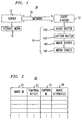
- the invention may conveniently be described in the context of the architecture shown in FIG. 1, in which the audiovisual program is transmitted from a server 11, where the program is stored in storage media 12, over a low-bandwidth network 10 to a user's client station 13, which may be, for example, a personal computer.
- low-bandwidth network 10 could be any network having insufficient bandwidth to transmit an audiovisual program with all of its video frames, even with compression, in real time. While the bandwidth limitation could be inherent in the network itself, it is intended that the phrase "low- bandwidth network" encompass even networks such as the Internet, which rely on high-speed links, including fiber-optic links, that have high intrinsic bandwidth, but to which users are typically connected by connections that limit the effective speed or bandwidth. Even the best current telephone modems, for example, connect at speeds of at most 28,800 or 33,600 bits per second, which effectively make the Internet a low-bandwidth network for users of such modems.
- the user's client station 13 when using software embodying the current invention, allocates in its working memory 14 a buffer 140 for holding the media tables referred to above, as well as buffers 141, 142, 143 for holding, respectively, the video, closed captioning and audio portions of a received program.
- the media table or tables stored in buffer 140 may have any suitable format.
- One sample format 20, shown in FIG. 2 has four "columns" 21, 22, 23, 24.
- Each entry in column 21 preferably contains the identifier of a particular video image.
- Each respective row thus preferably contains information regarding that particular image.
- Column 22, for example, preferably indicates the temporal offset for the image - i.e., the time, measured from the beginning of the program, at which the image is first displayed.
- the image preferably begins continuous playback at a temporal offset of zero.
- the image preferably will remain displayed until the temporal offset of the next image is reached, at which point that new image, assuming it is available (i.e., there was no network difficulty that prevented its retrieval), preferably will be displayed. If the new image is not available, then preferably the current image remains displayed until the new image can be retrieved, or until the temporal offset for still another image is reached. Alternatively, a blank screen or an error message, such as "VIDEO NOT AVAILABLE AT THIS TIME,” may be displayed.
- Column 23 preferably identifies the closed captioning data, if used, that should be displayed with a particular image. However, because a particular video frame may be associated with several frames of closed captioning data, a separate table may be used, ad column 23 could be omitted.
- Column 24 preferably includes data regarding various image attributes. For example, as discussed above, an indication of the type of scene change that resulted in selection of the image might be included to enable the software implementing the invention to determine whether or not to load that frame in advance of certain other frames. In addition, when the image is an advertising image, that information could be stored in column 24, which could also be a pointer to an alternate advertisement.
- FIG. 3 A preferred embodiment of a viewer interface 30 in accordance with the invention is shown in FIG. 3, although other viewer interface configurations may also be used.
- Interface 30 is preferably implemented using a standard graphical user interface such as Microsoft WINDOWSTM, and thus has certain standard elements such as title bar 31 and menu bar 32.
- An image area 33 is provided for the display of the video images of the audiovisual program.
- Area 34 is provided for the display of the secondary images discussed above (e.g., advertising that is not part of the original broadcast).
- Area 35 is provided for the display of closed captioning data. While area 33 would probably, but not necessarily, have a visible boundary even when no image was being displayed there, areas 34 and 35 probably would not have visible boundaries.
- Interface 30 also preferably has two slide controls 36, 37.
- Slide control 36 preferably controls the volume of the audio portion of the program when played back.
- Slide control 37 preferably allows the user to scroll to a different portion of the program. Slide control 37 thus preferably would move, on its own, as the program progressed, to indicate the current position in the program.
- indicia are displayed along the paths of slide controls 36, 37 to indicate their functions and their levels or positions.
- Slide controls 36, 37 are preferably actuated by the user using a mouse or similar pointing device that controls a displayed pointer 38.
- Buttons 39 may be provided for functions such as PLAY, STOP, SEEK and QUIT. Other functions may be available to the user using pointer 38, either through other graphical controls (not shown) in other areas of viewer 30, or through menu items on menu bar 32 (which may also have keystroke equivalents accessible from the keyboard of the user station).
- FIG. 4 shows the operational flow of software implementing the viewer embodying the invention.
- the system accepts mouse clicks or similar inputs at 40. Depending on where on the screen the mouse is clicked, a different message will be sent into message queue 41 which ultimately is processed in message queue processing stage 42. If the message is a play message (at 43), the system sends a "Resume Playing" message to the buffer manager queue 44 and then returns to wait for additional messages. If the message is a stop message (at 45), the system sends a "Stop Playing" message to the buffer manager queue 44 and then returns to wait for additional messages. If the message is a seek message (at 46), the system sends a "Resume Playing" message to the buffer manager queue 44 and then returns to wait for additional messages.
- Buffer manager 48 manages the capture of data into image, audio and caption buffers 401, 402, 403, as well as the playback of that data, in response to user requests. If the user requests that a program be played, buffer manager 48 examines the contents of buffer 401 to determine whether or not the desired video material is present there (the audio and closed captioning data preferably are streamed into buffers 402, 403 substantially in real time with only a slight delay). If the content is in buffer 401, the corresponding audio from buffer 402 is played through speaker 404, while the video and closed caption data are played through interface 30 using display process 405. Buffer manager 48 continues to perform network read function 406 to load advance frames. At the same time, the system continues to monitor for user input into message queue 41.
- buffer manager 48 continually alternates between display process 405 and network read function 406.
- the method according to the invention primarily relates to how the system handles network read requests 406 to download video images, so that it correctly handles those images that may be advertising, or some other special category of images.
- the method could also be applied to the audio or closed captioning portion of the program -- e.g., to provide certain subscribers with audio or closed captioning in a different language for at least certain parts of the program.
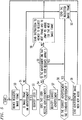
- the flow of the method according to the invention is diagrammed in FIG. 5 in the context of advertisements.
- the user's viewer software requests the next image frame indicated in the media table.
- the server determines, preferably by consulting the media table, whether or not the requested image frame is an advertisement. If not, then at step 52 the requested image frame is sent to the user's viewer, and the system loops back to await the next image frame request at step 50.
- the server determines that the requested frame is an advertisement
- the server identifies the user
- the server tests to determine whether or not this user is one who has contracted not to receive advertisements. If so, then the system proceeds to test 55 where it determines whether or not the current advertisement is one that the user will receive anyway (e.g., because it is a public service message). Again, this information is preferably stored in the media table. If the current advertisement is one that the user will receive anyway, the system sends the requested image frame at step 52 and loops back to step 50 as above.
- the server sends an instruction to the user's viewer to request the next image frame in its media table, and to advance the audio track to the temporal offset associated with the next image frame (to skip over the advertising audio).
- the correct advertisement is identified.
- the system determines at test 58 whether or not the correct advertisement, as identified in step 57, is the default advertisement that was included in the original broadcast. This determination is preferably based on demographic or psychographic information regarding the user. If, at test 58, the correct advertisement is the default advertisement, the system sends the requested image frame at step 52 and loops back to step 50 as above. If, at test 58, the correct advertisement is not the default advertisement, then at step 59, the system preferably sends the image for the correct advertisement, and preferably also sends new audio, to be played in place of the original audio, until the temporal offset of the next frame request.
- the system will need to know how long the audio portion can play for, and thus part of the attribute information in the media table for the advertisement image, in addition to the fact that it is an advertisement, preferably is the length of the associated audio. This allows the system to select an advertisement whose audio will fit into the time slot allocated for the original advertisement audio. After sending the advertisement at step 59, the system loops back to step 50 as above.
- While the invention has been described in the context of programs that are customized by manipulating their advertisements, other features can be customized along with or instead of the advertising. For example, certain subscribers may have a profile that indicates that advertising should be omitted, while other subscribers could have a profile indicating that a certain language be used. The latter subscriber would then receive all of the original images, but would receive audio or closed- captioning in the alternate language, except that for certain segments the original language would be retained if it were indicated in the media table that substitution was not permitted for those segments.
- the invention achieves its greatest advantage in the context of a low- bandwidth network as described above, the invention can be used even in a network with high enough bandwidth to transmit full-motion video.
Landscapes
- Engineering & Computer Science (AREA)
- Multimedia (AREA)
- Signal Processing (AREA)
- Databases & Information Systems (AREA)
- Computer Graphics (AREA)
- Business, Economics & Management (AREA)
- Marketing (AREA)
- Two-Way Televisions, Distribution Of Moving Picture Or The Like (AREA)
Applications Claiming Priority (2)
| Application Number | Priority Date | Filing Date | Title |
|---|---|---|---|
| US67212396A | 1996-06-27 | 1996-06-27 | |
| US672123 | 1996-06-27 |
Publications (1)
| Publication Number | Publication Date |
|---|---|
| EP0817486A2 true EP0817486A2 (fr) | 1998-01-07 |
Family
ID=24697253
Family Applications (1)
| Application Number | Title | Priority Date | Filing Date |
|---|---|---|---|
| EP97110403A Withdrawn EP0817486A2 (fr) | 1996-06-27 | 1997-06-25 | Méthode de changement d'une transmission par radiodiffusion en fonction de son destinataire à travers un réseau de télécommunication |
Country Status (4)
| Country | Link |
|---|---|
| EP (1) | EP0817486A2 (fr) |
| CA (1) | CA2197727A1 (fr) |
| IL (1) | IL121140A0 (fr) |
| SG (1) | SG93179A1 (fr) |
Cited By (13)
| Publication number | Priority date | Publication date | Assignee | Title |
|---|---|---|---|---|
| WO1998054672A1 (fr) * | 1997-05-29 | 1998-12-03 | John Griffits | Procede securise de mesure de publicites dans les systemes informatiques |
| WO2003071737A1 (fr) * | 2001-12-31 | 2003-08-28 | Measurecast.Com, Inc. | Authentification de trafic de programmation de medias verifies realisee sur reseau informatique |
| WO2004054259A1 (fr) * | 2002-12-12 | 2004-06-24 | Koninklijke Philips Electronics N.V. | Appareil et procede permettant d'empecher le changement de chaine pendant la diffusion d'une publicite |
| EP1885127A2 (fr) | 1999-09-20 | 2008-02-06 | Tivo, Inc. | Système de marquage de détection fermée |
| US7779437B2 (en) | 1999-12-21 | 2010-08-17 | Tivo Inc. | Method for enhancing digital video recorder television advertising viewership |
| US8307006B2 (en) | 2010-06-30 | 2012-11-06 | The Nielsen Company (Us), Llc | Methods and apparatus to obtain anonymous audience measurement data from network server data for particular demographic and usage profiles |
| US8381241B2 (en) | 2004-04-23 | 2013-02-19 | The Nielsen Company (Us), Llc | Methods and apparatus to maintain audience privacy while determining viewing of video-on-demand programs |
| US8438596B2 (en) | 2009-04-08 | 2013-05-07 | Tivo Inc. | Automatic contact information transmission system |
| US9015740B2 (en) | 2005-12-12 | 2015-04-21 | The Nielsen Company (Us), Llc | Systems and methods to wirelessly meter audio/visual devices |
| US9124769B2 (en) | 2008-10-31 | 2015-09-01 | The Nielsen Company (Us), Llc | Methods and apparatus to verify presentation of media content |
| GB2534614A (en) * | 2014-11-26 | 2016-08-03 | Piksel Inc | Delivering content |
| US10257573B2 (en) | 2014-11-26 | 2019-04-09 | Piksel, Inc. | Delivering content |
| US10735705B2 (en) | 2004-11-19 | 2020-08-04 | Tivo Solutions Inc. | Method and apparatus for displaying branded video tags |
Family Cites Families (3)
| Publication number | Priority date | Publication date | Assignee | Title |
|---|---|---|---|---|
| US5319455A (en) * | 1990-09-28 | 1994-06-07 | Ictv Inc. | System for distributing customized commercials to television viewers |
| CA2140850C (fr) * | 1994-02-24 | 1999-09-21 | Howard Paul Katseff | Systeme en reseau pour l'affichage de presentations multimedia |
| DE69515386T2 (de) * | 1994-07-15 | 2000-08-24 | Matsushita Electric Industrial Co., Ltd. | Verfahren zur Verbindung von MPEG-Videosequenzen |
-
1997
- 1997-02-17 CA CA2197727A patent/CA2197727A1/fr not_active Abandoned
- 1997-06-20 SG SG9702117A patent/SG93179A1/en unknown
- 1997-06-23 IL IL12114097A patent/IL121140A0/xx unknown
- 1997-06-25 EP EP97110403A patent/EP0817486A2/fr not_active Withdrawn
Cited By (30)
| Publication number | Priority date | Publication date | Assignee | Title |
|---|---|---|---|---|
| WO1998054672A1 (fr) * | 1997-05-29 | 1998-12-03 | John Griffits | Procede securise de mesure de publicites dans les systemes informatiques |
| US8781298B2 (en) | 1998-07-30 | 2014-07-15 | Tivo Inc. | Closed caption tagging system |
| US8453193B2 (en) | 1998-07-30 | 2013-05-28 | Tivo Inc. | Closed caption tagging system |
| US7889964B1 (en) | 1998-07-30 | 2011-02-15 | Tivo Inc. | Closed caption tagging system |
| US7986868B2 (en) | 1998-07-30 | 2011-07-26 | Tivo Inc. | Scheduling the recording of a program via an advertisement in the broadcast stream |
| US8036514B2 (en) | 1998-07-30 | 2011-10-11 | Tivo Inc. | Closed caption tagging system |
| US9407891B2 (en) | 1998-07-30 | 2016-08-02 | Tivo Inc. | One-touch recording of a program being advertised |
| EP1885127A2 (fr) | 1999-09-20 | 2008-02-06 | Tivo, Inc. | Système de marquage de détection fermée |
| EP1885127A3 (fr) * | 1999-09-20 | 2008-03-19 | Tivo, Inc. | Système de marquage de détection fermée |
| US7779437B2 (en) | 1999-12-21 | 2010-08-17 | Tivo Inc. | Method for enhancing digital video recorder television advertising viewership |
| WO2003071737A1 (fr) * | 2001-12-31 | 2003-08-28 | Measurecast.Com, Inc. | Authentification de trafic de programmation de medias verifies realisee sur reseau informatique |
| US10070182B2 (en) | 2002-12-12 | 2018-09-04 | Koninklijke Philips N.V. | Apparatus and method for preventing switching from a channel during an advertisement display |
| WO2004054259A1 (fr) * | 2002-12-12 | 2004-06-24 | Koninklijke Philips Electronics N.V. | Appareil et procede permettant d'empecher le changement de chaine pendant la diffusion d'une publicite |
| US8707340B2 (en) | 2004-04-23 | 2014-04-22 | The Nielsen Company (Us), Llc | Methods and apparatus to maintain audience privacy while determining viewing of video-on-demand programs |
| US8381241B2 (en) | 2004-04-23 | 2013-02-19 | The Nielsen Company (Us), Llc | Methods and apparatus to maintain audience privacy while determining viewing of video-on-demand programs |
| US9565473B2 (en) | 2004-04-23 | 2017-02-07 | The Nielsen Company (Us), Llc | Methods and apparatus to maintain audience privacy while determining viewing of video-on-demand programs |
| US10735705B2 (en) | 2004-11-19 | 2020-08-04 | Tivo Solutions Inc. | Method and apparatus for displaying branded video tags |
| US9015740B2 (en) | 2005-12-12 | 2015-04-21 | The Nielsen Company (Us), Llc | Systems and methods to wirelessly meter audio/visual devices |
| US10469901B2 (en) | 2008-10-31 | 2019-11-05 | The Nielsen Company (Us), Llc | Methods and apparatus to verify presentation of media content |
| US11778268B2 (en) | 2008-10-31 | 2023-10-03 | The Nielsen Company (Us), Llc | Methods and apparatus to verify presentation of media content |
| US9124769B2 (en) | 2008-10-31 | 2015-09-01 | The Nielsen Company (Us), Llc | Methods and apparatus to verify presentation of media content |
| US11070874B2 (en) | 2008-10-31 | 2021-07-20 | The Nielsen Company (Us), Llc | Methods and apparatus to verify presentation of media content |
| US8893180B2 (en) | 2009-04-08 | 2014-11-18 | Tivo Inc. | Automatic contact information transmission system |
| US8438596B2 (en) | 2009-04-08 | 2013-05-07 | Tivo Inc. | Automatic contact information transmission system |
| US8903864B2 (en) | 2010-06-30 | 2014-12-02 | The Nielsen Company (Us), Llc | Methods and apparatus to obtain anonymous audience measurement data from network server data for particular demographic and usage profiles |
| US9355138B2 (en) | 2010-06-30 | 2016-05-31 | The Nielsen Company (Us), Llc | Methods and apparatus to obtain anonymous audience measurement data from network server data for particular demographic and usage profiles |
| US8307006B2 (en) | 2010-06-30 | 2012-11-06 | The Nielsen Company (Us), Llc | Methods and apparatus to obtain anonymous audience measurement data from network server data for particular demographic and usage profiles |
| US10257573B2 (en) | 2014-11-26 | 2019-04-09 | Piksel, Inc. | Delivering content |
| GB2534614A (en) * | 2014-11-26 | 2016-08-03 | Piksel Inc | Delivering content |
| GB2534614B (en) * | 2014-11-26 | 2021-07-21 | Piksel Inc | Delivering content |
Also Published As
| Publication number | Publication date |
|---|---|
| SG93179A1 (en) | 2002-12-17 |
| CA2197727A1 (fr) | 1997-12-27 |
| IL121140A0 (en) | 1997-11-20 |
Similar Documents
| Publication | Publication Date | Title |
|---|---|---|
| US5874986A (en) | Method for communicating audiovisual programs over a communications network | |
| US11081143B2 (en) | Providing enhanced content | |
| US6064420A (en) | Simulating two way connectivity for one way data streams for multiple parties | |
| US8745659B2 (en) | In-program content targeting | |
| EP1053641B1 (fr) | Appareil portable pour simulation a connectivite bidirectionnelle pour trains de donnees unidirectionnels | |
| US6732373B2 (en) | Host apparatus for simulating two way connectivity for one way data streams | |
| US5818441A (en) | System and method for simulating two-way connectivity for one way data streams | |
| US7640560B2 (en) | Apparatus and methods for broadcast monitoring | |
| US8032915B1 (en) | Digital television with subscriber conference overlay | |
| US7263714B2 (en) | Providing content interruptions | |
| US20100325653A1 (en) | Methods, Systems, and Products for Blocking Content | |
| US20090007195A1 (en) | Method And System For Filtering Advertisements In A Media Stream | |
| KR100872138B1 (ko) | 주문형 멀티미디어 콘텐츠 제공 시스템 및 방법 | |
| MXPA04005470A (es) | Contenido interactivo sin activadores incorporados. | |
| EP0817486A2 (fr) | Méthode de changement d'une transmission par radiodiffusion en fonction de son destinataire à travers un réseau de télécommunication | |
| US20090320061A1 (en) | Advertising Based on Keywords in Media Content | |
| CN1243386A (zh) | 用于选择和接入来自电视的信息流段的系统 | |
| JP3606468B2 (ja) | 映像/音声情報通信方法 | |
| WO2009031137A2 (fr) | Graphiques compacts pour des dispositifs d'affichage à résolution limitée | |
| KR20100071414A (ko) | 컨트롤 화면 연동광고 서비스 제공 방법 및 시스템 |
Legal Events
| Date | Code | Title | Description |
|---|---|---|---|
| PUAI | Public reference made under article 153(3) epc to a published international application that has entered the european phase |
Free format text: ORIGINAL CODE: 0009012 |
|
| AK | Designated contracting states |
Kind code of ref document: A2 Designated state(s): AT BE CH DE DK ES FI FR GB GR IE IT LI LU MC NL PT SE |
|
| STAA | Information on the status of an ep patent application or granted ep patent |
Free format text: STATUS: THE APPLICATION HAS BEEN WITHDRAWN |
|
| 18W | Application withdrawn |
Withdrawal date: 19991018 |