EP0817864B1 - Verfahren zur bestimmung von crohn's krankheit und colitis ulcerosa - Google Patents
Verfahren zur bestimmung von crohn's krankheit und colitis ulcerosa Download PDFInfo
- Publication number
- EP0817864B1 EP0817864B1 EP96908202A EP96908202A EP0817864B1 EP 0817864 B1 EP0817864 B1 EP 0817864B1 EP 96908202 A EP96908202 A EP 96908202A EP 96908202 A EP96908202 A EP 96908202A EP 0817864 B1 EP0817864 B1 EP 0817864B1
- Authority
- EP
- European Patent Office
- Prior art keywords
- measles virus
- rna
- measles
- crohn
- disease
- Prior art date
- Legal status (The legal status is an assumption and is not a legal conclusion. Google has not performed a legal analysis and makes no representation as to the accuracy of the status listed.)
- Expired - Lifetime
Links
- 208000011231 Crohn disease Diseases 0.000 title claims abstract description 53
- 206010009900 Colitis ulcerative Diseases 0.000 title claims abstract description 21
- 201000006704 Ulcerative Colitis Diseases 0.000 title claims abstract description 21
- 238000000034 method Methods 0.000 title claims description 52
- 238000003745 diagnosis Methods 0.000 title claims description 5
- 241000712079 Measles morbillivirus Species 0.000 claims abstract description 80
- 238000001514 detection method Methods 0.000 claims abstract description 27
- 238000006243 chemical reaction Methods 0.000 claims abstract description 18
- 230000003321 amplification Effects 0.000 claims abstract description 17
- 238000003199 nucleic acid amplification method Methods 0.000 claims abstract description 17
- 238000000338 in vitro Methods 0.000 claims abstract description 14
- 239000002773 nucleotide Substances 0.000 claims abstract description 3
- 125000003729 nucleotide group Chemical group 0.000 claims abstract description 3
- 201000005505 Measles Diseases 0.000 claims description 65
- 239000000047 product Substances 0.000 claims description 41
- 239000000872 buffer Substances 0.000 claims description 25
- 239000003153 chemical reaction reagent Substances 0.000 claims description 25
- 229960005486 vaccine Drugs 0.000 claims description 22
- 239000000523 sample Substances 0.000 claims description 21
- TWRXJAOTZQYOKJ-UHFFFAOYSA-L Magnesium chloride Chemical compound [Mg+2].[Cl-].[Cl-] TWRXJAOTZQYOKJ-UHFFFAOYSA-L 0.000 claims description 14
- 239000000203 mixture Substances 0.000 claims description 14
- XLYOFNOQVPJJNP-UHFFFAOYSA-N water Substances O XLYOFNOQVPJJNP-UHFFFAOYSA-N 0.000 claims description 14
- 102000004190 Enzymes Human genes 0.000 claims description 13
- 108090000790 Enzymes Proteins 0.000 claims description 13
- 108010006785 Taq Polymerase Proteins 0.000 claims description 11
- 239000013642 negative control Substances 0.000 claims description 11
- 150000007523 nucleic acids Chemical class 0.000 claims description 11
- 108020004707 nucleic acids Proteins 0.000 claims description 10
- 102000039446 nucleic acids Human genes 0.000 claims description 10
- 238000009396 hybridization Methods 0.000 claims description 9
- 239000013641 positive control Substances 0.000 claims description 9
- 238000004458 analytical method Methods 0.000 claims description 8
- 238000010790 dilution Methods 0.000 claims description 7
- 239000012895 dilution Substances 0.000 claims description 7
- 229910001629 magnesium chloride Inorganic materials 0.000 claims description 7
- 108090000623 proteins and genes Proteins 0.000 claims description 7
- 238000012360 testing method Methods 0.000 claims description 7
- 102000004163 DNA-directed RNA polymerases Human genes 0.000 claims description 6
- 108090000626 DNA-directed RNA polymerases Proteins 0.000 claims description 6
- 108090001074 Nucleocapsid Proteins Proteins 0.000 claims description 6
- 238000003556 assay Methods 0.000 claims description 6
- 239000007795 chemical reaction product Substances 0.000 claims description 6
- 239000011535 reaction buffer Substances 0.000 claims description 6
- 238000003757 reverse transcription PCR Methods 0.000 claims description 6
- 238000012163 sequencing technique Methods 0.000 claims description 6
- 239000000243 solution Substances 0.000 claims description 6
- 108091034117 Oligonucleotide Proteins 0.000 claims description 5
- 210000001124 body fluid Anatomy 0.000 claims description 4
- 239000010839 body fluid Substances 0.000 claims description 4
- 239000002299 complementary DNA Substances 0.000 claims description 4
- 230000001351 cycling effect Effects 0.000 claims description 4
- 238000010438 heat treatment Methods 0.000 claims description 4
- 230000001900 immune effect Effects 0.000 claims description 4
- 230000002503 metabolic effect Effects 0.000 claims description 4
- 239000011534 wash buffer Substances 0.000 claims description 4
- 238000000636 Northern blotting Methods 0.000 claims description 3
- 229940031567 attenuated vaccine Drugs 0.000 claims description 3
- 238000003364 immunohistochemistry Methods 0.000 claims description 3
- 238000011068 loading method Methods 0.000 claims description 3
- 102000004169 proteins and genes Human genes 0.000 claims description 3
- 239000011541 reaction mixture Substances 0.000 claims description 3
- 230000002441 reversible effect Effects 0.000 claims description 3
- 238000012286 ELISA Assay Methods 0.000 claims description 2
- 108060003393 Granulin Proteins 0.000 claims description 2
- 102000007982 Phosphoproteins Human genes 0.000 claims description 2
- 108010089430 Phosphoproteins Proteins 0.000 claims description 2
- 238000000137 annealing Methods 0.000 claims description 2
- 238000007865 diluting Methods 0.000 claims description 2
- 238000001962 electrophoresis Methods 0.000 claims description 2
- 108020001507 fusion proteins Proteins 0.000 claims description 2
- 102000037865 fusion proteins Human genes 0.000 claims description 2
- 238000011534 incubation Methods 0.000 claims description 2
- 239000003112 inhibitor Substances 0.000 claims description 2
- 238000003752 polymerase chain reaction Methods 0.000 claims description 2
- 238000003127 radioimmunoassay Methods 0.000 claims description 2
- 238000004064 recycling Methods 0.000 claims description 2
- 238000011065 in-situ storage Methods 0.000 abstract description 11
- 239000003814 drug Substances 0.000 abstract description 3
- 230000002238 attenuated effect Effects 0.000 abstract description 2
- 108020005544 Antisense RNA Proteins 0.000 abstract 1
- 108010067390 Viral Proteins Proteins 0.000 abstract 1
- 239000003184 complementary RNA Substances 0.000 abstract 1
- 238000004519 manufacturing process Methods 0.000 abstract 1
- 210000001519 tissue Anatomy 0.000 description 46
- 210000004027 cell Anatomy 0.000 description 30
- 208000005647 Mumps Diseases 0.000 description 16
- 208000010805 mumps infectious disease Diseases 0.000 description 16
- LOKCTEFSRHRXRJ-UHFFFAOYSA-I dipotassium trisodium dihydrogen phosphate hydrogen phosphate dichloride Chemical compound P(=O)(O)(O)[O-].[K+].P(=O)(O)([O-])[O-].[Na+].[Na+].[Cl-].[K+].[Cl-].[Na+] LOKCTEFSRHRXRJ-UHFFFAOYSA-I 0.000 description 12
- 239000002953 phosphate buffered saline Substances 0.000 description 12
- 229920005989 resin Polymers 0.000 description 12
- 239000011347 resin Substances 0.000 description 12
- 210000003501 vero cell Anatomy 0.000 description 12
- 230000001154 acute effect Effects 0.000 description 11
- PCHJSUWPFVWCPO-UHFFFAOYSA-N gold Chemical compound [Au] PCHJSUWPFVWCPO-UHFFFAOYSA-N 0.000 description 10
- 229910052737 gold Inorganic materials 0.000 description 10
- 239000010931 gold Substances 0.000 description 10
- 238000002372 labelling Methods 0.000 description 10
- 239000002245 particle Substances 0.000 description 9
- 206010003011 Appendicitis Diseases 0.000 description 7
- 241000700605 Viruses Species 0.000 description 7
- 239000012188 paraffin wax Substances 0.000 description 7
- 210000002966 serum Anatomy 0.000 description 7
- ZMXDDKWLCZADIW-UHFFFAOYSA-N N,N-Dimethylformamide Chemical compound CN(C)C=O ZMXDDKWLCZADIW-UHFFFAOYSA-N 0.000 description 6
- 206010042297 Subacute sclerosing panencephalitis Diseases 0.000 description 6
- 208000010758 granulomatous inflammation Diseases 0.000 description 6
- 201000008827 tuberculosis Diseases 0.000 description 6
- 230000003612 virological effect Effects 0.000 description 6
- LFQSCWFLJHTTHZ-UHFFFAOYSA-N Ethanol Chemical compound CCO LFQSCWFLJHTTHZ-UHFFFAOYSA-N 0.000 description 5
- 208000037065 Subacute sclerosing leukoencephalitis Diseases 0.000 description 5
- 210000004369 blood Anatomy 0.000 description 5
- 239000008280 blood Substances 0.000 description 5
- 230000001413 cellular effect Effects 0.000 description 5
- 239000012154 double-distilled water Substances 0.000 description 5
- 230000000968 intestinal effect Effects 0.000 description 5
- 210000000936 intestine Anatomy 0.000 description 5
- 210000002540 macrophage Anatomy 0.000 description 5
- 238000010186 staining Methods 0.000 description 5
- 108020004414 DNA Proteins 0.000 description 4
- ZHNUHDYFZUAESO-UHFFFAOYSA-N Formamide Chemical compound NC=O ZHNUHDYFZUAESO-UHFFFAOYSA-N 0.000 description 4
- 239000011324 bead Substances 0.000 description 4
- 238000001493 electron microscopy Methods 0.000 description 4
- 208000015181 infectious disease Diseases 0.000 description 4
- 210000004698 lymphocyte Anatomy 0.000 description 4
- 230000004044 response Effects 0.000 description 4
- 230000009385 viral infection Effects 0.000 description 4
- IAZDPXIOMUYVGZ-UHFFFAOYSA-N Dimethylsulphoxide Chemical compound CS(C)=O IAZDPXIOMUYVGZ-UHFFFAOYSA-N 0.000 description 3
- 238000002965 ELISA Methods 0.000 description 3
- 206010061218 Inflammation Diseases 0.000 description 3
- 208000022559 Inflammatory bowel disease Diseases 0.000 description 3
- 102000011931 Nucleoproteins Human genes 0.000 description 3
- 108010061100 Nucleoproteins Proteins 0.000 description 3
- 206010035664 Pneumonia Diseases 0.000 description 3
- 238000002123 RNA extraction Methods 0.000 description 3
- 238000003491 array Methods 0.000 description 3
- 210000004556 brain Anatomy 0.000 description 3
- 208000037265 diseases, disorders, signs and symptoms Diseases 0.000 description 3
- 210000002889 endothelial cell Anatomy 0.000 description 3
- 239000000499 gel Substances 0.000 description 3
- 230000028993 immune response Effects 0.000 description 3
- 230000004054 inflammatory process Effects 0.000 description 3
- 239000008188 pellet Substances 0.000 description 3
- 230000002688 persistence Effects 0.000 description 3
- WZUVPPKBWHMQCE-XJKSGUPXSA-N (+)-haematoxylin Chemical compound C12=CC(O)=C(O)C=C2C[C@]2(O)[C@H]1C1=CC=C(O)C(O)=C1OC2 WZUVPPKBWHMQCE-XJKSGUPXSA-N 0.000 description 2
- 229920001817 Agar Polymers 0.000 description 2
- IJGRMHOSHXDMSA-UHFFFAOYSA-N Atomic nitrogen Chemical compound N#N IJGRMHOSHXDMSA-UHFFFAOYSA-N 0.000 description 2
- HEDRZPFGACZZDS-UHFFFAOYSA-N Chloroform Chemical compound ClC(Cl)Cl HEDRZPFGACZZDS-UHFFFAOYSA-N 0.000 description 2
- 108010067770 Endopeptidase K Proteins 0.000 description 2
- 206010018691 Granuloma Diseases 0.000 description 2
- WZUVPPKBWHMQCE-UHFFFAOYSA-N Haematoxylin Natural products C12=CC(O)=C(O)C=C2CC2(O)C1C1=CC=C(O)C(O)=C1OC2 WZUVPPKBWHMQCE-UHFFFAOYSA-N 0.000 description 2
- 241000701044 Human gammaherpesvirus 4 Species 0.000 description 2
- 102100034343 Integrase Human genes 0.000 description 2
- 108010028253 Measles virus nucleoprotein Proteins 0.000 description 2
- PXHVJJICTQNCMI-UHFFFAOYSA-N Nickel Chemical compound [Ni] PXHVJJICTQNCMI-UHFFFAOYSA-N 0.000 description 2
- 108020002230 Pancreatic Ribonuclease Proteins 0.000 description 2
- 102000005891 Pancreatic ribonuclease Human genes 0.000 description 2
- 229930040373 Paraformaldehyde Natural products 0.000 description 2
- KHGNFPUMBJSZSM-UHFFFAOYSA-N Perforine Natural products COC1=C2CCC(O)C(CCC(C)(C)O)(OC)C2=NC2=C1C=CO2 KHGNFPUMBJSZSM-UHFFFAOYSA-N 0.000 description 2
- 208000037581 Persistent Infection Diseases 0.000 description 2
- 206010035742 Pneumonitis Diseases 0.000 description 2
- 239000013614 RNA sample Substances 0.000 description 2
- 108010092799 RNA-directed DNA polymerase Proteins 0.000 description 2
- 241000710799 Rubella virus Species 0.000 description 2
- FAPWRFPIFSIZLT-UHFFFAOYSA-M Sodium chloride Chemical compound [Na+].[Cl-] FAPWRFPIFSIZLT-UHFFFAOYSA-M 0.000 description 2
- COQLPRJCUIATTQ-UHFFFAOYSA-N Uranyl acetate Chemical compound O.O.O=[U]=O.CC(O)=O.CC(O)=O COQLPRJCUIATTQ-UHFFFAOYSA-N 0.000 description 2
- 239000008272 agar Substances 0.000 description 2
- 239000011543 agarose gel Substances 0.000 description 2
- 239000000427 antigen Substances 0.000 description 2
- 102000036639 antigens Human genes 0.000 description 2
- 108091007433 antigens Proteins 0.000 description 2
- ISAOCJYIOMOJEB-UHFFFAOYSA-N benzoin Chemical compound C=1C=CC=CC=1C(O)C(=O)C1=CC=CC=C1 ISAOCJYIOMOJEB-UHFFFAOYSA-N 0.000 description 2
- 238000001574 biopsy Methods 0.000 description 2
- HOQPTLCRWVZIQZ-UHFFFAOYSA-H bis[[2-(5-hydroxy-4,7-dioxo-1,3,2$l^{2}-dioxaplumbepan-5-yl)acetyl]oxy]lead Chemical compound [Pb+2].[Pb+2].[Pb+2].[O-]C(=O)CC(O)(CC([O-])=O)C([O-])=O.[O-]C(=O)CC(O)(CC([O-])=O)C([O-])=O HOQPTLCRWVZIQZ-UHFFFAOYSA-H 0.000 description 2
- 239000003246 corticosteroid Substances 0.000 description 2
- 229960001334 corticosteroids Drugs 0.000 description 2
- 230000009260 cross reactivity Effects 0.000 description 2
- 230000000120 cytopathologic effect Effects 0.000 description 2
- 238000012303 cytoplasmic staining Methods 0.000 description 2
- 230000001086 cytosolic effect Effects 0.000 description 2
- 231100000433 cytotoxic Toxicity 0.000 description 2
- 230000001472 cytotoxic effect Effects 0.000 description 2
- 238000002405 diagnostic procedure Methods 0.000 description 2
- 201000010099 disease Diseases 0.000 description 2
- 231100000676 disease causative agent Toxicity 0.000 description 2
- 239000003480 eluent Substances 0.000 description 2
- 239000012149 elution buffer Substances 0.000 description 2
- 230000007717 exclusion Effects 0.000 description 2
- 239000000284 extract Substances 0.000 description 2
- 238000001502 gel electrophoresis Methods 0.000 description 2
- 210000002865 immune cell Anatomy 0.000 description 2
- 238000002650 immunosuppressive therapy Methods 0.000 description 2
- 239000007788 liquid Substances 0.000 description 2
- 210000002751 lymph Anatomy 0.000 description 2
- 238000012758 nuclear staining Methods 0.000 description 2
- 229920002866 paraformaldehyde Polymers 0.000 description 2
- 229930192851 perforin Natural products 0.000 description 2
- 230000002085 persistent effect Effects 0.000 description 2
- 230000035935 pregnancy Effects 0.000 description 2
- 125000002924 primary amino group Chemical group [H]N([H])* 0.000 description 2
- 238000012545 processing Methods 0.000 description 2
- 201000005404 rubella Diseases 0.000 description 2
- 238000005406 washing Methods 0.000 description 2
- 102100039358 3-hydroxyacyl-CoA dehydrogenase type-2 Human genes 0.000 description 1
- 229920003319 Araldite® Polymers 0.000 description 1
- 240000003291 Armoracia rusticana Species 0.000 description 1
- 241000972773 Aulopiformes Species 0.000 description 1
- 101100028791 Caenorhabditis elegans pbs-5 gene Proteins 0.000 description 1
- 241000712083 Canine morbillivirus Species 0.000 description 1
- 241000283707 Capra Species 0.000 description 1
- 241000867607 Chlorocebus sabaeus Species 0.000 description 1
- 208000019399 Colonic disease Diseases 0.000 description 1
- 229920000742 Cotton Polymers 0.000 description 1
- FBPFZTCFMRRESA-FSIIMWSLSA-N D-Glucitol Natural products OC[C@H](O)[C@H](O)[C@@H](O)[C@H](O)CO FBPFZTCFMRRESA-FSIIMWSLSA-N 0.000 description 1
- 230000006820 DNA synthesis Effects 0.000 description 1
- 229920002307 Dextran Polymers 0.000 description 1
- KCXVZYZYPLLWCC-UHFFFAOYSA-N EDTA Chemical compound OC(=O)CN(CC(O)=O)CCN(CC(O)=O)CC(O)=O KCXVZYZYPLLWCC-UHFFFAOYSA-N 0.000 description 1
- 241000463291 Elga Species 0.000 description 1
- SXRSQZLOMIGNAQ-UHFFFAOYSA-N Glutaraldehyde Chemical compound O=CCCCC=O SXRSQZLOMIGNAQ-UHFFFAOYSA-N 0.000 description 1
- 206010019799 Hepatitis viral Diseases 0.000 description 1
- 101001035740 Homo sapiens 3-hydroxyacyl-CoA dehydrogenase type-2 Proteins 0.000 description 1
- 208000027182 Ileal disease Diseases 0.000 description 1
- 206010022678 Intestinal infections Diseases 0.000 description 1
- 206010022680 Intestinal ischaemia Diseases 0.000 description 1
- 241000712045 Morbillivirus Species 0.000 description 1
- 241000711386 Mumps virus Species 0.000 description 1
- 108091028043 Nucleic acid sequence Proteins 0.000 description 1
- 101710141454 Nucleoprotein Proteins 0.000 description 1
- 102000003992 Peroxidases Human genes 0.000 description 1
- 241000602081 Prosartes hookeri Species 0.000 description 1
- 108020004518 RNA Probes Proteins 0.000 description 1
- 239000012162 RNA isolation reagent Substances 0.000 description 1
- 239000003391 RNA probe Substances 0.000 description 1
- 240000004808 Saccharomyces cerevisiae Species 0.000 description 1
- 244000028419 Styrax benzoin Species 0.000 description 1
- 235000000126 Styrax benzoin Nutrition 0.000 description 1
- QAOWNCQODCNURD-UHFFFAOYSA-L Sulfate Chemical compound [O-]S([O-])(=O)=O QAOWNCQODCNURD-UHFFFAOYSA-L 0.000 description 1
- 235000008411 Sumatra benzointree Nutrition 0.000 description 1
- 239000007983 Tris buffer Substances 0.000 description 1
- 206010047115 Vasculitis Diseases 0.000 description 1
- 208000036142 Viral infection Diseases 0.000 description 1
- JLCPHMBAVCMARE-UHFFFAOYSA-N [3-[[3-[[3-[[3-[[3-[[3-[[3-[[3-[[3-[[3-[[3-[[5-(2-amino-6-oxo-1H-purin-9-yl)-3-[[3-[[3-[[3-[[3-[[3-[[5-(2-amino-6-oxo-1H-purin-9-yl)-3-[[5-(2-amino-6-oxo-1H-purin-9-yl)-3-hydroxyoxolan-2-yl]methoxy-hydroxyphosphoryl]oxyoxolan-2-yl]methoxy-hydroxyphosphoryl]oxy-5-(5-methyl-2,4-dioxopyrimidin-1-yl)oxolan-2-yl]methoxy-hydroxyphosphoryl]oxy-5-(6-aminopurin-9-yl)oxolan-2-yl]methoxy-hydroxyphosphoryl]oxy-5-(6-aminopurin-9-yl)oxolan-2-yl]methoxy-hydroxyphosphoryl]oxy-5-(6-aminopurin-9-yl)oxolan-2-yl]methoxy-hydroxyphosphoryl]oxy-5-(6-aminopurin-9-yl)oxolan-2-yl]methoxy-hydroxyphosphoryl]oxyoxolan-2-yl]methoxy-hydroxyphosphoryl]oxy-5-(5-methyl-2,4-dioxopyrimidin-1-yl)oxolan-2-yl]methoxy-hydroxyphosphoryl]oxy-5-(4-amino-2-oxopyrimidin-1-yl)oxolan-2-yl]methoxy-hydroxyphosphoryl]oxy-5-(5-methyl-2,4-dioxopyrimidin-1-yl)oxolan-2-yl]methoxy-hydroxyphosphoryl]oxy-5-(5-methyl-2,4-dioxopyrimidin-1-yl)oxolan-2-yl]methoxy-hydroxyphosphoryl]oxy-5-(6-aminopurin-9-yl)oxolan-2-yl]methoxy-hydroxyphosphoryl]oxy-5-(6-aminopurin-9-yl)oxolan-2-yl]methoxy-hydroxyphosphoryl]oxy-5-(4-amino-2-oxopyrimidin-1-yl)oxolan-2-yl]methoxy-hydroxyphosphoryl]oxy-5-(4-amino-2-oxopyrimidin-1-yl)oxolan-2-yl]methoxy-hydroxyphosphoryl]oxy-5-(4-amino-2-oxopyrimidin-1-yl)oxolan-2-yl]methoxy-hydroxyphosphoryl]oxy-5-(6-aminopurin-9-yl)oxolan-2-yl]methoxy-hydroxyphosphoryl]oxy-5-(4-amino-2-oxopyrimidin-1-yl)oxolan-2-yl]methyl [5-(6-aminopurin-9-yl)-2-(hydroxymethyl)oxolan-3-yl] hydrogen phosphate Polymers Cc1cn(C2CC(OP(O)(=O)OCC3OC(CC3OP(O)(=O)OCC3OC(CC3O)n3cnc4c3nc(N)[nH]c4=O)n3cnc4c3nc(N)[nH]c4=O)C(COP(O)(=O)OC3CC(OC3COP(O)(=O)OC3CC(OC3COP(O)(=O)OC3CC(OC3COP(O)(=O)OC3CC(OC3COP(O)(=O)OC3CC(OC3COP(O)(=O)OC3CC(OC3COP(O)(=O)OC3CC(OC3COP(O)(=O)OC3CC(OC3COP(O)(=O)OC3CC(OC3COP(O)(=O)OC3CC(OC3COP(O)(=O)OC3CC(OC3COP(O)(=O)OC3CC(OC3COP(O)(=O)OC3CC(OC3COP(O)(=O)OC3CC(OC3COP(O)(=O)OC3CC(OC3COP(O)(=O)OC3CC(OC3COP(O)(=O)OC3CC(OC3CO)n3cnc4c(N)ncnc34)n3ccc(N)nc3=O)n3cnc4c(N)ncnc34)n3ccc(N)nc3=O)n3ccc(N)nc3=O)n3ccc(N)nc3=O)n3cnc4c(N)ncnc34)n3cnc4c(N)ncnc34)n3cc(C)c(=O)[nH]c3=O)n3cc(C)c(=O)[nH]c3=O)n3ccc(N)nc3=O)n3cc(C)c(=O)[nH]c3=O)n3cnc4c3nc(N)[nH]c4=O)n3cnc4c(N)ncnc34)n3cnc4c(N)ncnc34)n3cnc4c(N)ncnc34)n3cnc4c(N)ncnc34)O2)c(=O)[nH]c1=O JLCPHMBAVCMARE-UHFFFAOYSA-N 0.000 description 1
- 230000002159 abnormal effect Effects 0.000 description 1
- 239000000853 adhesive Substances 0.000 description 1
- 230000001070 adhesive effect Effects 0.000 description 1
- 230000001745 anti-biotin effect Effects 0.000 description 1
- 230000000692 anti-sense effect Effects 0.000 description 1
- 238000000376 autoradiography Methods 0.000 description 1
- 229960002130 benzoin Drugs 0.000 description 1
- 238000004166 bioassay Methods 0.000 description 1
- 230000003115 biocidal effect Effects 0.000 description 1
- 230000005540 biological transmission Effects 0.000 description 1
- 230000015572 biosynthetic process Effects 0.000 description 1
- 210000005013 brain tissue Anatomy 0.000 description 1
- 238000010804 cDNA synthesis Methods 0.000 description 1
- 239000002775 capsule Substances 0.000 description 1
- 238000004113 cell culture Methods 0.000 description 1
- 230000030570 cellular localization Effects 0.000 description 1
- 230000002490 cerebral effect Effects 0.000 description 1
- 239000003795 chemical substances by application Substances 0.000 description 1
- 238000012790 confirmation Methods 0.000 description 1
- 239000000356 contaminant Substances 0.000 description 1
- 210000000805 cytoplasm Anatomy 0.000 description 1
- 238000013461 design Methods 0.000 description 1
- 230000009266 disease activity Effects 0.000 description 1
- 239000012153 distilled water Substances 0.000 description 1
- 241001493065 dsRNA viruses Species 0.000 description 1
- 238000013399 early diagnosis Methods 0.000 description 1
- 210000003038 endothelium Anatomy 0.000 description 1
- 210000002919 epithelial cell Anatomy 0.000 description 1
- 210000000981 epithelium Anatomy 0.000 description 1
- 239000003822 epoxy resin Substances 0.000 description 1
- 210000003743 erythrocyte Anatomy 0.000 description 1
- 230000001747 exhibiting effect Effects 0.000 description 1
- 230000003619 fibrillary effect Effects 0.000 description 1
- 210000001035 gastrointestinal tract Anatomy 0.000 description 1
- 235000019382 gum benzoic Nutrition 0.000 description 1
- 208000006454 hepatitis Diseases 0.000 description 1
- 231100000283 hepatitis Toxicity 0.000 description 1
- 238000010166 immunofluorescence Methods 0.000 description 1
- 230000002055 immunohistochemical effect Effects 0.000 description 1
- 238000012744 immunostaining Methods 0.000 description 1
- 231100000986 in utero exposure Toxicity 0.000 description 1
- 230000002458 infectious effect Effects 0.000 description 1
- 208000027866 inflammatory disease Diseases 0.000 description 1
- 230000002757 inflammatory effect Effects 0.000 description 1
- 238000001990 intravenous administration Methods 0.000 description 1
- 230000007794 irritation Effects 0.000 description 1
- 210000003734 kidney Anatomy 0.000 description 1
- 230000000527 lymphocytic effect Effects 0.000 description 1
- 210000005004 lymphoid follicle Anatomy 0.000 description 1
- 230000001404 mediated effect Effects 0.000 description 1
- 238000000386 microscopy Methods 0.000 description 1
- 229910052759 nickel Inorganic materials 0.000 description 1
- 229910052757 nitrogen Inorganic materials 0.000 description 1
- 230000003287 optical effect Effects 0.000 description 1
- 230000002093 peripheral effect Effects 0.000 description 1
- 108040007629 peroxidase activity proteins Proteins 0.000 description 1
- 239000013612 plasmid Substances 0.000 description 1
- 239000004033 plastic Substances 0.000 description 1
- BASFCYQUMIYNBI-UHFFFAOYSA-N platinum Chemical compound [Pt] BASFCYQUMIYNBI-UHFFFAOYSA-N 0.000 description 1
- 229920000647 polyepoxide Polymers 0.000 description 1
- 238000004321 preservation Methods 0.000 description 1
- 238000002203 pretreatment Methods 0.000 description 1
- 239000013615 primer Substances 0.000 description 1
- 239000002987 primer (paints) Substances 0.000 description 1
- 238000000746 purification Methods 0.000 description 1
- 230000000306 recurrent effect Effects 0.000 description 1
- 238000002271 resection Methods 0.000 description 1
- 238000012552 review Methods 0.000 description 1
- 239000003161 ribonuclease inhibitor Substances 0.000 description 1
- 235000019515 salmon Nutrition 0.000 description 1
- 239000011780 sodium chloride Substances 0.000 description 1
- 239000000600 sorbitol Substances 0.000 description 1
- 238000010561 standard procedure Methods 0.000 description 1
- 150000003431 steroids Chemical class 0.000 description 1
- 239000000758 substrate Substances 0.000 description 1
- 229910021653 sulphate ion Inorganic materials 0.000 description 1
- 208000024891 symptom Diseases 0.000 description 1
- 238000013518 transcription Methods 0.000 description 1
- 230000035897 transcription Effects 0.000 description 1
- 230000002103 transcriptional effect Effects 0.000 description 1
- 238000012546 transfer Methods 0.000 description 1
- 238000012384 transportation and delivery Methods 0.000 description 1
- LENZDBCJOHFCAS-UHFFFAOYSA-N tris Chemical compound OCC(N)(CO)CO LENZDBCJOHFCAS-UHFFFAOYSA-N 0.000 description 1
- 210000004291 uterus Anatomy 0.000 description 1
- 230000029812 viral genome replication Effects 0.000 description 1
- 201000001862 viral hepatitis Diseases 0.000 description 1
Images


Classifications
-
- A—HUMAN NECESSITIES
- A61—MEDICAL OR VETERINARY SCIENCE; HYGIENE
- A61K—PREPARATIONS FOR MEDICAL, DENTAL OR TOILETRY PURPOSES
- A61K39/00—Medicinal preparations containing antigens or antibodies
- A61K39/12—Viral antigens
- A61K39/155—Paramyxoviridae, e.g. parainfluenza virus
- A61K39/165—Mumps or measles virus
-
- A—HUMAN NECESSITIES
- A61—MEDICAL OR VETERINARY SCIENCE; HYGIENE
- A61K—PREPARATIONS FOR MEDICAL, DENTAL OR TOILETRY PURPOSES
- A61K39/00—Medicinal preparations containing antigens or antibodies
- A61K39/12—Viral antigens
-
- A—HUMAN NECESSITIES
- A61—MEDICAL OR VETERINARY SCIENCE; HYGIENE
- A61P—SPECIFIC THERAPEUTIC ACTIVITY OF CHEMICAL COMPOUNDS OR MEDICINAL PREPARATIONS
- A61P1/00—Drugs for disorders of the alimentary tract or the digestive system
-
- A—HUMAN NECESSITIES
- A61—MEDICAL OR VETERINARY SCIENCE; HYGIENE
- A61P—SPECIFIC THERAPEUTIC ACTIVITY OF CHEMICAL COMPOUNDS OR MEDICINAL PREPARATIONS
- A61P31/00—Antiinfectives, i.e. antibiotics, antiseptics, chemotherapeutics
- A61P31/12—Antivirals
-
- C—CHEMISTRY; METALLURGY
- C12—BIOCHEMISTRY; BEER; SPIRITS; WINE; VINEGAR; MICROBIOLOGY; ENZYMOLOGY; MUTATION OR GENETIC ENGINEERING
- C12Q—MEASURING OR TESTING PROCESSES INVOLVING ENZYMES, NUCLEIC ACIDS OR MICROORGANISMS; COMPOSITIONS OR TEST PAPERS THEREFOR; PROCESSES OF PREPARING SUCH COMPOSITIONS; CONDITION-RESPONSIVE CONTROL IN MICROBIOLOGICAL OR ENZYMOLOGICAL PROCESSES
- C12Q1/00—Measuring or testing processes involving enzymes, nucleic acids or microorganisms; Compositions therefor; Processes of preparing such compositions
- C12Q1/68—Measuring or testing processes involving enzymes, nucleic acids or microorganisms; Compositions therefor; Processes of preparing such compositions involving nucleic acids
- C12Q1/6876—Nucleic acid products used in the analysis of nucleic acids, e.g. primers or probes
- C12Q1/6883—Nucleic acid products used in the analysis of nucleic acids, e.g. primers or probes for diseases caused by alterations of genetic material
-
- C—CHEMISTRY; METALLURGY
- C12—BIOCHEMISTRY; BEER; SPIRITS; WINE; VINEGAR; MICROBIOLOGY; ENZYMOLOGY; MUTATION OR GENETIC ENGINEERING
- C12Q—MEASURING OR TESTING PROCESSES INVOLVING ENZYMES, NUCLEIC ACIDS OR MICROORGANISMS; COMPOSITIONS OR TEST PAPERS THEREFOR; PROCESSES OF PREPARING SUCH COMPOSITIONS; CONDITION-RESPONSIVE CONTROL IN MICROBIOLOGICAL OR ENZYMOLOGICAL PROCESSES
- C12Q1/00—Measuring or testing processes involving enzymes, nucleic acids or microorganisms; Compositions therefor; Processes of preparing such compositions
- C12Q1/68—Measuring or testing processes involving enzymes, nucleic acids or microorganisms; Compositions therefor; Processes of preparing such compositions involving nucleic acids
- C12Q1/6844—Nucleic acid amplification reactions
- C12Q1/6865—Promoter-based amplification, e.g. nucleic acid sequence amplification [NASBA], self-sustained sequence replication [3SR] or transcription-based amplification system [TAS]
Definitions
- the present invention relates to a method for the diagnosis of Crohn's Disease and ulcerative colitis.
- Crohn's Disease afflicts approximately 4 patients per 100,000 of the population, or in the United Kingdom 2,200 new cases per year. Because in its earlier stages Crohn's Disease tends to present as bowel irritation which is much more common, a reliable diagnostic system is required.
- ulcerative colitis is sufficient to warrant early diagnosis to enable early treatment.
- Virology 1995, Volume 207(1), pages 168-178 addresses measles virus anti-sense sequences in the treatment of cells persistently infected with measles virus.
- the causative agent for Crohn's Disease is the measles virus and accordingly the present invention utilises this finding to provide a diagnostic system for the location of an attenuated vaccine measles virus in bowel tissue, bowel products or in suitable body fluids such as blood or lymph.
- Continuing studies increasingly support the finding that measles virus is the causative agent for ulcerative colitis.
- a method for the diagnosis of Crohn's Disease and/or ulcerative colitis by detecting vaccine derived measles virus RNA in a sample of bowel tissue, bowel products or a body fluid, which method comprises detecting measles virus RNA and then distinguishing between wild-type and vaccine derived measles virus.
- the method of detecting vaccine derived measles virus RNA comprises the use of means for performing a nucleic acid based test in vitro.
- the means for performing a nucleic acid based test comprises performing a nucleotide sequence amplification or hybridization reaction selected from a polymerase chain reaction such as RT-PCR or a nucleic acid based amplification reaction (NASBA).
- a nucleotide sequence amplification or hybridization reaction selected from a polymerase chain reaction such as RT-PCR or a nucleic acid based amplification reaction (NASBA).
- NASBA is the preferred diagnostic method because it is significantly more sensitive for the detection of the measles virus.
- the means for performing a nucleic acid based test includes a buffered primer which primer comprises a 5' modified oligonucleotide sequence specific for the reverse transcribed DNA from an RNA measles virus.
- the method comprises the use of the following reagents:
- the method comprises the use of a RNA template specific for a RNA measles virus.
- the primer is attached to a reporter molecule which enables post amplification detection of the RNA or DNA.
- the reporter molecule is fluorochromatic.
- the vaccine derived measles virus RNA is detected via a distinctive metabolic product selected from a gene sequence or a metabolic product thereof to form a nucleocapsid protein, a phosphoprotein, a matrix protein, a RNA polymerase complex, a haemagglutinin protein, a fusion protein and/or another characteristic product thereof detectable by an immunological method.
- the method further comprises sequencing the amplified products or hybridising the amplified products with a homologous or heterologous specific probe to distinguish vaccine strain measles virus from wild type measles virus.
- the immunological detection method is effected by immunohistochemistry ELISA assay, radioimmunoassay or enzyme linked gel assay.
- the method further comprises a positive control comprising vaccine derived measles virus RNA in solution at a known concentration, and a negative control or means for providing the same.
- a method for the analysis of Crohn's Disease and/or ulcerative colitis to ascertain if it is derived from vaccine derived measles virus RNA comprises the steps of:-
- a Dig-11 or fluorescent labelled base primer is used.
- a method for the in vitro analysis of a sample of Crohn's Disease and/or ulcerative colitis for vaccine derived measles virus RNA comprises abstracting measles virus RNA from a suitable tissue and
- a method for the in vitro analysis of a sample of Crohn's Disease and/or ulcerative colitis to ascertain if it is derived from vaccine derived measles RNA comprises abstracting measles virus RNA from a suitable tissue and
- the annealing temperatures used during the amplification reaction are between 40°C and 65°C.
- Vero (green monkey kidney) cells were cultured in 75 mm flasks using standard techniques. Confluent monolayers were infected with either Edmonston strain measles virus at a titre of 10 7 plaque forming units per ml, or mumps virus (Taylor strain: PHLS Colindale, UK) at a TCID 50 (Tissue Culture Infectious Dose) of 10 4 ; uninfected cells were used as a negative control. When > 80% of cells showed cytopathic effect, monolayers were fixed using 1% glutaraldehyde/1% paraformaldehyde in phosphate buffered saline (PBS) for 30 minutes.
- PBS phosphate buffered saline
- the cells were scraped from the flask using platinum wire loop and the suspended cells were pelleted in Eppendorf tubes using a Beckman microfuge (Palo Alto, California, USA). Cell pellets were washed after fixation with PBS and dehydrated using dimethylformamide, 50, 70 and 90% x 2 changes each of 10-20 minutes duration depending on the size of the block.
- the blocks were then infiltrated with a 50:50 mixture of dimethylformamide and LR White resin with 0.5% benzoin photoinitiator (TAAB Laboratories Equipment Ltd, Reading, UK) added, for 30-60 minutes followed by 100% resin for 1-2 hours.
- the blocks were embedded in closable embedding capsules using fresh LR White with photoinitiator. Polymerisation was carried out at 4 ° using a UV light source at 10cm distance. The resin polymerised in 1-2 hours and the small amount of resin remaining unpolymerised under the closure was removed using a cotton swab.
- archival formalin-fixed paraffin processed tissues with established measles infection were selected; these included cerebral tissue from a case of subacute sclerosing pan-encephalitis (SSPE), and appendix from a case of acute measles virus appendicitis (Gift of Dr H Reid, Chase Farm Hospital, Enfield).
- SSPE subacute sclerosing pan-encephalitis
- appendix from a case of acute measles virus appendicitis
- Six cases of granulomatous Crohn's Disease were selected that included 4 rectal biopsies and two appendices taken at the time of initial presentation (that is, before specific or immunosuppressive therapy was instituted).
- the diagnoses were established by standard clinical and histopathological criteria.
- TB ileocecal tuberculosis
- Suitable areas of tissue were selected for immunogold analysis; these included areas that gave positive measles staining by immunoperoxidase, and foci of granulomatous inflammation in the cases of Crohn's Disease and ileocecal TB.
- Wedges of tissue were removed from the paraffin block using a single edged razor blade. The pieces were dewaxed with chloroform followed by rinsing in absolute alcohol. The tissue was then infiltrated with resin and embedded as described above.
- a novel method was used to lift the tissue from the slide; the section was dewaxed and taken to absolute alcohol, it was then flooded with 50:50 mixture of alcohol and LR White resin with photoinitiator added for a further 15 minutes; it was then drained and the slide blotted to remove surplus resin. Drops of fresh resin were placed over the tissue and covered with plastic coverslips (Agar Scientific, Stansted, UK). The resin was then polymerised with UV at 4°C for one hour. The coverslip was peeled off and unpolymerised resin removed. The resin containing the tissue was lifted by immersing the slide in liquid nitrogen for a few seconds. The pieces were then trimmed and mounted onto blank resin blocks using Permabond quick setting epoxy resin (Permabond Adhesives Ltd, Eastleigh, UK) Ultrathin sections were cut at 50-80 nm and immunostained as above.
- Ultrathin section were cut at 70-80 nm and picked up onto Piliform (Agar Scientific, Stansted, UK) coated 300 mesh nickel grids (Gilder, Grantham, UK).
- the grids were incubated on drops of 5% normal goat serum in 0.1% BSA/PBS buffer for 30 minutes, they were then transferred to drops of primary - measles polyclonal antibody 1/100 in 0.1% BSA/PBS for 1 hour.
- Primary antibody was removed by washing on drops of PBS 5 x 5 minutes, the first transfer being made without removing any surplus liquid from the grid.
- Surplus buffer was removed on the remaining four changes by touching the edge on a piece of blotting paper, taking care not to allow the grid to dry out.
- the grids were then transferred to drops of gold conjugate (Biocell, Cambridge, UK) diluted 1/100 with PBS for 1 hour followed by washing with drops of PBS 2 x 5 minutes to remove unbound gold conjugate and a final rinse in distilled water. Sections were stained lightly with uranyl acetate and Reynold's lead citrate and viewed using a Philips 201 transmission electron microscope. Sections processed omitting the primary antibody, were included with all tissues as negative controls.
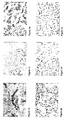
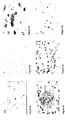
- Ultrastructurally, viral nucleocapsids consisted of characteristic parallel fibrillar structures of between 15 and 20 nm diameter.
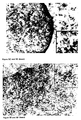
- Measles virus antigen was identified by the immunoperoxidase technique in endothelial cells, and macrophage-like cells including Warthin-Finkeldy giant cells, a classical feature of acute measles virus infection, and occasional lymphocytes within lymphoid follicles. Staining was not seen in negative control sections. Immunogold labelling confirmed the presence of the virus in the same cellular foci despite suboptimal preservation. No signal was observed in the absence of the primary antibody.
- Corticosteroids a mainstay in the treatment of patients with Crohn's Disease, may predispose to permissive viral replication, and confound the question of persistence within the inflamed intestine; none of the patients whose tissues were examined in this study had received either corticosteroids or other immunosuppressive therapy.
- Cases, 1, 2 and 3 had undergone multiple intestinal resections; tissues, available from two cases, were examined by both routine histology, and immunohistochemistry and immunogold electronmicroscopy for measles virus, using appropriate positive (brain; subacute sclerosing panencephalitis) and negative (no primary antibody, mumps infected cells) controls (Gut. 1995; 36: 564-9).
- Tissues from two cases of Crohn's Disease that were examined for measles virus antigen were positive in foci of granulomatous and lymphocytic inflammation.
- the data indicate that in utero exposure to measles virus is a major risk factor for severe, extensive Crohn's Disease. Exposure at this time may lead to persistent infection, or alternatively, modify the response to the infection in later life, leading to virus persistence.
- Immunogold electron microscopy was used to test for the presence of measles virus in intestinal tissue from patients with Crohn's Disease, and inflammatory and non-inflammatory disease controls.
- Formalin-fixed, paraffin-embedded tissue was reprocessed and stained with anti-measles nucleoprotein primary antibody followed by 10 nm gold-conjugated secondary antibody.
- processed brain tissue taken from a patient with subacute sclerosing panencephalitis (SSPE), was used as the positive control.
- SSPE subacute sclerosing panencephalitis
- Measles is an RNA virus.
- the nucleic acid amplification mediated detection whether in situ or in vitro of this example is based on either reverse transcription - polymerase chain reaction (RT-PCR) or nucleic acid sequence based amplification NASBA (3SR).
- Amicon Microcon 30 size exclusion cartridge is optionally required for purification of the product from first strand DNA synthesis for in vitro amplifications.
- kits preferably include a positive control, for example measles virus RNA, supplied as a solution at known concentration with which individuals using the kit can calibrate their results.
- a positive control for example measles virus RNA
- a negative control is required. This is preferably achieved by treatment of one portion of the sample to be tested with RNase A for 10 minutes at 37°C prior to analysis. This is effective for both in situ and in vitro applications and additionally indicates any non-specific product formation from any DNA that may be present as a contaminant in the samples. It is therefore desirable to include Rnase A as an additional component in the kit.
- Reagent 1 (RT buffer - inc.primers) q 10 x PCR buffer MgCL 2 dNTPs RNA Guard Random Hexamers DEPC treated water At required final working concentration
- Reagent 2 (Washing buffer) phosphate buffered saline Ph 7.5
- Reagent 3 (PCR buffer - inc.primers) 10 x PCR buffer MGCL 2 DNTPS Primer 1) either 5' modified Primer 2) or +Dig-UTP Sterile double distilled water At required final working concentration
- M-MLV RT - Eg Gibco BRL
- Taq DNA polymerase - eg Gibco BRL
- RNA total RNA will have been prepared from tissues of interest for example by the method of Chirgwin et al (1979) Biochemistry, 18, 5294-5299, the diagnostic test may then be effected by the following steps:
- Reagents 4 (RT buffer) Reagent 5 (PCR buffer 1) - inc primers Reagent 6 (PCR buffer 2) - inc primers RT buffer PCR buffer PCR buffer DTT MgCL 2 MgCL 2 dNTPs W - 1 W - 1 RNase inhibitor dNTPs dNTPs Oligo (dT) 12-18 MV1) outer primers inner primers MV2) MV4) At 5 x working concentration At 10 x working concentration At 10 x working concentration At 10 x working concentration
- M-MLV RT - eg Gibco BRL
- Taq DNA polymerase - eg Gibco BRL
- RNA extraction and detection using NASBA was effected using the following steps:-
- Detection of hybrids can be either direct i.e. by fluorescence or autoradiography or indirect i.e. by subsequent reaction of the hybrid with a reporter molecule to allow its detection, for example, by chemiluminescence or fluorescence.
- the following example method is for the identification of measles virus RNA in tissue sections employing a biotinylated single stranded RNA probe and the subsequent immuno-detection of hybrids.
- This probe is devised from the N gene sequence (Cosby et al 1989) and is 186 bp in length. It is specific for all nucleocapsid sequences of measles virus contained in the GenBank sequence data base but will not react with the closely related morbillivirus - canine distemper virus.
- a DETECTION KIT using the above technique comprises:-
- a positive and negative control are included where the negative control may be generated by the pre-treatment of an arbitrary, duplicated sample, with RNase A for 1 hour at 37°C prior to hybridisation and detection.
- a positive control for the kit may be a sample of plasmid borne transcription template and for section detection the control could be a sample of a known SSPE infected tissue.
- kits locate measles RNA which is indicative of Crohn's Disease from tissue samples from biopsies of the bowel and from body fluids such as blood and lymph and from faecal extracts.
- the invention relates therefore to a method for the diagnosis of Crohn's Disease and ulcerative colitis.
Landscapes
- Health & Medical Sciences (AREA)
- Life Sciences & Earth Sciences (AREA)
- Chemical & Material Sciences (AREA)
- Virology (AREA)
- Organic Chemistry (AREA)
- General Health & Medical Sciences (AREA)
- Microbiology (AREA)
- Veterinary Medicine (AREA)
- Medicinal Chemistry (AREA)
- Proteomics, Peptides & Aminoacids (AREA)
- Immunology (AREA)
- Pharmacology & Pharmacy (AREA)
- Animal Behavior & Ethology (AREA)
- Public Health (AREA)
- Engineering & Computer Science (AREA)
- Analytical Chemistry (AREA)
- Genetics & Genomics (AREA)
- Zoology (AREA)
- Wood Science & Technology (AREA)
- Mycology (AREA)
- Epidemiology (AREA)
- Bioinformatics & Cheminformatics (AREA)
- Communicable Diseases (AREA)
- Biophysics (AREA)
- General Engineering & Computer Science (AREA)
- General Chemical & Material Sciences (AREA)
- Nuclear Medicine, Radiotherapy & Molecular Imaging (AREA)
- Physics & Mathematics (AREA)
- Pathology (AREA)
- Biotechnology (AREA)
- Molecular Biology (AREA)
- Chemical Kinetics & Catalysis (AREA)
- Pulmonology (AREA)
- Biochemistry (AREA)
- Oncology (AREA)
- Medicines Containing Antibodies Or Antigens For Use As Internal Diagnostic Agents (AREA)
- Measuring Or Testing Involving Enzymes Or Micro-Organisms (AREA)
- Measurement Of Velocity Or Position Using Acoustic Or Ultrasonic Waves (AREA)
- Electrotherapy Devices (AREA)
- Medicines That Contain Protein Lipid Enzymes And Other Medicines (AREA)
Claims (17)
- Verfahren zur Diagnose von Morbus Crohn und/oder Colitis ulcerosa durch Nachweis von Masernvirus-RNA aus Impfstoff in Proben von Darmgewebe, Darmprodukten oder einer Körperflüssigkeit, wobei das Verfahren den Nachweis der Masernvirus-RNA und die anschließende Unterscheidung umfaßt, ob der Masernvirus vom Wildtyp ist oder aus dem Impfstoff stammt.
- Verfahren nach Anspruch 1, worin das Verfahren zum Nachweis der Masernvirus-RNA, die aus Impfstoff stammt, die Verwendung einer Methode zur Durchführung eines Nucleinsäure-basierten Tests in vitro umfaßt.
- Verfahren nach Anspruch 2, worin die Methode zur Durchführung eines Nucleinsäure-basierten Tests die Durchführung einer Nucleotidsequenz-Amplifikations- oder -Hybridisierungereaktion, ausgewählt aus einer Polymerasekettenreaktion, wie beispielsweise RT-PCR oder einer Nucleinsäure-basierten Amplifikationsreaktion (NASBA), umfaßt.
- Verfahren nach Anspruch 3, worin die Methode zur Durchführung eines Nucleinsäure-basierten Tests einen gepufferten Primer beinhaltet, welcher eine 5'modifizierte Oligonucleotidsequenz umfaßt, die für die revers transkribierte DNA aus einem RNA-Masernvirus spezifisch ist.
- Verfahren nach Anspruch 4, das die Verwendung der folgenden Reagenzien umfaßt:(1) M MLV-reverse Transkriptase;(2) Zufallshexamere und/oder oligo-(dT)12-18;(3) einen Reaktionspuffer für das obige Reagenz (1);(4) einen PCR-Reaktionspuffer; und(5) einen 5'-modifizierten PCR-Primer mit Reportermolekülen.
- Verfahren nach einem der Ansprüche 2 bis 5, das die Verwendung eines RNA-Templats umfaßt, das für ein RNA-Masernvirus spezifisch ist.
- Verfahren nach einem der Ansprüche 4 bis 6, worin der Primer an einem Reportermolekül gebunden ist, das den Nachweis der RNA oder DNA nach der Amplifikation ermöglicht.
- Verfahren nach Anspruch 7, worin das Reportermolekül fluoreszierend ist.
- Verfahren nach einem der vorhergehenden Ansprüche, worin die aus dem Impfstoff stammende Masernvirus-RNA über ein unverwechselbares Stoffwechselprodukt nachgewiesen wird, ausgewählt aus einer Gensequenz oder einem Stoffwechselprodukt daraus, wobei ein Nucleocapsidprotein, ein Phosphoprotein, ein Matrixprotein, ein RNA-Polymerasekomplex, ein Hämagglutininprotein, ein Fusionsprotein oder ein anderes Stoffwechselprodukt daraus gebildet wird, das durch ein immunologisches Verfahren nachweisbar ist.
- Verfahren nach einem der Ansprüche 3 bis 9, das weiterhin die Sequenzierung der amplifizierten Produkte oder die Hybridisierung der amplifizierten Produkte mit einer homologen oder heterologen spezifischen Genprobe umfaßt, um das vom Impfstoff abstammende Masernvirus vom Wildtyp-Masernvirus zu unterscheiden.
- Verfahren nach Anspruch 9, worin das immunologische Nachweisverfahren erreicht wird durch einen immunhistochemischen ELISA-Assay, einen Radioimmunassay oder einen Enzym-linked-Gel-Assay.
- Verfahren nach einem der vorhergehenden Ansprüche, das weiterhin einen positiven Kontrollversuch, der die aus Impfstoff stammende Masernvirus-RNA in Lösung bei einer bekannten Konzentration umfaßt, und einen negativen Kontrollversuch oder Methoden, um diese zur Verfügung zu stellen, umfaßt.
- Verfahren zur Analyse von Morbus Crohn und/oder Colitis ulcerosa, um festzustellen, ob sie aus Masernvirus-RNA, die aus Impfstoff stammt, resultieren, wobei das Verfahren die folgenden Schritte umfaßt:(a) Entnahme einer Gewebeprobe und Aufbewahren der Probe in einem verschließbaren Reaktionsbehälter;(b) Zugabe eines Reagenz, das einen PCR-Puffer, MgCl2, dNTP's und Zufallshexamere umfaßt, und wässriges Verdünnen bis zu einem gewünschten Verdünnungsfaktor;(c) anschließendes Verschließen des verschließbaren Reaktionsbehälters, Zugabe von M-MLV-RT und wiederholtes Erhitzen über mindestens einen Zyklus;(d) Behandeln mit einem Waschpuffer;(e) Zugabe von gepufferter Taq-DNA-Polymerase, MgCl2, dNTP und einem Primer bei vorgegebener Verdünnung und anschließendes wiederholtes Erhitzen über mindestens 25 Zyklen; und(f) anschließendes Wiederholen von Schritt (d) und Prüfen auf markiertes Produkt, welches das Vorhandensein von Masernvirus-RNA aus attenuiertem Impfstoff anzeigt.
- Verfahren nach Anspruch 13, worin ein Dig-11- oder Basenfluoreszenzmarkierter Primer verwendet wird.
- Verfahren zum in vitro-Nachweis von Masernvirus-RNA aus Impfstoff in einer Probe von Morbus Crohn und/oder Colitis ulcerosa, wobei das Verfahren die Entnahme von Masernvirus-RNA aus einem geeigneten Gewebe, sowie(a) Zugabe eines Puffers, der weiterhin DTT, dNTP's und RNase-Inhibitor umfaßt sowie von oligo-(Dt) 12-18 und Einfließenlassen des wäßrigen Konzentrats in einen verschließbaren Reaktionsbehälter;(b) Zugabe von M-MLV-RT und Inkubieren, um ein cDNA-Produkt zu erhalten;(c) Reinigen des Produkts und Zugabe eines PCR-Puffers zusammen mit MgCl2, dNTP's und einem äußeren Primer;(d) nachfolgende Zugabe von Taq-DNA-Polymerase und Erhitzen über mindestens 15 Zyklen;(e) Rückgewinnung eines Aliquots des so gebildeten Reaktionsprodukts und Zugabe von PCR-Puffer mit inneren Primern und weiterer Taq-DNA-Polymerase und weiteres Erhitzen über mindestens 15 Zyklen; und(f) Abtrennen des so erhaltenen Produkts und Zugabe eines Beladungsfarbstoffs und Durchführung einer Elektrophorese mit dem gefärbten Produkt um eine ausgewählte Produktzone zu identifizieren;(g) Sequenzieren der amplifizierten Produkte oder Hybridisieren der amplifizierten Produkte mit einer homologen oder heterologen spezifischen Genprobe, um das vom Impfstoff abstammende Masernvirus vom Wildtyp-Masernvirus zu unterscheiden, umfaßt.
- Verfahren zur in vitro-Analyse von Morbus Crohn und/oder Colitis ulcerosa, um festzustellen, ob sie aus Masernvirus-RNA, die aus Impfstoff stammt, resultieren, wobei das Verfahren die Entnahme von Masernvirus-RNA aus einem geeigneten Gewebe, sowie(a) Zugabe eines Puffers, der dNTP und gemischte Primer umfaßt und auf Raumtemperatur erwärmt ist und(b) in Aliquots eines Reaktionsgemisches aufgeteilt ist, das die Templat-RNA umfaßt, wobei das Gemisch 5 min lang auf 65°C und anschließend 5 min lang auf 41°C erwärmt wird; und(c) nachfolgende Zugabe der Enzymmischung, die weiterhin eine RNA-Polymerase enthält, und(d) 90 min langes Inkubieren bei 41°C in einem Wasserbad und(e) Nachweisen des Reaktionsprodukts durch Northern-Blot oder einem Enzym-linked-Gel-Assay;(f) Sequenzieren der amplifizierten Produkt oder Hybridisieren der amplifizierten Produkte mit einer homologen oder heterologen spezifischen Genprobe, um das vom Impfstoff abstammende Masernvirus vom Wildtyp-Masernvirus zu unterscheiden, umfaßt.
- Verfahren nach einem der Ansprüche 13 bis 16, worin die Temperaturen beim Tempern während der Amplifikationsreaktion zwischen 40°C und 65°C liegen.
Applications Claiming Priority (3)
| Application Number | Priority Date | Filing Date | Title |
|---|---|---|---|
| GB9506298 | 1995-03-28 | ||
| GBGB9506298.0A GB9506298D0 (en) | 1995-03-28 | 1995-03-28 | Diagnostic system |
| PCT/GB1996/000706 WO1996030544A1 (en) | 1995-03-28 | 1996-03-22 | Diagnostic and therapeutic system for crohn's disease and colitia ulcerosa |
Publications (2)
| Publication Number | Publication Date |
|---|---|
| EP0817864A1 EP0817864A1 (de) | 1998-01-14 |
| EP0817864B1 true EP0817864B1 (de) | 2002-06-12 |
Family
ID=10772018
Family Applications (1)
| Application Number | Title | Priority Date | Filing Date |
|---|---|---|---|
| EP96908202A Expired - Lifetime EP0817864B1 (de) | 1995-03-28 | 1996-03-22 | Verfahren zur bestimmung von crohn's krankheit und colitis ulcerosa |
Country Status (9)
| Country | Link |
|---|---|
| US (1) | US6309819B1 (de) |
| EP (1) | EP0817864B1 (de) |
| JP (1) | JPH11502707A (de) |
| AT (1) | ATE219149T1 (de) |
| AU (1) | AU701316B2 (de) |
| CA (1) | CA2216807A1 (de) |
| DE (1) | DE69621791D1 (de) |
| GB (2) | GB9506298D0 (de) |
| WO (1) | WO1996030544A1 (de) |
Families Citing this family (3)
| Publication number | Priority date | Publication date | Assignee | Title |
|---|---|---|---|---|
| GB2325856A (en) * | 1997-06-05 | 1998-12-09 | Royal Free Hosp School Med | Pharmaceutical composition for treatment of MMR virus mediated disease comprising a transfer factor obtained from the dialysis of virus-specific lymphocytes |
| GB2347742B (en) * | 1997-06-05 | 2001-11-07 | Royal Free Hosp School Med | Pharmaceutical composition for RBD |
| GB9717972D0 (en) * | 1997-08-22 | 1997-10-29 | Amersham Int Ltd | Labelling composition and method |
Family Cites Families (1)
| Publication number | Priority date | Publication date | Assignee | Title |
|---|---|---|---|---|
| US4871759A (en) | 1973-06-18 | 1989-10-03 | Mercer James B | Method of treatment of mesenteric adenitis |
-
1995
- 1995-03-28 GB GBGB9506298.0A patent/GB9506298D0/en active Pending
-
1996
- 1996-03-22 EP EP96908202A patent/EP0817864B1/de not_active Expired - Lifetime
- 1996-03-22 AT AT96908202T patent/ATE219149T1/de not_active IP Right Cessation
- 1996-03-22 AU AU51531/96A patent/AU701316B2/en not_active Ceased
- 1996-03-22 DE DE69621791T patent/DE69621791D1/de not_active Expired - Lifetime
- 1996-03-22 WO PCT/GB1996/000706 patent/WO1996030544A1/en not_active Ceased
- 1996-03-22 US US08/913,982 patent/US6309819B1/en not_active Expired - Fee Related
- 1996-03-22 GB GB9606038A patent/GB2300259B/en not_active Expired - Fee Related
- 1996-03-22 CA CA002216807A patent/CA2216807A1/en not_active Abandoned
- 1996-03-22 JP JP8529060A patent/JPH11502707A/ja active Pending
Non-Patent Citations (2)
| Title |
|---|
| J GENERAL VIROL, 72, 1991,83-8 * |
| VIROLOGY, 198, 1994, 724-30 * |
Also Published As
| Publication number | Publication date |
|---|---|
| JPH11502707A (ja) | 1999-03-09 |
| US6309819B1 (en) | 2001-10-30 |
| GB2300259B (en) | 1999-06-23 |
| AU5153196A (en) | 1996-10-16 |
| WO1996030544A1 (en) | 1996-10-03 |
| HK1002983A1 (en) | 1998-09-30 |
| CA2216807A1 (en) | 1996-10-03 |
| DE69621791D1 (de) | 2002-07-18 |
| GB2300259A (en) | 1996-10-30 |
| AU701316B2 (en) | 1999-01-28 |
| EP0817864A1 (de) | 1998-01-14 |
| GB9506298D0 (en) | 1995-05-17 |
| GB9606038D0 (en) | 1996-05-22 |
| ATE219149T1 (de) | 2002-06-15 |
Similar Documents
| Publication | Publication Date | Title |
|---|---|---|
| US5858649A (en) | Amplification of mRNA for distinguishing fetal cells in maternal blood | |
| EP0440749B1 (de) | Manuelles in situ hybridisierungsverfahren | |
| JP5132557B2 (ja) | 外来微粒子の細胞透過性を向上させる方法 | |
| EP1330553B1 (de) | Kit zum nachweis von nichtpathogenem oder pathogenem influenza-a-virus vom subtyp h5 | |
| WO1994002646A1 (en) | Enriching and identyfying fetal cells in maternal blood for in situ hybridization | |
| AU636854B2 (en) | One-step in situ hybridization assay | |
| US5840478A (en) | Method of detecting amplified nucleic sequences in cells by flow cytometry | |
| WO1994000598A9 (en) | Method of detecting amplified nucleic acid sequences in cells by flow cytometry | |
| US8758990B2 (en) | Methods for detecting and differentiating Mycobacterium genus and Mycobacterium avium complex in a sample or culture | |
| AU701316B2 (en) | Diagnostic and therapeutic system for Crohn's Disease and colitia ulcerosa | |
| WO1995020676A1 (en) | In situ nucleic acid amplification | |
| Schwartz et al. | In situ hybridization of cytomegalovirus using a nonradiolabeled probe | |
| Hovey et al. | Application of in situ PCR to studies of the mammary gland | |
| Attanayake et al. | urine by loop-mediated isothermal amplification (LAMP) assay | |
| JP2003024077A (ja) | ウイルス検出法 |
Legal Events
| Date | Code | Title | Description |
|---|---|---|---|
| PUAI | Public reference made under article 153(3) epc to a published international application that has entered the european phase |
Free format text: ORIGINAL CODE: 0009012 |
|
| 17P | Request for examination filed |
Effective date: 19970930 |
|
| AK | Designated contracting states |
Kind code of ref document: A1 Designated state(s): AT BE CH DE DK ES FI FR GB GR IE IT LI LU MC NL PT SE |
|
| 17Q | First examination report despatched |
Effective date: 19990427 |
|
| GRAG | Despatch of communication of intention to grant |
Free format text: ORIGINAL CODE: EPIDOS AGRA |
|
| RIC1 | Information provided on ipc code assigned before grant |
Free format text: 7C 12Q 1/68 A |
|
| RTI1 | Title (correction) |
Free format text: METHOD FOR THE DIAGNOSIS OF CROHN'S DISEASE AND ULCERATIVE COLITIS |
|
| RIC1 | Information provided on ipc code assigned before grant |
Free format text: 7C 12Q 1/68 A |
|
| RTI1 | Title (correction) |
Free format text: METHOD FOR THE DIAGNOSIS OF CROHN'S DISEASE AND ULCERATIVE COLITIS |
|
| GRAG | Despatch of communication of intention to grant |
Free format text: ORIGINAL CODE: EPIDOS AGRA |
|
| GRAH | Despatch of communication of intention to grant a patent |
Free format text: ORIGINAL CODE: EPIDOS IGRA |
|
| GRAH | Despatch of communication of intention to grant a patent |
Free format text: ORIGINAL CODE: EPIDOS IGRA |
|
| GRAA | (expected) grant |
Free format text: ORIGINAL CODE: 0009210 |
|
| AK | Designated contracting states |
Kind code of ref document: B1 Designated state(s): AT BE CH DE DK ES FI FR GB GR IE IT LI LU MC NL PT SE |
|
| PG25 | Lapsed in a contracting state [announced via postgrant information from national office to epo] |
Ref country code: NL Free format text: LAPSE BECAUSE OF FAILURE TO SUBMIT A TRANSLATION OF THE DESCRIPTION OR TO PAY THE FEE WITHIN THE PRESCRIBED TIME-LIMIT Effective date: 20020612 Ref country code: LI Free format text: LAPSE BECAUSE OF FAILURE TO SUBMIT A TRANSLATION OF THE DESCRIPTION OR TO PAY THE FEE WITHIN THE PRESCRIBED TIME-LIMIT Effective date: 20020612 Ref country code: IT Free format text: LAPSE BECAUSE OF FAILURE TO SUBMIT A TRANSLATION OF THE DESCRIPTION OR TO PAY THE FEE WITHIN THE PRE;WARNING: LAPSES OF ITALIAN PATENTS WITH EFFECTIVE DATE BEFORE 2007 MAY HAVE OCCURRED AT ANY TIME BEFORE 2007. THE CORRECT EFFECTIVE DATE MAY BE DIFFERENT FROM THE ONE RECORDED.SCRIBED TIME-LIMIT Effective date: 20020612 Ref country code: GR Free format text: LAPSE BECAUSE OF FAILURE TO SUBMIT A TRANSLATION OF THE DESCRIPTION OR TO PAY THE FEE WITHIN THE PRESCRIBED TIME-LIMIT Effective date: 20020612 Ref country code: FR Free format text: LAPSE BECAUSE OF FAILURE TO SUBMIT A TRANSLATION OF THE DESCRIPTION OR TO PAY THE FEE WITHIN THE PRESCRIBED TIME-LIMIT Effective date: 20020612 Ref country code: FI Free format text: LAPSE BECAUSE OF FAILURE TO SUBMIT A TRANSLATION OF THE DESCRIPTION OR TO PAY THE FEE WITHIN THE PRESCRIBED TIME-LIMIT Effective date: 20020612 Ref country code: CH Free format text: LAPSE BECAUSE OF FAILURE TO SUBMIT A TRANSLATION OF THE DESCRIPTION OR TO PAY THE FEE WITHIN THE PRESCRIBED TIME-LIMIT Effective date: 20020612 Ref country code: BE Free format text: LAPSE BECAUSE OF FAILURE TO SUBMIT A TRANSLATION OF THE DESCRIPTION OR TO PAY THE FEE WITHIN THE PRESCRIBED TIME-LIMIT Effective date: 20020612 Ref country code: AT Free format text: LAPSE BECAUSE OF FAILURE TO SUBMIT A TRANSLATION OF THE DESCRIPTION OR TO PAY THE FEE WITHIN THE PRESCRIBED TIME-LIMIT Effective date: 20020612 |
|
| REF | Corresponds to: |
Ref document number: 219149 Country of ref document: AT Date of ref document: 20020615 Kind code of ref document: T |
|
| REG | Reference to a national code |
Ref country code: GB Ref legal event code: FG4D |
|
| REG | Reference to a national code |
Ref country code: CH Ref legal event code: EP |
|
| REF | Corresponds to: |
Ref document number: 69621791 Country of ref document: DE Date of ref document: 20020718 |
|
| REG | Reference to a national code |
Ref country code: IE Ref legal event code: FG4D |
|
| PG25 | Lapsed in a contracting state [announced via postgrant information from national office to epo] |
Ref country code: SE Free format text: LAPSE BECAUSE OF FAILURE TO SUBMIT A TRANSLATION OF THE DESCRIPTION OR TO PAY THE FEE WITHIN THE PRESCRIBED TIME-LIMIT Effective date: 20020912 Ref country code: PT Free format text: LAPSE BECAUSE OF FAILURE TO SUBMIT A TRANSLATION OF THE DESCRIPTION OR TO PAY THE FEE WITHIN THE PRESCRIBED TIME-LIMIT Effective date: 20020912 Ref country code: DK Free format text: LAPSE BECAUSE OF FAILURE TO SUBMIT A TRANSLATION OF THE DESCRIPTION OR TO PAY THE FEE WITHIN THE PRESCRIBED TIME-LIMIT Effective date: 20020912 |
|
| PG25 | Lapsed in a contracting state [announced via postgrant information from national office to epo] |
Ref country code: DE Free format text: LAPSE BECAUSE OF FAILURE TO SUBMIT A TRANSLATION OF THE DESCRIPTION OR TO PAY THE FEE WITHIN THE PRESCRIBED TIME-LIMIT Effective date: 20020913 |
|
| NLV1 | Nl: lapsed or annulled due to failure to fulfill the requirements of art. 29p and 29m of the patents act | ||
| PG25 | Lapsed in a contracting state [announced via postgrant information from national office to epo] |
Ref country code: ES Free format text: LAPSE BECAUSE OF FAILURE TO SUBMIT A TRANSLATION OF THE DESCRIPTION OR TO PAY THE FEE WITHIN THE PRESCRIBED TIME-LIMIT Effective date: 20021220 |
|
| REG | Reference to a national code |
Ref country code: CH Ref legal event code: PL |
|
| EN | Fr: translation not filed | ||
| PG25 | Lapsed in a contracting state [announced via postgrant information from national office to epo] |
Ref country code: LU Free format text: LAPSE BECAUSE OF NON-PAYMENT OF DUE FEES Effective date: 20030322 Ref country code: GB Free format text: LAPSE BECAUSE OF NON-PAYMENT OF DUE FEES Effective date: 20030322 |
|
| PG25 | Lapsed in a contracting state [announced via postgrant information from national office to epo] |
Ref country code: IE Free format text: LAPSE BECAUSE OF NON-PAYMENT OF DUE FEES Effective date: 20030324 |
|
| PG25 | Lapsed in a contracting state [announced via postgrant information from national office to epo] |
Ref country code: MC Free format text: LAPSE BECAUSE OF NON-PAYMENT OF DUE FEES Effective date: 20030331 |
|
| PLBE | No opposition filed within time limit |
Free format text: ORIGINAL CODE: 0009261 |
|
| STAA | Information on the status of an ep patent application or granted ep patent |
Free format text: STATUS: NO OPPOSITION FILED WITHIN TIME LIMIT |
|
| 26N | No opposition filed |
Effective date: 20030313 |
|
| GBPC | Gb: european patent ceased through non-payment of renewal fee |
Effective date: 20030322 |
|
| REG | Reference to a national code |
Ref country code: IE Ref legal event code: MM4A |
|
| REG | Reference to a national code |
Ref country code: GB Ref legal event code: 727 |
|
| REG | Reference to a national code |
Ref country code: GB Ref legal event code: 727A |
|
| REG | Reference to a national code |
Ref country code: GB Ref legal event code: 727H |