EP0819787A2 - Fibrilles de cellulose - Google Patents
Fibrilles de cellulose Download PDFInfo
- Publication number
- EP0819787A2 EP0819787A2 EP97111982A EP97111982A EP0819787A2 EP 0819787 A2 EP0819787 A2 EP 0819787A2 EP 97111982 A EP97111982 A EP 97111982A EP 97111982 A EP97111982 A EP 97111982A EP 0819787 A2 EP0819787 A2 EP 0819787A2
- Authority
- EP
- European Patent Office
- Prior art keywords
- fibrils
- fibers
- mixtures
- cellulose
- aspect ratio
- Prior art date
- Legal status (The legal status is an assumption and is not a legal conclusion. Google has not performed a legal analysis and makes no representation as to the accuracy of the status listed.)
- Withdrawn
Links
- 239000001913 cellulose Substances 0.000 title claims abstract description 36
- 229920002678 cellulose Polymers 0.000 title claims abstract description 35
- 239000000835 fiber Substances 0.000 claims abstract description 151
- 239000000203 mixture Substances 0.000 claims abstract description 46
- 238000000034 method Methods 0.000 claims abstract description 25
- 238000001914 filtration Methods 0.000 claims abstract description 14
- 239000003381 stabilizer Substances 0.000 claims abstract description 12
- 239000013078 crystal Substances 0.000 claims abstract description 3
- 238000004519 manufacturing process Methods 0.000 claims description 19
- 239000000126 substance Substances 0.000 claims description 17
- 229920003043 Cellulose fiber Polymers 0.000 claims description 16
- 230000008961 swelling Effects 0.000 claims description 16
- 239000003795 chemical substances by application Substances 0.000 claims description 15
- 238000000227 grinding Methods 0.000 claims description 13
- 239000007788 liquid Substances 0.000 claims description 11
- 239000000843 powder Substances 0.000 claims description 9
- 238000004898 kneading Methods 0.000 claims description 8
- QGZKDVFQNNGYKY-UHFFFAOYSA-N Ammonia Chemical compound N QGZKDVFQNNGYKY-UHFFFAOYSA-N 0.000 claims description 7
- 239000000463 material Substances 0.000 claims description 7
- HEMHJVSKTPXQMS-UHFFFAOYSA-M Sodium hydroxide Chemical compound [OH-].[Na+] HEMHJVSKTPXQMS-UHFFFAOYSA-M 0.000 claims description 6
- 235000013305 food Nutrition 0.000 claims description 5
- 239000003292 glue Substances 0.000 claims description 5
- XLYOFNOQVPJJNP-UHFFFAOYSA-N water Substances O XLYOFNOQVPJJNP-UHFFFAOYSA-N 0.000 claims description 5
- 239000000443 aerosol Substances 0.000 claims description 4
- 238000002360 preparation method Methods 0.000 claims description 4
- 238000005245 sintering Methods 0.000 claims description 4
- 239000007787 solid Substances 0.000 claims description 4
- 239000002253 acid Substances 0.000 claims description 3
- 150000007513 acids Chemical class 0.000 claims description 3
- 229910021529 ammonia Inorganic materials 0.000 claims description 3
- 238000004880 explosion Methods 0.000 claims description 3
- 229910052500 inorganic mineral Inorganic materials 0.000 claims description 3
- 239000011707 mineral Substances 0.000 claims description 3
- 238000005299 abrasion Methods 0.000 claims description 2
- 150000001412 amines Chemical class 0.000 claims description 2
- 238000005553 drilling Methods 0.000 claims description 2
- 238000005498 polishing Methods 0.000 claims description 2
- 238000000926 separation method Methods 0.000 claims description 2
- 239000000243 solution Substances 0.000 claims description 2
- 239000004094 surface-active agent Substances 0.000 claims description 2
- 239000000725 suspension Substances 0.000 claims description 2
- 238000002604 ultrasonography Methods 0.000 claims description 2
- 229910010293 ceramic material Inorganic materials 0.000 claims 2
- 239000003463 adsorbent Substances 0.000 claims 1
- 239000007864 aqueous solution Substances 0.000 claims 1
- 239000002537 cosmetic Substances 0.000 claims 1
- 239000002270 dispersing agent Substances 0.000 claims 1
- 239000008394 flocculating agent Substances 0.000 claims 1
- 239000007789 gas Substances 0.000 claims 1
- 239000000375 suspending agent Substances 0.000 claims 1
- 239000000047 product Substances 0.000 description 16
- 239000012634 fragment Substances 0.000 description 6
- 239000011148 porous material Substances 0.000 description 6
- 239000002994 raw material Substances 0.000 description 5
- KWGKDLIKAYFUFQ-UHFFFAOYSA-M lithium chloride Chemical compound [Li+].[Cl-] KWGKDLIKAYFUFQ-UHFFFAOYSA-M 0.000 description 4
- 230000014759 maintenance of location Effects 0.000 description 4
- 235000011837 pasties Nutrition 0.000 description 4
- 229920000297 Rayon Polymers 0.000 description 3
- 239000000654 additive Substances 0.000 description 3
- 238000004364 calculation method Methods 0.000 description 3
- 238000009826 distribution Methods 0.000 description 3
- 238000001125 extrusion Methods 0.000 description 3
- 238000012545 processing Methods 0.000 description 3
- 238000004904 shortening Methods 0.000 description 3
- 238000005200 wet scrubbing Methods 0.000 description 3
- IJGRMHOSHXDMSA-UHFFFAOYSA-N Atomic nitrogen Chemical compound N#N IJGRMHOSHXDMSA-UHFFFAOYSA-N 0.000 description 2
- 229920002134 Carboxymethyl cellulose Polymers 0.000 description 2
- 230000009286 beneficial effect Effects 0.000 description 2
- 239000001768 carboxy methyl cellulose Substances 0.000 description 2
- 235000010948 carboxy methyl cellulose Nutrition 0.000 description 2
- 239000008112 carboxymethyl-cellulose Substances 0.000 description 2
- 239000000919 ceramic Substances 0.000 description 2
- 238000004587 chromatography analysis Methods 0.000 description 2
- 238000004140 cleaning Methods 0.000 description 2
- 238000005520 cutting process Methods 0.000 description 2
- 230000002349 favourable effect Effects 0.000 description 2
- 238000000691 measurement method Methods 0.000 description 2
- 238000000465 moulding Methods 0.000 description 2
- 230000003287 optical effect Effects 0.000 description 2
- 238000005204 segregation Methods 0.000 description 2
- 238000001228 spectrum Methods 0.000 description 2
- 239000007858 starting material Substances 0.000 description 2
- 239000004753 textile Substances 0.000 description 2
- 244000025254 Cannabis sativa Species 0.000 description 1
- 235000012766 Cannabis sativa ssp. sativa var. sativa Nutrition 0.000 description 1
- 235000012765 Cannabis sativa ssp. sativa var. spontanea Nutrition 0.000 description 1
- KXDHJXZQYSOELW-UHFFFAOYSA-M Carbamate Chemical compound NC([O-])=O KXDHJXZQYSOELW-UHFFFAOYSA-M 0.000 description 1
- 229920000742 Cotton Polymers 0.000 description 1
- 241000196324 Embryophyta Species 0.000 description 1
- 241000237858 Gastropoda Species 0.000 description 1
- 229920000433 Lyocell Polymers 0.000 description 1
- 229920001407 Modal (textile) Polymers 0.000 description 1
- LFTLOKWAGJYHHR-UHFFFAOYSA-N N-methylmorpholine N-oxide Chemical compound CN1(=O)CCOCC1 LFTLOKWAGJYHHR-UHFFFAOYSA-N 0.000 description 1
- 229920001131 Pulp (paper) Polymers 0.000 description 1
- 230000000996 additive effect Effects 0.000 description 1
- 239000000853 adhesive Substances 0.000 description 1
- 230000001070 adhesive effect Effects 0.000 description 1
- 150000001298 alcohols Chemical class 0.000 description 1
- 235000012211 aluminium silicate Nutrition 0.000 description 1
- 238000004458 analytical method Methods 0.000 description 1
- 239000002585 base Substances 0.000 description 1
- NDKBVBUGCNGSJJ-UHFFFAOYSA-M benzyltrimethylammonium hydroxide Chemical compound [OH-].C[N+](C)(C)CC1=CC=CC=C1 NDKBVBUGCNGSJJ-UHFFFAOYSA-M 0.000 description 1
- 235000013361 beverage Nutrition 0.000 description 1
- 230000015572 biosynthetic process Effects 0.000 description 1
- 235000009120 camo Nutrition 0.000 description 1
- 150000004649 carbonic acid derivatives Chemical class 0.000 description 1
- 206010061592 cardiac fibrillation Diseases 0.000 description 1
- 235000005607 chanvre indien Nutrition 0.000 description 1
- 239000007795 chemical reaction product Substances 0.000 description 1
- 239000012501 chromatography medium Substances 0.000 description 1
- 150000001875 compounds Chemical class 0.000 description 1
- 230000007423 decrease Effects 0.000 description 1
- 238000006731 degradation reaction Methods 0.000 description 1
- 238000013461 design Methods 0.000 description 1
- 238000001035 drying Methods 0.000 description 1
- 239000000428 dust Substances 0.000 description 1
- 238000005516 engineering process Methods 0.000 description 1
- 230000002255 enzymatic effect Effects 0.000 description 1
- UACOQEQOBAQRDQ-UHFFFAOYSA-N etebenecid Chemical compound CCN(CC)S(=O)(=O)C1=CC=C(C(O)=O)C=C1 UACOQEQOBAQRDQ-UHFFFAOYSA-N 0.000 description 1
- 125000001495 ethyl group Chemical group [H]C([H])([H])C([H])([H])* 0.000 description 1
- 239000004744 fabric Substances 0.000 description 1
- 230000002600 fibrillogenic effect Effects 0.000 description 1
- 239000000706 filtrate Substances 0.000 description 1
- 239000011487 hemp Substances 0.000 description 1
- 239000007943 implant Substances 0.000 description 1
- 239000011344 liquid material Substances 0.000 description 1
- 238000010297 mechanical methods and process Methods 0.000 description 1
- 229910052751 metal Inorganic materials 0.000 description 1
- 239000002184 metal Substances 0.000 description 1
- 235000010981 methylcellulose Nutrition 0.000 description 1
- 235000010755 mineral Nutrition 0.000 description 1
- 238000002156 mixing Methods 0.000 description 1
- 229910052757 nitrogen Inorganic materials 0.000 description 1
- 239000011236 particulate material Substances 0.000 description 1
- 239000002964 rayon Substances 0.000 description 1
- 230000009257 reactivity Effects 0.000 description 1
- 238000004064 recycling Methods 0.000 description 1
- 238000011160 research Methods 0.000 description 1
- 239000012266 salt solution Substances 0.000 description 1
- 238000007493 shaping process Methods 0.000 description 1
- 235000011121 sodium hydroxide Nutrition 0.000 description 1
- 239000002904 solvent Substances 0.000 description 1
- 238000009987 spinning Methods 0.000 description 1
- 230000002522 swelling effect Effects 0.000 description 1
- 238000012360 testing method Methods 0.000 description 1
- 239000002023 wood Substances 0.000 description 1
Images

Classifications
-
- C—CHEMISTRY; METALLURGY
- C08—ORGANIC MACROMOLECULAR COMPOUNDS; THEIR PREPARATION OR CHEMICAL WORKING-UP; COMPOSITIONS BASED THEREON
- C08L—COMPOSITIONS OF MACROMOLECULAR COMPOUNDS
- C08L1/00—Compositions of cellulose, modified cellulose or cellulose derivatives
- C08L1/02—Cellulose; Modified cellulose
-
- A—HUMAN NECESSITIES
- A23—FOODS OR FOODSTUFFS; TREATMENT THEREOF, NOT COVERED BY OTHER CLASSES
- A23L—FOODS, FOODSTUFFS OR NON-ALCOHOLIC BEVERAGES, NOT OTHERWISE PROVIDED FOR; PREPARATION OR TREATMENT THEREOF
- A23L29/00—Foods or foodstuffs containing additives; Preparation or treatment thereof
- A23L29/20—Foods or foodstuffs containing additives; Preparation or treatment thereof containing gelling or thickening agents
- A23L29/206—Foods or foodstuffs containing additives; Preparation or treatment thereof containing gelling or thickening agents of vegetable origin
- A23L29/262—Cellulose; Derivatives thereof, e.g. ethers
Definitions
- the invention relates to fibrils made of cellulose with a Length between 1 ⁇ m and 2 mm, with a diameter between 0.005 ⁇ m and 10 ⁇ m and with an aspect ratio of 100 to 10,000, mixtures of fibers and fibrils, process to make and suggestions on how to use them Fibrils.
- Cellulose or cellulose fibers are among the oldest known and used fabrics.
- Cellulose fibers are either available as natural fibers or as regenerated fibers.
- the natural fibers are either cotton fibers or cellulose fibers from other raw materials like wood or annual plants that are chemical be isolated.
- natural fibers are first dissolved chemically in order to then to be spun again.
- Most of the cellulose fibers is used for paper and textile production.
- cellulose fibers as Auxiliaries and additives, in particular as mixture stabilizers, but also for filtration or as a structural aid be used.
- Cellulose the molecule, the natural fiber or the regenerated fiber Understood.
- the molecule is used, for example, as carboxylated and / or methylated cellulose used in the paste.
- Cellulose fibers are used for paper making as well used to a limited extent as mixture stabilizers, as far as the binding capacity of the fibers is sufficient.
- the natural fiber has dimensions from 0.5 to 50 mm, in individual cases up to 2 m in length and 0.01 mm to 0.5 mm Diameter on. Regenerate fibers can, however, with one Spun diameters from 0.01 mm to 0.5 mm infinitely long will. Depending on the intended use, regenerated fibers are used cut the desired length.
- the cellulose fiber is constructed in such a way that molecules are stacked together and the so-called elementary fibrils form.
- Elementary fibrils form macrofibrils together.
- macrofibrils form superimposed layers from which the Fiber walls are constructed that enclose the lumen of the fiber.
- Regenerate fibers are spun without lumens.
- Pulp fibers have only a few fibers in the entire fiber mixture with an aspect ratio greater than 100, regenerated fibers can reach aspect ratios greater than 200.
- all fiber types have a high aspect ratio is only achieved for particularly long fibers that then despite the high aspect ratio, simply because their length and their diameter for the stated purposes can only be used to a limited extent.
- Especially long fibers tend to aggregate and knot what especially when used as a mixture stabilizer and filtration is very disadvantageous.
- fibrils are referred to below cellulose units that between 1.0 ⁇ m and 2 mm long, a diameter between 0.005 ⁇ m and 10 ⁇ m and which have an aspect ratio, so a length to diameter ratio of 100 to 10,000, preferably 200 to 10,000, exhibit. These fibrils are shorter in length and have a smaller diameter than fibers and they differ differs significantly from the high aspect ratio Fine substance, whose poor binding capacity has been known for a long time is.
- DE 41 10 252 describes a method for filtering Beverages, chemical, pharmaceutical or the like Known liquids. In this document there are fibrils described from cellulose and the use of these fibrils when filtering liquids.
- the unexpectedly high binding power makes the fibrils particularly suitable as mixture stabilizers, in particular for various powders or powder mixtures. Should only dust or segregation of the powder is prevented, a minimal addition of fibrils, for example, is sufficient 1 to 10% based on the amount of powder, up to 90% to bind the powder through the fibrils. Shall the powders or powder niches are pressed, one shows Another advantage of the fibrils claimed according to the invention in that the compacts through the addition of fibrils have a particularly high strength.
- Fibrils can be as long as 1 ⁇ m to 2 mm, preferably 10 ⁇ m to 1.5 mm, in particular with a length of 20 ⁇ m to 1 mm and with a diameter from 0.005 ⁇ m to 10 ⁇ m, preferably 0.05 ⁇ m to 5 ⁇ m, especially manufactured with a diameter of 0.1 ⁇ m to 2 ⁇ m will.
- the beneficial effects of increased binding power occur with an aspect ratio of at least 100, but the bond strength improves with increasing aspect ratio so that a ratio of length to diameter of the fibrils of over 200, advantageous of over 500, in particular over 1,000, particularly preferred over 2,000 is targeted.
- fibrils depending on the type and Way of manufacturing or processing different Have shapes. They are either uniform, so they have a relatively smooth surface. A uniform fibril is shown with reference number 2 in FIG. 1. However, fibrils can also be branched, as with reference numbers 4 shown in Fig. 1. In this case branches from Main strand 5 of the fibril 1 or of the main strands of the Fibrils Subfibrils 6 onwards. It is preferred that the Subfibrils 6 themselves again have a high aspect ratio have, so are themselves many times longer than the diameter of the subfibril. The degree of branching can by optical measurement methods, for example by Counting the branches under the microscope. The uniformity or branching of the fibrils is determined in the manufacture of the fibrils by size and type and way of energy input and, if necessary, by Addition of aids determined.
- Branches can not only be found on the surface of the Fibrils result, but also the main strand of the fibril can be divided in sections, or the ends of the Fibrils can leak in a plurality of subfibrils 7 (see Fig. 1). The wider the structure of the fibrils is loosened, the larger the surface and therefore the binding capacity of the fibrils.
- the fibrils can then in each case at least 5, preferably 20, particularly preferably Have 50 subfibrils.
- Cellulose fibers broken down into fibrils produce a cellulose product with special properties. With the same length, e.g. B. 2 mm, is a fibril due to the high aspect ratio much slimmer than a natural or Regenerated fiber. So there are many more per weight unit Fibrils counted as fibers. This comparison shows that thereby a much higher surface area is available stands, for example to bind powdery goods or to filter turbid or suspended matter.
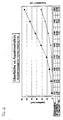
- Fig. 2 illustrates that with the same weight or volume, but increasing aspect ratio the surface Disproportionately large compared to the number of fibrils enlarged. This explains the particularly high binding capacity of high aspect ratio fibrils.
- a total surface area of more than 0.29 m 2 per g of cellulose product is achieved, in particular in the range of an aspect ratio greater than 200, for fibrils of approximately 2 mm in length.
- the available interface can then be determined either from tables or in a simple calculation.
- Such an analysis also allows fibers and fibrils to be distinguished in a very simple way. Fibers are usually longer than fibrils, so that in most cases a distinction can already be made after measuring the length. If the length distributions overlap, the number of fibers or fibrils per unit weight shows which cellulose product is involved.
- the composition of the mixture can be determined by optical measuring methods and devices, for example Kajaani FS 200 or FiberScan.
- the fibrils can be made from both natural and regenerated fibers getting produced.
- a particularly high yield of fibrils results when fibers with a possible high overall orientation of over 50%, preferably of over 60% can be used.
- the overall orientation describes crystalline and paracrystalline cellulose, the is aligned parallel to the longitudinal axis of the fiber.
- the Overall orientation is determined by birefringence.
- the crystalline orientation for the yield of fibrils from Meaning.
- the crystalline orientation describes the orientation of the crystalline areas in relation to the longitudinal axis the fiber.
- the crystalline areas run completely parallel to the fiber, is the crystalline orientation 1, the crystalline area is completely in the right Aligned at an angle to the fiber axis, the crystalline Orientation 0.
- a crystalline one is particularly preferred Orientation greater than 0.8, in particular greater than 0.9.
- Hemp is one of the natural fibers which are suitable for producing the fibrils according to the invention.
- highly oriented rayon fibers, polynosic fibers, lyocell fibers, particularly those according to the NMMO method - are prepared (N M ethyl m orpholin -o xid method) but even after the carbamate or DMAc / LiCl method (D i m ethyl-Ac etamid / lithium chloride method) spun regenerated.
- the fibrils according to the invention may be obvious Thought, particularly thin fibers that become fibrils can be shortened, in an analogous manner by spinning can not be produced technically, because the Diameter of the fibers to be spun is not arbitrarily reduced can be because on the one hand not arbitrarily fine Spinnerets can be produced and, on the other hand, because of their strength the thinner the more the single fiber decreases she is. For example, a viscose fiber can only be used a minimum diameter of approx. 10 ⁇ m can be reduced.
- the fibrils according to the invention are reliably reproducible Product. You are a fiber product that through the targeted disassembly of cellulose fibers and has previously unknown dimensions. Fibrils close with the claimed dimensions and the required Aspect ratio is a gap between fibers and molecules and surprisingly combine their respective Advantages, namely the high binding ability and the high strength potential. Here are the invention Fibrils easy to manufacture and therefore inexpensive.
- Fibers of any length Disassemble fibrils Basically it is possible to use fibers of any length Disassemble fibrils. "Cutting the fibers” means here especially maintaining fibrils a maximum aspect ratio while avoiding Fiber cuts. To economically produce a high yield to achieve fibrils, however, it is advantageous if the output fibers are evenly spaced between 2 and 60 mm were pre-cut or a length spectrum have between 0.1 mm and 100 mm.
- the fibers can be broken down by mechanical treatment in various ways, for example by grinding, kneading or extrusion.
- the fibers can be suspended be, preferably in one described in more detail below Swelling agent, and at a consistency of 0.5 to 30%, preferably ground at a consistency of 1 to 7% become (wet process). If the consistency is in the range of 30 to 98%, preferably 30 to 85%, the method is selected called dry process.
- Swelling agent preferably in one described in more detail below Swelling agent
- a consistency of 0.5 to 30% preferably ground at a consistency of 1 to 7% become (wet process). If the consistency is in the range of 30 to 98%, preferably 30 to 85%, the method is selected called dry process.
- Process applied individually or in combination will.
- the grinding In addition to disassembly, the grinding always leads to a certain one Shortening the raw material.
- Kneading and extrusion processes are based on breaking down fibers in fibrils mainly due to friction. Different from the Grinding hardly cuts the fibers and fibrils claimed.
- a fiber or fibril shortening occurs when at all, to a much lesser extent than when grinding.
- an aid is often used. It can it is solid, pasty or liquid substances. It is particularly advantageous that for some purposes the goods to be bound can be used as aids.
- the fibers are in this case together with the one to be bound Well processed, so that the disassembly and the setting process can be summarized in one operation. At the At the end of this process step, the fibers are at least partially broken down into fibrils and the fibrils are intensively incorporated into the solid, pasty or liquid material.
- cryogenic grinding requires that the fibers in the cooled state, for example after mixing in liquid nitrogen, ground or kneaded.
- Grinding or kneading can be done in known devices be carried out, for example in refiners, beaters or Dutch, but also in suitable kneading devices or extrusion systems, especially twin screw extruders (e.g. BIVIS systems).
- suitable kneading devices or extrusion systems especially twin screw extruders (e.g. BIVIS systems).
- An example for the production of fibrils according to the invention is the cutting of regenerated fibers with an initial length of 6 mm in a single disc refiner with rotor and stator.
- the disc spacing is chosen to be 0.3 mm, the consistency of the fiber suspension is 1% (1% by weight oven-dried fibers in water).
- the energy input is 600 kwh / t.
- the yield of fibrils is at least 70%.
- the manufacturing processes are known per se. The expert knows how to use the necessary equipment and has to set other process parameters in order to disassemble to optimize.
- swelling agents is particularly preferred or during disassembly to control the yield that to influence the dimensions to be generated, the energy input reduce fibrils and / or to chemically change the fibrils and so special Set product properties specifically.
- Suitable for swelling all as swelling agents and / or solvents for Substances known to cellulose, for example bases, acids, Water, salt solutions, metal complexes, but also organic ones and / or gaseous swelling agents.
- Particularly suitable swelling agents are in the subclaims listed.
- Amine oxides are because of their suitability for recycling particularly environmentally friendly swelling agents.
- Surfactants like e.g. B. Triton B are able to dissolve cellulose. In accordingly diluted solution, they therefore have a swelling effect on cellulose.
- Some swelling agents, including caustic soda, ammonia, however organic-aqueous swelling agents also change the structure on cellulose. For example, they convert cellulose 1 into a higher order cellulose. Also change the reactivity of cellulose.
- Swelling agents can also be used individually or in combination be used, for example mixtures of water and Alcohols, dilute aqueous bases or acids.
- tools for disassembling the Fibers are used. Aids are included in this Context understood substances that do not swell on the Fibers act, but are added to the starting material, to achieve desired product properties in other ways. For example, before grinding, kneading or Extrude kaolins or carbonates mixed with fibers to generate the highest possible friction when kneading. This means the yield, but also the dimensions or the aspect ratio of the fibrils is influenced efficiently.
- the auxiliary is either separated off and only the fibrils are used, or the auxiliary for disassembling the fibers remains in the mixture.
- the latter happens on the one hand to avoid the energy expenditure of the separation.
- the material to be bound, in particular powder can be used in a particularly advantageous manner as an aid for dismantling, so that the desired (intermediate) product is produced in one operation.
- Fibers and fibrils can be used in a variety of ways will.
- a particularly suitable use is Use as a mixture stabilizer. Wherever fixed, pasty or liquid substances in a non-separating mixture must be kept, the use of Cellulose fibrils. They are inexpensive and due to their dimensions and the favorable aspect ratio a particularly high level of loyalty. If necessary can the cellulose by using suitable Swelling agents or aids for dismantling are modified, to be adapted to special purposes.
- a main area of application for mixture stabilizers are powdered molding compounds.
- the fibrils and mixtures of fibers according to the invention and strong fibrils in combination with liquids Influence the viscosity, they are particularly suitable to stabilize pasty and liquid mixtures. Among other things, they are therefore very good as drilling aids suitable, but can also be used as an additive in polishing and Abrasive pastes can be used.
- Cellulose is hygienic and food law requirements a nutritionally particularly suitable mixture stabilizer.
- fibrils as retention aids in the paper industry. Unlike pure retention aids such as carboxymethyl cellulose also contribute to the fibrils Strength of the paper. This advantage is based on that the dimension of the fibrils between molecule and fiber is located.
- the fine, slim fibrils are suitable especially for binding fine particulate materials with dimensions in the micrometer range, for example for binding of xeoliths in paper structures.
- Xeolites as well as others fine particulates are relatively expensive aggregates, the the usage properties of the respective paper shape. Improved use of these additives thanks to improved retention in paper a cost saving as well as a more targeted use expensive aggregates.
- Cellulose is part of numerous recipes for Adhesives and glues are known, carboxymethyl cellulose is probably the most common (chemically modified cellulose molecules) used as paste. Carboxymethylated fibrils are a suitable addition due to its special dimensions to the known molecularly soluble cellulose derivatives. Due to the changed network structure of the glue and glue they cause the product characteristics like pot life or setting times but also order quantities in a wide range Range are adjustable.
- the fibrils according to the invention offer particular advantages as a sintering aid.
- the particularly favorable size relationships of the fibrils which are significantly smaller and slimmer than fibers are far more voluminous than molecules, a particularly homogeneous one Mixture.
- the cellulose burns as much as possible during sintering residue-free and thereby creates a special fine and even pore formation.
- the fibrils thus act as structural aids for these materials.
- the porosity of the materials the means the number, distribution and fineness of the pores essentially the ingrowth of the implants in the body.
- fibrils also enable production of chromatography supports with special, depending on the dimensions of the fibrils used defines selectable pore structures. Since the suitability of the Chromatography support for separating mixtures of substances and also the selectivity essentially due to the pore structure is specified by using the fibrils according to the invention the possibility of new chromatography media with an expanded range of applications.
- a particular advantage is that after shaping and hardening the chromatographic support Fibrils enzymatically or chemically simple and complete are degradable.
- Fibrils and also mixtures of fibers and fibrils are suitable especially for the filtration of solid, liquid and gaseous substances as well as for filtering aerosols.
- the particularly large surface and easy processing The fibrils allow it to be simple and inexpensive Manufacture filters that are used for various purposes are customizable. But it is also easily possible that Adjust the viscosity of the filtrate by adding fibrils that existing filters are used particularly efficiently can be.
- the use is particularly advantageous of fibrils in precoat filtration and binding of fine and cloudy substances. Here too is the food law Harmlessness of cellulose fibrils to emphasize. Another advantage is that the Cellulose fibrils ecologically absolutely harmless and are easily degradable.
- the cellulose fibrils offer the particular advantage that they not only have a particularly high binding capacity, but also, in particular when the fibril-containing mixture has been pressed, to a considerable extent for the strength of the semi-or Finished products. Calculation of the number of fibers and fiber surface depending on the aspect ratio based on 1 / g fiber weight.
- Fiber length [mm] Aspect ratio Fiber diameter [mm] Number [n / g] Specific surface area [m 2 / g] 2.00 200 0.0100 5.2E + 06 0.294 2.00 500 0.0040 3.3E + 07 0.735 2.00 1000 0.0020 1.3E + 08 1,471 2.00 2000 0.0010 5.2E + 08 2,941 2.00 5000 0.0004 3.3E + 09 7,353 2.00 10,000 0.0002 1.3E + 10 14.706 Calculation of the number of fibers and fiber surface depending on the aspect ratio based on 1 / g fiber weight.
- Fiber length [mm] Aspect ratio Fiber diameter [mm] Number [n / g] Specific surface area [m 2 / g] 2.00 200 0.010006 5.2E + 06 0.294 1.27 500 0.002531 1.3E + 08 1,162 0.89 1000 0.000895 1.5E + 09 3,287 0.63 2000 0.000316 1.6E + 10 9,296 0.40 5000 0.000080 4.1E + 11 36.744 0.28 10,000 0.000028 4.6E + 12 103.928
Landscapes
- Chemical & Material Sciences (AREA)
- Polymers & Plastics (AREA)
- Health & Medical Sciences (AREA)
- Food Science & Technology (AREA)
- Life Sciences & Earth Sciences (AREA)
- Engineering & Computer Science (AREA)
- Nutrition Science (AREA)
- Dispersion Chemistry (AREA)
- Chemical Kinetics & Catalysis (AREA)
- Medicinal Chemistry (AREA)
- Organic Chemistry (AREA)
- Artificial Filaments (AREA)
- Paper (AREA)
- Filtering Materials (AREA)
Applications Claiming Priority (2)
| Application Number | Priority Date | Filing Date | Title |
|---|---|---|---|
| DE19628324A DE19628324A1 (de) | 1996-07-13 | 1996-07-13 | Fibrillen aus Cellulose |
| DE19628324 | 1996-07-13 |
Publications (2)
| Publication Number | Publication Date |
|---|---|
| EP0819787A2 true EP0819787A2 (fr) | 1998-01-21 |
| EP0819787A3 EP0819787A3 (fr) | 1998-06-03 |
Family
ID=7799765
Family Applications (1)
| Application Number | Title | Priority Date | Filing Date |
|---|---|---|---|
| EP97111982A Withdrawn EP0819787A3 (fr) | 1996-07-13 | 1997-07-14 | Fibrilles de cellulose |
Country Status (2)
| Country | Link |
|---|---|
| EP (1) | EP0819787A3 (fr) |
| DE (1) | DE19628324A1 (fr) |
Cited By (7)
| Publication number | Priority date | Publication date | Assignee | Title |
|---|---|---|---|---|
| WO2003033570A1 (fr) * | 2001-10-15 | 2003-04-24 | J. Rettenmaier & Söhne Gmbh + Co. Kg | Melange de substances et procede pour introduire au moins un composant actif en fines particules dans un systeme aqueux liquide |
| WO2004045304A1 (fr) * | 2002-09-18 | 2004-06-03 | J.Rettenmaier & Söhne Gmbh + Co. Kg | Additifs alimentaires et aliments pour animaux les contenant |
| US8673383B2 (en) | 2006-11-13 | 2014-03-18 | Arnold Westerkamp | Roughage |
| CN105531009A (zh) * | 2013-09-13 | 2016-04-27 | 克朗斯股份公司 | 助滤剂和过滤层 |
| CN108419919A (zh) * | 2018-03-19 | 2018-08-21 | 上海同化新材料科技有限公司 | 功能性饲料添加剂 |
| WO2018185230A1 (fr) | 2017-04-07 | 2018-10-11 | Weidmann Holding Ag | Composition de soins personnels |
| US12209363B2 (en) | 2017-04-07 | 2025-01-28 | Weidmann Holding Ag | Method for producing microscale and/or nanoscale fiber material |
Families Citing this family (6)
| Publication number | Priority date | Publication date | Assignee | Title |
|---|---|---|---|---|
| DE19745629A1 (de) * | 1997-10-16 | 1999-04-22 | Cff Cellulose Fuellstoff Fabri | Verfahren zur Herstellung eines aus zerkleinerten Pflanzenfasern bestehenden Ballast- oder Füllstoffes und seine Verwendung |
| US6120626A (en) * | 1998-10-23 | 2000-09-19 | Autoliv Asp Inc. | Dispensing fibrous cellulose material |
| DE10142917A1 (de) * | 2001-09-01 | 2003-03-27 | Schott Glas | Polier-Suspension mit Faserzusatz |
| DE202005008939U1 (de) | 2005-06-07 | 2005-08-04 | Trw Automotive Safety Systems Gmbh | Gassack |
| DE102008049336A1 (de) * | 2008-09-29 | 2010-04-15 | Messer Austria Gmbh | Verfahren und Vorrichtung zur Aufbereitung von Rohstoffen bei der Herstellung von Papier, Pappe oder Faserplatten |
| MX2020011059A (es) * | 2018-06-07 | 2020-12-07 | Graver Tech Llc | Medios filtrantes para la eliminacion de particulas, iones y materiales biologicos, y descolorizacion en un proceso de purificacion de azucar, y su uso. |
Family Cites Families (12)
| Publication number | Priority date | Publication date | Assignee | Title |
|---|---|---|---|---|
| NL246561A (fr) * | 1958-12-31 | |||
| GB2066145B (en) * | 1979-12-26 | 1983-05-25 | Itt | Microfibrillated cellulose |
| JPS60171262A (ja) * | 1984-02-16 | 1985-09-04 | ダイセル化学工業株式会社 | 無機質シ−ト材の製造法 |
| BR8800781A (pt) * | 1988-02-24 | 1989-09-19 | Bio Fill Produtos Biotecnologi | Processo para a preparacao de suspensoes ou pastas aquosas de microfibrilas de celulose,suspensao ou pasta aquosa de microfibrilas de celulose e utilizacao |
| US5006360B1 (en) * | 1988-06-27 | 1992-04-28 | Low calorie fat substitute compositions resistant to laxative side effect | |
| CH679998A5 (fr) * | 1989-05-09 | 1992-05-29 | Bct Ag | |
| DE4110252C1 (fr) * | 1990-06-02 | 1992-02-27 | Schenk-Filterbau Gmbh, 7076 Waldstetten, De | |
| NL9101920A (fr) * | 1991-11-18 | 1993-06-16 | Dsm Nv | |
| AU662822B2 (en) * | 1992-06-01 | 1995-09-14 | Kuraray Co., Ltd. | Separator for alkaline batteries |
| JPH08333152A (ja) * | 1995-06-01 | 1996-12-17 | Sumitomo Seika Chem Co Ltd | セメント組成物およびセメント組成物の押出成形用助剤 |
| FI100729B (fi) * | 1995-06-29 | 1998-02-13 | Metsae Serla Oy | Paperinvalmistuksessa käytettävä täyteaine ja menetelmä täyteaineen va lmistamiseksi |
| JPH09124950A (ja) * | 1995-11-01 | 1997-05-13 | Daicel Chem Ind Ltd | 液状樹脂組成物およびその製造方法 |
-
1996
- 1996-07-13 DE DE19628324A patent/DE19628324A1/de not_active Withdrawn
-
1997
- 1997-07-14 EP EP97111982A patent/EP0819787A3/fr not_active Withdrawn
Cited By (15)
| Publication number | Priority date | Publication date | Assignee | Title |
|---|---|---|---|---|
| WO2003033570A1 (fr) * | 2001-10-15 | 2003-04-24 | J. Rettenmaier & Söhne Gmbh + Co. Kg | Melange de substances et procede pour introduire au moins un composant actif en fines particules dans un systeme aqueux liquide |
| RU2281959C2 (ru) * | 2001-10-15 | 2006-08-20 | Хенкель КГАА | Смесь и способ введения, по меньшей мере, одного ультрадисперсного активного компонента в жидкую водную систему |
| US7341623B2 (en) | 2001-10-15 | 2008-03-11 | Henkel Kgaa | Substance mixture and a method for introducing at least one particulate active ingredient component into a liquid aqueous system |
| WO2004045304A1 (fr) * | 2002-09-18 | 2004-06-03 | J.Rettenmaier & Söhne Gmbh + Co. Kg | Additifs alimentaires et aliments pour animaux les contenant |
| CN100349525C (zh) * | 2002-09-18 | 2007-11-21 | J·雷腾迈尔&泽内有限及两合公司 | 饲料添加剂和含有该饲料添加剂的饲料 |
| US8673383B2 (en) | 2006-11-13 | 2014-03-18 | Arnold Westerkamp | Roughage |
| CN105531009A (zh) * | 2013-09-13 | 2016-04-27 | 克朗斯股份公司 | 助滤剂和过滤层 |
| WO2018185230A1 (fr) | 2017-04-07 | 2018-10-11 | Weidmann Holding Ag | Composition de soins personnels |
| US11278475B2 (en) | 2017-04-07 | 2022-03-22 | Weidmann Holding Ag | Personal care composition |
| US11696876B2 (en) | 2017-04-07 | 2023-07-11 | Weidmann Holdino AG | Hair care or hair cleansing composition or skin care or skin cleansing composition |
| EP4239124A2 (fr) | 2017-04-07 | 2023-09-06 | Weidmann Holding AG | Mélange sec |
| EP4265237A1 (fr) | 2017-04-07 | 2023-10-25 | Weidmann Holding AG | Composition de soin ou de nettoyage de la peau ou de soin capillaire ou capillaire |
| US12209363B2 (en) | 2017-04-07 | 2025-01-28 | Weidmann Holding Ag | Method for producing microscale and/or nanoscale fiber material |
| US12409109B2 (en) | 2017-04-07 | 2025-09-09 | Weidmann Holding Ag | Dry mixture and personal care composition as well as methods for their production |
| CN108419919A (zh) * | 2018-03-19 | 2018-08-21 | 上海同化新材料科技有限公司 | 功能性饲料添加剂 |
Also Published As
| Publication number | Publication date |
|---|---|
| EP0819787A3 (fr) | 1998-06-03 |
| DE19628324A1 (de) | 1998-01-15 |
Similar Documents
| Publication | Publication Date | Title |
|---|---|---|
| DE69716917T2 (de) | Zusammensetzung von nanofibrillen von cellulose mit carboxyliertem cellulose mit hohem substitutionsgrad | |
| DE69704360T2 (de) | Zusammensetzung enthaltend nanofibrillen von cellulose und carboxylierte cellulose mit niedriegem substitutionsgrad | |
| EP0313603B1 (fr) | Procede pour preparer des compositions de bitume | |
| DE3047351C2 (fr) | ||
| EP2459782B1 (fr) | Fibre de cellulose régénérée | |
| DE69423756T2 (de) | Herstellung einer vormischung aus cellulose | |
| AT505904B1 (de) | Cellulosesuspension und verfahren zu deren herstellung | |
| DE19628324A1 (de) | Fibrillen aus Cellulose | |
| EP0616832B1 (fr) | Matériaux de filtre | |
| AT521560B1 (de) | Prozess zur Herstellung einer Zelluloselösung und Gerät dafür | |
| EP0134277B2 (fr) | Procédé et dispositif de fabrication des tubes frittés polycristallins translucides | |
| DE2053419A1 (de) | Verfahren und Vorrichtung zum Mahlen von Papierstoff | |
| EP0853642B1 (fr) | Procede de production d'une suspension de cellulose | |
| DE19543310C2 (de) | Verfahren zur Herstellung eines organischen Verdickungs- und Suspensionshilfsmittels | |
| EP0827443A1 (fr) | Procede et dispositif de fragmentation grossiere de gels aqueux polymeres | |
| EP2732080B1 (fr) | Fibre cellulosique régénérée | |
| LU83303A1 (de) | Baustoffmischung,und verfahren zur herstellung von produkten,insbesondere von formkoerpern bzw.formteilen,daraus | |
| DE4007693C2 (de) | Filterschicht | |
| DE69202393T2 (de) | Verbesserungen der Viskosität von Polymeren und Verwendung solcher Polymer. | |
| EP0741602B1 (fr) | Procede et dispositif permettant de dissoudre des polymeres pulverulents solubles dans l'eau | |
| DE3634315A1 (de) | Lokomotivenschmieroelfilter | |
| EP1070740B1 (fr) | Produit polysaccharidique co-travaillé avec une carboxyméthylcellulose insoluble | |
| DE10315587A1 (de) | Mischschnecke für Schneckenpresse | |
| DE2449478A1 (de) | Filtermaterial sowie verfahren zu seiner herstellung | |
| WO2024056232A1 (fr) | Procédé et système de production d'une bande de tissu non tissé par voie humide |
Legal Events
| Date | Code | Title | Description |
|---|---|---|---|
| PUAI | Public reference made under article 153(3) epc to a published international application that has entered the european phase |
Free format text: ORIGINAL CODE: 0009012 |
|
| AK | Designated contracting states |
Kind code of ref document: A2 Designated state(s): AT BE CH DE DK ES FI FR GB GR IE IT LI LU MC NL PT SE |
|
| RIN1 | Information on inventor provided before grant (corrected) |
Inventor name: LOTZ, JOACHIM |
|
| PUAL | Search report despatched |
Free format text: ORIGINAL CODE: 0009013 |
|
| AK | Designated contracting states |
Kind code of ref document: A3 Designated state(s): AT BE CH DE DK ES FI FR GB GR IE IT LI LU MC NL PT SE |
|
| AKX | Designation fees paid | ||
| RBV | Designated contracting states (corrected) | ||
| STAA | Information on the status of an ep patent application or granted ep patent |
Free format text: STATUS: THE APPLICATION IS DEEMED TO BE WITHDRAWN |
|
| 18D | Application deemed to be withdrawn |
Effective date: 19980604 |