EP0820167A2 - Steuerungsverfahren für selektive Wiederholungsprotokolle - Google Patents
Steuerungsverfahren für selektive Wiederholungsprotokolle Download PDFInfo
- Publication number
- EP0820167A2 EP0820167A2 EP97112137A EP97112137A EP0820167A2 EP 0820167 A2 EP0820167 A2 EP 0820167A2 EP 97112137 A EP97112137 A EP 97112137A EP 97112137 A EP97112137 A EP 97112137A EP 0820167 A2 EP0820167 A2 EP 0820167A2
- Authority
- EP
- European Patent Office
- Prior art keywords
- frame
- receiving side
- judgment
- retransmission
- reject
- Prior art date
- Legal status (The legal status is an assumption and is not a legal conclusion. Google has not performed a legal analysis and makes no representation as to the accuracy of the status listed.)
- Withdrawn
Links
Images







Classifications
-
- H—ELECTRICITY
- H04—ELECTRIC COMMUNICATION TECHNIQUE
- H04N—PICTORIAL COMMUNICATION, e.g. TELEVISION
- H04N21/00—Selective content distribution, e.g. interactive television or video on demand [VOD]
- H04N21/60—Network structure or processes for video distribution between server and client or between remote clients; Control signalling between clients, server and network components; Transmission of management data between server and client, e.g. sending from server to client commands for recording incoming content stream; Communication details between server and client
- H04N21/65—Transmission of management data between client and server
- H04N21/658—Transmission by the client directed to the server
-
- H—ELECTRICITY
- H04—ELECTRIC COMMUNICATION TECHNIQUE
- H04L—TRANSMISSION OF DIGITAL INFORMATION, e.g. TELEGRAPHIC COMMUNICATION
- H04L1/00—Arrangements for detecting or preventing errors in the information received
- H04L1/12—Arrangements for detecting or preventing errors in the information received by using return channel
- H04L1/16—Arrangements for detecting or preventing errors in the information received by using return channel in which the return channel carries supervisory signals, e.g. repetition request signals
- H04L1/18—Automatic repetition systems, e.g. Van Duuren systems
- H04L1/1809—Selective-repeat protocols
-
- H—ELECTRICITY
- H04—ELECTRIC COMMUNICATION TECHNIQUE
- H04L—TRANSMISSION OF DIGITAL INFORMATION, e.g. TELEGRAPHIC COMMUNICATION
- H04L1/00—Arrangements for detecting or preventing errors in the information received
- H04L1/12—Arrangements for detecting or preventing errors in the information received by using return channel
- H04L1/16—Arrangements for detecting or preventing errors in the information received by using return channel in which the return channel carries supervisory signals, e.g. repetition request signals
- H04L1/18—Automatic repetition systems, e.g. Van Duuren systems
- H04L1/1829—Arrangements specially adapted for the receiver end
- H04L1/1848—Time-out mechanisms
-
- H—ELECTRICITY
- H04—ELECTRIC COMMUNICATION TECHNIQUE
- H04N—PICTORIAL COMMUNICATION, e.g. TELEVISION
- H04N21/00—Selective content distribution, e.g. interactive television or video on demand [VOD]
- H04N21/60—Network structure or processes for video distribution between server and client or between remote clients; Control signalling between clients, server and network components; Transmission of management data between server and client, e.g. sending from server to client commands for recording incoming content stream; Communication details between server and client
- H04N21/63—Control signaling related to video distribution between client, server and network components; Network processes for video distribution between server and clients or between remote clients, e.g. transmitting basic layer and enhancement layers over different transmission paths, setting up a peer-to-peer communication via Internet between remote STB's; Communication protocols; Addressing
- H04N21/637—Control signals issued by the client directed to the server or network components
- H04N21/6377—Control signals issued by the client directed to the server or network components directed to server
Definitions
- the present invention relates generally to a retransmission control method, and more particularly, to a retransmission control method of making, when a transmission error occurs in data, error correction by retransmitting the data.
- a mobile/portable data communication service is one of services whose demand toward realization has increased most in recent years, as represented by a word "Mobile Multimedia”.
- a personal handyphone system (PHS) has been expected to be an infrastructure having a high bearer transmission rate, i.e., 32 kbit/s and being effective in realizing a multimedia in a radio environment.
- PHS personal handyphone system
- an error control technique plays an important role.
- SR Selective-Repeat
- the receiving side has a buffer for preserving correct frames received after a frame including an error, and outputs, if there is no error in a retransmitted frame, the retransmitted frame and the frames stored in the buffer to a user in accordance with the order of their frame numbers.
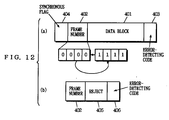
- Fig. 12 illustrates a frame structure in the conventional SR retransmission control system.
- Fig. 12 (a) illustrates the structure of a frame for transmitting transmit data (hereinafter referred to as a transmit frame), and
- Fig. 12 (b) illustrates the structure of a reject frame returned from the receiving side when an error occurs in received data or a retransmission wait timer times out.
- the transmit frame comprises a transmit data block 401, a frame number 402, an error-detecting code 403, and a synchronous flag 404 for frame synchronization.
- the reject frame comprises a frame number 402, a reject code 405, and an error-detecting code 406 of a return frame.
- the transmission side divides the transmit data into a plurality of transmit data blocks 401, adds the frame number 402 to each of the transmit data blocks 401, then generates the error-detecting code 403 for making it possible to detect that an error occurs in the data block or the frame number, and appends the error-detecting code 403 to the transmit data block 401.
- a method of attaching a synchronous code with a particular bit pattern to the head of a frame is illustrated herein.
- the frame number include a modulo 8 (3 bits), a modulo 16 (4 bits), a modulo 32 (5 bits), a modulo 64 (6 bits), and a modulo 128 (7 bits).
- the frame number of a modulo M starts with zero, is increased by one for each frame, and is returned to zero if it exceeds M - 1, after which the foregoing is cyclically repeated.
- Fig. 13 illustrates one example of transmission/receiving timing in the conventional SR retransmission control system.
- Fig. 13 (a) illustrates the timing of transmit frames and frame numbers
- Fig. 13 (b) illustrates the presence or absence of frame errors and return frames
- Fig. 13 (c) illustrates the timing of received frames and frame numbers
- Fig. 13 (d) illustrates the frame numbers of data stored in a receive buffer.
- a frame assigned a frame number n shall be denoted by a frame (n).
- an error occurs in a frame (3), it is judged that there is an error in the frame (3) at the time where a frame (4) is received, and a reject corresponding to the frame (3) is returned by a return frame.
- a case where an error occurs also in the retransmitted frame (3) is illustrated herein.
- the receiving side discards the received error frame or holds the error frame when it is later used for error correction, and eventually returns the reject with respect to the frame (3) again at the time where a time-out period (T x F) of a retransmission wait timer started from when the reject is returned has elapsed.
- the time-out period (T x F) of the retransmission wait timer is set to be longer the round trip delay period (RTD).
- RTD round trip delay period
- the frame (3) reaches the receiving side without error upon being retransmitted twice.
- the receiving side adds data of the frame (3) to the heads of data of received frames (4) to (14) which have been stored in the buffer, and transfers the frames to a user.
- the new frames are continuously transmitted even during the round trip delay period (RTD), and only the frame to which the reject is returned is retransmitted. Even if a transmission line in which the round trip delay period (RTD) is long is used, it is possible to perform efficient error correction.
- Fig. 14 illustrates an example of retransmission control in a case where the round trip delay period (RTD) is a period corresponding to eight frames.
- Fig. 14 is the same as Fig. 13 except that the round trip delay period differs.
- a modulo is 16 as in the case shown in Fig. 13.
- a modulo of a transmit frame number revolves once before the second reject with respect to a frame (3) reaches the transmission side. Therefore, a new frame (3) having the same frame number as that of the frame (3) which is the oldest frame which waits for retransmission on the receiving side is transmitted, and is received on the receiving side.
- the receiving side cannot judge whether the received frame (3) is a new frame or a retransmit frame.
- the receiving side adds data of the frame (3) to the heads of data of received frames (4) to (14) which have been stored in the buffer, and transfers the frames to the user regardless of the fact that the received frame (3) is a new frame.
- a row of data in which the order of data blocks is changed is handed to the user. It is considered that an identification bit for identifying a new or old frame is added, and the number of bits of the modulo is increased. In such a method, there arises another problem that the overhead of the frames is increased.
- a method of calculating, on a network to which a plurality of terminals are connected, the number of times of retransmission Nr from a response wait period Tw and a retransmission interval Tr between the terminals and a transmission abandoning period Tk determined from the viewpoint of the response of the network is disclosed in Japanese Patent Laid-Open No. 252978/1994.
- the foregoing equation (1) holds on the assumption that the apparent transmission rate varies due to the fact that the network is used upon being divided by the plurality of terminals, and a period required to transmit a data frame in a certain data amount at a decreased transmission rate is a response wait period. In such a case, a plurality of frames are not transmitted during the response wait period, so that the effect of the SR retransmission control is not obtained. Further, the modulo does not revolve once.
- the response of the network can be always held in a stable state by determining the number of times of retransmission in conformity with the varying apparent transmission rate, as described above.
- An object of the invention which is disclosed in Japanese Patent Laid-Open No. 252978/1994 is to ensure the response of the network. It is not considered that the present invention is applied to prevention of one revolution of a modulo, not to speak of application to SR retransmission control.
- An object of the present invention is to provide a highly efficient retransmission control method in which the order of data is prevented from being changed by one revolution of a modulo without adding extra overhead.
- the present invention is characterized as follows.
- a first aspect of the present invention is directed to a method of performing, when frames assigned frame numbers circulating by a modulo M are continuously transmitted from the transmission side to the receiving side, error correction by retransmission control with respect to the frame in which a transmission error occurs, being characterized in that the receiving side returns, upon detecting an error in the received frame, a reject provided with the frame number of the frame in which the error is detected to the transmission side, the transmission side retransmits, upon receiving the reject, the frame corresponding to the frame number included in the reject to the receiving side, and previously determines the maximum number of times Nr of the reject returnable to the same frame while the modulo of the frame number revolves once, and the receiving side discontinues the return of the reject to the same frame before the number of times of the return exceeds the maximum number of times Nr.
- the maximum number of times Nr of the reject returnable to the same frame is previously determined while the modulo of the frame number revolves once, and the return of the reject to the same frame is discontinued before the number of times of the reject exceeds the maximum number of times Nr, whereby it is possible to prevent the order of data from being changed by one revolution of the modulo without adding extra overhead.
- a second aspect of the present invention is characterized in that in the first aspect, the maximum number of times Nr of the reject is determined on the basis of the speed at which the modulo advances when the return of the reject only to an arbitrary frame is repeated, the retransmission of the frame with respect to the reject is not executed each time, and all the other frames are transmitted without error.
- the maximum number of times Nr of the reject is determined upon presuming the worst case where the modulo of the frame number advances earliest, whereby the return of the reject to the same frame can be reliably discontinued before the modulo revolves once even if any situation occurs.
- a third aspect of the present invention is characterized in that in the second aspect, letting t be a time-out period of a timer for defining the time limit from when the reject is returned to when the retransmitted frame is received, p be a suitable margin, and F be a period required to transmit one frame, the maximum number of times Nr is determined as a positive integer satisfying the following equation (a): Nr ⁇ ⁇ (M - 1) x F - p ⁇ / t
- a fifth aspect of the present invention is directed to a method of performing, when frames assigned frame numbers circulating by a modulo M are continuously transmitted from the transmitting side to the receiving side, error correction by retransmission control with respect to the frame in which a transmission error occurs, being characterized in that the receiving side returns, upon detecting an error in the received frame, a reject provided with the frame number of the frame in which the error is detected to the transmitting side, the transmitting side retransmits, upon receiving the reject, the frame corresponding to the frame number included in the reject to the receiving side, and the receiving side predicts the frame number of the undiscriminable received frame from the frame number of the discriminable received frame, and discontinues, when the predicted frame number reaches a number preceding the frame number of the oldest frame out of the frames which wait for retransmission, the return of the reject to the oldest frame upon making the transition to an abnormal state.
- the number of times of retransmission is made as large as possible, and the order of data is prevented from being changed by one revolution of the modulo by not first determining the number of times of retransmission but performing processing for restricting the number of times of retransmission presuming the worst case only with respect to the frames which are undiscriminable by errors successively making use of known information on the receiving side.
- a sixth aspect of the present invention is characterized in that in the fifth aspect, the receiving side sets, upon receiving a new frame, the frame number of the new frame as an initial value in a modulo M counter, counts the number of continuously received undiscriminable frames which are received after receiving the new frame by the counter, and makes the transition to the abnormal state when a count value of the counter reaches the number preceding the frame number of the oldest frame out of the frames which wait for retransmission.
- a seventh aspect of the present invention is directed to a method of performing, when frames assigned frame numbers circulating by a modulo M are continuously transmitted from the transmission side to the receiving side, error correction by retransmission control with respect to the frame in which the transmission error occurs, being characterized in that the receiving side returns, upon detecting an error in the received frame, a reject provided with the frame number of the frame in which the error is detected to the transmitting side, the transmitting side retransmits, upon receiving the reject, the frame corresponding to the frame number included in the reject to the receiving side, and the receiving side predicts the frame number of the undiscriminable received frame from the frame number of the discriminable received frame, and makes the transition to a judgment wait state when the predicted frame number reaches a number preceding the frame number of the oldest frame out of the frames which wait for retransmission, holds, upon receiving a frame having the same frame number as that of the oldest frame out of the frames which wait for retransmission after making the transition to the judgment wait state, the received frame as a frame which waits
- the receiving side when the predicted frame number coincides with the number preceding the frame number of the oldest frame out of the frames which wait for retransmission, the receiving side unconditionally discontinues the return of the reject to the oldest frame upon making the transition to the abnormal state. Therefore, a frame is discarded, although it is actually a retransmission request frame.
- the receiving side makes the transmission to the judgment wait state once, holds, when a frame subsequently received is a frame having the same frame number as that of the oldest frame out of the frames which wait for retransmission, the frame as a frame which waits for judgment, and judges whether or not the frame which waits for judgment is a retransmit frame on the basis of the frame number of a frame received after holding the frame which waits for judgment.
- An eighth aspect of the present invention is characterized in that in the seventh aspect, the receiving side sets, upon receiving a new frame, the frame number of the new frame as an initial value in a modulo M counter, counts the number of continuously received undiscriminable frames which are received after receiving the new frame by the counter, and makes the transition to the judgment wait state when a count value of the counter reaches the number preceding the frame number of the oldest frame out of the frames which wait for retransmission.
- a ninth aspect of the present invention is characterized in that in the eighth aspect, the receiving side stores, upon making the transition to the judgment wait state, the frame number of the newest frame out of the new frames received before making the transition to the judgment wait state as a first frame number, and stores, upon receiving the new frame or receiving a frame having the same frame number as the frame which waits for judgment after holding the frame which waits for judgment, the frame number of the received frame as a second frame number, and makes the transition to a state for judging whether or not the judgment wait state is released in a case where the frame number of the oldest frame out of the frames which wait for retransmission is more than the second frame number, or a case where the first frame number is more than the frame number of the oldest frame out of the frames which wait for retransmission and the second frame number is more than the first frame number, while discontinuing the return of the reject to the oldest frame upon making the transition to the abnormal state in the other case.
- a tenth aspect of the present invention is characterized in that in the ninth aspect, the receiving side judges, upon making the transition to the state for judging the release of a judgment wait, whether or not it holds the frame which waits for judgment, and releases the judgment wait state and judges that the frame which waits for judgment is a retransmit frame if it holds the frame which waits for judgment, while setting the second frame number in the first frame number, setting a count value of the counter in the second frame number, clearing the second frame number and continuing the judgment wait state if it does not hold the frame which waits for judgment.
- An eleventh aspect of the present invention is characterized in that in the tenth aspect, the receiving side counts, even after making the transition to the judgment wait state, the number of continuously received undiscriminable frames by the counter, and discontinues the return of the reject to the oldest frame upon making the transition to the abnormal state when the count value of the counter revolves once.
- a twelfth aspect of the present invention is characterized in that in the ninth aspect, the receiving side judges, upon making the transition to the state for judging the release of a judgment wait, whether or not it holds the frame which waits for judgment, and releases the judgment wait state, and judges that the frame which waits for judgment is a retransmit frame if it holds the frame which waits for judgment, while setting the second frame number in the count value of the counter, clearing the second frame number and continuing the judgment wait state if it does not hold the frame which waits for judgment.
- Fig. 1 illustrates one example of retransmission control, in a case where the frame number is a modulo 16, carried out when the modulo revolves once earliest.
- the frame number of a frame which waits for retransmission and the frame number of a new frame produced due to one revolution of the modulo may, in some cases, coincide with each other on the receiving side. In this case, there arises a problem that the difference between both the frames cannot be identified on the receiving side.
- Fig. 1 illustrates a case where such a problem arises with respect to a frame (3).
- the receiving side first returns a reject when an omission occurs in the frame number of a received frame.
- a reject when there is an error in the frame (3), an omission in a frame number 3 is detected at the time where a frame (4) is correctly received subsequently to a frame (2), and returns a reject corresponding to the frame (3).
- the following two cases are considered as the situations where the receiving side returns the reject corresponding to the frame (3) again.
- the first case is a case where an error occurs in the frame (3) retransmitted in response to the first reject (which reaches after an elapse of a period corresponding to (n + 1) frames).
- the second case is a case where an error occurs in the first reject, and the transmission side cannot retransmit the frame (3).
- the receiving side immediately returns the second reject with respect to the frame (3) when it detects a time-out of a retransmission wait timer started at the time where it returns the first reject. Consequently, the time when the second reject reaches the transmission side is the same in either case.
- the way the modulo advances in the first case is later than that in the second case by one frame in which the retransmit frame (3) is transmitted. That is, an error occurs in a frame of a certain number, and a reject corresponding to the frame is returned. When the error entirely occurs in the reject, while no errors occur in the other frames, the modulo advances earliest.
- a case where the modulo revolves once immediately before the retransmission wait timer times out, and a new frame having the same number as the frame number of a frame which waits for retransmission is received is considered to be the worst case.
- n a round trip delay period
- M the number of modulos
- t a time-out period of the retransmission wait timer
- Nr the upper limit of the number of times of retransmission
- F be a period corresponding to one frame
- p a suitable margin: n + F + Nr x t - n + p ⁇ M x F
- the upper limit of the number of times of retransmission Nr eventually becomes a positive integer satisfying the equation (5) or (6).
- the receiving side so restricts the number of times of retransmission of an error frame as not to exceed the upper limit of the number of times of retransmission calculated in the above-mentioned manner. Consequently, it is possible to prevent the order of data from being changed by one revolution of the modulo without adding extra overhead.
- the value of the modulo may be a value other than 16.
- the suitable margin P is a margin considering that the reject corresponding to the frame number 3 is delayed when errors continuously occur in several frames subsequent to the frame assigned the frame number 3, for example.
- P may be zero.
- a round trip delay period in a network may be measured prior to communication, to calculate the number of times of retransmission each time in conformity with the measurement.
- the number of times of retransmission may be calculated by both the transmission side and the receiving side.
- either one of the transmission side and the receiving side may calculate the number of times of retransmission and report the results thereof to the receiving side or the transmission side.
- the number of times of retransmission is also restricted by the other factor (for example, delay of video data)
- the smaller one of the number of times of retransmission Nr determined by the first embodiment and the number of times of retransmission determined by the other factor may be employed.
- the worst case first presumed as in the first embodiment, when the upper limit of the number of times of retransmission is so determined that the order of data is not changed by one revolution of the modulo, a case where the modulo does not revolve once even if retransmission is made once more may actually frequently occur.
- the number of times of retransmission is made as large as possible, and the order of data is prevented from being changed by one revolution of the modulo by not first determining the number of times of retransmission but successively making use of known information on the receiving side and presuming the worst case only with respect to frames which are undiscriminable by errors.
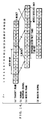
- Figs. 2 and 3 illustrate one example of retransmission control in a case where the frame number is a modulo 16.
- "x" indicates a frame in which a transmission error occurs.
- Fig. 2 shows an example of retransmission control in a case where the frame number of the oldest frame out of frames which wait for retransmission on the receiving side is 3, and the frame number of a new frame advances to 1 before a retransmit frame of the frame number 3 is received.
- Fig. 2 shows an example of retransmission control in a case where the frame number of the oldest frame out of frames which wait for retransmission on the receiving side is 3, and the frame number of a new frame advances to 1 before a retransmit frame of the frame number 3 is received.
- FIG. 3 illustrates an example of retransmission control in a case where the frame number of the oldest frame out of the frames which wait for retransmission on the receiving side is 3, and the frame number of a new frame advances to 2 before a retransmit frame of the frame number 3 is received.
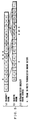
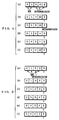
- Figs. 4 and 5 respectively illustrate received frames in crosshatched portions shown in Figs. 2 and 3 in a case where the transmission errors as shown in Figs. 2 and 3 occur.
- Figs. 4 (a) and 5 (a) illustrate the received frames in a case where all the frames are received without error
- Figs. 4 (b) to 4 (f) and Figs. 5 (b) to 5 (f) illustrate the received frames in a case where the frames with "X mark" are received in error.
- Fig. 5 (a) when a new frame (2) is received before a frame (3) is received, it is impossible to determine whether the received frame (3) is a retransmit frame or a new frame on the receiving side.
- the modulo revolves once if the received frame (3) is a new frame, while not revolving once if the received frame (3) is a retransmit frame. That is, the receiving side cannot judge, upon receiving a frame assigned a number preceding the frame number of the oldest frame out of frames which wait for retransmission, whether or not the frame has revolved once.
- Fig. 4 (a) when retransmit frames (9) and (10) succeed a new frame (1), and a frame (3) is received in a state where a new frame (2) is not received, the receiving side can judge that the receive frame (3) is clearly a retransmit frame.
- the first error frame is the frame (1).
- the second error frame is the frame (2).
- the receiving side cannot judge whether the subsequently received frame (3) is a new frame or a retransmit frame.
- the frame number of the received frame is set as an initial value in the counter.
- the count value is not incremented.
- Fig. 6 is a flow chart showing operations in the second embodiment of the present invention, which particularly shows a modulo judgment routine passing every time a frame is received.
- the receiving side first judges whether or not there is an error in a receive frame (step S101). When there is no error in the receive frame, the receiving side judges whether the receive frame is a new frame (step S102). When the receive frame is a new frame, the receiving side sets the frame number of the frame as an initial value of a counter (step S103). The receiving side then judges whether or not the count value of the counter coincides with a number preceding the frame number of the oldest frame out of frames which wait for retransmission (step S104).
- the receiving side brings a new frame into a received state (step S105) if the count value of the counter does not coincide with the frame number preceding the frame number of the oldest frame, to terminate the processing. On the contrary, if they coincide with each other, it is assumed that an abnormal state occurs (step S106), to terminate the processing.
- the receiving side brings the retransmit frame into a received state (step S107), to terminate the processing.
- the receiving side increments the count value of the counter (step S108), and judges whether or not the count value of the counter coincides with a number preceding the frame number of the oldest frame out of the frames which wait for retransmission (step S109).
- the receiving side brings an error frame into a received state (step S110) if the count value of the counter does not coincide with the frame number preceding the frame number of the oldest frame, to terminate the processing.
- step S111 it is assumed that an abnormal state occurs (step S111), to terminate the processing.
- the abnormal state detected in the step S106 or S111 is reported to an upper layer.
- the upper layer controls a lower layer so as to discontinue further retransmission of the oldest frame out of the frames which wait for retransmission.
- the number of times of retransmission can be made as large as possible, and data can be prevented from being changed by one revolution of the modulo by not first determining the number of times of retransmission but performing processing for restricting the number of times of retransmission presuming the worst case only with respect to frames which are undiscriminable by errors successively making use of known information on the receiving side.
- the value of the modulo may be a value other than 16.
- the number of times of retransmission can be further increased if the frame is handled as a new frame or a retransmit frame.
- the number of times of retransmission is limited to the number of times of retransmission determined by the other factor (for example, the limit of delay time of a video).
- the other factor for example, the limit of delay time of a video.
- Fig. 7 is a diagram showing an example of such retransmission control that a problem occurs in a case where it is judged that an abnormal state has occured in the second embodiment.
- Fig. 7 (a) illustrates a row of frames which are transmitted by the transmission side, where "x" means that a transmission error occurs in the transmitted frame, so that the frame number of the frame cannot be specified on the receiving side.
- Fig. 7 (b) illustrates a row of frames which are received by the receiving side, where "?” indicates a frame whose frame number cannot be specified.
- Fig. 7 is a diagram showing an example of such retransmission control that a problem occurs in a case where it is judged that an abnormal state has occured in the second embodiment.
- Fig. 7 (a) illustrates a row of frames which are transmitted by the transmission side, where "x" means that a transmission error occurs in the transmitted frame, so that the frame number of the frame cannot be specified on the receiving side.
- Fig. 7 (b) illustrates
- FIG. 7 (c) illustrates the frame number of a retransmission request frame, where "x" means that a transmission error occurs in a reject which is a retransmission request, so that the retransmission request frame cannot be specified on the transmission side, and " " indicates the time where it is judged that an abnormal state occurs in the above-mentioned second embodiment.
- Fig. 7 it is assumed that the number of modulos is 19.
- the transmission side transmits frames in the order starting with the frame (1). It is herein assumed that transmission errors occur in initial transmission of frames (4), (11), (12) and (13), and transmission errors also occur in retransmission of frames (11), (12) and (13). On the other hand, the receiving side returns a reject which is a retransmission request of the frames (4), (11), (12) and (13). It is assumed that a transmission error occurs in first and second retransmission requests of the frame (4), and the retransmission request of the frame (4) is not correctly transmitted to the transmission side, so that the frame number of the oldest frame which waits for retransmission is (4).
- the receiving side updates, every time it receives a new frame, the count value of the counter to the frame number of the new frame. Description is now made of operations after the time where a frame (19) is received, and the count value of the counter is updated to 19.
- the receiving side updates, upon receiving the frame (19), the count value of the counter to 19.
- a transmission error occurs in the frames (11), (12) and (13) which are transmitted after the frame (19), so that the frame numbers of the frames cannot be specified. Therefore, the receiving side increments the count value of the counter.
- the count value of the counter is 3. That is, the count value of the counter coincides with the number preceding the frame number of the oldest frame which waits for retransmission. As a result, the receiving side makes the transition to the abnormal state, to discard the frame (4) which should be subsequently received.
- the receiving side in a case the receiving side cannot specify the frame number of a received frame when the count value of the counter reaches a number preceding the frame number of the oldest frame which waits for retransmission, the receiving side does not unconditionally makes the transition to an abnormal state as in the above-mentioned second embodiment. That is, the receiving side makes the transition to a judgment wait state for judging whether it makes the transition to an abnormal state by the frame number of a new frame subsequently received. Consequently, the above-mentioned problem is solved.
- the operations will be described in more detail using Figs. 8 and 9.
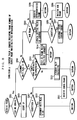
- Fig. 8 is a flow chart showing an algorithm of a retransmission control method according to a third embodiment of the present invention.
- the receiving side judges, upon receiving a frame, whether or not there is an error in the receive frame (step S201). When there is no error in the received frame, the receiving side judges whether or not a judgment wait flag is turned on (step S202). When the judgment wait flag is not turned on, the receiving side judges whether or not the receive frame is a new frame (step S203).
- the receiving side updates the value of the counter to the frame number of the receive frame (step S204).
- the receiving side judges whether or not the count value of the counter coincides with the number preceding the frame number of the oldest frame out of the frames which wait for retransmission (step S205).
- the receiving side brings a new frame into a received state (step S206) if the count value of the counter does not coincide with the number preceding the frame number of the oldest frame, to terminate the processing.
- an abnormal state occurs (step S207), to terminate the processing.
- the receiving side brings the retransmit frame into a received state (step S208), to terminate the processing.
- step S201 when there is an error in the receive frame, and it cannot be judged whether the received frame is a new frame or a retransmit frame, the receiving side increments the counter (step S209), and judges whether or not the count value of the counter coincides with the number preceding the frame number of the oldest frame out of the frames which wait for retransmission (step S210). At this time, the receiving side brings an error frame into a received state (step S211) if the count value of the counter does not coincide with the frame number preceding the frame number of the oldest frame, to terminate the processing. On the contrary, if they coincide with each other, the judgment wait flag is turned on (step S212), to terminate the processing.
- the receiving side judges whether or not the received frame is a frame having the same frame number as that of the oldest frame out of the frames which wait for retransmission (step S213).
- the receiving side holds the received frame as a judgment wait frame without discarding the frame (step S214), to terminate the processing.
- the receiving side performs judgment waiting processing (step S215), to terminate the processing.
- the receiving side updates the value of the counter to 19 (step S204). Since a transmission error occurs in the frames (11), (12) and (13) which are transmitted after the frame (19), so that the frame numbers of the frames cannot be specified, the receiving side increments the count value of the counter (step S209). At the time where a frame corresponding to the frame (13) is received, the count value of the counter becomes 3. Consequently, the count value of the counter coincides with the number preceding the frame number of the oldest frame which waits for retransmission (a frame number 4) (step S210). Correspondingly, the receiving side turns the judgment wait flag on (step S212).
- the judgment wait flag is in an state "on" (step S202), whereby it is judged whether or not the frame (4) is a frame which waits for retransmission (step S213). Since the frame (4) is a frame which waits for retransmission, it is held as a frame which waits for judgment without being discarded (step S214).
- the receiving side upon receiving the new frame (1) subsequently to the frame (4), performs judgment wait processing (step S215), to release a judgment wait state or make the transition to an abnormal state.
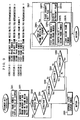
- Fig. 9 is a flow chart showing more detailed operations in a subroutine step S215 in Fig. 8 (judgment waiting processing). Referring to Fig. 9, description is made of the details of the judgment waiting processing.
- the receiving side stores, upon receiving a frame, the frame number of the newest frame (that is, an initial value of the counter) out of new frames received before making the transition to a judgment wait state as a first frame number (step S301).
- the frame number of the received new frame is stored as a second frame number (step S302).
- the frame number of the frame is stored as a second frame number.
- the receiving side stores a frame number 19 (an initial value of the counter) of the newest frame (19) out of the new frames which are received before making the transition to the judgment wait state as a first frame number (step S301), and stores the frame number 1 of the received new frame (1) as a second frame number (step S302).
- the receiving side judges whether or not the count value of the counter revolves once (step S303).
- the receiving side performs judgment processing in the step S304.
- the counting side performs judgment processing in the step S305.
- the receiving side judges whether or not the frame number of the oldest frame which waits for retransmission is equal to the second frame number stored in the foregoing step S302, to make the transition to the abnormal state if they are equal to each other (step S305). On the other hand, if they are not equal to each other, the receiving side performs judgment processing in the step S306. In the step S306, the receiving side judges whether or not the frame number of the oldest frame which waits for retransmission is not less than the second frame number, and performs processing for judging the release of a judgment wait if it is larger (step S307). On the other hand, if it is smaller, the receiving side performs judgment processing in the step S308.
- the receiving side judges whether or not the first frame number stored in the foregoing step S301 is not less than the second frame number.
- the receiving side makes the transition to the abnormal state (step S305) if it is larger, while performing judgment processing in the step S309 if it is smaller.
- the receiving side judges whether or not the first frame number is more than the frame number of the oldest frame which waits for retransmission. If it is larger, the receiving side performs the processing for judging the release of a judgment wait (step S307). On the other hand, it is smaller, the receiving side makes the transition to the abnormal state (step S305).
- step S307 the receiving side judges whether or not a frame having the same frame number as the frame number of the oldest frame which waits for retransmission is received (step S3071). If the frame is received, the receiving side clears the judgment wait flag (step S3072), and processes the frame which waits for judgment as a retransmit frame (step S3073). On the other hand, if the frame having the same frame number as the frame number of the oldest frame which waits for retransmission is not received, the receiving side sets the second frame number in the first frame number (step S3074), updates the counter value using the second frame number as an initial value of the counter (step S3075), and clears the second frame number (step S3076), to continue the judgment wait state.
- the frame number 19 is stored in the first frame number
- the frame number 1 is stored in the second frame number
- the frame number of the oldest frame which waits for retransmission is 4, whereby the frame (4) is handled as a retransmit frame through the steps S301, S302, S303, S304, S306, and S307.
- step S3071 in the processing for judging the release of a judgment wait in the step S307, it is judged whether or not there is a frame which waits for judgment (step S3071), after which the first frame number is set in the second frame number (step S3074), the count value of the counter is set in the second frame number (step S3075), and the second frame number is cleared (step S3076), the count value of the counter may be set in the second frame number, and the second frame number may be cleared, to continue the above-mentioned judgment wait state.
- Fig. 7 an example in which the frames (11), (12) and (13) are transmitted as retransmit frames is illustrated.
- the frames (1), (2) and (3) are transmitted as new frames after the frame (19)
- the new frame (4) is received after the retransmit frame (4) is received.
- the retransmit frame (4) is a retransmit frame or a new frame, whereby the receiving side makes the transition to the abnormal state.
- the receiving side makes the transition to the judgment wait state in a case where there is a possibility that an error is included in the frame number of the frame received from the transmitting side when the count value of the counter reaches the frame number preceding the frame number of the oldest frame out of the frames which wait for retransmission, holds, when a frame subsequently received has the same frame number as that of the frame which waits for retransmission, the frame as a frame which waits for judgment, and judges whether the held frame which waits for judgment is a retransmit frame or a new frame from the initial value of the counter, the frame number of the oldest frame which waits for retransmission, and the frame number of the new frame received after making the transition to the judgment wait state. Therefore, there arises no problem that the received frame (the frame (4) in Fig. 7) is discarded irrespective of the fact that it is a retransmit frame as in the second embodiment, whereby efficient error correction can be made.
- the number of times of retransmission is limited to the number of times determined from the other factor (for example, the limit of delay time of a video).
- the abnormal state defined in the third embodiment occurs before the number of times of retransmission reaches the defined number of times of retransmission, further retransmission may be discontinued, to proceed to processing for reporting the abnormal state to an upper layer, for example.
- Fig. 10 illustrates a general layer structure of a multiplex transmission device for multiplexing and transmitting video data, audio data, computer data, and the like.
- the multiplex transmission device comprises a physical layer 801, a multiplex layer 802, an adaptive layer 803, a video coder 804, a audio coder 805, a data protocol 806, an LAPM 807, an H. 245 control 808, a video I/O 809, an audio I/O 810, and an application layer 811.
- the above-mentioned retransmission control methods in the first to third embodiments are used in making error correction of video data in the adaptive layer 803 shown in Fig. 10.
- video data including an error is entered into the video coder 804
- a video which is the result of decoding is degraded.
- the video coder performing intraframe differential coding is used, the degradation is propagated between the frames, and is not eliminated until intraframe coding data is received.
- the adaptive layer 803 terminates retransmission control, to transfer to the video coder 804 a dummy frame of the frame which waits for retransmission and information indicating that the frame is a dummy frame.
- the video coder 804 freezes a screen by a video frame which is being currently displayed and is not degraded, to send a screen updating request to a video coder in a multiplex transmission device in a counterpart.
- the video coder in the multiplex transmission device in the counterpart codes new video data by intraframe coding in response to the screen updating request and transmits the intraframe coding video data.
- the video coder 804 releases the freezing of the screen at the time where it receives the coded video data by intraframe coding without error.
- a sequence diagram at this time is illustrated in Fig. 11.
- the adaptive layer 803 terminates retransmission control upon predicting that new and old transmission frames are replaced with each other in accordance with the algorithms shown in Figs. 6 and 8, and transfers to the video coder 804 a dummy frame of the frame which waits for retransmission and information indicating that the frame is a dummy frame.
- the video coder 804 freezes a screen by an video frame which is being currently displayed and is not degraded, and sends a screen updating request to a video coder in a multiplex transmission device in a counterpart.
- the video coder in the multiplex transmission device in the counterpart codes new video data by intraframe coding in response to the screen updating request, and transmits the coded video data by intraframe coding.
- the video coder 804 releases the freezing of the screen at the time where it receives the coded video data by intraframe coding without error.
- the adaptive layer 803 erroneously transfers video data having a new frame number to the video coder 804 as video data having an old frame number. Therefore, the video coder 804 continues to display a degraded video without noticing that video data are replaced with each other.
Landscapes
- Engineering & Computer Science (AREA)
- Signal Processing (AREA)
- Multimedia (AREA)
- Computer Networks & Wireless Communication (AREA)
- Detection And Prevention Of Errors In Transmission (AREA)
- Communication Control (AREA)
- Data Exchanges In Wide-Area Networks (AREA)
Applications Claiming Priority (2)
| Application Number | Priority Date | Filing Date | Title |
|---|---|---|---|
| JP189128/96 | 1996-07-18 | ||
| JP18912896 | 1996-07-18 |
Publications (2)
| Publication Number | Publication Date |
|---|---|
| EP0820167A2 true EP0820167A2 (de) | 1998-01-21 |
| EP0820167A3 EP0820167A3 (de) | 1998-07-22 |
Family
ID=16235874
Family Applications (1)
| Application Number | Title | Priority Date | Filing Date |
|---|---|---|---|
| EP97112137A Withdrawn EP0820167A3 (de) | 1996-07-18 | 1997-07-16 | Steuerungsverfahren für selektive Wiederholungsprotokolle |
Country Status (6)
| Country | Link |
|---|---|
| US (1) | US5896402A (de) |
| EP (1) | EP0820167A3 (de) |
| KR (1) | KR980013068A (de) |
| CN (1) | CN1171678A (de) |
| SG (1) | SG74018A1 (de) |
| TW (1) | TW338861B (de) |
Cited By (8)
| Publication number | Priority date | Publication date | Assignee | Title |
|---|---|---|---|---|
| WO2000035139A1 (de) * | 1998-12-04 | 2000-06-15 | Siemens Aktiengesellschaft | Selektives wiederholungsprotokol |
| EP1061688A3 (de) * | 1999-06-17 | 2001-10-24 | Robert Bosch Gmbh | Verfahren zur wiederholten Übertragung von Nachrichten in einem zentral gesteuerten Kommunikationsnetz |
| WO2001091360A1 (en) * | 2000-05-25 | 2001-11-29 | Telefonaktiebolaget Lm Ericsson (Publ) | Selective repeat protocol with dynamic timers |
| EP1638241A1 (de) * | 2004-09-16 | 2006-03-22 | Lucent Technologies Inc. | Bestimmung einer Hybridwiederholungsaufforderungsnummer in Abhängigkeit der Blockgrösse |
| EP1638240A1 (de) * | 2004-09-16 | 2006-03-22 | Lucent Technologies Inc. | Bestimmung einer Teilmenge von Hybridwiederholungsaufforderungsprozessen |
| EP1077540A4 (de) * | 1999-03-06 | 2006-10-04 | Matsushita Electric Industrial Co Ltd | Sender-empfänger gerät |
| EP1720279A1 (de) * | 1999-03-22 | 2006-11-08 | Telefonaktiebolaget LM Ericsson (publ) | Datenablösungsmechanismus für selektive Wiederholungsprotokolle |
| WO2008097148A1 (en) * | 2007-02-07 | 2008-08-14 | Telefonaktiebolaget Lm Ericsson (Publ) | A method and a device for improved retransmissions |
Families Citing this family (35)
| Publication number | Priority date | Publication date | Assignee | Title |
|---|---|---|---|---|
| EP1758410B1 (de) * | 1996-12-26 | 2010-02-24 | Ntt Mobile Communications Network Inc. | Verfahren zum Weiterreichen |
| US6226301B1 (en) * | 1998-02-19 | 2001-05-01 | Nokia Mobile Phones Ltd | Method and apparatus for segmentation and assembly of data frames for retransmission in a telecommunications system |
| US6076181A (en) * | 1998-03-03 | 2000-06-13 | Nokia Mobile Phones Limited | Method and apparatus for controlling a retransmission/abort timer in a telecommunications system |
| US6473399B1 (en) * | 1998-11-30 | 2002-10-29 | Telefonaktiebolaget Lm Ericsson (Publ) | Method and apparatus for determining an optimum timeout under varying data rates in an RLC wireless system which uses a PDU counter |
| US6661998B1 (en) * | 1999-12-23 | 2003-12-09 | Denso Corporation | Mobile station to base station communication and signal acknowledgement |
| KR100606694B1 (ko) * | 1999-12-28 | 2006-07-31 | 엘지전자 주식회사 | 무선 링크 프로토콜의 프레임 전송 방법 및 장치 |
| US7065288B1 (en) * | 2000-06-21 | 2006-06-20 | Sony Corporation | System and method of patching missing digital video packets communicated in an IEEE 1394 compliant implementation |
| KR100695830B1 (ko) * | 2000-09-05 | 2007-03-19 | 유티스타콤코리아 유한회사 | 무선통신 시스템에서 데이터 반복 전송 방법 |
| US7249185B1 (en) * | 2000-10-30 | 2007-07-24 | Cisco Technology, Inc. | Methods, devices and software for redundant transmission of voice data over a packet network connection established according to an unreliable communication protocol |
| JP4141106B2 (ja) * | 2001-02-06 | 2008-08-27 | 富士通株式会社 | 帯域制御装置 |
| US7164654B2 (en) * | 2001-03-09 | 2007-01-16 | Denso Corporation | ARQ parameter retransmission control for variable data rate channels |
| JP3516929B2 (ja) * | 2001-04-11 | 2004-04-05 | シャープ株式会社 | 送信装置、受信装置、およびこれらを備えた通信システム |
| KR100883062B1 (ko) * | 2001-07-07 | 2009-02-10 | 엘지전자 주식회사 | 무선 통신 시스템에서 무선 링크 제어 계층의 정보를 전송하는 방법 |
| US7979528B2 (en) * | 2002-03-27 | 2011-07-12 | Radvision Ltd. | System and method for traversing firewalls, NATs, and proxies with rich media communications and other application protocols |
| CA2393502A1 (en) * | 2002-07-15 | 2004-01-15 | Mark J. Frazer | System and method for reliable transport in a computer network |
| US6741554B2 (en) * | 2002-08-16 | 2004-05-25 | Motorola Inc. | Method and apparatus for reliably communicating information packets in a wireless communication network |
| WO2004107185A1 (en) | 2003-05-27 | 2004-12-09 | Macdonald, Dettwiler And Associates Ltd. | Satellite communications system for providing global, high quality movement of very large data files |
| KR100574038B1 (ko) | 2004-01-13 | 2006-04-26 | 삼성전자주식회사 | 비디오 뮤트 장치 및 그의 비디오 뮤팅 방법 |
| US20080074999A1 (en) * | 2004-11-09 | 2008-03-27 | Ntt Docomo, Inc. | Mobile Communication System, Wireless Line Control Station, Mobile Station, And Wireless Base Station |
| JP4767173B2 (ja) * | 2004-11-09 | 2011-09-07 | 株式会社エヌ・ティ・ティ・ドコモ | 移動通信システム、無線基地局及び移動局 |
| EP1830489B1 (de) * | 2004-11-19 | 2016-02-24 | NTT DoCoMo, Inc. | Mobilkommunikationsverfahren und mobilstation |
| US20060179392A1 (en) * | 2005-02-08 | 2006-08-10 | Takaaki Ota | Handshakeless retransmission protocol |
| US7248587B1 (en) | 2005-04-11 | 2007-07-24 | Azul Systems, Inc. | Error recovery of variable-length packets without sequence numbers or special symbols used for synchronizing transmit retry-buffer pointer |
| US7825916B2 (en) * | 2005-05-26 | 2010-11-02 | Panasonic Corporation | Controller, mobile terminal apparatus, and program |
| JP4413869B2 (ja) | 2006-01-17 | 2010-02-10 | 株式会社エヌ・ティ・ティ・ドコモ | 無線通信装置及び送信方法 |
| CN101034949B (zh) * | 2006-03-10 | 2011-11-30 | 中兴通讯股份有限公司 | 一种帧号传输错误的纠正方法 |
| JP2008270887A (ja) * | 2007-04-16 | 2008-11-06 | Murata Mach Ltd | シリアル通信方法 |
| KR101433939B1 (ko) * | 2007-09-13 | 2014-08-26 | 삼성전자주식회사 | 가시광 통신을 이용한 무선 랜 시스템에서 데이터 재전송방법 및 장치 |
| WO2009090255A2 (en) * | 2008-01-18 | 2009-07-23 | Nxp B.V. | Method of communication between a transmitter and a receiver based on frames and communication node |
| FR2927749B1 (fr) * | 2008-02-14 | 2010-12-17 | Canon Kk | Procede et dispositif de transmission de donnees, notamment video. |
| JP4941408B2 (ja) * | 2008-06-03 | 2012-05-30 | 富士通株式会社 | フレーム転送装置およびフレーム転送システム |
| JP2011249933A (ja) * | 2010-05-24 | 2011-12-08 | Smk Corp | 無線通信モジュール、リモートコントロール装置および無線システム |
| US9191163B2 (en) * | 2012-03-02 | 2015-11-17 | CMMB Vision USA Inc. | Systems and methods for hybrid content delivery |
| US11425013B2 (en) * | 2019-10-17 | 2022-08-23 | Ii-Vi Delaware, Inc. | Optical link time-of-flight and traffic latency determination using optical transceiver |
| US12081892B1 (en) * | 2023-03-10 | 2024-09-03 | Apple Inc. | Generation of dummy frame in image sensor interface circuit responsive to detection of timeout error |
Family Cites Families (3)
| Publication number | Priority date | Publication date | Assignee | Title |
|---|---|---|---|---|
| US5610595A (en) * | 1991-12-09 | 1997-03-11 | Intermec Corporation | Packet radio communication system protocol |
| JPH0677963A (ja) * | 1992-07-07 | 1994-03-18 | Hitachi Ltd | 通信方式および端末装置 |
| JPH06252978A (ja) * | 1993-02-22 | 1994-09-09 | Toshiba Corp | ネットワークパラメタ自動調整装置 |
-
1997
- 1997-07-16 EP EP97112137A patent/EP0820167A3/de not_active Withdrawn
- 1997-07-16 SG SG1997002439A patent/SG74018A1/en unknown
- 1997-07-17 US US08/895,809 patent/US5896402A/en not_active Expired - Fee Related
- 1997-07-17 TW TW086110127A patent/TW338861B/zh active
- 1997-07-18 CN CN97114755A patent/CN1171678A/zh active Pending
- 1997-07-18 KR KR1019970034611A patent/KR980013068A/ko not_active Withdrawn
Cited By (15)
| Publication number | Priority date | Publication date | Assignee | Title |
|---|---|---|---|---|
| WO2000035139A1 (de) * | 1998-12-04 | 2000-06-15 | Siemens Aktiengesellschaft | Selektives wiederholungsprotokol |
| EP1077540A4 (de) * | 1999-03-06 | 2006-10-04 | Matsushita Electric Industrial Co Ltd | Sender-empfänger gerät |
| EP1720279A1 (de) * | 1999-03-22 | 2006-11-08 | Telefonaktiebolaget LM Ericsson (publ) | Datenablösungsmechanismus für selektive Wiederholungsprotokolle |
| EP1061688A3 (de) * | 1999-06-17 | 2001-10-24 | Robert Bosch Gmbh | Verfahren zur wiederholten Übertragung von Nachrichten in einem zentral gesteuerten Kommunikationsnetz |
| US6983409B1 (en) | 1999-06-17 | 2006-01-03 | Robert Bosch Gmbh | Method of repeat transmission of messages in a centrally controlled communication network |
| WO2001091360A1 (en) * | 2000-05-25 | 2001-11-29 | Telefonaktiebolaget Lm Ericsson (Publ) | Selective repeat protocol with dynamic timers |
| EP1161022A1 (de) * | 2000-05-25 | 2001-12-05 | TELEFONAKTIEBOLAGET LM ERICSSON (publ) | Selektive Wiederholungsprotokolle mit dynamischen Zeitschaltern |
| EP1638240A1 (de) * | 2004-09-16 | 2006-03-22 | Lucent Technologies Inc. | Bestimmung einer Teilmenge von Hybridwiederholungsaufforderungsprozessen |
| EP1638241A1 (de) * | 2004-09-16 | 2006-03-22 | Lucent Technologies Inc. | Bestimmung einer Hybridwiederholungsaufforderungsnummer in Abhängigkeit der Blockgrösse |
| US7873070B2 (en) | 2004-09-16 | 2011-01-18 | Alcatel-Lucent Usa Inc. | Determining a number of automatic request retransmissions based on block size |
| CN1750438B (zh) * | 2004-09-16 | 2014-03-26 | 朗迅科技公司 | 具有块尺寸的自主发射消息的无线通信的方法 |
| WO2008097148A1 (en) * | 2007-02-07 | 2008-08-14 | Telefonaktiebolaget Lm Ericsson (Publ) | A method and a device for improved retransmissions |
| US8458518B2 (en) | 2007-02-07 | 2013-06-04 | Telefonaktiebolaget Lm Ericsson (Publ) | Method and a device for improved retransmissions |
| US9172508B2 (en) | 2007-02-07 | 2015-10-27 | Telefonaktiebolaget L M Ericsson (Publ) | Method and a device for improved retransmissions |
| US9954648B2 (en) | 2007-02-07 | 2018-04-24 | Telefonaktiebolaget Lm Ericsson (Publ) | Method and a device for improved retransmissions |
Also Published As
| Publication number | Publication date |
|---|---|
| SG74018A1 (en) | 2000-07-18 |
| CN1171678A (zh) | 1998-01-28 |
| US5896402A (en) | 1999-04-20 |
| KR980013068A (ko) | 1998-04-30 |
| EP0820167A3 (de) | 1998-07-22 |
| TW338861B (en) | 1998-08-21 |
Similar Documents
| Publication | Publication Date | Title |
|---|---|---|
| US5896402A (en) | Retransmission control method | |
| US6918077B2 (en) | Data transmission method and data transmission apparatus | |
| US7345999B2 (en) | Methods and devices for the retransmission of data packets | |
| EP1349329B1 (de) | Fenster-basierende Blockadevermeidung für ein drahtloses Hochgeschwindigkeits-Kommunikationssystem | |
| EP1370019B1 (de) | Kopfteilkompressionspaketempfangsvorrichtung und verfahren | |
| WO1996002096A1 (en) | Method and system for automatic optimization of data throughput using variable packet length and code parameters | |
| CA2346244A1 (en) | Method and apparatus for discarding packets in a data network having automatic repeat request | |
| JP2006515497A (ja) | 通信システム内で情報を送信する方法および装置 | |
| KR20020079796A (ko) | 무선 네트워크 시스템 및 방법 | |
| US5818852A (en) | Packet data communication method and system | |
| US20050207406A1 (en) | Transmission system with congestion control at the receiver end for deciding possible retransmission requests | |
| EP1517468A2 (de) | Erkennung von fehlender Zustandsmeldung in einem Kommunikationssystem | |
| US20030023916A1 (en) | Selective packet retransmission with timing control at the transmitter end | |
| US7239610B2 (en) | Methods and devices for partial upper layer frame loss detection based retransmission | |
| JP3953343B2 (ja) | 無線パケット通信装置および無線パケット通信方法 | |
| EP0866579A1 (de) | Paketübertragungsverfahren ohne Seriennummern | |
| EP1774746B1 (de) | Kontrollverfahren von dateneinheitempfänger und -sender | |
| JPH1084336A (ja) | 再送制御方法 | |
| US7764624B2 (en) | Methods and devices for preventing protocol stalling | |
| WO2004036819A1 (en) | Method and device for transmitting and receiving data using packets carrying priority information | |
| KR20020093604A (ko) | 송신 시스템, 단말기, 서버, 상기 송신 시스템에서실행되는 패킷 송신 방법, 및 이 패킷 송신 방법에서실행되는 프로그램 |
Legal Events
| Date | Code | Title | Description |
|---|---|---|---|
| PUAI | Public reference made under article 153(3) epc to a published international application that has entered the european phase |
Free format text: ORIGINAL CODE: 0009012 |
|
| AK | Designated contracting states |
Kind code of ref document: A2 Designated state(s): DE FR GB |
|
| PUAL | Search report despatched |
Free format text: ORIGINAL CODE: 0009013 |
|
| AK | Designated contracting states |
Kind code of ref document: A3 Designated state(s): AT BE CH DE DK ES FI FR GB GR IE IT LI LU MC NL PT SE |
|
| 17P | Request for examination filed |
Effective date: 19990108 |
|
| AKX | Designation fees paid |
Free format text: DE FR GB |
|
| RBV | Designated contracting states (corrected) |
Designated state(s): DE FR GB |
|
| STAA | Information on the status of an ep patent application or granted ep patent |
Free format text: STATUS: THE APPLICATION IS DEEMED TO BE WITHDRAWN |
|
| 18D | Application deemed to be withdrawn |
Effective date: 20000201 |