EP0820287B1 - Inhibiteurs de la thrombine - Google Patents
Inhibiteurs de la thrombine Download PDFInfo
- Publication number
- EP0820287B1 EP0820287B1 EP96912574A EP96912574A EP0820287B1 EP 0820287 B1 EP0820287 B1 EP 0820287B1 EP 96912574 A EP96912574 A EP 96912574A EP 96912574 A EP96912574 A EP 96912574A EP 0820287 B1 EP0820287 B1 EP 0820287B1
- Authority
- EP
- European Patent Office
- Prior art keywords
- compound
- pharmaceutically acceptable
- mmol
- proline
- thrombin
- Prior art date
- Legal status (The legal status is an assumption and is not a legal conclusion. Google has not performed a legal analysis and makes no representation as to the accuracy of the status listed.)
- Expired - Lifetime
Links
- DCNWBJYVCWZYMC-YANBTOMASA-N COc1cc(C(CC(N(CCC2)[C@@H]2C(NCC(CC2)CCN2C(N)=N)=O)=O)c2cnccc2)ccc1Cl Chemical compound COc1cc(C(CC(N(CCC2)[C@@H]2C(NCC(CC2)CCN2C(N)=N)=O)=O)c2cnccc2)ccc1Cl DCNWBJYVCWZYMC-YANBTOMASA-N 0.000 description 2
- 0 CC(*)(*)C(N(CCC1)C1C(NCCC(CCC1)CN1C(N)=N)=O)=O Chemical compound CC(*)(*)C(N(CCC1)C1C(NCCC(CCC1)CN1C(N)=N)=O)=O 0.000 description 1
- DCNWBJYVCWZYMC-UHFFFAOYSA-N COc1cc(C(CC(N(CCC2)C2C(NCC(CC2)CCN2C(N)=N)=O)=O)c2cnccc2)ccc1Cl Chemical compound COc1cc(C(CC(N(CCC2)C2C(NCC(CC2)CCN2C(N)=N)=O)=O)c2cnccc2)ccc1Cl DCNWBJYVCWZYMC-UHFFFAOYSA-N 0.000 description 1
- WICVTXBUHHXZKX-UHFFFAOYSA-N NC(N1CCC(CNC(C(CCC2)N2C(CC2c3ccccc3C=Cc3ccccc23)=O)=O)CC1)=N Chemical compound NC(N1CCC(CNC(C(CCC2)N2C(CC2c3ccccc3C=Cc3ccccc23)=O)=O)CC1)=N WICVTXBUHHXZKX-UHFFFAOYSA-N 0.000 description 1
- JRRWIVDOXQUSAZ-DEOSSOPVSA-N NC(N1CCC(CNC([C@H](CCC2)N2C(CC(C2CCCCC2)C2CCCCC2)=O)=O)CC1)=N Chemical compound NC(N1CCC(CNC([C@H](CCC2)N2C(CC(C2CCCCC2)C2CCCCC2)=O)=O)CC1)=N JRRWIVDOXQUSAZ-DEOSSOPVSA-N 0.000 description 1
- MOPGLVWPWGBJIA-DEOSSOPVSA-N NC(N1CCC(CNC([C@H](CCC2)N2C(CC(c2ccccc2)c2ccccc2)=O)=O)CC1)=N Chemical compound NC(N1CCC(CNC([C@H](CCC2)N2C(CC(c2ccccc2)c2ccccc2)=O)=O)CC1)=N MOPGLVWPWGBJIA-DEOSSOPVSA-N 0.000 description 1
- WICVTXBUHHXZKX-SANMLTNESA-N NC(N1CCC(CNC([C@H](CCC2)N2C(CC2c3ccccc3C=Cc3ccccc23)=O)=O)CC1)=N Chemical compound NC(N1CCC(CNC([C@H](CCC2)N2C(CC2c3ccccc3C=Cc3ccccc23)=O)=O)CC1)=N WICVTXBUHHXZKX-SANMLTNESA-N 0.000 description 1
- KEHRGQYWKLWGAC-LADGPHEKSA-N NC(N1CCC(CNC([C@H](CCC2)N2C([C@@H](C(c(cc2)ccc2Cl)c(cc2)ccc2Cl)O)=O)=O)CC1)=N Chemical compound NC(N1CCC(CNC([C@H](CCC2)N2C([C@@H](C(c(cc2)ccc2Cl)c(cc2)ccc2Cl)O)=O)=O)CC1)=N KEHRGQYWKLWGAC-LADGPHEKSA-N 0.000 description 1
Classifications
-
- C—CHEMISTRY; METALLURGY
- C07—ORGANIC CHEMISTRY
- C07D—HETEROCYCLIC COMPOUNDS
- C07D401/00—Heterocyclic compounds containing two or more hetero rings, having nitrogen atoms as the only ring hetero atoms, at least one ring being a six-membered ring with only one nitrogen atom
- C07D401/02—Heterocyclic compounds containing two or more hetero rings, having nitrogen atoms as the only ring hetero atoms, at least one ring being a six-membered ring with only one nitrogen atom containing two hetero rings
- C07D401/12—Heterocyclic compounds containing two or more hetero rings, having nitrogen atoms as the only ring hetero atoms, at least one ring being a six-membered ring with only one nitrogen atom containing two hetero rings linked by a chain containing hetero atoms as chain links
-
- A—HUMAN NECESSITIES
- A61—MEDICAL OR VETERINARY SCIENCE; HYGIENE
- A61P—SPECIFIC THERAPEUTIC ACTIVITY OF CHEMICAL COMPOUNDS OR MEDICINAL PREPARATIONS
- A61P7/00—Drugs for disorders of the blood or the extracellular fluid
- A61P7/02—Antithrombotic agents; Anticoagulants; Platelet aggregation inhibitors
-
- C—CHEMISTRY; METALLURGY
- C07—ORGANIC CHEMISTRY
- C07D—HETEROCYCLIC COMPOUNDS
- C07D401/00—Heterocyclic compounds containing two or more hetero rings, having nitrogen atoms as the only ring hetero atoms, at least one ring being a six-membered ring with only one nitrogen atom
- C07D401/14—Heterocyclic compounds containing two or more hetero rings, having nitrogen atoms as the only ring hetero atoms, at least one ring being a six-membered ring with only one nitrogen atom containing three or more hetero rings
-
- C—CHEMISTRY; METALLURGY
- C07—ORGANIC CHEMISTRY
- C07D—HETEROCYCLIC COMPOUNDS
- C07D405/00—Heterocyclic compounds containing both one or more hetero rings having oxygen atoms as the only ring hetero atoms, and one or more rings having nitrogen as the only ring hetero atom
- C07D405/14—Heterocyclic compounds containing both one or more hetero rings having oxygen atoms as the only ring hetero atoms, and one or more rings having nitrogen as the only ring hetero atom containing three or more hetero rings
Definitions
- Thrombin is a serine protease present in blood plasma in the form of a precursor, prothrombin. Thrombin plays a central role in the mechanism of blood coagulation by converting the solution plasma protein, fibrinogen, into insoluble fibrin.
- European Publication 363 284 describes analogs of peptidase substrates in which the nitrogen atom of the scissile amide group of the substrate peptide has been replaced by hydrogen or a substituted carbonyl moiety.
- Australian Publication 86245677 also describes peptidase inhibitors having an activated electrophilic ketone moiety such as fluoromethylene ketone or a-keto carboxyl derivatives.
- Thrombin inhibitors described in prior publications contain sidechains of arginine and lysine. These structures show low selectivity for thrombin over other trypsin-like enzymes. Some of them show toxicity of hypotension and liver toxicity.
- European Publication 601 459 describes sulfonamido heterocyclic thrombin inhibitors, such as N-[4-[(aminoiminomethyl)amino]butyl]-1-[N-(2-naphthalenylsulfonyl)-L-phenylalanyl]-L-prolinamide.
- WO 94/29336 describes compounds which are useful as thrombin inhibitors.
- Trypsin-like enzymes (such as trypsin, thrombin, factor xa, kallikrein, plasmin, urokinase, and plasminogen activator) are serine dependent enzymes that catalyze hydrolysis at arginyl and lysyl peptide bonds.
- the invention includes a composition for inhibiting loss of blood platelets, inhibiting formation of blood platelet aggregates, inhibiting formation of fibrin, inhibiting thrombus formation, and inhibiting embolus formation in a mammal, comprising a compound of the invention in a pharmaceutically acceptable carrier.
- These compositions may optionally include anticoagulants, antiplatelet agents, and thrombolytic agents.
- the compositions can be added to blood, blood products, or mammalian organs in order to effect the desired inhibitions.
- the invention also includes a composition for preventing or treating unstable angina, refractory angina, myocardial infarction, transient ischemic attacks, atrial fibrillation, thrombotic stroke, embolic stroke, deep vein thrombosis, disseminated intravascular coagulation, ocular build up of fibrin, and reocclusion or restenosis of recanalized vessels, in a mammal, comprising a compound of the invention in a pharmaceutically acceptable carrier.
- These compositions may optionally include anticoagulants, antiplatelet agents, and thrombolytic agents.
- the invention also includes a method for reducing the thrombogenicity of a surface in a mammal by attaching to the surface, either covalently or noncovalently, a compound of the invention.
- a group of compounds of this subclass include and and pharmaceutically acceptable salts thereof.
- Another compound of the invention is and pharmaceutically acceptable salts thereof.
- An embodiment of the compound is and pharmaceutically acceptable salts thereof.
- the compounds of the present invention may have chiral centers and occur as racemates, racemic mixtures and as individual diastereomers, or enantiomers with all isomeric forms being included in the present invention.
- alkyl is intended to include both branched- and straight-chain saturated aliphatic hydrocarbon groups having the specified number of carbon atoms (Me is methyl, Et is ethyl, Pr is propyl, Bu is butyl); "alkoxy” represents an alkyl group of indicated number of carbon atoms attached through an oxygen bridge; "Halo”, as used herein, means fluoro, chloro, bromo and iodo; and "counterion” is used to represent a small, single negatively-charged species, such as chloride, bromide, hydroxide, acetate, trifluroacetate, perchlorate, nitrate, benzoate, maleate, tartrate, hemitartrate, benzene sulfonate, and the like.
- heterocycle or heterocyclic represents a stable 5- to 7-membered mono- or bicyclic or stable 7- to 10-membered bicyclic heterocyclic ring system any ring of which may be saturated or unsaturated, and which consists of carbon atoms and from one to three heteroatoms selected from the group consisting of N, O and S, and wherein the nitrogen and sulfur heteroatoms may optionally be oxidized, and the nitrogen heteroatom may optionally be quaternized, and including any bicyclic group in which any of the above-defined heterocyclic rings is fused to a benzene ring.
- the heterocyclic ring may be attached at any heteroatom or carbon atom which results in the creation of a stable structure.
- heterocyclic elements include piperidinyl, piperazinyl, 2-oxopiperazinyl, 2-oxopiperidinyl, 2-oxopyrrolodinyl, 2-oxoazepinyl, azepinyl, pyrrolyl, 4-piperidonyl, pyrrolidinyl, pyrazolyl, pyrazolidinyl, imidazolyl, imidazolinyl, imidazolidinyl, pyridyl, pyrazinyl, pyrimidinyl, pyridazinyl, oxazolyl, oxazolidinyl, isoxazolyl, isoxazolidinyl, morpholinyl, thiazolyl, thiazolidinyl, isothiazolyl, quinuclidinyl, isothiazolidinyl, indolyl, quinolinyl, isoquinolinyl, benzimidazo
- the pharmaceutically-acceptable salts of the compounds of Formula I include the conventional non-toxic salts or the quaternary ammonium salts which are formed, e.g., from inorganic or organic acids or bases.
- acid addition salts include acetate, adipate, alginate.
- Base salts include ammonium salts, alkali metal salts such as sodium and potassium salts, alkaline earth metal salts such as calcium and magnesium salts, salts with organic bases such as dicyclohexylamine salts, N-methyl-D-glucamine, and salts with amino acids such as arginine, lysine, and so forth.
- the basic nitrogen-containing groups may be quaternized with such agents as lower alkyl halides, such as methyl, ethyl, propyl, and butyl chloride, bromides and iodides; dialkyl sulfates like dimethyl, diethyl, dibutyl; and diamyl sulfates, long chain halides such as decyl, lauryl, myristyl and stearyl chlorides, bromides and iodides, aralkyl halides like benzyl and phenethyl bromides and others.
- lower alkyl halides such as methyl, ethyl, propyl, and butyl chloride, bromides and iodides
- dialkyl sulfates like dimethyl, diethyl, dibutyl
- diamyl sulfates long chain halides
- Amide couplings used to form the compounds of this invention are typically performed by the carbodiimide method with reagents such as dicyclohexylcarbodiimide, or 1-ethyl-3-(3-dimethylaminopropyl) carbodiimide.
- Other methods of forming the amide or peptide bond include, but are not limited to the synthetic routes via an acid chloride, azide, mixed anhydride or activated ester.
- solution phase amide coupling are performed, but solid-phase synthesis by classical Merrifield techniques may be employed instead. The addition and removal of one or more protecting groups is also typical practice.
- a second method for constructing the compounds of general structure I is to react an acid such as 9-hydroxy-flourene-carboxylic acid or 3,3-diphenyl-propionic acid with L-proline-methyl ester.
- the ester group is hydrolyzed and the acid is then coupled with 4-aminomethyl-Boc-Piperidine.
- the BOC group is removed with an acid such as HCl or trifluoroacetic acid, and the resultant amine is reacted with amidine-sulfonic acid to afford the desired product.
- Step A N-(3,3-diphenylpropionyl-L-proline methylester
- Step B N-(3,3-diphenylpropionyl)-L-proline
- N-(3,3-diphenylpropionyl)-L-proline methylester (2.10 g, 6.23 mmol) was dissolved in DME (50 ml) and H 2 O (50 ml). Lithium hydroxide monohydrate (1.57 g, 37.39 mmol) was added and the mixture was stirred at ambient temperature for 2 hrs. The reaction mixture was concentrated to remove DME and the remaining aqueous layer was acidified with 1N HCl to pH 3. The acidic layer was washed with EtOAc (3X75 ml). Organic washes were combined, dried with Na 2 SO 4 , filtered and concentrated to give 1.92 g (94%) ofN-(3,3-diphenylpropionyl)-L-proline.
- Step C N'-[[1-(t-Butyloxycarbonyl)-4-piperidinyl]methyl]-N-(3,3-diphenylpropionyl-L-proline amide
- Step D N'-[4-piperidinylmethyl]-N-(3,3-diphenylpropionyl)-L-proline amide hydrochloride
- Step E N'-[[1-(Aminoiminomethyl)-4-piperidinyl]methyl]-N-(3,3-diphenylpropionyl)-L-proline amide
- N'-[4-piperidinylmethyl]-N-(3,3-diphenylpropionyl)-L-proline amide hydrochloride (0.650 g, 0.1.43 mmol) was dissolved in DMF (6 mL) and treated with triethylamine (0.438 ml, 3.15 mmol) and amidine sulfonic acid (0.195 g, 1.57 mmol) with stirring at ambient temperature. After stirring for 72 hrs and removal of the DMF, the residue was purified by prep. HPLC.
- Step A N-(9-hydroxyfluorene-9-carboxyl)-L-proline methylester
- Step B N-(9-hydroxyfluorene-9-carboxyl)-L-proline
- N-(9-hydroxyfluorene-9-carboxyl)-L-proline methylester (0.539 g, 1.6 mmol) was dissolved in 20 ml of 50% THF and H 2 O. 1.0 ml (2 mmol) of a 2N Lithium hydroxide solution was added and the mixture was stirred at ambient temperature for 4.5 hrs. The reaction mixture was followed to completion via TLC (12:2:2:10; EtOAc:HOAc:IsoOct:H 2 O). The mixture was then adjusted to pH ⁇ 2 with KHSO 4 solution and partitioned between EtOAc (100 mL) and H 2 O (50 mL).
- Step C N'-[[1-(t-Butyloxycarbonyl)-4-piperidinyl]methyl]-N-(9-hydroxyfluorene-9-carboxyl)-L-proline amide
- N-1-(t-butyloxycarbonyl) aminomethyl piperidine 0.308 g, 1.44 mmol
- DMF 15 mL
- EDC 0.395 g, 2.06 mmol
- HOBT 0.265 g, 1.73 mmol
- N-(9-hydroxyfluorene-9-carboxyl)-L-proline 0.557 g, 1.72 mmol
- Step D N'-[4-piperidinylmethyl]-N-(9-hydroxyfluorene-9-carboxyl)-L-proline amide trifluoroacetate
- Step E N'-[[1-(Aminoiminomethyl)-4-piperidinyl]methyl]-N-(9-hydroxyfluorene-9-carboxyl)-L-proline amide
- N'-[4-piperidinylmethyl]-N-(9-hydroxyfluorene-9-carboxyl)-L-proline amide trifluoroacetate (1.07 g) was dissolved in DMF (20 mL) and treated with triethylamine (0.440 ml, 3.54 mmol) and amidine sulfonic acid (0.199 g, 1.61 mmol) with stirring at ambient temperature. After two days, an additional amount of amidine sulfonic acid (0.184 g, 1.48 mmol) and triethylamine (0.205 mL, 1.48 mmol) was added. After stirring for a total of four days, the DMF was removed and the residue was purified by prep. HPLC.
- Concentrations of stock solutions of Z-GPR-afc were determined from measurements of absorbance at 380 nm of the 7-amino-4-trifluoromethyl coumarin produced upon complete hydrolysis of an aliquot of the stock solution by thrombin.
- Activity assays were performed by diluting a stock solution of substrate at least tenfold to a final concentration ⁇ 0.1 K m into a solution containing enzyme or enzyme equilibrated with inhibitor. Times required to achieve equilibration between enzyme and inhibitor were determined in control experiments. Initial velocities of product formation in the absence (V o ) or presence of inhibitor (V i ) were measured.
- the activities shown by this assay indicate that the compounds of the invention are therapeutically useful for treating various conditions in patients suffering from unstable angina, refractory angina, myocardial infarction, transient ischemic attacks, atrial fibrillation, thrombotic stroke, embolic stroke, deep vein thrombosis, disseminated intravascular coagulation, and reocclusion or restenosis of recanalized vessels.
- Rats (8-10/group) were randomized to continuous intravenous infusions of saline or test compound administered via the tail vein at a rate of 0.028 ml/min. Treatment infusions were initiated 60 min before the placement of a 3 mm square piece of Whatman No. 1 filter paper saturated with 35% FeCl 3 onto the exposed carotid artery distal to the flow probe. Treatment infusions were continued for an additional 90 minutes after the application of FeCl 3 (total infusion duration 150 minutes) if thrombotic occlusions did not occur, or were terminated 30 minutes after thrombotic occlusion of the vessel. Time to occlusion was defined as the time from application of FeCl 3 to thrombotic occlusion of the vessel.
- Anticoagulant therapy is indicated for the treatment and prevention of a variety of thrombotic conditions, particularly coronary artery and cerebrovascular disease. Those experienced in this field are readily aware of the circumstances requiring anticoagulant therapy.
- patient used herein is taken to mean mammals such as primates, including humans, sheep, horses, cattle, pigs, dogs, cats, rats, and mice.
- Thrombin inhibition is useful not only in the anticoagulant therapy of individuals having thrombotic conditions, but is useful whenever inhibition of blood coagulation is required such as to prevent coagulation of stored whole blood and to prevent coagulation in other biological samples for testing or storage.
- the thrombin inhibitors can be added to or contacted with any medium containing or suspected of containing thrombin and in which it is desired that blood coagulation be inhibited, e.g. when contacting the mammal's blood with material selected from the group consisting of vascular grafts, stents, orthopedic prothesis, cardiac prosthesis, and extracorporeal circulation systems
- the thrombin inhibitors of the invention can be administered in such oral forms as tablets, capsules (each of which includes sustained release or timed release formulations), pills, powders, granules, elixers, tinctures, suspensions, syrups, and emulsions. Likewise, they may be administered in intravenous (bolus or infusion), intraperitoneal, subcutaneous, or intramuscular form, all using forms well known to those of ordinary skill in the pharmaceutical arts. An effective but non-toxic amount of the compound desired can be employed as an anti-aggregation agent. For treating ocular build up of fibrin, the compounds may be administered intraocularly or topically as well as orally or parenterally.
- the thrombin inhibitors can be administered in the form of a depot injection or implant preparation which may be formulated in such a manner as to permit a sustained release of the active ingredient.
- the active ingredient can be compressed into pellets or small cylinders and implanted subcutaneously or intramuscularly as depot injections or implants.
- Implants may employ inert materials such as biodegradable polymers or synthetic silicones, for example, Silastic, silicone rubber or other polymers manufactured by the Dow-Corning Corporation.
- the thrombin inhibitors can also be administered in the form of liposome delivery systems, such as small unilamellar vesicles, large unilamellar vesicles and multilamellar vesicles.
- Liposomes can be formed from a variety of phospholipids, such as cholesterol, stearylamine or phosphatidylcholines.
- the thrombin inhibitors may also be delivered by the use of monoclonal antibodies as individual carriers to which the compound molecules are coupled.
- the thrombin inhibitors may also be combined with soluble polymers as targetable drug carriers.
- Such polymers can include polyvinlypyrrolidone, pyran copolymer, polyhydroxy-propyl-methacrylamide-phenol, polyhydroxyethyl-aspartamide-phenol, or polyethyleneoxide-polylysine substituted with palmitoyl residues.
- the thrombin inhibitors may be combined to a class of biodegradable polymers useful in achieving controlled release of a drug, for example, polylactic acid, polyglycolic acid, copolymers of polylactic and polyglycolic acid, polyepsilon caprolactone, polyhydroxy butyric acid, polyorthoesters, polyacetals, polydihydropyrans, polycyanoacrylates and cross linked or amphipathic block copolymers of hydrogels.
- biodegradable polymers useful in achieving controlled release of a drug
- a drug for example, polylactic acid, polyglycolic acid, copolymers of polylactic and polyglycolic acid, polyepsilon caprolactone, polyhydroxy butyric acid, polyorthoesters, polyacetals, polydihydropyrans, polycyanoacrylates and cross linked or amphipathic block copolymers of hydrogels.
- the dosage regimen utilizing the thrombin inhibitors is selected in accordance with a variety of factors including type, species, age, weight, sex and medical condition of the patient; the severity of the condition to be treated; the route of administration; the renal and hepatic function of the patient; and the particular compound or salt thereof employed.
- An ordinarily skilled physician or veterinarian can readily determine and prescribe the effective amount of the drug required to prevent, counter, or arrest the progress of the condition.
- Oral dosages of the thrombin inhibitors when used for the indicated effects, will range between about 0.1 mg per kg of body weight per day (mg/kg/day) to about 100 mg/kg/day and preferably 1.0-100 mg/kg/day and most preferably 1-20 mg/kg/day. Intravenously, the most preferred doses will range from about 0.01 to about 10 mg/kg/minute during a constant rate infusion.
- the thrombin inhibitors may be administered in divided doses of two, three, or four times daily.
- they can be administered in intranasal form via topical use of suitable intranasal vehicles, or via transdermal routes, using those forms of transdermal skin patches well known to those of ordinary skill in that art.
- the dosage administration will, or course, be continuous rather than intermittent throughout the dosage regime.
- oral tablets can be prepared which contain an amount of active compound of between 100 and 500 mg, typically between 200 and 250 mg.
- a patient in need of thrombin inhibitor compound depending on weight and metabolism of the patient. would be administered between about 100 and 1000 mg active compound per day.
- two tablets containing 250 mg of active compound can be administered in the morning and two tablets containing 250 mg of active compound can again be administered in the evening.
- one tablet containing 250 mg of active compound can be administered in the morning and one tablet containing 250 mg of active compound can again be administered in the evening.
- thrombin inhibitors are typically administered as active ingredients in admixture with suitable pharmaceutical diluents, excipients or carriers (collectively referred to herein as "carrier” materials) suitably selected with respect to the intended form of administration, that is, oral tablets, capsules, elixers, syrups and the like, and consistent with convention pharmaceutical practices.
- carrier suitable pharmaceutical diluents, excipients or carriers
- the active drug component can be combined with an oral, non-toxic, pharmaceutically acceptable, inert carrier such as lactose, starch, sucrose, glucose, methyl cellulose, magnesium stearate, dicalcium phosphate, calcium sulfate, mannitol, sorbitol and the like; for oral administration in liquid form, the oral drug components can be combined with any oral, non-toxic, pharmaceutically acceptable inert carrier such as ethanol, glycerol, water and the like. Moreover, when desired or necessary, suitable binders, lubricants, distintegrating agents and coloring agents can also be incorporated into the mixture.
- suitable binders, lubricants, distintegrating agents and coloring agents can also be incorporated into the mixture.
- Suitable binders include starch, gelatin, natural sugars such as glucose or beta-lactose, corn-sweeteners, natural and synthetic gums such as acacia, tragacanth or sodium alginate, carboxymethylcellulose, polyethylene glycol, waxes and the like.
- Lubricants used in these dosage forms include sodium oleate, sodium stearate, magnesium stearate, sodium benzoate, sodium acetate, sodium chloride and the like.
- Disintegrators include, without limitation, starch methyl cellulose, agar, bentonite, xanthan gum and the like.
- thrombin inhibitors can also be co-administered with suitable anti-coagulation agents or thrombolytic agents such as plasminogen activators or streptokinase to achieve synergistic effects in the treatment of various ascular pathologies.
- suitable anti-coagulation agents or thrombolytic agents such as plasminogen activators or streptokinase to achieve synergistic effects in the treatment of various ascular pathologies.
- thrombin inhibitors enhance the efficiency of tissue plasminogen activator-mediated thrombolytic reperfusion.
- Thrombin inhibitors may be administered first following thrombus formation, and tissue plasminogen activator or other plasminogen activator is administered thereafter. They may also be combined with heparin, aspirin, or warfarin.
Landscapes
- Chemical & Material Sciences (AREA)
- Organic Chemistry (AREA)
- Health & Medical Sciences (AREA)
- Nuclear Medicine, Radiotherapy & Molecular Imaging (AREA)
- Life Sciences & Earth Sciences (AREA)
- Diabetes (AREA)
- Hematology (AREA)
- Chemical Kinetics & Catalysis (AREA)
- General Chemical & Material Sciences (AREA)
- Medicinal Chemistry (AREA)
- Engineering & Computer Science (AREA)
- Pharmacology & Pharmacy (AREA)
- Bioinformatics & Cheminformatics (AREA)
- Animal Behavior & Ethology (AREA)
- General Health & Medical Sciences (AREA)
- Public Health (AREA)
- Veterinary Medicine (AREA)
- Pharmaceuticals Containing Other Organic And Inorganic Compounds (AREA)
- Medicines That Contain Protein Lipid Enzymes And Other Medicines (AREA)
- Plural Heterocyclic Compounds (AREA)
- Peptides Or Proteins (AREA)
Claims (7)
- Composé de formuledans laquelle

- R1
- est un atome d'hydrogène;
- R2
- est (R4)2CH, où les radicaux R4 sont identiques ou différents,
- R3
- est
- H
- HO(CH2)p, où p vaut 0, 1, 2, 3 ou 4;
où Z est O ou une liaison;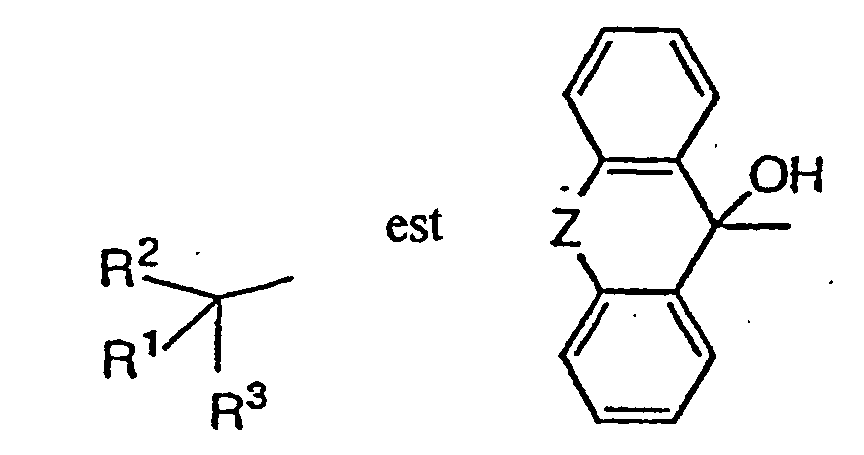
- R4
- est
- un groupe phényle non substitué, mono- ou di-substitué avec OH, OMe, alkyle en C1-4, oxo ou halogéno,
- un groupe 1-dibenzocycloheptène,
- un noyau hétérocyclique monocyclique à 6 chaínons qui peut être saturé ou insaturé, et qui se compose d'atomes de carbone et d'un à trois hétéroatomes N, ou
- un groupe cycloalkyle en C3-7,
ou

- Composé selon la revendication 1 choisi dans le groupe constitué par
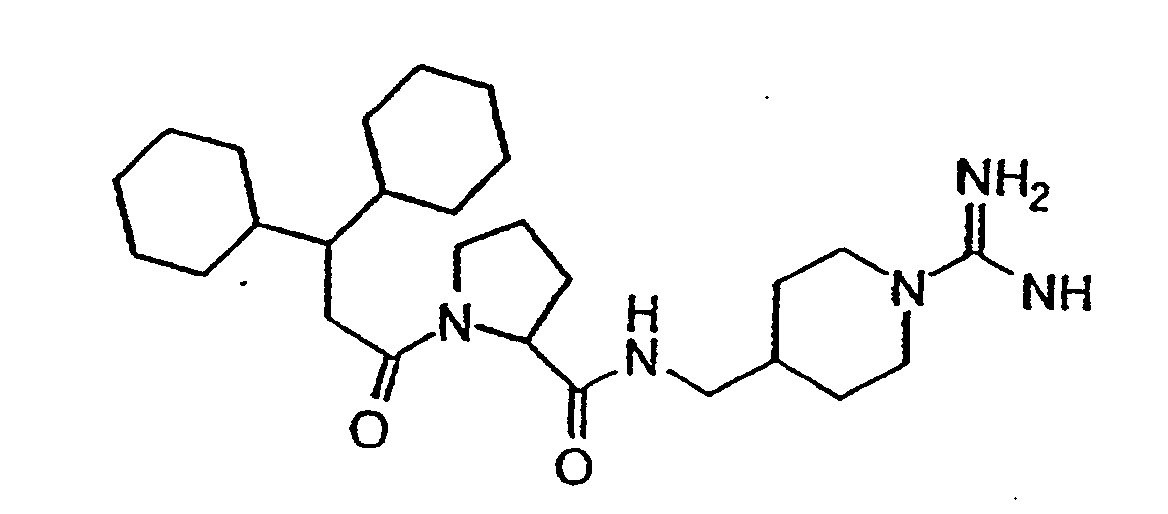 et leurs sels pharmaceutiquement acceptables.
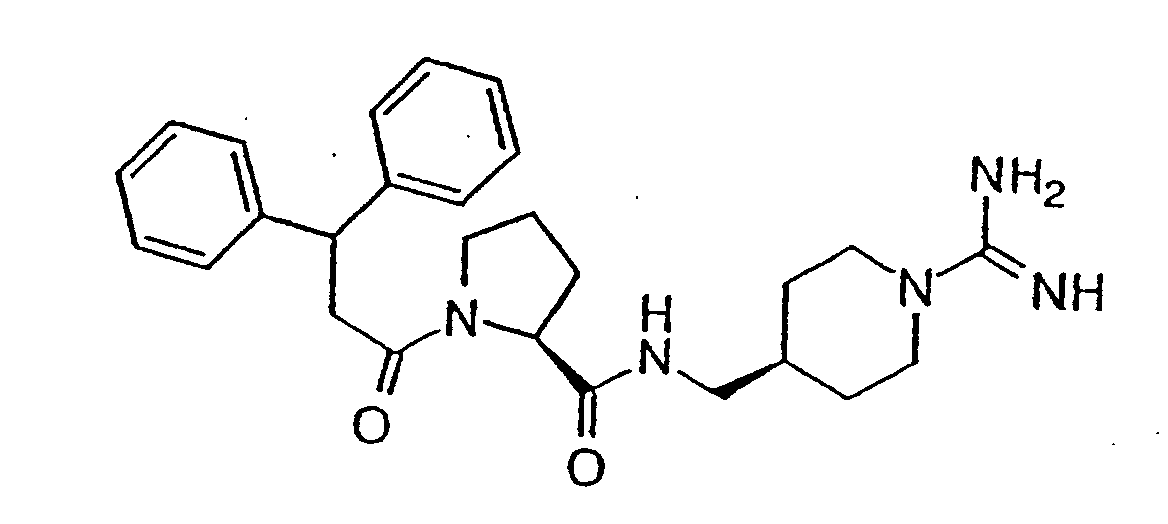
- Composé selon la revendication 1 qui estet ses sels pharmaceutiquement acceptables.
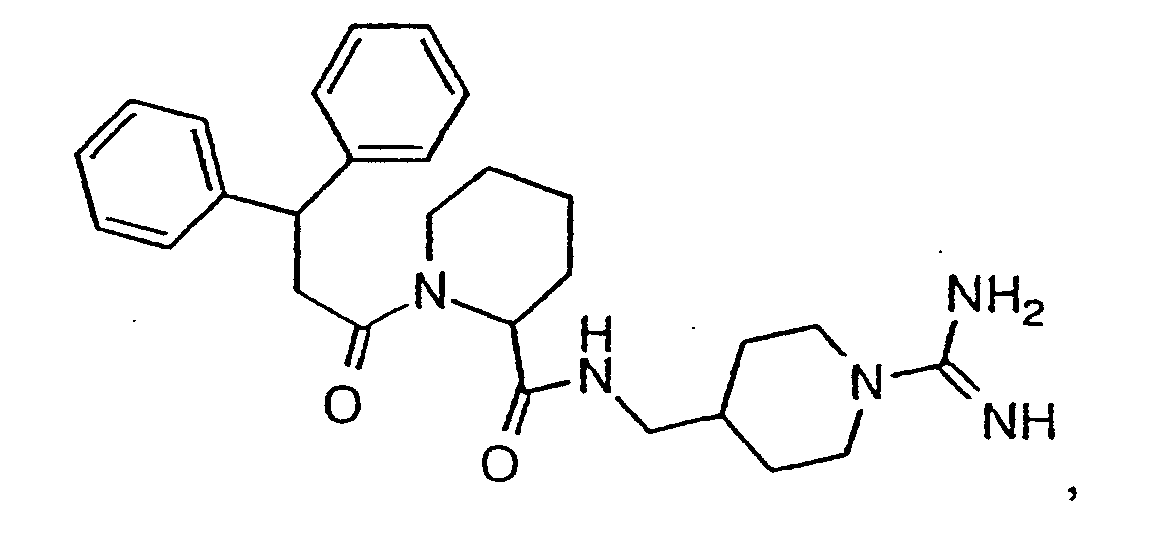
- Composé selon la revendication 3 qui estet ses sels pharmaceutiquement acceptables.
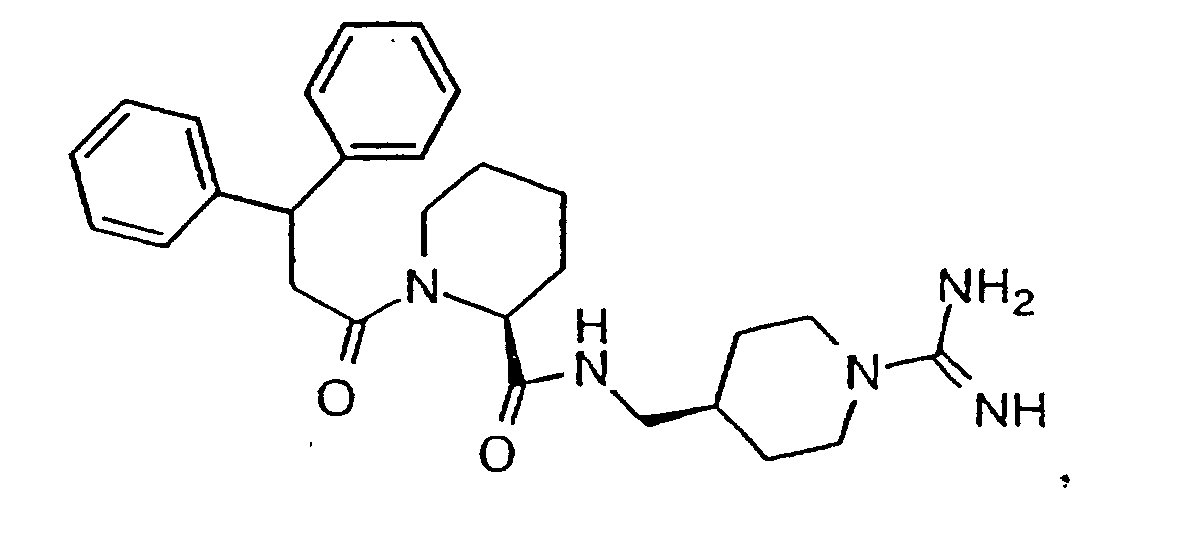
- Composition pharmaceutique comprenant un composé selon l'une quelconque des revendications 1 à 4, ou un sel pharmaceutiquement acceptable de ce composé, et un véhicule pharmaceutiquement acceptable.
- Composé selon l'une quelconque des revendications 1 à 4, ou sel pharmaceutiquement acceptable de ce composé, destiné à être utilisé pour inhiber la thrombine.
- Utilisation d'un composé selon l'une quelconque des revendications 1 à 4 ou d'un sel pharmaceutiquement acceptable de ce composé dans la fabrication d'un médicament destiné à inhiber la formation d'un thrombus, à prévenir la formation d'un thrombus, à inhiber la thrombine, à inhiber la formation de fibrine ou à inhiber la formation d'agrégats plaquettaires sanguins, chez un mammifère.
Applications Claiming Priority (3)
| Application Number | Priority Date | Filing Date | Title |
|---|---|---|---|
| US08/419,683 US5629324A (en) | 1995-04-10 | 1995-04-10 | Thrombin inhibitors |
| US419683 | 1995-04-10 | ||
| PCT/US1996/004679 WO1996032110A1 (fr) | 1995-04-10 | 1996-04-04 | Inhibiteurs de la thrombine |
Publications (3)
| Publication Number | Publication Date |
|---|---|
| EP0820287A1 EP0820287A1 (fr) | 1998-01-28 |
| EP0820287A4 EP0820287A4 (fr) | 1998-07-29 |
| EP0820287B1 true EP0820287B1 (fr) | 2002-03-27 |
Family
ID=23663305
Family Applications (1)
| Application Number | Title | Priority Date | Filing Date |
|---|---|---|---|
| EP96912574A Expired - Lifetime EP0820287B1 (fr) | 1995-04-10 | 1996-04-04 | Inhibiteurs de la thrombine |
Country Status (9)
| Country | Link |
|---|---|
| US (1) | US5629324A (fr) |
| EP (1) | EP0820287B1 (fr) |
| JP (1) | JPH11503455A (fr) |
| AT (1) | ATE214928T1 (fr) |
| AU (1) | AU698705B2 (fr) |
| CA (1) | CA2217682A1 (fr) |
| DE (1) | DE69620161T2 (fr) |
| ES (1) | ES2172657T3 (fr) |
| WO (1) | WO1996032110A1 (fr) |
Families Citing this family (52)
| Publication number | Priority date | Publication date | Assignee | Title |
|---|---|---|---|---|
| SA96170106A (ar) | 1995-07-06 | 2005-12-03 | أسترا أكتيبولاج | مشتقات حامض أميني جديدة |
| AR005245A1 (es) * | 1995-12-21 | 1999-04-28 | Astrazeneca Ab | Prodrogas de inhibidores de trombina, una formulación farmaceutica que las comprende, el uso de dichas prodrogas para la manufactura de un medicamento y un procedimiento para su preparacion |
| US5811402A (en) * | 1996-03-22 | 1998-09-22 | Eli Lilly And Company | Antithrombotic diamides |
| SE9602263D0 (sv) | 1996-06-07 | 1996-06-07 | Astra Ab | New amino acid derivatives |
| SE9602646D0 (sv) | 1996-07-04 | 1996-07-04 | Astra Ab | Pharmaceutically-useful compounds |
| US5872138A (en) * | 1996-09-13 | 1999-02-16 | Merck & Co., Inc. | Thrombin inhibitors |
| US6262047B1 (en) | 1996-10-11 | 2001-07-17 | Cor Therapeutics, Inc. | Selective factor Xa inhibitors |
| US6063794A (en) | 1996-10-11 | 2000-05-16 | Cor Therapeutics Inc. | Selective factor Xa inhibitors |
| US6194435B1 (en) | 1996-10-11 | 2001-02-27 | Cor Therapeutics, Inc. | Lactams as selective factor Xa inhibitors |
| US6369080B2 (en) | 1996-10-11 | 2002-04-09 | Cor Therapeutics, Inc. | Selective factor Xa inhibitors |
| US5798377A (en) * | 1996-10-21 | 1998-08-25 | Merck & Co., Inc. | Thrombin inhibitors |
| US5869487A (en) * | 1996-10-24 | 1999-02-09 | Merck & Co., Inc. | Pyrido 3,4-B!pyrazines for use as thrombin inhibitors |
| US6017934A (en) * | 1997-01-22 | 2000-01-25 | Merck & Co., Inc. | Thrombin inhibitors |
| US5792779A (en) * | 1997-02-19 | 1998-08-11 | Merck & Co., Inc. | Pyridinone thrombin inhibitors |
| US5932606A (en) * | 1997-03-24 | 1999-08-03 | Merck & Co., Inc. | Pyrazinone, pyridinone, piperidine and pyrrolidine thrombin inhibitors |
| EP0977772A1 (fr) | 1997-04-14 | 2000-02-09 | Cor Therapeutics, Inc. | INHIBITEURS SELECTIFS DU FACTEUR Xa |
| US6133256A (en) * | 1997-04-14 | 2000-10-17 | Cor Therapeutics Inc | Selective factor Xa inhibitors |
| US6369063B1 (en) | 1997-04-14 | 2002-04-09 | Cor Therapeutics, Inc. | Selective factor Xa inhibitors |
| US7109326B2 (en) | 1997-04-15 | 2006-09-19 | Genentech, Inc. | Halo-alkoxycarbonyl prodrugs |
| AR013084A1 (es) * | 1997-06-19 | 2000-12-13 | Astrazeneca Ab | Derivados de amidino utiles como inhibidores de la trombina, composicion farmaceutica, utilizacion de dichos compuestos para la preparacion demedicamentos y proceso para la preparacion de los compuestos mencionados |
| US6333321B1 (en) | 1997-08-11 | 2001-12-25 | Cor Therapeutics, Inc. | Selective factor Xa inhibitors |
| US6218382B1 (en) | 1997-08-11 | 2001-04-17 | Cor Therapeutics, Inc | Selective factor Xa inhibitors |
| US6228854B1 (en) | 1997-08-11 | 2001-05-08 | Cor Therapeutics, Inc. | Selective factor Xa inhibitors |
| US6011038A (en) * | 1997-09-05 | 2000-01-04 | Merck & Co., Inc. | Pyrazinone thrombin inhibitors |
| US6087373A (en) * | 1997-09-23 | 2000-07-11 | Merck & Co., Inc. | Thrombin inhibitors |
| US6133297A (en) * | 1997-09-30 | 2000-10-17 | Merck & Co., Inc. | Thrombin inhibitors |
| SE9704543D0 (sv) | 1997-12-05 | 1997-12-05 | Astra Ab | New compounds |
| US6147078A (en) * | 1998-05-19 | 2000-11-14 | Merck & Co., Inc. | Pyrazinone thrombin inhibitors |
| EP1082324A4 (fr) * | 1998-05-26 | 2002-01-02 | Merck & Co Inc | Composes d'imidazopyridine inhibiteurs de la thrombine |
| CA2343109A1 (fr) * | 1998-09-28 | 2000-04-06 | Merck & Co., Inc. | Inhibiteurs de la thrombine |
| WO2000026210A1 (fr) | 1998-10-30 | 2000-05-11 | Merck & Co., Inc. | Inhibiteurs de la thrombine |
| AU747776B2 (en) | 1998-10-30 | 2002-05-23 | Merck & Co., Inc. | Thrombin inhibitors |
| SE9804313D0 (sv) * | 1998-12-14 | 1998-12-14 | Astra Ab | New compounds |
| NZ512714A (en) | 1999-01-13 | 2003-10-31 | Astrazeneca Ab | Amidinobenzylamine derivatives useful as thrombin inhibitors |
| AR023510A1 (es) | 1999-04-21 | 2002-09-04 | Astrazeneca Ab | Un equipo de partes, formulacion farmaceutica y uso de un inhibidor de trombina. |
| US6239132B1 (en) | 1999-04-23 | 2001-05-29 | Merck & Co., Inc. | Thrombin inhibitors |
| UA58636C2 (uk) | 1999-06-04 | 2003-08-15 | Мерк Енд Ко., Інк. | Піразинонові інгібітори тромбіну, фармацевтична композиція, спосіб інгібування утворення тромбів у крові, спосіб лікування станів, пов'язаних із тромбоутворенням |
| CA2374654A1 (fr) | 1999-06-04 | 2000-12-14 | Merck & Co., Inc. | Inhibiteurs de la thrombine |
| EP1259506A1 (fr) | 1999-11-23 | 2002-11-27 | Merck & Co., Inc. | Inhibiteurs de thrombine a base de pyrazinone |
| US6403818B1 (en) | 2000-02-28 | 2002-06-11 | Eisai Co., Ltd. | Process for producing α-hydroxy-carbonyl compound |
| EP1267876A1 (fr) | 2000-03-23 | 2003-01-02 | Merck & Co., Inc. | Inhibiteurs de thrombine |
| SE0001803D0 (sv) | 2000-05-16 | 2000-05-16 | Astrazeneca Ab | New compounds i |
| US6433186B1 (en) | 2000-08-16 | 2002-08-13 | Astrazeneca Ab | Amidino derivatives and their use as thormbin inhibitors |
| AR035216A1 (es) | 2000-12-01 | 2004-05-05 | Astrazeneca Ab | Derivados de acido mandelico ,derivados farmaceuticamente aceptables, uso de estos derivados para la fabricacion de medicamentos, metodos de tratamiento ,procesos para la preparacion de estos derivados, y compuestos intermediarios |
| US7129233B2 (en) | 2000-12-01 | 2006-10-31 | Astrazeneca Ab | Mandelic acid derivatives and their use as thrombin inhibitors |
| JP2004516286A (ja) | 2000-12-18 | 2004-06-03 | メルク エンド カムパニー インコーポレーテッド | ベンジルアミン誘導体およびそれのトロンビン阻害薬としての使用 |
| US6528503B2 (en) | 2000-12-18 | 2003-03-04 | Merck & Co., Inc. | Thrombin inhibitors |
| CA2436176A1 (fr) | 2001-02-09 | 2002-08-22 | Merck & Co., Inc. | Inhibiteurs de thrombine |
| US7084134B2 (en) | 2002-05-02 | 2006-08-01 | Merk & Co., Inc. | Thrombin inhibitors |
| SE0201659D0 (sv) | 2002-05-31 | 2002-05-31 | Astrazeneca Ab | Modified release pharmaceutical formulation |
| SE0201661D0 (sv) | 2002-05-31 | 2002-05-31 | Astrazeneca Ab | New salts |
| TW200827336A (en) | 2006-12-06 | 2008-07-01 | Astrazeneca Ab | New crystalline forms |
Family Cites Families (17)
| Publication number | Priority date | Publication date | Assignee | Title |
|---|---|---|---|---|
| ZA86746B (en) * | 1985-02-04 | 1986-09-24 | Merrell Dow Pharma | Novel peptidase inhibitors |
| ZA897514B (en) * | 1988-10-07 | 1990-06-27 | Merrell Dow Pharma | Novel peptidase inhibitors |
| US5332726A (en) * | 1989-09-29 | 1994-07-26 | Rhone-Poulenc Rorer Pharmaceuticals Inc. | Antithrombotic peptides and pseudopeptides |
| GB9017694D0 (en) * | 1990-08-13 | 1990-09-26 | Sandoz Ltd | Improvements in or relating to organic chemistry |
| IL99527A (en) * | 1990-09-28 | 1997-08-14 | Lilly Co Eli | Tripeptide antithrombotic agents |
| GB9024129D0 (en) * | 1990-11-06 | 1990-12-19 | Thrombosis Research Trust | Inhibitors and substrates of thrombin |
| US5688768A (en) * | 1991-02-19 | 1997-11-18 | Cor Therapeutics, Inc. | Recombinant thrombin receptor and related pharmaceuticals |
| CA2075154A1 (fr) * | 1991-08-06 | 1993-02-07 | Neelakantan Balasubramanian | Aldehydes peptidiques utilises comme agents antithrombotiques |
| US5252566A (en) * | 1991-11-12 | 1993-10-12 | Eli Lilly And Company | Antithrombotic agents |
| US5416093A (en) * | 1991-11-12 | 1995-05-16 | Eli Lilly And Company | Antithrombotic agents |
| AU675981B2 (en) * | 1992-12-02 | 1997-02-27 | Bristol-Myers Squibb Company | Guanidinyl-substituted heterocyclic thrombin inhibitors |
| DE4242655A1 (de) * | 1992-12-17 | 1994-06-23 | Behringwerke Ag | Verwendung von Thrombin-Inhibitoren zur Inhibition okularer Fibrinbildung |
| SE9301916D0 (sv) * | 1993-06-03 | 1993-06-03 | Ab Astra | New peptides derivatives |
| EP0648780A1 (fr) * | 1993-08-26 | 1995-04-19 | Bristol-Myers Squibb Company | Inhibiteurs hétérocycliques de thrombine |
| ZA951617B (en) * | 1994-03-04 | 1997-02-27 | Lilly Co Eli | Antithrombotic agents. |
| US5510369A (en) * | 1994-07-22 | 1996-04-23 | Merck & Co., Inc. | Pyrrolidine thrombin inhibitors |
| WO1996031504A1 (fr) * | 1995-04-04 | 1996-10-10 | Merck & Co., Inc. | Inhibiteurs de thrombine |
-
1995
- 1995-04-10 US US08/419,683 patent/US5629324A/en not_active Expired - Fee Related
-
1996
- 1996-04-04 EP EP96912574A patent/EP0820287B1/fr not_active Expired - Lifetime
- 1996-04-04 AT AT96912574T patent/ATE214928T1/de not_active IP Right Cessation
- 1996-04-04 ES ES96912574T patent/ES2172657T3/es not_active Expired - Lifetime
- 1996-04-04 AU AU55348/96A patent/AU698705B2/en not_active Ceased
- 1996-04-04 CA CA002217682A patent/CA2217682A1/fr not_active Abandoned
- 1996-04-04 WO PCT/US1996/004679 patent/WO1996032110A1/fr not_active Ceased
- 1996-04-04 JP JP8531066A patent/JPH11503455A/ja active Pending
- 1996-04-04 DE DE69620161T patent/DE69620161T2/de not_active Expired - Fee Related
Also Published As
| Publication number | Publication date |
|---|---|
| JPH11503455A (ja) | 1999-03-26 |
| EP0820287A4 (fr) | 1998-07-29 |
| DE69620161D1 (de) | 2002-05-02 |
| WO1996032110A1 (fr) | 1996-10-17 |
| DE69620161T2 (de) | 2002-09-05 |
| AU5534896A (en) | 1996-10-30 |
| ES2172657T3 (es) | 2002-10-01 |
| ATE214928T1 (de) | 2002-04-15 |
| CA2217682A1 (fr) | 1996-10-17 |
| EP0820287A1 (fr) | 1998-01-28 |
| AU698705B2 (en) | 1998-11-05 |
| US5629324A (en) | 1997-05-13 |
Similar Documents
| Publication | Publication Date | Title |
|---|---|---|
| US5629324A (en) | Thrombin inhibitors | |
| EP0772590B1 (fr) | Inhibiteurs de la thrombine | |
| AU698911B2 (en) | Thrombin inhibitors | |
| US5792779A (en) | Pyridinone thrombin inhibitors | |
| US5668289A (en) | Pyridinone thrombin inhibitors | |
| US5672582A (en) | Thrombin inhibitors | |
| AU720616B2 (en) | Pyridinone thrombin inhibitors | |
| EP0934064B1 (fr) | Inhibiteurs de thrombine | |
| US5869487A (en) | Pyrido 3,4-B!pyrazines for use as thrombin inhibitors | |
| US6117888A (en) | Thrombin inhibitors | |
| CZ258496A3 (en) | Antithrombotic preparations | |
| AU709088B2 (en) | Thrombin inhibitors | |
| US5798377A (en) | Thrombin inhibitors | |
| NZ517603A (en) | Azacycloalkanone serine protease inhibitors | |
| US6004976A (en) | Thrombin inhibitors | |
| US6133297A (en) | Thrombin inhibitors | |
| EP1027333A1 (fr) | Inhibiteurs de thrombine |
Legal Events
| Date | Code | Title | Description |
|---|---|---|---|
| PUAI | Public reference made under article 153(3) epc to a published international application that has entered the european phase |
Free format text: ORIGINAL CODE: 0009012 |
|
| 17P | Request for examination filed |
Effective date: 19971110 |
|
| AK | Designated contracting states |
Kind code of ref document: A1 Designated state(s): AT BE CH DE DK ES FI FR GB GR IE IT LI LU NL PT SE |
|
| A4 | Supplementary search report drawn up and despatched |
Effective date: 19980612 |
|
| AK | Designated contracting states |
Kind code of ref document: A4 Designated state(s): AT BE CH DE DK ES FI FR GB GR IE IT LI LU NL PT SE |
|
| 17Q | First examination report despatched |
Effective date: 19991019 |
|
| GRAG | Despatch of communication of intention to grant |
Free format text: ORIGINAL CODE: EPIDOS AGRA |
|
| GRAG | Despatch of communication of intention to grant |
Free format text: ORIGINAL CODE: EPIDOS AGRA |
|
| GRAH | Despatch of communication of intention to grant a patent |
Free format text: ORIGINAL CODE: EPIDOS IGRA |
|
| REG | Reference to a national code |
Ref country code: GB Ref legal event code: IF02 |
|
| GRAH | Despatch of communication of intention to grant a patent |
Free format text: ORIGINAL CODE: EPIDOS IGRA |
|
| GRAA | (expected) grant |
Free format text: ORIGINAL CODE: 0009210 |
|
| AK | Designated contracting states |
Kind code of ref document: B1 Designated state(s): AT BE CH DE DK ES FI FR GB GR IE IT LI LU NL PT SE |
|
| PG25 | Lapsed in a contracting state [announced via postgrant information from national office to epo] |
Ref country code: NL Free format text: LAPSE BECAUSE OF FAILURE TO SUBMIT A TRANSLATION OF THE DESCRIPTION OR TO PAY THE FEE WITHIN THE PRESCRIBED TIME-LIMIT Effective date: 20020327 Ref country code: LI Free format text: LAPSE BECAUSE OF FAILURE TO SUBMIT A TRANSLATION OF THE DESCRIPTION OR TO PAY THE FEE WITHIN THE PRESCRIBED TIME-LIMIT Effective date: 20020327 Ref country code: GR Free format text: LAPSE BECAUSE OF FAILURE TO SUBMIT A TRANSLATION OF THE DESCRIPTION OR TO PAY THE FEE WITHIN THE PRESCRIBED TIME-LIMIT Effective date: 20020327 Ref country code: FI Free format text: LAPSE BECAUSE OF FAILURE TO SUBMIT A TRANSLATION OF THE DESCRIPTION OR TO PAY THE FEE WITHIN THE PRESCRIBED TIME-LIMIT Effective date: 20020327 Ref country code: CH Free format text: LAPSE BECAUSE OF FAILURE TO SUBMIT A TRANSLATION OF THE DESCRIPTION OR TO PAY THE FEE WITHIN THE PRESCRIBED TIME-LIMIT Effective date: 20020327 Ref country code: BE Free format text: LAPSE BECAUSE OF FAILURE TO SUBMIT A TRANSLATION OF THE DESCRIPTION OR TO PAY THE FEE WITHIN THE PRESCRIBED TIME-LIMIT Effective date: 20020327 Ref country code: AT Free format text: LAPSE BECAUSE OF FAILURE TO SUBMIT A TRANSLATION OF THE DESCRIPTION OR TO PAY THE FEE WITHIN THE PRESCRIBED TIME-LIMIT Effective date: 20020327 |
|
| REF | Corresponds to: |
Ref document number: 214928 Country of ref document: AT Date of ref document: 20020415 Kind code of ref document: T |
|
| REG | Reference to a national code |
Ref country code: CH Ref legal event code: EP |
|
| PG25 | Lapsed in a contracting state [announced via postgrant information from national office to epo] |
Ref country code: LU Free format text: LAPSE BECAUSE OF NON-PAYMENT OF DUE FEES Effective date: 20020404 Ref country code: IE Free format text: LAPSE BECAUSE OF NON-PAYMENT OF DUE FEES Effective date: 20020404 |
|
| REF | Corresponds to: |
Ref document number: 69620161 Country of ref document: DE Date of ref document: 20020502 |
|
| REG | Reference to a national code |
Ref country code: IE Ref legal event code: FG4D |
|
| PG25 | Lapsed in a contracting state [announced via postgrant information from national office to epo] |
Ref country code: SE Free format text: LAPSE BECAUSE OF FAILURE TO SUBMIT A TRANSLATION OF THE DESCRIPTION OR TO PAY THE FEE WITHIN THE PRESCRIBED TIME-LIMIT Effective date: 20020627 Ref country code: PT Free format text: LAPSE BECAUSE OF FAILURE TO SUBMIT A TRANSLATION OF THE DESCRIPTION OR TO PAY THE FEE WITHIN THE PRESCRIBED TIME-LIMIT Effective date: 20020627 Ref country code: DK Free format text: LAPSE BECAUSE OF FAILURE TO SUBMIT A TRANSLATION OF THE DESCRIPTION OR TO PAY THE FEE WITHIN THE PRESCRIBED TIME-LIMIT Effective date: 20020627 |
|
| ET | Fr: translation filed | ||
| NLV1 | Nl: lapsed or annulled due to failure to fulfill the requirements of art. 29p and 29m of the patents act | ||
| REG | Reference to a national code |
Ref country code: CH Ref legal event code: PL |
|
| REG | Reference to a national code |
Ref country code: ES Ref legal event code: FG2A Ref document number: 2172657 Country of ref document: ES Kind code of ref document: T3 |
|
| PLBE | No opposition filed within time limit |
Free format text: ORIGINAL CODE: 0009261 |
|
| STAA | Information on the status of an ep patent application or granted ep patent |
Free format text: STATUS: NO OPPOSITION FILED WITHIN TIME LIMIT |
|
| REG | Reference to a national code |
Ref country code: IE Ref legal event code: MM4A |
|
| PGFP | Annual fee paid to national office [announced via postgrant information from national office to epo] |
Ref country code: GB Payment date: 20030313 Year of fee payment: 8 |
|
| 26N | No opposition filed |
Effective date: 20021230 |
|
| PGFP | Annual fee paid to national office [announced via postgrant information from national office to epo] |
Ref country code: FR Payment date: 20030403 Year of fee payment: 8 |
|
| PGFP | Annual fee paid to national office [announced via postgrant information from national office to epo] |
Ref country code: ES Payment date: 20030425 Year of fee payment: 8 |
|
| PGFP | Annual fee paid to national office [announced via postgrant information from national office to epo] |
Ref country code: DE Payment date: 20030430 Year of fee payment: 8 |
|
| PG25 | Lapsed in a contracting state [announced via postgrant information from national office to epo] |
Ref country code: GB Free format text: LAPSE BECAUSE OF NON-PAYMENT OF DUE FEES Effective date: 20040404 |
|
| PG25 | Lapsed in a contracting state [announced via postgrant information from national office to epo] |
Ref country code: ES Free format text: LAPSE BECAUSE OF NON-PAYMENT OF DUE FEES Effective date: 20040405 |
|
| PG25 | Lapsed in a contracting state [announced via postgrant information from national office to epo] |
Ref country code: DE Free format text: LAPSE BECAUSE OF NON-PAYMENT OF DUE FEES Effective date: 20041103 |
|
| GBPC | Gb: european patent ceased through non-payment of renewal fee | ||
| PG25 | Lapsed in a contracting state [announced via postgrant information from national office to epo] |
Ref country code: FR Free format text: LAPSE BECAUSE OF NON-PAYMENT OF DUE FEES Effective date: 20041231 |
|
| REG | Reference to a national code |
Ref country code: FR Ref legal event code: ST |
|
| PG25 | Lapsed in a contracting state [announced via postgrant information from national office to epo] |
Ref country code: IT Free format text: LAPSE BECAUSE OF NON-PAYMENT OF DUE FEES Effective date: 20050404 |
|
| REG | Reference to a national code |
Ref country code: ES Ref legal event code: FD2A Effective date: 20040405 |