EP0820452B1 - Composes de piperazinyle et de piperidinyle carbonyles inhibant la transferase de proteine farnesyle - Google Patents
Composes de piperazinyle et de piperidinyle carbonyles inhibant la transferase de proteine farnesyle Download PDFInfo
- Publication number
- EP0820452B1 EP0820452B1 EP96911440A EP96911440A EP0820452B1 EP 0820452 B1 EP0820452 B1 EP 0820452B1 EP 96911440 A EP96911440 A EP 96911440A EP 96911440 A EP96911440 A EP 96911440A EP 0820452 B1 EP0820452 B1 EP 0820452B1
- Authority
- EP
- European Patent Office
- Prior art keywords
- alkyl
- aryl
- substituted
- group
- compound
- Prior art date
- Legal status (The legal status is an assumption and is not a legal conclusion. Google has not performed a legal analysis and makes no representation as to the accuracy of the status listed.)
- Expired - Lifetime
Links
- 0 CC(C1)N(*)CCN1C(*)=O Chemical compound CC(C1)N(*)CCN1C(*)=O 0.000 description 16
- SJHSVXQMHYTEKW-UHFFFAOYSA-N CC(C)CNCC(C)=O Chemical compound CC(C)CNCC(C)=O SJHSVXQMHYTEKW-UHFFFAOYSA-N 0.000 description 1
- LQHBAECAFJXPIT-UHFFFAOYSA-N CC(CC1)NCC(C)N1C(OC(C)(C)C)=O Chemical compound CC(CC1)NCC(C)N1C(OC(C)(C)C)=O LQHBAECAFJXPIT-UHFFFAOYSA-N 0.000 description 1
- MUMLMFSJRXOGEI-UHFFFAOYSA-N CC(NCC1OCCC1)=O Chemical compound CC(NCC1OCCC1)=O MUMLMFSJRXOGEI-UHFFFAOYSA-N 0.000 description 1
- WFMJTCLDCCCFHE-UHFFFAOYSA-N CC(NCCOC)=O Chemical compound CC(NCCOC)=O WFMJTCLDCCCFHE-UHFFFAOYSA-N 0.000 description 1
- SOGZMDYBQZTXIJ-UHFFFAOYSA-N CCC(NCC1CCCCC1)=O Chemical compound CCC(NCC1CCCCC1)=O SOGZMDYBQZTXIJ-UHFFFAOYSA-N 0.000 description 1
- BKFSPPDAZOYKSD-UHFFFAOYSA-N CCC(NCCCCC1OCCCC1)=O Chemical compound CCC(NCCCCC1OCCCC1)=O BKFSPPDAZOYKSD-UHFFFAOYSA-N 0.000 description 1
- FYPYYALHHIJQSU-UHFFFAOYSA-N CCCCC(C1)N(C)CCC1=O Chemical compound CCCCC(C1)N(C)CCC1=O FYPYYALHHIJQSU-UHFFFAOYSA-N 0.000 description 1
- BSIMJOWORCXCMP-UHFFFAOYSA-N CCCCC(C1)N(C)CCC1Cl Chemical compound CCCCC(C1)N(C)CCC1Cl BSIMJOWORCXCMP-UHFFFAOYSA-N 0.000 description 1
- SWKQCSITMTXTBP-UHFFFAOYSA-N CCCCC(C1)NCCC1=O Chemical compound CCCCC(C1)NCCC1=O SWKQCSITMTXTBP-UHFFFAOYSA-N 0.000 description 1
- RPWXYCRIAGBAGY-UHFFFAOYSA-N CCOC(Cc1cnccc1)=O Chemical compound CCOC(Cc1cnccc1)=O RPWXYCRIAGBAGY-UHFFFAOYSA-N 0.000 description 1
Classifications
-
- C—CHEMISTRY; METALLURGY
- C07—ORGANIC CHEMISTRY
- C07D—HETEROCYCLIC COMPOUNDS
- C07D213/00—Heterocyclic compounds containing six-membered rings, not condensed with other rings, with one nitrogen atom as the only ring hetero atom and three or more double bonds between ring members or between ring members and non-ring members
- C07D213/02—Heterocyclic compounds containing six-membered rings, not condensed with other rings, with one nitrogen atom as the only ring hetero atom and three or more double bonds between ring members or between ring members and non-ring members having three double bonds between ring members or between ring members and non-ring members
- C07D213/89—Heterocyclic compounds containing six-membered rings, not condensed with other rings, with one nitrogen atom as the only ring hetero atom and three or more double bonds between ring members or between ring members and non-ring members having three double bonds between ring members or between ring members and non-ring members with hetero atoms directly attached to the ring nitrogen atom
-
- A—HUMAN NECESSITIES
- A61—MEDICAL OR VETERINARY SCIENCE; HYGIENE
- A61P—SPECIFIC THERAPEUTIC ACTIVITY OF CHEMICAL COMPOUNDS OR MEDICINAL PREPARATIONS
- A61P35/00—Antineoplastic agents
-
- A—HUMAN NECESSITIES
- A61—MEDICAL OR VETERINARY SCIENCE; HYGIENE
- A61P—SPECIFIC THERAPEUTIC ACTIVITY OF CHEMICAL COMPOUNDS OR MEDICINAL PREPARATIONS
- A61P43/00—Drugs for specific purposes, not provided for in groups A61P1/00-A61P41/00
-
- C—CHEMISTRY; METALLURGY
- C07—ORGANIC CHEMISTRY
- C07D—HETEROCYCLIC COMPOUNDS
- C07D211/00—Heterocyclic compounds containing hydrogenated pyridine rings, not condensed with other rings
- C07D211/04—Heterocyclic compounds containing hydrogenated pyridine rings, not condensed with other rings with only hydrogen or carbon atoms directly attached to the ring nitrogen atom
- C07D211/06—Heterocyclic compounds containing hydrogenated pyridine rings, not condensed with other rings with only hydrogen or carbon atoms directly attached to the ring nitrogen atom having no double bonds between ring members or between ring members and non-ring members
- C07D211/08—Heterocyclic compounds containing hydrogenated pyridine rings, not condensed with other rings with only hydrogen or carbon atoms directly attached to the ring nitrogen atom having no double bonds between ring members or between ring members and non-ring members with hydrocarbon or substituted hydrocarbon radicals directly attached to ring carbon atoms
- C07D211/18—Heterocyclic compounds containing hydrogenated pyridine rings, not condensed with other rings with only hydrogen or carbon atoms directly attached to the ring nitrogen atom having no double bonds between ring members or between ring members and non-ring members with hydrocarbon or substituted hydrocarbon radicals directly attached to ring carbon atoms with substituted hydrocarbon radicals attached to ring carbon atoms
- C07D211/34—Heterocyclic compounds containing hydrogenated pyridine rings, not condensed with other rings with only hydrogen or carbon atoms directly attached to the ring nitrogen atom having no double bonds between ring members or between ring members and non-ring members with hydrocarbon or substituted hydrocarbon radicals directly attached to ring carbon atoms with substituted hydrocarbon radicals attached to ring carbon atoms with hydrocarbon radicals, substituted by carbon atoms having three bonds to hetero atoms with at the most one bond to halogen, e.g. ester or nitrile radicals
-
- C—CHEMISTRY; METALLURGY
- C07—ORGANIC CHEMISTRY
- C07D—HETEROCYCLIC COMPOUNDS
- C07D211/00—Heterocyclic compounds containing hydrogenated pyridine rings, not condensed with other rings
- C07D211/04—Heterocyclic compounds containing hydrogenated pyridine rings, not condensed with other rings with only hydrogen or carbon atoms directly attached to the ring nitrogen atom
- C07D211/06—Heterocyclic compounds containing hydrogenated pyridine rings, not condensed with other rings with only hydrogen or carbon atoms directly attached to the ring nitrogen atom having no double bonds between ring members or between ring members and non-ring members
- C07D211/36—Heterocyclic compounds containing hydrogenated pyridine rings, not condensed with other rings with only hydrogen or carbon atoms directly attached to the ring nitrogen atom having no double bonds between ring members or between ring members and non-ring members with hetero atoms or with carbon atoms having three bonds to hetero atoms with at the most one bond to halogen, e.g. ester or nitrile radicals, directly attached to ring carbon atoms
- C07D211/38—Halogen atoms or nitro radicals
-
- C—CHEMISTRY; METALLURGY
- C07—ORGANIC CHEMISTRY
- C07D—HETEROCYCLIC COMPOUNDS
- C07D211/00—Heterocyclic compounds containing hydrogenated pyridine rings, not condensed with other rings
- C07D211/04—Heterocyclic compounds containing hydrogenated pyridine rings, not condensed with other rings with only hydrogen or carbon atoms directly attached to the ring nitrogen atom
- C07D211/06—Heterocyclic compounds containing hydrogenated pyridine rings, not condensed with other rings with only hydrogen or carbon atoms directly attached to the ring nitrogen atom having no double bonds between ring members or between ring members and non-ring members
- C07D211/36—Heterocyclic compounds containing hydrogenated pyridine rings, not condensed with other rings with only hydrogen or carbon atoms directly attached to the ring nitrogen atom having no double bonds between ring members or between ring members and non-ring members with hetero atoms or with carbon atoms having three bonds to hetero atoms with at the most one bond to halogen, e.g. ester or nitrile radicals, directly attached to ring carbon atoms
- C07D211/40—Oxygen atoms
- C07D211/44—Oxygen atoms attached in position 4
- C07D211/48—Oxygen atoms attached in position 4 having an acyclic carbon atom attached in position 4
- C07D211/50—Aroyl radical
-
- C—CHEMISTRY; METALLURGY
- C07—ORGANIC CHEMISTRY
- C07D—HETEROCYCLIC COMPOUNDS
- C07D213/00—Heterocyclic compounds containing six-membered rings, not condensed with other rings, with one nitrogen atom as the only ring hetero atom and three or more double bonds between ring members or between ring members and non-ring members
- C07D213/02—Heterocyclic compounds containing six-membered rings, not condensed with other rings, with one nitrogen atom as the only ring hetero atom and three or more double bonds between ring members or between ring members and non-ring members having three double bonds between ring members or between ring members and non-ring members
- C07D213/04—Heterocyclic compounds containing six-membered rings, not condensed with other rings, with one nitrogen atom as the only ring hetero atom and three or more double bonds between ring members or between ring members and non-ring members having three double bonds between ring members or between ring members and non-ring members having no bond between the ring nitrogen atom and a non-ring member or having only hydrogen or carbon atoms directly attached to the ring nitrogen atom
- C07D213/24—Heterocyclic compounds containing six-membered rings, not condensed with other rings, with one nitrogen atom as the only ring hetero atom and three or more double bonds between ring members or between ring members and non-ring members having three double bonds between ring members or between ring members and non-ring members having no bond between the ring nitrogen atom and a non-ring member or having only hydrogen or carbon atoms directly attached to the ring nitrogen atom with substituted hydrocarbon radicals attached to ring carbon atoms
- C07D213/54—Radicals substituted by carbon atoms having three bonds to hetero atoms with at the most one bond to halogen, e.g. ester or nitrile radicals
- C07D213/56—Amides
-
- C—CHEMISTRY; METALLURGY
- C07—ORGANIC CHEMISTRY
- C07D—HETEROCYCLIC COMPOUNDS
- C07D241/00—Heterocyclic compounds containing 1,4-diazine or hydrogenated 1,4-diazine rings
- C07D241/02—Heterocyclic compounds containing 1,4-diazine or hydrogenated 1,4-diazine rings not condensed with other rings
- C07D241/04—Heterocyclic compounds containing 1,4-diazine or hydrogenated 1,4-diazine rings not condensed with other rings having no double bonds between ring members or between ring members and non-ring members
-
- C—CHEMISTRY; METALLURGY
- C07—ORGANIC CHEMISTRY
- C07D—HETEROCYCLIC COMPOUNDS
- C07D401/00—Heterocyclic compounds containing two or more hetero rings, having nitrogen atoms as the only ring hetero atoms, at least one ring being a six-membered ring with only one nitrogen atom
- C07D401/02—Heterocyclic compounds containing two or more hetero rings, having nitrogen atoms as the only ring hetero atoms, at least one ring being a six-membered ring with only one nitrogen atom containing two hetero rings
- C07D401/06—Heterocyclic compounds containing two or more hetero rings, having nitrogen atoms as the only ring hetero atoms, at least one ring being a six-membered ring with only one nitrogen atom containing two hetero rings linked by a carbon chain containing only aliphatic carbon atoms
-
- C—CHEMISTRY; METALLURGY
- C07—ORGANIC CHEMISTRY
- C07D—HETEROCYCLIC COMPOUNDS
- C07D401/00—Heterocyclic compounds containing two or more hetero rings, having nitrogen atoms as the only ring hetero atoms, at least one ring being a six-membered ring with only one nitrogen atom
- C07D401/02—Heterocyclic compounds containing two or more hetero rings, having nitrogen atoms as the only ring hetero atoms, at least one ring being a six-membered ring with only one nitrogen atom containing two hetero rings
- C07D401/12—Heterocyclic compounds containing two or more hetero rings, having nitrogen atoms as the only ring hetero atoms, at least one ring being a six-membered ring with only one nitrogen atom containing two hetero rings linked by a chain containing hetero atoms as chain links
-
- C—CHEMISTRY; METALLURGY
- C07—ORGANIC CHEMISTRY
- C07D—HETEROCYCLIC COMPOUNDS
- C07D401/00—Heterocyclic compounds containing two or more hetero rings, having nitrogen atoms as the only ring hetero atoms, at least one ring being a six-membered ring with only one nitrogen atom
- C07D401/14—Heterocyclic compounds containing two or more hetero rings, having nitrogen atoms as the only ring hetero atoms, at least one ring being a six-membered ring with only one nitrogen atom containing three or more hetero rings
-
- Y—GENERAL TAGGING OF NEW TECHNOLOGICAL DEVELOPMENTS; GENERAL TAGGING OF CROSS-SECTIONAL TECHNOLOGIES SPANNING OVER SEVERAL SECTIONS OF THE IPC; TECHNICAL SUBJECTS COVERED BY FORMER USPC CROSS-REFERENCE ART COLLECTIONS [XRACs] AND DIGESTS
- Y02—TECHNOLOGIES OR APPLICATIONS FOR MITIGATION OR ADAPTATION AGAINST CLIMATE CHANGE
- Y02P—CLIMATE CHANGE MITIGATION TECHNOLOGIES IN THE PRODUCTION OR PROCESSING OF GOODS
- Y02P20/00—Technologies relating to chemical industry
- Y02P20/50—Improvements relating to the production of bulk chemicals
- Y02P20/582—Recycling of unreacted starting or intermediate materials
Definitions
- Ras oncoprotein To acquire transforming potential, the precursor of the Ras oncoprotein must undergo famesylation of the cysteine residue located in a carboxyl-terminal tetrapeptide. Inhibitors of the enzyme that catalyzes this modification, farnesyl protein transferase, have therefore been suggested as anticancer agents for tumors in which Ras contributes to transformation. Mutated, oncogenic forms of Ras are frequently found in many human cancers, most notably in more than 50% of colon and pancreatic carcinomas (Kohl et al., Science, Vol. 260, 1834 to 1837 - , 1993).
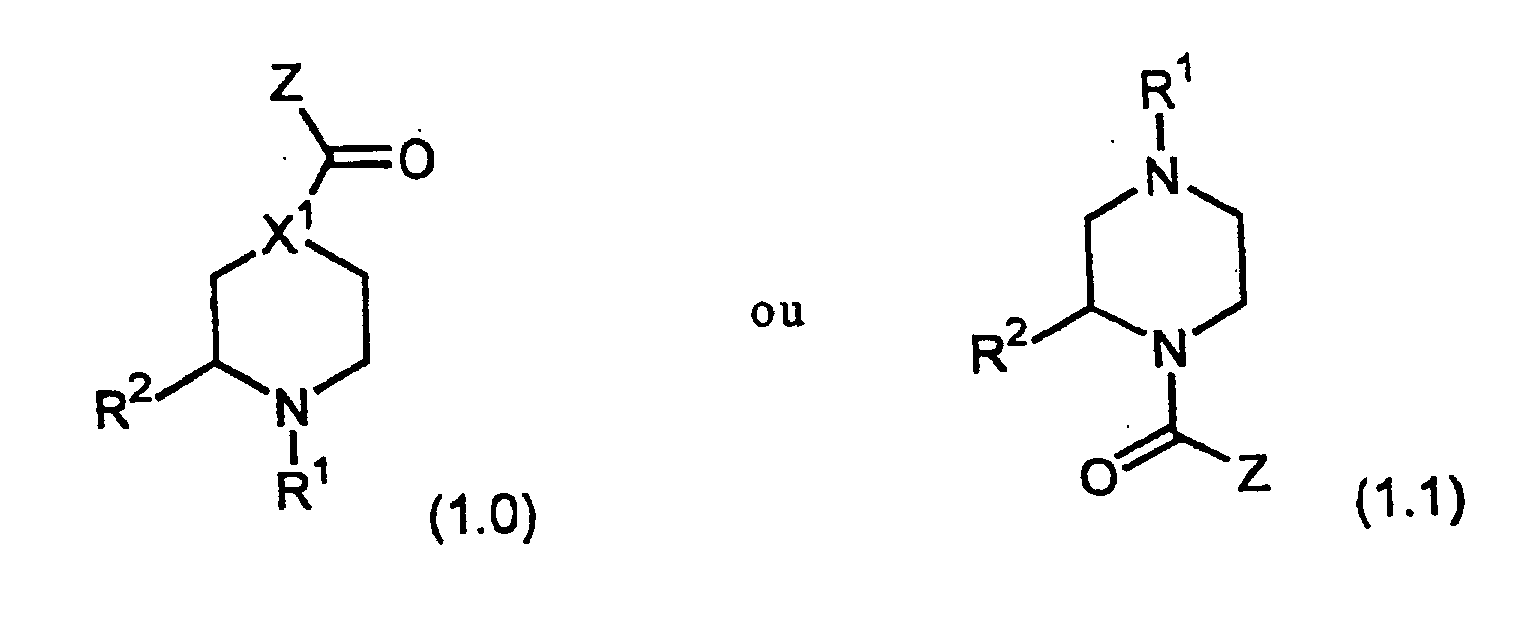
- the present invention is directed to novel carbonyl piperazinyl and piperidinyl compounds of the formula: or a pharmaceutically acceptable salt or solvate thereof, wherein:
- the present invention is directed toward the use compound (1.0) for the manufacture of a medicament for inhibiting the abnormal growth of cells, including transformed cells, comprising administering an effective amount of compound (1.0) to a mammal (e.g., a human) In need of such treatment.
- Abnormal growth of cells refers to cell growth independent of normal regulatory mechanisms (e.g., loss of contact inhibition). This includes the abnormal growth of: (1) tumor cells (tumors) expressing an activated Ras oncogene; (2) tumor cells in which the Ras protein is activated as a result of oncogenic mutation in another gene; (3) benign and malignant cells of other proliferative diseases in which aberrant Ras activation occurs, and (4) benign or malignant cells that are activated by mechanisms other than the Ras protein.
- the cells to be inhibited can be tumor cells expressing an activated ras oncogene.
- the types of cells that may be inhibited include pancreatic tumor cells, lung cancer cells, myeloid leukemia tumor cells; thyroid follicular tumor cells, myelodysplastic tumor cells, epidermal carcinoma tumor cells, bladder carcinoma tumor cells or colon tumors cells.
- the inhibition of the abnormal growth of cells by the treatment with compound (1.0) may be by inhibiting ras famesyl protein transferase.
- the inhibition may be of tumor cells wherein the Ras protein is activated as a result of oncogenic mutation in genes other than the Ras gene.
- compounds (1.0) may inhibit tumor cells activated by a protein other than the Ras protein.
- This invention also provides the use of compound (1.0) for the manufacture of a medicament for inhibiting proliferative diseases, both benign and malignant, wherein Ras proteins are aberrantly activated as a result of oncogenic mutation in other genes--i.e., the Ras gene itself is not activated by mutation to an oncogenic form-with said inhibition being accomplished by the administration of an effective amount of the carbonyl piperazinyl and piperidinyl compounds (1.0) described herein, to a mammal (e.g., a human) in need of such treatment.
- a mammal e.g., a human
- the benign proliferative disorder neurofibromatosis, or tumors in which Ras is activated due to mutation or overexpression of tyrosine kinase oncogenes may be inhibited by the carbonyl piperazinyl and piperidinyl compounds (1.0) described herein.
- the present invention is directed toward the use of compound (1.0) for the manufacture of a medicament for inhibiting ras farnesyl protein transferase and the farnesylation of the oncogene protein Ras by administering an effective amount of compound (1.0) to mammals, especially humans.
- the administration of the compounds of this invention to patients, to inhibit famesyl protein transferase, is useful in the treatment of the cancers described above.
- Certain basic compounds (1.0) can also form pharmaceutically acceptable salts, e.g., acid addition salts.
- the pyrido-nitrogen atoms may form salts with strong acid, while compounds having basic substituents such as amino groups also form salts with weaker acids.
- suitable acids for salt formation are hydrochloric, sulfuric, phosphoric, acetic, citric, oxalic, malonic, salicylic, malic, fumaric, succinic, ascorbic, maleic, methanesulfonic and other mineral and carboxylic acids well known to those in the art.
- the salts are prepared by contacting the free base form with a sufficient amount of the desired acid to produce a salt in the conventional manner.
- the carboxylic acids of formula (8.0) can be prepared by contacting the aromatic compounds of formula (3.0) with a base such as n-butyl lithium, followed by treatment with carbon dioxide, followed then by treatment with a suitable acid, such as hydrochloric acid, to give carboxylic acid (8.0), which are also compounds known in the art.
- a base such as n-butyl lithium
- carbon dioxide followed then by treatment with a suitable acid, such as hydrochloric acid
- Scheme 1 describes the synthesis of 2,3-disubstituted piperazines wherein R 2 independently represents H, alkyl, alkenyl, or alkynyl.
- Scheme 1 also describes the synthesis of 2,3-disubstituted piperazines wherein R 2 independently represents alkyl, alkenyl, or alkynyl which are substituted with substituent groups (a), (b), (c), (d) and (g) as defined above, with the exception that R8 and R 9 cannot be a group that is substituted with -C(O)R 13 or -SO 2 R 13 .
- BOC-protected amino acids (12.0) are available commercially or can be made by procedures well known in the art.
- amino acids can be coupled (step 1) to a commercially availble N-benzylprotected amino acid, ethyl ester using suitable coupling agents such as DCC or EDC in suitable solvents (e.g., N, N-dimethylformamide, chloroform or methylene chloride) to produce a compound of Formula 13.0.
- suitable solvents e.g., N, N-dimethylformamide, chloroform or methylene chloride
- this reaction is conducted at room temperature (i.e., about 25°C).
- the BOC protecting group is removed (step 2) at room temperature with suitable reagents such as trifluoroacetic acid, or hydrogen chloride in chloroform or dioxane.
- the deprotected dipeptide is cyclized (step 3) under basic conditions to produce the compound of Formula 14.0.
- the compound of Formula 14.0 is then reduced (step 4) using LiAIH 4 in refluxing ether (diethyl ether) or THF to give the piperazine of Formula 15.0.
- the unsubstituted nitrogen of the piperazine of Formula 15.0 is protected (step 5) with a BOC group by procedures well known in the art to give the compound of Formula 16.0.
- the N-benzyl group is removed (step 6) by catalytic hydrogenation (e.g., using Pd/C and hydrogen gas under pressure of about 60 psi) to give the compound of Formula (9.0).
- compound (15.0) can be converted to the FMOC derivative (15.3) by treatment with FMOC-CI in the presence of a base such as sodium bicarbonate in an aqueous dioxane.
- the FMOC derivative (15.3) can be debenzylated as described in step 6 above, to give compound (15.5).
- Compound (15.5) can be converted to the BOC-derivative (15.7) by procedures known in the art.
- Compound (15.7) can be converted to compound (4.0) by heating in a suitable hydroxyl solvent such as methanol.
- the unsubstituted nitrogen of compound (9.3) is protected (step 7) with a CBZ group by procedures known in the art to produce the compound (9.4).
- the group R 23 on compound (9.4) can be converted to R 2 , followed by deprotection of compound (9.4) by catalytic hydrogenation, i.e. palladium/carbon and hydrogen in a suitable solvent such as methanol, to give compound (9.0).
- the leaving group can be displaced by various nucleophiles such as organometallics (to produce R 2 with an (a) substituent), thiols (to produce R 2 with a (d) substituent), sulfenyls (to produce R 2 with an (e) substituent), sulfinyls (to produce R 2 with an (f) or (m) substituent), amines (to produce R 2 with a (g) substituent), and alcohols (to produce R 2 with a (c) substituent).
- the hydroxy group on R 23 in compound (9.4) can also be acylated (to produce R 2 with a (j) or (k) substituent) or alkylated (to produce R 2 with a (c) substituent).
- R 23 in compound (9.4) is alkyl having more than one carbon atom, or alkenyl or alkynyl
- the hydroxy group can be oxidized, as discussed above, to produce the corresponding carboxyl group (i.e., substituent (o) wherein R 8 is H).
- This carboxyl group can be esterified to produce compounds wherein substituent (o) is -C(O)OR 8 wherein R8 is other than H, or converted to amides to produce to produce R 2 with an (I) substituent by procedures well known in the art.
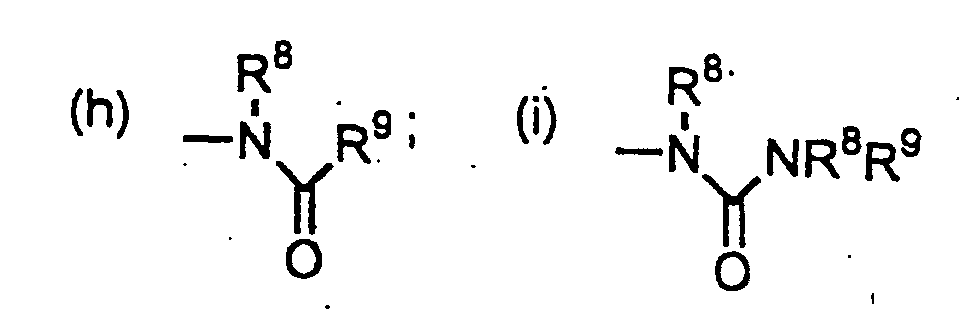
- the amine When the leaving group is displaced by an amine (e.g., -NR 8 R 9 ), the amine can then be converted to R 2 substituent groups (h), (i) or (n) by reacting the amine with an acyl halide (to produce R 2 with an (h) substituent), a carbamyl halide (to produce R 2 with an (i) substituent) or a sulfonyl halide (to produce R 2 with an (n) substituent) by procedures well known in the art, which following deprotection, give compound (9.0).
- an acyl halide to produce R 2 with an (h) substituent
- carbamyl halide to produce R 2 with an (i) substituent
- a sulfonyl halide to produce R 2 with an (n) substituent
- the compound of Formula 10.0 can be deprotected (i.e., the BOC group removed) by treatment with an acid (e.g. trifluoroacetic acid, or HCl-dioxane) to produce the compound (10.1).
- an acid e.g. trifluoroacetic acid, or HCl-dioxane
- Compound (10.1) can be converted to the desired piperazinyl compound (1.0), wherein X 1 is N, by acylation, acylation and deprotection or reductive alkylation, optionally with deprotection.
- compounds of Formula (1.0) wherein R 2 is -C(O)NR 8 R 9 can be prepared by reacting a compound (1.0) wherein R 2 is -CO 2 H with an amine R 8 R 9 NH in the presence of a coupling agent, such as DCC or DEC.
- a coupling agent such as DCC or DEC.
- Compounds (1.0) where the -Z group contains an N-O moiety can be prepared by treatment of the carboxylic acid (8.0) containing a nitrogen atom (N) in the aromatic ring, with an oxidizing reagent, such as m-chloroperoxybenzoic acid or hydrogen peroxide and acetic acid.
- an oxidizing reagent such as m-chloroperoxybenzoic acid or hydrogen peroxide and acetic acid.
- the subsequent carboxylic acid (8.0) containing the N-O moiety can be treated as described herein to give desired compound (1.0).
- compound (4.0) can be either acylated or reductively alkylated (ie. reductively aminated) as described hereinbefore, to incorporate the R 1 group to give compounds (5.1), (5.2) and (5.3) respectively.
- Compounds (5.1), (5.2) and (5.3) can be deprotected with any suitable acid, such as trifluoracetic acid (TFA) or dioxane saturated with HCI gas, in a suitable solvent, such as methylene chloride (CH 2 Cl 2 ) or dioxane to remove the BOC protecting group and yield compounds (6.1), (6.2) and (6.4), respectively.
- Piperidinyl Compounds and Starting Materials can be prepared according to the following overall Process C.
- the carboxylic acids (8.0) can be converted into amides (8.3) by treatment with ammonia and a coupling agent such as DCC or DEC.
- the amide (8.3) can then be dehydrated to nitrile (8.4) by treatment with a reagent such as phosphorous pentachloride (P 2 C1 5 ), thionyl chloride (SOCl 2 ) or acetic anhydride by methods well known to those skilled in the art, as taught in lan Harrison and Shuyen Harrison, Compendium of Organic Synthetic Methods, John Wiley and Sons, New York, (1971) and Volume 2, (1974).
- a reagent such as phosphorous pentachloride (P 2 C1 5 ), thionyl chloride (SOCl 2 ) or acetic anhydride
- nitrile (8.4) can be converted to ketone (29.0) by treatment with an organometallic reagent, such a Grignard reagent or an organolithium reagent, followed by hydrolysis with acid to give protonated piperidyl ketone (29.0).
- organometallic reagent such as a Grignard reagent or an organolithium reagent
- Compound (22.0) can be made according to the process:
- the substituted piperidines (22.0) may be prepared, as racemic mixtures, by essentially the same methods as described in D.L. Comins and J.D. Brown, Tetrahedron Letters, vol. 27 No. 38, pgs. 4549 -4552, 1986.
- 4-methoxypyridine (23.0) may be converted using a variety of alkyl Grignard reagents (wherein R 2 is as illustrated below) and benzylchloroformate to the desired unsaturated ketopiperidines (24.0). Removal of the benzylcarbamoyl group with concomitant reduction of the double bond by catalytic hydrogenation yields the substituted ketopiperidines (25.0).
- the benzylcarbamoyl group can be removed with either base or acid followed by metal hydride reduction of the double bond to produce compound (25.0).
- Alkylation of the compound (25.0) with a suitable alkyl iodide such as methyl iodide in the presence of sodium hydride gives the n-alkylketopiperidines (26.0).
- Reduction of compound (26.0) with sodium borohydride affords the hydroxypiperidine (27.0).
- Compound (27.0) is reacted with a suitable chlorinating agent such as thionyl chloride to afford the 4-chloropiperidine(28.0) which may in turn be converted by reaction with magnesium into compound (22.0).
- the N-methyl group on the piperidine ring can be converted to a carboethoxy group (-COOC 2 H 5 ) or a carbochloroethoxy group (-COOCHClCH 3 ) by reaction with excess ethyl chloroformate or 1-chloroethylchloroformate in dry toluene or dichloroethane containing triethylamine at a temperature of about 80°C.
- This procedure is similar to that described in U.S. Patents 4,282,233 and 4,335,036.
- the carboethoxy group can be removed by either acid or base hydrolysis to give the compound (30.0).
- the carbochloroethoxy group can be removed by heating in methanol to give (30.0).
- Compound (30.1), (30.2), (30.3) and (30.4) can be converted to the compound (1.0), wherein X 1 in (1.0) is CH, by acylation or reductive alkylation.
- the piperidinyl compounds (1.0) wherein X 1 is CH can be prepared from the piperidinyl ketone (30.0), by using the acylation, acylation and deprotection or reductive alkylation/optional deprotection procedures described for Process A or B.
- an encoded combinatorial library of compounds compounds (1.0) wherein X 1 is N and R 2 has a suitable functional group can be prepared using combinatorial methods on a solid phase as described in WO94/08051, April 1994, whose preparative teachings are incorporated herein by reference and according to the following Process D.
- a resin e.g. (resin)-F
- Suitable functional (-F) groups include primary and secondary amines, hydroxy, thiol, carboxylic acid, halide and the like.
- linkers include, but are not limited to 4-(bromomethyl)-3-nitrobenzoic acid and 4-(hydroxymethyl)phenol.
- the linker can be coupled to (resin)-F in a suitable solvent (e.g. DCM or methanol), optionally in the presence of a catalyst suitable for the particular coupling reaction.
- a suitable solvent e.g. DCM or methanol
- piperazine 1.55 has protecting groups, P 1 and P 2 orthogonal to each other and to the linker. Suitable protecting groups include but are not limited to BOC, FMOC, CBZ, allyloxycarbonyl (ALLOC), benzyl, o-nitrophenyl and the like.
- the resin/linker 1 can be coupled to N-protected piperazine 1.55 in the presence of a suitable solvent, optionally in the presence of a catalyst suitable for the particular coupling reaction to give the coupled piperazine 3.5.
- One of protecting groups P 1 or p 2 can be removed by treatment with a suitable deprotecting agent or process, including but not limited to TFA, piperidine, hydrogenolysis, photolysis and the like to give partially deprotected piperazine 4.35 or 4.55.
- Piperazine 4.35 or 4.55 can then be reacted with compound R 1 Y 1 wherein R 1 is as defined before and Y 1 is a suitable leaving group, in a suitable solvent, optionally in the presence of a catalyst suitable for the particular reaction, to give partially protected piperazine 5.35 and 5.55.
- Compound 5.35 and 5.55 can be deprotected as described above to give deprotected compound 6.35 or 6.55.
- Compound 6.35 and 6.55 can be reacted with carbonyl compound Z(CO)Y 2 wherein Z is defined before and Y 2 is a suitable leaving group to give compound 7.35 or 7.55.
- the " ⁇ " in moieties such as R 2 ⁇ , F ⁇ and L ⁇ indicate that at least one functional group in that moiety is covalently bonded to another functional group.
- Ethyl 3-pyridylacetic acid (10grams) (60.6 mmoles) is dissolved in dry CH 2 Cl 2 (120ml) and the solution is stirred at -18°C for 30 minutes.
- MCPBA 31.34 grams (181.6 mmoles) is added and the mixture is stirred at -18°C for 1 hour and then at 25°C for 87 hours.
- the reaction mixture is diluted with CH 2 Cl 2 and washed with saturated aqueous sodium bicarbonate and then water.
- the CH 2 Cl 2 is then dried (magnesium sulphate), filtered and evaporated to dryness.
- a 1.93 M solution of phosgene in toluene (20%) (584 mL) is diluted with dry CH 2 Cl 2 (1 L) and the mixture is stirred at O°C under nitrogen atmosphere.
- a solution of 3-aminopyridine (21.1 grams) and dry pyridine (19 mL) dissolved in dry CH 2 Cl 2 (600 mL) is added dropwise to the stirred solution at 0°C over a period of 5.5 hours. The mixture is stirred at 0-25°C for an additional 48 hours.
- Example 4 Dissolve the product of Example 4, Step B in methylene chloride and add excess trimethylsilylisocyanate. Stir under nitrogen for 18 hours. Wash with aqueous sodium bicarbonate solution. Dry the organic layer over magnesium sulfate, filter and concentrate in vacuo. Chromatograph the residue on silica gel using methanol-methylene chloride to give the product.
- Step B
- Example 13A The title compound from Example 13A (WO 95/00497) is reacted with benzyloxycarbonyl chloride under standard conditions known to one skilled in the art, to give the N-Cbz protected alcohol shown above. After purification in the usual way the latter may be reacted with a variety of reagents shown in Column 1 of Table 1 to give the corresponding N-Cbz protected intermediates where R is as defined in Column 2 of Table 1 .After purification in the usual way the latter may be deprotected using mild catalytic hydrogenation procedures known in the art, to give after suitable purification, the final desired intermediates shown in Column 2 of Table 1.
- Example 27D The title compound from Example 27D (WO 95/00497) is converted by the scheme shown above using standard procedures known to one skilled in the art into 1 -tert-butoxycarbonyl-2(S)-(4-acetylaminobutyl)piperazine.
- Step A Dissolve the product of Step A in ethanol containing 10% palladium on carbon and hydrogenate at 60 psi. Filter and concentrate in vacuo to obtain the product.
- the resin (0.28 mmol theoretical loading) was suspended in THF (10 mL) and treated with (aminomethyl)cyclopropane (5.6 mmol, 0.40g, 0.49 mL) at room temperature for 16h. The resin was then washed with THF (2 x 10 mL).
- the resin (0.28 mmol theoretical loading) is suspended in DCM (10mL) and reacted with 1-N-FMOC-4-BOC piperazine-2-acetic acid (1.12 mmol, 0.52g), HATU (1.12 mmol, 0.43g) and N,N-diisopropyethylamine (2.24 mmol, 0.29g, 0.39mL).
- the resin is shaken at room temperature for 16 h and is then washed with DCM (4 x 10 mL).
- the resin is then retreated with the same mixture of reagents in a second coupling cycle of 16h.
- the resin is then washed with DCM (6 x 10mL).
- the resin (0.28 mmol theoretical loading) is treated with a 30% solution of TFA in DCM (10 mL) at room temperature for 1h. The resin is then washed with DCM (2 x 10 mL) and methanol (3 x 10 mL) and then treated with a 20% solution of triethylamine in methanol (10 mL) for 30 min. The resin is then washed with methanol (2 x 10 mL) and DCM (4 x 10 mL).
- the resin (0.28 mmol theoretical loading) is suspended in DCM (10 mL) and treated with diphenylacetic acid (1.26 mmol, 0.27g), HATU (1.26 mmol, 0.48g) and N,N-diisopropylethylamine ( 2.52 mmol, 0.33g, 0.44 mL).
- the resin is shaken at room temperature for 16h and then washed with DCM (5 x 10 mL), DMF (3 x 10 mL) and methanol (3 x 10 mL).
- inert, pharmaceutically acceptable carriers can be either solid or liquid.
- Solid form preparations include powders, tablets, dispersible granules, capsules, cachets and suppositories.
- the powders and tablets may be comprised of from about 5 to about 70 percent active ingredient.
- Suitable solid carriers are known in the art, e.g. magnesium carbonate, magnesium stearate, talc, sugar, lactose. Tablets, powders, cachets and capsules can be used as solid dosage forms suitable for oral administration.
- a low melting wax such as a mixture of fatty acid glycerides or cocoa butter is first melted, and the active ingredient is dispersed homogeneously therein as by stirring. The molten homogeneous mixture is then poured into convenient sized molds, allowed to cool and thereby solidify.
- Liquid form preparations include solutions, suspensions and emulsions. As an example may be mentioned water or water-propylene glycol solutions for parenteral injection.
- Liquid form preparations may also include solutions for intranasal administration.
- Aerosol preparations suitable for inhalation may include solutions and solids in powder form, which may be in combination with a pharmaceutically acceptable carrier, such as an inert compressed gas.
- a pharmaceutically acceptable carrier such as an inert compressed gas.
- solid form preparations which are intended to be converted, shortly before use, to liquid form preparations for either oral or parenteral administration.
- liquid forms include solutions, suspensions and emulsions.
- the compounds of the invention may also be deliverable orally, or parentally, including the intravenous, intramuscular, intraperitoneal, subcutaneous, rectal, transdermal and topical routes of administration.
- the transdermal compositions can take the form of creams, lotions, aerosols and/or emulsions and can be included in a transdermal patch of the matrix or reservoir type as are conventional in the art for this purpose.
- sterile solutions of the active ingredient are usually prepared, and the pH of the solutions should be suitably adjusted and buffered.
- the total concentration of solutes should be controlled in order to render the preparation isotonic.
- the pharmaceutical preparation is in unit dosage form.
- the preparation is subdivided into unit doses containing appropriate quantities of the active component, e.g., an effective amount to achieve the desired purpose.
- the quantity of active compound in a unit dose of preparation may be varied or adjusted from about 0.1 mg to 1000 mg, more preferably from about 1 mg. to 300 mg, according to the particular application.
- the actual dosage employed may be varied depending upon the requirements of the patient and the severity of the condition being treated. Determination of the proper dosage for a particular situation is within the skill of the art. Generally, treatment is initiated with smaller dosages which are less than the optimum dose of the compound. Thereafter, the dosage is increased by small increments until the optimum effect under the circumstances is reached. For convenience, the total daily dosage may be divided and administered in portions during the day if desired.
- a typical recommended dosage regimen is oral administration of from 10 mg to 2000 mg/day preferably 10 to 1000 mg/day, in two to four divided doses to block tumor growth.
- the compounds are non-toxic when administered within this dosage range.
- Measurements of pharmacological activity of the present compounds can be made based upon a cell-based assay (i.e. FPT lC 50 ), cell mat assay (GGPT lC 50 ) or in vitro tumor activity (Cos Cell lC 50 ) as described by the methods in W095/10516.
- FPT lC 50 cell-based assay
- GGPT lC 50 cell mat assay
- Cos Cell lC 50 in vitro tumor activity
- FPT lC 50 values refer to concentration, in micromoles ( ⁇ M), of compound which inhibits 50% of FPT transferase
Landscapes
- Organic Chemistry (AREA)
- Chemical & Material Sciences (AREA)
- Health & Medical Sciences (AREA)
- Nuclear Medicine, Radiotherapy & Molecular Imaging (AREA)
- Life Sciences & Earth Sciences (AREA)
- Chemical Kinetics & Catalysis (AREA)
- General Chemical & Material Sciences (AREA)
- Medicinal Chemistry (AREA)
- Veterinary Medicine (AREA)
- Pharmacology & Pharmacy (AREA)
- Public Health (AREA)
- Animal Behavior & Ethology (AREA)
- General Health & Medical Sciences (AREA)
- Bioinformatics & Cheminformatics (AREA)
- Engineering & Computer Science (AREA)
- Pharmaceuticals Containing Other Organic And Inorganic Compounds (AREA)
- Hydrogenated Pyridines (AREA)
- Plural Heterocyclic Compounds (AREA)
Claims (9)
- Composé de formule :ou sel ou composé d'addition de solvant d'un tel composé, admissible en pharmacie, dans lesquelles formules
 où z vaut 0, 1, 2, 3 ou 4, et ces groupes alkyle, alcényle et alcynyle portent éventuellement, en tant que substituants, un ou plusieurs groupes choisis indépendamment parmi :1) Z représente un groupe qui estX1 représente CH ou N ;
les X2 peuvent être identiques ou différents et représenter CH, N ou N-O ;
n vaut 0 ou 1 ;
R20 représente un atome d'hydrogène ou d'halogène ou un groupe alkyle en C1-6;2) R1 représente un groupe qui estoù T peut représenter ― SO2― ou une simple liaison ;
x vaut 0, 1, 2, 3, 4, 5 ou 6 ;
Ra et Rb représentent chacun, indépendamment, un atome d'hydrogène ou un groupe phényle ou alcoxy en C1-6, ou bien Ra et Rb peuvent représenter ensemble un groupe cycloalkyle en C3-6, =N-O-(alkyle en C1-6) ouet R10 peut représenter un atome d'hydrogène, un groupe aryle substitué ou non, un groupe arylthio ou un groupe hétéroaryle substitué ou non, chacun de ces groupes ayant la définition indiquée plus loin, ou un groupe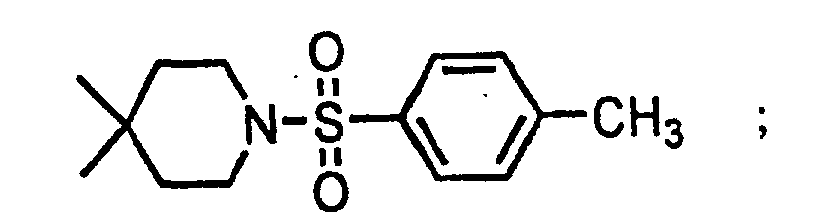
 3) R2 est choisi parmi les groupes alkyle en C1-8, alcényle en C2-8, alcynyle en C2-8,
 où R8 et R9 peuvent représenter chacun, indépendamment, un atome d'hydrogène ou un groupe alkyle en C1-4, cycloalkyle en C3-6, hétéroaryle, hétéroaryl-alkyle, hétérocycloalkyle, aryle ou aralkyle, chacun de ces groupes alkyle, cycloalkyle, hétéroaryle, hétéroaryl-alkyle, hétérocycloalkyle, aryle et aralkyle pouvant éventuellement porter 1 à 3 substituants choisis parmi les suivants : alcoxy en C1-4, aryle substitué ou non, aralkyle, hétéroaryle substitué ou non, hétéroaryl-alkyle, hétérocycloalkyle substitué ou non, halogéno, hydroxy, -C(O)R13, NR14R15, -CONR8R9, -N(R8)COR13, cyano, cycloalkyle en C3-6, -S(O)qR13 où q vaut 0, 1 ou 2, et alcoxy-alcoxy en C3-10, R13 étant choisi parmi les groupes alkyle en C1-4, aryle et aralkyle, tels que définis plus loin, et R14 et R15 étant choisis indépendamment parmi les atomes d'hydrogène et les groupes alkyle en C1-4 et aralkyle ;(a) les groupes aryle, aralkyle, hétéroaryle, hétéroaryl-alkyle et hétérocycloalkyle, chacun de ces groupes aryle, aralkyle, hétéroaryle, hétéroaryl-alkyle et hétérocycloalkyle pouvant éventuellement porter un ou plusieurs des substituarits suivants : alkyle en C1-4, -(CH2)tOR8 où t vaut 0, 1, 2, 3 ou 4, -(CH2)tNR8R9 où t vaut 0, 1, 2, 3 ou 4, et halogéno ;(b) cycloalkyle en C3-6 ; (c) -OR8 ; (d) ,-SR8 ; (e) -S(O)R8 ; (f) -SO2R8; (9) -NR8R9;
 (m) -SO2-NR8R9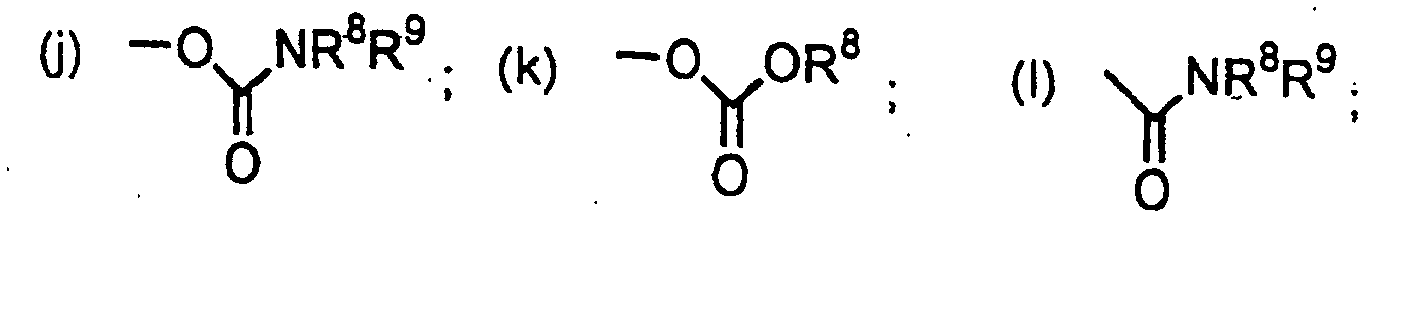

ou bien éventuellement, R8 et R9, s'ils sont liés à un même atome d'azote, peuvent représenter ensemble, conjointement avec cet atome d'azote auquel ils sont liés, un groupe hétérocycloalkyle de 5 à 7 chaínons qui peut éventuellement comporter un ou des chaínons -O-, -NR8- ou -S(O)q- où q vaut 0, 1 ou 2 ;
sous réserve que R8 ne représente pas un atome d'hydrogène dans les substituants (e) et (f), et sous réserve que ou R9 ne représente pas -CH2OH ou -CH2NR14R15 si R8 ou R9 est directement lié à un hétéroatome ;
ou bien éventuellement, R8 et R9, s'ils sont liés à un même atome d'azote, peuvent représenter ensemble, conjointement avec cet atome d'azote auquel ils sont liés, un groupe hétérocycloalkyle de 5 à 7 chaínons qui peut éventuellement comporter un ou des chaínons -O-, -NR8- ou -S(O)q- où q vaut 0, 1 ou 2 ;
sous réserve que, si X1 représente N, alors R1 ne représente paset où, sauf indication contraire,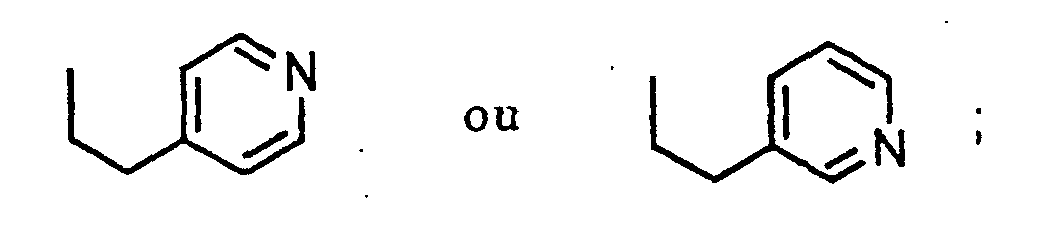 le terme "groupe alkyle" (y compris les fragments alkyle des groupes alcoxy, alkylamino et dialkylamino) désigne des chaínes d'atomes de carbone, linéaires ou ramifiées, ne portant aucun substituant et comportant de 1 à 20 atomes de carbone et de préférence de 1 à 6 atomes de carbone ;le terme "groupe alkyle substitué" désigne des groupes alkyle, tels que définis ci-dessus, qui portent indépendamment 1, 2 ou 3 substituants parmi les suivants : hydroxy, alcoxy, halogéno (par exemple -CF3), amino, alkylamino, dialkylamino, N-acylalkylamino, N-alkylamino, N-alkyl-N-acylamino, et -S(O)m-alkyle où m vaut 1 ou 2 et "alkyle" a la signification indiquée ci-dessus ;le terme "groupe aralkyle" désigne un groupe alkyle, substitué ou non, tel que défini ci-dessus, dont un ou plusieurs atomes d'hydrogène sont remplacés par un ou plusieurs groupes aryle, tels que définis ci-dessous ;le terme "groupe aryle" (y compris les fragments aryle des groupes aryloxy et aralkyle) désigne un groupe carbocyclique comportant de 6 à 15 atomes de carbone et au moins un cycle aromatique, tous les atomes 'de carbone du groupe carbocyclique qui sont disponibles et en état de porter un substituant constituant des points d'attache possibles ;le terme "groupe aryle substitué" désigne des groupes aryle, tels que définis ci-dessus, dont le carbocycle porte indépendamment 1, 2, 3 substituants ou plus parmi les suivants : halogéno, alkyle en C1-6, alcoxy en C1-6, amino, alkylamino, dialkylamino, aryle, aralcoxy, aryloxy, où "aryle" et "alkyle" ont les significations indiquées plus haut, nitro, -S(O)m-aryle où m vaut 1 ou 2 et "aryle" a la signification indiquée plus haut, acyle, -COOR16 où R16 représente un atome d'hydrogène ou un groupe alkyle, aryle ou aralkyle tel que défini plus haut, ou alkyle en C1-6 substitué, où le groupe alkyle porte 1, 2 ou 3 des substituants suivants : amino, alkylamino, dialkylamino, aryle, N-acylalkylamino, N-alkyl-N-acylamino, N-aralkyl-N-acylamino, hydroxy, alcoxy, halogéno ou hétérocycloalkyle tel que défini ici, sous réserve que, si le groupe alkyle en C1-6 substitué porte deux substituants ou plus parmi hydroxy, amino, alkylamino et dialkylamino, ces substituants se trouvent sur des atomes de carbone différents, ou autrement, ledit groupe aryle peut être condensé, par l'intermédiaire d'atomes adjacents, pour former un cycle condensé comportant jusqu'à quatre atomes de carbone et/ou hétéroatomes ;le terme "groupe hétéroaryle" désigne des groupes cycliques comportant 1, 2 ou 3 hétéroatomes choisis parmi O, S et N, ce ou ces hétéroatomes étant insérés dans une structure carbocyclique et apportant des électrons pi délocalisés en nombre suffisant pour conférer le caractère aromatique, et les groupes hétérocycliques aromatiques comportant de 2 à 14 atomes de carbone, tous les atomes de carbone et hétéroatomes du groupe cyclique qui sont disponibles et en état de porter un substituant constituant des points d'attache possibles ;le terme "groupe hétéroaryle substitué" désigne des groupes hétéroaryle, tels que définis ci-dessus, dont le cycle porte indépendamment 1, 2, 3 substituants ou plus parmi les suivants : halogéno, alkyle, aryle, aralkyle, hétéroaryle, hydroxy, alcoxy, phénoxy, nitro, trifluorométhyle, amino, alkylamino, dialkylamino, et -COOR16 où R16 représente un atome d'hydrogène ou un groupe alkyle, aryle ou aralkyle tel que défini plus haut ;le terme "groupe hétérocycloalkyle" désigne un carbocycle monocyclique, bicyclique ou tricyclique, saturé, ramifié ou non ramifié, comportant de 3 à 15 atomes de carbone dans chaque cycle, et de préférence de 4 à 6 atomes de carbone, au moins l'un des cycles de ce carbocycle comportant 1 à 3 hétéroatomes insérés dedans, choisis parmi -O-, -S- et -N-,et le terme "groupe hétérocycloalkyle substitué" désigne des groupes hétérocycloalkyle, tels que définis ci-dessus, qui portent, sur n'importe lesquels des atomes de carbone et d'azote disponibles et en état de porter un substituant, indépendamment 1, 2, 3 substituants ou plus parmi les suivants : alkyle en C1-6, aryle, aralkyle, halogénoalkyle, amino, alkylamino, dialkylamino, et -S(O)m-(aryle substitué ou non) où m vaut 1 ou 2 et les termes "aryle" et "aryle substitué" ont les significations indiquées plus haut.
 - Composé conforme à la revendication 1, dans lequel X1 représente N.
- Composé conforme à la revendication 1 ou 2, dans lequel R2 représenteoù z vaut 0 ou 1, R8 représente un atome d'hydrogène et R9 représente un groupe alkyle, cycloalkyle, aralkyle, hétérocycloalkyle ou alkyle substitué.

- Composition pharmaceutique destinée à inhiber la prolifération anormale de cellules, qui contient, en une quantité suffisante pour qu'il soit efficace, un composé conforme à l'une des revendications 1 à 3, combiné avec un véhicule pharmacologiquement admissible.
- Emploi d'un composé conforme à l'une des revendications 1 à 3 pour la fabrication d'un médicament destiné à inhiber la prolifération anormale de cellules par administration d'un tel composé en une quantité suffisante pour qu'il soit efficace.
- Emploi conforme à la revendication 5, les cellules inhibées étant des cellules tumorales qui expriment un oncogène ras activé.
- Emploi conforme à la revendication 6, les cellules inhibées étant des cellules de tumeur du pancréas, des cellules de cancer du poumon, des cellules tumorales de leucémie myéloïde, des cellules de tumeur de vésicule thyroïdiennes, des cellules de tumeurs myélodysplasiques, des cellules tumorales d'épithéliome épidermoïde, des cellules tumorales de cancer de la vessie, ou des cellules de tumeur du côlon.
- Emploi conforme à la revendication 5, l'inhibition de la prolifération anormale de cellules intervenant grâce à l'inhibition de la farnésyl-protéine Ras transférase.
- Emploi conforme à la revendication 5, l'inhibition concernant des cellules tumorales dans lesquelles la protéine Ras est activée en résultat d'une mutation tumorigène dans des gènes autres que le gène ras.
Applications Claiming Priority (3)
| Application Number | Priority Date | Filing Date | Title |
|---|---|---|---|
| US41831995A | 1995-04-07 | 1995-04-07 | |
| US418319 | 1995-04-07 | ||
| PCT/US1996/004169 WO1996031501A1 (fr) | 1995-04-07 | 1996-04-03 | Composes de piperazinyle et de piperidinyle carbonyles inhibant la transferase de proteine farnesyle |
Publications (2)
| Publication Number | Publication Date |
|---|---|
| EP0820452A1 EP0820452A1 (fr) | 1998-01-28 |
| EP0820452B1 true EP0820452B1 (fr) | 2003-06-04 |
Family
ID=23657621
Family Applications (1)
| Application Number | Title | Priority Date | Filing Date |
|---|---|---|---|
| EP96911440A Expired - Lifetime EP0820452B1 (fr) | 1995-04-07 | 1996-04-03 | Composes de piperazinyle et de piperidinyle carbonyles inhibant la transferase de proteine farnesyle |
Country Status (11)
| Country | Link |
|---|---|
| EP (1) | EP0820452B1 (fr) |
| JP (1) | JP3038016B2 (fr) |
| AT (1) | ATE242231T1 (fr) |
| AU (1) | AU5432696A (fr) |
| CA (1) | CA2217351C (fr) |
| DE (1) | DE69628559T2 (fr) |
| ES (1) | ES2194986T3 (fr) |
| IL (1) | IL117805A0 (fr) |
| MX (1) | MX9707561A (fr) |
| WO (1) | WO1996031501A1 (fr) |
| ZA (1) | ZA962694B (fr) |
Families Citing this family (91)
| Publication number | Priority date | Publication date | Assignee | Title |
|---|---|---|---|---|
| US5965578A (en) * | 1996-04-03 | 1999-10-12 | Merck & Co., Inc. | Inhibitors of farnesyl-protein transferase |
| US5891889A (en) * | 1996-04-03 | 1999-04-06 | Merck & Co., Inc. | Inhibitors of farnesyl-protein transferase |
| US6001835A (en) * | 1996-04-03 | 1999-12-14 | Merck & Co., Inc. | Inhibitors of farnesyl-protein transferase |
| US5885995A (en) * | 1996-04-03 | 1999-03-23 | Merck & Co., Inc. | Inhibitors of farnesyl-protein transferase |
| WO1997036592A1 (fr) * | 1996-04-03 | 1997-10-09 | Merck & Co., Inc. | Inhibiteurs de farnesyle-proteine transferase |
| US5972942A (en) * | 1997-03-27 | 1999-10-26 | Merck & Co., Inc. | Inhibitors of farnesyl-protein transferase |
| US6127390A (en) * | 1997-10-02 | 2000-10-03 | Merck & Co., Inc. | Inhibitors of prenyl-protein transferase |
| AUPP818099A0 (en) * | 1999-01-14 | 1999-02-11 | Fujisawa Pharmaceutical Co., Ltd. | New n-containing heterocyclic compounds |
| AU760434B2 (en) * | 1999-01-14 | 2003-05-15 | Astellas Pharma Inc. | Amide compounds |
| US6335343B1 (en) | 1999-03-03 | 2002-01-01 | Merck & Co., Inc. | Inhibitors of prenyl-protein transferase |
| US6358956B1 (en) | 1999-03-03 | 2002-03-19 | Merck & Co., Inc. | Inhibitors of prenyl-protein transferase |
| EP1158983A4 (fr) | 1999-03-03 | 2003-05-21 | Merck & Co Inc | Inhibiteurs de prenyl-proteine transferases |
| CA2363169A1 (fr) | 1999-03-03 | 2000-09-08 | Merck & Co., Inc. | Inhibiteurs de la prenyle-proteine transferase |
| TWI288745B (en) | 2000-04-05 | 2007-10-21 | Daiichi Seiyaku Co | Ethylenediamine derivatives |
| FR2815032B1 (fr) * | 2000-10-10 | 2003-08-08 | Pf Medicament | Nouveaux derives d'aminophenyle piperazine ou d'amino phenyle piperide inhibiteurs de proteines prenyl transferase ainsi que leurs preparations |
| WO2003000657A1 (fr) | 2001-06-20 | 2003-01-03 | Daiichi Pharmaceutical Co., Ltd. | Derives de diamine |
| GB0119797D0 (en) | 2001-08-14 | 2001-10-03 | Glaxo Group Ltd | Chemical compounds |
| ES2347643T3 (es) * | 2001-10-17 | 2010-11-03 | Schering Corporation | Piperin- y piperazinacetamidas como inhibidores de 17beta hidroxiesteroide deshidrogenasa tipo 3 para el tratamiento de enfermedades dependientes de androgenos. |
| PE20050226A1 (es) * | 2003-06-04 | 2005-05-18 | Aventis Pharma Sa | Productos aril-heteroaromaticos y composiciones que los contienen |
| FR2855825B1 (fr) * | 2003-06-04 | 2008-08-22 | Aventis Pharma Sa | Produits aryl-heteroaromatiques, compositions les contenant et utilisation |
| GB0419072D0 (en) | 2004-08-26 | 2004-09-29 | Kudos Pharm Ltd | Phthalazinone derivatives |
| ATE550019T1 (de) | 2005-05-17 | 2012-04-15 | Merck Sharp & Dohme | Cis-4-ä(4-chlorophenyl)sulfonylü-4-(2,5- difluorophenyl)cyclohexanepropansäure zur behandlug von krebs |
| PE20070335A1 (es) | 2005-08-30 | 2007-04-21 | Novartis Ag | Benzimidazoles sustituidos y metodos para su preparacion |
| GB0603041D0 (en) | 2006-02-15 | 2006-03-29 | Angeletti P Ist Richerche Bio | Therapeutic compounds |
| KR101464385B1 (ko) | 2006-04-19 | 2014-11-21 | 노파르티스 아게 | 6-o-치환된 벤즈옥사졸 및 벤조티아졸 화합물, 및 csf-1r 신호전달의 억제 방법 |
| US7943622B2 (en) | 2006-06-06 | 2011-05-17 | Cornerstone Therapeutics, Inc. | Piperazines, pharmaceutical compositions and methods of use thereof |
| ES2498043T3 (es) * | 2006-06-06 | 2014-09-24 | Cornerstone Therapeutics Inc. | Piperazinas novedosas, composiciones farmacéuticas y métodos de uso de las mismas |
| AU2007300627B2 (en) | 2006-09-22 | 2012-02-16 | Merck Sharp & Dohme Corp. | Method of treatment using fatty acid synthesis inhibitors |
| UY30639A1 (es) * | 2006-10-17 | 2008-05-31 | Kudos Pharm Ltd | Derivados sustituidos de 2h-ftalazin-1-ona, sus formas cristalinas, proceso de preparacion y aplicaciones |
| US20110218176A1 (en) | 2006-11-01 | 2011-09-08 | Barbara Brooke Jennings-Spring | Compounds, methods, and treatments for abnormal signaling pathways for prenatal and postnatal development |
| BRPI0806245B1 (pt) | 2007-01-10 | 2022-01-25 | Msd Italia S.R.L. | Compostos de fórmula i e seus usos |
| CN101679266B (zh) | 2007-03-01 | 2015-05-06 | 诺华股份有限公司 | Pim激酶抑制剂及其应用方法 |
| AU2008254425A1 (en) | 2007-05-21 | 2008-11-27 | Novartis Ag | CSF-1R inhibitors, compositions, and methods of use |
| WO2009002495A1 (fr) | 2007-06-27 | 2008-12-31 | Merck & Co., Inc. | Dérivés de 4-carboxybenzylamino utilisés en tant qu'inhibiteurs de l'histone désacétylase |
| GB0813142D0 (en) | 2008-07-17 | 2008-08-27 | Glaxo Group Ltd | Novel compounds |
| GB0813144D0 (en) | 2008-07-17 | 2008-08-27 | Glaxo Group Ltd | Novel compounds |
| EP2346495B2 (fr) | 2008-10-07 | 2023-05-24 | Kudos Pharmaceuticals Limited | Formulation pharmaceutique 514 |
| EP2413932A4 (fr) | 2009-04-01 | 2012-09-19 | Merck Sharp & Dohme | Inhibiteurs de l'activité akt |
| US8765747B2 (en) | 2009-06-12 | 2014-07-01 | Dana-Farber Cancer Institute, Inc. | Fused 2-aminothiazole compounds |
| AR077428A1 (es) * | 2009-07-29 | 2011-08-24 | Sanofi Aventis | (aza) indolizinacarboxamidas ciclicas su preparacion y su uso como agentes farmaceuticos |
| CA2777043C (fr) | 2009-10-14 | 2015-12-15 | Schering Corporation | Piperidines substituees qui accroissent l'activite de p53, et utilisations de ces composes |
| EP2937345B1 (fr) | 2009-12-29 | 2018-03-21 | Dana-Farber Cancer Institute, Inc. | Inhibiteurs de la kinase raf de type ii |
| GB201000685D0 (en) | 2010-01-15 | 2010-03-03 | Glaxo Group Ltd | Novel compounds |
| BR112012023021A2 (pt) | 2010-03-16 | 2016-05-31 | Dana Farber Cancer Inst Inc | compostos de indazol e seus usos |
| EP2584903B1 (fr) | 2010-06-24 | 2018-10-24 | Merck Sharp & Dohme Corp. | Nouveaux composés hétérocycliques utilisés comme inhibiteurs de erk |
| CN103068980B (zh) | 2010-08-02 | 2017-04-05 | 瑟纳治疗公司 | 使用短干扰核酸(siNA)的RNA干扰介导的联蛋白(钙粘蛋白关联蛋白质),β1(CTNNB1)基因表达的抑制 |
| RU2745848C2 (ru) | 2010-08-17 | 2021-04-01 | Сирна Терапьютикс, Инк. | ОПОСРЕДУЕМОЕ РНК-ИНТЕРФЕРЕНЦИЕЙ ИНГИБИРОВАНИЕ ЭКСПРЕССИИ ГЕНОВ ВИРУСА ГЕПАТИТА B (HBV) С ПРИМЕНЕНИЕМ МАЛОЙ ИНТЕРФЕРИРУЮЩЕЙ НУКЛЕИНОВОЙ КИСЛОТЫ (миНК) |
| US8883801B2 (en) | 2010-08-23 | 2014-11-11 | Merck Sharp & Dohme Corp. | Substituted pyrazolo[1,5-a]pyrimidines as mTOR inhibitors |
| EP2613782B1 (fr) | 2010-09-01 | 2016-11-02 | Merck Sharp & Dohme Corp. | Dérivés d'indazole utilisables en tant qu'inhibiteurs de la voie erk |
| US9242981B2 (en) | 2010-09-16 | 2016-01-26 | Merck Sharp & Dohme Corp. | Fused pyrazole derivatives as novel ERK inhibitors |
| WO2012058210A1 (fr) | 2010-10-29 | 2012-05-03 | Merck Sharp & Dohme Corp. | INHIBITION FACILITÉE PAR L'INTERFÉRENCE D'ARN DE L'EXPRESSION D'UN GÈNE AU MOYEN D'ACIDES NUCLÉIQUES INTERFÉRENTS COURTS (siNA) |
| WO2012087772A1 (fr) | 2010-12-21 | 2012-06-28 | Schering Corporation | Dérivés d'indazole utiles en tant qu'inhibiteurs de erk |
| WO2012143879A1 (fr) | 2011-04-21 | 2012-10-26 | Piramal Healthcare Limited | Forme cristalline d'un sel d'un dérivé de morpholinosulfonylindole et son procédé de préparation |
| EP2770987B1 (fr) | 2011-10-27 | 2018-04-04 | Merck Sharp & Dohme Corp. | Nouveaux composés qui sont des inhibiteurs d'erk |
| JP6106685B2 (ja) | 2011-11-17 | 2017-04-05 | ダナ−ファーバー キャンサー インスティテュート, インコーポレイテッド | C−jun−n−末端キナーゼ(jnk)の阻害剤 |
| EP3919620A1 (fr) | 2012-05-02 | 2021-12-08 | Sirna Therapeutics, Inc. | Compositions d'acide nucléique interférent court (sina) |
| CA2882950A1 (fr) | 2012-09-28 | 2014-04-03 | Merck Sharp & Dohme Corp. | Nouveaux composes inhibiteurs de erk |
| EP2909194A1 (fr) | 2012-10-18 | 2015-08-26 | Dana-Farber Cancer Institute, Inc. | Inhibiteurs de cycline-dépendante kinase 7 (cdk7) |
| US10000483B2 (en) | 2012-10-19 | 2018-06-19 | Dana-Farber Cancer Institute, Inc. | Bone marrow on X chromosome kinase (BMX) inhibitors and uses thereof |
| USRE48175E1 (en) | 2012-10-19 | 2020-08-25 | Dana-Farber Cancer Institute, Inc. | Hydrophobically tagged small molecules as inducers of protein degradation |
| SMT201700595T1 (it) | 2012-11-28 | 2018-03-08 | Merck Sharp & Dohme | Composizioni e metodi per trattare il cancro |
| WO2014100065A1 (fr) | 2012-12-20 | 2014-06-26 | Merck Sharp & Dohme Corp. | Imidazopyridines substituées en tant qu'inhibiteurs de hdm2 |
| WO2014120748A1 (fr) | 2013-01-30 | 2014-08-07 | Merck Sharp & Dohme Corp. | Purines 2,6,7,8-substituées utilisées en tant qu'inhibiteurs de hdm2 |
| WO2015034925A1 (fr) | 2013-09-03 | 2015-03-12 | Moderna Therapeutics, Inc. | Polynucléotides circulaires |
| AU2014337044A1 (en) | 2013-10-18 | 2016-05-05 | Dana-Farber Cancer Institute, Inc. | Polycyclic inhibitors of cyclin-dependent kinase 7 (CDK7) |
| WO2015058126A1 (fr) | 2013-10-18 | 2015-04-23 | Syros Pharmaceuticals, Inc. | Composés hétéroaromatiques utiles dans le traitement de maladies prolifératives |
| US9862688B2 (en) | 2014-04-23 | 2018-01-09 | Dana-Farber Cancer Institute, Inc. | Hydrophobically tagged janus kinase inhibitors and uses thereof |
| WO2015164614A1 (fr) | 2014-04-23 | 2015-10-29 | Dana-Farber Cancer Institute, Inc. | Inhibiteurs de janus kinase et leurs utilisations |
| JO3589B1 (ar) | 2014-08-06 | 2020-07-05 | Novartis Ag | مثبطات كيناز البروتين c وطرق استخداماتها |
| US10870651B2 (en) | 2014-12-23 | 2020-12-22 | Dana-Farber Cancer Institute, Inc. | Inhibitors of cyclin-dependent kinase 7 (CDK7) |
| CN107427521B (zh) | 2015-03-27 | 2021-08-03 | 达纳-法伯癌症研究所股份有限公司 | 细胞周期蛋白依赖性激酶的抑制剂 |
| CA2986441A1 (fr) | 2015-06-12 | 2016-12-15 | Dana-Farber Cancer Institute, Inc. | Therapie d'association utilisant des inhibiteurs de transcription et des inhibiteurs de kinases |
| WO2017044858A2 (fr) | 2015-09-09 | 2017-03-16 | Dana-Farber Cancer Institute, Inc. | Inhibiteurs de kinases cycline-dépendantes |
| EP3371151A4 (fr) * | 2015-10-09 | 2019-03-27 | Agency For Science, Technology And Research | Composés destinés au traitement du cancer et épigénétique |
| JOP20190055A1 (ar) | 2016-09-26 | 2019-03-24 | Merck Sharp & Dohme | أجسام مضادة ضد cd27 |
| US10975084B2 (en) | 2016-10-12 | 2021-04-13 | Merck Sharp & Dohme Corp. | KDM5 inhibitors |
| JP7160833B2 (ja) | 2017-04-13 | 2022-10-25 | サイロパ ビー.ブイ. | 抗sirpアルファ抗体 |
| EP3706742B1 (fr) | 2017-11-08 | 2023-03-15 | Merck Sharp & Dohme LLC | Inhibiteurs de prmt5 |
| WO2019094312A1 (fr) | 2017-11-08 | 2019-05-16 | Merck Sharp & Dohme Corp. | Inhibiteurs de prmt5 |
| WO2019148412A1 (fr) | 2018-02-01 | 2019-08-08 | Merck Sharp & Dohme Corp. | Anticorps bispécifiques anti-pd-1/lag3 |
| EP3810132A4 (fr) | 2018-06-25 | 2022-06-22 | Dana-Farber Cancer Institute, Inc. | Inhibiteurs de kinase de la famille taire et utilisations correspondantes |
| EP3833667B1 (fr) | 2018-08-07 | 2024-03-13 | Merck Sharp & Dohme LLC | Inhibiteurs de prmt5 |
| CA3108388A1 (fr) | 2018-08-07 | 2020-02-13 | Merck Sharp & Dohme Corp. | Inhibiteurs de prmt5 |
| WO2020033285A1 (fr) | 2018-08-07 | 2020-02-13 | Merck Sharp & Dohme Corp. | Inhibiteurs de prmt5 |
| WO2020033282A1 (fr) | 2018-08-07 | 2020-02-13 | Merck Sharp & Dohme Corp. | Inhibiteurs de prmt5 |
| CN113164477A (zh) | 2018-12-14 | 2021-07-23 | 达纳-法伯癌症研究所股份有限公司 | C-jun-n-末端激酶的吡唑并吡啶抑制剂及其用途 |
| EP3902542A4 (fr) | 2018-12-28 | 2022-09-07 | Dana-Farber Cancer Institute, Inc. | Inhibiteurs de la kinase dépendante des cyclines 7 et leurs utilisations |
| ES3022307T3 (en) | 2019-12-17 | 2025-05-28 | Merck Sharp & Dohme Llc | Prmt5 inhibitors |
| EP4076460B1 (fr) | 2019-12-17 | 2026-01-21 | Merck Sharp & Dohme LLC | Dérivés de 1,4-dihydro-2h-spiro[isoquinoline-3,4'-piperidine] en tant qu'inhibiteurs de prmt5 pour le traitement du cancer |
| WO2024180169A1 (fr) | 2023-03-02 | 2024-09-06 | Carcimun Biotech Gmbh | Moyens et procédés de diagnostic du cancer et/ou d'une maladie inflammatoire aiguë |
| DE212025000115U1 (de) | 2024-07-30 | 2026-06-18 | Sairopa B.V. | Anti-SIRP Alpha-Antikörperformulierungen und ihre Verwendung |
Family Cites Families (3)
| Publication number | Priority date | Publication date | Assignee | Title |
|---|---|---|---|---|
| CA2165176A1 (fr) * | 1993-06-18 | 1995-01-05 | Samuel L. Graham | Inhibiteurs de la farnesyl-proteine transferase |
| US5576313A (en) * | 1994-08-29 | 1996-11-19 | Merck & Co., Inc. | Inhibitors of farnesyl-protein transferase |
| US5661161A (en) * | 1994-09-29 | 1997-08-26 | Merck & Co., Inc. | Inhibitors of farnesyl-protein transferase |
-
1996
- 1996-04-03 EP EP96911440A patent/EP0820452B1/fr not_active Expired - Lifetime
- 1996-04-03 CA CA002217351A patent/CA2217351C/fr not_active Expired - Fee Related
- 1996-04-03 JP JP08530361A patent/JP3038016B2/ja not_active Expired - Fee Related
- 1996-04-03 ZA ZA962694A patent/ZA962694B/xx unknown
- 1996-04-03 ES ES96911440T patent/ES2194986T3/es not_active Expired - Lifetime
- 1996-04-03 AT AT96911440T patent/ATE242231T1/de not_active IP Right Cessation
- 1996-04-03 MX MX9707561A patent/MX9707561A/es not_active Application Discontinuation
- 1996-04-03 IL IL11780596A patent/IL117805A0/xx unknown
- 1996-04-03 WO PCT/US1996/004169 patent/WO1996031501A1/fr not_active Ceased
- 1996-04-03 AU AU54326/96A patent/AU5432696A/en not_active Abandoned
- 1996-04-03 DE DE69628559T patent/DE69628559T2/de not_active Expired - Fee Related
Also Published As
| Publication number | Publication date |
|---|---|
| DE69628559T2 (de) | 2004-04-29 |
| EP0820452A1 (fr) | 1998-01-28 |
| DE69628559D1 (en) | 2003-07-10 |
| AU5432696A (en) | 1996-10-23 |
| ZA962694B (en) | 1996-10-03 |
| JPH10511979A (ja) | 1998-11-17 |
| WO1996031501A1 (fr) | 1996-10-10 |
| ES2194986T3 (es) | 2003-12-01 |
| ATE242231T1 (de) | 2003-06-15 |
| IL117805A0 (en) | 1996-08-04 |
| MX9707561A (es) | 1997-12-31 |
| JP3038016B2 (ja) | 2000-05-08 |
| CA2217351A1 (fr) | 1996-10-10 |
| CA2217351C (fr) | 2003-03-18 |
Similar Documents
| Publication | Publication Date | Title |
|---|---|---|
| CA2217351C (fr) | Composes de piperazinyle et de piperidinyle carbonyles inhibant la transferase de proteine farnesyle | |
| US6214827B1 (en) | Tricyclic compounds useful for inhibition of G-protein function and for treatment of proliferative diseases | |
| EP0819121B1 (fr) | Composes tricycliques utiles a l'inhibition de la fonction de la proteine-g et au traitement des maladies proliferatives | |
| JP2999556B2 (ja) | ファルネシルタンパク質トランスフェラーゼの阻害に有用な三環式化合物 | |
| US5880128A (en) | Carbonyl piperazinyl and piperidinyl compounds | |
| US6432959B1 (en) | Inhibitors of farnesyl-protein transferase | |
| US6239140B1 (en) | Compounds useful for inhibition of farnesyl protein transferase | |
| EP0931078B1 (fr) | Nouveaux composes tricycliques de piperidinyle inhibiteurs de la farnesyl-proteine transferase | |
| EP0989983B1 (fr) | Composes a base de cycloheptane benzpyrido servant d'inhibiteurs de farnesyl proteine transferase | |
| WO1996031505A1 (fr) | Composes tricycliques utiles pour l'inhibition de la fonction de la proteine-g et le traitement des maladies proliferatives | |
| EP0934303B1 (fr) | Composes servant a inhiber la farnesyl proteine transferase | |
| US6218401B1 (en) | Phenyl-substituted tricyclic inhibitors of farnesyl-protein transferase | |
| WO1998057947A1 (fr) | Derives tricycliques de ceto-amides s'utilisant comme inhibiteurs de la transferase de proteine de farnesyl | |
| US5965570A (en) | Tricyclic piperidinyl compounds useful as inhibitors of farnesyl-protein transferase | |
| CA2293372C (fr) | Derives de benzo(5,6)cyclohepta(1,2-b)pyridine inhibiteurs de la farnesyl proteine transferase | |
| US6689789B2 (en) | Compounds useful for inhibition of farnesyl protein transferase | |
| CA2293373C (fr) | Derives de benzo(5,6)cyclohepta(1,2b)pyridine s'utilisant comme inhibiteurs de transferase de proteine de farnesyl | |
| ES2205255T3 (es) | Derivados de benzocicloheptapiridina sustituida utiles para inhibir la farnesil-protein-transferasa. | |
| WO1998057964A1 (fr) | Composes tricycliques utilises comme inhibiteurs de la fonction de la proteine et pour le traitement de maladies proliferantes | |
| HK1002865A1 (en) | Tricyclic compounds useful for inhibition of g-protein function and for treatment of proliferative diseases | |
| HK1002865B (en) | Tricyclic compounds useful for inhibition of g-protein function and for treatment of proliferative diseases | |
| HK1028239B (en) | Benzo(5,6)cyclohepta(1,2b)pyridine derivatives useful for inhibition of farnesyl protein transferase | |
| HK1028238B (en) | Benzo(5,6)cyclohepta(1,2b)pyridine derivatives useful for inhibition of farnesyl protein transferase |
Legal Events
| Date | Code | Title | Description |
|---|---|---|---|
| PUAI | Public reference made under article 153(3) epc to a published international application that has entered the european phase |
Free format text: ORIGINAL CODE: 0009012 |
|
| 17P | Request for examination filed |
Effective date: 19971013 |
|
| AK | Designated contracting states |
Kind code of ref document: A1 Designated state(s): AT BE CH DE DK ES FI FR GB GR IE IT LI LU NL PT SE |
|
| AX | Request for extension of the european patent |
Free format text: LT PAYMENT 971013;LV PAYMENT 971013 |
|
| 17Q | First examination report despatched |
Effective date: 19990504 |
|
| GRAG | Despatch of communication of intention to grant |
Free format text: ORIGINAL CODE: EPIDOS AGRA |
|
| GRAG | Despatch of communication of intention to grant |
Free format text: ORIGINAL CODE: EPIDOS AGRA |
|
| GRAH | Despatch of communication of intention to grant a patent |
Free format text: ORIGINAL CODE: EPIDOS IGRA |
|
| GRAH | Despatch of communication of intention to grant a patent |
Free format text: ORIGINAL CODE: EPIDOS IGRA |
|
| GRAA | (expected) grant |
Free format text: ORIGINAL CODE: 0009210 |
|
| AK | Designated contracting states |
Designated state(s): AT BE CH DE DK ES FI FR GB GR IE IT LI LU NL PT SE |
|
| AX | Request for extension of the european patent |
Extension state: LT LV |
|
| PG25 | Lapsed in a contracting state [announced via postgrant information from national office to epo] |
Ref country code: NL Free format text: LAPSE BECAUSE OF FAILURE TO SUBMIT A TRANSLATION OF THE DESCRIPTION OR TO PAY THE FEE WITHIN THE PRESCRIBED TIME-LIMIT Effective date: 20030604 Ref country code: LI Free format text: LAPSE BECAUSE OF FAILURE TO SUBMIT A TRANSLATION OF THE DESCRIPTION OR TO PAY THE FEE WITHIN THE PRESCRIBED TIME-LIMIT Effective date: 20030604 Ref country code: FI Free format text: LAPSE BECAUSE OF FAILURE TO SUBMIT A TRANSLATION OF THE DESCRIPTION OR TO PAY THE FEE WITHIN THE PRESCRIBED TIME-LIMIT Effective date: 20030604 Ref country code: CH Free format text: LAPSE BECAUSE OF FAILURE TO SUBMIT A TRANSLATION OF THE DESCRIPTION OR TO PAY THE FEE WITHIN THE PRESCRIBED TIME-LIMIT Effective date: 20030604 Ref country code: BE Free format text: LAPSE BECAUSE OF FAILURE TO SUBMIT A TRANSLATION OF THE DESCRIPTION OR TO PAY THE FEE WITHIN THE PRESCRIBED TIME-LIMIT Effective date: 20030604 Ref country code: AT Free format text: LAPSE BECAUSE OF FAILURE TO SUBMIT A TRANSLATION OF THE DESCRIPTION OR TO PAY THE FEE WITHIN THE PRESCRIBED TIME-LIMIT Effective date: 20030604 |
|
| REG | Reference to a national code |
Ref country code: GB Ref legal event code: FG4D |
|
| REG | Reference to a national code |
Ref country code: CH Ref legal event code: EP |
|
| REG | Reference to a national code |
Ref country code: IE Ref legal event code: FG4D |
|
| REF | Corresponds to: |
Ref document number: 69628559 Country of ref document: DE Date of ref document: 20030710 Kind code of ref document: P |
|
| PG25 | Lapsed in a contracting state [announced via postgrant information from national office to epo] |
Ref country code: SE Free format text: LAPSE BECAUSE OF FAILURE TO SUBMIT A TRANSLATION OF THE DESCRIPTION OR TO PAY THE FEE WITHIN THE PRESCRIBED TIME-LIMIT Effective date: 20030904 Ref country code: PT Free format text: LAPSE BECAUSE OF FAILURE TO SUBMIT A TRANSLATION OF THE DESCRIPTION OR TO PAY THE FEE WITHIN THE PRESCRIBED TIME-LIMIT Effective date: 20030904 Ref country code: GR Free format text: LAPSE BECAUSE OF FAILURE TO SUBMIT A TRANSLATION OF THE DESCRIPTION OR TO PAY THE FEE WITHIN THE PRESCRIBED TIME-LIMIT Effective date: 20030904 Ref country code: DK Free format text: LAPSE BECAUSE OF FAILURE TO SUBMIT A TRANSLATION OF THE DESCRIPTION OR TO PAY THE FEE WITHIN THE PRESCRIBED TIME-LIMIT Effective date: 20030904 |
|
| NLV1 | Nl: lapsed or annulled due to failure to fulfill the requirements of art. 29p and 29m of the patents act | ||
| LTIE | Lt: invalidation of european patent or patent extension |
Effective date: 20030604 |
|
| REG | Reference to a national code |
Ref country code: CH Ref legal event code: PL |
|
| PG25 | Lapsed in a contracting state [announced via postgrant information from national office to epo] |
Ref country code: LU Free format text: LAPSE BECAUSE OF NON-PAYMENT OF DUE FEES Effective date: 20040403 |
|
| PG25 | Lapsed in a contracting state [announced via postgrant information from national office to epo] |
Ref country code: IE Free format text: LAPSE BECAUSE OF NON-PAYMENT OF DUE FEES Effective date: 20040405 |
|
| ET | Fr: translation filed | ||
| PLBE | No opposition filed within time limit |
Free format text: ORIGINAL CODE: 0009261 |
|
| STAA | Information on the status of an ep patent application or granted ep patent |
Free format text: STATUS: NO OPPOSITION FILED WITHIN TIME LIMIT |
|
| 26N | No opposition filed |
Effective date: 20040305 |
|
| REG | Reference to a national code |
Ref country code: GB Ref legal event code: 732E |
|
| REG | Reference to a national code |
Ref country code: IE Ref legal event code: MM4A |
|
| REG | Reference to a national code |
Ref country code: ES Ref legal event code: PC2A |
|
| REG | Reference to a national code |
Ref country code: FR Ref legal event code: TQ |
|
| REG | Reference to a national code |
Ref country code: HK Ref legal event code: WD Ref document number: 1008526 Country of ref document: HK |
|
| PGFP | Annual fee paid to national office [announced via postgrant information from national office to epo] |
Ref country code: FR Payment date: 20060403 Year of fee payment: 11 |
|
| PGFP | Annual fee paid to national office [announced via postgrant information from national office to epo] |
Ref country code: ES Payment date: 20060424 Year of fee payment: 11 |
|
| PGFP | Annual fee paid to national office [announced via postgrant information from national office to epo] |
Ref country code: DE Payment date: 20060428 Year of fee payment: 11 |
|
| PGFP | Annual fee paid to national office [announced via postgrant information from national office to epo] |
Ref country code: IT Payment date: 20060430 Year of fee payment: 11 |
|
| GBPC | Gb: european patent ceased through non-payment of renewal fee |
Effective date: 20070403 |
|
| PG25 | Lapsed in a contracting state [announced via postgrant information from national office to epo] |
Ref country code: DE Free format text: LAPSE BECAUSE OF NON-PAYMENT OF DUE FEES Effective date: 20071101 |
|
| PG25 | Lapsed in a contracting state [announced via postgrant information from national office to epo] |
Ref country code: GB Free format text: LAPSE BECAUSE OF NON-PAYMENT OF DUE FEES Effective date: 20070403 |
|
| REG | Reference to a national code |
Ref country code: ES Ref legal event code: FD2A Effective date: 20070404 |
|
| PG25 | Lapsed in a contracting state [announced via postgrant information from national office to epo] |
Ref country code: FR Free format text: LAPSE BECAUSE OF NON-PAYMENT OF DUE FEES Effective date: 20070430 |
|
| PG25 | Lapsed in a contracting state [announced via postgrant information from national office to epo] |
Ref country code: ES Free format text: LAPSE BECAUSE OF NON-PAYMENT OF DUE FEES Effective date: 20070404 |
|
| PGFP | Annual fee paid to national office [announced via postgrant information from national office to epo] |
Ref country code: GB Payment date: 20060314 Year of fee payment: 11 |
|
| PG25 | Lapsed in a contracting state [announced via postgrant information from national office to epo] |
Ref country code: IT Free format text: LAPSE BECAUSE OF NON-PAYMENT OF DUE FEES Effective date: 20070403 |