EP0820496B1 - Des produits dépolymérisés et des utilisations de ceux-ci - Google Patents
Des produits dépolymérisés et des utilisations de ceux-ci Download PDFInfo
- Publication number
- EP0820496B1 EP0820496B1 EP96913772A EP96913772A EP0820496B1 EP 0820496 B1 EP0820496 B1 EP 0820496B1 EP 96913772 A EP96913772 A EP 96913772A EP 96913772 A EP96913772 A EP 96913772A EP 0820496 B1 EP0820496 B1 EP 0820496B1
- Authority
- EP
- European Patent Office
- Prior art keywords
- substance
- depolymerization
- polystyrene
- temperature
- utilisation
- Prior art date
- Legal status (The legal status is an assumption and is not a legal conclusion. Google has not performed a legal analysis and makes no representation as to the accuracy of the status listed.)
- Expired - Lifetime
Links
Images


Classifications
-
- G—PHYSICS
- G21—NUCLEAR PHYSICS; NUCLEAR ENGINEERING
- G21D—NUCLEAR POWER PLANT
- G21D5/00—Arrangements of reactor and engine in which reactor-produced heat is converted into mechanical energy
- G21D5/04—Reactor and engine not structurally combined
- G21D5/08—Reactor and engine not structurally combined with engine working medium heated in a heat exchanger by the reactor coolant
-
- C—CHEMISTRY; METALLURGY
- C07—ORGANIC CHEMISTRY
- C07C—ACYCLIC OR CARBOCYCLIC COMPOUNDS
- C07C4/00—Preparation of hydrocarbons from hydrocarbons containing a larger number of carbon atoms
- C07C4/22—Preparation of hydrocarbons from hydrocarbons containing a larger number of carbon atoms by depolymerisation to the original monomer, e.g. dicyclopentadiene to cyclopentadiene
-
- C—CHEMISTRY; METALLURGY
- C09—DYES; PAINTS; POLISHES; NATURAL RESINS; ADHESIVES; COMPOSITIONS NOT OTHERWISE PROVIDED FOR; APPLICATIONS OF MATERIALS NOT OTHERWISE PROVIDED FOR
- C09K—MATERIALS FOR MISCELLANEOUS APPLICATIONS, NOT PROVIDED FOR ELSEWHERE
- C09K5/00—Heat-transfer, heat-exchange or heat-storage materials, e.g. refrigerants; Materials for the production of heat or cold by chemical reactions other than by combustion
- C09K5/08—Materials not undergoing a change of physical state when used
- C09K5/10—Liquid materials
-
- C—CHEMISTRY; METALLURGY
- C10—PETROLEUM, GAS OR COKE INDUSTRIES; TECHNICAL GASES CONTAINING CARBON MONOXIDE; FUELS; LUBRICANTS; PEAT
- C10G—CRACKING HYDROCARBON OILS; PRODUCTION OF LIQUID HYDROCARBON MIXTURES, e.g. BY DESTRUCTIVE HYDROGENATION, OLIGOMERISATION, POLYMERISATION; RECOVERY OF HYDROCARBON OILS FROM OIL-SHALE, OIL-SAND, OR GASES; REFINING MIXTURES MAINLY CONSISTING OF HYDROCARBONS; REFORMING OF NAPHTHA; MINERAL WAXES
- C10G1/00—Production of liquid hydrocarbon mixtures from oil-shale, oil-sand, or non-melting solid carbonaceous or similar materials, e.g. wood, coal
- C10G1/10—Production of liquid hydrocarbon mixtures from oil-shale, oil-sand, or non-melting solid carbonaceous or similar materials, e.g. wood, coal from rubber or rubber waste
-
- C—CHEMISTRY; METALLURGY
- C10—PETROLEUM, GAS OR COKE INDUSTRIES; TECHNICAL GASES CONTAINING CARBON MONOXIDE; FUELS; LUBRICANTS; PEAT
- C10L—FUELS NOT OTHERWISE PROVIDED FOR; NATURAL GAS; SYNTHETIC NATURAL GAS OBTAINED BY PROCESSES NOT COVERED BY SUBCLASSES C10G OR C10K; LIQUIFIED PETROLEUM GAS; USE OF ADDITIVES TO FUELS OR FIRES; FIRE-LIGHTERS
- C10L1/00—Liquid carbonaceous fuels
- C10L1/04—Liquid carbonaceous fuels essentially based on blends of hydrocarbons
-
- C—CHEMISTRY; METALLURGY
- C10—PETROLEUM, GAS OR COKE INDUSTRIES; TECHNICAL GASES CONTAINING CARBON MONOXIDE; FUELS; LUBRICANTS; PEAT
- C10M—LUBRICATING COMPOSITIONS; USE OF CHEMICAL SUBSTANCES EITHER ALONE OR AS LUBRICATING INGREDIENTS IN A LUBRICATING COMPOSITION
- C10M105/00—Lubricating compositions characterised by the base-material being a non-macromolecular organic compound
- C10M105/02—Well-defined hydrocarbons
- C10M105/06—Well-defined hydrocarbons aromatic
-
- C—CHEMISTRY; METALLURGY
- C10—PETROLEUM, GAS OR COKE INDUSTRIES; TECHNICAL GASES CONTAINING CARBON MONOXIDE; FUELS; LUBRICANTS; PEAT
- C10M—LUBRICATING COMPOSITIONS; USE OF CHEMICAL SUBSTANCES EITHER ALONE OR AS LUBRICATING INGREDIENTS IN A LUBRICATING COMPOSITION
- C10M127/00—Lubricating compositions characterised by the additive being a non- macromolecular hydrocarbon
- C10M127/04—Lubricating compositions characterised by the additive being a non- macromolecular hydrocarbon well-defined aromatic
-
- C—CHEMISTRY; METALLURGY
- C23—COATING METALLIC MATERIAL; COATING MATERIAL WITH METALLIC MATERIAL; CHEMICAL SURFACE TREATMENT; DIFFUSION TREATMENT OF METALLIC MATERIAL; COATING BY VACUUM EVAPORATION, BY SPUTTERING, BY ION IMPLANTATION OR BY CHEMICAL VAPOUR DEPOSITION, IN GENERAL; INHIBITING CORROSION OF METALLIC MATERIAL OR INCRUSTATION IN GENERAL
- C23F—NON-MECHANICAL REMOVAL OF METALLIC MATERIAL FROM SURFACE; INHIBITING CORROSION OF METALLIC MATERIAL OR INCRUSTATION IN GENERAL; MULTI-STEP PROCESSES FOR SURFACE TREATMENT OF METALLIC MATERIAL INVOLVING AT LEAST ONE PROCESS PROVIDED FOR IN CLASS C23 AND AT LEAST ONE PROCESS COVERED BY SUBCLASS C21D OR C22F OR CLASS C25
- C23F15/00—Other methods of preventing corrosion or incrustation
-
- C—CHEMISTRY; METALLURGY
- C10—PETROLEUM, GAS OR COKE INDUSTRIES; TECHNICAL GASES CONTAINING CARBON MONOXIDE; FUELS; LUBRICANTS; PEAT
- C10M—LUBRICATING COMPOSITIONS; USE OF CHEMICAL SUBSTANCES EITHER ALONE OR AS LUBRICATING INGREDIENTS IN A LUBRICATING COMPOSITION
- C10M2203/00—Organic non-macromolecular hydrocarbon compounds and hydrocarbon fractions as ingredients in lubricant compositions
- C10M2203/06—Well-defined aromatic compounds
-
- C—CHEMISTRY; METALLURGY
- C10—PETROLEUM, GAS OR COKE INDUSTRIES; TECHNICAL GASES CONTAINING CARBON MONOXIDE; FUELS; LUBRICANTS; PEAT
- C10N—INDEXING SCHEME ASSOCIATED WITH SUBCLASS C10M RELATING TO LUBRICATING COMPOSITIONS
- C10N2040/00—Specified use or application for which the lubricating composition is intended
- C10N2040/06—Instruments or other precision apparatus, e.g. damping fluids
-
- C—CHEMISTRY; METALLURGY
- C10—PETROLEUM, GAS OR COKE INDUSTRIES; TECHNICAL GASES CONTAINING CARBON MONOXIDE; FUELS; LUBRICANTS; PEAT
- C10N—INDEXING SCHEME ASSOCIATED WITH SUBCLASS C10M RELATING TO LUBRICATING COMPOSITIONS
- C10N2040/00—Specified use or application for which the lubricating composition is intended
- C10N2040/08—Hydraulic fluids, e.g. brake-fluids
-
- Y—GENERAL TAGGING OF NEW TECHNOLOGICAL DEVELOPMENTS; GENERAL TAGGING OF CROSS-SECTIONAL TECHNOLOGIES SPANNING OVER SEVERAL SECTIONS OF THE IPC; TECHNICAL SUBJECTS COVERED BY FORMER USPC CROSS-REFERENCE ART COLLECTIONS [XRACs] AND DIGESTS
- Y02—TECHNOLOGIES OR APPLICATIONS FOR MITIGATION OR ADAPTATION AGAINST CLIMATE CHANGE
- Y02E—REDUCTION OF GREENHOUSE GAS [GHG] EMISSIONS, RELATED TO ENERGY GENERATION, TRANSMISSION OR DISTRIBUTION
- Y02E30/00—Energy generation of nuclear origin
Definitions
- the invention relates generally to methods for using depolymerized styrene products, a subtance as claimed in claim 1, designated as "styrene oil", and combinations thereof.
- Soday's process comprises the polymerization of styrene in crude naphtha, removing the unpolymerized material and replacing it with a high boiling solvent, and then depolymerizing the polystyrene to styrene by rapidly heating the solution to a temperature of about 600°C.
- U.S. Patent No. 5,288,934 to de Broqueville discloses a process to reclaim mixed polymer, including polystyrene packaging waste, by grinding the material into pellets; selectively solubilizing fractions having different specific gravities; removing the solvent; and catalytically cracking the polymeric residue into lower molecular weight products. Styrene is recovered, and the residue, comprising higher boiling hydrocarbons, is recycled for further treatment. Like Soday, de Broqueville saw no commercial market for his higher boiling hydrocarbons, and does not disclose their content.
- the problem underlying the present invention is therefore to provide new substances which are derived by thermal or thermal catalytic decomposition of polystyrene and to teach utilisations for these new substances.
- the invention provides improvements in a machinery system including at least a first working fluid for purposes of transferring energy, the improvement comprising styrene oil as said first working fluid.
- the energy is thermal energy which said styrene oil absorbs.
- the styrene oil absorbs thermal energy at least at a temperature within the range of -100°C to 450°C.
- the machinery system additionally comprises a second working fluid which is thermally coupled with the styrene oil, the thermal energy being exchanged between the styrene oil and the second working fluid.
- the styrene oil is a heat sink, or alternatively the styrene oil is a heat source.
- the styrene oil transfers heat to the second working fluid which has a lower boiling temperature than the styrene oil.
- the improved machinery system can also comprise at least a second and a third working fluid, wherein the styrene working fluid absorbs thermal energy from the second working fluid and transfers thermal energy to the third working fluid.
- the machinery system is part of a chemical processing or oil refining process.
- the machinery system additionally comprises a radiator in which the styrene oil functions as a coolant flowing through the radiator.
- the machinery system can additionally comprise a combustion chamber with a coolant jacket which at least partially surrounds the chamber, the styrene oil flowing through the jacket and absorbing thermal energy from the combustion chamber to cool the combustion chamber.
- the combustion chamber forms part of an internal combustion engine.
- the internal combustion engine may be selected from the group consisting of a compression-ignition engine, an spark-ignition engine, and a gas-turbine engine.
- the thermal energy transfer from the styrene oil to the second working fluid is sufficient to boil the second working fluid.
- the second working fluid drives a turbine or piston engine.
- the turbine or piston forms part of a Brayton or Rankine cycle type engine.
- the styrene oil functions as a heat source for a Stirling cycle engine.
- the machinery system is one in which the energy is kinetic energy or pressure energy which is transferred through the styrene oil.
- the machinery system can additionally comprise a fluid coupler filled with said styrene oil.
- the fluid coupler forms a portion of a brake system.
- the fluid coupler forms a portion of a hydraulic system and is coupled to a hydraulic piston to drive the hydraulic piston.
- the invention also provides a method of operating an internal combustion engine having at least one internal combustion chamber and an output device, the method comprising the steps of providing styrene oil as a fuel source; and burning said styrene oil within a combustion chamber of the engine to drive the engine output device.
- the method produces thermal energy in a gas turbine engine or a boiler by burning styrene oil.
- an improvement in a mechanical system including a lubricant, the improvement comprising styrene oil as the lubricant, or as a lubricant additive.
- the system operates in a temperature range within 150°C and 400°C.
- the system operates in a temperature range within -100°C and 20°C.
- an improvement in a cooling system for a nuclear reactor comprising a water coolant loop, the improvement comprising a styrene oil coolant loop to transfer heat from the reactor to the water.
- a cooling system for a nuclear reactor comprising a liquid sodium coolant loop that transfers heat to a water coolant loop, the improvement comprising a styrene oil coolant loop to transfer heat from the liquid sodium to the water.
- the invention further provides an auxiliary cooling system for a water cooled nuclear reactor comprising a volume of styrene oil connected by piping and a pump to the water coolant loop of said nuclear reactor.
- an auxiliary cooling system for a sodium cooled nuclear reactor comprising a volume of styrene oil connected by piping and a pump to the sodium coolant loop of the nuclear reactor.
- an improvement in a temperature measuring device including a fluid for purposes of detecting changes in temperature as contraction or expansion thereof, the improvement comprising styrene oil as the fluid.
- the invention further provides an improved composition comprising organic or aromatic organic heat transfer fluids, the improvement comprising styrene oil admixed with the fluids.
- concentration of styrene oil is from 1% to 99%.
- the invention further provides a composition comprising styrene monomer and an effective polymerization-inhibiting concentration of styrene oil.
- compositions comprising an organic compound and a solvent system comprising styrene oil.
- the organic compound is an aromatic compound is selected from the group consisting of benzene, toluene, styrene, polystyrene and xylene.
- the invention further provides a method for inhibiting rust or corrosion of a metal part of a mechanical system comprising the application of an effective corrosion-inhibiting amount of styrene oil to the surface of said part.
- the invention provides a method for dissolving sludge by contacting the sludge with styrene oil.
- the invention further provides an improved chemical process including a working fluid as a solvent, the improvement comprising styrene oil as said solvent.
- fractions or portions of the distillate from depolymerized polystyrene including an isolated fraction of styrene oil, having a boiling point at atmospheric pressure of about 290°C; an isolated fraction of styrene oil, having a boiling point at atmospheric pressure of about 305°C; and an isolated fraction of styrene oil, having a boiling point at atmospheric pressure of about 400°C.
- the invention further provides various useful applications of styrene oil, including, for example, its use as a working fluid in a pressure gauge, as a working fluid to transfer heat to a thermoelectric device, and as a carburetor cleaner and degreaser.
- the polystyrene is then placed in a "cooker” and depolymerized into crude styrene distillate (a mixture which contains styrene, toluene, and styrene oil).
- crude styrene distillate a mixture which contains styrene, toluene, and styrene oil.
- the crude styrene distillate is then fractionally distilled at a temperature range of 110°C to 420°C to separate the products.
- the styrene oil is, itself, a solvent for polystyrene and an inhibitor of styrene repolymerization, and a mix of 1 1/2 parts styrene oil to 1 part polystyrene forms a convenient solution for the depolymerization process, which can be carried out in a feedback operation wherein the styrene oil product is cycled back to process additional polystyrene.
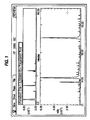
- the resulting liquid is found to contain roughly 20 different compounds. Approximately 67% by weight is styrene monomer, 3% is toluene, and, significantly, less than 0.1% is benzene. Most of the remaining 30% is composed of three unusual compounds which have not as yet been identified by standard organic references. In addition, trace amounts of roughly 15 other compounds are present. The mixture of compounds which remains, that boils between approximately 250°C and 450°C, has collectively been designated as styrene oil. A gas chromatograph analysis for the vapor produced from polystyrene is shown in Figure 1.
- the production of styrene monomer can be increased to nearly 100% and the production of styrene oil reduced to a negligible amount, if desired; alternatively, the process can be adjusted to produce a greater quantity of styrene oil.
- styrene oil The mixture of aromatic hydrocarbon compounds called styrene oil herein is a liquid at room temperature, and physically resembles diesel oil in appearance, varying in color from light yellow to brown, depending on the presence of trace compounds. It is roughly similar to light oils in viscosity and boiling point, and is useful for many purposes as disclosed herein.
- Styrene oil is a material with an unusual combination of properties, and appears to be chemically stable. It does not repolymerize or thicken during storage periods greater than one year.
- the styrene oil mixture has little odor and a very high flash point at least above 125°C. It has a remarkably wide liquid range for an aromatic substance, having a pour point below -50°C and a boiling point above 300°C.
- the specific gravity is 1.00 at room temperature and 0.94 at about 100°C. It distills to dryness at approximately 420°C. During boiling the mixture will not self-ignite in air, and when used as a fuel oil, the burner must pre-mix the styrene oil mixture as a vapor with hot air to ensure smokeless burning.
- a gas chromatographic analysis of styrene oil as shown in Figure 1, reveals three unusual principal compounds, which boil at about 290°C, 305°C, and 400°C, and the 15-20 trace compounds indicated above. Two of the principal compounds are about equally present, and the one that boils at 290°C is somewhat less prevalent.
- An extensive search through the literature for aromatic compounds with properties in the vicinity of the three cited compounds of styrene oil did not locate any matches. It appears that the two compounds that boil at 290°C and 305°C have molecular weights approximating that of the styrene dimer and the fraction that boils at 400°C approximates the trimer, although their properties are very different.
- the three principal compounds do not depolymerize on later heating, but boil without dissociation.
- the styrene oil shows no tendency to spontaneously polymerize, unlike the behavior of the styrene monomer.
- Figure 1 shows a gas chromatograph of the distillates from a thermal decomposition of polystyrene.
- Figure 2 shows a perspective of the distillation, in which the distillation temperature is plotted against the amount of distillate. The distillate was collected in six portions, as shown on the figure. Table 1 shows the freezing temperature or minimum pour temperature, whichever is appropriate, of each of the six portions.
- Figure 3 shows the pour temperature of mixtures of various ratios between Portion 5 and Portion 6. An interpretation of these data follows. FREEZING OR POUR TEMPERATURES OF SIX PORTIONS OF THE DISTILLATES OF FIGURE 3 Portion No.
- the gas chromatograph of Figure 1 shows clearly the presence of the three principal compounds of styrene oil, with boiling points previously cited at 290°C, 305°C and 400°C. Portions 4-6 of the distillates were intended to capture these three compounds, respectively. Because of the close proximity of the boiling points, however, there may be some overlap. Standard references indicate that Portions 1, 2 and 3 are mostly styrene, which is consistent with the shape of the curve in Figure 2. In addition, these three portions had definite freezing points. Portion 4 had the remarkably low pour point of -95°C. At roughly 5 degrees above this temperature, the material has the viscosity of a motor oil at room temperature; at roughly 5 degrees below, it has the viscosity of thick honey.
- the temperatures were those of the cooling bath in which the samples were immersed, measured with an accurate laboratory thermometer when the temperature was rising after a soak at a lower temperature.
- Portion 5 has a slightly higher pour point of -75°C, which might be caused by its slightly higher molecular weight, or Portion 4 may be a eutectic of styrene and Portion 5.
- Portion 6 had a higher pour temperature. Mixtures between Portions 5 and 6 were investigated to see if a eutectic exists between them, but Figure 3 shows that it does not.
- the density at room temperature of the natural mix of Portions 1 through 6 is 0.932 gm/ml, of Portion 5 is 0.98 grams/ml, and of Portion 6 is 1.02 gm/ml.
- Styrene oil is a very good solvent of other aromatic hydrocarbons, as well as other organic compounds. At room temperature, it will dissolve benzene, toluene, styrene, xylene, methyl ethyl ketone, acetone, ethyl acetate and 1-1-1-trichloroethane in any proportions and is a very good solvent of polystyrene.
- Portion 5 is less than 2% soluble in methyl alcohol, 40% soluble in ethyl alcohol, and infinitely soluble in isopropyl alcohol. Portion 5 is less than 2% soluble in all those cited alcohols. Styrene oil is almost insoluble in water.
- Styrene oil has other unusual properties. It is a good lubricant over a wide range of temperatures, from -100°C to 400°C. It has an unusually low variation in viscosity with temperature over the same wide range, having a significantly lower variation of viscosity with temperature than typical "all-weather" motor oils. It is an excellent rust inhibitor for iron and steel, and is a very good anti-seize compound. It does not damage silicone seals on years of exposure or on prolonged exposure at 400°C. Furthermore, silicone seals compressed in contact with steel and exposed to styrene oil at 400°C will not adhere to the steel. Only a small amount of styrene oil will prevent styrene monomer from spontaneously polymerizing in storage for several years.
- Styrene oil has two characteristics which make it a safe material to use. Although its toxicity has not yet been measured by rigorous biological testing, it has been used in free contact with humans for over five years with no evidence of toxic or allergic effect. There have been no sinus problems, skin problems, headaches or unexplained illness symptoms of any type. Its large molecular weight and chemical stability probably make styrene oil incompatible with biological functions. The other characteristic contributing to its safety is its very high spontaneous ignition temperature, which is well over 400°C. In all of the laboratory test work with styrene oil carried out in the reduction to practice of the present invention, there has never been a flash fire. This characteristic means that accidental emissions of hot styrene oil from working machinery, for example, a broken pipe joint, will not produce a fire in air by itself, or in contact with hot metal compounds.
- styrene oil Another favorable property of styrene oil is the manner of its deterioration on being subjected to high temperatures for a long time.
- the low boilers released from styrene oil are mostly toluene, a relatively benign chemical.
- benzene is not produced is proved by the absence of benzene during the original production of styrene oil.
- Portion 5 of the styrene oil has a very low pour point (-70°C), and its viscosity and heat transfer properties are very good down to about -60°C. It is non-corrosive to all metals used in refrigeration and is a good pump lubricant. It would make an excellent substitute for the corrosive brine solution (e.g., calcium chloride in water) currently used to distribute cold from a central refrigeration system to other parts of a large building. To avoid the difficulties of brine, most single family houses and apartment buildings are cooled by air conditioning systems that use the refrigerant working fluid, chlorofluorocarbons (CFC), also as the distribution agent.
- CFC chlorofluorocarbons
- the refrigerant fluid is made to do work in an expansion engine, such as a small piston engine or turbine, the efficiency of the system is greatly increased.
- an expansion engine such as a small piston engine or turbine
- Such engines are often not used for want of a good lubricant at very low temperatures.
- Styrene oil would be good as an expander engine lubricant down to -60°C.
- styrene oil is an effective paint stripper which has a very low vapor pressure at room temperature, thus reducing the release of smog producing chemicals into the atmosphere.
- styrene oil Another virtue of styrene oil is the low cost of the polystyrene scrap and waste from which it is produced as well as the economy of its production. Discarded foamed polystyrene, which is abundant, is a significant waste disposal problem of modern times.
- Styrene oil is a good lubricant which breaks down very slowly, it inhibits corrosion of iron and steel, is safe from accidental fires, has a very low pour point and a low viscosity which varies only slightly with temperature.
- a specialized application for which styrene oil is most suitable is as a heat transfer fluid in chemical and oil refining processes (7).
- Heat transfer fluids are widely used at present, and are typified by the commercially available aromatic compounds comprising the DowthermTM group of heat transfer fluids.
- DowthermTM A is excellent at high temperatures, but freezes at +12°C. Such a high freezing temperature is very undesirable if a process should have to be shut down in cold weather, because getting the equipment entirely thawed out can be a real problem.
- Styrene oil has a special advantage as a heat transfer fluid in its ability to give custom accommodation to the requirements of processing plants located in areas with widely varying climactic conditions.
- plants desire heat transfer fluids which operate at the highest possible temperature consistent with not freezing at the lowest expected local temperature.
- DowthermTM fluids the limited choices fall short of satisfying the ideal goal, as DowthermTM A is the only fluid which will operate at very high temperatures, but it freezes at +12°C. All of the others operate at much lower temperatures.
- heat transfer fluids are generally operated under pressure, as in an automobile cooling system.
- styrene oil can be used in combination with existing aromatic compound heat transfer fluids to extend their working temperature range or to reduce the cost of materials. Styrene oil is miscible with such working fluids over the entire concentration range of from 1% to 99% by volume of the total mixture.
- styrene oil is as a working fluid in conjunction with internal combustion engines, not only for existing engines such as the Diesel engine, gasoline engine (Otto cycle), and gas turbine (Brayton cycle), but also in superior engines of future design made possible by the availability of styrene oil.
- the ways in which styrene oil can improve an internal combustion engine are as a superior engine cooling system fluid ( 8 ), and as a working fluid for an auxiliary Rankine engine ( 9 ) which works in conjunction with the basic internal combustion engine by extracting power from the internal combustion engine exhaust gases, or both together.
- styrene oil As a heat transfer fluid in the engine cooling system, styrene oil has all the advantages cited in (7) above.
- the engine can be operated much hotter than is current practice at only one atmosphere pressure without any danger of boiling, thus insuring maximum solid to liquid heat transfer and better thermodynamic efficiency. Protection against freezing can be insured to very low temperatures.
- the problems of corrosion and sludge formation at high temperature in engine cooling systems are well known, and the use of styrene oil would keep the system ever clean and free flowing. In these respects, the use of styrene oil may be preferable to water in cooling systems, even though it lacks water's high specific heat and heat of vaporization.
- a counterflow heat exchanger is an excellent device to transfer some of the heat of the exhaust gases to a stream of styrene oil, since there are no long temperature dwells caused by a large latent heat of vaporization in the styrene oil.
- the styrene oil can be heated to approximately 370°C and then expanded into a turbine.
- the expanded gas will be 100% vapor phase all the way down, and moving slow enough, because of its high molecular weight, to permit the use of ordinary steel turbine blades.
- a considerable amount of power can be obtained with relatively simple machinery, and such a thermal system can either be added to existing engines as a retrofit, or designed integrally into future engines.
- the heat transfer can also drive other types of Rankine engines and expanders such as piston engines.
- the hot styrene oil can also serve as the heat source for Stirling cycle engines, which use external heat to activate a gas working fluid, and other Brayton cycle (gas turbine) engines.
- the heat transfer fluid can supply heat to a thermoelectric element for the production of electricity or for thermoelectric refrigeration.
- Styrene oil can be used to significantly improve the safety of nuclear reactors, both as retrofits to existing reactors, and in new designs.
- Devices to provide for the use of styrene oil can be retrofitted, for example, to two existing types of reactors, water-cooled and liquid sodium-cooled, as well as to modifications of the two designs for new construction. Typical designs for nuclear reactors are shown in Figure 4.
- Figure 4a shows a schematic diagram of the cooling system of a common water-cooled reactor.
- This design uses two water loops to transfer heat from the reactor: a high pressure water loop to extract heat from the reactor efficiently, and a lower pressure steam loop to accept the heat from the first water loop and generate steam to drive a turbine.
- a hazard in this design is the potential rapid loss of water from the high pressure loop in the event of a significant leak at any point in the loop. In this event, the reactor would no longer be cooled and a rapid meltdown could occur. This possibility can be greatly mitigated in a retrofit approach by providing a large tank of styrene oil which is connected by pumps and pipes to the high pressure water loop at several places.
- the pumps are activated to flood the high pressure loop with styrene oil. Since styrene oil does not exert a large vapor pressure at the reactor temperature, this flooding can be done readily. The flow of oil through the reactor cools it until an orderly shutdown can be made. It is believed that styrene oil is not sensitive to radiation, and any fire resulting from leaking styrene oil can be extinguished by ordinary means.
- An alternative new design of this type of reactor can use styrene oil as the original heat transfer fluid which circulates through the reactor in place of high pressure water.
- the styrene oil loop can operate at a much lower pressure than a liquid water loop, reducing the rate of loss of coolant in the event of a leak and easing the task of an emergency backup system to flood the loop with reserve styrene oil.
- the styrene oil has long term radiation resistance, such a design is much safer than the current design.
- FIG. 4b A typical schematic of a modern liquid sodium-cooled reactor in shown in Figure 4b.
- This reactor design suffers from at least two serious hazards which arise from leaks that occur in the liquid sodium loops: (1) a large leak from any cause in either of the liquid sodium loops which could lead to a significant loss of liquid sodium coolant from the radioactive sodium loop, reducing reactor cooling and causing a reactor meltdown. A large sodium fire in air can also occur. (2) a small leak in the heat exchanger between the non-radioactive liquid sodium and water loops which could allow water at high pressure to enter the liquid sodium loop, flash to steam, cause a combined steam/chemical explosion, and burst the liquid sodium pipes, with consequences similar to those of the pressurized water reactor of (1).
- a safer nuclear power plant design can be made as a variation of the previous liquid sodium reactor design, by using a styrene oil loop between the liquid sodium loop and the steam loop, as shown in Figure 4c.
- This design eliminates the possibility of a type (2) leak, where water and sodium could mix, from occurring. Since the most likely location for a leak to occur in the sodium loop is in the many thin walls of the heat exchanger, a considerable improvement in safety can result. Any reaction between liquid sodium and styrene oil will be much milder than with water. An emergency supply of styrene oil to protect against large leaks in the sodium loops can be provided as in the present day retrofit reactor design.
- Styrene oil has chemical uses also. It is an excellent solvent for many aromatic hydrocarbons and other chemicals both in laboratory investigations and chemical engineering production. In the large chemical industry and laboratories which use styrene monomer, the problem of spontaneous polymerization must be guarded against. Styrene oil is an excellent inhibitor of such polymerization, and is effective at low concentrations of 1% or less even when distilling styrene at atmospheric pressure. Also in a preferred embodiment, styrene oil is used as a cleaning agent for mechanical parts, for example, as a carburetor cleaner or a parts degreaser. The vapor pressure of styrene oil at 25°C is about 0.002 mm Hg, which reduces fumes. Styrene oil can remove rust, corrosion, sludge and chemical deposits, when used either as a cleaner or an operating fluid. Styrene oil thus used can also inhibit corrosion and rust and prevent the buildup of sludge and chemical deposits.
- the fractions of styrene oil can be burned as a boiler fuel, gas turbine fuel or Diesel fuel if they become in surplus on the market.
- the aromatic styrene oil can be burned cleanly in a premixed vapor/air flame like a Bunsen burner or styrene oil can be sprayed into the air and burned.
- Styrene oil is well suited for use as a fluid in thermometer and pressure gauges, because it is liquid over a wide range of temperatures. It lacks the toxicity of mercury presently used in many thermometers and is significantly cheaper. Because of the extreme temperature advantage over other materials, it can be used in pressure gauges, such as the Bourdon type, at very high and very low temperatures.
Landscapes
- Chemical & Material Sciences (AREA)
- Engineering & Computer Science (AREA)
- Oil, Petroleum & Natural Gas (AREA)
- Organic Chemistry (AREA)
- Chemical Kinetics & Catalysis (AREA)
- General Chemical & Material Sciences (AREA)
- Physics & Mathematics (AREA)
- Materials Engineering (AREA)
- Thermal Sciences (AREA)
- Combustion & Propulsion (AREA)
- Wood Science & Technology (AREA)
- Life Sciences & Earth Sciences (AREA)
- Plasma & Fusion (AREA)
- General Engineering & Computer Science (AREA)
- High Energy & Nuclear Physics (AREA)
- Mechanical Engineering (AREA)
- Metallurgy (AREA)
- Lubricants (AREA)
- Addition Polymer Or Copolymer, Post-Treatments, Or Chemical Modifications (AREA)
- Fats And Perfumes (AREA)
- Production Of Liquid Hydrocarbon Mixture For Refining Petroleum (AREA)
Claims (42)
- Utilisation d'une substance, désignée comme une "huile de styrène", comme premier fluide de travail dans un système mécanique dans le but de transférer de l'énergie, la substance pouvant être obtenue par décomposition thermique ou par décomposition thermique catalytique de polystyrène en l'absence d'air qui dépolymérise sensiblement tout le polystyrène en liquides et qui ne produit sensiblement pas de gaz, de solides ou de résidus de carbonisation et produit uniquement jusqu'à 1% de goudron,
et dans laquelle le monomère de styrène et le toluène ont été éliminés des produits de dépolymérisation,
dans laquelle les produits de dépolymérisation restants comprennent environ 20 composés à haut point d'ébullition,
ledit processus de dépolymérisation étant effectué en chauffant du plastique polystyrène sous une pression de une atmosphère à une température d'environ 350°C jusqu'à ce que la dépolymérisation commence et en continuant à augmenter doucement la température jusqu'à environ 400°C, ladite substance étant davantage définie par les paramètres physiques suivants :elle bout entre 250°C et 450°Celle est sous forme liquide à température ambianteelle ressemble physiquement en apparence à du carburant dieselelle a une couleur de jaune pâle à marronelle est à peu près similaire à des huiles légères en terme de viscosité et de point d'ébullitionelle a peu d'odeur et un point d'éclair au moins supérieur à 125°Celle a un point d'écoulement inférieur à -50°C et un point d'ébullition supérieur à 300°Celle a une densité de 1,00 à température ambiante et de 0,94 à environ 100°Celle est distillée à siccité à environ 420°C. - Utilisation selon la revendication 1, dans laquelle ladite énergie est de l'énergie thermique qui est transférée par ladite substance.
- Utilisation selon la revendication 2, dans laquelle ladite substance transfère ladite énergie thermique au moins à une température dans l'intervalle de -100°C à 450°C.
- Utilisation selon la revendication 2, dans laquelle ledit système mécanique comprend en outre un second fluide de travail qui couplé thermiquement avec ladite substance, ladite énergie thermique étant échangée entre ladite substance et ledit second fluide de travail.
- Utilisation selon la revendication 4, dans laquelle ladite substance est un dissipateur thermique.
- Utilisation selon la revendication 4, dans laquelle ladite substance est une source de chaleur.
- Utilisation selon la revendication 4, dans laquelle ladite substance transfère de la chaleur audit second fluide de travail qui a un point d'ébullition plus bas que ladite substance.
- Utilisation selon la revendication 7, dans laquelle ledit second fluide de travail actionne une turbine ou un moteur à piston.
- Utilisation selon la revendication 8, dans laquelle ladite turbine fait partie d'un moteur de type à cycle de Brayton ou à cycle de Rankine.
- Utilisation selon la revendication 4, dans laquelle ladite substance fonctionne comme une source de chaleur pour un moteur à cycle de Stirling.
- Utilisation selon la revendication 2, dans laquelle ledit système mécanique comprend au moins un second et un troisième fluide de travail, dans laquelle ladite substance absorbe l'énergie thermique provenant dudit second fluide de travail et transfère l'énergie thermique audit troisième fluide de travail.
- Utilisation selon la revendication 2, dans laquelle ledit système mécanique comprend en outre un radiateur dans lequel ladite substance fonctionne comme un fluide de refroidissement s'écoulant au travers dudit radiateur.
- Utilisation selon la revendication 2, dans laquelle le système mécanique comprend en outre une chambre de combustion avec une chemise de liquide de refroidissement qui entoure au moins partiellement ladite chambre, ladite substance s'écoulant au travers de ladite chemise et absorbant l'énergie thermique provenant de ladite chambre de combustion pour refroidir ladite chambre de combustion.
- Utilisation selon la revendication 13, dans laquelle ladite chambre de combustion fait partie d'un moteur à combustion interne.
- Utilisation selon la revendication 14, dans laquelle ledit moteur à combustion interne est choisi dans le groupe constitué par un moteur à auto-allumage, un moteur à allumage par étincelle, et un moteur à turbine à gaz.
- Utilisation selon la revendication 13, dans laquelle ladite chambre de combustion fait partie d'un moteur à combustion externe.
- Utilisation selon la revendication 2, dans laquelle ledit système est utilisé pour récupérer de l'énergie provenant des gaz d'échappement d'un moteur à combustion interne ayant au moins une chambre de combustion, et dans laquelle ledit système comprend en outre un échangeur thermique de gaz d'échappement, une tuyère de détente, une turbine, un radiateur de condensation et une pompe, ladite substance s'écoulant de façon séquentielle à travers ledit échangeur thermique de gaz d'échappement pour absorber l'énergie thermique provenant desdits gaz d'échappement, par ladite tuyère de détente dans laquelle la substance est vaporisée, la vapeur de la substance actionnant ladite turbine, la vapeur de la substance sortant de ladite turbine en s'écoulant et en se condensant dans ledit radiateur, et la pompe ramenant ladite substance condensée dans ledit échangeur thermique de gaz d'échappement.
- Utilisation selon la revendication 17, dans laquelle ladite turbine produit de l'énergie mécanique qui peut être utilisée pour actionner un compresseur pour alimenter le moteur, ou peut être ajoutée à l'énergie de l'arbre de transmission produite par le moteur, ou les deux.
- Utilisation selon la revendication 17, dans laquelle ledit moteur a une chemise de refroidissement entourant la chambre de combustion, ladite substance s'écoulant de ladite pompe au travers de ladite chemise de refroidissement et ensuite vers ledit échangeur thermique de gaz d'échappement pour absorber l'énergie thermique provenant de ladite chambre de combustion et refroidir ladite chambre de combustion avant de récupérer l'énergie provenant desdits gaz d'échappement.
- Utilisation selon la revendication 2, dans laquelle ledit système fonctionne comme un système de réfrigération qui utilise un fluide de transfert de chaleur, dans laquelle ladite substance est le fluide de transfert de chaleur.
- Utilisation selon la revendication 1, dans laquelle ledit système fait parti d'un processus chimique ou de raffinage du pétrole.
- Utilisation selon la revendication 1, dans laquelle ladite énergie est de l'énergie cinétique ou de l'énergie de pression qui est transférée au moyen de ladite substance.
- Utilisation selon la revendication 22, dans laquelle ledit système comprend en outre un coupleur hydraulique rempli avec ladite substance.
- Utilisation selon la revendication 23, dans laquelle ledit coupleur hydraulique forme une partie d'un système de frein.
- Utilisation selon la revendication 23, dans laquelle ledit coupleur hydraulique fait partie d'un système hydraulique et est couplé à un piston hydraulique pour actionner ledit piston hydraulique.
- Utilisation selon la revendication 25, dans laquelle ledit système fonctionne comme une transmission automatique.
- Utilisation selon la revendication 21, dans laquelle ledit système fonctionne comme un système de direction assistée.
- Utilisation d'une substance, désignée comme une "huile de styrène", dans un système mécanique en tant que lubrifiant ou additif lubrifiant, la substance pouvant être obtenue par décomposition thermique ou par décomposition thermique catalytique de polystyrène en l'absence d'air qui dépolymérise sensiblement tout le polystyrène en liquides et qui ne produit sensiblement pas de gaz, de solides ou de résidus de carbonisation et produit uniquement jusqu'à 1% de goudron,
et dans laquelle le monomère de styrène et le toluène ont été éliminés des produits de dépolymérisation,
dans laquelle les produits de dépolymérisation restants comprennent environ 20 composés à haut point d'ébullition,
ledit processus de dépolymérisation étant effectué en chauffant du plastique polystyrène sous une pression de une atmosphère à une température d'environ 350°C jusqu'à ce que la dépolymérisation commence et en continuant à augmenter doucement la température jusqu'à environ 400°C, ladite substance étant davantage définie par les paramètres physiques suivants :elle bout entre 250°C et 450°Celle est sous forme liquide à température ambianteelle ressemble physiquement en apparence à du carburant dieselelle a une couleur de jaune pâle à marronelle est à peu près similaire à des huiles légères en terme de viscosité et de point d'ébullitionelle a peu d'odeur et un point d'éclair au moins supérieur à 125°Celle a un point d'écoulement inférieur à -50°C et un point d'ébullition supérieur à 300°Celle a une densité de 1,00 à température ambiante et de 0,94 à environ 100°Celle est distillée à siccité à environ 420°Cet elle est efficace comme lubrifiant de -100°C à 400°C. - Utilisation selon la revendication 28, dans laquelle ledit système fonctionne dans un intervalle de température entre 150°C et 400°C.
- Utilisation selon la revendication 28, dans laquelle ledit système fonctionne à une température entre -100°C et 20°C.
- Utilisation d'une substance, désignée comme une "huile de styrène", dans une composition comprenant des fluides de transfert de chaleur contenant des composés organiques, la substance étant mélangée avec lesdits fluides et la substance pouvant être obtenue par décomposition thermique ou par décomposition thermique catalytique de polystyrène en l'absence d'air qui dépolymérise sensiblement tout le polystyrène en liquides et qui ne produit sensiblement pas de gaz, de solides ou de résidus de carbonisation et produit uniquement jusqu'à 1% de goudron,
et dans laquelle le monomère de styrène et le toluène ont été éliminés des produits de dépolymérisation,
dans laquelle les produits de dépolymérisation restants comprennent environ 20 composés à haut point d'ébullition,
ledit processus de dépolymérisation étant effectué en chauffant du plastique polystyrène sous une pression de une atmosphère à une température d'environ 350°C jusqu'à ce que la dépolymérisation commence et en continuant à augmenter doucement la température jusqu'à environ 400°C, ladite substance étant davantage définie par les paramètres physiques suivants :elle bout entre 250°C et 450°Celle est sous forme liquide à température ambianteelle ressemble physiquement en apparence à du carburant dieselelle a une couleur de jaune pâle à marronelle est à peu près similaire à des huiles légères en terme de viscosité et de point d'ébullitionelle a peu d'odeur et un point d'éclair au moins supérieur à 125°Celle a un point d'écoulement inférieur à -50°C et un point d'ébullition supérieur à 300°Celle a une densité de 1,00 à température ambiante et de 0,94 à environ 100°Celle est distillée à siccité à environ 420°C. - Utilisation selon la revendication 31, dans laquelle la concentration de ladite substance est de 1% à 99%.
- Utilisation d'une substance, désignée comme une "huile de styrène", comme le solvant pour du toluène, du xylène, de la méthyléthylcétone, de l'acétone, de l'acétate d'éthyle ou du 1,1,1-trichloroéthane et un système de solvant comprenant ladite substance, la substance pouvant être obtenue par décomposition thermique ou par décomposition thermique catalytique de polystyrène en l'absence d'air qui dépolymérise sensiblement tout le polystyrène en liquides et qui ne produit sensiblement pas de gaz, de solides ou de résidus de carbonisation et produit uniquement jusqu'à 1% de goudron,
et dans laquelle le monomère de styrène et le toluène ont été éliminés des produits de dépolymérisation,
dans laquelle les produits de dépolymérisation restants comprennent environ 20 composés à haut point d'ébullition,
ledit processus de dépolymérisation étant effectué en chauffant du plastique polystyrène sous une pression de une atmosphère à une température d'environ 350°C jusqu'à ce que la dépolymérisation commence et en continuant à augmenter doucement la température jusqu'à environ 400°C, ladite substance étant davantage définie par les paramètres physiques suivants :elle bout entre 250°C et 450°Celle est sous forme liquide à température ambianteelle ressemble physiquement en apparence à du carburant dieselelle a une couleur de jaune pâle à marronelle est à peu près similaire à des huiles légères en terme de viscosité et de point d'ébullitionelle a peu d'odeur et un point d'éclair au moins supérieur à 125°Celle a un point d'écoulement inférieur à -50°C et un point d'ébullition supérieur à 300°Celle a une densité de 1,00 à température ambiante et de 0,94 à environ 100°Celle est distillée à siccité à environ 420°C. - Utilisation d'une substance, désignée comme une "huile de styrène", dans un procédé pour inhiber la formation de rouille ou la corrosion d'une partie métallique d'un système mécanique comprenant l'application de ladite substance à la surface de ladite partie en une quantité efficace inhibant la corrosion, la substance pouvant être obtenue par décomposition thermique ou par décomposition thermique catalytique de polystyrène en l'absence d'air qui dépolymérise sensiblement tout le polystyrène en liquides et qui ne produit sensiblement pas de gaz, de solides ou de résidus de carbonisation et produit uniquement jusqu'à 1% de goudron,
et dans laquelle le monomère de styrène et le toluène ont été éliminés des produits de dépolymérisation,
dans laquelle les produits de dépolymérisation restants comprennent environ 20 composés à haut point d'ébullition,
ledit processus de dépolymérisation étant effectué en chauffant du plastique polystyrène sous une pression de une atmosphère à une température d'environ 350°C jusqu'à ce que la dépolymérisation commence et en continuant à augmenter doucement la température jusqu'à environ 400°C, ladite substance étant davantage définie par les paramètres physiques suivants :elle bout entre 250°C et 450°Celle est sous forme liquide à température ambianteelle ressemble physiquement en apparence à du carburant dieselelle a une couleur de jaune pâle à marronelle est à peu près similaire à des huiles légères en terme de viscosité et de point d'ébullitionelle a peu d'odeur et un point d'éclair au moins supérieur à 125°Celle a un point d'écoulement inférieur à -50°C et un point d'ébullition supérieur à 300°Celle a une densité de 1,00 à température ambiante et de 0,94 à environ 100°Celle est distillée à siccité à environ 420°C. - Utilisation d'une substance, désignée comme une "huile de styrène", comme fluide de travail dans un thermomètre, la substance pouvant être obtenue par décomposition thermique ou par décomposition thermique catalytique de polystyrène en l'absence d'air qui dépolymérise sensiblement tout le polystyrène en liquides et qui ne produit sensiblement pas de gaz, de solides ou de résidus de carbonisation et produit uniquement jusqu'à 1% de goudron,
et dans laquelle le monomère de styrène et le toluène ont été éliminés des produits de dépolymérisation,
dans laquelle les produits de dépolymérisation restants comprennent environ 20 composés à haut point d'ébullition,
ledit processus de dépolymérisation étant effectué en chauffant du plastique polystyrène sous une pression de une atmosphère à une température d'environ 350°C jusqu'à ce que la dépolymérisation commence et en continuant à augmenter doucement la température jusqu'à environ 400°C, ladite substance étant davantage définie par les paramètres physiques suivants :elle bout entre 250°C et 450°Celle est sous forme liquide à température ambianteelle ressemble physiquement en apparence à du carburant dieselelle a une couleur de jaune pâle à marronelle est à peu près similaire à des huiles légères en terme de viscosité et de point d'ébullitionelle a peu d'odeur et un point d'éclair au moins supérieur à 125°Celle a un point d'écoulement inférieur à -50°C et un point d'ébullition supérieur à 300°Celle a une densité de 1,00 à température ambiante et de 0,94 à environ 100°Celle est distillée à siccité à environ 420°C. - Utilisation d'une substance, désignée comme une "huile de styrène", comme fluide de travail dans un manomètre, la substance pouvant être obtenue par décomposition thermique ou par décomposition thermique catalytique de polystyrène en l'absence d'air qui dépolymérise sensiblement tout le polystyrène en liquides et qui ne produit sensiblement pas de gaz, de solides ou de résidus de carbonisation et produit uniquement jusqu'à 1% de goudron,
et dans laquelle le monomère de styrène et le toluène ont été éliminés des produits de dépolymérisation,
dans laquelle les produits de dépolymérisation restants comprennent environ 20 composés à haut point d'ébullition,
ledit processus de dépolymérisation étant effectué en chauffant du plastique polystyrène sous une pression de une atmosphère à une température d'environ 350°C jusqu'à ce que la dépolymérisation commence et en continuant à augmenter doucement la température jusqu'à environ 400°C, ladite substance étant davantage définie par les paramètres physiques suivants :elle bout entre 250°C et 450°Celle est sous forme liquide à température ambianteelle ressemble physiquement en apparence à du carburant dieselelle a une couleur de jaune pâle à marronelle est à peu près similaire à des huiles légères en terme de viscosité et de point d'ébullitionelle a peu d'odeur et un point d'éclair au moins supérieur à 125°Celle a un point d'écoulement inférieur à -50°C et un point d'ébullition supérieur à 300°Celle a une densité de 1,00 à température ambiante et de 0,94 à environ 100°Celle est distillée à siccité à environ 420°C. - Utilisation selon la revendication 36, dans laquelle le manomètre est de type tube de Bourdon, et ladite substance remplie ledit tube de Bourdon.
- Utilisation d'une fraction isolée d'une substance, désignée comme une "huile de styrène", en tant que carburant de chaudière, carburant de turbine à gaz ou carburant diesel, la fraction ayant un point d'ébullition à pression atmosphérique d'environ 290°C et la substance pouvant être obtenue par décomposition thermique ou par décomposition thermique catalytique de polystyrène en l'absence d'air qui dépolymérise sensiblement tout le polystyrène en liquides et qui ne produit sensiblement pas de gaz, de solides ou de résidus de carbonisation et produit uniquement jusqu'à 1% de goudron,
et dans laquelle le monomère de styrène et le toluène ont été éliminés des produits de dépolymérisation,
dans laquelle les produits de dépolymérisation restants comprennent environ 20 composés à haut point d'ébullition,
ledit processus de dépolymérisation étant effectué en chauffant du plastique polystyrène sous une pression de une atmosphère à une température d'environ 350°C jusqu'à ce que la dépolymérisation commence et en continuant à augmenter doucement la température jusqu'à environ 400°C, ladite substance étant davantage définie par les paramètres physiques suivants :elle bout entre 250°C et 450°Celle est sous forme liquide à température ambianteelle ressemble physiquement en apparence à du carburant dieselelle a une couleur de jaune pâle à marronelle est à peu près similaire à des huiles légères en terme de viscosité et de point d'ébullitionelle a peu d'odeur et un point d'éclair au moins supérieur à 125°Celle a un point d'écoulement inférieur à -50°C et un point d'ébullition supérieur à 300°Celle a une densité de 1,00 à température ambiante et de 0,94 à environ 100°Celle est distillée à siccité à environ 420°C. - Utilisation d'une fraction isolée d'une substance, désignée comme une "huile de styrène", en tant que carburant de chaudière, carburant de turbine à gaz ou carburant diesel, la fraction ayant un point d'ébullition à pression atmosphérique d'environ 305°C et la substance pouvant être obtenue par décomposition thermique ou par décomposition thermique catalytique de polystyrène en l'absence d'air qui dépolymérise sensiblement tout le polystyrène en liquides et qui ne produit sensiblement pas de gaz, de solides ou de résidus de carbonisation et produit uniquement jusqu'à 1% de goudron,
et dans laquelle le monomère de styrène et le toluène ont été éliminés des produits de dépolymérisation,
dans laquelle les produits de dépolymérisation restants comprennent environ 20 composés à haut point d'ébullition,
ledit processus de dépolymérisation étant effectué en chauffant du plastique polystyrène sous une pression de une atmosphère à une température d'environ 350°C jusqu'à ce que la dépolymérisation commence et en continuant à augmenter doucement la température jusqu'à environ 400°C, ladite substance étant davantage définie par les paramètres physiques suivants :elle bout entre 250°C et 450°Celle est sous forme liquide à température ambianteelle ressemble physiquement en apparence à du carburant dieselelle a une couleur de jaune pâle à marronelle est à peu près similaire à des huiles légères en terme de viscosité et de point d'ébullitionelle a peu d'odeur et un point d'éclair au moins supérieur à 125°Celle a un point d'écoulement inférieur à -50°C et un point d'ébullition supérieur à 300°Celle a une densité de 1,00 à température ambiante et de 0,94 à environ 100°Celle est distillée à siccité à environ 420°C. - Utilisation d'une fraction isolée d'une substance, désignée comme une "huile de styrène", en tant que carburant de chaudière, carburant de turbine à gaz ou carburant diesel, la fraction ayant un point d'ébullition à pression atmosphérique d'environ 400°C et la substance pouvant être obtenue par décomposition thermique ou par décomposition thermique catalytique de polystyrène en l'absence d'air qui dépolymérise sensiblement tout le polystyrène en liquides et qui ne produit sensiblement pas de gaz, de solides ou de résidus de carbonisation et produit uniquement jusqu'à 1% de goudron,
et dans laquelle le monomère de styrène et le toluène ont été éliminés des produits de dépolymérisation,
dans laquelle les produits de dépolymérisation restants comprennent environ 20 composés à haut point d'ébullition,
ledit processus de dépolymérisation étant effectué en chauffant du plastique polystyrène sous une pression de une atmosphère à une température d'environ 350°C jusqu'à ce que la dépolymérisation commence et en continuant à augmenter doucement la température jusqu'à environ 400°C, ladite substance étant davantage définie par les paramètres physiques suivants :elle bout entre 250°C et 450°Celle est sous forme liquide à température ambianteelle ressemble physiquement en apparence à du carburant dieselelle a une couleur de jaune pâle à marronelle est à peu près similaire à des huiles légères en terme de viscosité et de point d'ébullitionelle a peu d'odeur et un point d'éclair au moins supérieur à 125°Celle a un point d'écoulement inférieur à -50°C et un point d'ébullition supérieur à 300°Celle a une densité de 1,00 à température ambiante et de 0,94 à environ 100°Celle est distillée à siccité à environ 420°C. - Utilisation d'une fraction isolée d'une substance, désignée comme une "huile de styrène", en tant que fluide de transfert de chaleur dans une usine de traitement dans un climat froid, la fraction ayant un point d'ébullition à pression atmosphérique d'environ 305°C et la substance pouvant être obtenue par décomposition thermique ou par décomposition thermique catalytique de polystyrène en l'absence d'air qui dépolymérise sensiblement tout le polystyrène en liquides et qui ne produit sensiblement pas de gaz, de solides ou de résidus de carbonisation et produit uniquement jusqu'à 1% de goudron,
et dans laquelle le monomère de styrène et le toluène ont été éliminés des produits de dépolymérisation,
dans laquelle les produits de dépolymérisation restants comprennent environ 20 composés à haut point d'ébullition,
ledit processus de dépolymérisation étant effectué en chauffant du plastique polystyrène sous une pression de une atmosphère à une température d'environ 350°C jusqu'à ce que la dépolymérisation commence et en continuant à augmenter doucement la température jusqu'à environ 400°C, ladite substance étant davantage définie par les paramètres physiques suivants :elle bout entre 250°C et 450°Celle est sous forme liquide à température ambianteelle ressemble physiquement en apparence à du carburant dieselelle a une couleur de jaune pâle à marronelle est à peu près similaire à des huiles légères en terme de viscosité et de point d'ébullitionelle a peu d'odeur et un point d'éclair au moins supérieur à 125°Celle a un point d'écoulement inférieur à -50°C et un point d'ébullition supérieur à 300°Celle a une densité de 1,00 à température ambiante et de 0,94 à environ 100°Celle est distillée à siccité à environ 420°C. - Utilisation d'une fraction isolée d'une substance, désignée comme une "huile de styrène", en tant que fluide de transfert de chaleur dans une usine de traitement dans un climat doux, la fraction ayant un point d'ébullition à pression atmosphérique d'environ 400°C et la substance pouvant être obtenue par décomposition thermique ou par décomposition thermique catalytique de polystyrène en l'absence d'air qui dépolymérise sensiblement tout le polystyrène en liquides et qui ne produit sensiblement pas de gaz, de solides ou de résidus de carbonisation et produit uniquement jusqu'à 1% de goudron,
et dans laquelle le monomère de styrène et le toluène ont été éliminés des produits de dépolymérisation,
dans laquelle les produits de dépolymérisation restants comprennent environ 20 composés à haut point d'ébullition,
ledit processus de dépolymérisation étant effectué en chauffant du plastique polystyrène sous une pression de une atmosphère à une température d'environ 350°C jusqu'à ce que la dépolymérisation commence et en continuant à augmenter doucement la température jusqu'à environ 400°C, ladite substance étant davantage définie par les paramètres physiques suivants :elle bout entre 250°C et 450°Celle est sous forme liquide à température ambianteelle ressemble physiquement en apparence à du carburant dieselelle a une couleur de jaune pâle à marronelle est à peu près similaire à des huiles légères en terme de viscosité et de point d'ébullitionelle a peu d'odeur et un point d'éclair au moins supérieur à 125°Celle a un point d'écoulement inférieur à -50°C et un point d'ébullition supérieur à 300°Celle a une densité de 1,00 à température ambiante et de 0,94 à environ 100°Celle est distillée à siccité à environ 420°C.
Applications Claiming Priority (3)
| Application Number | Priority Date | Filing Date | Title |
|---|---|---|---|
| US08/420,236 US5799626A (en) | 1993-01-28 | 1995-04-11 | Methods for using styrene oil (as heat transfer fluid, hydraulic fluid, lubricant) |
| US420236 | 1995-04-11 | ||
| PCT/US1996/004178 WO1996033252A2 (fr) | 1995-04-11 | 1996-04-05 | Procedes d'utilisation d'huile de styrene (en tant que fluide caloporteur thermique, fluide hydraulique ou lubrifiant) |
Publications (3)
| Publication Number | Publication Date |
|---|---|
| EP0820496A2 EP0820496A2 (fr) | 1998-01-28 |
| EP0820496A4 EP0820496A4 (fr) | 1999-09-22 |
| EP0820496B1 true EP0820496B1 (fr) | 2004-08-11 |
Family
ID=23665637
Family Applications (1)
| Application Number | Title | Priority Date | Filing Date |
|---|---|---|---|
| EP96913772A Expired - Lifetime EP0820496B1 (fr) | 1995-04-11 | 1996-04-05 | Des produits dépolymérisés et des utilisations de ceux-ci |
Country Status (7)
| Country | Link |
|---|---|
| US (1) | US5799626A (fr) |
| EP (1) | EP0820496B1 (fr) |
| AT (1) | ATE273367T1 (fr) |
| AU (1) | AU718024B2 (fr) |
| CA (1) | CA2217740C (fr) |
| DE (1) | DE69633120T2 (fr) |
| WO (1) | WO1996033252A2 (fr) |
Families Citing this family (18)
| Publication number | Priority date | Publication date | Assignee | Title |
|---|---|---|---|---|
| US6050083A (en) * | 1995-04-24 | 2000-04-18 | Meckler; Milton | Gas turbine and steam turbine powered chiller system |
| US6820423B1 (en) * | 2000-04-15 | 2004-11-23 | Johnathan W. Linney | Method for improving power plant thermal efficiency |
| US7294823B2 (en) * | 2000-10-17 | 2007-11-13 | Phaedrus, Llc | System and method for detecting a position of a movable element |
| US6651443B1 (en) | 2000-10-20 | 2003-11-25 | Milton Meckler | Integrated absorption cogeneration |
| US7388188B2 (en) * | 2005-09-29 | 2008-06-17 | Motion Controls, Llc | Apparatus, system and method for detecting a position of a movable element in a compartment |
| US7476842B2 (en) * | 2005-10-03 | 2009-01-13 | Phaedrus, Llc | System and method for emitting and/or detecting light within a compartment |
| US7456385B2 (en) * | 2005-10-03 | 2008-11-25 | Phaedrus, Llc | System and method for detecting an end of and/or a beginning of a stroke |
| US7348542B2 (en) * | 2005-10-03 | 2008-03-25 | Phaedrus, Llc | System and method for detecting an intensity of light |
| US7518100B2 (en) * | 2005-10-03 | 2009-04-14 | Phaedrus, Llc | System and method for detecting a position of a movable element |
| US7291830B1 (en) * | 2006-06-19 | 2007-11-06 | Phaedrus, Llc | Light pipe, system and method for measuring light attenuation |
| US7626062B2 (en) | 2007-07-31 | 2009-12-01 | Carner William E | System and method for recycling plastics |
| US9010318B2 (en) | 2009-09-04 | 2015-04-21 | Wisconsin Alumni Research Foundation | Extended-range heat transfer fluid using variable composition |
| US20110226582A1 (en) * | 2010-03-16 | 2011-09-22 | Ralph Denver Ragsdale | Reduction of Greenhouse Gases |
| US8892270B2 (en) | 2012-11-05 | 2014-11-18 | Phaedrus, Llc | System and method for obtaining, transmitting and/or providing freight transportation information |
| BE1026336B1 (fr) * | 2018-05-29 | 2020-01-13 | Tpr Soc Dune Personne A Responsabilite Limitee | Procede de transformation de dechets de matieres plastiques |
| WO2020010278A1 (fr) * | 2018-07-05 | 2020-01-09 | Keane Frac Lp | Système et procédé d'utilisation d'échange de pression dans une fracturation hydraulique |
| CN115305106A (zh) * | 2022-08-09 | 2022-11-08 | 中海石油宁波大榭石化有限公司 | 一种处理苯乙烯焦油的装置及处理方法 |
| WO2026082227A1 (fr) | 2024-10-18 | 2026-04-23 | ERZ-Consulting GmbH | Procédé de libération de chaleur latente stockée, accumulateur thermique à émulsion pour la mise en œuvre du procédé et utilisation dans la gestion de l'énergie |
Family Cites Families (27)
| Publication number | Priority date | Publication date | Assignee | Title |
|---|---|---|---|---|
| US1966881A (en) * | 1933-02-23 | 1934-07-17 | Paul J Sartain | Industrial liquid |
| US2372528A (en) * | 1942-01-20 | 1945-03-27 | United Gas Improvement Co | Depolymerization of styrene polymers |
| US2383922A (en) * | 1942-02-13 | 1945-08-28 | United Gas Improvement Co | Depolymerization of polymers of styrene and ring substituted methyl styrenes |
| US3161692A (en) * | 1961-10-10 | 1964-12-15 | Socony Mobil Oil Co Inc | Preparation of 1, 1, 3-trimethyl-3-phenylindanes and heat transfer fluids and lubricants therefrom |
| US4166723A (en) * | 1965-07-30 | 1979-09-04 | Standard Oil Company (Indiana) | Gelled hydrocarbon fuels |
| US3467723A (en) * | 1965-08-16 | 1969-09-16 | Yawata Chem Ind Co Ltd | Process for the purification of aromatic hydrocarbons |
| US3447914A (en) * | 1966-08-08 | 1969-06-03 | Marathon Oil Co | Viscous flammable compositions |
| SE352372B (fr) * | 1967-11-01 | 1972-12-27 | Sun Research Development | |
| US4180466A (en) * | 1971-02-19 | 1979-12-25 | Sun Ventures, Inc. | Method of lubrication of a controlled-slip differential |
| US3903001A (en) * | 1971-02-19 | 1975-09-02 | Sun Research Development | Lubricant for a controlled-slip differential |
| US3692858A (en) * | 1971-04-21 | 1972-09-19 | Foster Grant Co Inc | Catalytic hydrocracking process for distillation residues |
| US3966624A (en) * | 1971-07-15 | 1976-06-29 | Sun Oil Company Of Pennsylvania | Blended traction fluid containing hydrogenated polyolefin and an adamantane ether |
| US3883624A (en) * | 1971-11-18 | 1975-05-13 | Grandview Ind Limited | Recovery and utilization of scrap in production of foamed thermoplastic polymeric products |
| US3985820A (en) * | 1973-05-14 | 1976-10-12 | Union Carbide Corporation | Cracking process |
| US3968723A (en) * | 1975-03-03 | 1976-07-13 | The United States Of America As Represented By The Secretary Of The Navy | Method for reclaiming and recycling plastic bonded energetic material |
| US4057442A (en) * | 1976-03-29 | 1977-11-08 | Thiokol Corporation | Method of disposal of pyrotechnic compositions |
| US4098627A (en) * | 1976-12-15 | 1978-07-04 | The United States Of America As Represented By The Secretary Of The Navy | Solvolytic degradation of pyrotechnic materials containing crosslinked polymers |
| US4375570A (en) * | 1982-05-05 | 1983-03-01 | Atlantic Richfield Company | Method of treating alpha-methylbenzyl alcohol dehydration residues |
| DE3326284C2 (de) * | 1983-07-21 | 1985-08-14 | Fried. Krupp Gmbh, 4300 Essen | Verfahren zur Herstellung flüssiger Kohlenwasserstoffe |
| JPS638450A (ja) * | 1986-06-27 | 1988-01-14 | Japan Synthetic Rubber Co Ltd | 熱可塑性エラストマ−組成物 |
| US4790961A (en) * | 1986-08-08 | 1988-12-13 | Georgetown University | Thermally reversible organic solvent gels |
| CN1015451B (zh) * | 1989-02-17 | 1992-02-12 | 华南环境资源研究所 | 废聚苯乙烯裂解还原回收苯乙烯单体的方法 |
| US5060870A (en) * | 1989-07-07 | 1991-10-29 | Wte Corporation | Polystyrene recycling process |
| US5079385A (en) * | 1989-08-17 | 1992-01-07 | Mobil Oil Corp. | Conversion of plastics |
| US5070109A (en) * | 1989-12-20 | 1991-12-03 | Rubber Waste, Inc. | Recovery of hydrocrabon products from elastomers |
| US5288934A (en) * | 1992-08-27 | 1994-02-22 | Petrofina, S.A. | Process for the conversion of polymers |
| US5406010A (en) * | 1993-01-28 | 1995-04-11 | Ponsford; Thomas E. | Method of reclaiming styrene and other products from polystyrene based products |
-
1995
- 1995-04-11 US US08/420,236 patent/US5799626A/en not_active Expired - Lifetime
-
1996
- 1996-04-05 EP EP96913772A patent/EP0820496B1/fr not_active Expired - Lifetime
- 1996-04-05 AU AU56623/96A patent/AU718024B2/en not_active Ceased
- 1996-04-05 WO PCT/US1996/004178 patent/WO1996033252A2/fr not_active Ceased
- 1996-04-05 AT AT96913772T patent/ATE273367T1/de active
- 1996-04-05 DE DE69633120T patent/DE69633120T2/de not_active Expired - Lifetime
- 1996-04-05 CA CA002217740A patent/CA2217740C/fr not_active Expired - Fee Related
Also Published As
| Publication number | Publication date |
|---|---|
| AU718024B2 (en) | 2000-04-06 |
| AU5662396A (en) | 1996-11-07 |
| CA2217740C (fr) | 2004-11-16 |
| EP0820496A4 (fr) | 1999-09-22 |
| ATE273367T1 (de) | 2004-08-15 |
| CA2217740A1 (fr) | 1996-10-24 |
| WO1996033252A3 (fr) | 1997-05-01 |
| DE69633120D1 (de) | 2004-09-16 |
| US5799626A (en) | 1998-09-01 |
| EP0820496A2 (fr) | 1998-01-28 |
| DE69633120T2 (de) | 2005-08-11 |
| WO1996033252A2 (fr) | 1996-10-24 |
Similar Documents
| Publication | Publication Date | Title |
|---|---|---|
| US5799626A (en) | Methods for using styrene oil (as heat transfer fluid, hydraulic fluid, lubricant) | |
| Michos et al. | Analysis of the backpressure effect of an Organic Rankine Cycle (ORC) evaporator on the exhaust line of a turbocharged heavy duty diesel power generator for marine applications | |
| Invernizzi et al. | Thermal stability of n-pentane, cyclo-pentane and toluene as working fluids in organic Rankine engines | |
| CN101724474A (zh) | M15~m100络合甲醇汽油制造模式与气体常温液化掺烧技术 | |
| US3603087A (en) | Dual fluid rankine cycle powerplant | |
| EP0196202B1 (fr) | Application de fluides non aqueux à base de monoéther d'alcoylèneglycol comme agent de transfert de chaleur | |
| Wu et al. | Physicochemical characterization of levulinate esters with different alkyl chain lengths blended with fuel | |
| Kumar et al. | Thermodynamic assessment and optimization of a solar and diesel engine exhaust-driven ORC-VCR system | |
| CN105199792A (zh) | 一种高效节能甲醇汽油添加剂 | |
| US4532982A (en) | Heat exchanging system for a heat engine | |
| US3841099A (en) | Working fluids for external combustion engines | |
| Marciniak et al. | Comparison of Rankine-cycle power systems: effects of seven working fluids | |
| Eirich et al. | Development of a dimethyl ether (DME)-fueled shuttle bus | |
| US3563035A (en) | Steam power plant freeze protection system | |
| CN100436571C (zh) | 一种多功能燃料的配方及其生产工艺 | |
| Lupandin et al. | Design, development and testing of a gas turbine steam injection and water recovery system | |
| RU2569894C2 (ru) | Теплообменная среда | |
| CN102206825B (zh) | 一种防锈甘油及其制备方法 | |
| CN109666518A (zh) | 车用甲醇汽油多效组合添加剂及其制备方法 | |
| Green et al. | The heat-transfer fluid spectrum | |
| EP0101856B1 (fr) | Fluide de travail pour cycle de Rankine | |
| SU654671A1 (ru) | Гидротормозна жидкость | |
| Kornienko et al. | Reducing the Harmful Emissions While Water-Fuel Emulsions Combustion | |
| a constant Eqn et al. | PHYSICAL AND CHEMICAL PROPERTIES OF | |
| CN2089073U (zh) | 利用低位热能的汽轮机组 |
Legal Events
| Date | Code | Title | Description |
|---|---|---|---|
| PUAI | Public reference made under article 153(3) epc to a published international application that has entered the european phase |
Free format text: ORIGINAL CODE: 0009012 |
|
| 17P | Request for examination filed |
Effective date: 19971106 |
|
| AK | Designated contracting states |
Kind code of ref document: A2 Designated state(s): AT BE CH DE DK ES FI FR GB GR IE IT LI LU MC NL PT SE |
|
| AX | Request for extension of the european patent |
Free format text: AL PAYMENT 971106;LT PAYMENT 971106;LV PAYMENT 971106;SI PAYMENT 971106 |
|
| RIC1 | Information provided on ipc code assigned before grant |
Free format text: 6C 10G 1/10 A, 6C 10M 171/00 B, 6C 10M 109/00 B, 6C 08F 8/50 B, 6C 09K 5/00 B, 6C 23F 11/00 B, 6A 62D 3/00 B |
|
| RIC1 | Information provided on ipc code assigned before grant |
Free format text: 6C 10G 1/10 A, 6C 10M 171/00 B, 6C 10M 109/00 B, 6C 08F 8/50 B, 6C 09K 5/00 B, 6C 23F 11/00 B, 6A 62D 3/00 B, 6C 23F 15/00 B, 6C 09K 5/04 B |
|
| A4 | Supplementary search report drawn up and despatched |
Effective date: 19990812 |
|
| AK | Designated contracting states |
Kind code of ref document: A4 Designated state(s): AT BE CH DE DK ES FI FR GB GR IE IT LI LU MC NL PT SE |
|
| 17Q | First examination report despatched |
Effective date: 20010515 |
|
| GRAH | Despatch of communication of intention to grant a patent |
Free format text: ORIGINAL CODE: EPIDOS IGRA |
|
| RTI1 | Title (correction) |
Free format text: DEPOLYMERIZED STYRENE PRODUCTS AND USES THEREOF |
|
| RTI1 | Title (correction) |
Free format text: DEPOLYMERIZED STYRENE PRODUCTS AND USES THEREOF |
|
| GRAS | Grant fee paid |
Free format text: ORIGINAL CODE: EPIDOSNIGR3 |
|
| GRAL | Information related to payment of fee for publishing/printing deleted |
Free format text: ORIGINAL CODE: EPIDOSDIGR3 |
|
| GRAS | Grant fee paid |
Free format text: ORIGINAL CODE: EPIDOSNIGR3 |
|
| GRAA | (expected) grant |
Free format text: ORIGINAL CODE: 0009210 |
|
| AK | Designated contracting states |
Kind code of ref document: B1 Designated state(s): AT BE CH DE DK ES FI FR GB GR IE IT LI LU MC NL PT SE |
|
| AX | Request for extension of the european patent |
Extension state: AL LT LV SI |
|
| PG25 | Lapsed in a contracting state [announced via postgrant information from national office to epo] |
Ref country code: NL Free format text: LAPSE BECAUSE OF FAILURE TO SUBMIT A TRANSLATION OF THE DESCRIPTION OR TO PAY THE FEE WITHIN THE PRESCRIBED TIME-LIMIT Effective date: 20040811 Ref country code: FI Free format text: LAPSE BECAUSE OF FAILURE TO SUBMIT A TRANSLATION OF THE DESCRIPTION OR TO PAY THE FEE WITHIN THE PRESCRIBED TIME-LIMIT Effective date: 20040811 |
|
| REG | Reference to a national code |
Ref country code: GB Ref legal event code: FG4D |
|
| REG | Reference to a national code |
Ref country code: CH Ref legal event code: EP |
|
| REG | Reference to a national code |
Ref country code: IE Ref legal event code: FG4D |
|
| REF | Corresponds to: |
Ref document number: 69633120 Country of ref document: DE Date of ref document: 20040916 Kind code of ref document: P |
|
| PG25 | Lapsed in a contracting state [announced via postgrant information from national office to epo] |
Ref country code: SE Free format text: LAPSE BECAUSE OF FAILURE TO SUBMIT A TRANSLATION OF THE DESCRIPTION OR TO PAY THE FEE WITHIN THE PRESCRIBED TIME-LIMIT Effective date: 20041111 Ref country code: GR Free format text: LAPSE BECAUSE OF FAILURE TO SUBMIT A TRANSLATION OF THE DESCRIPTION OR TO PAY THE FEE WITHIN THE PRESCRIBED TIME-LIMIT Effective date: 20041111 Ref country code: DK Free format text: LAPSE BECAUSE OF FAILURE TO SUBMIT A TRANSLATION OF THE DESCRIPTION OR TO PAY THE FEE WITHIN THE PRESCRIBED TIME-LIMIT Effective date: 20041111 |
|
| PG25 | Lapsed in a contracting state [announced via postgrant information from national office to epo] |
Ref country code: ES Free format text: LAPSE BECAUSE OF FAILURE TO SUBMIT A TRANSLATION OF THE DESCRIPTION OR TO PAY THE FEE WITHIN THE PRESCRIBED TIME-LIMIT Effective date: 20041122 |
|
| LTIE | Lt: invalidation of european patent or patent extension |
Effective date: 20040811 |
|
| NLV1 | Nl: lapsed or annulled due to failure to fulfill the requirements of art. 29p and 29m of the patents act | ||
| PG25 | Lapsed in a contracting state [announced via postgrant information from national office to epo] |
Ref country code: LU Free format text: LAPSE BECAUSE OF NON-PAYMENT OF DUE FEES Effective date: 20050405 Ref country code: IE Free format text: LAPSE BECAUSE OF NON-PAYMENT OF DUE FEES Effective date: 20050405 |
|
| REG | Reference to a national code |
Ref country code: CH Ref legal event code: NV Representative=s name: KELLER & PARTNER PATENTANWAELTE AG |
|
| PG25 | Lapsed in a contracting state [announced via postgrant information from national office to epo] |
Ref country code: MC Free format text: LAPSE BECAUSE OF NON-PAYMENT OF DUE FEES Effective date: 20050430 |
|
| PLBE | No opposition filed within time limit |
Free format text: ORIGINAL CODE: 0009261 |
|
| STAA | Information on the status of an ep patent application or granted ep patent |
Free format text: STATUS: NO OPPOSITION FILED WITHIN TIME LIMIT |
|
| ET | Fr: translation filed | ||
| 26N | No opposition filed |
Effective date: 20050512 |
|
| PG25 | Lapsed in a contracting state [announced via postgrant information from national office to epo] |
Ref country code: PT Free format text: LAPSE BECAUSE OF NON-PAYMENT OF DUE FEES Effective date: 20050111 |
|
| PGFP | Annual fee paid to national office [announced via postgrant information from national office to epo] |
Ref country code: FR Payment date: 20110510 Year of fee payment: 16 Ref country code: DE Payment date: 20110421 Year of fee payment: 16 Ref country code: CH Payment date: 20110428 Year of fee payment: 16 |
|
| PGFP | Annual fee paid to national office [announced via postgrant information from national office to epo] |
Ref country code: AT Payment date: 20110414 Year of fee payment: 16 Ref country code: BE Payment date: 20110414 Year of fee payment: 16 Ref country code: GB Payment date: 20110421 Year of fee payment: 16 |
|
| PGFP | Annual fee paid to national office [announced via postgrant information from national office to epo] |
Ref country code: IT Payment date: 20110422 Year of fee payment: 16 |
|
| BERE | Be: lapsed |
Owner name: *PONSFORD THOMAS E. Effective date: 20120430 Owner name: *PONSFORD HENRY T. Effective date: 20120430 |
|
| REG | Reference to a national code |
Ref country code: CH Ref legal event code: PL |
|
| REG | Reference to a national code |
Ref country code: AT Ref legal event code: MM01 Ref document number: 273367 Country of ref document: AT Kind code of ref document: T Effective date: 20120405 |
|
| GBPC | Gb: european patent ceased through non-payment of renewal fee |
Effective date: 20120405 |
|
| REG | Reference to a national code |
Ref country code: FR Ref legal event code: ST Effective date: 20121228 |
|
| PG25 | Lapsed in a contracting state [announced via postgrant information from national office to epo] |
Ref country code: LI Free format text: LAPSE BECAUSE OF NON-PAYMENT OF DUE FEES Effective date: 20120430 Ref country code: CH Free format text: LAPSE BECAUSE OF NON-PAYMENT OF DUE FEES Effective date: 20120430 Ref country code: BE Free format text: LAPSE BECAUSE OF NON-PAYMENT OF DUE FEES Effective date: 20120430 Ref country code: GB Free format text: LAPSE BECAUSE OF NON-PAYMENT OF DUE FEES Effective date: 20120405 Ref country code: AT Free format text: LAPSE BECAUSE OF NON-PAYMENT OF DUE FEES Effective date: 20120405 |
|
| REG | Reference to a national code |
Ref country code: DE Ref legal event code: R119 Ref document number: 69633120 Country of ref document: DE Effective date: 20121101 |
|
| PG25 | Lapsed in a contracting state [announced via postgrant information from national office to epo] |
Ref country code: IT Free format text: LAPSE BECAUSE OF NON-PAYMENT OF DUE FEES Effective date: 20120405 Ref country code: FR Free format text: LAPSE BECAUSE OF NON-PAYMENT OF DUE FEES Effective date: 20120430 |
|
| PG25 | Lapsed in a contracting state [announced via postgrant information from national office to epo] |
Ref country code: DE Free format text: LAPSE BECAUSE OF NON-PAYMENT OF DUE FEES Effective date: 20121101 |