The present invention relates to a process for
producing a physiologically active polypeptide, more
particularly, to a process for producing a polypeptide that
induces interferon-γ (hereinafter abbreviated as "IFN-γ")
production in immunocompetent cells.
The present inventors succeeded in isolating a
polypeptide that induces IFN-γ production in immunocompetent
cells and a cDNA encoding the polypeptide, and disclosed them
in Japanese Patent Kokai Nos.27,189/96 and 193,098/96. The
polypeptide is featured in inducing the production of IFN-γ as
a useful biologically active substance, enhancing the
cytotoxicity by killer cells, and inducing the formation of
killer cells; it can be expected for use as anti-virus agents,
antiseptics, antitumor agents and anti-immunopathy agents.
It is said that, in human cells, polypeptides formed
by the expression of genes may be processed by intracellular
enzymes to be partially digested and to receive sugar chains.
Polypeptides to be satisfactorily incorporated into
pharmaceuticals may be those which were processed similarly as
in human cells; such cells have a demerit that they less produce
the present polypeptide as disclosed in Japanese Patent
Application No.269,105/96. The present inventors' energetic
study revealed that the present polypeptide usually exists in
human cells in the form of a precursor with a molecular weight
of about 24,000 daltons and no biological activity. Although
it is not restricted to the present polypeptide, it is known
that most cytokines are usually produced as precursors with no
biological activity, and then processed by intracellular enzymes
to be converted into active polypeptides.
The present inventors energetically studied to solve
the object and found that an interleukin-1β converting enzyme
(hereinafter abbreviated as "ICE") acts on a precursor of the
polypeptide to convert it into an active polypeptide that
induces IFN-γ production in immunocompetent cells.
The first object of the present invention is to
provide an enzyme which acts on a precursor of a polypeptide
that induces IFN-γ production in immunocompetent cells to
convert the precursor into an active polypeptide which induces
IFN-γ production in immunocompetent cells.
The second object of the present invention is to
provide a method for producing the enzyme.
The third object of the present invention is to
provide a method for converting the precursor into an active
polypeptide that induces IFN-γ production in immunocompetent
cells.
The present inventors energetically studied to solve
the object and found that an enzyme, isolated from a human cell
line, acts on a precursor of the polypeptide to convert it into
an active polypeptide that induces IFN-γ production in
immunocompetent cells. They confirmed that the enzyme can be
produced from artificially proliferated cells, particularly,
human hematopoietic cells, and accomplished this invention.
The first object of the present invention is solved
by an enzyme which converts a precursor of a polypeptide which
induces IFN-γ production in immunocompetent cells into an active
polypeptide.
The second object of the present invention is solved
by a process for producing the enzyme comprising culturing cells
which produce the enzyme in nutrient culture media, and
collecting the produced enzyme from the resultant cultures.
The third object of the present invention is solved
by a conversion method for polypeptide comprising a step of
contacting the enzyme with the precursor to convert it into an
active polypeptide.
FIG.1 is a structure of the recombinant DNA pRCHuGF
containing a cDNA which encodes a precursor of the polypeptide
according to the present invention.
FIG.2 is a structure of the recombinant DNA pCDHICE
containing a cDNA which encodes ICE.
FIG.3 is an intermediate picture, displayed on a
screen and visualized by the Western Blotting, of a gel
electrophoresis pattern which shows the change on passage of
time during the conversion of a precursor of the present
polypeptide into an active polypeptide.
FIG.4 is a figure which shows the formation dynamics
of the polypeptide according to the present invention when the
A-253 cells' extract was incubated at different temperatures.
In the figures, "PCMV" means a cytomegalovirus
promotor; "HuIGIF" means a cDNA encoding a precursor of the
polypeptide according to the present invention; and "HuICE"
means a cDNA encoding ICE.
As reported by Nancy A. Thornberry et al. in "Nature",
Vol.356, pp.768-774 (1992), ICE is a cysteine protease which has
a heterodimer structure consisting of two subunits with
respective molecular weights of about 20,000 and about 10,000
daltons, and usually expresses its activity in the form of
coagulated heterodimers. ICE is in itself a conventional enzyme
and known that it cleaves the peptide linkages between the
aspartic acid 116 and alanine 117 and between the aspartic acid
27 and glycine 28 in the amino acid sequence of a precursor of
interleukin-1β. However, it is not known that ICE acts on a
precursor of a polypeptide, that incudes IFN-γ production in
immunocompetent cells, to cleave the specific site,
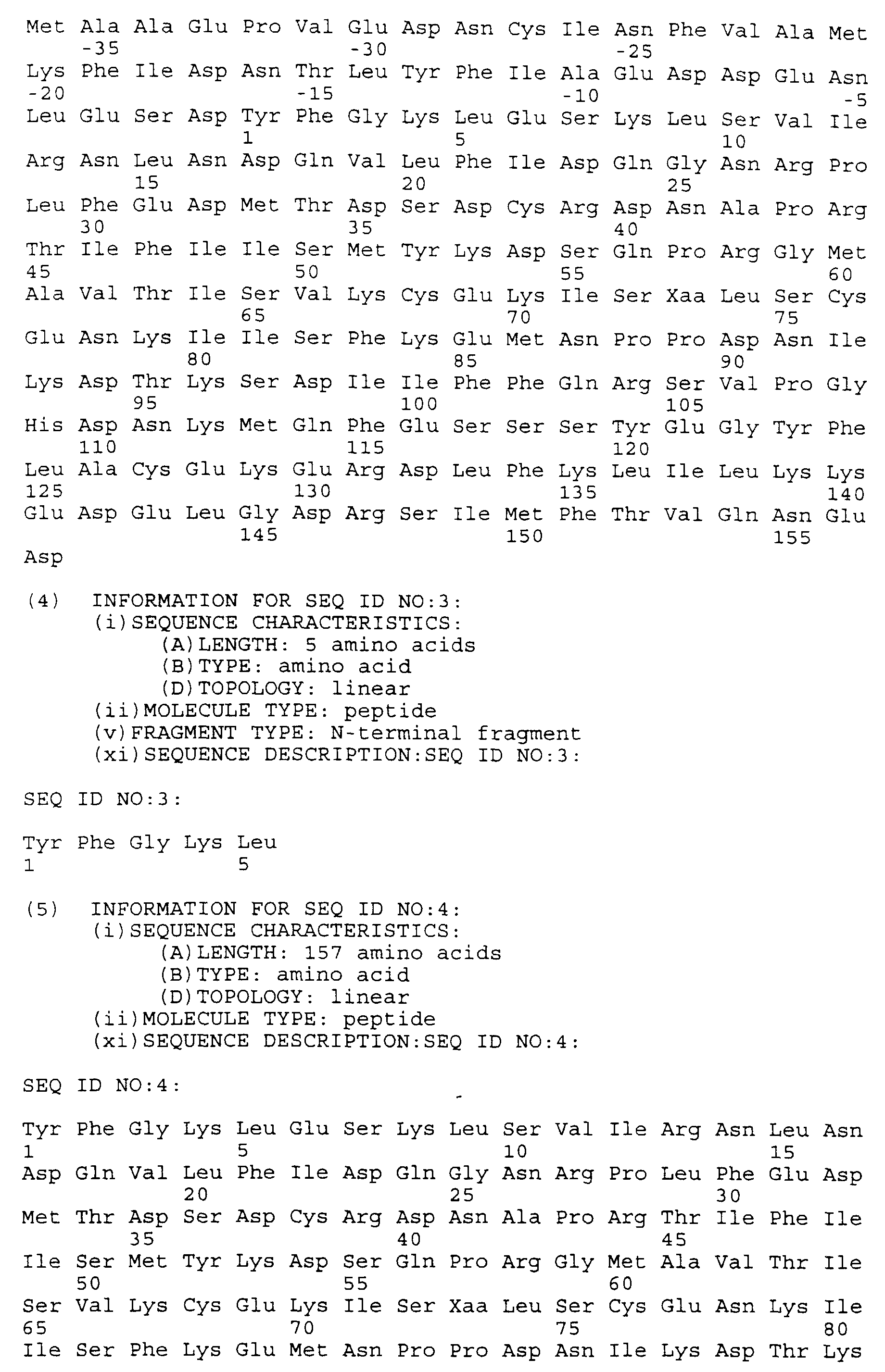
particularly, the peptide linkage between the aspartic acid 36
and tyrosine 37 in SEQ ID NO:1 to produce an active polypeptide
that induces IFN-γ production in immunocompetent cells.
The present invention was made based on the finding
of an enzyme which converts a precursor of a polypeptide that
induces IFN-γ production in immunocompetent cells into an active
polypeptide. The precursor as referred to in the present
invention has a molecular weight of about 24,000 daltons on SDS-polyacrylamide
gel electrophoresis (SDS-PAGE) in the presence
of a reducing agent, and exists, for example, in cells capable
of producing the polypeptide and mammalian host cells
transformed by introducing a DNA, e.g., a DNA with the
nucleotide sequence of SEQ ID NO:5 which contains a region
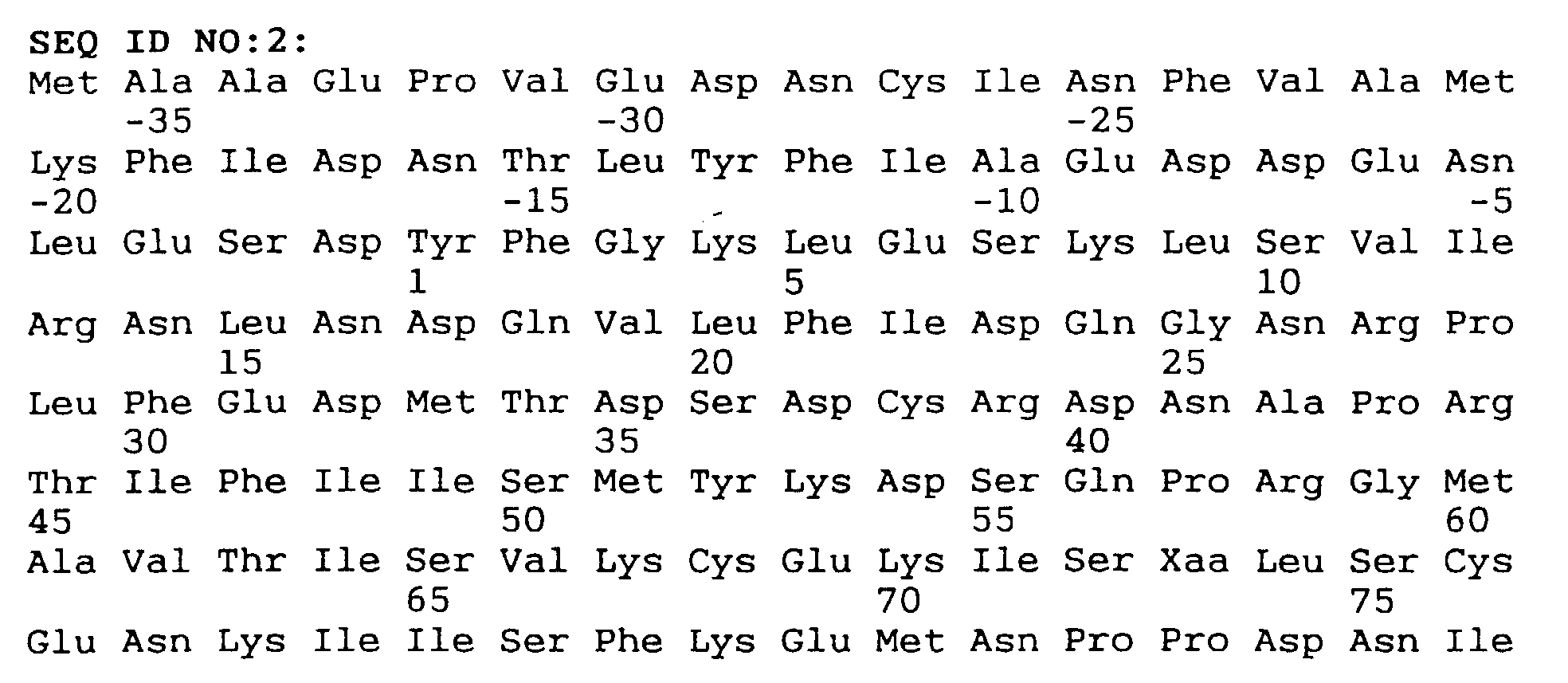
encoding the polypeptide. Such a precursor contains a part of
or the whole of the amino acid sequence of SEQ ID NO:1 at the
N-terminal region, and in whole, contains the whole amino acid
sequence of SEQ ID NO:2 (where the symbol "Xaa" is "isoleucine"
or "threonine") and has a molecular weight of 18,000-19,500
daltons on SDS-PAGE in the presence of a reducing agent.
It is said that, in human cells, polypeptides formed
by the expression of genes may be processed by intracellular
enzymes to partially digest the polypeptides and add sugar
chains thereunto. Polypeptides to be satisfactorily
incorporated into pharmaceuticals may be those which received
processings similarly as in human cells; such cells have a
demerit that they less produce the present polypeptide as
disclosed in Japanese Patent-Application No.269,105/96. The
present inventors' energetic study revealed that the polypeptide
usually exists in human cells in the form of a precursor with
a molecular weight of about 24,000 daltons and no biological
activity. Although it is not restricted to the polypeptide, it
is known that most cytokines are usually produced as precursors
with no biological activity, and then processed by intracellular
enzymes to be converted into active polypeptides.
The precursor as referred to in the present invention
generally has a molecular weight of about 24,000 daltons on SDS-polyacrylamide
gel electrophoresis (SDS-PAGE) in the presence
of a reducing agent, and exists, for example, in cells which
inherently produce the polypeptide and in mammalian host cells
transformed by introducing a DNA, e.g., a DNA with the
nucleotide sequence of SEQ ID NO:5, containing a region which
encodes the polypeptide. Such a precursor contains a part of
or the whole of the amino acid sequence of SEQ ID NO:1 at the
N-terminal region, and in whole, contains either the whole amino
acid sequence of SEQ ID NO:2 or one which partially lacks at
least one amino acid at the N-terminal region and does not
induce IFN-γ induction in immunocompetent cells.
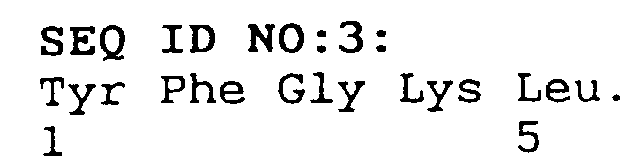
However, when contacted with the precursor according
to the present invention, ICE cleaves the polypeptide linkage
between the aspartic acid 36 and tyrosine 37 in the amino acid
sequence of SEQ ID NO:1 of the precursor to convert the
precursor into an active polypeptide with the amino acid
sequence of SEQ ID NO:3, causing the active polypeptide either
with or without a cofactor to induce IFN-γ production in
immunocompetent cells. The active polypeptide usually has the
amino acid sequences of SEQ ID NO:3 at the N-terminal region and
SEQ ID NO:4 as a whole, and a molecular weight of 18,000-19,500
daltons on SDS-PAGE in the presence of a reducing agent.
Any natural and artificially produced ICEs can be used
in the present invention as long as they produce active
polypeptides that induce IFN-γ production in immunocompetent
cells independently of their structures, sources and origins.
As reported by Emad S. Alnemri et al. in "The Journal of
Biological Chemistry", Vol.270, No.9, pp.4,312-4,317 (1995), it
is known that some ICEs even with the same origin may have some
isoforms. These isomers are said to have slightly different
physiological activities; they can be used in the present
invention as long as they act on a precursor of the present
polypeptide to form an active polypeptide.
Generally, ICE can be obtained from cells, which
inherently produce it, and transformants obtained by applying
recombinant DNA technology. Examples of such cells are those
which were established from mammal and human cells such as
epithelial cells, endothelial cells, interstitial cells,
cartilage cells, monocytes, granulocytes, lymphocytes, and
established cell lines thereof. Examples of the transformants
include transformed microorganisms and animal cells obtained by
introducing a DNA encoding ICE into microorganisms and animal
cells. ICE is prepared by culturing these transformants in
conventional culture media used in this field, either treating
them with ultrasonics in the form of intact cultures or after
separated from the cultures or soaking the transformants in
hypotonic solvents, applying to the resulting cell debris or
mixtures containing culture supernatants and cell debris the
following conventional techniques used for purifying enzymes in
this field; salting out, dialysis, filtration, concentration,
separatory sedimentation, ion-exchange chromatography, gel
filtration chromatography, adsorption chromatography,
isoelectric chromatography, hydrophobic chromatography, reverse-phase
chromatography, affinity chromatography, gel
electrophoresis and electrofocusing. Two or more of these
purification methods can be used in combination. The DNA
encoding ICE and transformants which produce ICE are disclosed,
for example, by Nancy A. Thornberry et al. in "Nature", Vol.356,
pp.768-774 (1992) and by Emad S. Alnemri et al. in "The Journal
of Biological Chemistry", Vol.270, No.9, pp.4,312-4,317 (1995).
Preferred embodiments to contact ICE with a precursor
of the present polypeptide are effected, for example, by
contacting ICE prepared by the above method with a precursor of
the polypeptide or introducing a DNA encoding ICE and a DNA
encoding the polypeptide into appropriate mammalian host cells
to express both DNAs. In the former, cells which produce the
precursor inherently or those which were transformed to produce
the precursor are cultured in nutrient culture media. ICE,
obtained in the above method, is allowed to coexist in the
resulting cultures or added to the resulting mixtures or cell
debris after disrupting the proliferated cells separated or
unseparated from the cultures. Usually, a sufficient amount of
ICE to be coexisted or added is not more than the equimolar of
the precursor, and the ICE is contacted with the precursor at
temperatures and pHs, which- allow the ICE to act on the
precursor, usually, the ICE is allowed to react with the
precursor until the desired amount of active polypeptide is
formed from the material precursor at temperatures of about 4°-40°C
and pHs of about 6-9. Thus, reaction mixtures containing
the active polypeptide can be obtained. For the later described
cells such as THP-1 cells (ATCC TIB 202) and A-253 cells (ATCC
HTB 41) which produce both ICE and a precursor of the
polypeptide, ICE is not necessarily be added to the cells. Only
required is to incubate cultures containing the cells or cell
debris, obtained by disrupting the cells on demand, at
temperatures and pHs which can allow the ICE to act on the
precursor to form an active polypeptide similarly as in the
former case. In this case, adequate amounts of reducing agents
such as 2-mercaptoethanol, dithiothreitol and reduced
glutathione are preferably used in the incubation to effectively
promote the reaction.
In the latter, a DNA encoding ICE and a DNA encoding
a precursor of the polypeptide are both introduced into an
appropriate mammalian host cell to transform it. In this case,
ICE, formed by the DNA expression, acts on a precursor of the
polypeptide, formed by the DNA expression in the same
transformant, to form an active polypeptide. Examples of such
host cells are epidermal-, interstitial-, neuroblast-,
hematopoietic-cell lines, which are derived from humans,
monkeys, mice and hamsters and used conventionally as hosts,
such as 3T3 cells including 3T3-Swiss albino cells (ATCC CCL
92), C1271 cells (ATCC CRL 1616), CHO cells including CHO-K1
cells (ATCC CCL 61), CV-1 cells (ATCC CCL 70), COS cells
including COS-1 cells (ATCC CCL 1650), HeLa cells (ATCC CCL 2),
MOP cells including MOP-8 cells (ATCC CRL 1709) and mutants
thereof. Methods to introduce a DNA encoding ICE and a DNA
encoding a precursor of the polypeptide into the host cells
include conventional DEAE-dextran method, phosphoric acid-calcium
method, electroporation, lipofection, microinjection,
and virus-infection method using retrovirus, Adenovirus,
herpesvirus and vaccinia virus. In this case, vectors such as
pCD, pcDL-SRα, pKY4, pCDM8, pCEV4, pME18S and pSV2-gpt,
including appropriate promotors, enhancers, replication origins,
termination sites, splicing sequences, polyadenylation sequences
and/or selection markers can be used. Clones, which were
observed to produce an active polypeptide, were selected by
applying the colony hybridization method or choosing the desired
clone from transformants after culturing in nutrient culture
media. Cultures containing the active polypeptide can be
obtained by culturing the cloned transformant with conventional
nutrient culture used in this field. As for cells which
inherently produce a precursor of the polypeptide and other
cells which were transformed to produce the polypeptide, they
may produce the precursor along with decomposing enzymes, which
decompose the polypeptide to inactivate it, such as CPP32 and
Mch-3. In this case, the coexistence of substances, which
inhibit these enzymes' activities, such as acetyl-L-aspartyl-L-glutamyl-L-valyl-L-aspart-1-al
in culture media or cultures
containing cells or cell debris can inhibit the decomposition
of the active polypeptide and increase the polypeptide yield.
Recombinant DNA technologies using mammalian host cells are
disclosed in detail in "Jikken-Igaku-Bessatsu-Saibo-Kogaku-Handbook",
edited by Toshio KUROKI, Masaru TANIGUCHI and Mitsuo
OSHIMURA (1992) and in "Jikken-Igaku-Bessatsu-Biomaterial Series
3, Genetic Cloning Experimental Method", edited by Takashi
YOKOTA and Kenichi ARAI, edited by Yodo Publisher, Tokyo, Japan
(1993).
In the present invention, the activity of ICE was
assayed and expressed by units for activity according to the
method by Douglas K. Miller et al. in "The Journal of Biological
Chemistry", Vol.268, No.24, pp.18,062-18,069 (1993); place in
a container 395 µl of 25 mM Hepes buffer (pH 7.5) containing 10
w/v % sucrose, 2mM dithiothreitol and 0.1 w/v % 3-[(3-cholamidopropyl)dimethylammonio]-1-propanesulfonic
acid
(hereinafter abbreviated as "CHAPS"), add to the buffer 100 µl
of a testing ICE solution and 5 µl of 10 mM dimethyl sulfoxide
solution of N-(N-acetyl-tyrosyl)-valinyl-alanyl-aspartic acid-7-amino-4-methylcoumarinamide,
and incubate the mixture at 30°C
for one hour. During the reaction, monitor the content of 7-amino-4-methylcoumarin,
which was released as the reaction
proceeded, by monitoring with a fluorometry the intensity of a
fluorescent at a wavelength of 460 nm emitted by the excitation
of a light with a wavelength of 380 nm. One unit activity of
the enzyme is defined as the amount which releases one pmole of
7-amino-4-methylcoumarin per min under these reaction
conditions.
The resulting reaction mixtures and cultures
containing an active polypeptide can be used intact as an IFN-γ
inducer, and usually, cells in the cultures are disrupted by
ultrasonics, cell lysis enzymes and/or surfactants, followed by
separating the polypeptide from the resulting cells and cell
debris by filtration, centrifugation, etc., and purifying the
separated polypeptide. In the purification, the cultures free
of cells or cell debris were purified by conventional
purification methods used to purify biologically active
substances in this field, for example, salting out, dialysis,
filtration, concentration, separatory sedimentation, ion-exchange
chromatography, gel filtration chromatography,
adsorption chromatography, isoelectric chromatography,
hydrophobic chromatography, reverse-phase chromatography,
affinity chromatography, gel electrophoresis and
electrofocusing. If necessary, two or more of these
purification methods can be used in combination. The resulting
purified polypeptide can be concentrated and lyophilized into
a liquid or solid product to meet their final uses. The
monoclonal antibody, as disclosed in Japanese Patent Kokai
No.231,598/96 by the same applicant of the present invention,
can be advantageously used to purify the polypeptide: For
example, affinity chromatography using the monoclonal antibody
can yield the desired polypeptide with a relatively-high purity
in the lowest cost and labor.
As described above, the active polypeptide, obtained
by the present method has an activity of inducing the production
of IFN-γ as a useful biologically active substance, enhances the
killer cells' cytotoxicities and induces the killer cells'
production. Thus, the polypeptide exerts a strong activity in
the treatment and/or the prevention of IFN-γ and/or killer cell-susceptive
diseases. Since the active polypeptide obtained by
the present method has a strong IFN-γ inducibility, it generally
induces a prescribed amount of IFN-γ production with only a
relatively-small amount. The active polypeptide does not
substantially induce serious side effects even when administered
to the body in a relatively-high dose because of its extremely-low
toxicity, and has a merit that it smoothly induces a desired
amount of IFN-γ production without strictly controlling the dose
in actual use. Japanese Patent Application No.28,722/96 by the
same applicant of the present invention discloses in detail the
uses of the active polypeptide as an agent for susceptive
diseases.
The following examples explain the present invention:
Example 1
Preparation of precursor
In 0.5-ml of a reaction tube were placed 10 µl of 10
x PCR buffer, 8 µl of 2.5 mM dNTP, 0.5 µl of a 5 units/µl Taq
DNA polymerase solution, and one ng of the recombinant DNA
pHIGIF disclosed in Japanese Patent Kokai No.193,098/96 by the
same applicant of the present invention. To the mixture were
added oligonucleotides with nucleotide sequences of 5'-AAGGCCAGTGTGCTGGGCCTGGACAGTCAGCAAGG-3'
and 5'-ACAGCCAGTGTGATGGC
TAGTCTTCGTTTTGAACAG-3', which were chemically synthesized based
on the nucleotide sequence of SEQ ID NO:5 for a cDNA encoding
a precursor of the polypeptide, in an amount of 20 pmole each,
and volumed up to 100 µl with sterilized distilled water. The
resulting mixture was in a conventional manner incubated 30
cycles in a sequential manner at 94°C for one min, at 60 min for
one min and at 72°C for one min to effect PCR reaction. "TAKARA
PCR AMPLIFICATION KIT" commercialized by Takara Shuzo Co., Ltd.,
Otsu, Shiga, Japan, was used as a reagent for the PCR reaction.
The reaction product was in a conventional manner
cleaved with a restriction enzyme, Bst XI, and 0.1 µg of the
resulting DNA fragment with about 800 base pairs (bp) was placed
in a container, dissolved in an adequate amount of sterilized
distilled water, mixed with 10 ng of "pRc/CMV", a plasmid vector
commercialized by Invitrogen BV, NV Leek, Netherlands, which had
been cleaved with a restriction enzyme, Bst XI, and adequate
amounts of 10 x ligation buffer and T4 ligase, mixed with 10 mM
ATP up to give a final concentration of one mM, followed by
incubating the mixture at 16°C for 18 hours to introduce the DNA
fragment into the plasmid vector pRC/CMV. The recombinant DNA
thus obtained was introduced into an Escherichia coli JM109
strain to obtain a transformant which was then inoculated to L-broth
(pH 7.2) containing 50 µg/ml of ampicillin and incubated
at 37°C for 18 hours. Thereafter, the proliferated cells were
collected from the culture and treated with the alkali-SDS
method to extract a recombinant DNA. The recombinant DNA was
named "pRCHuGF" and analyzed for nucleotide sequence using the
Dideoxy method, revealing that it had the structure of FIG.1.
As shown in FIG.1, the recombinant DNA pRCHuGF had cDNA HuIGIF,
which consists of about 800 bp and encodes a precursor of the
polypeptide, ligated to the downstream of a cytomegalovirus
promotor, PCMV.
A seed culture of CHO-K1 cells (ATCC CCL 61) from
chinese hamster's ovary was inoculated into Ham's F12 medium (pH
7.2) supplemented with 10 v/v % fetal calf serum and incubated
for proliferation. Thereafter, the proliferated cells were
collected, washed with phosphate buffered saline (hereinafter
abbreviated as "PBS") and suspended in PBS to give a cell
density of 1x10⁷ cells/ml. 0.8 ml of the suspension and 10 µg
of the recombinant DNA pRCHuGF were placed in a cuvette which
was then ice-chilled for 10 min, set to "GENE PULSER™", an
apparatus of electroporation commercialized by Japan Bio-Rad
Laboratories, Tokyo, Japan, and charged once with a discharged
pulse, followed by promptly removing the cuvette and ice-chilling
it for 10 min. Thereafter, the cell suspension was
recovered from the cuvette, inoculated into Ham's F12 medium (pH
7.2) supplemented with 10 v/v % fetal calf serum, incubated in
a 5 v/v % CO2 incubator at 37°C for 3 days, then admixed with
G418 to give a final concentration of 400 µg/ml and incubated
for 3 days under the same conditions as above. Forty-eight
colonies were selected from about 100 colonies, and some of the
selected ones were inoculated into a culture plate distributed
with Ham's F12 medium (pH 7.2) supplemented with 10 v/v % fetal
calf serum, and cultured for a week similarly as above.
Thereafter, the cells in each well in the plate were lysed by
adding to each well 10 mM Tris-HCl buffer (pH 8.5) containing
5.1 mM magnesium chloride, 0.5 w/v % sodium deoxycholate, one
w/v % "NONIDET P-40", a surfactant, 10 µg/ml aprotinin and 0.1
w/v % SDS.
Fifty µl aliquots of the resulting cell-lysate were
placed in containers, followed by adding 50 µl glycerol and
dithiothreitol in an amount which gave a final concentration of
2 w/v % to the containers, and allowing to stand the containers
at 37°C for one hour. Thereafter, the polypeptide in the cell-lysate
was separated by SDS-polyacrylamide gel electrophoresis,
and the polypeptide separated in the gel was in a conventional
manner transferred to a nitrocellulose membrane, soaked for one
hour in a previously obtained culture supernatant of a
hybridoma, H-1 strain, which produces a monoclonal antibody
specific to the polypeptide as disclosed in Japanese Patent
Kokai No.231,598/96 applied by the same applicant of the present
invention, and washed with 20 mM Tris-HCl buffer (pH 7.5)
containing 0.05 v/v % tween 20 to remove an excessive amount of
the monoclonal antibody. The nitrocellulose membrane was soaked
for one hour in PBS containing rabbit antimouse immunoglobulin
antibody labelled with horseradish peroxidase, washed with 50
mM Tris-HCl buffer (pH 7.5) containing 0.05 v/v % tween 20, and
colored by soaking in 50 mM Tris-HCl buffer (pH 7.5) containing
0.005 v/v % hydrogen peroxide and 0.3 mg/ml diamino benzidine.
Based on the coloration degree, a transformant clone, which more
produced a precursor of the polypeptide, was selected and named
"RCHuGF".
The transformant RCHuGF was inoculated into square
culture flasks, into which were distributed Ham's F12 medium (pH
7.2) supplemented with 400 µg/ml G418 and 10 v/v % fetal calf
serum, and incubated in a 5 v/v % CO2 incubator at 37°C for one
week while replacing the medium with a fresh one on demand.
Thereafter, an adequate amount of "TRYPSIN-EDTA", a trypsin
commercialized by GIBCO Laboratories, Div. of Life Technologies,
Inc., NY, USA, to detach the cells adhered to the walls of the
flasks, and the detached cells were washed with PBS, further
washed with ice-chilled 20 mM Hepes buffer (pH 7.4) containing
10 mM potassium chloride, 1.5 mM magnesium chloride and 0.1 mM
ethylenediamine-N,N,N',N'-tetraacetic acid disodium salt, and
allowed to stand for 20 min in 3-time volumes of a fresh
preparation of the same buffer. The cells were then disrupted
in a conventional manner, centrifuged at 10,000 x g for 30 min
to obtain a supernatant containing a precursor of the
polypeptide. The precursor gave a molecular weight of about
24,000 daltons on SDS-polyacrylamide gel electrophoresis and had
the amino acid sequence of SEQ ID NO:1 at the N-terminal region.
Example 2
Preparation of ICE
In 0.5-ml of a reaction tube were placed one µl of 10
x PCR buffer, 4 µl of 25 mM magnesium chloride, one µl of 10 mM
dATP, one µl of 10 mM dGTP, one µl of 10 mM dCTP, one µl of 10
mM dTTP, one µl of 50 µM random hexanucleotide, one µl of 20
units/µl ribonuclease, one µl of 50 units/µl reverse
transcriptase, one µg of a total RNA extract prepared in a
conventional manner from THP-1 cells (ATCC TIB 202), a
mononuclear cell line from a human acute monocytic leukemia, and
the solution was volumed up with sterilized distilled water to
give a total volume of 20 µl. The mixture solution was
incubated at 42°C for 30 min to effect reverse transcription
reaction, followed by the incubation at 99°C for 5 min to
suspend the reaction.
To the reaction mixture were added 8 µl of 10 x PCR
buffer, 4 µl of 25 mM magnesium chloride, 0.5 µl of 5 units/µl
of Taq DNA polymerase, and 20 pmole of oligonucleotides with
nucleotide sequences of 5'-CTGCTCGAGACCATGGCCGACAAGGTCCTG-3' and
5'-GAGGCGGCCGCTTAATGTCCTGGGAAGAG-3', as a sense primer and an
antisense primer, respectively, chemically synthesized based on
a nucleotide sequence encoding a human ICE, and the solution was
volumed up with a sterilized distilled water to give a total
volume of 100 µl. The mixture was incubated 40 cycles in a
sequential manner at 94°C for one min, at 55°C for one min, and
at 72°C for one min to effect PCR reaction. "GENE AMP RNA PCR
KIT", a product of Perkin-Elmer Corp., Instrument Div., Norwalk,
USA, was used as reagents for reverse transcription reaction and
PCR reaction.
The reaction mixture thus obtained was in a
conventional manner cleaved with restriction enzymes, Xho I and
Not I, and the resulting DNA fragment of about 1,200 bp, which
contained a region encoding the human ICE, was mixed with 10 ng
of pCDM8, a plasmid vector commercialized by Invitrogen BV, NV
Leek, Netherlands, which had been cleaved with the restriction
enzymes Xho I and Not I, and adequate amounts of 10 x ligation
buffer and T4 DNA ligase, and further admixed with 10 mM ATP to
give a final concentration of one mM, followed by the incubation
at 16°C for 18 hours to insert the above DNA fragment into the
plasmid vector pCDM8. The recombinant DNA thus obtained was
introduced into an Escherichia coli MC1061/P3 strain (ATCC
47035) by competent cell method to obtain a transformant which
was then inoculated into L-broth (pH 7.2) containing 20 µg/ml
ampicillin and 10 µg/ml tetracycline and incubated at 37°C for
18 hours. The proliferated cells were collected from the
resulting culture and treated with the alkali-SDS method to
obtain a recombinant DNA pCDHICE which was then analyzed on
dideoxy method, revealing that cDNA HuICE, which consists of
about 1,200 bp containing a region encoding the human ICE, was
ligated to the downstream of cytomegalovirus promotor PCMV as
shown in FIG.2.
According to a conventional method, a seed culture of
COS-1 cells (ATCC CRL 1650), derived from African Green monkey
kidney, was inoculated into and proliferated in DMEM medium (pH
7.4) supplemented with 10 v/v % fetal calf serum. The
proliferated cells were collected from the culture, washed with
a fresh preparation of the same medium and suspended in the
medium to give a cell density of 2x10⁷ cells/ml. 0.25 ml of the
cell suspension and 10 µg of the above recombinant DNA pCDHICE
were placed in a cuvette which was then incubated at ambient
temperature for 10 min, set to "GENE PULSER™", an apparatus of
electroporation commercialized by Japan Bio-Rad Laboratories,
Tokyo, Japan, and charged once with a discharged pulse.
Thereafter, the cuvette was removed from the apparatus and
allowed to stand at ambient temperature for 10 min, followed by
collecting the cells in the cuvette, inoculated into a petri
dish with DMEM medium (pH 7.4) supplemented with 10 v/v % fetal
calf serum, and incubated in a 5 v/v % CO2 incubator at 37°C for
2 days.
From the culture a supernatant was removed by sacking,
and the resulting cells adhered to the bottom walls of the petri
dish were washed with PBS, charged with an adequate amount of
PBS containing 5 mM ethylenediamine-N,N,N',N'-tetraacetic acid
disodium salt, and allowed to stand at ambient temperature for
10 min, followed by collecting cells detached from the petri
dish. The cells thus obtained were washed with PBS, mixed with
an adequate amount of 20 mM Hepes buffer (pH 7.4) containing 10
mM potassium chloride, 1.5 mM magnesium chloride, 0.1 mM
ethylenediamine-N,N,N',N'-tetraacetic acid disodium salt, and
one mM (4-amidino-phenyl)-methane-sufonylfluoride, and
homogenized by a homogenizer under ice-chilling conditions. The
disrupted cells were centrifuged at 1,500 x g for 5 min to
obtain a supernatant which was further centrifuged at 22,500 x
g for 60 min to obtain a supernatant containing 230 units/ml of
ICE.
Example 3
Preparation of polypeptide
A substrate solution was prepared by dissolving the
precursor of the polypeptide in Example 1 in 100 mM Hepes buffer
(pH 7.4), containing 10 v/v % glycerol, 0.1 w/v % CHAPS and 2
mM dithiothreitol, to give a concentration of 500 nM, and mixed
with the ICE in Example 2 to give a concentration of 500
units/ml, followed by the incubation at 37°C. At 0 min, 10 min,
30 min, one hour, 3 hours, 6 hours and 18 hours after initiating
the incubation, a portion of the reaction mixture was sampled
at each sampling time and admixed with iodoacetamide to give a
final concentration of 200 µg/ml to suspend the reaction. The
Western Blotting method using the monoclonal antibody, as
disclosed in Japanese Patent Kokai No.231,098/96 applied by the
same applicant of the present invention, was applied to the
reaction mixture to study the change on passage of time during
the conversion of the precursor into an active polypeptide. The
results were in FIG.3.
The content of the active polypeptide in each sample,
collected at each sampling time, was estimated by a bioassay
using, as a competent cell, KG-1 cells (ATCC CCL 246), a
mononuclear cell line from a human acute myelocytic leukemia.
The bioassay was as follows: KG-1 cells were suspended in RPMI
1640 medium (pH 7.4) supplemented with 10 v/v % fetal calf serum
to give a cell density of 1.5 x 10
6 cells/ml, and the cell
suspension was distributed to a 96-well microplate in an amount
of 0.1 ml/well. To the microplate was added the above reaction
mixture after diluted with RPMI 1640 medium (pH 7.4)
supplemented with 10 v/v % fetal calf serum in a volume of 0.1
ml/well, followed by incubating the microplate in a 5 v/v % CO
2
incubator at 37°C for 24 hours. After completion of the
incubation, 0.1 ml aliquots of the supernatants in the
microplate's wells were sampled and quantified for IFN-γ using
conventional enzyme immunoassay. A system free of the reaction
mixture as a control was provided and treated similarly as
above. The IFN-γ content in Table 1 was expressed after
converted into international units with respect to an IFN-γ
standard, Gg23-901-530, obtained from the National Institutes
of Health (NIH), USA.
| Reaction time (min) | IFN-γ content (IU/ml) |
| 0 min | 230 |
| 10 min | 520 |
| 30 min | 950 |
| 1 hour | 1,500 |
| 3 hours | 2,900 |
| 6 hours | 3,900 |
| 18 hours | 4,000 |
As shown in the Western Blotting of FIG.3, under this
reaction conditions, a protein band with a molecular weight of
about 24,000 daltons, corresponding to the precursor, gradually
disappeared up to 3 hours after the initiation of the reaction,
while a band with a molecular weight of about 18,200 daltons
appeared. The IFN-γ content in Table 1 well agreed with the
results; the producibility of IFN-γ as a reaction product
gradually increased as a band with a molecular weight of about
18,200 daltons, corresponding to the active polypeptide. These
results indicate that the ICE acted on a precursor of the
polypeptide to form an active polypeptide that induces IFN-γ
production in immunocompetent cells.
Example 4
Physicochemical properties of active polypeptide
Example 4-1
Purification of polypeptide
The reaction mixture after an 18 hours' incubation in
Example 3 was dialyzed against 10 mM phosphate buffer (pH 6.8),
fed to a column of "DEAE 5PW", a gel for ion-exchange
chromatography commercialized by Tosoh Corporation, Tokyo,
Japan, which had been equilibrated with 10 mM phosphate buffer
(pH 6.8), and fed with a linear gradient buffer of sodium
chloride increasing from 0 M to 0.5 M in 10 mM phosphate buffer
(pH 6.8), followed by collecting fractions eluted at sodium
chloride concentrations of about 0.2-0.3 M.
The fractions were pooled, dialyzed against PBS and
fed to a column which had been prepared by providing a gel for
immunoaffinity chromatography using a monoclonal antibody
according to the method in Japanese Patent Kokai No.231,598/96
applied by the same applicant of the present invention,
injecting the gel into a plastic cylindrical column, and washing
the column with PBS. The column was fed with 100 mM glycine-HCl
buffer (pH 2.5) to collect fractions containing an active
polypeptide which induces IFN-y production in immunocompetent
cells. The fractions were pooled, dialyzed against sterilized
distilled water, concentrated with a membrane filter, and
lyophilized to obtain a purified polypeptide in a solid form.
The theoretical yield was about 60% to the precursor used as the
material.
Example 4-2
Molecular weight of polypeptide
In accordance with the method as reported by U. K.
Lemuli in "Nature", Vol.227, pp.680-685 (1970), the purified
polypeptide in Example 4-1 was electrophoresed in a
polyacrylamide gel in the presence of 2 w/v % dithiothreitol as
a reducing agent to show a major band in a position
corresponding to about 18,000-19,500 daltons. The data shows
that ICE acted on a precursor of the polypeptide with a
molecular weight of about 24,000 daltons to convert it into an
active polypeptide with a molecular weight lower than that of
the precursor. The molecular markers used in this experiment
were calf serum albumin with a molecular weight of 67,000
daltons, ovalbumin with a molecular weight of 45,000, carbonic
acid anhydrase with a molecular weight of 30,000 daltons, soy
bean trypsin inhibitor with a molecular weight of 20,100
daltons, and α-lactalbumin with a molecular weight of 14,400
daltons.
Example 4-3
Amino acid sequence of polypeptide at the N-terminal region
A conventional analysis using "MODEL 473A", a protein
sequencer commercialized by Applied Biosystems, Inc., Foster
City, USA, revealed that the purified polypeptide in Example 4-1
had the amino acid sequences of SEQ ID NO:3 at the N-terminal
region. The data indicates that ICE acted on a precursor of the
polypeptide to cleave the polypeptide linkage between the
aspartic acid 36 and tyrosine 37.
Example 5
Preparation of polypeptide
According to a conventional method, a seed culture of
COS-1 cells (ATCC CRL 1650), derived from African Green monkey
kidney, was inoculated into and proliferated in DMEM medium (pH
7.4) supplemented with 10 v/v % fetal calf serum. The
proliferated cells were collected from the culture, washed with
a fresh preparation of the same medium and suspended in the
medium to give a cell density of 2x10⁷ cells/ml. 0.25 ml of the
cell suspension, 10 µg of the recombinant DNA pRCHuGF in Example
1, and 10 µg of the recombinant DNA pCDHICE in Example 2 were
placed in a cuvette which was then incubated at ambient
temperature for 10 min, set to "GENE PULSER™", an apparatus of
electroporation commercialized by Japan Bio-Rad Laboratories,
Tokyo, Japan, and charged once with a discharged pulse. The
cuvette was then removed from the apparatus and allowed to stand
at ambient temperature for 10 min, followed by collecting the
cells in the cuvette, inoculated into a petri dish with DMEM
medium (pH 7.4) supplemented with 10 v/v % fetal calf serum, and
incubated in a 5 v/v % CO2 incubator at 37°C for 3 days.
From the culture a supernatant was removed by sacking,
and the cells adhered to the bottom walls of the petri dish were
washed with PBS, charged with an adequate amount of PBS
containing 5 mM ethylenediamine-N,N,N',N'-tetraacetic acid
disodium salt, and allowed to stand at ambient temperature for
10 min, followed by collecting cells detached from the petri
dish. The cells thus obtained were washed with PBS, mixed with
an adequate amount of 20 mM Hepes buffer (pH 7.4) containing 10
mM potassium chloride, 1.5 mM magnesium chloride, and 0.1 mM
ethylenediamine-N,N,N',N'-tetraacetic acid disodium salt, and
homogenized by a homogenizer under ice-chilling conditions. The
disrupted cells were centrifuged at 1,000 x g for 5 min to
obtain a supernatant, followed by quantifying the polypeptide
in the supernatant by applying an enzyme immunoassay using a
monoclonal antibody specific to the polypeptide.
In parallel, a system free of the recombinant DNA
pRCHuGF and/or the recombinant DNA pCDHICE was provided and
treated similarly as above. The results were in Table 2.
| Recombinant DNA | Yield of polypeptide (ng per 107 cells) | Note |
| pRCHuGF + pCDHICE | 1,281.4 | Present invention |
| pRCHuGF | 25.8 | Control |
| pCDHICE | 15.1 | Control |
| No use | 0.1 | Control |
The results in Table 2 show that a DNA encoding a
precursor of the polypeptide and a DNA encoding ICE
satisfactorily express their expression products in COS-1 cells
(ATCC CRL 1650), that the produced ICE effectively acted on the
produced precursor to form an active polypeptide that induces
IFN-γ production in immunocompetent cells. As shown in Table
2, such an active polypeptide was formed with only a slight
amount in the control systems free of the above DNA(s). This
fact evidences that the above DNAs satisfactorily expressed
their expression products in COS-1 cells (ATCC CRL 1650).
The resulting active polypeptide was purified by
applying the purification methods in Example 4-1 to the culture
supernatant of COS-1 cells (ATCC CRL 1650) introduced with the
above DNAs, and the purified polypeptide was determined for
molecular weight by applying the method in Example 4-2 to reveal
a main band, corresponding to a molecular weight of about
18,000-19,500 daltons, for polypeptide that induces IFN-γ
production. Further application of the method in Example 4-3
has shown that the purified polypeptide has an amino acid
sequence of SEQ ID NO:3 at the N-terminal region.
Example 6
Preparation of polypeptide
New born hamsters were in a conventional manner
injected with a rabbit antithymus serum to reduce their
immunoreaction, transplanted with about 1x10⁴ cells/head of A-253
cells (ATCC HTB 41), an epidermoid carcinoma, submaxillary
gland, human, to their dorsal subcutaneous tissues, and fed for
32 days in an usual manner. Tumor masses formed subcutaneously,
about 5 g weight per hamster, were extracted, cut, washed with
20 mM Hepes buffer (pH 7.4) containing 10 mM potassium chloride,
1.5 mM magnesium chloride, and 0.1 mM ethylenediamine-N,N,N',N'-tetraacetic
acid disodium salt, and freezed at -20°C.
The freezed tumor small masses were thawed, admixed
with one ml of a fresh preparation of the same hypotonic
solution containing 10 mM 2-mercaptoethanol against one g of the
wet tumor masses, treated with polythoron to disrupt cells, and
centrifuged at 2,500 rpm for 10 min to obtain a supernatant
containing about 500 units/ml of ICE. While incubating at 4°C
or 37°C, the supernatant was sampled at prescribed time
intervals, followed by quantifying an active polypeptide by
applying an enzyme immunoassay using a monoclonal antibody
specific to the polypeptide. The results were in FIG.4.
As shown in FIG.4, the incubation of the A-253 cells'
extract effectively increases the polypeptide yield, and this
means that, in the extract containing ICE and a precursor of the
polypeptide, the ICE effectively acted on the precursor to form
an active polypeptide. Lower temperatures are preferable as the
incubation temperature, and the polypeptide yield with an
incubation temperature of 4°C was significantly higher than that
with an incubation temperature of 37°C, e.g., the incubations
at temperatures of 4°C and 37°C yielded 5.0 µg and 2.5 µg of the
polypeptide per one g of wet tumor mass, respectively.
The reaction mixture containing the active polypeptide
thus obtained was purified by the method in Example 4-1 and
lyophilized, then determined for molecular weight by applying
the method in Example 4-2 to observe a main band, corresponding
to a molecular weight of about 18,000-19,500 daltons, for a
polypeptide that induces IFN-γ production. The application of
the method in Example 4-3 showed that the purified polypeptide
had the amino acid sequence of SEQ ID NO:3 at the N-terminal
region. Using dithiothreitol or reduced glutathione in place
of the 2-mercaptoethanol used in the above, the tumor masses
were treated similarly as above, revealing that all the reducing
agents including 2-mercaptoethanol strongly increased the
polypeptide yield at a concentration of one mM.
As described above, the present invention was made
based on the original finding that ICE acts on a precursor of
a polypeptide, that induces IFN-γ production in immunocompetent
cells, to form an active polypeptide. The present invention
uses such an activity of ICE and enables the production of a
polypeptide as a useful pharmaceutical, which received similar
processings as in human cells, is obtained by (i) contacting ICE
with either cells which inherently produce the polypeptide or
a precursor of the polypeptide produced from mammalian host
cells which had been transformed by introducing a DNA containing
a region encoding the polypeptide, or (ii) introducing both a
DNA encoding ICE and a DNA containing a region encoding the
polypeptide into mammalian host cells to express both the DNAs.
The present invention with these useful functions and
activities would be a significant invention that strongly
contributes to this field.
While there has been described what is at present
considered to be the preferred embodiments of the invention, it
will be understood the various modifications may be made
therein, and it is intended to cover in the appended claims all
such modifications as fall within the true spirit and scope of
the invention.