EP0821060B1 - E-Cadherin-Mutationen als Grundlage zur Diagnostik und Therapie humaner maligner Tumoren - Google Patents
E-Cadherin-Mutationen als Grundlage zur Diagnostik und Therapie humaner maligner Tumoren Download PDFInfo
- Publication number
- EP0821060B1 EP0821060B1 EP97112623A EP97112623A EP0821060B1 EP 0821060 B1 EP0821060 B1 EP 0821060B1 EP 97112623 A EP97112623 A EP 97112623A EP 97112623 A EP97112623 A EP 97112623A EP 0821060 B1 EP0821060 B1 EP 0821060B1
- Authority
- EP
- European Patent Office
- Prior art keywords
- cadherin
- exon
- amino acid
- mutations
- monoclonal antibody
- Prior art date
- Legal status (The legal status is an assumption and is not a legal conclusion. Google has not performed a legal analysis and makes no representation as to the accuracy of the status listed.)
- Expired - Lifetime
Links
Images


Classifications
-
- C—CHEMISTRY; METALLURGY
- C07—ORGANIC CHEMISTRY
- C07K—PEPTIDES
- C07K14/00—Peptides having more than 20 amino acids; Gastrins; Somatostatins; Melanotropins; Derivatives thereof
- C07K14/435—Peptides having more than 20 amino acids; Gastrins; Somatostatins; Melanotropins; Derivatives thereof from animals; from humans
- C07K14/705—Receptors; Cell surface antigens; Cell surface determinants
-
- A—HUMAN NECESSITIES
- A61—MEDICAL OR VETERINARY SCIENCE; HYGIENE
- A61K—PREPARATIONS FOR MEDICAL, DENTAL OR TOILETRY PURPOSES
- A61K47/00—Medicinal preparations characterised by the non-active ingredients used, e.g. carriers or inert additives; Targeting or modifying agents chemically bound to the active ingredient
- A61K47/50—Medicinal preparations characterised by the non-active ingredients used, e.g. carriers or inert additives; Targeting or modifying agents chemically bound to the active ingredient the non-active ingredient being chemically bound to the active ingredient, e.g. polymer-drug conjugates
- A61K47/51—Medicinal preparations characterised by the non-active ingredients used, e.g. carriers or inert additives; Targeting or modifying agents chemically bound to the active ingredient the non-active ingredient being chemically bound to the active ingredient, e.g. polymer-drug conjugates the non-active ingredient being a modifying agent
- A61K47/68—Medicinal preparations characterised by the non-active ingredients used, e.g. carriers or inert additives; Targeting or modifying agents chemically bound to the active ingredient the non-active ingredient being chemically bound to the active ingredient, e.g. polymer-drug conjugates the non-active ingredient being a modifying agent the modifying agent being an antibody, an immunoglobulin or a fragment thereof, e.g. an Fc-fragment
- A61K47/6835—Medicinal preparations characterised by the non-active ingredients used, e.g. carriers or inert additives; Targeting or modifying agents chemically bound to the active ingredient the non-active ingredient being chemically bound to the active ingredient, e.g. polymer-drug conjugates the non-active ingredient being a modifying agent the modifying agent being an antibody, an immunoglobulin or a fragment thereof, e.g. an Fc-fragment the modifying agent being an antibody or an immunoglobulin bearing at least one antigen-binding site
- A61K47/6849—Medicinal preparations characterised by the non-active ingredients used, e.g. carriers or inert additives; Targeting or modifying agents chemically bound to the active ingredient the non-active ingredient being chemically bound to the active ingredient, e.g. polymer-drug conjugates the non-active ingredient being a modifying agent the modifying agent being an antibody, an immunoglobulin or a fragment thereof, e.g. an Fc-fragment the modifying agent being an antibody or an immunoglobulin bearing at least one antigen-binding site the antibody targeting a receptor, a cell surface antigen or a cell surface determinant
-
- A—HUMAN NECESSITIES
- A61—MEDICAL OR VETERINARY SCIENCE; HYGIENE
- A61P—SPECIFIC THERAPEUTIC ACTIVITY OF CHEMICAL COMPOUNDS OR MEDICINAL PREPARATIONS
- A61P35/00—Antineoplastic agents
-
- C—CHEMISTRY; METALLURGY
- C07—ORGANIC CHEMISTRY
- C07K—PEPTIDES
- C07K16/00—Immunoglobulins [IG], e.g. monoclonal or polyclonal antibodies
- C07K16/18—Immunoglobulins [IG], e.g. monoclonal or polyclonal antibodies against material from animals or humans
- C07K16/28—Immunoglobulins [IG], e.g. monoclonal or polyclonal antibodies against material from animals or humans against receptors, cell surface antigens or cell surface determinants
-
- G—PHYSICS
- G01—MEASURING; TESTING
- G01N—INVESTIGATING OR ANALYSING MATERIALS BY DETERMINING THEIR CHEMICAL OR PHYSICAL PROPERTIES
- G01N33/00—Investigating or analysing materials by specific methods not covered by groups G01N1/00 - G01N31/00
- G01N33/48—Biological material, e.g. blood, urine; Haemocytometers
- G01N33/50—Chemical analysis of biological material, e.g. blood, urine; Testing involving biospecific ligand binding methods; Immunological testing
- G01N33/53—Immunoassay; Biospecific binding assay; Materials therefor
- G01N33/575—Immunoassay; Biospecific binding assay; Materials therefor for cancer
- G01N33/5753—Immunoassay; Biospecific binding assay; Materials therefor for cancer of the stomach or small intestine
-
- A—HUMAN NECESSITIES
- A61—MEDICAL OR VETERINARY SCIENCE; HYGIENE
- A61K—PREPARATIONS FOR MEDICAL, DENTAL OR TOILETRY PURPOSES
- A61K38/00—Medicinal preparations containing peptides
Definitions
- the invention relates to monoclonal antibodies which are specific directed against mutant transmembrane E-cadherin and which are useful for the detection of gastric carcinoma.
- E-cadherin is a homophile, Transmembrane-containing cell adhesion molecule, which in the Interaction of epithelial tissue an essential role plays.
- changes in malignant tumors are an explanation of a particular biological behavioral pattern; these phenomena are as specific characteristic and thus usable as a tumor marker.
- These include cell products such as also typical cell surface properties, direct or can be detected indirectly. So far it is not succeeded, a limited exclusively on tumor cells surface antigen or to isolate cell product.
- As a basis for Diagnosis and therapy of malignant diseases is so far the increased occurrence of certain cell properties (surface antigen, intracellular proteins, secreted cell products) Body used in relation to healthy tissue.
- E-cadherin immunoreactivity histology n a unchanged b abnormal c reference diffuse 28 13 (46%) 15 (54%) 1 intestinal 93 69 (74%) 24 (26) 1 diffuse 14 7 (50%) 7 (50%) 2 intestinal 22 21 (95%) 1 (5%) 2 diffuse 11 6 (55%) 5 (45%) 3 diffuse 21 0 21 (100%) 4 intestinal 30 5 (17%) 25 (83%) 4 diffuse 27 19 (70%) 8 (30%) 5 intestinal 17 17 (100%) 0 5
- Mammary carcinoma, esophageal carcinoma and colon carcinoma tissues did not show mutations in gastric carcinoma in any of the cases.
- E-cadherin mutations in gastric carcinoma.
- E-cadherin alterations in the diffuse gastric carcinoma are in-frame mutations (no interruption the reading frame). This result is for diagnostic and therapeutic purposes.
- the individual tumor cells are marked unmistakably by these sequences, ie via their mutated E-cadherin protein.
- a search carried out (homology comparison) in several gene databases showed no similarity to previously known sequences.
- On the question of the clonality of the mutation event early gastric carcinomas were examined. Since mutations were also detectable (own observations), E-cadherin mutations must be an early event in tumorigenesis, probably starting from the malignant parent clone. By mutations newly formed E-cadherin protein sequences.
- E-cadherin sequence New E-cadherin sequence 563del63 PGLRRQKRDW / VIPPISCPEN PGLRRQKRDW / IKSNKDKEGK 706del9 QGADTPPVGV / FIIERETGWL QGADTPPVGV / ERETGWLKVT 1036del15 LSQDPELPDK / NMFTINRNTG LSQDPELPDK / NRNTGVISVV 1103del129 SVVTTGLDRE / SFPTYTLVVQ SVVTTGLDRE / YKGQVPENEA 1232del183 DNPPIFNPTT / YKGQVPENEA DNPPIFNPTT / GLDFEAKQQY 1414del69 NNDGILKTAK / GLDFEAKQQY NNDGILKTAK / VSLTTSTATV Asp370Ala TAVITVTDTN D NPPIFNPTT TAVITVTDTN A NPPIFNPTT Val473A
- the slash (/) indicates the position of a deletion; from this site changes the protein sequence; underlined and bold letters mark changed by point mutations Amino acids.
- RNA fast extraction and subsequent PCR detection of the mutations The characteristic of the mutations described (mainly deletions!) Is outstandingly suitable for a targeted rapid test: the amplification of a cDNA section by appropriate primers (see methodology), which includes the mutated exon regions - in combination with an RNA-fast extraction (see methodology ) - allows the clinical utilization of the invention (time factor!).
- the detection can be carried out in tissues (eg biopsies, punctates, cytologies) and body fluids (eg blood).
- biopsies and peritoneal lavages (gastric carcinoma) of gastric carcinoma patients were examined for mutations of the E-cadherin gene. Within 8 hours (see Fig.
- tumor-specific Gene sequences is given the first opportunity to target amino acids to name their sequence a corresponding, exclusively describes protein present on tumor cells.
- the generation of antibodies is achieved to selectively target the mutant E-cadherin region.
- This hypothesis was made by us about the newly created Sequence on the example of the exon 9 deletion, exemplified by Preparation of a monoclonal antibody against the truncated Transmembrane protein tries (methodology in the appendix). It was unclear here, whether the mutated region as an antigenic determinant would be appropriate because the steric arrangement of the epitope is unknown is.
- the at the DSM under the input no. ACC 2277 deposited hybridoma cell line is just one example of a cell line that the produced according to the invention provided monoclonal antibody. According to the invention, further antibodies have already been produced, who recognize the in-frame mutations. The provision this antibody is within the skill of the art on this Area working professional.
- the 7E6 monoclonal antibody, as well as all others generated Antibodies that are mutation-specific to E-cadherin can be diagnostic and as described below be used therapeutically.
- the lack of immune response in the patient to this process is explained by the ability of tumor cells to present antigens poorly.
- the mutation-spanning peptides found can be applied to professional, antigen-presenting cells (dentritric cells) in various variations of length. The presence of all the necessary costimulators on these cells then leads to a corresponding T cell stimulation against such MHC-peptide complexes. In this way, the tumor cells that were initially ignored by the immune system are then recognized as "foreign" and eliminated.
- a specific mutation-specific antibody is not necessary, but the knowledge about the newly formed peptide sequences, which is described according to the invention.
- Monoclonal antibody which recognizes at least that sequence region from one or more of the following amino acid sequences, which has arisen by deletion or amino acid exchange in comparison to wt E cadherin, selected from at least one sequence of the following group: where "/" indicates the position of a deletion and underlined and bold letters indicate amino acids altered by point mutations, as compared to the wt E-cadherin protein.
- the invention also includes a mixture of at least two of monoclonal antibody mentioned above.
- the invention particularly includes monoclonal antibodies such as they have been described above that are specific to the amino acid sequences of mutant transmembrane E-cadherin judge.
- an immunoassay for the detection of gastric carcinoma cells comprising at least a monoclonal antibody of the present invention.
- Primers for PCR methods for amplifying DNA and cDNA sequences of mutated exon regions of E-cadherin selected to specifically include the mutant sequences selected from at least one primer of the following group:
- a therapeutic or diagnostic agent which contains at least one nucleic acid which hybridizes at least to a portion of the subsequent DNA sequences or their complementary strands or RNA sequences derived therefrom, at least under stringent conditions, at least by in-frame mutation resulting sequence area is included:
- nucleic acid contained with the nucleic acid described above stringent conditions hybridized.
- Stringent conditions in the context of the present invention are defined as such conditions that are selective and detectable specific binding of the nucleic acid to the invention allow defined nucleic acid.
- Such a hybridization under stringent conditions preferably means that after hybridization at 68 ° C in an aqueous solution or at 42 ° C in 50% formamide and subsequent washing of the Filter at 65 ° C in an aqueous solution still a bond of Probe to the inventively defined nucleic acid or derived therefrom RNA is detectable. If necessary you can also less drastic hybridization and / or washing conditions be applied.
- the monoclonal antibodies provided according to the invention are used for the diagnosis and treatment of gastric carcinoma, in particular from diffuse gastric carcinoma, can be used.
- the monoclonal antibodies of the present For example, be combined with an agent that the gastric carcinoma cells at least partially selectively eliminated. in this connection it may preferably be a toxin or a radiation source act.
- DNA oligonucleotides and oligopeptides Shown here are also the in more detail designated DNA oligonucleotides and oligopeptides. These are for immunotherapy of tumors, in particular of Gastric carcinoma, can be used.
- in-frame mutations of E-cadherin can be used for the diagnosis and treatment of gastric carcinoma are.
- in-frame mutation means that on DNA level mutations or deletions take place in E-cadherin, at the RNA level to a deletion or to a base exchange lead, with neither the deletion nor the mutation too a shift of the reading frame leads.
- RNA from the frozen tissue samples was isolated by standard methods (guanidinium isothiocyanate extraction and CsCl centrifugation). After reverse transcription of two ⁇ g of RNA, the entire coding region of the E-cadherin cDNA was amplified by PCR.
- the PCR primers used are listed in Table 4. The amplification conditions for all PCR reactions were as follows: 1 min denaturation at 94 ° C, 1 min primer annealing at 55 ° C, and 1 min elongation at 72 ° C.
- Taq polymerase and amplification buffer (1.5 mM MgCl 2 ) were purchased from Perkin Elmer Corp., Foster City, CA, USA. A Biomed PCR device was used (Biomed-Laboratory Diagnostics, Oberschleissheim). The amplification products were checked by agarose gel electrophoresis and then purified with glassmilk (GeanClean II, Bio101 Inc., La Jolla, CA, USA). The isolated DNA amplicons were then sequenced in full length (Sequenase Version 2.0 / USB, Cleveland, OH, USA).
- mutant E-cadherin The mutant molecules were transformed into expression vectors cloned.
- four different mutants were used the E-cadherin mRNA and human wild-type E-cadherin in Einkloniert expression vectors.
- There is a complete loss of an exon either one Deletion of exon 8 (129 bp) or a deletion of exon 9 (183 bp).
- Another mutation has a partial deletion of exon 10 (63 bp) on.
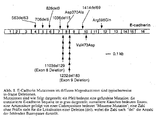
- the fourth mutation is one Base exchange in exon 8, which is a potential calcium binding site destroyed. All intended for expression cloning Mutations lie in the extracellular domain of E-cadherin (for all mutations s. Fig.1).
- RNA was used from fresh material of diffuse gastric carcinoma in which a corresponding mutation has been identified (see above).
- the cDNAs of the wild-type E-cadherin and of the mutants resulting from reverse transcription were each amplified in 2 partial fragments (A + B) (see Fig. 7).
- the two subfragments together comprise the entire coding region of 2649 bp E-cadherin (wild-type).
- the amplification of fragment A (5 'region) was carried out using the primers ATG and rEx10 (see Table 5).
- the primer pair Ex8-r3' / 2 / neu was used for the amplification of the 3 'fragment (B) of the wild-type mRNA, the exon 9 deletion, the partial deletion in exon 10 and the point mutation in exon 8, the primer pair Ex8-r3' / 2 / neu was used. Amplification of fragment B 'of the exon 8 deletion mutant was done with the pair Ex 9/1-r3' / 2 / neu.
- the amplified partial fragments A and B were each cloned into PCRII vectors (Invitrogen). These vectors enable direct and effective cloning of PCR products through specific TA base pairing.
- the sequestered cadherin constructs are in a further step in eukaryotic expression vectors been cloned in.
- the commercially available Vector pBK-CMV (Stratagene) chosen to be out of expression the desired cDNA also a selection of the expressing Cell clones allows (expression of the neomycin resistance gene).
- the second vector used, pBAT is already successful Transfections of wild type E-cadherin constructs of the mouse were used (Nose, A, Nagafuchi, A, Takeichi, M. Expressed recombinant cadherins mediate cell sorting in model systems. Cell 1988; 54: 993-1001).
- the transfection efficiency of the method was determined using a control plasmid pCMV (Stratagene).
- the vector contains the ⁇ -galactosidase gene, whereby cells which have taken up the vector can be detected after reaction of the dye X-Gal (blue coloration).
- the efficiency of the method was 10%, for transient transfections a very good value.
- E-cadherin in the cell cultures was carried out by Western blot, immunofluorescence and immunoelectron microscopy.
- SDS lysis of the cells was first performed. Here were irregularities in the running behavior in the subsequent gel run, which is necessary for the review of the lysate on.
- a cell extract was tested with Triton X-100 lysis. The examination of the extract with polyacrylamide gel electrophoresis and Coomassie staining showed here an effective disruption of the cells. Triton lysis was therefore used for all further experiments.
- E-cadherin For the specific detection of E-cadherin we used 4 various monoclonal antibodies to E-cadherin (HECD-1, Takara Biomedicals, Japan; AMST10, Saxon Biochemichals; DECMA-1, Sigma; ANTI-E-CADHERIN, Affinity Research Products Limited). Of the Detection of the antigen-antibody complex was carried out in Western blot via a second peroxidase-coupled antibody by means of Luminescence reaction (ECL-Western, Amersham).
- E-cadherin Antibody HECD-1 labeled (recognizes both wild type and also mutated, e.g. Exon 9-deleted, E-cadherin).
- TRITC Rhodamine
- Dianova goat anti-mouse antibodies
- Verification of mRNA by RT-PCR of Del 9 lines and the WT lines showed the expected fragment sizes (normal size wild-type mRNA (779 bp); truncated mRNA for the Del 9 lines (596 bp), here no wild-type E-cadherin mRNA Expression!).
- the PCR amplification was performed with the primers Ex7 and rEx11 (see Table 5).
- E-cadherin protein In the Western Blot with extracts of stably transfected Del 9 lines and a WT line clearly demonstrated E-cadherin protein.
- the mRNA is reverse transcribed and amplified the resulting E-cadherin cDNA by PCR in the entire length (primers and conditions so). Since the E-cadherin mutations are mainly in-frame deletions, they are rapidly and safely detectable by agarose gel electrophoresis. Already 9 hours after receiving the lavage, thus possible E-cadherin deletions, eg exon 8 or exon 9 loss, and thus dissiminated tumor cells, are detectable in the abdominal cavity. The clinical decision process can be directly influenced by this information (eg additional intraperitoneal therapies).
- the crude product was subsequently dissolved in 0.1% trifluoroacetic acid and on a Reverse phase column (Aquapore 300A, C8, Applied Biosystems) with purified to a linear gradient to 70% acetonitrile.
- the Purity of the peptide was modeled in a mass spectrometer AP100 (Perkin Elmer) tested with electrospray ionization.
- KLH keyhole limpet hemocyanin
- Megathura crenulata Calbiochem, Bad Soden
- pH 7.0 0.5 M N-methylimidazole buffer (Sigma-Aldrich, Steinheim) 1-Ethyl-3- (dimethylamino-propyl) carbodiimide coupled with the peptide at room temperature.
- a total of 2.8 mg peptide was coupled to 2.0 mg haemocyanin. After dialysis against phosphate buffered saline (PBS), this solution was used for immunization.
- PBS phosphate buffered saline
- the assay was performed in ELISA for the specific peptide and for control of an irrelevant peptide coupled to BSA with the same coupling chemistry. Hybridomas that reacted only with the specific peptide were frozen and their supernatants further analyzed. The subclasses were determined with subclass specific monoclonal antibodies. FACS analysis: 200,000 MDA-MB-435S cells transfected with exon 9 deleted E-cadherin (see above) or 200,000 non-transfected MDA-MB-435S cells were incubated with 50 ⁇ l hybridoma supernatant. For detection of the bound antibodies, 50 ⁇ l goat anti-rat FITC was added at a suitable dilution for 30 min.
- the cells were in FACscan (Becton) analyzed.
- the mAb 7E6 has the subclass "rat IgG1" and showed the highest fluorescence intensity in the FACscan.
- Immunofluorescence Cells seeded on coverslips (either MDA-MB-435S cells transfected with exon 9 deleted E-cadherin or untransfected MDA-MB-435S cells) were methanol fixed and incubated with E-cadherin to immunofluorescence. labeled specific antibody 7E6. As secondary antibodies, FITC-coupled goat anti-rat antibodies (Dianova) were used.
Landscapes
- Health & Medical Sciences (AREA)
- Life Sciences & Earth Sciences (AREA)
- Chemical & Material Sciences (AREA)
- Immunology (AREA)
- Organic Chemistry (AREA)
- General Health & Medical Sciences (AREA)
- Medicinal Chemistry (AREA)
- Engineering & Computer Science (AREA)
- Molecular Biology (AREA)
- Biochemistry (AREA)
- Cell Biology (AREA)
- Urology & Nephrology (AREA)
- Proteomics, Peptides & Aminoacids (AREA)
- Biophysics (AREA)
- Hematology (AREA)
- Biomedical Technology (AREA)
- Genetics & Genomics (AREA)
- Pharmacology & Pharmacy (AREA)
- Public Health (AREA)
- Veterinary Medicine (AREA)
- Animal Behavior & Ethology (AREA)
- Toxicology (AREA)
- Physics & Mathematics (AREA)
- Pathology (AREA)
- Bioinformatics & Cheminformatics (AREA)
- Epidemiology (AREA)
- Gastroenterology & Hepatology (AREA)
- Biotechnology (AREA)
- Zoology (AREA)
- Microbiology (AREA)
- General Physics & Mathematics (AREA)
- Food Science & Technology (AREA)
- Analytical Chemistry (AREA)
- General Chemical & Material Sciences (AREA)
- Nuclear Medicine, Radiotherapy & Molecular Imaging (AREA)
- Chemical Kinetics & Catalysis (AREA)
- Peptides Or Proteins (AREA)
- Medicines Containing Antibodies Or Antigens For Use As Internal Diagnostic Agents (AREA)
- Measuring Or Testing Involving Enzymes Or Micro-Organisms (AREA)
- Medicines That Contain Protein Lipid Enzymes And Other Medicines (AREA)
Description
| E-Cadherin Immunreaktivität in Magenkarzinom-Patienten. | ||||
| E-Cadherin Immunreaktivität | ||||
| Histologie | na | unverändertb | abnormalc | Referenz |
| diffus | 28 | 13 (46%) | 15 (54%) | 1 |
| intestinal | 93 | 69 (74%) | 24 (26) | 1 |
| diffus | 14 | 7 (50%) | 7 (50%) | 2 |
| intestinal | 22 | 21 (95%) | 1 (5%) | 2 |
| diffus | 11 | 6 (55%) | 5 (45%) | 3 |
| diffus | 21 | 0 | 21 (100%) | 4 |
| intestinal | 30 | 5 (17%) | 25 (83%) | 4 |
| diffus | 27 | 19 (70%) | 8 (30%) | 5 |
| intestinal | 17 | 17 (100%) | 0 | 5 |
| Von uns gefundene E-Cadherin Mutationen in Magenkarzinomen. | ||||
| Mutation | Exon | Nukleotidposition | Aminosäure(n) | Mutationsart |
| 563del63 | 4 | 563 | Aminosäuren 157-177 | in frame-Deletion von 63 bp |
| 706del9 | 5 | 706 | 205-207 | in frame-Deletion von 9 bp |
| 826del9 | 6 | 826 (T zu G) | 245-247; 244 (Asp zu Glu) | in frame-Deletion von 9 bp und Missense Mutation |
| 1036del15 | 7 | 1036 | 315-319 | in frame-Deletion von 15 bp |
| 1103del129 | 8 | 1103 | 337-379 | in frame-Deletion von 129 bp (Verlust des kompletten Exons 8) |
| Asp370Ala | 8 | 1203 | 370 (Asp zu Ala) | Missense Mutation |
| 1232del183 | 9 | 1232 | 380-440 | in frame-Deletion von 183 bp (Verlust des kompletten Exons 9) |
| 1414del69 | 10 | 1414 | 441-463 | in frame-Deletion von 69 bp |
| Val473Asp | 10 | 1512 | 473 (Val zu Asp) | Missense Mutation |
| Arg598Gln | 12 | 1887 | 598 (Arg zu Gln) | Missense Mutation |
- Abb. 1
- eine Übersicht über die bisher gefundenen E-Cadherin-Mutationen in diffusen Magenkarzinomen, die typischerweise In-frame-Deletionen darstellen;
- Abb. 2
- den Nachweis der membranständigen Lokalisation von mutiertem E-Cadherin durch Immunfluoreszenz;
- Abb. 3
- den Nachweis der membranständigen Lokalisation von mutiertem E-Cadherin durch Immun-Elektronenmikroskopie.
- Abb. 4
- Fließschema zur Schnelldiagnostik von E-Cadherin-Mutationen gemäß der Erfindungen.
- Abb. 5
- Western-Blot mit mutations-spezifischem E-Cadherin Antikörper 7E6.
- Abb. 6
- Immunhistochemie mit mutations-spezifischem E-Cadherin Antikörper 7E6.
| Durch Mutationen neu entstandene E-Cadherin Proteinsequenzen. | ||
| Mutation | "Normale" E-Cadherin Sequenz | Neue E-Cadherin Sequenz |
| 563del63 | PGLRRQKRDW/VIPPISCPEN | PGLRRQKRDW/IKSNKDKEGK |
| 706del9 | QGADTPPVGV/FIIERETGWL | QGADTPPVGV/ERETGWLKVT |
| 1036del15 | LSQDPELPDK/NMFTINRNTG | LSQDPELPDK/NRNTGVISVV |
| 1103del129 | SVVTTGLDRE/SFPTYTLVVQ | SVVTTGLDRE/YKGQVPENEA |
| 1232del183 | DNPPIFNPTT/YKGQVPENEA | DNPPIFNPTT/GLDFEAKQQY |
| 1414del69 | NNDGILKTAK/GLDFEAKQQY | NNDGILKTAK/VSLTTSTATV |
| Asp370Ala | TAVITVTDTN D NPPIFNPTT | TAVITVTDTN A NPPIFNPTT |
| Val473Asp | EVSLTTSTAT V TVDVLDVNE | EVSLTTSTAT D TVDVLDVNE |
| Arg598Gln | VNDNAPIPEP R TIFFCERNP | VNDNAPIPEP Q TIFFCERNP |
| 826del9 | AVSSNGNAVE D /PMEILITV | AVSSNGNAVE E /ILITVTDQN |
Die Charakteristik der beschriebenen Mutationen (hauptsächlich Deletionen!) eignet sich hervorragend zu einem gezielten Schnelltest: die Amplifikation eines cDNA-Abschnittes durch entsprechende Primer (s. Methodik), der die mutierten Exonbereiche einschließt - in Kombination mit einer RNA-Schnellextraktion (s. Methodik) - erlaubt die klinische Nutzbarmachung der Erfindung (Zeitfaktor!). Der Nachweis kann hierbei in Geweben (z.B. Biopsien, Punktaten, Zytologien) und Körperflüssigkeiten (z.B. Blut) geführt werden.
Beispielhaft wurden Biopsien und Peritoneallavagen (Bauchfellspülungen) von Magenkarzinompatienten auf Mutationen des E-Cadherin Gens untersucht. Innerhalb von 8 Stunden (s. Abb. 4) ist es möglich, eine E-Cadherin Alteration spezifisch nachzuweisen und damit für klinische Fragestellungen zeitgerechte Informationen zu liefern. Im Zusammenhang mit den weiteren Ausführungen (s. Antikörper/Therapie) kann hierdurch rasch auf den Behandlungsplan Einfluß genommen werden. Grundsätzlich kann diese Methodik zum spezifischen Erstnachweis eines Magenkarzinoms eingesetzt werden. Auch die Verwendung zur Differentialdiagnose (z.B. Metastasenbiopsie) zu anderen Malignomen bei unbekanntem Primärtumor (z.B. Mammakarzinomen) ist möglich.
in vitro von
- Blut zum Nachweis zirkulierender Tumorzellen
- als Basisscreening auf diffuses Magen CA zur Beurteilung der prä-, intra- und postoperativen Tumorzelldissemination als möglicher Krankheitsverlaufsmarker
- Tumorbiopsie
- zum prätherapeutischen Nachweis mutierten E-Cadherins im Hinblick auf Planung einer präoperativen (neoadjuvanten), intraoperativen (Peritoneum, Pfortader) und postoperativen (additiven oder adjuvanten) Therapie
- OP Präparat
- zum Nachweis von Tumorzellen (z.B. Abtragungsrand, Sicherung des Resektionsausmaßes)
- Lymphknoten
- zum Nachweis von Metastasen und Tumorzellen ( "Microenvolvement")
- Lavage
- zum Nachweis von disseminierten Tumorzellen in der Bauchhöhle
- Gewebe
- zum Nachweis von disseminierten Tumorzellen (Immunhistochemie)
- Differentialdiagnose von Karzinomen
- Nachweis von charakteristischen E-Cadherin Mutationen über Immunhistochemie zur differentialdiagnostischen Beurteilung von verdächtigen Gewebsproben
- Screening von Hochrisikogruppen ("Krebsfamilien")
- Nachweis von E-Cadherin Mutationen in Blutzellen (DNA)
- in vivo
- Grundvoraussetzung: Humanisierung des Antikörpers
zur therapeutischen Anwendung
spezifischer Nachweis von Tumorzellen mittels Immunszintigraphie:
prätherapeutisch zur Operationsplanung/Therapieplanung
zur Verlaufskontrolle von Therapie bzw.
zur Bestätigung eines Therapieerfolges und zur posttherapeutischen Verlaufskontrolle
- Immunradiotherapie
- Koppelung einer Strahlenquelle an den Mutationsspezifischen Antikörper
- Immuntoxintherapie
- Koppelung eines Toxins (z.B. Pseudomonastoxin) an den Antikörper
- Mögliche Wege eines spezifischen Gentransfers:
- Koppelung mit viralen Genexpressionssystemen
(z.B. Adenoviren, oder MVA, Vaccinia-abgeleitete
Expressionsvektoren);
Koppelung mit nicht-viralen Genexpressionssystemen (z.B. T7 RNA Polymerase + T7 DNA Vektor); - Möglicher gentechnischer Therapieansatz:
- Einbringen von Cofaktoren (z.B. B7) zur Markierung der
Tumorzellen für das körpereigene Immunsystem;
Einbringen von Alloantigenen (Fremd HLA Antigene, "Major Antigen") zur Aktivierung körpereigener T-Zellen und Auslösen einer Immunantwort gegen Tumorzellen mit mutiertem E-Cadherin "Minor Antigen");
Abtöten der Tumorzellen durch spezifisches Einbringen von Faktoren zur Induktion des Zelltodes (z.B. p53);
Konversion des malignen Phänotyps durch gezieltes Einbringen von Wildtyp Onkogenen/Suppressorgenen (z.B. E-Cadherin selbst); Aktivierung eines Protoxins in ein Toxin durch gezieltes Einschleusen eines Enzyms (z.B. Cytosin Deaminase, Umwandlung von 5-Fluorcytosin in das toxische 5-Fluoruracil); - Ribozyme
- z.B. gezielte Zerstörung der RNA für den Multidrug-Resistence Transporter
- Knochenmark Purching:
- Spezifischer Nachweis von Tumorzellen in behandeltem Knochenmark in vitro und gleizeitige Verwendung des Antikörpers zur spezifischen Eliminierung von Tumorzellen aus dem Knochenmark (z.B. mittels eines am Antikörper gebundenen Toxins);
- Immuntherapie:
- Beladung von dendritischen Zellen mit mutierten E-Cadherin-Peptidsequenzen (s. Tabelle 3) zur Antigenprasentation (Aktivierung von T-Zell-Klonen, die spezifisch gegen Tumorzellen gerichtet sind).
Die mangelnde Immunantwort im Patienten auf diesen Vorgang erklärt sich durch die Eigenschaft von Tumorzellen, Antigene schlecht zu präsentieren. Die gefunden mutationsüberspannenden Peptide können - in verschiedener Abwandlung der Länge - auf professionellen, antigenpräsentierenden Zellen (dentritrischen Zellen) aufgebracht werden. Durch das Vorhandensein aller notwendigen Kostimulatoren auf diesen Zellen kommt es dann zu einer entsprechenden T-Zell-Stimulation gegen solche MHC-Peptid-Komplexe. Auf diesem Wege werden dann auch die, zunächst vom Immunsystem ignorierten Tumorzellen als "fremd" erkannt und eliminiert.
Bei dieser Anwendung ist ein spezieller mutationsspezifischer Antikörper nicht nötig, wohl aber die Kenntnis über die neu entstandenen Peptidsequenzen, die erfindungsgemäß beschrieben wird.




Die amplifizierten Teilfragmente A und B wurden jeweils in PCRII Vektoren (Invitrogen) einkloniert. Diese Vektoren ermöglichen über spezifische TA-Basenpaarung eine direkte und effektive Klonierung von PCR-Produkten. Über unterschiedliche Klonierungsstrategien, auf die hier nicht im Detail eingegangen werden kann, die aber im Bereich des Fachkönnens und -wissens des Fachmannes liegen, wurden die beiden cDNA Teilfragmente aller 5 Cadherin cDNAs (Wildtyp plus 4 Mutanten) entsprechend zusammenkloniert. Danach lagen alle 5 cDNA Konstrukte in PCRII Vektoren vor.

In nachfolgenden Expressionsversuchen konnten nach Amplifikation der 5'-untranslatierten Region, die die Translationserkennungsregion (Kozak-Sequenz) enthielt, und Klonierung vor die cDNAs die so veränderten E-Cadherin cDNA Konstrukte in MDA-MB-435S Zellen, MIA PaCa-2, einer E-Cadherin negativen Pankreaszellinie, und in Neuro 2A (Neuroblastom)-zellen transient exprimiert werden.
Zur Herstellung eines Gesamtzellysates für den Western Blot wurde zuerst eine SDS-Lyse der Zellen (transfiziert oder untransfiziert) durchgeführt. Hier traten Unregelmäßigkeiten im Laufverhalten beim anschließenden Gellauf, der zur Überprüfung des Lysates nötig ist, auf. Alternativ wurde ein Zellextrakt mit Triton X-100 Lyse getestet. Die Überprüfung des Extraktes mit Polyacryamidgelelektrophorese und Coomassie Färbung zeigte hier einen effektiven Aufschluß der Zellen. Die Triton-Lyse wurde deshalb für alle weiteren Versuche benutzt.
Hiermit ist eine hochspezifische Nachweismethode - selbst von wenigen Tumorzellen - sicher und rasch möglich. Verwechselungen von morphologisch "Tumor-ähnlichen" Zellen, z.B. entzündlich veränderte Mesothelzellen, sind durch die Tumorspezifität der E-Cadherin Mutationen ausgeschlossen.
FACS Analyse: 200.000 MDA-MB-435S-Zellen, die mit Exon9 deletiertem E-Cadherin transfiziert wurden (s.o.) oder 200.000 nicht transfizierte MDA-MB-435S-Zellen wurden mit 50µl Hybridomüberstand inkubiert. Für die Detektion der gebundenen Antikörper wurden 50µl Ziege anti-Ratte-FITC in geeigneter Verdünnung für 30 min zugegeben. Die Zellen wurden im FACscan
(Becton) analysiert. Der mAb 7E6 hat die Subklasse "Ratte IgG1" und zeigte im FACscan die höchste Fluoreszenzintensität.
Immunfluoreszenz: Zur Durchführung der Immunfluoreszenz wurden auf Deckgläschen ausgesäte Zellen (entweder MDA-MB-435S-Zellen, die mit Exon 9 deletiertem E-Cadherin transfiziert wurden oder untransfizierte MDA-MB-435S-Zellen) methanolfixiert und mit dem E-Cadherin mutations-spezifischen Antikörper 7E6 markiert. Als Sekundärantikörper wurden FITC- gekoppelte Ziege-Anti-Ratte-Antikörper (Dianova) verwendet.
Claims (10)
- Monoklonaler Antikörper, der spezifisch gegen diejenigen Aminosäuresequenzen von mutiertem E-Cadherin gerichtet ist, die durch In-frame-Mutationen auf DNA-Ebene entstanden sind unda. zum Verlust mindestens eines Basentripletts oder eines Multimeren hiervon in einem Exon auf RNA-Ebene und in der Folge zur Deletion mindestens einer Aminosäure des wt-E-Cadherin-Proteins führen, und/oderb. zum Austausch von ein oder zwei Nukleotiden mindestens eines Basentripletts in einem Exon auf RNA-Ebene und in der Folge zum Austausch mindestens einer Aminosäure des wt-E-Cadherin-Proteins führen.
- Monoklonaler Antikörper nach Anspruch 1,
dadurch gekennzeichnet, daß
er gegen diejenigen Aminosäuresequenzen von mutiertem E-Cadherin gerichtet ist, die durch In-frame-Mutationen auf DNA-Ebene entstanden sind und zum Verlust mindestens eines Basentripletts oder eines Multimeren hiervon in Exon 8, Exon 9 oder Exon 10 auf RNA-Ebene führen. - Monoklonaler Antikörper nach Anspruch 1 oder Anspruch 2,
dadurch gekennzeichnet, daß
er zumindest denjenigen Sequenz-Bereich aus einem oder mehreren der nachfolgenden Aminosäuresequenzen erkennt, der durch Deletion oder Aminosäureaustausch im Vergleich zu wt-E-Cadherin entstanden ist, ausgewählt aus mindestens einer Sequenz der nachfolgenden Gruppe:wobei "/" die Position einer Deletion und unterstrichene und fettgedruckte Buchstaben die durch Punktmutationen veränderten Aminosäuren anzeigen, je im Vergleich zum wt-E-Cadherin-Protein.
- Mischung aus mindestens zwei monoklonalen Antikörpern, die gegen eine oder mehrere der obengenannten Aminosäuresequenzen gerichtet sind.
- Monoklonaler Antikörper nach einem oder mehreren der Ansprüche 1 bis 4,
dadurch gekennzeichnet, daß
er spezifisch gegen die Aminosäuresequenzen von mutiertem transmembranständigen E-Cadherin gerichtet ist. - Monoklonale Antikörper nach einem oder mehreren der vorhergehenden Ansprüche produzierende Zellinie,
dadurch gekennzeichnet, daß
sie die Hybridomzellinie delta CAD-9, clone 7E6-1, Hinterlegungsnummer DSM ACC 2277, ist. - Immuntest zum Nachweis von Magenkarzinomzellen, enthaltend mindestens einen monoklonalen Antikörper nach einem oder mehreren der vorhergehenden Ansprüche.
- Verwendung eines monoklonalen Antikörpers nach einem oder mehreren der vorhergehenden Ansprüche zur Herstellung eines Arzneimittels zur Diagnostik und Therapie von Magenkarzinomen.
- Verwendung nach Anspruch 8,
dadurch gekennzeichnet, daß
der monoklonale Antikörper zur Therapie mit einem Mittel verbunden ist, das die Magenkarzinomzellen zum Teil selektiv eliminiert. - Verwendung nach Anspruch 9,
dadurch gekennzeichnet, daß
der monoklonale Antikörper mit einem Toxin oder einer Strahlenquelle gekoppelt ist.
Applications Claiming Priority (2)
| Application Number | Priority Date | Filing Date | Title |
|---|---|---|---|
| DE19629938A DE19629938C1 (de) | 1996-07-24 | 1996-07-24 | E-Cadherin-Mutationen als Grundlage zur Diagnostik und Therapie humaner maligner Tumoren |
| DE19629938 | 1996-07-24 |
Publications (3)
| Publication Number | Publication Date |
|---|---|
| EP0821060A2 EP0821060A2 (de) | 1998-01-28 |
| EP0821060A3 EP0821060A3 (de) | 2001-06-27 |
| EP0821060B1 true EP0821060B1 (de) | 2005-04-06 |
Family
ID=7800742
Family Applications (1)
| Application Number | Title | Priority Date | Filing Date |
|---|---|---|---|
| EP97112623A Expired - Lifetime EP0821060B1 (de) | 1996-07-24 | 1997-07-23 | E-Cadherin-Mutationen als Grundlage zur Diagnostik und Therapie humaner maligner Tumoren |
Country Status (7)
| Country | Link |
|---|---|
| US (1) | US6447776B1 (de) |
| EP (1) | EP0821060B1 (de) |
| JP (1) | JP3623342B2 (de) |
| AT (1) | ATE292681T1 (de) |
| DE (2) | DE19629938C1 (de) |
| ES (1) | ES2241018T3 (de) |
| PT (1) | PT821060E (de) |
Families Citing this family (10)
| Publication number | Priority date | Publication date | Assignee | Title |
|---|---|---|---|---|
| US6723320B2 (en) * | 1996-07-24 | 2004-04-20 | Gsf Forschungszentrum Fur Umwelt Und Geshundheit Gmbh | Mutations of E cadherin as a basis for the diagnosis and therapy of human malignant tumors |
| AU765082B2 (en) * | 1998-10-01 | 2003-09-11 | Medical College Of Georgia Research Institute | Screen for risk for gastric adenocarcinoma |
| US6372439B2 (en) | 1998-10-01 | 2002-04-16 | James R. Goldenring | Screen for gastric adenocarcinoma |
| EP1186319A1 (de) * | 2000-09-08 | 2002-03-13 | Alfred Prof. Dr. Nordheim | Verwendung eines SRF Modulators zur Behandlung von SRF verbundenen Krankheiten |
| WO2002097395A2 (en) * | 2001-05-31 | 2002-12-05 | Chiron Corporation | P-cadherin as a target for anti-cancer therapy |
| AU2003236649A1 (en) * | 2002-05-15 | 2003-12-02 | Falko Fend | Egf receptor antagonists in the treatment of gastric cancer |
| US7456153B2 (en) | 2002-11-14 | 2008-11-25 | Adherex Technologies Inc. | Compounds and methods for modulating functions of classical cadherins |
| ITMI20022411A1 (it) * | 2002-11-14 | 2004-05-15 | Bracco Imaging Spa | Agenti per la diagnosi e la terapia di tumori che espongono sulla superficie delle cellule proteine alterate. |
| MXPA06012987A (es) * | 2004-05-11 | 2007-06-12 | Abgenomics Corp | Epitopos inductores de muerte de celulas t. |
| EP2172218B1 (de) * | 2007-06-26 | 2013-01-09 | Kyowa Hakko Kirin Co., Ltd. | Verfahren zum screenen eines patienten zur verabreichung eines pharmazeutischen mittels mit einem anti-krebs-antikörper als wirkstoff |
Family Cites Families (6)
| Publication number | Priority date | Publication date | Assignee | Title |
|---|---|---|---|---|
| DE4110405A1 (de) * | 1991-03-28 | 1992-10-01 | Birchmeier Walter Prof Dr | Verfahren zum nachweis der differenzierung und der invasivitaet von karzinomzellen |
| CA2118015A1 (en) * | 1992-04-14 | 1993-10-28 | Jeffrey R. Marks | Method of detecting tumors containing complexes of p53 and hsp70 |
| AU5669494A (en) * | 1992-11-17 | 1994-06-08 | Yale University | Human homolog of the e-cadherin gene and methods based thereon |
| US5622829A (en) * | 1993-12-08 | 1997-04-22 | The Regents Of The University Of California | Genetic markers for breast, ovarian, and prostatic cancer |
| US5610281A (en) * | 1994-05-03 | 1997-03-11 | Brigham & Women's Hospital, Inc. | Antibodies for modulating heterotypic E-cadherin interactions with human T lymphocytes |
| US5807978A (en) * | 1995-06-07 | 1998-09-15 | Kokolus; William J. | Immunogenic peptides of prostate specific antigen |
-
1996
- 1996-07-24 DE DE19629938A patent/DE19629938C1/de not_active Expired - Lifetime
-
1997
- 1997-07-23 DE DE59712259T patent/DE59712259D1/de not_active Expired - Lifetime
- 1997-07-23 AT AT97112623T patent/ATE292681T1/de active
- 1997-07-23 ES ES97112623T patent/ES2241018T3/es not_active Expired - Lifetime
- 1997-07-23 US US08/899,279 patent/US6447776B1/en not_active Expired - Lifetime
- 1997-07-23 EP EP97112623A patent/EP0821060B1/de not_active Expired - Lifetime
- 1997-07-23 PT PT97112623T patent/PT821060E/pt unknown
- 1997-07-24 JP JP21406797A patent/JP3623342B2/ja not_active Expired - Lifetime
Also Published As
| Publication number | Publication date |
|---|---|
| ATE292681T1 (de) | 2005-04-15 |
| PT821060E (pt) | 2005-08-31 |
| JPH10127283A (ja) | 1998-05-19 |
| JP3623342B2 (ja) | 2005-02-23 |
| EP0821060A2 (de) | 1998-01-28 |
| US6447776B1 (en) | 2002-09-10 |
| DE59712259D1 (de) | 2005-05-12 |
| DE19629938C1 (de) | 1997-11-27 |
| EP0821060A3 (de) | 2001-06-27 |
| ES2241018T3 (es) | 2005-10-16 |
Similar Documents
| Publication | Publication Date | Title |
|---|---|---|
| EP2400018B1 (de) | Differentiell in Tumoren exprimierte Genprodukte und deren Verwendung | |
| DE69025946T2 (de) | Modifikationen der struktur des egf-rezeptor-gens in menschlichen glioma | |
| EP2266612B1 (de) | Identifizierung von tumorassoziierten Zelloberflächen-Antigenen für die Diagnose und Therapie | |
| EP1759013B1 (de) | Identifizierung von oberflächen-assoziierten antigenen für die tumordiagnose und -therapie | |
| DE69631540T2 (de) | Materialien und methoden mit bezug zur identifizierung und sequenzierung des krebs-suszeptilitaetsgens brca2 und dessen anwendungen | |
| EP2380903B1 (de) | Differentiell in Tumoren exprimierte Genprodukte und deren Verwendung | |
| EP2327721B1 (de) | Differentiell in Tumoren exprimierte Genprodukte und deren Verwendung | |
| DE19629938C1 (de) | E-Cadherin-Mutationen als Grundlage zur Diagnostik und Therapie humaner maligner Tumoren | |
| EP2311860A2 (de) | Differentiell in Tumoren exprimierte Genprodukte und deren Verwendung | |
| DE69714591T2 (de) | Prostatakrebs- spezifischer antikörper für immundetektion und immuntherapie | |
| DE19958680A1 (de) | cDNA-Sequenzen von zwei Interaktoren FANCIP4 und FANCIP5 der Fanconi-Anämie-Pr oteine der Komplementationsgruppen A und C |
Legal Events
| Date | Code | Title | Description |
|---|---|---|---|
| PUAI | Public reference made under article 153(3) epc to a published international application that has entered the european phase |
Free format text: ORIGINAL CODE: 0009012 |
|
| AK | Designated contracting states |
Kind code of ref document: A2 Designated state(s): AT BE CH DE DK ES FI FR GB GR IE IT LI LU MC NL PT SE |
|
| PUAL | Search report despatched |
Free format text: ORIGINAL CODE: 0009013 |
|
| AK | Designated contracting states |
Kind code of ref document: A3 Designated state(s): AT BE CH DE DK ES FI FR GB GR IE IT LI LU MC NL PT SE |
|
| 17P | Request for examination filed |
Effective date: 20011023 |
|
| AKX | Designation fees paid |
Free format text: AT BE CH DE DK ES FI FR GB GR IE IT LI LU MC NL PT SE |
|
| 17Q | First examination report despatched |
Effective date: 20020429 |
|
| GRAP | Despatch of communication of intention to grant a patent |
Free format text: ORIGINAL CODE: EPIDOSNIGR1 |
|
| RIC1 | Information provided on ipc code assigned before grant |
Ipc: 7A 01K 67/027 B Ipc: 7A 61K 39/395 B Ipc: 7G 01N 33/574 B Ipc: 7C 12N 5/20 B Ipc: 7C 12N 5/10 B Ipc: 7C 12Q 1/68 B Ipc: 7C 07K 16/30 B Ipc: 7C 07K 1/06 B Ipc: 7C 07K 14/705 B Ipc: 7C 12N 15/12 A |
|
| GRAS | Grant fee paid |
Free format text: ORIGINAL CODE: EPIDOSNIGR3 |
|
| GRAA | (expected) grant |
Free format text: ORIGINAL CODE: 0009210 |
|
| AK | Designated contracting states |
Kind code of ref document: B1 Designated state(s): AT BE CH DE DK ES FI FR GB GR IE IT LI LU MC NL PT SE |
|
| PG25 | Lapsed in a contracting state [announced via postgrant information from national office to epo] |
Ref country code: FI Free format text: LAPSE BECAUSE OF FAILURE TO SUBMIT A TRANSLATION OF THE DESCRIPTION OR TO PAY THE FEE WITHIN THE PRESCRIBED TIME-LIMIT Effective date: 20050406 |
|
| REG | Reference to a national code |
Ref country code: GB Ref legal event code: FG4D Free format text: NOT ENGLISH |
|
| REG | Reference to a national code |
Ref country code: CH Ref legal event code: EP |
|
| REG | Reference to a national code |
Ref country code: IE Ref legal event code: FG4D Free format text: LANGUAGE OF EP DOCUMENT: GERMAN |
|
| REF | Corresponds to: |
Ref document number: 59712259 Country of ref document: DE Date of ref document: 20050512 Kind code of ref document: P |
|
| REG | Reference to a national code |
Ref country code: CH Ref legal event code: NV Representative=s name: HEPP, WENGER & RYFFEL AG |
|
| PG25 | Lapsed in a contracting state [announced via postgrant information from national office to epo] |
Ref country code: GR Free format text: LAPSE BECAUSE OF FAILURE TO SUBMIT A TRANSLATION OF THE DESCRIPTION OR TO PAY THE FEE WITHIN THE PRESCRIBED TIME-LIMIT Effective date: 20050706 Ref country code: DK Free format text: LAPSE BECAUSE OF FAILURE TO SUBMIT A TRANSLATION OF THE DESCRIPTION OR TO PAY THE FEE WITHIN THE PRESCRIBED TIME-LIMIT Effective date: 20050706 |
|
| REG | Reference to a national code |
Ref country code: SE Ref legal event code: TRGR |
|
| REG | Reference to a national code |
Ref country code: PT Ref legal event code: SC4A Effective date: 20050630 |
|
| GBT | Gb: translation of ep patent filed (gb section 77(6)(a)/1977) |
Effective date: 20050824 |
|
| REG | Reference to a national code |
Ref country code: ES Ref legal event code: FG2A Ref document number: 2241018 Country of ref document: ES Kind code of ref document: T3 |
|
| PLBE | No opposition filed within time limit |
Free format text: ORIGINAL CODE: 0009261 |
|
| STAA | Information on the status of an ep patent application or granted ep patent |
Free format text: STATUS: NO OPPOSITION FILED WITHIN TIME LIMIT |
|
| ET | Fr: translation filed | ||
| 26N | No opposition filed |
Effective date: 20060110 |
|
| REG | Reference to a national code |
Ref country code: FR Ref legal event code: PLFP Year of fee payment: 20 |
|
| PGFP | Annual fee paid to national office [announced via postgrant information from national office to epo] |
Ref country code: LU Payment date: 20160726 Year of fee payment: 20 |
|
| PGFP | Annual fee paid to national office [announced via postgrant information from national office to epo] |
Ref country code: NL Payment date: 20160720 Year of fee payment: 20 |
|
| PGFP | Annual fee paid to national office [announced via postgrant information from national office to epo] |
Ref country code: GB Payment date: 20160721 Year of fee payment: 20 Ref country code: IE Payment date: 20160722 Year of fee payment: 20 Ref country code: DE Payment date: 20160729 Year of fee payment: 20 Ref country code: MC Payment date: 20160714 Year of fee payment: 20 Ref country code: CH Payment date: 20160721 Year of fee payment: 20 Ref country code: IT Payment date: 20160725 Year of fee payment: 20 |
|
| PGFP | Annual fee paid to national office [announced via postgrant information from national office to epo] |
Ref country code: SE Payment date: 20160720 Year of fee payment: 20 Ref country code: FR Payment date: 20160721 Year of fee payment: 20 Ref country code: PT Payment date: 20160722 Year of fee payment: 20 Ref country code: AT Payment date: 20160721 Year of fee payment: 20 |
|
| PGFP | Annual fee paid to national office [announced via postgrant information from national office to epo] |
Ref country code: ES Payment date: 20160715 Year of fee payment: 20 Ref country code: BE Payment date: 20160720 Year of fee payment: 20 |
|
| REG | Reference to a national code |
Ref country code: DE Ref legal event code: R071 Ref document number: 59712259 Country of ref document: DE |
|
| REG | Reference to a national code |
Ref country code: NL Ref legal event code: MK Effective date: 20170722 |
|
| REG | Reference to a national code |
Ref country code: CH Ref legal event code: PL |
|
| REG | Reference to a national code |
Ref country code: GB Ref legal event code: PE20 Expiry date: 20170722 |
|
| REG | Reference to a national code |
Ref country code: IE Ref legal event code: MK9A |
|
| REG | Reference to a national code |
Ref country code: AT Ref legal event code: MK07 Ref document number: 292681 Country of ref document: AT Kind code of ref document: T Effective date: 20170723 |
|
| REG | Reference to a national code |
Ref country code: BE Ref legal event code: MK Effective date: 20170723 |
|
| PG25 | Lapsed in a contracting state [announced via postgrant information from national office to epo] |
Ref country code: GB Free format text: LAPSE BECAUSE OF EXPIRATION OF PROTECTION Effective date: 20170722 Ref country code: PT Free format text: LAPSE BECAUSE OF EXPIRATION OF PROTECTION Effective date: 20170801 Ref country code: IE Free format text: LAPSE BECAUSE OF EXPIRATION OF PROTECTION Effective date: 20170723 |
|
| REG | Reference to a national code |
Ref country code: ES Ref legal event code: FD2A Effective date: 20180508 |
|
| PG25 | Lapsed in a contracting state [announced via postgrant information from national office to epo] |
Ref country code: ES Free format text: LAPSE BECAUSE OF EXPIRATION OF PROTECTION Effective date: 20170724 |