EP0821076B1 - Verfahren zur Aluminisierung einer Superlegierung - Google Patents
Verfahren zur Aluminisierung einer Superlegierung Download PDFInfo
- Publication number
- EP0821076B1 EP0821076B1 EP97305206A EP97305206A EP0821076B1 EP 0821076 B1 EP0821076 B1 EP 0821076B1 EP 97305206 A EP97305206 A EP 97305206A EP 97305206 A EP97305206 A EP 97305206A EP 0821076 B1 EP0821076 B1 EP 0821076B1
- Authority
- EP
- European Patent Office
- Prior art keywords
- platinum
- high rhenium
- rhenium containing
- superalloy substrate
- single crystal
- Prior art date
- Legal status (The legal status is an assumption and is not a legal conclusion. Google has not performed a legal analysis and makes no representation as to the accuracy of the status listed.)
- Expired - Lifetime
Links
- 229910000601 superalloy Inorganic materials 0.000 title claims description 158
- 238000000034 method Methods 0.000 title claims description 67
- BASFCYQUMIYNBI-UHFFFAOYSA-N platinum Chemical compound [Pt] BASFCYQUMIYNBI-UHFFFAOYSA-N 0.000 claims description 202
- 229910052702 rhenium Inorganic materials 0.000 claims description 129
- WUAPFZMCVAUBPE-UHFFFAOYSA-N rhenium atom Chemical compound [Re] WUAPFZMCVAUBPE-UHFFFAOYSA-N 0.000 claims description 129
- PXHVJJICTQNCMI-UHFFFAOYSA-N Nickel Chemical compound [Ni] PXHVJJICTQNCMI-UHFFFAOYSA-N 0.000 claims description 104
- 229910052697 platinum Inorganic materials 0.000 claims description 101
- 238000000576 coating method Methods 0.000 claims description 83
- 229910000951 Aluminide Inorganic materials 0.000 claims description 61
- 229910052759 nickel Inorganic materials 0.000 claims description 52
- 239000011248 coating agent Substances 0.000 claims description 46
- 239000000758 substrate Substances 0.000 claims description 39
- 229910021332 silicide Inorganic materials 0.000 claims description 26
- 229910017052 cobalt Inorganic materials 0.000 claims description 25
- 239000010941 cobalt Substances 0.000 claims description 25
- 229910052804 chromium Inorganic materials 0.000 claims description 22
- 239000011651 chromium Substances 0.000 claims description 22
- VYZAMTAEIAYCRO-UHFFFAOYSA-N Chromium Chemical compound [Cr] VYZAMTAEIAYCRO-UHFFFAOYSA-N 0.000 claims description 21
- GUTLYIVDDKVIGB-UHFFFAOYSA-N cobalt atom Chemical compound [Co] GUTLYIVDDKVIGB-UHFFFAOYSA-N 0.000 claims description 21
- 229910052782 aluminium Inorganic materials 0.000 claims description 19
- 239000004411 aluminium Substances 0.000 claims description 19
- XAGFODPZIPBFFR-UHFFFAOYSA-N aluminium Chemical compound [Al] XAGFODPZIPBFFR-UHFFFAOYSA-N 0.000 claims description 19
- XUIMIQQOPSSXEZ-UHFFFAOYSA-N Silicon Chemical compound [Si] XUIMIQQOPSSXEZ-UHFFFAOYSA-N 0.000 claims description 17
- 238000009713 electroplating Methods 0.000 claims description 16
- 229910052710 silicon Inorganic materials 0.000 claims description 15
- 239000010703 silicon Substances 0.000 claims description 15
- 238000000151 deposition Methods 0.000 claims description 13
- 238000005240 physical vapour deposition Methods 0.000 claims description 12
- 239000002002 slurry Substances 0.000 claims description 12
- 238000009792 diffusion process Methods 0.000 claims description 11
- 229910052751 metal Inorganic materials 0.000 claims description 11
- 239000002184 metal Substances 0.000 claims description 11
- 238000004544 sputter deposition Methods 0.000 claims description 10
- WFKWXMTUELFFGS-UHFFFAOYSA-N tungsten Chemical compound [W] WFKWXMTUELFFGS-UHFFFAOYSA-N 0.000 claims description 7
- 229910052721 tungsten Inorganic materials 0.000 claims description 7
- 239000010937 tungsten Substances 0.000 claims description 7
- OKTJSMMVPCPJKN-UHFFFAOYSA-N Carbon Chemical compound [C] OKTJSMMVPCPJKN-UHFFFAOYSA-N 0.000 claims description 5
- 229910052799 carbon Inorganic materials 0.000 claims description 5
- 238000005229 chemical vapour deposition Methods 0.000 claims description 5
- 239000011863 silicon-based powder Substances 0.000 claims description 5
- 229910052715 tantalum Inorganic materials 0.000 claims description 5
- GUVRBAGPIYLISA-UHFFFAOYSA-N tantalum atom Chemical compound [Ta] GUVRBAGPIYLISA-UHFFFAOYSA-N 0.000 claims description 5
- 239000012720 thermal barrier coating Substances 0.000 claims description 5
- 239000000919 ceramic Substances 0.000 claims description 4
- ZOKXTWBITQBERF-UHFFFAOYSA-N Molybdenum Chemical compound [Mo] ZOKXTWBITQBERF-UHFFFAOYSA-N 0.000 claims description 3
- RTAQQCXQSZGOHL-UHFFFAOYSA-N Titanium Chemical compound [Ti] RTAQQCXQSZGOHL-UHFFFAOYSA-N 0.000 claims description 3
- 229910052735 hafnium Inorganic materials 0.000 claims description 3
- VBJZVLUMGGDVMO-UHFFFAOYSA-N hafnium atom Chemical compound [Hf] VBJZVLUMGGDVMO-UHFFFAOYSA-N 0.000 claims description 3
- 229910052750 molybdenum Inorganic materials 0.000 claims description 3
- 239000011733 molybdenum Substances 0.000 claims description 3
- 239000010936 titanium Substances 0.000 claims description 3
- 229910052719 titanium Inorganic materials 0.000 claims description 3
- 238000005254 chromizing Methods 0.000 claims description 2
- 229910052758 niobium Inorganic materials 0.000 claims description 2
- 239000010955 niobium Substances 0.000 claims description 2
- GUCVJGMIXFAOAE-UHFFFAOYSA-N niobium atom Chemical compound [Nb] GUCVJGMIXFAOAE-UHFFFAOYSA-N 0.000 claims description 2
- 239000012535 impurity Substances 0.000 claims 1
- 238000007750 plasma spraying Methods 0.000 claims 1
- 239000013078 crystal Substances 0.000 description 114
- 239000010410 layer Substances 0.000 description 20
- 238000010438 heat treatment Methods 0.000 description 10
- 230000001681 protective effect Effects 0.000 description 10
- 239000000203 mixture Substances 0.000 description 8
- 230000015572 biosynthetic process Effects 0.000 description 6
- -1 chromium modified platinum Chemical class 0.000 description 6
- 239000002344 surface layer Substances 0.000 description 5
- 229910000995 CMSX-10 Inorganic materials 0.000 description 4
- 230000032683 aging Effects 0.000 description 4
- 230000015556 catabolic process Effects 0.000 description 4
- 238000006731 degradation reaction Methods 0.000 description 4
- 239000011253 protective coating Substances 0.000 description 4
- 229910001011 CMSX-4 Inorganic materials 0.000 description 3
- 229910045601 alloy Inorganic materials 0.000 description 3
- 239000000956 alloy Substances 0.000 description 3
- 230000003647 oxidation Effects 0.000 description 3
- 238000007254 oxidation reaction Methods 0.000 description 3
- KDLHZDBZIXYQEI-UHFFFAOYSA-N Palladium Chemical compound [Pd] KDLHZDBZIXYQEI-UHFFFAOYSA-N 0.000 description 2
- 125000004122 cyclic group Chemical group 0.000 description 2
- 230000003247 decreasing effect Effects 0.000 description 2
- 230000008021 deposition Effects 0.000 description 2
- 230000000694 effects Effects 0.000 description 2
- 239000000843 powder Substances 0.000 description 2
- KMWBBMXGHHLDKL-UHFFFAOYSA-N [AlH3].[Si] Chemical compound [AlH3].[Si] KMWBBMXGHHLDKL-UHFFFAOYSA-N 0.000 description 1
- XRZCZVQJHOCRCR-UHFFFAOYSA-N [Si].[Pt] Chemical compound [Si].[Pt] XRZCZVQJHOCRCR-UHFFFAOYSA-N 0.000 description 1
- 230000002411 adverse Effects 0.000 description 1
- 238000005260 corrosion Methods 0.000 description 1
- 230000007797 corrosion Effects 0.000 description 1
- 230000005496 eutectics Effects 0.000 description 1
- 239000003999 initiator Substances 0.000 description 1
- 238000004519 manufacturing process Methods 0.000 description 1
- 150000001247 metal acetylides Chemical class 0.000 description 1
- 150000002739 metals Chemical class 0.000 description 1
- 229910052763 palladium Inorganic materials 0.000 description 1
- 230000002829 reductive effect Effects 0.000 description 1
- 230000000717 retained effect Effects 0.000 description 1
- 229910052703 rhodium Inorganic materials 0.000 description 1
- 239000010948 rhodium Substances 0.000 description 1
- MHOVAHRLVXNVSD-UHFFFAOYSA-N rhodium atom Chemical compound [Rh] MHOVAHRLVXNVSD-UHFFFAOYSA-N 0.000 description 1
- FVBUAEGBCNSCDD-UHFFFAOYSA-N silicide(4-) Chemical compound [Si-4] FVBUAEGBCNSCDD-UHFFFAOYSA-N 0.000 description 1
Images

Classifications
-
- C—CHEMISTRY; METALLURGY
- C23—COATING METALLIC MATERIAL; COATING MATERIAL WITH METALLIC MATERIAL; CHEMICAL SURFACE TREATMENT; DIFFUSION TREATMENT OF METALLIC MATERIAL; COATING BY VACUUM EVAPORATION, BY SPUTTERING, BY ION IMPLANTATION OR BY CHEMICAL VAPOUR DEPOSITION, IN GENERAL; INHIBITING CORROSION OF METALLIC MATERIAL OR INCRUSTATION IN GENERAL
- C23C—COATING METALLIC MATERIAL; COATING MATERIAL WITH METALLIC MATERIAL; SURFACE TREATMENT OF METALLIC MATERIAL BY DIFFUSION INTO THE SURFACE, BY CHEMICAL CONVERSION OR SUBSTITUTION; COATING BY VACUUM EVAPORATION, BY SPUTTERING, BY ION IMPLANTATION OR BY CHEMICAL VAPOUR DEPOSITION, IN GENERAL
- C23C28/00—Coating for obtaining at least two superposed coatings either by methods not provided for in a single one of groups C23C2/00 - C23C26/00 or by combinations of methods provided for in subclasses C23C and C25C or C25D
- C23C28/02—Coating for obtaining at least two superposed coatings either by methods not provided for in a single one of groups C23C2/00 - C23C26/00 or by combinations of methods provided for in subclasses C23C and C25C or C25D only coatings only including layers of metallic material
- C23C28/021—Coating for obtaining at least two superposed coatings either by methods not provided for in a single one of groups C23C2/00 - C23C26/00 or by combinations of methods provided for in subclasses C23C and C25C or C25D only coatings only including layers of metallic material including at least one metal alloy layer
-
- C—CHEMISTRY; METALLURGY
- C23—COATING METALLIC MATERIAL; COATING MATERIAL WITH METALLIC MATERIAL; CHEMICAL SURFACE TREATMENT; DIFFUSION TREATMENT OF METALLIC MATERIAL; COATING BY VACUUM EVAPORATION, BY SPUTTERING, BY ION IMPLANTATION OR BY CHEMICAL VAPOUR DEPOSITION, IN GENERAL; INHIBITING CORROSION OF METALLIC MATERIAL OR INCRUSTATION IN GENERAL
- C23C—COATING METALLIC MATERIAL; COATING MATERIAL WITH METALLIC MATERIAL; SURFACE TREATMENT OF METALLIC MATERIAL BY DIFFUSION INTO THE SURFACE, BY CHEMICAL CONVERSION OR SUBSTITUTION; COATING BY VACUUM EVAPORATION, BY SPUTTERING, BY ION IMPLANTATION OR BY CHEMICAL VAPOUR DEPOSITION, IN GENERAL
- C23C10/00—Solid state diffusion of only metal elements or silicon into metallic material surfaces
- C23C10/28—Solid state diffusion of only metal elements or silicon into metallic material surfaces using solids, e.g. powders, pastes
- C23C10/34—Embedding in a powder mixture, i.e. pack cementation
- C23C10/58—Embedding in a powder mixture, i.e. pack cementation more than one element being diffused in more than one step
-
- C—CHEMISTRY; METALLURGY
- C23—COATING METALLIC MATERIAL; COATING MATERIAL WITH METALLIC MATERIAL; CHEMICAL SURFACE TREATMENT; DIFFUSION TREATMENT OF METALLIC MATERIAL; COATING BY VACUUM EVAPORATION, BY SPUTTERING, BY ION IMPLANTATION OR BY CHEMICAL VAPOUR DEPOSITION, IN GENERAL; INHIBITING CORROSION OF METALLIC MATERIAL OR INCRUSTATION IN GENERAL
- C23C—COATING METALLIC MATERIAL; COATING MATERIAL WITH METALLIC MATERIAL; SURFACE TREATMENT OF METALLIC MATERIAL BY DIFFUSION INTO THE SURFACE, BY CHEMICAL CONVERSION OR SUBSTITUTION; COATING BY VACUUM EVAPORATION, BY SPUTTERING, BY ION IMPLANTATION OR BY CHEMICAL VAPOUR DEPOSITION, IN GENERAL
- C23C28/00—Coating for obtaining at least two superposed coatings either by methods not provided for in a single one of groups C23C2/00 - C23C26/00 or by combinations of methods provided for in subclasses C23C and C25C or C25D
- C23C28/02—Coating for obtaining at least two superposed coatings either by methods not provided for in a single one of groups C23C2/00 - C23C26/00 or by combinations of methods provided for in subclasses C23C and C25C or C25D only coatings only including layers of metallic material
- C23C28/023—Coating for obtaining at least two superposed coatings either by methods not provided for in a single one of groups C23C2/00 - C23C26/00 or by combinations of methods provided for in subclasses C23C and C25C or C25D only coatings only including layers of metallic material only coatings of metal elements only
-
- C—CHEMISTRY; METALLURGY
- C23—COATING METALLIC MATERIAL; COATING MATERIAL WITH METALLIC MATERIAL; CHEMICAL SURFACE TREATMENT; DIFFUSION TREATMENT OF METALLIC MATERIAL; COATING BY VACUUM EVAPORATION, BY SPUTTERING, BY ION IMPLANTATION OR BY CHEMICAL VAPOUR DEPOSITION, IN GENERAL; INHIBITING CORROSION OF METALLIC MATERIAL OR INCRUSTATION IN GENERAL
- C23C—COATING METALLIC MATERIAL; COATING MATERIAL WITH METALLIC MATERIAL; SURFACE TREATMENT OF METALLIC MATERIAL BY DIFFUSION INTO THE SURFACE, BY CHEMICAL CONVERSION OR SUBSTITUTION; COATING BY VACUUM EVAPORATION, BY SPUTTERING, BY ION IMPLANTATION OR BY CHEMICAL VAPOUR DEPOSITION, IN GENERAL
- C23C28/00—Coating for obtaining at least two superposed coatings either by methods not provided for in a single one of groups C23C2/00 - C23C26/00 or by combinations of methods provided for in subclasses C23C and C25C or C25D
- C23C28/02—Coating for obtaining at least two superposed coatings either by methods not provided for in a single one of groups C23C2/00 - C23C26/00 or by combinations of methods provided for in subclasses C23C and C25C or C25D only coatings only including layers of metallic material
- C23C28/028—Including graded layers in composition or in physical properties, e.g. density, porosity, grain size
Definitions
- the present invention relates to the application of aluminide coatings to superalloys, in particular single crystal superalloys.
- Single crystal superalloys have been developed for gas turbine engine turbine blades and turbine vanes to provide optimum high temperature strength for the turbine blades and turbine vanes.
- the changes in the composition of the single crystal superalloys compared to the composition of earlier superalloys has resulted in these single crystal superalloys experiencing increased surface degradation.
- the turbine blades and turbine vanes there is a requirement for the turbine blades and turbine vanes to have longer service lives.
- these single crystal superalloy turbine blades and turbine vanes are not providing satisfactory service lives due to their degradation by corrosion and oxidation.
- These single crystal superalloys generally comprise rhenium, for example 2 to 8 wt% together with relatively high levels of tungsten and tantalum to obtain the high temperature strength characteristics. These single crystal superalloys are very strong at high temperatures due to the benefits of the rhenium, tungsten and tantalum.
- a protective coating which is commonly applied to turbine blades and turbine vanes is a platinum aluminide coating.
- the platinum aluminide coatings are applied by firstly coating the turbine blades, or turbine vanes, with platinum and by secondly aluminising the platinum coated turbine blades, or turbine vanes, using an aluminising processes.
- the aluminising process may be by pack aluminising process, by the out of pack gas phase aluminising process, by chemical vapour deposition or by other processes well known to those skilled in the art.
- topologically close packed phases are formed at the interface between the coating and the single crystal superalloy.
- High rhenium containing single crystal superalloys are those containing more than 4 wt% rhenium.
- These topologically close packed phases are formed directly following aluminising or following exposure to high temperatures.
- the topologically close packed phases contain high levels of rhenium, tungsten and chromium compared to the single crystal superalloy, and are more easily formed with increasing levels of rhenium in the single crystal superalloy.
- the topologically close packed phases increase in amount with increasing time at high temperatures.
- aluminide-silicide coatings platinum aluminide-silicide coatings, simple aluminide coatings and any other suitable aluminide coatings.
- the aluminide coatings are applied using an aluminising process, by the out of pack gas phase aluminising process, by the pack aluminising process, by chemical vapour deposition or other processes well known to those skilled in the art.
- aluminide-silicide coatings are by depositing a silicon filled organic slurry on a superalloy surface and then pack aluminising as described in US4310574.
- the aluminium carries the silicon from the slurry with it as it diffuses into the superalloy.
- Another method of producing aluminide-silicide coatings is by depositing a slurry containing elemental aluminium and silicon metal powders to a superalloy surface and then heating to above 760 degrees C to melt the aluminium and silicon in the slurry, such that they react with the superalloy and diffuse into the superalloy.
- a further method of producing aluminide-silicide coatings is by repeatedly applying the aluminium and silicon containing slurry and heat treating as described in US5547770.
- Another method of producing aluminide-silicide coatings is by applying a slurry of an eutectic aluminium-silicon or a slurry of elemental aluminium and silicon metal powders to a superalloy surface and diffusion heat treating to form a surface layer of increased thickness and reduced silicon content, and a layering layer which comprises alternate continuous interleaved layers of aluminide and silicide phases and a diffusion interface layer on the superalloy as described in published European patent application No. 0619856A.
- One method of producing the platinum aluminide-silicide coatings is by coating the superalloy of the turbine blades, or turbine vanes, with platinum, then heating to diffuse the platinum into the turbine blade and then simultaneously diffusing aluminium and silicon from the molten state into the platinum enriched turbine blade as described in published International patent application No. WO95/23243A.
- Another method of producing platinum aluminide-silicide coatings is by coating the superalloy turbine blades with platinum, then heat treating to diffuse the platinum into the turbine blade, a silicon layer is applied and is then aluminised as described in published European patent application No. 0654542A. It is also possible to diffuse the silicon into the turbine blade with the platinum as described in EP0654542A.
- a further method of producing platinum aluminide -silicide coatings is by electrophoretically depositing platinum-silicon powder onto the turbine blades, heat treating to diffuse platinum and silicon into the turbine blades, electrophoretically depositing aluminium and chromium powder and then heat treating to diffuse the aluminium and chromium into the turbine blades as described in US5057196.
- EP0784104A discloses a single crystal superalloy which has a platinum aluminide coating formed by depositing a layer of platinum onto the single crystal superalloy.
- EP0784104A has a priority date of 22 December 1995, a filing date of 10 December 1996 and a publication date of 16 July 1997.
- the single crystal superalloy is subsequently heated to diffuse the platinum into the single crystal superalloy and then the single crystal superalloy is aluminised to form a platinum aluminide protective coating or a bond coating for a thermal barrier coating.
- EP0545661A discloses a high rhenium containing single crystal superalloy which has an aluminide coating formed by aluminising. Prior to aluminising carbon is deposited onto the high rhenium containing single crystal superalloy and the carbon is reacted with the rhenium to form carbides to prevent the formation of topologically close packed phases.
- the present invention seeks to provide a method of aluminising a high rhenium containing single crystal superalloy which overcomes the above mentioned problem.
- the present invention provides a method of aluminising a high rhenium containing superalloy substrate, the high rhenium containing superalloy substrate comprises at least 3.5wt% rhenium, the method comprising the steps of:
- the chromium or cobalt modifies the diffusion characteristics to reduce the formation of the regions of high rhenium content.
- the chromium or cobalt are metals compatible with the superalloy.
- Step (a) may comprise applying the chromium or cobalt to the high rhenium containing superalloy substrate by electroplating, sputtering, pack diffusion, out of pack diffusion, chemical vapour deposition or physical vapour deposition.
- the invention is particularly applicable to platinum aluminide coatings, platinum aluminide-silicide coatings and aluminide-silicide coatings, but is generally applicable to all aluminide coatings on high rhenium containing superalloy substrates.
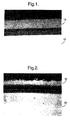
- Figure 1 is a cross-sectional view through a prior art platinum aluminide coating on a low rhenium containing single crystal superalloy.
- Figure 2 is a cross-sectional view through a prior art platinum aluminide coating on a high rhenium containing single crystal superalloy.
- Figure 3 is a cross-sectional view through the prior art platinum aluminide coating on a high rhenium containing single crystal superalloy after ageing at a high temperature.
- Figure 4 is cross-sectional view through a chromium modified platinum aluminide coating according to the present invention on a high rhenium containing single crystal superalloy.
- Figure 5 is a cross-sectional view through a cobalt modified platinum coating according to the present invention on a high rhenium containing single crystal superalloy.
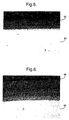
- Figure 6 is a cross-sectional view through a cobalt modified platinum coating according to the present invention on a high rhenium containing single crystal superalloy after ageing at a high temperature.
- platinum aluminising process for a single crystal superalloy the single crystal superalloy is electroplated with a layer of platinum, and the platinum plated single crystal superalloy is heat treated in a vacuum to diffuse the platinum into the single crystal superalloy.
- the heat treated, platinum plated single crystal superalloy is aluminised using pack aluminising, out of contact gas phase aluminising, chemical vapour deposition or other suitable process.
- the aluminised, diffused, platinum plated single crystal superalloy is then heat treated in a protective atmosphere to optimise the platinum aluminide coating microstructure and composition and to maximise the mechanical properties of the single crystal superalloy.
- the heat treatment diffusion step is of sufficient time and temperature to ensure that a suitable composition is attained in the diffused platinum layer so that the required platinum aluminide coating is obtained following the aluminising and heat treatment process steps.
- a conventional platinum aluminide coating 12 on a single crystal superalloy substrate 10 is shown in figure 1.
- the inward diffusing platinum produces a zone enriched in rhenium and other refractory elements, for example tungsten and chromium, in front of it.
- the zone enriched in rhenium and other refractory elements is retained within the coating. This zone enriched in rhenium and other refractory elements acts as an initiator for the formation of the topologically close packed phases.
- the topologically close packed phases are needle shaped.
- the topologically close packed phases form at the interface between the high rhenium containing single crystal superalloy and the platinum aluminide coating.
- the topologically close packed phases form either after all the process steps for forming the platinum aluminide or following exposure of the platinum aluminide and high rhenium containing single crystal superalloy to high temperatures.
- the topologically close packed phases contain high levels of rhenium, compared to the single crystal superalloy, and are more easily formed as the rhenium content of the single crystal superalloy increases.
- the topologically close packed phases effect the performance of the single crystal superalloy component, because the topologically close packed phase region has lower creep strength than the single crystal superalloy. It will therefore reduce the effective load bearing cross-section of the turbine blade, or turbine vane.
- a conventional platinum aluminide coating 22 on a high rhenium containing single crystal superalloy substrate 20 after ageing at high temperature is shown in figure 3. Additionally topologically close packed phases 24 are present at the interface between the platinum aluminide coating 22 and the high rhenium containing single crystal superalloy substrate 20.
- the present invention modifies the surface of a high rhenium containing single crystal superalloy in a manner which allows the platinum layer to diffuse into the high rhenium containing single crystal superalloy, in the following heat treatment step, without the formation of the zone enriched in rhenium and other refractory elements in front of the platinum.
- the subsequent aluminising and heat treatment steps produce a platinum aluminide coating without topologically close packed phases at the interface between the high rhenium containing single crystal superalloy and the platinum aluminide.
- CMSX4 is produced by the Cannon-Muskegon Corporation of 2875 Lincoln Street, Muskegon, Michigan MI 49443-0506, USA. CMSX4 has a nominal composition of 6.4 wt% tungsten, 9.5 wt% cobalt, 6.5 wt% chromium, 3.0 wt% rhenium, 5.6 wt% aluminium, 6.5 wt% tantalum, 1.0 wt% titanium, 0.1 wt% hafnium, 0.6 wt% molybdenum, 0.006 wt% carbon and the balance is nickel.
- a platinum layer was deposited onto the low rhenium containing nickel based single crystal superalloy by electroplating, sputtering, CVD, PVD or other suitable method to a thickness in the range 2.5 to 12.5 micrometers ( ⁇ m) and was heat treated in a vacuum, or a protective atmosphere, for 1 to 4 hours at a temperature within the range 900°C to 1150°C to diffuse the platinum into the low rhenium containing nickel based single crystal superalloy. More specifically the platinum was deposited by electroplating to a thickness of 7 micrometers ( ⁇ m) and was heat treated in a vacuum for 1 hour at 1100°C.
- the diffused platinum plated low rhenium containing nickel based single crystal superalloy was aluminised by pack aluminising, out of pack aluminising or CVD aluminising within the temperature range 700°C to 1150°C. More specifically the diffused platinum plated low rhenium containing nickel based single crystal superalloy was pack aluminised for 20 hours at 875°C.
- the platinum aluminised low rhenium containing nickel based single crystal superalloy was heat treated in a vacuum, or a protective atmosphere, for 1 hour at 1100°C and 16 hours at 870°C.
- a low rhenium containing nickel based single crystal superalloy with a platinum aluminide coating as shown in figure 1 was produced. Samples of the low rhenium containing nickel based single crystal superalloy with a platinum aluminide coating were exposed in cyclic oxidation tests for 200 hours at 1050°C and for 100 hours at 1100°C and no topologically close packed phases were found beneath the platinum aluminide coating in either case.
- the rhenium containing nickel based single crystal superalloy is known as CMSX 10 and is produced by the Cannon-Muskegon Corporation of 2875 Lincoln Street, Muskegon, Michigan MI 49443-0506, U.S.A.
- This alloy has a nominal composition range of 3.5 to 6.5 wt% tungsten, 2.0 to 5.0 wt% cobalt, 1.8 to 3.0 wt% chromium, 5.5 to 6.5 wt% rhenium, 5.3 to 6.5 wt% aluminium, 8.0 to 10.0 wt% tantalum, 0.2 to 0.8 wt% titanium, 0.25 to 1.5 wt% molybdenum, 0 to 0.03 wt% niobium, 0.02 to 0.05 wt% hafnium, 0 to 0.04 wt% carbon and a balance of nickel.
- a platinum layer was deposited onto the samples of the high rhenium containing nickel based single crystal superalloy by electroplating, sputtering, CVD, PVD or other suitable method to a thickness in the range 2.5 to 12.5 micrometers ( ⁇ m) and was heat treated in a vacuum, or protective atmosphere, for 1 to 4 hours at a temperature within the range 900°C to 1150°C to diffuse the platinum into the high rhenium containing nickel based single crystal superalloy. More specifically the platinum layer was deposited by electroplating to a thickness of 7 micrometers ( ⁇ m) and was heat treated for 1 hour at 1100°C.
- the diffused platinum coated samples of high rhenium containing nickel based single crystal superalloy were aluminised using pack aluminising, out of pack aluminising or CVD aluminising within the temperature range 700°C to 1150°C. More specifically the diffused platinum coated high rhenium containing nickel based single crystal superalloy samples were aluminised using out of pack aluminising for 6 hours at 1080°C.
- a high rhenium containing nickel base single crystal single crystal superalloy substrate 20 with a platinum aluminide coating 22 is shown in figure 2.
- a high rhenium containing nickel based single crystal superalloy substrate 20 with a platinum aluminide coating 22 after ageing at a temperature of 1100°C is shown in figure 3, which has topologically close packed phases 24.
- Samples of the high rhenium containing nickel based single crystal superalloy had there surfaces modified by formation of a chromium enriched surface layer using electroplating, sputtering, CVD, PVD or other suitable methods plus a diffusion heat treatment in vacuum, or protective atmosphere. More specifically the chromium enrichment was accomplished by out of pack chromising for 3 hours at a temperature of 1100°C to form a chromium enriched surface layer 15 micronmeters ( ⁇ m) in depth.
- the chromised, diffused, platinum coated high rhenium containing nickel based single crystal superalloy was aluminised by pack aluminising, out of pack aluminising or CVD aluminising within the temperature range 700°C to 1150°C. More specifically the chromised, diffused, platinum coated high rhenium containing nickel based single crystal superalloy samples were aluminised using out of pack aluminising for 6 hours at 1080°C.
- cobalt layer was deposited onto the high rhenium containing nickel based single crystal superalloy by electroplating to a thickness of 7 micrometers ( ⁇ m) and was heat treated in a vacuum for 1 hour at 1100°C.
- a platinum layer was deposited onto the cobalt enriched high rhenium containing nickel based single crystal superalloy by electroplating, sputtering, CVD, PVD or other suitable method to a thickness in the range 2.5 to 12.5 micrometers ( ⁇ m) and was heat treated in a vacuum, or protective atmosphere, for 1 to 4 hours at a temperature within the range 900°C to 1150°C to diffuse the platinum into the high rhenium containing nickel based single crystal superalloy. More specifically the platinum layer was deposited by electroplating to a thickness of 7 micrometers ( ⁇ m) and was heat treated for 1 hour at 1100°C.
- the platinum aluminised cobalt enriched high rhenium containing nickel based single crystal superalloy was heat treated for 1 hour at 1100°C plus 16 hours at 870°C.
- One of the samples was examined and no zones containing topologically close packed phases were found at the interface between the platinum aluminide coating and the high rhenium containing nickel based single crystal superalloy.
- a high rhenium containing nickel base single crystal single crystal superalloy substrate 40 with a cobalt modified platinum aluminide coating 42 is shown in figure 5.
- a high rhenium containing nickel base single crystal single crystal superalloy substrate 40 with a cobalt modified platinum aluminide coating 42 after exposure to an oxidising environment is shown in figure 6.
- platinum aluminide coatings the invention is also applicable to other platinum-group metal aluminide coatings, for example palladium aluminide, rhodium aluminide or combinations of these platinum-group metal aluminide coatings.
- the invention is also applicable to the production of platinum-group metal aluminide bond coatings on high rhenium containing nickel based superalloys for ceramic thermal barrier coatings, for example plasma sprayed, or PVD, ceramic thermal barrier coatings.
- the invention has referred to platinum aluminide coatings the invention is also applicable to platinum aluminide-silicide coatings, aluminide-silicide coatings and simple aluminide coatings or other suitable aluminide coatings.
- the surface of the high rhenium containing single crystal superalloy is modified by applying the chromium or cobalt and heat treating before application of the platinum aluminide-silicide coating.
- the surface of the high rhenium containing superalloy is modified by applying the chromium or cobalt and heat treating before application of the aluminide coating or aluminide-silicide coating.
Landscapes
- Chemical & Material Sciences (AREA)
- Chemical Kinetics & Catalysis (AREA)
- Engineering & Computer Science (AREA)
- Materials Engineering (AREA)
- Mechanical Engineering (AREA)
- Metallurgy (AREA)
- Organic Chemistry (AREA)
- Solid-Phase Diffusion Into Metallic Material Surfaces (AREA)
- Other Surface Treatments For Metallic Materials (AREA)
- Physical Vapour Deposition (AREA)
- Chemical Vapour Deposition (AREA)
Claims (23)
- Verfahren zur Aluminisierung eines Superlegierungs-Substrats (30, 40) mit hohem Rheniumgehalt, wobei die Superlegierung mit hohem Rheniumgehalt wenigstens 3,5 Gewichtsprozent Rhenium enthält, und wobei das Verfahren die folgenden Schritte aufweist:(a) es wird die Oberfläche des Superlegierungs-Substrats (30, 40) mit hohem Rheniumgehalt dadurch modifiziert, daß eine Schicht aus Chrom oder Kobalt auf die Oberfläche des Superlegierungs-Substrats (30, 40) mit hohem Rheniumgehalt aufgetragen wird und eine Wärmebehandlung durchgeführt wird, um Chrom oder Kobalt in das Superlegierungs-Substrat (30, 40) mit hohem Rheniumgehalt diffundieren zu lassen, und um dadurch den Rheniumgehalt der Oberfläche des Superlegierungs-Substrats (30, 40) mit hohem Rheniumgehalt zu reduzieren, und(b) es wird das Superlegierungs-Substrat (30, 40) mit hohem Rheniumgehalt aluminisiert, um einen Aluminid-Überzug (32) zu schaffen.
- Verfahren nach Anspruch 1, bei welchem der Schritt (a) dadurch bewirkt wird, daß Chrom oder Kobalt auf das Superiegierungs-Substrat (30, 40) mit hohem Rheniumgehalt durch Elektroplattierung, durch Sputtering, durch Pack-Diffusion, durch packfreie Diffusion, durch ein CVD-Verfahren oder durch ein PVD-Verfahren aufgebracht wird.
- Verfahren nach den Ansprüchen 1 oder 2, bei welchem der Schritt (a) eine Wärmebehandlung bei einer Temperatur in dem Bereich zwischen 900° C und 1150° C während einer Zeitdauer von 1 bis 4 Stunden umfaßt.
- Verfahren nach Anspruch 1, bei welchem mit dem Schritt (a) eine Schicht aus Kobalt in einer Dicke zwischen 2,5 und 12,5 Mikrometer auf das Superlegierungs-Substrat (40) mit hohem Rheniumgehalt durch Elektroplattierung aufgetragen wird und die Wärmebehandlung mit einer Temperatur im Bereich zwischen 900° C bis 1150° C für 1 bis 4 Stunden durchgeführt wird.
- Verfahren nach Anspruch 1, bei welchem in dem Schritt (a) die Oberfläche des Superlegierungs-Substrats (30) mit hohem Rheniumgehalt bei einer Temperatur von 1100° C für 3 Stunden chromisiert wird.
- Verfahren nach einem der Ansprüche 1 bis 5, bei welchem im Schritt (b) die Aluminisierung bei einer Temperatur in dem Bereich zwischen 700° C und 1150° C durchgeführt wird.
- Verfahren nach einem der Ansprüche 1 bis 6, bei welchem im Schritt (b) eine Pack-Aluminisierung, eine packfreie Gas-Phasen-Aluminisierung, eine chemische Dampfablagerung oder eine Schlamm-Aluminisierung durchgeführt wird.
- Verfahren nach einem der Ansprüche 1 bis 7, bei welchem das Superlegierungs-Substrat (30, 40) mit hohem Rheniumgehalt 4 bis 8 Gewichtsprozent Rhenium enthält.
- Verfahren nach Anspruch 8, bei welchem das Superlegierungs-Substrat (30, 40) mit hohem Rheniumgehalt eine auf Nickel basierende Superlegierung ist.
- Verfahren nach den Ansprüchen 8 oder 9, bei welchem das Superlegierungs-Substrat (30, 40) mit hohem Rheniumgehalt 3,5 bis 6,5 Gewichtsprozent Wolfram, 2,0 bis 5,0 Gewichtsprozent Kobalt, 1,8 bis 3,0 Gewichtsprozent Chrom, 5,5 bis 6,5 Gewichtsprozent Rhenium, 5,3 bis 6,5 Gewichtsprozent Aluminium, 8,0 bis 10,0 Gewichtsprozent Tantal, 0,2 bis 0,8 Gewichtsprozent Titan, 0,25 bis 1,5 Gewichtsprozent Molybden, 0 bis 0,03 Gewichtsprozent Niob, 0,02 bis 0,05 Gewichtsprozent Hafnium, 0 bis 0,04 Gewichtsprozent Kohlenstoff und als Rest Nickel plus zufällige Verunreinigungen enthält.
- Verfahren nach einem der Ansprüche 1 bis 10, bei welchem nach Durchführung des Schrittes (a) und vor Durchführung des Schrittes (b) die folgenden zusätzlichen Schritte durchgeführt werden:(c) es wird eine Schicht aus einem Metall der Platin-Gruppe auf die modifizierte Oberfläche des Superlegierungs-Substrats (30, 40) mit hohem Rheniumgehalt aufgetragen,(d) es wird das Superlegierungs-Substrat (30, 40) mit hohem Rheniumgehalt und dem Überzug aus dem Metall der Platin-Gruppe einer Wärmebehandlung unterworfen, um das Metall der Platin-Gruppe in das Superlegierungs-Substrat (30, 40) mit hohem Rheniumgehalt diffundieren zu lassen,
und wobei nach dem Schritt (b) der folgende zusätzliche Schritt durchgeführt wird:(e) es wird das Superiegierungs-Substrat (30, 40) mit hohem Rheniumgehalt und dem Überzug aus einem Metall der Platin-Gruppe mit Wärme behandelt und aluminisiert, um einen Metall-Aluminid-Überzug (32) mit einem Metall der Platin-Gruppe zu schaffen. - Verfahren nach Anspruch 11, bei welchem im Schritt (c) eine Schicht aus einem Metall der Platin-Gruppe durch Elektroplattierung, Sputtering, durch ein CVD-Verfahren oder ein PVD-Verfahren bis zu einer Dicke zwischen 2,5 Mikrometer und 12,5 Mikrometer aufgetragen wird.
- Verfahren nach den Ansprüchen 11 oder 12, bei welchem im Schritt (c) eine Schicht aus Platin aufgetragen wird.
- Verfahren nach den Ansprüchen 11, 12 oder 13, bei welchem im Schritt (c) eine Wärmebehandlung bei einer Temperatur im Bereich zwischen 900° C und 1150° C für 1 bis 4 Stunden durchgeführt wird.
- Verfahren nach einem der Ansprüche 11 bis 14, welches den zusätzlichen Schritt (f) umfaßt, mit dem ein keramischer thermischer Barrieren-Überzug auf dem Platin-Gruppen-Metall-Aluminid-Überzug (32) aufgetragen wird.
- Verfahren nach Anspruch 15, bei welchem die Ablagerung des keramischen thermischen Barriere-Überzugs durch Plasma-Spritzen oder ein PVD-Verfahren erfolgt.
- Verfahren nach einem der Ansprüche 1 bis 14, bei welchem im Schritt (b) Silizium während des Aluminisierungs-Schrittes in das Superlegierungs-Substrat mit hohem Rheniumgehalt diffundiert, um einen Aluminid-Silizid-Überzug zu erzeugen.
- Verfahren nach Anspruch 17, bei welchem ein elementares Aluminiumpulver und Siliziumpulver enthaltender Brei abgelagert und einer Wärmebehandlung unterworfen wird, damit Aluminium und Silizium in das Superlegierungs-Substrat mit hohem Rheniumgehalt diffundieren können.
- Verfahren nach Anspruch 18, bei welchem wiederholt ein elementares Aluminiumpulver und Siliziumpulver enthaltender Brei abgelagert und einer Wärmebehandlung unterworfen wird, damit Aluminium und Silizium in das Superlegierungs-Substrat mit hohem Rheniumgehalt diffundieren können.
- Verfahren nach Anspruch 11, bei welchem während des Schrittes (b) oder während des Schrittes (d) Silizium in das Superlegierungs-Substrat mit hohem Rheniumgehalt diffundiert, um einen Aluminid-Silizid-Überzug zu schaffen.
- Verfahren nach Anspruch 20, bei welchem ein elementares Aluminiumpulver und Siliziumpulver enthaltender Brei abgelagert und einer Wärmebehandlung unterworfen wird, damit Aluminium und Silizium in das Superlegierungs-Substrat mit hohem Rheniumgehalt diffundieren können.
- Verfahren nach Anspruch 21, bei welchem wiederholt ein elementares Aluminiumpulver und Siliziumpulver enthaltender Brei abgelagert und einer Wärmebehandlung unterworfen wird, damit Aluminium und Silizium in das Superlegierungs-Substrat mit hohem Rheniumgehalt diffundieren können.
- Aus einer Superlegierung bestehender Gegenstand mit einem Aluminid-Überzug, hergestellt durch das Verfahren nach einem der Ansprüche 1 bis 22.
Applications Claiming Priority (4)
| Application Number | Priority Date | Filing Date | Title |
|---|---|---|---|
| GBGB9615474.5A GB9615474D0 (en) | 1996-07-23 | 1996-07-23 | A method of platinum alluminising a superalloy |
| GB9615474 | 1996-07-23 | ||
| GB9626191 | 1996-12-18 | ||
| GBGB9626191.2A GB9626191D0 (en) | 1996-12-18 | 1996-12-18 | A metheod of aluminising a superalloy |
Publications (2)
| Publication Number | Publication Date |
|---|---|
| EP0821076A1 EP0821076A1 (de) | 1998-01-28 |
| EP0821076B1 true EP0821076B1 (de) | 2001-11-28 |
Family
ID=26309743
Family Applications (1)
| Application Number | Title | Priority Date | Filing Date |
|---|---|---|---|
| EP97305206A Expired - Lifetime EP0821076B1 (de) | 1996-07-23 | 1997-07-14 | Verfahren zur Aluminisierung einer Superlegierung |
Country Status (9)
| Country | Link |
|---|---|
| US (1) | US6080246A (de) |
| EP (1) | EP0821076B1 (de) |
| JP (1) | JP3996978B2 (de) |
| AU (1) | AU713624B2 (de) |
| CA (1) | CA2211149A1 (de) |
| DE (1) | DE69708541T2 (de) |
| IL (1) | IL121313A (de) |
| RU (1) | RU2188250C2 (de) |
| UA (1) | UA46752C2 (de) |
Cited By (3)
| Publication number | Priority date | Publication date | Assignee | Title |
|---|---|---|---|---|
| US6843861B2 (en) | 2002-02-08 | 2005-01-18 | General Electric Company | Method for preventing the formation of secondary reaction zone in susceptible articles, and articles prepared by the method |
| SG123586A1 (en) * | 2002-12-23 | 2006-07-26 | Gen Electric | Oxidation-resistant coatings bonded to metal substrates, and related articles and processes |
| US8636890B2 (en) | 2011-09-23 | 2014-01-28 | General Electric Company | Method for refurbishing PtAl coating to turbine hardware removed from service |
Families Citing this family (30)
| Publication number | Priority date | Publication date | Assignee | Title |
|---|---|---|---|---|
| CA2301092A1 (en) * | 1998-06-15 | 1999-12-23 | Mitsubishi Heavy Industries, Ltd. | Ni-based single crystal alloy having coating film for preventing recrystallization fracture |
| EP1001055B1 (de) * | 1998-11-10 | 2004-02-25 | ALSTOM Technology Ltd | Gasturbineteil |
| US6305077B1 (en) * | 1999-11-18 | 2001-10-23 | General Electric Company | Repair of coated turbine components |
| US6830827B2 (en) | 2000-03-07 | 2004-12-14 | Ebara Corporation | Alloy coating, method for forming the same, and member for high temperature apparatuses |
| FR2814473B1 (fr) * | 2000-09-25 | 2003-06-27 | Snecma Moteurs | Procede de realisation d'un revetement de protection formant barriere thermique avec sous-couche de liaison sur un substrat en superalliage et piece obtenue |
| US6929868B2 (en) | 2002-11-20 | 2005-08-16 | General Electric Company | SRZ-susceptible superalloy article having a protective layer thereon |
| GB2401117A (en) * | 2003-05-01 | 2004-11-03 | Rolls Royce Plc | A method of preventing aluminising and a mask to prevent aluminising |
| WO2004106579A1 (ja) * | 2003-05-30 | 2004-12-09 | Ishikawajima-Harima Heavy Industries Co. Ltd. | 反応抑制コーティング方法 |
| US7604726B2 (en) | 2004-01-07 | 2009-10-20 | Honeywell International Inc. | Platinum aluminide coating and method thereof |
| FR2870858B1 (fr) * | 2004-05-28 | 2007-04-06 | Snecma Moteurs Sa | Procede de fabrication ou de reparation d'un revetement sur un substrat metallique |
| FR2881439B1 (fr) * | 2005-02-01 | 2007-12-07 | Onera (Off Nat Aerospatiale) | Revetement protecteur pour superalliage monocristallin |
| US8123872B2 (en) | 2006-02-22 | 2012-02-28 | General Electric Company | Carburization process for stabilizing nickel-based superalloys |
| US7544424B2 (en) | 2006-11-30 | 2009-06-09 | General Electric Company | Ni-base superalloy having a coating system containing a stabilizing layer |
| US7416790B2 (en) * | 2006-12-08 | 2008-08-26 | General Electric Company | Coating systems containing rhodium aluminide-based layers |
| US7989020B2 (en) * | 2007-02-08 | 2011-08-02 | Honeywell International Inc. | Method of forming bond coating for a thermal barrier coating |
| US8968528B2 (en) * | 2008-04-14 | 2015-03-03 | United Technologies Corporation | Platinum-modified cathodic arc coating |
| US8124246B2 (en) * | 2008-11-19 | 2012-02-28 | Honeywell International Inc. | Coated components and methods of fabricating coated components and coated turbine disks |
| EP2239346A1 (de) | 2009-04-09 | 2010-10-13 | Siemens Aktiengesellschaft | Schlickerzusammensetzung um eine Superlegierungskomponente zu aluminisieren |
| RU2542870C2 (ru) * | 2009-05-26 | 2015-02-27 | Сименс Акциенгезелльшафт | Слоистая система покрытия со слоем mcralx и слоем, богатым по хрому, и способ ее получения |
| RU2420515C2 (ru) * | 2009-08-28 | 2011-06-10 | Учреждение Российской академии наук Институт катализа им. Г.К. Борескова Сибирского отделения РАН | Способ получения 3,4,5-трифторанилина |
| FR2961528B1 (fr) * | 2010-06-18 | 2012-07-20 | Snecma | Procede d'aluminisation d'une surface avec depot prealable d'une couche de platine et de nickel |
| JP5857794B2 (ja) * | 2012-02-27 | 2016-02-10 | 株式会社Ihi | 拡散層付き金属材料ならびにその製造方法 |
| EP2937438A1 (de) * | 2014-04-22 | 2015-10-28 | Siemens Aktiengesellschaft | Beschichtete Turbinenkomponente und Verfahren zur Bildung einer Beschichtung auf einer Turbinenkomponente |
| GB201707986D0 (en) | 2017-05-18 | 2017-07-05 | Rolls Royce Plc | Coating for a nickel-base superalloy |
| US11970953B2 (en) | 2019-08-23 | 2024-04-30 | Rtx Corporation | Slurry based diffusion coatings for blade under platform of internally-cooled components and process therefor |
| FR3101643B1 (fr) | 2019-10-08 | 2022-05-06 | Safran | Piece d'aeronef en superalliage comprenant du rhenium et/ou du ruthenium et procede de fabrication associe |
| FR3102775B1 (fr) * | 2019-11-05 | 2022-04-22 | Safran | Piece d'aeronef en superalliage comprenant un canal de refroidissement |
| US11686208B2 (en) | 2020-02-06 | 2023-06-27 | Rolls-Royce Corporation | Abrasive coating for high-temperature mechanical systems |
| US12467372B2 (en) | 2023-06-13 | 2025-11-11 | Rtx Corporation | Turbine airfoil coating |
| US20240418091A1 (en) * | 2023-06-13 | 2024-12-19 | Rtx Corporation | Turbine Airfoil Coating |
Family Cites Families (29)
| Publication number | Priority date | Publication date | Assignee | Title |
|---|---|---|---|---|
| US3477831A (en) * | 1966-01-27 | 1969-11-11 | United Aircraft Corp | Coated nickel-base and cobalt-base alloys having oxidation and erosion resistance at high temperatures |
| FR2207198B1 (de) * | 1972-10-23 | 1976-08-20 | Onera (Off Nat Aerospatiale) | |
| US4528215A (en) * | 1973-01-31 | 1985-07-09 | Alloy Surfaces Company, Inc. | Diffusion aluminizing of cobalt-base superalloys |
| SU494440A1 (ru) * | 1974-05-17 | 1978-05-15 | Предприятие П/Я Р-6564 | Способ комплексной химико-термической обработки |
| SU621797A1 (ru) * | 1974-08-22 | 1978-07-27 | Рижский Краснознаменный Институт Гражданской Авиации Им. Ленинского Комсомола | Состав дл алюмосилицировани металлов и сплавов |
| US3999956A (en) * | 1975-02-21 | 1976-12-28 | Chromalloy American Corporation | Platinum-rhodium-containing high temperature alloy coating |
| US3979273A (en) * | 1975-05-27 | 1976-09-07 | United Technologies Corporation | Method of forming aluminide coatings on nickel-, cobalt-, and iron-base alloys |
| US4101714A (en) * | 1977-03-31 | 1978-07-18 | General Electric Company | High temperature oxidation resistant dispersion strengthened nickel-chromium alloys |
| GB2009251B (en) * | 1977-12-01 | 1982-08-18 | Rolls Royce | Coated metal part and the method of applying coating |
| US4820362A (en) * | 1979-03-30 | 1989-04-11 | Alloy Surfaces Company, Inc. | Metal diffusion and composition |
| US4310574A (en) * | 1980-06-20 | 1982-01-12 | The United States Of America As Represented By The Administrator Of The National Aeronautics And Space Administration | Method of protecting a surface with a silicon-slurry/aluminide coating |
| US4374183A (en) * | 1980-06-20 | 1983-02-15 | The United States Of America As Represented By The Administrator, National Aeronautics And Space Administration | Silicon-slurry/aluminide coating |
| US4526814A (en) * | 1982-11-19 | 1985-07-02 | Turbine Components Corporation | Methods of forming a protective diffusion layer on nickel, cobalt, and iron base alloys |
| US5077141A (en) * | 1984-12-06 | 1991-12-31 | Avco Corporation | High strength nickel base single crystal alloys having enhanced solid solution strength and methods for making same |
| EP0194391B1 (de) * | 1985-03-13 | 1989-06-21 | General Electric Company | Yttrium und Yttrium-Silizium enthaltende Nickel-Basis-Superlegierungen die insbesondere geeignet sind als kompatible Beschichtungen für moderne Superlegierungen |
| FR2638174B1 (fr) * | 1988-10-26 | 1991-01-18 | Onera (Off Nat Aerospatiale) | Procede de protection de surface de pieces metalliques contre la corrosion a temperature elevee, et piece traitee par ce procede |
| US5238752A (en) * | 1990-05-07 | 1993-08-24 | General Electric Company | Thermal barrier coating system with intermetallic overlay bond coat |
| US5498484A (en) * | 1990-05-07 | 1996-03-12 | General Electric Company | Thermal barrier coating system with hardenable bond coat |
| US5139824A (en) * | 1990-08-28 | 1992-08-18 | Liburdi Engineering Limited | Method of coating complex substrates |
| US5057196A (en) * | 1990-12-17 | 1991-10-15 | General Motors Corporation | Method of forming platinum-silicon-enriched diffused aluminide coating on a superalloy substrate |
| US5334263A (en) * | 1991-12-05 | 1994-08-02 | General Electric Company | Substrate stabilization of diffusion aluminide coated nickel-based superalloys |
| EP0567755B1 (de) * | 1992-04-29 | 1996-09-04 | WALBAR INC. (a Delaware Corporation) | Verbessertes Verfahren zur Diffusionsbeschichtung und Produkte |
| GB9210683D0 (en) * | 1992-05-19 | 1992-07-08 | Rolls Royce Plc | Multiplex aluminide-silicide coating |
| GB9218858D0 (en) * | 1992-09-05 | 1992-10-21 | Rolls Royce Plc | High temperature corrosion resistant composite coatings |
| EP0654542B1 (de) * | 1993-11-19 | 1999-03-31 | Walbar Inc. | Verbessertes Verfahren für eine mit Platingruppen-Silicid modifizierte Aluminid-Beschichtung und Produkte |
| US5650235A (en) * | 1994-02-28 | 1997-07-22 | Sermatech International, Inc. | Platinum enriched, silicon-modified corrosion resistant aluminide coating |
| GB9426257D0 (en) * | 1994-12-24 | 1995-03-01 | Rolls Royce Plc | Thermal barrier coating for a superalloy article and method of application |
| US5716720A (en) * | 1995-03-21 | 1998-02-10 | Howmet Corporation | Thermal barrier coating system with intermediate phase bondcoat |
| US6066405A (en) * | 1995-12-22 | 2000-05-23 | General Electric Company | Nickel-base superalloy having an optimized platinum-aluminide coating |
-
1997
- 1997-07-14 EP EP97305206A patent/EP0821076B1/de not_active Expired - Lifetime
- 1997-07-14 DE DE69708541T patent/DE69708541T2/de not_active Expired - Fee Related
- 1997-07-14 IL IL12131397A patent/IL121313A/xx not_active IP Right Cessation
- 1997-07-14 US US08/892,588 patent/US6080246A/en not_active Expired - Fee Related
- 1997-07-18 UA UA97073830A patent/UA46752C2/uk unknown
- 1997-07-22 RU RU97113530/02A patent/RU2188250C2/ru not_active IP Right Cessation
- 1997-07-23 CA CA002211149A patent/CA2211149A1/en not_active Abandoned
- 1997-07-23 AU AU30144/97A patent/AU713624B2/en not_active Ceased
- 1997-07-23 JP JP19751397A patent/JP3996978B2/ja not_active Expired - Fee Related
Cited By (3)
| Publication number | Priority date | Publication date | Assignee | Title |
|---|---|---|---|---|
| US6843861B2 (en) | 2002-02-08 | 2005-01-18 | General Electric Company | Method for preventing the formation of secondary reaction zone in susceptible articles, and articles prepared by the method |
| SG123586A1 (en) * | 2002-12-23 | 2006-07-26 | Gen Electric | Oxidation-resistant coatings bonded to metal substrates, and related articles and processes |
| US8636890B2 (en) | 2011-09-23 | 2014-01-28 | General Electric Company | Method for refurbishing PtAl coating to turbine hardware removed from service |
Also Published As
| Publication number | Publication date |
|---|---|
| DE69708541D1 (de) | 2002-01-10 |
| DE69708541T2 (de) | 2002-05-08 |
| CA2211149A1 (en) | 1998-01-23 |
| IL121313A0 (en) | 1998-01-04 |
| RU2188250C2 (ru) | 2002-08-27 |
| JPH10168556A (ja) | 1998-06-23 |
| EP0821076A1 (de) | 1998-01-28 |
| AU713624B2 (en) | 1999-12-09 |
| JP3996978B2 (ja) | 2007-10-24 |
| US6080246A (en) | 2000-06-27 |
| AU3014497A (en) | 1998-01-29 |
| UA46752C2 (uk) | 2002-06-17 |
| IL121313A (en) | 2001-03-19 |
Similar Documents
| Publication | Publication Date | Title |
|---|---|---|
| US6080246A (en) | Method of aluminising a superalloy | |
| US4933239A (en) | Aluminide coating for superalloys | |
| US4897315A (en) | Yttrium enriched aluminide coating for superalloys | |
| EP0587341B1 (de) | Hochtemperatur-korrosionsbeständige zusammengesetzte Beschichtungen | |
| US5989733A (en) | Active element modified platinum aluminide diffusion coating and CVD coating method | |
| CA2165641C (en) | A method of applying a thermal barrier coating to a superalloy article and a thermal barrier coating | |
| US6299986B1 (en) | Coated superalloy article and a method of coating a superalloy article | |
| US4326011A (en) | Hot corrosion resistant coatings | |
| US5500252A (en) | High temperature corrosion resistant composite coatings | |
| EP0787221A1 (de) | Verfahren zum beschichten von platinaluminid mit cvd | |
| JP4615677B2 (ja) | 拡散アルミニド皮膜の厚さ及びアルミニウム含量を制御する方法 | |
| EP2145969A1 (de) | Metallische Beschichtung mit wirtschaftlicher Oxidation und Ermüdungsbeständigkeit | |
| KR20030024685A (ko) | 고온 스테인레스강을 위한 코팅 시스템 | |
| EP0370838B1 (de) | Verfahren zum Schutz der Oberflächen von Metallteilen gegen Hochtemperaturkorrosion sowie dadurch behandeltes Teil | |
| GB2310435A (en) | High temperature alloy article with a discrete additive protective coating produced by aluminiding | |
| UA82188C2 (uk) | Деталь газової турбіни, оснащена захисним покриттям, і спосіб формування захисного покриття на металевій основі з суперсплаву | |
| EP0194391B1 (de) | Yttrium und Yttrium-Silizium enthaltende Nickel-Basis-Superlegierungen die insbesondere geeignet sind als kompatible Beschichtungen für moderne Superlegierungen | |
| US4910092A (en) | Yttrium enriched aluminide coating for superalloys | |
| JP3881489B2 (ja) | 超合金製タービン部品の修理方法及び超合金製タービン部品 | |
| EP1076109A1 (de) | Aluminisierung einer metallischen Oberfläche mit einer aluminium-modifizierten Maske und aluminium-modifizierte Maske | |
| EP2432912B1 (de) | VERFAHREN ZUR HERSTELLUNG & xA;EINER MIT REAKTIVEN ELEMENTEN - MODIFIZIERTEN ALUMINID BESCHICHTUNG DURCH DIFFUSIONSVERFAHREN IN DER DAMPFPHASE | |
| CN113242913A (zh) | 由包含铼和/或钌的超合金制成的涡轮部件以及相关的制造方法 | |
| GB2322382A (en) | A coated superalloy article | |
| EP0683826B1 (de) | Difffusionsbarriere-schichten | |
| GB2322383A (en) | A coated superalloy article |
Legal Events
| Date | Code | Title | Description |
|---|---|---|---|
| PUAI | Public reference made under article 153(3) epc to a published international application that has entered the european phase |
Free format text: ORIGINAL CODE: 0009012 |
|
| AK | Designated contracting states |
Kind code of ref document: A1 Designated state(s): AT BE CH DE DK ES FI FR GB GR IE IT LI LU MC NL PT SE |
|
| 17P | Request for examination filed |
Effective date: 19980402 |
|
| RBV | Designated contracting states (corrected) |
Designated state(s): BE CH DE FR GB IT LI NL SE |
|
| 17Q | First examination report despatched |
Effective date: 19990407 |
|
| GRAG | Despatch of communication of intention to grant |
Free format text: ORIGINAL CODE: EPIDOS AGRA |
|
| GRAG | Despatch of communication of intention to grant |
Free format text: ORIGINAL CODE: EPIDOS AGRA |
|
| GRAH | Despatch of communication of intention to grant a patent |
Free format text: ORIGINAL CODE: EPIDOS IGRA |
|
| GRAH | Despatch of communication of intention to grant a patent |
Free format text: ORIGINAL CODE: EPIDOS IGRA |
|
| GRAA | (expected) grant |
Free format text: ORIGINAL CODE: 0009210 |
|
| AK | Designated contracting states |
Kind code of ref document: B1 Designated state(s): BE CH DE FR GB IT LI NL SE |
|
| PG25 | Lapsed in a contracting state [announced via postgrant information from national office to epo] |
Ref country code: BE Free format text: LAPSE BECAUSE OF FAILURE TO SUBMIT A TRANSLATION OF THE DESCRIPTION OR TO PAY THE FEE WITHIN THE PRESCRIBED TIME-LIMIT Effective date: 20011128 |
|
| REG | Reference to a national code |
Ref country code: CH Ref legal event code: EP |
|
| REG | Reference to a national code |
Ref country code: CH Ref legal event code: NV Representative=s name: KIRKER & CIE SA |
|
| REG | Reference to a national code |
Ref country code: GB Ref legal event code: IF02 |
|
| REF | Corresponds to: |
Ref document number: 69708541 Country of ref document: DE Date of ref document: 20020110 |
|
| ET | Fr: translation filed | ||
| PLBE | No opposition filed within time limit |
Free format text: ORIGINAL CODE: 0009261 |
|
| STAA | Information on the status of an ep patent application or granted ep patent |
Free format text: STATUS: NO OPPOSITION FILED WITHIN TIME LIMIT |
|
| 26N | No opposition filed | ||
| PGFP | Annual fee paid to national office [announced via postgrant information from national office to epo] |
Ref country code: FR Payment date: 20040610 Year of fee payment: 8 |
|
| PGFP | Annual fee paid to national office [announced via postgrant information from national office to epo] |
Ref country code: CH Payment date: 20040611 Year of fee payment: 8 |
|
| PGFP | Annual fee paid to national office [announced via postgrant information from national office to epo] |
Ref country code: GB Payment date: 20040614 Year of fee payment: 8 |
|
| PGFP | Annual fee paid to national office [announced via postgrant information from national office to epo] |
Ref country code: DE Payment date: 20040621 Year of fee payment: 8 |
|
| PG25 | Lapsed in a contracting state [announced via postgrant information from national office to epo] |
Ref country code: IT Free format text: LAPSE BECAUSE OF NON-PAYMENT OF DUE FEES;WARNING: LAPSES OF ITALIAN PATENTS WITH EFFECTIVE DATE BEFORE 2007 MAY HAVE OCCURRED AT ANY TIME BEFORE 2007. THE CORRECT EFFECTIVE DATE MAY BE DIFFERENT FROM THE ONE RECORDED. Effective date: 20050714 Ref country code: GB Free format text: LAPSE BECAUSE OF NON-PAYMENT OF DUE FEES Effective date: 20050714 |
|
| PG25 | Lapsed in a contracting state [announced via postgrant information from national office to epo] |
Ref country code: SE Free format text: LAPSE BECAUSE OF NON-PAYMENT OF DUE FEES Effective date: 20050715 |
|
| PG25 | Lapsed in a contracting state [announced via postgrant information from national office to epo] |
Ref country code: LI Free format text: LAPSE BECAUSE OF NON-PAYMENT OF DUE FEES Effective date: 20050731 Ref country code: CH Free format text: LAPSE BECAUSE OF NON-PAYMENT OF DUE FEES Effective date: 20050731 |
|
| PG25 | Lapsed in a contracting state [announced via postgrant information from national office to epo] |
Ref country code: DE Free format text: LAPSE BECAUSE OF NON-PAYMENT OF DUE FEES Effective date: 20060201 |
|
| REG | Reference to a national code |
Ref country code: CH Ref legal event code: PL |
|
| EUG | Se: european patent has lapsed | ||
| GBPC | Gb: european patent ceased through non-payment of renewal fee |
Effective date: 20050714 |
|
| PG25 | Lapsed in a contracting state [announced via postgrant information from national office to epo] |
Ref country code: FR Free format text: LAPSE BECAUSE OF NON-PAYMENT OF DUE FEES Effective date: 20060331 |
|
| REG | Reference to a national code |
Ref country code: FR Ref legal event code: ST Effective date: 20060331 |
|
| PGFP | Annual fee paid to national office [announced via postgrant information from national office to epo] |
Ref country code: NL Payment date: 20060613 Year of fee payment: 10 |
|
| NLV4 | Nl: lapsed or anulled due to non-payment of the annual fee |
Effective date: 20080201 |
|
| PG25 | Lapsed in a contracting state [announced via postgrant information from national office to epo] |
Ref country code: NL Free format text: LAPSE BECAUSE OF NON-PAYMENT OF DUE FEES Effective date: 20080201 |
|
| PGFP | Annual fee paid to national office [announced via postgrant information from national office to epo] |
Ref country code: SE Payment date: 20130729 Year of fee payment: 17 |
|
| PGFP | Annual fee paid to national office [announced via postgrant information from national office to epo] |
Ref country code: IT Payment date: 20060731 Year of fee payment: 10 |
|
| PGRI | Patent reinstated in contracting state [announced from national office to epo] |
Ref country code: IT Effective date: 20130901 |
|
| PGRI | Patent reinstated in contracting state [announced from national office to epo] |
Ref country code: IT Effective date: 20130901 |