EP0821886A2 - Verfahren zur Herstellung von Aromastoffe aus Tabak - Google Patents
Verfahren zur Herstellung von Aromastoffe aus Tabak Download PDFInfo
- Publication number
- EP0821886A2 EP0821886A2 EP97113000A EP97113000A EP0821886A2 EP 0821886 A2 EP0821886 A2 EP 0821886A2 EP 97113000 A EP97113000 A EP 97113000A EP 97113000 A EP97113000 A EP 97113000A EP 0821886 A2 EP0821886 A2 EP 0821886A2
- Authority
- EP
- European Patent Office
- Prior art keywords
- tobacco
- suspension
- dust
- tobacco material
- process according
- Prior art date
- Legal status (The legal status is an assumption and is not a legal conclusion. Google has not performed a legal analysis and makes no representation as to the accuracy of the status listed.)
- Withdrawn
Links
Images
Classifications
-
- A—HUMAN NECESSITIES
- A24—TOBACCO; CIGARS; CIGARETTES; SIMULATED SMOKING DEVICES; SMOKERS' REQUISITES
- A24B—MANUFACTURE OR PREPARATION OF TOBACCO FOR SMOKING OR CHEWING; TOBACCO; SNUFF
- A24B15/00—Chemical features or treatment of tobacco; Tobacco substitutes, e.g. in liquid form
- A24B15/18—Treatment of tobacco products or tobacco substitutes
Definitions
- the present invention relates to methods for providing flavor and aroma substances, i.e. flavor additives, for tobacco materials, cigarettes and other smoking articles.
- Popular smoking articles such as cigarettes, have a substantially cylindrical rod shaped structure and include a charge of smokable material, such as shreds or strands of tobacco material (i.e., in cut filler form), surrounded by a paper wrapper, thereby forming a tobacco rod. It has become desirable to manufacture a cigarette having a cylindrical filter element aligned in an end-to-end relationship with the tobacco rod.
- a filter element includes cellulose acetate tow circumscribed by plug wrap, and is attached to the tobacco rod using a circumscribing tipping material.
- Many cigarettes include processed tobacco materials and/or tobacco extracts in order to provide certain flavorful characteristics to those cigarettes.
- natural tobacco flavors and aromas are important for the taste, aroma, and acceptance of smoking products, including substitute smoking materials.
- search for natural tobacco flavor additives or flavor substances is a continuing task.
- U.S. Patent No. 3,424,171 describes a process for the production of a non-tobacco smokable product having a tobacco taste.
- Tobacco is subjected to a moderate (i.e. below scorching) heat treatment i.e., at from about 175° to 200°C (350° to 400°F), to drive off aromatic components.
- a moderate (i.e. below scorching) heat treatment i.e., at from about 175° to 200°C (350° to 400°F)
- the smokable product disclosed is vegetable matter, treated with the mixture of tobacco aromatic components and the solvent.
- U.S. Patent No. 4,150,677 describes a process for the treatment of tobacco which comprises the steps of: (1) contacting tobacco which contains relatively high quantities of desirable flavorants with a stream of non-reactive gas, under conditions whereby the tobacco is heated in a temperature range from about 140° to 180°C; (2) condensing the volatile constituents of the resulting gaseous stream; and (3) collecting said condensate.
- the condensate may be used subsequently to flavor a smoking material in order to enhance the organoleptic qualities of its smoke.
- British Patent No. 1,383,029 describes a method of obtaining tobacco aroma substances which comprises an extraction treatment wherein the components of the tobacco that are soluble in a suitable solvent are extracted and the residue is obtained after removing the solvent is subjected to heat treatment at a temperature from 30° to 260°C.
- U.S. Patent Nos. 5,038,802 to White et al. and 5,016,654 to Bernasek et al. disclose extraction processes which heat tobacco and then pass an inert atmosphere through the heating chamber to collect volatiles from the tobacco. The volatiles are then fractionated in downstream operations, which include liquid sorbents, cold temperature traps, and filters.
- U.S. Patent No. 5,235,992 to Sensabaugh proposes a process that involves heating tobacco (e.g., in a flowing gas stream) during a first staged heating to a first "toasting" temperature to drive off volatile materials, increasing the toasting temperature during a second staged heating, and separately collecting, as flavor substances, at least portions of the volatile materials driven off at the first and second toasting temperatures.
- U.S. Patent No. 5,121,757 to White et al. proposes a process for altering the chemical nature of a tobacco extract, in which tobacco material is extracted with a chemical solvent, the extract is contacted with an ammonia compound, and the ammonia-treated extract is subjected to heat treatment in a pressure-controlled environment (e.g., in a Parr bomb).
- flavorful and aromatic substances can be produced from tobacco materials previously thought to have little commercial value, for example, tobacco dust from the cigarette manufacturing process, without having to first perform extraction procedures on the materials.
- Other sources of tobacco dust can be used, such as finely ground tobacco leaves and stems.
- the flavorful and aromatic substances produced by the invention described herein possess aromatic qualities, total volatile profiles and individual volatile component profiles that are comparable to flavorful and aromatic substances obtained from the more time-consuming and resource-intensive extraction/heat treatment methods of the prior art.
- the present invention generally relates to a process for the production of natural tobacco flavor substances useful in tobacco smoking products as flavor substances, and in tobacco substitute materials as a source of tobacco smoke flavor and/or aroma.
- the process of this invention produces suspensions having a complex mixture of volatile, semi-volatile, and non-volatile aroma/flavor components that are products of the Maillard reactions.
- tobacco in the form of finely divided particles is produced from tobacco material and is mixed with an aqueous liquid to produce a tobacco suspension.
- This suspension is subjected to heat treatment in a pressure controlled environment (e.g., a Parr bomb) under conditions sufficient to alter the chemical nature (e.g., the flavor and aroma characteristics) of the finely ground tobacco material.
- a pressure controlled environment e.g., a Parr bomb
- the tobacco suspension is exposed to a temperature sufficiently high and for a period of time sufficiently long so as to provide an increase in aroma/flavor compounds.
- it is preferable that the tobacco suspension not be exposed to such a high temperature for a sufficiently long period of time so as to provide an aroma/flavor which exhibits a burnt or tarry aroma/flavor.
- the finely ground tobacco material can be contacted with an aqueous liquid to comprise a tobacco suspension.
- the tobacco suspension should have sufficient aqueous liquid such that a liquid phase is present in the suspension.
- the tobacco suspension can be 80% or less solids. More preferably, the suspension contains less than 50% solids and most preferably contains between 10% and 25% solids.
- a tobacco suspension can include tobacco material in a dust or powder form contacted with an aqueous liquid further comprising additives (e.g., amino acids, amino acid analogs or amino acid sources or other nitrogen sources, and/or sugar or sugar sources).
- the present invention more particularly relates to a process of producing a natural tobacco flavor or aroma by first contacting finely ground tobacco material with an aqueous liquid to provide an aqueous ground tobacco material suspension, which suspension is then subjected to heat treatment at a temperature above about 100°C in a pressure controlled environment.
- the ground tobacco material suspension has a tobacco content of at least about 5 percent by weight, preferably at least about 10 percent by weight, and more preferably at least about 25 percent by weight, when the suspension is exposed to the moderately high temperature treatment.
- the pressure experienced by the ground tobacco material suspension is greater than ambient (i.e., atmospheric) pressure.
- tobacco content relates to the weight of the finely ground tobacco material within the ground tobacco material suspension relative to the total weight of the tobacco suspension.
- the ground tobacco material suspension normally is subjected to such treatment in order that the entire suspension is exposed to a temperature above about 100°C for at least about 10 minutes.
- flavorful and aromatic compositions are useful as casing or top dressing components for tobacco laminae and cut filler, as well as for other smokable material.
- flavorful and aromatic compositions are useful in those types of smoking articles described in U.S. Patent Nos. 4,708,151 to Shelar; 4,714,082 to Banerjee et al.; 4,756,318 to Clearman et al.; and 4,793,365 to Sensabaugh; as well as European Patent Publication Nos. 212,234 and 277,519.
- the flavorful and aromatic compositions are also useful as cigarette filter additives.
- the flavorful and aromatic compositions can be incorporated into low density polyethylenes and formed into strands, and then incorporated into cigarette filters as described in U.S. Patent Nos. 4,281,671 to Byrne et al. and 4,862,905 to Green, Jr. et al.
- the flavorful and aromatic compositions are also useful as cigarette wrapper additives; or as additives to the inner regions of cigarette packages (e.g. within a paper/foil laminate of a cigarette package or within a low density polyethylene film which is placed within a cigarette package) in order to provide a desirable cigarette aroma and "pack aroma.”
- Flavor compounds produced by the methods of the present invention have organoleptic qualities and volatile content qualities that are comparable to those compounds produced by solvent extraction of natural compounds and heat treatments thereof.
- tobacco materials formerly discarded as waste products of the manufacturing process may be used as starting materials in the process of the present invention to yield flavorful aromatic substances that are also comparative in concentration and desirable organoleptic qualities as other tobacco starting materials.
- Tobacco dust represents a significant portion of tobacco material lost during the manufacture of cigarettes.
- the present invention provides a heretofore unknown use for tobacco material as a source for aroma and flavor components for the manufacture of smoking articles and the like.
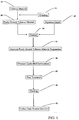
- FIG. 1 is a schematic diagram of process steps representative of an embodiment of the present invention.
- tobacco material 10 is subjected to grinding 15 to produce a finely ground tobacco material dust or powder 20 .
- finely ground material refers to materials composed of particles that are less than 10 mesh, preferably less than 20 mesh, and most preferably are less than 40 mesh (standard sieve size).
- the tobacco material may already be in dust form such that additional grinding is not necessary (i.e., the starting tobacco material is already finely ground).
- the preferred tobacco material is a dust or powder, other types of tobacco can be used, such as cut filler, strips, stems or leaves.
- the finely ground tobacco material is then contacted 55 with an aqueous liquid (e.g., water) 60 to provide an aqueous tobacco suspension 70 .
- aqueous liquid e.g., water
- This aqueous tobacco suspension is then placed in a pressure controlled environment 30 , subjected to heat treatment 35 , and cooled 40 .
- the treated tobacco suspension is then collected 50 for use.
- the tobacco materials useful herein can vary. Tobacco materials which are used are of a form such that upon grinding, the resulting ground material is in the form of finely divided particles. Examples of suitable tobaccos include Burley, Flue-Cured, Vietnamese, Latakia, Maryland Cigar, as well as the rare or specialty tobaccos, or blends thereof. Unaged, uncured, mature or immature tobaccos may also be employed. Tobacco waste materials such as fines, dust, scrap, stem, and stalk can be employed. In one preferred embodiment of the present invention, the tobacco material comprises a cigarette manufacturing by-product known to the skilled practitioner as cigarette dust. The aforementioned tobacco materials may be processed separately, or as blends thereof.
- the tobacco material may be subjected to various means to reduce its size, such as grinding, such that the resulting tobacco material is in finely ground or powder form.
- various grinding techniques will be apparent to one skilled in the art, and may include the use of e.g., ball mills or hammer mills.
- the grinding may also be carried out under vibrating or agitating conditions, the selection of said conditions being within the skill of one in the art.
- the tobacco suspension may be provided in a number of ways.
- the finely ground tobacco material may be contacted with a liquid having an aqueous character, thus providing an aqueous ground tobacco material suspension.
- a liquid having an aqueous character consists primarily of water, normally greater than about 90 weight percent water, and can be essentially pure water in certain circumstances.
- a liquid having an aqueous character can be distilled water, tap water, or the like.
- a liquid having an aqueous character can include water having substances such as pH buffers, pH adjusters, organic and inorganic acids, bases and salts, or sugars, amino acids or surfactants incorporated therein.
- the liquid also can be a mixture of water and minor amounts of one or more solvents which are miscible therewith (e.g., various alcohols, polyols or humectants such as glycerin or polypropylene glycol).
- solvents e.g., various alcohols, polyols or humectants such as glycerin or polypropylene glycol.
- the tobacco content of the suspension may be at least about 5 percent of the total suspension by weight, preferably at least about 10 percent by weight, and more preferably at least about 25 percent by weight.
- the tobacco suspension can also be contacted with at least one amino acid, amino acid analog or amino acid source (e.g., glutamine, asparagine, proline, alanine, cystine, aspartic acid, phenylalanine, glutamic acid) and at least one sugar or sugar source (e.g., fructose, sucrose, glucose, maltose).
- amino acid, amino acid analog or amino acid source e.g., glutamine, asparagine, proline, alanine, cystine, aspartic acid, phenylalanine, glutamic acid
- sugar or sugar source e.g., fructose, sucrose, glucose, maltose
- flavoring agents e.g., cocoa, licorice, St. John's bread, spices, herbs, and the like
- the tobacco suspension is subjected to moderately high temperature treatment such as described in U.S. Patent No. 5,060,669 to White et al., the disclosure of which is incorporated herein by reference in its entirety.
- moderately high temperature treatment involves exposing the tobacco suspension to a temperature above about 100°C, preferably above about 110°C, and more preferably above about 120°C.
- the moderately high temperature treatment of the tobacco suspension can be performed under an inert atmosphere.
- nitrogen and argon gas can be employed in order to provide an inert atmosphere.
- the heat treatment can be conducted under ambient atmosphere (i.e., air).
- the moderately high temperature treatment is performed in a pressure controlled environment.
- a pressure controlled environment is provided by enclosing the tobacco suspension in an air sealed vessel or chamber.
- a pressure controlled environment is provided using a pressure vessel or chamber which is capable of withstanding relatively high pressures.
- Such vessels or chambers (i) provide enclosure or concealment of the tobacco suspension such that volatile flavor components of the tobacco suspension are not lost or do not otherwise escape during the moderately high temperature treatment step, and (ii) provide for treatment of the tobacco suspension at a temperature significantly above about 100°C.
- Preferred pressure vessels are equipped with an external heating source. Examples of vessels which provide a pressure controlled environment include a high pressure autoclave from Berghof/America Inc. of Concord, California, and Parr Reactor Model Nos.
- Typical pressures experienced by the tobacco suspension during the process of the present invention in such vessels range from about 10 psig to about 1,000 psig, normally from about 20 psig to about 500 psig.
- the amount of time that the tobacco suspension is subjected to the moderately high temperature treatment can vary. Normally, the time period is sufficient to heat an entire tobacco suspension at the desired temperature for a period of at least about 10 minutes, preferably at least about 20 minutes. Normally, the time period is less than about 3 hours, preferably less than about 1 hour, and most preferably about 30 minutes.
- Conditions provided during the process of the present invention most desirably are such that certain components of the tobacco suspension (e.g., free amino acid pools and naturally occurring sugars) undergo the Maillard Reactions.
- the Maillard Reactions or "browning reactions” are reactions between (i) the amino substituents of amino acids, peptides, proteins or other nitrogen-containing compounds, and (ii) the carbonyl group of a sugar in the reducing form or other carboxyl-containing compounds which are indigenous or added to the tobacco suspension.
- Such reactions result in a significant darkening of the tobacco suspension, typically to an extremely dark brown color. See, Maillard, Ana. Chim. , Vol. 9, pp. 5 and 258 (1916); Hodge, J. Agric. Food Chem ., Vol. 1, p. 928 (1953); Nursten, Food Chem ., Vol. 6, p. 263 (1981) and Waller et al, ACS Symp. Ser . (1983).
- the treated tobacco suspension is useful in the manufacture of smoking articles. They may be added to conventional cigarettes or other smoking articles as a top dressing, or casing, or in any convenient mode selected by the manufacturer.
- the amount of the treated tobacco suspension employed per cigarette or smoking article can vary. For example, in a typical cigarette having about 0.6 to about 1 g per rod of smoking material, about 10 to about 100 ppm of the compound can be used as a top dressing or casing.
- the treated tobacco suspension may be used as a filter flavor material for a cigarette.
- the suspension may be used to provide flavor/aroma to any of the forms of material that are used in the manufacture of tobacco products such as cigars, cigarettes, smoking tobacco or snuffs.
- mg means milligram
- ⁇ g means micrograms
- g means grams
- L means liters
- mL means milliliters
- min means minutes
- mm millimeters
- Tobacco in the form of cigarette dust was ground on a SWECO vibrating ball mill (SWECO Inc., Los Angeles, CA USA) until it was reduced to a very fine powder.
- SWECO Inc. Los Angeles, CA USA
- 150 g of the ground cigarette dust was mixed with 1350 g of water. This suspension was reacted in a sealed Parr bomb at 175°C for 30 minutes. After a rapid cooling to ambient temperature, the remaining pressurized volatiles were released and the liquid was removed from the Parr bomb. A very aromatic aroma was observed coming from the liquid. This procedure was repeated with the starting materials of Burley tobacco dust, flue-cured tobacco dust, and Turkish tobacco dust.
- Tobacco in the form of cigarette dust was ground as described in Example 1. 375 g of the ground tobacco material was mixed with 1125 g of water to provide a suspension. This suspension was reacted in a Parr bomb at 175°C for 30 minutes. After cooling and venting as described above, a very powerful aroma was noted. This procedure was repeated with the starting materials of Burley tobacco dust, flue-cured tobacco dust, and Turkish tobacco dust.
- the samples were each preheated at 70°C for 5 minutes prior to being swept for 10 minutes with a stream of helium at 40 mL/min.
- the sample temperature was held at 70°C.
- the volatiles were trapped on a Tenax (TEKMAR) trap and were then thermally desorbed onto the GC column set at 10°C by heating at 180°C for 5 minutes.
- the TEKMAR headspace system was directly interfaced with to a Hewlett-Packard 5880 gas chromatograph (GC) equipped with a DB 1701 fused silica column (J&W Scientific, Folsom, CA) 30 meters long, 0.32 mm inner diameter, and 1 micron film thickness.
- GC Hewlett-Packard 5880 gas chromatograph
- the outlet of the column was split between a flame ionization detector (FID) and a mass selective detector (MSD) operating in the electron impact mode at 70 V.
- FID flame ionization detector
- MSD mass selective detector
- the GC injection port, the MSD interface, and the FID detector were set at 250°C.
- the column oven was programmed from 10°C to 47°C at 2°C per minute followed by 10°C per minute to 240°C.
- the FID area counts for cyclohexanone were employed in the calculation of the amount of each identified volatile component.
- the volatile components were identified from both mass spectral library search routines and GC retention time databases.
- each identified volatile components from the cigarette dust, Burley tobacco dust, flue-cured tobacco dust, and Vietnamese tobacco dust is presented as an average concentration of the component over five samples, in ⁇ g/mL.
- each identified volatile component from the four kinds of dust used is presented as an average percentage distribution of the component over five samples.
- C2 pyrazines mean pyrazines with 2 carbons attached (e.g., dimethylpyrazine);
- C3 pyrazines mean pyrazines with 3 carbons attached (e.g., ethylmethylpyrazines);
- C4 pyrazines mean pyrazines with 4 carbons attached (e.g., ethyldimethylpyrazines).
- a tobacco blend was prepared containing about 20 parts Burley tobacco, 55 parts flue-cured tobacco, and 25 parts Oriental tobacco, in the form of tobacco strips.
- the strip blend dry weight was approximately 2400 gm.
- a suspension of heat-treated tobacco dust was added to this blend of tobacco strips.
- the suspension contained 10% tobacco dust and 90% water by weight (about 150 grams of tobacco dust and 1350 gm of water).
- the tobacco strips' final weight was about 2550 gm and contained 150 gm of the heat-treated tobacco suspension (approximately 5.8% by weight of the strip blend.)
- the strip blend was cut at 32 cuts per inch at a moisture of approximately 18%.
- the cut filler was dried to approximately 13% in a heated pill coater drum.
- 2040 gm (40 parts) of expanded flue-cured tobacco cut filler and 510 gm (10 parts) of cut-rolled expanded stems were added to this blend of cut filler material.
- the final blend was top-dressed with 1.5% by weight of glycerine containing a small amount of flavoring.
- the tobacco cut filler was used to prepare cigarettes that were 88 mm in length (57 mm tobacco rod wrapped with RJR Ref. 456 paper (Ecusta Corp., Pisgah Forest, NC, USA) and a 27 mm shaped acetate filter from Filtron International Ltd. (Great Britain, code SAF).
- the cigarettes were ventilated at approximately 13 mm from the mouth-end. The average ventilation was about 55%.
- a total of five cigarettes were prepared in this manner, as follows:
Landscapes
- Chemical & Material Sciences (AREA)
- Chemical Kinetics & Catalysis (AREA)
- General Chemical & Material Sciences (AREA)
- Manufacture Of Tobacco Products (AREA)
- Cigarettes, Filters, And Manufacturing Of Filters (AREA)
- Seasonings (AREA)
- Organic Low-Molecular-Weight Compounds And Preparation Thereof (AREA)
Applications Claiming Priority (2)
| Application Number | Priority Date | Filing Date | Title |
|---|---|---|---|
| US69115896A | 1996-08-01 | 1996-08-01 | |
| US691158 | 1996-08-01 |
Publications (2)
| Publication Number | Publication Date |
|---|---|
| EP0821886A2 true EP0821886A2 (de) | 1998-02-04 |
| EP0821886A3 EP0821886A3 (de) | 1998-08-19 |
Family
ID=24775391
Family Applications (1)
| Application Number | Title | Priority Date | Filing Date |
|---|---|---|---|
| EP97113000A Withdrawn EP0821886A3 (de) | 1996-08-01 | 1997-07-29 | Verfahren zur Herstellung von Aromastoffe aus Tabak |
Country Status (2)
| Country | Link |
|---|---|
| EP (1) | EP0821886A3 (de) |
| JP (1) | JPH1066559A (de) |
Cited By (12)
| Publication number | Priority date | Publication date | Assignee | Title |
|---|---|---|---|---|
| WO2000028840A1 (en) * | 1998-11-18 | 2000-05-25 | R. J. Reynolds Tobacco Company | Tobacco flavoring components of enhanced aromatic content and method of providing same |
| US6440223B1 (en) | 2000-02-15 | 2002-08-27 | R. J. Reynolds Tobacco Co. | Smoking article containing heat activatable flavorant-generating material |
| US6499489B1 (en) | 2000-05-12 | 2002-12-31 | R. J. Reynolds Tobacco Company | Tobacco-based cooked casing formulation |
| US6695924B1 (en) | 2000-07-25 | 2004-02-24 | Michael Francis Dube | Method of improving flavor in smoking article |
| WO2004041006A1 (en) * | 2002-10-31 | 2004-05-21 | R.J. Reynolds Tobacco Company | Tobacco blends incorporating oriental tobaccos |
| US10159273B2 (en) | 2011-01-28 | 2018-12-25 | R.J. Reynolds Tobacco Company | Tobacco-derived casing composition |
| WO2020245411A1 (en) * | 2019-06-05 | 2020-12-10 | Philip Morris Products S.A. | Concentration of wet tobacco extracts |
| WO2020245410A1 (en) * | 2019-06-05 | 2020-12-10 | Philip Morris Products S.A. | Improved method of producing a liquid tobacco extract |
| WO2020245414A1 (en) * | 2019-06-05 | 2020-12-10 | Philip Morris Products S.A. | Liquid tobacco extract, method for making and aerosol-generating articles comprising such |
| EP3662765A4 (de) * | 2017-09-05 | 2021-04-07 | Japan Tobacco Inc. | Tabakmaterial |
| CN114007449A (zh) * | 2019-06-05 | 2022-02-01 | 菲利普莫里斯生产公司 | 尼古丁组合物、制备方法和包含所述尼古丁组合物的气溶胶生成制品 |
| US12628862B2 (en) | 2019-06-05 | 2026-05-19 | Philip Morris Products S.A. | Liquid tobacco extract, method for making and aerosol-generating articles comprising such |
Families Citing this family (4)
| Publication number | Priority date | Publication date | Assignee | Title |
|---|---|---|---|---|
| CN102905565B (zh) * | 2010-05-21 | 2016-08-24 | 环球蒸汽商标公司 | 制备用于电吸烟设备的烟草提取物的方法 |
| EP2537423A1 (de) * | 2011-06-22 | 2012-12-26 | Nestec S.A. | Verfahren zur Herstellung einer aromatisierten wässrigen Flüssigkeit |
| JP2025038253A (ja) * | 2021-12-21 | 2025-03-19 | 日本たばこ産業株式会社 | たばこスラリー及びその製造方法、並びにたばこ製品の製造方法 |
| WO2023157878A1 (ja) * | 2022-02-18 | 2023-08-24 | 日本たばこ産業株式会社 | 葉たばこ中のソラノン量を増加させる方法、たばこ原料の製造方法、及びソラノンの抽出方法 |
Family Cites Families (2)
| Publication number | Priority date | Publication date | Assignee | Title |
|---|---|---|---|---|
| GB572236A (en) * | 1942-07-03 | 1945-09-28 | American Mach & Foundry | Improvements in tobacco and methods of treating the same |
| US3076729A (en) * | 1961-05-09 | 1963-02-05 | Gen Cigar Co | Tobacco processing and resulting product |
-
1997
- 1997-07-29 EP EP97113000A patent/EP0821886A3/de not_active Withdrawn
- 1997-08-01 JP JP20766497A patent/JPH1066559A/ja active Pending
Cited By (23)
| Publication number | Priority date | Publication date | Assignee | Title |
|---|---|---|---|---|
| WO2000028840A1 (en) * | 1998-11-18 | 2000-05-25 | R. J. Reynolds Tobacco Company | Tobacco flavoring components of enhanced aromatic content and method of providing same |
| US6298858B1 (en) | 1998-11-18 | 2001-10-09 | R. J. Reynolds Tobacco Company | Tobacco flavoring components of enhanced aromatic content and method of providing same |
| US6440223B1 (en) | 2000-02-15 | 2002-08-27 | R. J. Reynolds Tobacco Co. | Smoking article containing heat activatable flavorant-generating material |
| US6499489B1 (en) | 2000-05-12 | 2002-12-31 | R. J. Reynolds Tobacco Company | Tobacco-based cooked casing formulation |
| US6695924B1 (en) | 2000-07-25 | 2004-02-24 | Michael Francis Dube | Method of improving flavor in smoking article |
| WO2004041006A1 (en) * | 2002-10-31 | 2004-05-21 | R.J. Reynolds Tobacco Company | Tobacco blends incorporating oriental tobaccos |
| US7025066B2 (en) | 2002-10-31 | 2006-04-11 | Jerry Wayne Lawson | Method of reducing the sucrose ester concentration of a tobacco mixture |
| US10159273B2 (en) | 2011-01-28 | 2018-12-25 | R.J. Reynolds Tobacco Company | Tobacco-derived casing composition |
| EP3662765A4 (de) * | 2017-09-05 | 2021-04-07 | Japan Tobacco Inc. | Tabakmaterial |
| WO2020245414A1 (en) * | 2019-06-05 | 2020-12-10 | Philip Morris Products S.A. | Liquid tobacco extract, method for making and aerosol-generating articles comprising such |
| KR20220016820A (ko) * | 2019-06-05 | 2022-02-10 | 필립모리스 프로덕츠 에스.에이. | 액체 담배 추출물, 이를 제조하는 방법 및 이를 포함하는 에어로졸 발생 물품 |
| WO2020245411A1 (en) * | 2019-06-05 | 2020-12-10 | Philip Morris Products S.A. | Concentration of wet tobacco extracts |
| CN113727615A (zh) * | 2019-06-05 | 2021-11-30 | 菲利普莫里斯生产公司 | 产生液体烟草提取物的改进方法 |
| CN113784635A (zh) * | 2019-06-05 | 2021-12-10 | 菲利普莫里斯生产公司 | 湿烟草提取物的浓缩 |
| CN113795156A (zh) * | 2019-06-05 | 2021-12-14 | 菲利普莫里斯生产公司 | 液体烟草提取物、制备方法和包含所述液体烟草提取物的气溶胶生成制品 |
| CN114007449A (zh) * | 2019-06-05 | 2022-02-01 | 菲利普莫里斯生产公司 | 尼古丁组合物、制备方法和包含所述尼古丁组合物的气溶胶生成制品 |
| WO2020245410A1 (en) * | 2019-06-05 | 2020-12-10 | Philip Morris Products S.A. | Improved method of producing a liquid tobacco extract |
| CN113727615B (zh) * | 2019-06-05 | 2023-09-05 | 菲利普莫里斯生产公司 | 产生液体烟草提取物的改进方法 |
| CN114007449B (zh) * | 2019-06-05 | 2023-09-12 | 菲利普莫里斯生产公司 | 尼古丁组合物、制备方法和包含所述尼古丁组合物的气溶胶生成制品 |
| CN113795156B (zh) * | 2019-06-05 | 2023-11-17 | 菲利普莫里斯生产公司 | 液体烟草提取物、制备方法和包含所述液体烟草提取物的气溶胶生成制品 |
| EP4285744A3 (de) * | 2019-06-05 | 2024-02-14 | Philip Morris Products S.A. | Verbessertes verfahren zur herstellung eines flüssigen tabakextrakts |
| US12137724B2 (en) | 2019-06-05 | 2024-11-12 | Philip Morris Products S.A. | Method of producing a liquid tobacco extract |
| US12628862B2 (en) | 2019-06-05 | 2026-05-19 | Philip Morris Products S.A. | Liquid tobacco extract, method for making and aerosol-generating articles comprising such |
Also Published As
| Publication number | Publication date |
|---|---|
| EP0821886A3 (de) | 1998-08-19 |
| JPH1066559A (ja) | 1998-03-10 |
Similar Documents
| Publication | Publication Date | Title |
|---|---|---|
| US6591841B1 (en) | Method of providing flavorful and aromatic tobacco suspension | |
| US6048404A (en) | Tobacco flavoring components of enhanced aromatic content and method of providing same | |
| US6499489B1 (en) | Tobacco-based cooked casing formulation | |
| US5074319A (en) | Tobacco extraction process | |
| US6298858B1 (en) | Tobacco flavoring components of enhanced aromatic content and method of providing same | |
| US6428624B1 (en) | Method of providing flavorful and aromatic compounds | |
| US4516590A (en) | Air-cured bright tobacco filler, blends and smoking articles | |
| US4150677A (en) | Treatment of tobacco | |
| US5060669A (en) | Tobacco treatment process | |
| US10966451B2 (en) | Tobacco treatment | |
| US20230165300A1 (en) | Method of extracting volatile compounds from tobacco material | |
| US5318050A (en) | Tobacco treatment process | |
| US20040173228A1 (en) | Method for producing flavorful and aromatic compounds from tobacco | |
| US20100037903A1 (en) | Method for Preparing Flavorful and Aromatic Compounds | |
| US5413122A (en) | Method of providing flavorful and aromatic compounds | |
| JPH1066559A (ja) | 風味・芳香化合物を提供する方法 | |
| KR20020035612A (ko) | 담배의 가공처리 방법 | |
| US5370139A (en) | Tobacco treatment process | |
| US5962662A (en) | Method for producing a flavorful and aromatic composition for use in smoking articles | |
| Nair et al. | Carcinogenic tobacco-specific nitrosamines in Indian tobacco products | |
| CA2529031C (en) | Tobacco mixture and a cigarette comprising it | |
| EP4054357A1 (de) | Tabakbehandlung | |
| GB2031707A (en) | Treatment of tobacco | |
| JP2022534870A (ja) | 液体たばこ抽出物、これを作製するための方法およびこれを備えたエアロゾル発生物品 | |
| JP7819437B2 (ja) | 膨化刻草を含む喫煙材料、その製造方法及びそれを含む喫煙物品 |
Legal Events
| Date | Code | Title | Description |
|---|---|---|---|
| PUAI | Public reference made under article 153(3) epc to a published international application that has entered the european phase |
Free format text: ORIGINAL CODE: 0009012 |
|
| AK | Designated contracting states |
Kind code of ref document: A2 Designated state(s): AT BE CH DE DK ES FI FR GB GR IE IT LI LU MC NL PT SE |
|
| PUAL | Search report despatched |
Free format text: ORIGINAL CODE: 0009013 |
|
| AK | Designated contracting states |
Kind code of ref document: A3 Designated state(s): AT BE CH DE DK ES FI FR GB GR IE IT LI LU MC NL PT SE |
|
| STAA | Information on the status of an ep patent application or granted ep patent |
Free format text: STATUS: THE APPLICATION HAS BEEN WITHDRAWN |
|
| 18W | Application withdrawn |
Withdrawal date: 19990121 |