EP0822261A1 - Méthode rapide pour la détection de la susceptibilité microbienne - Google Patents
Méthode rapide pour la détection de la susceptibilité microbienne Download PDFInfo
- Publication number
- EP0822261A1 EP0822261A1 EP96305535A EP96305535A EP0822261A1 EP 0822261 A1 EP0822261 A1 EP 0822261A1 EP 96305535 A EP96305535 A EP 96305535A EP 96305535 A EP96305535 A EP 96305535A EP 0822261 A1 EP0822261 A1 EP 0822261A1
- Authority
- EP
- European Patent Office
- Prior art keywords
- dna
- amplification
- dsdna
- counts
- susceptibility testing
- Prior art date
- Legal status (The legal status is an assumption and is not a legal conclusion. Google has not performed a legal analysis and makes no representation as to the accuracy of the status listed.)
- Granted
Links
- 238000000034 method Methods 0.000 title claims abstract description 81
- 238000009635 antibiotic susceptibility testing Methods 0.000 title claims abstract description 24
- 230000004544 DNA amplification Effects 0.000 claims abstract description 21
- 239000004599 antimicrobial Substances 0.000 claims description 31
- 108020004414 DNA Proteins 0.000 claims description 27
- 239000000975 dye Substances 0.000 claims description 20
- 230000000813 microbial effect Effects 0.000 claims description 20
- 102000053602 DNA Human genes 0.000 claims description 19
- 230000003321 amplification Effects 0.000 claims description 18
- 238000009830 intercalation Methods 0.000 claims description 18
- 238000003199 nucleic acid amplification method Methods 0.000 claims description 18
- 244000052769 pathogen Species 0.000 claims description 17
- 238000003752 polymerase chain reaction Methods 0.000 claims description 17
- 238000000338 in vitro Methods 0.000 claims description 14
- ZMMJGEGLRURXTF-UHFFFAOYSA-N ethidium bromide Chemical group [Br-].C12=CC(N)=CC=C2C2=CC=C(N)C=C2[N+](CC)=C1C1=CC=CC=C1 ZMMJGEGLRURXTF-UHFFFAOYSA-N 0.000 claims description 11
- 229960005542 ethidium bromide Drugs 0.000 claims description 11
- 244000005700 microbiome Species 0.000 claims description 11
- 230000004543 DNA replication Effects 0.000 claims description 10
- 239000003153 chemical reaction reagent Substances 0.000 claims description 7
- 230000005284 excitation Effects 0.000 claims description 7
- 230000002101 lytic effect Effects 0.000 claims description 7
- 230000001717 pathogenic effect Effects 0.000 claims description 7
- 230000010076 replication Effects 0.000 claims description 7
- 108020004465 16S ribosomal RNA Proteins 0.000 claims description 6
- 241000233866 Fungi Species 0.000 claims description 6
- 238000013207 serial dilution Methods 0.000 claims description 6
- 238000006073 displacement reaction Methods 0.000 claims description 3
- 239000007850 fluorescent dye Substances 0.000 claims description 3
- 230000002401 inhibitory effect Effects 0.000 claims description 3
- 239000004615 ingredient Substances 0.000 claims description 2
- DZBUGLKDJFMEHC-UHFFFAOYSA-N acridine Chemical compound C1=CC=CC2=CC3=CC=CC=C3N=C21 DZBUGLKDJFMEHC-UHFFFAOYSA-N 0.000 claims 2
- 238000011901 isothermal amplification Methods 0.000 claims 2
- RDOWQLZANAYVLL-UHFFFAOYSA-N phenanthridine Chemical compound C1=CC=C2C3=CC=CC=C3C=NC2=C1 RDOWQLZANAYVLL-UHFFFAOYSA-N 0.000 claims 2
- 238000005382 thermal cycling Methods 0.000 claims 2
- 239000000539 dimer Substances 0.000 claims 1
- 239000000178 monomer Substances 0.000 claims 1
- 230000001580 bacterial effect Effects 0.000 abstract description 29
- 239000003242 anti bacterial agent Substances 0.000 abstract description 21
- 229940088710 antibiotic agent Drugs 0.000 abstract description 19
- 238000011534 incubation Methods 0.000 abstract description 16
- 238000001514 detection method Methods 0.000 abstract description 12
- 230000005764 inhibitory process Effects 0.000 abstract description 4
- 206010062207 Mycobacterial infection Diseases 0.000 abstract description 3
- 238000007796 conventional method Methods 0.000 abstract description 3
- 208000027531 mycobacterial infectious disease Diseases 0.000 abstract description 3
- 238000012216 screening Methods 0.000 abstract description 2
- 241000894006 Bacteria Species 0.000 description 19
- 238000012360 testing method Methods 0.000 description 14
- GRRMZXFOOGQMFA-UHFFFAOYSA-J YoYo-1 Chemical compound [I-].[I-].[I-].[I-].C12=CC=CC=C2C(C=C2N(C3=CC=CC=C3O2)C)=CC=[N+]1CCC[N+](C)(C)CCC[N+](C)(C)CCC[N+](C1=CC=CC=C11)=CC=C1C=C1N(C)C2=CC=CC=C2O1 GRRMZXFOOGQMFA-UHFFFAOYSA-J 0.000 description 12
- 239000002054 inoculum Substances 0.000 description 9
- 230000012010 growth Effects 0.000 description 8
- 230000008569 process Effects 0.000 description 8
- 229930182566 Gentamicin Natural products 0.000 description 7
- CEAZRRDELHUEMR-URQXQFDESA-N Gentamicin Chemical compound O1[C@H](C(C)NC)CC[C@@H](N)[C@H]1O[C@H]1[C@H](O)[C@@H](O[C@@H]2[C@@H]([C@@H](NC)[C@@](C)(O)CO2)O)[C@H](N)C[C@@H]1N CEAZRRDELHUEMR-URQXQFDESA-N 0.000 description 7
- 229960002518 gentamicin Drugs 0.000 description 7
- 210000004369 blood Anatomy 0.000 description 6
- 239000008280 blood Substances 0.000 description 6
- 229960000603 cefalotin Drugs 0.000 description 6
- XIURVHNZVLADCM-IUODEOHRSA-N cefalotin Chemical compound N([C@H]1[C@@H]2N(C1=O)C(=C(CS2)COC(=O)C)C(O)=O)C(=O)CC1=CC=CS1 XIURVHNZVLADCM-IUODEOHRSA-N 0.000 description 6
- 239000001963 growth medium Substances 0.000 description 6
- 239000000047 product Substances 0.000 description 6
- 108090000623 proteins and genes Proteins 0.000 description 6
- 241000588724 Escherichia coli Species 0.000 description 5
- 229960000723 ampicillin Drugs 0.000 description 5
- AVKUERGKIZMTKX-NJBDSQKTSA-N ampicillin Chemical compound C1([C@@H](N)C(=O)N[C@H]2[C@H]3SC([C@@H](N3C2=O)C(O)=O)(C)C)=CC=CC=C1 AVKUERGKIZMTKX-NJBDSQKTSA-N 0.000 description 5
- 229960000210 nalidixic acid Drugs 0.000 description 5
- MHWLWQUZZRMNGJ-UHFFFAOYSA-N nalidixic acid Chemical compound C1=C(C)N=C2N(CC)C=C(C(O)=O)C(=O)C2=C1 MHWLWQUZZRMNGJ-UHFFFAOYSA-N 0.000 description 5
- MZZINWWGSYUHGU-UHFFFAOYSA-J ToTo-1 Chemical compound [I-].[I-].[I-].[I-].C12=CC=CC=C2C(C=C2N(C3=CC=CC=C3S2)C)=CC=[N+]1CCC[N+](C)(C)CCC[N+](C)(C)CCC[N+](C1=CC=CC=C11)=CC=C1C=C1N(C)C2=CC=CC=C2S1 MZZINWWGSYUHGU-UHFFFAOYSA-J 0.000 description 4
- 238000006243 chemical reaction Methods 0.000 description 4
- 238000010790 dilution Methods 0.000 description 4
- 239000012895 dilution Substances 0.000 description 4
- 239000003814 drug Substances 0.000 description 4
- 241000894007 species Species 0.000 description 4
- -1 tungsten halogen Chemical class 0.000 description 4
- 230000000007 visual effect Effects 0.000 description 4
- 108020000946 Bacterial DNA Proteins 0.000 description 3
- 241001360526 Escherichia coli ATCC 25922 Species 0.000 description 3
- 102000016943 Muramidase Human genes 0.000 description 3
- 108010014251 Muramidase Proteins 0.000 description 3
- 108010062010 N-Acetylmuramoyl-L-alanine Amidase Proteins 0.000 description 3
- 230000000845 anti-microbial effect Effects 0.000 description 3
- 244000052616 bacterial pathogen Species 0.000 description 3
- 239000003795 chemical substances by application Substances 0.000 description 3
- 238000009792 diffusion process Methods 0.000 description 3
- 229940079593 drug Drugs 0.000 description 3
- 230000002538 fungal effect Effects 0.000 description 3
- 238000001499 laser induced fluorescence spectroscopy Methods 0.000 description 3
- 229960000274 lysozyme Drugs 0.000 description 3
- 235000010335 lysozyme Nutrition 0.000 description 3
- 239000004325 lysozyme Substances 0.000 description 3
- 239000002609 medium Substances 0.000 description 3
- 239000000203 mixture Substances 0.000 description 3
- 208000035143 Bacterial infection Diseases 0.000 description 2
- 108010067770 Endopeptidase K Proteins 0.000 description 2
- 108090000790 Enzymes Proteins 0.000 description 2
- 102000004190 Enzymes Human genes 0.000 description 2
- 206010017533 Fungal infection Diseases 0.000 description 2
- TWRXJAOTZQYOKJ-UHFFFAOYSA-L Magnesium chloride Chemical compound [Mg+2].[Cl-].[Cl-] TWRXJAOTZQYOKJ-UHFFFAOYSA-L 0.000 description 2
- 208000031888 Mycoses Diseases 0.000 description 2
- JGSARLDLIJGVTE-MBNYWOFBSA-N Penicillin G Chemical compound N([C@H]1[C@H]2SC([C@@H](N2C1=O)C(O)=O)(C)C)C(=O)CC1=CC=CC=C1 JGSARLDLIJGVTE-MBNYWOFBSA-N 0.000 description 2
- 206010040070 Septic Shock Diseases 0.000 description 2
- 238000004458 analytical method Methods 0.000 description 2
- XKRFYHLGVUSROY-UHFFFAOYSA-N argon Substances [Ar] XKRFYHLGVUSROY-UHFFFAOYSA-N 0.000 description 2
- 229910052786 argon Inorganic materials 0.000 description 2
- 208000022362 bacterial infectious disease Diseases 0.000 description 2
- 230000003115 biocidal effect Effects 0.000 description 2
- 210000001124 body fluid Anatomy 0.000 description 2
- 239000010839 body fluid Substances 0.000 description 2
- 229960003669 carbenicillin Drugs 0.000 description 2
- FPPNZSSZRUTDAP-UWFZAAFLSA-N carbenicillin Chemical compound N([C@H]1[C@H]2SC([C@@H](N2C1=O)C(O)=O)(C)C)C(=O)C(C(O)=O)C1=CC=CC=C1 FPPNZSSZRUTDAP-UWFZAAFLSA-N 0.000 description 2
- 229960004755 ceftriaxone Drugs 0.000 description 2
- VAAUVRVFOQPIGI-SPQHTLEESA-N ceftriaxone Chemical compound S([C@@H]1[C@@H](C(N1C=1C(O)=O)=O)NC(=O)\C(=N/OC)C=2N=C(N)SC=2)CC=1CSC1=NC(=O)C(=O)NN1C VAAUVRVFOQPIGI-SPQHTLEESA-N 0.000 description 2
- 210000004027 cell Anatomy 0.000 description 2
- 238000004113 cell culture Methods 0.000 description 2
- 238000005119 centrifugation Methods 0.000 description 2
- 210000001175 cerebrospinal fluid Anatomy 0.000 description 2
- 230000009089 cytolysis Effects 0.000 description 2
- 230000001419 dependent effect Effects 0.000 description 2
- 238000001962 electrophoresis Methods 0.000 description 2
- 229940088598 enzyme Drugs 0.000 description 2
- AEUTYOVWOVBAKS-UWVGGRQHSA-N ethambutol Chemical compound CC[C@@H](CO)NCCN[C@@H](CC)CO AEUTYOVWOVBAKS-UWVGGRQHSA-N 0.000 description 2
- 238000001917 fluorescence detection Methods 0.000 description 2
- 238000005286 illumination Methods 0.000 description 2
- 208000015181 infectious disease Diseases 0.000 description 2
- 238000011081 inoculation Methods 0.000 description 2
- 239000007788 liquid Substances 0.000 description 2
- 230000002934 lysing effect Effects 0.000 description 2
- OGJPXUAPXNRGGI-UHFFFAOYSA-N norfloxacin Chemical compound C1=C2N(CC)C=C(C(O)=O)C(=O)C2=CC(F)=C1N1CCNCC1 OGJPXUAPXNRGGI-UHFFFAOYSA-N 0.000 description 2
- 229960001180 norfloxacin Drugs 0.000 description 2
- 102000039446 nucleic acids Human genes 0.000 description 2
- 108020004707 nucleic acids Proteins 0.000 description 2
- 150000007523 nucleic acids Chemical class 0.000 description 2
- 102000004169 proteins and genes Human genes 0.000 description 2
- JQXXHWHPUNPDRT-WLSIYKJHSA-N rifampicin Chemical compound O([C@](C1=O)(C)O/C=C/[C@@H]([C@H]([C@@H](OC(C)=O)[C@H](C)[C@H](O)[C@H](C)[C@@H](O)[C@@H](C)\C=C\C=C(C)/C(=O)NC=2C(O)=C3C([O-])=C4C)C)OC)C4=C1C3=C(O)C=2\C=N\N1CC[NH+](C)CC1 JQXXHWHPUNPDRT-WLSIYKJHSA-N 0.000 description 2
- 229960001225 rifampicin Drugs 0.000 description 2
- 239000000523 sample Substances 0.000 description 2
- 230000036303 septic shock Effects 0.000 description 2
- 239000000243 solution Substances 0.000 description 2
- 238000011282 treatment Methods 0.000 description 2
- 229910052724 xenon Inorganic materials 0.000 description 2
- FHNFHKCVQCLJFQ-UHFFFAOYSA-N xenon atom Chemical compound [Xe] FHNFHKCVQCLJFQ-UHFFFAOYSA-N 0.000 description 2
- 108091032973 (ribonucleotides)n+m Proteins 0.000 description 1
- QKNYBSVHEMOAJP-UHFFFAOYSA-N 2-amino-2-(hydroxymethyl)propane-1,3-diol;hydron;chloride Chemical compound Cl.OCC(N)(CO)CO QKNYBSVHEMOAJP-UHFFFAOYSA-N 0.000 description 1
- 229920001817 Agar Polymers 0.000 description 1
- APKFDSVGJQXUKY-KKGHZKTASA-N Amphotericin-B Natural products O[C@H]1[C@@H](N)[C@H](O)[C@@H](C)O[C@H]1O[C@H]1C=CC=CC=CC=CC=CC=CC=C[C@H](C)[C@@H](O)[C@@H](C)[C@H](C)OC(=O)C[C@H](O)C[C@H](O)CC[C@@H](O)[C@H](O)C[C@H](O)C[C@](O)(C[C@H](O)[C@H]2C(O)=O)O[C@H]2C1 APKFDSVGJQXUKY-KKGHZKTASA-N 0.000 description 1
- 208000031729 Bacteremia Diseases 0.000 description 1
- 238000009631 Broth culture Methods 0.000 description 1
- 206010008631 Cholera Diseases 0.000 description 1
- 208000028399 Critical Illness Diseases 0.000 description 1
- 102000016928 DNA-directed DNA polymerase Human genes 0.000 description 1
- 108010014303 DNA-directed DNA polymerase Proteins 0.000 description 1
- 241000606790 Haemophilus Species 0.000 description 1
- 108090000988 Lysostaphin Proteins 0.000 description 1
- 241000187479 Mycobacterium tuberculosis Species 0.000 description 1
- 241000588652 Neisseria gonorrhoeae Species 0.000 description 1
- 108091028043 Nucleic acid sequence Proteins 0.000 description 1
- 238000012408 PCR amplification Methods 0.000 description 1
- 229920001213 Polysorbate 20 Polymers 0.000 description 1
- 241000589516 Pseudomonas Species 0.000 description 1
- 206010040047 Sepsis Diseases 0.000 description 1
- 241000191967 Staphylococcus aureus Species 0.000 description 1
- 239000008049 TAE buffer Substances 0.000 description 1
- 239000013504 Triton X-100 Substances 0.000 description 1
- 229920004890 Triton X-100 Polymers 0.000 description 1
- 108010059993 Vancomycin Proteins 0.000 description 1
- 206010000269 abscess Diseases 0.000 description 1
- 238000002835 absorbance Methods 0.000 description 1
- 238000010521 absorption reaction Methods 0.000 description 1
- HGEVZDLYZYVYHD-UHFFFAOYSA-N acetic acid;2-amino-2-(hydroxymethyl)propane-1,3-diol;2-[2-[bis(carboxymethyl)amino]ethyl-(carboxymethyl)amino]acetic acid Chemical compound CC(O)=O.OCC(N)(CO)CO.OC(=O)CN(CC(O)=O)CCN(CC(O)=O)CC(O)=O HGEVZDLYZYVYHD-UHFFFAOYSA-N 0.000 description 1
- 239000008272 agar Substances 0.000 description 1
- APKFDSVGJQXUKY-INPOYWNPSA-N amphotericin B Chemical compound O[C@H]1[C@@H](N)[C@H](O)[C@@H](C)O[C@H]1O[C@H]1/C=C/C=C/C=C/C=C/C=C/C=C/C=C/[C@H](C)[C@@H](O)[C@@H](C)[C@H](C)OC(=O)C[C@H](O)C[C@H](O)CC[C@@H](O)[C@H](O)C[C@H](O)C[C@](O)(C[C@H](O)[C@H]2C(O)=O)O[C@H]2C1 APKFDSVGJQXUKY-INPOYWNPSA-N 0.000 description 1
- 229960003942 amphotericin b Drugs 0.000 description 1
- 230000003698 anagen phase Effects 0.000 description 1
- 230000000844 anti-bacterial effect Effects 0.000 description 1
- 229940124350 antibacterial drug Drugs 0.000 description 1
- 229940121375 antifungal agent Drugs 0.000 description 1
- 239000003429 antifungal agent Substances 0.000 description 1
- 238000013459 approach Methods 0.000 description 1
- 230000004888 barrier function Effects 0.000 description 1
- 230000000903 blocking effect Effects 0.000 description 1
- 210000000601 blood cell Anatomy 0.000 description 1
- 238000002815 broth microdilution Methods 0.000 description 1
- 239000007853 buffer solution Substances 0.000 description 1
- 229960004261 cefotaxime Drugs 0.000 description 1
- GPRBEKHLDVQUJE-VINNURBNSA-N cefotaxime Chemical compound N([C@@H]1C(N2C(=C(COC(C)=O)CS[C@@H]21)C(O)=O)=O)C(=O)/C(=N/OC)C1=CSC(N)=N1 GPRBEKHLDVQUJE-VINNURBNSA-N 0.000 description 1
- 229960001668 cefuroxime Drugs 0.000 description 1
- JFPVXVDWJQMJEE-IZRZKJBUSA-N cefuroxime Chemical compound N([C@@H]1C(N2C(=C(COC(N)=O)CS[C@@H]21)C(O)=O)=O)C(=O)\C(=N/OC)C1=CC=CO1 JFPVXVDWJQMJEE-IZRZKJBUSA-N 0.000 description 1
- 238000002983 circular dichroism Methods 0.000 description 1
- 230000005757 colony formation Effects 0.000 description 1
- 238000007865 diluting Methods 0.000 description 1
- 238000003113 dilution method Methods 0.000 description 1
- 229940072185 drug for treatment of tuberculosis Drugs 0.000 description 1
- 208000028104 epidemic louse-borne typhus Diseases 0.000 description 1
- 229960000285 ethambutol Drugs 0.000 description 1
- GTSMOYLSFUBTMV-UHFFFAOYSA-N ethidium homodimer Chemical compound [H+].[H+].[Cl-].[Cl-].[Cl-].[Cl-].C12=CC(N)=CC=C2C2=CC=C(N)C=C2C(C)=[N+]1CCCNCCNCCC[N+](C1=CC(N)=CC=C1C1=CC=C(N)C=C11)=C1C1=CC=CC=C1 GTSMOYLSFUBTMV-UHFFFAOYSA-N 0.000 description 1
- 238000001704 evaporation Methods 0.000 description 1
- 230000008020 evaporation Effects 0.000 description 1
- RFHAOTPXVQNOHP-UHFFFAOYSA-N fluconazole Chemical compound C1=NC=NN1CC(C=1C(=CC(F)=CC=1)F)(O)CN1C=NC=N1 RFHAOTPXVQNOHP-UHFFFAOYSA-N 0.000 description 1
- 229960004884 fluconazole Drugs 0.000 description 1
- 238000002073 fluorescence micrograph Methods 0.000 description 1
- 238000001502 gel electrophoresis Methods 0.000 description 1
- 229940009493 gel-one Drugs 0.000 description 1
- 239000011521 glass Substances 0.000 description 1
- 229910052736 halogen Inorganic materials 0.000 description 1
- 230000036541 health Effects 0.000 description 1
- 230000005802 health problem Effects 0.000 description 1
- SMWDFEZZVXVKRB-UHFFFAOYSA-O hydron;quinoline Chemical compound [NH+]1=CC=CC2=CC=CC=C21 SMWDFEZZVXVKRB-UHFFFAOYSA-O 0.000 description 1
- 230000010354 integration Effects 0.000 description 1
- 230000002687 intercalation Effects 0.000 description 1
- 229960003350 isoniazid Drugs 0.000 description 1
- QRXWMOHMRWLFEY-UHFFFAOYSA-N isoniazide Chemical compound NNC(=O)C1=CC=NC=C1 QRXWMOHMRWLFEY-UHFFFAOYSA-N 0.000 description 1
- 239000006166 lysate Substances 0.000 description 1
- 229910001629 magnesium chloride Inorganic materials 0.000 description 1
- 238000005259 measurement Methods 0.000 description 1
- 239000012913 medium supplement Substances 0.000 description 1
- 239000002207 metabolite Substances 0.000 description 1
- 239000002480 mineral oil Substances 0.000 description 1
- 235000010446 mineral oil Nutrition 0.000 description 1
- 239000003068 molecular probe Substances 0.000 description 1
- 238000004848 nephelometry Methods 0.000 description 1
- 239000002773 nucleotide Substances 0.000 description 1
- 125000003729 nucleotide group Chemical group 0.000 description 1
- 229960000988 nystatin Drugs 0.000 description 1
- VQOXZBDYSJBXMA-NQTDYLQESA-N nystatin A1 Chemical compound O[C@H]1[C@@H](N)[C@H](O)[C@@H](C)O[C@H]1O[C@H]1/C=C/C=C/C=C/C=C/CC/C=C/C=C/[C@H](C)[C@@H](O)[C@@H](C)[C@H](C)OC(=O)C[C@H](O)C[C@H](O)C[C@H](O)CC[C@@H](O)[C@H](O)C[C@](O)(C[C@H](O)[C@H]2C(O)=O)O[C@H]2C1 VQOXZBDYSJBXMA-NQTDYLQESA-N 0.000 description 1
- 230000003287 optical effect Effects 0.000 description 1
- 229940056360 penicillin g Drugs 0.000 description 1
- 230000000704 physical effect Effects 0.000 description 1
- 239000000256 polyoxyethylene sorbitan monolaurate Substances 0.000 description 1
- 235000010486 polyoxyethylene sorbitan monolaurate Nutrition 0.000 description 1
- 230000002035 prolonged effect Effects 0.000 description 1
- XJMOSONTPMZWPB-UHFFFAOYSA-M propidium iodide Chemical compound [I-].[I-].C12=CC(N)=CC=C2C2=CC=C(N)C=C2[N+](CCC[N+](C)(CC)CC)=C1C1=CC=CC=C1 XJMOSONTPMZWPB-UHFFFAOYSA-M 0.000 description 1
- 238000000746 purification Methods 0.000 description 1
- 238000003908 quality control method Methods 0.000 description 1
- 238000011160 research Methods 0.000 description 1
- 230000001177 retroviral effect Effects 0.000 description 1
- 239000012898 sample dilution Substances 0.000 description 1
- 239000011550 stock solution Substances 0.000 description 1
- 230000009469 supplementation Effects 0.000 description 1
- 230000004083 survival effect Effects 0.000 description 1
- 239000000725 suspension Substances 0.000 description 1
- 238000013519 translation Methods 0.000 description 1
- IEDVJHCEMCRBQM-UHFFFAOYSA-N trimethoprim Chemical compound COC1=C(OC)C(OC)=CC(CC=2C(=NC(N)=NC=2)N)=C1 IEDVJHCEMCRBQM-UHFFFAOYSA-N 0.000 description 1
- 229960001082 trimethoprim Drugs 0.000 description 1
- 201000008827 tuberculosis Diseases 0.000 description 1
- 229910052721 tungsten Inorganic materials 0.000 description 1
- 239000010937 tungsten Substances 0.000 description 1
- 206010061393 typhus Diseases 0.000 description 1
- 210000001635 urinary tract Anatomy 0.000 description 1
- 229960003165 vancomycin Drugs 0.000 description 1
- MYPYJXKWCTUITO-LYRMYLQWSA-N vancomycin Chemical compound O([C@@H]1[C@@H](O)[C@H](O)[C@@H](CO)O[C@H]1OC1=C2C=C3C=C1OC1=CC=C(C=C1Cl)[C@@H](O)[C@H](C(N[C@@H](CC(N)=O)C(=O)N[C@H]3C(=O)N[C@H]1C(=O)N[C@H](C(N[C@@H](C3=CC(O)=CC(O)=C3C=3C(O)=CC=C1C=3)C(O)=O)=O)[C@H](O)C1=CC=C(C(=C1)Cl)O2)=O)NC(=O)[C@@H](CC(C)C)NC)[C@H]1C[C@](C)(N)[C@H](O)[C@H](C)O1 MYPYJXKWCTUITO-LYRMYLQWSA-N 0.000 description 1
- MYPYJXKWCTUITO-UHFFFAOYSA-N vancomycin Natural products O1C(C(=C2)Cl)=CC=C2C(O)C(C(NC(C2=CC(O)=CC(O)=C2C=2C(O)=CC=C3C=2)C(O)=O)=O)NC(=O)C3NC(=O)C2NC(=O)C(CC(N)=O)NC(=O)C(NC(=O)C(CC(C)C)NC)C(O)C(C=C3Cl)=CC=C3OC3=CC2=CC1=C3OC1OC(CO)C(O)C(O)C1OC1CC(C)(N)C(O)C(C)O1 MYPYJXKWCTUITO-UHFFFAOYSA-N 0.000 description 1
- 238000005406 washing Methods 0.000 description 1
Images


Classifications
-
- C—CHEMISTRY; METALLURGY
- C12—BIOCHEMISTRY; BEER; SPIRITS; WINE; VINEGAR; MICROBIOLOGY; ENZYMOLOGY; MUTATION OR GENETIC ENGINEERING
- C12Q—MEASURING OR TESTING PROCESSES INVOLVING ENZYMES, NUCLEIC ACIDS OR MICROORGANISMS; COMPOSITIONS OR TEST PAPERS THEREFOR; PROCESSES OF PREPARING SUCH COMPOSITIONS; CONDITION-RESPONSIVE CONTROL IN MICROBIOLOGICAL OR ENZYMOLOGICAL PROCESSES
- C12Q1/00—Measuring or testing processes involving enzymes, nucleic acids or microorganisms; Compositions therefor; Processes of preparing such compositions
- C12Q1/68—Measuring or testing processes involving enzymes, nucleic acids or microorganisms; Compositions therefor; Processes of preparing such compositions involving nucleic acids
- C12Q1/6876—Nucleic acid products used in the analysis of nucleic acids, e.g. primers or probes
- C12Q1/6888—Nucleic acid products used in the analysis of nucleic acids, e.g. primers or probes for detection or identification of organisms
- C12Q1/689—Nucleic acid products used in the analysis of nucleic acids, e.g. primers or probes for detection or identification of organisms for bacteria
-
- C—CHEMISTRY; METALLURGY
- C12—BIOCHEMISTRY; BEER; SPIRITS; WINE; VINEGAR; MICROBIOLOGY; ENZYMOLOGY; MUTATION OR GENETIC ENGINEERING
- C12Q—MEASURING OR TESTING PROCESSES INVOLVING ENZYMES, NUCLEIC ACIDS OR MICROORGANISMS; COMPOSITIONS OR TEST PAPERS THEREFOR; PROCESSES OF PREPARING SUCH COMPOSITIONS; CONDITION-RESPONSIVE CONTROL IN MICROBIOLOGICAL OR ENZYMOLOGICAL PROCESSES
- C12Q1/00—Measuring or testing processes involving enzymes, nucleic acids or microorganisms; Compositions therefor; Processes of preparing such compositions
- C12Q1/02—Measuring or testing processes involving enzymes, nucleic acids or microorganisms; Compositions therefor; Processes of preparing such compositions involving viable microorganisms
- C12Q1/18—Testing for antimicrobial activity of a material
-
- Y—GENERAL TAGGING OF NEW TECHNOLOGICAL DEVELOPMENTS; GENERAL TAGGING OF CROSS-SECTIONAL TECHNOLOGIES SPANNING OVER SEVERAL SECTIONS OF THE IPC; TECHNICAL SUBJECTS COVERED BY FORMER USPC CROSS-REFERENCE ART COLLECTIONS [XRACs] AND DIGESTS
- Y10—TECHNICAL SUBJECTS COVERED BY FORMER USPC
- Y10S—TECHNICAL SUBJECTS COVERED BY FORMER USPC CROSS-REFERENCE ART COLLECTIONS [XRACs] AND DIGESTS
- Y10S436/00—Chemistry: analytical and immunological testing
- Y10S436/807—Apparatus included in process claim, e.g. physical support structures
- Y10S436/809—Multifield plates or multicontainer arrays
Definitions
- This invention relates to methods for rapidly identifying and quantitating efficacious antimicrobial agents.
- Antimicrobial susceptibility testing often be used to determine the right antimicrobial agents. It takes two to three days to complete the test, either by dilution method or by diffusion method. For frail or immuno-suppressed patients already in the process of developing septic shock, finding the right antibiotics in time is critical, because many of the patients could not survive the three-day period required by conventional antimicrobial susceptibility testing.
- pathogen identification does not necessarily provide information of what antibiotic drug yields pathogen susceptibility.
- the pathogens are indigenous flora rather than epidemic pathogens that cause, for example, cholera or typhus and must be reported to government health administrations.
- identification of the antimicrobial agent which can cure the illness is more important in therapeutics than knowing the nature of the pathogen itself.
- bacterial inoculum In conventional antimicrobial susceptibility testing whether it is the micro-dilution or the disk diffusion method, primary culture of specimens on agar plates is required in order to observe the bacterial growth and identify the pathogen species. Subcultures are then performed to enrich bacterial population. For many types of conventional susceptibility testing, a standard concentration of bacterial inoculum must be used. The concentration of bacteria in a liquid medium can be determined in several ways including measurement of the optical density of a broth culture or by comparing the turbidity of a liquid medium to a standard representing a known number of bacteria in suspension. To test for susceptibility of pathogens to antimicrobial agents, the standardized inoculum is mixed with various antibiotics of different concentrations and the susceptibility is determined by visual examination of bacterial growth.
- Newer methods using instruments to detect bacterial growth based on photometric detection of broth turbidity, radiometric detection of bacterial metabolites, or fluorometric detection of hydrolyzed fluorogenic substrates incorporated in culture medium have reduced the incubation time to a few hours.
- the invention has found that antimicrobial susceptibility testing can be conducted without the need of primary culture of specimen, or knowing the identity of the pathogen. Identification of the pathogen, however, can be done in parallel by conventional methods, if necessary.
- the invention in the first aspect provides a method for rapid antimicrobial susceptibility testing, which comprises the steps of:
- Fig. 1 depicts the differences between two conventional antimicrobial susceptibility testing methods and the invention in terms of steps and time consumed.
- the method in accordance with the invention avoids the primary culture process to incubate Specimen directly in antibiotics embedded media without standardizing bacterial concentration. Also, the method in accordance with the invention rapidly identifies efficacious antimicrobial agents against pathogens without prior knowing the identity of the pathogens.
- the invention provides a method for determining the MIC values of antimicrobial agents which comprises the steps of :
- MIC values are dependent on bacterial concentration only at high bacterial concentrations.
- the system of the invention thus evades the lengthy primary culture procedures in an innovative way.
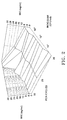
- This concept is further taught and validated by Figure 2 to show that the MIC values are independent of PCR amplification cycles and concentration of bacteria at low inoculation concentrations.
- concentrations as high as 1 x 10 6 CFU/ml which are about 1/100 of the inoculation concentration, 0.5 McFarland standard (1.5 X 10 8 CFU/ml), used in prior art, the MIC values vary with inoculum concentration as shown in Figure 2.
- any incubation containers conventionally used are suitable.
- 96-well microtiter plates can be conveniently used. Each column of a 96-well plate contains culture medium (such as Mueller-Hinton broth) together with one antibiotic at various concentrations in eight different rows. Therefore, with one column reserved for controls, one 96-well microtiter plate can be used to test eleven different essential antibiotics at 8 different concentrations.
- the incubation time of this invention can be significantly reduced.
- the suitable incubation time for bacteria in accordance with the invention can range from 1-12 hours. Preferably, it is within 1-6 hours. The most preferred incubation time is as short as three hours.
- Escherichia coli for example, its replication time is twenty minutes during logarithmic growth phase. In three hours, the bacterial count increases 512 times in the wells containing inefficacious antimicrobial agents. On the other hand, wells containing efficacious antimicrobial agents or effective concentrations would yield no bacterial growth.
- the Mueller-Hinton broth may require supplementation to support the growth of the bacteria.
- a column of micro-wells may be reserved to contain DNA amplification primers specific to the fastidious bacteria species and medium supplements.
- the method of invention is also applicable to susceptibility testing for slow growing microorganisms such as fungi or mycobacteria, for example, microorganisms with a replication time of longer than one hour.
- the invention in another aspect provides a method for fast antimicrobial susceptibility testing for slow growing microorganisms, which comprises the steps of :
- antifungal agents such as Fluconazole, Nystatin, Amphotericin B, etc.
- antibacterial agents for fungal antimicrobial susceptibility testing, and longer incubation time will be required due to the nature of the microorganisms.
- antimicrobial susceptibility testing of the well known slow growing Mycobacterium tuberculosis the incubation time is increased to 6 days and anti-tuberculosis drugs such as rifampin, isoniazid, and ethambutol are used instead.
- the susceptibility testing results can be obtained in one to several days. Preferably, the results are obtained in one day for fungi, and less than 10 days for mycobacteria, as compared with the usual 6 to 8 weeks required by prior art.
- this invention teaches revolutionary concepts to evade time consuming primary culture and species identification, in order to distinguish bacterial infection from fungal or mycobacterial infection when the results show resistance to all the antibacterial agents being tested, two micro-wells containing no antibiotics but DNA amplification primers specific to fungi and mycobacteria, respectively, are needed.
- Specimens from different human systems also require different treatments. For example, specimens collected from sites of abscess or urinary tracts require dilution while blood or cerebrospinal fluid (CSF) specimens need additional two to three hour enrichment incubation to overcome the statistical thresholds.
- CSF cerebrospinal fluid
- lysis centrifugation by using an Isolator system (Wampole Lab, Cranbury, New Jersey) can be a suitable method.
- the blood cells are lysed in a glass tube and the content is centrifuged at 3,000 x g for 30 minutes to precipitate the pathogens.
- the blood specimens need additional enrichment culture.
- breakpoint susceptibility testing rather than MIC test to determine whether the pathogen is susceptible, intermediate, or resistant to various antimicrobial agents may be more practical for patients in critical condition. In this manner, 20 micro-wells are sufficient to test 10 different antibiotics.
- each well in order to have less than 10% probability of having zero bacteria in any well, each well must have, on average, 3 bacterial counts. For most of the common bacterial pathogens, especially for those exist in normal flora, a three-hour enrichment incubation should be sufficient to gain enough bacterial counts to overcome the statistical barrier.
- the prior art use the time consuming cell culture to replicate bacteria.
- This invention amplifies the difference by in vitro DNA replication, e.g. in vitro amplification of the common 16S rRNA gene among bacteria.
- DNA amplification methods such as polymerase chain reaction (PCR), strand displacement amplification, and self-sustained sequence replication have been used to replicate 16S rRNA gene specific to different bacteria for genera or species identification.
- PCR polymerase chain reaction
- strand displacement amplification strand displacement amplification
- self-sustained sequence replication have been used to replicate 16S rRNA gene specific to different bacteria for genera or species identification.
- This invention teaches new applications of these in vitro amplification methods to replicate conserved region of 16S rRNA gene for antimicrobial susceptibility testing.
- the microorganisms are lysed with lysing reagents.
- Suitable lysing agents for exposing genomic DNA or RNA for amplification include, but not limited to, lysozyme and proteinase K.
- the prior art require that the bacteria be purified from culture medium before the lytic reagents are applied. After bacterial cells are lysed, the lytic reagents must be removed before the DNA amplification can proceed because the amplification process requires DNA polymerases that are vulnerable to lytic reagents.
- This invention teaches that diluting the culture medium or the lytic reagents by 10-fold is sufficient to reduce the various inhibiting components to levels that do not interfere with the amplification process.
- amplification can be performed directly without removing ingredients, e.g. lytic agents, in the culture medium by centrifugation or other purification processes.
- the in vitro DNA amplification methods achieve one round of DNA replication in less than three minutes.
- the traditional cell culture method requires 20 minutes for one round of replication and approximately 20 hours for slow growing bacterium like M . tuberculosis .
- DNA amplification can be conducted either by polymerase chain reaction for preferably less than 30, e.g. 25 cycles, in a multi-well PCR machine, or by other DNA replication methods, e.g. isothermal in vitro amplification, for less than four hours, preferably less than three and most preferably less than two hours.
- electrophoresis is the conventional method of choice. By identifying a band on a slab gel one can determine whether the DNA amplification reaction has generated the desired product. This analytical method is acceptable when only a few samples are analyzed. In antimicrobial susceptibility testing or in other screening methods where large number of samples are employed on a microtiter plate, using electrophoresis as the analytical tool is intolerably tedious and impractical. This invention recognizes the limitations which arise from a large number of DNA amplification product analysis and provides a quick solution to solve the problem.
- reporter molecules which are specific to dsDNA and form complexes therewith are utilized to distinguish the dsDNA generated by DNA replication methods from the free nucleotides dominating in the wells that contain efficacious antimicrobial agent.
- the signal emission from the complexes provides an efficient means for an immediate visual determination of which wells have gone through DNA amplification to contain high bacterial DNA concentrations.
- Some fluorescent intercalating dyes selectively bind to dsDNA and give out enhanced fluorescence emission when bound.
- Stable dye-DNA intercalation complexes as reagents for high-sensitivity fluorescence detection have been reported in Glazer, A. N., Rye, H. S., Nature, 359, 859-861, 1992.
- the intercalating dyes of choice are, for example, 1, 1'-(4,4,7,7,-tetramethyl-4,7-diazaundecamethylene)-bid-4-[3-methyl-2,3-dihydro-(benzo-1,3-thiazo)-2-methyl-idene]quinolinium tetraiodide, designated TOTO or 1,1'-(4,4,7,7-tetra-methyl-4,7-diazaundecamethylene)-bis-4-[3-methyl-2,3-dihydro-(benzo-1,3-oxazole)-2-methylidene]-quinolinium tetraiodide, designated YOYO.
- TOTO 1,1'-(4,4,7,7-tetra-methyl-4,7-diazaundecamethylene)-bis-4-[3-methyl-2,3-dihydro-(benzo-1,3-oxazole)-2-methylidene]-quinolinium tetraio
- the fluorescence emission enhancement of YOYO or TOTO when bound to dsDNA are on the order of thousands, the F bound vs. F free is 3200 for YOYO and 1100 for TOTO.
- ethidium bromide F bound /F free ⁇ 30
- YOYO or TOTO offers much higher signal-to-noise ratio in detection. Therefore, by using intercalating dye with very high fluorescence enhancement ratio, one can distinguish, by fluorescence intensity, wells that contain dsDNA from those that do not.
- Intercalating dyes such as propidium iodide or ethidium homodimer can also be used for rapid detection of DNA amplification. Because ethidium bromide has larger absorptivity in the UV range than YOYO, ethidium bromide appears to have brighter fluorescence emission than YOYO when UV transillumination light box is used as the excitation source. However, ethidium bromide has much lower F bound vs. F free ratio than YOYO. Therefore, the background emission of free ethidium bromide is significantly higher than free YOYO so that the dynamic range and signal-to-noise ratio of detection are less with ethidium bromide.
- the light source can either be a high power xenon lamp or tungsten halogen lamp with a bandpass filter optimized to pass excitation wavelengths from 450 nm to 490 nm or a laser with output ranging within that particular wavelength region, for instance, an argon ion laser with 488 nm output.
- a laser induced fluorescence microtiter plate reader can be used to generate and measure fluorescence emission from individual well.
- the fluorescence emissions from the micro-wells are sufficiently intense such that minimal signal integration time is required and a microtiter plate containing 96 samples can be read in less than 20 seconds.
- the detection method in accordance with the invention using intercalating dye is rather simple.
- the dye such as ethidium bromide can be pipetted in the container, e.g. a microtiter plate, and the container is placed over a UV trans-illumination light box.
- the wells that contain amplified dsDNA will lit up brightly while the other wells remain dim.
- 96 amplified samples can be detected on a microtiter plate in just a few seconds by observing the plate with one's eyes.
- the microtiter plate can be read by a fluorescence microtiter plate reader with Xenon arc lamp as the excitation source.
- the intensity of the fluorescence or the concentration of the bacteria in the wells can be quantitated with appropriate fluorescence bandpass filters.
- fluorescent intercalating dyes such as ethidium bromide, SYBR I, or YOYO is added to each well either before or after the amplification reaction. Fluorescence intensities from the wells that contain efficacious antimicrobial agents are low due to few or no replication templates while the wells that contain inefficacious antimicrobial agents yield high fluorescence intensities.
- the lowest antimicrobial concentration to have the same fluorescence intensity as the zero growth control is recorded as the Minimum Inhibition Concentration (MIC).
- this innovative system is an integrated approach to identify efficacious antimicrobial agents which save lives of many critically ill bacteremia patients. Particularly at the time when drugs which effectively control sepsis are yet to be discovered, eradicating pathogens in good time will prevent patients-from developing septic shock and increase the odds of survival from the infection.
- Escherichia coli ATCC 25922 as recommended by NCCLS (National Committee for Clinical Laboratory Standards) was used.
- the strain is genetically stable and has tabulated MIC ranges published by NCCLS as follows for ampicillin, cephalothin, nalidixic acid and gentamicin.
- Quality control MIC range E . coli ATCC 25922
- Antibiotics MIC range ⁇ g/ml
- E . coli E. coli , ATCC 25922, inoculum with concentrations approximately 2.5 x 10 4 CFU/ml in Mueller-Hinton broth was inoculated in each well of a 96-well microtiter plate.
- the stock solutions of the antibiotics were prepared according to NCCLS recommendations. Appropriate concentrations of each kind of the following antimicrobial agent was added to the first row of the microtiter plate.
- lysozyme and lysostaphin were added to the wells at final concentrations of 1 mg/ml and 100 ⁇ g/ml, respectively.
- the samples were incubated at 37°C for 30 minutes prior to the addition of proteinase K and Tween 20 to final concentrations of 100 ⁇ g/ml and 1% (V/V), respectively.
- An additional 30 minutes of incubation at 55°C was allowed to complete the lysis procedures before the enzymes were inactivated at 95°C for 10 minutes.
- Bacterial DNA molecules were amplified in 40 ⁇ l PCR mixture consisting of 4 ⁇ l of 10 x buffer solution (100 mM Tris-HCl, pH 8.8, 1.5 mM MgCl 2 , 50 mM KCl, and 0.1% Triton X-100), 0.125 ⁇ l each of 20 ⁇ M PCR primers with nucleotide sequences 5'-AGGAGGTGATCCAACCGCA and 5'-AACTGGACCAAGGTGGGGAG, 0.2 ⁇ l of 10 mM dNTP mixture, 12 ⁇ l of bacterial lysate, 0.5 ⁇ of 2U/ ⁇ l polymerase (Dynazyme), and 23.1 ⁇ l of H 2 O.
- 10 x buffer solution 100 mM Tris-HCl, pH 8.8, 1.5 mM MgCl 2 , 50 mM KCl, and 0.1% Triton X-100
- 0.125 ⁇ l each of 20 ⁇ M PCR primers with nu
- the microtiter plate containing the PCR mixtures was placed in a 96-well block thermal cycler (PTC-100, MJ Research, Inc.). The thermal cycler was set to 94°C for 7 minutes followed by 25 cycles of the following temperature profiles, 95°C for 45 seconds, 55°C for 30 seconds, 72°C for 40 seconds, and a final extension at 72°C for 5 minutes.
- YOYO-1 dye (Molecular Probes, Eugene, OR) in 0.1 x TAE buffer solution was added to the wells to make final dye concentration of 0.5 ⁇ M.
- concentrations of amplified DNA were measured in less than one minute by an in-house constructed laser induced fluorescence microtiter plate reader which was consisted of an argon ion laser, photomultiplier tube, detection electronic circuits, and a computer controlled X-Y translation stage.
- the fluorescence image acquired by the scanning system was pseudo-color encoded for easy identification of differences in fluorescence intensity.
- the MIC values for various antimicrobial agents to reference bacterial strains Pseudomonas aerugenosa ATCC 27853, Staphylococcus aureus ATCC 29213, Escherichia coli ATCC 25922 were determined.
- the MIC values for a panel of antibiotics were read under UV illumination in just a few seconds by observing the plates with or without the aid of a CCD camera and integrator.
- the intercalating dye added to the wells has absorption within the UV region.
- ethidium bromide was added to the wells to final concentration of 3 ⁇ M and the microtiter plate was placed on top of a UV light box that output 313 nm wavelength UV light or be illuminated by UV light from above.
- the fluorescence emission of the ethidium bromide intercalated DNA can be viewed through a bandpass filter with center wavelength around 610 nm.
Landscapes
- Chemical & Material Sciences (AREA)
- Life Sciences & Earth Sciences (AREA)
- Organic Chemistry (AREA)
- Proteomics, Peptides & Aminoacids (AREA)
- Health & Medical Sciences (AREA)
- Zoology (AREA)
- Wood Science & Technology (AREA)
- Analytical Chemistry (AREA)
- Engineering & Computer Science (AREA)
- Immunology (AREA)
- Biophysics (AREA)
- Microbiology (AREA)
- Molecular Biology (AREA)
- Physics & Mathematics (AREA)
- Biotechnology (AREA)
- Biochemistry (AREA)
- Bioinformatics & Cheminformatics (AREA)
- General Engineering & Computer Science (AREA)
- General Health & Medical Sciences (AREA)
- Genetics & Genomics (AREA)
- Toxicology (AREA)
- Measuring Or Testing Involving Enzymes Or Micro-Organisms (AREA)
Priority Applications (4)
| Application Number | Priority Date | Filing Date | Title |
|---|---|---|---|
| EP96305535A EP0822261B1 (fr) | 1996-07-29 | 1996-07-29 | Méthode rapide pour la détection de la susceptibilité microbienne |
| DE1996622168 DE69622168T2 (de) | 1996-07-29 | 1996-07-29 | Verfahren zur schnellen antimikrobiellen Empfindlichkeitsnachweis |
| US08/692,008 US5789173A (en) | 1996-07-29 | 1996-08-02 | Methods for rapid antimicrobial susceptibility testing |
| JP8212353A JPH1066598A (ja) | 1996-07-29 | 1996-08-12 | 迅速抗菌剤感受性試験法 |
Applications Claiming Priority (3)
| Application Number | Priority Date | Filing Date | Title |
|---|---|---|---|
| EP96305535A EP0822261B1 (fr) | 1996-07-29 | 1996-07-29 | Méthode rapide pour la détection de la susceptibilité microbienne |
| US08/692,008 US5789173A (en) | 1996-07-29 | 1996-08-02 | Methods for rapid antimicrobial susceptibility testing |
| JP8212353A JPH1066598A (ja) | 1996-07-29 | 1996-08-12 | 迅速抗菌剤感受性試験法 |
Publications (2)
| Publication Number | Publication Date |
|---|---|
| EP0822261A1 true EP0822261A1 (fr) | 1998-02-04 |
| EP0822261B1 EP0822261B1 (fr) | 2002-07-03 |
Family
ID=27237759
Family Applications (1)
| Application Number | Title | Priority Date | Filing Date |
|---|---|---|---|
| EP96305535A Expired - Lifetime EP0822261B1 (fr) | 1996-07-29 | 1996-07-29 | Méthode rapide pour la détection de la susceptibilité microbienne |
Country Status (3)
| Country | Link |
|---|---|
| US (1) | US5789173A (fr) |
| EP (1) | EP0822261B1 (fr) |
| JP (1) | JPH1066598A (fr) |
Cited By (2)
| Publication number | Priority date | Publication date | Assignee | Title |
|---|---|---|---|---|
| EP1350431A4 (fr) * | 2001-01-09 | 2005-02-09 | Kurita Water Ind Ltd | Procede de selection d'un agent antimicrobien et procede d'utilisation de ce dernier |
| WO2022165541A1 (fr) * | 2021-02-08 | 2022-08-11 | C-Square Bioscience Gmbh | Dispositif et procédé pour réguler la teneur en micro-organismes |
Families Citing this family (35)
| Publication number | Priority date | Publication date | Assignee | Title |
|---|---|---|---|---|
| ATE428801T1 (de) * | 1996-06-04 | 2009-05-15 | Univ Utah Res Found | Überwachung der hybridisierung während pcr |
| GB9714347D0 (en) * | 1997-07-09 | 1997-09-10 | Oxoid Ltd | Image analysis systems and devices for use therewith |
| WO2000067037A2 (fr) * | 1999-04-29 | 2000-11-09 | Dade Microscan Inc. | Bioanalyse de sensibilite anti-microbienne et systeme d'identification de microorganismes rapides combines |
| US6518037B2 (en) * | 1999-11-12 | 2003-02-11 | University Of Iowa Research Foundation | Two-component system that controls bacterial membrane synthesis |
| US20030160957A1 (en) * | 2000-07-14 | 2003-08-28 | Applera Corporation | Scanning system and method for scanning a plurality of samples |
| US6563581B1 (en) * | 2000-07-14 | 2003-05-13 | Applera Corporation | Scanning system and method for scanning a plurality of samples |
| CN100430486C (zh) * | 2001-01-20 | 2008-11-05 | 刘胜 | 微生物易感性的快速测定 |
| US6902894B2 (en) | 2001-09-07 | 2005-06-07 | Genetel Pharmaceuticals Ltd. | Mutation detection on RNA polmerase beta subunit gene having rifampin resistance |
| US7158890B2 (en) * | 2003-03-19 | 2007-01-02 | Siemens Medical Solutions Health Services Corporation | System and method for processing information related to laboratory tests and results |
| US20050233390A1 (en) * | 2003-04-09 | 2005-10-20 | Allen John W | Device including a proteinaceous factor, a recombinant proteinaceous factor, and a nucleotide sequence encoding the proteinaceous factor |
| JP4773348B2 (ja) | 2003-07-12 | 2011-09-14 | アクセラー8 テクノロジー コーポレイション | 高感度かつ迅速なバイオ検出法 |
| GB0324650D0 (en) * | 2003-10-22 | 2003-11-26 | Acolyte Biomedica Ltd | Using nucleic acids for clinical microbiology testing |
| DE202004006282U1 (de) * | 2004-04-19 | 2004-07-01 | Lohmann Animal Health Gmbh & Co. Kg | Vorrichtung für die Empfindlichkeitsprüfung bakterieller Infektionserreger und Impfstämme des Geflügels |
| US20080220465A1 (en) * | 2007-03-05 | 2008-09-11 | Pocared Diagnostics, Inc. | Antibiotic Sensitivity Testing Method |
| US10254204B2 (en) | 2011-03-07 | 2019-04-09 | Accelerate Diagnostics, Inc. | Membrane-assisted purification |
| US9434937B2 (en) | 2011-03-07 | 2016-09-06 | Accelerate Diagnostics, Inc. | Rapid cell purification systems |
| AU2013225823A1 (en) | 2012-02-29 | 2014-09-18 | President And Fellows Of Harvard College | Rapid antibiotic susceptibility testing |
| RU2505813C1 (ru) * | 2012-11-06 | 2014-01-27 | Виктор Вениаминович Тец | Способ определения чувствительности микроорганизмов к антимикробным веществам |
| US9677109B2 (en) | 2013-03-15 | 2017-06-13 | Accelerate Diagnostics, Inc. | Rapid determination of microbial growth and antimicrobial susceptibility |
| US10266869B2 (en) | 2013-11-28 | 2019-04-23 | Viktor Veniaminovich Tets | Device for determining the sensitivity of microorganisms to antimicrobial drugs |
| KR102535489B1 (ko) | 2014-06-13 | 2023-05-22 | 큐-리네아 에이비 | 미생물 검출 방법 및 특성 규명 방법 |
| EP3215631A4 (fr) | 2014-11-05 | 2018-08-08 | California Institute of Technology | Mesures microfluidiques de la réponse d'un organisme à un médicament |
| AU2016243656A1 (en) | 2015-03-30 | 2017-11-09 | Accelerate Diagnostics, Inc. | Instrument and system for rapid microorganism identification and antimicrobial agent susceptibility testing |
| US10253355B2 (en) * | 2015-03-30 | 2019-04-09 | Accelerate Diagnostics, Inc. | Instrument and system for rapid microorganism identification and antimicrobial agent susceptibility testing |
| GB201507026D0 (en) | 2015-04-24 | 2015-06-10 | Linea Ab Q | Medical sample transportation container |
| RU2604789C1 (ru) | 2015-06-23 | 2016-12-10 | Виктор Вениаминович Тец | Питательная среда для выращивания бактерий |
| GB201511129D0 (en) | 2015-06-24 | 2015-08-05 | Linea Ab Q | Method of determining antimicrobial susceptibility of a microorganism |
| GB2554767A (en) | 2016-04-21 | 2018-04-11 | Q Linea Ab | Detecting and characterising a microorganism |
| WO2018058078A1 (fr) | 2016-09-23 | 2018-03-29 | California Institute Of Technology | Quantification numérique de la réplication de l'adn et/ou de la ségrégation chromosomique basée sur la détermination de la susceptibilité antimicrobienne |
| GB201617713D0 (en) | 2016-10-19 | 2016-11-30 | Q-Linea Ab | Method for recovering microbial cells |
| WO2019075264A1 (fr) | 2017-10-11 | 2019-04-18 | California Institute Of Technology | Antibiosensibilité de micro-organismes et compositions, procédés et systèmes associés |
| US12448655B2 (en) | 2017-10-11 | 2025-10-21 | California Institute Of Technology | Antibiotic susceptibility of microorganisms and related methods and systems |
| CN110632044B (zh) * | 2019-08-30 | 2021-12-21 | 东莞市厚街医院 | 一种基于aie荧光探针检测细菌抗药性的方法 |
| CN110684820B (zh) * | 2019-10-31 | 2023-01-03 | 上海氘峰医疗科技有限公司 | 通过在凝胶上检测细菌数量快速得到细菌耐药性的方法 |
| US11441167B2 (en) * | 2019-11-20 | 2022-09-13 | Roche Molecular Systems, Inc. | Compositions and methods for rapid identification and phenotypic antimicrobial susceptibility testing of bacteria and fungi |
Citations (7)
| Publication number | Priority date | Publication date | Assignee | Title |
|---|---|---|---|---|
| WO1984002721A1 (fr) * | 1983-01-10 | 1984-07-19 | Gen Probe Inc | Procede de detection, identification et quantification d'organismes et de virus |
| EP0187332A2 (fr) * | 1985-01-10 | 1986-07-16 | Molecular Diagnostics, Inc. | Procédé photochimique pour marquer les acides nucléiques pour détection dans les essais d'hybridisation |
| WO1989007606A1 (fr) * | 1988-02-11 | 1989-08-24 | Max-Planck-Gesellschaft Zur Förderung Der Wissensc | Acide nucleique d'investigation ayant en partie un seul brin et en partie deux brins, et son procede de production |
| EP0457685A1 (fr) * | 1990-05-18 | 1991-11-21 | Institut Pasteur | Nouveaux mycoplasmes - moyens pour détecter et caractériser des mycoplasmes in vitro |
| EP0534640A1 (fr) * | 1991-09-23 | 1993-03-31 | Pfizer Inc. | Procédé pour détecter ARNm et ADN spécifiques dans les cellules |
| EP0678581A1 (fr) * | 1994-04-18 | 1995-10-25 | Becton, Dickinson and Company | Détection d'amplification d'acide nucléique par polarisation de fluorescence |
| WO1995034574A1 (fr) * | 1994-06-16 | 1995-12-21 | Microprobe Corporation | Detection rapide et de haute precision de mycobacteries resistant aux antibiotiques a l'aide de sondes oligonucleotidiques specifiques contre les precurseurs d'adn ribosomique |
Family Cites Families (14)
| Publication number | Priority date | Publication date | Assignee | Title |
|---|---|---|---|---|
| US4385115A (en) * | 1980-10-22 | 1983-05-24 | Hoffmann-La Roche Inc. | Diagnostics testing devices and processes |
| US5348854A (en) * | 1981-09-25 | 1994-09-20 | Webster John A Jr | Method for detecting prokaryotic organisms |
| US5567587A (en) * | 1983-01-10 | 1996-10-22 | Gen-Probe Incorporated | Method for detecting, the presence and amount of prokaryotic organisms using specific rRNA subsequences as probes |
| US5288611A (en) * | 1983-01-10 | 1994-02-22 | Gen-Probe Incorporated | Method for detecting, identifying, and quantitating organisms and viruses |
| DE3327839A1 (de) * | 1983-08-02 | 1985-02-14 | Merck Patent Gmbh, 6100 Darmstadt | Verfahren und mittel zur empfindlichkeitspruefung von bakterien |
| US5089395A (en) * | 1985-02-27 | 1992-02-18 | University Of Cincinnati | Viable microorganism detection by induced fluorescence |
| US4683195A (en) * | 1986-01-30 | 1987-07-28 | Cetus Corporation | Process for amplifying, detecting, and/or-cloning nucleic acid sequences |
| US4861709A (en) * | 1985-05-31 | 1989-08-29 | Technicon Research A.G. | Detection and/or identification of microorganisms in a test sample using bioluminescence or other exogenous genetically-introduced marker |
| SE456246B (sv) * | 1985-08-01 | 1988-09-19 | Biodisk Ab | Anordning for kenslighetsbestemning av mikroorganismer innefattande en icke-poros testremsa med tva olika testsubstanser |
| US5059522A (en) * | 1988-08-18 | 1991-10-22 | Wayne Lawrence G | Intrinsic enzyme dot blot immunoassay or indentification of microorganisms |
| US5112745A (en) * | 1989-09-29 | 1992-05-12 | Space Medical Systems, Inc. | Rapid identification of microbial organisms and determination of antibiotic sensitivity by infrared spectroscopy |
| US5316918A (en) * | 1989-10-24 | 1994-05-31 | Infectech, Inc. | Method and apparatus for testing MAI (mycobacterium avium-intracellulare) for antimicrobial agent sensitivity |
| US5091652A (en) * | 1990-01-12 | 1992-02-25 | The Regents Of The University Of California | Laser excited confocal microscope fluorescence scanner and method |
| US5422242A (en) * | 1991-08-15 | 1995-06-06 | Hoffmann-La Roche Inc. | Mycobacterium primers and probes |
-
1996
- 1996-07-29 EP EP96305535A patent/EP0822261B1/fr not_active Expired - Lifetime
- 1996-08-02 US US08/692,008 patent/US5789173A/en not_active Expired - Lifetime
- 1996-08-12 JP JP8212353A patent/JPH1066598A/ja active Pending
Patent Citations (7)
| Publication number | Priority date | Publication date | Assignee | Title |
|---|---|---|---|---|
| WO1984002721A1 (fr) * | 1983-01-10 | 1984-07-19 | Gen Probe Inc | Procede de detection, identification et quantification d'organismes et de virus |
| EP0187332A2 (fr) * | 1985-01-10 | 1986-07-16 | Molecular Diagnostics, Inc. | Procédé photochimique pour marquer les acides nucléiques pour détection dans les essais d'hybridisation |
| WO1989007606A1 (fr) * | 1988-02-11 | 1989-08-24 | Max-Planck-Gesellschaft Zur Förderung Der Wissensc | Acide nucleique d'investigation ayant en partie un seul brin et en partie deux brins, et son procede de production |
| EP0457685A1 (fr) * | 1990-05-18 | 1991-11-21 | Institut Pasteur | Nouveaux mycoplasmes - moyens pour détecter et caractériser des mycoplasmes in vitro |
| EP0534640A1 (fr) * | 1991-09-23 | 1993-03-31 | Pfizer Inc. | Procédé pour détecter ARNm et ADN spécifiques dans les cellules |
| EP0678581A1 (fr) * | 1994-04-18 | 1995-10-25 | Becton, Dickinson and Company | Détection d'amplification d'acide nucléique par polarisation de fluorescence |
| WO1995034574A1 (fr) * | 1994-06-16 | 1995-12-21 | Microprobe Corporation | Detection rapide et de haute precision de mycobacteries resistant aux antibiotiques a l'aide de sondes oligonucleotidiques specifiques contre les precurseurs d'adn ribosomique |
Non-Patent Citations (2)
| Title |
|---|
| GLAZER AN ET AL: "Stable dye-DNA intercalation complexes as reagents for high-sensitivity fluorescence detection.", NATURE, OCT 29 1992, 359 (6398) P859-61, ENGLAND, XP002021169 * |
| KHAN, M. A. ET AL: "A reverse transcriptase- PCR based assay for in-vitro antibiotic susceptibility testing of Chlamydia pneumoniae", J. ANTIMICROB. CHEMOTHER. (1996), 37(4), 677-85 CODEN: JACHDX;ISSN: 0305-7453, XP000615267 * |
Cited By (2)
| Publication number | Priority date | Publication date | Assignee | Title |
|---|---|---|---|---|
| EP1350431A4 (fr) * | 2001-01-09 | 2005-02-09 | Kurita Water Ind Ltd | Procede de selection d'un agent antimicrobien et procede d'utilisation de ce dernier |
| WO2022165541A1 (fr) * | 2021-02-08 | 2022-08-11 | C-Square Bioscience Gmbh | Dispositif et procédé pour réguler la teneur en micro-organismes |
Also Published As
| Publication number | Publication date |
|---|---|
| US5789173A (en) | 1998-08-04 |
| EP0822261B1 (fr) | 2002-07-03 |
| JPH1066598A (ja) | 1998-03-10 |
Similar Documents
| Publication | Publication Date | Title |
|---|---|---|
| EP0822261B1 (fr) | Méthode rapide pour la détection de la susceptibilité microbienne | |
| US11505835B2 (en) | Method for determining the identity and antimicrobial susceptibility of a microorganism | |
| RU2329305C2 (ru) | Количественный анализ, позволяющий одновременно обнаруживать и идентифицировать бактериальные инфекции | |
| Varma et al. | Detection of Cyclospora cayetanensis using a quantitative real-time PCR assay | |
| US8535888B2 (en) | Compositions and methods for detecting methicillin-resistant S. aureus | |
| CN101680023B (zh) | 检测甲氧西林抗性金黄色葡萄球菌的引物、探针和试剂盒 | |
| CA2787958A1 (fr) | Procedes d'identification de mycobacteries resistantes aux medicaments | |
| Jannes et al. | A review of current and future molecular diagnostic tests for use in the microbiology laboratory | |
| KR100388548B1 (ko) | 알이피 13 이 12 반복서열의 피시알 증폭을 이용한결핵균의 검출방법 | |
| CN117706088B (zh) | 甲氧西林金黄色葡萄球菌的检测方法 | |
| Du et al. | Probe-based loop-mediated isothermal amplification assay for multi-target quantitative detection of three foodborne pathogens in seafood | |
| Hinata et al. | Quantitative detection of Escherichia coli from urine of patients with bacteriuria by real-time PCR | |
| Mohammad et al. | Evaluation of API 20E system in fluorescent Pseudomonas identification from button mushroom Agaricus bisporus cultivation casing soil | |
| De Felice et al. | Latest trends in biosensors powered by nucleic acid isothermal amplification for the diagnosis of joint infections: From sampling to identification towards the point-of-care | |
| Eichbaum et al. | Tuberculosis: advances in laboratory diagnosis and drug susceptibility testing | |
| US9593384B2 (en) | Metronidazole resistance in trichomonas vaginalis and single nucleotide polymorphisms | |
| Guiver et al. | PCR diagnosis | |
| US20080176220A1 (en) | Method, Kit and System for Enhanced Nested Pcr | |
| US20230374570A1 (en) | Method and system for detecting fungal genes and kit for use with same | |
| RU2839472C1 (ru) | Набор олигодезоксирибонуклеотидных праймеров и флуоресцентно-меченых зондов для индикации цереулида и диарейных энтеротоксинов Bacillus cereus complex с помощью ПЦР-РВ | |
| TW438889B (en) | Methods for rapid antimicrobial susceptibility testing | |
| Rajeev et al. | A testing scheme for the detection of Mycobacterium avium subsp. paratuberculosis in bovine feces utilizing the ESP para-JEM liquid culture system | |
| Siegrist et al. | Rapid detection and identification of spoilage microorganisms in beer | |
| DIAGNOSTICS | PM 7/59 (2) Clavibacter sepedonicus | |
| Narayanan et al. | RECENT TRENDS TO DETECT ENDODONTIC MICROBES |
Legal Events
| Date | Code | Title | Description |
|---|---|---|---|
| PUAI | Public reference made under article 153(3) epc to a published international application that has entered the european phase |
Free format text: ORIGINAL CODE: 0009012 |
|
| AK | Designated contracting states |
Kind code of ref document: A1 Designated state(s): CH DE FR GB IT LI SE |
|
| 17P | Request for examination filed |
Effective date: 19980617 |
|
| AKX | Designation fees paid |
Free format text: CH DE FR GB IT LI SE |
|
| RBV | Designated contracting states (corrected) |
Designated state(s): CH DE FR GB IT LI SE |
|
| 17Q | First examination report despatched |
Effective date: 20000801 |
|
| GRAG | Despatch of communication of intention to grant |
Free format text: ORIGINAL CODE: EPIDOS AGRA |
|
| GRAG | Despatch of communication of intention to grant |
Free format text: ORIGINAL CODE: EPIDOS AGRA |
|
| GRAH | Despatch of communication of intention to grant a patent |
Free format text: ORIGINAL CODE: EPIDOS IGRA |
|
| GRAH | Despatch of communication of intention to grant a patent |
Free format text: ORIGINAL CODE: EPIDOS IGRA |
|
| GRAA | (expected) grant |
Free format text: ORIGINAL CODE: 0009210 |
|
| AK | Designated contracting states |
Kind code of ref document: B1 Designated state(s): CH DE FR GB IT LI SE |
|
| REG | Reference to a national code |
Ref country code: CH Ref legal event code: EP |
|
| REF | Corresponds to: |
Ref document number: 69622168 Country of ref document: DE Date of ref document: 20020808 |
|
| REG | Reference to a national code |
Ref country code: CH Ref legal event code: NV Representative=s name: R. A. EGLI & CO. PATENTANWAELTE |
|
| PG25 | Lapsed in a contracting state [announced via postgrant information from national office to epo] |
Ref country code: SE Free format text: LAPSE BECAUSE OF FAILURE TO SUBMIT A TRANSLATION OF THE DESCRIPTION OR TO PAY THE FEE WITHIN THE PRESCRIBED TIME-LIMIT Effective date: 20021003 |
|
| ET | Fr: translation filed | ||
| PLBE | No opposition filed within time limit |
Free format text: ORIGINAL CODE: 0009261 |
|
| STAA | Information on the status of an ep patent application or granted ep patent |
Free format text: STATUS: NO OPPOSITION FILED WITHIN TIME LIMIT |
|
| 26N | No opposition filed |
Effective date: 20030404 |
|
| PGFP | Annual fee paid to national office [announced via postgrant information from national office to epo] |
Ref country code: CH Payment date: 20100726 Year of fee payment: 15 |
|
| PGFP | Annual fee paid to national office [announced via postgrant information from national office to epo] |
Ref country code: IT Payment date: 20100729 Year of fee payment: 15 Ref country code: FR Payment date: 20100805 Year of fee payment: 15 Ref country code: DE Payment date: 20100728 Year of fee payment: 15 |
|
| PGFP | Annual fee paid to national office [announced via postgrant information from national office to epo] |
Ref country code: GB Payment date: 20100726 Year of fee payment: 15 |
|
| REG | Reference to a national code |
Ref country code: CH Ref legal event code: PL |
|
| GBPC | Gb: european patent ceased through non-payment of renewal fee |
Effective date: 20110729 |
|
| REG | Reference to a national code |
Ref country code: FR Ref legal event code: ST Effective date: 20120330 |
|
| PG25 | Lapsed in a contracting state [announced via postgrant information from national office to epo] |
Ref country code: DE Free format text: LAPSE BECAUSE OF NON-PAYMENT OF DUE FEES Effective date: 20120201 Ref country code: FR Free format text: LAPSE BECAUSE OF NON-PAYMENT OF DUE FEES Effective date: 20110801 Ref country code: LI Free format text: LAPSE BECAUSE OF NON-PAYMENT OF DUE FEES Effective date: 20110731 Ref country code: CH Free format text: LAPSE BECAUSE OF NON-PAYMENT OF DUE FEES Effective date: 20110731 |
|
| PG25 | Lapsed in a contracting state [announced via postgrant information from national office to epo] |
Ref country code: IT Free format text: LAPSE BECAUSE OF NON-PAYMENT OF DUE FEES Effective date: 20110729 |
|
| REG | Reference to a national code |
Ref country code: DE Ref legal event code: R119 Ref document number: 69622168 Country of ref document: DE Effective date: 20120201 |
|
| PG25 | Lapsed in a contracting state [announced via postgrant information from national office to epo] |
Ref country code: GB Free format text: LAPSE BECAUSE OF NON-PAYMENT OF DUE FEES Effective date: 20110729 |