EP0822492A2 - Kommunikationsbrücke für unterschiedliche Implementierungen von Objektanforderungsmaklern - Google Patents
Kommunikationsbrücke für unterschiedliche Implementierungen von Objektanforderungsmaklern Download PDFInfo
- Publication number
- EP0822492A2 EP0822492A2 EP97304705A EP97304705A EP0822492A2 EP 0822492 A2 EP0822492 A2 EP 0822492A2 EP 97304705 A EP97304705 A EP 97304705A EP 97304705 A EP97304705 A EP 97304705A EP 0822492 A2 EP0822492 A2 EP 0822492A2
- Authority
- EP
- European Patent Office
- Prior art keywords
- transport protocol
- request
- server
- proxy
- orb
- Prior art date
- Legal status (The legal status is an assumption and is not a legal conclusion. Google has not performed a legal analysis and makes no representation as to the accuracy of the status listed.)
- Ceased
Links
Images




Classifications
-
- G—PHYSICS
- G06—COMPUTING OR CALCULATING; COUNTING
- G06F—ELECTRIC DIGITAL DATA PROCESSING
- G06F9/00—Arrangements for program control, e.g. control units
- G06F9/06—Arrangements for program control, e.g. control units using stored programs, i.e. using an internal store of processing equipment to receive or retain programs
- G06F9/46—Multiprogramming arrangements
- G06F9/465—Distributed object oriented systems
-
- G—PHYSICS
- G06—COMPUTING OR CALCULATING; COUNTING
- G06F—ELECTRIC DIGITAL DATA PROCESSING
- G06F9/00—Arrangements for program control, e.g. control units
- G06F9/06—Arrangements for program control, e.g. control units using stored programs, i.e. using an internal store of processing equipment to receive or retain programs
- G06F9/46—Multiprogramming arrangements
- G06F9/54—Interprogram communication
- G06F9/541—Interprogram communication via adapters, e.g. between incompatible applications
Definitions
- the present invention relates to object-oriented computer systems.
- the present invention is concerned with a bridge allowing communication between different implementations of object request brokers.
- OMG Object Management Group
- CORBA Common Object Request Broker Architecture
- the Open Systems Interconnection (OSI) seven layer model is possibly the most widespread of these protocols.
- the lowest layer, the Physical layer describes how the physical network is accessed.
- the Data Link layer provides reliable transmission across a physical link.
- the Network layer deals with connection establishment and routing.
- the Transport layer provides reliable end-to-end transmission.
- the Session layer is concerned with connection control.
- the Presentation layer deals with data syntax and transparency to the applications.
- the Application layer describes end-user functionality.
- CORBA resides in the Application layer.
- a central component of CORBA is the Object Request Broker (ORB) which is the infrastructure for providing transparent distributed communication across heterogeneous systems.
- ORB Object Request Broker
- the CORBA specification describes all the standard interfaces for ORBs.
- the Basic Object Adapter (BOA) is an initial set of ORB interfaces for object implementations.
- CORBA is a peer-to-peer distributed computer facility where all applications are objects.
- Objects can alternate between being a client and a server, where a client object is defined as being the originator of an object invocation and a server object is defined as being the recipient of an object invocation.
- Server objects are also referred to as object implementations. Typically, objects play both roles at one time or another.
- CORBA provides two mechanisms with or through which applications may communicate: static interfaces and dynamic interfaces.
- static interfaces the parameters are defined at compile-time whereas in dynamic interfaces, the parameters are defined at run-time.
- Static interfaces include a stub and a skeleton.
- the client object links to the stub so that from the client's perspective, the stub acts like a local function call.
- the stub provides an interface to the ORB that encodes and decodes the specified operation's parameters into communication formats suitable for transmission.
- the skeleton is the corresponding server-side implementation of the interface. When the server object completes processing of the request, the skeleton and stub return the results to the client, along with any exceptions that are generated by either the server or the ORB.
- Dynamic interfaces are an alternative to compiled static interfaces. Dynamic interfaces include a Dynamic Invocation Interface (DII) and a Dynamic Skeleton Interface (DSI).
- DII Dynamic Invocation Interface
- DSI Dynamic Skeleton Interface
- the DII is a generic facility for invoking any operation with a run-time-defined parameter list. A run-time interface description of the operation signature specifying the parameter list is retrieved during run-time. Thus, a request can be constructed to previously unknown operation or object type.
- the DSI is the corresponding server-side implementation of the interface. Use of the dynamic interface instead of the static interface is transparent to object implementation.
- Embodiments of the present invention provide innovative systems and methods for providing communication between different implementations of object request brokers.
- a bridge including a proxy object allows communication between the object request brokers.
- the proxy object within the bridge stores the server object reference in its reference data.
- the proxy object translates messages (e.g., requests and responses/exceptions) to the transfer protocol of the server object and redirects these messages according to the server object reference stored in the proxy object's reference data.
- messages e.g., requests and responses/exceptions
- the present invention provides a method of providing communication between a first object request broker utilizing a first transport protocol and a second object request broker utilizing a second transport protocol, comprising the steps of: storing within the reference data of a proxy object a reference to a server object; the proxy object receiving a request in the first transport protocol from a client object on the first object request broker; the proxy object translating the request to the second transport protocol; and the proxy object sending the translated request to the server object specified by the stored reference.
- the present invention provides a system for providing communication between different implementations of object request brokers, comprising: a first object request broker utilizing a first transport protocol; a client object on the first object request broker; a second object request broker utilizing a second transport protocol, the first and second transport protocols being different; a server object on the second object request broker; and a proxy object that translates a request in the first transport protocol from the client object to the second transport protocol and sends the translated request to the server object specified by a reference to the server object stored in the reference data of the proxy object.
- Fig. 1 illustrates an example of a computer system used to execute the software of an embodiment of the present invention.
- Fig. 1 shows a computer system 1 which includes a monitor 3, screen 5, cabinet 7, keyboard 9, and mouse 11.
- Mouse 11 may have one or more buttons such as mouse buttons 13.
- Cabinet 7 houses a CD-ROM drive 15, a system memory and a hard drive (see Fig. 2) which may be utilized to store and retrieve software programs incorporating code that implements the present invention, data for use with the present invention, and the like.
- a CD-ROM 17 is shown as an exemplary computer readable storage medium, other computer readable storage media including floppy disks, tape, flash memory, system memory, and hard drives may be utilized.
- Cabinet 7 also houses familiar computer components (not shown) such as a central processor, system memory, hard disk, and the like.
- Fig. 2 shows a system block diagram of computer system 1 used to execute the software of an embodiment of the present invention.
- computer system 1 includes monitor 3 and keyboard 9.
- Computer system 1 further includes subsystems such as a central processor 102, system memory 104, I/O controller 106, display adapter 108, removable disk 112 (e.g., CD-ROM drive), fixed disk 116 (e.g., hard drive), network interface 118, and speaker 120.
- Other computer systems suitable for use with the present invention may include additional or fewer subsystems.
- another computer system could include more than one processor 102 (i.e., a multi-processor system) or a cache memory.
- Arrows such as 122 represent the system bus architecture of computer system 1. However, these arrows are illustrative of any interconnection scheme serving to link the subsystems. For example, a local bus could be utilized to connect the central processor to the system memory and display adapter.
- Computer system 1 shown in Fig. 2 is but an example of a computer system suitable for use with the present invention. Other configurations of subsystems suitable for use with the present invention will be readily apparent to one of ordinary skill in the art.
- Fig. 3 is a block diagram of the static and dynamic interfaces between objects in CORBA.
- a client object 202 makes requests to an object implementation 204 (also called a "server object" as it services client requests).
- object implementation 204 also called a "server object” as it services client requests.
- client and server are relative terms.
- a client may be a client with respect to a specific request and a server with respect to another request. Consequently, these labels will vary according to the circumstances.
- a client may also make a request utilizing a dynamic interface by calling a DII 214.
- the DII provides an interface to ORB core 208 that encodes and decodes the specified operation's parameters into communication formats suitable for transmission over the transfer medium.
- the DII is dynamic because the parameter list is defined at run-time.
- skeleton 212 provides a callback to a function implementation for the request.
- the client and server object may also interact directly with the ORB core through an ORB interface 216.
- the format of the request is the same over the transfer medium regardless of whether a static or dynamic interface is utilized.
- the client and server objects utilize a dynamic interface.
- IIOP Internet Interoperability Protocol
- TCP/IP Transmission Control Protocol/Internet Protocol
- IIOP is specifically directed to ORB-to-ORB interoperability.
- ORBs will be described as utilizing IIOP to communicate. However, the use of this protocol is for illustrative purposes and other protocols may be utilized with the present invention.
- Fig. 4 is a block diagram of a NEO bridge connecting two different implementations of ORBs.
- ORBs By different implementations (or types) of ORBs, it is meant that the ORBs utilize different transport protocols.
- a NEO ORB 302 includes a bridge 304 which provides communication with different implementations of ORBs.
- An ORB 306 utilizes IIOP as its transport protocol which is a different transport protocol utilized by NEO ORBs, which utilize Distributed Object Management Facility (DOMF).
- Bridge 304 allows NEO ORB 302 to communicate with ORB 306 utilizing IIOP.
- the bridge is shown in the NEO ORB, the bridge may alternatively be in ORB 306. In either case, the bridge provides bidirectional communication between the different implementations of ORBs.
- an ORB 308 includes a bridge 310.
- ORB 308 uses a transport protocol other than IIOP.
- bridges 304 and 310 provide communication between ORBs 302 and 308 utilizing an intermediate transport protocol of IIOP.
- two bridges provide full interoperability between NEO ORB 302 and ORB 308.
- Fig. 5 shows that the bridges of embodiments of the present invention provide bidirectional communication between different implementations of ORBs.
- a bridge should allow both a client object on a NEO ORB to invoke a server object on another ORB and a client object on another ORB to invoke a server object on the NEO ORB.
- the bridge is hosted atop some ORB (e.g., the NEO ORB).
- a client 352 on a NEO ORB 354 may request to invoke a server 355 on an ORB 356.
- the client makes a request through the NEO ORB to a bridge 357 which resides on the NEO ORB.
- the bridge is an application on the ORB that includes a proxy object 358.
- proxy object it is meant an object that translates and redirects requests to a server object.
- the proxy object translates the request and sends the request to server 355.
- the server sends a response (or exception) back to the proxy object which translates the response before sending the response to the client through the NEO ORB.
- Client 352 utilizes a local object reference for the proxy object because the client and proxy are on the same ORB. However, the server is on a different ORB so the proxy object utilizes a nonlocal or foreign object reference for the server. In order to more efficiently process the translation of the local object reference of the proxy to the nonlocal object reference of the server, the proxy object stores within its reference data the nonlocal object reference of the server.
- the reference data is a storage space within many objects.
- the reference data space is 1K bytes.
- the nonlocal (or local as discussed in the following paragraphs) object reference for the server may be stored in the reference data of the proxy object.
- the object references for the server are stored as strings.
- a nonlocal client object may request to invoke a local server object.
- a client 360 in ORB 356 may request to invoke a server 362 on NEO ORB 354.
- the client makes a request to a proxy object 364 in the bridge.
- the proxy object translates the request before it is sent to the server through the NEO ORB.
- the server sends a response (or exception) back through the NEO ORB to the proxy object.
- the proxy object translates the response and sends it to the client through the ORB on which it resides.
- the proxy object stores the local object reference of the server in the reference data of the proxy object.
- Fig. 6 shows the high level architecture of a bridge.
- the bridge receives requests from two interfaces: DOMF and IIOP.
- Communication between the bridge and NEO objects utilizes the DOMF transfer protocol (e.g., including DII and DSI).
- Communication between the bridge and an object on other implementations of ORBs utilizes the IIOP transfer protocol.
- DOMF DOMF transfer protocol
- IIOP IIOP transfer protocol
- a request from a client on a NEO ORB 402 to a server on another ORB 404 is sent to a bridge 406 via DSI DOMF.
- the bridge translates the DSI request to an DII IIOP request.
- the response/exception is then received by the bridge via DII and the bridge translates it back to a DSI DOMF response/exception.
- a request from a client on ORB 404 to a server on NEO ORB 402 is sent to the bridge via DSI IIOP.
- the bridge translates the DSI request to a DII DOMF request.
- the response/exception is then received by the bridge via DII and the bridge translates it back to a DSI IIOP response/exception.
- the IIOP transfer protocol may be implemented in the bridge in numerous ways including embedding IIOP in the bridge itself (thus, the NEO ORB core does not need to change) or modifying the host ORB to provide dual transport stacks of the DOMF and IIOP transfer protocols.
- the first approach may be preferable as it is believed to be more efficient and portable.
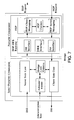
- Fig. 7 shows components inside an embodiment of the NEO ORB bridge.
- the bridge includes two main parts: 1) the IIOP implementation that contains the IIOP transfer protocol (with part of the ORB interface) and 2) the bridge core that contains the code for translating DOMF requests/responses to IIOP requests/responses (and vice versa).
- the first part is portable across several UNIX platforms.
- the second part is not necessarily portable since it interfaces with DOMF which may not be available in every ORB implementation.
- the bridge serves as the connecting entity between two ORBs, therefore a bridge is preferably automatically started after a machine is rebooted.
- a bridge may be implemented as a DOMF self-starting (persistent) server.
- FIG. 8A shows a block diagram of a NEO client invoking an object on another ORB.
- a NEO ORB 502 includes a client 504 and a bridge 506.
- the bridge includes a proxy object 508 which has a storage space of reference data 510.
- Another ORB 512 includes a server 514.
- ORB 514 is a different implementation of NEO ORB 502 as it does not utilize the same transfer protocol.
- the client desires to invoke the server, the client sends a request to the local proxy object.
- the proxy object translates the request into the transfer protocol of ORB 512 (e.g., IIOP) and retrieves the nonlocal object reference of the server from reference data 510.
- the proxy object then sends the translated request to the server specified by the retrieved object reference.
- Proxy object 508 will receive the response (or exception) from the server and translates the response to the transfer protocol of the NEO ORB. The proxy object then sends the translated response to the client on the NEO ORB.
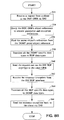
- Fig. 8B is a high level flowchart of a process of a NEO client invoking a server on another ORB.
- the NEO ORB receives a request from one of its clients via DSI that specifies a server on another ORB.
- the bridge queries the NEO ORB's object references to retrieve parameter and exception definitions for the request at step 554.
- the proxy object finds the server object's reference from the DOMF proxy object reference data.
- the proxy object translates all the DOMF specific data types to IIOP data types at step 558. Once all the necessary data types are translated, the proxy object sends the request out via the DII IIOP interface to the other ORB at step 560.
- the proxy object receives the response/exception from the DII IIOP interface from the other ORB.
- the proxy object translates all the IIOP specific data types to DOMF data types at step 564.
- the response/exception is sent back to the client via DSI at step 566.
- FIG. 9A shows a block diagram of a client on another ORB invoking a server on a NEO ORB.
- a NEO ORB 602 includes a server 604 and a bridge 606.
- the bridge includes a proxy object 608 which has a storage space of reference data 610.
- Another ORB 612 includes a client 614.
- ORB 614 is a different implementation of NEO ORB 602 as it does not utilize the same transfer protocol.
- the client desires to invoke the server, the client sends a request to the nonlocal proxy object utilizing a local object reference.
- the proxy object translates the request into the transfer protocol of NEO ORB 602 (e.g., DOMF) and retrieves the local object reference of the server from reference data 610.
- the proxy object then sends the translated request to the server specified by the retrieved object reference.
- Proxy object 608 will receive the response (or exception) from the server and translates the response to the transfer protocol of ORB 612. The proxy object then sends the translated response to the client on ORB 612.
- Fig. 9B is a high level flowchart of a process of a client on another ORB invoking a server on a NEO ORB.
- the NEO ORB receives a request from a client on the other ORB via DSI IIOP that specifies a server on the NEO ORB.
- the proxy object queries the NEO ORB's object references to retrieve parameter and exception definitions for the request at step 654.
- the proxy object finds the server object's reference from the DOMF proxy object reference data.
- the proxy object translates all the IIOP specific data types to DOMF data types at step 658. Once all the necessary data types are translated, the proxy object sends the request out via DII to the NEO server at step 660.
- the proxy object receives the response/exception from the DII interface from the server.
- the proxy object translates all the DOMF specific data types to IIOP data types at step 664.
- the response/exception is sent back to the client on the other ORB via DSI IIOP at step 666.
Landscapes
- Engineering & Computer Science (AREA)
- Software Systems (AREA)
- Theoretical Computer Science (AREA)
- Physics & Mathematics (AREA)
- General Engineering & Computer Science (AREA)
- General Physics & Mathematics (AREA)
- Computer And Data Communications (AREA)
Applications Claiming Priority (2)
| Application Number | Priority Date | Filing Date | Title |
|---|---|---|---|
| US678422 | 1984-12-05 | ||
| US08/678,422 US6282580B1 (en) | 1996-07-02 | 1996-07-02 | Bridge providing communication between different implementations of object request brokers |
Publications (2)
| Publication Number | Publication Date |
|---|---|
| EP0822492A2 true EP0822492A2 (de) | 1998-02-04 |
| EP0822492A3 EP0822492A3 (de) | 2000-04-19 |
Family
ID=24722719
Family Applications (1)
| Application Number | Title | Priority Date | Filing Date |
|---|---|---|---|
| EP97304705A Ceased EP0822492A3 (de) | 1996-07-02 | 1997-06-30 | Kommunikationsbrücke für unterschiedliche Implementierungen von Objektanforderungsmaklern |
Country Status (3)
| Country | Link |
|---|---|
| US (1) | US6282580B1 (de) |
| EP (1) | EP0822492A3 (de) |
| JP (1) | JPH10214189A (de) |
Cited By (6)
| Publication number | Priority date | Publication date | Assignee | Title |
|---|---|---|---|---|
| WO2000023879A1 (en) * | 1998-10-16 | 2000-04-27 | Objectera, Inc. | Connection concentrator for distributed object systems |
| WO2001088706A1 (en) * | 2000-05-19 | 2001-11-22 | Nokia Corporation | Data transmission method and arrangement where communication is performed by means of method calls |
| WO2002005090A1 (en) * | 2000-07-06 | 2002-01-17 | Nokia Corporation | Wireless data transmission using method calls and corba |
| WO2002071216A3 (en) * | 2001-03-01 | 2003-07-31 | Ibm | A method and a bridge for coupling a server and a client of different object types |
| EP1311946A4 (de) * | 2000-07-27 | 2008-01-02 | Bea Systems Inc | System und verfahren zur konzentration und zum lastausgleich von anforderungen |
| US7426211B2 (en) | 2001-06-12 | 2008-09-16 | Nokia Corporation | Data transmission method and data transmission arrangement |
Families Citing this family (32)
| Publication number | Priority date | Publication date | Assignee | Title |
|---|---|---|---|---|
| US6496865B1 (en) * | 1997-03-12 | 2002-12-17 | Novell, Inc. | System and method for providing interpreter applications access to server resources in a distributed network |
| GB9725742D0 (en) * | 1997-12-04 | 1998-02-04 | Hewlett Packard Co | Object gateway |
| US6385661B1 (en) * | 1998-10-19 | 2002-05-07 | Recursion Software, Inc. | System and method for dynamic generation of remote proxies |
| JP4146983B2 (ja) * | 1999-02-26 | 2008-09-10 | インターナショナル・ビジネス・マシーンズ・コーポレーション | サーバ・オブジェクトのメソッドを呼び出すプロセス方法及びデータ処理システム |
| FR2792435B1 (fr) * | 1999-04-15 | 2001-07-13 | Cit Alcatel | Procede de modification d'un protocole entre objets distribues |
| US6775687B1 (en) * | 1999-10-12 | 2004-08-10 | International Business Machines Corporation | Exchanging supplemental information fields between a client and a server |
| US6947965B2 (en) | 1999-11-30 | 2005-09-20 | Recursion Software, Inc. | System and method for communications in a distributed computing environment |
| US6931455B1 (en) * | 1999-11-30 | 2005-08-16 | Recursion Software, Inc. | System and method for communications between a CORBA object request broker and a non-CORBA object request broker |
| US6678743B1 (en) | 1999-11-30 | 2004-01-13 | Recursion Software, Inc. | Method for moving objects in a distributed computing environment |
| US20010047383A1 (en) * | 2000-01-14 | 2001-11-29 | Dutta Prabal K. | System and method for on-demand communications with legacy networked devices |
| US6704805B1 (en) * | 2000-04-13 | 2004-03-09 | International Business Machines Corporation | EJB adaption of MQ integration in componetbroker |
| US7188158B1 (en) * | 2000-07-15 | 2007-03-06 | Hewlett-Packard Development Company, L.P. | System and method for component-based software development |
| JP2005502929A (ja) * | 2000-09-29 | 2005-01-27 | ユージーエス、ピーエルエム、ソリューションズ、インク | ファイアウォールに適合した持続的接続を維持するためのコンピュータ・プログラム |
| US20020099851A1 (en) * | 2001-01-22 | 2002-07-25 | Shah Hemal V. | Decoupling TCP/IP processing in system area networks |
| US6915520B2 (en) * | 2001-04-06 | 2005-07-05 | Hewlett-Packard Development Company, L.P. | Java C++ proxy objects |
| US20020156930A1 (en) * | 2001-04-24 | 2002-10-24 | Velasquez Alan S. | System, method, and article of manufacture for facilitating communication between an IMS process and CORBA process |
| JP4536292B2 (ja) | 2001-06-14 | 2010-09-01 | インターナショナル・ビジネス・マシーンズ・コーポレーション | ネットワークシステム、サーバ、クライアント、オブジェクト間通信方法、プロファイルオブジェクト登録方法、プログラム、および記憶媒体 |
| US20030013433A1 (en) * | 2001-07-10 | 2003-01-16 | Koninklijke Philips Electronics N.V. | Recommender system with user-selectable input limiting factors and output ripeness indicator |
| US6757899B2 (en) | 2001-10-11 | 2004-06-29 | Harris Corporation | Dynamic CORBA gateway for CORBA and non-CORBA clients and services |
| DE10157251A1 (de) * | 2001-11-22 | 2003-06-05 | Siemens Ag | Verfahren zum Zugriff auf Daten eines Automatisierungsgerätes und Automatisierungsgerät |
| WO2003107205A1 (ja) * | 2002-06-14 | 2003-12-24 | エヌ・ティ・ティ・ソフトウェア株式会社 | 分散オブジェクトミドルウェア連携方法及びプログラムを記録した記録媒体並びにプログラム |
| US7171469B2 (en) | 2002-09-16 | 2007-01-30 | Network Appliance, Inc. | Apparatus and method for storing data in a proxy cache in a network |
| US7552223B1 (en) | 2002-09-16 | 2009-06-23 | Netapp, Inc. | Apparatus and method for data consistency in a proxy cache |
| US7284030B2 (en) * | 2002-09-16 | 2007-10-16 | Network Appliance, Inc. | Apparatus and method for processing data in a network |
| US7353521B1 (en) | 2002-10-19 | 2008-04-01 | Borland Software Corporation | Object oriented distributed software system with methodology for piggybacked reflective callbacks |
| US8176117B2 (en) * | 2003-12-19 | 2012-05-08 | Stmicroelectronics, Inc. | Accelerator for object-oriented communications and method |
| US20060080331A1 (en) * | 2004-10-12 | 2006-04-13 | International Business Machines Corporation | Common interface system administration service library |
| US20060271634A1 (en) * | 2005-05-25 | 2006-11-30 | England Laurence E | Method, system, and program for processing a message with dispatchers |
| US7685304B2 (en) * | 2006-12-06 | 2010-03-23 | Yahoo! Inc. | Web services multi-protocol support |
| US8280983B2 (en) * | 2007-05-02 | 2012-10-02 | Microsoft Corporation | Distributed search in a casual network of servers |
| US9916404B2 (en) * | 2012-06-11 | 2018-03-13 | Synopsys, Inc. | Dynamic bridging of interface protocols |
| US11601528B2 (en) * | 2019-07-19 | 2023-03-07 | Virtual Peaker, Inc. | System and method for remote execution of real time control (RTC) hardware |
Citations (1)
| Publication number | Priority date | Publication date | Assignee | Title |
|---|---|---|---|---|
| US5475817A (en) | 1991-02-25 | 1995-12-12 | Hewlett-Packard Company | Object oriented distributed computing system processing request to other object model with code mapping by object managers located by manager of object managers |
Family Cites Families (10)
| Publication number | Priority date | Publication date | Assignee | Title |
|---|---|---|---|---|
| US5187787B1 (en) * | 1989-07-27 | 1996-05-07 | Teknekron Software Systems Inc | Apparatus and method for providing decoupling of data exchange details for providing high performance communication between software processes |
| JP3489123B2 (ja) * | 1992-04-15 | 2004-01-19 | 株式会社日立製作所 | アプリケーション結合方法 |
| US5329619A (en) * | 1992-10-30 | 1994-07-12 | Software Ag | Cooperative processing interface and communication broker for heterogeneous computing environments |
| JP3365576B2 (ja) * | 1993-06-14 | 2003-01-14 | インターナショナル・ビジネス・マシーンズ・コーポレーション | オブジェクトの実行方法および装置 |
| US5732270A (en) * | 1994-09-15 | 1998-03-24 | Visual Edge Software Limited | System and method for providing interoperability among heterogeneous object systems |
| US5692183A (en) * | 1995-03-31 | 1997-11-25 | Sun Microsystems, Inc. | Methods and apparatus for providing transparent persistence in a distributed object operating environment |
| US5724503A (en) * | 1995-03-31 | 1998-03-03 | Sun Microsystems, Inc. | Method and apparatus for interpreting exceptions in a distributed object system |
| US5708828A (en) * | 1995-05-25 | 1998-01-13 | Reliant Data Systems | System for converting data from input data environment using first format to output data environment using second format by executing the associations between their fields |
| US5778369A (en) * | 1995-08-18 | 1998-07-07 | International Business Machines Corporation | Method and apparatus for managing exceptions |
| US5758186A (en) * | 1995-10-06 | 1998-05-26 | Sun Microsystems, Inc. | Method and apparatus for generically handling diverse protocol method calls in a client/server computer system |
-
1996
- 1996-07-02 US US08/678,422 patent/US6282580B1/en not_active Expired - Lifetime
-
1997
- 1997-06-30 EP EP97304705A patent/EP0822492A3/de not_active Ceased
- 1997-07-02 JP JP9190729A patent/JPH10214189A/ja active Pending
Patent Citations (1)
| Publication number | Priority date | Publication date | Assignee | Title |
|---|---|---|---|---|
| US5475817A (en) | 1991-02-25 | 1995-12-12 | Hewlett-Packard Company | Object oriented distributed computing system processing request to other object model with code mapping by object managers located by manager of object managers |
Non-Patent Citations (2)
| Title |
|---|
| "CORBA-COM Interoperability Using IDL and UNO", 17 October 1994, OBJECT MANAGEMENT GROUP |
| ORFALI R.; HARKEY D.; EDWARDS J.: "The anatomy of a CORBA 2.0 ORB", ESSENTIAL DISTRIBUTED OBJECTS SURVIVAL GUIDE, 1 January 1996 (1996-01-01), pages 69 - 104, XP002132444 * |
Cited By (12)
| Publication number | Priority date | Publication date | Assignee | Title |
|---|---|---|---|---|
| WO2000023879A1 (en) * | 1998-10-16 | 2000-04-27 | Objectera, Inc. | Connection concentrator for distributed object systems |
| US6356930B2 (en) * | 1998-10-16 | 2002-03-12 | Silverstream Software, Inc. | Connection concentrator for distributed object systems |
| WO2001088706A1 (en) * | 2000-05-19 | 2001-11-22 | Nokia Corporation | Data transmission method and arrangement where communication is performed by means of method calls |
| US7096267B2 (en) | 2000-05-19 | 2006-08-22 | Nokia Mobile Phones, Ltd. | Data transmission method and arrangement using method calls |
| WO2002005090A1 (en) * | 2000-07-06 | 2002-01-17 | Nokia Corporation | Wireless data transmission using method calls and corba |
| US6842771B2 (en) | 2000-07-06 | 2005-01-11 | Nokia Mobile Phones Ltd. | Adapter for rendering data transmission request and responses compatible between the requesting client and its target server in a wireless communication environment |
| EP1311946A4 (de) * | 2000-07-27 | 2008-01-02 | Bea Systems Inc | System und verfahren zur konzentration und zum lastausgleich von anforderungen |
| US7774403B2 (en) | 2000-07-27 | 2010-08-10 | Bea Systems, Inc. | System and method for concentration and load-balancing of requests |
| US8166095B2 (en) | 2000-07-27 | 2012-04-24 | Oracle International Corporation | System and method for achieving scalability in domain computing |
| WO2002071216A3 (en) * | 2001-03-01 | 2003-07-31 | Ibm | A method and a bridge for coupling a server and a client of different object types |
| US6961735B2 (en) | 2001-03-01 | 2005-11-01 | International Business Machines Corporation | Method and a bridge for coupling a server and a client of different object types |
| US7426211B2 (en) | 2001-06-12 | 2008-09-16 | Nokia Corporation | Data transmission method and data transmission arrangement |
Also Published As
| Publication number | Publication date |
|---|---|
| JPH10214189A (ja) | 1998-08-11 |
| EP0822492A3 (de) | 2000-04-19 |
| US6282580B1 (en) | 2001-08-28 |
Similar Documents
| Publication | Publication Date | Title |
|---|---|---|
| US6282580B1 (en) | Bridge providing communication between different implementations of object request brokers | |
| US6542908B1 (en) | Technique for automatically and transparently transforming software components into software components capable of execution in a client/server computing environment | |
| US20220070122A1 (en) | Method and Apparatus for Composite User Interface Generation | |
| JP3853592B2 (ja) | 分散ウェブアプリケーションサーバ | |
| US6397253B1 (en) | Method and system for providing high performance Web browser and server communications | |
| US5187787A (en) | Apparatus and method for providing decoupling of data exchange details for providing high performance communication between software processes | |
| US6510550B1 (en) | Method and apparatus for providing intermittent connectivity support in a computer application | |
| EP0485252B1 (de) | Gerät und Verfahren zur Entkupplung von Datenaustauschdetails zur Beschaffung einer Hochleistungskommunikation zwischen Softwareprozessen | |
| US6845505B1 (en) | Web request broker controlling multiple processes | |
| EP1620808B1 (de) | Datenzugriff beruhend auf benutzer-identität | |
| US6938087B1 (en) | Distributed universal communication module for facilitating delivery of network services to one or more devices communicating over multiple transport facilities | |
| US7571208B2 (en) | Creating proxies from service description metadata at runtime | |
| US20020156930A1 (en) | System, method, and article of manufacture for facilitating communication between an IMS process and CORBA process | |
| US6847987B2 (en) | System and method for extending client-server software to additional client platforms for servicing thin clients requests | |
| US6163797A (en) | Application dispatcher for seamless, server application support for network terminals and non-network terminals | |
| US7870569B2 (en) | System and method for asynchronously invoking dynamic proxy interface using supplemental interfaces | |
| JPH10133895A (ja) | 多重osネットワーク動作方法 | |
| US20020046304A1 (en) | Dynamic class loading | |
| EP0812090B1 (de) | Verfahren und Vorrichtung zum Betrieb eines Benutzerkomputers ohne Anbietersoftware | |
| CN100399277C (zh) | 访问计算网格的方法和系统 | |
| US20050114437A1 (en) | Providing web services from a service environment with a gateway | |
| US20020138665A1 (en) | Binding of processes in network systems | |
| JPH1049384A (ja) | マルチスレッド環境内でオブジェクトを処分する方法および装置 | |
| CN116775343A (zh) | 基于php的高性能远程过程调用(rpc)系统及方法 | |
| US6401135B1 (en) | Translator object for testing an interface to a server object |
Legal Events
| Date | Code | Title | Description |
|---|---|---|---|
| PUAI | Public reference made under article 153(3) epc to a published international application that has entered the european phase |
Free format text: ORIGINAL CODE: 0009012 |
|
| AK | Designated contracting states |
Kind code of ref document: A2 Designated state(s): DE FR GB |
|
| AX | Request for extension of the european patent |
Free format text: AL;LT;LV;RO;SI |
|
| PUAL | Search report despatched |
Free format text: ORIGINAL CODE: 0009013 |
|
| AK | Designated contracting states |
Kind code of ref document: A3 Designated state(s): AT BE CH DE DK ES FI FR GB GR IE IT LI LU MC NL PT SE |
|
| AX | Request for extension of the european patent |
Free format text: AL;LT;LV;RO;SI |
|
| 17P | Request for examination filed |
Effective date: 20000710 |
|
| AKX | Designation fees paid |
Free format text: DE FR GB |
|
| 17Q | First examination report despatched |
Effective date: 20021128 |
|
| STAA | Information on the status of an ep patent application or granted ep patent |
Free format text: STATUS: THE APPLICATION HAS BEEN REFUSED |
|
| 18R | Application refused |
Effective date: 20091203 |