EP0826018B1 - Wässrige pulverlack-dispersion - Google Patents
Wässrige pulverlack-dispersion Download PDFInfo
- Publication number
- EP0826018B1 EP0826018B1 EP96916028A EP96916028A EP0826018B1 EP 0826018 B1 EP0826018 B1 EP 0826018B1 EP 96916028 A EP96916028 A EP 96916028A EP 96916028 A EP96916028 A EP 96916028A EP 0826018 B1 EP0826018 B1 EP 0826018B1
- Authority
- EP
- European Patent Office
- Prior art keywords
- dispersion
- agents
- aqueous
- powder coating
- process according
- Prior art date
- Legal status (The legal status is an assumption and is not a legal conclusion. Google has not performed a legal analysis and makes no representation as to the accuracy of the status listed.)
- Expired - Lifetime
Links
- 239000000843 powder Substances 0.000 title claims abstract description 47
- 239000006185 dispersion Substances 0.000 title claims abstract description 43
- 238000000576 coating method Methods 0.000 title claims abstract description 37
- 239000011248 coating agent Substances 0.000 title claims abstract description 27
- -1 aliphatic dicarboxylic acids Chemical class 0.000 claims abstract description 21
- 239000003795 chemical substances by application Substances 0.000 claims abstract description 17
- 239000002562 thickening agent Substances 0.000 claims abstract description 17
- 239000003054 catalyst Substances 0.000 claims abstract description 15
- 239000000178 monomer Substances 0.000 claims abstract description 13
- 239000006096 absorbing agent Substances 0.000 claims abstract description 12
- 239000002904 solvent Substances 0.000 claims abstract description 12
- PPBRXRYQALVLMV-UHFFFAOYSA-N Styrene Chemical compound C=CC1=CC=CC=C1 PPBRXRYQALVLMV-UHFFFAOYSA-N 0.000 claims abstract description 11
- 239000011230 binding agent Substances 0.000 claims abstract description 11
- 239000003963 antioxidant agent Substances 0.000 claims abstract description 10
- 239000002516 radical scavenger Substances 0.000 claims abstract description 10
- 239000007787 solid Substances 0.000 claims abstract description 10
- 239000000080 wetting agent Substances 0.000 claims abstract description 10
- 239000000654 additive Substances 0.000 claims abstract description 8
- 229940123457 Free radical scavenger Drugs 0.000 claims abstract description 5
- 239000003139 biocide Substances 0.000 claims abstract description 5
- 239000002270 dispersing agent Substances 0.000 claims abstract description 5
- 229920000728 polyester Polymers 0.000 claims abstract description 5
- 239000002518 antifoaming agent Substances 0.000 claims abstract description 4
- 239000003431 cross linking reagent Substances 0.000 claims abstract description 4
- 238000007872 degassing Methods 0.000 claims abstract description 4
- 125000003055 glycidyl group Chemical group C(C1CO1)* 0.000 claims abstract description 4
- 239000000306 component Substances 0.000 claims abstract 2
- 239000003230 hygroscopic agent Substances 0.000 claims abstract 2
- 238000000034 method Methods 0.000 claims description 24
- 238000000227 grinding Methods 0.000 claims description 8
- 229920000058 polyacrylate Polymers 0.000 claims description 6
- 239000004721 Polyphenylene oxide Substances 0.000 claims description 5
- 150000001412 amines Chemical class 0.000 claims description 5
- 229920000570 polyether Polymers 0.000 claims description 5
- 229920002635 polyurethane Polymers 0.000 claims description 5
- 239000004814 polyurethane Substances 0.000 claims description 5
- 239000011347 resin Substances 0.000 claims description 5
- 229920005989 resin Polymers 0.000 claims description 5
- 238000001238 wet grinding Methods 0.000 claims description 5
- 125000001165 hydrophobic group Chemical group 0.000 claims description 4
- 230000009477 glass transition Effects 0.000 claims description 3
- 239000012736 aqueous medium Substances 0.000 claims description 2
- 230000003993 interaction Effects 0.000 claims description 2
- 230000003472 neutralizing effect Effects 0.000 claims description 2
- 150000002924 oxiranes Chemical class 0.000 claims 3
- VOZRXNHHFUQHIL-UHFFFAOYSA-N glycidyl methacrylate Chemical compound CC(=C)C(=O)OCC1CO1 VOZRXNHHFUQHIL-UHFFFAOYSA-N 0.000 claims 1
- RPQRDASANLAFCM-UHFFFAOYSA-N oxiran-2-ylmethyl prop-2-enoate Chemical compound C=CC(=O)OCC1CO1 RPQRDASANLAFCM-UHFFFAOYSA-N 0.000 claims 1
- 239000002245 particle Substances 0.000 claims 1
- 238000002360 preparation method Methods 0.000 claims 1
- 150000002118 epoxides Chemical class 0.000 abstract 1
- 125000003700 epoxy group Chemical group 0.000 description 11
- RAXXELZNTBOGNW-UHFFFAOYSA-N imidazole Chemical class C1=CNC=N1 RAXXELZNTBOGNW-UHFFFAOYSA-N 0.000 description 9
- 239000007788 liquid Substances 0.000 description 7
- 239000002002 slurry Substances 0.000 description 7
- XLYOFNOQVPJJNP-UHFFFAOYSA-N water Substances O XLYOFNOQVPJJNP-UHFFFAOYSA-N 0.000 description 7
- 238000004519 manufacturing process Methods 0.000 description 6
- 125000003178 carboxy group Chemical group [H]OC(*)=O 0.000 description 5
- 239000003973 paint Substances 0.000 description 5
- 239000004925 Acrylic resin Substances 0.000 description 4
- QGZKDVFQNNGYKY-UHFFFAOYSA-N Ammonia Chemical compound N QGZKDVFQNNGYKY-UHFFFAOYSA-N 0.000 description 4
- 239000004971 Cross linker Substances 0.000 description 4
- 239000004593 Epoxy Substances 0.000 description 4
- 239000002253 acid Substances 0.000 description 4
- 238000005516 engineering process Methods 0.000 description 4
- 239000000203 mixture Substances 0.000 description 4
- 229920002554 vinyl polymer Polymers 0.000 description 4
- SMZOUWXMTYCWNB-UHFFFAOYSA-N 2-(2-methoxy-5-methylphenyl)ethanamine Chemical compound COC1=CC=C(C)C=C1CCN SMZOUWXMTYCWNB-UHFFFAOYSA-N 0.000 description 3
- 238000001914 filtration Methods 0.000 description 3
- 239000004922 lacquer Substances 0.000 description 3
- NIXOWILDQLNWCW-UHFFFAOYSA-N 2-Propenoic acid Natural products OC(=O)C=C NIXOWILDQLNWCW-UHFFFAOYSA-N 0.000 description 2
- 229920000178 Acrylic resin Polymers 0.000 description 2
- QGZKDVFQNNGYKY-UHFFFAOYSA-O Ammonium Chemical class [NH4+] QGZKDVFQNNGYKY-UHFFFAOYSA-O 0.000 description 2
- SOGAXMICEFXMKE-UHFFFAOYSA-N Butylmethacrylate Chemical compound CCCCOC(=O)C(C)=C SOGAXMICEFXMKE-UHFFFAOYSA-N 0.000 description 2
- CERQOIWHTDAKMF-UHFFFAOYSA-N Methacrylic acid Chemical compound CC(=C)C(O)=O CERQOIWHTDAKMF-UHFFFAOYSA-N 0.000 description 2
- BAPJBEWLBFYGME-UHFFFAOYSA-N Methyl acrylate Chemical compound COC(=O)C=C BAPJBEWLBFYGME-UHFFFAOYSA-N 0.000 description 2
- 229910021529 ammonia Inorganic materials 0.000 description 2
- ISAOCJYIOMOJEB-UHFFFAOYSA-N benzoin Chemical compound C=1C=CC=CC=1C(O)C(=O)C1=CC=CC=C1 ISAOCJYIOMOJEB-UHFFFAOYSA-N 0.000 description 2
- 125000004432 carbon atom Chemical group C* 0.000 description 2
- 238000007334 copolymerization reaction Methods 0.000 description 2
- XYFCBTPGUUZFHI-UHFFFAOYSA-O phosphonium Chemical compound [PH4+] XYFCBTPGUUZFHI-UHFFFAOYSA-O 0.000 description 2
- 229920000642 polymer Polymers 0.000 description 2
- 229920001296 polysiloxane Polymers 0.000 description 2
- 229920006395 saturated elastomer Polymers 0.000 description 2
- 239000000126 substance Substances 0.000 description 2
- 239000002966 varnish Substances 0.000 description 2
- 125000000391 vinyl group Chemical group [H]C([*])=C([H])[H] 0.000 description 2
- 229920002818 (Hydroxyethyl)methacrylate Polymers 0.000 description 1
- BQCIDUSAKPWEOX-UHFFFAOYSA-N 1,1-Difluoroethene Chemical compound FC(F)=C BQCIDUSAKPWEOX-UHFFFAOYSA-N 0.000 description 1
- 229940008841 1,6-hexamethylene diisocyanate Drugs 0.000 description 1
- FBHPRUXJQNWTEW-UHFFFAOYSA-N 1-benzyl-2-methylimidazole Chemical compound CC1=NC=CN1CC1=CC=CC=C1 FBHPRUXJQNWTEW-UHFFFAOYSA-N 0.000 description 1
- RKMGAJGJIURJSJ-UHFFFAOYSA-N 2,2,6,6-tetramethylpiperidine Chemical class CC1(C)CCCC(C)(C)N1 RKMGAJGJIURJSJ-UHFFFAOYSA-N 0.000 description 1
- DKCPKDPYUFEZCP-UHFFFAOYSA-N 2,6-di-tert-butylphenol Chemical class CC(C)(C)C1=CC=CC(C(C)(C)C)=C1O DKCPKDPYUFEZCP-UHFFFAOYSA-N 0.000 description 1
- OPHSKKPSEMOQLM-UHFFFAOYSA-N 2-(2-phenylethenyl)-1h-imidazole Chemical compound N=1C=CNC=1C=CC1=CC=CC=C1 OPHSKKPSEMOQLM-UHFFFAOYSA-N 0.000 description 1
- GOXQRTZXKQZDDN-UHFFFAOYSA-N 2-Ethylhexyl acrylate Chemical compound CCCCC(CC)COC(=O)C=C GOXQRTZXKQZDDN-UHFFFAOYSA-N 0.000 description 1
- SLLDUURXGMDOCY-UHFFFAOYSA-N 2-butyl-1h-imidazole Chemical compound CCCCC1=NC=CN1 SLLDUURXGMDOCY-UHFFFAOYSA-N 0.000 description 1
- WDQMWEYDKDCEHT-UHFFFAOYSA-N 2-ethylhexyl 2-methylprop-2-enoate Chemical compound CCCCC(CC)COC(=O)C(C)=C WDQMWEYDKDCEHT-UHFFFAOYSA-N 0.000 description 1
- OMIGHNLMNHATMP-UHFFFAOYSA-N 2-hydroxyethyl prop-2-enoate Chemical compound OCCOC(=O)C=C OMIGHNLMNHATMP-UHFFFAOYSA-N 0.000 description 1
- LXBGSDVWAMZHDD-UHFFFAOYSA-N 2-methyl-1h-imidazole Chemical compound CC1=NC=CN1 LXBGSDVWAMZHDD-UHFFFAOYSA-N 0.000 description 1
- JLBJTVDPSNHSKJ-UHFFFAOYSA-N 4-Methylstyrene Chemical compound CC1=CC=C(C=C)C=C1 JLBJTVDPSNHSKJ-UHFFFAOYSA-N 0.000 description 1
- NLHHRLWOUZZQLW-UHFFFAOYSA-N Acrylonitrile Chemical compound C=CC#N NLHHRLWOUZZQLW-UHFFFAOYSA-N 0.000 description 1
- SNRUBQQJIBEYMU-UHFFFAOYSA-N Dodecane Natural products CCCCCCCCCCCC SNRUBQQJIBEYMU-UHFFFAOYSA-N 0.000 description 1
- 206010013710 Drug interaction Diseases 0.000 description 1
- JIGUQPWFLRLWPJ-UHFFFAOYSA-N Ethyl acrylate Chemical compound CCOC(=O)C=C JIGUQPWFLRLWPJ-UHFFFAOYSA-N 0.000 description 1
- WOBHKFSMXKNTIM-UHFFFAOYSA-N Hydroxyethyl methacrylate Chemical compound CC(=C)C(=O)OCCO WOBHKFSMXKNTIM-UHFFFAOYSA-N 0.000 description 1
- VVQNEPGJFQJSBK-UHFFFAOYSA-N Methyl methacrylate Chemical compound COC(=O)C(C)=C VVQNEPGJFQJSBK-UHFFFAOYSA-N 0.000 description 1
- GYCMBHHDWRMZGG-UHFFFAOYSA-N Methylacrylonitrile Chemical compound CC(=C)C#N GYCMBHHDWRMZGG-UHFFFAOYSA-N 0.000 description 1
- 229920003171 Poly (ethylene oxide) Polymers 0.000 description 1
- 239000004793 Polystyrene Substances 0.000 description 1
- 244000028419 Styrax benzoin Species 0.000 description 1
- 235000000126 Styrax benzoin Nutrition 0.000 description 1
- 235000008411 Sumatra benzointree Nutrition 0.000 description 1
- XTXRWKRVRITETP-UHFFFAOYSA-N Vinyl acetate Chemical compound CC(=O)OC=C XTXRWKRVRITETP-UHFFFAOYSA-N 0.000 description 1
- BZHJMEDXRYGGRV-UHFFFAOYSA-N Vinyl chloride Chemical compound ClC=C BZHJMEDXRYGGRV-UHFFFAOYSA-N 0.000 description 1
- SRWLXBHGOYPTCM-UHFFFAOYSA-M acetic acid;ethyl(triphenyl)phosphanium;acetate Chemical compound CC(O)=O.CC([O-])=O.C=1C=CC=CC=1[P+](C=1C=CC=CC=1)(CC)C1=CC=CC=C1 SRWLXBHGOYPTCM-UHFFFAOYSA-M 0.000 description 1
- BZPUUPVCWNNZKW-UHFFFAOYSA-M acetic acid;tetrabutylphosphanium;acetate Chemical compound CC(O)=O.CC([O-])=O.CCCC[P+](CCCC)(CCCC)CCCC BZPUUPVCWNNZKW-UHFFFAOYSA-M 0.000 description 1
- 230000002378 acidificating effect Effects 0.000 description 1
- 150000007513 acids Chemical class 0.000 description 1
- 230000000996 additive effect Effects 0.000 description 1
- 230000001476 alcoholic effect Effects 0.000 description 1
- 150000001298 alcohols Chemical class 0.000 description 1
- 150000001447 alkali salts Chemical class 0.000 description 1
- 125000005907 alkyl ester group Chemical group 0.000 description 1
- 150000001408 amides Chemical class 0.000 description 1
- 229920003180 amino resin Polymers 0.000 description 1
- 229960002130 benzoin Drugs 0.000 description 1
- 230000015572 biosynthetic process Effects 0.000 description 1
- 229940049580 biozide Drugs 0.000 description 1
- CQEYYJKEWSMYFG-UHFFFAOYSA-N butyl acrylate Chemical compound CCCCOC(=O)C=C CQEYYJKEWSMYFG-UHFFFAOYSA-N 0.000 description 1
- 238000009924 canning Methods 0.000 description 1
- 150000001735 carboxylic acids Chemical class 0.000 description 1
- 229920003086 cellulose ether Polymers 0.000 description 1
- 239000003638 chemical reducing agent Substances 0.000 description 1
- 239000006255 coating slurry Substances 0.000 description 1
- 238000005336 cracking Methods 0.000 description 1
- 239000013530 defoamer Substances 0.000 description 1
- 125000003438 dodecyl group Chemical group [H]C([H])([H])C([H])([H])C([H])([H])C([H])([H])C([H])([H])C([H])([H])C([H])([H])C([H])([H])C([H])([H])C([H])([H])C([H])([H])C([H])([H])* 0.000 description 1
- 230000007613 environmental effect Effects 0.000 description 1
- 239000003822 epoxy resin Substances 0.000 description 1
- 150000002148 esters Chemical class 0.000 description 1
- SUPCQIBBMFXVTL-UHFFFAOYSA-N ethyl 2-methylprop-2-enoate Chemical compound CCOC(=O)C(C)=C SUPCQIBBMFXVTL-UHFFFAOYSA-N 0.000 description 1
- NJXBVBPTDHBAID-UHFFFAOYSA-M ethyl(triphenyl)phosphanium;chloride Chemical compound [Cl-].C=1C=CC=CC=1[P+](C=1C=CC=CC=1)(CC)C1=CC=CC=C1 NJXBVBPTDHBAID-UHFFFAOYSA-M 0.000 description 1
- SLAFUPJSGFVWPP-UHFFFAOYSA-M ethyl(triphenyl)phosphanium;iodide Chemical compound [I-].C=1C=CC=CC=1[P+](C=1C=CC=CC=1)(CC)C1=CC=CC=C1 SLAFUPJSGFVWPP-UHFFFAOYSA-M 0.000 description 1
- DLZQMUDMIDPMTN-UHFFFAOYSA-M ethyl(triphenyl)phosphanium;thiocyanate Chemical compound [S-]C#N.C=1C=CC=CC=1[P+](C=1C=CC=CC=1)(CC)C1=CC=CC=C1 DLZQMUDMIDPMTN-UHFFFAOYSA-M 0.000 description 1
- 150000002222 fluorine compounds Chemical class 0.000 description 1
- 238000005227 gel permeation chromatography Methods 0.000 description 1
- 235000019382 gum benzoic Nutrition 0.000 description 1
- RRAMGCGOFNQTLD-UHFFFAOYSA-N hexamethylene diisocyanate Chemical class O=C=NCCCCCCN=C=O RRAMGCGOFNQTLD-UHFFFAOYSA-N 0.000 description 1
- 238000000265 homogenisation Methods 0.000 description 1
- 229940042795 hydrazides for tuberculosis treatment Drugs 0.000 description 1
- 230000002209 hydrophobic effect Effects 0.000 description 1
- 125000002887 hydroxy group Chemical group [H]O* 0.000 description 1
- 150000002460 imidazoles Chemical class 0.000 description 1
- 229940079865 intestinal antiinfectives imidazole derivative Drugs 0.000 description 1
- 239000002609 medium Substances 0.000 description 1
- 239000002184 metal Chemical class 0.000 description 1
- 229910000000 metal hydroxide Inorganic materials 0.000 description 1
- 150000004692 metal hydroxides Chemical class 0.000 description 1
- FQPSGWSUVKBHSU-UHFFFAOYSA-N methacrylamide Chemical compound CC(=C)C(N)=O FQPSGWSUVKBHSU-UHFFFAOYSA-N 0.000 description 1
- 150000007522 mineralic acids Chemical class 0.000 description 1
- 230000004048 modification Effects 0.000 description 1
- 238000012986 modification Methods 0.000 description 1
- 150000002825 nitriles Chemical class 0.000 description 1
- 150000007524 organic acids Chemical class 0.000 description 1
- 125000000913 palmityl group Chemical group [H]C([*])([H])C([H])([H])C([H])([H])C([H])([H])C([H])([H])C([H])([H])C([H])([H])C([H])([H])C([H])([H])C([H])([H])C([H])([H])C([H])([H])C([H])([H])C([H])([H])C([H])([H])C([H])([H])[H] 0.000 description 1
- PNJWIWWMYCMZRO-UHFFFAOYSA-N pent‐4‐en‐2‐one Natural products CC(=O)CC=C PNJWIWWMYCMZRO-UHFFFAOYSA-N 0.000 description 1
- 230000002093 peripheral effect Effects 0.000 description 1
- 150000004714 phosphonium salts Chemical class 0.000 description 1
- 150000003018 phosphorus compounds Chemical class 0.000 description 1
- 229920005646 polycarboxylate Polymers 0.000 description 1
- 229920000647 polyepoxide Polymers 0.000 description 1
- 229920001228 polyisocyanate Polymers 0.000 description 1
- 239000005056 polyisocyanate Substances 0.000 description 1
- 238000006116 polymerization reaction Methods 0.000 description 1
- 229920002223 polystyrene Polymers 0.000 description 1
- 229920005749 polyurethane resin Polymers 0.000 description 1
- HJWLCRVIBGQPNF-UHFFFAOYSA-N prop-2-enylbenzene Chemical compound C=CCC1=CC=CC=C1 HJWLCRVIBGQPNF-UHFFFAOYSA-N 0.000 description 1
- 150000003254 radicals Chemical class 0.000 description 1
- 150000003839 salts Chemical class 0.000 description 1
- 238000012216 screening Methods 0.000 description 1
- 238000005507 spraying Methods 0.000 description 1
- 238000003756 stirring Methods 0.000 description 1
- 238000003786 synthesis reaction Methods 0.000 description 1
- RKHXQBLJXBGEKF-UHFFFAOYSA-M tetrabutylphosphanium;bromide Chemical compound [Br-].CCCC[P+](CCCC)(CCCC)CCCC RKHXQBLJXBGEKF-UHFFFAOYSA-M 0.000 description 1
- CCIYPTIBRAUPLQ-UHFFFAOYSA-M tetrabutylphosphanium;iodide Chemical compound [I-].CCCC[P+](CCCC)(CCCC)CCCC CCIYPTIBRAUPLQ-UHFFFAOYSA-M 0.000 description 1
- 150000003918 triazines Chemical class 0.000 description 1
- 229920001567 vinyl ester resin Polymers 0.000 description 1
- 238000005303 weighing Methods 0.000 description 1
Images
Classifications
-
- C—CHEMISTRY; METALLURGY
- C09—DYES; PAINTS; POLISHES; NATURAL RESINS; ADHESIVES; COMPOSITIONS NOT OTHERWISE PROVIDED FOR; APPLICATIONS OF MATERIALS NOT OTHERWISE PROVIDED FOR
- C09D—COATING COMPOSITIONS, e.g. PAINTS, VARNISHES OR LACQUERS; FILLING PASTES; CHEMICAL PAINT OR INK REMOVERS; INKS; CORRECTING FLUIDS; WOODSTAINS; PASTES OR SOLIDS FOR COLOURING OR PRINTING; USE OF MATERIALS THEREFOR
- C09D5/00—Coating compositions, e.g. paints, varnishes or lacquers, characterised by their physical nature or the effects produced; Filling pastes
- C09D5/03—Powdery paints
-
- C—CHEMISTRY; METALLURGY
- C09—DYES; PAINTS; POLISHES; NATURAL RESINS; ADHESIVES; COMPOSITIONS NOT OTHERWISE PROVIDED FOR; APPLICATIONS OF MATERIALS NOT OTHERWISE PROVIDED FOR
- C09D—COATING COMPOSITIONS, e.g. PAINTS, VARNISHES OR LACQUERS; FILLING PASTES; CHEMICAL PAINT OR INK REMOVERS; INKS; CORRECTING FLUIDS; WOODSTAINS; PASTES OR SOLIDS FOR COLOURING OR PRINTING; USE OF MATERIALS THEREFOR
- C09D163/00—Coating compositions based on epoxy resins; Coating compositions based on derivatives of epoxy resins
-
- C—CHEMISTRY; METALLURGY
- C08—ORGANIC MACROMOLECULAR COMPOUNDS; THEIR PREPARATION OR CHEMICAL WORKING-UP; COMPOSITIONS BASED THEREON
- C08J—WORKING-UP; GENERAL PROCESSES OF COMPOUNDING; AFTER-TREATMENT NOT COVERED BY SUBCLASSES C08B, C08C, C08F, C08G or C08H
- C08J3/00—Processes of treating or compounding macromolecular substances
- C08J3/02—Making solutions, dispersions, lattices or gels by other methods than by solution, emulsion or suspension polymerisation techniques
- C08J3/03—Making solutions, dispersions, lattices or gels by other methods than by solution, emulsion or suspension polymerisation techniques in aqueous media
-
- C—CHEMISTRY; METALLURGY
- C09—DYES; PAINTS; POLISHES; NATURAL RESINS; ADHESIVES; COMPOSITIONS NOT OTHERWISE PROVIDED FOR; APPLICATIONS OF MATERIALS NOT OTHERWISE PROVIDED FOR
- C09D—COATING COMPOSITIONS, e.g. PAINTS, VARNISHES OR LACQUERS; FILLING PASTES; CHEMICAL PAINT OR INK REMOVERS; INKS; CORRECTING FLUIDS; WOODSTAINS; PASTES OR SOLIDS FOR COLOURING OR PRINTING; USE OF MATERIALS THEREFOR
- C09D5/00—Coating compositions, e.g. paints, varnishes or lacquers, characterised by their physical nature or the effects produced; Filling pastes
- C09D5/02—Emulsion paints including aerosols
Definitions
- the present invention relates to a method for producing an aqueous powder coating dispersion, which especially as a coating for water-based paints Automotive bodies is suitable.
- a method is known, for example, from US Pat. No. 4,268,542 which uses a powder coating slurry, which is suitable for coating Automobiles.
- a conventional powder layer is first applied the body is applied and the clear coat slurry as a second layer.
- Clear varnish slurry based on acrylic resins becomes ionic thickeners used.
- these have a content of 0.5 to 30% of glycidyl-containing monomers.
- high Baking temperatures (over 160 ° C) can be worked.
- the present invention has now set itself the task of a method for producing an aqueous To provide powder coating dispersion that is in line with the previous one Liquids can be applied to automobile bodies and in particular can be burned in at temperatures of 130 ° C.
- the specific energy demand during the grinding process is preferably 20 up to 500 Wh / kg, in particular 50 to 250 Wh / kg.
- Dispersions composed in this way are found in particular for powder clearcoats Use.
- an epoxy functional binder for the solid powder coating used in manufacturing the dispersion used are, for example, epoxy groups Suitable polyacrylate resins by copolymerization of at least one ethylenically unsaturated monomer containing at least one epoxy group in the Contains molecule, with at least one other ethylenically unsaturated Monomer that does not contain an epoxy group in the molecule can be produced, where at least one of the monomers is an ester of acrylic acid or methacrylic acid is.
- Such epoxy group-containing polyacrylate resins are known, for example, from EP-A-299 420, DE-B-22 14 650, DE-B-27 49 576, US-A-4,091,048 and US-A-3,781,379).
- ethylenically unsaturated monomers that have no epoxy group in the Molecule contain, alkyl esters of acrylic and methacrylic acid, the 1 to 20 Contain carbon atoms in the alkyl radical, in particular methyl acrylate, Methyl methacrylate, ethyl acrylate, ethyl methacrylate, butyl acrylate, butyl methacrylate, Called 2-ethylhexyl acrylate and 2-ethylhexyl methacrylate. More examples of ethylenically unsaturated monomers that have no epoxy groups in the molecule acid amides, e.g.
- Acrylic acid and methacrylic acid amide vinyl aromatic compounds such as styrene, methyl styrene and vinyl toluene, nitriles, such as acrylonitrile and methacrylonitrile, vinyl and vinylidene halides, such as Vinyl chloride and vinylidene fluoride, vinyl esters such as e.g. Vinyl acetate and monomers containing hydroxyl groups, e.g. Hydroxyethyl acrylate and Hydroxyethyl methacrylate.
- vinyl aromatic compounds such as styrene, methyl styrene and vinyl toluene
- nitriles such as acrylonitrile and methacrylonitrile
- vinyl and vinylidene halides such as Vinyl chloride and vinylidene fluoride
- vinyl esters such as e.g. Vinyl acetate and monomers containing hydroxyl groups, e.g. Hydroxyethyl acrylate and Hydroxyethyl
- the epoxy group-containing polyacrylate resin usually has an epoxy equivalent weight of 400 to 2500, preferably 420 to 700, a number average molecular weight (determined by gel permeation chromatography using a polystyrene standard) from 2,000 to 20,000, preferably from 3,000 to 10,000, and a glass transition temperature (T G ) from 30 to 80 , preferably from 40 to 70, particularly preferably from 40 to 60 ° C (measured by means of the D ifferential S canning C alorimetrie (DSC)). Approx. 50 ° C. is very particularly preferred. Mixtures of two or more acrylic resins can also be used.
- the epoxy group-containing polyacrylate resin can be generally known Methods can be prepared by polymerization.
- Crosslinkers are carboxylic acids, especially saturated, straight-chain, Aliphatic dicarboxylic acids with 3 to 20 carbon atoms in the molecule are suitable. All Decane-1,12-dicarboxylic acid is particularly preferably used. to Modification of the properties of the finished powder clearcoats may still be necessary other crosslinkers containing carboxyl groups can be used. As Examples include saturated branched or unsaturated straight-chain di- and polycarboxylic acids and polymers with carboxyl groups.
- Powder coatings which have an epoxy-functional crosslinker are also suitable and contain an acid functional binder.
- acid-functional binders are acidic polyacrylate resins suitable by the copolymerization of at least one ethylenically unsaturated monomer containing at least one acid group in the molecule, with at least one other ethylenically unsaturated monomer that is not Contains acid group in the molecule, can be prepared.
- the epoxy group-containing binder or the epoxy group-containing crosslinker and the carboxyl or binder are usually in one Amount used that 0.5 to 1.5, preferably, per equivalent of epoxy groups 0.75 to 1.25 equivalents of carboxyl groups are present.
- the amount of present carboxyl groups can be titrated with an alcoholic KOH solution can be determined.
- the binder contains vinyl aromatic compounds, especially styrene.
- the content does not exceed 35% by weight. 10 to 25% by weight are preferred.
- the solid powder coatings may contain one or more suitable ones Catalysts for epoxy curing.
- Suitable catalysts are Phosphonium salts of organic or inorganic acids, quaternary Ammonium compounds amines, imidazole and imidazole derivatives.
- the Catalysts are generally used in amounts ranging from 0.001% by weight to about 2 wt .-%, based on the total weight of the epoxy resin and Crosslinking agent used.
- Suitable phosphonium catalysts are Ethyltriphenylphosphonium iodide, ethyltriphenylphosphonium chloride, Ethyltriphenylphosphonium thiocyanate, ethyltriphenylphosphonium acetate-acetic acid complex, tetrabutylphosphonium iodide, Tetrabutylphosphonium bromide and tetrabutylphosphonium acetate-acetic acid complex.
- Ethyltriphenylphosphonium iodide Ethyltriphenylphosphonium chloride
- Ethyltriphenylphosphonium thiocyanate ethyltriphenylphosphonium acetate-acetic acid complex
- etrabutylphosphonium iodide Tetrabutylphosphonium bromide
- tetrabutylphosphonium acetate-acetic acid complex Tetrabutylphosphonium bromide and
- Suitable imidazole catalysts are, for example, 2-styrylimidazole, 1-benzyl-2-methylimidazole, 2-methylimidazole and 2-butylimidazole. This as well further imidazole catalysts are e.g. described in the Belgian patent No. 756,693.
- the solid powder coatings can optionally also contain auxiliaries and additives contain. Examples of these are leveling agents, antioxidants, UV absorbers, Free radical scavengers, trickle aids and degassing agents such as benzoin.
- Leveling agents based on polyacrylates, polysiloxanes are suitable or fluorine compounds.
- Antioxidants that can be used are reducing agents such as hydrazides and Phosphorus compounds and radical scavengers e.g. 2,6 di-tert-butylphenol derivatives.
- UV absorbers that can be used are preferably triazines and benzotriphenol.
- 2,2,6,6 tetramethylpiperidine derivatives are preferred as radical scavengers used.
- Long-chain alkyl radicals such as dodecyl, hexadecyl or octadecyl radicals, or alkaryl radicals, such as octylphenyl or nonylphenyl radicals, are used as hydrophobic groups.
- Polyacrylates, cellulose ethers or particularly preferably polyurethanes which contain the hydrophobic groups as polymer building blocks are preferably used as the hydrophilic frameworks.
- Polyurethanes which contain polyether chains as building blocks, preferably made of polyethylene oxide, are very particularly preferred as the hydrophilic frameworks.
- the di- and / or polyisocyanates preferably aliphatic diisocyanates, particularly preferably optionally alkyl-substituted 1,6-hexamethylene diisocyanate, are used to link the hydroxyl-terminated polyether units to one another and to link the polyether units with the hydrophobic end-group units, which are, for example, monofunctional alcohols and or
- Amines with the long-chain alkyl radicals or aralkyl radicals already mentioned can.
- Component B can also contain catalysts, leveling agents, antioxidants, Contains UV absorbers, radical scavengers and wetting agents. Essentially come here are the substances already listed for component A.
- Component B can also contain auxiliaries, defoamers, Dispersion aids, biocides, solvents and neutralizing agents added his.
- Modified polysiloxanes are preferred as defoaming agents Consideration.
- Dispersion aids are e.g. preferably ammonium or metal salts of Polycarboxylates.
- Neutralizers that can be used are amines, ammonia and metal hydroxides.
- the solid powder coatings are produced by known methods (cf. z .B. Product information from BASF Lacke + Wegner AG, "Powder Coatings", 1990) by homogenization and dispersion, for example by means of a Extruders, screw kneaders and the like. After the powder coatings have been produced this by grinding and, if necessary, by sifting and screening for dispersion prepared.
- the powder is then wet milled the aqueous powder clearcoat dispersion prepared.
- the method for Production of an aqueous powder coating dispersion based on the Component A described, which according to the invention is in a component B is dispersed.
- the latter consists at least of an aqueous dispersion a non-ionic thickener and possibly of catalysts, auxiliary substances, Anti-foaming agents, antioxidants, wetting agents, UV absorbers, free radicals, Biocides, water retention agents, small amounts of solvents and / or Dispersing aids, preferably carboxy-functional dispersing aids.
- the average grain size obtained is between 1 and 25 ⁇ m, preferably less than 20 ⁇ m. Particularly preferred at 3 to 10 ⁇ m.
- the dispersion only during the grinding process contains small amounts of solvent. It may therefore be required that Grinding device before the start of the grinding process of solvent residues to free.
- the dispersion can be before or after wet grinding 0 to 5% by weight of one Defoamer mixture, an ammonium and / or alkali salt, one carboxyl-functional or nonionic dispersing agent, wetting agent and / or thickener mixture and the other additives are added.
- defoamers, dispersing aids, wetting agents are preferably and / or thickeners first dispersed in water. Then small ones Portions of the powder clear lacquer stirred in. Then be one more time Defoamers, dispersing aids, thickeners and wetting agents dispersed. Finally, powder clear lacquers are stirred in again in small portions.
- the pH is preferably set using Ammonia or amines.
- the pH value can initially rise here a strongly basic dispersion is formed. However, the pH falls within several hours or days back to the values listed above.
- the powder coating dispersion can be in particular in the form a clearcoat as a coating of basecoats, preferably in the Automotive industry, use.
- a clearcoat as a coating of basecoats, preferably in the Automotive industry, use.
- Such is particularly suitable Clear coat dispersion for water-based paints based on a polyester, Polyurethane resin and an aminoplast resin.
- the powder coating dispersions can be made with the Apply liquid coating technology to known methods. in particular can they are applied by spraying. Also come electrostatic supported vertical rotation or pneumatic application.
- the powder clearcoat dispersions applied to the basecoat film become flashed off regularly before baking. This is conveniently done first at room temperature and then at a slightly elevated temperature. As a rule, the elevated temperature is 40 to 70 ° C., preferably 50 to 65 ° C. Flash off for 2 to 10 minutes, preferably 4 to 8 minutes Room temperature. At an elevated temperature, again during flashed off at the same time.
- the baking can be carried out at temperatures of 130 ° C become.
- the stoving can be carried out at 130 to 180 ° C., preferably 135 up to 155 ° C.
- layer thicknesses of 30 to 50, preferably 35 to 45 microns can be achieved.
- Powder clearcoats can only be achieved by applying layer thicknesses of 65 to 80 ⁇ m become.
- the production process is as follows:
- Demineralized water, thickeners, wetting agents, dispersing agents are added to container B1 presented to a dissolver. After adding the powder to the liquids the approach is dissolvered for 20 min (disk peripheral speed 20 m / s)
- the mill Before the wet grinding begins, the mill is mixed with a mixture of demineralized water and the additives contained in the product are rinsed until the Machine is free of other solvents.
- the product batch described under 1. is ground using an agitator ball mill.
- the product is fed to the mill with a pump and moved in a circle over the mill until the desired final quality (x 50 ⁇ 4 ⁇ , x max ⁇ 10 ⁇ ) is achieved with a specific energy input of approx. 60 Wh / kg ,
- the maximum temperature reached is less than 25 ° C.
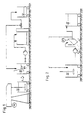
- the filtration is carried out as shown in Fig. 2.
- the powder slurry comes with Bag filters (PONG 50) are initially filtered in a circle. Then the Filtration in one passage through the same bag filter into a clean one Container. The slurry is then filled.
- Bag filters PONG 50
Landscapes
- Chemical & Material Sciences (AREA)
- Organic Chemistry (AREA)
- Life Sciences & Earth Sciences (AREA)
- Engineering & Computer Science (AREA)
- Materials Engineering (AREA)
- Wood Science & Technology (AREA)
- Dispersion Chemistry (AREA)
- Health & Medical Sciences (AREA)
- Chemical Kinetics & Catalysis (AREA)
- Medicinal Chemistry (AREA)
- Polymers & Plastics (AREA)
- Paints Or Removers (AREA)
- Anti-Oxidant Or Stabilizer Compositions (AREA)
Description
- einer Glastemperatur von 20 bis 90°C, vorzugsweise 40 bis 70 °C
- einer Viskosität von 10 bis 1000 mPas, vorzugsweise 50 bis 300 mPas bei einer Schergeschwindigkeit von 500 s-1 und einem Festkörpergehalt von 10 bis 50 %, vorzugsweise 20 bis 40 % hergestellt wird, und
- unter Einhaltung einer Temperatur von 0 bis 60°C, vorzugsweise 5 bis 35 °C vermahlen ,
- auf einen pH-Wert von 4,0 bis 7,0, vorzugsweise 5,5, bis 6,5 eingestellt und
- filtiriert wird.
Als hydrophile Gerüste werden vorzugsweise Polyacrylate, Celluloseether oder besonders bevorzugt Polyurethane eingesetzt, die die hydrophoben Gruppen als Polymerbausteine enthalten.
Ganz besonders bevorzugt sind als hydrophile Gerüste Polyurethane, die Polyetherketten als Bausteine enthalten, vorzugsweise aus Polyethylenoxid.
Bei der Synthese solcher Polyetherpolyurethane dienen die Di- und oder Polyisocyanate, bevorzugt aliphatische Diisocyanate, besonders bevorzugt ggf. alkylsubstituiertes 1,6-Hexamethylendiisocyanat, zur Verknüpfung der Hydroxylgruppen-terminierten Polyetherbausteine untereineinander und zur Verknüpfung der Polyetherbausteine mit den hydrophoben Endgruppenbausteinen, die beispielsweise monofunktionelle Alkohole und/oder
Claims (12)
- Verfahren zur Herstellung einer wäßrigen Pulverlackdispersion,I. bei dem aus einer festen, pulverförmigen Komponente A und einer wäßrigen Komponente B eine wäßrige Dispersion eines Pulverlacks miteiner Glastemperatur von 20 bis 90°C, vorzugsweise 40 bis 70 °Ceiner Viskosität von 10 bis 1000 mPas, vorzugsweise 50 bis 300 mPas bei einer Schergeschwindigkeit von 500 s-1 undeinem Festkörpergehalt von 10 bis 50 %, vorzugsweise 20 bis 40 % hergestellt wird, undII.die aus den Komponenten A und B hergestellte Dispersionunter Einhaltung einer Temperatur von 0 bis 60°C, vorzugsweise 5 bis 35 °C vermahlen ,auf einen pH-Wert von 4,0 bis 7,0, vorzugsweise 5,5, bis 6,5 eingestellt undfiltiriert wird.
- Verfahren nach Anspruch 1,dadurch gekennzeichnet, daß die Komponente A ein Pulverlack ist enthaltenddie Komponente B. eine wäßrige Dispersion ist enthaltenda) wenigstens ein epoxidhaltiges Bindemittel mit einem Gehalt von 30 bis 45 Gew.%, vorzugsweise 30 bis 35 Gew.% an glycidylhaltigen Monomeren mit einem Gehalt an vinylaromatischen Verbindungen, vorzugsweise Styrol,b) wenigstens ein Vernetzungsmittel, vorzugsweise geradkettige, aliphatische Dicarbonsäuren und/oder carboxyfunktionelle Polyester undc) ggf. Katalysatoren, Hilfsstoffe, pulverlacktypische Additive, wie Entgasungsmittel,Verlaufsmittel,UV-Absorber, Radikalfänger, Antioxidantien unda) wenigstens einen nicht-ionischen Verdicker undb) ggf. Katalysatoren, Hilfsstoffe, Entschäumungsmittel, Dispersionshilfsmittel, Netzmittel, vorzugsweise carboxyfunktionelle Dispergiermittel, Antioxidantien, UV-Absorber, Verlaufhilfsmittel, Neutralisationsmittel, vorzugsweise Amine, Radikalfänger, geringe Mengen Lösemittel, Biozide und/oder Wasserrückhaltemittel.
- Verfahren nach einem der Ansprüche 1 oder 2,
dadurch gekennzeichnet, daß , die Mahlvorrichtung vor Beginn des Mahlprozesses von Lösemittelresten befreit wird. - Verfahren nach einem der Ansprüche 1 bis 3,
dadurch gekennzeichnet daß der spezifische Energieeintrag während des Mahlprozesses zwischen 20 und 500 Wh/kg vorzugsweise 50 bis 250 Wh/kg beträgt. - Verfahren nach einem der Ansprüche 1 bis 4,
dadurch gekennzeichnet, daß die wäßrige Pulverlackdispersion nach Naßvermahlung und Komplettierung einer Nachdispergierung unterzogen wird. - Verfahren nach einem der Ansprüche 2 bis 5,
dadurch gekennzeichnet daß der Gehalt an vinylaromatischen Verbindungen im epoxidhaltigen Bindemittel höchstens 35, vorzugsweise 10 - 25 Gew.% beträgt bezogen auf Komponente Aa) beträgt. - Verfahren nach einem der Ansprüche 2 bis 6,
dadurch gekennzeichnet, daß die epoxidfunktionellen Bindemittel epoxidgruppenhaltige Polyacrylatharze sind, wobei die eingesetzten epoxidfunktionellen Monomere,vorzugsweise Glycidylacrylat, Glycidylmethacrylat und Allylglycidylester sind. - Verfahren nach einem der Ansprüche 1 bis 7,
dadurch gekennzeichnet, daß die Komponente B als nicht-ionischen Verdicker a) mindestens einen nicht-ionischen Assoziativ-Verdicker enthält der als Strukturmerkmale:enthält.aa) ein hydrophiles Gerüst undab) hydrophobe Gruppen, die zu einer assoziativen Wechselwirkung im wässrigen Medium fähig sind, - Verfahren nach Anspruch 8,
dadurch gekennzeichnet, daß der nicht-ionische Assoziativ-Verdicker a) als hydrophiles Gerüst aa) Polyurethanketten enthält. - Verfahren nach Anspruch 9,
dadurch gekennzeichnet, daß der nicht-ionische Assoziativ-Verdicker a) als hydrophiles Gerüst aa) Polyurethanketten mit Polyetherbausteinen enthält - Verfahren nach einem der Ansprüch 1 - 10,
dadurch gekennzeichnet, daß die wäßrigen Pulverlackdispersion eine Korngröße höchstens 20 µm, vorzugsweise 1 bis 10 µm aufweist. - Verfahren nach einem der Ansprüch 1 - 10,
dadurch gekennzeichnet, daß der Lösemittelgehalt der wäßrigen Pulverlackdispersion 0 - 10 % beträgt.
Applications Claiming Priority (3)
| Application Number | Priority Date | Filing Date | Title |
|---|---|---|---|
| DE19518392 | 1995-05-19 | ||
| DE19518392 | 1995-05-19 | ||
| PCT/EP1996/001959 WO1996037561A2 (de) | 1995-05-19 | 1996-05-09 | Wässrige pulverlack-dispersion |
Publications (2)
| Publication Number | Publication Date |
|---|---|
| EP0826018A2 EP0826018A2 (de) | 1998-03-04 |
| EP0826018B1 true EP0826018B1 (de) | 2002-01-30 |
Family
ID=7762334
Family Applications (1)
| Application Number | Title | Priority Date | Filing Date |
|---|---|---|---|
| EP96916028A Expired - Lifetime EP0826018B1 (de) | 1995-05-19 | 1996-05-09 | Wässrige pulverlack-dispersion |
Country Status (13)
| Country | Link |
|---|---|
| US (1) | US6159556A (de) |
| EP (1) | EP0826018B1 (de) |
| JP (1) | JPH11509563A (de) |
| KR (1) | KR19990008449A (de) |
| CN (1) | CN1184495A (de) |
| AT (1) | ATE212656T1 (de) |
| AU (1) | AU719294B2 (de) |
| BR (1) | BR9608453A (de) |
| CA (1) | CA2220465A1 (de) |
| DE (2) | DE59608680D1 (de) |
| ES (1) | ES2171674T3 (de) |
| WO (1) | WO1996037561A2 (de) |
| ZA (1) | ZA963850B (de) |
Families Citing this family (44)
| Publication number | Priority date | Publication date | Assignee | Title |
|---|---|---|---|---|
| DE19540977A1 (de) | 1995-11-03 | 1997-05-07 | Basf Lacke & Farben | Wäßrige Pulverlack-Dispersionen |
| DE19652813A1 (de) * | 1996-12-18 | 1998-06-25 | Basf Coatings Ag | Wäßrige Pulverlack-Dispersion |
| DE19705960A1 (de) * | 1997-02-17 | 1998-08-20 | Hoechst Ag | Farbige pulverförmige Beschichtungsmasse |
| DE19727892A1 (de) | 1997-07-01 | 1999-01-07 | Basf Coatings Ag | Wäßrige Pulverlack-Dispersion, Verfahren zu ihrer Herstellung sowie Verwendung der erhaltenen Pulverlack-Dispersion |
| DE19736920A1 (de) | 1997-08-25 | 1999-03-04 | Bayer Ag | Wäßriges Beschichtungsmittel für Einbrennlackierung und Verfahren zu seiner Herstellung |
| EP1084199A2 (de) * | 1998-04-01 | 2001-03-21 | BASF Coatings AG | Nicht-ionisch stabilisierte pulverklarlack-dispersion |
| DE19835206A1 (de) * | 1998-08-04 | 2000-02-17 | Basf Coatings Ag | Wäßrige Pulverklarlack-Dispersion |
| DE19843581C2 (de) * | 1998-09-23 | 2002-11-14 | Basf Coatings Ag | Verfahren zur Herstellung lackierter Substrate sowie entsprechend lackierte Substrate und deren Verwendung |
| DE19904330A1 (de) | 1999-01-28 | 2000-08-10 | Basf Coatings Ag | Wäßriger Beschichtungsstoff und Modulsystem zu seiner Herstellung |
| DE19908013A1 (de) * | 1999-02-25 | 2000-08-31 | Basf Coatings Ag | Mit aktinischer Strahlung und gegebenenfalls themisch härtbare Pulverslurrys, Verfahren zu ihrer Herstellung und ihre Verwendung |
| DE19908018A1 (de) | 1999-02-25 | 2000-08-31 | Basf Coatings Ag | Thermisch und mit aktinischer Strahlung härtbare Pulverslurry, Verfahren zu ihrer Herstellung und ihre Verwendung |
| DE19909894A1 (de) | 1999-03-06 | 2000-09-07 | Basf Coatings Ag | Sol-Gel-Überzug für einschichtige oder mehrschichtige Lackierungen |
| DE19914896A1 (de) | 1999-04-01 | 2000-10-05 | Basf Coatings Ag | Thermisch und/oder mit aktinischer Strahlung härtbarer wäßriger Beschichtungsstoff und seine Verwendung |
| DE19920799A1 (de) | 1999-05-06 | 2000-11-16 | Basf Coatings Ag | Thermisch und mit aktinischer Strahlung härtbarer Beschichtungsstoff und seine Verwendung |
| DE19921457B4 (de) | 1999-05-08 | 2006-05-04 | Basf Coatings Ag | Modulsystem zur Herstellung wäßriger Beschichtungsstoffe, Verfahren zu deren Herstellung und Verwendung sowie damit hergestellte Lackierungen |
| US6360974B1 (en) | 1999-05-19 | 2002-03-26 | Basf Corporation | Powder slurry coating composition |
| DE19924674C2 (de) | 1999-05-29 | 2001-06-28 | Basf Coatings Ag | Thermisch und mit aktinischer Strahlung härtbarer Beschichtungsstoff und seine Verwendung |
| DE19938759A1 (de) | 1999-08-16 | 2001-02-22 | Basf Coatings Ag | Beschichtungsstoff und seine Verwendung zur Herstellung hochkratzfester mehrschichtiger Klarlackierungen |
| DE10001442A1 (de) * | 2000-01-15 | 2001-10-18 | Basf Coatings Ag | Strukturviskose, von organischen Lösemitteln freie Pulverklarlack-Slurry, Verfahren zu ihrer Herstellung und ihre Verwendung |
| DE10004494A1 (de) * | 2000-02-02 | 2001-08-16 | Basf Coatings Ag | Physikalisch, thermisch oder thermisch und mit aktinischer Strahlung härtbarer wässriger Beschichtungsstoff und seine Verwendung |
| AU2001239251A1 (en) | 2000-02-11 | 2001-08-20 | Akzo Nobel N.V. | Process for preparing an aqueous powder coating dispersion |
| US6441078B1 (en) | 2000-03-08 | 2002-08-27 | E. I. Du Pont De Nemours And Company | Aqueous powder coat dispersions, process for their preparation and their use |
| DE10027292C2 (de) * | 2000-06-02 | 2003-11-13 | Basf Coatings Ag | Pulverklarlackdispersionen (Pulverslurry-Klarlacke) und ihre Verwendung |
| DE10027290C2 (de) | 2000-06-02 | 2002-07-11 | Basf Coatings Ag | Pulverklarlackdispersionen (Pulverslurry-Klarlacke) und ihre Verwendung |
| DE10041634C2 (de) * | 2000-08-24 | 2002-10-17 | Basf Coatings Ag | Wäßrige Dispersion und ihre Verwendung zur Herstellung von thermisch und mit aktinischer Strahlung härtbaren Beschichtungsstoffen, Klebstoffen und Dichtungsmassen |
| DE10113884B4 (de) * | 2001-03-21 | 2005-06-02 | Basf Coatings Ag | Verfahren zum Beschichten mikroporöser Oberflächen und Verwendung des Verfahrens |
| DE10126651A1 (de) | 2001-06-01 | 2002-12-12 | Basf Coatings Ag | Pulverlacksuspensionen (Pulverslurries) und Pulverlacke, Verfahren zu ihrer Herstellung und ihre Verwendung |
| US6806302B2 (en) * | 2001-06-13 | 2004-10-19 | E. I. Du Pont De Nemours And Company | Process for the continuous production of liquid, pigmented coating compositions |
| DE10129899A1 (de) * | 2001-06-21 | 2003-01-09 | Basf Coatings Ag | Physikalisch, thermisch oder thermisch und mit aktinischer Strahlung härtbarer wäßriger Beschichtungsstoff und seine Verwendung |
| US6852771B2 (en) * | 2001-08-28 | 2005-02-08 | Basf Corporation | Dual radiation/thermal cured coating composition |
| US20030077394A1 (en) * | 2001-08-28 | 2003-04-24 | Bradford Christophen J. | Dual cure coating composition and process for using the same |
| US20030083397A1 (en) * | 2001-08-28 | 2003-05-01 | Bradford Christopher J. | Dual cure coating composition and process for using the same |
| US6835759B2 (en) * | 2001-08-28 | 2004-12-28 | Basf Corporation | Dual cure coating composition and processes for using the same |
| DE10206225C1 (de) | 2002-02-15 | 2003-09-18 | Basf Coatings Ag | Verfahren zur Herstellung farb- und/oder effektgebender Mehrschichtlackierungen |
| DE10248324A1 (de) * | 2002-10-17 | 2004-05-06 | Basf Coatings Ag | Thermisch und mit aktinischer Strahlung härtbarer Beschichtungsstoff und Verfahren zum Beschichten miktoporöser Oberflächen |
| TWI392713B (zh) * | 2003-03-26 | 2013-04-11 | Atotech Deutschland Gmbh | 粉體塗料及在製造印刷電路板中製備薄層的方法 |
| DE10353638A1 (de) | 2003-11-17 | 2005-06-23 | Basf Coatings Ag | Strukturviskose, wässrige Dispersionen, Verfahren zu ihrer Herstellung und ihre Verwendung |
| CN100590167C (zh) * | 2003-12-12 | 2010-02-17 | 三洋化成工业株式会社 | 水分散性浆状涂料 |
| US20090017209A1 (en) * | 2005-07-11 | 2009-01-15 | Andrew Robert Morgan | Process for preparing a powder coating composition |
| US7972660B2 (en) * | 2005-07-11 | 2011-07-05 | Akzo Nobel Coatings International B.V. | Electrostatic fluidised powder bed coating process |
| WO2007006780A2 (en) * | 2005-07-11 | 2007-01-18 | Akzo Nobel Coatings International B.V. | Toner powders and process for their preparation |
| ATE419293T1 (de) * | 2005-07-11 | 2009-01-15 | Akzo Nobel Coatings Int Bv | Pulverbeschichtungsmaterialien |
| DE102008054283A1 (de) | 2008-11-03 | 2010-06-02 | Basf Coatings Japan Ltd., Yokohama | Farb- und/oder effektgebende Mehrschichtlackierungen mit pigmentfreien Lackierungen als Füller-Ersatz, ihre Herstellung und Verwendung |
| CN108300181B (zh) * | 2016-09-29 | 2020-03-24 | 广东伊诗德新材料科技有限公司 | 一种稳定的粉末淤浆及其制备方法和用途 |
Family Cites Families (19)
| Publication number | Priority date | Publication date | Assignee | Title |
|---|---|---|---|---|
| JPS5312531B1 (de) * | 1971-03-26 | 1978-05-01 | ||
| US3781379A (en) * | 1971-08-16 | 1973-12-25 | Ford Motor Co | Powdered coating compositions containing glycidyl methacrylate copolymers with anhydride crosslinking agents and flow control agent |
| BE789700A (fr) * | 1971-10-06 | 1973-02-01 | Grow Chemical Corp | Procede de peinture |
| DE2210483B2 (de) * | 1972-03-04 | 1980-01-03 | Basf Ag, 6700 Ludwigshafen | Überzugs-, Imprägnierung«- und Verklebungsmittel |
| US4155892A (en) * | 1975-10-03 | 1979-05-22 | Rohm And Haas Company | Polyurethane thickeners for aqueous compositions |
| JPS5258731A (en) * | 1975-11-10 | 1977-05-14 | Osame Kogyo Kk | Method of preparing thermosetting coatings |
| JPS534048A (en) * | 1975-12-26 | 1978-01-14 | Dainippon Toryo Co Ltd | Method of forming multi-layer coating film |
| US4100315A (en) * | 1976-04-13 | 1978-07-11 | Ciba-Geigy Corporation | Process for lacquering metals |
| DE2749576C3 (de) * | 1977-11-05 | 1980-04-24 | Deutsche Gold- Und Silber-Scheideanstalt Vormals Roessler, 6000 Frankfurt | Verfahren zur Herstellung eines Glycidylgruppen aufweisenden Acrylharzes und dessen Verwendung |
| GB2039914B (en) * | 1978-08-21 | 1983-05-18 | Grow Group Inc | Aqueous dispersion coating composition and application to moulded articles |
| JPS56857A (en) * | 1979-06-15 | 1981-01-07 | Nissan Motor Co Ltd | Water-dispersible coating composition |
| DE3024158A1 (de) * | 1980-06-27 | 1982-01-28 | Hoechst Ag, 6000 Frankfurt | Verfahren zur herstellung waermehaertender, mit wasser verduennbarer lacke fuer die beschichtung metallischer substrate |
| US4346144A (en) * | 1980-07-21 | 1982-08-24 | E. I. Du Pont De Nemours And Company | Powder coating composition for automotive topcoat |
| US5055524A (en) * | 1987-07-16 | 1991-10-08 | Ppg Industries, Inc. | Polyol-modified polyanhydride curing agent for polyepoxide powder coatings |
| US5270416A (en) * | 1992-09-04 | 1993-12-14 | Ferro Corporation | Thermosetting glycidyl modified acrylic powder coatings |
| DE4310702A1 (de) * | 1993-04-01 | 1994-10-06 | Bayer Ag | Verdickungsmittel-Zubereitung auf Polyurethanbasis und ihre Verwendung zur Verdickung wäßriger Systeme |
| WO1995028448A1 (en) * | 1994-04-13 | 1995-10-26 | Eastman Chemical Company | Method for preparing liquid coating compositions |
| US5612397A (en) * | 1994-12-19 | 1997-03-18 | Rohm And Haas Company | Composition having wet state clarity |
| ZA962618B (en) * | 1995-04-10 | 1996-10-11 | Basf Lacke & Farben | Aqueous dispersion of transparent powder lacquers |
-
1996
- 1996-05-09 CN CN96194005A patent/CN1184495A/zh active Pending
- 1996-05-09 EP EP96916028A patent/EP0826018B1/de not_active Expired - Lifetime
- 1996-05-09 US US08/952,567 patent/US6159556A/en not_active Expired - Lifetime
- 1996-05-09 BR BR9608453A patent/BR9608453A/pt not_active IP Right Cessation
- 1996-05-09 WO PCT/EP1996/001959 patent/WO1996037561A2/de not_active Ceased
- 1996-05-09 ES ES96916028T patent/ES2171674T3/es not_active Expired - Lifetime
- 1996-05-09 JP JP8535307A patent/JPH11509563A/ja active Pending
- 1996-05-09 DE DE59608680T patent/DE59608680D1/de not_active Expired - Lifetime
- 1996-05-09 KR KR1019970707979A patent/KR19990008449A/ko not_active Ceased
- 1996-05-09 AT AT96916028T patent/ATE212656T1/de not_active IP Right Cessation
- 1996-05-09 AU AU58943/96A patent/AU719294B2/en not_active Ceased
- 1996-05-09 CA CA002220465A patent/CA2220465A1/en not_active Abandoned
- 1996-05-09 DE DE19618657A patent/DE19618657A1/de not_active Withdrawn
- 1996-05-15 ZA ZA963850A patent/ZA963850B/xx unknown
Also Published As
| Publication number | Publication date |
|---|---|
| ES2171674T3 (es) | 2002-09-16 |
| US6159556A (en) | 2000-12-12 |
| KR19990008449A (ko) | 1999-01-25 |
| AU5894396A (en) | 1996-12-11 |
| EP0826018A2 (de) | 1998-03-04 |
| JPH11509563A (ja) | 1999-08-24 |
| DE59608680D1 (de) | 2002-03-14 |
| WO1996037561A3 (de) | 1997-02-20 |
| DE19618657A1 (de) | 1997-01-02 |
| BR9608453A (pt) | 1999-01-05 |
| CN1184495A (zh) | 1998-06-10 |
| WO1996037561A2 (de) | 1996-11-28 |
| ATE212656T1 (de) | 2002-02-15 |
| CA2220465A1 (en) | 1996-11-28 |
| AU719294B2 (en) | 2000-05-04 |
| ZA963850B (en) | 1996-11-21 |
Similar Documents
| Publication | Publication Date | Title |
|---|---|---|
| EP0826018A2 (de) | Wässrige pulverlack-dispersion | |
| EP0820490B1 (de) | Wässrige pulverklarlack-dispersion | |
| EP0858471B1 (de) | Wässrige pulverlackdispersionen | |
| EP0946655B1 (de) | Wässrige pulverlack-dispersion | |
| DE3881545T2 (de) | Kathodisch abscheidbares teilchenförmiges Polymergel und dieses enthaltende kathodisch elektroabscheidbare Beschichtungszusammensetzung. | |
| EP0067312B1 (de) | Verfahren zur Herstellung von Bindemitteln für kathodisch abscheidbare Überzugsmassen | |
| WO1999050359A2 (de) | Nicht-ionisch stabilisierte pulverklarlack-dispersion | |
| DE2658843B2 (de) | In Form einer wäßrigen Dispersion vorliegende duroplastische Überzugsmasse | |
| EP0121759B1 (de) | Verfahren zur Herstellung lagerstabiler Plastisole und Organosole | |
| DE69312030T2 (de) | Zweischicht-Beschichtungsverfahren mit einem Einbrennvorgang | |
| DE69415862T2 (de) | Wässrige Harzdispersion | |
| EP0436135B1 (de) | Verfahren zur Herstellung von Dibutylzinnoxid enthaltenden Katalysatorpasten und deren Verwendung | |
| EP0546494A1 (de) | Kathodisch abscheidbare Elektrotauchlackbäder mit Additiven zur Oberflächenverbesserung, sowie die Verwendung letzterer für Beschichtungsverfahren | |
| DE19744561A1 (de) | Pulverklarlack und wäßrige Pulverklarlack-Dispersion | |
| JP3385391B2 (ja) | 水性樹脂分散体 | |
| EP1015519B1 (de) | Pulverklarlackdispersion | |
| DE69328861T2 (de) | Wässrige harzzusammensetzung zur beschichtung und wässrige beschichtungszusammensetzung | |
| EP0350892B1 (de) | Hitzehärtbare Überzugsmittel und deren Verwendung | |
| DE19832107A1 (de) | Pulverklarlack-Dispersion | |
| DE19912661A1 (de) | Nicht-ionisch stabilisierte Pulverlack-Dispersion | |
| WO1998049244A1 (de) | Wässriges überzugsmittel |
Legal Events
| Date | Code | Title | Description |
|---|---|---|---|
| PUAI | Public reference made under article 153(3) epc to a published international application that has entered the european phase |
Free format text: ORIGINAL CODE: 0009012 |
|
| 17P | Request for examination filed |
Effective date: 19971204 |
|
| AK | Designated contracting states |
Kind code of ref document: A2 Designated state(s): AT BE CH DE DK ES FR GB IT LI NL SE |
|
| 17Q | First examination report despatched |
Effective date: 19980402 |
|
| GRAG | Despatch of communication of intention to grant |
Free format text: ORIGINAL CODE: EPIDOS AGRA |
|
| GRAG | Despatch of communication of intention to grant |
Free format text: ORIGINAL CODE: EPIDOS AGRA |
|
| GRAH | Despatch of communication of intention to grant a patent |
Free format text: ORIGINAL CODE: EPIDOS IGRA |
|
| GRAH | Despatch of communication of intention to grant a patent |
Free format text: ORIGINAL CODE: EPIDOS IGRA |
|
| GRAA | (expected) grant |
Free format text: ORIGINAL CODE: 0009210 |
|
| REG | Reference to a national code |
Ref country code: GB Ref legal event code: IF02 |
|
| AK | Designated contracting states |
Kind code of ref document: B1 Designated state(s): AT BE CH DE DK ES FR GB IT LI NL SE |
|
| PG25 | Lapsed in a contracting state [announced via postgrant information from national office to epo] |
Ref country code: NL Free format text: LAPSE BECAUSE OF FAILURE TO SUBMIT A TRANSLATION OF THE DESCRIPTION OR TO PAY THE FEE WITHIN THE PRESCRIBED TIME-LIMIT Effective date: 20020130 Ref country code: GB Free format text: LAPSE BECAUSE OF FAILURE TO SUBMIT A TRANSLATION OF THE DESCRIPTION OR TO PAY THE FEE WITHIN THE PRESCRIBED TIME-LIMIT Effective date: 20020130 |
|
| REF | Corresponds to: |
Ref document number: 212656 Country of ref document: AT Date of ref document: 20020215 Kind code of ref document: T |
|
| REG | Reference to a national code |
Ref country code: CH Ref legal event code: EP |
|
| REF | Corresponds to: |
Ref document number: 59608680 Country of ref document: DE Date of ref document: 20020314 |
|
| PG25 | Lapsed in a contracting state [announced via postgrant information from national office to epo] |
Ref country code: SE Free format text: LAPSE BECAUSE OF FAILURE TO SUBMIT A TRANSLATION OF THE DESCRIPTION OR TO PAY THE FEE WITHIN THE PRESCRIBED TIME-LIMIT Effective date: 20020430 Ref country code: DK Free format text: LAPSE BECAUSE OF FAILURE TO SUBMIT A TRANSLATION OF THE DESCRIPTION OR TO PAY THE FEE WITHIN THE PRESCRIBED TIME-LIMIT Effective date: 20020430 |
|
| PG25 | Lapsed in a contracting state [announced via postgrant information from national office to epo] |
Ref country code: AT Free format text: LAPSE BECAUSE OF NON-PAYMENT OF DUE FEES Effective date: 20020509 |
|
| ET | Fr: translation filed | ||
| PG25 | Lapsed in a contracting state [announced via postgrant information from national office to epo] |
Ref country code: LI Free format text: LAPSE BECAUSE OF NON-PAYMENT OF DUE FEES Effective date: 20020531 Ref country code: CH Free format text: LAPSE BECAUSE OF NON-PAYMENT OF DUE FEES Effective date: 20020531 Ref country code: BE Free format text: LAPSE BECAUSE OF NON-PAYMENT OF DUE FEES Effective date: 20020531 |
|
| NLV1 | Nl: lapsed or annulled due to failure to fulfill the requirements of art. 29p and 29m of the patents act | ||
| GBV | Gb: ep patent (uk) treated as always having been void in accordance with gb section 77(7)/1977 [no translation filed] |
Effective date: 20020130 |
|
| REG | Reference to a national code |
Ref country code: ES Ref legal event code: FG2A Ref document number: 2171674 Country of ref document: ES Kind code of ref document: T3 |
|
| PLBE | No opposition filed within time limit |
Free format text: ORIGINAL CODE: 0009261 |
|
| STAA | Information on the status of an ep patent application or granted ep patent |
Free format text: STATUS: NO OPPOSITION FILED WITHIN TIME LIMIT |
|
| REG | Reference to a national code |
Ref country code: CH Ref legal event code: PL |
|
| 26N | No opposition filed | ||
| PG25 | Lapsed in a contracting state [announced via postgrant information from national office to epo] |
Ref country code: IT Free format text: LAPSE BECAUSE OF NON-PAYMENT OF DUE FEES;WARNING: LAPSES OF ITALIAN PATENTS WITH EFFECTIVE DATE BEFORE 2007 MAY HAVE OCCURRED AT ANY TIME BEFORE 2007. THE CORRECT EFFECTIVE DATE MAY BE DIFFERENT FROM THE ONE RECORDED. Effective date: 20050509 |
|
| PGFP | Annual fee paid to national office [announced via postgrant information from national office to epo] |
Ref country code: ES Payment date: 20140623 Year of fee payment: 19 |
|
| PGFP | Annual fee paid to national office [announced via postgrant information from national office to epo] |
Ref country code: DE Payment date: 20140731 Year of fee payment: 19 |
|
| PGFP | Annual fee paid to national office [announced via postgrant information from national office to epo] |
Ref country code: FR Payment date: 20140530 Year of fee payment: 19 |
|
| REG | Reference to a national code |
Ref country code: DE Ref legal event code: R119 Ref document number: 59608680 Country of ref document: DE |
|
| REG | Reference to a national code |
Ref country code: FR Ref legal event code: ST Effective date: 20160129 |
|
| PG25 | Lapsed in a contracting state [announced via postgrant information from national office to epo] |
Ref country code: DE Free format text: LAPSE BECAUSE OF NON-PAYMENT OF DUE FEES Effective date: 20151201 |
|
| PG25 | Lapsed in a contracting state [announced via postgrant information from national office to epo] |
Ref country code: FR Free format text: LAPSE BECAUSE OF NON-PAYMENT OF DUE FEES Effective date: 20150601 |
|
| REG | Reference to a national code |
Ref country code: ES Ref legal event code: FD2A Effective date: 20160627 |
|
| PG25 | Lapsed in a contracting state [announced via postgrant information from national office to epo] |
Ref country code: ES Free format text: LAPSE BECAUSE OF NON-PAYMENT OF DUE FEES Effective date: 20150510 |