EP0829298A2 - Verfahren zur Herstellung von Hydroxipivalinsäureneopentylglykolester-Granulaten - Google Patents
Verfahren zur Herstellung von Hydroxipivalinsäureneopentylglykolester-Granulaten Download PDFInfo
- Publication number
- EP0829298A2 EP0829298A2 EP97115933A EP97115933A EP0829298A2 EP 0829298 A2 EP0829298 A2 EP 0829298A2 EP 97115933 A EP97115933 A EP 97115933A EP 97115933 A EP97115933 A EP 97115933A EP 0829298 A2 EP0829298 A2 EP 0829298A2
- Authority
- EP
- European Patent Office
- Prior art keywords
- melt
- neopentyl glycol
- glycol ester
- granules
- acid neopentyl
- Prior art date
- Legal status (The legal status is an assumption and is not a legal conclusion. Google has not performed a legal analysis and makes no representation as to the accuracy of the status listed.)
- Granted
Links
- 239000008187 granular material Substances 0.000 title claims abstract description 39
- 238000000034 method Methods 0.000 title claims abstract description 16
- SZCWBURCISJFEZ-UHFFFAOYSA-N (3-hydroxy-2,2-dimethylpropyl) 3-hydroxy-2,2-dimethylpropanoate Chemical compound OCC(C)(C)COC(=O)C(C)(C)CO SZCWBURCISJFEZ-UHFFFAOYSA-N 0.000 title claims abstract description 15
- 239000000155 melt Substances 0.000 claims abstract description 36
- 238000001816 cooling Methods 0.000 claims abstract description 25
- 239000013078 crystal Substances 0.000 claims abstract description 23
- 239000002253 acid Substances 0.000 claims description 17
- 229940117969 neopentyl glycol Drugs 0.000 claims description 15
- -1 neopentyl glycol ester Chemical class 0.000 claims description 15
- 239000002245 particle Substances 0.000 claims description 6
- 238000007711 solidification Methods 0.000 claims description 4
- 230000008023 solidification Effects 0.000 claims description 4
- 238000002360 preparation method Methods 0.000 claims description 3
- 150000002148 esters Chemical class 0.000 claims 2
- 238000005469 granulation Methods 0.000 claims 1
- 230000003179 granulation Effects 0.000 claims 1
- 238000004519 manufacturing process Methods 0.000 abstract description 5
- 239000000463 material Substances 0.000 description 5
- 238000002844 melting Methods 0.000 description 4
- 230000008018 melting Effects 0.000 description 4
- 239000011248 coating agent Substances 0.000 description 2
- 238000000576 coating method Methods 0.000 description 2
- 239000007788 liquid Substances 0.000 description 2
- 239000000203 mixture Substances 0.000 description 2
- 101100116570 Caenorhabditis elegans cup-2 gene Proteins 0.000 description 1
- 101100116572 Drosophila melanogaster Der-1 gene Proteins 0.000 description 1
- 230000015572 biosynthetic process Effects 0.000 description 1
- 239000000470 constituent Substances 0.000 description 1
- 239000002178 crystalline material Substances 0.000 description 1
- 239000002181 crystalline organic material Substances 0.000 description 1
- 238000002425 crystallisation Methods 0.000 description 1
- 230000008025 crystallization Effects 0.000 description 1
- 230000005484 gravity Effects 0.000 description 1
- 239000012768 molten material Substances 0.000 description 1
- 238000010992 reflux Methods 0.000 description 1
- 239000007787 solid Substances 0.000 description 1
Images

Classifications
-
- B—PERFORMING OPERATIONS; TRANSPORTING
- B01—PHYSICAL OR CHEMICAL PROCESSES OR APPARATUS IN GENERAL
- B01J—CHEMICAL OR PHYSICAL PROCESSES, e.g. CATALYSIS OR COLLOID CHEMISTRY; THEIR RELEVANT APPARATUS
- B01J2/00—Processes or devices for granulating materials, e.g. fertilisers in general; Rendering particulate materials free flowing in general, e.g. making them hydrophobic
- B01J2/26—Processes or devices for granulating materials, e.g. fertilisers in general; Rendering particulate materials free flowing in general, e.g. making them hydrophobic on endless conveyor belts
-
- B—PERFORMING OPERATIONS; TRANSPORTING
- B01—PHYSICAL OR CHEMICAL PROCESSES OR APPARATUS IN GENERAL
- B01J—CHEMICAL OR PHYSICAL PROCESSES, e.g. CATALYSIS OR COLLOID CHEMISTRY; THEIR RELEVANT APPARATUS
- B01J2/00—Processes or devices for granulating materials, e.g. fertilisers in general; Rendering particulate materials free flowing in general, e.g. making them hydrophobic
-
- C—CHEMISTRY; METALLURGY
- C07—ORGANIC CHEMISTRY
- C07C—ACYCLIC OR CARBOCYCLIC COMPOUNDS
- C07C67/00—Preparation of carboxylic acid esters
- C07C67/48—Separation; Purification; Stabilisation; Use of additives
- C07C67/52—Separation; Purification; Stabilisation; Use of additives by change in the physical state, e.g. crystallisation
-
- Y—GENERAL TAGGING OF NEW TECHNOLOGICAL DEVELOPMENTS; GENERAL TAGGING OF CROSS-SECTIONAL TECHNOLOGIES SPANNING OVER SEVERAL SECTIONS OF THE IPC; TECHNICAL SUBJECTS COVERED BY FORMER USPC CROSS-REFERENCE ART COLLECTIONS [XRACs] AND DIGESTS
- Y10—TECHNICAL SUBJECTS COVERED BY FORMER USPC
- Y10T—TECHNICAL SUBJECTS COVERED BY FORMER US CLASSIFICATION
- Y10T428/00—Stock material or miscellaneous articles
- Y10T428/29—Coated or structually defined flake, particle, cell, strand, strand portion, rod, filament, macroscopic fiber or mass thereof
- Y10T428/2982—Particulate matter [e.g., sphere, flake, etc.]
Definitions
- the invention relates to a process for the preparation of hydroxipivalic acid neopentyl glycol ester granules, the granules obtained and the use of a granulating device for the production of the granules.
- HPN Hydroxipivalic acid neopentyl glycol ester
- the caking makes it difficult to dose and remove the granules from the containers.
- DE-A-35 22 359 discloses a process for the manufacture of crystalline organic materials, such as hydroxypivalic acid neopentyl glycol ester, whereby a product with improved flowability is obtained.
- crystalline organic materials such as hydroxypivalic acid neopentyl glycol ester
- a powdery material is compacted in a twin-screw screw machine with rotating screw shafts in the same sense, or a molten material is crystallized at melt temperatures that are about 1 to 20 ° C. below the melting point of the material used and condensed. The material is then ejected through a heated perforated plate into a lower pressure zone.
- the perforated plate is heated to a temperature of 1 to 30 ° C above the melting point of the material, so that the individual crystals passed along the wall of the perforated plate melt into a film which, after solidification, forms a firm corset for the compacted crystalline material.
- the extruded material strands are crushed and cooled in a subsequent zone. The flowability of the granules thus obtained is not sufficient for all applications.
- the object of the present invention is to provide a method for producing HPN granules which leads to granules with little caking and which avoids the disadvantages of known methods.
- This object is achieved according to the invention by a process for the preparation of hydroxypivalic acid neopentyl glycol ester granules by applying a hydroxipivalic acid neopentyl glycol ester melt to a cooling surface, preferably a cooling belt, on which the melt solidifies, which is characterized in that the melt is at least 3% by weight. , based on the total amount of hydroxypivalic acid neopentylglycol ester, contains of hydroxypivalic acid neopentylglycol ester crystals.
- the hydroxypivalic acid neopentyl glycol ester melt is preferably applied as a flat layer to the cooling surface and, after solidification, comminuted to granules or applied dropwise.
- HPN granules which show no tendency to cake in containers, since the contact areas between individual granule particles are small.
- the essentially spherical HPN granules, which are obtained by dropwise application of the melt, are very low in caking.
- the melt Before cooling, the melt preferably contains 3 to 60% by weight, particularly preferably 15 to 55% by weight, in particular 30 to 50% by weight, based on the total amount of HPN, of HPN crystals.
- the HPN crystals or crystal nuclei can be added to the melt as a solid. They are advantageously produced in the HPN melt in a pre-crystallizer, in which the melt is moved mechanically and simultaneously cooled.
- the melt is preferably cooled in a precooler to a temperature close to the melting point. For HPN, this temperature is close to 50 ° C.
- the passage through the precooler and the precrystallizer can be set so that the desired content of crystals in the melt is present at the exit of the precrystallizer.
- part of the melt emerging from the pre-crystallizer is returned to the pre-crystallizer, i.e. fed in again between precooler and precrystallizer.
- a device with a drop former is described, for example, in DE-C-32 09 747.
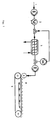
- the HPN melt (1) is first passed through a pre-cooler (2) and then through the pre-crystallizer (3), behind which a part of the melt is branched off and returned to the pre-crystallizer (3).
- the remaining part of the melt is applied to a continuously driven cooling belt (6) via a drop former (4) and solidifies on it.
- the granulate particles can be removed at the end of the cooling belt. Due to the high content of crystals in the melt, this has a high viscosity and solidifies quickly. This makes it possible to produce essentially spherical HPN granules which preferably have an average particle diameter of 3 to 16, particularly preferably 4 to 10, in particular 5 to 7 mm.
- the hot liquid HPN melt is cooled in the precooler (2) to a temperature close to the melting point (50 ° C).
- a partial crystallization takes place in the subsequent pre-crystallizer (3) by further heat removal from the melt.
- the desired crystal content in the melt is set via the amount of heat removed.
- the crystal mash thus formed from crystals dispersed in the melt is a two-phase mixture.
- An increased degree of homogeneity is achieved by partially returning the crystal mash to the inlet of the pre-crystallizer (3) by means of a pump.
- the amount of the melt or mash flowing through the precrystallizer is preferably substantially greater than the amount conveyed to the drop former.
- the ratio of the crystal nuclei in the melt to be dripped in relation to the liquid constituents determines the shape of the drops and the solidification behavior of the drops on the cooling belt.
- the crystal melt or crystal mash is conveyed to the drop former using a pump.
- the crystal-containing melt is dripped onto the cooling belt on which the drops solidify.
- a suitable drop former is described, for example, in DE-C-32 09 747.
- a surface application system (5) is used instead of the drop former (4).
- the crystal-containing melt is produced as in the process described above.
- the surface feed system (5) is designed so that the melt is distributed over essentially the entire width of the cooling belt (6).
- the cooling belt can be provided with an edge limitation in order to achieve a uniform layer thickness over the entire width of the belt.
- the layer thickness of the flat layer formed in this way is preferably at least 15 mm, particularly preferably 15 to 30 mm.
- the solidified layer breaks off, for example due to gravity, and is further crushed in a crusher (7).
- These HPN granules are preferably cuboid-like or isometric in shape. The HPN granules obtained show a very low tendency to cake.
- the invention further relates to the use of a granulating device for a melt, comprising a precooler (2), a precrystallizer (3), a droplet former (4) or a surface application system (5) for applying the melt to a subsequent cooling belt (6) connected in series via feed lines ), which is followed by a crusher (7) for granulating hydroxypivalic acid neopentylglycol ester when using a surface feed system (5).
- the granules according to the invention have a higher bulk density and better meterability than known granules.
- the essentially spherical granules are easy to dose and have a very high bulk density.
Landscapes
- Chemical & Material Sciences (AREA)
- Organic Chemistry (AREA)
- Chemical Kinetics & Catalysis (AREA)
- Crystallography & Structural Chemistry (AREA)
- Organic Low-Molecular-Weight Compounds And Preparation Thereof (AREA)
- Medicinal Preparation (AREA)
- Acyclic And Carbocyclic Compounds In Medicinal Compositions (AREA)
Abstract
Description
- Die Erfindung betrifft ein Verfahren zur Herstellung von Hydroxipivalinsäureneopentylglykolester-Granulaten, die erhaltenen Granulate und die Verwendung einer Granuliervorrichtung zur Herstellung der Granulate.
- Hydroxipivalinsäureneopentylglykolester (HPN) wird unter anderem als Bestandteil von Innenbeschichtungen von Konservendosen verwendet, um die Schlagzähigkeit der Innenbeschichtungen zu erhöhen. Zur Konfektionierung von HPN wird üblicherweise eine HPN-Schmelze über einen Tropfenformer auf ein Kühlband aufgebracht. Dabei entstehen flache schuppenförmige Granulate, die bei der Lagerung in Gebinden zum Verbacken neigen.
- Das Verbacken erschwert dabei die Dosierung und Entnahme der Granulate aus den Gebinden.
- Aus der DE-A-35 22 359 ist ein Verfahren zum Konfektionieren von kristallinen organischen Materialien, wie Hydroxipivalinsäureneopentylglykolester, bekannt, wobei ein Produkt mit verbesserter Rieselfähigkeit erhalten wird. Dabei wird in einer zweiwelligen Schneckenmaschine mit im gleichen Sinne rotierenden Schneckenwellen ein pulverförmiges Material verdichtet oder ein schmelzflüssiges Material bei Massetemperaturen, die etwa 1 bis 20°C unterhalb des Schmelzpunktes des eingesetzten Materials liegen, kristallisiert und verdichtet. Das Material wird sodann durch eine beheizte Lochplatte in eine Zone mit niedrigerem Druck ausgestoßen. Die Lochplatte wird auf eine Temperatur von 1 bis 30°C oberhalb des Schmelzpunktes des Materials erwärmt, so daß die an der Wandung der Lochplatte vorbeigeführten Einzelkristalle zu einem Film aufschmelzen, welcher nach seiner Erstarrung ein festes Korsett für das kompaktierte kristalline Material bildet. Die extrudierten Materialstränge werden in einer nachfolgenden Zone zerkleinert und gekühlt. Die Rieselfähigkeit der so erhaltenen Granulate ist nicht für alle Anwendungen ausreichend.
- Aus der DE-C-32 09 747 ist eine Vorrichtung zur Herstellung von Granulat aus einer Schmelze bekannt, bei der ein zweiphasiges Gemisch aus einer Schmelze, die Kristallkeime enthält, mit einem Rotortropfenformer auf ein Kühlband gegeben wird. Es werden dabei halbkugelförmige Granulate erhalten.
- Aufgabe der vorliegenden Erfindung ist die Bereitstellung eines Verfahrens zur Herstellung von HPN-Granulaten, das zu verbackungsarmen Granulaten führt und die Nachteile bekannter Verfahren vermeidet.
- Diese Aufgabe wird erfindungsgemäß gelöst durch ein Verfahren zur Herstellung von Hydroxipivalinsäureneopentylglykolester-Granulaten durch Aufbringen einer Hydroxipivalinsäureneopentylglykolester-Schmelze auf eine Kühlfläche, vorzugsweise ein Kühlband, auf der/dem die Schmelze erstarrt, das dadurch gekennzeichnet ist, daß die Schmelze mindestens 3 Gew.-%, bezogen auf die Gesamtmenge an Hydroxypivalinsäureneopentylglykolester, an Hydroxypivalinsäureneopentylglykolester-Kristallen enthält.
- Vorzugsweise wird die Hydroxypivalinsäure Neopentylglykolester-Schmelze als flächige Schicht auf die Kühlfläche aufgebracht und nach dem Erstarren zu Granulaten zerkleinert oder tropfenweise aufgebracht.
- Mit Hilfe des erfindungsgemäßen Verfahrens ist es möglich, HPN-Granulate herzustellen, die in Gebinden keine Neigung zu Verbackungen zeigen, da die Kontaktflächen zwischen einzelnen Granulatteilchen klein sind. Insbesondere die im wesentlichen sphärischen HPN-Granulate, die durch tropfenweises Aufbringen der Schmelze erhalten werden, sind sehr verbackungsarm.
- Vorzugsweise enthält die Schmelze vor dem Abkühlen 3 bis 60 Gew.-%, besonders bevorzugt 15 bis 55 Gew.-%, insbesondere 30 bis 50 Gew.-%, bezogen auf die Gesamtmenge an HPN, an HPN-Kristallen. Die HPN-Kristalle beziehungsweise -Kristallkeime können dabei der Schmelze als Feststoff zugesetzt werden. Vorteilhafterweise werden sie in der HPN-Schmelze in einem Vorkristallisator erzeugt, in dem die Schmelze mechanisch bewegt und gleichzeitig gekühlt wird. Die Schmelze wird dazu vorzugsweise in einem Vorkühler auf eine Temperatur nahe des Schmelzpunktes abgekühlt. Für HPN liegt diese Temperatur in der Nähe von 50°C. Der Durchlauf durch den Vorkühler und den Vorkristallisator kann so eingestellt werden, daß der gewünschte Gehalt an Kristallen in der Schmelze am Ausgang des Vorkristallisators vorliegt. Vorzugsweise wird ein Teil der aus dem Vorkristallisator austretenden Schmelze in den Vorkristallisator zurückgeführt, d.h. zwischen Vorkühler und Vorkristallisator wieder eingespeist.
- Dabei ist es durch Einstellung des Rücklaufverhältnisses hinter dem Vorkristallisator und Wahl einer geeigneten Durchflußmenge und Temperatur im Vorkristallisator möglich, einen gewünschten Anteil an Kristallen in der Schmelze zu erzeugen.
- Die Erfindung wird nachstehend weiter anhand der Zeichnung erläutert, in der
- Figur 1 eine Vorrichtung für die Herstellung von HPN-Granulaten zeigt, in der
- 1
- HPN-Schmelze
- 2
- Vorkühler
- 3
- Vorkristallisator
- 4
- Tropfenformer
- 6
- Kühlband
Die Vorrichtung dient zur Herstellung von tropfenförmigen Granulaten. - Figur 2 zeigt eine Vorrichtung zur Herstellung von isometrischen oder quaderähnlichen Granulaten, wobei
- 1
- HPN-Schmelze
- 2
- Vorkühler
- 3
- Vorkristallisator
- 5
- Flächenaufgabesystem
- 6
- Kühlband
- 7
- Brecher
- Die erfindunggemäß verwendeten Vorrichtungen sind an sich bekannt. Eine Vorrichtung mit einem Tropfenformer ist beispielsweise in der DE-C-32 09 747 beschrieben.
- Gemäß der in Figur 1 abgebildeten Ausführungform wird die HPN-Schmelze (1) zunächst durch einen Vorkühler (2) und dann durch den Vorkristallisator (3) geführt, hinter dem ein Teil der Schmelze abgezweigt und in den Vorkristallisator (3) zurückgeführt wird. Der verbleibende Teil der Schmelze wird über einen Tropfenformer (4) auf ein kontinuierlich angetriebenes Kühlband (6) aufgebracht und erstarrt auf diesem. Am Ende des Kühlbandes können die Granulatteilchen entnommen werden. Aufgrund des hohen Gehalts an Kristallen in der Schmelze weist diese eine hohe Viskosität auf und erstarrt schnell. Dadurch ist es möglich, im wesentlichen sphärische HPN-Granulate zu erzeugen, die vorzugsweise einen mittleren Teilchendurchmesser von 3 bis 16, besonders bevorzugt 4 bis 10, insbesondere 5 bis 7 mm aufweisen. Die heiße flüssige HPN-Schmelze wird dabei im Vorkühler (2) auf eine Temperatur in der Nähe des Schmelzpunktes (50°C) abgekühlt. Im nachfolgenden Vorkristallisator (3) erfolgt eine teilweise Kristallisation durch weitere Wärmeabfuhr aus der Schmelze. Dabei wird über die Höhe der abgeführten Wärmemenge der gewünschte Kristallgehalt in der Schmelze eingestellt. Die so aus in der Schmelze dispergierten Kristallen gebildete Kristallmaische ist ein 2-Phasen-Gemisch. Durch teilweise Rückführung der Kristallmaische an den Eintritt des Vorkristallisators (3) mittels einer Pumpe wird ein erhöhter Homogenitätsgrad erreicht. Vorzugsweise ist dabei die Menge der durch den Vorkristallisator fließenden Schmelze beziehungsweise Maische wesentlich größer gegenüber der zum Tropfenformer geförderten Menge. Das Verhältnis der Kristallkeime in der zu tropfenden Schmelze in bezug auf die flüssigen Bestandteile bestimmt die Tropfenform und das Verfestigungsverhalten der Tropfen auf dem Kühlband. Durch Verwendung einer Schmelze mit einem hohen Kristallgehalt ist dabei die Bildung von sphärischen Granulatkörpern möglich. Ein geeigneter Vorkristallisator ist in der DE-C-32 09 747 beschrieben.
- Zur Herstellung der tropfenförmigen HPN-Granulate wird die Kristallschmelze beziehungsweise Kristallmaische mit einer Pumpe zum Tropfenformer gefördert. Mit Hilfe des Tropfenformers wird die kristallhaltige Schmelze auf das Kühlband getropft, auf dem die Erstarrung der Tropfen erfolgt. Ein geeigneter Tropfenformer ist beispielsweise in der DE-C-32 09 747 beschrieben.
- In einer weiteren Ausführungsform der Erfindung, die in Figur 2 dargestellt ist, wird anstelle des Tropfenformers (4) ein Flächenaufgabesystem (5) verwendet. Die Herstellung der kristallhaltigen Schmelze erfolgt wie beim vorstehend beschriebenen Verfahren. Das Flächenaufgabesystem (5) ist so gestaltet, daß die Schmelze über im wesentlichen die gesamte Breite des Kühlbandes (6) verteilt wird. Hierzu kann das Kühlband mit einer Randbegrenzung versehen sein, um über die gesamte Breite des Bandes eine gleichmäßige Schichtdicke zu erzielen. Die Schichtdicke der so gebildeten flächigen Schicht beträgt vorzugsweise mindestens 15 mm, besonders bevorzugt 15 bis 30 mm. Durch Verwendung der kristallhaltigen Schmelze, die auf dem Kühlband (6) schnell erstarrt, ist es möglich, die vorgenannten hohen Schichtdicken zu erreichen. Am Bandende des im Kreis geführten Bandes bricht die erstarrte Schicht beispielsweise aufgrund der Schwerkraft ab und wird in einem Brecher (7) weiter zerkleinert. Hierbei werden flächige Granulate mit einem mittleren Teilchendurchmesser von 20 bis 100 mm, vorzugsweise 20 bis 50 mm, insbesondere 20 bis 35 mm und mindestens 2 im wesentlichen parallelen Flächen, die einen Abstand von vorzugsweise 15 bis 30 mm aufweisen, erhalten. Diese HPN-Granulate sind vorzugsweise quaderähnlich beziehungsweise isometrisch geformt. Die erhaltenen HPN-Granulate zeigen eine sehr geringe Neigung zum Verbacken.
- Die Erfindung betrifft weiterhin die Verwendung einer Granuliervorrichtung für eine Schmelze, umfassend nacheinander über Zuleitungen verbunden einen Vorkühler (2), einen Vorkristallisator (3), einen Tropfenformer (4) oder ein Flächenaufgabesystem (5) zum Aufbringen der Schmelze auf ein nachfolgendes Kühlband (6), an das sich bei Verwendung eines Flächenaufgabesystems (5) ein Brecher (7) zur Granulierung von Hydroxipivalinsäureneopentylglykolester anschließt.
- Die erfindungsgemäßen Granulate weisen eine höhere Schüttdichte und bessere Dosierbarkeit auf als bekannte Granulate. Insbesondere die im wesentlichen sphärischen Granulate sind leicht dosierbar und haben eine sehr hohe Schüttdichte.
Claims (10)
- Verfahren zur Herstellung von Hydroxipivalinsäureneopentylglykolester-Granulaten durch Aufbringen einer Hydroxipivalinsäureneopentylglykolester-Schmelze auf eine Kühlfläche, auf der die Schmelze erstarrt, dadurch gekennzeichnet, daß die Schmelze mindestens 3 Gew-%, bezogen auf die Gesamtmenge an Hydroxipivalinsäureneopentylglykolester, an Hydroxipivalinsäureneopentylglykolester-Kristallen enthält.
- Verfahren nach Anspruch 1, dadurch gekennzeichnet, daß die Hydroxipivalinsäureneopentylglykolester-Schmelze als flächige Schicht auf die Kühlfläche aufgebracht und nach dem Erstarren zu Granulaten zerkleinert wird oder die Hydroxipivalinsäureneopentylglykolester-Schmelze tropfenweise auf die Kühlfläche aufgebracht wird.
- Verfahren nach Anspruch 1 oder 2, dadurch gekennzeichnet, daß die Schmelze 15 bis 55 Gew.-%, bezogen auf die Gesamtmenge an Hydroxipivalinsäureneopentylglykolester, an Hydroxipivalinsäureneopentyglykolester-Kristallen enthält.
- Verfahren nach einem der Ansprüche 1 bis 3, dadurch gekennzeichnet, daß die Hydroxipivalinsäureneopentylglykolester-Kristalle durch Führen einer Hydroxipivalinsäureneopentylglykolester-Schmelze durch einen Vorkristallisator erzeugt werden.
- Verfahren nach Anspruch 4, dadurch gekennzeichnet, daß die Hydroxipivalinsäureneopentylglykolester-Schmelze zunächst durch einen Vorkühler und dann durch den Vorkristallisator geführt wird, hinter dem ein Teil der Schmelze abgezweigt und in den Vorkristallisator zurückgeführt wird, und der verbleibende Teil der Schmelze über einen Tropfenformer auf ein kontinuierlich angetriebenes Kühlband aufgebracht wird und auf diesem erstarrt.
- Verfahren nach Anspruch 4, dadurch gekennzeichnet, daß die Hydroxipivalinsäureneopentylglykolester-Schmelze zunächst durch einen Vorkühler und dann durch den Vorkristallisator geführt wird, hinter dem ein Teil der Schmelze abgezweigt und in den Vorkristallisator zurückgeführt wird, und der verbleibende Teil der Schmelze über ein Flächenaufgabesystem auf ein kontinuierlich angetriebenes Kühlband aufgebracht wird, auf diesem erstarrt und nach Verlassen des Kühlbandes in einem Brecher in Granulatform gebracht wird.
- Hydroxipivalinsäureneopentylglykolester-Granulat, herstellbar nach einem Verfahren, wie es in einem der Ansprüche 1 bis 6 definiert ist.
- Im wesentlichen sphärisches Hydroxipivalinsäureneopentylglykolester-Granulat mit einem mittleren Teilchendurchmesser von 3 bis 16 mm.
- Hydroxipivalinsäureneopentylglykolester-Granulat mit einem mittleren Teilchendurchmesser von 20 bis 100 mm und mindestens zwei im wesentlichen parallenen Flächen, die einen Abstand von 15 bis 30 mm aufweisen.
- Verwendung einer Granuliervorrichtung für eine Schmelze, umfassend nacheinander über Zuleitungen verbunden einen Vorkühler (2), einen Vorkristallisator (3), einen Tropfenformer (4) oder ein Flächenaufgabesystem (5) zum Aufbringen der Schmelze auf ein nachfolgendes Kühlband (6), an das sich bei Verwendung eines Flächenaufgabesystems (5) ein Brecher (7) anschließt, zur Granulierung von Hydroxipivalinsäureneopentylglykolester.
Applications Claiming Priority (2)
| Application Number | Priority Date | Filing Date | Title |
|---|---|---|---|
| DE19637380A DE19637380C1 (de) | 1996-09-13 | 1996-09-13 | Verfahren zur Herstellung von Hydroxipivalinsäureneopentylglykolester-Granulaten |
| DE19637380 | 1996-09-13 |
Publications (3)
| Publication Number | Publication Date |
|---|---|
| EP0829298A2 true EP0829298A2 (de) | 1998-03-18 |
| EP0829298A3 EP0829298A3 (de) | 1998-10-21 |
| EP0829298B1 EP0829298B1 (de) | 2002-07-03 |
Family
ID=7805571
Family Applications (1)
| Application Number | Title | Priority Date | Filing Date |
|---|---|---|---|
| EP97115933A Expired - Lifetime EP0829298B1 (de) | 1996-09-13 | 1997-09-12 | Verfahren zur Herstellung von Hydroxipivalinsäureneopentylglykolester-Granulaten |
Country Status (6)
| Country | Link |
|---|---|
| US (1) | US6242639B1 (de) |
| EP (1) | EP0829298B1 (de) |
| JP (1) | JPH10114709A (de) |
| AT (1) | ATE219962T1 (de) |
| DE (2) | DE19637380C1 (de) |
| ES (1) | ES2179252T3 (de) |
Cited By (3)
| Publication number | Priority date | Publication date | Assignee | Title |
|---|---|---|---|---|
| EP0884097A1 (de) * | 1997-06-10 | 1998-12-16 | Basf Aktiengesellschaft | Verfahren zur Herstellung von verbackungsfreien Hydroxipivallinsäureneopentylglykolester-Granulaten |
| WO2001072676A3 (en) * | 2000-03-30 | 2002-05-02 | Basf Ag | Finishing of neopentyl glycol |
| EP4201918A1 (de) | 2021-12-23 | 2023-06-28 | OQ Chemicals GmbH | Verbackungsresistente neopentylglykol-presslinge und verfahren zur herstellung verbackungsresistenter neopentylglykol-presslinge |
Families Citing this family (4)
| Publication number | Priority date | Publication date | Assignee | Title |
|---|---|---|---|---|
| DE19933289A1 (de) * | 1999-07-15 | 2001-01-18 | Basf Ag | Verfahren zur Herstellung eines Granulats aus einer Schmelze |
| CN1770352A (zh) * | 2004-11-05 | 2006-05-10 | 清华大学 | 场发射装置及具有该装置的场发射显示器 |
| CN116964030A (zh) * | 2021-03-03 | 2023-10-27 | 巴斯夫欧洲公司 | 2-[4-(二乙氨基)-2-羟基苯甲酰基]苯甲酸己酯的固化 |
| WO2022184682A1 (en) * | 2021-03-03 | 2022-09-09 | Basf Se | Solidification of hexyl 2-[4-(diethylamino)-2-hydroxybenzoyl]benzoate |
Family Cites Families (8)
| Publication number | Priority date | Publication date | Assignee | Title |
|---|---|---|---|---|
| US2881230A (en) | 1955-09-26 | 1959-04-07 | Phillips Petroleum Co | Fractional crystallization process |
| DE3209747C2 (de) * | 1982-03-17 | 1986-02-27 | Santrade Ltd., Luzern/Lucerne | Vorrichtung zur Herstellung von Granulat aus einer Schmelze |
| DE3432577A1 (de) * | 1984-09-05 | 1986-03-13 | Basf Ag, 6700 Ludwigshafen | Verfahren zur gewinnung von hydroxypivalinsaeureneopentylglykolester |
| DE3522359A1 (de) | 1985-06-22 | 1987-01-02 | Basf Ag | Verfahren zum konfektionieren von kristallinen, organischen materialien |
| DE4208571A1 (de) * | 1992-03-18 | 1993-09-23 | Basf Ag | Verfahren zur herstellung von hydroxypivalinsaeureneopentylglykolester |
| DE4445880A1 (de) | 1994-12-22 | 1996-06-27 | Santrade Ltd | Verfahren zum Reinigen chemischer Substanzen |
| DE19507316A1 (de) | 1994-12-22 | 1996-09-05 | Santrade Ltd | Verfahren zur Kristallisation chemischer Substanzen |
| DE19724461A1 (de) * | 1997-06-10 | 1998-12-17 | Basf Ag | Verfahren zur Herstellung von verbackungsfreien Hydroxipivalinsäureneopentylglykolester- Granulaten |
-
1996
- 1996-09-13 DE DE19637380A patent/DE19637380C1/de not_active Expired - Lifetime
-
1997
- 1997-09-09 US US08/925,795 patent/US6242639B1/en not_active Expired - Fee Related
- 1997-09-12 DE DE59707630T patent/DE59707630D1/de not_active Expired - Lifetime
- 1997-09-12 EP EP97115933A patent/EP0829298B1/de not_active Expired - Lifetime
- 1997-09-12 JP JP9248955A patent/JPH10114709A/ja not_active Withdrawn
- 1997-09-12 ES ES97115933T patent/ES2179252T3/es not_active Expired - Lifetime
- 1997-09-12 AT AT97115933T patent/ATE219962T1/de not_active IP Right Cessation
Cited By (5)
| Publication number | Priority date | Publication date | Assignee | Title |
|---|---|---|---|---|
| EP0884097A1 (de) * | 1997-06-10 | 1998-12-16 | Basf Aktiengesellschaft | Verfahren zur Herstellung von verbackungsfreien Hydroxipivallinsäureneopentylglykolester-Granulaten |
| US5936115A (en) * | 1997-06-10 | 1999-08-10 | Basf Aktiengesellschaft | Production of clumping-free neopentyl glycol hydroxpivalate granules |
| WO2001072676A3 (en) * | 2000-03-30 | 2002-05-02 | Basf Ag | Finishing of neopentyl glycol |
| EP4201918A1 (de) | 2021-12-23 | 2023-06-28 | OQ Chemicals GmbH | Verbackungsresistente neopentylglykol-presslinge und verfahren zur herstellung verbackungsresistenter neopentylglykol-presslinge |
| WO2023117601A1 (de) | 2021-12-23 | 2023-06-29 | Oq Chemicals Gmbh | Verbackungsresistente neopentylglykol-presslinge und verfahren zur herstellung verbackungsresistenter neopentylglykol-presslinge |
Also Published As
| Publication number | Publication date |
|---|---|
| EP0829298B1 (de) | 2002-07-03 |
| JPH10114709A (ja) | 1998-05-06 |
| DE59707630D1 (de) | 2002-08-08 |
| ATE219962T1 (de) | 2002-07-15 |
| DE19637380C1 (de) | 1998-04-09 |
| US6242639B1 (en) | 2001-06-05 |
| ES2179252T3 (es) | 2003-01-16 |
| EP0829298A3 (de) | 1998-10-21 |
Similar Documents
| Publication | Publication Date | Title |
|---|---|---|
| DE3043428C2 (de) | Verfahren zur Herstellung eines Granulats und Vorrichtung zur Durchführung des Verfahrens | |
| EP0440275B1 (de) | Verfahren zur Herstellung monotektischer Legierungen | |
| DE69609109T2 (de) | Kristallierte Perlen aus einem Produkt das unterkühlt werden kann und Verfahren zu ihrer Herstellung | |
| DE3049196C2 (de) | ||
| EP0829298B1 (de) | Verfahren zur Herstellung von Hydroxipivalinsäureneopentylglykolester-Granulaten | |
| DE3517386C2 (de) | ||
| DE2940041C2 (de) | Grundmischungen zur Verformung von aufgeschäumtem Polyamid | |
| DE102009010600A1 (de) | Herstellung von rundlichen Metallpartikeln | |
| EP0884097B1 (de) | Verfahren zur Herstellung von verbackungsfreien Hydroxipivallinsäureneopentylglykolester-Granulaten | |
| DE69519334T2 (de) | Perlförmiges Vanillin oder Ethylvanillin und Verfahren zu deren Herstellung | |
| DE3026688C2 (de) | Verfahren zur Herstellung von pulverförmigen, porösen Polymerteilchen | |
| EP0210415B1 (de) | Verfahren zum Konfektionieren von kristallinen, organischen Materialien | |
| EP0766984A1 (de) | Verfahren zur Stofftrennung aus einem flüssigen Gemisch durch Kristallisation | |
| EP3837233B1 (de) | Verfahren zur herstellung von gegen verbackung stabilisierten mentholpartikeln sowie lagerstabile mentholpartikel und ihre verwendung | |
| DE3124200C2 (de) | Verfahren zur Herstellung von Schwefel in Granulatform | |
| EP0593977A1 (de) | Verfahren zur Herstellung von Schleifkörnern | |
| WO1998003457A1 (de) | Verfahren zur herstellung von kristallinem d-sorbit | |
| DE60103866T2 (de) | Konfektionierung von neopentylglykol | |
| EP3059009B1 (de) | Verfahren zur lagerung von kühlstoffen | |
| EP1108465A2 (de) | Rieselfähige Nicotinsäureamid-haltige Formlinge und Verfahren zu deren Herstellung | |
| DE19781525B4 (de) | Verfahren zur Herstellung von Granalien eines thermolabilen Materials und Vorrichtung zur Durchführung dieses Verfahrens | |
| DE69520384T2 (de) | Kleine Kugeln von Kumarin und/oder Derivate und Verfahren zu deren Herstellung | |
| EP0009565B1 (de) | Verfahren zur Herstellung von Phosphorpentasulfid bestimmter Reaktivität | |
| WO2025051364A1 (de) | Kontinuierliches schmelzen von silicium für nachgeschaltete prozesse | |
| DE10050463A1 (de) | Vetropfte Polyamidharze mit enger Korngrößenverteilung, deren Herstellung und Verwendung |
Legal Events
| Date | Code | Title | Description |
|---|---|---|---|
| PUAI | Public reference made under article 153(3) epc to a published international application that has entered the european phase |
Free format text: ORIGINAL CODE: 0009012 |
|
| AK | Designated contracting states |
Kind code of ref document: A2 Designated state(s): AT BE CH DE ES FR GB IT LI NL |
|
| AX | Request for extension of the european patent |
Free format text: AL;LT;LV;RO;SI |
|
| PUAL | Search report despatched |
Free format text: ORIGINAL CODE: 0009013 |
|
| AK | Designated contracting states |
Kind code of ref document: A3 Designated state(s): AT BE CH DE DK ES FI FR GB GR IE IT LI LU MC NL PT SE |
|
| AX | Request for extension of the european patent |
Free format text: AL;LT;LV;RO;SI |
|
| 17P | Request for examination filed |
Effective date: 19990222 |
|
| AKX | Designation fees paid |
Free format text: AT BE CH DE ES FR GB IT LI NL |
|
| 17Q | First examination report despatched |
Effective date: 20010115 |
|
| GRAG | Despatch of communication of intention to grant |
Free format text: ORIGINAL CODE: EPIDOS AGRA |
|
| GRAG | Despatch of communication of intention to grant |
Free format text: ORIGINAL CODE: EPIDOS AGRA |
|
| GRAH | Despatch of communication of intention to grant a patent |
Free format text: ORIGINAL CODE: EPIDOS IGRA |
|
| GRAH | Despatch of communication of intention to grant a patent |
Free format text: ORIGINAL CODE: EPIDOS IGRA |
|
| GRAA | (expected) grant |
Free format text: ORIGINAL CODE: 0009210 |
|
| AK | Designated contracting states |
Kind code of ref document: B1 Designated state(s): AT BE CH DE ES FR GB IT LI NL |
|
| REF | Corresponds to: |
Ref document number: 219962 Country of ref document: AT Date of ref document: 20020715 Kind code of ref document: T |
|
| REG | Reference to a national code |
Ref country code: CH Ref legal event code: EP |
|
| REG | Reference to a national code |
Ref country code: CH Ref legal event code: NV Representative=s name: SCHMAUDER & PARTNER AG PATENTANWALTSBUERO |
|
| REF | Corresponds to: |
Ref document number: 59707630 Country of ref document: DE Date of ref document: 20020808 |
|
| GBT | Gb: translation of ep patent filed (gb section 77(6)(a)/1977) |
Effective date: 20020721 |
|
| ET | Fr: translation filed | ||
| REG | Reference to a national code |
Ref country code: ES Ref legal event code: FG2A Ref document number: 2179252 Country of ref document: ES Kind code of ref document: T3 |
|
| PLBI | Opposition filed |
Free format text: ORIGINAL CODE: 0009260 |
|
| 26 | Opposition filed |
Opponent name: CELANESE CHEMICALS EUROPE GMBH Effective date: 20030224 |
|
| PLBF | Reply of patent proprietor to notice(s) of opposition |
Free format text: ORIGINAL CODE: EPIDOS OBSO |
|
| PLAX | Notice of opposition and request to file observation + time limit sent |
Free format text: ORIGINAL CODE: EPIDOSNOBS2 |
|
| PLBB | Reply of patent proprietor to notice(s) of opposition received |
Free format text: ORIGINAL CODE: EPIDOSNOBS3 |
|
| PGFP | Annual fee paid to national office [announced via postgrant information from national office to epo] |
Ref country code: NL Payment date: 20040905 Year of fee payment: 8 |
|
| PGFP | Annual fee paid to national office [announced via postgrant information from national office to epo] |
Ref country code: GB Payment date: 20040908 Year of fee payment: 8 Ref country code: FR Payment date: 20040908 Year of fee payment: 8 |
|
| PGFP | Annual fee paid to national office [announced via postgrant information from national office to epo] |
Ref country code: DE Payment date: 20040909 Year of fee payment: 8 |
|
| PGFP | Annual fee paid to national office [announced via postgrant information from national office to epo] |
Ref country code: AT Payment date: 20040913 Year of fee payment: 8 |
|
| PGFP | Annual fee paid to national office [announced via postgrant information from national office to epo] |
Ref country code: CH Payment date: 20040915 Year of fee payment: 8 |
|
| PGFP | Annual fee paid to national office [announced via postgrant information from national office to epo] |
Ref country code: ES Payment date: 20040929 Year of fee payment: 8 |
|
| PGFP | Annual fee paid to national office [announced via postgrant information from national office to epo] |
Ref country code: BE Payment date: 20041122 Year of fee payment: 8 |
|
| PLCK | Communication despatched that opposition was rejected |
Free format text: ORIGINAL CODE: EPIDOSNREJ1 |
|
| PG25 | Lapsed in a contracting state [announced via postgrant information from national office to epo] |
Ref country code: IT Free format text: LAPSE BECAUSE OF NON-PAYMENT OF DUE FEES Effective date: 20050912 Ref country code: AT Free format text: LAPSE BECAUSE OF NON-PAYMENT OF DUE FEES Effective date: 20050912 |
|
| PG25 | Lapsed in a contracting state [announced via postgrant information from national office to epo] |
Ref country code: ES Free format text: LAPSE BECAUSE OF NON-PAYMENT OF DUE FEES Effective date: 20050913 |
|
| PLBN | Opposition rejected |
Free format text: ORIGINAL CODE: 0009273 |
|
| STAA | Information on the status of an ep patent application or granted ep patent |
Free format text: STATUS: OPPOSITION REJECTED |
|
| PG25 | Lapsed in a contracting state [announced via postgrant information from national office to epo] |
Ref country code: LI Free format text: LAPSE BECAUSE OF NON-PAYMENT OF DUE FEES Effective date: 20050930 Ref country code: CH Free format text: LAPSE BECAUSE OF NON-PAYMENT OF DUE FEES Effective date: 20050930 Ref country code: BE Free format text: LAPSE BECAUSE OF NON-PAYMENT OF DUE FEES Effective date: 20050930 |
|
| 27O | Opposition rejected |
Effective date: 20050619 |
|
| PG25 | Lapsed in a contracting state [announced via postgrant information from national office to epo] |
Ref country code: DE Free format text: LAPSE BECAUSE OF THE APPLICANT RENOUNCES Effective date: 20051109 |
|
| NLR2 | Nl: decision of opposition |
Effective date: 20050619 |
|
| PG25 | Lapsed in a contracting state [announced via postgrant information from national office to epo] |
Ref country code: NL Free format text: LAPSE BECAUSE OF NON-PAYMENT OF DUE FEES Effective date: 20060401 |
|
| REG | Reference to a national code |
Ref country code: CH Ref legal event code: PL |
|
| GBPC | Gb: european patent ceased through non-payment of renewal fee |
Effective date: 20050912 |
|
| PG25 | Lapsed in a contracting state [announced via postgrant information from national office to epo] |
Ref country code: FR Free format text: LAPSE BECAUSE OF NON-PAYMENT OF DUE FEES Effective date: 20060531 |
|
| NLV4 | Nl: lapsed or anulled due to non-payment of the annual fee |
Effective date: 20060401 |
|
| REG | Reference to a national code |
Ref country code: FR Ref legal event code: ST Effective date: 20060531 |
|
| REG | Reference to a national code |
Ref country code: ES Ref legal event code: FD2A Effective date: 20050913 |
|
| BERE | Be: lapsed |
Owner name: *BASF A.G. Effective date: 20050930 |