EP0830190B1 - Procede de separation chromatographique de cations dans des echantillons aqueux - Google Patents
Procede de separation chromatographique de cations dans des echantillons aqueux Download PDFInfo
- Publication number
- EP0830190B1 EP0830190B1 EP96916966A EP96916966A EP0830190B1 EP 0830190 B1 EP0830190 B1 EP 0830190B1 EP 96916966 A EP96916966 A EP 96916966A EP 96916966 A EP96916966 A EP 96916966A EP 0830190 B1 EP0830190 B1 EP 0830190B1
- Authority
- EP
- European Patent Office
- Prior art keywords
- extractant
- cations
- acid
- bis
- resin
- Prior art date
- Legal status (The legal status is an assumption and is not a legal conclusion. Google has not performed a legal analysis and makes no representation as to the accuracy of the status listed.)
- Expired - Lifetime
Links
- 150000001768 cations Chemical class 0.000 title claims abstract description 8
- 238000000034 method Methods 0.000 title claims description 20
- 238000013375 chromatographic separation Methods 0.000 title description 2
- MBKDYNNUVRNNRF-UHFFFAOYSA-N medronic acid Chemical compound OP(O)(=O)CP(O)(O)=O MBKDYNNUVRNNRF-UHFFFAOYSA-N 0.000 claims abstract description 42
- 239000007788 liquid Substances 0.000 claims abstract description 9
- 229910052768 actinide Inorganic materials 0.000 claims description 44
- 150000001255 actinides Chemical class 0.000 claims description 42
- 239000000243 solution Substances 0.000 claims description 33
- 239000002245 particle Substances 0.000 claims description 24
- XLYOFNOQVPJJNP-UHFFFAOYSA-N water Substances O XLYOFNOQVPJJNP-UHFFFAOYSA-N 0.000 claims description 14
- -1 lanthanide cations Chemical class 0.000 claims description 12
- 238000000926 separation method Methods 0.000 claims description 12
- 229910052747 lanthanoid Inorganic materials 0.000 claims description 11
- 229910052705 radium Inorganic materials 0.000 claims description 9
- 239000007787 solid Substances 0.000 claims description 9
- 239000007864 aqueous solution Substances 0.000 claims description 8
- 239000008346 aqueous phase Substances 0.000 claims description 7
- 239000007791 liquid phase Substances 0.000 claims description 5
- 239000007790 solid phase Substances 0.000 claims description 2
- 150000002148 esters Chemical class 0.000 claims 1
- 238000000605 extraction Methods 0.000 abstract description 15
- 239000000463 material Substances 0.000 abstract description 13
- 229910052751 metal Inorganic materials 0.000 abstract description 8
- 239000002184 metal Substances 0.000 abstract description 8
- 229920005989 resin Polymers 0.000 description 56
- 239000011347 resin Substances 0.000 description 56
- HEMHJVSKTPXQMS-UHFFFAOYSA-M Sodium hydroxide Chemical compound [OH-].[Na+] HEMHJVSKTPXQMS-UHFFFAOYSA-M 0.000 description 27
- VEXZGXHMUGYJMC-UHFFFAOYSA-N Hydrochloric acid Chemical compound Cl VEXZGXHMUGYJMC-UHFFFAOYSA-N 0.000 description 23
- KFZMGEQAYNKOFK-UHFFFAOYSA-N Isopropanol Chemical compound CC(C)O KFZMGEQAYNKOFK-UHFFFAOYSA-N 0.000 description 22
- YMWUJEATGCHHMB-UHFFFAOYSA-N Dichloromethane Chemical compound ClCCl YMWUJEATGCHHMB-UHFFFAOYSA-N 0.000 description 21
- VYPSYNLAJGMNEJ-UHFFFAOYSA-N Silicium dioxide Chemical compound O=[Si]=O VYPSYNLAJGMNEJ-UHFFFAOYSA-N 0.000 description 17
- LFQSCWFLJHTTHZ-UHFFFAOYSA-N Ethanol Chemical compound CCO LFQSCWFLJHTTHZ-UHFFFAOYSA-N 0.000 description 11
- CIWBSHSKHKDKBQ-JLAZNSOCSA-N Ascorbic acid Chemical compound OC[C@H](O)[C@H]1OC(=O)C(O)=C1O CIWBSHSKHKDKBQ-JLAZNSOCSA-N 0.000 description 10
- 239000002689 soil Substances 0.000 description 10
- XQRLCLUYWUNEEH-UHFFFAOYSA-N diphosphonic acid Chemical compound OP(=O)OP(O)=O XQRLCLUYWUNEEH-UHFFFAOYSA-N 0.000 description 9
- HCWPIIXVSYCSAN-NJFSPNSNSA-N radium-228 Chemical compound [228Ra] HCWPIIXVSYCSAN-NJFSPNSNSA-N 0.000 description 9
- VTLYFUHAOXGGBS-UHFFFAOYSA-N Fe3+ Chemical compound [Fe+3] VTLYFUHAOXGGBS-UHFFFAOYSA-N 0.000 description 8
- KRHYYFGTRYWZRS-UHFFFAOYSA-N Fluorane Chemical compound F KRHYYFGTRYWZRS-UHFFFAOYSA-N 0.000 description 8
- GRYLNZFGIOXLOG-UHFFFAOYSA-N Nitric acid Chemical compound O[N+]([O-])=O GRYLNZFGIOXLOG-UHFFFAOYSA-N 0.000 description 8
- NBIIXXVUZAFLBC-UHFFFAOYSA-N Phosphoric acid Chemical compound OP(O)(O)=O NBIIXXVUZAFLBC-UHFFFAOYSA-N 0.000 description 8
- 150000002602 lanthanoids Chemical class 0.000 description 8
- 229910017604 nitric acid Inorganic materials 0.000 description 8
- 238000011084 recovery Methods 0.000 description 8
- XEEYBQQBJWHFJM-UHFFFAOYSA-N Iron Chemical compound [Fe] XEEYBQQBJWHFJM-UHFFFAOYSA-N 0.000 description 7
- 239000000203 mixture Substances 0.000 description 7
- MHAJPDPJQMAIIY-UHFFFAOYSA-N Hydrogen peroxide Chemical compound OO MHAJPDPJQMAIIY-UHFFFAOYSA-N 0.000 description 6
- OKKJLVBELUTLKV-UHFFFAOYSA-N Methanol Chemical compound OC OKKJLVBELUTLKV-UHFFFAOYSA-N 0.000 description 6
- 239000008119 colloidal silica Substances 0.000 description 6
- 238000002474 experimental method Methods 0.000 description 6
- 230000002550 fecal effect Effects 0.000 description 6
- 229910021645 metal ion Inorganic materials 0.000 description 6
- 239000000047 product Substances 0.000 description 6
- HCWPIIXVSYCSAN-UHFFFAOYSA-N radium atom Chemical compound [Ra] HCWPIIXVSYCSAN-UHFFFAOYSA-N 0.000 description 6
- DBVJJBKOTRCVKF-UHFFFAOYSA-N Etidronic acid Chemical compound OP(=O)(O)C(O)(C)P(O)(O)=O DBVJJBKOTRCVKF-UHFFFAOYSA-N 0.000 description 5
- WYURNTSHIVDZCO-UHFFFAOYSA-N Tetrahydrofuran Chemical compound C1CCOC1 WYURNTSHIVDZCO-UHFFFAOYSA-N 0.000 description 5
- 239000002253 acid Substances 0.000 description 5
- 238000004458 analytical method Methods 0.000 description 5
- 229960005070 ascorbic acid Drugs 0.000 description 5
- 235000010323 ascorbic acid Nutrition 0.000 description 5
- 239000011668 ascorbic acid Substances 0.000 description 5
- 238000005119 centrifugation Methods 0.000 description 5
- 230000000694 effects Effects 0.000 description 5
- 239000000377 silicon dioxide Substances 0.000 description 5
- 239000002904 solvent Substances 0.000 description 5
- 230000005526 G1 to G0 transition Effects 0.000 description 4
- FAPWRFPIFSIZLT-UHFFFAOYSA-M Sodium chloride Chemical compound [Na+].[Cl-] FAPWRFPIFSIZLT-UHFFFAOYSA-M 0.000 description 4
- 230000002378 acidificating effect Effects 0.000 description 4
- 238000006243 chemical reaction Methods 0.000 description 4
- 238000001816 cooling Methods 0.000 description 4
- 239000008367 deionised water Substances 0.000 description 4
- 229910021641 deionized water Inorganic materials 0.000 description 4
- 150000004679 hydroxides Chemical class 0.000 description 4
- 238000002156 mixing Methods 0.000 description 4
- 230000003647 oxidation Effects 0.000 description 4
- 238000007254 oxidation reaction Methods 0.000 description 4
- 229920000642 polymer Polymers 0.000 description 4
- CSCPPACGZOOCGX-UHFFFAOYSA-N Acetone Chemical compound CC(C)=O CSCPPACGZOOCGX-UHFFFAOYSA-N 0.000 description 3
- RTZKZFJDLAIYFH-UHFFFAOYSA-N Diethyl ether Chemical compound CCOCC RTZKZFJDLAIYFH-UHFFFAOYSA-N 0.000 description 3
- CWYNVVGOOAEACU-UHFFFAOYSA-N Fe2+ Chemical compound [Fe+2] CWYNVVGOOAEACU-UHFFFAOYSA-N 0.000 description 3
- YXFVVABEGXRONW-UHFFFAOYSA-N Toluene Chemical compound CC1=CC=CC=C1 YXFVVABEGXRONW-UHFFFAOYSA-N 0.000 description 3
- 239000003929 acidic solution Substances 0.000 description 3
- 125000000217 alkyl group Chemical group 0.000 description 3
- 229910000147 aluminium phosphate Inorganic materials 0.000 description 3
- 239000011324 bead Substances 0.000 description 3
- 230000000536 complexating effect Effects 0.000 description 3
- 238000010828 elution Methods 0.000 description 3
- 230000007613 environmental effect Effects 0.000 description 3
- 229910052742 iron Inorganic materials 0.000 description 3
- 238000002955 isolation Methods 0.000 description 3
- 239000011159 matrix material Substances 0.000 description 3
- 239000012071 phase Substances 0.000 description 3
- 239000000700 radioactive tracer Substances 0.000 description 3
- 238000010992 reflux Methods 0.000 description 3
- 230000000717 retained effect Effects 0.000 description 3
- 238000002390 rotary evaporation Methods 0.000 description 3
- CMZUMMUJMWNLFH-UHFFFAOYSA-N sodium metavanadate Chemical compound [Na+].[O-][V](=O)=O CMZUMMUJMWNLFH-UHFFFAOYSA-N 0.000 description 3
- 239000006228 supernatant Substances 0.000 description 3
- 239000010936 titanium Substances 0.000 description 3
- 229910000166 zirconium phosphate Inorganic materials 0.000 description 3
- YIWUKEYIRIRTPP-UHFFFAOYSA-N 2-ethylhexan-1-ol Chemical compound CCCCC(CC)CO YIWUKEYIRIRTPP-UHFFFAOYSA-N 0.000 description 2
- 229910052695 Americium Inorganic materials 0.000 description 2
- VHUUQVKOLVNVRT-UHFFFAOYSA-N Ammonium hydroxide Chemical compound [NH4+].[OH-] VHUUQVKOLVNVRT-UHFFFAOYSA-N 0.000 description 2
- LRHPLDYGYMQRHN-UHFFFAOYSA-N N-Butanol Chemical compound CCCCO LRHPLDYGYMQRHN-UHFFFAOYSA-N 0.000 description 2
- CTQNGGLPUBDAKN-UHFFFAOYSA-N O-Xylene Chemical compound CC1=CC=CC=C1C CTQNGGLPUBDAKN-UHFFFAOYSA-N 0.000 description 2
- 229910019142 PO4 Inorganic materials 0.000 description 2
- 229910052778 Plutonium Inorganic materials 0.000 description 2
- 239000004698 Polyethylene Substances 0.000 description 2
- 239000004743 Polypropylene Substances 0.000 description 2
- 239000004115 Sodium Silicate Substances 0.000 description 2
- 235000019647 acidic taste Nutrition 0.000 description 2
- 150000007513 acids Chemical class 0.000 description 2
- PNEYBMLMFCGWSK-UHFFFAOYSA-N aluminium oxide Inorganic materials [O-2].[O-2].[O-2].[Al+3].[Al+3] PNEYBMLMFCGWSK-UHFFFAOYSA-N 0.000 description 2
- ANBBXQWFNXMHLD-UHFFFAOYSA-N aluminum;sodium;oxygen(2-) Chemical compound [O-2].[O-2].[Na+].[Al+3] ANBBXQWFNXMHLD-UHFFFAOYSA-N 0.000 description 2
- 239000000908 ammonium hydroxide Substances 0.000 description 2
- 238000004166 bioassay Methods 0.000 description 2
- 230000015572 biosynthetic process Effects 0.000 description 2
- 238000009835 boiling Methods 0.000 description 2
- 239000006227 byproduct Substances 0.000 description 2
- 239000011575 calcium Substances 0.000 description 2
- 239000001506 calcium phosphate Substances 0.000 description 2
- 229910000389 calcium phosphate Inorganic materials 0.000 description 2
- 235000011010 calcium phosphates Nutrition 0.000 description 2
- 229920001429 chelating resin Polymers 0.000 description 2
- 150000001875 compounds Chemical class 0.000 description 2
- 238000001704 evaporation Methods 0.000 description 2
- 229960004887 ferric hydroxide Drugs 0.000 description 2
- MQLVWQSVRZVNIP-UHFFFAOYSA-L ferrous ammonium sulfate hexahydrate Chemical compound [NH4+].[NH4+].O.O.O.O.O.O.[Fe+2].[O-]S([O-])(=O)=O.[O-]S([O-])(=O)=O MQLVWQSVRZVNIP-UHFFFAOYSA-L 0.000 description 2
- 239000011521 glass Substances 0.000 description 2
- 238000002354 inductively-coupled plasma atomic emission spectroscopy Methods 0.000 description 2
- 229910052500 inorganic mineral Inorganic materials 0.000 description 2
- 150000002500 ions Chemical class 0.000 description 2
- IEECXTSVVFWGSE-UHFFFAOYSA-M iron(3+);oxygen(2-);hydroxide Chemical compound [OH-].[O-2].[Fe+3] IEECXTSVVFWGSE-UHFFFAOYSA-M 0.000 description 2
- 238000011068 loading method Methods 0.000 description 2
- 230000014759 maintenance of location Effects 0.000 description 2
- 239000011707 mineral Substances 0.000 description 2
- SGZRFMMIONYDQU-UHFFFAOYSA-N n,n-bis(2-methylpropyl)-2-[octyl(phenyl)phosphoryl]acetamide Chemical compound CCCCCCCCP(=O)(CC(=O)N(CC(C)C)CC(C)C)C1=CC=CC=C1 SGZRFMMIONYDQU-UHFFFAOYSA-N 0.000 description 2
- VLKZOEOYAKHREP-UHFFFAOYSA-N n-Hexane Chemical class CCCCCC VLKZOEOYAKHREP-UHFFFAOYSA-N 0.000 description 2
- 150000002978 peroxides Chemical class 0.000 description 2
- 125000001997 phenyl group Chemical group [H]C1=C([H])C([H])=C(*)C([H])=C1[H] 0.000 description 2
- NBIIXXVUZAFLBC-UHFFFAOYSA-K phosphate Chemical compound [O-]P([O-])([O-])=O NBIIXXVUZAFLBC-UHFFFAOYSA-K 0.000 description 2
- 239000010452 phosphate Substances 0.000 description 2
- 229920000573 polyethylene Polymers 0.000 description 2
- 229920001155 polypropylene Polymers 0.000 description 2
- 238000001556 precipitation Methods 0.000 description 2
- 238000000746 purification Methods 0.000 description 2
- XWGJFPHUCFXLBL-UHFFFAOYSA-M rongalite Chemical compound [Na+].OCS([O-])=O XWGJFPHUCFXLBL-UHFFFAOYSA-M 0.000 description 2
- 239000002002 slurry Substances 0.000 description 2
- 229910001388 sodium aluminate Inorganic materials 0.000 description 2
- 239000011780 sodium chloride Substances 0.000 description 2
- NTHWMYGWWRZVTN-UHFFFAOYSA-N sodium silicate Chemical compound [Na+].[Na+].[O-][Si]([O-])=O NTHWMYGWWRZVTN-UHFFFAOYSA-N 0.000 description 2
- 229910052911 sodium silicate Inorganic materials 0.000 description 2
- 238000001179 sorption measurement Methods 0.000 description 2
- 238000003756 stirring Methods 0.000 description 2
- 238000003786 synthesis reaction Methods 0.000 description 2
- YLQBMQCUIZJEEH-UHFFFAOYSA-N tetrahydrofuran Natural products C=1C=COC=1 YLQBMQCUIZJEEH-UHFFFAOYSA-N 0.000 description 2
- STCOOQWBFONSKY-UHFFFAOYSA-N tributyl phosphate Chemical compound CCCCOP(=O)(OCCCC)OCCCC STCOOQWBFONSKY-UHFFFAOYSA-N 0.000 description 2
- QORWJWZARLRLPR-UHFFFAOYSA-H tricalcium bis(phosphate) Chemical compound [Ca+2].[Ca+2].[Ca+2].[O-]P([O-])([O-])=O.[O-]P([O-])([O-])=O QORWJWZARLRLPR-UHFFFAOYSA-H 0.000 description 2
- 210000002700 urine Anatomy 0.000 description 2
- 238000005406 washing Methods 0.000 description 2
- 239000008096 xylene Substances 0.000 description 2
- AMTAXFLBPSRNPH-UHFFFAOYSA-N (2,2-diethyl-1-phosphonoheptyl)phosphonic acid Chemical compound CCCCCC(CC)(CC)C(P(O)(O)=O)P(O)(O)=O AMTAXFLBPSRNPH-UHFFFAOYSA-N 0.000 description 1
- ADFXKUOMJKEIND-UHFFFAOYSA-N 1,3-dicyclohexylurea Chemical compound C1CCCCC1NC(=O)NC1CCCCC1 ADFXKUOMJKEIND-UHFFFAOYSA-N 0.000 description 1
- 238000005160 1H NMR spectroscopy Methods 0.000 description 1
- ZWEHNKRNPOVVGH-UHFFFAOYSA-N 2-Butanone Chemical class CCC(C)=O ZWEHNKRNPOVVGH-UHFFFAOYSA-N 0.000 description 1
- 238000004679 31P NMR spectroscopy Methods 0.000 description 1
- 239000004215 Carbon black (E152) Substances 0.000 description 1
- VEXZGXHMUGYJMC-UHFFFAOYSA-M Chloride anion Chemical compound [Cl-] VEXZGXHMUGYJMC-UHFFFAOYSA-M 0.000 description 1
- 229910052685 Curium Inorganic materials 0.000 description 1
- QOSSAOTZNIDXMA-UHFFFAOYSA-N Dicylcohexylcarbodiimide Chemical compound C1CCCCC1N=C=NC1CCCCC1 QOSSAOTZNIDXMA-UHFFFAOYSA-N 0.000 description 1
- 229910052693 Europium Inorganic materials 0.000 description 1
- KRHYYFGTRYWZRS-UHFFFAOYSA-M Fluoride anion Chemical compound [F-] KRHYYFGTRYWZRS-UHFFFAOYSA-M 0.000 description 1
- 229910003638 H2SiF6 Inorganic materials 0.000 description 1
- 229910052781 Neptunium Inorganic materials 0.000 description 1
- MUBZPKHOEPUJKR-UHFFFAOYSA-N Oxalic acid Chemical compound OC(=O)C(O)=O MUBZPKHOEPUJKR-UHFFFAOYSA-N 0.000 description 1
- ABLZXFCXXLZCGV-UHFFFAOYSA-N Phosphorous acid Chemical compound OP(O)=O ABLZXFCXXLZCGV-UHFFFAOYSA-N 0.000 description 1
- 229910004014 SiF4 Inorganic materials 0.000 description 1
- 229910052776 Thorium Inorganic materials 0.000 description 1
- RTAQQCXQSZGOHL-UHFFFAOYSA-N Titanium Chemical compound [Ti] RTAQQCXQSZGOHL-UHFFFAOYSA-N 0.000 description 1
- 229910052770 Uranium Inorganic materials 0.000 description 1
- NIXOWILDQLNWCW-UHFFFAOYSA-N acrylic acid group Chemical group C(C=C)(=O)O NIXOWILDQLNWCW-UHFFFAOYSA-N 0.000 description 1
- 229910052782 aluminium Inorganic materials 0.000 description 1
- XAGFODPZIPBFFR-UHFFFAOYSA-N aluminium Chemical compound [Al] XAGFODPZIPBFFR-UHFFFAOYSA-N 0.000 description 1
- 239000012491 analyte Substances 0.000 description 1
- 150000001450 anions Chemical class 0.000 description 1
- 239000011260 aqueous acid Substances 0.000 description 1
- 125000003118 aryl group Chemical group 0.000 description 1
- 229910052788 barium Inorganic materials 0.000 description 1
- 230000001588 bifunctional effect Effects 0.000 description 1
- 229910052797 bismuth Inorganic materials 0.000 description 1
- JCXGWMGPZLAOME-UHFFFAOYSA-N bismuth atom Chemical compound [Bi] JCXGWMGPZLAOME-UHFFFAOYSA-N 0.000 description 1
- 229910052791 calcium Inorganic materials 0.000 description 1
- 239000002738 chelating agent Substances 0.000 description 1
- 239000003153 chemical reaction reagent Substances 0.000 description 1
- 239000003638 chemical reducing agent Substances 0.000 description 1
- 238000004587 chromatography analysis Methods 0.000 description 1
- 229910052681 coesite Inorganic materials 0.000 description 1
- 239000000470 constituent Substances 0.000 description 1
- 229910052906 cristobalite Inorganic materials 0.000 description 1
- 230000006378 damage Effects 0.000 description 1
- 238000000354 decomposition reaction Methods 0.000 description 1
- 230000007423 decrease Effects 0.000 description 1
- 230000029087 digestion Effects 0.000 description 1
- 239000003085 diluting agent Substances 0.000 description 1
- 238000011067 equilibration Methods 0.000 description 1
- 230000032050 esterification Effects 0.000 description 1
- 238000005886 esterification reaction Methods 0.000 description 1
- 230000008020 evaporation Effects 0.000 description 1
- 238000001914 filtration Methods 0.000 description 1
- 239000003365 glass fiber Substances 0.000 description 1
- 239000003673 groundwater Substances 0.000 description 1
- 231100001261 hazardous Toxicity 0.000 description 1
- 229930195733 hydrocarbon Natural products 0.000 description 1
- 150000002430 hydrocarbons Chemical class 0.000 description 1
- 238000005342 ion exchange Methods 0.000 description 1
- 239000003456 ion exchange resin Substances 0.000 description 1
- 229920003303 ion-exchange polymer Polymers 0.000 description 1
- 239000003446 ligand Substances 0.000 description 1
- 238000000622 liquid--liquid extraction Methods 0.000 description 1
- 238000005259 measurement Methods 0.000 description 1
- 239000012528 membrane Substances 0.000 description 1
- 150000002739 metals Chemical class 0.000 description 1
- 239000003607 modifier Substances 0.000 description 1
- 230000007935 neutral effect Effects 0.000 description 1
- 229910052757 nitrogen Inorganic materials 0.000 description 1
- 239000012299 nitrogen atmosphere Substances 0.000 description 1
- 239000003921 oil Substances 0.000 description 1
- 239000012074 organic phase Substances 0.000 description 1
- 239000003960 organic solvent Substances 0.000 description 1
- 150000002903 organophosphorus compounds Chemical class 0.000 description 1
- 230000001590 oxidative effect Effects 0.000 description 1
- 239000012188 paraffin wax Substances 0.000 description 1
- 239000004033 plastic Substances 0.000 description 1
- 229920003023 plastic Polymers 0.000 description 1
- OYEHPCDNVJXUIW-UHFFFAOYSA-N plutonium atom Chemical compound [Pu] OYEHPCDNVJXUIW-UHFFFAOYSA-N 0.000 description 1
- 229920002981 polyvinylidene fluoride Polymers 0.000 description 1
- 239000011148 porous material Substances 0.000 description 1
- 238000004094 preconcentration Methods 0.000 description 1
- 239000003755 preservative agent Substances 0.000 description 1
- 239000012260 resinous material Substances 0.000 description 1
- 239000000741 silica gel Substances 0.000 description 1
- 229910002027 silica gel Inorganic materials 0.000 description 1
- 235000012239 silicon dioxide Nutrition 0.000 description 1
- ABTOQLMXBSRXSM-UHFFFAOYSA-N silicon tetrafluoride Chemical compound F[Si](F)(F)F ABTOQLMXBSRXSM-UHFFFAOYSA-N 0.000 description 1
- 238000000638 solvent extraction Methods 0.000 description 1
- 229910052682 stishovite Inorganic materials 0.000 description 1
- 229910052712 strontium Inorganic materials 0.000 description 1
- 239000000126 substance Substances 0.000 description 1
- 239000000758 substrate Substances 0.000 description 1
- QAOWNCQODCNURD-UHFFFAOYSA-N sulfuric acid group Chemical class S(O)(O)(=O)=O QAOWNCQODCNURD-UHFFFAOYSA-N 0.000 description 1
- 239000010414 supernatant solution Substances 0.000 description 1
- 239000002352 surface water Substances 0.000 description 1
- ZEFWRWWINDLIIV-UHFFFAOYSA-N tetrafluorosilane;dihydrofluoride Chemical compound F.F.F[Si](F)(F)F ZEFWRWWINDLIIV-UHFFFAOYSA-N 0.000 description 1
- 229910052719 titanium Inorganic materials 0.000 description 1
- 229910052905 tridymite Inorganic materials 0.000 description 1
- 238000003828 vacuum filtration Methods 0.000 description 1
- 229910052720 vanadium Inorganic materials 0.000 description 1
Images


Classifications
-
- B—PERFORMING OPERATIONS; TRANSPORTING
- B01—PHYSICAL OR CHEMICAL PROCESSES OR APPARATUS IN GENERAL
- B01D—SEPARATION
- B01D15/00—Separating processes involving the treatment of liquids with solid sorbents; Apparatus therefor
- B01D15/08—Selective adsorption, e.g. chromatography
-
- B—PERFORMING OPERATIONS; TRANSPORTING
- B01—PHYSICAL OR CHEMICAL PROCESSES OR APPARATUS IN GENERAL
- B01D—SEPARATION
- B01D15/00—Separating processes involving the treatment of liquids with solid sorbents; Apparatus therefor
- B01D15/08—Selective adsorption, e.g. chromatography
- B01D15/26—Selective adsorption, e.g. chromatography characterised by the separation mechanism
- B01D15/36—Selective adsorption, e.g. chromatography characterised by the separation mechanism involving ionic interaction, e.g. ion-exchange, ion-pair, ion-suppression or ion-exclusion
-
- B—PERFORMING OPERATIONS; TRANSPORTING
- B01—PHYSICAL OR CHEMICAL PROCESSES OR APPARATUS IN GENERAL
- B01J—CHEMICAL OR PHYSICAL PROCESSES, e.g. CATALYSIS OR COLLOID CHEMISTRY; THEIR RELEVANT APPARATUS
- B01J20/00—Solid sorbent compositions or filter aid compositions; Sorbents for chromatography; Processes for preparing, regenerating or reactivating thereof
- B01J20/281—Sorbents specially adapted for preparative, analytical or investigative chromatography
- B01J20/286—Phases chemically bonded to a substrate, e.g. to silica or to polymers
-
- B—PERFORMING OPERATIONS; TRANSPORTING
- B01—PHYSICAL OR CHEMICAL PROCESSES OR APPARATUS IN GENERAL
- B01J—CHEMICAL OR PHYSICAL PROCESSES, e.g. CATALYSIS OR COLLOID CHEMISTRY; THEIR RELEVANT APPARATUS
- B01J20/00—Solid sorbent compositions or filter aid compositions; Sorbents for chromatography; Processes for preparing, regenerating or reactivating thereof
- B01J20/30—Processes for preparing, regenerating, or reactivating
- B01J20/3092—Packing of a container, e.g. packing a cartridge or column
-
- B—PERFORMING OPERATIONS; TRANSPORTING
- B01—PHYSICAL OR CHEMICAL PROCESSES OR APPARATUS IN GENERAL
- B01J—CHEMICAL OR PHYSICAL PROCESSES, e.g. CATALYSIS OR COLLOID CHEMISTRY; THEIR RELEVANT APPARATUS
- B01J20/00—Solid sorbent compositions or filter aid compositions; Sorbents for chromatography; Processes for preparing, regenerating or reactivating thereof
- B01J20/30—Processes for preparing, regenerating, or reactivating
- B01J20/32—Impregnating or coating ; Solid sorbent compositions obtained from processes involving impregnating or coating
- B01J20/3202—Impregnating or coating ; Solid sorbent compositions obtained from processes involving impregnating or coating characterised by the carrier, support or substrate used for impregnation or coating
- B01J20/3204—Inorganic carriers, supports or substrates
-
- B—PERFORMING OPERATIONS; TRANSPORTING
- B01—PHYSICAL OR CHEMICAL PROCESSES OR APPARATUS IN GENERAL
- B01J—CHEMICAL OR PHYSICAL PROCESSES, e.g. CATALYSIS OR COLLOID CHEMISTRY; THEIR RELEVANT APPARATUS
- B01J20/00—Solid sorbent compositions or filter aid compositions; Sorbents for chromatography; Processes for preparing, regenerating or reactivating thereof
- B01J20/30—Processes for preparing, regenerating, or reactivating
- B01J20/32—Impregnating or coating ; Solid sorbent compositions obtained from processes involving impregnating or coating
- B01J20/3202—Impregnating or coating ; Solid sorbent compositions obtained from processes involving impregnating or coating characterised by the carrier, support or substrate used for impregnation or coating
- B01J20/3206—Organic carriers, supports or substrates
- B01J20/3208—Polymeric carriers, supports or substrates
- B01J20/321—Polymeric carriers, supports or substrates consisting of a polymer obtained by reactions involving only carbon to carbon unsaturated bonds
-
- B—PERFORMING OPERATIONS; TRANSPORTING
- B01—PHYSICAL OR CHEMICAL PROCESSES OR APPARATUS IN GENERAL
- B01J—CHEMICAL OR PHYSICAL PROCESSES, e.g. CATALYSIS OR COLLOID CHEMISTRY; THEIR RELEVANT APPARATUS
- B01J20/00—Solid sorbent compositions or filter aid compositions; Sorbents for chromatography; Processes for preparing, regenerating or reactivating thereof
- B01J20/30—Processes for preparing, regenerating, or reactivating
- B01J20/32—Impregnating or coating ; Solid sorbent compositions obtained from processes involving impregnating or coating
- B01J20/3202—Impregnating or coating ; Solid sorbent compositions obtained from processes involving impregnating or coating characterised by the carrier, support or substrate used for impregnation or coating
- B01J20/3206—Organic carriers, supports or substrates
- B01J20/3208—Polymeric carriers, supports or substrates
- B01J20/3212—Polymeric carriers, supports or substrates consisting of a polymer obtained by reactions otherwise than involving only carbon to carbon unsaturated bonds
-
- B—PERFORMING OPERATIONS; TRANSPORTING
- B01—PHYSICAL OR CHEMICAL PROCESSES OR APPARATUS IN GENERAL
- B01J—CHEMICAL OR PHYSICAL PROCESSES, e.g. CATALYSIS OR COLLOID CHEMISTRY; THEIR RELEVANT APPARATUS
- B01J20/00—Solid sorbent compositions or filter aid compositions; Sorbents for chromatography; Processes for preparing, regenerating or reactivating thereof
- B01J20/30—Processes for preparing, regenerating, or reactivating
- B01J20/32—Impregnating or coating ; Solid sorbent compositions obtained from processes involving impregnating or coating
- B01J20/3231—Impregnating or coating ; Solid sorbent compositions obtained from processes involving impregnating or coating characterised by the coating or impregnating layer
- B01J20/3242—Layers with a functional group, e.g. an affinity material, a ligand, a reactant or a complexing group
- B01J20/3244—Non-macromolecular compounds
- B01J20/3246—Non-macromolecular compounds having a well defined chemical structure
-
- G—PHYSICS
- G21—NUCLEAR PHYSICS; NUCLEAR ENGINEERING
- G21F—PROTECTION AGAINST X-RADIATION, GAMMA RADIATION, CORPUSCULAR RADIATION OR PARTICLE BOMBARDMENT; TREATING RADIOACTIVELY CONTAMINATED MATERIAL; DECONTAMINATION ARRANGEMENTS THEREFOR
- G21F9/00—Treating radioactively contaminated material; Decontamination arrangements therefor
- G21F9/04—Treating liquids
- G21F9/06—Processing
-
- G—PHYSICS
- G21—NUCLEAR PHYSICS; NUCLEAR ENGINEERING
- G21F—PROTECTION AGAINST X-RADIATION, GAMMA RADIATION, CORPUSCULAR RADIATION OR PARTICLE BOMBARDMENT; TREATING RADIOACTIVELY CONTAMINATED MATERIAL; DECONTAMINATION ARRANGEMENTS THEREFOR
- G21F9/00—Treating radioactively contaminated material; Decontamination arrangements therefor
- G21F9/04—Treating liquids
- G21F9/06—Processing
- G21F9/12—Processing by absorption; by adsorption; by ion-exchange
-
- G—PHYSICS
- G21—NUCLEAR PHYSICS; NUCLEAR ENGINEERING
- G21F—PROTECTION AGAINST X-RADIATION, GAMMA RADIATION, CORPUSCULAR RADIATION OR PARTICLE BOMBARDMENT; TREATING RADIOACTIVELY CONTAMINATED MATERIAL; DECONTAMINATION ARRANGEMENTS THEREFOR
- G21F9/00—Treating radioactively contaminated material; Decontamination arrangements therefor
- G21F9/28—Treating solids
- G21F9/30—Processing
-
- B—PERFORMING OPERATIONS; TRANSPORTING
- B01—PHYSICAL OR CHEMICAL PROCESSES OR APPARATUS IN GENERAL
- B01J—CHEMICAL OR PHYSICAL PROCESSES, e.g. CATALYSIS OR COLLOID CHEMISTRY; THEIR RELEVANT APPARATUS
- B01J2220/00—Aspects relating to sorbent materials
- B01J2220/50—Aspects relating to the use of sorbent or filter aid materials
- B01J2220/54—Sorbents specially adapted for analytical or investigative chromatography
-
- B—PERFORMING OPERATIONS; TRANSPORTING
- B01—PHYSICAL OR CHEMICAL PROCESSES OR APPARATUS IN GENERAL
- B01J—CHEMICAL OR PHYSICAL PROCESSES, e.g. CATALYSIS OR COLLOID CHEMISTRY; THEIR RELEVANT APPARATUS
- B01J2220/00—Aspects relating to sorbent materials
- B01J2220/50—Aspects relating to the use of sorbent or filter aid materials
- B01J2220/56—Use in the form of a bed
Definitions
- the invention is related to a method and composition of matter for the concentration and separation of trivalent, tetravalent and hexavalent elements, such as actinide and/or lanthanide values, from samples containing these and other elements. More specifically, the invention relates to a method and apparatus for the quantitative recovery of actinide and/or lanthanide values from biological and environmental samples. Still, more specifically, this invention relates to a new extraction chromatographic resin which is especially suitable for the extraction of trivalent, tetravalent and hexavalent actinides (Th, U, Np, Pu, Am, and Cm) and/or lanthanides from soils, surface and ground waters and bioassay samples and for the isolation of radium from environmental samples.
- trivalent, tetravalent and hexavalent elements such as actinide and/or lanthanide values
- CMPO alkyl(phenyl)-N, N-dialkylcarbamoylmethylphosphine oxides
- 4,835,107 describes passing samples in a mineral acid solution through a separation column of an alkyl(phenyl)-N,N-dialkylcarbamoylmethylphosphine oxide dissolved in tri-n-butyl phosphate on an inert support to selectively recover actinides.
- the subject invention comprises a method of using a composition of matter which includes a liquid diphosphonic acid extractant belonging to the class of diesterified methanediphosphonic acids which is adsorbed onto an inert support.
- the extraction resin of the subject invention has extraordinarily strong affinity for actinides and lanthanides in the tri-, tetra- and hexavalent oxidation states from highly acidic media, even in the presence of complexing anions such as fluoride, oxalate and phosphate, and has a strong affinity for radium, even in the presence of other alkaline earth ions, e.g., Ca, Sr, and Ba.
- the active component of the subject invention is a liquid diphosphonic acid extractant belonging to the class of diesterified methanediphosphonic acids as shown below:
- Certain soil or fecal samples contain siliceous material which requires digestion with hydrofluoric acid to react with silicon dioxide to form gaseous SiF 4 and water, and require a substantial period of time to digest the SiO 2 and special equipment because of the presence of hydrofluoric acid.
- the affinity of the extraction resin of the subject invention for the actinides and lanthanides combined with the ability to isolate the samples in the presence of complexing acids permits the use of excess hydrofluoric acid to form H 2 SiF 6 which will pass through the chromatographic column.
- the extractant resin can isolate actinides and lanthanides from a quantity of water without the use of a column simply by adding a quantity of the extraction resin to the water sample for a short period of time and then recovering the resin.
- the actinides are stripped from the column with an alcohol such as isopropanol which also removes the diphosphonic acid extractant from the surface of the support.
- the actinides are then recovered by destroying the extractant.
- the extractant resin of the subject invention can also be used to recover radium from water and other samples which are difficult with present separation techniques.
- a preferred compound is bis-2-ethylhexyl methanediphosphonic acid (hereinafter H 2 DEH[MDP]).
- the active component may be mixed with a lower boiling organic solvent such as methanol, ethanol, acetone, diethyl ether, methyl ethyl ketones, hexanes, or toluene and coated onto an inert support, such as glass beads, polypropylene beads, polyestez beads or silica gel as known in the art for use in a chromatographic column and the sample eluted as set forth in the examples.
- a lower boiling organic solvent such as methanol, ethanol, acetone, diethyl ether, methyl ethyl ketones, hexanes, or toluene
- an inert support such as glass beads, polypropylene beads, polyestez beads or silica gel as known in the art for use in a chromatographic column and the sample eluted as set forth in the examples.
- Acrylic and polyaromatic resins such as those available under the AMBERLITE trademark from Rohm and Haas, Philadelphia, PA may also be used.
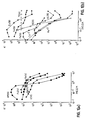
- Figures 1 through 3 illustrate a number of the important properties of the extractive resin of the subject invention.
- Figure 1(a) depicts the extraordinarily strong retention of actinides in the tri-, tetra-, and hexavalent oxidation state over a wide range of HCl concentrations.
- the term k' is a measure of how strongly a given element will be retained on a column.
- Figure 1(b) shows the high retention of Ra at low acidities.
- Corresponding data for Ra uptake on the commercially available and widely used extraction chromatographic system employing bis-2-ethylhexyl phosphoric acid shows k' values one hundred times higher than those for Ra.
- Other noteworthy features of the data in Figure 1(b) are the lower k' values of Fe 3+ and Al 3+ relative to actinides than are found for sulfonated diphosphonic acid polymers. This is an important feature of the subject extractant resin, particularly in the case of Al, because there will be less interference from Al when isolating actinides from soils.
- the data in Figure 2 highlight the fact that k' values for selected actinides in three different oxidation states remain high even in the presence of high concentrations of hydrofluoric acid, whereas Ti, a troublesome constituent in soil analyses, is not significantly retained.
- the method of recovery of the actinides from the resin of the subject invention is one of its novel features. With k' values for actinides highly elevated, eluting or stripping the elements from the subject resin using concentrated mineral acids is not feasible. In the case of prior art ion exchange resins such as the sulfonated diphosphonic acid polymer as described in U.S. Patent No. 5,281,631, actinides are stripped from columns using a chelating agent containing the same type of ligand that is bonded in the polymer matrix, namely a geminally substituted diphosphonic acid.
- HEDPA 1-hydroxyethane-1, 1-diphosphonic acid
- H 2 DEH[MDP] stationary phase is efficiently and quantitatively removed in approximately 5 to 10 free column volumes. Since the volume of H 2 DEH[MDP] is only 15% of the bed volume of a column, a 1 ml bed volume column of the subject resin contains only ⁇ 150 ⁇ L of extractant. The resultant H 2 DEH[MDP] in alcohol is readily destroyed by first evaporating the alcohol and then oxidizing the small volume of extractant with H 2 O 2 to phosphoric acid.
- the actinides are then easily recovered from the resultant residue of phosphoric acid by addition of nitric acid and loading onto one of several actinide specific extraction chromatographic columns, e.g., TRUTM resin.
- TRUTM resin actinide specific extraction chromatographic columns
- Ra recovery from the subject resin is readily achieved using 1 M HCl or HNO 3 because k Ra , decreases significantly with increasing acidity. This, again, is an important feature because analysts frequently are required to measure 228 Ra in addition to the long lived 226 Ra.
- Radium-228 is a beta emitter that decays to 6.13 hour 228 Ac. Once the Ra is eluted, a new growth period for 228 Ac begins because Ac is strongly retained like Am and Eu. After the 228 Ac is in secular equilibrium with 228 Ra (generally 24 hours), the nitric acid strip solution is loaded on TRU resin which selectively separates Ac from Ra. The 228 Ac is then recovered for counting from the TRU resin by elution with 1 M HCl.
- the compound bis-2-ethylhexyl methanediphosphonic acid was prepared by the phosphonic acid esterification method of Burger, et al., J. Am. Chem. Soc . 79 :3575 (1957). Briefly, methanediphosphonic acid (30 g, 0.1704 mol) and 2-ethylhexanol (44.38 g, 0.3408 mol) were heated to boiling in tetrahydrofuran (600 mL), with stirring and reflux under a nitrogen atmosphere.
- Dicyclohexylcarbodiimide (77.80 g, 0.377 mol; solution in 340 mL tetrahydrofuran) was added dropwise to the refluxing solution over a period of several hours. The solution was kept at gentle reflux for about three days. The resulting solution was cooled, filtered, and vacuum filtered to remove the dicyclohexyl urea side product. The tetrahydrofuran solvent was removed by rotary evaporation.
- the crude bis-2-ethylhexyl methanediphosphonic acid was dissolved in 1 M ammonium hydroxide (about one liter) and warmed to 90 °C. This solution was filtered by vacuum filtration, and then acidified with 6 M HCl to pH 1 to release the product as an oil. Dichloromethane was added to the acidified aqueous solution to extract the product. The dichloromethane solution containing the product was washed with 2 M NaCl to remove traces of HCl solution.
- the resulting amber brown dichloromethane solution of the bis-2-ethylhexyl methanediphosphonic acid showed some side products in the 1 H NMR analysis.
- the product was redissolved in 1 N ammonium hydroxide and washed three times with 400 mL portions of dichloromethane.
- the basic aqueous phase containing the desired bis-2-ethylhexyl methanediphosphonate was acidified to pH/1 with 6 M HCl.
- the bis-2-ethylhexyl methanediphosphonic acid was then extracted into dichloromethane solution.
- the dichloromethane solution was washed with 2 M NaCl.
- An acidic aqueous solution of the metal ion to be extracted is brought into contact with a solution of bis-2-ethylhexyl methanediphosphonic acid in xylene solvent.
- the solutions are maintained in contact for a period of time sufficient for the metal ions in the aqueous solution to be extracted into the organic phase.
- the extractant (the diphosphonic acid xylene solution) is then separated from the acidic aqueous solution, thereby separating the metal ions from the aqueous solution.
- a chromatographic separation column was prepared using as support material Amberlite XAD-7 resin (manufactured by Rohm & Haas, Philadelphia, Pa.) treated in a conventional manner to remove all traces of preservatives (for example, see U.S. Pat. No. 4,835,107).
- Purified support material (0.6 g) was slurried in isopropyl alcohol and bis-2-ethylhexyl methanediphosphonic acid (0.4 g) was added. After stirring gently, the isopropyl alcohol was removed under vacuum at 55°C to yield the bis-ethylhexyl methanediphosphonic acid dispersed on the resin support.
- a portion of the resin material is slurried in dilute aqueous acid solution and aliquots of the slurry transferred by pipette to a glass column equipped with chemically inert polypropylene fittings.
- the resin material is rinsed with several bed volumes of the solvent used to make the slurry.
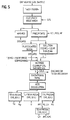
- Actinides are extracted from fecal samples that contain siliceous material using resin support particles coated with bis-2-methylhexyl methanediphosphonic acid.
- a five gram homogenized soil sample is ashed overnight in an alumina crucible to remove organics. After cooling, the ashed sample is mixed with solid flakes of NaOH, in the ratio of 4 grams NaOH per gram of original soil sample. The sample is then placed in a muffle furnace and heated to 500°C for two to three hours. After cooling, 100 mL of deionized water is added to dissolve the excess NaOH as well as any sodium aluminate and sodium silicate.
- the resulting mixture is separated by centrifugation and the insoluble residue (mostly ferric hydroxide) is washed first with 0.5 M NaOH and then deionized water. The supernatant liquid and the washings are discarded. Any actinides present in the soil are coprecipitated with the insoluble hydroxides.
- the insoluble hydroxides are dissolved in an excess of 6 M HCl (about 50 mL) and diluted with 1-2 M HCl (50 mL).
- any trivalent iron present which is evident by its intense yellow color, is reduced with ascorbic acid until the solution is colorless (or a faint green).
- the ascorbic acid can be added as a freshly prepared 0.8 M solution or as a solid.
- the resulting solution may contain colloidal silica that may plug the bis-2-ethylhexyl methanediphosphonic acid separation particle column.
- colloidal silica may plug the bis-2-ethylhexyl methanediphosphonic acid separation particle column.
- PEG-2000 polyethylene glycol-2000
- the colloidal silica is flocculated by the PEG-2000. After setting, the floc is removed by centrifugation.
- the supernatant solution resulting from the separation of the silica floc is made 1 M HF, and then passed through a two to three millimeter bed volume bis-2-ethylhexyl methanediphosphonic acid-coated separation particle column (preconditioned with 1 M HCl).
- the column is operated at a flow rate of 1 to 2 mL/cm/min. After loading, the column is rinsed with 5 bed volumes of 1 M HCl - 1 M HF, followed by 5 bed volumes of 1 M HCl.
- the bis-2-ethylhexyl methanediphosphonic acid separation particle column is eluted with 5 bed volumes of isopropanol followed by 2 bed volumes of 6 M HCl.
- the alcohol and HCl eluant (containing the bis-2-ethylhexyl methanediphosphonic acid) is collected in a 100 mL beaker and evaporated to near dryness.
- the residue is oxidized with 30 percent H 2 O 2 .
- Portions of hydrogen peroxide (5 mL) and one portion of 0.2 M sodium vanadate (50 ⁇ L) are added to the residue. Generally four portions of peroxide are sufficient to destroy the stationary phase (containing bis-2-ethylhexyl methanediphosphonic acid), which was stripped from the column by the isopropanol.
- Actinides are extracted from fecal samples that contain siliceous material using resin support particles coated with bis-2-methylhexyl methanediphosphonic acid.
- a one day collection of homogenized fecal sample is ashed overnight in an alumina crucible to remove organics. After cooling, the ashed sample is mixed with solid flakes of NaOH, in the ratio of 4 grams NaOH per gram of ashed fecal sample. The sample is then placed in a muffle furnace and heated to 500°C for two to three hours. After cooling, 100 mL of deionized water is added to dissolve the excess NaOH as well as any sodium aluminate and sodium silicate.
- the resulting mixture is separated by centrifugation and the insoluble residue (mostly ferric hydroxide) is washed first with 0.5 M MaOH and then deionized water. The supernatant liquid and the washings are discarded. Any actinides present in the sample are coprecipitated with the insoluble hydroxides.
- the insoluble hydroxides are dissolved in an excess of 6 M HCl (about 50 mL) and diluted with 1-2 M HCl (50 mL).
- any trivalent iron present which is evident by its intense yellow color, is reduced with ascorbic acid until the solution is colorless (or a faint green).
- the ascorbic acid can be added as a freshly prepared 0.8 M solution or as a solid.
- the resulting solution may contain colloidal silica that may plug the bis-2-ethylhexyl methanediphosphonic acid separation particle column.
- colloidal silica may plug the bis-2-ethylhexyl methanediphosphonic acid separation particle column.
- PEG-2000 polyethylene glycol-2000
- the colloidal silica is flocculated by the PEG-2000. After setting, the floc is removed by centrifugation.
- the acidic supernatant liquid obtained after separating the silica floc is loaded onto the bis-2-ethylhexyl methanediphosphonic acid separation particle column. After passing the load solution through the column, the column is rinsed successsively with 5 bed volumes of 2 M HCl, and 5 bed volumes of 1 M HCl and 1 M HF. The remainder of the procedure is identical to that described for soils, in Example 4A.
- the resin separation particles are added to the acidic solution containing actinides, and stirred for a sufficient time for actinides to become bound. Then the resin is removed (for example, by filtration). The actinides from the sample remain associated with the resin, separated from the acidic solution.
- a column (10 mL) containing actinide ions bound to bis-2-ethylhexyl methanediphosphonic acid-coated resin particles is washed to remove the bis-2-ethylhexyl methanediphosphonic acid from the resin particles with 5 bed volumes of isopropyl alcohol followed by 2 bed volumes of 6 M HCl.
- the isopropyl alcohol and water solvents are removed by evaporation, leaving a residue of a very small volume of bis-2-ethylhexyl methanediphosphonic acid actinide complex.
- the bis-2-ethylhexyl methanediphosphonic acid is oxidized to phosphoric acid by addition of portions of hydrogen peroxide (30 percent, 5 mL each) and sodium vanadate (0.2 M, 50 ⁇ L). Generally four portions of peroxide and one portion of sodium vanadate are sufficient to destroy the stationary phase (containing bis-2-ethylhexyl methanediphosphonic acid), which was stripped from the column by the isopropanol.
- the actinides can then be quantitatively recovered from the resulting residue.
- the resulting phosphoric acid residue containing actinides is dissolved in nitric acid, and loaded onto an actinide specific extraction chromatographic column, such as TRUTM resin (U.S. Pat. No. 4,835,107).
- Radium (Ra) can be recovered from bis-2-ethylhexyl methanediphosphonic acid resin column by stripping with 1 M HCl or 1 M HNO 3 .
- 228 Ra is a beta emitter that decays to 228 Ac with a half-life of 6.13 hours, whereas 226 Ra is an alpha emitter with a half-life of about 1600 years.
- a mixture of 228 Ra, 226 Ra, and the decay product 228 Ac is bound by a column containing bis-2-ethylhexyl methanediphosphonic acid-coated resin substrate particles. At time called zero, the column is stripped with 1 M to 2 M nitric acid, which causes the 228 Ra and 226 Ra to elute from the column while the 228 Ac remains bound to the column.
- the amount of total Ra in the eluant is measured.
- the 228 Ra in the eluant decays to 228 Ac.
- the nitric acid strip is loaded onto TRUTM resin, which selectively separates the 228 Ac from Ra.
- the 228 Ac is then recovered for counting from the TRUTM resin by elution with 4 M hydrochloric acid.
- the amount of 228 Ra in the sample can be calculated from the amount of 228 Ac formed in the known amount of time with the known decay half-life, and the remainder of the Ra is 226 Ra.
- the weight of the resin (g) is w and V is the volume of the aqueous phase (mL).
- the D values measured in the uptake studies with the bis-2-ethylhexyl methanediphosphonate-coated resin support particles were converted into k' values by dividing by 1.94, where k' is the capacity factor (the number of free column volumes to peak maximum).
- This factor includes the conversion of the weight distribution ratios to volume distribution ratios, and the value of the ratio of the volume of stationary phase to the volume of mobile phase, v s /v m , which for the bis-2-ethylhexyl methanediphosphonate-coated resin support particles has been determined to be equal to 0.196.
- the above conversion also requires the knowledge of the density of the extractant (1.05 g/mL) and the density of the methanediphosphonic acid-coated resin (1.11 g/mL).
- Table I shows the capacity of the bis-2-ethylhexyl methanediphosphonic acid-coated resin for various metals.
- Metal Capacity mmol/g res Capacity mmol/ml bed
- Capacity mg/g res Capacity mg/ml bed
- Th(IV) 0.371 0.131 86.1 30.3 U(VI) 0.612 0.612 145.7 51.3
Landscapes
- Chemical & Material Sciences (AREA)
- Analytical Chemistry (AREA)
- Chemical Kinetics & Catalysis (AREA)
- Organic Chemistry (AREA)
- Physics & Mathematics (AREA)
- Engineering & Computer Science (AREA)
- General Engineering & Computer Science (AREA)
- High Energy & Nuclear Physics (AREA)
- Inorganic Chemistry (AREA)
- Solid-Sorbent Or Filter-Aiding Compositions (AREA)
- Steroid Compounds (AREA)
Claims (8)
- Procédé de séparation d'éléments choisis dans le groupe constitué par des cations actinide et lanthanide trivalents, tétravalents et hexavalents, et des cations radium à partir d'une solution aqueuse, comprenant les étapes consistant à :(a) mettre en contact la solution aqueuse contenant les cations desdits éléments avec une pluralité de particules d'extraction solides, lesdites particules d'extraction solides comprenant des particules de support solides qui ne réagissent pas dans des conditions de séparation, et qui présentent un agent d'extraction consistant en un acide méthanediphosphonique diestérifié adsorbé sur celles-ci ;(b) maintenir ledit contact pendant une période de temps suffisante pour que ledit agent d'extraction se lie aux cations desdits éléments présents dans ledit liquide aqueux et forme une seconde phase aqueuse liquide qui est relativement appauvrie en lesdits cations desdits éléments ; et(c) séparer les phases solides et liquides.
- Procédé suivant la revendication 1, dans lequel lesdites particules d'extraction solides sont présentes dans une colonne chromatographique.
- Procédé suivant la revendication 1, dans lequel lesdites deux phases aqueuses ont un pH égal ou inférieur à environ 2.
- Procédé suivant la revendication 1, dans lequel ledit agent d'extraction est l'acide 2-éthylhexylméthanediphosphonique.
- Procédé suivant la revendication 1, dans lequel les cations radium sont présents dans ladite solution contenant des cations et se lient audit agent d'extraction au cours de l'étape (b), de sorte que ladite seconde phase liquide aqueuse est relativement appauvrie en cations radium.
- Procédé suivant la revendication 1, dans lequel les canons lanthanide sont présents dans ladite solution contenant des cations et se lient audit agent d'extraction au cours de l'étape (b), de sorte que ladite seconde phase liquide aqueuse est relativement appauvrie en cations lanthanide.
- Particules d'extraction qui comprennent des particules de support solides qui ne réagissent pas dans de l'eau ayant un pH égal ou inférieur à 2, et ont un acide méthanediphosphonique diestérifié à leur surface.
- Particules d'extraction suivant la revendication 7, dans lesquelles ledit ester méthanediphosphonique diestérifié est l'acide bis-2-éthylhexylméthanediphosphonique.
Applications Claiming Priority (3)
| Application Number | Priority Date | Filing Date | Title |
|---|---|---|---|
| US08/467,402 US5651883A (en) | 1995-06-06 | 1995-06-06 | Method for the chromatographic separation of cations from aqueous samples |
| US467402 | 1995-06-06 | ||
| PCT/US1996/008355 WO1996039238A1 (fr) | 1995-06-06 | 1996-06-03 | Procede de separation chromatographique de cations dans des echantillons aqueux |
Publications (3)
| Publication Number | Publication Date |
|---|---|
| EP0830190A1 EP0830190A1 (fr) | 1998-03-25 |
| EP0830190A4 EP0830190A4 (fr) | 1999-01-13 |
| EP0830190B1 true EP0830190B1 (fr) | 2002-04-24 |
Family
ID=23855541
Family Applications (1)
| Application Number | Title | Priority Date | Filing Date |
|---|---|---|---|
| EP96916966A Expired - Lifetime EP0830190B1 (fr) | 1995-06-06 | 1996-06-03 | Procede de separation chromatographique de cations dans des echantillons aqueux |
Country Status (6)
| Country | Link |
|---|---|
| US (2) | US5651883A (fr) |
| EP (1) | EP0830190B1 (fr) |
| AT (1) | ATE216625T1 (fr) |
| AU (1) | AU5967496A (fr) |
| DE (1) | DE69620880T2 (fr) |
| WO (1) | WO1996039238A1 (fr) |
Families Citing this family (27)
| Publication number | Priority date | Publication date | Assignee | Title |
|---|---|---|---|---|
| US5854968A (en) * | 1997-06-09 | 1998-12-29 | Arch Development Corporation | Process and apparatus for the production of BI-213 cations |
| US6909010B2 (en) * | 2001-04-11 | 2005-06-21 | Loyola University Of Chicago | Facile synthesis of symmetric esters of alkylenebisphosphonic acids |
| US6852296B2 (en) * | 2001-06-22 | 2005-02-08 | Pg Research Foundation | Production of ultrapure bismuth-213 for use in therapeutic nuclear medicine |
| US7108784B1 (en) * | 2001-09-26 | 2006-09-19 | Wrt International Llc | Apparatus for removal and destruction of ammonia from an aqueous medium |
| US9908788B1 (en) | 2001-09-26 | 2018-03-06 | Wrt International Llc | Radium removal from aqueous media using zeolite materials |
| US7476311B2 (en) * | 2001-09-26 | 2009-01-13 | Wrt International Llc | Arsenic removal from aqueous media using chemically treated zeolite materials |
| US6998052B2 (en) * | 2002-04-12 | 2006-02-14 | Pg Research Foundation | Multicolumn selectivity inversion generator for production of ultrapure radionuclides |
| US7157022B2 (en) * | 2002-09-30 | 2007-01-02 | .Pg Research Foundation, Inc. | Multivalent metal ion extraction using diglycolamide-coated particles |
| US7105087B2 (en) * | 2002-09-17 | 2006-09-12 | Wrt International Llc | Hexa-valent chromium removal from aqueous media using ferrous-form zeolite materials |
| US7390414B2 (en) * | 2002-09-25 | 2008-06-24 | Wrt International Llc | Regeneration of chemically treated zeolite |
| US7326347B2 (en) * | 2003-10-29 | 2008-02-05 | Wrt International Llc | Dynamic up-flow zeolite system and method |
| US6998054B2 (en) * | 2003-12-31 | 2006-02-14 | The Boc Group, Inc. | Selective fluoride and ammonia removal by chromatographic separation of wastewater |
| US20070215552A1 (en) * | 2005-09-16 | 2007-09-20 | Wrt International Llc. | Systems and methods for removal of contaminates from an aqueous media in the absence of modified nitrate levels |
| US7520987B1 (en) | 2005-11-15 | 2009-04-21 | Wrt International Llc | System and apparatus for purging absorptive materials used in the removal of contaminates from an aqueous medium |
| US7723114B1 (en) | 2006-01-11 | 2010-05-25 | Clemson University | Methods and systems for detection of radionuclides |
| US7507583B2 (en) * | 2006-03-27 | 2009-03-24 | Savannah River Nuclear Solutions, Llc | Analysis of large soil samples for actinides |
| US20100018347A1 (en) * | 2006-10-05 | 2010-01-28 | Holden Charles S | Separation of radium and rare earth elements from monazite |
| US8663479B2 (en) * | 2006-11-20 | 2014-03-04 | Wrt International Llc | Method for removing cationic contaminants from water using natural zeolite underloaded with transition metal ions to limit leakage of intrinsic arsenic therefrom |
| CN101396650B (zh) * | 2007-09-26 | 2010-12-22 | 中国科学院大连化学物理研究所 | 一种固定钛离子亲和色谱材料及其制备和应用 |
| US8133740B1 (en) | 2008-08-19 | 2012-03-13 | Clemson University Research Foundation | Colorimetric detection of uranium in water |
| US9272260B2 (en) * | 2009-08-14 | 2016-03-01 | University Of Louisville Research Foundation, Inc. | Methods of synthesis and purification by use of a solid support |
| WO2016083739A1 (fr) | 2014-11-26 | 2016-06-02 | Rhodia Operations | Composition de lanthane et d'actinium-227 |
| CN106179281A (zh) * | 2016-08-15 | 2016-12-07 | 河南师范大学 | 一种金离子固相萃取剂及其制备方法和应用 |
| CN111307783A (zh) * | 2018-12-11 | 2020-06-19 | 中核北方核燃料元件有限公司 | 一种氮化铀固体样品中杂质元素含量的测定方法 |
| US11174277B2 (en) * | 2019-05-29 | 2021-11-16 | Alliance For Sustainable Energy, Llc | Sequestering compositions and materials |
| EP4022653A2 (fr) | 2019-08-29 | 2022-07-06 | CF Technologies, Inc. | Systèmes et procédés de récupération sélective de métaux à partir de résines échangeuses d'ions |
| CN114636773B (zh) * | 2022-05-23 | 2022-08-23 | 广东国标医药科技有限公司 | 一种药用辅料中聚乙二醇单甲醚2000的含量测定方法 |
Family Cites Families (11)
| Publication number | Priority date | Publication date | Assignee | Title |
|---|---|---|---|---|
| US3993728A (en) * | 1975-08-27 | 1976-11-23 | The United States Of America As Represented By The United States Energy Research And Development Administration | Bidentate organophosphorus solvent extraction process for actinide recovery and partition |
| US4631142A (en) * | 1979-07-09 | 1986-12-23 | Societe Nationale Elf Aquitaine (Production) | Diphosphonic extractants |
| US4548790A (en) * | 1983-07-26 | 1985-10-22 | The United States Of America As Represented By The United States Department Of Energy | Method for extracting lanthanides and actinides from acid solutions |
| US4574072A (en) * | 1983-07-26 | 1986-03-04 | The United States Of America As Represented By The United States Department Of Energy | Method for extracting lanthanides and actinides from acid solutions by modification of purex solvent |
| JPS62210053A (ja) * | 1986-03-07 | 1987-09-16 | Agency Of Ind Science & Technol | 光学異性体分離用充填剤 |
| US4835107A (en) * | 1986-10-21 | 1989-05-30 | Arch Development Corp. | Method for the concentration and separation of actinides from biological and environmental samples |
| ATE136870T1 (de) * | 1988-11-01 | 1996-05-15 | Arch Dev Corp | Verfahren zur abtrennung von metallischen ionen mit phosphonsäuren als complexbildner |
| US4957620A (en) * | 1988-11-15 | 1990-09-18 | Hoechst Celanese Corporation | Liquid chromatography using microporous hollow fibers |
| US5110474A (en) * | 1990-04-09 | 1992-05-05 | Arch Development Corporation | Method for liquid chromatographic extraction of strontium from acid solutions |
| US5100585A (en) * | 1990-04-09 | 1992-03-31 | United States Department Of Energy | Process for the recovery of strontium from acid solutions |
| US5281631A (en) * | 1991-12-20 | 1994-01-25 | Arch Development Corp. | Phosphonic acid based ion exchange resins |
-
1995
- 1995-06-06 US US08/467,402 patent/US5651883A/en not_active Expired - Lifetime
-
1996
- 1996-06-03 EP EP96916966A patent/EP0830190B1/fr not_active Expired - Lifetime
- 1996-06-03 WO PCT/US1996/008355 patent/WO1996039238A1/fr not_active Ceased
- 1996-06-03 AU AU59674/96A patent/AU5967496A/en not_active Abandoned
- 1996-06-03 AT AT96916966T patent/ATE216625T1/de not_active IP Right Cessation
- 1996-06-03 DE DE69620880T patent/DE69620880T2/de not_active Expired - Lifetime
-
1997
- 1997-05-09 US US08/853,593 patent/US5851401A/en not_active Expired - Lifetime
Also Published As
| Publication number | Publication date |
|---|---|
| DE69620880D1 (de) | 2002-05-29 |
| WO1996039238A1 (fr) | 1996-12-12 |
| EP0830190A1 (fr) | 1998-03-25 |
| US5851401A (en) | 1998-12-22 |
| US5651883A (en) | 1997-07-29 |
| EP0830190A4 (fr) | 1999-01-13 |
| DE69620880T2 (de) | 2002-11-28 |
| AU5967496A (en) | 1996-12-24 |
| ATE216625T1 (de) | 2002-05-15 |
Similar Documents
| Publication | Publication Date | Title |
|---|---|---|
| US5851401A (en) | Method for the chromatographic separation of cations from aqueous samples | |
| Horwitz et al. | DIPEX: A new extraction chromatographic material for the separation and preconcentration of actinides from aqueous solution | |
| Horwitz et al. | Separation and preconcentration of actinides by extraction chromatography using a supported liquid anion exchanger: application to the characterization of high-level nuclear waste solutions | |
| US5346618A (en) | Liquid chromatographic extraction medium | |
| La Rosa et al. | Separation of actinides, cesium and strontium from marine samples using extraction chromatography and sorbents | |
| US4835107A (en) | Method for the concentration and separation of actinides from biological and environmental samples | |
| Vajda et al. | Determination of Pu isotopes by alpha spectrometry: a review of analytical methodology | |
| US5863439A (en) | Process for separation and preconcentration of radium from water | |
| Vajda et al. | Determination of 241 Am isotope: a review of analytical methodology | |
| US6511603B1 (en) | Alkaline earth cation extraction from acid solution | |
| US11691140B2 (en) | Method for the preparation of controlled porosity supports for chromatographic separation | |
| De Regge et al. | Review of chemical separation techniques applicable to alpha spectrometric measurements | |
| Merdivan et al. | Phosphonate-based resins for the selective enrichment of uranium (VI) | |
| JPH0470370B2 (fr) | ||
| Ulrich et al. | The sorption of 210Pb, 210Bi and 210Po on montmorillonite: a study with emphasis on reversibility aspects and on the effect of the radioactive decay of adsorbed nuclides | |
| O'Laughlin et al. | Separation of Various Cations by Reversed-Phase Partition Chromatography Using Neutral Organophosphorous Compounds | |
| Horwitz et al. | Liquid extraction, the TRUEX process—experimental studies | |
| Strelow et al. | Separation of yttrium and neodymium from samarium and the heavier lanthanides by cation-exchange chromatography with hydroxyethylenediaminetriacetate in monochloroacetate buffer | |
| Gopalakrishnan et al. | Extraction and extraction chromatographic separation of minor actinides from sulphate bearing high level waste solutions using CMPO | |
| Mann et al. | Development of novel composite sorbents for the removal of actinides from environmental and analytical solutions | |
| Rychkov et al. | Radiochemical characterization and decontamination of rare-earth-element concentrate recovered from uranium leach liquors | |
| McAlister et al. | A method for the separation of beryllium from spectral interfering elements in inductively coupled plasma-atomic emission spectroscopic analysis | |
| Kmak et al. | Extraction of 88Y, 152Eu, 228Ac, 241Am, and 244Cm with 2-thenoyltrifluoroacetone (TTA) resin | |
| Kopunec et al. | Separation of cerium and europium by extraction with tributyl phosphate and di (2-ethylhexyl) phosphoric acid in n-alkane from nitrate solutions | |
| Reddy et al. | Extraction behavior of trivalent lanthanoids and yttrium with bis (2, 4, 4-trimethylpentyl) octylphosphine oxide |
Legal Events
| Date | Code | Title | Description |
|---|---|---|---|
| PUAI | Public reference made under article 153(3) epc to a published international application that has entered the european phase |
Free format text: ORIGINAL CODE: 0009012 |
|
| 17P | Request for examination filed |
Effective date: 19971017 |
|
| AK | Designated contracting states |
Kind code of ref document: A1 Designated state(s): AT BE CH DE DK ES FI FR GB GR IE IT LI LU MC NL PT SE |
|
| A4 | Supplementary search report drawn up and despatched |
Effective date: 19981127 |
|
| AK | Designated contracting states |
Kind code of ref document: A4 Designated state(s): AT BE CH DE DK ES FI FR GB GR IE IT LI LU MC NL PT SE |
|
| 17Q | First examination report despatched |
Effective date: 19991126 |
|
| GRAG | Despatch of communication of intention to grant |
Free format text: ORIGINAL CODE: EPIDOS AGRA |
|
| GRAG | Despatch of communication of intention to grant |
Free format text: ORIGINAL CODE: EPIDOS AGRA |
|
| GRAG | Despatch of communication of intention to grant |
Free format text: ORIGINAL CODE: EPIDOS AGRA |
|
| GRAH | Despatch of communication of intention to grant a patent |
Free format text: ORIGINAL CODE: EPIDOS IGRA |
|
| GRAH | Despatch of communication of intention to grant a patent |
Free format text: ORIGINAL CODE: EPIDOS IGRA |
|
| REG | Reference to a national code |
Ref country code: GB Ref legal event code: IF02 |
|
| GRAA | (expected) grant |
Free format text: ORIGINAL CODE: 0009210 |
|
| AK | Designated contracting states |
Kind code of ref document: B1 Designated state(s): AT BE CH DE DK ES FI FR GB GR IE IT LI LU MC NL PT SE |
|
| PG25 | Lapsed in a contracting state [announced via postgrant information from national office to epo] |
Ref country code: NL Free format text: LAPSE BECAUSE OF FAILURE TO SUBMIT A TRANSLATION OF THE DESCRIPTION OR TO PAY THE FEE WITHIN THE PRESCRIBED TIME-LIMIT Effective date: 20020424 Ref country code: LI Free format text: LAPSE BECAUSE OF FAILURE TO SUBMIT A TRANSLATION OF THE DESCRIPTION OR TO PAY THE FEE WITHIN THE PRESCRIBED TIME-LIMIT Effective date: 20020424 Ref country code: IT Free format text: LAPSE BECAUSE OF FAILURE TO SUBMIT A TRANSLATION OF THE DESCRIPTION OR TO PAY THE FEE WITHIN THE PRESCRIBED TIME-LIMIT;WARNING: LAPSES OF ITALIAN PATENTS WITH EFFECTIVE DATE BEFORE 2007 MAY HAVE OCCURRED AT ANY TIME BEFORE 2007. THE CORRECT EFFECTIVE DATE MAY BE DIFFERENT FROM THE ONE RECORDED. Effective date: 20020424 Ref country code: GR Free format text: LAPSE BECAUSE OF FAILURE TO SUBMIT A TRANSLATION OF THE DESCRIPTION OR TO PAY THE FEE WITHIN THE PRESCRIBED TIME-LIMIT Effective date: 20020424 Ref country code: FI Free format text: LAPSE BECAUSE OF FAILURE TO SUBMIT A TRANSLATION OF THE DESCRIPTION OR TO PAY THE FEE WITHIN THE PRESCRIBED TIME-LIMIT Effective date: 20020424 Ref country code: CH Free format text: LAPSE BECAUSE OF FAILURE TO SUBMIT A TRANSLATION OF THE DESCRIPTION OR TO PAY THE FEE WITHIN THE PRESCRIBED TIME-LIMIT Effective date: 20020424 Ref country code: BE Free format text: LAPSE BECAUSE OF FAILURE TO SUBMIT A TRANSLATION OF THE DESCRIPTION OR TO PAY THE FEE WITHIN THE PRESCRIBED TIME-LIMIT Effective date: 20020424 Ref country code: AT Free format text: LAPSE BECAUSE OF FAILURE TO SUBMIT A TRANSLATION OF THE DESCRIPTION OR TO PAY THE FEE WITHIN THE PRESCRIBED TIME-LIMIT Effective date: 20020424 |
|
| REF | Corresponds to: |
Ref document number: 216625 Country of ref document: AT Date of ref document: 20020515 Kind code of ref document: T |
|
| REG | Reference to a national code |
Ref country code: GB Ref legal event code: FG4D |
|
| REG | Reference to a national code |
Ref country code: CH Ref legal event code: EP |
|
| REF | Corresponds to: |
Ref document number: 69620880 Country of ref document: DE Date of ref document: 20020529 |
|
| PG25 | Lapsed in a contracting state [announced via postgrant information from national office to epo] |
Ref country code: MC Free format text: LAPSE BECAUSE OF NON-PAYMENT OF DUE FEES Effective date: 20020603 Ref country code: LU Free format text: LAPSE BECAUSE OF NON-PAYMENT OF DUE FEES Effective date: 20020603 Ref country code: IE Free format text: LAPSE BECAUSE OF NON-PAYMENT OF DUE FEES Effective date: 20020603 |
|
| REG | Reference to a national code |
Ref country code: IE Ref legal event code: FG4D |
|
| PG25 | Lapsed in a contracting state [announced via postgrant information from national office to epo] |
Ref country code: SE Free format text: LAPSE BECAUSE OF FAILURE TO SUBMIT A TRANSLATION OF THE DESCRIPTION OR TO PAY THE FEE WITHIN THE PRESCRIBED TIME-LIMIT Effective date: 20020724 Ref country code: PT Free format text: LAPSE BECAUSE OF FAILURE TO SUBMIT A TRANSLATION OF THE DESCRIPTION OR TO PAY THE FEE WITHIN THE PRESCRIBED TIME-LIMIT Effective date: 20020724 Ref country code: DK Free format text: LAPSE BECAUSE OF FAILURE TO SUBMIT A TRANSLATION OF THE DESCRIPTION OR TO PAY THE FEE WITHIN THE PRESCRIBED TIME-LIMIT Effective date: 20020724 |
|
| NLV1 | Nl: lapsed or annulled due to failure to fulfill the requirements of art. 29p and 29m of the patents act | ||
| ET | Fr: translation filed | ||
| PG25 | Lapsed in a contracting state [announced via postgrant information from national office to epo] |
Ref country code: ES Free format text: LAPSE BECAUSE OF FAILURE TO SUBMIT A TRANSLATION OF THE DESCRIPTION OR TO PAY THE FEE WITHIN THE PRESCRIBED TIME-LIMIT Effective date: 20021030 |
|
| REG | Reference to a national code |
Ref country code: CH Ref legal event code: PL |
|
| PLBE | No opposition filed within time limit |
Free format text: ORIGINAL CODE: 0009261 |
|
| STAA | Information on the status of an ep patent application or granted ep patent |
Free format text: STATUS: NO OPPOSITION FILED WITHIN TIME LIMIT |
|
| REG | Reference to a national code |
Ref country code: IE Ref legal event code: MM4A |
|
| 26N | No opposition filed |
Effective date: 20030127 |
|
| REG | Reference to a national code |
Ref country code: FR Ref legal event code: PLFP Year of fee payment: 20 |
|
| PGFP | Annual fee paid to national office [announced via postgrant information from national office to epo] |
Ref country code: GB Payment date: 20150603 Year of fee payment: 20 Ref country code: DE Payment date: 20150527 Year of fee payment: 20 |
|
| PGFP | Annual fee paid to national office [announced via postgrant information from national office to epo] |
Ref country code: FR Payment date: 20150608 Year of fee payment: 20 |
|
| REG | Reference to a national code |
Ref country code: DE Ref legal event code: R071 Ref document number: 69620880 Country of ref document: DE |
|
| REG | Reference to a national code |
Ref country code: GB Ref legal event code: PE20 Expiry date: 20160602 |
|
| PG25 | Lapsed in a contracting state [announced via postgrant information from national office to epo] |
Ref country code: GB Free format text: LAPSE BECAUSE OF EXPIRATION OF PROTECTION Effective date: 20160602 |