EP0832899B1 - Laktitolzusammensetzung und Verfahren zu deren Herstellung - Google Patents
Laktitolzusammensetzung und Verfahren zu deren Herstellung Download PDFInfo
- Publication number
- EP0832899B1 EP0832899B1 EP97402232A EP97402232A EP0832899B1 EP 0832899 B1 EP0832899 B1 EP 0832899B1 EP 97402232 A EP97402232 A EP 97402232A EP 97402232 A EP97402232 A EP 97402232A EP 0832899 B1 EP0832899 B1 EP 0832899B1
- Authority
- EP
- European Patent Office
- Prior art keywords
- lactitol
- crystalline
- composition
- equal
- less
- Prior art date
- Legal status (The legal status is an assumption and is not a legal conclusion. Google has not performed a legal analysis and makes no representation as to the accuracy of the status listed.)
- Expired - Lifetime
Links
- VQHSOMBJVWLPSR-JVCRWLNRSA-N lactitol Chemical compound OC[C@H](O)[C@@H](O)[C@@H]([C@H](O)CO)O[C@@H]1O[C@H](CO)[C@H](O)[C@H](O)[C@H]1O VQHSOMBJVWLPSR-JVCRWLNRSA-N 0.000 title claims abstract description 130
- 235000010448 lactitol Nutrition 0.000 title claims abstract description 129
- 239000000832 lactitol Substances 0.000 title claims abstract description 127
- 229960003451 lactitol Drugs 0.000 title claims abstract description 127
- 239000000203 mixture Substances 0.000 title claims abstract description 88
- 238000000034 method Methods 0.000 title claims description 17
- 238000002360 preparation method Methods 0.000 title claims description 9
- 210000003850 cellular structure Anatomy 0.000 claims abstract description 3
- 239000006188 syrup Substances 0.000 claims description 33
- 235000020357 syrup Nutrition 0.000 claims description 33
- 239000002245 particle Substances 0.000 claims description 30
- 238000002844 melting Methods 0.000 claims description 23
- 230000008018 melting Effects 0.000 claims description 23
- XLYOFNOQVPJJNP-UHFFFAOYSA-N water Substances O XLYOFNOQVPJJNP-UHFFFAOYSA-N 0.000 claims description 23
- 238000002425 crystallisation Methods 0.000 claims description 18
- 230000008025 crystallization Effects 0.000 claims description 18
- 229920005862 polyol Polymers 0.000 claims description 10
- 150000003077 polyols Chemical class 0.000 claims description 10
- 239000000463 material Substances 0.000 claims description 8
- 238000004090 dissolution Methods 0.000 claims description 6
- 238000001035 drying Methods 0.000 claims description 6
- 230000035800 maturation Effects 0.000 claims description 6
- 238000005507 spraying Methods 0.000 claims description 6
- FBPFZTCFMRRESA-KVTDHHQDSA-N D-Mannitol Chemical compound OC[C@@H](O)[C@@H](O)[C@H](O)[C@H](O)CO FBPFZTCFMRRESA-KVTDHHQDSA-N 0.000 claims description 4
- 229930195725 Mannitol Natural products 0.000 claims description 4
- 239000000594 mannitol Substances 0.000 claims description 4
- 235000010355 mannitol Nutrition 0.000 claims description 4
- 238000004064 recycling Methods 0.000 claims description 4
- FBPFZTCFMRRESA-FSIIMWSLSA-N D-Glucitol Natural products OC[C@H](O)[C@H](O)[C@@H](O)[C@H](O)CO FBPFZTCFMRRESA-FSIIMWSLSA-N 0.000 claims description 3
- FBPFZTCFMRRESA-JGWLITMVSA-N D-glucitol Chemical compound OC[C@H](O)[C@@H](O)[C@H](O)[C@H](O)CO FBPFZTCFMRRESA-JGWLITMVSA-N 0.000 claims description 3
- VQHSOMBJVWLPSR-QMRWEYQWSA-N beta-D-Galp-(1->3)-Man-OH Chemical compound OC[C@@H](O)[C@@H](O)[C@@H]([C@H](O)CO)O[C@@H]1O[C@H](CO)[C@H](O)[C@H](O)[C@H]1O VQHSOMBJVWLPSR-QMRWEYQWSA-N 0.000 claims description 3
- 229910052500 inorganic mineral Inorganic materials 0.000 claims description 3
- 239000011707 mineral Substances 0.000 claims description 3
- 235000010755 mineral Nutrition 0.000 claims description 3
- 239000000600 sorbitol Substances 0.000 claims description 3
- 102000004190 Enzymes Human genes 0.000 claims description 2
- 108090000790 Enzymes Proteins 0.000 claims description 2
- 239000000654 additive Substances 0.000 claims description 2
- 150000001413 amino acids Chemical class 0.000 claims description 2
- 235000014113 dietary fatty acids Nutrition 0.000 claims description 2
- 229930195729 fatty acid Natural products 0.000 claims description 2
- 239000000194 fatty acid Substances 0.000 claims description 2
- 239000000796 flavoring agent Substances 0.000 claims description 2
- 235000019634 flavors Nutrition 0.000 claims description 2
- 235000003599 food sweetener Nutrition 0.000 claims description 2
- 239000003205 fragrance Substances 0.000 claims description 2
- 150000007524 organic acids Chemical class 0.000 claims description 2
- 102000004169 proteins and genes Human genes 0.000 claims description 2
- 108090000623 proteins and genes Proteins 0.000 claims description 2
- 150000003839 salts Chemical class 0.000 claims description 2
- 239000003765 sweetening agent Substances 0.000 claims description 2
- 239000011782 vitamin Substances 0.000 claims description 2
- 235000013343 vitamin Nutrition 0.000 claims description 2
- 229940088594 vitamin Drugs 0.000 claims description 2
- 229930003231 vitamin Natural products 0.000 claims description 2
- 239000004150 EU approved colour Substances 0.000 claims 1
- 230000001747 exhibiting effect Effects 0.000 claims 1
- 150000004665 fatty acids Chemical class 0.000 claims 1
- 150000002194 fatty esters Chemical class 0.000 claims 1
- 150000007522 mineralic acids Chemical class 0.000 claims 1
- 229940006093 opthalmologic coloring agent diagnostic Drugs 0.000 claims 1
- 239000007787 solid Substances 0.000 claims 1
- 239000000843 powder Substances 0.000 description 35
- 239000013078 crystal Substances 0.000 description 27
- 239000000047 product Substances 0.000 description 21
- 239000000126 substance Substances 0.000 description 8
- 238000004519 manufacturing process Methods 0.000 description 6
- 235000013305 food Nutrition 0.000 description 5
- 150000004682 monohydrates Chemical group 0.000 description 5
- ZCWBZRBJSPWUPG-UHFFFAOYSA-N 4-bromo-2-nitroaniline Chemical compound NC1=CC=C(Br)C=C1[N+]([O-])=O ZCWBZRBJSPWUPG-UHFFFAOYSA-N 0.000 description 4
- 238000000889 atomisation Methods 0.000 description 4
- 230000004927 fusion Effects 0.000 description 4
- 229960001159 lactitol monohydrate Drugs 0.000 description 4
- 239000007921 spray Substances 0.000 description 4
- GUBGYTABKSRVRQ-QKKXKWKRSA-N Lactose Natural products OC[C@H]1O[C@@H](O[C@H]2[C@H](O)[C@@H](O)C(O)O[C@@H]2CO)[C@H](O)[C@@H](O)[C@H]1O GUBGYTABKSRVRQ-QKKXKWKRSA-N 0.000 description 3
- 229930006000 Sucrose Natural products 0.000 description 3
- 150000001720 carbohydrates Chemical class 0.000 description 3
- 235000014633 carbohydrates Nutrition 0.000 description 3
- 238000002050 diffraction method Methods 0.000 description 3
- 239000003814 drug Substances 0.000 description 3
- 238000001125 extrusion Methods 0.000 description 3
- 239000008101 lactose Substances 0.000 description 3
- 239000011859 microparticle Substances 0.000 description 3
- 239000012798 spherical particle Substances 0.000 description 3
- 239000005720 sucrose Substances 0.000 description 3
- 235000000346 sugar Nutrition 0.000 description 3
- 150000008163 sugars Chemical class 0.000 description 3
- GUBGYTABKSRVRQ-XLOQQCSPSA-N Alpha-Lactose Chemical group O[C@@H]1[C@@H](O)[C@@H](O)[C@@H](CO)O[C@H]1O[C@@H]1[C@@H](CO)O[C@H](O)[C@H](O)[C@H]1O GUBGYTABKSRVRQ-XLOQQCSPSA-N 0.000 description 2
- VAOUPFUEMFJHKI-MTURKXFLSA-N Lactitol dihydrate Chemical compound O.O.OC[C@H](O)[C@@H](O)[C@@H]([C@H](O)CO)O[C@@H]1O[C@H](CO)[C@H](O)[C@H](O)[C@H]1O VAOUPFUEMFJHKI-MTURKXFLSA-N 0.000 description 2
- CZMRCDWAGMRECN-UGDNZRGBSA-N Sucrose Chemical compound O[C@H]1[C@H](O)[C@@H](CO)O[C@@]1(CO)O[C@@H]1[C@H](O)[C@@H](O)[C@H](O)[C@@H](CO)O1 CZMRCDWAGMRECN-UGDNZRGBSA-N 0.000 description 2
- 239000002775 capsule Substances 0.000 description 2
- 239000007795 chemical reaction product Substances 0.000 description 2
- 235000015218 chewing gum Nutrition 0.000 description 2
- 229940112822 chewing gum Drugs 0.000 description 2
- 235000019219 chocolate Nutrition 0.000 description 2
- 238000007906 compression Methods 0.000 description 2
- 230000006835 compression Effects 0.000 description 2
- 230000007547 defect Effects 0.000 description 2
- 150000004683 dihydrates Chemical class 0.000 description 2
- 230000000694 effects Effects 0.000 description 2
- 238000002474 experimental method Methods 0.000 description 2
- 238000005243 fluidization Methods 0.000 description 2
- 230000036571 hydration Effects 0.000 description 2
- 238000006703 hydration reaction Methods 0.000 description 2
- VQHSOMBJVWLPSR-UHFFFAOYSA-N lactitol Chemical compound OCC(O)C(O)C(C(O)CO)OC1OC(CO)C(O)C(O)C1O VQHSOMBJVWLPSR-UHFFFAOYSA-N 0.000 description 2
- 230000003287 optical effect Effects 0.000 description 2
- 239000000546 pharmaceutical excipient Substances 0.000 description 2
- 229960002920 sorbitol Drugs 0.000 description 2
- 239000000725 suspension Substances 0.000 description 2
- 150000004684 trihydrates Chemical class 0.000 description 2
- OWEGMIWEEQEYGQ-UHFFFAOYSA-N 100676-05-9 Natural products OC1C(O)C(O)C(CO)OC1OCC1C(O)C(O)C(O)C(OC2C(OC(O)C(O)C2O)CO)O1 OWEGMIWEEQEYGQ-UHFFFAOYSA-N 0.000 description 1
- 239000004386 Erythritol Substances 0.000 description 1
- UNXHWFMMPAWVPI-UHFFFAOYSA-N Erythritol Natural products OCC(O)C(O)CO UNXHWFMMPAWVPI-UHFFFAOYSA-N 0.000 description 1
- WQZGKKKJIJFFOK-GASJEMHNSA-N Glucose Natural products OC[C@H]1OC(O)[C@H](O)[C@@H](O)[C@@H]1O WQZGKKKJIJFFOK-GASJEMHNSA-N 0.000 description 1
- GUBGYTABKSRVRQ-PICCSMPSSA-N Maltose Natural products O[C@@H]1[C@@H](O)[C@H](O)[C@@H](CO)O[C@@H]1O[C@@H]1[C@@H](CO)OC(O)[C@H](O)[C@H]1O GUBGYTABKSRVRQ-PICCSMPSSA-N 0.000 description 1
- 235000009499 Vanilla fragrans Nutrition 0.000 description 1
- 244000263375 Vanilla tahitensis Species 0.000 description 1
- 235000012036 Vanilla tahitensis Nutrition 0.000 description 1
- TVXBFESIOXBWNM-UHFFFAOYSA-N Xylitol Natural products OCCC(O)C(O)C(O)CCO TVXBFESIOXBWNM-UHFFFAOYSA-N 0.000 description 1
- 239000004480 active ingredient Substances 0.000 description 1
- WQZGKKKJIJFFOK-VFUOTHLCSA-N beta-D-glucose Chemical compound OC[C@H]1O[C@@H](O)[C@H](O)[C@@H](O)[C@@H]1O WQZGKKKJIJFFOK-VFUOTHLCSA-N 0.000 description 1
- GUBGYTABKSRVRQ-QUYVBRFLSA-N beta-maltose Chemical compound OC[C@H]1O[C@H](O[C@H]2[C@H](O)[C@@H](O)[C@H](O)O[C@@H]2CO)[C@H](O)[C@@H](O)[C@@H]1O GUBGYTABKSRVRQ-QUYVBRFLSA-N 0.000 description 1
- 235000021152 breakfast Nutrition 0.000 description 1
- 230000001013 cariogenic effect Effects 0.000 description 1
- 230000001413 cellular effect Effects 0.000 description 1
- 239000003795 chemical substances by application Substances 0.000 description 1
- 239000003086 colorant Substances 0.000 description 1
- 235000009508 confectionery Nutrition 0.000 description 1
- 235000011850 desserts Nutrition 0.000 description 1
- 239000008121 dextrose Substances 0.000 description 1
- 235000005911 diet Nutrition 0.000 description 1
- 230000037213 diet Effects 0.000 description 1
- 238000004455 differential thermal analysis Methods 0.000 description 1
- 229940079593 drug Drugs 0.000 description 1
- 238000001493 electron microscopy Methods 0.000 description 1
- 235000019414 erythritol Nutrition 0.000 description 1
- UNXHWFMMPAWVPI-ZXZARUISSA-N erythritol Chemical compound OC[C@H](O)[C@H](O)CO UNXHWFMMPAWVPI-ZXZARUISSA-N 0.000 description 1
- 229940009714 erythritol Drugs 0.000 description 1
- -1 fatty acid esters Chemical class 0.000 description 1
- 238000011049 filling Methods 0.000 description 1
- 230000037406 food intake Effects 0.000 description 1
- 238000005469 granulation Methods 0.000 description 1
- 230000003179 granulation Effects 0.000 description 1
- 238000004128 high performance liquid chromatography Methods 0.000 description 1
- 238000005984 hydrogenation reaction Methods 0.000 description 1
- 239000013072 incoming material Substances 0.000 description 1
- 230000000977 initiatory effect Effects 0.000 description 1
- 239000000845 maltitol Substances 0.000 description 1
- 235000010449 maltitol Nutrition 0.000 description 1
- VQHSOMBJVWLPSR-WUJBLJFYSA-N maltitol Chemical compound OC[C@H](O)[C@@H](O)[C@@H]([C@H](O)CO)O[C@H]1O[C@H](CO)[C@@H](O)[C@H](O)[C@H]1O VQHSOMBJVWLPSR-WUJBLJFYSA-N 0.000 description 1
- 229940035436 maltitol Drugs 0.000 description 1
- 229960002160 maltose Drugs 0.000 description 1
- QSHDDOUJBYECFT-UHFFFAOYSA-N mercury Chemical compound [Hg] QSHDDOUJBYECFT-UHFFFAOYSA-N 0.000 description 1
- 229910052753 mercury Inorganic materials 0.000 description 1
- HEBKCHPVOIAQTA-UHFFFAOYSA-N meso ribitol Natural products OCC(O)C(O)C(O)CO HEBKCHPVOIAQTA-UHFFFAOYSA-N 0.000 description 1
- 230000002503 metabolic effect Effects 0.000 description 1
- 238000000386 microscopy Methods 0.000 description 1
- 239000003595 mist Substances 0.000 description 1
- 235000013615 non-nutritive sweetener Nutrition 0.000 description 1
- 235000008935 nutritious Nutrition 0.000 description 1
- 235000005985 organic acids Nutrition 0.000 description 1
- 239000000825 pharmaceutical preparation Substances 0.000 description 1
- 229940127557 pharmaceutical product Drugs 0.000 description 1
- 239000011148 porous material Substances 0.000 description 1
- 230000001105 regulatory effect Effects 0.000 description 1
- 238000003756 stirring Methods 0.000 description 1
- 238000003860 storage Methods 0.000 description 1
- 238000006467 substitution reaction Methods 0.000 description 1
- 229960004793 sucrose Drugs 0.000 description 1
- 125000000185 sucrose group Chemical group 0.000 description 1
- 230000009897 systematic effect Effects 0.000 description 1
- 230000000007 visual effect Effects 0.000 description 1
- 230000003442 weekly effect Effects 0.000 description 1
- 239000000811 xylitol Substances 0.000 description 1
- 235000010447 xylitol Nutrition 0.000 description 1
- HEBKCHPVOIAQTA-SCDXWVJYSA-N xylitol Chemical compound OC[C@H](O)[C@@H](O)[C@H](O)CO HEBKCHPVOIAQTA-SCDXWVJYSA-N 0.000 description 1
- 229960002675 xylitol Drugs 0.000 description 1
Images

Classifications
-
- C—CHEMISTRY; METALLURGY
- C07—ORGANIC CHEMISTRY
- C07H—SUGARS; DERIVATIVES THEREOF; NUCLEOSIDES; NUCLEOTIDES; NUCLEIC ACIDS
- C07H15/00—Compounds containing hydrocarbon or substituted hydrocarbon radicals directly attached to hetero atoms of saccharide radicals
- C07H15/02—Acyclic radicals, not substituted by cyclic structures
- C07H15/04—Acyclic radicals, not substituted by cyclic structures attached to an oxygen atom of the saccharide radical
Definitions
- the present invention relates to a new crystalline composition of anhydrous lactitol, of a very high crystalline purity and porous structure and dimpled. It also relates to a particular process for obtaining this composition and for the uses of this in industry.
- lactitol 4-O-beta-D-galactopyranosyl-D-glucitol
- lactitol 4-O-beta-D-galactopyranosyl-D-glucitol
- lactitol is a polyol obtained industrially by hydrogenation of lactose. It is of great interest due to the fact that it is more chemically stable and less caloric as sucrose, while possessing advantageously the property of being able to suit the diet of diabetics.
- lactitol has the particularity of not being cariogenic, which opens up and has already opened multiple applications in industry, especially in the food and pharmaceuticals.
- Lactitol is generally sold in the form of a crystalline powder. Its crystallography is particularly complex if we refer to the literature, from which it appears that this polyol can crystallize at the times in different anhydrous, monohydrated forms, dihydrates or even trihydrates.
- Lactitol can also crystallize in the form trihydrate if we refer to European demand EP 381 483 published in 1990. Such crystals have a point of melting between 52 ° C and 56 ° C. This is confirmed in the Japanese application JP 4-13686 published in 1992.
- the bottom line is that lactitol can crystallize under different hydration states and under more or less stable forms and that there is generally for this polyol several crystalline forms for the same state of hydration.
- patent application WO 90/06317 it relates to the preparation by crystallization in water, in well-defined temperature and concentration conditions, of lactitol so as to obtain only crystals in the form monohydrate of particular melting point. No other method is neither presented nor even suggested.
- the invention therefore relates, first, to to a crystalline composition of anhydrous lactitol, having an essentially porous and honeycomb structure and a crystal purity greater than or equal to 90%.
- the invention relates in particular to a crystalline composition of anhydrous lactitol, having an essentially porous and cellular structure, a crystalline purity greater than or equal to 90%, and an apparent density between 100 and 620 g / l, of preferably between 200 and 600 g / l and more preferably between 300 and 550 g / l.
- the first essential characteristic of the composition of lactitol is that that it is crystallized essentially in anhydrous form, this crystallized state giving a very high stability against humidity. It therefore has a weak tendency to take in mass or clump. Thus, its use is easy.
- the crystalline composition of anhydrous lactitol according to the invention has a crystalline purity greater than or equal to 90%.
- crystal purity must be understood, in the framework of the present invention, as corresponding to the percentage of crystallized lactitol in anhydrous form of melting point between 145 ° C and 155 ° C, expressed in dry weight compared to all of the lactitol present in the crystal composition.
- This crystalline purity can be easily evaluated by differential thermal analysis considering that a product completely crystallized under anhydrous form with a melting point between 145 ° C and 155 ° C has an enthalpy of fusion of the order of 150 joules / g.
- This purity is then calculated by dividing by 150 joules / g the value of the enthalpy obtained in an airtight crucible for the anhydrous form of melting point between 145 and 155 ° C present in the composition.
- the purity crystalline composition is greater than or equal to 95 % and better still greater than or equal to 98%.
- the crystallinity of the composition in accordance with the invention is directly proportional to its enthalpy which, measured in an airtight crucible, is preferably greater than 135 J / g, more preferably greater than 140 J / g and even more preferably greater than 145 J / g.
- composition according to the invention has crystallinity generally greater than or equal to that of a anhydrous lactitol with a high equivalent lactitol content obtained by kneading-extrusion.
- lactitol richness must be understood, in the context of the present invention, in its chemical sense, that is to say as corresponding to the percentage of lactitol expressed in dry / dry weight relative to to all the carbohydrates present in the dry matter of composition.
- These carbohydrates can be sugars like lactose or polyols like mannitol, sorbitol or lactulitol. Usually this wealth is measured by high performance liquid chromatography.
- the crystal composition of lactitol according to the invention preferably has a richness in lactitol at least equal to 92%. But we prefer however, so that it can crystallize directly and more perfectly, that it has a richness in lactitol greater than or equal to 95%, and better still greater than or equal to 98%. The ideal is to reach a neighboring wealth or greater than 99%.
- the composition according to the invention contains only a low content of polyols chosen from sorbitol, mannitol and lactulitol.
- the content of these polyols is preferably less than 5% and better still less than 2% compared to the dry matter of the composition. It was found in effect that their presence significantly alters the properties of the composition according to the invention. This is not the case, or is to a much lesser extent, when the composition contains certain other substances. This explains why the crystalline composition of lactitol can contain such substances without inconvenience more or less quantity, depending on the use which is reserved.
- lactitol Among the substances likely to enter the crystalline composition of lactitol without any problem major, we can quote for example the intense sweeteners, colors, fragrances, flavors, vitamins, minerals, pharmaceutical active ingredients or veterinary, fatty acid esters, organic acids or minerals and their salts, proteinaceous materials such as proteins, amino acids and enzymes.
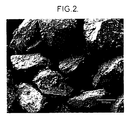
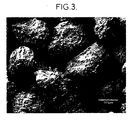
- the crystalline lactitol composition according to the invention has an essentially porous and honeycomb structure. Under the optical microscope we see that it is essentially made up of spherical particles without sharp edges, which distinguishes it very clearly from the lactitol powders obtained by crystallization in water or by kneading-extrusion. In electron microscopy, we see that the composition according to the invention contains particles composed of micro-particles agglomerated together. Usually the composition according to the invention therefore has a density aerated lower than those of known lactitol powders.
- the composition according to the invention has a density apparent between approximately 100 and approximately 620 g / l, of preferably 200 and 600 g / l and more preferably between 300 and 550 g / l. Commonly, its apparent density is between 350 and 500 g / l.
- the structure essentially porous and honeycombed composition differs so net of the structure of a lactitol crystallized in water or an extruded lactitol, which are both made up of very cubic or parallelepipedic particles angular.
- the crystalline composition in accordance with the invention generally has a specific surface of between 0.2 m 2 / g and 0.45 m2 / g for a particle size section of 50 to 200 micrometers (microns). These specific surface values are greater than those obtained in the case of an anhydrous lactitol prepared by crystallization in water.
- the water content determined by baking at 130 ° C for 2 hours of the crystalline composition of lactitol according to the invention, is preferably less than 2% and more preferably still less than 1%. Generally, this content is even less than 0.5% or even 0.3%.
- the applicant has assessed its suitability to the flow using the device marketed by the HOSOKAWA company.
- This device makes it possible to measure, in standardized and reproducible conditions, the ability to flowing a powder and calculating a grade of flow also called Carr index.
- the composition according to the invention has a flow note excellent, between 75 and 90. This value is preferably between 77 and 90 and more preferably between 80 and 90.
- the flowability of the composition subject of the invention is usually higher than those of lactitol powders obtained by crystallization in water.
- a second essential functional property of crystalline lactitol composition according to the invention is its ability to dissolve very quickly in water.
- we proceed according to an A test which consists in introducing into 150 grams of water demineralized and degassed, maintained at 20 ° C and subjected to a stirring by magnetic bar at 200 rpm in a 250 ml beaker in a low form, exactly 5 grams of a particle size section of 100 and 200 micrometers (microns) of the product to test.
- the dissolution time corresponds to the time necessary after introduction of the particle size section, to obtain perfect visual clarity of the preparation.
- the composition in accordance with the invention generally has a dissolution rate less than 20 seconds.
- the preferred composition dissolves in less than 15 seconds when the ideal composition does not requires a time less than 12 seconds. These times are generally lower than those obtained with all lactitol powders currently sold. We understand that this faculty of rapid dissolution is an advantage undeniable, for example in the manufacture of products food or pharmaceutical products to be dissolved before ingestion.
- the crystalline composition of lactitol conforms to the invention also has other characteristics advantageous. We can cite its very good ability to be compressed to prepare chew or suck tablets and its very good ability to be mixed with other products.
- the invention secondly relates to a method of preparation of a crystalline composition of anhydrous lactitol having an essentially porous and convoluted structure and a crystalline purity greater than or equal to 90%.
- the crystalline composition of lactitol conforms to the invention is capable of being obtained by carrying out the spraying a syrup relatively rich in lactitol by compared to the amount of carbohydrates present in this syrup, on a moving powdery bed of particles of crystallized lactitol with a richness at least equal to that of syrup. It has been found that the lactitol richness of syrup should preferably be greater than or equal to 92% in order to that the crystallization of lactitol can take place in a sufficiently short and sufficiently important time.
- This lactitol syrup is usually a solution completely clear of lactitol. It can also be a slightly opaque suspension due to the presence within lactitol crystal syrup. In this case, we prefer that these crystals are very small.
- this technique provides a lactitol composition at least 90% crystallized in the anhydrous form of melting point between 145 and 155 ° C, without necessarily retain for this a bed of particles in movement of crystallized lactitol in this anhydrous state.
- composition according to the invention can be adjusted by changing the richness in syrup lactitol, the dry matter of the syrup, the finesse of the spray, the shape of the lactitol particles constituting the powder bed, the setting means moving these particles, the bed temperature, the drying temperature, and the respective masses of the bed and spray syrup.
- lactitol content of the syrup we prefer, without this being compulsory, that it be greater than or equal to 95%, better still greater than or equal 98%, the ideal being to choose a neighboring wealth or greater than 99%.
- the lactitol syrup has a dry matter between 55 and 99.5%. In general this dry matter is advantageously between 60 and 90% and better between 65 and 85%.
- the particles of lactitol constituting the powder bed it is preferred that they also have a high content of lactitol, always at least equal to that of the syrup used. For get a good result it is also better than this bed is also not very dense, that is to say has a density less than 620 g / l and better still less than 600 g / l.
- the ideal is to retain particles for this bed lactitol with all the characteristics of the crystalline composition of lactitol according to the invention. This can be achieved by partially recycling the composition according to the invention, which then plays the role of a powdered bed of crystallized lactitol. It is very advantageous to do so but then it's preferable to grind or sift the conforming composition to the invention to retain only the particles of size less than 150 micrometers (microns) and better still in size less than 90 micrometers (microns).
- the setting in motion of the particles constituting the powder bed can be obtained mechanically, or by air supply. This last possibility is preferred because it's easy by choosing the air temperature, adjust the bed temperature to a value between 60 and 110 ° C, and by regulating the air flow rates, adjust the properties of the crystalline composition of lactitol.
- the temperature of this bed is maintained between 65 and 105 ° C; the ideal being to be located between 70 and 90 ° C.
- the mass of the bed powder constantly represents 3 times or better 5 times the mass of sprayed syrup.
- the drying of the powder bed on which was sprayed the syrup must be driven so as to obtain a final water content not exceeding 2%, preferably 1% and more preferably 0.5% of the composition.
- composition lactitol crystal for example using a tower atomization type M.S.D. from NIRO-ATOMIZER which allows, thanks to its design, to reproduce all the essential steps of the process according to the invention.
- This material allows, in fact, to spray very finely using the nozzle it contains, a syrup having a temperature between 45 and 75 ° C and a material dry between 55 and 80%, on a bed of particles of lactitol, set and kept in motion with air.
- this material allows simultaneously to operate a drying by air coming out of the tower.
- We can choose advantageously an air inlet temperature of between 160 and 280 ° C and flow rates of incoming materials such as the temperature of the air leaving the tower is understood between 60 and 130 ° C and better still between 80 and 100 ° C.
- This equipment also allows for a possible partial recycling of the crystalline composition of lactitol and scatter it very finely across the top of the tower, around the syrup spray nozzle.
- the crystalline composition of lactitol obtained according to the process according to the invention can if necessary be by subsequently granulated, so as to modify its particle size. This granulation can be carried out with water, steam, or using a syrup preferably containing lactitol.
- the crystalline composition of lactitol conforms to the invention can advantageously be used as as a sweetening agent, bulking or texturing agent, excipient or support for various additives. She is particularly recommended, due to its specific properties, to the manufacture of tablets and powders to be dissolved in food and pharmaceutical or other fields. None however, does not prevent it from being used for any other purpose, such as for example to formulate chewing gum or confectionery.
- a solution of lactitol containing 85% of material is prepared dry by dissolving lactitol monohydrate crystals with a lactitol content of 99.0%. This solution is brought to 100 ° C. and then maintained at this temperature.
- This solution is sprayed using a nozzle on 100 g of a lactitol powder crystallized from water in monohydrate form, finely ground and set in motion in an Aeromatic type device.
- a lactitol powder crystallized from water in monohydrate form, finely ground and set in motion in an Aeromatic type device.
- the LACTY R M crystalline powder sold by the company CCA is used. This plays the role of a powdered bed of crystallized lactitol. This powder is set in motion by fluidization with air at 80 ° C.
- the final lactitol composition obtained following the second experiment is almost devoid of particles having characteristics of shape and appearance similar to those found in the starting lactitol monohydrate powder LACTY R M. Indeed, the composition is essentially porous and cellular and consists of anhydrous essentially spherical particles, devoid of sharp edges and composed of a multitude of crystalline micro-particles agglomerated together.
- This composition in accordance with the invention is called I. Its main characteristics are given in the table below.
- composition I according to the invention is essentially made up of spherical particles without sharp edges, which distinguishes it very clearly from the two other crystallized powders.
- compositions according to the invention combine advantageously properties so far not found simultaneously. They have both characteristics of being compressible, of flowing easily and dissolve very quickly in water.
Landscapes
- Chemical & Material Sciences (AREA)
- Organic Chemistry (AREA)
- Genetics & Genomics (AREA)
- Molecular Biology (AREA)
- Engineering & Computer Science (AREA)
- Biochemistry (AREA)
- Biotechnology (AREA)
- General Health & Medical Sciences (AREA)
- Health & Medical Sciences (AREA)
- Life Sciences & Earth Sciences (AREA)
- Crystallography & Structural Chemistry (AREA)
- Saccharide Compounds (AREA)
- Medicinal Preparation (AREA)
- Seasonings (AREA)
- Peptides Or Proteins (AREA)
- Medicines That Contain Protein Lipid Enzymes And Other Medicines (AREA)
- Detergent Compositions (AREA)
Claims (10)
- Kristalline Zusammensetzung von wasserfreiem Lactitol, dadurch gekennzeichnet, daß sie im wesentlichen eine poröse und wabenförmige Struktur, eine kristalline Reinheit von gleich oder größer 90% und ein Schüttvolumen von 100 bis 620 g/l, vorzugsweise von 200. bis 600 g/l und stärker bevorzugt von 300 bis 550 g/l aufweist.
- Zusammensetzung nach Anspruch 1, dadurch gekennzeichnet, daß sie einen Lactitol-Gehalt von größer oder gleich 92%, vorzugsweise von größer oder gleich 95%, stärker bevorzugt von größer oder gleich 98% und noch bevorzugter von größer oder um 99% aufweist.
- Zusammensetzung nach Anspruch 1 oder 2, dadurch gekennzeichnet, daß sie eine Schmelzenthalpie größer 135 J/g, bevorzugt größer 140 J/g und noch bevorzugter größer 145 J/g aufweist.
- Zusammensetzung nach einem der Ansprüche 1 bis 3, dadurch gekennzeichnet, daß ihre kristalline Reinheit größer oder gleich 95% und noch stärker bevorzugt größer oder gleich 98% ist.
- Zusammensetzung nach einem der Ansprüche 1 bis 4, dadurch gekennzeichnet, daß sie, bezogen auf Trockenmasse, weniger als 5% und bevorzugt weniger als 2% unter Sorbitol, Mannitol und Lactulitol ausgewählte Polyole enthält.
- Zusammensetzung nach einem der Ansprüche 1 bis 5, dadurch gekennzeichnet, daß sie einen Carr'schen Rieselfaktor von 75 bis 90, bevorzugt von 77 bis 90 und noch stärker bevorzugt von 80 bis 90 aufweist.
- Zusammensetzung nach einem der Ansprüche 1 bis 6, dadurch gekennzeichnet, daß sie einen Wassergehalt von unter 2%, bevorzugt unter 1% und noch stärker bevorzugt unter 0,5% aufweist.
- Zusammensetzung nach einem der Ansprüche 1 bis 7, dadurch gekennzeichnet, daß sie einen oder mehrere, unter den Süßstoffen, den Färbemitteln, den Parfums, den Aromen, den Vitaminen, den Mineralstoffen, den pharmazeutisch oder tierarzneikundlichen Wirkstoffen, den mit Fettalkoholen veresterten Fettsäuren, den organischen oder mineralischen Säuren sowie deren Salzen, den proteinartigen Substanzen, wie den Proteinen, den Aminosäuren und den Enzymen ausgewählte Zusatzstoffe enthält.
- Zusammensetzung nach einem der Ansprüche 1 bis 8, dadurch gekennzeichnet, daß sie eine mittels eines Tests A bestimmte Lösungsgeschwindigkeit in Wasser von unter 20 Sekunden, vorzugsweise unter 15 Sekunden und stärker bevorzugt unter 12 Sekunden aufweist.
- Verfahren zur Darstellung einer kristallinen Lactitolzusammensetzung, dadurch gekennzeichnet, daß es die folgenden Schritte umfaßt:Herstellung eines Lactitolsirups, der einen Anteil an Trockenmasse von mindestens 50% hat und bevorzugt einen Lactitolgehalt von größer oder gleich 92% aufweist,Verarbeitung dieses Sirups zu einem feinen Pulver über einem Staubbett aus bewegten kristallisierten Lactitolpartikeln mit einer Reinheit, die wenigstens derjenigen des Sirups gleich kommt, wobei die Masse des Bettes stets mindestens dem Doppelten der Masse des pulverisierten Sirups entspricht,Trocknen des Staubbettes und des Sirups, um eine Kristallisation des Lactitols in wasserfreier Form mit einem Schmelzpunkt von 145 bis 155°C zu erhalten,gegebenenfalls Reifung der kristallinen Lactitolzusammensetzung, bis diese eine ausreichende Kristallinität und vorzugsweise eine Schmelzenthalpie von größer oder gleich 135 J/g aufweist,gegebenenfalls Recyclierung der kristallinen Lactitolzusammensetzung nach der Reifung zur Ausbildung eines neuen Staubbettes aus kristallisiertem Lactitol.
Applications Claiming Priority (2)
| Application Number | Priority Date | Filing Date | Title |
|---|---|---|---|
| FR9611804A FR2753972B1 (fr) | 1996-09-27 | 1996-09-27 | Composition de lactitol et son procede de preparation |
| FR9611804 | 1996-09-27 |
Publications (2)
| Publication Number | Publication Date |
|---|---|
| EP0832899A1 EP0832899A1 (de) | 1998-04-01 |
| EP0832899B1 true EP0832899B1 (de) | 2002-07-17 |
Family
ID=9496128
Family Applications (1)
| Application Number | Title | Priority Date | Filing Date |
|---|---|---|---|
| EP97402232A Expired - Lifetime EP0832899B1 (de) | 1996-09-27 | 1997-09-25 | Laktitolzusammensetzung und Verfahren zu deren Herstellung |
Country Status (5)
| Country | Link |
|---|---|
| US (1) | US5989352A (de) |
| EP (1) | EP0832899B1 (de) |
| JP (1) | JPH10108644A (de) |
| AT (1) | ATE220685T1 (de) |
| FR (1) | FR2753972B1 (de) |
Families Citing this family (7)
| Publication number | Priority date | Publication date | Assignee | Title |
|---|---|---|---|---|
| FI107732B (fi) * | 1998-03-18 | 2001-09-28 | Xyrofin Oy | Laktitolin kiteyttäminen, kiteinen laktitolituote ja sen käyttö |
| US6872414B1 (en) | 1999-09-20 | 2005-03-29 | Xyrofin Oy | Anhydrous lactitol crystals, a product containing the same and a process for the preparation thereof as well as use thereof |
| AU7292100A (en) * | 1999-09-20 | 2001-04-24 | Danisco Sweeteners Oy | Anhydrous lactitol crystals, a product containing the same and a process for thepreparation thereof as well as use thereof |
| JP3419729B2 (ja) * | 2000-03-16 | 2003-06-23 | 株式会社ファンケル | 錠剤およびその製造方法 |
| FI20021312A7 (fi) | 2002-07-03 | 2004-01-04 | Danisco Sweeteners Oy | Polyolikoostumusten kiteyttäminen, kiteinen polyolikoostumustuote ja sen käyttö |
| WO2007106768A2 (en) * | 2006-03-14 | 2007-09-20 | Merck & Co., Inc. | Processes and apparatuses for the production of crystalline organic microparticle compositions by micro-milling and crystallization on micro-seed and their use |
| US10806743B1 (en) | 2017-05-12 | 2020-10-20 | Braintree Laboratories, Inc. | Method of administering lactitol to reduce plasma concentration of lactitol |
Family Cites Families (9)
| Publication number | Priority date | Publication date | Assignee | Title |
|---|---|---|---|---|
| NL8002823A (nl) * | 1980-05-14 | 1981-12-16 | Amsterdam Chem Comb | Lactitolmonohydraat, alsmede werkwijze voor het bereiden van kristallijn lactitol. |
| GB8812464D0 (en) * | 1988-05-26 | 1988-08-24 | Lucas Ind Plc | Apparatus & method for supply of belt-linked ammunition |
| FI83965C (fi) * | 1988-12-01 | 1991-09-25 | Suomen Sokeri Oy | Kristallint laktitolmonohydrat och foerfarande foer dess framstaellning samt dess anvaendning. |
| JPH02196794A (ja) * | 1989-01-24 | 1990-08-03 | Towa Kasei Kogyo Kk | 新規なラクチトール一水和物結晶及びそれを含有する含蜜結晶並びにそれらの製造方法 |
| JPH075624B2 (ja) * | 1989-01-31 | 1995-01-25 | 東和化成工業株式会社 | ラクチトール三水和物結晶及びそれを含有する含蜜結晶並びにそれらの製造方法 |
| JP3060385B2 (ja) * | 1989-01-31 | 2000-07-10 | 東和化成工業株式会社 | 新規なラクチトール無水物結晶及びそれを含有する含蜜結晶並びにそれらの製造方法 |
| JP3000283B2 (ja) * | 1989-03-29 | 2000-01-17 | 東和化成工業株式会社 | ラクチトール無水物結晶を含有する含密結晶の製造方法及び含密結晶組成物の製造方法 |
| JPH0413686A (ja) * | 1990-05-02 | 1992-01-17 | Nikken Kasei Kk | 三水和結晶ラクチトールおよび該結晶を含有する組成物 |
| FI91261C (fi) * | 1991-03-22 | 1996-01-31 | Xyrofin Oy | Kiteinen, kidevedetön laktitoli ja menetelmä sen valmistamiseksi sekä sen käyttö |
-
1996
- 1996-09-27 FR FR9611804A patent/FR2753972B1/fr not_active Expired - Fee Related
-
1997
- 1997-09-23 US US08/934,649 patent/US5989352A/en not_active Expired - Fee Related
- 1997-09-25 AT AT97402232T patent/ATE220685T1/de not_active IP Right Cessation
- 1997-09-25 EP EP97402232A patent/EP0832899B1/de not_active Expired - Lifetime
- 1997-09-29 JP JP9281262A patent/JPH10108644A/ja active Pending
Also Published As
| Publication number | Publication date |
|---|---|
| EP0832899A1 (de) | 1998-04-01 |
| ATE220685T1 (de) | 2002-08-15 |
| JPH10108644A (ja) | 1998-04-28 |
| FR2753972B1 (fr) | 1998-12-04 |
| US5989352A (en) | 1999-11-23 |
| FR2753972A1 (fr) | 1998-04-03 |
Similar Documents
| Publication | Publication Date | Title |
|---|---|---|
| EP0645096B1 (de) | Pulverförmiges Mannitol mit verringerter Versprödung und seine Herstellung | |
| CA2424535C (fr) | Composition liquide de maltitol, son procede de fabrication et ses utilisations | |
| CA2189094C (fr) | Revetement sans sucre obtenu par drageification dure et son procede d'obtention | |
| JP4406729B2 (ja) | ポリオール組成物の結晶化、結晶性ポリオール組成物生成物およびその使用 | |
| CA2172886C (fr) | Composition de maltitol et son procede de preparation | |
| FR2705207A1 (fr) | Procédé de dragéification dure sans sucre et produits ainsi obtenus. | |
| EP0630575A1 (de) | Verfahren zum ohne Zucker Beschichten und nach diesem Verfahren hergestellte Produkte | |
| EP2093232B1 (de) | Maltitgranulat zur direkten Kompression und sein Herstellungsverfahren | |
| FR2732343A1 (fr) | Composition de maltitol et son procede de preparation | |
| EP0832899B1 (de) | Laktitolzusammensetzung und Verfahren zu deren Herstellung | |
| EP1108792B1 (de) | Pulverförmiges Dextrosehydrat und Verfahren zur Herstellung desselben | |
| JP3812047B2 (ja) | エリスリトール結晶及びその製造方法 | |
| EP1901716B1 (de) | Verfahren zur herstellung eines granulats mit xylitkristallpartikeln mit einem anderen polyol | |
| FR2495896A1 (fr) | Produit de confiserie, notamment chewing-gum, gardant longtemps sa saveur, et procede pour sa fabrication | |
| EP0352393B1 (de) | Nahrungssüssmittel auf der Basis von Saccharose und von intensiven Süssstoffen sowie Verfahren zur Herstellung derselben |
Legal Events
| Date | Code | Title | Description |
|---|---|---|---|
| PUAI | Public reference made under article 153(3) epc to a published international application that has entered the european phase |
Free format text: ORIGINAL CODE: 0009012 |
|
| AK | Designated contracting states |
Kind code of ref document: A1 Designated state(s): AT FI FR NL |
|
| AX | Request for extension of the european patent |
Free format text: AL;LT;LV;RO;SI |
|
| 17P | Request for examination filed |
Effective date: 19980605 |
|
| AKX | Designation fees paid |
Free format text: AT FI FR NL |
|
| RBV | Designated contracting states (corrected) |
Designated state(s): AT FI FR NL |
|
| REG | Reference to a national code |
Ref country code: DE Ref legal event code: 8566 |
|
| 17Q | First examination report despatched |
Effective date: 20000915 |
|
| GRAG | Despatch of communication of intention to grant |
Free format text: ORIGINAL CODE: EPIDOS AGRA |
|
| GRAG | Despatch of communication of intention to grant |
Free format text: ORIGINAL CODE: EPIDOS AGRA |
|
| GRAH | Despatch of communication of intention to grant a patent |
Free format text: ORIGINAL CODE: EPIDOS IGRA |
|
| GRAH | Despatch of communication of intention to grant a patent |
Free format text: ORIGINAL CODE: EPIDOS IGRA |
|
| GRAA | (expected) grant |
Free format text: ORIGINAL CODE: 0009210 |
|
| AK | Designated contracting states |
Kind code of ref document: B1 Designated state(s): AT FI FR NL |
|
| REF | Corresponds to: |
Ref document number: 220685 Country of ref document: AT Date of ref document: 20020815 Kind code of ref document: T |
|
| PLBQ | Unpublished change to opponent data |
Free format text: ORIGINAL CODE: EPIDOS OPPO |
|
| PLBI | Opposition filed |
Free format text: ORIGINAL CODE: 0009260 |
|
| PLBF | Reply of patent proprietor to notice(s) of opposition |
Free format text: ORIGINAL CODE: EPIDOS OBSO |
|
| 26 | Opposition filed |
Opponent name: MERCK PATENT GMBH Effective date: 20030411 |
|
| NLR1 | Nl: opposition has been filed with the epo |
Opponent name: MERCK PATENT GMBH |
|
| PLBB | Reply of patent proprietor to notice(s) of opposition received |
Free format text: ORIGINAL CODE: EPIDOSNOBS3 |
|
| PGFP | Annual fee paid to national office [announced via postgrant information from national office to epo] |
Ref country code: AT Payment date: 20050816 Year of fee payment: 9 |
|
| PLCK | Communication despatched that opposition was rejected |
Free format text: ORIGINAL CODE: EPIDOSNREJ1 |
|
| PLBN | Opposition rejected |
Free format text: ORIGINAL CODE: 0009273 |
|
| STAA | Information on the status of an ep patent application or granted ep patent |
Free format text: STATUS: OPPOSITION REJECTED |
|
| 27O | Opposition rejected |
Effective date: 20060223 |
|
| PG25 | Lapsed in a contracting state [announced via postgrant information from national office to epo] |
Ref country code: AT Free format text: LAPSE BECAUSE OF NON-PAYMENT OF DUE FEES Effective date: 20060925 |
|
| NLR2 | Nl: decision of opposition |
Effective date: 20060223 |
|
| PGFP | Annual fee paid to national office [announced via postgrant information from national office to epo] |
Ref country code: FI Payment date: 20120829 Year of fee payment: 16 |
|
| PGFP | Annual fee paid to national office [announced via postgrant information from national office to epo] |
Ref country code: NL Payment date: 20120828 Year of fee payment: 16 Ref country code: FR Payment date: 20121012 Year of fee payment: 16 |
|
| REG | Reference to a national code |
Ref country code: NL Ref legal event code: V1 Effective date: 20140401 |
|
| PG25 | Lapsed in a contracting state [announced via postgrant information from national office to epo] |
Ref country code: FI Free format text: LAPSE BECAUSE OF NON-PAYMENT OF DUE FEES Effective date: 20130925 |
|
| REG | Reference to a national code |
Ref country code: FR Ref legal event code: ST Effective date: 20140530 |
|
| PG25 | Lapsed in a contracting state [announced via postgrant information from national office to epo] |
Ref country code: FR Free format text: LAPSE BECAUSE OF NON-PAYMENT OF DUE FEES Effective date: 20130930 Ref country code: NL Free format text: LAPSE BECAUSE OF NON-PAYMENT OF DUE FEES Effective date: 20140401 |