EP0833285A2 - Verfahren und Produkt zum Erzeugen von elektronische Wertmarken - Google Patents
Verfahren und Produkt zum Erzeugen von elektronische Wertmarken Download PDFInfo
- Publication number
- EP0833285A2 EP0833285A2 EP97307524A EP97307524A EP0833285A2 EP 0833285 A2 EP0833285 A2 EP 0833285A2 EP 97307524 A EP97307524 A EP 97307524A EP 97307524 A EP97307524 A EP 97307524A EP 0833285 A2 EP0833285 A2 EP 0833285A2
- Authority
- EP
- European Patent Office
- Prior art keywords
- electronic
- token
- electronic token
- buyer
- seller
- Prior art date
- Legal status (The legal status is an assumption and is not a legal conclusion. Google has not performed a legal analysis and makes no representation as to the accuracy of the status listed.)
- Withdrawn
Links
Images


Classifications
-
- G—PHYSICS
- G06—COMPUTING OR CALCULATING; COUNTING
- G06Q—INFORMATION AND COMMUNICATION TECHNOLOGY [ICT] SPECIALLY ADAPTED FOR ADMINISTRATIVE, COMMERCIAL, FINANCIAL, MANAGERIAL OR SUPERVISORY PURPOSES; SYSTEMS OR METHODS SPECIALLY ADAPTED FOR ADMINISTRATIVE, COMMERCIAL, FINANCIAL, MANAGERIAL OR SUPERVISORY PURPOSES, NOT OTHERWISE PROVIDED FOR
- G06Q20/00—Payment architectures, schemes or protocols
- G06Q20/22—Payment schemes or models
- G06Q20/29—Payment schemes or models characterised by micropayments
-
- G—PHYSICS
- G06—COMPUTING OR CALCULATING; COUNTING
- G06Q—INFORMATION AND COMMUNICATION TECHNOLOGY [ICT] SPECIALLY ADAPTED FOR ADMINISTRATIVE, COMMERCIAL, FINANCIAL, MANAGERIAL OR SUPERVISORY PURPOSES; SYSTEMS OR METHODS SPECIALLY ADAPTED FOR ADMINISTRATIVE, COMMERCIAL, FINANCIAL, MANAGERIAL OR SUPERVISORY PURPOSES, NOT OTHERWISE PROVIDED FOR
- G06Q20/00—Payment architectures, schemes or protocols
- G06Q20/04—Payment circuits
- G06Q20/06—Private payment circuits, e.g. involving electronic currency used among participants of a common payment scheme
-
- G—PHYSICS
- G06—COMPUTING OR CALCULATING; COUNTING
- G06Q—INFORMATION AND COMMUNICATION TECHNOLOGY [ICT] SPECIALLY ADAPTED FOR ADMINISTRATIVE, COMMERCIAL, FINANCIAL, MANAGERIAL OR SUPERVISORY PURPOSES; SYSTEMS OR METHODS SPECIALLY ADAPTED FOR ADMINISTRATIVE, COMMERCIAL, FINANCIAL, MANAGERIAL OR SUPERVISORY PURPOSES, NOT OTHERWISE PROVIDED FOR
- G06Q20/00—Payment architectures, schemes or protocols
- G06Q20/08—Payment architectures
- G06Q20/10—Payment architectures specially adapted for electronic funds transfer [EFT] systems; specially adapted for home banking systems
-
- G—PHYSICS
- G06—COMPUTING OR CALCULATING; COUNTING
- G06Q—INFORMATION AND COMMUNICATION TECHNOLOGY [ICT] SPECIALLY ADAPTED FOR ADMINISTRATIVE, COMMERCIAL, FINANCIAL, MANAGERIAL OR SUPERVISORY PURPOSES; SYSTEMS OR METHODS SPECIALLY ADAPTED FOR ADMINISTRATIVE, COMMERCIAL, FINANCIAL, MANAGERIAL OR SUPERVISORY PURPOSES, NOT OTHERWISE PROVIDED FOR
- G06Q20/00—Payment architectures, schemes or protocols
- G06Q20/08—Payment architectures
- G06Q20/10—Payment architectures specially adapted for electronic funds transfer [EFT] systems; specially adapted for home banking systems
- G06Q20/102—Bill distribution or payments
-
- G—PHYSICS
- G06—COMPUTING OR CALCULATING; COUNTING
- G06Q—INFORMATION AND COMMUNICATION TECHNOLOGY [ICT] SPECIALLY ADAPTED FOR ADMINISTRATIVE, COMMERCIAL, FINANCIAL, MANAGERIAL OR SUPERVISORY PURPOSES; SYSTEMS OR METHODS SPECIALLY ADAPTED FOR ADMINISTRATIVE, COMMERCIAL, FINANCIAL, MANAGERIAL OR SUPERVISORY PURPOSES, NOT OTHERWISE PROVIDED FOR
- G06Q20/00—Payment architectures, schemes or protocols
- G06Q20/08—Payment architectures
- G06Q20/10—Payment architectures specially adapted for electronic funds transfer [EFT] systems; specially adapted for home banking systems
- G06Q20/105—Payment architectures specially adapted for electronic funds transfer [EFT] systems; specially adapted for home banking systems involving programming of a portable memory device, e.g. IC cards, "electronic purses"
-
- G—PHYSICS
- G06—COMPUTING OR CALCULATING; COUNTING
- G06Q—INFORMATION AND COMMUNICATION TECHNOLOGY [ICT] SPECIALLY ADAPTED FOR ADMINISTRATIVE, COMMERCIAL, FINANCIAL, MANAGERIAL OR SUPERVISORY PURPOSES; SYSTEMS OR METHODS SPECIALLY ADAPTED FOR ADMINISTRATIVE, COMMERCIAL, FINANCIAL, MANAGERIAL OR SUPERVISORY PURPOSES, NOT OTHERWISE PROVIDED FOR
- G06Q30/00—Commerce
- G06Q30/06—Buying, selling or leasing transactions
- G06Q30/0601—Electronic shopping [e-shopping]
-
- G—PHYSICS
- G06—COMPUTING OR CALCULATING; COUNTING
- G06Q—INFORMATION AND COMMUNICATION TECHNOLOGY [ICT] SPECIALLY ADAPTED FOR ADMINISTRATIVE, COMMERCIAL, FINANCIAL, MANAGERIAL OR SUPERVISORY PURPOSES; SYSTEMS OR METHODS SPECIALLY ADAPTED FOR ADMINISTRATIVE, COMMERCIAL, FINANCIAL, MANAGERIAL OR SUPERVISORY PURPOSES, NOT OTHERWISE PROVIDED FOR
- G06Q40/00—Finance; Insurance; Tax strategies; Processing of corporate or income taxes
Definitions
- the present invention relates to a method and product for generating electronic tokens for transactions between parties.
- the invention thus addresses problems that arise in electronic payment systems that employ electronic tokens.
- some conventional techniques require substantial computation per transaction or substantial data storage requirements, making them impractical for microtransactions.
- Others do not permit transactions to be performed between a buyer and a seller without a third party on-line, such as a bank or other financial services provider.
- Yet other techniques do not allow for detection of double spending until after it has occurred.
- And other techniques do not allow anonymity of a buyer.
- the invention alleviates these problems by providing techniques that split an electronic token into other items of data that can be distributed and that, when combined, recreate the electronic token that was split.
- the electronic token can be split, for example, into two other items of data, referred to as "halves", one for a seller and one for a buyer. Then, when the buyer provides its half to the seller, the seller can combine the two halves to obtain an electronic token with a monetary value.
- the techniques are advantageous because they support microtransactions, and can be implemented with very small costs per transaction, both in computation and in data storage required per microtransaction.
- the techniques allow purchases to occur off-line in relation to a bank or other financial services provider issuing the electronic tokens.
- the techniques can also be used to prevent double spending of electronic tokens; for example, a bank or other financial services provider can keep track of which recreated electronic tokens have been spent, and prevent double spending.
- the techniques can also be implemented in a way that provides some anonymity to users of electronic tokens.
- a method of generating electronic tokens for transactions between a set of two or more parties comprising: a) generating two or more electronic tokens; and b) splitting each electronic token into a set of electronic token items that includes one electronic token item for each of the set of two or more parties; all of the electronic token items in each set having a same unique identifier, each set of electronic token items recreating the electronic token when combined together.
- a product for generating electronic tokens for transactions between a set of two or more parties comprising: generation means for generating two or more electronic tokens; and splitting means for splitting each electronic token into a set of electronic token items that includes one electronic token item for each of the set of two or more parties; all of the electronic token items in each set having a same unique identifier, each set of electronic token items recreating the electronic token when combined together.
- the parties can include a buyer and a seller, and the electronic tokens can be split into halves, one to be delivered to each party, such as by electronic transmission.
- the invention provides a method for generating electronic token halves that can be combined to create an electronic monetary token that will be honored by a financial services provider. Using these electronic token halves, the buyer and seller may engage in transactions off-line of the financial services provider, while still providing security against double spending. These electronic token halves are well suited to use in microtransactions because of their small data requirement and limited computational cost per microtransaction.
- generation of electronic token halves by a financial services provider begins in response to a request from a buyer to generate electronic monetary tokens to be used with an identified seller.
- the financial services provider generates a multiplicity of electronic monetary tokens.
- the provider splits each electronic monetary token into two electronic token halves and associates with each the same serial number. These electronic token halves when combined recreate the electronic monetary token from which they were generated, but by themselves neither has any value. Nor can either electronic half by itself be used to create the electronic monetary token without the token halfs mate.
- the financial services provider assigns a half of each electronic monetary token to the seller and the other half of each electronic monetary token to the buyer.
- each electronic token half cannot be used by itself to recreate the electronic monetary token it partially represents, the buyer can transmit electronic token halves without first encrypting them. Thus, there is little computational cost per microtransaction to the buyer. Additionally the data requirement per microtransaction is also small, because the electronic token half can be represented in as few as approximately 20-500 bytes.
- the seller can protect himself from double spending attempts using the session serial number associated with the reconstructed electronic monetary token. The computational cost to the seller per microtransaction is also small.
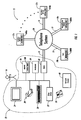
- Figure 1 illustrates in block diagram form communications system 15 in which an embodiment can be implemented by executing instructions 100, 500, and 1000.
- Instructions 100, 500, and 1000 alter the operation of communications system 15, allowing buyers and sellers within the system to engage in many electronic microtransactions off-line of a financial services provider, while still preventing double-spending.
- instructions 1000 enable a financial services provider to generate electronic monetary tokens that can be spent off-line of the provider, while still preventing double-spending.
- a financial services provider generates a number of electronic monetary tokens, divides each of these in half and assigns a serial number to each pair of electronic token halves.
- the financial services provider then gathers the electronic token halves into two electronic purses and gives one purse to a seller and the other to a buyer. This is analogous to printing a dollar bill, cutting the bill in half and giving one half to the buyer and the other to the seller.
- the buyer may then make a number of off-line purchases from the seller. For each transaction the buyer presents an electronic token half.
- the seller can detect double-spending attempts by the buyer off-line of the financial services provider using the serial number of the proffered electronic token half.
- Communications system 15 couples together, via telephone lines 19 and telephone system 20, buyers 16, sellers 17, and financial service providers 18 or banks.
- bank will be used to refer to both banks and financial services providers (also referred to as FSNs).
- Communications system 15 enables both communication between buyers 16, sellers 17 and banks 18, as well as microtransactions between buyers 16 and sellers 17 off-line of banks 18.
- a buyer-seller pair complete an off-line microtransaction by combining two halves of an electronic token.
- an "electronic token” is a group of electrically represented bits, which can be electronically transmitted and stored, and that can be used for a transaction between parties. For example it can have some agreed upon monetary value that will be honored by a bank 18.
- Splitting an electronic token means performing an operation that uses the electronic token to produce two or more items of data that are only certain to include all the information in the electronic token when taken together. For example, if an electronic token is split into two items of data, the two items can be referred to as "halves".
- an operation "combines" items of data from a splitting operation if the operation uses the items of data to produce an electronic token that is the same as the electronic token that was split.
- a combining operation may be said to "recreate” the electronic token. If the electronic token that was split is a secret, all of the items of data from the splitting operation must be used by a combining operation in order to recreate the electronic token and thus obtain the secret.
- a "serial number” is a number that uniquely identifies an item of data within a group of items of data. More generally, a "unique identifier" could be a serial number or any other kind of value that uniquely identifies an item of data.
- each electronic token is small, such as, for example, 0.01 ⁇ , 1 ⁇ , 25 ⁇ , $1, or $2. (Note that the present invention is not limited to a particular monetary unit.)
- Each electronic token should include a unique serial number.
- an "electronic token half' is thus a group of electronically represented bits, which can be electronically transmitted and stored, that when combined with a corresponding electronic half token results in an electronic token.
- an electronic half token has no value; further, each electronic half token can only be combined with a single, corresponding electronic half token.
- Any person or entity purchasing goods or service via communications system 15 using electronic token halves is a buyer 16.
- Each buyer may communicate with sellers via smart card 40 alone, or use smart card 40 in combination with computing device 22.
- Smart card 40 enables buyer 16 to communicate with sellers 17 and banks 18 by storing electronic token halves and, preferably, the buyer's private key.
- smart card 40 may be inserted into a seller's smart card scanning device, or the buyer's computing device 22, to electronically sign, seal and unseal documents as necessary, as well as to receive and store electronic tokens.
- Buyer 16 may use smart card 40 to pay for microtransactions by using smart card 40 by inserting it into a payment device provided by a seller 17, such as for example, a parking meter or a telephone booth.
- smart card 40 is small and portable, preferably about the size of a credit card, to allow it to be easily transported in a purse or pocket.
- Smart card 40 includes a processor and solid state memory, not illustrated.
- One device that might be used to realize smart card 40 is the iPower PCMCIA(1) card produced by National Semiconductor Corporation of Santa Clara, California.
- flash memory cards may be used to implement a smart card 40 just for storing electronic tokens.
- Each buyer 16 may use smart card 40 in combination with computing device 22.
- Computing device 22 connects buyer 16 to seller 17 and financial services provider 18 via telephone system 22.
- computing device 22 includes monitor 24 for visually displaying information to buyer 16.
- Computing device 22 also provides buyer 16 multiple avenues to input data including keyboard 26 and mouse 28.
- buyer 16 can input data stored on a magnetic medium, such as a floppy disk 30, by inserting the disk into floppy disk drive 32.
- Processor 34 controls and coordinates the operations of computing device 22. Processor 34 determines and takes the appropriate action in response to each user command by executing instructions 100 stored electronically in memory, either memory 36 or on a floppy disk 30 within disk drive 32.
- operating instructions for processor 34 are stored in solid state memory, allowing frequent and rapid access to the instructions.
- memory 36 stores instructions 100 to enable processor 34 to initiate and complete microtransactions in conjunction with smart card 40.
- Instructions 100 may be written in any computer language, including, but not limited to, C++, Python, or Lisp.
- Semiconductor logic devices that can be used to realize memory 36 include read only memories (ROM), random access memories (RAM), dynamic random access memories (DRAM), programmable read only memories (PROM), erasable programmable read only memories (EPROM), and electrically erasable programmable read only memories (EEPROM), such as flash memories.
- computing device 22 includes a modulator/demodulator (modem) 38 coupled to telephone line 19.
- Modem 38 allows computing device 22 to transmit and receive electronic information via telephone line 19.
- Internet appliances have been proposed by companies like Intel, Oracle, and Microsoft who foresee interest in a simple box, without a monitor, including little memory or resident software, that would allow consumers to connect to the internet using their televisions. Buyers 16 would be able to use an internet appliance to engage in purchases over the World Wde Web provided that the appliance accommodated smart card 40.
- Each seller 17 uses at least one computing device, similar to computing device 22, to communicate with telephone system 20 via telephone lines 19. Consequently, the computing devices used by sellers 17 will not be described in detail herein.
- Large sellers may use a computer network - multiple computing devices coupled together, and capable of communicating with one another, via a server running network software, such as, for example, Microsoft NTTM or Banyan VinesTM.
- Wthin computer memory each seller 17 stores instructions 500 enabling them to sell goods and services to buyers using electronic tokens and to detect double-spending of electronic tokens.
- Instructions 500 may be written in any computer language, including, but not limited to, C++, Python, or Lisp.
- Each seller may also include within its computer memory instructions 100 to enable it to buy goods and services using electronic token halves.
- a financial services provider or bank is any entity with which a buyer 16 has an agreement for the provision of electronic tokens. Pursuant to their agreement, bank 18 may charge the buyer's electronic tokens against the buyer's checking account, savings account, credit card, or debit card. Buyer 16 and bank 18 also agree to use a public-key cryptosystem to communicate with one another and exchange their public keys. This allows buyer 16 to encrypt a message to bank 18 with her private key, which bank 18 can later decrypt using the buyer's private key and vice versa. Sellers 17 also set up accounts with banks, agree to use a public-key cryptosystem and exchange public keys.
- each bank 18 uses at least one computing device, like computing device 22 or, more likely, uses a computer network to couple to telephone system 20.
- Instructions 1000 for generating, tracking, and redeeming electronic tokens are stored within the memory of the bank's computing device or computer network. Instructions 1000 may be written in any computer language, including, but not limited to, C++, Python, or Lisp, for example.
- the present embodiment amortizes the cost of a connection with bank 18 over several microtransactions by generating in a single connection two sets of electronic token halves that can be spent off-line of bank 18, while still protecting sellers 17 against double-spending.
- Figures 2-6 describe the interaction between buyer 16, seller 17, and bank 18 for generating the two sets of electronic token halves prior to initiating microtransactions between a particular buyer 16 and seller 17.
- buyer 16 Prior to engaging in any microtransaction, buyer 16 selects a seller 17 whose goods and/or services the buyer would like to purchase, as well as determining the amount of money likely to be adequate for a number of purchases over a period of time. Buyer must determine the seller with whom she wishes to do business because the electronic token halves she will receive from her bank 18 will not be arbitrarily transferable - she will be able to spend her electronic token halves only with that one seller 17.
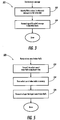
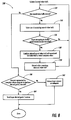
- buyer 16 is ready to engage in process 101 illustrated in flow diagram form in Figure 2, which is a portion of instructions 100.
- buyer 16 uses smart card 40 inserted, during step 102 buyer 16 generates a first plain text electronic message, intended for her bank, indicating her identity, the seller selected to do business with, the number of electronic tokens desired, and their values.
- buyer 16 uses smart card 40 to electronically sign the first electronic message using the buyer's private key.
- a number of techniques can be used to digitally sign the plain text message, which affect how the signature is later authenticated by a bank.
- Buyer 16 could encrypt the entire message using her private key, but this is computationally intensive.
- a less computationally intense and preferable approach would be to take the plain text message and generate a one-way hash from it using a function agreed upon with bank 18, such as PGP or MD5, for example. Buyer 16 then encrypts just the hash using her private key. Associated with the plain text message, the encrypted hash serves as the buyer's digital signature. In the following discussion, we will assume this is the approach taken by both buyer 16 and bank 18, even though any digital signature technique could be used equally well in the present embodiment.
- buyer 16 seals her message using her smart card 40.
- buyer 16 may use a number of approaches to seal her message.
- Buyer 16 could encrypt the entire signed message using the bank's public key and a public key algorithm like RSA, for example, but this is computationally intensive.
- buyer could seal her message by generating a session key using a random number generator, encrypt the signed message using the session key and a symmetric algorithm, like IDEA, for example, then encrypt the session key using the bank's public key and append the encrypted session key to the encrypted signed message.
- buyer 16 takes the signed and sealed first electronic message and attaches it, or appends it to, a second electronic message directed to the selected seller 17.
- Buyer 16 indicates her bank and its address, to which the enclosed, signed, and sealed electronic message should be forwarded. Note that the message need not indicate the buyer's identity to seller 17, providing anonymity to buyer 16, and preventing sellers from building a dossier about buyer 16.
- buyer 16 transmits it to the selected seller 17 in box 110. Now, when done in box 112, buyer 16 awaits receipt of electronic token halves.
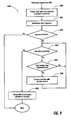
- FIG 3 illustrates in flow diagram form the response 501 of seller 17 to receipt of the second electronic message.
- Instructions 501 are a portion of instructions 500.
- seller 17 Using its computer network, during step 502 seller 17 identifies the bank 18 (FSN) to whom the buyer's first electronic message should be forwarded. Wthout any idea of the identity of the buyer, seller 17 then forwards the buyer's first electronic message to the identified bank.
- step 504 seller 17 forwards the messages via telephone system 20 using the seller's computer network. Now, like buyer 16, seller 17 awaits receipt of electronic half tokens.
- FSN bank 18
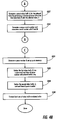
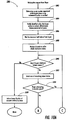
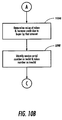
- FIGS 4A and 4B illustrate in flow diagram form response 1001 of bank 18 to a request for electronic tokens.
- Instructions 1001 are a portion of instructions 1000.
- Bank 18 begins with step 1002 by using its computer network to unseal the signed and sealed message from buyer 16.
- Bank 18 unseals the message by decrypting the session key using its private key and using the session key to decrypt the message. This reveals the buyer's plain text message and her signed hash.
- bank 18 determines from the plain text who the asserted buyer is.
- bank 18 attempts to determine whether the buyer is who she says she is by authenticating her digital signature.
- Bank 18 does so by decrypting the signed hash using the buyer's public key and comparing the resulting hash to its own hash of the plain text. If the test in step 1010 determines that the decrypted hash and that generated by the bank do not match, the buyer is not who she says she is and bank 18 will not generate any electronic tokens. Instead, during step 1012 bank 18 informs the seller 17 and/or the identified buyer that no electronic tokens can be issued. On the other hand, if the two hashes match, bank 18 feels secure that the buyer is who the plain text asserts she is. In response, bank 18 advances to step 1014 to begin the process of generating electronic token halves.
- Bank 18 uses its computer network and generates the desired number of electronic tokens in the denominations desired, as indicated by the buyer's plain text request, during step 1014.
- each electronic token is a group of electrically represented bits; an electronic token could, for example, be a string of bits whose information includes the value of the token and a unique serial number.
- the serial number assigned to each electronic token should not be unique only to the particular pair of buyer and seller, it should also be unique as to every other electronic token ever issued by the bank 18. Additionally, to prevent anyone from determining the order in which buyer 16 makes her purchases, bank 18 may not wish to assign serial numbers sequentially.
- the information included in the electronic token also includes the identity of the bank, so that seller 17 will know with which bank the electronic token can be redeemed.
- bank 18 digitally signs each electronic token using its private key and associates its digital signature with the electronic token. This can be done using the same techniques discussed previously with respect to step 104. This results in a signed string of bits for each electronic token, which we will designate as S BP (T) .
- S BP (T) determines the length of the electronic token halves to be generated subsequently, and so sets the data requirement per microtransaction for the buyer. To support microtransactions effectively, the length of the electronic token and its token halves should be such that they can be represented in about 20-500 bytes.
- Secret splitting splits a secret, in this case the value of electronic token, into multiple pieces. None of the parties to the secret can learn the secret without all cooperating with one another to combine their secret pieces. Each secret piece is valueless on its own, as well as meaningless to anyone without all the other secret pieces. Because each electronic token half is valueless by itself, buyer 16 is protected from unauthorized redemptions of electronic tokens by seller 17. When session serial numbers are added to the electronic token halves, both bank 18 and buyer 17 are protected from double spending.
- steps 1018-1024 show only one electronic token being split in half at a time; however, the present invention is consistent with many electronic tokens being split at once.
- bank 18 selects one of the signed electronic tokens to be split using secret splitting. Other methods of splitting the electronic tokens may be used consistent with the present invention.
- step 1020 using its computer network bank 18 generates a first token half for the buyer. This is done by generating a random electronic string P whose bit length is equal to that of the selected signed token. The random string P is then used to create the second token half for the signed electronic token during step 1022.
- bank 18 uses its computer network, bank 18 generates the second electronic token half, Q , by performing a bitwise XOR of S BP ( T ) and P , resulting in Q .
- first electronic token half, P , nor the second electronic token half, Q have any value of themselves; however, they can be combined together by a bitwise XOR to obtain S BP (T) .
- S BP (T) bitwise XOR
- bank 18 assigns and associates a session serial number with both token halves P and Q to identify the token halves that should be combined together.
- Each session serial number needs to be unique as to the entire set of electronic tokens being generated during this macrotransaction, but need not be unique as to all macrotransactions between this seller and buyer because before a new macrotransaction can be initiated the electronic token halves from the previous microtransaction are flushed. That done, bank 18 returns to step 1016 and branches through step 1018-1024 until all of the signed electronic tokens have been split in half. When all of the signed electronic tokens have been split in half, bank 18 advances to step 1025.
- bank 18 makes an entry to a database in its computer memory.
- Bank 18 uses this database to track valid, unredeemed electronic tokens.
- Bank 18 makes an entry in this database for every buyer-seller pair with outstanding, valid electronic tokens.
- Bank 18 assigns a unique identifier, which we shall call a purse identifier, to the group of electronic tokens just generated.
- Bank 18 then notes the purse identifier in its database entry for this buyer-seller pair, as well as all of the session serial numbers of those electronic tokens.
- Bank 18 also stores the address of seller 17 in the database entry in case buyer 16 should wish to redeem unspent electronic token halves. That done, bank 18 advances to step 1026 from step 1025.
- bank 18 is now ready to begin separating the electronic token halves into a seller's purse and a buyer's purse.
- Bank 18 may assign to the seller all of the first token halves, P , all of the second token halves, Q , or some combination of the first and second electronic token halves, without effecting the present method, so long as neither the seller, nor the buyer, receives both halves of an electronic token.
- bank 18 adds the purse identifier generated during step 1026, which the seller uses during communications with respect to electronic tokens from this purse. Bank 18 then signs and seals the seller's purse.
- Bank 18 then assigns the remaining token halves to the buyer's purse during step 1028, adds the purse identifier, and seals these token halves with the buyer's public key. Finally, during step 1030, bank sends both electronic purses to the selected seller 17 via telephone network 20, with an indication of which electronic purse belongs to whom. (Note that bank 18 need not send the buyer's electronic token halves care of seller 17 if buyer 18 is on-line, rather than just using her smart card 40.) Bank 18 need not be involved in the business between buyer 16 and seller 18, until one of the parties wishes to redeem the electronic tokens.
- Figure 5 illustrates in flow diagram form the response 520 of seller 17 to receipt of the two electronic purses.
- Response 520 is a portion of instructions 500.
- seller 17 unseals his electronic purse using his computer network and his private key.
- Seller 17 stores the electronic token halves and purse identifier so revealed in computer memory in a location associated with buyer 16 during step 524.
- seller 17 forwards to buyer 16 her electronic purse via telephone system 20.
- Seller 17 is now prepared to transact business with buyer 16 off-line of bank 18.
- the response 130 of buyer 16 to receipt of her electronic purse is nearly identical to that of seller 17.
- Response 130 is a portion of instructions 100, and is executed by buyer 16 using her smart card 40.
- buyer 16 stores her electronic token halves and purse identifier in smart card 40, which is portable and can be used independent of computing device 22.
- buyer 16 can purchase goods and/or services from seller 17 at one of the seller's places of business or remotely using computing device 22 and telephone system 20.
- Buyer 16 can now initiate microtransactions with seller 17 off-line of bank 18.
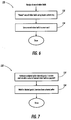
- Figures 7 and 8 illustrate the process of a single microtransaction; however, once a buyer-seller pair have a corresponding pair of electronic token halves they are free to engage in as many microtransactions as the value of their electronic token halves permit without the involvement of bank 18. This amortizes over many microtransactions the computational cost to buyer 16 of signing and sealing her token request, as well and unsealing her token halves. Also amortized over several microtransactions is the seller's computational cost of unsealing his electronic token halves. In addition to amortizing the connection time required for a macrotransaction over several microtransactions, the methods of Figures 7 and 8 keep the computational cost per microtransaction quite low.
- each microtransaction is quite low for the buyer because there in no encryption or decryption, signing or sealing per microtransaction. All buyer 16 need do is transmit each electronic token half, each of which is represented by about 20-500 bytes per electronic token half.
- the computational cost per microtransaction is also quite low for seller 17, one private/public decryption per microtransaction (checking the bank's signature each time a token is combined). This is important given the small value of each individual microtransaction to prevent the seller's overhead costs from exceeding the amount collected for each microtransaction.
- Figures 7 illustrates in flow diagram form a portion 150 of instructions 100 for initiating a microtransaction off-line of a bank. After making her selection and noting its price, buyer 16 indicates to seller 17 her choice and enables the transmission of the appropriate number of electronic token halves from her smart card 40 to the seller's computer network. Note that buyer 16 still remains anonymous. Having done that, buyer 16 need only await delivery of the purchased goods and/or services.
- Figure 8 illustrates in flow diagram form the response 550 of a seller 17 to receipt of a request for goods and/or services that includes electronic token halves.
- Response 550 is a portion of instructions 500.
- Seller 17 has two concerns at this point: 1) Is the buyer attempting to cheat him? and 2) Has the buyer offered enough money? Using its computer network, seller 17 addresses these concerns one electronic token half at a time with an iterative process that begins with step 552. After selecting one of the buyer's electronic token halves during step 554, seller 17 examines the session serial number associated with the selected token half during step 556 to determine whether it matches that of one of the seller's remaining token halves. If not, then buyer 16 is attempting to double spend an electronic token half. In response, seller 17 returns to step 552 from step 556 to continue its examination of the buyer's electronic token halves.
- seller 17 if seller 17 always disposes of all copies of an electronic token half after successfully combining that token half with one of the buyer's, then seller 17 can rest assured that buyer 18 is not attempting to double spend an electronic token half when two electronic token halves have a matching session serial number. In response to identifying one of his own token halves that has a session number matching the selected buyer's token half, seller 17 advances to step 558 from step 556.
- Seller 17 combines the two electronic token halves with matching serial session numbers during step 558 by performing a bitwise XOR. This produces the corresponding signed electronic token, S BP (T), revealing the plain text of the electronic token and the associated bank signature.
- S BP signed electronic token
- seller 17 decrypts the hash using bank's public key and compares the resulting hash to that of the plain text for the electronic token. If the two hashes match, seller 17 considers the electronic token valid.
- Seller 17 may not choose to authenticate every electronic token, choosing instead to authenticate some random subset of all electronic tokens. This reduces the seller's computational burden per microtransaction.
- Seller 17 responds to a valid electronic token by noting its value and storing it in memory for future redemption and advances to step 559.
- step 559 seller 17 removes from memory any copies of electronic token halves with a serial session number matching that just used to enable detection of future double spending attempts. Seller 17 now turns its attention to any remaining electronic token halves received from buyer 16. So long as any remain, seller 17 branches through steps 552 through 559 in the manner just described. After processing all of the electronic token halves transmitted by buyer 16, seller 17 exits step 552 and advances to step 560.
- step 560 seller 17 examines the sum of all of the electronic tokens resulting from the process of steps 552 through 559 to see if that sum is enough to pay for the goods and/or services requested by buyer 16. If not, seller 17 so informs buyer 16 during step 562. On the other hand, if the sum is adequate, seller 17 releases the desired goods and/or services to buyer 16. Seller 17 may release them directly to buyer 16 if she is present, or in the case of many World Wide Web businesses may transmit them electronically to buyer 16 via telephone system 20, allowing buyer 16 to maintain her anonymity.
- seller 17 may wish to redeem his electronic tokens with the issuing bank 18.
- Seller 17 can do so by generating a plain text electronic message identifying himself and requesting redemption of the electronic tokens from the identified purse, and signing the request.
- Seller 17 then seals the signed redemption request using the bank's public key and sends the request via telephone network 20 to the bank's computer network.
- Figure 9 illustrates in flow diagram the response 1050 of bank 18 to a redemption request from seller 17.
- Response 1050 is a portion of instructions 1000.
- Bank 18 responds to receipt of a sealed electronic message in step 1060 by unsealing the message using its private key and revealing the plain text redemption request, the purse identifier, the electronic tokens that the seller wishes to redeem and the seller's signature.
- bank 18 has two concerns: 1. Is the seller who he purports to be? and 2. Is the seller attempting to double spend? Bank 18 addresses the former concern by authenticating the seller's signature during step 1061. If the test in step 1062 determines that the signature is not authentic, bank 18 will not redeem any of the tokens. On the other hand, if the signature is authentic. bank 18 turns its attention to the latter concern, double spending, which it addresses one electronic token at a time with an iterative process that begins with step 1063.
- bank 18 compares the token's session serial number to session serial numbers remaining in the database entry for the purse identifier. If bank 18 does not find a match, the seller is attempting to double spend the token, and bank 18 will not credit the seller for that electronic token. On the other hand, if the serial number of the electronic token matches a session serial number remaining in the relevant database entry, bank 18 removes the session serial number of the redeemed electronic token from the database entry and advances to step 1066. Bank 18 may also detect double spending using other approaches. Whatever approach is taken, bank 18 needs to ensure that it only honors an electronic token once.
- bank 18 determines that an electronic token is valid, however that is done, during step 1066 bank 18 increases the sum due to seller 17 by the amount of the electronic token. That done, bank 18 continues executing steps 1063 through 1066 until all of the seller's electronic tokens have been processed. When that occurs, during step 1068 bank 18 informs seller 17 of the credit to be given him and how that credit will be given to him.
- Buyer 16 generates a redemption request for her unspent electronic token halves in much the same manner as discussed previously with respect to seller 17, including instead her unspent electronic token halves and the purse identifier. Nonetheless, the response of bank 18 to a redemption request from buyer 16 differs from that of a request from seller 17.
- Bank 18 responds differently because of its concern with protecting seller 17 from double spending by buyer 16, as well as protecting itself from double spending by both parties. Briefly described, bank 18 protects seller 17 from any attempts by buyer 16 to redeem electronic tokens buyer 16 has already paid to seller 17 by requesting that seller 17 redeem all of its electronic token halves, spent and unspent. Bank 18 then processes the seller's electronic tokens prior to redeeming the buyer's unspent electronic token halves.
- FIG. 10 illustrates in detail the response 1080 of bank 18 to a redemption request from buyer 16.
- Response 1080 illustrated in flow diagram form, is a portion of instructions 1000.
- bank 18 notes the purse identifier for the unspent electronic token halves during step 1082.
- Bank 18 uses the purse identifier to retrieve the address of seller 17 from the relevant database entry.
- bank 18 informs seller 17 of the buyer's redemption request and asks seller 17 to return all spent electronic tokens and all unspent electronic token halves associated with the purse identifier. That done, bank 18 awaits receipt of the seller's purse during step 1086.
- bank 18 Upon receipt of the seller's purse, bank 18 redeems the valid electronic tokens during step 1088 using the process described previously with respect to Figure 9. This enables bank 18 to detect whether buyer 16 is attempting to cheat seller 17 by trying to redeem with bank 18 electronic token halves that buyer 16 has already paid to seller 17. In the process, bank 18 identifies the valid session serial numbers by removing from the relevant database entry the session serial number of each redeemed electronic token. Bank 18 then advances to step 1090 from step 1088.
- Bank 18 turns its attention to redeeming the buyer's previously unspent electronic token halves with step 1090, which bank 18 does one electronic token half at a time.
- Bank 18 selects one of the buyer's returned electronic token halves during step 1092 and then compares the session serial number of the selected token half to those session serial numbers remaining in the relevant database entry. If the session serial number is not in the database entry, bank 18 will not credit buyer 16 for that electronic token. On the other hand, if a matching session serial number is found in the database during step 1094, bank 18 regards the electronic token half as valid. In response, bank 18 advances to step 1096.
- Bank 18 determines the value of the electronic token being redeemed during step 1096 by combining the selected buyer's token half with the seller's corresponding token half; i.e., the seller's token half with the corresponding session serial number. Bank 18 does so by performing a bitwise XOR of P and Q to produce S BP (T) . Bank 18 then increases the sum due to buyer 16 by the face amount of the electronic token. During step 1098, bank 18 then removes from the relevant database entry the serial session number of the electronic token just redeemed. Bank 18 also marks as invalid the serial number included in the electronic token. Afterward, bank 18 returns to step 1090.
- Bank 18 continues executing steps 1090 through step 1098 by until all of the buyer's electronic token halves have processed. When that occurs, bank 18 branches to step 1099 from step 1090. Bank 18 then inform both buyer 16 and seller 17 the credit due to them.
- Sellers 17 may desire authorizations from buyers 16 prior to completing certain microtransactions. For example, a secure library service may want to know that the buyer has the necessary security clearance or a provider of adult materials will want to know that the purchaser of the material is over 21 years of age. The methods previously discussed can be modified to provide authorizations while still maintaining the anonymity of the buyer. Depending on the level of service provided by a bank 18, buyer 16 may be able to obtain authorization token halves from bank 18 or may have to obtain these from a special authorization service. Whatever service provides authorizations, buyer 16 will have to prove that she possesses the characteristics she wishes to assert about herself; that she has a certain security clearance, or that she is 21 years old.
- authorization tokens from the authorization in substantially the same manner discussed previously with respect to Figure 2.
- the authorization service can generate authorization tokens and split them in half using the same method discussed previously with respect to Figures 4A and 4B.
- Authorization token halves have no authority by themselves - they prove nothing in the absence of another authorization token half with a matching session serial number.
- buyer 16 can use them to authorize purchases while maintaining her anonymity using the same methods discussed previously with respect to Figure 7.
- the response 550 of a seller to a purchase request requiring authorization is substantially that discussed previously with respect to Figure 8.
- the above implementations relate to electronic monetary tokens provided by banks or other financial service providers for use between a buyer and a seller, but the invention could be implemented with other types of electronic tokens provided by other types of entities for use between sets of two or more parties for other types of transactions.
- serial numbers as unique identifiers of electronic tokens and of items produced by splitting electronic tokens, but other types of unique identifiers could be used.
- splitting by generating a random number then performing an XOR operation, but many other splitting techniques could be used. For example, pseudorandom numbers could be used rather than random numbers, and logical operations other than XOR could be used. Furthermore, rather than performing the splitting operations in a sequence, many electronic tokens could be split in parallel.
- the invention can be implemented in a way that allows a seller to prevent double spending, but the invention could also be implemented in a manner that does not prevent double spending.
Landscapes
- Business, Economics & Management (AREA)
- Accounting & Taxation (AREA)
- Finance (AREA)
- Engineering & Computer Science (AREA)
- Physics & Mathematics (AREA)
- Theoretical Computer Science (AREA)
- General Physics & Mathematics (AREA)
- Strategic Management (AREA)
- General Business, Economics & Management (AREA)
- Economics (AREA)
- Development Economics (AREA)
- Marketing (AREA)
- Technology Law (AREA)
- Financial Or Insurance-Related Operations Such As Payment And Settlement (AREA)
- Management, Administration, Business Operations System, And Electronic Commerce (AREA)
- Control Of Vending Devices And Auxiliary Devices For Vending Devices (AREA)
Applications Claiming Priority (2)
| Application Number | Priority Date | Filing Date | Title |
|---|---|---|---|
| US08/721,484 US5839119A (en) | 1996-09-27 | 1996-09-27 | Method of electronic payments that prevents double-spending |
| US721484 | 1996-09-27 |
Publications (2)
| Publication Number | Publication Date |
|---|---|
| EP0833285A2 true EP0833285A2 (de) | 1998-04-01 |
| EP0833285A3 EP0833285A3 (de) | 2000-03-01 |
Family
ID=24898182
Family Applications (1)
| Application Number | Title | Priority Date | Filing Date |
|---|---|---|---|
| EP97307524A Withdrawn EP0833285A3 (de) | 1996-09-27 | 1997-09-25 | Verfahren und Produkt zum Erzeugen von elektronische Wertmarken |
Country Status (3)
| Country | Link |
|---|---|
| US (1) | US5839119A (de) |
| EP (1) | EP0833285A3 (de) |
| JP (1) | JPH10143591A (de) |
Cited By (15)
| Publication number | Priority date | Publication date | Assignee | Title |
|---|---|---|---|---|
| WO2000000937A1 (en) * | 1998-06-30 | 2000-01-06 | Sun Microsystems, Inc. | Distributed budgeting and accounting system with secure token device access |
| WO1999062210A3 (en) * | 1998-05-26 | 2000-04-20 | Sun Microsystems Inc | Secure token device access to services provided by an internet service provider (isp) |
| GB2372616A (en) * | 2001-02-23 | 2002-08-28 | Hewlett Packard Co | Transaction method and apparatus using two part tokens |
| US6466921B1 (en) | 1997-06-13 | 2002-10-15 | Pitney Bowes Inc. | Virtual postage meter with secure digital signature device |
| US6526391B1 (en) * | 1997-06-13 | 2003-02-25 | Pitney Bowes Inc. | System and method for controlling a postage metering system using data required for printing |
| US6546377B1 (en) | 1997-06-13 | 2003-04-08 | Pitney Bowes Inc. | Virtual postage meter with multiple origins of deposit |
| US6567794B1 (en) | 1997-06-13 | 2003-05-20 | Pitney Bowes Inc. | Method for access control in a virtual postage metering system |
| FR2871914A1 (fr) * | 2004-06-17 | 2005-12-23 | France Telecom | Systeme de paiement par suite de jetons |
| US7203666B1 (en) | 1997-06-13 | 2007-04-10 | Pitney Bowes Inc. | Virtual postage metering system |
| US7209889B1 (en) | 1998-12-24 | 2007-04-24 | Henry Whitfield | Secure system for the issuance, acquisition, and redemption of certificates in a transaction network |
| EP2214143A1 (de) * | 1998-09-23 | 2010-08-04 | Visa International Service Association | System und Verfahren zum bestätigen eines Einkaufs mittels einer Chipkarte |
| EP2665024A1 (de) * | 2012-05-16 | 2013-11-20 | Symmetric Transactions AG | Netzwerktransaktionen |
| WO2013171008A1 (en) * | 2012-05-16 | 2013-11-21 | Symmetric Transactions Ag | Network transactions |
| EP2991014A1 (de) * | 2014-08-25 | 2016-03-02 | Oberthur Technologies | Verteilung von Token für tokenbasierte Transaktionen |
| CN108681569A (zh) * | 2018-05-04 | 2018-10-19 | 亚洲保理(深圳)有限公司 | 一种数据自动分析系统及其方法 |
Families Citing this family (99)
| Publication number | Priority date | Publication date | Assignee | Title |
|---|---|---|---|---|
| US10361802B1 (en) | 1999-02-01 | 2019-07-23 | Blanding Hovenweep, Llc | Adaptive pattern recognition based control system and method |
| US7831470B1 (en) | 1996-09-04 | 2010-11-09 | Walker Digital, Llc | Method and apparatus for facilitating electronic commerce through providing cross-benefits during a transaction |
| US6196458B1 (en) * | 1997-12-01 | 2001-03-06 | Walker Digital, Llc | Method and apparatus for printing a billing statement to provide supplementary product sales |
| US7859551B2 (en) | 1993-10-15 | 2010-12-28 | Bulman Richard L | Object customization and presentation system |
| US6750902B1 (en) | 1996-02-13 | 2004-06-15 | Fotonation Holdings Llc | Camera network communication device |
| JPH103568A (ja) * | 1996-06-14 | 1998-01-06 | Hitachi Ltd | 電子財布応用システム及びicカードを用いた取引装置 |
| US7818284B1 (en) | 1996-09-04 | 2010-10-19 | Walker Digital, Llc | Method and apparatus for providing cross-benefits via a central authority |
| US7729988B1 (en) | 1997-03-21 | 2010-06-01 | Walker Digital, Llc | Method and apparatus for processing credit card transactions |
| US7162434B1 (en) | 1997-05-05 | 2007-01-09 | Walker Digital, Llc | Method and apparatus for facilitating the sale of subscriptions to periodicals |
| US6311171B1 (en) * | 1997-07-11 | 2001-10-30 | Ericsson Inc. | Symmetrically-secured electronic communication system |
| US6295522B1 (en) * | 1997-07-11 | 2001-09-25 | Cybercash, Inc. | Stored-value card value acquisition method and apparatus |
| JPH11143976A (ja) * | 1997-11-14 | 1999-05-28 | Hitachi Ltd | トークン・バリュー混合型電子マネーカード及び電子マネーカードを取り扱う装置 |
| IL122263A0 (en) * | 1997-11-20 | 1998-04-05 | Barkan Mordehay | Payment system and method using tokens |
| US7555460B1 (en) * | 2000-06-05 | 2009-06-30 | Diversinet Corp. | Payment system and method using tokens |
| WO1999044165A1 (en) * | 1998-02-25 | 1999-09-02 | E-Lysium Transaction Systems Inc. | Electronic commerce methods and apparatus |
| US7827057B1 (en) | 1998-10-05 | 2010-11-02 | Walker Digital, Llc | Method and apparatus for providing cross-benefits based on a customer activity |
| US7324133B2 (en) | 1998-11-06 | 2008-01-29 | Fotomedia Technologies, Llc | Method and apparatus for controlled camera useability |
| WO2002009420A1 (en) * | 1998-12-14 | 2002-01-31 | Fotonation, Inc. | Method and apparatus for billing digital camera operation and services |
| WO2000041108A1 (en) * | 1998-12-31 | 2000-07-13 | Walker Digital, Llc | System and method for encouraging competitive participation in an auction |
| US20040139004A1 (en) * | 1999-04-08 | 2004-07-15 | Aceinc Pty Ltd. | Secure online commerce transactions |
| AUPQ250699A0 (en) * | 1999-08-27 | 1999-09-23 | E Com Industries | E commerce system |
| US6332134B1 (en) * | 1999-11-01 | 2001-12-18 | Chuck Foster | Financial transaction system |
| US6876991B1 (en) | 1999-11-08 | 2005-04-05 | Collaborative Decision Platforms, Llc. | System, method and computer program product for a collaborative decision platform |
| CA2395498C (en) * | 1999-12-24 | 2013-08-27 | Telstra New Wave Pty Ltd | A virtual token |
| US7328189B2 (en) | 2000-01-26 | 2008-02-05 | Paybyclick Corporation | Method and apparatus for conducting electronic commerce transactions using electronic tokens |
| US7177838B1 (en) * | 2000-01-26 | 2007-02-13 | Paybyclick Corporation | Method and apparatus for conducting electronic commerce transactions using electronic tokens |
| US20020111907A1 (en) * | 2000-01-26 | 2002-08-15 | Ling Marvin T. | Systems and methods for conducting electronic commerce transactions requiring micropayment |
| US7685423B1 (en) * | 2000-02-15 | 2010-03-23 | Silverbrook Research Pty Ltd | Validation protocol and system |
| US20020147663A1 (en) * | 2000-03-31 | 2002-10-10 | Walker Jay S. | Systems and methods for facilitating a transaction by use of third party subsidies |
| EP1302880B1 (de) * | 2000-05-15 | 2008-07-30 | Nifty Corporation | Elektronischer kommerz in einem informationsverarbeitungssystem und verfahren |
| DE60134859D1 (de) * | 2000-05-15 | 2008-08-28 | Nifty Corp | Bestellungsbearbeitungssystem und -verfahren |
| US7152047B1 (en) | 2000-05-24 | 2006-12-19 | Esecure.Biz, Inc. | System and method for production and authentication of original documents |
| BR0111117A (pt) * | 2000-05-24 | 2004-07-06 | Duocash Inc | Sistema e método para uso existente em sistemas de cartão pré-pagos para realizar pagamentos através da internet |
| US7269160B1 (en) | 2000-05-26 | 2007-09-11 | Buffalo International, Inc. | Voice over internet call center integration |
| US20020002545A1 (en) * | 2000-06-29 | 2002-01-03 | Resneck James D. | Electronic money transaction device and method |
| AU7182701A (en) | 2000-07-06 | 2002-01-21 | David Paul Felsher | Information record infrastructure, system and method |
| WO2002008865A2 (en) * | 2000-07-24 | 2002-01-31 | David Chaum | Transparent-coin electronic money system |
| JP2002055948A (ja) * | 2000-08-11 | 2002-02-20 | Nifty Corp | コンピュータ・システム、会員情報送信方法及び個人情報取得方法 |
| US6938019B1 (en) * | 2000-08-29 | 2005-08-30 | Uzo Chijioke Chukwuemeka | Method and apparatus for making secure electronic payments |
| KR20010008360A (ko) * | 2000-11-27 | 2001-02-05 | 박기오 | 전자상거래 신용카드 결제방법 |
| US7181017B1 (en) | 2001-03-23 | 2007-02-20 | David Felsher | System and method for secure three-party communications |
| US7110525B1 (en) | 2001-06-25 | 2006-09-19 | Toby Heller | Agent training sensitive call routing system |
| US7404076B2 (en) * | 2001-08-01 | 2008-07-22 | Matsushita Electric Industrial Co., Ltd. | Encrypted data delivery system |
| US20030046210A1 (en) * | 2001-08-31 | 2003-03-06 | Vora Poorvi L. | Anonymous acquisition of digital products based on secret splitting |
| US20030046213A1 (en) * | 2001-08-31 | 2003-03-06 | Vora Poorvi L. | Anonymous processing of usage rights with variable degrees of privacy and accuracy |
| US20030051013A1 (en) * | 2001-09-12 | 2003-03-13 | International Business Machines Corporation | Method for providing a provisioning key for connecting an electronic device to a computer network |
| US20040024700A1 (en) * | 2001-11-29 | 2004-02-05 | Petigny A. Michelle | Electronic funds transfer method and system |
| US7372952B1 (en) | 2002-03-07 | 2008-05-13 | Wai Wu | Telephony control system with intelligent call routing |
| US7023979B1 (en) | 2002-03-07 | 2006-04-04 | Wai Wu | Telephony control system with intelligent call routing |
| AUPS169002A0 (en) | 2002-04-11 | 2002-05-16 | Tune, Andrew Dominic | An information storage system |
| US8396809B1 (en) | 2002-05-14 | 2013-03-12 | Hewlett-Packard Development Company, L.P. | Method for reducing purchase time |
| US6805289B2 (en) | 2002-05-23 | 2004-10-19 | Eduardo Noriega | Prepaid card payment system and method for electronic commerce |
| SG145524A1 (en) * | 2002-08-07 | 2008-09-29 | Mobilastic Technologies Pte Lt | Secure transfer of digital tokens |
| US7249060B2 (en) * | 2002-08-12 | 2007-07-24 | Paybyclick Corporation | Systems and methods for distributing on-line content |
| US7729984B1 (en) | 2002-09-27 | 2010-06-01 | Abas Enterprises Llc | Effecting financial transactions |
| US7870077B2 (en) * | 2002-10-02 | 2011-01-11 | Kt Corporation | System and method for buying goods and billing agency using short message service |
| US7577987B2 (en) * | 2002-12-23 | 2009-08-18 | Authernative, Inc. | Operation modes for user authentication system based on random partial pattern recognition |
| US7644433B2 (en) * | 2002-12-23 | 2010-01-05 | Authernative, Inc. | Authentication system and method based upon random partial pattern recognition |
| US9818136B1 (en) | 2003-02-05 | 2017-11-14 | Steven M. Hoffberg | System and method for determining contingent relevance |
| US7676034B1 (en) | 2003-03-07 | 2010-03-09 | Wai Wu | Method and system for matching entities in an auction |
| US20040225573A1 (en) * | 2003-05-09 | 2004-11-11 | Ling Marvin T. | Methods and apparatus for anonymously transacting internet shopping and shipping |
| US7676432B2 (en) * | 2003-07-08 | 2010-03-09 | Paybyclick Corporation | Methods and apparatus for transacting electronic commerce using account hierarchy and locking of accounts |
| US7740168B2 (en) | 2003-08-18 | 2010-06-22 | Visa U.S.A. Inc. | Method and system for generating a dynamic verification value |
| US7761374B2 (en) | 2003-08-18 | 2010-07-20 | Visa International Service Association | Method and system for generating a dynamic verification value |
| US7690026B2 (en) * | 2005-08-22 | 2010-03-30 | Microsoft Corporation | Distributed single sign-on service |
| US8874477B2 (en) | 2005-10-04 | 2014-10-28 | Steven Mark Hoffberg | Multifactorial optimization system and method |
| US20070219902A1 (en) * | 2006-03-20 | 2007-09-20 | Nortel Networks Limited | Electronic payment method and related system and devices |
| US8300798B1 (en) | 2006-04-03 | 2012-10-30 | Wai Wu | Intelligent communication routing system and method |
| US7818264B2 (en) | 2006-06-19 | 2010-10-19 | Visa U.S.A. Inc. | Track data encryption |
| US9065643B2 (en) | 2006-04-05 | 2015-06-23 | Visa U.S.A. Inc. | System and method for account identifier obfuscation |
| US8838574B2 (en) * | 2006-06-09 | 2014-09-16 | International Business Machines Corporation | Autonomic index creation, modification and deletion |
| US20100306318A1 (en) * | 2006-09-28 | 2010-12-02 | Sfgt Inc. | Apparatuses, methods, and systems for a graphical code-serving interface |
| US20080201078A1 (en) * | 2006-09-28 | 2008-08-21 | Dudley Fitzpatrick | Apparatuses, Methods and Systems for Determining and Announcing Proximity Between Trajectories |
| WO2008103732A1 (en) * | 2007-02-20 | 2008-08-28 | Sfgt Inc | Apparatuses, methods, and systems for a graphical code-serving interface |
| US20080103966A1 (en) * | 2006-10-31 | 2008-05-01 | Chuck Foster | System and/or method for dynamic determination of transaction processing fees |
| US8060437B2 (en) | 2006-10-31 | 2011-11-15 | International Funding Partners Llc | Automatic termination of electronic transactions |
| US8566247B1 (en) | 2007-02-19 | 2013-10-22 | Robert H. Nagel | System and method for secure communications involving an intermediary |
| US20080313456A1 (en) * | 2007-06-12 | 2008-12-18 | Andrew John Menadue | Apparatus and method for irrepudiable token exchange |
| US7778869B2 (en) * | 2007-06-12 | 2010-08-17 | Microsoft Corporation | Fair discounting auction |
| DE602007012538D1 (de) * | 2007-07-27 | 2011-03-31 | Ntt Docomo Inc | Verfahren und Vorrichtung zur Durchführung delegierter Transaktionen |
| EP2026267A1 (de) * | 2007-07-31 | 2009-02-18 | Nederlandse Organisatie voor toegepast- natuurwetenschappelijk onderzoek TNO | Ausstellung elektronischer Belege |
| US20090112759A1 (en) * | 2007-10-30 | 2009-04-30 | Chuck Foster | Accumulated transactions |
| CA2820983C (en) | 2008-05-18 | 2019-02-05 | Google Inc. | Secured electronic transaction system |
| US8151333B2 (en) | 2008-11-24 | 2012-04-03 | Microsoft Corporation | Distributed single sign on technologies including privacy protection and proactive updating |
| US20110161110A1 (en) * | 2009-10-06 | 2011-06-30 | Mault James R | System And Method For An Online Platform Distributing Condition Specific Programs Used For Monitoring The Health Of A Participant And For Offering Health Services To Participating Subscribers |
| US8645280B2 (en) * | 2010-06-04 | 2014-02-04 | Craig McKenzie | Electronic credit card with fraud protection |
| US8924715B2 (en) | 2010-10-28 | 2014-12-30 | Stephan V. Schell | Methods and apparatus for storage and execution of access control clients |
| US20130030880A1 (en) | 2011-07-28 | 2013-01-31 | American Express Travel Related Services Company, Inc. | Systems and methods for generating and using a digital pass |
| US8743382B2 (en) | 2012-06-28 | 2014-06-03 | Xerox Corporation | On demand software for print workflows |
| SG11201506347WA (en) * | 2013-02-18 | 2015-09-29 | Touch Networks Australia Pty Ltd | Controlling usage of acquirer tokens stored within a merchant system |
| CA2966507A1 (en) | 2014-11-03 | 2016-05-12 | Genentech, Inc. | Methods and biomarkers for predicting efficacy and evaluation of an ox40 agonist treatment |
| US10832235B2 (en) * | 2015-03-10 | 2020-11-10 | Paypal, Inc. | Image based MMS transactions mechanism |
| US12665778B1 (en) | 2015-04-28 | 2026-06-23 | Domus Tower, Inc. | Distributed cryptographic consensus-based architecture for state synchronization using redundant verification and deterministic validators |
| US20160321751A1 (en) * | 2015-04-28 | 2016-11-03 | Domus Tower, Inc. | Real-time settlement of securities trades over append-only ledgers |
| US20220237696A1 (en) * | 2015-04-28 | 2022-07-28 | Domus Tower, Inc. | Settlement of securities trades using append only ledgers |
| US12452075B2 (en) * | 2015-07-14 | 2025-10-21 | Fmr Llc | Asynchronous crypto asset transfer and social aggregating, fractionally efficient transfer guidance, conditional triggered transaction, datastructures, apparatuses, methods and systems |
| CN109155033B (zh) * | 2016-04-28 | 2022-08-12 | 卡诺爱股份有限公司 | 手机预付卡服务系统、及其克隆卡存储装置及服务方法 |
| US12099997B1 (en) | 2020-01-31 | 2024-09-24 | Steven Mark Hoffberg | Tokenized fungible liabilities |
| US12664530B2 (en) | 2024-01-08 | 2026-06-23 | International Business Machines Corporation | Privacy-preserving secure offline payments |
Family Cites Families (24)
| Publication number | Priority date | Publication date | Assignee | Title |
|---|---|---|---|---|
| US4277837A (en) * | 1977-12-30 | 1981-07-07 | International Business Machines Corporation | Personal portable terminal for financial transactions |
| US4529870A (en) * | 1980-03-10 | 1985-07-16 | David Chaum | Cryptographic identification, financial transaction, and credential device |
| US4341951A (en) * | 1980-07-02 | 1982-07-27 | Benton William M | Electronic funds transfer and voucher issue system |
| FR2492135B1 (fr) * | 1980-09-16 | 1988-01-22 | Cii Honeywell Bull | Appareil de distribution d'objets et d'acquisition de services |
| USRE32985E (en) * | 1982-07-09 | 1989-07-11 | Omron Tateisi Electronics Co. | Credit transaction processing system |
| US4926480A (en) * | 1983-08-22 | 1990-05-15 | David Chaum | Card-computer moderated systems |
| US5140517A (en) * | 1984-03-19 | 1992-08-18 | Omron Tateisi Electronics Co. | IC card with keyboard for prestoring transaction data |
| US4766293A (en) * | 1986-06-26 | 1988-08-23 | Visa International Service Association | Portable financial transaction card capable of authorizing a transaction in foreign currencies |
| JPH07104891B2 (ja) * | 1986-08-05 | 1995-11-13 | 沖電気工業株式会社 | 取引処理装置 |
| US4799156A (en) * | 1986-10-01 | 1989-01-17 | Strategic Processing Corporation | Interactive market management system |
| US4914698A (en) * | 1988-03-16 | 1990-04-03 | David Chaum | One-show blind signature systems |
| GB2222057B (en) * | 1988-04-19 | 1992-09-23 | Carridice Ltd | Electro-magnetic broadcast access control method |
| FR2674976B1 (fr) * | 1991-04-03 | 1993-06-11 | France Telecom | Procede de paiement electronique par carte a puce a l'aide de jetons numerotes permettant la detection de fraudes. |
| US5224162A (en) * | 1991-06-14 | 1993-06-29 | Nippon Telegraph And Telephone Corporation | Electronic cash system |
| US5691524A (en) * | 1991-07-17 | 1997-11-25 | J.D. Carreker And Associates, Inc. | Electronic check presentment system having a non-ECP exceptions notification system incorporated therein |
| US5557516A (en) * | 1994-02-04 | 1996-09-17 | Mastercard International | System and method for conducting cashless transactions |
| US5511121A (en) * | 1994-02-23 | 1996-04-23 | Bell Communications Research, Inc. | Efficient electronic money |
| US5590038A (en) * | 1994-06-20 | 1996-12-31 | Pitroda; Satyan G. | Universal electronic transaction card including receipt storage and system and methods of conducting electronic transactions |
| US5826245A (en) * | 1995-03-20 | 1998-10-20 | Sandberg-Diment; Erik | Providing verification information for a transaction |
| US5692132A (en) * | 1995-06-07 | 1997-11-25 | Mastercard International, Inc. | System and method for conducting cashless transactions on a computer network |
| US5745886A (en) * | 1995-06-07 | 1998-04-28 | Citibank, N.A. | Trusted agents for open distribution of electronic money |
| JPH0950465A (ja) * | 1995-08-04 | 1997-02-18 | Hitachi Ltd | 電子ショッピング方法、電子ショッピングシステムおよび文書認証方法 |
| US5757917A (en) * | 1995-11-01 | 1998-05-26 | First Virtual Holdings Incorporated | Computerized payment system for purchasing goods and services on the internet |
| US5704046A (en) * | 1996-05-30 | 1997-12-30 | Mastercard International Inc. | System and method for conducting cashless transactions |
-
1996
- 1996-09-27 US US08/721,484 patent/US5839119A/en not_active Expired - Fee Related
-
1997
- 1997-09-25 JP JP26050297A patent/JPH10143591A/ja active Pending
- 1997-09-25 EP EP97307524A patent/EP0833285A3/de not_active Withdrawn
Cited By (24)
| Publication number | Priority date | Publication date | Assignee | Title |
|---|---|---|---|---|
| US6567794B1 (en) | 1997-06-13 | 2003-05-20 | Pitney Bowes Inc. | Method for access control in a virtual postage metering system |
| US7203666B1 (en) | 1997-06-13 | 2007-04-10 | Pitney Bowes Inc. | Virtual postage metering system |
| US7433849B2 (en) | 1997-06-13 | 2008-10-07 | Pitney Bowes Inc. | System and method for controlling a postage metering system using data required for printing |
| US6466921B1 (en) | 1997-06-13 | 2002-10-15 | Pitney Bowes Inc. | Virtual postage meter with secure digital signature device |
| US6922678B2 (en) | 1997-06-13 | 2005-07-26 | Pitney Bowes Inc. | Virtual postage meter with multiple origins of deposit |
| US6526391B1 (en) * | 1997-06-13 | 2003-02-25 | Pitney Bowes Inc. | System and method for controlling a postage metering system using data required for printing |
| US6546377B1 (en) | 1997-06-13 | 2003-04-08 | Pitney Bowes Inc. | Virtual postage meter with multiple origins of deposit |
| WO1999062210A3 (en) * | 1998-05-26 | 2000-04-20 | Sun Microsystems Inc | Secure token device access to services provided by an internet service provider (isp) |
| US6385729B1 (en) | 1998-05-26 | 2002-05-07 | Sun Microsystems, Inc. | Secure token device access to services provided by an internet service provider (ISP) |
| US6418420B1 (en) | 1998-06-30 | 2002-07-09 | Sun Microsystems, Inc. | Distributed budgeting and accounting system with secure token device access |
| WO2000000937A1 (en) * | 1998-06-30 | 2000-01-06 | Sun Microsystems, Inc. | Distributed budgeting and accounting system with secure token device access |
| EP2214143A1 (de) * | 1998-09-23 | 2010-08-04 | Visa International Service Association | System und Verfahren zum bestätigen eines Einkaufs mittels einer Chipkarte |
| US7899755B2 (en) | 1998-12-24 | 2011-03-01 | S.F. Ip Properties 59 Llc | Secure system for the issuance, acquisition, and redemption of certificates in a transaction network |
| US7209889B1 (en) | 1998-12-24 | 2007-04-24 | Henry Whitfield | Secure system for the issuance, acquisition, and redemption of certificates in a transaction network |
| EP1239391A3 (de) * | 2001-02-23 | 2002-11-06 | Hewlett Packard Company, a Delaware Corporation | Durchführung von Transaktionen |
| US7113930B2 (en) | 2001-02-23 | 2006-09-26 | Hewlett-Packard Development Company, L.P. | Conducting transactions |
| GB2372616A (en) * | 2001-02-23 | 2002-08-28 | Hewlett Packard Co | Transaction method and apparatus using two part tokens |
| WO2006005838A1 (fr) * | 2004-06-17 | 2006-01-19 | France Telecom | Systeme de paiement par suite de jetons |
| FR2871914A1 (fr) * | 2004-06-17 | 2005-12-23 | France Telecom | Systeme de paiement par suite de jetons |
| EP2665024A1 (de) * | 2012-05-16 | 2013-11-20 | Symmetric Transactions AG | Netzwerktransaktionen |
| WO2013171008A1 (en) * | 2012-05-16 | 2013-11-21 | Symmetric Transactions Ag | Network transactions |
| EP2991014A1 (de) * | 2014-08-25 | 2016-03-02 | Oberthur Technologies | Verteilung von Token für tokenbasierte Transaktionen |
| CN108681569A (zh) * | 2018-05-04 | 2018-10-19 | 亚洲保理(深圳)有限公司 | 一种数据自动分析系统及其方法 |
| CN108681569B (zh) * | 2018-05-04 | 2021-11-02 | 亚洲保理(深圳)有限公司 | 一种数据自动分析系统及其方法 |
Also Published As
| Publication number | Publication date |
|---|---|
| EP0833285A3 (de) | 2000-03-01 |
| US5839119A (en) | 1998-11-17 |
| JPH10143591A (ja) | 1998-05-29 |
Similar Documents
| Publication | Publication Date | Title |
|---|---|---|
| US5839119A (en) | Method of electronic payments that prevents double-spending | |
| CA2229206C (en) | Untraceable electronic cash | |
| US7024395B1 (en) | Method and system for secure credit card transactions | |
| US6766306B1 (en) | Electronic cash system | |
| US6411942B1 (en) | Electronic transaction system and systems for issuing and examining electronic check | |
| US6311171B1 (en) | Symmetrically-secured electronic communication system | |
| JP3329432B2 (ja) | 階層型電子現金実施方法およびこれに用いられる装置 | |
| Hwang et al. | A simple micro-payment scheme | |
| US20090150294A1 (en) | Systems and methods for authenticating financial transactions involving financial cards | |
| JPH07234904A (ja) | 非現金取引を行う方法 | |
| WO2002019234A1 (en) | Method and apparatus for secure electronic payments | |
| JP2002247029A (ja) | 認証装置、認証システムおよびその方法、処理装置、通信装置、通信制御装置、通信システムおよびその方法、情報記録方法およびその装置、情報復元方法およびその装置、その記録媒体 | |
| JP2002530723A (ja) | 支払いを発効させる方法およびそのための装置 | |
| US6453296B1 (en) | Electronic credit system and communication apparatus | |
| KR102085997B1 (ko) | 블록체인 기반의 부동산 거래 서비스 방법 및 시스템 | |
| US6424953B1 (en) | Encrypting secrets in a file for an electronic micro-commerce system | |
| JP3365599B2 (ja) | 電子小切手システム | |
| JPH096236A (ja) | 公開鍵暗号の鍵生成・証明書発行方法及びそのシステム | |
| WO2016173048A1 (zh) | 基于同一资金管理服务器的支付系统及方法、装置、服务器 | |
| CN114548958B (zh) | 双方匿名的抗量子计算数字货币双离线交易方法及系统 | |
| Havinga et al. | Survey of electronic payment methods and systems | |
| WO2000057328A2 (en) | Anonymous purchases while allowing verifiable identities for refunds returned along the paths taken to make the purchase | |
| WO2000010068A2 (en) | Apparatus for and method of electronic currency generation, transfer and redemption | |
| CA2237441C (en) | A mechanism for secure tendering in an open electronic network | |
| Klur | What an organization should know about using electronic cash |
Legal Events
| Date | Code | Title | Description |
|---|---|---|---|
| PUAI | Public reference made under article 153(3) epc to a published international application that has entered the european phase |
Free format text: ORIGINAL CODE: 0009012 |
|
| AK | Designated contracting states |
Kind code of ref document: A2 Designated state(s): DE FR GB |
|
| PUAL | Search report despatched |
Free format text: ORIGINAL CODE: 0009013 |
|
| RIC1 | Information provided on ipc code assigned before grant |
Free format text: 7G 07F 19/00 A, 7G 07F 7/08 B, 7G 07F 7/10 B |
|
| AK | Designated contracting states |
Kind code of ref document: A3 Designated state(s): AT BE CH DE DK ES FI FR GB GR IE IT LI LU MC NL PT SE |
|
| 17P | Request for examination filed |
Effective date: 20000901 |
|
| AKX | Designation fees paid |
Free format text: DE FR GB |
|
| STAA | Information on the status of an ep patent application or granted ep patent |
Free format text: STATUS: THE APPLICATION IS DEEMED TO BE WITHDRAWN |
|
| 18D | Application deemed to be withdrawn |
Effective date: 20060401 |