EP0834120B1 - Verfahren und vorrichtung für die ermöglichung eines zugriffs auf mehrere computergestützte operationen - Google Patents
Verfahren und vorrichtung für die ermöglichung eines zugriffs auf mehrere computergestützte operationen Download PDFInfo
- Publication number
- EP0834120B1 EP0834120B1 EP96903139A EP96903139A EP0834120B1 EP 0834120 B1 EP0834120 B1 EP 0834120B1 EP 96903139 A EP96903139 A EP 96903139A EP 96903139 A EP96903139 A EP 96903139A EP 0834120 B1 EP0834120 B1 EP 0834120B1
- Authority
- EP
- European Patent Office
- Prior art keywords
- task
- user
- operations
- files
- help
- Prior art date
- Legal status (The legal status is an assumption and is not a legal conclusion. Google has not performed a legal analysis and makes no representation as to the accuracy of the status listed.)
- Expired - Lifetime
Links
Images




Classifications
-
- G—PHYSICS
- G06—COMPUTING OR CALCULATING; COUNTING
- G06F—ELECTRIC DIGITAL DATA PROCESSING
- G06F9/00—Arrangements for program control, e.g. control units
- G06F9/06—Arrangements for program control, e.g. control units using stored programs, i.e. using an internal store of processing equipment to receive or retain programs
- G06F9/44—Arrangements for executing specific programs
- G06F9/455—Emulation; Interpretation; Software simulation, e.g. virtualisation or emulation of application or operating system execution engines
- G06F9/45504—Abstract machines for programme code execution, e.g. Java virtual machine [JVM], interpreters, emulators
- G06F9/45508—Runtime interpretation or emulation, e g. emulator loops, bytecode interpretation
- G06F9/45512—Command shells
Definitions
- This invention relates to a method and apparatus for providing access to a number of computer supported operations.
- Common queries or requests that may be made of telecommunications service providers may include an enquiry about a telephone bill or the placing of an order for a new item of equipment or a new service. Normally, to do this the customer contacts an employee of the service provider by telephone. The employee then accesses a number of computer systems to answer the enquiry or to place the order.
- WO94/06074 discloses a computer system comprising a graphical procedural user interface that provides a user with instructions for carrying out a job that is defined a s series of tasks.
- the job is represented by a series of icons, each icon representing a task.
- Procedural services are attached to each icon so that activation of the icon by the user results in the task being carried out automatically.
- EP-A-0622729 discloses a computer system which provides a centrally stored set of user interfaces that can be accessed by remote applications.
- a further problem with present arrangements is that one enquiry may require the use of more than one computer system.
- a customer requiring a telephone may in fact be a new subscriber at a new building. This may require the use of a system to order a telephone, the use of a billing system to allocate the customer an account and the use of another system to instruct engineers to install a telephone line to the customer's premises.
- a customer perceives as a single task requires the use of more than one computer system. That is to say a single task can spawn a number of operations, each operation being supported by a separate computer system.
- an apparatus for enabling access by any one of a plurality of users to a plurality of mainframe computer systems, each mainframe computer system supporting operations to complete a task utilising at least some of the operations, the apparatus comprising a set of user terminals connected by at least one server to said plurality of mainframe computer systems, wherein the at least one server comprises interface programs to enable interaction to occur between each of the mainframe computer systems and the set of user terminals, and a plurality of help files each of which comprises a set of instructions for performing a task, each help file having an associated index file which contains descriptors of operations required to perform the respective task, and wherein the user terminals each comprise storage capacity for temporary storage of at least one interface program and at least one help file with its associated index file, the system responding to a task selection by a user at a user terminal by downloading at least one interface program, and at least one help file with its associated index file, to the user terminal, thereby enabling communication between the user terminal and at least one of the mainframe computer systems to complete the
- the apparatus is operable in response to a user selecting a second task, to compare the second task to a first task and:
- apparatus for enabling access by any one of a plurality of user's computers to a plurality of computer systems, each computer system supporting operations to complete a task utilising at least some of the operations, the apparatus comprising:
- Embodiments of the present invention enable users to progress tasks against defined workstring definitions while the software manages any necessary component access.
- a component may be a mainframe or personal computer system, including for example standard word processing office applications.
- a system administration feature can allow a view to be fully data driven, enabling business users to define and build their own workstring definitions independently.
- a workstring may consist of a number of tasks and questions.
- a task will access a component system to an appropriate point (for example, transaction level), and the user is asked to select one of several options to determine the next set of tasks to be performed.
- a system 1 operating in accordance with the invention comprises a number of IBM compatible microcomputers 2 (three of which are shown) connected to a local area network (LAN) server 3 by means of a co-axial cable 4.
- the LAN server 3 connects the micro-computers 2 to four IBM mainframe computer based systems 5, 6, 7 and 8 by means of further co-axial cable 9.
- each microcomputer 2 is of a familiar form, comprising a central processing unit (CPU)20, a memory unit 21, an input device comprising a keyboard 22 and an output device comprising a visual display unit (VDU) 23.
- An input/output device 24 connects the microcomputer 2 to the co-axial cable 4.
- the memory unit 21 comprises Random Access Memory (RAM) and Read Only Memory (ROM).
- RAM Random Access Memory
- ROM Read Only Memory
- This memory can be provided as disk drives or solid state semiconductor memory or a combination of these. (In a UNIX based system this memory could also be distributed over a number of micro-computers in the system although it is convenient for descriptive purposes to consider it as being associated with one).
- the Keyboard 22 and VDU 23 enable a user to interact with the system 1.
- the memory 21 comprises a number of memory locations.
- the memory locations will hold data or program instructions in the form of binary or hexadecimal numbers.
- the program instructions are accessed in a well known manner to govern the operation of the CPU 20.
- the IBM mainframe computers 5, 6, 7 and 8 are essentially of the same format as the microcomputer. The main differences are that the memory is very much larger, that is to say, the capacity for storage of information is greater.
- the input/output devices of the mainframe computers are connected to the LAN server 3 by the co-axial cable 9. Each of the mainframe computers support a particular operational procedure of the organisation. The procedures available are W, X, Y and Z.
- the LAN server 3 is also a computer substantially the same as earlier described having a CPU, input/output devices and a memory.
- the software stored in the memory of the LAN server 3 is shown in figure 3.
- the memory stores interface programs 30 to 33, help files 34 to 36 and associated index files 37 to 39.
- the interface programs 30 to 33 enable interaction to occur between each of the mainframes 5 to 8 and the micro-computers 2 to enable the operations to be used. These programs are loaded into the microcomputers 2 when required in a manner which will be later described.
- Each help file is a plain text set of instructions concerning the task that must be carried out to perform a particular task.
- the task will involve one or more of the operations W, X, Y or Z.
- the help files are created prior to system initialisation by a program called "DOC-TO-HELP" marketed by Wex-Tech.
- This program also produces an index file associated with each help file.
- the index file contains a descriptor of the operations required to perform the task.
- Task A is described in helpfile 34 and from the corresponding index file 37 it can be seen that operation W is used.
- task B is described in helpfile 35 and from the corresponding index file 38 it can be seen that operation X is used.
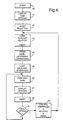
- a first step in the operation of the system is the establishment of communication between all the elements of the system. This is represented by box 40 of the flowchart.
- Each microcomputer 2 displays to its user the three task options A, B and C on their VDUs. This step is represented by box 41 of the flowchart.
- the microcomputer 2 then awaits selection of a particular task option by a user. This step is represented by box 42.
- the microcomputer Upon selection of a task option the microcomputer requests a copy of the helpfile and associated index from the server 3. This copy is then retained in the microcomputer's memory 21. This step is represented by box 43.
- the index file is then examined to determine the required operations as represented by box 44.
- the microcomputer 2 then requests copies of the required software interfaces for the determined operations as represented by box 45. These are stored in memory 21.
- the software interfaces are then used to connect the microcomputer 2 to the appropriate mainframe systems 5 to 8. In effect, the microcomputer then becomes a terminal of the systems. The task is then carried out. This step is represented by box 46.
- microcomputer 2 displays the task options once again as represented by box 47.
- the microcomputer 2 then awaits selection of the next task option, as represented by box 48.
- the selection is compared with the previous task to determine whether a new option has been selected. This step is represented by box 49. Should the new option be the same as the old option then the task is performed box 46 and the subsequent steps 47 and 48 carried out using the helpfile, index and software interfaces already held in memory 21.
- helpfile and index are "discarded” as represented by box 50.
- discarded it is meant that they are cleared from memory 21 or subsequently overwritten.
- the server 3 is then requested for the helpfile and index appropriate to the new task option as represented by box 43.
- the subsequent steps are carried out as before.
- the microcomputer 2 does not require a memory 21 with a capacity to store all the helpfiles and software interfaces necessary to perform all the possible tasks supported by the system. This is because these are loaded as required from the server 3. This enables relatively inexpensive microcomputers to be used in the system.
- task option B and task option C will now be used to further illustrate use of the system 1.
- step 42 the user selects task option B by moving a cursor over a displayed icon and "clicking on” the icon. Movement of the cursor is achieved by movement of a mouse in the familiar way.
- Step 43 is then carried out to load a copy of help-file 35 and index 38 from the server 3.
- the microcomputer 2 determines that an interface to system X is required and requests a copy of the interface program 31 from the server 3. The program is executed to connect the user to the mainframe system 6.
- the task is then performed step 46, the user being able to refer to the helpfile 35 for assistance in performing the task and using the system 6.
- the microcomputer 2 When the task is complete, the microcomputer 2 then displays the task options in preparation for the next task, steps 47, 48.
- the user selects a new task option, task C.
- the microcomputer 2 performs the decision step 49 and, because the task is different to the previous task, clears the help-file 35, index 38 and interface 31 from its memory 21.
- the microcomputer 2 loads a copy of the help-file 36 and index 39 from the server 3 into its memory 21.
- the index 39 is inspected and the microcomputer 2 determines that in order to perform the selected task it is necessary to perform operation Y and Z. In order to perform these operations the microcomputer must interact with mainframes 7 and 8.
- the microcomputer then performs step 45 and loads from the server a copy of interface programs 32 and 33.
- the user then performs task C, step 46, referring where necessary to the help-file 36.
- a further advantage of the system 1 is that it allows rapid and easy addition of support for further tasks or deletion of existing task without requiring significant hardware or software changes to be made.
- Figure 5 explains the process required to upgrade the system 1 to enable a new task to be supported from the existing mainframe systems.
- a first step 51 requires the new task to be defined in the form of a help-file. This will enable a user to follow the new task and to generate an associated index as required in the next step 52.
- the help-file and associated index is then stored in the memory of the server 3, step 53.
- the software of the microcomputers 2 is then modified to display a new icon for the new option, step 54.
- the system 1 can then be used, step 55.
- An example of an upgrade to the system 1 could be the addition of a new task D which utilises operations W, X, Y and Z.
- a new task help-file 56 is created and an associated index 57 derived. These are added to the server memory as shown in broken outline in figure 3.
- the software for displaying the options on the microcomputer 2 is then modified to include an icon for the new option, option D.
- option D utilises the existing mainframe system 5 to 8 the interface software 30 to 33 is sufficient and requires no modification or additional software.
- a first step is to connect the new mainframe to the server 3 via an extension of the cable 9, step 60.
- step 61 is to add interface software to the memory of the server 3 which will support connection to the new mainframe system.
- a new helpfile and associated index is produced for the new task and stored in the memory of the server 3, step 62,
- the software for the microcomputers is then modified, steps 63, 64, to display a further task option.
- mainframe system 65 provides an operation V.
- the mainframe system 65 is added to the system 1 by connection to the server 3 as shown in broken outline in figure 1.
- New interface software 66 is loaded into the memory of the server 3 as shown in broken outline in figure 3.
- a new task F which is to use the operation V, is defined by producing a helpfile 67 and associated index 68. These are stored in the memory of the server 3 as shown in figure 3 in broken outline.
- the microcomputer software is then modified to provide an icon for the new task option F.
- a first step 70 is to connect the upgraded mainframe to the server 3.
- the next step 71 is to edit the help-files that utilise the existing mainframe system.
- mainframe 5 is to be replaced by mainframe 74 shown in broken outline in figure 1. Essentially this performs an upgraded version of operation W supported by mainframe 5.
- the upgraded operation is denoted W'.
- the first step is to connect the mainframe system 74 to the server 3.
- indexes 37 and 57 include operation W.
- the next step is to modify the associated help-files 34 and 56 with a word-processing package.
- the modification is to replace W by W'.
- indexes 37 and 57 are updated to replace W by W'.
- the software interface 30 is then associated with operation W' and modified if necessary.
- Mainframe 5 may then be removed from the system or reprogrammed to support a future operation.
- the microcomputers have "local" software to support the display and selection of tasks, this software could be held in the server 3 and "loaded up” by the microcomputer when it is initially switched on by a user at the beginning of a session.
- This advantage of this would be that changes to this software to support the change in task available could be made centrally.
- Each microcomputer 2 would then be loaded with the update front-end software by obtaining a copy of the updated version from the server 3 upon first use of the system.
Landscapes
- Engineering & Computer Science (AREA)
- Software Systems (AREA)
- Theoretical Computer Science (AREA)
- Physics & Mathematics (AREA)
- General Engineering & Computer Science (AREA)
- General Physics & Mathematics (AREA)
- Information Transfer Between Computers (AREA)
- Computer And Data Communications (AREA)
- Stored Programmes (AREA)
Claims (6)
- Vorrichtung (1), die einen Zugriff auf mehrere Mainframe-Computersysteme (5, 6, 7, 8) durch irgendeinen von mehreren Anwendern ermöglicht, wobei jedes Mainframe-Computersystem (5, 6, 7, 8) Operationen unterstützt, um eine Task (A-C), die wenigstens einige der Operationen verwendet, abzuschließen, wobei die Vorrichtung (1) eine Menge Anwenderterminals (2), die durch wenigstens einen Server mit den mehreren Mainframe-Computersystemen verbunden sind, umfaßt, wobei der wenigstens eine Server (3) Schnittstellenprogramme (31-33), die das Auftreten einer Wechselwirkung zwischen jedem der Mainframe-Computersysteme (5-8) und der Menge Anwenderterminals (2) ermöglichen, und mehrere Hilfedateien (34-36), wovon jede eine Menge Befehle für die Ausführung einer Task (A-C) enthält, umfaßt, wobei jede Hilfedatei (34-36) eine zugeordnete Indexdatei (37-39) besitzt, die Deskriptoren von Operationen (W-Z) enthält, die für die Ausführung der jeweiligen Task (A-C) erforderlich sind, enthält, und wobei die Anwenderterminals jeweils Speicherkapazität für die temporäre Speicherung wenigstens eines Schnittstellenprogramms (31-33) und wenigstens einer Hilfedatei mit ihrer zugeordneten Indexdatei (37-39) umfassen, wobei das System (1) auf eine Taskauswahl durch einen Anwender an einem Anwenderterminal (2) antwortet, indem es wenigstens ein Schnittstellenprogramm (30-33) und wenigstens eine Hilfedatei (34-36) mit ihrer zugeordneten Indexdatei (37-39) zum Anwenderterminal (2) herunterlädt, um dadurch eine Kommunikation zwischen dem Anwenderterminal (2) und wenigstens einem der Mainframe-Computersysteme (5-8) zu ermöglichen, um die ausgewählte Task abzuschließen.
- Vorrichtung (1) nach Anspruch 1, die als Antwort auf einen eine zweite Task (A-C) auswählenden Anwender betreibbar ist, um die zweite Task (A-C) mit einer ersten Task (A-C) zu vergleichen, und:(i) dann, wenn die Tasks (A-C) gleich sind, für die zweite Task (A-C) die Dateien (30-39) verwendet, die für die erste Task (A-C) heruntergeladen wurden; oder(ii) dann, wenn die Tasks (A-C) nicht gleich sind, die Dateien (30-39) verwirft und die der zweiten Task (A-C) entsprechenden Dateien (30-39) herunterlädt.
- Verfahren für die Ermöglichung eines Zugriffs auf mehrere Mainframe-Computersysteme (5-8) durch irgendeinen von mehreren Anwendern, wobei jedes Mainframe-Computersystem (5-8) Operationen unterstützt, um eine Task (A-C), die wenigstens einige der Operationen verwendet, abzuschließen, wobei die mehreren Mainframe-Computersysteme (5-8) durch wenigstens einen Server (3) mit einer Menge Anwenderterminals (2) verbunden sind, wobei der wenigstens eine Server (3) Schnittstellenprogramme (30-33), die das Auftreten einer Wechselwirkung zwischen jedem der Mainframe-Computersysteme (5-8) und der Menge Anwenderterminals (2) ermöglichen, umfaßt, wobei das Verfahren die folgenden Schritte umfaßt:Vorsehen mehrerer Hilfedateien (34-36), wovon jede eine Menge Befehle enthält, um eine Task (A-C) auszuführen, wobei jeder Hilfedatei (34-36) eine Indexdatei (37-39) zugeordnet ist, die Deskriptoren für Operationen enthält, die für die Ausführung der jeweiligen Task (A-C) erforderlich sind;als Antwort auf eine Task-Auswahl durch einen Anwender an einem Anwenderterminal (2) Herunterladen wenigstens eines Schnittstellenprogramms (30-33) und wenigstens einer Hilfedatei (34-36) mit ihrer zugeordneten Indexdatei (37-39) zum Anwenderterminal (2), um dadurch eine Kommunikation zwischen dem Anwenderterminal (2) und wenigstens einem der Mainframe-Computersysteme (5-8) zu ermöglichen, um die ausgewählte Task (A-C) abzuschließen.
- Verfahren nach Anspruch 1, das ferner die folgenden Schritte umfaßt: als Antwort auf die Auswahl einer zweiten Task (A-C) durch einen Anwender Vergleichen der zweiten Task (A-C) mit einer ersten Task (A-C) und:(i) falls die Tasks (A-C) gleich sind, Verwenden der Dateien (30-39), die für die erste Task (A-C) heruntergeladen wurden, für die zweite Task (A-C); oder(ii) falls die Tasks (A-C) nicht gleich sind, Verwerfen der Dateien (30-39) und Herunterladen der der zweiten Task (A-C) entsprechenden Dateien (30-39).
- Vorrichtung (3), die einen Zugriff auf mehrere Computersysteme (5-8) durch irgendeinen von mehreren Anwender-Computern (2) ermöglicht, wobei jedes Computersystem (5-8) Operationen unterstützt, um eine Task (A-C), die wenigstens einige der Operationen verwendet, abzuschließen, wobei die Vorrichtung (3) umfaßt:wobei die Vorrichtung (3) als Antwort auf die Auswahl einer Task (A-C) an einem Anwender-Computer (2) betreibbar ist, um wenigstens ein Schnittstellenprogramm (30-33) und wenigstens eine Hilfedatei (34-36) mit ihrer zugeordneten Indexdatei (37-39) an den Anwender-Computer (2) herunterzuladen, um eine Kommunikation zwischen dem Anwender-Computer (2) und wenigstens einem der Computersysteme (5-8) zu ermöglichen, um die ausgewählte Task (A-C) abzuschließen.mehrere Schnittstellenprogramme (30-33), die das Auftreten einer Wechselwirkung zwischen jedem der Computersysteme (5-8) und dem Anwender-Computer (2) ermöglichen;mehrere Hilfedateien (34-36), wovon jede eine Menge Befehle für die Ausführung einer entsprechenden Task (A-C) umfaßt; undmehrere Indexdateien (37-39), wovon jede einer der Hilfedateien (34-36) zugeordnet ist und Deskriptoren für Operationen enthält, die für die Ausführung der entsprechenden Tasks (A-C) erforderlich sind,
- Computerprogramm oder Suite von Computerprogrammen, die Befehle für einen Computer oder ein System aus Computern umfassen, um das Verfahren nach Anspruch 3 oder 4 auszuführen.
Priority Applications (1)
| Application Number | Priority Date | Filing Date | Title |
|---|---|---|---|
| EP96903139A EP0834120B1 (de) | 1995-02-21 | 1996-02-21 | Verfahren und vorrichtung für die ermöglichung eines zugriffs auf mehrere computergestützte operationen |
Applications Claiming Priority (4)
| Application Number | Priority Date | Filing Date | Title |
|---|---|---|---|
| EP95301107 | 1995-02-21 | ||
| EP95301107 | 1995-02-21 | ||
| PCT/GB1996/000412 WO1996026485A1 (en) | 1995-02-21 | 1996-02-21 | A method and apparatus for enabling access to a plurality of computer supported operations |
| EP96903139A EP0834120B1 (de) | 1995-02-21 | 1996-02-21 | Verfahren und vorrichtung für die ermöglichung eines zugriffs auf mehrere computergestützte operationen |
Publications (2)
| Publication Number | Publication Date |
|---|---|
| EP0834120A1 EP0834120A1 (de) | 1998-04-08 |
| EP0834120B1 true EP0834120B1 (de) | 2002-05-02 |
Family
ID=8221091
Family Applications (1)
| Application Number | Title | Priority Date | Filing Date |
|---|---|---|---|
| EP96903139A Expired - Lifetime EP0834120B1 (de) | 1995-02-21 | 1996-02-21 | Verfahren und vorrichtung für die ermöglichung eines zugriffs auf mehrere computergestützte operationen |
Country Status (6)
| Country | Link |
|---|---|
| EP (1) | EP0834120B1 (de) |
| JP (1) | JPH11500844A (de) |
| AU (1) | AU713381B2 (de) |
| CA (1) | CA2213270A1 (de) |
| DE (1) | DE69621016T2 (de) |
| WO (1) | WO1996026485A1 (de) |
Family Cites Families (3)
| Publication number | Priority date | Publication date | Assignee | Title |
|---|---|---|---|---|
| US5442746A (en) * | 1992-08-28 | 1995-08-15 | Hughes Aircraft Company | Procedural user interface |
| GB9224224D0 (en) * | 1992-11-19 | 1993-01-06 | Int Computers Ltd | Data processing system |
| EP0622729A3 (de) * | 1993-04-29 | 1995-02-01 | Ibm | Benutzerschnittstellegenerator für einen Benutzerschnittstelleserver. |
-
1996
- 1996-02-21 WO PCT/GB1996/000412 patent/WO1996026485A1/en not_active Ceased
- 1996-02-21 EP EP96903139A patent/EP0834120B1/de not_active Expired - Lifetime
- 1996-02-21 AU AU47283/96A patent/AU713381B2/en not_active Ceased
- 1996-02-21 JP JP8525504A patent/JPH11500844A/ja active Pending
- 1996-02-21 DE DE69621016T patent/DE69621016T2/de not_active Expired - Fee Related
- 1996-02-21 CA CA 2213270 patent/CA2213270A1/en not_active Abandoned
Also Published As
| Publication number | Publication date |
|---|---|
| DE69621016D1 (de) | 2002-06-06 |
| AU713381B2 (en) | 1999-12-02 |
| AU4728396A (en) | 1996-09-11 |
| DE69621016T2 (de) | 2002-10-24 |
| EP0834120A1 (de) | 1998-04-08 |
| WO1996026485A1 (en) | 1996-08-29 |
| CA2213270A1 (en) | 1996-08-29 |
| JPH11500844A (ja) | 1999-01-19 |
Similar Documents
| Publication | Publication Date | Title |
|---|---|---|
| US5557539A (en) | Apparatus and method for testing an interactive voice messaging system | |
| CA2257692C (en) | Use of polymorphic package files to update software components | |
| US6898705B2 (en) | Automatic appliance server re-provision/re-purposing method | |
| US7162543B2 (en) | Process for synchronizing data between remotely located devices and a central computer system | |
| US6360255B1 (en) | Automatically integrating an external network with a network management system | |
| JP3611297B2 (ja) | セキュリティを役割ベースで割り振るデータ処理システム、方法、及びコンピュータ・プログラム製品 | |
| US7464163B1 (en) | Service provisioning via attribute-based subscription | |
| WO2002057944A1 (en) | Managed services platform | |
| EP0717352A1 (de) | Verfahren und System für den Anschluss an, das Durchsehen von und den Zugriff auf Computer-Netzwerk-Hilfsmittel | |
| JP2000078625A (ja) | 元デ―タベ―スから新たなネットワ―クコンフィグレ―ションデ―タベ―スを操作処理する方法 | |
| US20020191014A1 (en) | Graphical user interfaces for software management in an automated provisioning environment | |
| US6115039A (en) | Processes and apparatuses for creating non-native displays on a computer | |
| US20060010422A1 (en) | Common user interface development toolkit for a system administration program | |
| EP1122661A1 (de) | Verbesserungen in Bezug auf Datenverteilungen | |
| JP2000048026A (ja) | デ―タベ―ス内でデ―タを検索する方法 | |
| JP4833165B2 (ja) | オペレータサービスデータベースの構成方法 | |
| EP0834120B1 (de) | Verfahren und vorrichtung für die ermöglichung eines zugriffs auf mehrere computergestützte operationen | |
| US20070294260A1 (en) | Software emulation tutorials | |
| US8418232B2 (en) | Extensible permissions for administrative and target permissions | |
| WO1997024687A1 (en) | Method and apparatus for hierarchical control of a distributed processing network | |
| JP3436392B2 (ja) | ネットワークにおける計算機資源管理装置 | |
| JPH04294433A (ja) | 計算機システム | |
| JP2001249801A (ja) | ソフトウエアインストール装置、及び、記憶媒体 | |
| CA2440805A1 (en) | Legacy system interface | |
| SE522689C2 (sv) | Mjukvaruomgivning och användargränssnitt för interaktiv installation, radering, och hantering av mjukvarukomponenter |
Legal Events
| Date | Code | Title | Description |
|---|---|---|---|
| PUAI | Public reference made under article 153(3) epc to a published international application that has entered the european phase |
Free format text: ORIGINAL CODE: 0009012 |
|
| 17P | Request for examination filed |
Effective date: 19970808 |
|
| AK | Designated contracting states |
Kind code of ref document: A1 Designated state(s): BE CH DE DK ES FR GB IT LI NL PT SE |
|
| 17Q | First examination report despatched |
Effective date: 19990820 |
|
| GRAG | Despatch of communication of intention to grant |
Free format text: ORIGINAL CODE: EPIDOS AGRA |
|
| GRAG | Despatch of communication of intention to grant |
Free format text: ORIGINAL CODE: EPIDOS AGRA |
|
| GRAH | Despatch of communication of intention to grant a patent |
Free format text: ORIGINAL CODE: EPIDOS IGRA |
|
| GRAH | Despatch of communication of intention to grant a patent |
Free format text: ORIGINAL CODE: EPIDOS IGRA |
|
| REG | Reference to a national code |
Ref country code: GB Ref legal event code: IF02 |
|
| GRAA | (expected) grant |
Free format text: ORIGINAL CODE: 0009210 |
|
| AK | Designated contracting states |
Kind code of ref document: B1 Designated state(s): BE CH DE DK ES FR GB IT LI NL PT SE |
|
| PG25 | Lapsed in a contracting state [announced via postgrant information from national office to epo] |
Ref country code: NL Free format text: LAPSE BECAUSE OF FAILURE TO SUBMIT A TRANSLATION OF THE DESCRIPTION OR TO PAY THE FEE WITHIN THE PRESCRIBED TIME-LIMIT Effective date: 20020502 Ref country code: LI Free format text: LAPSE BECAUSE OF FAILURE TO SUBMIT A TRANSLATION OF THE DESCRIPTION OR TO PAY THE FEE WITHIN THE PRESCRIBED TIME-LIMIT Effective date: 20020502 Ref country code: IT Free format text: LAPSE BECAUSE OF FAILURE TO SUBMIT A TRANSLATION OF THE DESCRIPTION OR TO PAY THE FEE WITHIN THE PRE;WARNING: LAPSES OF ITALIAN PATENTS WITH EFFECTIVE DATE BEFORE 2007 MAY HAVE OCCURRED AT ANY TIME BEFORE 2007. THE CORRECT EFFECTIVE DATE MAY BE DIFFERENT FROM THE ONE RECORDED.SCRIBED TIME-LIMIT Effective date: 20020502 Ref country code: CH Free format text: LAPSE BECAUSE OF FAILURE TO SUBMIT A TRANSLATION OF THE DESCRIPTION OR TO PAY THE FEE WITHIN THE PRESCRIBED TIME-LIMIT Effective date: 20020502 Ref country code: BE Free format text: LAPSE BECAUSE OF FAILURE TO SUBMIT A TRANSLATION OF THE DESCRIPTION OR TO PAY THE FEE WITHIN THE PRESCRIBED TIME-LIMIT Effective date: 20020502 |
|
| REG | Reference to a national code |
Ref country code: GB Ref legal event code: FG4D |
|
| REG | Reference to a national code |
Ref country code: CH Ref legal event code: EP |
|
| REF | Corresponds to: |
Ref document number: 69621016 Country of ref document: DE Date of ref document: 20020606 |
|
| PG25 | Lapsed in a contracting state [announced via postgrant information from national office to epo] |
Ref country code: SE Free format text: LAPSE BECAUSE OF FAILURE TO SUBMIT A TRANSLATION OF THE DESCRIPTION OR TO PAY THE FEE WITHIN THE PRESCRIBED TIME-LIMIT Effective date: 20020802 Ref country code: PT Free format text: LAPSE BECAUSE OF FAILURE TO SUBMIT A TRANSLATION OF THE DESCRIPTION OR TO PAY THE FEE WITHIN THE PRESCRIBED TIME-LIMIT Effective date: 20020802 Ref country code: DK Free format text: LAPSE BECAUSE OF FAILURE TO SUBMIT A TRANSLATION OF THE DESCRIPTION OR TO PAY THE FEE WITHIN THE PRESCRIBED TIME-LIMIT Effective date: 20020802 |
|
| NLV1 | Nl: lapsed or annulled due to failure to fulfill the requirements of art. 29p and 29m of the patents act | ||
| ET | Fr: translation filed | ||
| REG | Reference to a national code |
Ref country code: CH Ref legal event code: PL |
|
| PG25 | Lapsed in a contracting state [announced via postgrant information from national office to epo] |
Ref country code: ES Free format text: LAPSE BECAUSE OF FAILURE TO SUBMIT A TRANSLATION OF THE DESCRIPTION OR TO PAY THE FEE WITHIN THE PRESCRIBED TIME-LIMIT Effective date: 20021128 |
|
| PG25 | Lapsed in a contracting state [announced via postgrant information from national office to epo] |
Ref country code: GB Free format text: LAPSE BECAUSE OF NON-PAYMENT OF DUE FEES Effective date: 20030221 |
|
| PLBE | No opposition filed within time limit |
Free format text: ORIGINAL CODE: 0009261 |
|
| STAA | Information on the status of an ep patent application or granted ep patent |
Free format text: STATUS: NO OPPOSITION FILED WITHIN TIME LIMIT |
|
| 26N | No opposition filed |
Effective date: 20030204 |
|
| PG25 | Lapsed in a contracting state [announced via postgrant information from national office to epo] |
Ref country code: DE Free format text: LAPSE BECAUSE OF NON-PAYMENT OF DUE FEES Effective date: 20030902 |
|
| GBPC | Gb: european patent ceased through non-payment of renewal fee | ||
| PG25 | Lapsed in a contracting state [announced via postgrant information from national office to epo] |
Ref country code: FR Free format text: LAPSE BECAUSE OF NON-PAYMENT OF DUE FEES Effective date: 20031031 |
|
| REG | Reference to a national code |
Ref country code: FR Ref legal event code: ST |
|
| REG | Reference to a national code |
Ref country code: HK Ref legal event code: WD Ref document number: 1009868 Country of ref document: HK |