EP0834227B1 - Methode und verfahren für datenpakete-empfang in einem einwegübertragungsvorrichtung - Google Patents
Methode und verfahren für datenpakete-empfang in einem einwegübertragungsvorrichtung Download PDFInfo
- Publication number
- EP0834227B1 EP0834227B1 EP95924264A EP95924264A EP0834227B1 EP 0834227 B1 EP0834227 B1 EP 0834227B1 EP 95924264 A EP95924264 A EP 95924264A EP 95924264 A EP95924264 A EP 95924264A EP 0834227 B1 EP0834227 B1 EP 0834227B1
- Authority
- EP
- European Patent Office
- Prior art keywords
- data
- packet
- data receiver
- address
- packets
- Prior art date
- Legal status (The legal status is an assumption and is not a legal conclusion. Google has not performed a legal analysis and makes no representation as to the accuracy of the status listed.)
- Expired - Lifetime
Links
- 238000000034 method Methods 0.000 title claims description 33
- 230000000063 preceeding effect Effects 0.000 claims 1
- 230000005540 biological transmission Effects 0.000 abstract description 14
- 230000008569 process Effects 0.000 description 10
- 238000012360 testing method Methods 0.000 description 5
- 125000004122 cyclic group Chemical group 0.000 description 3
- 230000006870 function Effects 0.000 description 3
- 230000007246 mechanism Effects 0.000 description 2
- 238000012546 transfer Methods 0.000 description 2
- 238000010200 validation analysis Methods 0.000 description 2
- 238000013459 approach Methods 0.000 description 1
- 238000012937 correction Methods 0.000 description 1
- 238000001514 detection method Methods 0.000 description 1
- 238000010586 diagram Methods 0.000 description 1
- 230000000694 effects Effects 0.000 description 1
- 230000002349 favourable effect Effects 0.000 description 1
- 230000006872 improvement Effects 0.000 description 1
- 230000000750 progressive effect Effects 0.000 description 1
- 238000011160 research Methods 0.000 description 1
Images


Classifications
-
- H—ELECTRICITY
- H04—ELECTRIC COMMUNICATION TECHNIQUE
- H04H—BROADCAST COMMUNICATION
- H04H60/00—Arrangements for broadcast applications with a direct linking to broadcast information or broadcast space-time; Broadcast-related systems
- H04H60/09—Arrangements for device control with a direct linkage to broadcast information or to broadcast space-time; Arrangements for control of broadcast-related services
- H04H60/14—Arrangements for conditional access to broadcast information or to broadcast-related services
- H04H60/17—Arrangements for conditional access to broadcast information or to broadcast-related services on recording information
-
- H—ELECTRICITY
- H04—ELECTRIC COMMUNICATION TECHNIQUE
- H04N—PICTORIAL COMMUNICATION, e.g. TELEVISION
- H04N21/00—Selective content distribution, e.g. interactive television or video on demand [VOD]
- H04N21/40—Client devices specifically adapted for the reception of or interaction with content, e.g. set-top-box [STB]; Operations thereof
- H04N21/41—Structure of client; Structure of client peripherals
- H04N21/426—Internal components of the client ; Characteristics thereof
- H04N21/42684—Client identification by a unique number or address, e.g. serial number, MAC address, socket ID
-
- H—ELECTRICITY
- H04—ELECTRIC COMMUNICATION TECHNIQUE
- H04N—PICTORIAL COMMUNICATION, e.g. TELEVISION
- H04N21/00—Selective content distribution, e.g. interactive television or video on demand [VOD]
- H04N21/60—Network structure or processes for video distribution between server and client or between remote clients; Control signalling between clients, server and network components; Transmission of management data between server and client, e.g. sending from server to client commands for recording incoming content stream; Communication details between server and client
- H04N21/63—Control signaling related to video distribution between client, server and network components; Network processes for video distribution between server and clients or between remote clients, e.g. transmitting basic layer and enhancement layers over different transmission paths, setting up a peer-to-peer communication via Internet between remote STB's; Communication protocols; Addressing
- H04N21/643—Communication protocols
- H04N21/64322—IP
-
- H—ELECTRICITY
- H04—ELECTRIC COMMUNICATION TECHNIQUE
- H04N—PICTORIAL COMMUNICATION, e.g. TELEVISION
- H04N7/00—Television systems
- H04N7/16—Analogue secrecy systems; Analogue subscription systems
- H04N7/167—Systems rendering the television signal unintelligible and subsequently intelligible
- H04N7/1675—Providing digital key or authorisation information for generation or regeneration of the scrambling sequence
-
- H—ELECTRICITY
- H04—ELECTRIC COMMUNICATION TECHNIQUE
- H04H—BROADCAST COMMUNICATION
- H04H20/00—Arrangements for broadcast or for distribution combined with broadcast
- H04H20/16—Arrangements for broadcast or for distribution of identical information repeatedly
-
- H—ELECTRICITY
- H04—ELECTRIC COMMUNICATION TECHNIQUE
- H04H—BROADCAST COMMUNICATION
- H04H20/00—Arrangements for broadcast or for distribution combined with broadcast
- H04H20/40—Arrangements for broadcast specially adapted for accumulation-type receivers
-
- H—ELECTRICITY
- H04—ELECTRIC COMMUNICATION TECHNIQUE
- H04H—BROADCAST COMMUNICATION
- H04H2201/00—Aspects of broadcast communication
- H04H2201/70—Aspects of broadcast communication characterised in that receivers can be addressed
-
- H—ELECTRICITY
- H04—ELECTRIC COMMUNICATION TECHNIQUE
- H04H—BROADCAST COMMUNICATION
- H04H60/00—Arrangements for broadcast applications with a direct linking to broadcast information or broadcast space-time; Broadcast-related systems
- H04H60/09—Arrangements for device control with a direct linkage to broadcast information or to broadcast space-time; Arrangements for control of broadcast-related services
- H04H60/14—Arrangements for conditional access to broadcast information or to broadcast-related services
- H04H60/15—Arrangements for conditional access to broadcast information or to broadcast-related services on receiving information
-
- H—ELECTRICITY
- H04—ELECTRIC COMMUNICATION TECHNIQUE
- H04H—BROADCAST COMMUNICATION
- H04H60/00—Arrangements for broadcast applications with a direct linking to broadcast information or broadcast space-time; Broadcast-related systems
- H04H60/35—Arrangements for identifying or recognising characteristics with a direct linkage to broadcast information or to broadcast space-time, e.g. for identifying broadcast stations or for identifying users
- H04H60/38—Arrangements for identifying or recognising characteristics with a direct linkage to broadcast information or to broadcast space-time, e.g. for identifying broadcast stations or for identifying users for identifying broadcast time or space
- H04H60/41—Arrangements for identifying or recognising characteristics with a direct linkage to broadcast information or to broadcast space-time, e.g. for identifying broadcast stations or for identifying users for identifying broadcast time or space for identifying broadcast space, i.e. broadcast channels, broadcast stations or broadcast areas
- H04H60/44—Arrangements for identifying or recognising characteristics with a direct linkage to broadcast information or to broadcast space-time, e.g. for identifying broadcast stations or for identifying users for identifying broadcast time or space for identifying broadcast space, i.e. broadcast channels, broadcast stations or broadcast areas for identifying broadcast stations
-
- H—ELECTRICITY
- H04—ELECTRIC COMMUNICATION TECHNIQUE
- H04N—PICTORIAL COMMUNICATION, e.g. TELEVISION
- H04N21/00—Selective content distribution, e.g. interactive television or video on demand [VOD]
- H04N21/40—Client devices specifically adapted for the reception of or interaction with content, e.g. set-top-box [STB]; Operations thereof
- H04N21/41—Structure of client; Structure of client peripherals
- H04N21/426—Internal components of the client ; Characteristics thereof
Definitions
- the invention relates to a method and system for the transmittal of data over a unidirectional broadcasting system.
- a unidirectional broadcasting system consists of a number of information providers which are connected and send information to a broadcaster that has the function of transmitting the information received from the information provider to a plurality of data receivers through a broadcasting channel, wherein data receivers have no possibility of sending any information back to the information providers or to the broadcaster.
- a broadcast system can reach a high number of data receivers in a large territory, theoretically without any limit. Examples of unidirectional broadcasting systems are television and radio broadcasting systems.
- connection packets activate a "virtual" data channel, over which data can be conveyed from a calling terminal (information provider) to a called terminal (data receiver).
- the connection can be terminated by a disconnection packet or by using timeout mechanisms.
- Connection packets cause a calling terminal to be actually connected to a called terminal over the virtual data channel only if the destination address of the connection packet matches the specific calling terminal address, stored in the called terminal. This virtual data channel is identified only by the calling terminal address.
- Data packets are identified only by the destination address so that data flow can be routed over the corresponding virtual data channel.
- the information-providers act as sources of information consisting of a plurality of variable length messages and issue control packets, enabling/disabling packets and data packets.
- Each data receiver has a unique address as a permanent attribute.
- the enabling/disabling packets selectively enable or disable a specific data receiver or a specific group of data receivers.
- the grouping of the data receivers is managed and updated remotely by each information provider through control packets.
- connection oriented protocols used over broadcasting channels are critical because of the intrinsic high dependency of data reception on the connection packet. The loss of this packet causes the loss of all subsequent data packets.
- a method for receiving unidirectionally transmitted data over a broadcasting channel said data consisting of a plurality of variable length messages, split into data packet, sent by at least one information provider to at least one data receiver, each data packet including at least two identifiers, a first identifier identifying the sending information provider and a second identifier identifying the message sent by said information provider owning the packets, the first and second identifiers forming a packet address, identifying univocally each message transmitted over the broadcasting channel, at least one data packet further including a third identifier identifying a data receiver, the method comprising the steps of: maintaining in the data receiver a list of information providers from which said data receiver is authorized to receive information on a selective basis; retrieving from each data packet received the packet address and said third identifier, if any; validating said packet address as relating to data directed to said data receiver, when said third identifier identifies said data receiver; making available to any user of the data receiver all the data
- the invention allows to receive, on an optimistic base, data packets pertaining to a specific virtual broadcasting channel that has not been actually enabled because of a loss of the connection packet. For data packets received over this "orphan" connection the destination address is not known a priori. Even if it is not possible to establish whether these data are directed to a specific called terminal, data is received "sub judice" by any receiving terminal, having a possibility of access to the specific virtual broadcasting channel. Then, during subsequent transmissions of the same information message a receiving terminal can determine whether some "orphan" data packets where directed to it and consider them as properly received.
- each receiving terminal has to collect and later evaluate such data, causing a reduced performance of the system.
- a method which further comprises the step of discarding all the data packets stored in the data receiver identified by a same packet address, after receipt of a data packet including the same packet address and the third identifier not identifying said data receiver. Moreover, the method further comprises the step of discarding the data packets received including said same packet address. Finally, the method further comprises the step of selecting a time period and discarding all the data packets stored in the data receiver identified by a same packet address not validated within said time period.
- a method is provided wherein the step of storing in the data receiver the received data packet identified by a non validated packet address, includes the step of encrypting the data packet information contents.
- a system for receiving unidirectionally transmitted data over a broadcasting channel said data consisting of a plurality of variable length messages, split into data packet, sent by at least one information provider to at least one data receiver, each data packet including at least two identifiers, a first identifier identifying the sending information provider and a second identifier identifying the message sent by said information provider owning the packets, the first and second identifiers forming a packet address, identifying univocally each message transmitted over the broadcasting channel, at least one data packet further including a third identifier identifying a data receiver, the system comprising means for maintaining in the data receiver a list of information providers from which said data receiver is authorized to receive information on a selective basis;means for retrieving from each data packet received the packet address and said third identifier, if any; means for validating said packet address as relating to data directed to said data receiver, when said third identifier identifies said data receiver; means for making available to any user
- Figure 1 depicts a schematic view of a broadcast system wherein the present invention can be implemented.
- Figure 2 depicts a general packet structure according with the present invention.
- Figure 3 depicts a block diagram of the apparatus implementing the transmission protocol of the invention
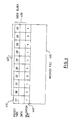
- Figure 4 depicts a structure of the data file wherein the packets received are stored.
- a plurality of information providers 1 a to 1 N are connected to a broadcaster 2 having the function of transmitting the data received from the information provider to a plurality of data receivers 4 a to 4 M through a broadcasting channel 3.
- an information provider may also be referenced as “calling terminal” and a data receiver as “called terminal”.
- the broadcaster 2 is a specific unit having the function of collecting and transmitting the date received from the information providers. However, the broadcaster may also transmit data originated by itself, acting in this case as an information provider.
- Data is structured as digitally encoded packets having either data transfer or various control purposes, as it will be described in further detail.
- a state-of-the-art data receiver in a unidirectional broadcasting system is provided with the following characteristics:
- Selective transmission is achieved by establishing a connection between an information provider, and a specific data receiver being identified by a unique identifier.
- Each information provider may concurrently transmit, in time division, different messages or data arranged in packets to a data receiver, or to different data receivers or groups of data receivers.
- Once a connection is established it is possible to transmit data from the information provider to the connected data receiver(s).
- a connection is terminated either as the result of a specific command issued by the calling terminal or automatically after a given connection timeout.
- the method herein described makes use of a "packet oriented" transmission protocol, where the generic packet has, preferably, a fixed length and a structure as depicted in Figure 2.
- the data file is divided into a sequence of blocks and each block is divided into packet units of data to be sent to the data receiver. Then the data receiver rebuilt the complete data file re-assembling the packet units of data into blocks and then the blocks into the original file.
- the symbol ":: " means "is composed by”.
- the ⁇ packet> structure further comprises:
- the data receiver is in an IDLE state 300.
- test 310 is performed to determine the type of the packet. If a CR or a DR ⁇ packet_type> value is received the ⁇ packet_address> field of the packet is retrieved to be compared with a list of packet addresses which are maintained by the data receiver: the Packet Address Stored Table (PAST). Each entry of PAST is formed by a field ( ⁇ packet_address_stored) and a pointer to a file ( ⁇ received_file>). Each ⁇ packet_address_stored> assumes one of three different values:
- each ⁇ packet_address_stored> is associated, by the pointer, to a file ⁇ received_file> which will be used by the data receiver to store each data packet identified by such ⁇ packet_address>. If no corresponding ⁇ packet_address_stored> exists and the information provider is a FRIEND one, a new entry is added to the list with UNKNOWN value and associated to a new empty ⁇ received_file>, as further described. In step 320 a test is performed to check if the ⁇ receiver_address_id> carried by the packet in the ⁇ data> field matches the data receiver identifier ⁇ unique_identifier>.
- step 330 the control passes to step 330, wherein the value of the ⁇ packet_address_stored> corresponding to the ⁇ packet_address> is checked. Then, if the value is TRUE, the data receiver discards the packet in step 332; consequently the process retums to the idle state 300. If a FALSE or UNKNOWN value is retrieved, the control is passed to step 334, wherein the value of the ⁇ packet_address_stored> corresponding to the received ⁇ packet_address> is changed to TRUE, thus validating the ⁇ packet_address> as actually addresses to the specific receiver. In step 336 the pointed ⁇ received_file>, if any, becomes available to the user; therefore, the process returns to the idle state 300.
- step 340 the ⁇ packet_address_stored> corresponding to the received ⁇ packet_address> is flagged as FALSE and in step 342 the associated ⁇ received_file>, if any, is discarded.
- step 350 the process passes to step 350, wherein the ⁇ packet_address> included in the received packet is retrieved and compared with PAST in the data receiver. If the value of the corresponding ⁇ packet_address_stored> is TRUE, in step 352 the packet is stored in the pointed ⁇ received_file> and made available to the user in step 358; then the process returns to idle state 300. If the value is FALSE, in step 356, the packet is discarded without any other activity and the process return in the idle state 300.
- step 354 the packet is stored in the pointed ⁇ received_file> but the packet, as the rest of the file, is not made available to the user, remaining "sub-judice” until it will be determined whether the file was directed or not to such data receiver. Finally the process return to the idle state 300.
- step 360 it is tested if the information provider is a FRIEND one; if so, in step 362 a new entry is added with an UNKNOWN value and having the associated pointer pointing to a new empty ⁇ received_file>, then the control passes to step 354. If the result of the test 360 is no, then the control passes to step 356.
- Each data block is made up of a DT packet 410 with a sequence of DF packets 420 so that the total block length (in bytes) reaches the one conveyed by DT packet, and the data blocks are written into a data file ( ⁇ received_file>) 400, corresponding to the one identified by the ⁇ packet_address> conveyed by the packets.
- a validation bit 440 is added to each data packet (DT, DF) 410, 420 received, showing if the packet has been properly received, testing the ⁇ checksum> value conveyed by each packet.
- the ⁇ received_file> maintains the visibility attribute of the data blocks, i.e. if the data blocks have the corresponding ⁇ packet_address_stored> value equal to UNKNOWN, the ⁇ received_file> will be hidden to the user.
- many well known alternatives can be adopted ranging from simply vary the file attributes to more complex techniques like data encryption.
- Each ⁇ received_file> is stored into a temporary directory.
- the completed ⁇ received_file> is renamed with the value carried by the DV packet and moved to the user directory, thus making it available to the user (including the corrupted data).
- Retransmissions, if any, of the same data have the same value of ⁇ packet_address> so it is possible to setup suitable merging policies among different data blocks.
- the data packets DT and DF corresponding to the ones which have been lost or corrupted during a previous transmission are managed. Then if the retransmitted packet data corresponds to a lost data packet this is added to the ⁇ received_file>, while if such a data packet corresponds to a corrupted data packet this replaces the corrupted one into the ⁇ received_file>.
- Any ⁇ received_file> with ⁇ packet_address_stored> equal to UNKNOWN remains hidden until a retransmission of the same data file occurs: in this case if a CR or DR packet is received and the conveyed ⁇ packet_address> is validated, as previously disclosed, then the corresponding ⁇ packet_address_stored> is set to TRUE and the visibility attribute of the ⁇ received_file> is modified accordingly.
- the ⁇ received_file> corresponding to the ⁇ packet_address> conveyed by the packet is swapped into the main memory, to improve the capability of the process while the data block are being collected, and it will be swapped out to the disk storage, when one of the following conditions occurs:
- a garbage collection routine has to be setup to delete each UNKNOWN ⁇ received_file> which is older than the defined parameter ⁇ ip_timeout> contained in the IPT.
- each different information provider is provided with a different timeout, depending on the type of the data sent over the broadcasting channel.
Landscapes
- Engineering & Computer Science (AREA)
- Signal Processing (AREA)
- Multimedia (AREA)
- Power Engineering (AREA)
- Computer Security & Cryptography (AREA)
- Data Exchanges In Wide-Area Networks (AREA)
Claims (10)
- Ein Verfahren zum Empfang unidirektional übermittelter Daten über einen Übertragungskanal (3), wobei die Daten aus mehreren Nachrichten variabler Länge bestehen, die in Datenpakete unterteilt sind, die von mindestens einem Informationsanbieter (1) an mindestens einen Datenempfänger (4) gesendet werden, wobei jedes Datenpaket mindestens zwei Bezeichner umfaßt, einen ersten Bezeichner, der den sendenden Informationsanbieter identifiziert, und einen zweiten Bezeichner, der die vom Informationsanbieter mit den Paketen gesendete Nachricht identifiziert, wobei der erste und zweite Bezeichner eine Paketadresse bilden, die jede über den Übertragungskanal übermittelte Nachricht eindeutig identifiziert, wobei mindestens ein Datenpaket weiter einen dritten Bezeichner enthält, der einen Datenempfänger identifiziert, und das Verfahren folgende Schritte beinhaltet: das Speichern einer Liste von Informationsanbietern im Datenempfänger, von denen der Datenempfänger Informationen selektiv empfangen darf; die Abfrage der Paketadresse und des dritten Bezeichners, sofern vorhanden (330), von jedem empfangenen Datenpaket; die Bestätigung der Paketadresse in bezug auf die an den Datenempfänger gerichteten Daten, wenn der dritte Bezeichner den Datenempfänger (334)identifiziert; die Bereitstellung aller Datenpakete, die durch die bestätigte Paketadresse (336) identifiziert wurden, an jeden Benutzer des Datenempfängers;
wobei das Verfahren weiterhin dadurch gekennzeichnet ist, daß es folgende Schritte beinhaltet:das Speichern im Datenempfänger jedes Datenpakets mit dem ersten Bezeichner, der in der Paketadresse enthalten ist, die in der Liste der Informationsanbieter aufgeführt ist, sofern der Datenempfänger noch keine Datenpakete empfangen hat, bei denen der dritte Bezeichner die Paketadresse (354)bestätigt hat;die Bereitstellung aller gespeicherten Pakete, die von der Paketadresse identifiziert wurden, für jeden Benutzer des Datenempfängers und zwar nach dem Empfang des dritten Bezeichners, der die Paketadresse (358) bestätigt hat, während der erneuten Übertragung. - Ein Verfahren nach Anspruch 1, das weiterhin den Schritt des Löschens aller Datenpakete umfaßt, die im Datenempfänger gespeichert sind, der von derselben Paketadresse identifiziert wird, nachdem ein Datenpaket mit derselben Paketadresse empfangen wird und der dritte Bezeichner den Datenempfänger (356) nicht identifiziert.
- Ein Verfahren nach Anspruch 2, das des weiteren den Schritt des Löschens der empfangenen Datenpakete mit dieser Paketadresse umfaßt.
- Ein Verfahren nach einem der oben genannten Ansprüche, das weiterhin den Schritt des Auswählens eines Zeitraums und des Löschens aller Datenpakete umfaßt, die im Datenempfänger gespeichert sind, der von einer selben Paketadresse, die innerhalb dieses Zeitraums nicht bestätigt wurde, identifiziert wird.
- Ein Verfahren nach einem der oben genannten Ansprüche, bei dem der Schritt des Speicherns des empfangenen Datenpakets im Datenempfänger, das von einer nicht bestätigten Paketadresse identifiziert wird, noch den Schritt des Verschlüsselns des Inhalts der Datenpaketinformationen umfaßt.
- Ein System zum Empfang unidirektional übermittelter Daten über einen Übertragungskanal, wobei die Daten aus mehreren Nachrichten variabler Länge bestehen, die in Datenpakete unterteilt sind, die von mindestens einem Informationsanbieter an mindestens einen Datenempfänger gesendet werden, wobei jedes Datenpaket mindestens zwei Bezeichner umfaßt, einen ersten Bezeichner, der den sendenden Informationsanbieter identifiziert, und einen zweiten Bezeichner, der die vom Informationsanbieter mit den Paketen gesendete Nachricht identifiziert, wobei der erste und zweite Bezeichner eine Paketadresse bilden, die jede über den Übertragungskanal übermittelte Nachricht eindeutig identifiziert, wobei mindestens ein Datenpaket weiter einen dritten Bezeichner enthält, der einen Datenempfänger identifiziert, und das System ein Mittel zum Speichern einer Liste von Informationsanbietern im Datenempfänger beinhaltet, von denen der Datenempfänger Informationen selektiv empfangen darf; ein Mittel zur Abfrage der Paketadresse und des dritten Bezeichners, sofern vorhanden, von jedem empfangenen Datenpaket; ein Mittel zur Bestätigung der Paketadresse in bezug auf die an den Datenempfänger gerichteten Daten, wenn der dritte Bezeichner den Datenempfänger identifiziert; ein Mittel zur Bereitstellung aller Datenpakete, die durch die bestätigte Paketadresse identifiziert wurden, an jeden Benutzer des Datenempfängers;
wobei das System durch folgendes gekennzeichnet ist:ein Mittel zum Speichern im Datenempfänger jedes Datenpakets mit dem ersten Bezeichner, der in der Paketadresse enthalten ist, die in der Liste der Informationsanbieter aufgeführt ist, sofern der Datenempfänger noch keine Datenpakete empfangen hat, bei denen der dritte Bezeichner die Paketadresse bestätigt hat;ein Mittel zur Bereitstellung aller gespeicherten Pakete, die von der Paketadresse identifiziert wurden, für jeden Benutzer des Datenempfängers und zwar nach dem Empfang des dritten Bezeichners, der die Paketadresse bestätigt hat, während der erneuten Übertragung. - Das System nach Anspruch 6, das weiterhin ein Mittel zum Löschen aller Datenpakete umfaßt, die im Datenempfänger gespeichert sind, der von derselben Paketadresse identifiziert wird, nachdem ein Datenpaket mit derselben Paketadresse empfangen wird und der dritte Bezeichner den Datenempfänger nicht identifiziert.
- Das System nach Anspruch 7, das des weiteren ein Mittel zum Löschen der empfangenen Datenpakete mit dieser Paketadresse umfaßt.
- Das System nach einem der Ansprüche 6 bis 8, das weiterhin ein Mittel zum Auswählen eines Zeitraums und ein Mittel zum Löschen aller Datenpakete umfaßt, die im Datenempfänger gespeichert sind, der von einer selben Paketadresse, die innerhalb dieses Zeitraums nicht bestätigt wurde, identifiziert wird.
- Das System nach einem der Ansprüche 6 bis 9, bei dem das Mittel zum Speichern des empfangenen Datenpakets im Datenempfänger, das von einer nicht bestätigten Paketadresse identifiziert wird, noch ein Mittel zum Verschlüsseln des Inhalts der Datenpaketinformationen umfaßt.
Applications Claiming Priority (1)
| Application Number | Priority Date | Filing Date | Title |
|---|---|---|---|
| PCT/EP1995/002348 WO1997000563A1 (en) | 1995-06-19 | 1995-06-19 | Method and system for receiving data packets in a unidirectional broadcasting system |
Publications (2)
| Publication Number | Publication Date |
|---|---|
| EP0834227A1 EP0834227A1 (de) | 1998-04-08 |
| EP0834227B1 true EP0834227B1 (de) | 1999-02-03 |
Family
ID=8166042
Family Applications (1)
| Application Number | Title | Priority Date | Filing Date |
|---|---|---|---|
| EP95924264A Expired - Lifetime EP0834227B1 (de) | 1995-06-19 | 1995-06-19 | Methode und verfahren für datenpakete-empfang in einem einwegübertragungsvorrichtung |
Country Status (5)
| Country | Link |
|---|---|
| US (1) | US6167045A (de) |
| EP (1) | EP0834227B1 (de) |
| JP (2) | JPH10511247A (de) |
| DE (1) | DE69507724T2 (de) |
| WO (1) | WO1997000563A1 (de) |
Families Citing this family (11)
| Publication number | Priority date | Publication date | Assignee | Title |
|---|---|---|---|---|
| JP3250532B2 (ja) | 1998-11-24 | 2002-01-28 | 日本電気株式会社 | データ送受信システム、データ受信装置、及びデータ受信方法 |
| US6704788B1 (en) * | 1999-07-06 | 2004-03-09 | General Instrument Corporation | Method and apparatus for transmitting and reassembling packetized data in large scale networks |
| HK1049050B (zh) * | 1999-09-10 | 2005-04-29 | 纳格拉影像股份有限公司 | 用於数据库的消息传输过程和系统 |
| JP2001127719A (ja) * | 1999-10-28 | 2001-05-11 | Matsushita Electric Ind Co Ltd | 放送装置および受信装置 |
| US6510144B1 (en) * | 1999-12-07 | 2003-01-21 | Cisco Technology, Inc. | Network layer support to enhance the transport layer performance in mobile and wireless environments |
| US7171493B2 (en) * | 2001-12-19 | 2007-01-30 | The Charles Stark Draper Laboratory | Camouflage of network traffic to resist attack |
| JP4125160B2 (ja) * | 2003-03-06 | 2008-07-30 | キヤノン株式会社 | 送信装置および受信装置 |
| WO2013162542A1 (en) * | 2012-04-25 | 2013-10-31 | Hewlett-Packard Development Company, L.P. | File transfer using xml |
| US20140153577A1 (en) * | 2012-12-03 | 2014-06-05 | Aruba Networks, Inc. | Session-based forwarding |
| CN108092942B (zh) * | 2016-11-21 | 2020-04-10 | 深圳市中兴微电子技术有限公司 | 一种报文处理方法和装置 |
| WO2020212610A1 (en) * | 2019-04-18 | 2020-10-22 | Medicus Ai Gmbh | Method and system for selective broadcasting |
Citations (1)
| Publication number | Priority date | Publication date | Assignee | Title |
|---|---|---|---|---|
| EP0491069A1 (de) * | 1990-12-18 | 1992-06-24 | International Business Machines Corporation | Verfahren zur selektiven Datenverteilung mit Einweg-Rundfunkübertragung oder Sendung |
Family Cites Families (11)
| Publication number | Priority date | Publication date | Assignee | Title |
|---|---|---|---|---|
| JPH0754933B2 (ja) * | 1986-08-14 | 1995-06-07 | 日本電気株式会社 | パケツトネツトワ−クにおける回線交換方法及び装置 |
| US4926375A (en) * | 1987-05-05 | 1990-05-15 | Ge Fanuc Automation North America, Inc. | Multiple nodes broadcast communication method with receiver identification by bit position in transferred massage |
| JPH01221943A (ja) * | 1988-02-29 | 1989-09-05 | Kenwood Corp | アドレッサブルpcm音楽放送受信機 |
| JPH0732373B2 (ja) * | 1988-03-26 | 1995-04-10 | 株式会社ケンウッド | Pcm音楽放送のワンウェイアドレス伝送方法 |
| US5128934A (en) * | 1990-06-29 | 1992-07-07 | Motorola, Inc. | Multiple transmitter message transmission system and method therefor |
| GB9106111D0 (en) * | 1991-03-22 | 1991-05-08 | Plessey Telecomm | Connectionless switching for an atm switch |
| FR2680589A1 (fr) * | 1991-08-19 | 1993-02-26 | France Telecom | Procede d'emission et de reception de programmes personnalises. |
| US5724357A (en) * | 1992-01-28 | 1998-03-03 | Fleetwood Group, Inc. | Remote response system and data transfer protocol |
| WO1994008403A1 (en) * | 1992-10-01 | 1994-04-14 | Motorola, Inc. | Selective call receiver capable of requesting information from a communication system and method therefor |
| US5398021A (en) * | 1993-07-19 | 1995-03-14 | Motorola, Inc. | Reliable information service message delivery system |
| US5715243A (en) * | 1995-03-27 | 1998-02-03 | Hewlett-Packard Company | Information service provider for transmitting multiple rate wireless information |
-
1995
- 1995-06-19 DE DE69507724T patent/DE69507724T2/de not_active Expired - Fee Related
- 1995-06-19 JP JP9502531A patent/JPH10511247A/ja active Pending
- 1995-06-19 EP EP95924264A patent/EP0834227B1/de not_active Expired - Lifetime
- 1995-06-19 WO PCT/EP1995/002348 patent/WO1997000563A1/en not_active Ceased
- 1995-06-19 US US08/973,370 patent/US6167045A/en not_active Expired - Fee Related
- 1995-06-19 JP JP50253197A patent/JP2995496B2/ja not_active Expired - Fee Related
Patent Citations (1)
| Publication number | Priority date | Publication date | Assignee | Title |
|---|---|---|---|---|
| EP0491069A1 (de) * | 1990-12-18 | 1992-06-24 | International Business Machines Corporation | Verfahren zur selektiven Datenverteilung mit Einweg-Rundfunkübertragung oder Sendung |
Also Published As
| Publication number | Publication date |
|---|---|
| JP2995496B2 (ja) | 1999-12-27 |
| DE69507724D1 (de) | 1999-03-18 |
| EP0834227A1 (de) | 1998-04-08 |
| JPH10511247A (ja) | 1998-10-27 |
| DE69507724T2 (de) | 1999-09-30 |
| WO1997000563A1 (en) | 1997-01-03 |
| US6167045A (en) | 2000-12-26 |
Similar Documents
| Publication | Publication Date | Title |
|---|---|---|
| US10735178B2 (en) | System and method for transmitting digital multimedia data with analog broadcast data | |
| US5838668A (en) | Satellite broadcast communications system | |
| JP6648211B2 (ja) | マルチキャスト通信またはブロードキャスト通信において拡張したファイル配信を行う方法および装置 | |
| EP1555774B1 (de) | Datenempfangsverfahren und Datenempfangsgerät | |
| US5175765A (en) | Robust data broadcast over a distributed network with malicious failures | |
| JP5542592B2 (ja) | セッションを告知する方法 | |
| US6449654B1 (en) | System and methods for retransmitting corrupted data | |
| US7937638B2 (en) | Error correction apparatus and method | |
| US7944921B2 (en) | Method and system for distributing mobile broadcast service and mobile terminal | |
| EP0834227B1 (de) | Methode und verfahren für datenpakete-empfang in einem einwegübertragungsvorrichtung | |
| EP0959635A1 (de) | Vebindungsloses Herunterladen von Software nach drahtlosen Terminals | |
| EP2134093A1 (de) | Verfahren, server, endgerät und system zur aktualisierung eines elektronischen dienstführers | |
| WO2003043259A1 (en) | Method and device for retransmission of transmitted units | |
| KR20010085311A (ko) | 이동 통신시스템에서 라디오링크프로토콜에 따른 가변길이의 데이터 전송 장치 및 방법 | |
| NZ521031A (en) | Vending machines sending data comprising only differences between new and reference data to central processor | |
| US20040205071A1 (en) | File distribution system, file delivery server apparatus, and reception client apparatus | |
| WO2002037763A1 (en) | Transmitter, receiver, and broadcast data distribution method | |
| KR100768142B1 (ko) | 통신 센터에 의해 복수의 단말로 업데이트 데이터를 송신하는 방법, 통신 센터에 의해 단말로 발송되는 업데이트 데이터를 수신하는 방법, 및 통신 센터 | |
| CN105592135B (zh) | 数据冗余消除dre字典确认方法和设备 | |
| US20130276065A1 (en) | System and methods for receiving and correcting content transmitted over multicast channels | |
| JP2001045056A (ja) | 通信システム | |
| JPH05252087A (ja) | 通信システム | |
| CN110808858B (zh) | 基于微服务单元的5g接入网数据传输方法及装置 | |
| JPH0685788A (ja) | 信号生成装置および方法 | |
| US20100153814A1 (en) | Method based on error corrector codes, applicable to a variable rate multimedia datastream |
Legal Events
| Date | Code | Title | Description |
|---|---|---|---|
| PUAI | Public reference made under article 153(3) epc to a published international application that has entered the european phase |
Free format text: ORIGINAL CODE: 0009012 |
|
| 17P | Request for examination filed |
Effective date: 19971126 |
|
| AK | Designated contracting states |
Kind code of ref document: A1 Designated state(s): DE FR GB IT |
|
| GRAG | Despatch of communication of intention to grant |
Free format text: ORIGINAL CODE: EPIDOS AGRA |
|
| 17Q | First examination report despatched |
Effective date: 19980525 |
|
| GRAG | Despatch of communication of intention to grant |
Free format text: ORIGINAL CODE: EPIDOS AGRA |
|
| GRAH | Despatch of communication of intention to grant a patent |
Free format text: ORIGINAL CODE: EPIDOS IGRA |
|
| GRAH | Despatch of communication of intention to grant a patent |
Free format text: ORIGINAL CODE: EPIDOS IGRA |
|
| GRAA | (expected) grant |
Free format text: ORIGINAL CODE: 0009210 |
|
| AK | Designated contracting states |
Kind code of ref document: B1 Designated state(s): DE FR GB IT |
|
| PG25 | Lapsed in a contracting state [announced via postgrant information from national office to epo] |
Ref country code: FR Free format text: LAPSE BECAUSE OF FAILURE TO SUBMIT A TRANSLATION OF THE DESCRIPTION OR TO PAY THE FEE WITHIN THE PRESCRIBED TIME-LIMIT Effective date: 19990203 |
|
| REF | Corresponds to: |
Ref document number: 69507724 Country of ref document: DE Date of ref document: 19990318 |
|
| ITF | It: translation for a ep patent filed | ||
| EN | Fr: translation not filed | ||
| PLBE | No opposition filed within time limit |
Free format text: ORIGINAL CODE: 0009261 |
|
| STAA | Information on the status of an ep patent application or granted ep patent |
Free format text: STATUS: NO OPPOSITION FILED WITHIN TIME LIMIT |
|
| 26N | No opposition filed | ||
| REG | Reference to a national code |
Ref country code: GB Ref legal event code: IF02 |
|
| PGFP | Annual fee paid to national office [announced via postgrant information from national office to epo] |
Ref country code: DE Payment date: 20020715 Year of fee payment: 8 |
|
| PG25 | Lapsed in a contracting state [announced via postgrant information from national office to epo] |
Ref country code: DE Free format text: LAPSE BECAUSE OF NON-PAYMENT OF DUE FEES Effective date: 20040101 |
|
| PG25 | Lapsed in a contracting state [announced via postgrant information from national office to epo] |
Ref country code: IT Free format text: LAPSE BECAUSE OF NON-PAYMENT OF DUE FEES;WARNING: LAPSES OF ITALIAN PATENTS WITH EFFECTIVE DATE BEFORE 2007 MAY HAVE OCCURRED AT ANY TIME BEFORE 2007. THE CORRECT EFFECTIVE DATE MAY BE DIFFERENT FROM THE ONE RECORDED. Effective date: 20050619 |
|
| PGFP | Annual fee paid to national office [announced via postgrant information from national office to epo] |
Ref country code: GB Payment date: 20070619 Year of fee payment: 13 |
|
| GBPC | Gb: european patent ceased through non-payment of renewal fee |
Effective date: 20080619 |
|
| PG25 | Lapsed in a contracting state [announced via postgrant information from national office to epo] |
Ref country code: GB Free format text: LAPSE BECAUSE OF NON-PAYMENT OF DUE FEES Effective date: 20080619 |