EP0834818A2 - System, Verfahren, Gerät und Herstellungsgegenstand für identitätsbasiertes Cachen - Google Patents
System, Verfahren, Gerät und Herstellungsgegenstand für identitätsbasiertes Cachen Download PDFInfo
- Publication number
- EP0834818A2 EP0834818A2 EP97110837A EP97110837A EP0834818A2 EP 0834818 A2 EP0834818 A2 EP 0834818A2 EP 97110837 A EP97110837 A EP 97110837A EP 97110837 A EP97110837 A EP 97110837A EP 0834818 A2 EP0834818 A2 EP 0834818A2
- Authority
- EP
- European Patent Office
- Prior art keywords
- data object
- recited
- cache
- class
- copy
- Prior art date
- Legal status (The legal status is an assumption and is not a legal conclusion. Google has not performed a legal analysis and makes no representation as to the accuracy of the status listed.)
- Granted
Links
Images



Classifications
-
- G—PHYSICS
- G06—COMPUTING OR CALCULATING; COUNTING
- G06F—ELECTRIC DIGITAL DATA PROCESSING
- G06F16/00—Information retrieval; Database structures therefor; File system structures therefor
- G06F16/90—Details of database functions independent of the retrieved data types
- G06F16/95—Retrieval from the web
- G06F16/957—Browsing optimisation, e.g. caching or content distillation
- G06F16/9574—Browsing optimisation, e.g. caching or content distillation of access to content, e.g. by caching
-
- H—ELECTRICITY
- H04—ELECTRIC COMMUNICATION TECHNIQUE
- H04L—TRANSMISSION OF DIGITAL INFORMATION, e.g. TELEGRAPHIC COMMUNICATION
- H04L67/00—Network arrangements or protocols for supporting network services or applications
- H04L67/01—Protocols
- H04L67/02—Protocols based on web technology, e.g. hypertext transfer protocol [HTTP]
-
- H—ELECTRICITY
- H04—ELECTRIC COMMUNICATION TECHNIQUE
- H04L—TRANSMISSION OF DIGITAL INFORMATION, e.g. TELEGRAPHIC COMMUNICATION
- H04L67/00—Network arrangements or protocols for supporting network services or applications
- H04L67/50—Network services
- H04L67/56—Provisioning of proxy services
-
- H—ELECTRICITY
- H04—ELECTRIC COMMUNICATION TECHNIQUE
- H04L—TRANSMISSION OF DIGITAL INFORMATION, e.g. TELEGRAPHIC COMMUNICATION
- H04L67/00—Network arrangements or protocols for supporting network services or applications
- H04L67/50—Network services
- H04L67/56—Provisioning of proxy services
- H04L67/568—Storing data temporarily at an intermediate stage, e.g. caching
-
- H—ELECTRICITY
- H04—ELECTRIC COMMUNICATION TECHNIQUE
- H04L—TRANSMISSION OF DIGITAL INFORMATION, e.g. TELEGRAPHIC COMMUNICATION
- H04L9/00—Cryptographic mechanisms or cryptographic arrangements for secret or secure communications; Network security protocols
- H04L9/40—Network security protocols
-
- H—ELECTRICITY
- H04—ELECTRIC COMMUNICATION TECHNIQUE
- H04L—TRANSMISSION OF DIGITAL INFORMATION, e.g. TELEGRAPHIC COMMUNICATION
- H04L69/00—Network arrangements, protocols or services independent of the application payload and not provided for in the other groups of this subclass
- H04L69/30—Definitions, standards or architectural aspects of layered protocol stacks
- H04L69/32—Architecture of open systems interconnection [OSI] 7-layer type protocol stacks, e.g. the interfaces between the data link level and the physical level
- H04L69/322—Intralayer communication protocols among peer entities or protocol data unit [PDU] definitions
- H04L69/329—Intralayer communication protocols among peer entities or protocol data unit [PDU] definitions in the application layer [OSI layer 7]
-
- Y—GENERAL TAGGING OF NEW TECHNOLOGICAL DEVELOPMENTS; GENERAL TAGGING OF CROSS-SECTIONAL TECHNOLOGIES SPANNING OVER SEVERAL SECTIONS OF THE IPC; TECHNICAL SUBJECTS COVERED BY FORMER USPC CROSS-REFERENCE ART COLLECTIONS [XRACs] AND DIGESTS
- Y10—TECHNICAL SUBJECTS COVERED BY FORMER USPC
- Y10S—TECHNICAL SUBJECTS COVERED BY FORMER USPC CROSS-REFERENCE ART COLLECTIONS [XRACs] AND DIGESTS
- Y10S707/00—Data processing: database and file management or data structures
- Y10S707/99941—Database schema or data structure
- Y10S707/99944—Object-oriented database structure
-
- Y—GENERAL TAGGING OF NEW TECHNOLOGICAL DEVELOPMENTS; GENERAL TAGGING OF CROSS-SECTIONAL TECHNOLOGIES SPANNING OVER SEVERAL SECTIONS OF THE IPC; TECHNICAL SUBJECTS COVERED BY FORMER USPC CROSS-REFERENCE ART COLLECTIONS [XRACs] AND DIGESTS
- Y10—TECHNICAL SUBJECTS COVERED BY FORMER USPC
- Y10S—TECHNICAL SUBJECTS COVERED BY FORMER USPC CROSS-REFERENCE ART COLLECTIONS [XRACs] AND DIGESTS
- Y10S707/00—Data processing: database and file management or data structures
- Y10S707/99941—Database schema or data structure
- Y10S707/99944—Object-oriented database structure
- Y10S707/99945—Object-oriented database structure processing
Definitions
- This invention relates to a system, method and apparatus for improving response time of a network based transaction session. More particularly, the invention relates to a system, method and apparatus to alleviate network load by use of a location-independent-indexedcache to eliminate repetitive and/or redundant transfers of data objects already resident in the cache.
- World Wide Web browsers such as Sun Microsystems, Inc.'s HotJava, Netscape Communications Corp.'s Netscape Navigator and Microsoft Corp.'s Internet Explorer
- URL Uniform Resource Locator
- a URL-indexed cache is capable of providing the user with the previously recovered copy of the requested resource only when the second request for the resource is requesting that resource from the exact location as that from which the resource was initially obtained. That is, if the user requests that a resource be obtained from a new location, a WWW browser equipped with a URL-indexed cache will obtain the requested resource from the specified location, even if the same data is already resident on the user's computer system from a previous transfer from a different location. This approach results in an undesirable amount of redundant data transfers.
- This problem is particularly aggravated when the resource requested is not requested under the user's direct control.
- An example of such a case is where a user requests a particular resource, and that resource in turn requires additional resources.
- the user has no opportunity to indicate to the system that previously obtained resources should be used instead of redundant copies of the secondary resources.
- a user may request a particular web page to be displayed, and that page may in turn request transmission of a graphic image to be displayed, or a program (often referred to as an "applet") to be executed in conjunction with the displayed page.
- the user has no opportunity to indicate to the browser that a previously obtained image file or applet file should be used in lieu of the file located at the remote location.
- a system, method, and apparatus for obtaining a copy of a data object is disclosed.
- a location-independentidentifier associated with the desired data object is obtained, for example, from a primary file that requires a copy of the data object.
- a cache is interrogated to determine whether a copy of the data object is cached. If the data object is cached, a copy of the cached data object is obtained from the cache. If the data object is not cached, a network call is performed obtain a new copy of the data object.
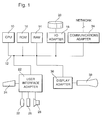
- FIG. 1 A preferred embodiment of a system in accordance with the present invention is preferably practiced in the context of a personal computer such as the IBM PS/2, Apple Macintosh computer or UNIX based workstation.
- a representative hardware environment is depicted in Figure 1 , which illustrates a typical hardware configuration of a workstation in accordance with a preferred embodiment having a central processing unit 10 , such as a microprocessor, and a number of other units interconnected via a system bus 12 .
- a central processing unit 10 such as a microprocessor
- the workstation shown in Figure 1 includes a Random Access Memory (RAM) 14, Read Only Memory (ROM) 16 , an I/O adapter 18 for connecting peripheral devices such as disk storage units 20 to the bus 12 , a user interface adapter 22 for connecting a keyboard 24 , a mouse 26 , a speaker 28 , a microphone 32 , and/or other user interface devices such as a touch screen (not shown) to the bus 12 , communication adapter 34 for connecting the workstation to a communication network (e.g., a data processing network) and a display adapter 36 for connecting the bus 12 to a display device 38 .
- the workstation typically has resident thereon an operating system such as the Microsoft Windows Operating System (OS), the IBM OS/2 operating system, the MAC OS, or UNIX operating system.
- OS Microsoft Windows Operating System
- IBM OS/2 operating system the IBM OS/2 operating system
- MAC OS MAC OS
- UNIX operating system Those skilled in the art will appreciate that the present invention may also be implemented on platforms and operating systems other than those mentioned.
- OOP Object oriented programming
- OOP is a process of developing computer software using objects, including the steps of analyzing the problem, designing the system, and constructing the program.
- An object is a software package that contains both data and a collection of related structures and procedures. Since it contains both data and a collection of structures and procedures, it can be visualized as a self-sufficient component that does not require other additional structures, procedures or data to perform its specific task.
- OOP therefore, views a computer program as a collection of largely autonomous components, called objects, each of which is responsible for a specific task. This concept of packaging data, structures, and procedures together in one component or module is called encapsulation.
- OOP components are reusable software modules which present an interface that conforms to an object model and which are accessed at run-time through a component integration architecture.
- a component integration architecture is a set of architecture mechanisms which allow software modules in different process spaces to utilize each others capabilities or functions. This is generally done by assuming a common component object model on which to build the architecture.
- An object is a single instance of the class of objects, which is often just called a class.
- a class of objects can be viewed as a blueprint, from which many objects can be formed.
- OOP allows the programmer to create an object that is a part of another object.
- the object representing a piston engine is said to have a composition-relationship with the object representing a piston.
- a piston engine comprises a piston, valves and many other components; the fact that a piston is an element of a piston engine can be logically and semantically represented in OOP by two objects.
- OOP also allows creation of an object that depends from another object. If there are two objects, one representing a piston engine and the other representing a piston engine wherein the piston is made of ceramic, then the relationship between the two objects is not that of composition.
- a ceramic piston engine does not make up a piston engine. Rather it is merely one kind of piston engine that has one more limitation than the piston engine; its piston is made of ceramic.
- the object representing the ceramic piston engine is called a derived object, and it inherits all of the aspects of the object representing the piston engine and adds further limitation or detail to it.
- the object representing the ceramic piston engine depends from the object representing the piston engine. The relationship between these objects is called inheritance.
- the object or class representing the ceramic piston engine inherits all of the aspects of the objects representing the piston engine, it inherits the thermal characteristics of a standard piston defined in the piston engine class.
- the ceramic piston engine object overrides these ceramic specific thermal characteristics, which are typically different from those associated with a metal piston. It skips over the original and uses new functions related to ceramic pistons.
- Different kinds of piston engines will have different characteristics, but may have the same underlying functions associated with it (e.g., how many pistons in the engine, ignition sequences, lubrication, etc.).
- a programmer would call the same functions with the same names, but each type of piston engine may have different/overridingimplementations of functions behind the same name. This ability to hide different implementations of a function behind the same name is called polymorphism and it greatly simplifies communication among objects.
- composition-relationship With the concepts of composition-relationship, encapsulation, inheritance and polymorphism, an object can represent just about anything in the real world. In fact, our logical perception of the reality is the only limit on determining the kinds of things that can become objects in object-oriented software. Some typical categories are as follows:
- OOP allows the software developer to design and implement a computer program that is a model of some aspects of reality, whether that reality is a physical entity, a process, a system, or a composition of matter. Since the object can represent anything, the software developer can create an object which can be used as a component in a larger software project in the future.
- OOP enables software developers to build objects out of other, previously built, objects.
- C++ is an OOP language that offers a fast, machine-executable code.
- C++ is suitable for both commercial-application and systems-programming projects.
- C++ appears to be the most popular choice among many OOP programmers, but there is a host of other OOP languages, such as Smalltalk, common lisp object system (CLOS), and Eiffel. Additionally, OOP capabilities are being added to more traditional popular computer programming languages such as Pascal
- Class libraries are very flexible. As programs grow more complex, more programmers are forced to adopt basic solutions to basic problems over and over again.
- a relatively new extension of the class library concept is to have a framework of class libraries. This framework is more complex and consists of significant collections of collaborating classes that capture both the small scale patterns and major mechanisms that implement the common requirements and design in a specific application domain. They were first developed to free application programmers from the chores involved in displaying menus, windows, dialog boxes, and other standard user interface elements for personal computers.
- Frameworks also represent a change in the way programmers think about the interaction between the code they write and code written by others
- the programmer called libraries provided by the operating system to perform certain tasks, but basically the program executed down the page from start to finish, and the programmer was solely responsible for the flow of control. This was appropriate for printing out paychecks, calculating a mathematical table, or solving other problems with a program that executed in just one way.
- event loop programs require programmers to write a lot of code that should not need to be written separately for every application.
- the concept of an application framework carries the event loop concept further. Instead of dealing with all the nuts and bolts of constructing basic menus, windows, and dialog boxes and then making these things all work together, programmers using application frameworks start with working application code and basic user interface elements in place Subsequently, they build from there by replacing some of the generic capabilities of the framework with the specific capabilities of the intended application.
- Application frameworks reduce the total amount of code that a programmer has to write from scratch.
- the framework is really a generic application that displays windows, supports copy and paste, and so on, the programmer can also relinquish control to a greater degree than event loop programs permit.
- the framework code takes care of almost all event handling and flow of control, and the programmer's code is called only when the framework needs it (e.g., to create or manipulate a proprietary data structure).
- a programmer writing a framework program not only relinquishes control to the user (as is also true for event loop programs), but also relinquishes the detailed flow of control within the program to the framework. This approach allows the creation of more complex systems that work together in interesting ways, as opposed to isolated programs, having custom code, being created over and over again for similar problems.
- a framework basically is a collection of cooperating classes that make up a reusable design solution for a given problem domain It typically includes objects that provide default behavior (e.g., for menus and windows), and programmers use it by inheriting some of that default behavior and overriding other behavior so that the framework calls application code at the appropriate times.
- default behavior e.g., for menus and windows
- programmers use it by inheriting some of that default behavior and overriding other behavior so that the framework calls application code at the appropriate times.
- a preferred embodiment of the invention utilizes Hypertext Markup Language (HTML) to implement documents on the Internet together with a general-purpose secure communication protocol for a transport medium between the client and the merchant.
- HTML is a simple data format used to create hypertext documents that are portable from one platform to another.
- HTML documents are SGML documents with generic semantics that are appropriate for representing information from a wide range of domains. HTML has been in use by the World-Wide Web global information initiative since 1990. HTML is an application of ISO Standard 8879:1986 Information Processing Text and Office Systems; Standard Generalized Markup Language (SGML).
- HTML has been the dominant technology used in development of Web-based solutions.
- HTML has proven to be inadequate in the following areas:
- Custom "widgets” e.g. real-time stock tickers, animated icons, etc.
- client-side performance is improved.
- Java supports the notion of client-side validation, offloading appropriate processing onto the client for improved performance.
- Dynamic, real-time Web pages can be created. Using the above-mentioned custom UI components, dynamic Web pages can also be created.
- Sun's Java language has emerged as an industry-recognized language for "programming the Internet.”
- Sun defines Java as: a simple, object-oriented, distributed, interpreted, robust, secure, architecture-neutral, portable, high-performance, multithreaded, dynamic, buzzword-compliant, general-purpose programming language.
- Java supports programming for the Internet in the form of platform-independent Java applets.
- Java applets are small, specialized applications that comply with Sun's Java Application Programming Interface (API) allowing developers to add "interactive content" to Web documents (e.g. simple animations, page adornments, basic games, etc.). Applets execute within a Java-compatible browser (e.g. Netscape Navigator) by copying code from the server to client.
- Java's core feature set is based on C++.
- Sun's Java literature states that Java is basically "C++, with extensions from Objective C for more dynamic method resolution”.
- ActiveX includes tools for developing animation, 3-D virtual reality, video and other multimedia content.
- the tools use Internet standards, work on multiple platforms, and are being supported by over 100 companies,
- the group's building blocks are called ActiveX Controls, small, fast components that enable developers to embed parts of software in hypertext markup language (HTML) pages.
- ActiveX Controls work with a variety of programming languages including Microsoft Visual C++, Borland Delphi, Microsoft Visual Basic programming system and, in the future, Microsoft's development tool for Java, code named "Jakarta.”
- ActiveX Technologies also includes ActiveX Server Framework, allowing developers to create server applications.
- ActiveX could be substituted for Java without undue experimentation to practice the invention.
- FIG. 2 depicts a client computer 210 operating a network client program, such as a web browser, in communication with server computer 215.
- Server 215 may be, for example, a hypertext transport protocol ("HTTP") server.
- HTTP hypertext transport protocol
- Server 215 is named "SYSA" This denotes that the server is addressed with a name such as SYSA, or is located externally to the client's network, for example, in a system with the name SYSA.COM.
- Server 215 is in communication with client 210 using a communications link 220 operating, for example, using the HTTP protocol and the Transmission Control Protocol and Internet Protocol ("TCP" and "IP,” respectively, or collectively "TCP/IP”).
- HTTP is described in R.
- server 215 is transferring a copy of document 225 , named PAGE1.HTML, to client 210, in response to a previous HTTP GET request (not shown) by client 210.
- Client 210 is equipped with a cache file 230 indexed by a cache table 235 .
- Cache table 235 is a table used to index cache 230 .
- Cache table 235 comprises a plurality of rows 238 and columns 240 . Each row 238 is used to describe a cached element, such as downloaded HTML document 225 .
- Columns 240 include a URI column 245 , an OID column 247 , and a cache pointer column 249 .
- URI column 245 contains a representation of a location code of a cached resource. Typically this will be a representation of a Uniform Resource Identifier ("URI"), such as a Uniform Resource Locator (“URL”), or any other indicator of the location of the cached resource.
- URI Uniform Resource Identifier
- URL Uniform Resource Locator
- OID column 247 contains an object identifier, if any for the cached resource, or is null if no object identifier is associated with the cached resource.
- Cache pointer column 249 contains a pointer to the cache element in the cache. This may be, for example, the name of a file located within a specific predetermined cache directory or cache device, or it may be a specification of a location within a larger file of a particular portion of the file corresponding to the cached resource.
- the cache table will typically contain additional fields used to manage and optimize a cache table, such as indicators of whether a particular cache row 238 is in use, its frequency of reference, etc. Such fields are not a portion of the present invention and are not herein described.
- client 210 transfers a copy of downloaded file 225 to cache 230 as shown by arrow 260 .
- a copy of document 225 is cached at location 265 , and cache table row 238-1 is updated to reflect the cache.
- URI column 245 is set to the value of the URI for the retrieved document.
- Column 247 is set to null because, as will be described in further detail, no OID has been associated with this resource.
- Column 249 has been set to point to cached element 265 .
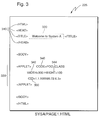
- FIG 3 depicts an example of downloaded document 225 .
- the file is in Hypertext Markup Language ("HTML").
- HTML Hypertext Markup Language
- the HTML format is described in Berners-Lee, et al., RFC 1866: Hypertext Markup Language - 2.0 (November 1995), which is hereby incorporated by reference.
- the HTML document 225 comprises a plurality of HTML tags 310 and text 320 to be rendered and displayed. With the exception of the applet tag 330 , all of HTML tags 310 are known and described in Berners-Lee, and are not further described herein.
- Applet tag 330 is an HTML tag that is used to specify an applet that should be loaded and executed when HTML document 225 is rendered and displayed
- Specifically applet tag 330 is an extension to HTML devised by Sun Microsystems, Inc. of Mountain View, California.
- applets are written in a platform-independentobject-oriented language such as Sun Microsystem's Java language.
- a Java applet is generally transported in the Sun's CLASS-format file.
- Applet tag 330 contains four parameters: CODE parameter 340 , WIDTH parameter 342 , HEIGHT parameter 344 , and OID parameter 350 .
- the CODE, WIDTH, and HEIGHT parameters are known in the art.
- the CODE parameter 340 is used to specify the name of a program file to be downloaded from the same server location as HTML document 225 .
- CODE parameter 340 indicates that the program named FOO.CLASS is to be obtained from the SYSA server 215 because the web page was part of the HTML information.
- WIDTH parameter 342 and HEIGHT parameter 344 indicate the size of screen area where the output of the applet will be displayed. In the example shown, an area 300 pixels wide and 100 pixels high is specified.
- the OID parameter 350 is not previously known. OID parameter 350 is used to specify an object identifier.
- the object identifier is a unique identifier associated with a particular object, The OID associated with a particular object is guaranteed to be unique.
- a preferred method of specifying the OID is using Abstract Syntax Notation One ("ASN. 1"), as described in ISO 8824, and the ASN. 1 Basic Encoding Rules (“BER”) as described in ISO 8825.
- ASN. 1 and BER provide for an "object identifier" datatype.
- the ASN. 1 object identifier is in the form of a series of integers separated by decimal points. Each integer represents a node on an ASN. 1 object identifier tree.
- the ASN. 1 object identifier tree is a structure with a root node, arcs beneath that node to other nodes, with arcs beneath them and so on.
- each node is assigned to some responsible body that allocates arcs and nodes beneath it. The body ensures that all the arcs beneath its node are numbered sequentially starting from 0 or 1 and that each node beneath it is either assigned to some responsible body or is assigned to name a particular object.
- the OID has a value of 1.1.999999.72.6.3.
- the first integer, 1, has been allocated to the International Standards Organization ("ISO").
- the ISO therefore, has the responsibility for allocating every OID beginning with the integer 1.
- the second integer 1 indicates that this object is within an ASN. 1 hierarchy allocated to a "registration authority" ("RA").
- a registration authority is an organization that is responsible for the allocation of any further ASN. 1 OIDs within its name space.
- the fictitious registration authority code 999999 is used to depict that a particular responsibility authority having been assigned a code 999999 is responsible for any object identifiers below this level
- the remaining integers (72, 6, and 3) are arbitrary integers organized according to a functional scheme selected by the registration authority corresponding to RA code 999999, and guaranteed by the registration authority to be unique in the world.
- ASN.1, BER, the ASN.1 object identifier, and the ASN.1 object identifier tree are known constructs and are described in their respective standards and, for example, in Larmouth, Understanding OSI (International Thomson Computer Press, 1996), pp. 151-160, hereby incorporated by reference.
- the desired applet may be referred to either by a particular known location (file name FOO.CLASS on server SYSA) or by its ASN.1 object identifier (1.1.999999.72.6.3).
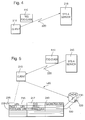
- Figure 4 depicts an operation of obtaining the applet specified by applet tag 330 of Figure 3 .
- the applet specified by applet tag 330 has not been previously obtained, and therefore is unavailable from cache 230 of Figure 2. Therefore, as depicted in Figure 4 , client 210 issues an HTTP GET request for the resource named FOO.CLASS on connection 220 to server SYSA 215 .
- Figure 5 depicts the server response to the GET request.
- Server 215 transmits a copy 510 of the FOO.CLASS object on communications line 220 to client computer 210 .
- Client computer 210 places a copy of received file 510 in cache 230 as cache element 520 .
- Client computer 210 then updates cache table 235 to reflect the cache update. Specifically, client computer 210 updates row 238-2 to reflect newly added element 520 .
- Client computer 210 updates cache table row 238-2 as follows.
- URI column 245 is set to the value of the URI from which the file was retrieved.
- OID column 247 is updated with the object identifier value for the object received.
- column 249 is updated with a pointer to the cache element 520 within cache 230 .
- an object that is received from a server may have an OID encoded into it, so that a client computer such as client computer 210 can discover the object's OID even if no OID had been specified prior to the transfer.
- the OID may be encoded, for example, in a predetermined position or field within the object, or may be stored on the server separately from the object and included by the server by encoding it into the HTTP GET response
- the Java CLASS format is highly structured and is particularly well-suited for the purpose of encoding an OID into an applet file.
- the Java CLASS format is described in Sun Microsystem's Java Virtual Machine Specification, Release 1.0 Beta DRAFT (March 21, 1995) the disclosure of which is hereby incorporated by reference.
- Each class file contains the compiled version of either a Java class or a Java interface.
- An interpreter or "virtual machine” designed to execute a Java applet supports all class files that conform to this format.
- a Java class file comprises a stream of 8-bit bytes. All 16-bit and 32-bit quantities are constructed by reading in two or four 8-bit bytes, respectively. The bytes are joined together in network (big-endian) order, where the high bytes come first.
- This format is supported by the Java java.io.DataInput and java.io.DataOutputinterfaces, and classes such as java.io.DataInputStream andjava.io.DataOutputstream.
- the class file format is described here using a structure notation. Successive fields in the structure appear in the external representation without padding or alignment. Variable size arrays, often of variable sized elements are called tables and are commonplace in these structures.
- the types u1, u2, and u4 mean an unsigned one-, two-, or four-byte quantity, respectively, which are read by method such as readUnsignedByte, readUnsignedShort and readInt of the java.io.DataInputinterface.
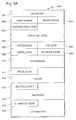
- Figure 5A depicts the format of a class file 560 , which is structured as follows:
- the "magic" field 561 is four bytes in length and is used to identify the file as a Java class-format file.
- the magic field has the value 0xCAFEBABE.
- the minor_version field 562 and major_version field 563 contain the version number of the Java compiler that produced this class file. The combination of the two fields may be interrogated by a virtual machine to determine whether it is capable of executing the applet.
- An implementation of the virtual machine will normally support some range of minor version numbers 0-n of a particular major version number. If the minor version number is incremented, the new code won't run on the old virtual machines, but it is possible to make a new virtual machine which can run versions up to version number n+1.
- a change of the major version number indicates a major incompatible change, one that requires a different virtual machine that may not support the old major version in any way.
- the constant_pool_countfield 564 indicates the number of entries in the constant pool 565 in the class file.
- the constant pool 565 is a table of values
- the values in the constant pool 565 comprise various string constants, classnames, field names, and others that are referred to by the class structure or by the executable code in the applet.
- the first constant pool entry, denoted as constant_pool[0] is always unused by the compiler, and may be used by an implementation for any purpose.
- Each of the constant_pool entries 1 through constant_pool_count-1 is a variable-length entry, whose format is indicated by the first tag byte, according to the following table: Value Constant Type Meaning 1 CONSTANT_Utf8 utf-8 format string 2 CONSTANT_Unicode unicode format string 3 CONSTANT_Integer integer 4 CONSTANT_Float floating point 5 CONSTANT_Long long integer 6 CONSTANT_Double double floating point 7 CONSTANT_Class class 8 CONSTANT_String string 9 CONSTANT_Fieldref field reference 10 CONSTANT_Methodref method reference 11 CONSTANT_InterfaceMethodref interface method reference 12 CONSTANT_NameAndType name and type
- a utf-8 format string constant pool entry represents a constant character string value.
- Utf-8 strings are encoded so that strings containing only non-null ASCII characters, can be represented using only one byte per character, but characters of up to 16 bits can still be represented.
- All characters in the range 0x0001 to 0x007F are represented by a single byte, in which bit 0 is set to binary '0' and in which bits 1-7 represent the ASCII code 0x0001 to 0x007F, respectively.
- the null character 0x0000 and characters in the range 0x0080 to 0x07FF are represented by a pair of two bytes, or 16 bits, denoted here as bits 0-15.
- Bits 0-2 are set to binary '110' and bits 8-9 are set to binary '10'.
- the remaining eleven bits 3-7 and 10-15 correspond respectively to the low-order eleven bits in the character to be encoded.
- Characters in the range 0x0800 to 0xFFFF are represented by three bytes, or 24 bits, denoted here as bits 0-23. Bits 0-3, 8-9 and 16-17 are set to binary values '1110', '10', and '10', respectively. The remaining 16 bits 4-7, 10-15 and 18-23 correspond to the 16 bits in the character to be encoded.
- null character 0x00 is encoded in two-byte format rather than one-byte, with the result that encoded strings never have embedded nulls. Only one-byte, two-byte, and three-byte formats are used; longer utf-8 formats are unrecognized.
- a utf-8 string is structured as follows:
- the tag field has the constant value 0x'0001' indicating a utf-8 encoded string.
- the length field is a two-byte field indicating the length of the string.
- the bytes field is the encoded string.
- a UNICODE string constant pool entry represents a constant unencoded character string value.
- a UNICODE string is structured as follows:
- the tag field has the constant value 0x'0002' indicating a unicode-format string.
- the length field is a two-byte field indicating the length of the string.
- the bytes field is the string value.
- An integer constant pool entry represents a four-byte integer.
- the constant pool entry is structured as follows:
- the tag field has the constant value 0x'0003' indicating a integer.
- the bytes field is the integer value.
- a float constant pool entry represents a four-byte floating-point number.
- the constant pool entry is structured as follows:
- the tag field has the constant value 0x'0004' indicating a floating-point number.
- the bytes field is the floating-point value.
- a long integer constant pool entry represents an eight-byte integer.
- the constant pool entry is structured as follows:
- the tag field has the constant value 0x'0005' indicating a long integer.
- the high_bytes and low_bytes fields together make up the integer value.
- a long integer constant pool entry takes up two spots in the constant pool 565 . If this is the nth entry in the constant pool 565 , then the next entry will be numbered n+2.
- a double float constant pool entry represents an eight-byte floating-point number.
- the constant pool entry is structured as follows:
- the tag field has the constant value 0x'0006' indicating a double floating-point number.
- the high_bytes and low_bytes fields together make up the floating-point value.
- a double float constant pool entry takes up two spots in the constant pool 565. If this is the nth entry in the constant pool 565, then the next entry will be numbered n+2.
- a class constant pool entry represents a Java class or an interface
- the constant pool entry is structured as follows:
- the tag field has the constant value 0x'0007' indicating a class.
- the name_index field is a subscript into the constant pool 565 , to a utf-8 format string constant that gives the string name of the class.
- a string constant pool entry represents Java objects of the built-in Java type "String."
- the constant pool entry is structured as follows:
- the tag field has the constant value 0x'0008' indicating a string.
- the string_index field is a subscript into the constant pool 565 , to a utf-8 format string constant that gives the value to which the String-type object is initialized.
- a field constant pool entry, method reference constant pool entry, and interface method reference constant pool entry represent references to Java fields, methods, and interface methods, respectively.
- the constant pool entries are structured as follows:
- the tag field has the constant value 0x'0009', 0x'000A', or 0x'000B', indicating a field reference, method reference, or interface method reference, respectively.
- the class_index field is a subscript into the constant pool 565 , to a class constant that is used to identify the name of the class or interface containing the field or method.
- the name_and_type_indexfield is a subscript into the constant pool 565 , to a NameAndType constant that is used to identify the name and signature of the field or method.
- a NameAndType constant pool entry represents a field or method without indicating the class to which the name or field, as the case may be, belongs.
- the constant pool entry is structured as follows:
- the tag field has the constant value 0x'000C' indicating a NameAndType entry.
- the name_index field is a subscript into the constant pool 565 , to a utf-8 format string constant that gives the name of the field or method.
- the signature_index field is a subscript into the constant pool 565 , to a utf-8 format string constant that gives a signature of the field or method.
- the signature in this context, refers to a string that represents a type of a method, field or array.
- the field signature represents the value of an argument to a function or the value of a variable.
- a return-type signature represents the return value from a method.
- An argument signature represents an argument passed to a method.
- a method signature comprises one or more arguments signatures and a return signature, thereby representing the arguments expected by a method, and the value that it returns.
- the structure and self-referential nature of the cell pool thereby provides great flexibility in implementation of data encoded in an applet file.
- the access_flags field 566 contains a mask of up to sixteen modifiers used with class, method, and field declarations. The same encoding is used on similar fields in field_info and method_info as described below
- the access_flags field is encoded as follows: Flag Name Value Meaning Used By ACC_PUBLIC 0x0001 Visible to everyone Class, Method, Variable ACC_PRIVATE 0x0002 Visible only to the defining class Method, Variable ACC_PROTECTED 0x0004 Visible to subclasses Method, Variable ACC_STATIC 0x0008 Variable or method is static Method, Variable ACC_FINAL 0x0010 No further subclassing, overriding, or assignment after initialization Class, Method, Variable ACC_SYNCHRONIZED 0x0020 Wrap use in monitor lock Method ACC_VOLATILE 0x0040 Can't cache Variable ACC_TRANSIENT 0x0080 Not to be written or read by a persistent object manager Vari
- the this_class field 567 is an index into the constant pool 565 ; constant_pool[this_class]must be of type CONSTANT_class.
- the super_class 568 field is an index into the constant pool 565 . If the value of super_class field 568 is nonzero, then constant_pool[super_class]must be a class, and gives the index of this class's superclass (that is, the class from which the present class is derived) in the constant pool 565 . If the value of super_class field 568 is zero, then the class being defined must be java.lang.Object, and it has no superclass.
- the interfaces_count field 569 gives the number of interfaces that this class implements.
- the fields_count field 571 gives the number of instance variables, both static and dynamic, defined by the this class field.
- the fields table 572 includes only those variables that are defined explicitly by this class. It does not include those instance variables that are accessible from this class but are inherited from superclasses.
- Each value in the fields table 572 is a more complete description of a field in the class.
- Each field is described by a variable length field_info structure.
- the format of this structure is as follows:
- the access_flags field is a set of sixteen flags used by classes, methods, and fields to describe various properties and how they many be accessed by methods in other classes. This field has the same names, values and meanings as the access_flags field 566 previously disclosed.
- the possible flags that can be set for a field are ACC_PUBLIC, ACC_PRIVATE, ACC_PROTECTED, ACC_STATIC, ACC_FINAL, ACC_VOLATILE, and ACC_TRANSIENT. At most one of ACC_PUBLIC, ACC_PROTECTED, and ACC_PRIVATE can be set for any method.
- the name_index field is a subscript used to index into the constant pool 565 indicating a CONSTANT_Utf8 string, which is the name of the field.
- the signature_indexfield is a subscript that is used to index into the constant pool 565 to indicate a CONSTANT_Utf8 string, which is the signature of the field.
- the attributes_countfield indicates the number of additional attributes about this field.
- the attributes field represents the attributes of a particular field represented by the field_info structure.
- a field can have any number of optional attributes associated with it.
- the ConstantValue attribute which indicates that this field is a static numeric constant, indicates the constant value of that field.
- the methods_countfield 573 indicates the number of methods, both static and dynamic, defined by this class. This table only includes those methods that are explicitly defined by this class. It does not include inherited methods.
- Each value in the methods table 574 is a more complete description of a method in the class.
- Each method is described by a variable length method_info structure.
- the format of this structure is as follows:
- the access_flags field is a set of sixteen flags used by classes, methods, and fields to describe various properties and how they many be accessed by methods in other classes. This field has the same names, values and meanings as the access_flags field 566 previously disclosed.
- the possible fields that can he set for a method are ACC_PUBLIC, ACC_PRIVATE, ACC_PROTECTED, ACC_STATIC ACC_FINAL, ACC_SYNCHRONIZED, ACC_NATIVE, and ACC_ABSTRACT. At most one of ACC_PUBLIC, ACC_PROTECTED, and ACC_PRIVATE can be set for any method.
- the name_index field is a subscript used to index into the constant pool 565 indicating a CONSTANT_Utf8 string, which is the name of the method.
- the signature_index field is a subscript that is used to index into the constant pool 565 to indicate a CONSTANT_Utf8 string, which is the signature of the method.
- the attributes_countfield indicates the number of additional attributes about this method.
- the attributes field represents the attributes of a particular method represented by the method_info structure.
- a method can have any number of optional attributes associated with it.
- Each attribute has a flame, and other additional information.
- the "Code” attribute describes the bytecodes that are executed to perform this method
- the "Exceptions” attribute describes the Java Exceptions that are declared to result from the execution of the method.
- the attributes_countfield 575 indicates the number of additional attributes about this class.
- the attributes table 576 defines the attributes associated with the class.
- a class can have any number of optional attributes associated with it.
- the SourceFile attribute indicates the name of the source file from which this class file was compiled.
- the file format is particularly well-suited for the purpose of encoding an OID into an applet file.
- the OID may be encoded as a attribute associated with the applet class.
- the structured nature of the CLASS format facilitates retrieval of the OID attribute.
- the OID may be most easily implemented as an attribute associated with the class and encoded into attribute table 576 . It will be recalled that attribute table 576 includes all attributes associated with this class, such as the "SourceFile" attribute. An additional attribute, the OID attribute may be implemented to provide the OID for the applet.
- the OID attribute has the following format:
- the attribute_name_indexfield is a two-byte field that provides an index into constant pool 565 .
- the value in the attribute_name_indexfield is used to select a constant pool entry of type CONSTANT_Utf8 string encoding the character string "OID".
- the attribute_lengthfield is a four-byte field containing the value 0x0002, indicating that the following oid_index field is two bytes in length.
- the oid_indexfield is a two-byte field that that provides an index into constant pool 565 .
- the value in the oid_indexfield is used to select a constant pool entry of type CONSTANT_Utf8 string.
- the string encoded in the selected CONSTANT_Utf8 string is the ASN.1 OID value associated with this applet.
- GIF CompuServe Information Service's Graphics Interchange Format
- the GIF file format is described in CompuServe, Inc., Graphics Interchange Format Version 89a (modified) (January 9, 1995), the disclosure of which is hereby incorporated by reference.
- the GIF specification is primarily geared to the encoding of compressed data that may be used to represent a graphic image.
- the GIF format specifies the optional inclusion of an Application Extension, a data area that may include application-specific data, Figure 5B depicts the format of an Application Extension data area 580 .
- One-byte Extension Introducer 581 has a value 0x21, which defines the data area as an extension.
- One-byte Application Extension Label 582 has a value 0xFF, which identifies the extension as an Application Extension.
- Blocksize 583 is a one-byte field that defines the size of the block, up to but not including Application Data 586 , and has the value 0x0B (decimal 11).
- Application Identifier 584 is an eight-byte printable ASCII sequence used to identify the application associated with the Application Extension. A value of 'ASN. 1OID' indicates that the Application Extension 580 is used to encode an ASN. 1 OID.
- Application Authorization Code 585 is three bytes in length, and is optionally used by an application to validate the Application Identifier 585 .
- Application data 586 is application-dependentdata, and may be used to encode an OID.
- Block Terminator 587 is a one-byte field containing a value 0x00, and is used to indicate the end of the Application Extension 580 .
- Application data 586 may be used to encode an OID in the following form:
- the length field is an integer that indicates the length of the OID
- the oid field is a character value of the OID associated with the GIF file.
- client computer 210 following the extraction of the OID from the received file, client computer 210 must perform some verification of received object 510 , to validate that the received object 510 does, in fact, correspond to the OID specified and allocated by the software distributor that has responsibility for the OID. Typically, this may be performed by transmitting with the object 510 a digital signature associated with the file. Numerous methods of calculating digital signatures are known. According to one such methodology, a "message digest" is first calculated based upon the contents of the file to be digitally signed, in this case file 510 . A message digest is the fixed-length result when a variable length message or file is provided to a one-way hashing function.
- a message digest helps verify that a message has not been altered, because a message digest calculated on an altered message would not equal the message digest on the unaltered message.
- the digest is encrypted using a private key associated with the software distributor.
- a recipient of the message (e.g., file 510 ) and the encrypted message digest for that message may validate the content of the message by first calculating its own version of the message digest, and then decrypting the received message digest using a public key maintained and widely distributed by the software distributor, and known to be valid and associated with that software distributor because it can be validated with a known registration authority. If the calculated message digest is equal to the decrypted received message digest, the message is known to be unaltered.
- Message validation may be performed using any of a number of widely available public key cryptography methods. Examples of such methods include Private Communications Technology (“PCT”) from Microsoft, Inc., Secure Hyper-Text Transport Protocol (“SHTTP”) from Theresa Systems, Shen, Kerberos, Photuris, Pretty Good Privacy (“PGP”) and Ipv6.
- PCT Private Communications Technology
- SHTTP Secure Hyper-Text Transport Protocol
- PGP Pretty Good Privacy
- validation is a required step only in an untrusted environment, where the status of received objects is not known or is not trusted.
- a trusted environment in which the integrity of the object IDs and their associated resources are known to be valid, or where there is a high degree of confidence in the OID-resource coherency and the consequences of incoherence are minimal, the validation step may be ignored.
- the validation of received objects might be ignored.
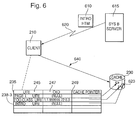
- Figure 6 depicts transmission of a second HTML document 610 from a second HTTP server 615 , named SYSB, to client 210 over communications link 620 .
- client 210 Upon receipt of document 610 , client 210 updates cache 230 as previously described. That is, client 210 adds a new row 238-3 in which URI column 245 is set to the URI for file 610 , OID column 247 is set to null, and cache pointer column 249 is set to point to cache element 620 .
- FIG. 7 depicts an example of HTML document 610 illustrative of the present invention.
- HTML document 610 comprises a number of HTML tags 710 , including applet tag 730 .
- Applet tag 730 comprises a CODE parameter 740 , a WIDTH parameter 742 , and a HEIGHT parameter 744 , and OID parameter 750 .
- CODE, WIDTH, and HEIGHT parameters in applet tag 730 are arbitrary and are not the same as those previously shown for Applet tag 330 in Figure 3 .
- the OID parameter 750 has a value of 1.1.999999.72.6.3, which is identical to the previously obtained object, as can be seen by reference to cache table row 238-2 in Figure 5 . Therefore, it will be seen that there are two different methods by which client 210 may obtain a copy of the desired object. It may issue a second HTTP request to server SYSB 615 using the URI, or it may retrieve the corresponding cache element 520 from the cache.
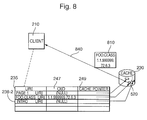
- Figure 8 depicts the process by which client computer 210 obtains a copy of the desired object.
- client computer 210 traverses cache table 235 , searching for a matching OID value in column 247 .
- a match is found in row 238-2 .
- Client computer 210 then references the corresponding cache pointer column 249 for row 238-2 , which points to cache element 520 within cache 230 .
- Client computer 210 then copies cache element 520 from cache 230 to its own memory as shown by arrow 840 .
- the copy loaded is equal to the contents previously downloaded as shown in Figure 5 from server SYSA, and is not freshly loaded from server SYSB 615 . That is, the cache copy was obtained without regard for the location from which it was originally obtained, or from the location specified in HTML document 610 .
- Figures 2 through 8 depict a location-independent means of obtaining copies of resources, which would otherwise require redundant transmission of copies of resources identical to copies that had already been previously obtained.
- the examples shown depict retrieval of a data object in the form of a Java applet or a GIF file
- the invention may also be applied to retrieval of any machine-readable resource, for example, a portion of a computer program such as a subroutine or other program segment, a text file, a sound file, or a data object that comprises a collection of multiple data objects.
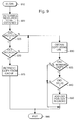
- Figure 9 is a flow chart depicting the overall operation of the invention. Execution begins in step 910 .
- the client computer determines what resource is desired to be obtained, e.g., by examining an applet tag in a previously downloaded HTML file.
- the client computer checks to see whether an OID was specified for the desired resource. If no OID was specified, execution proceeds with step 930 .
- the client computer obtains a copy using the URI, for example by issuing an HTTP GET request to the server corresponding to the URI.
- step 935 the client verifies that an OID was encoded into the retrieved copy. If so, control proceeds to step 940 .
- step 940 the client checks to see whether the OID is valid, for example, by verifying a digital signature. If so, control proceeds to step 950 .
- step 950 client computer 210 updates the OID status in the cache for the file obtained. If either no OID is specified in the retrieved copy, or an OID is specified but is not valid, step 950 is skipped, and control proceeds to step 990 where processing of the retrieved object is complete.
- the steps of verifying the OID from the copy of the retrieved object, and validating the OID against the received object are optional and may be omitted in certain environments.
- step 970 the client computer inspects the cache table to determine whether an object with the desired object identifier has previously been downloaded and is available in the cache. If no such object is found in the cache, control proceeds to step 930 , as if no OID had been specified. If the desired OID entry is found in the cache table, however, control proceeds to step 975 , in which the client computer retrieves the cache copy, loads it into memory and proceeds to execute using the copy retrieved from the cache. In any event, after step 975 , processing for the object exits at step 990 .
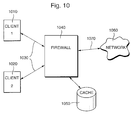
- Figure 10 depicts an alternate embodiment of the present invention.
- a plurality of clients 1010 and 1020 are in communication with a firewall server 1040 using communication links 1030 .
- Firewall server 1040 may be, for example, a proxy server, a firewall or a gateway.
- Cache 1050 is operated under the control of firewall server 1040 .
- firewall server 1040 makes requests to various servers in network 1060 over communication link 1070 .
- firewall server 1040 In the embodiment depicted it is not necessary for clients 1010 and 1020 to maintain their own caches. Instead, requests for resources are provided to the firewall server 1040 and include both the location-dependent URI associated with the specific copy of the resource, as well as the location independent OID (if any) associated with the resource.
- Firewall server 1040 maintains cache 1050 as previously described. When an object with an OID corresponding to an OID requested by one of clients 1010 or 1020 is found in cache 1050 , firewall server 1040 responds to the respective client with a copy of the object as obtained from the cache. If no such object is found in the cache, firewall server 1040 uses the supplied URI to obtain a new copy from network 1060 .
Landscapes
- Engineering & Computer Science (AREA)
- Signal Processing (AREA)
- Computer Networks & Wireless Communication (AREA)
- Theoretical Computer Science (AREA)
- Databases & Information Systems (AREA)
- Data Mining & Analysis (AREA)
- Physics & Mathematics (AREA)
- General Engineering & Computer Science (AREA)
- General Physics & Mathematics (AREA)
- Computer Security & Cryptography (AREA)
- Information Retrieval, Db Structures And Fs Structures Therefor (AREA)
- Stored Programmes (AREA)
- Devices For Executing Special Programs (AREA)
- Information Transfer Between Computers (AREA)
- Computer And Data Communications (AREA)
Applications Claiming Priority (2)
| Application Number | Priority Date | Filing Date | Title |
|---|---|---|---|
| US675237 | 1996-07-02 | ||
| US08/675,237 US6154742A (en) | 1996-07-02 | 1996-07-02 | System, method, apparatus and article of manufacture for identity-based caching (#15) |
Publications (3)
| Publication Number | Publication Date |
|---|---|
| EP0834818A2 true EP0834818A2 (de) | 1998-04-08 |
| EP0834818A3 EP0834818A3 (de) | 1999-03-31 |
| EP0834818B1 EP0834818B1 (de) | 2004-04-14 |
Family
ID=24709610
Family Applications (1)
| Application Number | Title | Priority Date | Filing Date |
|---|---|---|---|
| EP97110837A Expired - Lifetime EP0834818B1 (de) | 1996-07-02 | 1997-07-01 | System, Verfahren, Gerät und Herstellungsgegenstand für identitätsbasiertes Cachen |
Country Status (4)
| Country | Link |
|---|---|
| US (1) | US6154742A (de) |
| EP (1) | EP0834818B1 (de) |
| JP (1) | JPH10232813A (de) |
| DE (1) | DE69728619T2 (de) |
Cited By (9)
| Publication number | Priority date | Publication date | Assignee | Title |
|---|---|---|---|---|
| US6134583A (en) * | 1996-07-01 | 2000-10-17 | Sun Microsystems, Inc. | Method, system, apparatus and article of manufacture for providing identity-based caching services to a plurality of computer systems (#16) |
| EP1154356A1 (de) * | 2000-05-09 | 2001-11-14 | Alcatel | Zwischenspeicherung von Dateien eines verteilten Dateisystems während des Ladens |
| EP1247201A2 (de) * | 1999-12-23 | 2002-10-09 | Accenture LLP | Verfahren zum verwalten eines versorgungsdienstes mit hilfe eines netzwerks |
| EP1257945A2 (de) * | 1999-11-22 | 2002-11-20 | Accenture LLP | Gemeinsamer zugriff auf technologie während der verwaltung und ortung von betriebsmitteln in einer netzwerkgestützten, auf eine versorgungskette bezogenen umgebung und dazugehöriges verfahren |
| EP1275052A2 (de) * | 1999-11-22 | 2003-01-15 | Accenture LLP | Netzwerk und produktzyklus-bezogene betriebsmittelverwaltung in einer e-commerce umgebung und dazugehöriges verfahren |
| WO2002005134A3 (en) * | 2000-07-07 | 2004-01-15 | Fitech Lab Inc | Methods and systems for a providing a highly scalable synchronous data cache |
| EP0977133A3 (de) * | 1998-07-28 | 2004-12-22 | Fujitsu Limited | Anzeigegerät und Hypertext-Anzeigesystem zum Anzeigen von Hypertextdaten |
| US7716077B1 (en) | 1999-11-22 | 2010-05-11 | Accenture Global Services Gmbh | Scheduling and planning maintenance and service in a network-based supply chain environment |
| US9922345B2 (en) | 1999-11-22 | 2018-03-20 | Accenture Global Services Limited | Increased visibility during order management in a network-based supply chain environment |
Families Citing this family (38)
| Publication number | Priority date | Publication date | Assignee | Title |
|---|---|---|---|---|
| US6253228B1 (en) * | 1997-03-31 | 2001-06-26 | Apple Computer, Inc. | Method and apparatus for updating and synchronizing information between a client and a server |
| US7401115B1 (en) * | 2000-10-23 | 2008-07-15 | Aol Llc | Processing selected browser requests |
| US6421666B1 (en) | 1999-11-08 | 2002-07-16 | Oracle Corporation | Mechanism for sharing ancillary data between a family of related functions |
| US7278100B1 (en) * | 2000-07-10 | 2007-10-02 | International Business Machines Corporation | Translating a non-unicode string stored in a constant into unicode, and storing the unicode into the constant |
| US6748396B2 (en) * | 2001-06-01 | 2004-06-08 | International Business Machines Corporation | Independent class loader for dynamic class loading |
| US7797376B1 (en) * | 2001-11-13 | 2010-09-14 | Cisco Technology, Inc. | Arrangement for providing content operation identifiers with a specified HTTP object for acceleration of relevant content operations |
| US6928526B1 (en) * | 2002-12-20 | 2005-08-09 | Datadomain, Inc. | Efficient data storage system |
| US7596554B2 (en) * | 2003-12-09 | 2009-09-29 | International Business Machines Corporation | System and method for generating a unique, file system independent key from a URI (universal resource indentifier) for use in an index-less voicexml browser caching mechanism |
| US7281950B2 (en) | 2004-09-29 | 2007-10-16 | Fci Americas Technology, Inc. | High speed connectors that minimize signal skew and crosstalk |
| US7546322B2 (en) * | 2005-03-09 | 2009-06-09 | International Business Machines Corporation | Generating unique name/version number pairs when names can be re-used |
| US7553182B2 (en) * | 2006-06-09 | 2009-06-30 | Fci Americas Technology, Inc. | Electrical connectors with alignment guides |
| US7500871B2 (en) | 2006-08-21 | 2009-03-10 | Fci Americas Technology, Inc. | Electrical connector system with jogged contact tails |
| US7497736B2 (en) | 2006-12-19 | 2009-03-03 | Fci Americas Technology, Inc. | Shieldless, high-speed, low-cross-talk electrical connector |
| US7811100B2 (en) | 2007-07-13 | 2010-10-12 | Fci Americas Technology, Inc. | Electrical connector system having a continuous ground at the mating interface thereof |
| US7635278B2 (en) * | 2007-08-30 | 2009-12-22 | Fci Americas Technology, Inc. | Mezzanine-type electrical connectors |
| US8147254B2 (en) * | 2007-11-15 | 2012-04-03 | Fci Americas Technology Llc | Electrical connector mating guide |
| US8764464B2 (en) | 2008-02-29 | 2014-07-01 | Fci Americas Technology Llc | Cross talk reduction for high speed electrical connectors |
| US8277241B2 (en) | 2008-09-25 | 2012-10-02 | Fci Americas Technology Llc | Hermaphroditic electrical connector |
| US8545240B2 (en) | 2008-11-14 | 2013-10-01 | Molex Incorporated | Connector with terminals forming differential pairs |
| MY155071A (en) | 2008-12-12 | 2015-08-28 | Molex Inc | Resonance modifying connector |
| US7976326B2 (en) * | 2008-12-31 | 2011-07-12 | Fci Americas Technology Llc | Gender-neutral electrical connector |
| US9277649B2 (en) | 2009-02-26 | 2016-03-01 | Fci Americas Technology Llc | Cross talk reduction for high-speed electrical connectors |
| US8366485B2 (en) | 2009-03-19 | 2013-02-05 | Fci Americas Technology Llc | Electrical connector having ribbed ground plate |
| US8267721B2 (en) | 2009-10-28 | 2012-09-18 | Fci Americas Technology Llc | Electrical connector having ground plates and ground coupling bar |
| US8616919B2 (en) | 2009-11-13 | 2013-12-31 | Fci Americas Technology Llc | Attachment system for electrical connector |
| EP2624034A1 (de) | 2012-01-31 | 2013-08-07 | Fci | Abbaubare optische Kupplungsvorrichtung |
| USD718253S1 (en) | 2012-04-13 | 2014-11-25 | Fci Americas Technology Llc | Electrical cable connector |
| USD727268S1 (en) | 2012-04-13 | 2015-04-21 | Fci Americas Technology Llc | Vertical electrical connector |
| USD727852S1 (en) | 2012-04-13 | 2015-04-28 | Fci Americas Technology Llc | Ground shield for a right angle electrical connector |
| US8944831B2 (en) | 2012-04-13 | 2015-02-03 | Fci Americas Technology Llc | Electrical connector having ribbed ground plate with engagement members |
| US9257778B2 (en) | 2012-04-13 | 2016-02-09 | Fci Americas Technology | High speed electrical connector |
| USD751507S1 (en) | 2012-07-11 | 2016-03-15 | Fci Americas Technology Llc | Electrical connector |
| US9543703B2 (en) | 2012-07-11 | 2017-01-10 | Fci Americas Technology Llc | Electrical connector with reduced stack height |
| USD745852S1 (en) | 2013-01-25 | 2015-12-22 | Fci Americas Technology Llc | Electrical connector |
| USD720698S1 (en) | 2013-03-15 | 2015-01-06 | Fci Americas Technology Llc | Electrical cable connector |
| US10277668B1 (en) | 2015-04-06 | 2019-04-30 | EMC IP Holding Company LLC | Beacon-based distributed data processing platform |
| US10425350B1 (en) * | 2015-04-06 | 2019-09-24 | EMC IP Holding Company LLC | Distributed catalog service for data processing platform |
| US10706970B1 (en) | 2015-04-06 | 2020-07-07 | EMC IP Holding Company LLC | Distributed data analytics |
Family Cites Families (10)
| Publication number | Priority date | Publication date | Assignee | Title |
|---|---|---|---|---|
| CA1337132C (en) * | 1988-07-15 | 1995-09-26 | Robert Filepp | Reception system for an interactive computer network and method of operation |
| AU628753B2 (en) * | 1990-08-14 | 1992-09-17 | Digital Equipment Corporation | Method and apparatus for implementing server functions in a distributed heterogeneous environment |
| AU639802B2 (en) * | 1990-08-14 | 1993-08-05 | Oracle International Corporation | Methods and apparatus for providing dynamic invocation of applications in a distributed heterogeneous environment |
| US5426747A (en) * | 1991-03-22 | 1995-06-20 | Object Design, Inc. | Method and apparatus for virtual memory mapping and transaction management in an object-oriented database system |
| US5555388A (en) * | 1992-08-20 | 1996-09-10 | Borland International, Inc. | Multi-user system and methods providing improved file management by reading |
| FR2698977B1 (fr) * | 1992-12-03 | 1994-12-30 | Alsthom Cge Alcatel | Système d'information multimédia. |
| CA2110243C (en) * | 1992-12-31 | 1998-08-11 | Philip Steven Winterbottom | Apparatus and methods for making a portion of a first name space available as a portion of a second name space |
| US5649200A (en) * | 1993-01-08 | 1997-07-15 | Atria Software, Inc. | Dynamic rule-based version control system |
| US5430872A (en) * | 1993-03-12 | 1995-07-04 | Asymetrix Corporation | Verifying multimedia linking for a multimedia presentation |
| US5664185A (en) * | 1995-05-22 | 1997-09-02 | Sterling Commerce, Inc. | Nameserver administration system and method |
-
1996
- 1996-07-02 US US08/675,237 patent/US6154742A/en not_active Expired - Lifetime
-
1997
- 1997-07-01 EP EP97110837A patent/EP0834818B1/de not_active Expired - Lifetime
- 1997-07-01 DE DE69728619T patent/DE69728619T2/de not_active Expired - Fee Related
- 1997-07-01 JP JP9211116A patent/JPH10232813A/ja active Pending
Non-Patent Citations (3)
| Title |
|---|
| ANDERSON T E ET AL: "SERVERLESS NETWORK FILE SYSTEMS" OPERATING SYSTEMS REVIEW (SIGOPS), vol. 29, no. 5, 1 December 1995, pages 109-126, XP000584821 * |
| ANONYMOUS: "Extensible, Language Independent Method of Specification for Aribtrary ASN.1 Values" IBM TECHNICAL DISCLOSURE BULLETIN, vol. 37, no. 4B, April 1994, pages 353-356, XP002091096 New York, US * |
| ANONYMOUS: "Name Server Based NAMING Algorithms With the Concept of Assigned Pre- Fixes in Distributed Directory Environment" IBM TECHNICAL DISCLOSURE BULLETIN, vol. 28, no. 8, January 1986, pages 3583-3588, XP002091097 New York, US * |
Cited By (12)
| Publication number | Priority date | Publication date | Assignee | Title |
|---|---|---|---|---|
| US6134583A (en) * | 1996-07-01 | 2000-10-17 | Sun Microsystems, Inc. | Method, system, apparatus and article of manufacture for providing identity-based caching services to a plurality of computer systems (#16) |
| EP0977133A3 (de) * | 1998-07-28 | 2004-12-22 | Fujitsu Limited | Anzeigegerät und Hypertext-Anzeigesystem zum Anzeigen von Hypertextdaten |
| US6931588B1 (en) | 1998-07-28 | 2005-08-16 | Fujitsu Limited | Method, medium, display device, and hypertext display system including correspondence information between location information and link information |
| EP1257945A2 (de) * | 1999-11-22 | 2002-11-20 | Accenture LLP | Gemeinsamer zugriff auf technologie während der verwaltung und ortung von betriebsmitteln in einer netzwerkgestützten, auf eine versorgungskette bezogenen umgebung und dazugehöriges verfahren |
| EP1275052A2 (de) * | 1999-11-22 | 2003-01-15 | Accenture LLP | Netzwerk und produktzyklus-bezogene betriebsmittelverwaltung in einer e-commerce umgebung und dazugehöriges verfahren |
| US7716077B1 (en) | 1999-11-22 | 2010-05-11 | Accenture Global Services Gmbh | Scheduling and planning maintenance and service in a network-based supply chain environment |
| US9922345B2 (en) | 1999-11-22 | 2018-03-20 | Accenture Global Services Limited | Increased visibility during order management in a network-based supply chain environment |
| US10013705B2 (en) | 1999-11-22 | 2018-07-03 | Accenture Global Services Limited | Increased visibility during order management in a network-based supply chain environment |
| EP1247201A2 (de) * | 1999-12-23 | 2002-10-09 | Accenture LLP | Verfahren zum verwalten eines versorgungsdienstes mit hilfe eines netzwerks |
| EP1154356A1 (de) * | 2000-05-09 | 2001-11-14 | Alcatel | Zwischenspeicherung von Dateien eines verteilten Dateisystems während des Ladens |
| WO2002005134A3 (en) * | 2000-07-07 | 2004-01-15 | Fitech Lab Inc | Methods and systems for a providing a highly scalable synchronous data cache |
| EP1736899A3 (de) * | 2000-07-07 | 2011-02-16 | Fitech Laboratories, Inc. | Verfahren und Systeme zur Bereitstellung eines hochgradig skalierbaren synchronen Daten-CacheSpeichers |
Also Published As
| Publication number | Publication date |
|---|---|
| DE69728619D1 (de) | 2004-05-19 |
| EP0834818A3 (de) | 1999-03-31 |
| JPH10232813A (ja) | 1998-09-02 |
| EP0834818B1 (de) | 2004-04-14 |
| US6154742A (en) | 2000-11-28 |
| DE69728619T2 (de) | 2004-09-23 |
Similar Documents
| Publication | Publication Date | Title |
|---|---|---|
| US6134583A (en) | Method, system, apparatus and article of manufacture for providing identity-based caching services to a plurality of computer systems (#16) | |
| US6154742A (en) | System, method, apparatus and article of manufacture for identity-based caching (#15) | |
| EP0861467B1 (de) | Ein globales registersystem und verfahren basiert auf objektorientierter programmierung | |
| US6456308B1 (en) | Embedded web server | |
| US6389592B1 (en) | Method for deployment of incremental versions of applications | |
| US7269664B2 (en) | Network portal system and methods | |
| US6549955B2 (en) | System and method for dynamic generation of remote proxies | |
| US6012067A (en) | Method and apparatus for storing and manipulating objects in a plurality of relational data managers on the web | |
| US7904803B2 (en) | Method and system for converting user interface source code of a legacy application to web pages | |
| US6820267B2 (en) | Method and system for remote automation of object oriented applications | |
| US5973696A (en) | Embedded web server | |
| US20020120859A1 (en) | Method and apparatus for an improved security system mechanism in a business applications management system platform | |
| EP0836139A2 (de) | Objektorientiertes System, Verfahren und hergestellter Gegenstand für einen Client-Server graphischen Benützeroberfläche-Rahmenwerk in einem Unternehmens-Datenverarbeitungsrahmenwerksystem | |
| EP0817031A2 (de) | Gebrauch eines verteilten objektorientierten Systems zum Auffinden und Fernladen von auf Java basierten Anwendungen | |
| EP0822490A2 (de) | Objektorientiertes System, Verfahren und hergestellter Gegenstand für ein Client-Server-Kommunikationsrahmenwerk | |
| WO2001052090A2 (en) | Method and apparatus for a web content platform | |
| US20030033439A1 (en) | Document/view application development architecture applied to activeX technology for web based application delivery | |
| US6658426B1 (en) | Object-oriented database abstraction and statement generation | |
| Julin et al. | Generalized Emulation Services for Mach 3.0: Overview, Experiences and Current Status. | |
| WO2002037336A2 (en) | Object-oriented database abstraction and statement generation | |
| US7310631B2 (en) | Method and system for facilitating access to external data | |
| Chu et al. | Building an XML-based unified user interface system under J2EE architecture | |
| CA2238973C (en) | An object oriented programming based global registry system, method, and article of manufacture | |
| Basumallick et al. | Design and implementation of a distributed database system | |
| Lee | Moving the Hazard Prediction and Assessment Capability to a distributed, portable architecture |
Legal Events
| Date | Code | Title | Description |
|---|---|---|---|
| PUAI | Public reference made under article 153(3) epc to a published international application that has entered the european phase |
Free format text: ORIGINAL CODE: 0009012 |
|
| AK | Designated contracting states |
Kind code of ref document: A2 Designated state(s): DE FR GB NL SE |
|
| PUAL | Search report despatched |
Free format text: ORIGINAL CODE: 0009013 |
|
| AK | Designated contracting states |
Kind code of ref document: A3 Designated state(s): AT BE CH DE DK ES FI FR GB GR IE IT LI LU MC NL PT SE |
|
| 17P | Request for examination filed |
Effective date: 19990930 |
|
| AKX | Designation fees paid |
Free format text: DE FR GB NL SE |
|
| 17Q | First examination report despatched |
Effective date: 20030409 |
|
| GRAP | Despatch of communication of intention to grant a patent |
Free format text: ORIGINAL CODE: EPIDOSNIGR1 |
|
| GRAS | Grant fee paid |
Free format text: ORIGINAL CODE: EPIDOSNIGR3 |
|
| GRAA | (expected) grant |
Free format text: ORIGINAL CODE: 0009210 |
|
| AK | Designated contracting states |
Kind code of ref document: B1 Designated state(s): DE FR GB NL SE |
|
| PG25 | Lapsed in a contracting state [announced via postgrant information from national office to epo] |
Ref country code: NL Free format text: LAPSE BECAUSE OF FAILURE TO SUBMIT A TRANSLATION OF THE DESCRIPTION OR TO PAY THE FEE WITHIN THE PRESCRIBED TIME-LIMIT Effective date: 20040414 |
|
| REG | Reference to a national code |
Ref country code: GB Ref legal event code: FG4D |
|
| REF | Corresponds to: |
Ref document number: 69728619 Country of ref document: DE Date of ref document: 20040519 Kind code of ref document: P |
|
| PGFP | Annual fee paid to national office [announced via postgrant information from national office to epo] |
Ref country code: FR Payment date: 20040708 Year of fee payment: 8 |
|
| PG25 | Lapsed in a contracting state [announced via postgrant information from national office to epo] |
Ref country code: SE Free format text: LAPSE BECAUSE OF FAILURE TO SUBMIT A TRANSLATION OF THE DESCRIPTION OR TO PAY THE FEE WITHIN THE PRESCRIBED TIME-LIMIT Effective date: 20040714 |
|
| NLV1 | Nl: lapsed or annulled due to failure to fulfill the requirements of art. 29p and 29m of the patents act | ||
| ET | Fr: translation filed | ||
| PLBE | No opposition filed within time limit |
Free format text: ORIGINAL CODE: 0009261 |
|
| STAA | Information on the status of an ep patent application or granted ep patent |
Free format text: STATUS: NO OPPOSITION FILED WITHIN TIME LIMIT |
|
| 26N | No opposition filed |
Effective date: 20050117 |
|
| PGFP | Annual fee paid to national office [announced via postgrant information from national office to epo] |
Ref country code: DE Payment date: 20060629 Year of fee payment: 10 |
|
| PG25 | Lapsed in a contracting state [announced via postgrant information from national office to epo] |
Ref country code: DE Free format text: LAPSE BECAUSE OF NON-PAYMENT OF DUE FEES Effective date: 20080201 |
|
| PG25 | Lapsed in a contracting state [announced via postgrant information from national office to epo] |
Ref country code: FR Free format text: LAPSE BECAUSE OF NON-PAYMENT OF DUE FEES Effective date: 20050731 |
|
| REG | Reference to a national code |
Ref country code: FR Ref legal event code: ST Effective date: 20110218 |
|
| PGFP | Annual fee paid to national office [announced via postgrant information from national office to epo] |
Ref country code: GB Payment date: 20160629 Year of fee payment: 20 |
|
| REG | Reference to a national code |
Ref country code: GB Ref legal event code: PE20 Expiry date: 20170630 |
|
| PG25 | Lapsed in a contracting state [announced via postgrant information from national office to epo] |
Ref country code: GB Free format text: LAPSE BECAUSE OF EXPIRATION OF PROTECTION Effective date: 20170630 |