EP0835246B1 - Aromatic compounds and pharmaceutical compositions containing them - Google Patents
Aromatic compounds and pharmaceutical compositions containing them Download PDFInfo
- Publication number
- EP0835246B1 EP0835246B1 EP96920936A EP96920936A EP0835246B1 EP 0835246 B1 EP0835246 B1 EP 0835246B1 EP 96920936 A EP96920936 A EP 96920936A EP 96920936 A EP96920936 A EP 96920936A EP 0835246 B1 EP0835246 B1 EP 0835246B1
- Authority
- EP
- European Patent Office
- Prior art keywords
- alkyl
- formula
- compound
- optionally substituted
- hydroxy
- Prior art date
- Legal status (The legal status is an assumption and is not a legal conclusion. Google has not performed a legal analysis and makes no representation as to the accuracy of the status listed.)
- Expired - Lifetime
Links
- 239000008194 pharmaceutical composition Substances 0.000 title claims description 6
- 150000001491 aromatic compounds Chemical class 0.000 title description 3
- 150000001875 compounds Chemical class 0.000 claims description 188
- -1 nitro, hydroxy, amino Chemical group 0.000 claims description 103
- 125000004169 (C1-C6) alkyl group Chemical group 0.000 claims description 30
- 239000001257 hydrogen Substances 0.000 claims description 30
- 229910052739 hydrogen Inorganic materials 0.000 claims description 30
- 150000002148 esters Chemical class 0.000 claims description 29
- 125000005843 halogen group Chemical group 0.000 claims description 28
- 125000001424 substituent group Chemical group 0.000 claims description 28
- 125000002887 hydroxy group Chemical group [H]O* 0.000 claims description 26
- 208000002193 Pain Diseases 0.000 claims description 25
- 125000004093 cyano group Chemical group *C#N 0.000 claims description 22
- 150000003839 salts Chemical class 0.000 claims description 22
- 125000002023 trifluoromethyl group Chemical group FC(F)(F)* 0.000 claims description 22
- 125000001997 phenyl group Chemical group [H]C1=C([H])C([H])=C(*)C([H])=C1[H] 0.000 claims description 21
- 125000004178 (C1-C4) alkyl group Chemical group 0.000 claims description 20
- 238000001727 in vivo Methods 0.000 claims description 18
- 125000006239 protecting group Chemical group 0.000 claims description 18
- 125000003917 carbamoyl group Chemical group [H]N([H])C(*)=O 0.000 claims description 17
- 125000004435 hydrogen atom Chemical group [H]* 0.000 claims description 16
- 150000001408 amides Chemical class 0.000 claims description 15
- 125000002924 primary amino group Chemical group [H]N([H])* 0.000 claims description 15
- 125000000882 C2-C6 alkenyl group Chemical group 0.000 claims description 14
- 125000000623 heterocyclic group Chemical group 0.000 claims description 14
- 125000004432 carbon atom Chemical group C* 0.000 claims description 12
- 125000000449 nitro group Chemical group [O-][N+](*)=O 0.000 claims description 12
- IJGRMHOSHXDMSA-UHFFFAOYSA-N nitrogen Substances N#N IJGRMHOSHXDMSA-UHFFFAOYSA-N 0.000 claims description 12
- 125000003601 C2-C6 alkynyl group Chemical group 0.000 claims description 11
- 239000002253 acid Substances 0.000 claims description 11
- 125000002496 methyl group Chemical group [H]C([H])([H])* 0.000 claims description 11
- 229910052757 nitrogen Inorganic materials 0.000 claims description 11
- 125000001544 thienyl group Chemical group 0.000 claims description 11
- 125000004191 (C1-C6) alkoxy group Chemical group 0.000 claims description 10
- QVGXLLKOCUKJST-UHFFFAOYSA-N atomic oxygen Chemical group [O] QVGXLLKOCUKJST-UHFFFAOYSA-N 0.000 claims description 10
- 125000001495 ethyl group Chemical group [H]C([H])([H])C([H])([H])* 0.000 claims description 10
- 229910052760 oxygen Inorganic materials 0.000 claims description 10
- 239000001301 oxygen Substances 0.000 claims description 10
- 125000002098 pyridazinyl group Chemical group 0.000 claims description 10
- 125000004076 pyridyl group Chemical group 0.000 claims description 10
- 125000000229 (C1-C4)alkoxy group Chemical group 0.000 claims description 9
- UFHFLCQGNIYNRP-UHFFFAOYSA-N Hydrogen Chemical compound [H][H] UFHFLCQGNIYNRP-UHFFFAOYSA-N 0.000 claims description 9
- 125000003178 carboxy group Chemical group [H]OC(*)=O 0.000 claims description 9
- 125000000335 thiazolyl group Chemical group 0.000 claims description 9
- 241000282414 Homo sapiens Species 0.000 claims description 7
- 241001465754 Metazoa Species 0.000 claims description 7
- 238000004519 manufacturing process Methods 0.000 claims description 7
- 125000002971 oxazolyl group Chemical group 0.000 claims description 7
- 125000002861 (C1-C4) alkanoyl group Chemical group 0.000 claims description 6
- 125000006570 (C5-C6) heteroaryl group Chemical group 0.000 claims description 6
- NINIDFKCEFEMDL-UHFFFAOYSA-N Sulfur Chemical group [S] NINIDFKCEFEMDL-UHFFFAOYSA-N 0.000 claims description 6
- 239000005864 Sulphur Chemical group 0.000 claims description 6
- 230000003213 activating effect Effects 0.000 claims description 6
- 125000000714 pyrimidinyl group Chemical group 0.000 claims description 6
- 125000006413 ring segment Chemical group 0.000 claims description 6
- 125000001113 thiadiazolyl group Chemical group 0.000 claims description 6
- 125000001436 propyl group Chemical group [H]C([*])([H])C([H])([H])C([H])([H])[H] 0.000 claims description 5
- 125000003373 pyrazinyl group Chemical group 0.000 claims description 5
- 125000003831 tetrazolyl group Chemical group 0.000 claims description 5
- FBEXNBDUERYLOP-UHFFFAOYSA-N 4-[(2-methoxyphenyl)methylamino]benzoic acid Chemical compound COC1=CC=CC=C1CNC1=CC=C(C(O)=O)C=C1 FBEXNBDUERYLOP-UHFFFAOYSA-N 0.000 claims description 4
- 239000003814 drug Substances 0.000 claims description 4
- 125000001072 heteroaryl group Chemical group 0.000 claims description 4
- 125000004433 nitrogen atom Chemical group N* 0.000 claims description 4
- 125000005913 (C3-C6) cycloalkyl group Chemical group 0.000 claims description 3
- 125000004214 1-pyrrolidinyl group Chemical group [H]C1([H])N(*)C([H])([H])C([H])([H])C1([H])[H] 0.000 claims description 3
- DIDWQBYXIYMULL-UHFFFAOYSA-N 4-chloro-3-[(2,3-dimethoxyphenyl)methylamino]-5-sulfamoylbenzoic acid Chemical compound COC1=CC=CC(CNC=2C(=C(C=C(C=2)C(O)=O)S(N)(=O)=O)Cl)=C1OC DIDWQBYXIYMULL-UHFFFAOYSA-N 0.000 claims description 3
- GMMBETCEGBXFIY-UHFFFAOYSA-N 6-[(2-methoxyphenyl)methylamino]pyridine-3-carboxylic acid Chemical compound COC1=CC=CC=C1CNC1=CC=C(C(O)=O)C=N1 GMMBETCEGBXFIY-UHFFFAOYSA-N 0.000 claims description 3
- 125000003282 alkyl amino group Chemical group 0.000 claims description 3
- 125000000539 amino acid group Chemical group 0.000 claims description 3
- 125000002883 imidazolyl group Chemical group 0.000 claims description 3
- 125000005647 linker group Chemical group 0.000 claims description 3
- 125000005322 morpholin-1-yl group Chemical group 0.000 claims description 3
- 125000001624 naphthyl group Chemical group 0.000 claims description 3
- 125000004043 oxo group Chemical group O=* 0.000 claims description 3
- 125000000587 piperidin-1-yl group Chemical group [H]C1([H])N(*)C([H])([H])C([H])([H])C([H])([H])C1([H])[H] 0.000 claims description 3
- 239000002243 precursor Substances 0.000 claims description 3
- 125000005344 pyridylmethyl group Chemical group [H]C1=C([H])C([H])=C([H])C(=N1)C([H])([H])* 0.000 claims description 3
- 125000006272 (C3-C7) cycloalkyl group Chemical group 0.000 claims description 2
- NEAQRZUHTPSBBM-UHFFFAOYSA-N 2-hydroxy-3,3-dimethyl-7-nitro-4h-isoquinolin-1-one Chemical compound C1=C([N+]([O-])=O)C=C2C(=O)N(O)C(C)(C)CC2=C1 NEAQRZUHTPSBBM-UHFFFAOYSA-N 0.000 claims description 2
- JJLIONLDXUJJOW-UHFFFAOYSA-N 5-[(2,5-dimethoxyphenyl)methylamino]-2-hydroxybenzoic acid Chemical compound COC1=CC=C(OC)C(CNC=2C=C(C(O)=CC=2)C(O)=O)=C1 JJLIONLDXUJJOW-UHFFFAOYSA-N 0.000 claims description 2
- 150000001204 N-oxides Chemical class 0.000 claims description 2
- 125000005119 alkyl cycloalkyl group Chemical group 0.000 claims description 2
- PGRHXDWITVMQBC-UHFFFAOYSA-N dehydroacetic acid Natural products CC(=O)C1C(=O)OC(C)=CC1=O PGRHXDWITVMQBC-UHFFFAOYSA-N 0.000 claims description 2
- 125000005842 heteroatom Chemical group 0.000 claims description 2
- PEQJBOMPGWYIRO-UHFFFAOYSA-N n-ethyl-3,4-dimethoxyaniline Chemical compound CCNC1=CC=C(OC)C(OC)=C1 PEQJBOMPGWYIRO-UHFFFAOYSA-N 0.000 claims description 2
- BDHFUVZGWQCTTF-UHFFFAOYSA-N sulfonic acid Chemical compound OS(=O)=O BDHFUVZGWQCTTF-UHFFFAOYSA-N 0.000 claims description 2
- 150000002431 hydrogen Chemical class 0.000 claims 5
- 239000003937 drug carrier Substances 0.000 claims 1
- RCCPEORTSYDPMB-UHFFFAOYSA-N hydroxy benzenecarboximidothioate Chemical compound OSC(=N)C1=CC=CC=C1 RCCPEORTSYDPMB-UHFFFAOYSA-N 0.000 claims 1
- IAZDPXIOMUYVGZ-WFGJKAKNSA-N Dimethyl sulfoxide Chemical compound [2H]C([2H])([2H])S(=O)C([2H])([2H])[2H] IAZDPXIOMUYVGZ-WFGJKAKNSA-N 0.000 description 142
- XEKOWRVHYACXOJ-UHFFFAOYSA-N Ethyl acetate Chemical compound CCOC(C)=O XEKOWRVHYACXOJ-UHFFFAOYSA-N 0.000 description 136
- YMWUJEATGCHHMB-UHFFFAOYSA-N Dichloromethane Chemical compound ClCCl YMWUJEATGCHHMB-UHFFFAOYSA-N 0.000 description 128
- RTZKZFJDLAIYFH-UHFFFAOYSA-N Diethyl ether Chemical compound CCOCC RTZKZFJDLAIYFH-UHFFFAOYSA-N 0.000 description 79
- OKKJLVBELUTLKV-UHFFFAOYSA-N Methanol Chemical compound OC OKKJLVBELUTLKV-UHFFFAOYSA-N 0.000 description 72
- 239000000243 solution Substances 0.000 description 69
- HEMHJVSKTPXQMS-UHFFFAOYSA-M Sodium hydroxide Chemical compound [OH-].[Na+] HEMHJVSKTPXQMS-UHFFFAOYSA-M 0.000 description 60
- XLYOFNOQVPJJNP-UHFFFAOYSA-N water Substances O XLYOFNOQVPJJNP-UHFFFAOYSA-N 0.000 description 57
- 229910001868 water Inorganic materials 0.000 description 53
- ZMXDDKWLCZADIW-UHFFFAOYSA-N N,N-Dimethylformamide Chemical compound CN(C)C=O ZMXDDKWLCZADIW-UHFFFAOYSA-N 0.000 description 52
- 238000000034 method Methods 0.000 description 52
- 238000006243 chemical reaction Methods 0.000 description 50
- VLKZOEOYAKHREP-UHFFFAOYSA-N n-Hexane Chemical compound CCCCCC VLKZOEOYAKHREP-UHFFFAOYSA-N 0.000 description 48
- QTBSBXVTEAMEQO-UHFFFAOYSA-N Acetic acid Chemical compound CC(O)=O QTBSBXVTEAMEQO-UHFFFAOYSA-N 0.000 description 46
- 239000000203 mixture Substances 0.000 description 46
- VEXZGXHMUGYJMC-UHFFFAOYSA-N Hydrochloric acid Chemical compound Cl VEXZGXHMUGYJMC-UHFFFAOYSA-N 0.000 description 44
- 239000007787 solid Substances 0.000 description 38
- LFQSCWFLJHTTHZ-UHFFFAOYSA-N Ethanol Chemical compound CCO LFQSCWFLJHTTHZ-UHFFFAOYSA-N 0.000 description 30
- YXFVVABEGXRONW-UHFFFAOYSA-N Toluene Chemical compound CC1=CC=CC=C1 YXFVVABEGXRONW-UHFFFAOYSA-N 0.000 description 30
- UIIMBOGNXHQVGW-UHFFFAOYSA-M Sodium bicarbonate Chemical compound [Na+].OC([O-])=O UIIMBOGNXHQVGW-UHFFFAOYSA-M 0.000 description 27
- XKRFYHLGVUSROY-UHFFFAOYSA-N Argon Chemical compound [Ar] XKRFYHLGVUSROY-UHFFFAOYSA-N 0.000 description 26
- WYURNTSHIVDZCO-UHFFFAOYSA-N Tetrahydrofuran Chemical compound C1CCOC1 WYURNTSHIVDZCO-UHFFFAOYSA-N 0.000 description 26
- BWHMMNNQKKPAPP-UHFFFAOYSA-L potassium carbonate Chemical compound [K+].[K+].[O-]C([O-])=O BWHMMNNQKKPAPP-UHFFFAOYSA-L 0.000 description 26
- 239000000047 product Substances 0.000 description 23
- 239000012044 organic layer Substances 0.000 description 20
- SECXISVLQFMRJM-UHFFFAOYSA-N N-Methylpyrrolidone Chemical compound CN1CCCC1=O SECXISVLQFMRJM-UHFFFAOYSA-N 0.000 description 18
- 229910052799 carbon Inorganic materials 0.000 description 18
- 229920006395 saturated elastomer Polymers 0.000 description 18
- NLXLAEXVIDQMFP-UHFFFAOYSA-N Ammonia chloride Chemical compound [NH4+].[Cl-] NLXLAEXVIDQMFP-UHFFFAOYSA-N 0.000 description 17
- 239000011541 reaction mixture Substances 0.000 description 17
- HPALAKNZSZLMCH-UHFFFAOYSA-M sodium;chloride;hydrate Chemical compound O.[Na+].[Cl-] HPALAKNZSZLMCH-UHFFFAOYSA-M 0.000 description 17
- 229960000583 acetic acid Drugs 0.000 description 16
- 239000002904 solvent Substances 0.000 description 16
- 239000012267 brine Substances 0.000 description 15
- 230000002829 reductive effect Effects 0.000 description 15
- JUJWROOIHBZHMG-UHFFFAOYSA-N Pyridine Chemical compound C1=CC=NC=C1 JUJWROOIHBZHMG-UHFFFAOYSA-N 0.000 description 14
- DTQVDTLACAAQTR-UHFFFAOYSA-N Trifluoroacetic acid Chemical compound OC(=O)C(F)(F)F DTQVDTLACAAQTR-UHFFFAOYSA-N 0.000 description 14
- 229910052786 argon Inorganic materials 0.000 description 13
- 239000002585 base Substances 0.000 description 13
- 229960004132 diethyl ether Drugs 0.000 description 13
- 229910000027 potassium carbonate Inorganic materials 0.000 description 13
- 229910000030 sodium bicarbonate Inorganic materials 0.000 description 13
- 235000017557 sodium bicarbonate Nutrition 0.000 description 13
- SIGLSFHKYOINAE-UHFFFAOYSA-N 6-[(5-bromo-2-propoxyphenyl)methyl-ethylamino]pyridazine-3-carboxylic acid Chemical compound CCCOC1=CC=C(Br)C=C1CN(CC)C1=CC=C(C(O)=O)N=N1 SIGLSFHKYOINAE-UHFFFAOYSA-N 0.000 description 12
- XIUVRDRLZYFQCI-UHFFFAOYSA-N 6-[[5-bromo-2-(cyclopropylmethoxy)phenyl]methyl-ethylamino]pyridazine-3-carboxylic acid Chemical compound C=1C=C(C(O)=O)N=NC=1N(CC)CC1=CC(Br)=CC=C1OCC1CC1 XIUVRDRLZYFQCI-UHFFFAOYSA-N 0.000 description 12
- 238000003820 Medium-pressure liquid chromatography Methods 0.000 description 12
- 125000002252 acyl group Chemical group 0.000 description 12
- 239000003921 oil Substances 0.000 description 12
- 235000019198 oils Nutrition 0.000 description 12
- 238000012360 testing method Methods 0.000 description 12
- VYPSYNLAJGMNEJ-UHFFFAOYSA-N Silicium dioxide Chemical compound O=[Si]=O VYPSYNLAJGMNEJ-UHFFFAOYSA-N 0.000 description 11
- 230000015572 biosynthetic process Effects 0.000 description 11
- 125000001246 bromo group Chemical group Br* 0.000 description 11
- 238000000921 elemental analysis Methods 0.000 description 11
- 238000010992 reflux Methods 0.000 description 11
- CSNNHWWHGAXBCP-UHFFFAOYSA-L Magnesium sulfate Chemical compound [Mg+2].[O-][S+2]([O-])([O-])[O-] CSNNHWWHGAXBCP-UHFFFAOYSA-L 0.000 description 10
- LRHPLDYGYMQRHN-UHFFFAOYSA-N N-Butanol Chemical compound CCCCO LRHPLDYGYMQRHN-UHFFFAOYSA-N 0.000 description 10
- 125000001309 chloro group Chemical group Cl* 0.000 description 10
- 239000002244 precipitate Substances 0.000 description 10
- WEVYAHXRMPXWCK-UHFFFAOYSA-N Acetonitrile Chemical compound CC#N WEVYAHXRMPXWCK-UHFFFAOYSA-N 0.000 description 9
- WVDDGKGOMKODPV-UHFFFAOYSA-N Benzyl alcohol Chemical compound OCC1=CC=CC=C1 WVDDGKGOMKODPV-UHFFFAOYSA-N 0.000 description 9
- 239000000284 extract Substances 0.000 description 9
- 229940021182 non-steroidal anti-inflammatory drug Drugs 0.000 description 9
- DMYLUKNFEYWGCH-UHFFFAOYSA-N pyridazine-3-carboxamide Chemical compound NC(=O)C1=CC=CN=N1 DMYLUKNFEYWGCH-UHFFFAOYSA-N 0.000 description 9
- QUSNBJAOOMFDIB-UHFFFAOYSA-N Ethylamine Chemical compound CCN QUSNBJAOOMFDIB-UHFFFAOYSA-N 0.000 description 8
- 239000007832 Na2SO4 Substances 0.000 description 8
- PMZURENOXWZQFD-UHFFFAOYSA-L Sodium Sulfate Chemical compound [Na+].[Na+].[O-]S([O-])(=O)=O PMZURENOXWZQFD-UHFFFAOYSA-L 0.000 description 8
- QAOWNCQODCNURD-UHFFFAOYSA-N Sulfuric acid Chemical compound OS(O)(=O)=O QAOWNCQODCNURD-UHFFFAOYSA-N 0.000 description 8
- HEDRZPFGACZZDS-MICDWDOJSA-N Trichloro(2H)methane Chemical compound [2H]C(Cl)(Cl)Cl HEDRZPFGACZZDS-MICDWDOJSA-N 0.000 description 8
- 125000000217 alkyl group Chemical group 0.000 description 8
- 235000019270 ammonium chloride Nutrition 0.000 description 8
- XEYBRNLFEZDVAW-ARSRFYASSA-N dinoprostone Chemical compound CCCCC[C@H](O)\C=C\[C@H]1[C@H](O)CC(=O)[C@@H]1C\C=C/CCCC(O)=O XEYBRNLFEZDVAW-ARSRFYASSA-N 0.000 description 8
- 230000000694 effects Effects 0.000 description 8
- 239000006260 foam Substances 0.000 description 8
- IXCSERBJSXMMFS-UHFFFAOYSA-N hydrogen chloride Substances Cl.Cl IXCSERBJSXMMFS-UHFFFAOYSA-N 0.000 description 8
- 229910000041 hydrogen chloride Inorganic materials 0.000 description 8
- 210000003405 ileum Anatomy 0.000 description 8
- 239000012279 sodium borohydride Substances 0.000 description 8
- 229910000033 sodium borohydride Inorganic materials 0.000 description 8
- 229910052938 sodium sulfate Inorganic materials 0.000 description 8
- 239000000725 suspension Substances 0.000 description 8
- 238000003786 synthesis reaction Methods 0.000 description 8
- 238000004809 thin layer chromatography Methods 0.000 description 8
- ISWSIDIOOBJBQZ-UHFFFAOYSA-N Phenol Chemical compound OC1=CC=CC=C1 ISWSIDIOOBJBQZ-UHFFFAOYSA-N 0.000 description 7
- QGEIXOVZBMCRHR-UHFFFAOYSA-N butyl 6-[(5-bromo-2-hydroxyphenyl)methyl-ethylamino]pyridazine-3-carboxylate Chemical compound N1=NC(C(=O)OCCCC)=CC=C1N(CC)CC1=CC(Br)=CC=C1O QGEIXOVZBMCRHR-UHFFFAOYSA-N 0.000 description 7
- 239000003795 chemical substances by application Substances 0.000 description 7
- 238000004587 chromatography analysis Methods 0.000 description 7
- UMJSCPRVCHMLSP-UHFFFAOYSA-N pyridine Natural products COC1=CC=CN=C1 UMJSCPRVCHMLSP-UHFFFAOYSA-N 0.000 description 7
- 238000003756 stirring Methods 0.000 description 7
- 239000001117 sulphuric acid Substances 0.000 description 7
- AFABGHUZZDYHJO-UHFFFAOYSA-N 2-Methylpentane Chemical compound CCCC(C)C AFABGHUZZDYHJO-UHFFFAOYSA-N 0.000 description 6
- ZWMUNUOJAOFVHX-UHFFFAOYSA-N 6-[[5-bromo-2-(3,3,3-trifluoro-2-hydroxypropoxy)phenyl]methyl-ethylamino]pyridazine-3-carboxylic acid Chemical compound C=1C=C(C(O)=O)N=NC=1N(CC)CC1=CC(Br)=CC=C1OCC(O)C(F)(F)F ZWMUNUOJAOFVHX-UHFFFAOYSA-N 0.000 description 6
- QTYSIKBFSFIFOD-UHFFFAOYSA-N 6-[[5-chloro-2-(2-methylpropoxy)phenyl]methyl-ethylamino]pyridazine-3-carboxylic acid Chemical compound C=1C=C(C(O)=O)N=NC=1N(CC)CC1=CC(Cl)=CC=C1OCC(C)C QTYSIKBFSFIFOD-UHFFFAOYSA-N 0.000 description 6
- VZDUVYKVJJHFGC-UHFFFAOYSA-N 6-[[5-chloro-2-(cyclopropylmethoxy)phenyl]methyl-ethylamino]pyridazine-3-carboxamide Chemical compound C=1C=C(C(N)=O)N=NC=1N(CC)CC1=CC(Cl)=CC=C1OCC1CC1 VZDUVYKVJJHFGC-UHFFFAOYSA-N 0.000 description 6
- NMCKZYHQHAZHIO-UHFFFAOYSA-N 6-chloropyridazine-3-carboxamide Chemical compound NC(=O)C1=CC=C(Cl)N=N1 NMCKZYHQHAZHIO-UHFFFAOYSA-N 0.000 description 6
- CSCPPACGZOOCGX-UHFFFAOYSA-N Acetone Chemical compound CC(C)=O CSCPPACGZOOCGX-UHFFFAOYSA-N 0.000 description 6
- PVNIIMVLHYAWGP-UHFFFAOYSA-N Niacin Chemical compound OC(=O)C1=CC=CN=C1 PVNIIMVLHYAWGP-UHFFFAOYSA-N 0.000 description 6
- NBIIXXVUZAFLBC-UHFFFAOYSA-N Phosphoric acid Chemical compound OP(O)(O)=O NBIIXXVUZAFLBC-UHFFFAOYSA-N 0.000 description 6
- ZMANZCXQSJIPKH-UHFFFAOYSA-N Triethylamine Chemical compound CCN(CC)CC ZMANZCXQSJIPKH-UHFFFAOYSA-N 0.000 description 6
- 125000004453 alkoxycarbonyl group Chemical group 0.000 description 6
- 239000005557 antagonist Substances 0.000 description 6
- 125000001153 fluoro group Chemical group F* 0.000 description 6
- 230000007062 hydrolysis Effects 0.000 description 6
- 238000006460 hydrolysis reaction Methods 0.000 description 6
- 239000010410 layer Substances 0.000 description 6
- WMFOQBRAJBCJND-UHFFFAOYSA-M lithium hydroxide Inorganic materials [Li+].[OH-] WMFOQBRAJBCJND-UHFFFAOYSA-M 0.000 description 6
- JOXIMZWYDAKGHI-UHFFFAOYSA-N toluene-4-sulfonic acid Chemical compound CC1=CC=C(S(O)(=O)=O)C=C1 JOXIMZWYDAKGHI-UHFFFAOYSA-N 0.000 description 6
- MKKSTJKBKNCMRV-UHFFFAOYSA-N 5-bromo-2-hydroxybenzaldehyde Chemical compound OC1=CC=C(Br)C=C1C=O MKKSTJKBKNCMRV-UHFFFAOYSA-N 0.000 description 5
- QMGKLAAQUCEWMG-UHFFFAOYSA-N 6-[[5-chloro-2-(cyclopropylmethoxy)phenyl]methyl-ethylamino]pyridazine-3-carboxylic acid Chemical compound C=1C=C(C(O)=O)N=NC=1N(CC)CC1=CC(Cl)=CC=C1OCC1CC1 QMGKLAAQUCEWMG-UHFFFAOYSA-N 0.000 description 5
- YMUOLGNUZURDEW-UHFFFAOYSA-N 6-chloropyridazine-3-carbonitrile Chemical compound ClC1=CC=C(C#N)N=N1 YMUOLGNUZURDEW-UHFFFAOYSA-N 0.000 description 5
- IAZDPXIOMUYVGZ-UHFFFAOYSA-N Dimethylsulphoxide Chemical compound CS(C)=O IAZDPXIOMUYVGZ-UHFFFAOYSA-N 0.000 description 5
- 239000000010 aprotic solvent Substances 0.000 description 5
- AEILLAXRDHDKDY-UHFFFAOYSA-N bromomethylcyclopropane Chemical compound BrCC1CC1 AEILLAXRDHDKDY-UHFFFAOYSA-N 0.000 description 5
- 239000000041 non-steroidal anti-inflammatory agent Substances 0.000 description 5
- 239000012074 organic phase Substances 0.000 description 5
- 201000008482 osteoarthritis Diseases 0.000 description 5
- 230000008569 process Effects 0.000 description 5
- 238000000746 purification Methods 0.000 description 5
- RUUOPSRRIKJHNH-UHFFFAOYSA-N pyridazine-3-carboxylic acid Chemical compound OC(=O)C1=CC=CN=N1 RUUOPSRRIKJHNH-UHFFFAOYSA-N 0.000 description 5
- 239000007858 starting material Substances 0.000 description 5
- 235000011149 sulphuric acid Nutrition 0.000 description 5
- ITMCEJHCFYSIIV-UHFFFAOYSA-M triflate Chemical compound [O-]S(=O)(=O)C(F)(F)F ITMCEJHCFYSIIV-UHFFFAOYSA-M 0.000 description 5
- LMDZBCPBFSXMTL-UHFFFAOYSA-N 1-ethyl-3-(3-dimethylaminopropyl)carbodiimide Chemical compound CCN=C=NCCCN(C)C LMDZBCPBFSXMTL-UHFFFAOYSA-N 0.000 description 4
- FPQQSJJWHUJYPU-UHFFFAOYSA-N 3-(dimethylamino)propyliminomethylidene-ethylazanium;chloride Chemical compound Cl.CCN=C=NCCCN(C)C FPQQSJJWHUJYPU-UHFFFAOYSA-N 0.000 description 4
- OWGYZXZEQVKGBT-UHFFFAOYSA-N 6-[[2-(cyclopropylmethoxy)-5-methylsulfonylphenyl]methyl-ethylamino]pyridazine-3-carboxylic acid Chemical compound C=1C=C(C(O)=O)N=NC=1N(CC)CC1=CC(S(C)(=O)=O)=CC=C1OCC1CC1 OWGYZXZEQVKGBT-UHFFFAOYSA-N 0.000 description 4
- WHXSMMKQMYFTQS-UHFFFAOYSA-N Lithium Chemical compound [Li] WHXSMMKQMYFTQS-UHFFFAOYSA-N 0.000 description 4
- AFVFQIVMOAPDHO-UHFFFAOYSA-N Methanesulfonic acid Chemical compound CS(O)(=O)=O AFVFQIVMOAPDHO-UHFFFAOYSA-N 0.000 description 4
- KEAYESYHFKHZAL-UHFFFAOYSA-N Sodium Chemical compound [Na] KEAYESYHFKHZAL-UHFFFAOYSA-N 0.000 description 4
- CDBYLPFSWZWCQE-UHFFFAOYSA-L Sodium Carbonate Chemical compound [Na+].[Na+].[O-]C([O-])=O CDBYLPFSWZWCQE-UHFFFAOYSA-L 0.000 description 4
- PXIPVTKHYLBLMZ-UHFFFAOYSA-N Sodium azide Chemical compound [Na+].[N-]=[N+]=[N-] PXIPVTKHYLBLMZ-UHFFFAOYSA-N 0.000 description 4
- 125000003435 aroyl group Chemical group 0.000 description 4
- 125000003236 benzoyl group Chemical group [H]C1=C([H])C([H])=C(C([H])=C1[H])C(*)=O 0.000 description 4
- 125000001797 benzyl group Chemical group [H]C1=C([H])C([H])=C(C([H])=C1[H])C([H])([H])* 0.000 description 4
- 238000004440 column chromatography Methods 0.000 description 4
- 238000010511 deprotection reaction Methods 0.000 description 4
- XWBDWHCCBGMXKG-UHFFFAOYSA-N ethanamine;hydron;chloride Chemical compound Cl.CCN XWBDWHCCBGMXKG-UHFFFAOYSA-N 0.000 description 4
- 239000000706 filtrate Substances 0.000 description 4
- 239000005457 ice water Substances 0.000 description 4
- CGIGDMFJXJATDK-UHFFFAOYSA-N indomethacin Chemical compound CC1=C(CC(O)=O)C2=CC(OC)=CC=C2N1C(=O)C1=CC=C(Cl)C=C1 CGIGDMFJXJATDK-UHFFFAOYSA-N 0.000 description 4
- 230000002401 inhibitory effect Effects 0.000 description 4
- ZXEKIIBDNHEJCQ-UHFFFAOYSA-N isobutanol Chemical compound CC(C)CO ZXEKIIBDNHEJCQ-UHFFFAOYSA-N 0.000 description 4
- 229910052943 magnesium sulfate Inorganic materials 0.000 description 4
- QARBMVPHQWIHKH-UHFFFAOYSA-N methanesulfonyl chloride Chemical compound CS(Cl)(=O)=O QARBMVPHQWIHKH-UHFFFAOYSA-N 0.000 description 4
- BDAGIHXWWSANSR-UHFFFAOYSA-N methanoic acid Natural products OC=O BDAGIHXWWSANSR-UHFFFAOYSA-N 0.000 description 4
- PSHKMPUSSFXUIA-UHFFFAOYSA-N n,n-dimethylpyridin-2-amine Chemical compound CN(C)C1=CC=CC=N1 PSHKMPUSSFXUIA-UHFFFAOYSA-N 0.000 description 4
- UPVNTZSFISYUHW-UHFFFAOYSA-N n-[[5-bromo-2-(cyclopropylmethoxy)phenyl]methyl]ethanamine Chemical compound CCNCC1=CC(Br)=CC=C1OCC1CC1 UPVNTZSFISYUHW-UHFFFAOYSA-N 0.000 description 4
- 229940127240 opiate Drugs 0.000 description 4
- 239000003960 organic solvent Substances 0.000 description 4
- WGYKZJWCGVVSQN-UHFFFAOYSA-N propylamine Chemical compound CCCN WGYKZJWCGVVSQN-UHFFFAOYSA-N 0.000 description 4
- 150000003180 prostaglandins Chemical class 0.000 description 4
- 206010039073 rheumatoid arthritis Diseases 0.000 description 4
- 239000000377 silicon dioxide Substances 0.000 description 4
- 239000012312 sodium hydride Substances 0.000 description 4
- 229910000104 sodium hydride Inorganic materials 0.000 description 4
- 125000005931 tert-butyloxycarbonyl group Chemical group [H]C([H])([H])C(OC(*)=O)(C([H])([H])[H])C([H])([H])[H] 0.000 description 4
- RIOQSEWOXXDEQQ-UHFFFAOYSA-N triphenylphosphine Chemical compound C1=CC=CC=C1P(C=1C=CC=CC=1)C1=CC=CC=C1 RIOQSEWOXXDEQQ-UHFFFAOYSA-N 0.000 description 4
- 238000001665 trituration Methods 0.000 description 4
- HLVFKOKELQSXIQ-UHFFFAOYSA-N 1-bromo-2-methylpropane Chemical compound CC(C)CBr HLVFKOKELQSXIQ-UHFFFAOYSA-N 0.000 description 3
- 125000003903 2-propenyl group Chemical group [H]C([*])([H])C([H])=C([H])[H] 0.000 description 3
- FUGKCSRLAQKUHG-UHFFFAOYSA-N 5-chloro-2-hydroxybenzaldehyde Chemical compound OC1=CC=C(Cl)C=C1C=O FUGKCSRLAQKUHG-UHFFFAOYSA-N 0.000 description 3
- NBXDNBXAUOSKHT-UHFFFAOYSA-N 6-[(5-bromo-2-propoxyphenyl)methyl-ethylamino]pyridazine-3-carbonitrile Chemical compound CCCOC1=CC=C(Br)C=C1CN(CC)C1=CC=C(C#N)N=N1 NBXDNBXAUOSKHT-UHFFFAOYSA-N 0.000 description 3
- UHOVQNZJYSORNB-UHFFFAOYSA-N Benzene Chemical compound C1=CC=CC=C1 UHOVQNZJYSORNB-UHFFFAOYSA-N 0.000 description 3
- LYCAIKOWRPUZTN-UHFFFAOYSA-N Ethylene glycol Chemical compound OCCO LYCAIKOWRPUZTN-UHFFFAOYSA-N 0.000 description 3
- JGFZNNIVVJXRND-UHFFFAOYSA-N N,N-Diisopropylethylamine (DIPEA) Chemical compound CCN(C(C)C)C(C)C JGFZNNIVVJXRND-UHFFFAOYSA-N 0.000 description 3
- FXHOOIRPVKKKFG-UHFFFAOYSA-N N,N-Dimethylacetamide Chemical compound CN(C)C(C)=O FXHOOIRPVKKKFG-UHFFFAOYSA-N 0.000 description 3
- 229930040373 Paraformaldehyde Natural products 0.000 description 3
- KWYUFKZDYYNOTN-UHFFFAOYSA-M Potassium hydroxide Chemical compound [OH-].[K+] KWYUFKZDYYNOTN-UHFFFAOYSA-M 0.000 description 3
- 125000000738 acetamido group Chemical group [H]C([H])([H])C(=O)N([H])[*] 0.000 description 3
- 125000002777 acetyl group Chemical group [H]C([H])([H])C(*)=O 0.000 description 3
- 229910052783 alkali metal Inorganic materials 0.000 description 3
- 150000008044 alkali metal hydroxides Chemical class 0.000 description 3
- 150000001340 alkali metals Chemical class 0.000 description 3
- 125000005103 alkyl silyl group Chemical group 0.000 description 3
- 235000019445 benzyl alcohol Nutrition 0.000 description 3
- 230000037396 body weight Effects 0.000 description 3
- 125000000484 butyl group Chemical group [H]C([*])([H])C([H])([H])C([H])([H])C([H])([H])[H] 0.000 description 3
- 230000008602 contraction Effects 0.000 description 3
- 238000001816 cooling Methods 0.000 description 3
- 125000004122 cyclic group Chemical group 0.000 description 3
- 238000001704 evaporation Methods 0.000 description 3
- 239000012362 glacial acetic acid Substances 0.000 description 3
- 229910052736 halogen Inorganic materials 0.000 description 3
- 150000002367 halogens Chemical class 0.000 description 3
- 238000011065 in-situ storage Methods 0.000 description 3
- 239000012442 inert solvent Substances 0.000 description 3
- 239000000543 intermediate Substances 0.000 description 3
- 125000000959 isobutyl group Chemical group [H]C([H])([H])C([H])(C([H])([H])[H])C([H])([H])* 0.000 description 3
- 235000019341 magnesium sulphate Nutrition 0.000 description 3
- 238000002844 melting Methods 0.000 description 3
- 230000008018 melting Effects 0.000 description 3
- CHPMQYMJXQDPDJ-UHFFFAOYSA-N methyl 6-[(5-bromo-2-hydroxyphenyl)methyl-ethylamino]pyridine-3-carboxylate Chemical compound C=1C=C(C(=O)OC)C=NC=1N(CC)CC1=CC(Br)=CC=C1O CHPMQYMJXQDPDJ-UHFFFAOYSA-N 0.000 description 3
- 150000002825 nitriles Chemical class 0.000 description 3
- 229940094443 oxytocics prostaglandins Drugs 0.000 description 3
- 229920002866 paraformaldehyde Polymers 0.000 description 3
- 239000000546 pharmaceutical excipient Substances 0.000 description 3
- 230000000144 pharmacologic effect Effects 0.000 description 3
- XHXFXVLFKHQFAL-UHFFFAOYSA-N phosphoryl trichloride Chemical compound ClP(Cl)(Cl)=O XHXFXVLFKHQFAL-UHFFFAOYSA-N 0.000 description 3
- 238000000524 positive electrospray ionisation mass spectrometry Methods 0.000 description 3
- 108020003175 receptors Proteins 0.000 description 3
- 102000005962 receptors Human genes 0.000 description 3
- 238000001953 recrystallisation Methods 0.000 description 3
- DCKVNWZUADLDEH-UHFFFAOYSA-N sec-butyl acetate Chemical compound CCC(C)OC(C)=O DCKVNWZUADLDEH-UHFFFAOYSA-N 0.000 description 3
- 239000000741 silica gel Substances 0.000 description 3
- 229910002027 silica gel Inorganic materials 0.000 description 3
- BEOOHQFXGBMRKU-UHFFFAOYSA-N sodium cyanoborohydride Chemical compound [Na+].[B-]C#N BEOOHQFXGBMRKU-UHFFFAOYSA-N 0.000 description 3
- 238000010561 standard procedure Methods 0.000 description 3
- 239000012258 stirred mixture Substances 0.000 description 3
- 150000003536 tetrazoles Chemical group 0.000 description 3
- 230000001225 therapeutic effect Effects 0.000 description 3
- 210000001519 tissue Anatomy 0.000 description 3
- AIDBRISXEJMHLS-UHFFFAOYSA-N (5-bromo-2-phenylmethoxyphenyl)methanol Chemical compound OCC1=CC(Br)=CC=C1OCC1=CC=CC=C1 AIDBRISXEJMHLS-UHFFFAOYSA-N 0.000 description 2
- 125000004206 2,2,2-trifluoroethyl group Chemical group [H]C([H])(*)C(F)(F)F 0.000 description 2
- 125000006176 2-ethylbutyl group Chemical group [H]C([H])([H])C([H])([H])C([H])(C([H])([H])*)C([H])([H])C([H])([H])[H] 0.000 description 2
- WGEDXINNNRLGLE-UHFFFAOYSA-N 2-hydroxy-5-methylthiobenzaldehyde Chemical compound Cc1ccc(O)c(C=S)c1 WGEDXINNNRLGLE-UHFFFAOYSA-N 0.000 description 2
- VBHIIZIQRDVGDH-UHFFFAOYSA-N 3-bromo-1,1,1-trifluoropropan-2-ol Chemical compound BrCC(O)C(F)(F)F VBHIIZIQRDVGDH-UHFFFAOYSA-N 0.000 description 2
- NHQDETIJWKXCTC-UHFFFAOYSA-N 3-chloroperbenzoic acid Chemical compound OOC(=O)C1=CC=CC(Cl)=C1 NHQDETIJWKXCTC-UHFFFAOYSA-N 0.000 description 2
- GFUCAZKENBZQDL-UHFFFAOYSA-N 4-bromo-2-(bromomethyl)-1-phenylmethoxybenzene Chemical compound BrCC1=CC(Br)=CC=C1OCC1=CC=CC=C1 GFUCAZKENBZQDL-UHFFFAOYSA-N 0.000 description 2
- XQJXBTVJZYWQQW-UHFFFAOYSA-N 4-bromo-2-(ethylaminomethyl)phenol;hydrochloride Chemical compound Cl.CCNCC1=CC(Br)=CC=C1O XQJXBTVJZYWQQW-UHFFFAOYSA-N 0.000 description 2
- YYROPELSRYBVMQ-UHFFFAOYSA-N 4-toluenesulfonyl chloride Chemical compound CC1=CC=C(S(Cl)(=O)=O)C=C1 YYROPELSRYBVMQ-UHFFFAOYSA-N 0.000 description 2
- LXYOEDGDQBDZFK-UHFFFAOYSA-N 5-bromo-2-phenylmethoxybenzaldehyde Chemical compound O=CC1=CC(Br)=CC=C1OCC1=CC=CC=C1 LXYOEDGDQBDZFK-UHFFFAOYSA-N 0.000 description 2
- TXTJJJLGIRKNBL-UHFFFAOYSA-N 5-chloro-2-(cyclobutylmethoxy)benzaldehyde Chemical compound O=CC1=CC(Cl)=CC=C1OCC1CCC1 TXTJJJLGIRKNBL-UHFFFAOYSA-N 0.000 description 2
- ZZBKVNNQZYGRDS-UHFFFAOYSA-N 5-chloro-2-cyclopentyloxybenzaldehyde Chemical compound O=CC1=CC(Cl)=CC=C1OC1CCCC1 ZZBKVNNQZYGRDS-UHFFFAOYSA-N 0.000 description 2
- TUGIIENNBQRTTI-UHFFFAOYSA-N 6-(ethylamino)pyridazine-3-carboxamide Chemical compound CCNC1=CC=C(C(N)=O)N=N1 TUGIIENNBQRTTI-UHFFFAOYSA-N 0.000 description 2
- SDLJJCXFXNLGDB-UHFFFAOYSA-N 6-(ethylamino)pyridine-3-carboxylic acid Chemical compound CCNC1=CC=C(C(O)=O)C=N1 SDLJJCXFXNLGDB-UHFFFAOYSA-N 0.000 description 2
- KUMMJOBHWBQZLG-UHFFFAOYSA-N 6-[(5-bromo-2-hydroxyphenyl)methyl-ethylamino]pyridazine-3-carbonitrile Chemical compound C=1C=C(C#N)N=NC=1N(CC)CC1=CC(Br)=CC=C1O KUMMJOBHWBQZLG-UHFFFAOYSA-N 0.000 description 2
- DMJZDNCBLLYASQ-UHFFFAOYSA-N 6-[(5-chloro-2-cyclopentyloxyphenyl)methyl-ethylamino]pyridazine-3-carbonitrile Chemical compound C=1C=C(C#N)N=NC=1N(CC)CC1=CC(Cl)=CC=C1OC1CCCC1 DMJZDNCBLLYASQ-UHFFFAOYSA-N 0.000 description 2
- SLZPOWJZLGISNR-UHFFFAOYSA-N 6-[[5-bromo-2-(cyclopropylmethoxy)phenyl]methyl-ethylamino]pyridazine-3-carbonitrile Chemical compound C=1C=C(C#N)N=NC=1N(CC)CC1=CC(Br)=CC=C1OCC1CC1 SLZPOWJZLGISNR-UHFFFAOYSA-N 0.000 description 2
- OPPUUNBRSSKNKK-UHFFFAOYSA-N 6-[[5-bromo-2-(cyclopropylmethoxy)phenyl]methyl-ethylamino]pyridine-3-carbonitrile Chemical compound C=1C=C(C#N)C=NC=1N(CC)CC1=CC(Br)=CC=C1OCC1CC1 OPPUUNBRSSKNKK-UHFFFAOYSA-N 0.000 description 2
- UXGPXHWODPTGDY-UHFFFAOYSA-N 6-[[5-chloro-2-(2-methylpropoxy)phenyl]methyl-ethylamino]pyridazine-3-carbonitrile Chemical compound C=1C=C(C#N)N=NC=1N(CC)CC1=CC(Cl)=CC=C1OCC(C)C UXGPXHWODPTGDY-UHFFFAOYSA-N 0.000 description 2
- PCJGEEYWVIWTTM-UHFFFAOYSA-N 6-[[5-chloro-2-(cyclobutylmethoxy)phenyl]methyl-ethylamino]pyridazine-3-carbonitrile Chemical compound C=1C=C(C#N)N=NC=1N(CC)CC1=CC(Cl)=CC=C1OCC1CCC1 PCJGEEYWVIWTTM-UHFFFAOYSA-N 0.000 description 2
- GHUHHCPZKHHSAY-UHFFFAOYSA-N 6-[[5-chloro-2-(cyclopropylmethoxy)phenyl]methyl-ethylamino]pyridazine-3-carbonitrile Chemical compound C=1C=C(C#N)N=NC=1N(CC)CC1=CC(Cl)=CC=C1OCC1CC1 GHUHHCPZKHHSAY-UHFFFAOYSA-N 0.000 description 2
- 208000020084 Bone disease Diseases 0.000 description 2
- 0 CC(N1*2=C=*1)=CC2=* Chemical compound CC(N1*2=C=*1)=CC2=* 0.000 description 2
- 108090000932 Calcitonin Gene-Related Peptide Proteins 0.000 description 2
- 102000004414 Calcitonin Gene-Related Peptide Human genes 0.000 description 2
- 241000700199 Cavia porcellus Species 0.000 description 2
- ROSDSFDQCJNGOL-UHFFFAOYSA-N Dimethylamine Chemical compound CNC ROSDSFDQCJNGOL-UHFFFAOYSA-N 0.000 description 2
- DHMQDGOQFOQNFH-UHFFFAOYSA-N Glycine Chemical compound NCC(O)=O DHMQDGOQFOQNFH-UHFFFAOYSA-N 0.000 description 2
- KFZMGEQAYNKOFK-UHFFFAOYSA-N Isopropanol Chemical compound CC(C)O KFZMGEQAYNKOFK-UHFFFAOYSA-N 0.000 description 2
- WHUUTDBJXJRKMK-VKHMYHEASA-N L-glutamic acid Chemical compound OC(=O)[C@@H](N)CCC(O)=O WHUUTDBJXJRKMK-VKHMYHEASA-N 0.000 description 2
- AFVFQIVMOAPDHO-UHFFFAOYSA-M Methanesulfonate Chemical compound CS([O-])(=O)=O AFVFQIVMOAPDHO-UHFFFAOYSA-M 0.000 description 2
- BAVYZALUXZFZLV-UHFFFAOYSA-N Methylamine Chemical compound NC BAVYZALUXZFZLV-UHFFFAOYSA-N 0.000 description 2
- 238000006751 Mitsunobu reaction Methods 0.000 description 2
- YNAVUWVOSKDBBP-UHFFFAOYSA-N Morpholine Chemical compound C1COCCN1 YNAVUWVOSKDBBP-UHFFFAOYSA-N 0.000 description 2
- KNURFLJTOUGOOQ-UHFFFAOYSA-N N'-acetyl-3-chloro-6H-benzo[b][1,4]benzoxazepine-5-carbohydrazide Chemical compound CC(=O)NNC(=O)N1CC2=CC=CC=C2OC2=CC=C(Cl)C=C12 KNURFLJTOUGOOQ-UHFFFAOYSA-N 0.000 description 2
- 208000001132 Osteoporosis Diseases 0.000 description 2
- KDLHZDBZIXYQEI-UHFFFAOYSA-N Palladium Chemical compound [Pd] KDLHZDBZIXYQEI-UHFFFAOYSA-N 0.000 description 2
- NQRYJNQNLNOLGT-UHFFFAOYSA-N Piperidine Chemical compound C1CCNCC1 NQRYJNQNLNOLGT-UHFFFAOYSA-N 0.000 description 2
- 230000002378 acidificating effect Effects 0.000 description 2
- 239000004480 active ingredient Substances 0.000 description 2
- 229910052784 alkaline earth metal Inorganic materials 0.000 description 2
- 125000004849 alkoxymethyl group Chemical group 0.000 description 2
- 125000004414 alkyl thio group Chemical group 0.000 description 2
- 229910000147 aluminium phosphate Inorganic materials 0.000 description 2
- 235000001014 amino acid Nutrition 0.000 description 2
- 150000001413 amino acids Chemical class 0.000 description 2
- 125000005101 aryl methoxy carbonyl group Chemical group 0.000 description 2
- 125000005002 aryl methyl group Chemical group 0.000 description 2
- CBHOOMGKXCMKIR-UHFFFAOYSA-N azane;methanol Chemical compound N.OC CBHOOMGKXCMKIR-UHFFFAOYSA-N 0.000 description 2
- WPYMKLBDIGXBTP-UHFFFAOYSA-N benzoic acid Chemical compound OC(=O)C1=CC=CC=C1 WPYMKLBDIGXBTP-UHFFFAOYSA-N 0.000 description 2
- 125000001584 benzyloxycarbonyl group Chemical group C(=O)(OCC1=CC=CC=C1)* 0.000 description 2
- ILAHWRKJUDSMFH-UHFFFAOYSA-N boron tribromide Chemical compound BrB(Br)Br ILAHWRKJUDSMFH-UHFFFAOYSA-N 0.000 description 2
- QIAQGIJUQPQSLM-UHFFFAOYSA-N butyl 6-(ethylamino)pyridazine-3-carboxylate Chemical compound CCCCOC(=O)C1=CC=C(NCC)N=N1 QIAQGIJUQPQSLM-UHFFFAOYSA-N 0.000 description 2
- MAIYXQLMVWDOKH-UHFFFAOYSA-N butyl 6-[(5-bromo-2-butoxyphenyl)methyl-ethylamino]pyridazine-3-carboxylate Chemical compound N1=NC(C(=O)OCCCC)=CC=C1N(CC)CC1=CC(Br)=CC=C1OCCCC MAIYXQLMVWDOKH-UHFFFAOYSA-N 0.000 description 2
- UTVZBMANWBIHPZ-UHFFFAOYSA-N butyl 6-[(5-bromo-2-propoxyphenyl)methyl-ethylamino]pyridazine-3-carboxylate Chemical compound N1=NC(C(=O)OCCCC)=CC=C1N(CC)CC1=CC(Br)=CC=C1OCCC UTVZBMANWBIHPZ-UHFFFAOYSA-N 0.000 description 2
- VHNLKXRZHUQDAT-UHFFFAOYSA-N butyl 6-[(5-chloro-2-hydroxyphenyl)methyl-ethylamino]pyridazine-3-carboxylate Chemical compound N1=NC(C(=O)OCCCC)=CC=C1N(CC)CC1=CC(Cl)=CC=C1O VHNLKXRZHUQDAT-UHFFFAOYSA-N 0.000 description 2
- SSWONEOWAOXZBU-UHFFFAOYSA-N butyl 6-[[5-bromo-2-(2-methylpropoxy)phenyl]methyl-ethylamino]pyridazine-3-carboxylate Chemical compound N1=NC(C(=O)OCCCC)=CC=C1N(CC)CC1=CC(Br)=CC=C1OCC(C)C SSWONEOWAOXZBU-UHFFFAOYSA-N 0.000 description 2
- 239000002775 capsule Substances 0.000 description 2
- 150000001732 carboxylic acid derivatives Chemical class 0.000 description 2
- 230000015556 catabolic process Effects 0.000 description 2
- 239000003054 catalyst Substances 0.000 description 2
- 239000003518 caustics Substances 0.000 description 2
- 239000007795 chemical reaction product Substances 0.000 description 2
- KRKNYBCHXYNGOX-UHFFFAOYSA-N citric acid Natural products OC(=O)CC(O)(C(O)=O)CC(O)=O KRKNYBCHXYNGOX-UHFFFAOYSA-N 0.000 description 2
- OROGSEYTTFOCAN-DNJOTXNNSA-N codeine Chemical compound C([C@H]1[C@H](N(CC[C@@]112)C)C3)=C[C@H](O)[C@@H]1OC1=C2C3=CC=C1OC OROGSEYTTFOCAN-DNJOTXNNSA-N 0.000 description 2
- RNIHFEJHABJCID-UHFFFAOYSA-N cyclobutylmethyl 4-methylbenzenesulfonate Chemical compound C1=CC(C)=CC=C1S(=O)(=O)OCC1CCC1 RNIHFEJHABJCID-UHFFFAOYSA-N 0.000 description 2
- 125000001511 cyclopentyl group Chemical group [H]C1([H])C([H])([H])C([H])([H])C([H])(*)C1([H])[H] 0.000 description 2
- 125000001559 cyclopropyl group Chemical group [H]C1([H])C([H])([H])C1([H])* 0.000 description 2
- 125000004186 cyclopropylmethyl group Chemical group [H]C([H])(*)C1([H])C([H])([H])C1([H])[H] 0.000 description 2
- 239000003085 diluting agent Substances 0.000 description 2
- 231100000673 dose–response relationship Toxicity 0.000 description 2
- 238000010828 elution Methods 0.000 description 2
- 230000002708 enhancing effect Effects 0.000 description 2
- 229940052303 ethers for general anesthesia Drugs 0.000 description 2
- 125000003754 ethoxycarbonyl group Chemical group C(=O)(OCC)* 0.000 description 2
- 230000008020 evaporation Effects 0.000 description 2
- 238000001914 filtration Methods 0.000 description 2
- 238000005187 foaming Methods 0.000 description 2
- 235000019253 formic acid Nutrition 0.000 description 2
- 238000009472 formulation Methods 0.000 description 2
- 125000002485 formyl group Chemical group [H]C(*)=O 0.000 description 2
- 125000000524 functional group Chemical group 0.000 description 2
- 239000007789 gas Substances 0.000 description 2
- 238000005984 hydrogenation reaction Methods 0.000 description 2
- 230000000055 hyoplipidemic effect Effects 0.000 description 2
- 150000002466 imines Chemical class 0.000 description 2
- 239000012535 impurity Substances 0.000 description 2
- 229960000905 indomethacin Drugs 0.000 description 2
- 230000004968 inflammatory condition Effects 0.000 description 2
- 238000001990 intravenous administration Methods 0.000 description 2
- 125000002346 iodo group Chemical group I* 0.000 description 2
- 229940035429 isobutyl alcohol Drugs 0.000 description 2
- 125000001449 isopropyl group Chemical group [H]C([H])([H])C([H])(*)C([H])([H])[H] 0.000 description 2
- 125000000842 isoxazolyl group Chemical group 0.000 description 2
- 239000000463 material Substances 0.000 description 2
- 125000001160 methoxycarbonyl group Chemical group [H]C([H])([H])OC(*)=O 0.000 description 2
- MWRWWXCNTRUSJT-UHFFFAOYSA-N methyl 6-(ethylamino)pyridine-3-carboxylate Chemical compound CCNC1=CC=C(C(=O)OC)C=N1 MWRWWXCNTRUSJT-UHFFFAOYSA-N 0.000 description 2
- XSHZYDSQBCRFED-UHFFFAOYSA-N methyl 6-[(5-bromo-2-phenylmethoxyphenyl)methyl-ethylamino]pyridine-3-carboxylate Chemical compound C=1C=C(C(=O)OC)C=NC=1N(CC)CC1=CC(Br)=CC=C1OCC1=CC=CC=C1 XSHZYDSQBCRFED-UHFFFAOYSA-N 0.000 description 2
- LDZABGNKWYFWFH-UHFFFAOYSA-N methyl 6-[(5-bromo-2-propoxyphenyl)methyl-ethylamino]pyridine-3-carboxylate Chemical compound CCCOC1=CC=C(Br)C=C1CN(CC)C1=CC=C(C(=O)OC)C=N1 LDZABGNKWYFWFH-UHFFFAOYSA-N 0.000 description 2
- YFNBZRYRKIFWQJ-UHFFFAOYSA-N methyl 6-[[5-bromo-2-(cyclopentylmethoxy)phenyl]methyl-ethylamino]pyridine-3-carboxylate Chemical compound C=1C=C(C(=O)OC)C=NC=1N(CC)CC1=CC(Br)=CC=C1OCC1CCCC1 YFNBZRYRKIFWQJ-UHFFFAOYSA-N 0.000 description 2
- VPBLVNGWYHJDFA-UHFFFAOYSA-N n-[(5-bromo-2-propoxyphenyl)methyl]ethanamine;hydrochloride Chemical compound Cl.CCCOC1=CC=C(Br)C=C1CNCC VPBLVNGWYHJDFA-UHFFFAOYSA-N 0.000 description 2
- AUOPTPALLVPOQL-UHFFFAOYSA-N n-[(5-chloro-2-cyclopentyloxyphenyl)methyl]ethanamine Chemical compound CCNCC1=CC(Cl)=CC=C1OC1CCCC1 AUOPTPALLVPOQL-UHFFFAOYSA-N 0.000 description 2
- KALJVBYAJVWEBU-UHFFFAOYSA-N n-[[2-(cyclopropylmethoxy)-5-methylsulfanylphenyl]methyl]ethanamine Chemical compound CCNCC1=CC(SC)=CC=C1OCC1CC1 KALJVBYAJVWEBU-UHFFFAOYSA-N 0.000 description 2
- CRDMADVVMNHZTD-UHFFFAOYSA-N n-[[5-chloro-2-(cyclobutylmethoxy)phenyl]methyl]ethanamine Chemical compound CCNCC1=CC(Cl)=CC=C1OCC1CCC1 CRDMADVVMNHZTD-UHFFFAOYSA-N 0.000 description 2
- DNPXDKYRCWQNAM-UHFFFAOYSA-N n-[[5-chloro-2-(cyclopropylmethoxy)phenyl]methyl]ethanamine Chemical compound CCNCC1=CC(Cl)=CC=C1OCC1CC1 DNPXDKYRCWQNAM-UHFFFAOYSA-N 0.000 description 2
- 125000004108 n-butyl group Chemical group [H]C([H])([H])C([H])([H])C([H])([H])C([H])([H])* 0.000 description 2
- PVWOIHVRPOBWPI-UHFFFAOYSA-N n-propyl iodide Chemical compound CCCI PVWOIHVRPOBWPI-UHFFFAOYSA-N 0.000 description 2
- 230000001991 pathophysiological effect Effects 0.000 description 2
- IPNPIHIZVLFAFP-UHFFFAOYSA-N phosphorus tribromide Chemical compound BrP(Br)Br IPNPIHIZVLFAFP-UHFFFAOYSA-N 0.000 description 2
- 239000000843 powder Substances 0.000 description 2
- DROIHSMGGKKIJT-UHFFFAOYSA-N propane-1-sulfonamide Chemical compound CCCS(N)(=O)=O DROIHSMGGKKIJT-UHFFFAOYSA-N 0.000 description 2
- 230000000069 prophylactic effect Effects 0.000 description 2
- 230000009467 reduction Effects 0.000 description 2
- 238000006722 reduction reaction Methods 0.000 description 2
- 229910000029 sodium carbonate Inorganic materials 0.000 description 2
- PUZPDOWCWNUUKD-UHFFFAOYSA-M sodium fluoride Chemical compound [F-].[Na+] PUZPDOWCWNUUKD-UHFFFAOYSA-M 0.000 description 2
- 150000003431 steroids Chemical class 0.000 description 2
- 125000001981 tert-butyldimethylsilyl group Chemical group [H]C([H])([H])[Si]([H])(C([H])([H])[H])[*]C(C([H])([H])[H])(C([H])([H])[H])C([H])([H])[H] 0.000 description 2
- FPGGTKZVZWFYPV-UHFFFAOYSA-M tetrabutylammonium fluoride Chemical compound [F-].CCCC[N+](CCCC)(CCCC)CCCC FPGGTKZVZWFYPV-UHFFFAOYSA-M 0.000 description 2
- YLQBMQCUIZJEEH-UHFFFAOYSA-N tetrahydrofuran Natural products C=1C=COC=1 YLQBMQCUIZJEEH-UHFFFAOYSA-N 0.000 description 2
- 125000001412 tetrahydropyranyl group Chemical group 0.000 description 2
- ILWRPSCZWQJDMK-UHFFFAOYSA-N triethylazanium;chloride Chemical compound Cl.CCN(CC)CC ILWRPSCZWQJDMK-UHFFFAOYSA-N 0.000 description 2
- QAEDZJGFFMLHHQ-UHFFFAOYSA-N trifluoroacetic anhydride Chemical compound FC(F)(F)C(=O)OC(=O)C(F)(F)F QAEDZJGFFMLHHQ-UHFFFAOYSA-N 0.000 description 2
- 125000004044 trifluoroacetyl group Chemical group FC(C(=O)*)(F)F 0.000 description 2
- GETQZCLCWQTVFV-UHFFFAOYSA-N trimethylamine Chemical compound CN(C)C GETQZCLCWQTVFV-UHFFFAOYSA-N 0.000 description 2
- MTCFGRXMJLQNBG-REOHCLBHSA-N (2S)-2-Amino-3-hydroxypropansäure Chemical compound OC[C@H](N)C(O)=O MTCFGRXMJLQNBG-REOHCLBHSA-N 0.000 description 1
- KIUKXJAPPMFGSW-DNGZLQJQSA-N (2S,3S,4S,5R,6R)-6-[(2S,3R,4R,5S,6R)-3-Acetamido-2-[(2S,3S,4R,5R,6R)-6-[(2R,3R,4R,5S,6R)-3-acetamido-2,5-dihydroxy-6-(hydroxymethyl)oxan-4-yl]oxy-2-carboxy-4,5-dihydroxyoxan-3-yl]oxy-5-hydroxy-6-(hydroxymethyl)oxan-4-yl]oxy-3,4,5-trihydroxyoxane-2-carboxylic acid Chemical compound CC(=O)N[C@H]1[C@H](O)O[C@H](CO)[C@@H](O)[C@@H]1O[C@H]1[C@H](O)[C@@H](O)[C@H](O[C@H]2[C@@H]([C@@H](O[C@H]3[C@@H]([C@@H](O)[C@H](O)[C@H](O3)C(O)=O)O)[C@H](O)[C@@H](CO)O2)NC(C)=O)[C@@H](C(O)=O)O1 KIUKXJAPPMFGSW-DNGZLQJQSA-N 0.000 description 1
- 125000004454 (C1-C6) alkoxycarbonyl group Chemical group 0.000 description 1
- 125000004509 1,3,4-oxadiazol-2-yl group Chemical group O1C(=NN=C1)* 0.000 description 1
- 125000004520 1,3,4-thiadiazolyl group Chemical group 0.000 description 1
- ILROLYQPRYHHFG-UHFFFAOYSA-N 1-$l^{1}-oxidanylprop-2-en-1-one Chemical group [O]C(=O)C=C ILROLYQPRYHHFG-UHFFFAOYSA-N 0.000 description 1
- CYNYIHKIEHGYOZ-UHFFFAOYSA-N 1-bromopropane Chemical compound CCCBr CYNYIHKIEHGYOZ-UHFFFAOYSA-N 0.000 description 1
- SPXOTSHWBDUUMT-UHFFFAOYSA-N 138-42-1 Chemical compound OS(=O)(=O)C1=CC=C([N+]([O-])=O)C=C1 SPXOTSHWBDUUMT-UHFFFAOYSA-N 0.000 description 1
- KFMFVXFBQIJVKC-UHFFFAOYSA-N 2-(cyclopropylmethoxy)-5-methylthiobenzaldehyde Chemical compound S=CC1=CC(C)=CC=C1OCC1CC1 KFMFVXFBQIJVKC-UHFFFAOYSA-N 0.000 description 1
- NGNBDVOYPDDBFK-UHFFFAOYSA-N 2-[2,4-di(pentan-2-yl)phenoxy]acetyl chloride Chemical compound CCCC(C)C1=CC=C(OCC(Cl)=O)C(C(C)CCC)=C1 NGNBDVOYPDDBFK-UHFFFAOYSA-N 0.000 description 1
- 125000000143 2-carboxyethyl group Chemical group [H]OC(=O)C([H])([H])C([H])([H])* 0.000 description 1
- RLQZIECDMISZHS-UHFFFAOYSA-N 2-phenylcyclohexa-2,5-diene-1,4-dione Chemical compound O=C1C=CC(=O)C(C=2C=CC=CC=2)=C1 RLQZIECDMISZHS-UHFFFAOYSA-N 0.000 description 1
- IKNZBNHVVQIRTO-UHFFFAOYSA-N 2h-tetrazole-5-carboxylic acid Chemical group OC(=O)C=1N=NNN=1 IKNZBNHVVQIRTO-UHFFFAOYSA-N 0.000 description 1
- RISWCMASCVOIFT-UHFFFAOYSA-N 3-[4-bromo-2-[[ethyl-[6-(2h-tetrazol-5-yl)pyridazin-3-yl]amino]methyl]phenoxy]-1,1,1-trifluoropropan-2-ol Chemical compound C=1C=C(C=2NN=NN=2)N=NC=1N(CC)CC1=CC(Br)=CC=C1OCC(O)C(F)(F)F RISWCMASCVOIFT-UHFFFAOYSA-N 0.000 description 1
- BMYNFMYTOJXKLE-UHFFFAOYSA-N 3-azaniumyl-2-hydroxypropanoate Chemical compound NCC(O)C(O)=O BMYNFMYTOJXKLE-UHFFFAOYSA-N 0.000 description 1
- TYNLGDBUJLVSMA-UHFFFAOYSA-N 4,5-diacetyloxy-9,10-dioxo-2-anthracenecarboxylic acid Chemical compound O=C1C2=CC(C(O)=O)=CC(OC(C)=O)=C2C(=O)C2=C1C=CC=C2OC(=O)C TYNLGDBUJLVSMA-UHFFFAOYSA-N 0.000 description 1
- OSWFIVFLDKOXQC-UHFFFAOYSA-N 4-(3-methoxyphenyl)aniline Chemical compound COC1=CC=CC(C=2C=CC(N)=CC=2)=C1 OSWFIVFLDKOXQC-UHFFFAOYSA-N 0.000 description 1
- QASBCTGZKABPKX-UHFFFAOYSA-N 4-(methylsulfanyl)phenol Chemical compound CSC1=CC=C(O)C=C1 QASBCTGZKABPKX-UHFFFAOYSA-N 0.000 description 1
- VHYFNPMBLIVWCW-UHFFFAOYSA-N 4-Dimethylaminopyridine Chemical compound CN(C)C1=CC=NC=C1 VHYFNPMBLIVWCW-UHFFFAOYSA-N 0.000 description 1
- QCQCHGYLTSGIGX-GHXANHINSA-N 4-[[(3ar,5ar,5br,7ar,9s,11ar,11br,13as)-5a,5b,8,8,11a-pentamethyl-3a-[(5-methylpyridine-3-carbonyl)amino]-2-oxo-1-propan-2-yl-4,5,6,7,7a,9,10,11,11b,12,13,13a-dodecahydro-3h-cyclopenta[a]chrysen-9-yl]oxy]-2,2-dimethyl-4-oxobutanoic acid Chemical compound N([C@@]12CC[C@@]3(C)[C@]4(C)CC[C@H]5C(C)(C)[C@@H](OC(=O)CC(C)(C)C(O)=O)CC[C@]5(C)[C@H]4CC[C@@H]3C1=C(C(C2)=O)C(C)C)C(=O)C1=CN=CC(C)=C1 QCQCHGYLTSGIGX-GHXANHINSA-N 0.000 description 1
- PXACTUVBBMDKRW-UHFFFAOYSA-N 4-bromobenzenesulfonic acid Chemical compound OS(=O)(=O)C1=CC=C(Br)C=C1 PXACTUVBBMDKRW-UHFFFAOYSA-N 0.000 description 1
- GZFGOTFRPZRKDS-UHFFFAOYSA-N 4-bromophenol Chemical compound OC1=CC=C(Br)C=C1 GZFGOTFRPZRKDS-UHFFFAOYSA-N 0.000 description 1
- DEQLKIKNMOLOGX-UHFFFAOYSA-N 4-chloro-3-[(2-methoxyphenyl)methylamino]-5-sulfamoylbenzoic acid Chemical compound COC1=CC=CC=C1CNC1=CC(C(O)=O)=CC(S(N)(=O)=O)=C1Cl DEQLKIKNMOLOGX-UHFFFAOYSA-N 0.000 description 1
- WXNZTHHGJRFXKQ-UHFFFAOYSA-N 4-chlorophenol Chemical compound OC1=CC=C(Cl)C=C1 WXNZTHHGJRFXKQ-UHFFFAOYSA-N 0.000 description 1
- DDFHBQSCUXNBSA-UHFFFAOYSA-N 5-(5-carboxythiophen-2-yl)thiophene-2-carboxylic acid Chemical compound S1C(C(=O)O)=CC=C1C1=CC=C(C(O)=O)S1 DDFHBQSCUXNBSA-UHFFFAOYSA-N 0.000 description 1
- PXRKCOCTEMYUEG-UHFFFAOYSA-N 5-aminoisoindole-1,3-dione Chemical compound NC1=CC=C2C(=O)NC(=O)C2=C1 PXRKCOCTEMYUEG-UHFFFAOYSA-N 0.000 description 1
- UAWMVMPAYRWUFX-UHFFFAOYSA-N 6-Chloronicotinic acid Chemical compound OC(=O)C1=CC=C(Cl)N=C1 UAWMVMPAYRWUFX-UHFFFAOYSA-N 0.000 description 1
- YIMZVYWLCVUAFV-UHFFFAOYSA-N 6-[(2-cyclopropyloxy-5-methylsulfonylphenyl)methyl-ethylamino]pyridazine-3-carbonitrile Chemical compound C=1C=C(C#N)N=NC=1N(CC)CC1=CC(S(C)(=O)=O)=CC=C1OC1CC1 YIMZVYWLCVUAFV-UHFFFAOYSA-N 0.000 description 1
- VLCZVSGQRRUBEG-UHFFFAOYSA-N 6-[(5-bromo-2-butoxyphenyl)methyl-ethylamino]pyridazine-3-carboxylic acid Chemical compound CCCCOC1=CC=C(Br)C=C1CN(CC)C1=CC=C(C(O)=O)N=N1 VLCZVSGQRRUBEG-UHFFFAOYSA-N 0.000 description 1
- ACGFNTZPTJWWRZ-UHFFFAOYSA-N 6-[(5-bromo-2-cyclobutyloxyphenyl)methyl-ethylamino]pyridazine-3-carbonitrile Chemical compound C=1C=C(C#N)N=NC=1N(CC)CC1=CC(Br)=CC=C1OC1CCC1 ACGFNTZPTJWWRZ-UHFFFAOYSA-N 0.000 description 1
- FWMZBBXTHZWCNW-UHFFFAOYSA-N 6-[(5-bromo-2-cyclobutyloxyphenyl)methyl-ethylamino]pyridazine-3-carboxylic acid Chemical compound C=1C=C(C(O)=O)N=NC=1N(CC)CC1=CC(Br)=CC=C1OC1CCC1 FWMZBBXTHZWCNW-UHFFFAOYSA-N 0.000 description 1
- HBPHUMPGALQYSV-UHFFFAOYSA-N 6-[(5-bromo-2-hydroxyphenyl)methyl-ethylamino]pyridazine-3-carboxylic acid Chemical compound C=1C=C(C(O)=O)N=NC=1N(CC)CC1=CC(Br)=CC=C1O HBPHUMPGALQYSV-UHFFFAOYSA-N 0.000 description 1
- HQDARJUIAIKCIB-UHFFFAOYSA-N 6-[(5-bromo-2-hydroxyphenyl)methyl-ethylamino]pyridine-3-carboxylic acid Chemical compound C=1C=C(C(O)=O)C=NC=1N(CC)CC1=CC(Br)=CC=C1O HQDARJUIAIKCIB-UHFFFAOYSA-N 0.000 description 1
- BHDPUFZQFFSZOQ-UHFFFAOYSA-N 6-[(5-bromo-2-propoxyphenyl)methyl-ethylamino]-n-[(3,5-dimethyl-1,2-oxazol-4-yl)sulfonyl]pyridazine-3-carboxamide Chemical compound CCCOC1=CC=C(Br)C=C1CN(CC)C1=CC=C(C(=O)NS(=O)(=O)C2=C(ON=C2C)C)N=N1 BHDPUFZQFFSZOQ-UHFFFAOYSA-N 0.000 description 1
- LUQQBEYUJUQVDP-UHFFFAOYSA-N 6-[(5-bromo-2-propoxyphenyl)methyl-ethylamino]-n-propylsulfonylpyridazine-3-carboxamide Chemical compound CCCOC1=CC=C(Br)C=C1CN(CC)C1=CC=C(C(=O)NS(=O)(=O)CCC)N=N1 LUQQBEYUJUQVDP-UHFFFAOYSA-N 0.000 description 1
- JEWNPQFRRPLUSM-UHFFFAOYSA-N 6-[(5-bromo-2-propoxyphenyl)methyl-ethylamino]pyridine-3-carboxylic acid Chemical compound CCCOC1=CC=C(Br)C=C1CN(CC)C1=CC=C(C(O)=O)C=N1 JEWNPQFRRPLUSM-UHFFFAOYSA-N 0.000 description 1
- QSWQZNXVQTYONT-UHFFFAOYSA-N 6-[[2-(cyclopropylmethoxy)-5-methylsulfanylphenyl]methyl-ethylamino]pyridazine-3-carbonitrile Chemical compound C=1C=C(C#N)N=NC=1N(CC)CC1=CC(SC)=CC=C1OCC1CC1 QSWQZNXVQTYONT-UHFFFAOYSA-N 0.000 description 1
- VBNCSRWCLZQQKQ-UHFFFAOYSA-N 6-[[2-(cyclopropylmethoxy)-5-methylsulfonylphenyl]methyl-ethylamino]-n-propylsulfonylpyridazine-3-carboxamide Chemical compound N1=NC(C(=O)NS(=O)(=O)CCC)=CC=C1N(CC)CC1=CC(S(C)(=O)=O)=CC=C1OCC1CC1 VBNCSRWCLZQQKQ-UHFFFAOYSA-N 0.000 description 1
- GGKXFTXCZBVYQA-UHFFFAOYSA-N 6-[[2-(cyclopropylmethoxy)-5-methylsulfonylphenyl]methyl-ethylamino]pyridazine-3-carbonitrile Chemical compound C=1C=C(C#N)N=NC=1N(CC)CC1=CC(S(C)(=O)=O)=CC=C1OCC1CC1 GGKXFTXCZBVYQA-UHFFFAOYSA-N 0.000 description 1
- ADCIPJAKISDYKT-UHFFFAOYSA-N 6-[[5-bromo-2-(2-methylpropoxy)phenyl]methyl-ethylamino]-n-[(3,5-dimethyl-1,2-oxazol-4-yl)sulfonyl]pyridazine-3-carboxamide Chemical compound C=1C=C(C(=O)NS(=O)(=O)C2=C(ON=C2C)C)N=NC=1N(CC)CC1=CC(Br)=CC=C1OCC(C)C ADCIPJAKISDYKT-UHFFFAOYSA-N 0.000 description 1
- ULJXQYRFGTUIRQ-UHFFFAOYSA-N 6-[[5-bromo-2-(2-methylpropoxy)phenyl]methyl-ethylamino]-n-propylsulfonylpyridazine-3-carboxamide Chemical compound N1=NC(C(=O)NS(=O)(=O)CCC)=CC=C1N(CC)CC1=CC(Br)=CC=C1OCC(C)C ULJXQYRFGTUIRQ-UHFFFAOYSA-N 0.000 description 1
- NOTJYOYTEBWBFN-UHFFFAOYSA-N 6-[[5-bromo-2-(2-methylpropoxy)phenyl]methyl-ethylamino]pyridazine-3-carboxylic acid Chemical compound C=1C=C(C(O)=O)N=NC=1N(CC)CC1=CC(Br)=CC=C1OCC(C)C NOTJYOYTEBWBFN-UHFFFAOYSA-N 0.000 description 1
- KBKGPBGSMMZRBX-UHFFFAOYSA-N 6-[[5-bromo-2-(3,3,3-trifluoro-2-hydroxypropoxy)phenyl]methyl-ethylamino]pyridazine-3-carbonitrile Chemical compound C=1C=C(C#N)N=NC=1N(CC)CC1=CC(Br)=CC=C1OCC(O)C(F)(F)F KBKGPBGSMMZRBX-UHFFFAOYSA-N 0.000 description 1
- VLPVTBMFQIQCRR-UHFFFAOYSA-N 6-[[5-bromo-2-(cyclopentylmethoxy)phenyl]methyl-ethylamino]pyridine-3-carboxylic acid Chemical compound C=1C=C(C(O)=O)C=NC=1N(CC)CC1=CC(Br)=CC=C1OCC1CCCC1 VLPVTBMFQIQCRR-UHFFFAOYSA-N 0.000 description 1
- GXACMSVWIQNXKR-UHFFFAOYSA-N 6-[[5-bromo-2-(cyclopropylmethoxy)phenyl]methyl-ethylamino]-n-[(3,5-dimethyl-1,2-oxazol-4-yl)sulfonyl]pyridazine-3-carboxamide Chemical compound C=1C=C(C(=O)NS(=O)(=O)C2=C(ON=C2C)C)N=NC=1N(CC)CC1=CC(Br)=CC=C1OCC1CC1 GXACMSVWIQNXKR-UHFFFAOYSA-N 0.000 description 1
- CTAHRHRYCPEDSR-UHFFFAOYSA-N 6-[[5-bromo-2-(cyclopropylmethoxy)phenyl]methyl-ethylamino]-n-propylsulfonylpyridazine-3-carboxamide Chemical compound N1=NC(C(=O)NS(=O)(=O)CCC)=CC=C1N(CC)CC1=CC(Br)=CC=C1OCC1CC1 CTAHRHRYCPEDSR-UHFFFAOYSA-N 0.000 description 1
- HHWZQCBRLCZKSO-UHFFFAOYSA-N 6-[[5-bromo-2-(cyclopropylmethoxy)phenyl]methyl-ethylamino]pyridine-3-carboxylic acid Chemical compound C=1C=C(C(O)=O)C=NC=1N(CC)CC1=CC(Br)=CC=C1OCC1CC1 HHWZQCBRLCZKSO-UHFFFAOYSA-N 0.000 description 1
- MINLFGHWNKNKJW-UHFFFAOYSA-N 6-[[5-bromo-2-(cyclopropylmethoxy)phenyl]methyl-methylamino]-n-[(3,5-dimethyl-1,2-oxazol-4-yl)sulfonyl]pyridazine-3-carboxamide Chemical compound C=1C=C(C(=O)NS(=O)(=O)C2=C(ON=C2C)C)N=NC=1N(C)CC1=CC(Br)=CC=C1OCC1CC1 MINLFGHWNKNKJW-UHFFFAOYSA-N 0.000 description 1
- GUKOTRMZIPOCAK-UHFFFAOYSA-N 6-[[5-bromo-2-(cyclopropylmethoxy)phenyl]methyl-methylamino]pyridazine-3-carboxylic acid Chemical compound C=1C=C(C(O)=O)N=NC=1N(C)CC1=CC(Br)=CC=C1OCC1CC1 GUKOTRMZIPOCAK-UHFFFAOYSA-N 0.000 description 1
- FRWDCVHEGPJOJT-UHFFFAOYSA-N 6-[[5-chloro-2-(cyclobutylmethoxy)phenyl]methyl-ethylamino]pyridazine-3-carboxylic acid Chemical compound C=1C=C(C(O)=O)N=NC=1N(CC)CC1=CC(Cl)=CC=C1OCC1CCC1 FRWDCVHEGPJOJT-UHFFFAOYSA-N 0.000 description 1
- BOPUQFPLWBLJMU-UHFFFAOYSA-N 6-[[5-chloro-2-(cyclopropylmethoxy)phenyl]methyl-ethylamino]-n-(trifluoromethylsulfonyl)pyridazine-3-carboxamide Chemical compound C=1C=C(C(=O)NS(=O)(=O)C(F)(F)F)N=NC=1N(CC)CC1=CC(Cl)=CC=C1OCC1CC1 BOPUQFPLWBLJMU-UHFFFAOYSA-N 0.000 description 1
- NSQPONCZGYQHKH-UHFFFAOYSA-N 6-chloropyridazine-4-carbonitrile Chemical compound ClC1=CC(C#N)=CN=N1 NSQPONCZGYQHKH-UHFFFAOYSA-N 0.000 description 1
- ORIQLMBUPMABDV-UHFFFAOYSA-N 6-chloropyridine-3-carbonitrile Chemical compound ClC1=CC=C(C#N)C=N1 ORIQLMBUPMABDV-UHFFFAOYSA-N 0.000 description 1
- GIFSROMQVPUQFK-UHFFFAOYSA-N 6-oxo-1h-pyridazine-3-carboxylic acid Chemical compound OC(=O)C1=CC=C(O)N=N1 GIFSROMQVPUQFK-UHFFFAOYSA-N 0.000 description 1
- 206010049589 Afterbirth pain Diseases 0.000 description 1
- QGZKDVFQNNGYKY-UHFFFAOYSA-N Ammonia Chemical compound N QGZKDVFQNNGYKY-UHFFFAOYSA-N 0.000 description 1
- QGZKDVFQNNGYKY-UHFFFAOYSA-O Ammonium Chemical compound [NH4+] QGZKDVFQNNGYKY-UHFFFAOYSA-O 0.000 description 1
- 102000001381 Arachidonate 5-Lipoxygenase Human genes 0.000 description 1
- 108010093579 Arachidonate 5-lipoxygenase Proteins 0.000 description 1
- BSYNRYMUTXBXSQ-UHFFFAOYSA-N Aspirin Chemical compound CC(=O)OC1=CC=CC=C1C(O)=O BSYNRYMUTXBXSQ-UHFFFAOYSA-N 0.000 description 1
- 208000025978 Athletic injury Diseases 0.000 description 1
- 229930003347 Atropine Natural products 0.000 description 1
- 239000005711 Benzoic acid Substances 0.000 description 1
- 229940122361 Bisphosphonate Drugs 0.000 description 1
- ZOXJGFHDIHLPTG-UHFFFAOYSA-N Boron Chemical compound [B] ZOXJGFHDIHLPTG-UHFFFAOYSA-N 0.000 description 1
- KZMGYPLQYOPHEL-UHFFFAOYSA-N Boron trifluoride etherate Chemical compound FB(F)F.CCOCC KZMGYPLQYOPHEL-UHFFFAOYSA-N 0.000 description 1
- 101800004538 Bradykinin Proteins 0.000 description 1
- 102400000967 Bradykinin Human genes 0.000 description 1
- WKBOTKDWSSQWDR-UHFFFAOYSA-N Bromine atom Chemical compound [Br] WKBOTKDWSSQWDR-UHFFFAOYSA-N 0.000 description 1
- WTDPKNJVPQPMKF-UHFFFAOYSA-N CC1=CCC2C1C2 Chemical compound CC1=CCC2C1C2 WTDPKNJVPQPMKF-UHFFFAOYSA-N 0.000 description 1
- 102000055006 Calcitonin Human genes 0.000 description 1
- 108060001064 Calcitonin Proteins 0.000 description 1
- OYPRJOBELJOOCE-UHFFFAOYSA-N Calcium Chemical compound [Ca] OYPRJOBELJOOCE-UHFFFAOYSA-N 0.000 description 1
- 229940127291 Calcium channel antagonist Drugs 0.000 description 1
- 241000400611 Eucalyptus deanei Species 0.000 description 1
- 244000166102 Eucalyptus leucoxylon Species 0.000 description 1
- 235000004694 Eucalyptus leucoxylon Nutrition 0.000 description 1
- 241000282326 Felis catus Species 0.000 description 1
- 238000005727 Friedel-Crafts reaction Methods 0.000 description 1
- 206010070840 Gastrointestinal tract irritation Diseases 0.000 description 1
- WHUUTDBJXJRKMK-UHFFFAOYSA-N Glutamic acid Natural products OC(=O)C(N)CCC(O)=O WHUUTDBJXJRKMK-UHFFFAOYSA-N 0.000 description 1
- 239000004471 Glycine Substances 0.000 description 1
- QXZGBUJJYSLZLT-UHFFFAOYSA-N H-Arg-Pro-Pro-Gly-Phe-Ser-Pro-Phe-Arg-OH Natural products NC(N)=NCCCC(N)C(=O)N1CCCC1C(=O)N1C(C(=O)NCC(=O)NC(CC=2C=CC=CC=2)C(=O)NC(CO)C(=O)N2C(CCC2)C(=O)NC(CC=2C=CC=CC=2)C(=O)NC(CCCN=C(N)N)C(O)=O)CCC1 QXZGBUJJYSLZLT-UHFFFAOYSA-N 0.000 description 1
- 229910004373 HOAc Inorganic materials 0.000 description 1
- 241000282412 Homo Species 0.000 description 1
- RKUNBYITZUJHSG-UHFFFAOYSA-N Hyosciamin-hydrochlorid Natural products CN1C(C2)CCC1CC2OC(=O)C(CO)C1=CC=CC=C1 RKUNBYITZUJHSG-UHFFFAOYSA-N 0.000 description 1
- 206010020584 Hypercalcaemia of malignancy Diseases 0.000 description 1
- HEFNNWSXXWATRW-UHFFFAOYSA-N Ibuprofen Chemical compound CC(C)CC1=CC=C(C(C)C(O)=O)C=C1 HEFNNWSXXWATRW-UHFFFAOYSA-N 0.000 description 1
- 102000051628 Interleukin-1 receptor antagonist Human genes 0.000 description 1
- 108700021006 Interleukin-1 receptor antagonist Proteins 0.000 description 1
- QNAYBMKLOCPYGJ-REOHCLBHSA-N L-alanine Chemical compound C[C@H](N)C(O)=O QNAYBMKLOCPYGJ-REOHCLBHSA-N 0.000 description 1
- KDXKERNSBIXSRK-YFKPBYRVSA-N L-lysine Chemical compound NCCCC[C@H](N)C(O)=O KDXKERNSBIXSRK-YFKPBYRVSA-N 0.000 description 1
- FBOZXECLQNJBKD-ZDUSSCGKSA-N L-methotrexate Chemical compound C=1N=C2N=C(N)N=C(N)C2=NC=1CN(C)C1=CC=C(C(=O)N[C@@H](CCC(O)=O)C(O)=O)C=C1 FBOZXECLQNJBKD-ZDUSSCGKSA-N 0.000 description 1
- COLNVLDHVKWLRT-QMMMGPOBSA-N L-phenylalanine Chemical compound OC(=O)[C@@H](N)CC1=CC=CC=C1 COLNVLDHVKWLRT-QMMMGPOBSA-N 0.000 description 1
- AYFVYJQAPQTCCC-GBXIJSLDSA-N L-threonine Chemical compound C[C@@H](O)[C@H](N)C(O)=O AYFVYJQAPQTCCC-GBXIJSLDSA-N 0.000 description 1
- OUYCCCASQSFEME-QMMMGPOBSA-N L-tyrosine Chemical compound OC(=O)[C@@H](N)CC1=CC=C(O)C=C1 OUYCCCASQSFEME-QMMMGPOBSA-N 0.000 description 1
- KDXKERNSBIXSRK-UHFFFAOYSA-N Lysine Natural products NCCCCC(N)C(O)=O KDXKERNSBIXSRK-UHFFFAOYSA-N 0.000 description 1
- 239000004472 Lysine Substances 0.000 description 1
- 241000699670 Mus sp. Species 0.000 description 1
- FFDGPVCHZBVARC-UHFFFAOYSA-N N,N-dimethylglycine Chemical compound CN(C)CC(O)=O FFDGPVCHZBVARC-UHFFFAOYSA-N 0.000 description 1
- 102000004868 N-Methyl-D-Aspartate Receptors Human genes 0.000 description 1
- 108090001041 N-Methyl-D-Aspartate Receptors Proteins 0.000 description 1
- GRYLNZFGIOXLOG-UHFFFAOYSA-N Nitric acid Chemical compound O[N+]([O-])=O GRYLNZFGIOXLOG-UHFFFAOYSA-N 0.000 description 1
- 235000019502 Orange oil Nutrition 0.000 description 1
- 208000010191 Osteitis Deformans Diseases 0.000 description 1
- 229910020667 PBr3 Inorganic materials 0.000 description 1
- 229910019213 POCl3 Inorganic materials 0.000 description 1
- 208000027868 Paget disease Diseases 0.000 description 1
- 208000004550 Postoperative Pain Diseases 0.000 description 1
- ZLMJMSJWJFRBEC-UHFFFAOYSA-N Potassium Chemical compound [K] ZLMJMSJWJFRBEC-UHFFFAOYSA-N 0.000 description 1
- OFOBLEOULBTSOW-UHFFFAOYSA-N Propanedioic acid Natural products OC(=O)CC(O)=O OFOBLEOULBTSOW-UHFFFAOYSA-N 0.000 description 1
- 102000015433 Prostaglandin Receptors Human genes 0.000 description 1
- 108010050183 Prostaglandin Receptors Proteins 0.000 description 1
- 102000004005 Prostaglandin-endoperoxide synthases Human genes 0.000 description 1
- 108090000459 Prostaglandin-endoperoxide synthases Proteins 0.000 description 1
- MTCFGRXMJLQNBG-UHFFFAOYSA-N Serine Natural products OCC(N)C(O)=O MTCFGRXMJLQNBG-UHFFFAOYSA-N 0.000 description 1
- 208000010040 Sprains and Strains Diseases 0.000 description 1
- 206010042496 Sunburn Diseases 0.000 description 1
- AYFVYJQAPQTCCC-UHFFFAOYSA-N Threonine Natural products CC(O)C(N)C(O)=O AYFVYJQAPQTCCC-UHFFFAOYSA-N 0.000 description 1
- 239000004473 Threonine Substances 0.000 description 1
- GSEJCLTVZPLZKY-UHFFFAOYSA-N Triethanolamine Chemical compound OCCN(CCO)CCO GSEJCLTVZPLZKY-UHFFFAOYSA-N 0.000 description 1
- NEOOBOISTYXBPZ-UHFFFAOYSA-N [2-(cyclopropylmethoxy)-5-methylsulfanylphenyl]methanamine Chemical compound NCC1=CC(SC)=CC=C1OCC1CC1 NEOOBOISTYXBPZ-UHFFFAOYSA-N 0.000 description 1
- 230000003187 abdominal effect Effects 0.000 description 1
- HXYXTCJDWHHCBW-UHFFFAOYSA-N acetonitrile;toluene Chemical compound CC#N.CC1=CC=CC=C1 HXYXTCJDWHHCBW-UHFFFAOYSA-N 0.000 description 1
- 125000003668 acetyloxy group Chemical group [H]C([H])([H])C(=O)O[*] 0.000 description 1
- 238000005903 acid hydrolysis reaction Methods 0.000 description 1
- 230000009471 action Effects 0.000 description 1
- 239000013543 active substance Substances 0.000 description 1
- 239000000384 adrenergic alpha-2 receptor agonist Substances 0.000 description 1
- 230000002411 adverse Effects 0.000 description 1
- 235000004279 alanine Nutrition 0.000 description 1
- 239000003513 alkali Substances 0.000 description 1
- 125000003342 alkenyl group Chemical group 0.000 description 1
- 125000003545 alkoxy group Chemical group 0.000 description 1
- 125000004644 alkyl sulfinyl group Chemical group 0.000 description 1
- 230000029936 alkylation Effects 0.000 description 1
- 238000005804 alkylation reaction Methods 0.000 description 1
- HSFWRNGVRCDJHI-UHFFFAOYSA-N alpha-acetylene Natural products C#C HSFWRNGVRCDJHI-UHFFFAOYSA-N 0.000 description 1
- 239000004411 aluminium Substances 0.000 description 1
- 229910052782 aluminium Inorganic materials 0.000 description 1
- XAGFODPZIPBFFR-UHFFFAOYSA-N aluminium Chemical compound [Al] XAGFODPZIPBFFR-UHFFFAOYSA-N 0.000 description 1
- 125000003368 amide group Chemical group 0.000 description 1
- 150000001412 amines Chemical class 0.000 description 1
- 125000003277 amino group Chemical group 0.000 description 1
- 150000003863 ammonium salts Chemical class 0.000 description 1
- 238000004458 analytical method Methods 0.000 description 1
- 230000001142 anti-diarrhea Effects 0.000 description 1
- 239000002260 anti-inflammatory agent Substances 0.000 description 1
- 229940121363 anti-inflammatory agent Drugs 0.000 description 1
- 230000003110 anti-inflammatory effect Effects 0.000 description 1
- 230000001028 anti-proliverative effect Effects 0.000 description 1
- 230000001754 anti-pyretic effect Effects 0.000 description 1
- 229940124346 antiarthritic agent Drugs 0.000 description 1
- 239000002221 antipyretic Substances 0.000 description 1
- 239000003435 antirheumatic agent Substances 0.000 description 1
- 239000008346 aqueous phase Substances 0.000 description 1
- 125000003118 aryl group Chemical group 0.000 description 1
- 238000003556 assay Methods 0.000 description 1
- 238000011914 asymmetric synthesis Methods 0.000 description 1
- RKUNBYITZUJHSG-SPUOUPEWSA-N atropine Chemical compound O([C@H]1C[C@H]2CC[C@@H](C1)N2C)C(=O)C(CO)C1=CC=CC=C1 RKUNBYITZUJHSG-SPUOUPEWSA-N 0.000 description 1
- 229960000396 atropine Drugs 0.000 description 1
- 235000010233 benzoic acid Nutrition 0.000 description 1
- AGEZXYOZHKGVCM-UHFFFAOYSA-N benzyl bromide Chemical compound BrCC1=CC=CC=C1 AGEZXYOZHKGVCM-UHFFFAOYSA-N 0.000 description 1
- 150000004663 bisphosphonates Chemical class 0.000 description 1
- 229910052796 boron Inorganic materials 0.000 description 1
- QXZGBUJJYSLZLT-FDISYFBBSA-N bradykinin Chemical compound NC(=N)NCCC[C@H](N)C(=O)N1CCC[C@H]1C(=O)N1[C@H](C(=O)NCC(=O)N[C@@H](CC=2C=CC=CC=2)C(=O)N[C@@H](CO)C(=O)N2[C@@H](CCC2)C(=O)N[C@@H](CC=2C=CC=CC=2)C(=O)N[C@@H](CCCNC(N)=N)C(O)=O)CCC1 QXZGBUJJYSLZLT-FDISYFBBSA-N 0.000 description 1
- 230000031709 bromination Effects 0.000 description 1
- 238000005893 bromination reaction Methods 0.000 description 1
- GDTBXPJZTBHREO-UHFFFAOYSA-N bromine Substances BrBr GDTBXPJZTBHREO-UHFFFAOYSA-N 0.000 description 1
- 229910052794 bromium Inorganic materials 0.000 description 1
- KXVUSQIDCZRUKF-UHFFFAOYSA-N bromocyclobutane Chemical compound BrC1CCC1 KXVUSQIDCZRUKF-UHFFFAOYSA-N 0.000 description 1
- BRTFVKHPEHKBQF-UHFFFAOYSA-N bromocyclopentane Chemical compound BrC1CCCC1 BRTFVKHPEHKBQF-UHFFFAOYSA-N 0.000 description 1
- WXSBFUKYXDFTOQ-UHFFFAOYSA-N butyl 6-[(5-bromo-2-hydroxyphenyl)methyl-ethylamino]pyridine-3-carboxylate Chemical compound N1=CC(C(=O)OCCCC)=CC=C1N(CC)CC1=CC(Br)=CC=C1O WXSBFUKYXDFTOQ-UHFFFAOYSA-N 0.000 description 1
- VSGKLXCBQDGDRI-UHFFFAOYSA-N butyl 6-[[5-bromo-2-(3,3,3-trifluoro-2-hydroxypropoxy)phenyl]methyl-ethylamino]pyridazine-3-carboxylate Chemical compound N1=NC(C(=O)OCCCC)=CC=C1N(CC)CC1=CC(Br)=CC=C1OCC(O)C(F)(F)F VSGKLXCBQDGDRI-UHFFFAOYSA-N 0.000 description 1
- BKHVYWBZRMJKPU-UHFFFAOYSA-N butyl 6-[[5-bromo-2-(cyclopropylmethoxy)phenyl]methyl-ethylamino]pyridazine-3-carboxylate Chemical compound N1=NC(C(=O)OCCCC)=CC=C1N(CC)CC1=CC(Br)=CC=C1OCC1CC1 BKHVYWBZRMJKPU-UHFFFAOYSA-N 0.000 description 1
- KQASGWHSHRCGMZ-UHFFFAOYSA-N butyl 6-[[5-chloro-2-(2-methylpropoxy)phenyl]methyl-ethylamino]pyridazine-3-carboxylate Chemical compound N1=NC(C(=O)OCCCC)=CC=C1N(CC)CC1=CC(Cl)=CC=C1OCC(C)C KQASGWHSHRCGMZ-UHFFFAOYSA-N 0.000 description 1
- SCQLVHSCLFWQKN-UHFFFAOYSA-N butyl 6-chloropyridazine-3-carboxylate Chemical compound CCCCOC(=O)C1=CC=C(Cl)N=N1 SCQLVHSCLFWQKN-UHFFFAOYSA-N 0.000 description 1
- QSMVTNZZUSDDNG-UHFFFAOYSA-N butyl 6-oxo-1h-pyridazine-3-carboxylate Chemical compound CCCCOC(=O)C=1C=CC(=O)NN=1 QSMVTNZZUSDDNG-UHFFFAOYSA-N 0.000 description 1
- DKPFZGUDAPQIHT-UHFFFAOYSA-N butyl acetate Chemical compound CCCCOC(C)=O DKPFZGUDAPQIHT-UHFFFAOYSA-N 0.000 description 1
- KMGBZBJJOKUPIA-UHFFFAOYSA-N butyl iodide Chemical compound CCCCI KMGBZBJJOKUPIA-UHFFFAOYSA-N 0.000 description 1
- 125000004063 butyryl group Chemical group O=C([*])C([H])([H])C([H])([H])C([H])([H])[H] 0.000 description 1
- BBBFJLBPOGFECG-VJVYQDLKSA-N calcitonin Chemical compound N([C@H](C(=O)N[C@@H](CC(C)C)C(=O)NCC(=O)N[C@@H](CCCCN)C(=O)N[C@@H](CC(C)C)C(=O)N[C@@H](CO)C(=O)N[C@@H](CCC(N)=O)C(=O)N[C@@H](CCC(O)=O)C(=O)N[C@@H](CC(C)C)C(=O)N[C@@H](CC=1NC=NC=1)C(=O)N[C@@H](CCCCN)C(=O)N[C@@H](CC(C)C)C(=O)N[C@@H](CCC(N)=O)C(=O)N[C@@H]([C@@H](C)O)C(=O)N[C@@H](CC=1C=CC(O)=CC=1)C(=O)N1[C@@H](CCC1)C(=O)N[C@@H](CCCNC(N)=N)C(=O)N[C@@H]([C@@H](C)O)C(=O)N[C@@H](CC(N)=O)C(=O)N[C@@H]([C@@H](C)O)C(=O)NCC(=O)N[C@@H](CO)C(=O)NCC(=O)N[C@@H]([C@@H](C)O)C(=O)N1[C@@H](CCC1)C(N)=O)C(C)C)C(=O)[C@@H]1CSSC[C@H](N)C(=O)N[C@@H](CO)C(=O)N[C@@H](CC(N)=O)C(=O)N[C@@H](CC(C)C)C(=O)N[C@@H](CO)C(=O)N[C@@H]([C@@H](C)O)C(=O)N1 BBBFJLBPOGFECG-VJVYQDLKSA-N 0.000 description 1
- 229960004015 calcitonin Drugs 0.000 description 1
- 229910052791 calcium Inorganic materials 0.000 description 1
- 239000011575 calcium Substances 0.000 description 1
- 239000000480 calcium channel blocker Substances 0.000 description 1
- 150000004657 carbamic acid derivatives Chemical class 0.000 description 1
- 125000001589 carboacyl group Chemical group 0.000 description 1
- 125000001721 carboxyacetyl group Chemical group 0.000 description 1
- 125000002057 carboxymethyl group Chemical group [H]OC(=O)C([H])([H])[*] 0.000 description 1
- 230000008859 change Effects 0.000 description 1
- 239000003638 chemical reducing agent Substances 0.000 description 1
- 239000012320 chlorinating reagent Substances 0.000 description 1
- 150000001805 chlorine compounds Chemical class 0.000 description 1
- 239000003743 cholecystokinin B receptor antagonist Substances 0.000 description 1
- 230000003011 chondroprotective effect Effects 0.000 description 1
- 238000011260 co-administration Methods 0.000 description 1
- 229960004126 codeine Drugs 0.000 description 1
- 238000007796 conventional method Methods 0.000 description 1
- 239000006071 cream Substances 0.000 description 1
- 125000004981 cycloalkylmethyl group Chemical group 0.000 description 1
- WPOPOPFNZYPKAV-UHFFFAOYSA-N cyclobutylmethanol Chemical compound OCC1CCC1 WPOPOPFNZYPKAV-UHFFFAOYSA-N 0.000 description 1
- ISQVBYGGNVVVHB-UHFFFAOYSA-N cyclopentylmethanol Chemical compound OCC1CCCC1 ISQVBYGGNVVVHB-UHFFFAOYSA-N 0.000 description 1
- 230000003413 degradative effect Effects 0.000 description 1
- 208000002925 dental caries Diseases 0.000 description 1
- 238000011161 development Methods 0.000 description 1
- 229960004193 dextropropoxyphene Drugs 0.000 description 1
- QMQBBUPJKANITL-MYXGOWFTSA-N dextropropoxyphene hydrochloride Chemical compound [H+].[Cl-].C([C@](OC(=O)CC)([C@H](C)CN(C)C)C=1C=CC=CC=1)C1=CC=CC=C1 QMQBBUPJKANITL-MYXGOWFTSA-N 0.000 description 1
- 206010012601 diabetes mellitus Diseases 0.000 description 1
- 229960004590 diacerein Drugs 0.000 description 1
- 125000005117 dialkylcarbamoyl group Chemical group 0.000 description 1
- MJNJTZVLAVUIDU-UHFFFAOYSA-N dichloromethoxyethane Chemical compound CCOC(Cl)Cl MJNJTZVLAVUIDU-UHFFFAOYSA-N 0.000 description 1
- HPNMFZURTQLUMO-UHFFFAOYSA-N diethylamine Chemical compound CCNCC HPNMFZURTQLUMO-UHFFFAOYSA-N 0.000 description 1
- 229960001760 dimethyl sulfoxide Drugs 0.000 description 1
- 108700003601 dimethylglycine Proteins 0.000 description 1
- 201000010099 disease Diseases 0.000 description 1
- 208000037265 diseases, disorders, signs and symptoms Diseases 0.000 description 1
- 239000002934 diuretic Substances 0.000 description 1
- 229940030606 diuretics Drugs 0.000 description 1
- CETRZFQIITUQQL-UHFFFAOYSA-N dmso dimethylsulfoxide Chemical compound CS(C)=O.CS(C)=O CETRZFQIITUQQL-UHFFFAOYSA-N 0.000 description 1
- 239000002552 dosage form Substances 0.000 description 1
- 229940079593 drug Drugs 0.000 description 1
- 238000001035 drying Methods 0.000 description 1
- 239000000839 emulsion Substances 0.000 description 1
- 125000001301 ethoxy group Chemical group [H]C([H])([H])C([H])([H])O* 0.000 description 1
- 125000006627 ethoxycarbonylamino group Chemical group 0.000 description 1
- 125000002534 ethynyl group Chemical group [H]C#C* 0.000 description 1
- 238000011010 flushing procedure Methods 0.000 description 1
- 230000022244 formylation Effects 0.000 description 1
- 238000006170 formylation reaction Methods 0.000 description 1
- FATAVLOOLIRUNA-UHFFFAOYSA-N formylmethyl Chemical group [CH2]C=O FATAVLOOLIRUNA-UHFFFAOYSA-N 0.000 description 1
- 125000002541 furyl group Chemical group 0.000 description 1
- 230000002496 gastric effect Effects 0.000 description 1
- 239000000499 gel Substances 0.000 description 1
- 208000007565 gingivitis Diseases 0.000 description 1
- 150000002301 glucosamine derivatives Chemical class 0.000 description 1
- 229930195712 glutamate Natural products 0.000 description 1
- 235000013922 glutamic acid Nutrition 0.000 description 1
- 239000004220 glutamic acid Substances 0.000 description 1
- PCHJSUWPFVWCPO-UHFFFAOYSA-N gold Chemical compound [Au] PCHJSUWPFVWCPO-UHFFFAOYSA-N 0.000 description 1
- 239000010931 gold Substances 0.000 description 1
- 229910052737 gold Inorganic materials 0.000 description 1
- 150000002391 heterocyclic compounds Chemical class 0.000 description 1
- 238000004128 high performance liquid chromatography Methods 0.000 description 1
- 229920002674 hyaluronan Polymers 0.000 description 1
- 229960003160 hyaluronic acid Drugs 0.000 description 1
- OROGSEYTTFOCAN-UHFFFAOYSA-N hydrocodone Natural products C1C(N(CCC234)C)C2C=CC(O)C3OC2=C4C1=CC=C2OC OROGSEYTTFOCAN-UHFFFAOYSA-N 0.000 description 1
- 230000003301 hydrolyzing effect Effects 0.000 description 1
- 229960001680 ibuprofen Drugs 0.000 description 1
- 125000002632 imidazolidinyl group Chemical group 0.000 description 1
- 238000000338 in vitro Methods 0.000 description 1
- 238000005462 in vivo assay Methods 0.000 description 1
- 239000005550 inflammation mediator Substances 0.000 description 1
- 208000027866 inflammatory disease Diseases 0.000 description 1
- 230000002757 inflammatory effect Effects 0.000 description 1
- 238000001802 infusion Methods 0.000 description 1
- 239000003112 inhibitor Substances 0.000 description 1
- 150000002485 inorganic esters Chemical class 0.000 description 1
- 229910003480 inorganic solid Inorganic materials 0.000 description 1
- 239000002198 insoluble material Substances 0.000 description 1
- 239000003407 interleukin 1 receptor blocking agent Substances 0.000 description 1
- 238000007918 intramuscular administration Methods 0.000 description 1
- 238000007912 intraperitoneal administration Methods 0.000 description 1
- 125000003253 isopropoxy group Chemical group [H]C([H])([H])C([H])(O*)C([H])([H])[H] 0.000 description 1
- 125000001786 isothiazolyl group Chemical group 0.000 description 1
- 229960004752 ketorolac Drugs 0.000 description 1
- OZWKMVRBQXNZKK-UHFFFAOYSA-N ketorolac Chemical compound OC(=O)C1CCN2C1=CC=C2C(=O)C1=CC=CC=C1 OZWKMVRBQXNZKK-UHFFFAOYSA-N 0.000 description 1
- 238000011005 laboratory method Methods 0.000 description 1
- 150000002617 leukotrienes Chemical class 0.000 description 1
- 230000000670 limiting effect Effects 0.000 description 1
- 239000008263 liquid aerosol Substances 0.000 description 1
- 229910052744 lithium Inorganic materials 0.000 description 1
- YNESATAKKCNGOF-UHFFFAOYSA-N lithium bis(trimethylsilyl)amide Chemical compound [Li+].C[Si](C)(C)[N-][Si](C)(C)C YNESATAKKCNGOF-UHFFFAOYSA-N 0.000 description 1
- OVEHNNQXLPJPPL-UHFFFAOYSA-N lithium;n-propan-2-ylpropan-2-amine Chemical compound [Li].CC(C)NC(C)C OVEHNNQXLPJPPL-UHFFFAOYSA-N 0.000 description 1
- 159000000003 magnesium salts Chemical class 0.000 description 1
- CRGZYKWWYNQGEC-UHFFFAOYSA-N magnesium;methanolate Chemical compound [Mg+2].[O-]C.[O-]C CRGZYKWWYNQGEC-UHFFFAOYSA-N 0.000 description 1
- VZCYOOQTPOCHFL-UPHRSURJSA-N maleic acid Chemical compound OC(=O)\C=C/C(O)=O VZCYOOQTPOCHFL-UPHRSURJSA-N 0.000 description 1
- 239000011976 maleic acid Substances 0.000 description 1
- 208000027202 mammary Paget disease Diseases 0.000 description 1
- 238000004949 mass spectrometry Methods 0.000 description 1
- 230000001404 mediated effect Effects 0.000 description 1
- 229960000485 methotrexate Drugs 0.000 description 1
- 125000000956 methoxy group Chemical group [H]C([H])([H])O* 0.000 description 1
- 125000006626 methoxycarbonylamino group Chemical group 0.000 description 1
- 125000004184 methoxymethyl group Chemical group [H]C([H])([H])OC([H])([H])* 0.000 description 1
- YVUDPQFQMMKEKC-UHFFFAOYSA-N methyl 6-[[5-bromo-2-(2-methylpropoxy)phenyl]methyl-ethylamino]pyridine-3-carboxylate Chemical compound C=1C=C(C(=O)OC)C=NC=1N(CC)CC1=CC(Br)=CC=C1OCC(C)C YVUDPQFQMMKEKC-UHFFFAOYSA-N 0.000 description 1
- AYEIJQRLYWJQHC-UHFFFAOYSA-N methylsulfanylmethane;trichloroborane Chemical compound CSC.ClB(Cl)Cl AYEIJQRLYWJQHC-UHFFFAOYSA-N 0.000 description 1
- 238000004452 microanalysis Methods 0.000 description 1
- 150000007522 mineralic acids Chemical class 0.000 description 1
- 238000012544 monitoring process Methods 0.000 description 1
- 125000002950 monocyclic group Chemical group 0.000 description 1
- 125000002757 morpholinyl group Chemical group 0.000 description 1
- OQJBFFCUFALWQL-UHFFFAOYSA-N n-(piperidine-1-carbonylimino)piperidine-1-carboxamide Chemical compound C1CCCCN1C(=O)N=NC(=O)N1CCCCC1 OQJBFFCUFALWQL-UHFFFAOYSA-N 0.000 description 1
- IISVYLICOYGZAR-UHFFFAOYSA-N n-[(5-bromo-2-propoxyphenyl)methyl]-n-ethyl-6-(2h-tetrazol-5-yl)pyridazin-3-amine Chemical compound CCCOC1=CC=C(Br)C=C1CN(CC)C1=CC=C(C=2NN=NN=2)N=N1 IISVYLICOYGZAR-UHFFFAOYSA-N 0.000 description 1
- BHJPHLIQRQVPNC-UHFFFAOYSA-N n-[(5-chloro-2-cyclopentyloxyphenyl)methyl]-n-ethyl-6-(2h-tetrazol-5-yl)pyridazin-3-amine Chemical compound C=1C=C(C2=NNN=N2)N=NC=1N(CC)CC1=CC(Cl)=CC=C1OC1CCCC1 BHJPHLIQRQVPNC-UHFFFAOYSA-N 0.000 description 1
- QHGGDMKTVMQGTL-UHFFFAOYSA-N n-[[2-(cyclopropylmethoxy)-5-methylsulfonylphenyl]methyl]-n-ethyl-6-(2h-tetrazol-5-yl)pyridazin-3-amine Chemical compound C=1C=C(C=2NN=NN=2)N=NC=1N(CC)CC1=CC(S(C)(=O)=O)=CC=C1OCC1CC1 QHGGDMKTVMQGTL-UHFFFAOYSA-N 0.000 description 1
- LLAMBAMNQBTXOO-UHFFFAOYSA-N n-[[5-bromo-2-(cyclopropylmethoxy)phenyl]methyl]-n-ethyl-6-(2h-tetrazol-5-yl)pyridazin-3-amine Chemical compound C=1C=C(C=2NN=NN=2)N=NC=1N(CC)CC1=CC(Br)=CC=C1OCC1CC1 LLAMBAMNQBTXOO-UHFFFAOYSA-N 0.000 description 1
- FYYWQGDNMOZWLL-UHFFFAOYSA-N n-[[5-chloro-2-(cyclopropylmethoxy)phenyl]methyl]-n-ethyl-6-(2h-tetrazol-5-yl)pyridazin-3-amine Chemical compound C=1C=C(C=2NN=NN=2)N=NC=1N(CC)CC1=CC(Cl)=CC=C1OCC1CC1 FYYWQGDNMOZWLL-UHFFFAOYSA-N 0.000 description 1
- 125000004123 n-propyl group Chemical group [H]C([H])([H])C([H])([H])C([H])([H])* 0.000 description 1
- 239000007923 nasal drop Substances 0.000 description 1
- 229940100662 nasal drops Drugs 0.000 description 1
- 239000007922 nasal spray Substances 0.000 description 1
- 229940097496 nasal spray Drugs 0.000 description 1
- 235000001968 nicotinic acid Nutrition 0.000 description 1
- 239000011664 nicotinic acid Substances 0.000 description 1
- 238000006396 nitration reaction Methods 0.000 description 1
- 229910017604 nitric acid Inorganic materials 0.000 description 1
- 230000001473 noxious effect Effects 0.000 description 1
- 239000002674 ointment Substances 0.000 description 1
- 239000010502 orange oil Substances 0.000 description 1
- 150000007524 organic acids Chemical class 0.000 description 1
- 150000007530 organic bases Chemical class 0.000 description 1
- 230000020477 pH reduction Effects 0.000 description 1
- 239000008188 pellet Substances 0.000 description 1
- 230000000737 periodic effect Effects 0.000 description 1
- 239000002831 pharmacologic agent Substances 0.000 description 1
- 239000012071 phase Substances 0.000 description 1
- 150000002989 phenols Chemical class 0.000 description 1
- COLNVLDHVKWLRT-UHFFFAOYSA-N phenylalanine Natural products OC(=O)C(N)CC1=CC=CC=C1 COLNVLDHVKWLRT-UHFFFAOYSA-N 0.000 description 1
- UYWQUFXKFGHYNT-UHFFFAOYSA-N phenylmethyl ester of formic acid Natural products O=COCC1=CC=CC=C1 UYWQUFXKFGHYNT-UHFFFAOYSA-N 0.000 description 1
- 150000003014 phosphoric acid esters Chemical class 0.000 description 1
- UXCDUFKZSUBXGM-UHFFFAOYSA-N phosphoric tribromide Chemical compound BrP(Br)(Br)=O UXCDUFKZSUBXGM-UHFFFAOYSA-N 0.000 description 1
- UHZYTMXLRWXGPK-UHFFFAOYSA-N phosphorus pentachloride Chemical compound ClP(Cl)(Cl)(Cl)Cl UHZYTMXLRWXGPK-UHFFFAOYSA-N 0.000 description 1
- FAIAAWCVCHQXDN-UHFFFAOYSA-N phosphorus trichloride Chemical compound ClP(Cl)Cl FAIAAWCVCHQXDN-UHFFFAOYSA-N 0.000 description 1
- 125000004193 piperazinyl group Chemical group 0.000 description 1
- 125000005936 piperidyl group Chemical group 0.000 description 1
- QYSPLQLAKJAUJT-UHFFFAOYSA-N piroxicam Chemical compound OC=1C2=CC=CC=C2S(=O)(=O)N(C)C=1C(=O)NC1=CC=CC=N1 QYSPLQLAKJAUJT-UHFFFAOYSA-N 0.000 description 1
- 229960002702 piroxicam Drugs 0.000 description 1
- 229910052700 potassium Inorganic materials 0.000 description 1
- 239000011591 potassium Substances 0.000 description 1
- 238000002360 preparation method Methods 0.000 description 1
- BDERNNFJNOPAEC-UHFFFAOYSA-N propan-1-ol Chemical compound CCCO BDERNNFJNOPAEC-UHFFFAOYSA-N 0.000 description 1
- 125000001501 propionyl group Chemical group O=C([*])C([H])([H])C([H])([H])[H] 0.000 description 1
- 125000002568 propynyl group Chemical group [*]C#CC([H])([H])[H] 0.000 description 1
- 125000003072 pyrazolidinyl group Chemical group 0.000 description 1
- 125000003226 pyrazolyl group Chemical group 0.000 description 1
- 125000000719 pyrrolidinyl group Chemical group 0.000 description 1
- 125000001422 pyrrolinyl group Chemical group 0.000 description 1
- 125000000168 pyrrolyl group Chemical group 0.000 description 1
- 239000000018 receptor agonist Substances 0.000 description 1
- 229940044601 receptor agonist Drugs 0.000 description 1
- 229940100619 rectal spray Drugs 0.000 description 1
- 238000006268 reductive amination reaction Methods 0.000 description 1
- 238000011160 research Methods 0.000 description 1
- 230000004044 response Effects 0.000 description 1
- 239000011369 resultant mixture Substances 0.000 description 1
- 238000002390 rotary evaporation Methods 0.000 description 1
- 238000007086 side reaction Methods 0.000 description 1
- 239000002002 slurry Substances 0.000 description 1
- 229940125794 sodium channel blocker Drugs 0.000 description 1
- 239000003195 sodium channel blocking agent Substances 0.000 description 1
- 239000011775 sodium fluoride Substances 0.000 description 1
- 235000013024 sodium fluoride Nutrition 0.000 description 1
- QJDUDPQVDAASMV-UHFFFAOYSA-M sodium;ethanethiolate Chemical compound [Na+].CC[S-] QJDUDPQVDAASMV-UHFFFAOYSA-M 0.000 description 1
- 239000012265 solid product Substances 0.000 description 1
- 239000007921 spray Substances 0.000 description 1
- 238000007920 subcutaneous administration Methods 0.000 description 1
- 229940124530 sulfonamide Drugs 0.000 description 1
- WMGWLIAIMDFMIQ-UHFFFAOYSA-N sulfuroiodidic acid Chemical class OS(I)(=O)=O WMGWLIAIMDFMIQ-UHFFFAOYSA-N 0.000 description 1
- YBBRCQOCSYXUOC-UHFFFAOYSA-N sulfuryl dichloride Chemical compound ClS(Cl)(=O)=O YBBRCQOCSYXUOC-UHFFFAOYSA-N 0.000 description 1
- 229960000894 sulindac Drugs 0.000 description 1
- MLKXDPUZXIRXEP-MFOYZWKCSA-N sulindac Chemical compound CC1=C(CC(O)=O)C2=CC(F)=CC=C2\C1=C/C1=CC=C(S(C)=O)C=C1 MLKXDPUZXIRXEP-MFOYZWKCSA-N 0.000 description 1
- 239000006228 supernatant Substances 0.000 description 1
- 239000000829 suppository Substances 0.000 description 1
- 239000002462 tachykinin receptor antagonist Substances 0.000 description 1
- 125000000999 tert-butyl group Chemical group [H]C([H])([H])C(*)(C([H])([H])[H])C([H])([H])[H] 0.000 description 1
- 125000000037 tert-butyldiphenylsilyl group Chemical group [H]C1=C([H])C([H])=C([H])C([H])=C1[Si]([H])([*]C(C([H])([H])[H])(C([H])([H])[H])C([H])([H])[H])C1=C([H])C([H])=C([H])C([H])=C1[H] 0.000 description 1
- 238000010998 test method Methods 0.000 description 1
- XXSLZJZUSYNITM-UHFFFAOYSA-N tetrabutylammonium tribromide Chemical compound Br[Br-]Br.CCCC[N+](CCCC)(CCCC)CCCC XXSLZJZUSYNITM-UHFFFAOYSA-N 0.000 description 1
- WHRNULOCNSKMGB-UHFFFAOYSA-N tetrahydrofuran thf Chemical compound C1CCOC1.C1CCOC1 WHRNULOCNSKMGB-UHFFFAOYSA-N 0.000 description 1
- 125000004187 tetrahydropyran-2-yl group Chemical group [H]C1([H])OC([H])(*)C([H])([H])C([H])([H])C1([H])[H] 0.000 description 1
- 229940124597 therapeutic agent Drugs 0.000 description 1
- 238000002560 therapeutic procedure Methods 0.000 description 1
- RZWIIPASKMUIAC-VQTJNVASSA-N thromboxane Chemical compound CCCCCCCC[C@H]1OCCC[C@@H]1CCCCCCC RZWIIPASKMUIAC-VQTJNVASSA-N 0.000 description 1
- PCTNAMGLSYHIPL-UHFFFAOYSA-N tin(4+) tetraazide Chemical compound [Sn+4].[N-]=[N+]=[N-].[N-]=[N+]=[N-].[N-]=[N+]=[N-].[N-]=[N+]=[N-] PCTNAMGLSYHIPL-UHFFFAOYSA-N 0.000 description 1
- XJDNKRIXUMDJCW-UHFFFAOYSA-J titanium tetrachloride Chemical compound Cl[Ti](Cl)(Cl)Cl XJDNKRIXUMDJCW-UHFFFAOYSA-J 0.000 description 1
- 229960001017 tolmetin Drugs 0.000 description 1
- UPSPUYADGBWSHF-UHFFFAOYSA-N tolmetin Chemical compound C1=CC(C)=CC=C1C(=O)C1=CC=C(CC(O)=O)N1C UPSPUYADGBWSHF-UHFFFAOYSA-N 0.000 description 1
- 230000000699 topical effect Effects 0.000 description 1
- 230000001988 toxicity Effects 0.000 description 1
- 231100000419 toxicity Toxicity 0.000 description 1
- 210000003437 trachea Anatomy 0.000 description 1
- VZCYOOQTPOCHFL-UHFFFAOYSA-N trans-butenedioic acid Natural products OC(=O)C=CC(O)=O VZCYOOQTPOCHFL-UHFFFAOYSA-N 0.000 description 1
- 238000012546 transfer Methods 0.000 description 1
- 125000004665 trialkylsilyl group Chemical group 0.000 description 1
- TUQOTMZNTHZOKS-UHFFFAOYSA-N tributylphosphine Chemical compound CCCCP(CCCC)CCCC TUQOTMZNTHZOKS-UHFFFAOYSA-N 0.000 description 1
- KAKQVSNHTBLJCH-UHFFFAOYSA-N trifluoromethanesulfonimidic acid Chemical compound NS(=O)(=O)C(F)(F)F KAKQVSNHTBLJCH-UHFFFAOYSA-N 0.000 description 1
- 125000000026 trimethylsilyl group Chemical group [H]C([H])([H])[Si]([*])(C([H])([H])[H])C([H])([H])[H] 0.000 description 1
- OUYCCCASQSFEME-UHFFFAOYSA-N tyrosine Natural products OC(=O)C(N)CC1=CC=C(O)C=C1 OUYCCCASQSFEME-UHFFFAOYSA-N 0.000 description 1
- 125000000391 vinyl group Chemical group [H]C([*])=C([H])[H] 0.000 description 1
- 229920002554 vinyl polymer Polymers 0.000 description 1
- 238000005406 washing Methods 0.000 description 1
- 238000010626 work up procedure Methods 0.000 description 1
Classifications
-
- C—CHEMISTRY; METALLURGY
- C07—ORGANIC CHEMISTRY
- C07D—HETEROCYCLIC COMPOUNDS
- C07D213/00—Heterocyclic compounds containing six-membered rings, not condensed with other rings, with one nitrogen atom as the only ring hetero atom and three or more double bonds between ring members or between ring members and non-ring members
- C07D213/02—Heterocyclic compounds containing six-membered rings, not condensed with other rings, with one nitrogen atom as the only ring hetero atom and three or more double bonds between ring members or between ring members and non-ring members having three double bonds between ring members or between ring members and non-ring members
- C07D213/04—Heterocyclic compounds containing six-membered rings, not condensed with other rings, with one nitrogen atom as the only ring hetero atom and three or more double bonds between ring members or between ring members and non-ring members having three double bonds between ring members or between ring members and non-ring members having no bond between the ring nitrogen atom and a non-ring member or having only hydrogen or carbon atoms directly attached to the ring nitrogen atom
- C07D213/60—Heterocyclic compounds containing six-membered rings, not condensed with other rings, with one nitrogen atom as the only ring hetero atom and three or more double bonds between ring members or between ring members and non-ring members having three double bonds between ring members or between ring members and non-ring members having no bond between the ring nitrogen atom and a non-ring member or having only hydrogen or carbon atoms directly attached to the ring nitrogen atom with hetero atoms or with carbon atoms having three bonds to hetero atoms with at the most one bond to halogen, e.g. ester or nitrile radicals, directly attached to ring carbon atoms
- C07D213/78—Carbon atoms having three bonds to hetero atoms, with at the most one bond to halogen, e.g. ester or nitrile radicals
- C07D213/79—Acids; Esters
- C07D213/80—Acids; Esters in position 3
-
- A—HUMAN NECESSITIES
- A61—MEDICAL OR VETERINARY SCIENCE; HYGIENE
- A61P—SPECIFIC THERAPEUTIC ACTIVITY OF CHEMICAL COMPOUNDS OR MEDICINAL PREPARATIONS
- A61P25/00—Drugs for disorders of the nervous system
- A61P25/04—Centrally acting analgesics, e.g. opioids
-
- A—HUMAN NECESSITIES
- A61—MEDICAL OR VETERINARY SCIENCE; HYGIENE
- A61P—SPECIFIC THERAPEUTIC ACTIVITY OF CHEMICAL COMPOUNDS OR MEDICINAL PREPARATIONS
- A61P29/00—Non-central analgesic, antipyretic or antiinflammatory agents, e.g. antirheumatic agents; Non-steroidal antiinflammatory drugs [NSAID]
-
- A—HUMAN NECESSITIES
- A61—MEDICAL OR VETERINARY SCIENCE; HYGIENE
- A61P—SPECIFIC THERAPEUTIC ACTIVITY OF CHEMICAL COMPOUNDS OR MEDICINAL PREPARATIONS
- A61P43/00—Drugs for specific purposes, not provided for in groups A61P1/00-A61P41/00
-
- C—CHEMISTRY; METALLURGY
- C07—ORGANIC CHEMISTRY
- C07D—HETEROCYCLIC COMPOUNDS
- C07D237/00—Heterocyclic compounds containing 1,2-diazine or hydrogenated 1,2-diazine rings
- C07D237/02—Heterocyclic compounds containing 1,2-diazine or hydrogenated 1,2-diazine rings not condensed with other rings
- C07D237/06—Heterocyclic compounds containing 1,2-diazine or hydrogenated 1,2-diazine rings not condensed with other rings having three double bonds between ring members or between ring members and non-ring members
- C07D237/10—Heterocyclic compounds containing 1,2-diazine or hydrogenated 1,2-diazine rings not condensed with other rings having three double bonds between ring members or between ring members and non-ring members with hetero atoms or with carbon atoms having three bonds to hetero atoms with at the most one bond to halogen, e.g. ester or nitrile radicals, directly attached to ring carbon atoms
- C07D237/24—Carbon atoms having three bonds to hetero atoms with at the most one bond to halogen
-
- C—CHEMISTRY; METALLURGY
- C07—ORGANIC CHEMISTRY
- C07D—HETEROCYCLIC COMPOUNDS
- C07D403/00—Heterocyclic compounds containing two or more hetero rings, having nitrogen atoms as the only ring hetero atoms, not provided for by group C07D401/00
- C07D403/02—Heterocyclic compounds containing two or more hetero rings, having nitrogen atoms as the only ring hetero atoms, not provided for by group C07D401/00 containing two hetero rings
- C07D403/04—Heterocyclic compounds containing two or more hetero rings, having nitrogen atoms as the only ring hetero atoms, not provided for by group C07D401/00 containing two hetero rings directly linked by a ring-member-to-ring-member bond
-
- C—CHEMISTRY; METALLURGY
- C07—ORGANIC CHEMISTRY
- C07D—HETEROCYCLIC COMPOUNDS
- C07D413/00—Heterocyclic compounds containing two or more hetero rings, at least one ring having nitrogen and oxygen atoms as the only ring hetero atoms
- C07D413/02—Heterocyclic compounds containing two or more hetero rings, at least one ring having nitrogen and oxygen atoms as the only ring hetero atoms containing two hetero rings
- C07D413/12—Heterocyclic compounds containing two or more hetero rings, at least one ring having nitrogen and oxygen atoms as the only ring hetero atoms containing two hetero rings linked by a chain containing hetero atoms as chain links
-
- C—CHEMISTRY; METALLURGY
- C07—ORGANIC CHEMISTRY
- C07D—HETEROCYCLIC COMPOUNDS
- C07D417/00—Heterocyclic compounds containing two or more hetero rings, at least one ring having nitrogen and sulfur atoms as the only ring hetero atoms, not provided for by group C07D415/00
- C07D417/02—Heterocyclic compounds containing two or more hetero rings, at least one ring having nitrogen and sulfur atoms as the only ring hetero atoms, not provided for by group C07D415/00 containing two hetero rings
- C07D417/12—Heterocyclic compounds containing two or more hetero rings, at least one ring having nitrogen and sulfur atoms as the only ring hetero atoms, not provided for by group C07D415/00 containing two hetero rings linked by a chain containing hetero atoms as chain links
Definitions
- This invention relates to novel, aromatic compounds and pharmaceutically-acceptable salts thereof which possess useful pharmacological properties. More particularly the compounds of the invention are antagonists of the pain enhancing effects of E-type prostaglandins. The invention also relates to processes for the manufacture of the aromatic compounds and pharmaceutically-acceptable salts thereof; to novel pharmaceutical compositions containing them; and to use of the compounds in pain relief.
- the compounds of the invention are useful in the treatment of pain such as the pain associated with joint conditions (such as rheumatoid arthritis and osteoarthritis), postoperative pain, post-partum pain, the pain associated with dental conditions (such as dental caries and gingivitis), the pain associated with burns (including sunburn), the treatment of bone disorders (such as osteoporosis, hypercalcaemia of malignancy and Paget's disease), the pain associated with sports injuries and sprains and all other painful conditions in which E-type prostaglandins wholly or in part play a pathophysiological role.
- pain such as the pain associated with joint conditions (such as rheumatoid arthritis and osteoarthritis), postoperative pain, post-partum pain, the pain associated with dental conditions (such as dental caries and gingivitis), the pain associated with burns (including sunburn), the treatment of bone disorders (such as osteoporosis, hypercalcaemia of malignancy and Paget's disease), the pain associated with sports injuries and spra
- Non-steroidal anti-inflammatory drugs and opiates are the main classes of drugs in pain relief However both possess undesireable side effects. NSAIDS are known to cause gastrointestinal irritation and opiates are known to be addictive.
- the compounds of the invention may also possess anti-inflammatory, anti-pyretic and anti-diarrhoeal properties and be effective in other conditions in which prostaglandin E 2 (PGE 2 ) wholly or in part plays a pathophysiological role.
- PGE 2 prostaglandin E 2
- the compound 2-[2-methoxybenzylamino]pyridine-5-carboxylic acid is disclosed in European Patent Application No. 0000816 (as example number 28 therein) and stated to be of value in the treatment of diabetes.
- the compound 4-[2-methoxybenzylamino]-benzoic acid is disclosed in US Patent No. 4,362,892 (as example number 8 therein) and stated to possess hypolipidaemic activity.
- the compounds 3-[2-methoxybenzylamino]-4-chloro-5-sulphamoylbenzoic acid, 5-[2,3-dimethoxybenzyamino]-4-chloro-3-aminosulphonyl benzoic acid and 3-[2,3-dimethoxybenzylamino]-4-chloro-5- sulphamoylbenzoic acid are disclosed by P.Feit et al ., J. Med. Chem., 1970, 13, 1071, as diuretics.
- the compound 5-[2,5-dimethoxybenzylamino]-2-hydroxybenoic acid is disclosed by P. Nussbaumer et al ., J. Med. Chem., 1994, 37 , 4079, as an antiproliferative agent.
- the compound 4-[2-methoxybenzylamino]benzoic acid is disclosed in GB patent application No. 1576007 and stated to possess hypolipidaemic activity.
- a 5- or 6-membered heteroaryl ring system is a monocyclic aryl ring system having 5 or 6 ring atoms wherein 1, 2 or 3 ring atoms are selected from nitrogen, oxygen and sulphur.
- a 5- or 6-membered saturated or partially saturated heterocyclic ring is a ring system having 5 or 6 ring atoms wherein 1, 2 or 3 of the ring atoms are selected from nitrogen, oxygen and sulphur.
- Particular 5- or 6-membered monocyclic heteroaryl rings include pyrrolyl, imidazolyl, pyrazolyl, isothiazolyl, isoxazolyl, pyridyl, pyrazinyl, pyrimidinyl, pyridazinyl, thiazolyl, thiadiazolyl, thienyl, furyl and oxazolyl.
- Particular 5- or 6-membered saturated or partially saturated heterocyclic ring systems include pyrrolidinyl, pyrrolinyl, imidazolidinyl, pyrazolidinyl, piperidyl, piperazinyl and morpholinyl.
- a ring nitrogen atom in A can be substituted without becoming quaternised, it is unsubstituted or substituted by C 1-4 alkyl.
- Particular substituents for ring carbon atoms in B include halo, trifluoromethyl, nitro, hydroxy, C 1-6 alkoxy, C 1-6 alkyl, amino, C 1-4 alkylamino, di(C 1-4 alkyl)amino, cyano.
- a ring nitrogen atom in B can be substituted without becoming quaternised, it is unsubstituted or substituted by C 1-4 alkyl.
- alkyl when used herein includes straight chain and branched chain substituents for example methyl, ethyl, n-propyl. isopropyl. n-butyl and isobutyl and functional groups on alkyl chains may be anywhere on the chain, for example hydroxyiminoC 1-6 alkyl includes 1-(hydroxyimino)propyl and 2-(hydroxyimino)propyl.
- C 1-6 alkyl substituted by halo includes trifluoromethyl.
- Amino acid residues formed from R a and R a1 together with the nitrogen to which they are attached include residues (-NHCH(R)COOH) derived from naturally-occurring and non-naturally-occurring amino acids.
- suitable amino acids include glycine. alanine, serine, threonine, phenylalanine, glutamic acid, tyrosine, lysine and dimethylglycine.
- Suitable ring systems of the formula (IA), (IB), or (IC) include 5-oxo-4,5-dihydro-1,2,4-oxadiazol-3-yl, 3-oxo-2.3-dihydro-1,2,4-oxadiazol-5-yl, 3-thioxo-2,3-dihydro-1,2,4-oxadiazol-5-yl, 5-oxo-4,5-dihydro-1,3,4-oxadiazol-2-yl, 5-oxo-4,5-dihydro-1,2.4-triazol-3-yl, 5-thioxo-4,5-dihydro-1,3,4-oxadiazol-2-yl, 1,3,4-oxadiazol-2-yl, 3-hydroxy-2-methylpyrazol-5-yl, 3-oxo-2.3-dihydroisoxazol-5-yl, 5-oxo-1,5-dihydroisoxazol-3-yl and 5-oxo-2.3-dihydropyra
- Examples of C 1-6 alkoxycarbonyl are methoxycarbonyl, ethoxycarbonyl and t-butoxycarbonyl; examples of carboxyC 1-3 alkyl are carboxymethyl, 2-carboxyethyl, 1-carboxyethyl and 3-carboxypropyl; examples of C 1-6 alkoxycarbonylC 1-3 alkyl are methoxycarbonylmethyl, ethoxycarbonylmethyl and methoxycarbonylethyl; examples of tetrazolylC 1-3 alkyl are tetrazolylmethyl and 2-tetrazolylethyl; examples of C 1-4 alkoxy are methoxy, ethoxy, propoxy and isopropoxy; examples of C 2-6 alkenyl are vinyl and allyl; examples of C 2-6 alkynyl are ethynyl and propynyl; examples of C 1-4 alkanoyl are formyl, acetyl, propionyl and butyryl
- diethylcarbamoyl and ethylmethylcarbamoyl examples of C 1-6 alkyl are methyl, ethyl, propyl and isopropyl; examples of C 1-4 alkoxycarbonylamino are methoxycarbonylamino and ethoxycarbonylamino; examples of C 1-4 alkanoylamino are acetamido and propionamido; examples of C 1-4 alkanoyl(N-C 1-4 alkyl)amino are N-methylacetamido and N-methylpropionamido: examples of C 1-4 alkanesulphonamido are methanesulphonamido and ethanesulphonamido; examples of C 1-4 alkylaminosulphonyl are methylaminosulphonyl and ethylaminosulphonyl: examples of di(C 1-4 alkyl)aminosulphonyl are dimethylaminosulphonyl.
- diethylaminosulphonyl and ethylmethylaminosulphonyl examples of C 1-4 alkanoyloxy are acetyloxy and propionyloxy: examples of formylC 1-4 alkyl are formylmethyl and 2-formylethyl; examples of hydroxyiminoC 1-6 alkyl are hydroxyiminomethyl and 2-(hydroxyimino)ethyl; and examples of C 1-4 alkoxyiminoC 1-6 alkyl are methoxyiminomethyl, ethoxyiminomethyl and 2-(methoxyimino)ethyl.
- the compounds of the invention may exist in. and be isolated in, optically active or racemic form.
- the invention includes any optically active or racemic form of a compound of formula I which possesses pain-relieving properties.
- the synthesis of optically active forms may be carried out by standard techniques of organic chemistry well known in the art, for example by, resolution of a racemic form, by synthesis from optically active starting materials or by asymmetric synthesis.
- certain compounds of formula I may exist as geometrical isomers.
- the invention includes any geometrical isomer of a compound of formula I which possesses pain-relieving properties.
- A is optionally substituted: phenyl. naphthyl. thiadiazolyl. thienyl. pyridyl or pyrimidyl.
- B is optionally substituted: pyridyl, phenyl, thiazolyl, thienyl, pyridazinyl, or oxazolyl.
- A is optionally substituted: phenyl or thienyl.
- B is optionally substituted: pyridyl, phenyl, thienyl, pyridazinyl or thiazolyl.
- A is optionally substituted phenyl.
- B is optionally substituted: pyrid-2.5-diyl, pyridazin-3.6-diyl, phen-1,4-diyl or thien-2,5-diyl.
- B is optionally substituted pyridazin-3,6-diyl or pyrid-2,5-diyl.
- B is pyridazinyl.
- Preferred optional substituents for ring carbon atoms in A. are halo. nitro. trifluoromethyl, cyano, amino. C 1-6 alkoxy, carbamoyl, C 1-4 alkylcarbamoyl, di(C 1-4 alkyl)carbamoyl, C 1-4 alkanoylamino, C 1-6 alkylS(O) p- , C 1-4 alkanesulphonamido, benzenesulphonamido, C 1-6 alkanoyl, C 1-4 alkoxyiminoC 1-4 alkyl and hydroxyiminoC 1-4 alkyl.
- A is a 6-membered ring
- A is unsubstituted or substituted in the 4-position relative to the -OR 4 group.
- Preferred optional substituents for ring carbon atoms of B are halo. trifluoromethyl, C 1-4 alkyl, amino, C 1-4 alkylamino, diC 1-4 alkylamino, nitro, hydroxy, C 1-6 alkoxy and cyano.
- A is unsubstituted or substituted by one substituent.
- A is unsubstituted or substituted by bromo, methanesulphonyl, fluoro or chloro.
- A is unsubstituted or substituted by bromo or chloro.
- B is unsubstituted or substituted by one substituent.
- B is unsubstituted.
- R 1 is carboxy, carbamoyl or tetrazolyl or R 1 is of the formula -CONR a R a1 wherein R a is hydrogen or C 1-6 alkyl and R a1 is C 1-6 alkyl optionally substituted by hydroxy, C 2-6 alkenyl, 1-morpholinyl, 1-piperidinyl, 1-pyrrolidinyl, pyridylC 1-3 alkyl or R 1 is of the formula -CONHSO 2 R b wherein R b is optionally substituted: C 1-6 alkyl, phenyl or 5- or 6-membered heteroaryl.
- R 1 is carboxy, tetrazolyl or of the formula -CONR a R a1 wherein Ra is hydrogen and R a1 is C 1-6 alkyl optionally substituted by hydroxy or pyridylmethyl, or R 1 is of the formula -CONHSO 2 R b wherein R b is C 1-6 alkyl (optionally substituted by hydroxy or fluoro), phenyl (optionally substituted by acetamido), isoxazolyl (optionally substituted by methyl) or 1,3,4-thiadiazolyl (optionally substituted by acetamido).
- R 1 is carboxy, tetrazole or of the formula -CONHR a1 wherein R a1 is pyridylmethyl or C 1-4 alkyl optionally substituted by hydroxy, or of the formula -CONHSO 2 R b wherein R b is C 1-4 alkyl, 3.5-dimethylisoxazol-4-yl, or 5-acetamido-1,3,4-thiadiazol-2-yl.
- R 1 is carboxy, carbamoyl or tetrazolyl or R 1 is of the formula -CONR a R a1 wherein R a is hydrogen or C 1-6 alkyl and R a1 is C 1-6 alkyl optionally substituted by hydroxy, C 2-6 alkenyl, 1-morpholinyl, 1-piperidinyl.
- 1-pyrrolidinyl, pyridylC 1-3 alkyl or R 1 is of the formula -CONHSO 2 R b wherein R b is C 1-6 alkyl or phenyl.
- R 2 is hydrogen, methyl, ethyl, 2,2,2-trifluoroethyl, cyanomethyl, allyl or 3-propynyl.
- R 2 is hydrogen, methyl, ethyl or propyl.
- R 2 is hydrogen or ethyl.
- R 2 is ethyl
- R 3 is hydrogen
- R 4 is optionally substituted by fluoro, chloro or bromo.
- R 4 is optionally substituted by fluoro, trifluoromethyl, cyano or hydroxy.
- R 4 is C 1-4 alkyl, C 3-6 cycloalkyl or C 3-6 cycloalkylmethyl.
- R 4 is propyl, isobutyl, butyl, 2-ethylbutyl, 2(R)-methylbutyl, 2(S)-methylbutyl, 2,2,2-trifluoroethyl, cyclopenty nethyl, cyclopropylmethyl, cyclopropyl or cyclopentyl.
- R 4 is propyl, isobutyl. butyl. 2-ethylbutyl, cyclopentyl, cyclopropylmethyl or cyclopropyl.
- a preferred class of compounds is that of the formula (II): wherein R 1 and R 2 are as hereinabove defined, R 4 is C 1-4 alkyl, C 3-6 cycloalkyl or C 3-6 cycloalkylmethyl, R 5 is hydrogen or as hereinabove defined for substituents for ring carbon atoms in A, and B is phenyl, thienyl, pyridazinyl, pyridyl, or thiazolyl.
- the invention includes in its definition of active ingredient any such optically active or racemic form which possesses pain relieving properties.
- the synthesis of optically active forms may be carried out by standard techniques of organic chemistry well known in the art, for example by synthesis from optically active starting materials or by resolution of a racemic form.
- pain relieving properties may be evaluated using the standard laboratory techniques referred to hereinafter.
- An in vivo hydrolysable ester of a compound of the formula (I) containing carboxy group is, for example, a pharmaceutically acceptable ester which is hydrolysed in the human or animal body to produce the parent acid, for example, a pharmaceutically acceptable ester formed with a (1-6C)alcohol such as methanol, ethanol, ethylene glycol, propanol or butanol, or with a phenol or benzyl alcohol such as phenol or benzyl alcohol or a substituted phenol or benzyl alcohol wherein the substituent is, for example, a halo (such as fluoro or chloro), (1-4C)alkyl (such as methyl) or (1-4C)alkoxy (such as ethoxy) group.
- a halo such as fluoro or chloro
- (1-4C)alkyl such as methyl
- (1-4C)alkoxy such as ethoxy
- ⁇ -acyloxyalkyl esters and related compounds which breakdown to give the parent hydroxy group.
- ⁇ -acyloxyalkyl esters include acetoxymethoxycarbonyl and 2,2-dimethylpropionyloxymethoxycarbonyl.
- An in vivo hydrolysable ester of a compound of the formula (I) containing a hydroxy group is. for example, a pharmaceutically acceptable ester which is hydrolysed in the human or animal body to produce the parent alcohol.
- the term includes inorganic esters such as phosphate esters and ⁇ -acyloxyalkyl ethers and related compounds which as a result of the in vivo hydrolysis of the ester breakdown to give the parent hydroxy group.
- Examples of ⁇ -acyloxyalkyl ethers include acetoxymethoxy and 2.2-dimethylpropionyloxymethoxy.
- a selection of in vivo hydrolysable ester forming groups for hydroxy include alkanoyl, benzoyl, phenylacetyl and substituted benzoyl and phenylacetyl, alkoxycarbonyl (to give alkyl carbonate esters), dialkylcarbamoyl and N -(dialkylaminoethyl)- N -alkylcarbamoyl (to give carbamates), dialkylaminoacetyl and carboxyacetyl.
- a suitable value for an in vivo hydrolysable amide of a compound of the formula I containing a carboxy group is, for example, a N-(1-6C)alkyl or N,N-di-(1-6C)alkyl amide such as N-methyl, N-ethyl, N-propyl, N,N-dimethyl, N-ethyl-N-methyl or N,N-diethyl amide.
- a suitable pharmaceutically-acceptable salt of a compound of the formula (I) is, for example, an acid-addition salt of a compound of the formula (I) which is sufficiently basic, for example an acid-addition salt with an inorganic or organic acid such as hydrochloric, hydrobromic, sulphuric, trifluoroacetic, citric or maleic acid; or, for example a salt of a compound of the formula (I) which is sufficiently acidic, for example an alkali or alkaline earth metal salt such as a calcium or magnesium salt, or an ammonium salt, or a salt with an organic base such as methylamine, dimethylamine, trimethylamine, piperidine, morpholine or tris-(2-hydroxyethyl)amine.
- an acid-addition salt of a compound of the formula (I) which is sufficiently basic for example an acid-addition salt with an inorganic or organic acid such as hydrochloric, hydrobromic, sulphuric, trifluoroacetic, cit
- the invention provides a process for preparing compounds of the formula (I) or pharmaceutically acceptable salts or in vivo hydrolysable amides or esters thereof, which comprises deprotecting a compound of the formula (III): wherein R 6 is R 1 or protected R 1 , R 7 is R 2 or protected R 2 and. R 3 , R 4 , A and B are as hereinabove defined, and any optional substituents are optionally protected and at least one protecting group is present; and thereafter if necessary:
- Protecting groups may in general be chosen from any of the groups described in the literature or known to the skilled chemist as appropriate for the protection of the group in question, and may be introduced by conventional methods.
- Protecting groups may be removed by any convenient method as described in the literature or known to the skilled chemist as appropriate for the removal of the protecting group in question, such methods being chosen so as to effect removal of the protecting group with minimum disturbance of groups elsewhere in the molecule.
- a suitable protecting group for a hydroxy group is, for example, an arylmethyl group (especially benzyl), a tri-(1-4C)alkylsilyl group (especially trimethylsilyl or tert -butyldimethylsilyl), an aryldi-(1-4C)alkylsilyl group (especially dimethylphenylsilyl), a diaryl-(1-4C)alkylsilyl group (especially tert -butyldiphenylsilyl), a (1-4C)alkyl group (especially methyl), a (2-4C)alkenyl group (especially allyl), a (1-4C)alkoxymethyl group (especially methoxymethyl) or a tetrahydropyranyl group (especially tetrahydropyran-2-yl).
- an arylmethyl group especially benzyl
- a tri-(1-4C)alkylsilyl group especially trimethylsilyl or tert -butyldi
- an arylmethyl group such as a benzyl group may be removed, for example, by hydrogenation over a catalyst such as palladium-on-charcoal.
- a trialkylsilyl or an aryldialkylsilyl group such as a tert -butyldimethylsilyl or a dimethylphenylsilyl group may be removed, for example, by treatment with a suitable acid such as hydrochloric, sulphuric, phosphoric or trifluoroacetic acid.
- an alkyl group may be removed, for example, by treatment with an alkali metal (1-4C)alkylsulphide such as sodium thioethoxide or, for example, by treatment with an alkali metal diarylphosphide such as lithium diphenylphosphide or, for example, by treatment with a boron or aluminium trihalide such as boron tribromide.
- an alkali metal (1-4C)alkylsulphide such as sodium thioethoxide
- an alkali metal diarylphosphide such as lithium diphenylphosphide
- a boron or aluminium trihalide such as boron tribromide.
- a (1-4C)alkoxymethyl group or tetrahydropyranyl group may be removed, for example, by treatment with a suitable acid such as hydrochloric or trifluoroacetic acid.
- a suitable protecting group for a hydroxy group is, for example, an acyl group, for example a (2-4C)alkanoyl group (especially acetyl) or an aroyl group (especially benzoyl).
- the deprotection conditions for the above protecting groups will necessarily vary with the choice of protecting group.
- an acyl group such as an alkanoyl or an aroyl group may be removed, for example, by hydrolysis with a suitable base such as an alkali metal hydroxide, for example lithium or sodium hydroxide.
- a suitable protecting group for an amino, imino or alkylamino group is, for example, an acyl group, for example a (2-4C)alkanoyl group (especially acetyl), a (1-4C)alkoxycarbonyl group (especially methoxycarbonyl, ethoxycarbonyl or tert -butoxycarbonyl), an arylmethoxycarbonyl group (especially benzyloxycarbonyl) or an aroyl group (especially benzoyl).
- the deprotection conditions for the above protecting groups necessarily vary with the choice of protecting group.
- an acyl group such as an alkanoyl, alkoxycarbonyl or aroyl group may be removed for example, by hydrolysis with a suitable base such as an alkali metal hydroxide, for example lithium or sodium hydroxide.
- a suitable base such as an alkali metal hydroxide, for example lithium or sodium hydroxide.
- an acyl group such as a tert -butoxycarbonyl group may be removed, for example, by treatment with a suitable acid such as hydrochloric, sulphuric or phosphoric acid or trifluoroacetic acid, and an arylmethoxycarbonyl group such as a benzyloxycarbonyl group may be removed, for example, by hydrogenation over a catalyst such as palladium-on-charcoal.
- a suitable protecting group for a carbone group is, for example, an esterifying group, for example a (1-4C)alkyl group (especially methyl or ethyl) which may be removed, for example, by hydrolysis with a suitable base such as an alkali metal hydroxide, for example lithium or sodium hydroxide; or, for example, a tert -butyl group which may be removed, for example, by treatment with a suitable acid such as hydrochloric, sulphuric or phosphoric acid or trifluoroacetic acid.
- a suitable base such as an alkali metal hydroxide, for example lithium or sodium hydroxide
- a tert -butyl group which may be removed, for example, by treatment with a suitable acid such as hydrochloric, sulphuric or phosphoric acid or trifluoroacetic acid.
- Particular values for leaving groups include halogen, for example, chloro, bromo and iodo, sulphonates, for example tosylate, p -bromobenzenesulphonate, p -nitrobenzenesulphonate, methanesulphonate and triflate or phosphoric esters such as diarylphosphoric ester.
- halogen for example, chloro, bromo and iodo
- sulphonates for example tosylate, p -bromobenzenesulphonate, p -nitrobenzenesulphonate, methanesulphonate and triflate or phosphoric esters such as diarylphosphoric ester.
- Compounds of the formula (IV) can be reduced using agents such as sodium borohydride or sodium cyanoborohydride.
- the compounds of the formula (IV) may be prepared by reacting a compound of the formula (VII) with a compound of the formula (XV) wherein A, R 3 and R 4 are as hereinabove defined.
- reaction between compounds of the formulae (VII) and (XV) may be carried out under standard conditions known in the art for the formation an imine (Schiffs base), which can be reduced in situ .
- imine formation and reduction in situ may be carried out in an inert solvent such toluene or tetrahydrofuran, in the presence of a reducing agent such as sodium cyanoborohydride (NaCNBH 3 ) under acidic conditions (Synthesis 135, 1975; Org. Prep. Proceed. Int. 11 , 201, 1979).
- the compounds of the formulae (VII) and (VIII) may be reacted together under in an aprotic solvent such as DMF, in the presence of a base such as potassium carbonate or sodium hydride and in a temperature range of 0°C to 100°C.
- aprotic solvent such as DMF
- a base such as potassium carbonate or sodium hydride
- Suitable values for X 1 include halo. tosylate. mesylate and triflate. In particular X 1 is bromo.
- a precursor of R 7 is a group that can be converted into R 7 .
- X 2 particularly values for X 2 include cyano, carbamoyl. alkoxycarbonyl, carboxy and activated carboxy groups such as acid chlorides and activated esters.
- the cyano group may be converted into a tetrazole ring by reacting, for example, with ammonium or tin azide in an aprotic solvent such as DMF. in a temperature range of 100°C to 130°C.
- an aprotic solvent such as DMF.
- Alkoxycarbonyl may be converted into a carboxy group by acid or base hydrolysis.
- base hydrolysis may be carried out in an organic solvent such as methanol or THF in a temperature range of ambient to 100°C, in the presence of sodium hydroxide or potassium hydroxide.
- Acid hydrolysis may, for example, be carried out in neat formic acid or neat trifluoroacetic acid optionally in an inert organic solvent such as dichloromethane.
- An alkoxycarbonyl or an activated carboxy group, such as an acid chloride or activated ester. or an acyl group such as an alkanoyl group may be converted to an amide group by reacting with the appropriate amine in an inert solvent such as DMF or dichloromethane. in a temperature range of 0°C to 150°C, preferably around ambient temperature, in the presence of a base such as triethylamine.
- the compounds of the formulae (X) and R 7 X 3 may be reacted together in an aprotic solvent such as DMF in the presence of a base such as sodium carbonate or sodium hydride.
- aprotic solvent such as DMF
- a base such as sodium carbonate or sodium hydride.
- Suitable values for X 3 are halo, tosylate, mesylate and triflate, in particular halo such as iodo.
- reaction between compounds of the formulae (XI) and (XII) is conveniently carried out under mild conditions known for the Mitsunobu reaction, for example in the presence of di (C 1-4 alkyl)azocarboxylate and triphenylphosphine or 1 1 ,1 1 -(azodicarbonyl)dipiperidine and tributylphosphine (Tet. Lett. 34 , 1993, 1639-1642) in an inert solvent such as toluene, benzene, tetrahydrofuran or diethylether, in particular toluene.
- an inert solvent such as toluene, benzene, tetrahydrofuran or diethylether, in particular toluene.
- removable activating groups are tert-butyloxycarbonyl and trifluoroacetyl.
- the reaction between compounds of the formulae (XV) and X 7 R 4 may be performed in an inert organic solvent such as acetone or DMF, in a temperature range of ambient temperature to 60°C. in the present of a mild base.
- Suitable leaving groups include tosylate. mesylate. triflate and halo. for example chloro or bromo.
- (X 7 is bromo) and X 7 R 4 may be reacted together for example, in DMF, at ambient temperature in the presence of a base such as potassium carbonate. Alternatively a phase transfer system could be used.
- X 7 can be hydroxy which is activated in situ using the Mitsunobu reaction (O. Synthesis, 1981, 1.).
- the compounds of the formula (IX) may be prepared using processes a), b), c), e), f), g) or h) from the appropriate starting material wherein R 6 is replaced with X 2 .
- the compounds of the formula (X) may be prepared by using any one of processes a), b), c), d), f), g) or h) from the appropriate starting materials wherein R 7 is hydrogen.
- the compounds of the formula (XII) can readily be prepared from compounds of the formula (VII).
- the compounds of the formulae (VI), (VII), (XII) and (XIV) are generally known in the art or can be made by methods analogous to or similar to those used in the examples or those known in the art for related compounds.
- Certain compounds of the formula (VI), wherein X is chloro or bromo can be prepared by converting an oxo group in the ring system into chloro or bromo by reacting the oxo ring system with a chlorinating agent. such as sulphonyl chloride, phosphorous trichloride. phosphorous pentachloride or P(O)Cl 3 or brominating agent such as phosphorous tribromide or P(O)Br 3 . in an inert aprotic solvent.
- a chlorinating agent such as sulphonyl chloride, phosphorous trichloride. phosphorous pentachloride or P(O)Cl 3 or brominating agent such as phosphorous tribromide or P(O)
- Optional substituents may be converted into other optional substituents.
- an alkylthio group may be oxidised to an alkylsulphinyl or alkysulphonyl group, a nitro group reduced to an amino group, a hydroxy group alkylated to a methoxy group, or a bromo group converted to an alkylthio group.
- an acyl group or alkyl group may be introduced into an activated benzene ring using Friedel-Crafts reactions, a formyl group by formylation with titanium tetrachloride and dichloromethyl ethyl ether, a nitro group by nitration with concentrated nitric acid concentrated sulphuric acid and bromination with bromine or tetra(n-butyl)ammonium tribromide.
- compounds of the formula (I) are antagonists of the pain enhancing effects of E-type prostaglandins and of value in the relief of mild to moderate pain which, for example, accompanies inflammatory conditions such as rheumatoid arthritis and osteoarthritis. Certain properties of the compounds may be demonstrated using the test procedures set out below:-
- Test (b) No overt toxicity or other untoward effects were noted in Test (b) when compounds of the formula I are administered at several multiples of their minimum inhibitory dose.
- Prostaglandin receptors and in particular receptors for PGE 2 have been tentatively characterised by Kennedy et al . (Advances in Prostaglandin, Thromboxane and Leukotriene Research, 1983, 11 , 327).
- the known PGE 2 antagonist SC-19220 blocks the effect of PGE 2 on some tissues such as guinea pig ileum or dog fundus but not on other tissues such as the cat trachea or chick ileum. Those tissues which did possess SC-19220 sensitive mediated effects were said to possess EP 1 receptors. Based on this compounds of the present invention, possessing activity in Test (a), are EP 1 antagonists.
- a pharmaceutical composition which comprises a compound of the formula (I) or an in-vivo hydrolysable ester thereof or an amide thereof. or a pharmaceutically-acceptable salt thereof. in association with a pharmaceutically-acceptable diluent or carrier.
- the composition may be in a form suitable for oral use. for example a tablet, capsule, aqueous or oily solution. suspension or emulsion: for topical use. for example a cream. ointment, gel. spray or aqueous or oily solution or suspension; for nasal use, for example a snuff, nasal spray or nasal drops; for vaginal or rectal use, for example a suppository or rectal spray: for administration by inhalation, for example as a finely divided powder or a liquid aerosol; for sub-lingual or buccal use, for example a tablet or capsule; or for parenteral use (including intravenous, subcutaneous, intramuscular, intravascular or infusion), for example a sterile aqueous or oily solution or suspension.
- the above compositions may be prepared in a conventional manner using conventional excipients.
- the amount of active ingredient (that is a compound of the formula (I) or a pharmaceutically-acceptable salt thereof) that is combined with one or more excipients to produce a single dosage form will necessarily vary depending upon the host treated and the particular route of administration.
- a formulation intended for oral administration to humans will generally contain, for example, from 0.5 mg to 2 g of active agent compounded with an appropriate and convenient amount of excipients which may vary from about 5 to about 98 percent by weight of the total composition.
- a compound of the formula (1) or an in-vivo hydrolysable ester or amide or a pharmaceutically-acceptable salt thereof for use in a method of treatment of the animal (including human) body by therapy.
- a compound of the formula I or an in-vivo hydrolysable ester or amide or a pharmaceutically-acceptable salt thereof, in the manufacture of a medicament for use in the relief of pain in the animal (including human) body.
- a method for the relief of pain in the animal (including human) body in need of such treatment which comprises administering to said body an effective amount of a compound of the formula I, or an in-vivo hydrolysable ester or amide or a pharmaceutically-acceptable salt thereof.
- a compound of the formula (I) is useful in treating the pain which. for example. accompanies inflammatory conditions such as rheumatoid arthritis and osteoarthritis.
- a daily dose in the range for example, 0.1 mg to 75 mg per kg body weight is received, given if required in divided doses.
- lower doses will be administered when a parenteral route is employed.
- a dose in the range for example. 0.05 mg to 30 mg per kg body weight will generally be used.
- a dose in the range for example. 0.05 mg to 25 mg per kg body weight will be used.
- the compounds of the formula (I) are primarily of value as therapeutic agents for use in warm-blooded animals (including man), they are also useful whenever it is required to antagonise the effects of PGE 2 at the EP 1 receptor, based on test a). Thus, they are useful as pharmacological standards for use in the development of new biological tests and in the search for new pharmacological agents.
- the compounds of the formula I are of value in the treatment of certain inflammatory and non-inflammatory diseases which are currently treated with a cyclooxygenase-inhibitory non-steroidal anti-inflammatory drug (NSAID) such as indomethacin, ketorolac, acetylsalicyclic acid, ibuprofen, sulindac, tolmetin and piroxicam.
- NSAID cyclooxygenase-inhibitory non-steroidal anti-inflammatory drug
- Co-administration of a compound of the formula I with a NSAID can result in a reduction of the quantity of the latter agent needed to produce a therapeutic effect. Thereby the likelihood of adverse side-effects from the NSAID such as gastrointestinal effects are reduced.
- a pharmaceutical composition which comprises a compound of the formula (I), or an in-vivo hydrolysable ester or amide or pharmaceutically-acceptable salt thereof, in conjunction or admixture with a cyclooxygenase inhibitory non-steroidal anti-inflammatory agent, and a pharmaceutically-acceptable diluent or carrier.
- the compounds of the invention may also be used with other anti-inflammatory agents such as an inhibitor of the enzyme 5-lipoxygenase (such as those disclosed in European Patent Applications Nos. 0351194, 0375368, 0375404, 0375452, 0375457, 0381375, 0385662, 0385663, 0385679, 0385680).
- an inhibitor of the enzyme 5-lipoxygenase such as those disclosed in European Patent Applications Nos. 0351194, 0375368, 0375404, 0375452, 0375457, 0381375, 0385662, 0385663, 0385679, 0385680).
- the compounds of the formula (I) may also be used in the treatment of conditions such as rheumatoid arthritis in combination with antiarthritic agents such as gold, methotrexate. steroids and penicillinamine. and in conditions such as osteoarthritis in combination with steroids.
- the compounds of the present invention may also be administered in degradative diseases, for example osteoarthritis. with chondroprotective, anti-degradative and/or reparative agents such as Diacerhein, hyaluronic acid formulations such as Hyalan, Rumalon, Arteparon and glucosamine salts such as Antril.
- degradative diseases for example osteoarthritis.
- reparative agents such as Diacerhein, hyaluronic acid formulations such as Hyalan, Rumalon, Arteparon and glucosamine salts such as Antril.
- compositions of the invention may in addition contain one or more other therapeutic or prophylactic agents known to be of value for the treatment of pain.
- a known opiate pain-killer such as dextropropoxyphene, dehydrocodeine or codeine
- an antagonist of other pain or inflammation mediators such as bradykinin, takykinin and calcitonin gene related peptides (CGRP), or an alpha 2- adrenoceptor agonist, a GABA B receptor agonist, a calcium channel blocker, a sodium channel blocker, a CCK B receptor antagonist, a neurokinin antagonist or an antagonist and modulator of the action of glutamate at the NMDA receptor may usefully also be present in a pharmaceutical composition of the invention.
- a known opiate pain-killer such as dextropropoxyphene, dehydrocodeine or codeine
- an antagonist of other pain or inflammation mediators such as bradykinin, takykinin and calcitonin gene related peptides
- the compounds of the present invention may also be administered in bone diseases such as osteoporosis with calcitonin and bisphosphonates.
- N-Ethyl-5-bromo-2-(cyclopropylmethoxy)benzylamine (12.56g) was dissolved in NMP (59ml) under argon. 6-Chloropyridazine-3-carboxamide (6.17g, 3.9mmol) and sodium bicarbonate (8.24g, 98mmol) were added and the mixture heated to 110°C for 24 hours. The mixture was then cooled and diluted with ethyl acetate and poured into a mixture of saturated aqueous ammonium chloride and 1N hydrochloric acid (50ml).
- reaction mixture was then poured into saturated aqueous ammonium chloride and extracted with ethyl acetate (x2).
- the combined organic extracts were washed with 5% 2N HCl in saturated aqueous ammonium chloride, saturated aqueous sodium bicarbonate (x1) and brine (x1), dried over Na 2 SO 4 filtered and evaporated.
- the residue was purified by MPLC using 2.5% IPA/dichloromethane + 0.2% acetic acid. Fractions containing the title product were evaporated and the residue codistilled with toluene, isohexane and finally ether so that the title product was obtained as a white foam on drying under high vacuum. (1.00g, 79.4%).
- 6-(N-[5-Bromo-2-propoxybenzyl]-N-ethylamino)pyridazine-3-carboxylic acid (example 18) (500 mg, 1.27 mmol) was dissolved in dichloromethane (50 ml), 1-(3-dimethylaminopropyl)-3-ethyl-carbodiimide hydrochloride (EDAC),(365mg. 2.07mmol), dimethylaminopyridine, (DMAP) (465 mg. 3.81 mmol) and propanesulfonamide (190 mg, 1.54 mmol) was added.
- EDAC 1-(3-dimethylaminopropyl)-3-ethyl-carbodiimide hydrochloride
- DMAP dimethylaminopyridine
- propanesulfonamide 190 mg, 1.54 mmol
- 6-(N-[5-Bromo-2-propoxybenzyl]-N-ethylamino)pyridazine-3-carboxylic acid (example 18)(500 mg. 1.27 mmol) was dissolved in dichloromethane (50 ml). (1-(3-dimethylaminopropyl)-3-ethyl-carbodiimide hydrochloride (EDAC),(365mg. 2.07mmol), dimethylaminopyridine. (DMAP) (465 mg. 3.81 mmol) and 3.5-dimethylisoxazoly-4-ylsulfonamide (270 mg. 1.53 mmol) was added.
- EDAC 1-(3-dimethylaminopropyl)-3-ethyl-carbodiimide hydrochloride
- DMAP dimethylaminopyridine
- N-Ethyl-5-chloro-2-cyclopentoxybenzylamine (reference example 22 - used without further purification) (4.27 g, 16.8 mmol) in dimethylformamide (25 ml) was then treated with 6-chloropyridazin-3-carboxamide (described in reference example 3) (3.03 g, 19.2 mmol) and ethyl diisopropylamine (5 ml, 29 mmol) and left to reflux at 140 °C for 16 hours.
- the title compound was prepared from 6-(N-[5-Chloro-2-cyclopentoxybenzyl]-N-ethylamino)-3-cyanopyridazine (reference example 23) using a similar method to that of example 12 except the reaction was stirred at 150 °C for 9 hours, the solution was acidified with 1N hydrochloric acid and the product was extracted into dichloromethane (2 x 100 ml) and purified by column chromatography (10% propan-2-ol, 0.1% methanoic acid in dichloromethane). Ether trituration gave the title product (225 mg, 18%).
- the title compound was prepared from using a similar method to that of example 18 by treating 6-[N-(5-Chloro-2-cyclobutylmethoxybenzyl)-N-ethylamino]-3-cyanopyridazine (reference example 27) (2.3g, 6.46mmol) with sodium hydroxide (2.6g, 65mmol) in water (20ml) and ethanol (100ml) to give a gum which solidified on trituration with ether (1.15g, 47%).
- the title compound was prepared from 6-[N-(5-Bromo-2-cyclopropylmethoxybenzyl)-N-ethylamine]pyridazine-3-carboxylic acid (example 37) using a similar method to that of example 7. except that dichloromethane was used as the solvent and no column purification was neccessary. Recrystallisation (diethyl ether/hexane) gave the title compound (340 mg, 49%).
- 6-Chloronicotinic acid (100 g, 0.63 mol) was treated with ethylamine (70% in water. 500 ml). The reaction was sealed in an autoclave and heated to 170°C for 6 hours. The reaction mixture was evaporated, partially neutralised with concentrated HCl and the pH adjusted to pH5 with glacial acetic acid. The solid product was filtered off and dried in vacuo for 18 hours to give 6-(ethylamino)nicotinic acid (87.8 g, 84%).
- Ethylamine hydrochloride (13.85g, 0.17 mol) was dissolved in methanol (60ml), and added quickly to the mixture which was then heated at 35-40°C for 3 hours and stirred overnight (allowing it to cool to ambient temperature). The reaction mixture was then cooled in ice. Sodium borohydride (5.3g, 0.14 mol) was dissolved in NMP (58ml) and added dropwise [effervescence and exotherm to 15°C] and the mixture heated to 40-45°C for 2 hours. The reaction mixture was then cooled in ice. 2N Hydrochloric acid (250mls) was added dropwise keeping the temperature below 30°C. The mixture was transferred to a separating funnel and extracted with ethyl acetate (x2).
- Methanesulphonyl chloride (5.1ml, 66 mmol) was then added dropwise (exotherm to 10°C) and the resultant brown suspension stirred at ambient temperature overnight. The brown solution was then evaporated and the residue partitioned between saturated aqueous ammonium chloride and ethyl acetate. The organic layer was washed with 10% 2N HCl/saturated aqueous ammonium chloride (x2), saturated aqueous sodium bicarbonate (x1) and brine (x1), dried over Na 2 SO 4 , filtered and evaporated. The title product was isolated by column chromatography using 20% ethyl acetate/isohexane as eluant (1.18g, 62.2%).
- N-Ethyl 2-cyclopropylmethoxy-5-methylthiobenzylamine was prepared by reductive amination of 2-cyclopropylmethoxy-5-methylthiobenzylamine using a similar method to that of reference example 19(1). NMR(200MHz.
- N-Ethyl 2-cyclopropylmethoxy-5-methylthiobenzylamine was reacted with 3-chloro-6-cyanopyridazine (prepared in reference example 18) using a similar method to that of example 11 to give 6-[N-(2-cyclopropylmethoxy)-5-methylthiobenzyl)-N-ethylamino]-3-cyanopyridazine.
- Cyclobutanemethanol(5g. 58 mmol) was dissolved in dichloromethane (150ml) and cooled in an ice water bath. Triethylamine (10.5ml. 75.5mmol)was added followed by the dropwise addition of a solution of tosyl chloride (13.3g. 69.8mmol) in dichloromethane (50ml). The cooling bath was removed and the mixture allowed to warm to room temperature over 16 hours. The mixture was washed with water (2x100ml), dried (MgSO 4 ) and concentrated in vacuo to give cyclobutanemethanol tosylate as a yellow oil which was used without further purification. MS: 241 (M+H) +
- 5-Chlorosalicylaldehyde (7.7g, 49.4 mmol) was dissolved in DMF (20ml) with potassium carbonte (7.5g, 54.1mmol) and the cyclobutanemethanol tosylate (13g, 54.1mmol). The mixture was stirred at 50°C under argon for 16 hours.
- N-Ethyl 5-chloro-2-(cyclobutylmethoxy)benzylamine (2.1g. 8.3mmol) was coupled to the 3-chloro-5-cyanopyridazine (1.3g, 8.25mmol) with sodium hydrogen carbonate (0.71g. 8.45mmol) in NMP (10ml) in a similar method to that of reference example 18.
- the title compound was purified by MPLC( dichloromethane, 1%MeOH/dichloromethane) (2.3g, 78%) to give a solid.
Landscapes
- Chemical & Material Sciences (AREA)
- Organic Chemistry (AREA)
- Health & Medical Sciences (AREA)
- General Health & Medical Sciences (AREA)
- Veterinary Medicine (AREA)
- General Chemical & Material Sciences (AREA)
- Medicinal Chemistry (AREA)
- Nuclear Medicine, Radiotherapy & Molecular Imaging (AREA)
- Chemical Kinetics & Catalysis (AREA)
- Pharmacology & Pharmacy (AREA)
- Life Sciences & Earth Sciences (AREA)
- Animal Behavior & Ethology (AREA)
- Public Health (AREA)
- Engineering & Computer Science (AREA)
- Bioinformatics & Cheminformatics (AREA)
- Pain & Pain Management (AREA)
- Biomedical Technology (AREA)
- Neurology (AREA)
- Neurosurgery (AREA)
- Rheumatology (AREA)
- Pharmaceuticals Containing Other Organic And Inorganic Compounds (AREA)
- Plural Heterocyclic Compounds (AREA)
- Pyridine Compounds (AREA)
- Organic Low-Molecular-Weight Compounds And Preparation Thereof (AREA)
- Nitrogen- Or Sulfur-Containing Heterocyclic Ring Compounds With Rings Of Six Or More Members (AREA)
Description
- This invention relates to novel, aromatic compounds and pharmaceutically-acceptable salts thereof which possess useful pharmacological properties. More particularly the compounds of the invention are antagonists of the pain enhancing effects of E-type prostaglandins. The invention also relates to processes for the manufacture of the aromatic compounds and pharmaceutically-acceptable salts thereof; to novel pharmaceutical compositions containing them; and to use of the compounds in pain relief.
- The compounds of the invention are useful in the treatment of pain such as the pain associated with joint conditions (such as rheumatoid arthritis and osteoarthritis), postoperative pain, post-partum pain, the pain associated with dental conditions (such as dental caries and gingivitis), the pain associated with burns (including sunburn), the treatment of bone disorders (such as osteoporosis, hypercalcaemia of malignancy and Paget's disease), the pain associated with sports injuries and sprains and all other painful conditions in which E-type prostaglandins wholly or in part play a pathophysiological role.
- Non-steroidal anti-inflammatory drugs (NSAIDS) and opiates are the main classes of drugs in pain relief However both possess undesireable side effects. NSAIDS are known to cause gastrointestinal irritation and opiates are known to be addictive.
- We have now found a class of compounds structurally different to NSAIDS and opiates, and useful in relief of pain.
- The compounds of the invention may also possess anti-inflammatory, anti-pyretic and anti-diarrhoeal properties and be effective in other conditions in which prostaglandin E2 (PGE2) wholly or in part plays a pathophysiological role.
- The compound 2-[2-methoxybenzylamino]pyridine-5-carboxylic acid is disclosed in European Patent Application No. 0000816 (as example number 28 therein) and stated to be of value in the treatment of diabetes. The compound 4-[2-methoxybenzylamino]-benzoic acid is disclosed in US Patent No. 4,362,892 (as example number 8 therein) and stated to possess hypolipidaemic activity. The compounds 3-[2-methoxybenzylamino]-4-chloro-5-sulphamoylbenzoic acid, 5-[2,3-dimethoxybenzyamino]-4-chloro-3-aminosulphonyl benzoic acid and 3-[2,3-dimethoxybenzylamino]-4-chloro-5- sulphamoylbenzoic acid are disclosed by P.Feit et al., J. Med. Chem., 1970, 13, 1071, as diuretics. The compound 5-[2,5-dimethoxybenzylamino]-2-hydroxybenoic acid is disclosed by P. Nussbaumer et al., J. Med. Chem., 1994, 37, 4079, as an antiproliferative agent. The compound 4-[2-methoxybenzylamino]benzoic acid is disclosed in GB patent application No. 1576007 and stated to possess hypolipidaemic activity.
- According to the invention there is provided a compound of the formula I:wherein:
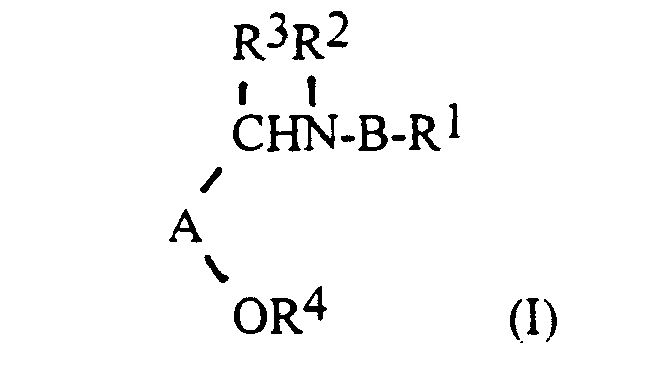
- A is an optionally substituted:
- phenyl, naphthyl, pyridyl, pyrazinyl, pyridazinyl, pyrimidyl, thienyl, thiazolyl. oxazolyl or thiadiazolyl having at least two adjacent ring carbon atoms;
- provided that the -CH(R3)N(R2)B-R1 and -OR4 groups are positioned in a 1.2 relationship to one another on ring carbon atoms and the ring atom positioned ortho to the OR4 linking group (and therefore in the 3-position relative to the -CHR3NR2- linking group) is not substituted;
- B is an optionally substituted:
phenyl, pyridyl, thiazolyl, oxazolyl, thienyl, thiadiazolyl, imidazolyl, pyrazinyl, pyridazinyl or pyrimidyl; - R1 is positioned on ring B in a 1,3 or 1,4 relationship with the -CH(R3)N(R2)-linking
group and is carboxy, carboxyC1-3alkyl, tetrazolyl, tetrazolylC1-3alkyl, tetronic
acid, hydroxamic acid, sulphonic acid, or R1 is of the formula -CONRa Ra1 wherein Ra is
hydrogen or C1-6alkyl and Ra1 is hydrogen. C1-6alkyl (optionally substituted by halo,
amino, C1-4alkylamino, di-C1-4 alkylamino, hydroxy, nitro, cyano, trifluoromethyl,
C1-4alkoxy or C1-4alkoxycarbonyl), C2-6alkenyl (provided the double bond in not in the
1-position), C2-6alkynyl (provided the triple bond is not in the 1-position), carboxyphenyl,
5- or 6-membered heterocyclylC1-3alkyl, 5- or 6-membered heteroarylC1-3alkyl, 5- or
6-membered heterocyclyl, or 5- or 6-membered heteroaryl or Ra and Ra1 together with the
amide nitrogen to which they are attached (NRaRa1) form an amino acid residue or ester
thereof, or R1 is of the formula -CONHSO2Rb wherein Rb is C1-6alkyl (optionally
substituted by halo, hydroxy, nitro, cyano, trifluoromethyl, C1-4alkoxy, amino,
C1-4alkylamino, di-C1-4alkylamino or C1-4alkoxycarbonyl), C2-6alkenyl (provided the
double bond is not in the 1-position), C2-6alkynyl (provided the triple bond is not in the
1-position), 5- or 6-membered heterocyclylC1-3alkyl, 5- or 6-membered
heteroarylC1-3alkyl, phenylC1-3alkyl. 5- or 6-membered heterocyclyl, 5- or 6-membered
heteroaryl or phenyl:
wherein any heterocyclyl or heteroaryl group in Ra1 is optionally substituted by halo. hydroxy, nitro, cyano. trifluoromethyl, C1-4alkoxy or C1-4alkoxycarbonyl and any phenyl, heterocyclyl or heteroaryl group in Rb is optionally substituted by halo, trifluoromethyl, nitro, hydroxy, amino, cyano. C1-6alkoxy. C1-6alkylS(O)p-(p is 0, 1 or 2), C1-6alkyl carbamoyl, C1-4alkylcarbamoyl, di(C1-4alkyl)carbamoyl, C2-6alkenyl, C2-6alkynyl, C1-4alkoxycarbonylamino, C1-4alkanoylamino, C1-4alkanoyl(N-C1-4alkyl)amino, C1-4alkanesulphonamido, benzenesulphonamido. aminosulphonyl, C1-4alkylaminosulphonyl, di(C1-4alkyl)aminosulphonyl, C1-4alkoxycarbonyl, C1-4alkanoyloxy, C1-6alkanoyl, formylC1-4alkyl, hydroxyiminoC1-6alkyl, C1-4alkoxyiminoC1-6alkyl or C1-6alkylcarbamoylamino; or R1 is of the formula -SO2N(Rc)Rc1 wherein Rc is hydrogen or C1-4alkyl and Rc1 is hydrogen or C1-4alkyl; or R1 is of the formula (IA), (IB) or (IC):wherein X is CH or nitrogen, Y is oxygen or sulphur, Y' is oxygen or NRd and Z is CH2, NRd or oxygen provided that there is no more than one ring oxygen and there are at least two ring heteroatoms and wherein Rd is hydrogen or C1-4alkyl;
- R2 is hydrogen, C1-6alkyl, optionally substituted by hydroxy, cyano or trifluoromethyl, C2-6alkenyl (provided the double bond is not in the 1-position), C2-6alkynyl (provided the triple bond is not in the 1-position), phenylC1-3alkyl or pyridylC1-3alkyl;
- R3 is hydrogen, methyl or ethyl;
- R4 is optionally substituted: C1-6alkyl, C3-7cycloalkyl1-3alkyl or C3-7cycloalkyl;
and N-oxides of -NR2 where chemically possible;
- and S-oxides of sulphur containing rings where chemically possible;
- and pharmaceutically acceptable salts and in vivo hydrolysable esters and amides thereof;
- excluding 2-[2-methoxybenzylamino]pyridine-5-carboxylic acid, 4-[2-methoxybenzylamino]benzoic acid, 5-[2,3-dimethoxybenzylamino]-4-chloro-3-aminosulphonylbenzoic acid and 5-[2,5-dimethoxybenzylamino]-2-hydroxybenzoic acid
-
- A 5- or 6-membered heteroaryl ring system is a monocyclic aryl ring system having 5 or 6 ring atoms wherein 1, 2 or 3 ring atoms are selected from nitrogen, oxygen and sulphur.
- A 5- or 6-membered saturated or partially saturated heterocyclic ring is a ring system having 5 or 6 ring atoms wherein 1, 2 or 3 of the ring atoms are selected from nitrogen, oxygen and sulphur.
- Particular 5- or 6-membered monocyclic heteroaryl rings include pyrrolyl, imidazolyl, pyrazolyl, isothiazolyl, isoxazolyl, pyridyl, pyrazinyl, pyrimidinyl, pyridazinyl, thiazolyl, thiadiazolyl, thienyl, furyl and oxazolyl.
- Particular 5- or 6-membered saturated or partially saturated heterocyclic ring systems include pyrrolidinyl, pyrrolinyl, imidazolidinyl, pyrazolidinyl, piperidyl, piperazinyl and morpholinyl.
- Particular substituents for ring carbon atoms in A (heterocyclyl and heterocryl rings include halo, trifluoromethyl, nitro, hydroxy, amino, C1-4alkylamino, diC1-4alkylamino, cyano, C1-6alkoxy, C1-6alkylS(O)p- (p is 0, 1 or 2), C1-6alkyl (optionally substituted by hydroxy, amino, halo, nitro or cyano), CF3S(O)p-(p=0,1 or 2), carbamoyl, C1-4alkylcarbamoyl, di(C1-4alkyl)carbamoyl, C2-6alkenyl, C2-6alkynyl, C1-4alkoxycarbonylamino, C1-4alkanoylamino, C1-4alkanoyl(N-C1-4alkyl)amino, C1-4alkanesulphonamido, benzenesulphonamido, aminosulphonyl, C1-4alkylaminosulphonyl, C1-4alkanoylaminosulphonyl, di(C1-4alkyl)aminosulphonyl, C1-4alkoxycarbonyl, C1-4alkanoyloxy, C1-6alkanoyl, formylC1-4alkyl, trifluoroC1-3alkylsulphonyl, hydroxyiminoC1-6alkyl, C1-4alkoxyiminoC1-6alkyl and C1-6alkylcarbamoylamino.
- Where a ring nitrogen atom in A can be substituted without becoming quaternised, it is unsubstituted or substituted by C1-4alkyl.
- Particular substituents for ring carbon atoms in B include halo, trifluoromethyl, nitro, hydroxy, C1-6alkoxy, C1-6alkyl, amino, C1-4alkylamino, di(C1-4alkyl)amino, cyano. C1-6alkyl S(O)p-(p is 0. 1 or 2), carbamoyl, C1-4alkylcarbamoyl and di(C1-4alkyl)carbamoyl.
- Where a ring nitrogen atom in B can be substituted without becoming quaternised, it is unsubstituted or substituted by C1-4alkyl.
- The term alkyl when used herein includes straight chain and branched chain substituents for example methyl, ethyl, n-propyl. isopropyl. n-butyl and isobutyl and functional groups on alkyl chains may be anywhere on the chain, for example hydroxyiminoC1-6alkyl includes 1-(hydroxyimino)propyl and 2-(hydroxyimino)propyl.
- C1-6alkyl substituted by halo includes trifluoromethyl.
- Amino acid residues formed from Ra and Ra1 together with the nitrogen to which they are attached include residues (-NHCH(R)COOH) derived from naturally-occurring and non-naturally-occurring amino acids. Examples of. suitable amino acids include glycine. alanine, serine, threonine, phenylalanine, glutamic acid, tyrosine, lysine and dimethylglycine.
- Suitable ring systems of the formula (IA), (IB), or (IC) include 5-oxo-4,5-dihydro-1,2,4-oxadiazol-3-yl, 3-oxo-2.3-dihydro-1,2,4-oxadiazol-5-yl, 3-thioxo-2,3-dihydro-1,2,4-oxadiazol-5-yl, 5-oxo-4,5-dihydro-1,3,4-oxadiazol-2-yl, 5-oxo-4,5-dihydro-1,2.4-triazol-3-yl, 5-thioxo-4,5-dihydro-1,3,4-oxadiazol-2-yl, 1,3,4-oxadiazol-2-yl, 3-hydroxy-2-methylpyrazol-5-yl, 3-oxo-2.3-dihydroisoxazol-5-yl, 5-oxo-1,5-dihydroisoxazol-3-yl and 5-oxo-2.3-dihydropyrazol-3-yl.
- Examples of C1-6alkoxycarbonyl are methoxycarbonyl, ethoxycarbonyl and t-butoxycarbonyl; examples of carboxyC 1-3alkyl are carboxymethyl, 2-carboxyethyl, 1-carboxyethyl and 3-carboxypropyl; examples of C 1-6alkoxycarbonylC1-3alkyl are methoxycarbonylmethyl, ethoxycarbonylmethyl and methoxycarbonylethyl; examples of tetrazolylC1-3alkyl are tetrazolylmethyl and 2-tetrazolylethyl; examples of C1-4alkoxy are methoxy, ethoxy, propoxy and isopropoxy; examples of C2-6alkenyl are vinyl and allyl; examples of C2-6alkynyl are ethynyl and propynyl; examples of C1-4alkanoyl are formyl, acetyl, propionyl and butyryl; examples of halo are fluoro, chloro, bromo and iodo; examples of C1-4alkylamino are methylamino, ethylamino, propylamino and isopropylamino; examples of di(C 1-4alkyl)amide are dimethylamino, diethylamino and ethylmethylamino; examples of C1-6alkylS(O)p- are methylthio, methylsulphinyl and methylsulphonyl: examples of C1-4alkylcarbamoyl are methylcarbamoyl and ethylcarbamoyl; examples of di(C1-4alkyl)carbamoyl are dimethylcarbamoyl. diethylcarbamoyl and ethylmethylcarbamoyl: examples of C1-6alkyl are methyl, ethyl, propyl and isopropyl; examples of C1-4alkoxycarbonylamino are methoxycarbonylamino and ethoxycarbonylamino; examples of C1-4alkanoylamino are acetamido and propionamido; examples of C1-4alkanoyl(N-C1-4alkyl)amino are N-methylacetamido and N-methylpropionamido: examples of C1-4alkanesulphonamido are methanesulphonamido and ethanesulphonamido; examples of C1-4alkylaminosulphonyl are methylaminosulphonyl and ethylaminosulphonyl: examples of di(C1-4alkyl)aminosulphonyl are dimethylaminosulphonyl. diethylaminosulphonyl and ethylmethylaminosulphonyl: examples of C1-4alkanoyloxy are acetyloxy and propionyloxy: examples of formylC1-4alkyl are formylmethyl and 2-formylethyl; examples of hydroxyiminoC1-6alkyl are hydroxyiminomethyl and 2-(hydroxyimino)ethyl; and examples of C1-4alkoxyiminoC1-6alkyl are methoxyiminomethyl, ethoxyiminomethyl and 2-(methoxyimino)ethyl.
- It will be understood that when formula I compounds contain a chiral centre, the compounds of the invention may exist in. and be isolated in, optically active or racemic form. The invention includes any optically active or racemic form of a compound of formula I which possesses pain-relieving properties. The synthesis of optically active forms may be carried out by standard techniques of organic chemistry well known in the art, for example by, resolution of a racemic form, by synthesis from optically active starting materials or by asymmetric synthesis. It will also be appreciated that certain compounds of formula I may exist as geometrical isomers. The invention includes any geometrical isomer of a compound of formula I which possesses pain-relieving properties.
- It will also be understood that certain compounds of the present invention may exist in solvated, for example hydrated, as well as unsolvated forms. It is to be understood that the present invention encompasses all such solvated forms which possess the property of relieving pain.
- It will further be understood that the present invention encompasses tautomers of the compounds of the formula (I).
- Preferably A is optionally substituted:
phenyl. naphthyl. thiadiazolyl. thienyl. pyridyl or pyrimidyl. - Preferably B is optionally substituted:
pyridyl, phenyl, thiazolyl, thienyl, pyridazinyl, or oxazolyl. - Most preferably A is optionally substituted:
phenyl or thienyl. - Most preferably B is optionally substituted:
pyridyl, phenyl, thienyl, pyridazinyl or thiazolyl. - In particular A is optionally substituted phenyl.
- In particular B is optionally substituted:
pyrid-2.5-diyl, pyridazin-3.6-diyl, phen-1,4-diyl or thien-2,5-diyl. - Most particularly B is optionally substituted pyridazin-3,6-diyl or pyrid-2,5-diyl.
- Most preferably B is pyridazinyl.
- Preferred optional substituents for ring carbon atoms in A. are halo. nitro. trifluoromethyl, cyano, amino. C1-6alkoxy, carbamoyl, C1-4alkylcarbamoyl, di(C1-4alkyl)carbamoyl, C1-4alkanoylamino, C1-6alkylS(O)p-, C1-4alkanesulphonamido, benzenesulphonamido, C1-6alkanoyl, C1-4alkoxyiminoC1-4alkyl and hydroxyiminoC1-4alkyl.
- Preferably, when A is a 6-membered ring, A is unsubstituted or substituted in the 4-position relative to the -OR4 group.
- Preferred optional substituents for ring carbon atoms of B are halo. trifluoromethyl, C1-4alkyl, amino, C1-4alkylamino, diC1-4alkylamino, nitro, hydroxy, C1-6alkoxy and cyano.
- Preferably A is unsubstituted or substituted by one substituent.
- More preferably A is unsubstituted or substituted by bromo, methanesulphonyl, fluoro or chloro.
- Most preferably A is unsubstituted or substituted by bromo or chloro.
- Preferably B is unsubstituted or substituted by one substituent.
- Most preferably B is unsubstituted.
- Preferably R1 is carboxy, carbamoyl or tetrazolyl or R1 is of the formula -CONRaRa1 wherein Ra is hydrogen or C1-6alkyl and Ra1 is C1-6alkyl optionally substituted by hydroxy, C2-6alkenyl, 1-morpholinyl, 1-piperidinyl, 1-pyrrolidinyl, pyridylC1-3alkyl or R1 is of the formula -CONHSO2Rb wherein Rb is optionally substituted:
C1-6alkyl, phenyl or 5- or 6-membered heteroaryl. - In particular. R1 is carboxy, tetrazolyl or of the formula -CONRa Ra1 wherein Ra is hydrogen and Ra1 is C1-6alkyl optionally substituted by hydroxy or pyridylmethyl, or R1 is of the formula -CONHSO2Rb wherein Rb is C1-6alkyl (optionally substituted by hydroxy or fluoro), phenyl (optionally substituted by acetamido), isoxazolyl (optionally substituted by methyl) or 1,3,4-thiadiazolyl (optionally substituted by acetamido).
- Most preferably R1 is carboxy, tetrazole or of the formula -CONHRa1 wherein Ra1 is pyridylmethyl or C1-4alkyl optionally substituted by hydroxy, or of the formula -CONHSO2Rb wherein Rb is C1-4 alkyl, 3.5-dimethylisoxazol-4-yl, or 5-acetamido-1,3,4-thiadiazol-2-yl.
- In another aspect R1 is carboxy, carbamoyl or tetrazolyl or R1 is of the formula -CONRa Ra1 wherein Ra is hydrogen or C1-6alkyl and Ra1 is C1-6alkyl optionally substituted by hydroxy, C2-6alkenyl, 1-morpholinyl, 1-piperidinyl. 1-pyrrolidinyl, pyridylC1-3alkyl or R1 is of the formula -CONHSO2Rb wherein Rb is C1-6alkyl or phenyl.
- Preferably R2 is hydrogen, methyl, ethyl, 2,2,2-trifluoroethyl, cyanomethyl, allyl or 3-propynyl.
- More preferably R2 is hydrogen, methyl, ethyl or propyl.
- Yet more preferably R2 is hydrogen or ethyl.
- Most preferably R2 is ethyl.
- Preferably R3 is hydrogen.
- Preferably R4 is optionally substituted by halo, hydroxy, C1-4alkoxy, amino, carboxy, C1-4 alkylS(O)p-(p=0, 1 or 2), carbamoyl, trifluoromethyl, oxo or cyano.
- More preferably R4 is optionally substituted by fluoro, chloro or bromo.
- Most preferably R4 is optionally substituted by fluoro, trifluoromethyl, cyano or hydroxy.
- Preferably R4 is C1-4alkyl, C3-6cycloalkyl or C3-6cycloalkylmethyl.
- More preferably R4 is propyl, isobutyl, butyl, 2-ethylbutyl, 2(R)-methylbutyl, 2(S)-methylbutyl, 2,2,2-trifluoroethyl, cyclopenty nethyl, cyclopropylmethyl, cyclopropyl or cyclopentyl.
- Most preferably R4 is propyl, isobutyl. butyl. 2-ethylbutyl, cyclopentyl, cyclopropylmethyl or cyclopropyl.
A preferred class of compounds is that of the formula (II):wherein
R1 and R2 are as hereinabove defined, R4 is C1-4alkyl, C3-6cycloalkyl or C3-6 cycloalkylmethyl, R5 is hydrogen or as hereinabove defined for substituents for ring carbon atoms in A, and B is phenyl, thienyl, pyridazinyl, pyridyl, or thiazolyl. - It is to be understood that, insofar as certain of the compounds of formula (I) defined above may exist in optically active or racemic forms, by virtue of the compounds of the formula (I) containing an asymmetric carbon atom, the invention includes in its definition of active ingredient any such optically active or racemic form which possesses pain relieving properties. The synthesis of optically active forms may be carried out by standard techniques of organic chemistry well known in the art, for example by synthesis from optically active starting materials or by resolution of a racemic form. Similarly, pain relieving properties may be evaluated using the standard laboratory techniques referred to hereinafter.
- An in vivo hydrolysable ester of a compound of the formula (I) containing carboxy group is, for example, a pharmaceutically acceptable ester which is hydrolysed in the human or animal body to produce the parent acid, for example, a pharmaceutically acceptable ester formed with a (1-6C)alcohol such as methanol, ethanol, ethylene glycol, propanol or butanol, or with a phenol or benzyl alcohol such as phenol or benzyl alcohol or a substituted phenol or benzyl alcohol wherein the substituent is, for example, a halo (such as fluoro or chloro), (1-4C)alkyl (such as methyl) or (1-4C)alkoxy (such as ethoxy) group. The term also includes α-acyloxyalkyl esters and related compounds which breakdown to give the parent hydroxy group. Examples of α-acyloxyalkyl esters include acetoxymethoxycarbonyl and 2,2-dimethylpropionyloxymethoxycarbonyl.
- An in vivo hydrolysable ester of a compound of the formula (I) containing a hydroxy group is. for example, a pharmaceutically acceptable ester which is hydrolysed in the human or animal body to produce the parent alcohol. The term includes inorganic esters such as phosphate esters and α-acyloxyalkyl ethers and related compounds which as a result of the in vivo hydrolysis of the ester breakdown to give the parent hydroxy group. Examples of α-acyloxyalkyl ethers include acetoxymethoxy and 2.2-dimethylpropionyloxymethoxy. A selection of in vivo hydrolysable ester forming groups for hydroxy include alkanoyl, benzoyl, phenylacetyl and substituted benzoyl and phenylacetyl, alkoxycarbonyl (to give alkyl carbonate esters), dialkylcarbamoyl and N-(dialkylaminoethyl)-N-alkylcarbamoyl (to give carbamates), dialkylaminoacetyl and carboxyacetyl.
- A suitable value for an in vivo hydrolysable amide of a compound of the formula I containing a carboxy group is, for example, a N-(1-6C)alkyl or N,N-di-(1-6C)alkyl amide such as N-methyl, N-ethyl, N-propyl, N,N-dimethyl, N-ethyl-N-methyl or N,N-diethyl amide.
- A suitable pharmaceutically-acceptable salt of a compound of the formula (I) is, for example, an acid-addition salt of a compound of the formula (I) which is sufficiently basic, for example an acid-addition salt with an inorganic or organic acid such as hydrochloric, hydrobromic, sulphuric, trifluoroacetic, citric or maleic acid; or, for example a salt of a compound of the formula (I) which is sufficiently acidic, for example an alkali or alkaline earth metal salt such as a calcium or magnesium salt, or an ammonium salt, or a salt with an organic base such as methylamine, dimethylamine, trimethylamine, piperidine, morpholine or tris-(2-hydroxyethyl)amine.
- In a further aspect the invention provides a process for preparing compounds of the formula (I) or pharmaceutically acceptable salts or in vivo hydrolysable amides or esters thereof, which comprises deprotecting a compound of the formula (III):wherein R6 is R1 or protected R1, R7 is R2 or protected R2 and. R3, R4, A and B are as hereinabove defined, and any optional substituents are optionally protected and at least one protecting group is present;

and thereafter if necessary: - i) forming a pharmaceutically acceptable salt;
- ii) forming an in vivo hydrolysable ester or amide;
- iii) converting one optional substituent into another optional substituent.
-
- Protecting groups may in general be chosen from any of the groups described in the literature or known to the skilled chemist as appropriate for the protection of the group in question, and may be introduced by conventional methods.
- Protecting groups may be removed by any convenient method as described in the literature or known to the skilled chemist as appropriate for the removal of the protecting group in question, such methods being chosen so as to effect removal of the protecting group with minimum disturbance of groups elsewhere in the molecule.
- A suitable protecting group for a hydroxy group is, for example, an arylmethyl group (especially benzyl), a tri-(1-4C)alkylsilyl group (especially trimethylsilyl or tert-butyldimethylsilyl), an aryldi-(1-4C)alkylsilyl group (especially dimethylphenylsilyl), a diaryl-(1-4C)alkylsilyl group (especially tert-butyldiphenylsilyl), a (1-4C)alkyl group (especially methyl), a (2-4C)alkenyl group (especially allyl), a (1-4C)alkoxymethyl group (especially methoxymethyl) or a tetrahydropyranyl group (especially tetrahydropyran-2-yl). The deprotection conditions for the above protecting groups will necessarily vary with the choice of protecting group. Thus, for example, an arylmethyl group such as a benzyl group may be removed, for example, by hydrogenation over a catalyst such as palladium-on-charcoal. Alternatively a trialkylsilyl or an aryldialkylsilyl group such as a tert-butyldimethylsilyl or a dimethylphenylsilyl group may be removed, for example, by treatment with a suitable acid such as hydrochloric, sulphuric, phosphoric or trifluoroacetic acid. or with an alkali metal or ammonium fluoride such as sodium fluoride or, preferably, tetrabutylammonium fluoride. Alternatively an alkyl group may be removed, for example, by treatment with an alkali metal (1-4C)alkylsulphide such as sodium thioethoxide or, for example, by treatment with an alkali metal diarylphosphide such as lithium diphenylphosphide or, for example, by treatment with a boron or aluminium trihalide such as boron tribromide. Alternatively a (1-4C)alkoxymethyl group or tetrahydropyranyl group may be removed, for example, by treatment with a suitable acid such as hydrochloric or trifluoroacetic acid.
- Alternatively a suitable protecting group for a hydroxy group is, for example, an acyl group, for example a (2-4C)alkanoyl group (especially acetyl) or an aroyl group (especially benzoyl). The deprotection conditions for the above protecting groups will necessarily vary with the choice of protecting group. Thus, for example, an acyl group such as an alkanoyl or an aroyl group may be removed, for example, by hydrolysis with a suitable base such as an alkali metal hydroxide, for example lithium or sodium hydroxide.
- A suitable protecting group for an amino, imino or alkylamino group is, for example, an acyl group, for example a (2-4C)alkanoyl group (especially acetyl), a (1-4C)alkoxycarbonyl group (especially methoxycarbonyl, ethoxycarbonyl or tert-butoxycarbonyl), an arylmethoxycarbonyl group (especially benzyloxycarbonyl) or an aroyl group (especially benzoyl). The deprotection conditions for the above protecting groups necessarily vary with the choice of protecting group. Thus, for example, an acyl group such as an alkanoyl, alkoxycarbonyl or aroyl group may be removed for example, by hydrolysis with a suitable base such as an alkali metal hydroxide, for example lithium or sodium hydroxide. Alternatively an acyl group such as a tert-butoxycarbonyl group may be removed, for example, by treatment with a suitable acid such as hydrochloric, sulphuric or phosphoric acid or trifluoroacetic acid, and an arylmethoxycarbonyl group such as a benzyloxycarbonyl group may be removed, for example, by hydrogenation over a catalyst such as palladium-on-charcoal.
- A suitable protecting group for a carbone group is, for example, an esterifying group, for example a (1-4C)alkyl group (especially methyl or ethyl) which may be removed, for example, by hydrolysis with a suitable base such as an alkali metal hydroxide, for example lithium or sodium hydroxide; or, for example, a tert-butyl group which may be removed, for example, by treatment with a suitable acid such as hydrochloric, sulphuric or phosphoric acid or trifluoroacetic acid.
- In another aspect the compounds of the formula (I) or (III) may be prepared by:
- a) reducing a compound of the formula (IV)

- b) when B is an activated heterocycle and R7 is hydrogen or C1-6alkyl reacting a
compound of the formula (V) with a compound of the formula (VI):

- c) reacting a compound of the formula (VII) with a compound of the formula (VIII):

- d) converting X2 to R6 in a compound of the formula (IX):

- e) when R7 is other than hydrogen, reacting a compound of the formula R7X3 with a
compound of the formula (X):
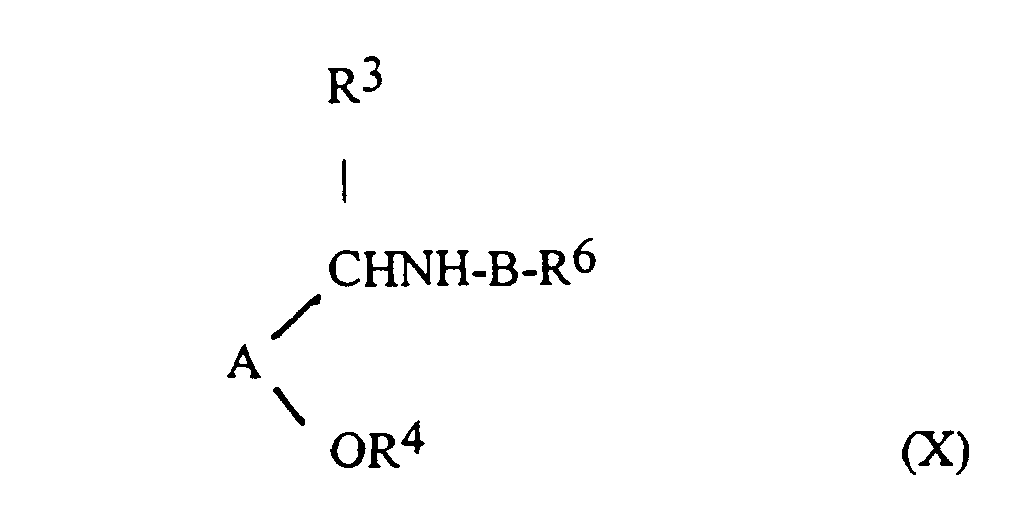
- f) reacting a compound of the formula (XI) with a compound of the formula (XII):
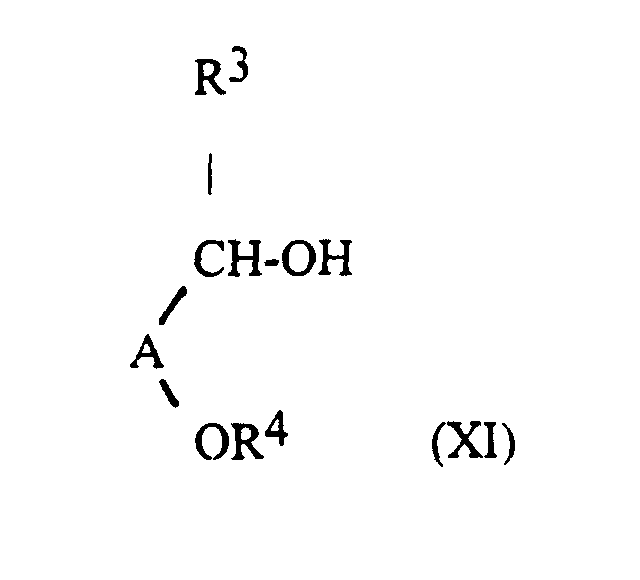
- g) reacting a compound of the formula (XIII) with a compound of the formula (XIV):
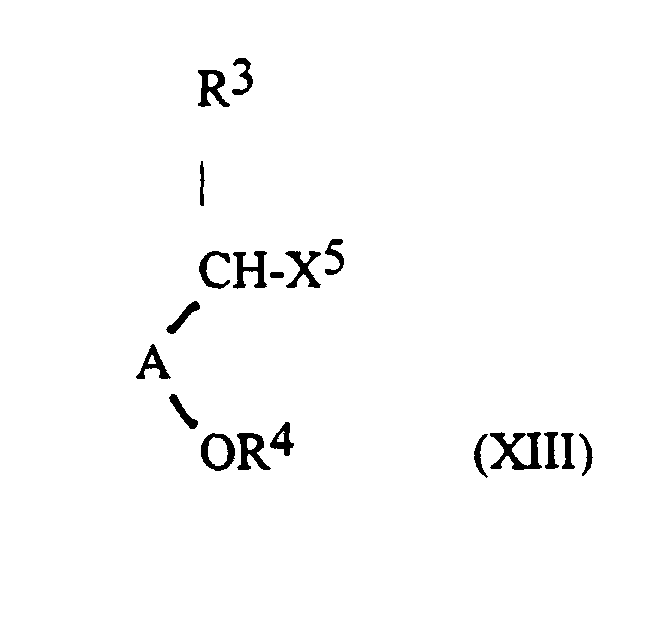
- h) reacting a compound of the formula (XV) with a compound of the formula X7R4:
wherein R3, R4, R7, R9, A and B are as hereinabove defined and X and X1 are leaving groups, X2 is a precursor of R7, X3 is a leaving group, X4 is a removable activating group, X5 is a leaving group, X6 is an activating group and X7 is a leaving group; and thereafter if necessary;

- i) removing any protecting groups;
- ii) forming a pharmaceutically acceptable salt;
- iii) forming an in vivo hydrolysable ester or amide:
- iv) converting an optional substituent into another optional substituent.
-
- Particular values for leaving groups include halogen, for example, chloro, bromo and iodo, sulphonates, for example tosylate, p-bromobenzenesulphonate, p-nitrobenzenesulphonate, methanesulphonate and triflate or phosphoric esters such as diarylphosphoric ester.
- Compounds of the formula (IV) can be reduced using agents such as sodium borohydride or sodium cyanoborohydride. The compounds of the formula (IV) may be prepared by reacting a compound of the formula (VII) with a compound of the formula (XV)wherein A, R3 and R4 are as hereinabove defined.

- The reaction between compounds of the formulae (VII) and (XV) may be carried out under standard conditions known in the art for the formation an imine (Schiffs base), which can be reduced in situ. For example imine formation and reduction in situ may be carried out in an inert solvent such toluene or tetrahydrofuran, in the presence of a reducing agent such as sodium cyanoborohydride (NaCNBH3) under acidic conditions (Synthesis 135, 1975; Org. Prep. Proceed. Int. 11, 201, 1979).
- Compounds of the formulae (V) and (VI) may be reacted together under standard conditions for example, in an aprotic solvent such as DMF in the presence of a weak base, in a temperature range of ambient to 180°C. Suitable values for X include, halo, tosylate, mesylate and triflate. In particular X is chloro or bromo.
- The compounds of the formulae (VII) and (VIII) may be reacted together under in an aprotic solvent such as DMF, in the presence of a base such as potassium carbonate or sodium hydride and in a temperature range of 0°C to 100°C. Suitable values for X1 include halo. tosylate. mesylate and triflate. In particular X1 is bromo.
- A precursor of R7 is a group that can be converted into R7.
- Particular values for X2 include cyano, carbamoyl. alkoxycarbonyl, carboxy and activated carboxy groups such as acid chlorides and activated esters.
- The cyano group may be converted into a tetrazole ring by reacting, for example, with ammonium or tin azide in an aprotic solvent such as DMF. in a temperature range of 100°C to 130°C. For further information on tetrazole synthesis see S.J. Wittenberger and B.J Donner JOC. 1993, 58, 4139-4141; BE Huff et al, Tet. Lett, 1993, 50, 8011-8014; and J.V. Duncia et al. JOC 1991, 56, 2395-2400.
- Alkoxycarbonyl may be converted into a carboxy group by acid or base hydrolysis. For example, base hydrolysis may be carried out in an organic solvent such as methanol or THF in a temperature range of ambient to 100°C, in the presence of sodium hydroxide or potassium hydroxide.
- Acid hydrolysis may, for example, be carried out in neat formic acid or neat trifluoroacetic acid optionally in an inert organic solvent such as dichloromethane.
- An alkoxycarbonyl or an activated carboxy group, such as an acid chloride or activated ester. or an acyl group such as an alkanoyl group may be converted to an amide group by reacting with the appropriate amine in an inert solvent such as DMF or dichloromethane. in a temperature range of 0°C to 150°C, preferably around ambient temperature, in the presence of a base such as triethylamine.
- The compounds of the formulae (X) and R7X3 may be reacted together in an aprotic solvent such as DMF in the presence of a base such as sodium carbonate or sodium hydride. Suitable values for X3 are halo, tosylate, mesylate and triflate, in particular halo such as iodo.
- The reaction between compounds of the formulae (XI) and (XII) is conveniently carried out under mild conditions known for the Mitsunobu reaction, for example in the presence of di (C1-4alkyl)azocarboxylate and triphenylphosphine or 11,11 -(azodicarbonyl)dipiperidine and tributylphosphine (Tet. Lett. 34, 1993, 1639-1642) in an inert solvent such as toluene, benzene, tetrahydrofuran or diethylether, in particular toluene. Examples of removable activating groups are tert-butyloxycarbonyl and trifluoroacetyl.
- Compounds of the formulae (XIII) and (XIV) are generally reacted together in the presence of a strong base such as sodium hydride, lithium diisopropylamine or LiN(SiMe3)2. in DMF or an etherial solvent such as ethyl ether or THF in a temperature range of-78°C to ambient temperature. Suitable values for X5 are halogen. for example, methanesulphonate or tosylate. Examples of activating groups for X6 include tert-butyloxycarbonyl, halogen and trifluoroacetyl.
- The reaction between compounds of the formulae (XV) and X7R4 may be performed in an inert organic solvent such as acetone or DMF, in a temperature range of ambient temperature to 60°C. in the present of a mild base. Suitable leaving groups include tosylate. mesylate. triflate and halo. for example chloro or bromo. When X7 is bromo, (XV) and X7R4 may be reacted together for example, in DMF, at ambient temperature in the presence of a base such as potassium carbonate. Alternatively a phase transfer system could be used. X7 can be hydroxy which is activated in situ using the Mitsunobu reaction (O. Synthesis, 1981, 1.).
- Compounds of the formula (XV) wherein R6 is R1 and R7 is R2 have pain-relieving properties in their own right.
- Compounds of the formula (IV), (V), (VIII), (IX), (X), (XI), (XIII) and (XV) can be prepared using processes for the formation of the lower linking group -OR4, similar to process h), from appropriate starting materials.
- The compounds of the formula (IX) may be prepared using processes a), b), c), e), f), g) or h) from the appropriate starting material wherein R6 is replaced with X2.
- The compounds of the formula (X) may be prepared by using any one of processes a), b), c), d), f), g) or h) from the appropriate starting materials wherein R7 is hydrogen.
- The compounds of the formula (XII) can readily be prepared from compounds of the formula (VII).
- The compounds of the formulae (VI), (VII), (XII) and (XIV) are generally known in the art or can be made by methods analogous to or similar to those used in the examples or those known in the art for related compounds. Certain compounds of the formula (VI), wherein X is chloro or bromo, can be prepared by converting an oxo group in the ring system into chloro or bromo by reacting the oxo ring system with a chlorinating agent. such as sulphonyl chloride, phosphorous trichloride. phosphorous pentachloride or P(O)Cl3 or brominating agent such as phosphorous tribromide or P(O)Br3. in an inert aprotic solvent.
- It is also possible to synthesise certain intermediates and even protected compounds using primarily ring synthesis. Here. reference is made to the compendium 'The Chemistry of Heterocyclic Compounds' E.C. Taylor and A. Weissberger (published by John Wiley and Sons) and 'Comprehensive Heterocyclic Chemistry', A.R Katritsky and C. W Rees (published by Pergamon Press).
- Optional substituents may be converted into other optional substituents. For example an alkylthio group may be oxidised to an alkylsulphinyl or alkysulphonyl group, a nitro group reduced to an amino group, a hydroxy group alkylated to a methoxy group, or a bromo group converted to an alkylthio group.
- Various substituents may be introduced into compounds of the formulae (I) and (III) and intermediates in the preparation of compounds of the formulae (I) and (III), when appropriate, using standard methods known in the art. For example, an acyl group or alkyl group may be introduced into an activated benzene ring using Friedel-Crafts reactions, a formyl group by formylation with titanium tetrachloride and dichloromethyl ethyl ether, a nitro group by nitration with concentrated nitric acid concentrated sulphuric acid and bromination with bromine or tetra(n-butyl)ammonium tribromide.
- It will be appreciated that, in certain steps in the reaction sequence to compounds of the formula (I), it will be necessary to protect certain functional groups in intermediates in order to prevent side reactions. Deprotection may be carried out at a convenient stage in the reaction sequence once protection is no longer required.
- As stated hereinbefore compounds of the formula (I) are antagonists of the pain enhancing effects of E-type prostaglandins and of value in the relief of mild to moderate pain which, for example, accompanies inflammatory conditions such as rheumatoid arthritis and osteoarthritis. Certain properties of the compounds may be demonstrated using the test procedures set out below:-
- (a) an in-vitro guinea pig ileum assay which assesses the inhibitory properties of a test compound against PGE2-induced contractions of the ileum: ileum was immersed in oxygenated Krebs solution containing indomethacin (4 µg/ml) and atropine (1 µM) and which was maintained at 37°C; the ileum was subject to a tension of 1 g: a control dose response curve for PGE2-induced contraction of the ileum was obtained; test compound (dissolved in dimethylsulphoxide) was added to the Krebs solution and a dose response curve for the PGE2-induced contraction of the ileum in the presence of the test compound was obtained; the pA2 value for the test compound was calculated:
- (b) an in-vivo assay in mice which assesses the inhibitory properties of a test compound against abdominal constriction response induced by the intraperitoneal administration of a noxious agent such as dilute acetic acid or phenylbenzoquinone (hereinafter PBQ) using the procedure disclosed in European Patent Application No. 0218077.
-
- Although the pharmacological properties of the compounds of the formula I vary with structural change as expected, in general activity possessed by compounds of the formula I may be demonstrated at the following concentrations or doses in one or more of the above-mentioned Tests (a) and (b):-
- Test (a):- pA2 > 5.3;
- Test (b):- ED30 in the range. for example. 0.01-100 mg/kg orally.
-
- No overt toxicity or other untoward effects were noted in Test (b) when compounds of the formula I are administered at several multiples of their minimum inhibitory dose.
- Prostaglandin receptors and in particular receptors for PGE2 have been tentatively characterised by Kennedy et al. (Advances in Prostaglandin, Thromboxane and Leukotriene Research, 1983, 11, 327). The known PGE2 antagonist SC-19220 blocks the effect of PGE2 on some tissues such as guinea pig ileum or dog fundus but not on other tissues such as the cat trachea or chick ileum. Those tissues which did possess SC-19220 sensitive mediated effects were said to possess EP1 receptors. Based on this compounds of the present invention, possessing activity in Test (a), are EP1 antagonists.
- According to a further feature of the invention there is provided a pharmaceutical composition which comprises a compound of the formula (I) or an in-vivo hydrolysable ester thereof or an amide thereof. or a pharmaceutically-acceptable salt thereof. in association with a pharmaceutically-acceptable diluent or carrier.
- The composition may be in a form suitable for oral use. for example a tablet, capsule, aqueous or oily solution. suspension or emulsion: for topical use. for example a cream. ointment, gel. spray or aqueous or oily solution or suspension; for nasal use, for example a snuff, nasal spray or nasal drops; for vaginal or rectal use, for example a suppository or rectal spray: for administration by inhalation, for example as a finely divided powder or a liquid aerosol; for sub-lingual or buccal use, for example a tablet or capsule; or for parenteral use (including intravenous, subcutaneous, intramuscular, intravascular or infusion), for example a sterile aqueous or oily solution or suspension. In general the above compositions may be prepared in a conventional manner using conventional excipients.
- The amount of active ingredient (that is a compound of the formula (I) or a pharmaceutically-acceptable salt thereof) that is combined with one or more excipients to produce a single dosage form will necessarily vary depending upon the host treated and the particular route of administration. For example, a formulation intended for oral administration to humans will generally contain, for example, from 0.5 mg to 2 g of active agent compounded with an appropriate and convenient amount of excipients which may vary from about 5 to about 98 percent by weight of the total composition.
- According to a further feature of the invention there is provided a compound of the formula (1) or an in-vivo hydrolysable ester or amide or a pharmaceutically-acceptable salt thereof, for use in a method of treatment of the animal (including human) body by therapy.
- According to a further feature of the invention there is provided the use of a compound of the formula I, or an in-vivo hydrolysable ester or amide or a pharmaceutically-acceptable salt thereof, in the manufacture of a medicament for use in the relief of pain in the animal (including human) body.
- According to a further feature of the invention there is provided a method for the relief of pain in the animal (including human) body in need of such treatment which comprises administering to said body an effective amount of a compound of the formula I, or an in-vivo hydrolysable ester or amide or a pharmaceutically-acceptable salt thereof.
- As mentioned above. a compound of the formula (I) is useful in treating the pain which. for example. accompanies inflammatory conditions such as rheumatoid arthritis and osteoarthritis. In using a compound of the formula I for therapeutic or prophylactic purposes it will generally be administered so that a daily dose in the range, for example, 0.1 mg to 75 mg per kg body weight is received, given if required in divided doses. In general lower doses will be administered when a parenteral route is employed. Thus, for example, for intravenous administration, a dose in the range. for example. 0.05 mg to 30 mg per kg body weight will generally be used. Similarly. for administration by inhalation, a dose in the range, for example. 0.05 mg to 25 mg per kg body weight will be used.
- Although the compounds of the formula (I) are primarily of value as therapeutic agents for use in warm-blooded animals (including man), they are also useful whenever it is required to antagonise the effects of PGE2 at the EP1 receptor, based on test a). Thus, they are useful as pharmacological standards for use in the development of new biological tests and in the search for new pharmacological agents.
- By virtue of their ability to relieve pain, the compounds of the formula I are of value in the treatment of certain inflammatory and non-inflammatory diseases which are currently treated with a cyclooxygenase-inhibitory non-steroidal anti-inflammatory drug (NSAID) such as indomethacin, ketorolac, acetylsalicyclic acid, ibuprofen, sulindac, tolmetin and piroxicam. Co-administration of a compound of the formula I with a NSAID can result in a reduction of the quantity of the latter agent needed to produce a therapeutic effect. Thereby the likelihood of adverse side-effects from the NSAID such as gastrointestinal effects are reduced. Thus according to a further feature of the invention there is provided a pharmaceutical composition which comprises a compound of the formula (I), or an in-vivo hydrolysable ester or amide or pharmaceutically-acceptable salt thereof, in conjunction or admixture with a cyclooxygenase inhibitory non-steroidal anti-inflammatory agent, and a pharmaceutically-acceptable diluent or carrier.
- The compounds of the invention may also be used with other anti-inflammatory agents such as an inhibitor of the enzyme 5-lipoxygenase (such as those disclosed in European Patent Applications Nos. 0351194, 0375368, 0375404, 0375452, 0375457, 0381375, 0385662, 0385663, 0385679, 0385680).
- The compounds of the formula (I) may also be used in the treatment of conditions such as rheumatoid arthritis in combination with antiarthritic agents such as gold, methotrexate. steroids and penicillinamine. and in conditions such as osteoarthritis in combination with steroids.
- The compounds of the present invention may also be administered in degradative diseases, for example osteoarthritis. with chondroprotective, anti-degradative and/or reparative agents such as Diacerhein, hyaluronic acid formulations such as Hyalan, Rumalon, Arteparon and glucosamine salts such as Antril.
- The compositions of the invention may in addition contain one or more other therapeutic or prophylactic agents known to be of value for the treatment of pain. Thus for example, a known opiate pain-killer (such as dextropropoxyphene, dehydrocodeine or codeine) or an antagonist of other pain or inflammation mediators, such as bradykinin, takykinin and calcitonin gene related peptides (CGRP), or an alpha2-adrenoceptor agonist, a GABAB receptor agonist, a calcium channel blocker, a sodium channel blocker, a CCKB receptor antagonist, a neurokinin antagonist or an antagonist and modulator of the action of glutamate at the NMDA receptor may usefully also be present in a pharmaceutical composition of the invention.
- The compounds of the present invention may also be administered in bone diseases such as osteoporosis with calcitonin and bisphosphonates.
- The invention will now be illustrated in the following non-limiting Examples in which, unless otherwise stated:-
- (i) evaporations were carried out by rotary evaporations
in vacuo and work-up procedures were carried out after removal or residual solids by filtration; - (ii) yields are given for illustration only and are not necessarily the maximum attainable;
- (iii) the end-products of the formula I have satisfactory microanalysis and their structures were generally confirmed by NMR and mass spectral techniques;
- (iv) melting points are uncorrected and were determined using a Mettler SP62 automatic melting point apparatus or an oil-bath apparatus; melting points for the end-products of the formula I were determined after recrystallisation from a conventional organic solvent such as ethanol, methanol, acetone, ether or hexane, alone or in admixture:
- (v) the following abbreviations have been used:-
- DMF
- N.N-dimethylformamide.
- THF
- tetrahydrofuran
- DMSO
- dimethylsulphoxide
- TLC
- thin layer chromatography
- MPLC
- medium pressure liquid chromatography
-
- A solution of methyl 2-[N-(5-bromo-2-propoxybenzyl)-N-ethylamino]pyridine-5-carboxylate (reference example 1) (0.12 g, 0.29 mmol) in THF (3 ml) and methanol (3 ml) was treated with aqueous sodium hydroxide (1N, 1.8 ml). The reaction was heated to 40°C for 18 hours. The solvent was then evaporated off and the residue diluted with water (3 ml) and acidified with acetic acid (1N, 3 ml). The solid was filtered off to give the title compound (0.1 g, 88%) as a white solid.
MS (CI+): 393/395 (M+H)+
NMR (200 MHz, DMSO-d6) δ: 1.0 (t, J=7Hz, 3H); 1.12 (t, J=7Hz, 3H); 1.75 (m, 2H); 3.6 (q, J=7Hz, 2H); 3.98 (t, J=7Hz, 2H); 4.73 (s, 2H); 6.65 (d, J=9Hz, 1H); 7.02 (m, 2H); 7.4 (dd, J=2, 9Hz, 1H); 7.92 (dd, J=2,9Hz, 1H); 8.6 (d, J=2Hz, 1H). - The title compound was prepared using a similar method to that of example 1 except using the appropriate ester (reference example 2).
MS (CI+); 407 (M+H)+
NMR (250 MHz, DMSO-d6) δ: 1.0 (d, J=6Hz, 6H); 1.05 (t, J=7Hz. 3H). 2.02 (m, 1H); 3.59 (q, J=7Hz, 2H): 3.8 (d, J=6Hz, 2H): 4.75 (s, 2H); 6.64 (d, J=9Hz, 1H). 6.96 (d, J=9Hz, 1H); 7.05 (d, J=2Hz. 1H); 7.36 (dd, J=2.9 Hz. 1H); 7.9 (dd, J=2.9 Hz. 1H); 8.61 (d, J=2Hz, 1H); 12.35 (bs, 1H). - The title compound was prepared using a similar method to that of example 1 except using the appropriate butyl ester (reference example 4).
mp 73-80°C
MS (FAB+): 406 (M+H)+
NMR (200 MHz, DMSO-d6 + HOAc-d4) δ 0.15 (m, 2H); 0.38 (m, 2H); 1.02 (m, 4H); 3.55 (q, J = 7Hz, 2H); 3.7 (d, J = 7Hz, 2H); 4.68 (s, 2H); 6.78 (m, 1H); 7.0 (m, 2H); 7.22 (d, J = 9Hz, 1H); 7.5 (d, J = 9Hz, 1H). - A solution of methyl 2-[N-(5-bromo-2-(cyclopentylmethoxy)benzyl)-N-ethylamino]pyridine-5-carboxylate (see reference example 5) (0.37 g, 0.83 mmol) in THF (4 ml) and methanol (4 ml) was treated with 1N aqueous sodium hydroxide solution (4 ml). The reaction was heated at 40°C for 18 hours. The solvents were evaporated at reduced pressure and the residue was acidified with 1N acetic acid (4 ml) and allowed to stir for 2 days. The precipitate was filtered, washed with water and dried in vacuo at 45°C to give the title compound as a white solid (0.32 g, 89%).
MS (ESP+): 433 (M+H)+
NMR (200 MHz, DMSO-d6) δ: 1.2 (t, J = 7Hz, 3H); 1.35 (m, 2H); 1.58 (m, 4H); 1.75 (m. 2H); 2.30 (m, 1H); 3.60 (q, J = 7Hz, 2H); 3.9 (d, J = 7Hz, 2H); 4.74 (s, 2H); 6.65 (d, J = 9Hz, 1H), 6.98 (d, J = 9Hz, 1H); 7.10 (d, J = 2Hz, 1H); 7.88 (dd, J = 2,9Hz, 1H); 7.92 (d = 2.9Hz, 1H); 8.62 (d, J = 2Hz, 1H); 12.4 (vbs. approx. 1H). - The title compound was prepared from butyl 6-[N-(5-bromo-2-propoxybenzyl)-N- ethylamino]pyridazine-3-carboxylate (reference example 6) using a similar method to that of example 1.
MS (ESP+): 394/396 (M+H)+
NMR (200 MHz, DMSO-d6) δ: 0.97 (t, J = 6.7Hz. 3H); 1.16 (t, J = 6.7Hz, 3H); 1.73 (m, J = 6.7Hz 2H); 3.7 (q, J = 6.7Hz, 2H); 3.98 (t, J = 6.7Hz, 2H); 4.82 (s, 2H), 7.0 (d, J = 9.3Hz, 1H); 7.12 (d, J = 9.3Hz, 1H); 7.17 (d, J = 2.0Hz. 1H); 7.40 (dd, J = 2.0, 10.0Hz, 1H); 7.83 (d, J = 10.0Hz. 1H). - The title compound was prepared from butyl 6-[N-(5-bromo-2-n-butoxybenzyl)-N-ethylamino]pyridazine-3-carboxylate (reference example 7) using a similar method to that of example 1.
MS (ESP+): 408/410 (M+H)+
NMR (200MHz, DMSO-d6) δ: 0.9 (t, J = 6.7Hz, 3H); 1.14 (t, J = 6.7Hz, 3H); 1.40 (m, J = 6.7Hz, 2H); 1.67 (m, J = 6.7Hz, 2H); 3.67 (q = 6.7Hz, 2H); 4.00 (t, J = 6.7Hz, 2H); 4.8 (s, 2H); 7.0 (d, J = 8.3,1H); 7.11 (d, J = 10.0Hz 1H); 7.15 (d, J = 1.7Hz, 1H); 7.40 (dd, J = 1.7, 8.3Hz, 1H): 7.84 (d, J = 10.0Hz, 1H). - A solution of 6-[N-(5-bromo-2-(cyclopropylmethoxy)benzyl)-N-ethylamino]-pyridazine-3-carboxylic acid (example 3) (0.166 g. 0.409 mmol) in DMF (4 ml) was treated with 3,5-dimethyl-4-sulfonamidoisoxazole (0.08 g, 0.455 mmol), dimethylaminopyridine (0.15 g, 1.23 mmol) and 1-(3-dimethylaminopropyl)-3-ethylcarbodiimidehydrochloride (0.12 g, 0.627 mmol). The reaction was stirred at ambient temperature overnight. TLC (10% MeOH/CH2Cl2 + 1% HOAc) revealed the reaction had not gone to completion. Further portions of dimethylaminopyridine (0.05 g. 0.409 mmol) and 1-(3-dimethylaminopropyl)-3- ethylcarbodiimidehydrochloride (0.08 g, 0.418 mmol) were added and the reaction stirred at ambient temperature for 60 hours. The reaction mixture was partitioned between water and ethyl acetate. The organic layer was dried (MgSO4) and evaporated and the residue was purified by chromatography (eluant: methanol/dichloromethane/acetic acid) to give the title compound as a foam (0.073 g).
MS (ESP+): 564 (M+H)+
NMR (200 MHz. DMSO-d6) δ: 0.3 (m, 2H); 0.53 (m, 2H); 1.55 (m, 4H); 2.40 (s, 3H); 2.70 (s, 3H); 3.70 (q, J = 7Hz, 2H); 3.87 (d, J = 7Hz, 2H); 4.85 (s, 2H); 6.98 (d, J = 9Hz, 1H); 7.22 (d, J = 2Hz, 1H); 7.24 (d, J = 9Hz, 1H); 7.39 (dd, J = 2.9Hz, 1H); 7.83 (d, J = 9Hz, 1H). - The compounds in the following table were prepared using a similar method to that of Example 7 from the appropriate carboxylic acid and the appropriate sulphonamide compound.


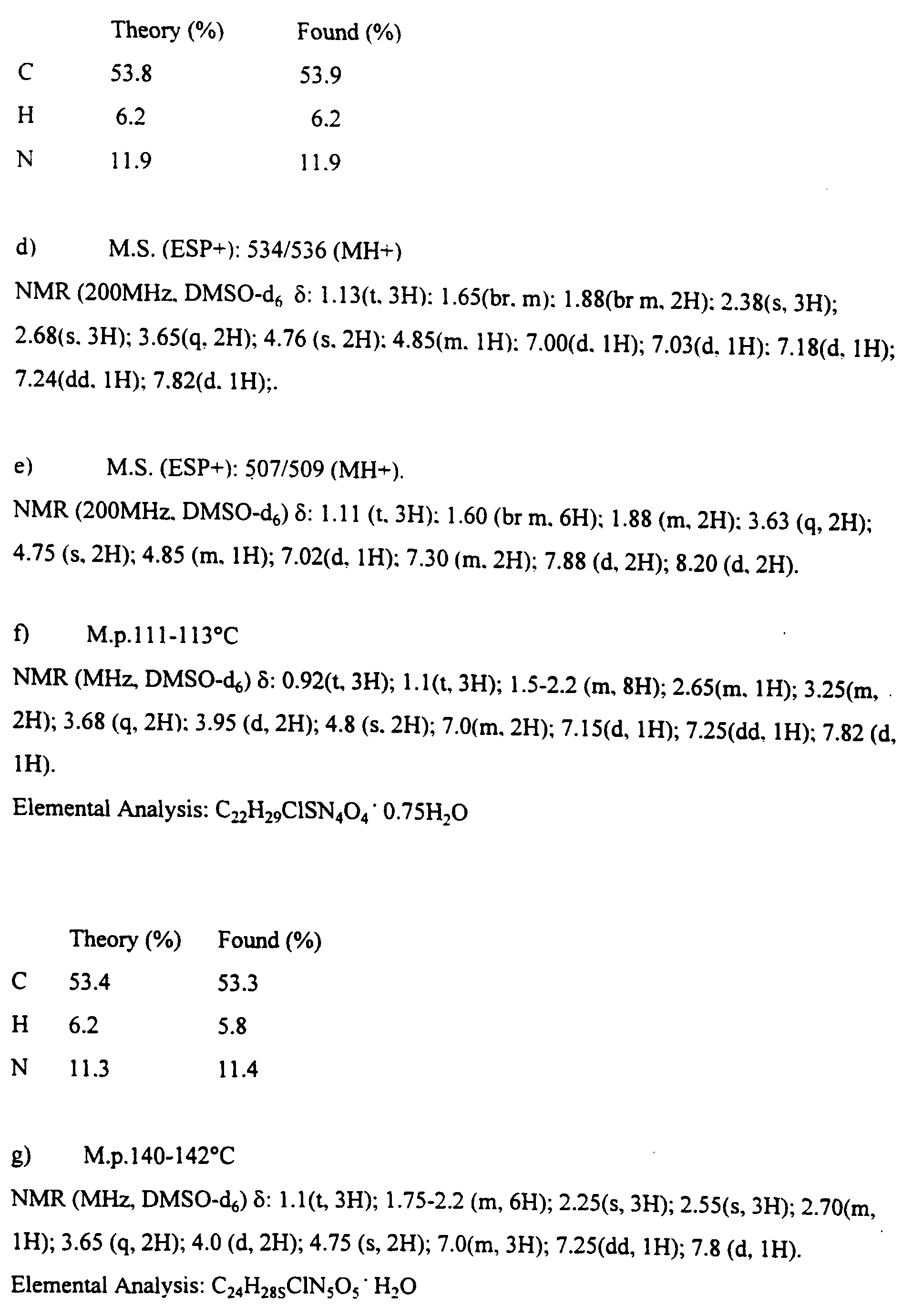

- Butyl 6-[N-(5-bromo-2-(2-methylpropoxy)benzyl)-N-ethylamino]pyridazine-3-carboxylate (reference example 10) (0.22g, 0.47mmol) in THF (3ml) and methanol (3ml) was treated with a 1N solution of aqueous sodium hydroxide (3ml) and left at ambient temperature for 1.5 hours (after which time TLC (1:1 diethyl ether/hexane) indicated that none of the ester remained). The reaction mixture was evaporated to low bulk. taken up in a little water and acidified with acetic acid to produce a gum. The gum did not solidify so it was extracted with ethyl acetate (x2) and the combined extracts washed with brine, dried (MgS04) and evaporated to give a gum. The gum was evaporated from toluene and dichloromethane to give the title compound as a foam (140mg, 73%).
- MS (CI+): 408.410 (M+H)+
- MS (EI+) : 408,410 (M+H)+ NMR (200MHZ, DMSO-d6) δ:1.00(d, J= 10Hz, 6H); 1.16(t, J=8.3Hz, 3H); 1.93-2.15 (m, 1H); 3.69(q, J=8.3Hz, 2H); 3.80(d, J=6.67Hz, 2H); 4.84 (s, 2H); 6.98 (d, J=10Hz, 1H); 7.12
-
- The title compound was prepared by hydrolysing butyl 6-[N-(5-chloro-2-(2-methylpropoxy)benzyl)-N-ethylamino]pyridazine-3-carboxylate (reference example 12) using a similar method to that of example 1.
NMR (250 MHz, DMSO-d6) δ: 1.00 (d, 6H): 1.15 (t, 3H); 2.04 (m, 1H); 3.69 (q, 2H); 3.80 (d, 2H): 4.84 (s, 2H); 7.03 (m, 2H); 7.11 (d, 1H); 7.27 (dd, 1H); 7.83 (d, 1H).
MS (ES-) : 362 (M-H)-Elemental Analysis: C18H22ClN303 Theory (%) Found (%) C 59.4 59.4 H 6.1 5.9 N 11.5 11.4
MS (CI+): 181 (M+H)+ - N-Ethyl-5-bromo-2-(cyclopropylmethoxy)benzylamine (reference example 13) (12.56g) was dissolved in NMP (59ml) under argon. 6-Chloropyridazine-3-carboxamide (6.17g, 3.9mmol) and sodium bicarbonate (8.24g, 98mmol) were added and the mixture heated to 110°C for 24 hours. The mixture was then cooled and diluted with ethyl acetate and poured into a mixture of saturated aqueous ammonium chloride and 1N hydrochloric acid (50ml). The white precipitate that formed was filtered off and washed with ethyl acetate and diethyl ether to give the title compound which was dried in a vaccuum oven at 55°C (11.46g, 72.1%).
NMR (200 MHz, DMSO-d6) δ: 0.34, (m, 2H); 0.55 (m, 2H); 1.17 (m, 4H); 3.69 (q, 2H); 3.88 (d, 2H); 4.80 (s, 2H); 6.96 (d, 1H); 7.15 (m, 2H); 7.37 (dd, 1H); 7.42 (brs, 1H); 7.84 (d, 1H); 8.14 (brs, 1H).
MS (ESP+): 405 (M+H)- - 6-[N-(5-Bromo-2-(cyclopropylmethoxy)benzyl)-N-ethylamino]-3-cyanopyridazine (reference example 14) (1.63g) was dissolved in dimethylacetamide (DMA) (17mls) under argon. Triethylamine hydrochloride (0.87g, 6.3mmol) and sodium azide (0.82g, 12.6mmol) were added and the mixture heated at 95-110°C for 3 hours. It was then cooled and partitioned between saturated aqueous ammonium chloride and ethyl acetate. The organic layer was washed with 10% 2N HCl saturated aqueous ammonium chloride (x2) and brine (x2), dried over Na2SO4. filtered and evaporated. The residue was recrystallised from acetonitrile to give the title product (1.34g, 74.0%).
- NMR (200MHz, DMSO6) δ : 0.34 (m, 2H); 0.56 (m, 2H); 1.20 (m, 4H); 3.74 (q, 2H); 3.88 (d, 2H); 4.84 (s, 2H); 6.96 (d, 1H); 7.25 (d. 1H); 7.29 (d, 1H); 7.37 (dd, 1H); 8.03 (d, 1H).
Elemental Analysis: C18H20BrN70 Theory (%) Found (%) C 50.2 50.2 H 4.7 4.8 N 22.8 22.8 - The title compound was prepared from 6-[N-(5-chloro-2-(2-methylpropoxy)benzyl)-N-ethylamino]-3-cyanopyridazine (reference example 15) using a similar method to that of example 12.
NMR (200MHz. DMSO-d6) δ: 0.99 (d, 6H); 1.18 (t, 3H); 2.04 (m, 1H); 3.72 (q, 2H); 3.82 (d, 2H); 4.86 (s, 2H); 7.04 (d, 1H); 7.09 (d, 1H); 7.27 (m, 2H); 8.03 (d, 1H).Elemental Analysis: C18H22ClN70 Theory (%) Found (%) C 55.7 55.6 H 5.7 5.7 N 25.3 24.9
m.p. 204-206°C. - 6-[N-(5-Bromo-2-(cyclopropylmethoxy)benzyl)-N-ethylamine]pyridazine-3-carboxylic acid (example 3) (1.0g, 2.46mmol) was mixed with propylsulphonamide (0.32g, 2.6mmol), 4-(dimethylamino)pyridine (0.90g, 7.38mmol) and 1-(3-dimethylaminopropyl)-3-ethylcarboxiimide hydrochloride (0.71g, 3.7mmol) under argon. DMF (12.0ml) was added and the mixture stirred at ambient temperature overnight.
- The reaction mixture was then poured into saturated aqueous ammonium chloride and extracted with ethyl acetate (x2). The combined organic extracts were washed with 5% 2N HCl in saturated aqueous ammonium chloride, saturated aqueous sodium bicarbonate (x1) and brine (x1), dried over Na2SO4 filtered and evaporated. The residue was purified by MPLC using 2.5% IPA/dichloromethane + 0.2% acetic acid. Fractions containing the title product were evaporated and the residue codistilled with toluene, isohexane and finally ether so that the title product was obtained as a white foam on drying under high vacuum. (1.00g, 79.4%).
NMR (200 MHz, DMSO-d6) δ: 0.30, (m. 2H); 0.55 (m, 2H); 1.00 (t, 3H); 1.16 (m, 4H); 1.75 (m, 2H); 3.45 (t, 3H); 3.73 (q, 2H); 3.87 (d, J=7.5Hz. 2H); 4.85 (s, 2H); 6.97 (d, J=8.3Hz, 1H); 7.18 (d, J=3.1Hz, 1H), 7.24 (d, J=8.7 Hz, 1H); 7.39 (dd, J-8.3. 3.1 Hz, 1H); 7.86 (d, J=8.7Hz. 1H).Elemental Analysis: C21H27BrN404S Theory (%) Found (%) C 49.3 49.7 H 5.3 5.6 N 11.0 10.7 - The title compound was prepared from the n-butyl ester (reference example 16) using a similar method to that of example 1.
NMR: (250 Mhz, DMSO-d6) δ: 1.15 (t, 3H); 3.68 (g, zH); 4.20 (m, 2H); 4.44 (m, 1H); 4.89 (s, 2H); 7.08 (m, 3H), 7.4 (dd, 1H), 87.83 (d, 1H).
MS: 463 (M+H)+ - The title compound was prepared from the appropriate cyano compound (reference example 17) using a similar method to that of example 12 except the mixture was heated at 85°C for approximately 20 hours, monitoring the reaction by TLC. (80% yield).
NMR (200MHz, DMSO-d6) δ : 0.36 (m, 2H); 0.57 (m, 2H); 1.14-1.35 (m, 4H); 3.08 (s, 3H); 3.78 (q, 2H); 4.03 (d, J=6.2Hz, 2H); 4.93 (s, 2H); 7.25 (d, J=8.3Hz, 1H); 7.35 (d, J=8.3 Hz; 1H); 7.68 (d, J=2.1Hz, 1H); 7.83 (dd, J=2.1, 8.3Hz, 1H); 8.05 (d. J=8.3Hz, 1H). MS (ESP+): 430 (M+H)+ - 6-[N-(5-Bromo-2-propoxybenzyl)-N-ethylamino]-3-cyanopyridazine (reference example 18) (1.0 g, 2.67 mmol). was dissolved in DMA (15 ml) and treated with sodium azide (520 mg, 8.0 mmol) followed by triethylammonium chloride (550 mg. 4.0 mmol) and the mixture heated at 110°C for 3 hours. The solution was poured 2M hydrochloric acid (50ml), extracted with ethyl acetate and dichloromethane (100ml of each) and the combined extracts washed with water (3x100ml). dried over MgSO4 and concentrated in vacuo. Addition of ether and hexane precipitated a solid which was triturated with acetonitrile / toluene to give the title compound (965mg. 87%).
MS (ESP+): 418 (M+H)+, 390 (M+H-N2)+
Elemental Analysis: C17H20BrN7O
Calc: % C, 48.8; H, 4.82; N, 23.4
Found: % C, 49.1; H, 4.7; N, 23.5
NMR (250 MHz, DMSO-d6) δ: 0.99 (t, J = 7Hz, 3H); 1.17 (t, J = 6 Hz, 3H); 1.72 (m, 2H); 3.72 (q, J = 6 Hz, 2H); 4.0 (t, J = 7Hz, 2H); 4.82 (s, 2H); 6.98 (d, J = 8.5 Hz, 1H); 7.22 (d, J = 2 Hz, 1H); 7.27 (d, J = 8 Hz, 1H); 7.40 (dd, J = 2, 8 Hz, 1H); 8.03 (d, J = 8.5 Hz, 1H). - 6-[N-(5-Bromo-2-propoxybenzyl)-N-ethylamino]-3-cyanopyridazine (reference example 18) (1.5 g, 4 mmol) in ethanol (100 ml) was treated with aqueous sodium hydroxide (20ml, 2M, 40 mmol) and was heated to 70°C for 16 hours. The solvents were evaporated at reduced pressure, the residue dissolved in water, acidified with acetic acid and extracted with ethyl acetate (x4). The combined organic phases were washed with water and brine dried over MgSO4 and concentrated in vacuo. The resulting gum was triturated with ether to give the title compound as solid (1.24 g, 79%).
M.p. 135-137°C
MS (ESP-): 392 (MH)-,
Elemental Analysis: C17H20BrN7O
Calc: % C. 51.8: H. 5.1: N. 10.7
Found: % C. 51.9; H. 5.3; N. 10.6 - 6-(N-[5-Bromo-2-propoxybenzyl]-N-ethylamino)pyridazine-3-carboxylic acid (example 18) (500 mg, 1.27 mmol) was dissolved in dichloromethane (50 ml), 1-(3-dimethylaminopropyl)-3-ethyl-carbodiimide hydrochloride (EDAC),(365mg. 2.07mmol), dimethylaminopyridine, (DMAP) (465 mg. 3.81 mmol) and propanesulfonamide (190 mg, 1.54 mmol) was added. The mixture was stirred at ambient temperature under argon overnight, after which TLC (5% methanol/dichloromethane) suggested the reaction was complete. The reaction mixture was loaded directly onto a MPLC column (silica) and the title compound obtained by elution 5% methanol / dichloromethane as a foam (380 mg, 60%).
MS(ESP+): 499 (M+H)+
Elemental Analysis: C20H27BrN4O4S
Calc: % C, 48.1; H, 5.45; N, 11.2
Found: % C,48.2; H, 5.8; N, 10.8
NMR (250 MHz, DMSO-d6) δ: 0.95 (m, 6H), 1.17 (t, J = 6 Hz, 3H); 1.7 (m, 2H); 3.37 (t, J = 8 Hz, 2H); 3.67 (q, J = 6 Hz, 2H); 3.95 (t, J = 6Hz, 2H); 4.82 (s, 2H);
6.98 (d, J = 8.5 Hz, 1H); 7.12 (d, J = 2 Hz, 1H); 7.17 (d, J = 8 Hz, 1H); 7.37 (dd, J = 2,8 Hz, 1H); 7.83 (d, J = 8.5 Hz, 1H). - 6-(N-[5-Bromo-2-propoxybenzyl]-N-ethylamino)pyridazine-3-carboxylic acid (example 18)(500 mg. 1.27 mmol) was dissolved in dichloromethane (50 ml). (1-(3-dimethylaminopropyl)-3-ethyl-carbodiimide hydrochloride (EDAC),(365mg. 2.07mmol), dimethylaminopyridine. (DMAP) (465 mg. 3.81 mmol) and 3.5-dimethylisoxazoly-4-ylsulfonamide (270 mg. 1.53 mmol) was added. The mixture was stirred at ambient temperature under argon overnight, after which TLC (5% methanol/dichloromethane) suggested the reaction was complete. The reaction mixture was loaded directly onto a MPLC column (silica) and the title compound obtained by elution 5% methanol / dichloromethane as a gum which was further purified by trituration with ether to give the required product as a solid (180mg, 33%).
M.p. 122-124°C
MS(ESP+): 552 (M+H)+
Elemental Analysis: C22H26BrN5O5S · 1.1 H2O
Calc: % C, 47.8; H, 4.7; N, 12.7
Found: % C,46.2; H, 4.9; N, 12.2
NMR (250 MHz, DMSO-d6) δ: 0.95 (m, J = 6 Hz,3H), 1.12 (t, J = 7 Hz, 3H); 1.72 (m, 2H); ); 2.27 (s, 3H); ); 2.55 (s, 3H); 3.62 (q, J = 7 Hz, 2H); 3.95 (t, J = 6Hz, 2H); 4.72 (s, 2H); 6.93 (d, J = 8.5 Hz, 1H); 6.97 (d, J = 8 Hz, 1H); 7.17 (d, J = 2 Hz, 1H); 7.37 (dd, J = 2,8 Hz, 1H); 7.77 (d, J = 8.5 Hz, 1H). - A mixture of N-ethyl-5-chloro-2-(cyclopropylmethoxy)benzylamine (reference example 20) (4.4g, 18.4mmol), 6-chloropyridazine-3-carboxamide (3.0g 19mmol), diisopropylethylamine (5.0ml, 29mmol) and DMF (25ml) was stirred at reflux for 16 hours. The mixture was cooled and diluted with water (50ml), the gum was allowed to settle out and the supernatant liquor decanted. The gum was dissolved in dichloromethane and stirred while adding 2N hydrochloric acid (50ml). A precipitate formed after 10 minutes. The solid was filtered off and washed with dichloromethane (10ml) and ether (20ml) to give a buff solid (3.8g. 61%) m.p. 177-8°C MS (ESP+): 361/363 (M+H)+)
NMR (200MHz, DMSO-d6) δ 0.34 (m, 2H), 0.57 (m, 2H), 1.16 (t, J=7Hz, 3H), 1.25 (m, 1H), 3.70 (q, J=7Hz, 2H), 3.78 (d, 2H), 4.81 (s, 2H), 7.00 (d, J=8Hz, 1H), 7.05 (d, J=2Hz, 1H), 7.17 (d, J=9Hz, 1H), 7.25 (dd, J=2, 8Hz, 1H), 7.45 (broad s, 1H), 7.85 (d, J=9Hz, 1H), 8.07 (broad s, 1H). - The title compound was prepared as a white powder from 6-[N-(5-chloro-2-(cyclopropylmethoxy)benzyl)-N-ethylamino]pyridazine-3-carboxamide (example 21) using a similar method to that of example 26.
(Yield 86%).
m.p. 119-120°C
MS (ESP+) : 362/364 (M+H)+
NMR (200 MHz, DMSO-d6) δ 0.34 (m, 2H), 0.56 (m. 2H); 1.17 (t, J=7Hz, 3H), 1.22 (m, 1H), 3.72 (q, J=7Hz, 2H) 3.90 (d, J=7Hz, 2H), 4.83 (s, 2H), 7.02 (d, J = 8Hz,) 7.08 (d, J=2Hz, 1H), 7.14 (d, J=9Hz. 1H), 7.26 (dd, J=2, 8Hz, 1H), 7.84 (d, J = 9Hz, 1H).Elemental Analysis: Calculated % C, 59.8; H, 5.6: N, 11.6; Cl 9.8 Found % C, 59.7; H, 5.6; N, 11.7; Cl, 9.9 - The title compound was prepared from 6-[N-(5-chloro-2-cyclopropylmethoxybenzyl)-N-ethylamino]-3-cyanopyridazine (reference example 21) using a similar method to that of example 12.
(Yield 41%)
m.p. 190-192°C
MS (ESP+): 386/388 (M+H)+
NMR (200MHz, DMSO-d6) δ 0.35 (m, 2H), 0.57 (m, 2H), 1.20 (t, J=7Hz, 3H), 3.77 (q, J=7Hz, 2H), 3.90 (d, J=7Hz, 2H), 4.85 (s, 2H), 7.01 (d, J=8Hz, 1H), 7.14 (d, J = 2Hz, 1H), 7.25 (dd, J=2.8 Hz, 1H), 7.29 (d, J = 8Hz, 1H), 8.04 (d, J=8Hz, 1H).
Analysis: Calc % C. 56.0; H. 5.2; N, 25.4
Found % C. 55.9; H. 5.3: N. 25.0 - The title compound was prepared from 6-[N-(5-chloro-2-cyclopropylmethoxybenzyl)-N-ethylamino]pyridazine-3-carboxylic acid (example 22) and trifluoromethanesulphonamide using a similar method to that of example 7. (Yield 18%). m.p. 150°-dec
MS (ESP+): 493/495 (M+H)+
NMR (200 MHz. DMSO-d6) δ :0.35 (m, 2H). 0.57 (m, 2H). 1.15 (t, J=7Hz, 3H), 3.67 (q, J=7Hz, 2H), 3.88 (d, J=7Hz, 2H), 4.80 (s, 2H), 6.95 - 7.10 (m, 3H), 7.24 (dd, J=2, 8Hz, 1H), 7.80 (d, J=8Hz 1H). - N-Ethyl-5-chloro-2-cyclopentoxybenzylamine (reference example 22 - used without further purification) (4.27 g, 16.8 mmol) in dimethylformamide (25 ml) was then treated with 6-chloropyridazin-3-carboxamide (described in reference example 3) (3.03 g, 19.2 mmol) and ethyl diisopropylamine (5 ml, 29 mmol) and left to reflux at 140 °C for 16 hours. Water (50 ml) was added and the product extracted into dichloromethane and ether, dried over anhydrous magnesium sulfate, filtered and purified by column chromatography (2% propan-2-ol in dichloromethane) to give 1.44 g of yellow gum. Trituration with ether yielded the title compound (790 mg, 13%).
MS (ESP+); 375 / 377 (MH+)
NMR (200 MHz, DMSO-d6) δ: 1.08 (t, 3H); 1.60 (m, 6H); 1.87 (m, 2H); 3.62 (q, 2H); 4.74 (s, 2H); 4.85 (m, 1H); 7.03 (m, 2H); 7.13 (d, 1H); 7.24 (dd, 1H); 7.42 (br s, 1H); 7.82 (d. 1H); 8.08 (br s, 1 H). - 6-[N-(5-Chloro-2-cyclopentoxybenzyl)-N-ethylamine]pyridazin-3-carboxamide (example 25) (0.75 g, 2.0 mmol) was dissolved in ethanol (50 ml), 2N sodium hydroxide (15 ml) added and the solution left to reflux at 80 °C for 16 hours. Once cool, the solvent was removed in vacuo and water (100 ml) added. The solution was acidified with glacial acetic acid and the title compound extracted into dichloromethane. washed with water (2 x 100 ml) and dried over anhydrous magnesium sulfate. The solvent was evaporated and the product recrystallised from dichloromethane. ether and hexane upon standing. (100 mg, 13%)
MS (ESP+): 376 / 378 (MH+)
NMR (200 MHz, DMSO-d6, 373K) δ: 0.79 (t, 3H); 1.62 (m, 6H); 1.88 (m, 2H); 3.15 (m, 2H); 4.38 (s, 2H); 4.80 (m, 1H); 6.80 (br s, 1H); 6.95 (d, 1H); 7.22 (dd, 1H); 7.32 (d, 1H); 7.93 (d. 1H). - The title compound was prepared from 6-(N-[5-Chloro-2-cyclopentoxybenzyl]-N-ethylamino)-3-cyanopyridazine (reference example 23) using a similar method to that of example 12 except the reaction was stirred at 150 °C for 9 hours, the solution was acidified with 1N hydrochloric acid and the product was extracted into dichloromethane (2 x 100 ml) and purified by column chromatography (10% propan-2-ol, 0.1% methanoic acid in dichloromethane). Ether trituration gave the title product (225 mg, 18%).
MS (ESP+): 400 /402 (MH+)
NMR (200 MHz, DMSO-d6) δ: 1.14 (t, 3H); 1.60 (m, 4H); 1.70 (m, 2H); 1.88 (m, 2H); 3.65 (q, 2H); 4.78 (s, 2H); 4.87 (m, 1H); 7.02 (d, 1H), 7.13 (d, 1H); 7.28 (m, 2H); 8.03 (d, 1H). - The title compound was prepared from 6-[5-bromo-2-(2-methylpropoxy)benzyl)-N-ethylamino]pyridine-3-carboxylic acid (example 9) and 3.5-dimethylisoxazol-4-ylsulphonamide using a similar method to that of example 14.
NMR(200Hz. DMSO-d6) δ 0.98 (d, 6H); 1.15(t, 3H); 1.95-2.06 (m, 1H); 2.38(s, 3H); 2.7 (s, 3H); 3.69 (q, 2H); 3.8 (d, 2H); 4.85 (s, 2H); 6.98 (d, 1H); 7.13 (d, 1H); 7.2 (d, 1H); 7.39 (dd, 1H); 7.8 (d, 1H). - 6-[N-(5-Methanesulphonyl-2-(cyclopropyloxy)benzyl)-N-ethylamino]-3-cyanopyridazine (900mg. 2.3 mmol) in ethanol (30ml) and water (6ml) was treated with sodium hydroxide pellets (0.93g, 23 mmol) and the resultant solution heated at 80°C overnight (the reaction was monitored by HPLC). The mixture was then evaporated to low volume, water was added and the mixture extracted with ethyl acetate (x3) (a small quantity of insoluble material was ignored). The aqueous layer was acidified with acetic acid and extracted with ethyl acetate. The combined organic extracts were washed with brine, dried and evaporated to leave a gum. The gum was dissolved in dichloromethane and evaporated to give the title compound as a foam (0.56g, 60%) MS (ESP-): 404 (M-H-).
NMR (200MHz, DMSO-d6) δ 0.3-0.4 (m, 2H); 0.52 - 0.6 (m, 2H); 1.1-1.3 (m + t, 4H); 3.05 (s, 3H); 3.72 (q, 2H); 4.0 (d, 2H); 4.87 (s, 2H); 7.18 (d, 1H); 7.24 (d, 1H); 7.58 (d, 1H); 7.8 (dd, 1H); 7.84 (d, 1H). - The title compound was prepared from 6-[N-(5-methanesulphonyl-2-(cyclopropylmethoxy)benzyl)N-ethylamino]pyridazine-3-carboxylic acid (example 29) using a similar method to that of example 14.
MS (ESP+): 511.2 (M+H)+.
NMR (200MHz, DMSO-d6) δ: 0.29-0.38 (m, 2H); 0.5-0.62 (m, 2H); 0.98 (t, 3H); 1.3-1.1 (m + t, 4H); 1.65-1.82 (m, 2H); 3.05 (s, 3H); 3.43 (t, 2H); 3.75 (q, 2H); 4.0 (d, 2H); 4.9 (s, 2H); 7.23 (d, 1H); 7.27 (d, 1H); 7.56 (d, 1H); 7.8 (dd, 1H); 7.85(d, 1H). - The title compound was prepared from the corresponding acid (Example 9) using a method similar to that of Example 7.
NMR (250MHz DMSO-d6) δ: 1.00 (m, 9H); 1.15 (t, 3H); 1.75 (m, 2H); 2.03 (m, 1H); 3.45(m, 2H); 3.70 (q, 2H); 3.80 (d, 2H): 4.86 (s. 2H); 7.0 (d, 1H), 7.13 (d, 1H); 7.21 (d, 1H); 7.40 (dd, 1H); 7.87 (d, 1H). - The title compound was prepared from 6-[N-(5-bromo-2-(3,3,3-trifluoro-2-hydroxypropoxy)benzyl)-N-ethylamino]pyridazine-3-carboxylic acid (example 15) using a similar method to that of example 7.
- NMR (250MHz,DMSO-d6) δ: 1.15(t, 3H); 2.35(s, 3H); 2.63 (s, 3H); 3.68 (q, 2H); 4.2 (m, 2H); 4.40(m, 1H); 4.82(s, 2H); 6.65(d, 1H); 7.05(m, 2H); 7.2(m, 1H); 7.40 (dd, 1H); 7.80 (d, 1H);
MS (ESP+) 622 (M+H)-. - The title compound was prepared from the corresponding nitrile (reference example 24) using a similar method to that of example 29.
MS (ESP+): 406 (M+H)+
NMR (250MHz DMSO-d6) δ 1.15(t, 3H); 1.73 (m, 2H); 2.00 (m, 2H); 2.42(m, 2H); 3.69(q, 2H); 4.72 (quintet, 1H); 4.81 (s, 2H); 6.82 (d, 1H); 7.12 (d, 1H); 7.16 (d, 1H); 7.36 (dd, 1H); 7.83 (d, 1H). - The title compound was prepared from the corresponding nitrile (reference example 25) by a similar method to that of example 12.
MS (ESP)+: 488 (M+H)+.
NMR (250MHz DMSO-d6) δ: 1.18(t,3H); 3.72(q,2H); 4.16 (m, 1H); 4.27 (m, 1H); 4.44 (m, 1H); 4.84 (s, 2H); 6.66 (bd, 1H); 7.08 (d, 1H); 7.19 (d, 1H); 7.25 (d, 1H); 7.41 (dd, 1H); 8.03 (d, 1H). - 2-[N-(5-Bromo-2-cyclopropylmethoxybenzyl)-N-ethylamino]-5-cyanopyridine (reference example 26) (7.5g, 19.43mmol) was dissolved in ethanol (400ml) and sodium hydroxide (7.8g, 174mmol) and then water (80ml) added. The mixture was heated at reflux for 16 hours, the ethanol removed in vacuo, and the residue extracted with ethyl acetate (4x100ml). The organic extracts were acidified with acetic acid and washed with water (100ml) to give a solid (6.8g). This solid was dissolved in n-butanol (400ml) and sodium hydroxide (6.75g, 169mmol) and water (80ml) was added. The mixture was heated at reflux for 72 hours. the butanol removed in vacuo, water (100ml) added and the residue extracted with ethyl acetate(4x100ml). The organic extracts were acidified with acetic acid and washed with water (100ml). The combined aqueous layers were then acidified and extracted with ethyl acetate (4x100ml) to give the title product as a solid (2.4g. 30%).
M.p.175-177°C
MS: 404 (M-H) -
NMR (MHz, DMSO-d6) δ: 0.30(m, 2H); 0.55 (m, 2H); 1.12(m, 4H); 3.55 (q, 2H); 3.85 (d, 2H); 4.68 (s, 2H); 6.62(d, 1H); 6.92 (d, 1H); 7.05 (d, 1H); 7.35 (dd, 1H); 7.88 (dd, 1H); 8.58 (d, 1H)12.30(s, 1H).
Elemental Analysis: C19H21BrN2O3
Calc: % C, 56.3; H, 5.2; N, 6.9
Found: % C, 56.1; H, 5.3; N, 6.8 - The title compound was prepared from using a similar method to that of example 18 by treating 6-[N-(5-Chloro-2-cyclobutylmethoxybenzyl)-N-ethylamino]-3-cyanopyridazine (reference example 27) (2.3g, 6.46mmol) with sodium hydroxide (2.6g, 65mmol) in water (20ml) and ethanol (100ml) to give a gum which solidified on trituration with ether (1.15g, 47%).
M.p.140-142°C
MS: 374 (M-H)-
NMR (MHz, DMSO-d6) δ: 1.1(t, 3H); 1.95 (m, 6H); 2.70(m, 1H); 3.68 (q, 2H); 4.0 (d, 2H); 4.8 (s, 2H); 7.0(m, 3H); 7.25(dd, 1H); 7.82 (d, 1H).
Elemental Analysis: C19H22ClN3O3
Calc: % C, 60.5; H, 5.9; N, 11.2
Found: % C. 60.5; H, 6.0; N, 10.9 - The title compound was made from the corresponding ester [which was prepared using similar methods to those described in reference example 3, using propylamine in place of ethylamine, and reference example 4] using a similar method to that of example 1 (20%).
MS (ESP+) : 420 / 422 (MH+)
NMR (200 MHz, DMSO-d6) δ: 0.25 (m, 2H); 0.57 (m, 2H); 0.91 (t, 3H); 1.21 (m, 1H); 1.61 (m, 2H); 3.63 (t, 2H); 3.88 (d, 2H); 4.83 (s, 2H); 6.96 (d, J=8Hz, 1H); 7.13 (d, J=9Hz, 1H), 7.16 (d, J=2Hz, 1H); 7.38 (dd, J=2Hz, 8Hz, 1H); 7.82 (d, J=9Hz, 1H). - The title compound was prepared from 6-[N-(5-Bromo-2-cyclopropylmethoxybenzyl)-N-ethylamine]pyridazine-3-carboxylic acid (example 37) using a similar method to that of example 7. except that dichloromethane was used as the solvent and no column purification was neccessary. Recrystallisation (diethyl ether/hexane) gave the title compound (340 mg, 49%).
MS (ESP+) : 578 / 580 (MH+)
NMR (250 MHz, DMSO-d6) δ: 0.33 (m, 2H); 0.54 (m, 2H); 0.88 (t, 3H); 1.19 (m, 1H); 1.60 (m, 2H); 2.40 (s, 3H) 2.68 (s, 3H); 3.60 (t, 2H); 3.87 (d, 2H); 4.84 (s, 2H); 6.96 (d, J=8Hz, 1H); 7.17 (d, J=2 Hz, 1H); 7.23 (d, J=9 Hz, 1H); 7.38 (dd, J=2Hz,8Hz, 1H); 7.81 (d, J=9 Hz, 1H). - The title compound was prepared using a similar method to that of example 37 from the appropriate N-methyl compound.
MS (ESP+): 392 / 394 (MH+)
NMR (250 MHz, DMSO-d6) δ: 0.33 (m, 2H); 0.55 (m, 2H); 1.19 (m, 1H); 3.38 (d, 2H); 4.86 (s, 2H); 6.97 (d, J=8Hz, 1H); 7.17 (d, J=10 Hz, 1H); 7.20 (d, J=2Hz, 1H); 7.37 (dd, J=8Hz, 2Hz, 1H); 7.84 (d, J=10 Hz). - The title compound was prepared using a similar method to that of example 38 from the corresponding carboxylic acid.
MS (ESP+): 550 / 552 (MH+)
NMR (250 MHz, DMSO-d6) δ: 0.30 (m, 2H): 0.52 (m. 2H); 1.16 (m. 1H); 2.39 (s, 3H); 2.69 (s. 3H): 3.22 (s. 3H): 3.85 (d, 2H): 5.87 (s. 2H); 6.95 (d, J=8Hz. 1H); 7.20 (d, J=2 Hz, 1H); 7.27 (d, 1H); 7.39 (dd. J=2Hz. 8Hz, 1H); 7.84 (d, 1H). - 6-Chloronicotinic acid (100 g, 0.63 mol) was treated with ethylamine (70% in water. 500 ml). The reaction was sealed in an autoclave and heated to 170°C for 6 hours. The reaction mixture was evaporated, partially neutralised with concentrated HCl and the pH adjusted to pH5 with glacial acetic acid. The solid product was filtered off and dried in vacuo for 18 hours to give 6-(ethylamino)nicotinic acid (87.8 g, 84%).
MS (CI+) = 167 (M+H)+
NMR (250 MHz, DMSO-d6) δ: 1.15 (t, J=7Hz, 3H); 3.3 (q, J=7Hz, 2H); 6.45 (d, J=9Hz, 1H); 7.25 (brt, 1H); 7.78 (dd, J=2, 9Hz, 1H); 8.54 (d, J=2Hz, 1H); 11.6 (brs, 1H).
A suspension of 6-(ethylamino)nicotinic acid (50 g, 0.3 mol) in methanol (500 ml) was treated with concentrated H2SO4 (30 ml). The reaction was heated at reflux for 18 hours. The reaction mixture was then evaporated, poured into ice water (1L) and adjusted to pH8 with solid sodium hydrogen carbonate (foaming). The aqueous mixture was extracted with ethyl acetate (3 x 300 ml) and the organic layers combined, dried (MgSO4) and evaporated to give methyl 6-(ethylamino)nicotinoate as an off-white solid (45.5 g. 84%).
NMR (200 MHz. DMSO-d6) δ: 1.14 (t. J=7Hz. 3H): 3.3 (q. J=7Hz, 2H); 3.76 (s, 3H): 6.46 (d. J=9Hz, 1H); 7.39 (brt, 1H); 7.80 (dd. J=3. 9Hz, 1H); 8.56 (d. J=3Hz. 1H). - A solution of 5-bromosalicylaldehyde (12.0 g, 59.7 mmol) in DMF (50 ml) was treated with K2CO3 (16.5 g, 120 mmol) and benzyl bromide (11.2 g, 65.6 mmol). The reaction was stirred at ambient temperature for 18 hours, diluted with ethyl acetate and filtered. The filtrate was washed with HCl (0.05 M), saturated aqueous sodium hydrogen carbonate and brine. The organic phase was dried (Na2SO4) and evaporated and the residue triturated with hexane/ethyl ether. The product was filtered off to give 2-benzyloxy-5-bromobenzaldehyde as a white solid (15.8 g, 90%) m.p. 70-72°C.
MS (CI+): 291 (M+H)+
NMR (200 MHz, DMSO-d6) δ: 5.38 (s. 2H); 7.5 (m, 6H): 7.9 (m, 2H); 10.41 (s, 1H). - A suspension of 2-benzyloxy-5-bromobenzaldehyde (14.5 g, 50.2 mmol) in absolute ethanol (250 ml) was treated with sodium borohydride (2.6 g, 68.8 mmol). The reaction was stirred and the temperature slowly rose to 33°C. After 1 hour the reaction mixture was evaporated and the residue dissolved in ethyl acetate and poured into a mixture of ice water (200 ml) and 1N HCI (25 ml). The organic layer was separated, washed with aqueous sodium hydrogen carbonate, brine, dried (Na2SO4) and evaporated to give 2-benzyloxy-5-bromobenzylalcohol as a pale yellow oil (14.85 g, quantitative).
MS (CI+) 292 (M+).
NMR (200 MHz, DMSO-d6) δ: 4.52 (d, J=5Hz, 2H); 5.12 (s, 2H); 5.17 (t, J=5Hz, 1H); 6.98 (d, J=9Hz, 1H); 7.4 (m, 6H); 7.5 (d, 2H, 1H). - A solution of 2-benzyloxy-5-bromobenzyl alcohol (14.75 g, 50.2 mmol) in anhydrous ethyl ether (150 ml) was cooled to 4°C. A solution of PBr3 (13.68 g, 50 mmol) in anhydrous ether (40 ml) was added dropwise keeping the temperature below 10°C. The reaction was allowed to warm to ambient temperature and stirred for 1 hour. The reaction was filtered through silica gel (200 g). The silica gel was washed with ethyl ether to remove all the product. The filtrate was washed with water ( 1 x 150 ml), aqueous saturated sodium hydrogen carbonate (1 x 150 ml) and brine (1 x 150 ml). The organic layer was dried (Na2SO4) and evaporated to give 2-benzyloxy-5-bromobenzylbromide as a pale yellow oil (15.2 g, 85%) which crystallised on standing.
MS (EI+): 354 (M+)
NMR (200 MHz, DMSO-d6): δ 8:4.65 (s. 2H); 5.2 (s, 2H); 7.05 (d, J=9Hz, 1H), 7.4 (m, 6H); 7.66 (d, J=3Hz, 1H). - A solution of methyl 6-ethylaminonicotinoate (15.2 g, 84.4 mmol) in DMF (50 ml) was cooled to 0°C and treated with sodium hydride (60%, 75 mmol). The reaction was stirred for 1 hour and a solution of 2-benzyloxy-5-bromobenzylbromide (25 g, 70.2 mmol) in DMF (50 ml) added. The reaction was allowed to warm to ambient temperature and stirred for 18 hours. The reaction was quenched with water and extracted with ethyl acetate (three times). The organic layers were combined, washed with water and brine twice, dried (MgSO4) and evaporated to give a white solid. Recrystallisation from ethyl acetate/hexane gave methyl 2-[N-(2-benzyloxy-5-bromobenzyl)-N-ethylamino]pyridine-5-carboxylate (22.7 g, 71%).
MS (CI+): 455/457 (M+H)+
NMR (200 MHz, DMSO-d6) δ: 1.1 (t, J=7Hz, 3H); 3.5 (q, J=7Hz, 2H); 3.78 (s, 3H); 4.77 (s, 2H); 5.18 (s, 2H); 6.65 (d, J=9Hz, 1H); 7.08 (m, 2H); 7.4 (m, 6H); 7.9 (dd, J=2, 9Hz, 1H); 8.62 (d, 1H). - A solution of methyl 2-[N-(2-benzyloxy-5-bromobenzyl)-N-ethylamino]pyridine-5-carboxylate (10.0 g. 22 mmol) in dichloromethane (950 ml) was treated with boron trichloride dimethyl sulphide complex (40 ml. 2M. 80 mmol). The reaction was stirred at ambient temperature for 48 hours. Saturated aqueous sodium hydrogen carbonate solution was added and the layers were washed with dichloromethane. The organic layers were combined. dried (MgSO4) and evaporated to give an off white solid which was subjected to chromatography (eluant: ethyl acetate/hexane) to give methyl 2-[N-(5-bromo-2-hydroxybenzyl)-N-ethylamino]pyridine-5-carboxylate (6.02 g, 75%).
MS (CI+): 365 (M+H)+
NMR (250MHz, DMSO-d6): δ 1.14 (t, J=7Hz, 3H); 3.61 (q, J=7Hz, 2H); 3.78 (s, 3H); 4.66 (s, 2H); 6.65 (d, J=9Hz 1H); 6.8 (d, J=9Hz, 1H); 7.02 (d, J=2Hz, 1H); 7.2 (dd, J=2, 9Hz 1H); 7.93 (dd, J=2. 9Hz, 1H); 8.64 (d, J=2Hz, 1H); 10.13 (s, 1H). - 1-Bromopropane (0.12 g, 0.69 mmol) was treated with a solution of methyl 2-[N-(5-bromo-2-hydroxybenzyl)-N-ethylamino]-5-pyridylcarboxylate (0.2 g, 0.55 mmol) in DMF (4 ml). Potassium carbonate (230 mg, 1.7 mmol) was added to this solution and the reaction mixture was stirred for 18 hours. The solvent was evaporated and the residue taken up in water ( 4 ml) and extracted with ethyl acetate (3 x 3 ml). The combined extracts were evaporated and the residue subjected to chromatography (eluant: ethyl acetate/hexane) to give the title compound as a pale yellow oil (0.122 g, 54%) which was used in the subsequent step without further purification.
- A solution of the methyl-2-[N-(5-bromo-2-(hydroxybenzyl)-N-ethylamino]pyridine-5-carboxylate (reference example 1, paragraph 7) (0.5 g, 1.37 mmol) in THF (15 ml) was treated with triphenylphosphine (0.39 g, 1.49 mmol) and diazoethyldicarboxylate. The reaction was stirred at ambient temperature for five minutes and then isobutyl alcohol (0.152, 2.06 mmol) added. The reaction was then stirred at ambient temperature for 18 hours. partitioned between ethyl acetate and water and the aqueous layer washed with ethyl acetate (x2). The organic layers were combined, washed with water and brine. dried (MgSO4) and evaporated. The residue was subjected to chromatography (eluant: ethyl acetate/hexane) to give the title compound (0.35 g, 60%) as an off-white solid.
MS (CI+): 421 (M+H)+
NMR (250 MHz, DMSO-d6) δ: 1.0 (d, J=6Hz, 3H); 1.12 (t, J=7Hz, 6H); 2.04 (m, 1H); 3.6 (q, J=7Hz, 2H); 3.78 (s, 3H); 3.80 (s, 2H); 4.75 (s, 2H); 6.66 (d, J=9Hz, 1H); 6.97 (d, J=9Hz, 1H); 7.05 (d, J=2Hz, 1H); 7.37 (dd, J=2, 9Hz, 1H); 7.93 (dd, J=2, 9Hz, 1H); 8.73 (d, J=2Hz, 1H). - A solution of 6-oxo-1,6-dihydropyridazine-3-carboxylic acid (British patent no. 856409) (52 g, 0.33 mol) in nBuOAc (80 ml) and butanol (80 ml) was treated with concentrated sulphuric acid (5 ml). The mixture was heated at reflux under a Dean-Stark trap. After 5 hours water production had ceased. The reaction was allowed to cool to ambient temperature and after standing overnight, the precipitate was filtered, washed with diethyl ether and dried to give butyl 6-oxo-1,6-dihydropyridazine-3-carboxylate as a white solid (55.2 g, 85%) m.p. 81-83°C.
- A solution of the above butyl ester (55.2 g, 0.28 mol) in acetonitrile (220 ml) was added carefully to POCl3 (55.2 ml, 0.60 mol). The resultant solution was stirred at 100°C for 2 hours. The reaction was cooled, evaporated at reduced pressure. The residue was dissolved in dichloromethane (280 ml) and added to a cold stirred solution of sodium carbonate (55 g) in water (280 ml). The mixture was stirred until all effervescence ceased, then the layers were separated and the organic layers dried (MgSO4) and filtered through a pad of silica gel. The solution was evaporated to give butyl 6-chloropyridazine-3-carboxylate as a pale pink solid (51 g, 85%).
- A solution of the chloro pyridazine compound from the previous step (51 g, 0.238 mole) in THF (375 ml) was treated with methanolic ammonia (saturated, 80 ml). The reaction was allowed to stand at ambient temperature overnight. The precipitate was filtered and dried to give 6-chloropyridazine-3-carboxamide as a pink solid (18.2 g, 49%). [Further material could be obtained by evaporating the filtrate (at reduced pressure) and treating the residue with THF (100 ml) and methanolic ammonia (40 ml). The product was isolated as before to give a pink solid (17.4 g). Total yield (35.6 g, 95%)].
- A suspension of 6-chloropyridazine-3-carboxamide (28.5 g, 0.18 mol) in methanol (200 ml) was treated with aqueous ethylamine (70% solution, 77 ml). The reaction was heated at reflux for 3½ hours. The reaction was allowed to cool to ambient temperature and stand overnight. The precipitate was filtered and washed with a small volume of water and dried to give 6-(ethylamino)pyridazine-3-carboxamide as pink solid (8.9 g). [The filtrates were evaporated to a small volume diluted with cold water (100 ml) and more of the desired solid was filtered-off, washed with water and dried (12.8 g). Total yield (21.7 g, 72%)].
- A solution of 6-(ethylamino)pyridazine-3-carboxamide (21.7 g, 0.131 mol) in n-butanol (109 ml) and BF3.Et2O (54 ml) was heated under an air condenser (allowing evaporation of Et2O) at 120°C for 18 hours. The reaction was evaporated at reduced pressure and the residue dissolved in ice/water (400 ml) and neutralized with stirring using solid sodium bicarbonate. The oily precipitate was extracted with dichloromethane (250 ml) containing methanol (50 ml). The extracts were dried (MgSO4) and evaporated (in vacuo) to give a slightly sticky solid which was recrystallized from ethyl acetate (∼250 ml) to give butyl 6-(ethylamino)pyridazine-3-carboxylate as an off-white solid (22.0 g, 75%).
- A suspension of the butyl ester from the previous step (21 g, 0.094 mol) in acetic acid (400 ml) was treated with 4-bromophenol (65.5 g, 0.378 mol) and paraformaldehyde (3.15 g, 0.105 mol). The reaction was heated at 100°C for 4.5 hours and a further portion of paraformaldehyde (6.3 g, 0.21 mol) added and the reaction heated at 100°C for 16 hours. The resulting dark coloured reaction was evaporated to give a dark oil. Chromatography (eluant: diethyl ether/hexane) gave fast running materials as a brown oil. This oil was dissolved in ethyl acetate (∼ 70 ml) and allowed to stand overnight at ambient temperature to give a white solid precipitate. which was filtered and washed with ethyl acetate and dried to give butyl 6-[N-(5-bromo-2-hydroxybenzyl)-N-ethylamino]pyridazine-3- carboxylate as the product (12.3 g, 32%).
- A solution of n-butyl 6-[N-(5-bromo-2-hydroxybenzyl)-N-ethylamino]pyridazine-3- carboxylate (reference example 3) (0.286 g, 0.69 mmol) in DMF (3.5 ml) was treated with bromomethylcyclopropane (0.1 g, 0.78 mmol) and potassium carbonate (0.473 g. 3.4 mmol). The reaction was allowed to stir at ambient temperature for 60 hours. The solvent was evaporated at reduced pressure (vacuum pump) and the residue partitioned between ethyl acetate and water. The aqueous layer was extracted with ethyl acetate (2 x 10 ml). The organic layers were combined dried (MgSO4) and evaporated. The residue was purified by chromatography (eluant: ethyl acetate/hexane) to give the title compound as a pale yellow oil (0.3 g, 94%).
MS (ESP+): 462 (M+H)+
NMR (200 MHz, DMSO-d6) δ: 0.32 (m, 2H); 0.55 (m, 2H); 0.93 (t, J = 7Hz. 3H); 1.15 (m, 4H); 1.42 (m, 2H); 1.7 (m, 2H); 3.7 (q, J = 7Hz, 2H); 3.89 (d, J = 7Hz, 2H); 4.3 (t, J = 7H, 2H); 4.84 (s, 2H); 6.98 (d, J = 8Hz, 1H); 7.15 (m, 2H); 7.4 (dd, J = 3.9Hz); 7.82 (d, J = 8Hz, 1H). - The title compound was prepared using a similar method to that of reference example 2 (from the phenol in reference example 1, paragraph 7) using cyclopentylmethanol in place of isobutyl alcohol to give a yield of 60%.
MS (ESP+): (M+H)- 447
NMR (200 MHz. DMSO-d6) δ: 1.11 (t, J = 7Hz, 3H); 1.35 (m, 2H); 1.58 (m, 4H); 1.77 (m, 2H); 2.3 (m, 1H); 3.6 (q, J = 7Hz, 2H); 3.79 (s, 3H); 3.9 (d, J = 7Hz, 2H); 4.75 (s, 2H); 6.68 (d, J = 9Hz, 1H); 6.8 (d, J = 9Hz, 1H); 7.07 (d, J = 2Hz, 1H); 7.38 (dd, J = 2.9Hz, 1H); 7.94 (dd, J = 2.9Hz, 1H); 8.65 (d, J = 2H, 1H). - The title compound was prepared by reacting 1-iodopropane and butyl 6-[N-(5-bromo-2-hydroxybenzyl)-N-ethylamino]pyridazine-3-carboxylate (reference example 3) using a similar method to that of reference example 4.
MS (ESP+): 450/452 (M+H+) - The title compound was prepared by reacting 1-iodobutane and butyl 6-[N-(5-bromo-2-hydroxybenzyl)-N-ethylamino]pyridazine-3-carboxylate using a similar method to that of reference example 4.
MS (ESP+): 464/466 (M+H)+ - A solution of butyl 6-[N-(5-bromo-2-hydroxybenzyl)-N-ethylamino]pyridazine-3- carboxylate (reference example 3) (0.36 g, 1.0 mmol) in THF (4 ml) and methanol (4 ml) was treated with aqueous sodium hydroxide 1N (4 ml) and allowed to stand at ambient temperature for 1.5 hours. The reaction was evaporated to a small volume, diluted with water and acidified with acetic acid. After standing for 18 hours, the precipitate was filtered. washed with water and ether, and dried (MgSO4) to give the title compound as a white solid (0.26 g. 71%).
MS . (ESP+) 352/354 (M+H)+
NMR (200 MHz. DMSO-d6) δ : 1.15 (t, J = 6.67Hz, 3H); 3.68 (q, J = 6.67Hz, 2H); 4.75 (s, 2H); 6.83 (d, J = 8.34Hz, 1H); 7.10 (d, J = 8.34Hz, 1H); 7.13(d, J = 2.33Hz, 1H); 7.25 (dd, J = 10.00, 2.33Hz, 1H); 7.83 (d, J = 10.00Hz, 1H). - A solution of methyl 2-[N-(5-bromo-2-hydroxybenzyl)-N-ethylamino]pyridine-5-carboxylate (see reference example 1) (10.2 g, 0.55 mmol) in THF (3 ml) and methanol (5 ml) was treated with 1N aqueous sodium hydroxide solution (2.7 ml) and was heated to 40°C for 24 hours. The solvents were evaporated at reduced pressure, the residue treated with 1N acetic acid (2.7 ml) and the precipitate filtered. washed with water and air dried to give the title compound (0.17 g, 92%).
MS (FAB+): 351 (M+H)+
NMR (200 MHz, DMSO-d6) δ: 1.12 (t, J = 7Hz, 3H); 3.6 (q, J = 7Hz. 2H); 4.64 (s, 2H); 6.6 (d, J = 9Hz, 1H); 6.83 (d, J = 9Hz, 1H); 7.06 (d, J = 2Hz, 1H); 7.23 (dd, J = 2, 9Hz, 1H); 7.92 (dd, J = 2,9Hz, 1H); 8.59 (d, J = 2Hz, 1H). - Butyl 6-[N-(5-bromo-2-hydroxybenzyl)-N-ethylamino]pyridine-3-carboxylate (reference example 3) (1.12g, 2.76mmol) in dimethylformamide (16ml) was treated with potassium carbonate followed by 1-bromo-2-methylpropane (0.16ml, 770mg, 5.6mmol) and stirred at ambient temperature overnight. TLC showed reaction to be incomplete so further potassium carbonate (1.12g) and 1-bromo-2-methylpropane were added and the mixture stirred at ambient temperature over two days. The mixture was then evaporated to low bulk and the residue purified directly by MPLC to give the title compound as a colourless gum
(1.26g, 98%).
NMR (250 MHz. DMSO d6) δ 0.90 (m, 9H); 1.15 (t, 3H); 1.42 (m, 2H); 1.70 (m. 2H); 2.03 (m, 1H); 3.73 (q 2H); 3.80 (d, 1H); 4.28 (t, 2H), 4.82 (s, 2H); 6.97 (d, 1H), 7.1 (m, 2H); 7.38 (dd, 1H); 7.81 (d, 1H). - The title compound was prepared from butyl 6-(ethylamino)pyridazine-3-carboxylate and 4-chlorophenol using a similar method to that of reference example 3, except 0.4 equivalents of trifluoroacetic acid were added to the reaction mixture.
NMR (250 MHz, DMSO-d6) δ: 0.94 (t, 3H); 1.17 (t, 3H); 1.43 (m, 2H); 1.70 (m, 2H); 3.7 (q, 2H); 4.28 (t, 2H); 4.75 (s, 2H); 6.85 (d, 1H); 6.97 (d, 1H); 7.1 (m, 2H); 7.82 (d, 1H); 10.1 (bs, 1H). - The title compound was prepared by reacting butyl 6-[N-(5-chloro-2-hydroxybenzyl)-N-ethylamino]pyridazine-3-carboxylate (reference example 11) with 1-bromo-2-methylpropane using a similar method to that of reference example 4.
NMR (200MHz, DMSO-d6) 6: 0.95 (m, 9H); 1.15 (t, 3H); 1.43 (m, 2H); 1.70 (m, 2H); 2.03 (m, 1H); 3.68 (q, 2H); 3.80 (d, 2H); 4.28 (t, 2H); 4.83 (s, 2H); 6.99 (d, 1H); 7.04 (d, 1H); 7.10 (d, 1H); 7.26 (dd, 1H); 7.83 (d, 1H).
MS (ES+): 420 (M+H)+ - 1-Methyl-2-pyrrolidinone (90ml) (NMP) was added to anhydrous potassium carbonate (27.6g, 0.2 mol) under argon. To the stirred mixture was added in portions 5-bromosalicylaldehyde (20.1 ml, 0.1mol) and the mixture stirred for 10 minutes. Bromomethylcyclopropane (14.4ml, 0.15mol) was dissolved in NMP (10ml) and added dropwise over 15 minutes below 30°C. The reaction temperature was increased to 35-40°C for 3 hours. 70°C for 1 hour and then cooled to 35°C. Ethylamine hydrochloride (13.85g, 0.17 mol) was dissolved in methanol (60ml), and added quickly to the mixture which was then heated at 35-40°C for 3 hours and stirred overnight (allowing it to cool to ambient temperature). The reaction mixture was then cooled in ice. Sodium borohydride (5.3g, 0.14 mol) was dissolved in NMP (58ml) and added dropwise [effervescence and exotherm to 15°C] and the mixture heated to 40-45°C for 2 hours. The reaction mixture was then cooled in ice. 2N Hydrochloric acid (250mls) was added dropwise keeping the temperature below 30°C. The mixture was transferred to a separating funnel and extracted with ethyl acetate (x2). The combined organic layers were washed with 20% brine/water (x3) and brine (x1), dried over Na2SO4, filtered and evaporated. The residue was dissolved in ethyl acetate (100ml) and cooled in ice. Hydrogen chloride gas was then bubbled through the stirred solution. The title compound as the hydrochloride salt precipitated and was filtered off, washed with ethyl acetate (x2) and dried under high vacuum (12.6g, 28.5%).
NMR (200MHz, DMSO-d6) δ : 0.37 (m, 2H); 0.58 (m, 2H); 1.27 (m, 4H); 2.95 (q, 2H); 3.89 (d, 2H); 4.07 (s, 2H); 7.02 (d, J=8.0Hz. 1H); 7.53 (dd, J = 8.0, 2.9Hz, 1H); 7.73 (d, J = 2.9Hz, 1H); 9.25 (br s, 2H).
MS (ESP+): 284 (M+H)+ - 6-[N-(5-Bromo-2-cyclopropylmethoxy)benzyl)-N-ethylamino]pyridazine-3-carboxamide (example 11) (2.03g) was suspended in pyridine (25ml) and cooled under argon to 4°C. Methanesulphonyl chloride (4.6ml, 59.5mmol) was added dropwise (exotherm to -8°C) followed by pyridine (20mls). The reaction mixture was allowed to warm and stirred overnight. The pyridine was removed under reduced pressure and the residue partitioned between ethyl acetate and 1N hydrochloric acid. The organic layer was washed with 50% 1N HCl/saturated aqueous ammonium chloride (xI), saturated aqueous sodium bicarbonate (x1) and brine (x1), dried over Na2SO4, filtered and evaporated . The residue was purified by column chromatography, eluting with 2.5% ethyl acetate/dichloromethane and the fractions containing the title product were evaporated to a gum. (1.65g, 85.0%).
NMR (200MHz, DMSO-d6) δ 0.30 (m,2H); 0.54 (m,2H); 1.15(m,4H); 3.69(q,2H); 3.85(d,2H); 4.80(s,2H); 6.95(d,1H); 7.20(m,2H); 7.38(dd,1H); 7.80(d,1H).
MS(ESP-): 386.8(M-H)-. - 6-[N-(5-Chloro-2-(2-methylpropoxy)benzyl)-N-ethylamino]pyridazine-3-carboxylic acid (example 10) (2.0g) was dissolved in pyridine (30ml) under argon and cooled to 4°C. Methanesulphonyl chloride (0.75ml. 9.7mmol) was added to the mixture which was stirred at 4°C for 1.5 hours to give a dark purple solution. Ammonia gas was then bubbled through the solution for 2 minutes to give a dark red solution (exotherm to +15°C) and the solution evaporated under reduced pressure. The residue was dissolved in pyridine (30ml) and cooled under argon to 4°C. Methanesulphonyl chloride (5.1ml, 66 mmol) was then added dropwise (exotherm to 10°C) and the resultant brown suspension stirred at ambient temperature overnight. The brown solution was then evaporated and the residue partitioned between saturated aqueous ammonium chloride and ethyl acetate. The organic layer was washed with 10% 2N HCl/saturated aqueous ammonium chloride (x2), saturated aqueous sodium bicarbonate (x1) and brine (x1), dried over Na2SO4, filtered and evaporated. The title product was isolated by column chromatography using 20% ethyl acetate/isohexane as eluant (1.18g, 62.2%). [OPPI 14: 396-9 (1982)].
NMR(200MHz, DMSO-d6) 6: 0.97(d,6H); 1.12(t,3H); 2.00(m,1H); 3.67(q,2H); 3.79(d,2H); 4.85(s,2H); 7.05(m,2H); 7.19(d,1H); 7.29(dd,1H); 7.84(d,1H).
MS(ES+): 345 (M+H)+. - The title compound was prepared by reacting 3-bromo-1,1,1-trifluoropropan-2-ol and butyl 6-[N-(5-bromo-2-hydroxybenzyl)-N-ethylamino]pyridazine-3-carboxylate using a similar method to that of reference example 4
NMR: (250MHz, DMSO-d6) δ: 0.95(t,3H); 1.15(t,3H): 1.42(m,2H); 1.68(m,2H); 3.7(q,2H); 4.20(m,4H); 4.42(m,1H); 4.83(s,2H); 6.65(d,1H); 7.1(m,3H); 7.42(dd,1H); 7.63(d,1H). - 4-Methyl mercaptophenol (8.96g, 64 mmol) suspended in toluene (80ml) was added to magnesium methoxide solution in methanol (5.5ml, 8% soln, 41.4mmol) and the reaction stirred at reflux for 1 hour. After this time the yellow solution was treated with toluene (80ml) and methanol distilled from the reaction until reaction temperature reached approximately 95°C. Some solid precipitated. Paraformaldehyde (5.84g, 194 mmol) in toluene (60ml) was added to the mixture. which was stirred at reflux for 3.5 hours under argon (the temperature must be at least 95°C). The reaction mixture containing a little solid was then cooled and treated with 2N sulphuric acid (80ml), toluene (80ml), stirred for 15 minutes and separated. The organic layer was washed with water (x3), dried and evaporated to leave an orange oil (9.6g). This oil was purified by MPLC using 5% ether/isohexane to give 2-hydroxy-5-methylthiobenzaldehyde (3.3g).
NMR (200MHz, DMSO-d6) δ: 2.45(s,3H); 6.98(d,J=9Hz,1H); 7.48(dd, J=2.3, 9.0Hz, 1H); 7.55(d,J=2.3Hz, 1H); 10.25(s,1H); 10.67(s,1H).
MS (CI+): 168(M+). - 2-Hydroxy-5-methylthiobenzaldehyde was alkylated with bromomethylcyclopropane using a similar method to that of reference example 4 to give 2-cyclopropylmethoxy-5-methylthiobenzaldehyde.
NMR(200MHz. DMSO-d6) δ: 0.36(m,2H); 0.6(m,2H): 1.26(m,1H); 2.46(s,3H); 4.0(d.J=8.25Hz,2H); 7.2(d.J=9.2Hz, 1H); 7.52-7.62(m,2H); 10.38(s,1H);
MS (CI+): (M+H)+ 223.3. - N-Ethyl 2-cyclopropylmethoxy-5-methylthiobenzylamine was prepared by reductive amination of 2-cyclopropylmethoxy-5-methylthiobenzylamine using a similar method to that of reference example 19(1).
NMR(200MHz. DMSO-d6) δ: 0.32(m,2H); 0.55(m,2H); 1.03(t,J=7.3Hz, 3H); 1.30-1.13(m,1H); 2.4(s,3H); 2.53(q, J = 7.3Hz, 2H); 3.65(s,2H); 3.82(d,J =6.25Hz, 2H); 6.88(d, J=8.3Hz, 1H); 7.10(dd, J= 2.5, 8.3Hz, 1H); 7.25(d, J= 2.5Hz, 1H).
MS (ESP+): 252.4(M+H)+. - N-Ethyl 2-cyclopropylmethoxy-5-methylthiobenzylamine was reacted with 3-chloro-6-cyanopyridazine (prepared in reference example 18) using a similar method to that of example 11 to give 6-[N-(2-cyclopropylmethoxy)-5-methylthiobenzyl)-N-ethylamino]-3-cyanopyridazine.
NMR(200MHz, DMSO-d6) δ: 0.28(m,2H); 0.52(m,2H); 1.20-1.08(m,4H); 2.35(s,3H); 3.70(q,2H); 3.84(d, J=8.3Hz,2H); 4.8(s,2H); 6.95(d, J=8.3Hz,1H); 7.03(d, J=2.1Hz,1H); 7.19(dd, J=10.4, 2.1Hz, 2H); 7.8(d, J=10.4Hz. 1H).
MS (ESP+): 355(M+H)+. - 6-[N-(2-Cyclopropylmethoxy-5-methylthiobenzyl)-N-ethylamino]-3-cyanopyridazine (201mg, 0.57mmol) in dichloromethane (5ml) was cooled on ice to approximately -10°C and treated with 50% m-chloroperbenzoic acid (196mg, 0.57 mmol). The reaction mixture was stirred at -10 to 0°C for 1 hour, then diluted with dichloromethane and extracted with saturated aqueous sodium bicarbonate solution (x2). The organic extracts were dried and evaporated to give a pale brown foam (180mg). The foam (180mg, 0.49mmol) in dichloromethane (5ml) was cooled to -10°C, treated with m-chloroperbenzoic acid (170mg, 0.49 mmol) and stirred for 1.25 hours as the temperature rose to 0°C. More dichloromethane was added and the mixture extracted with saturated aqueous sodium bicarbonate solution (x2). dried and evaporated to give a foam which was purified by MPLC using 2:1 ethyl acetate/hexane as eluant to yield the title product (100mg, 53%).
NMR (200MHz. DMSO-d6) δ: 0.32(m,2H); 0.54(m.2H); 1.27-1.08(m,4H); 3.08(s,3H); 3.7(q,2H); 3.98(d, J=8.3Hz,2H); 4.88(s,2H), 7.22(d, J= 10.4 Hz,1H); 7.26(d, J = 10.4.Hz, 1H); 7.61(d, J = 2.1Hz, 1H); 7.77-7.78(m, J= 10.21Hz, 2H);
MS(ESP+) (M+H)+ 387.2. -
- (1) A mixture of 6-chloropyridazine-3-carboxamide (described in reference example
3) (15g, 95.5mmol) and pyridine (22.6g, 23.1ml, 286.6mmol) were was suspended in
dichloromethane and cooled to -30°C under argon. TFAA was added dropwise to the
stirred mixture keeping the internal temperature below -20°C . The reaction was stirred for
19.5hours allowing to warm to ambient temperature. The mixture was poured into
water(500ml) and washed with water (4x500ml) until the aqueous phase was pale yellow.
The organic phase was dried over MgSO4, filtered through a pad of silica (50mm diameter,
30mm deep), and concentrated in vacuo. The resulting solid was purified by MPLC (40%
dichloromethane/20%ethyl acetate/hexane) to give 3-chloro-6-cyanopyridazine as a
colourless solid (5.25g, 59%).
MS (EI+): 139 (M+)
NMR (250 MHz, CDCl3) δ: 7.71 (d, J=8Hz, 1H); 7.83 (d, J=8Hz, 1H). - (2) A solution of 5-bromosalicylaldehyde (20 g, 100 mmol) in NMP (100 ml) was
treated with K2CO3 (41.4 g, 300 mmol) at 40°C for 30 minutes. n-Propyl iodide (25.5g,
150mmol) was added and the reaction mixture stirred at 40°C for 19hours. A solution of
ethylamine hydrochloride (11.41g, 140mmol) in ethanol (50ml) was added and the mixture
stirred at 40°C for a further 3hours, after which a solution of sodium borohydride (5.292g,
140mmol) in NMP (20ml) was added dropwise over 1hour (CAUTION: much foaming).
The reaction was stirred at 40°C for 19 hours cooled to ambient temperature and 5M
hydrochloric acid (500ml). The solution was then treated with 5M sodium hydroxide
solution to pH 14 and extracted with ethyl acetate (3x300ml). The combined organic
phases were washed with water (4x500ml) dried over potassium carbonate and dry HCl gas
was passed over the solution. The slurry was concentrated in vacuo to give a yellow solid
which was recrystallised from acetonitrile toluene to give N-ethyl 2-propoxy-5-bromobenzylamine
hydrochloride as a white solid.
(15.47g, 50%).
MS (ESP): 375 (MH-)
NMR (250 MHz, CDCl3) δ: 1.02 (t, J=7Hz, 3H); 1.25 (t, J=6Hz, 3H); 1.80 (m, 2H); 3.77 (q, J=6Hz, 2H); 3.92 (t, J=7Hz, 2H); 4.80 (brs, 2H); 6.67 (d, J=8.5Hz, 1H); 6.75 (d, J=Hz, 1H); 7.12 (d, J=2Hz, 1H); 7.34 (dd, J=8.2Hz, 1H); 7.38 (d, J=8.5Hz, 1H). - (3) N-ethyl 2-propoxy-5-bromobenzylamine hydrochloride 2 (5.17g, 16.8mmol) and 3-chloro-6-cyanopyridazine
(2.65g, 16.8mmol) were dissolved in NMP (25ml) and sodium
hydrogen carbonate added (3.54g, 42.1mmol). The mixture was heated at 110°C under
argon afor 7.5hours and then allowed to cool to ambient temperature. The mixture was
poured into ethyl acetate (200ml) washed with water (5x200ml) and brine (200ml), the
organic phase dried over MgSO4 and concentrated in vacuo. The residue was purified by
MPLC (20%ethyl acetate / hexane) and then crystallised from ether / hexane to give the
title product (4.80g, 76%).
MS (ESP): 272 (MH+), 227 (M-EtNH2)+
NMR (250 MHz, DMSO-d6) δ: 0.99 (t, J=6Hz, 3H); 1.26 (t, J=7Hz, 3H); 1.78 (m, 2H); 2.92 (q, J=7Hz, 2H); 3.95 (t, J=6Hz, 2H); 4.02 (s, 2H); 7.02 (d, J=8Hz, 1H); 7.52 (dd, J=8, 2Hz, 1H); 7.75 (d, J=2Hz, 1H); 9.32 (brs, 2H). -
-
- (1) A solution of 5-bromo salicylaldehyde (20.1 g 0.1 mmol) in THF (150ml) was
treated with a solution of ethylamine in methanol (2M. 70ml. 0.14 mmol). The reaction
was stirred at ambient temperature for 1.5 hours. After cooling in an ice bath. sodium
borohydride (5.3g, 0.14 mmol) was added portionwise. The reaction was allowed to stand
at ambient temperature overnight. Water was added and the solvent removed at reduced
pressure. The residue was dissolved in ethyl acetate and washed with water and the
organic layer dried over MgSO4 and acidified with gaseous HC1. N-Ethyl-5-bromo-2-hydroxybenzylamine
hydrochloride was collected by filtration as a white solid. (17.53g,
66%).
NMR (250MHz, DMSO-d6) δ: 1.23(t,3H); 2.94(q,2H); 4.60(t,2H); 6.96(d,1H); 7.37(dd,1H); 7.63(d,1H); 9.02(bs,1H); 10.59(s,1H).
MS(ESP+): 230/232 (M+H)+. - (2) The title compound was prepared by reacting N-ethyl-5-bromo-2-hydroxybenzylamine
hydrochloride and 3-chloro-6-cyanopyridazine using a similar
method to that of reference example 18 except eluting with 2% diethyl
ether/dichloromethane in the chromatography (yield 50%).
NMR (250MHz, DMSO-d6) δ 1.15(t,3H); 8.37(q,2H): 4.75(s,2H); 6.81(d,1H); 7.07(d,1H); 7.15(d,1H); 7.25(dd,1H); 7.82(d,1H); 10.12(bs,1H). -
- The title compound was prepared by reacting 5-chloro-2-hydroxybenzaldehyde with bromomethylcyclopropane using a similar method to reference example 4.
MS (CI+): 240/242 (M+H)+.
NMR (200MHz, CDCl3) δ0.34(m,2H); 0.63(m,2H); 1.13(t, J = 7Hz, 23H); 1.26(m,1H); 2.65(q, J = 7Hz, 2H); 3.78(d,2H); 3.80(d,2H); 6.72(d, J = 8Hz, 1H); 7.13(dd, J = 2, 8Hz, 1H); 7.21(d, J = 2Hz, 1H). - To a stirred mixture of 6-[N-(5-chloro-2-(cyclopropylmethoxy)benzyl)-N-ethylamine]pyridazine-3-carboxamide (3.5g, 9.7mmol in pyridine (120ml) at 20°C, was added dropwise during 20 minutes, methane sulphonyl chloride (10.0ml. 124 mmol). The mixture was stirred at 20°C for 60 hours and poured onto ice (300gm) and 10N hydrochloric acid (100ml), stirring vigorously, then extracted with ether (500ml). The organic layer was washed with 1N hydrochloric acid (500ml), dried over anhydrous magnesium sulphate and evaporated to give the title product as a light brown gum, (3.3g, 99%).
MS (ESP+): 343/345 (M+H)+.
NMR (200 MHz, CDCl3) δ 0.32(m.2H); 0.60(m,2H), 1.20(m,1H); 1.25(t, J = 7Hz, 3H); 3.82 (d,2H); 3.85(q, J = 7Hz. 2H); 4.85(s, 2H); 6.78(d, J = 8Hz. 1H); 7.06(d, J = 8Hz, 1H); 7.09(d, J = 2Hz, 1H); 7.22(dd, J = 2, 8Hz, 1H); 7.52(d, J = 8Hz. 1H). - To 5-chlorosalicyaldehyde (20.3 g, 130 mmol) and bromocyclopentane (22.0 g, 148 mmol) in dimethylformamide (100 ml) was added anhydrous potassium carbonate (23.4 g, 169 mmol) and the solution stirred at 50 °C for 16 hours. The inorganic solid was extracted and the solvent removed in vacuo. The product was extracted into dichloromethane from water (200 ml) and the organic layer subsequently fried over anhydrous magnesium sulfate, filtered and the solvent removed under reduced pressure. The redissolved product was purified by flushing through a silica plug (dichloromethane) and washing with 2 normal sodium hydroxide solution (100 ml x 3) to yield 5-chloro-2-cyclopentoxybenzaldehyde (19.22 g, 66%).
M.S. (CI+): 225 /227 (MH+)
NMR. (200 MHz, DMSO-d6) d : 1.80 (m, 8H); 4.98 (m,1H); 7.24 (d, J=8 Hz, 1H); 7.58 (d, J=2Hz, 1H); 7.62 (dd, J=2,8 Hz, 1H); 10.28 (s, 1H). - 5-Chloro-2-cyclopentoxybenzaldehyde (9.35 g, 41.6 mmol) and ethylamine hydrochloride (18.6 g, 229 mmol) in methanol (100 ml) for 30 minutes at ambient temperatures, following which sodium cyanoborohydride (5.6 g, 88 mmol) was added and the reaction left to reflux at 70 °C for 70 hours with periodic acidification to pH 6 using glacial acetic acid. Normal hydrochloric acid (100 ml) was added in a dropwise fashion and the resultant mixture basified with 2 normal sodium hydroxide solution until a pH of 11 existed, whereupon the product was extracted into dichloromethane (250 ml x 2) and ethyl acetate (250 ml x 2). The organic layers were combined, dried over anhydrous magnesium sulfate, filtered and the solvent removed to yield the title compound (8.5 g, 80%).
- The title compound was prepared by reacting reference example 22 and 3-chloro-6-cyanopyridazine (reference example 18(1)) using a similar method to that of reference example 18(3).
- The title compound was prepared by alkylation of the appropriate nitrile (reference example 18) with bromocyclobutane using a similar method to that of reference example 4. except that the reaction was stirred at ambient temperature for 10 days.
MS (ESP)+: 387 (M+H)+.
NMR (250MHz. DMSO-d6) δ: 1.14(t, 3H); 1.73 (m, 2H): 1.98(m, 2H); 2.40(m, 2H); 3.68 (q, 2H); 4.72 (quintet, 1H); 4.81 (s, 2H); 6.82(d, 1H); 7.2(m, 2H); 7.37 (dd, 1H); 7.83(d, 1H). - The title compound was prepared by reacting 6-[N-(5-bromo-2-hydroxybenzyl)-N-ethylamino]-3-cyanopyridazine with 1,1,1-trifluoro-3-bromo-propan-2-ol using a method similar to that of reference example 4.
M.S. (ESP)+: 445 (M+H)+
NMR: (250MHz, DMSO-d6) δ: 1.15 (t, 3H); 3.68(q, 2H); 4.16 (m, 1H); 4.25 (m, 1H); 4.4(m, 1H); 4.85(s, 2H); 6.65(d, 1H); 7.14(m, 3H); 7.43(dd, 1H); 7.83 (d, 1H). - The title compound was prepared by reacting N-ethyl-5-bromo-2-cyclopropylmethoxybenzylamine (reference example 13) and 2-chloro- 5-cyanopyridine using a similar method to that of reference example 18.
MS: 386 (M+H)+
NMR (MHz, DMSO-d6) δ: 0.33 (m, 2H); 0.55 (m, 2H); 1.15 (m, 4H); 3.60 (q, 2H); 3.88 (d, 2H); 4.75 (s, 2H); 6.70(d, 1H); 6.95 (d, 1H); 7.05 (d, 1H); 7.35 (dd, 1H); 7.75 (dd, 1H); 8.45 (d, 1H). - Cyclobutanemethanol(5g. 58 mmol) was dissolved in dichloromethane (150ml) and cooled in an ice water bath. Triethylamine (10.5ml. 75.5mmol)was added followed by the dropwise addition of a solution of tosyl chloride (13.3g. 69.8mmol) in dichloromethane (50ml). The cooling bath was removed and the mixture allowed to warm to room temperature over 16 hours. The mixture was washed with water (2x100ml), dried (MgSO4) and concentrated in vacuo to give cyclobutanemethanol tosylate as a yellow oil which was used without further purification.
MS: 241 (M+H)+ - 5-Chlorosalicylaldehyde (7.7g, 49.4 mmol) was dissolved in DMF (20ml) with potassium carbonte (7.5g, 54.1mmol) and the cyclobutanemethanol tosylate (13g, 54.1mmol). The mixture was stirred at 50°C under argon for 16 hours. Poured into water (500ml), extracted with ethyl acetate (4x100ml)and the combined organic fractions washed with 1M sodium hydroxide solution (100ml), water (100ml), saturated brine (100ml) dried (MgSO4) and concentrated in vacuo to give 5-chloro-2-(cyclobutylmethoxy)benzaldehyde as a brown oil (13g) which was used without further purification.
MS: 225 (M+H)+ - 5-chloro-2--(cyclobutylmethoxy)benzaldehyde (13g) was dissolved in DMF (100ml) and potassium carbonate (16g, 116 mmol) added followed by ethylamine hydrochloride (9.5g, 117mmol). The mixture was heated at 40°C for 1 hour then cooled in an ice water bath and a solution of sodium borohydride (4.3g, 116mmol) in minimal DMF added dropwise. When addition was complete the cooling bath was removed and the reaction mixture heated to 40°C for 16 hours. The reaction was cooled to room temperature and 5M hydrochloric acid added cautiously until the mixture was at pH 2. Solid sodium hydroxide was then added to adjust the pH to 14 and the mixture was extracted with ethyl acetate (3x300ml) the combined organic fractions washed with water (100ml), saturated brine (100ml) dried (MgSO4) and concentrated in vacuo to give an oil (15g). This oil purified by MPLC (5% methanol / dichloromethane) to give N-ethyl 5-chloro-2-(cyclobutylmethoxy)benzylamine as a gum which crystallised on standing (2.1g, 17%).
MS: 254 (M+H)+
NMR (MHz. DMSO-d6) δ: 1.05(t, 3H); 1.95 (m, 6H); 2.50(m, 1H); 2.75 (q, 2H); 3.65 (s, 2H); 3.92 (d, 2H); 6.95(d, 1H); 7.20 (dd, 1H); 7.28 (d, 1H). - N-Ethyl 5-chloro-2-(cyclobutylmethoxy)benzylamine (2.1g. 8.3mmol) was coupled to the 3-chloro-5-cyanopyridazine (1.3g, 8.25mmol) with sodium hydrogen carbonate (0.71g. 8.45mmol) in NMP (10ml) in a similar method to that of reference example 18. The title compound was purified by MPLC( dichloromethane, 1%MeOH/dichloromethane) (2.3g, 78%) to give a solid.
MS: 357 (M+H)+
NMR (MHz, DMSO-d6) δ: 1.1 (t, 3H); 1.95 (m, 6H); 2.60(m, 1H); 3.65 (q, 2H); 3.95 (d, 2H); 4.8 (s, 2H); 6.95(d, 1H); 7.00 (d, 1H); 7.18 (d, 1H); 7.26(dd, 1H); 7.82 (d, 1H). - To 5-bromosalicylaldehyde (15.0 g, 74 mmol) in dimethylformamide was added anhydrous potassium carbonate (36.8 g, 266 mmol) and bromomethylcyclopropane (9 ml, 93 mmol) and the solution stirred at 50 °C for 60 hours. Propylamine (26.5 g, 450 mmol) was then added and the solution left to stir at ambient temperatures for 2 hours, afterwhich diethyl ether (50 ml) and sodium borohydride (2.6 g, 68 mmol) were added and the solution left for another hour. 6 Normal hydrochloric acid (150 ml) was then added dropwise and the solution left to stir for 16 hours. Impurities were extracted with diethyl ether (200 ml x 2), the solution basified with caustic liquor and the product then extracted into diethyl ether (250 ml). The organic layer was then dried over anhydrous magnesium sulphate, filtered and the solvent removed in vacuo to give the title compound (4.8 g, 22%).
MS (EI+): 298 / 300 (MH+)
NMR (200 MHz, DMSO-d6) δ : 0.34 (m,2H); 0.56 (m,2H); 0.88 (t, 3H); 1.22 (m, 1H); 1.44 (m, 2H); 2.47 (t, 2H); 3.66 (s, 2H); 3.82 (d, 2H); 6.86 (d, J=8 Hz, 1H); 7.31 (dd, J=2Hz, 8Hz, 1H); 7.46 (d, J2 Hz, 1H).
diethyl ether (50 ml) and sodium borohydride (2.6 g, 68 mmol) were added and the solution left for another hour. 6 Normal hydrochloric acid (150 ml) was then added dropwise and the solution left to stir for 16 hours. Impurities were extracted with diethyl ether (200 ml x 2), the solution basified with caustic liquor and the product then extracted into diethyl ether (250 ml). The organic layer was then dried over anhydrous magnesium sulphate, filtered and the solvent removed in vacuo to give the title compound (4.8 g, 22%).
MS (EI+): 298 / 300 (MH+)
NMR (200 MHz, DMSO-d6) δ : 0.34 (m,2H); 0.56 (m,2H); 0.88 (t, 3H); 1.22 (m, 1H); 1.44 (m, 2H); 2.47 (t, 2H); 3.66 (s, 2H); 3.82 (d, 2H); 6.86 (d, J=8 Hz, 1H); 7.31 (dd, J=2Hz, 8Hz, 1H); 7.46 (d, J2 Hz, 1H).
(m,2H); 7.40 (dd, J=2, 8.3Hz, 1H); 7.84 (d, J=10Hz, 1H)
Claims (16)
- A compound of the formula I:wherein:
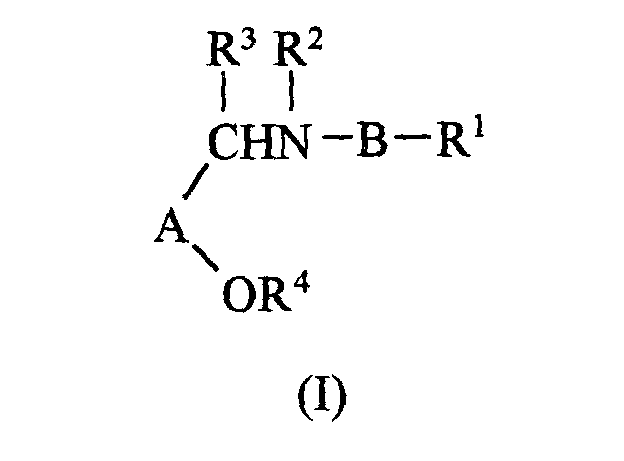 A is an optionally substituted:
phenyl, naphthyl, pyridyl, pyrazinyl, pyridazinyl, pyrimidyl, thienyl, thiazolyl, oxazolyl or thiadiazolyl having at least two adjacent ring carbon atoms wherein said optional substituents for ring carbon atoms are selected from halo, trifluoromethyl, nitro, hydroxy, amino, C1- 4alkylamino, diC1-4alkylamino, cyano, C1-6alkoxy, C1-6alkylS(O)p- (p is 0, 1 or 2), C1-6alkyl (optionally substituted by hydroxy, amino, halo, nitro or cyano), CF3S(O)p- (p=0,1 or 2), carbamoyl, C1-4alkylcarbamoyl, di(C1-4alkyl)carbamoyl, C2-6alkenyl, C2-6alkynyl, C1-4alkoxycarbonylamino, C1-4alkanoylamino, C1-4alkanoyl(N-C1-4alkyl)amino, C1-4alkanesulphonamido, benzenesulphonamido, aminosulphonyl, C1-4alkylaminosulphonyl, C1--4alkanoylaminosulphonyl, di(C1-4alkyl)aminosulphonyl, C1-4alkoxycarbonyl, C1-4alkanoyloxy, C1-6alkanoyl, formylC1-4alkyl, trifluoroC1-3alkylsulphonyl, hydroxyiminoC1-6alkyl, C1-4alkoxyiminoC1-6alkyl and C1-6alkylcarbamoylamino and where a ring nitrogen atom in A can be substituted without becoming quaternised, it is unsubstituted or substituted by C1-4alkyl; provided that the -CH(R3)N(R2)B-R1 and -OR4 groups are positioned in a 1,2 relationship to one another on ring carbon atoms and the ring atom positioned ortho to the OR4 linking group (and therefore in the 3-position relative to the -CHR3NR2- linking group) is not substituted;B is an optionally substituted:
phenyl, pyridyl, thiazolyl, oxazolyl, thienyl, thiadiazolyl, imidazolyl, pyrazinyl, pyridazinyl or pyrimidyl; wherein said optional substituents for ring carbon atoms include halo, trifluoromethyl, nitro, hydroxy, C1-6alkoxy, C1-6alkyl, amino, C1-4alkylamino, di(C1-4alkyl)amino, cyano, C1-6alkyl S(O)p-(p is 0, 1 or 2), carbamoyl, C1-4alkylcarbamoyl and di(C1-4alkyl)carbamoyl, and where a ring nitrogen atom in B can be substituted without becoming quaternised, it is unsubstituted or substituted by C1-4alkyl;R1 is positioned on ring B in a 1,3 or 1,4 relationship with the -CHR3NR2- linking group and is carboxy, carboxyC1-3alkyl, tetrazolyl, tetrazolylC1-3alkyl, tetronic acid, hydroxamic acid, sulphonic acid, or R1 is of the formula -CONRaRa1 wherein Ra is hydrogen or C1-6alkyl and Ra1 is hydrogen, C1-6alkyl (optionally substituted by halo, amino, C1-4alkylamino, di-C1-4 alkylamino, hydroxy, nitro, cyano, trifluoromethyl, C1-4alkoxy or C1-4alkoxycarbonyl), C2-6alkenyl (provided the double bond in not in the 1-position), C2-6alkynyl (provided the triple bond is not in the 1-position), carboxyphenyl, 5- or 6-membered heterocyclylC1-3alkyl, 5- or 6-membered heteroarylC1-3alkyl, 5- or 6-membered heterocyclyl, or 5- or 6-membered heteroaryl or Ra and Ra1 together with the amide nitrogen to which they are attached (NRaRa1) form an amino acid residue or ester thereof, or R1 is of the formula -CONHSO2Rb wherein Rb is C1-6alkyl (optionally substituted by halo, hydroxy, nitro, cyano, trifluoromethyl, C1-4alkoxy, amino, C1-4alkylamino, di-C1-4alkylamino or C1-4alkoxycarbonyl), C2-6alkenyl (provided the double bond is not in the 1-position), C2-6alkynyl (provided the triple bond is not in the 1-position), 5- or 6-membered heterocyclylC1-3alkyl, 5- or 6-membered heteroarylC1-3alkyl, phenylC1-3alkyl, 5- or 6-membered heterocyclyl, 5- or 6-membered heteroaryl or phenyl; wherein any heterocyclyl or heteroaryl group in Ra1 is optionally substituted by halo, hydroxy, nitro, cyano, trifluoromethyl, C1-4alkoxy or C1-4alkoxycarbonyl and any phenyl, heterocyclyl or heteroaryl group in Rb is optionally substituted by halo, trifluoromethyl, nitro, hydroxy, amino, cyano, C1-6alkoxy, C1-6alkylS(O)p- (p is 0, 1 or 2), C1-6alkyl carbamoyl, C1-4alkylcarbamoyl, di(C1-4alkyl)carbamoyl, C2-6alkenyl, C2-6alkynyl, C1-4alkoxycarbonylamino, C1-4alkanoylamino, C1-4alkanoyl(N-C1-4alkyl)amino, C1-4alkanesulphonamido, benzenesulphonamido, aminosulphonyl, C1-4alkylaminosulphonyl, di(C1-4alkyl)aminosulphonyl, C1-4alkoxycarbonyl, C1-4alkanoyloxy, C1-6alkanoyl, formylC1-4alkyl, hydroxyiminoC1-6alkyl, C1-4alkoxyiminoC1-6alkyl or C1-6alkylcarbamoylamino; or R1 is of the formula -SO2N(Rc)Rc1 wherein Rc is hydrogen or C1-4alkyl and Rc1 is hydrogen or C1-4alkyl;
or R1 is of the formula (IA), (IB) or (IC):wherein X is CH or nitrogen, Y is oxygen or sulphur, Y' is oxygen or NRd and Z is CH2, NRd or oxygen provided that there is no more than one ring oxygen and there are at least two ring heteroatoms and wherein Rd is hydrogen or C1-4alkyl; R2 is hydrogen, C1-6alkyl, optionally substituted by hydroxy, cyano or trifluoromethyl, C2-6alkenyl (provided the double bond is not in the 1-position), C2-6alkynyl (provided the triple bond is not in the 1-position), phenylC1-3alkyl or pyridylC1-3alkyl;R3 is hydrogen, methyl or ethyl;R4 is optionally substituted: C1-6alkyl, C3-7cycloalkylC1-3alkyl or C3-7cycloalkyl wherein said optional substituents are selected from halo, hydroxy, C1-4alkoxy, amino, carboxy, C1-4 alkylS(O)p- (p=0, 1 or 2), carbamoyl, trifluoromethyl, oxo or cyano;or an N-oxide of -NR2 where chemically possible;or an S-oxide of sulphur containing rings where chemically possible;or a pharmaceutically acceptable salt or in vivo hydrolysable ester or amide thereof; excluding 2-[2-methoxybenzylamino]pyridine-5-carboxylic acid, 4-[2-methoxybenzylamino]benzoic acid, 5-[2,3-dimethoxybenzylamino]-4-chloro-3-aminosulphonylbenzoic acid and 5-[2,5-dimethoxybenzylamino]-2-hydroxybenzoic acid.
 - A compound according to claim 1 wherein A is optionally substituted phenyl wherein said optional substituents are as defined in claim 1.
- A compound according to either claim 1 or claim 2 wherein R3 is hydrogen.
- A compound according to any one of claims 1 to 3 wherein R2 is hydrogen, methyl, ethyl or propyl.
- A compound according to any one of claims 1 to 4 wherein B is optionally substituted: pyridyl, phenyl, thiazolyl, thienyl, pyridazinyl, or oxazolyl wherein said optional substituents are as defined in claim 1.
- A compound according to any one of claims 1 to 5 wherein R1 is carboxy, carbamoyl or tetrazolyl or R1 is of the formula -CONRaRa1 wherein Ra is hydrogen or C1-6alkyl and Ra1 is C1-6alkyl optionally substituted by hydroxy, C2-6alkenyl, 1-morpholinyl, 1-piperidinyl, 1-pyrrolidinyl, pyridylC1-3alkyl or R1 is of the formula -CONHSO2Rb wherein Rb is optionally substituted: C1-6alkyl, phenyl or 5- or 6-membered heteroaryl.
- A compound according to any one of claims 1 to 5 wherein R1 is carboxy, tetrazolyl or of the formula -CONHRa1 wherein Ra1 is pyridylmethyl or C1-4alkyl optionally substituted by hydroxy, or of the formula -CONHSO2Rb wherein Rb is C1-4alkyl, 3,5-dimethylisoxazol-4-yl or 5-acetamido-1,3,4-thiadiazol-2-yl.
- A compound according to any one of claims 1 to 7 wherein A is substituted by halo, nitro, trifluoromethyl, cyano, amino, C1-6alkoxy, carbamoyl, C1-4alkylcarbamoyl, di(C1-4alkyl)carbamoyl, C1-4alkanoylamino, C1-6alkylS(O)p, C1-4alkanesulphonamido, benzenesulphonamido, C1-6alkanoyl, C1-4alkoxyiminoC1-4alkyl or hydroxyiminoC1-4alkyl.
- A compound according to any one of claims 1 to 8 wherein B is substituted by halo, trifluoromethyl, C1-4alkyl, amino, C1-4alkylamino, di-C1-4alkylamino, nitro, hydroxy, C1-6alkoxy or cyano or B is unsubstituted (other than as depicted in the formula (I)).
- A compound according to any one of claims 1 to 9 wherein R4 is optionally substituted C1-4alkyl, C3-6cycloalkyl or C3-6cycloalkylmethyl wherein said optional substituents are as defined in claim 1.
- A compound according to claim 1 which is any one of examples 1 to 40 or a pharmaceutically-acceptable salt thereof.
- A pharmaceutical composition which comprises a compound according to any one of claims 1 to 11 and a pharmaceutically acceptable carrier.
- The use of a compound of formula (I), or an in vivo hydrolysable ester or amide or a pharmaceutically acceptable salt thereof, in the manufacture of a medicament for use in the relief of pain in the animal (including human) body.
- A process for preparing a compound according to claim 1 which comprises deprotecting a compound of the formula (III):wherein R6 is R1 as defined in claim 1 or protected R1, R7 is R2 as defined in claim 1 or protected R2 and, R3, R4, A and B are as defined in claim 1, and any optional substituents are optionally protected and at least one protecting group is present; and thereafter if necessary:
 i) forming a pharmaceutically acceptable salt;ii) forming an in vivo hydrolysable ester or amide;iii) converting one optional substituent into another optional substituent.
 - A process for preparing a compound according to claim 1 or a compound of the formula (III) as defined in claim 14 which comprises:a) reducing a compound of the formula (IV)or
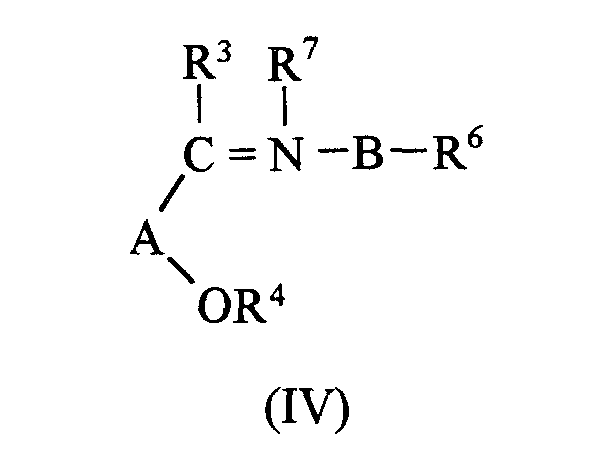 b) when B is an activated heterocycle and R7 is hydrogen or C1-6alkyl reacting a compound of the formula (V) with a compound of the formula (VI):
 c) reacting a compound of the formula (VII) with a compound of the formula (VIII):or
 d) converting X2 to R6 in a compound of the formula (IX):or
 e) when R7 is other than hydrogen, reacting a compound of the formula R7X3 with a compound of the formula (X):or
 f) reacting a compound of the formula (XI) with a compound of the formula (XII):
 g) reacting a compound of the formula (XIII) with a compound of the formula (XIV):
 h) reacting a compound of the formula (XV) with a compound of the formula X7R4:wherein R3, R4, R7, R9, A and B are as defined in claim 14 and X and X1 are leaving groups, X2 is a precursor of R7, X3 is a leaving group, X4 is a removable activating group, X5 is a leaving group, X6 is an activating group and X7 is a leaving group; and thereafter if necessary;
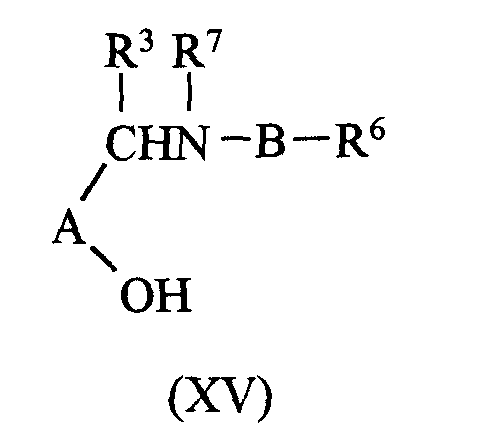 i) removing any protecting groups;ii) forming a pharmaceutically acceptable salt;iii) forming an in vivo hydrolysable ester or amide;iv) converting an optional substituent into another optional substituent.
 - A compound of the formula (III) as defined in claim 14.
Priority Applications (1)
| Application Number | Priority Date | Filing Date | Title |
|---|---|---|---|
| SI9630384T SI0835246T1 (en) | 1995-06-20 | 1996-06-17 | Aromatic compounds and pharmaceutical compositions containing them |
Applications Claiming Priority (7)
| Application Number | Priority Date | Filing Date | Title |
|---|---|---|---|
| GB9512476 | 1995-06-20 | ||
| GBGB9512476.4A GB9512476D0 (en) | 1995-06-20 | 1995-06-20 | Aromatic compounds |
| GB9601462 | 1996-01-25 | ||
| GBGB9601462.6A GB9601462D0 (en) | 1996-01-25 | 1996-01-25 | Aromatic compounds |
| GB9606831 | 1996-03-30 | ||
| GBGB9606831.7A GB9606831D0 (en) | 1996-03-30 | 1996-03-30 | Aromatic compounds |
| PCT/GB1996/001442 WO1997000863A1 (en) | 1995-06-20 | 1996-06-17 | Aromatic compounds and pharmaceutical compositions containing them |
Publications (2)
| Publication Number | Publication Date |
|---|---|
| EP0835246A1 EP0835246A1 (en) | 1998-04-15 |
| EP0835246B1 true EP0835246B1 (en) | 2001-10-24 |
Family
ID=27267781
Family Applications (1)
| Application Number | Title | Priority Date | Filing Date |
|---|---|---|---|
| EP96920936A Expired - Lifetime EP0835246B1 (en) | 1995-06-20 | 1996-06-17 | Aromatic compounds and pharmaceutical compositions containing them |
Country Status (29)
| Country | Link |
|---|---|
| US (2) | US5994353A (en) |
| EP (1) | EP0835246B1 (en) |
| JP (1) | JP3949166B2 (en) |
| KR (1) | KR19990023006A (en) |
| CN (1) | CN1193963A (en) |
| AR (1) | AR004495A1 (en) |
| AT (1) | ATE207468T1 (en) |
| AU (1) | AU700337B2 (en) |
| BG (1) | BG63777B1 (en) |
| BR (1) | BR9608956A (en) |
| CA (1) | CA2220925A1 (en) |
| CZ (1) | CZ290923B6 (en) |
| DE (1) | DE69616323T2 (en) |
| DK (1) | DK0835246T3 (en) |
| EE (1) | EE9700341A (en) |
| ES (1) | ES2165505T3 (en) |
| HR (1) | HRP960288B1 (en) |
| HU (1) | HUP9802317A3 (en) |
| IL (1) | IL118664A (en) |
| MX (1) | MX9710218A (en) |
| MY (1) | MY116531A (en) |
| NO (1) | NO311129B1 (en) |
| NZ (1) | NZ311082A (en) |
| PL (1) | PL324205A1 (en) |
| PT (1) | PT835246E (en) |
| RO (1) | RO119945B1 (en) |
| SK (1) | SK282450B6 (en) |
| TW (1) | TW434240B (en) |
| WO (1) | WO1997000863A1 (en) |
Families Citing this family (43)
| Publication number | Priority date | Publication date | Assignee | Title |
|---|---|---|---|---|
| GB9514160D0 (en) * | 1994-07-25 | 1995-09-13 | Zeneca Ltd | Aromatic compounds |
| GB9417532D0 (en) * | 1994-08-31 | 1994-10-19 | Zeneca Ltd | Aromatic compounds |
| TW434240B (en) * | 1995-06-20 | 2001-05-16 | Zeneca Ltd | Aromatic compounds, preparation thereof and pharmaceutical composition comprising same |
| TW502026B (en) | 1995-06-20 | 2002-09-11 | Zeneca Ltd | Aromatic compounds useful as antagonists of e-type prostaglandins, processes for the preparation thereof, pharmaceutical compositions comprising the compounds, and intermediates |
| US5834468A (en) * | 1995-07-07 | 1998-11-10 | Zeneca Limited | Substituted aryl and heteroaryl compounds as E-type prostaglandin antagonists |
| ES2229510T3 (en) * | 1997-06-27 | 2005-04-16 | Fujisawa Pharmaceutical Co., Ltd. | DERIVATIVES OF AROMATIC RING. |
| GB9903476D0 (en) | 1999-02-17 | 1999-04-07 | Zeneca Ltd | Therapeutic agents |
| SE0100873D0 (en) * | 2001-03-13 | 2001-03-13 | Astrazeneca Ab | Method of treatment |
| CA2440374A1 (en) * | 2001-03-14 | 2002-09-19 | Takayuki Maruyama | A pharmaceutical composition for the treatment of depression comprising the ep1 antagonist as active ingredient |
| CA2463102C (en) | 2001-10-23 | 2011-05-10 | Applied Research Systems Ars Holding N.V. | Pyrazolidinone compounds as ligands of the prostaglandin ep2 and/or ep4 receptors |
| WO2003043655A1 (en) * | 2001-11-19 | 2003-05-30 | Ono Pharmaceutical Co., Ltd. | Remedies for urinary frequency |
| ES2337887T3 (en) | 2001-12-20 | 2010-04-30 | Merck Serono Sa | PIRROLIDINE DERIVATIVES IN QUALITY OF PROSTAGLANDINA MODULATORS. |
| CA2483555A1 (en) | 2002-06-10 | 2003-12-18 | Applied Research Systems Ars Holding N.V. | Gamma lactams as prostaglandin agonists and use thereof |
| ES2336933T3 (en) | 2004-12-06 | 2010-04-19 | Merck Serono Sa | DERIVATIVES OF PIRROLIDIN-2-ONA FOR USE AS AN ANALOGONIST OF THE DP1 RECEIVER |
| CA2592442A1 (en) | 2004-12-23 | 2006-06-29 | Glaxo Group Limited | Pyridine compounds for the treatment of prostaglandin mediated diseases |
| US7767710B2 (en) | 2005-05-25 | 2010-08-03 | Calosyn Pharma, Inc. | Method for treating osteoarthritis |
| US20060269579A1 (en) * | 2005-05-25 | 2006-11-30 | Musculoskeletal Research Llc | Compositions for treating osteoarthritis |
| EP2123273B1 (en) | 2007-02-16 | 2013-10-23 | ONO Pharmaceutical Co., Ltd. | Therapeutic agent for urinary excretion disorder |
| US20090163440A1 (en) * | 2007-09-26 | 2009-06-25 | Waddell David D | Ion-Channel Regulator Compositions and Methods of Using Same |
| EP2560488B1 (en) | 2010-04-23 | 2015-10-28 | Cytokinetics, Inc. | Certain amino-pyridines and amino-triazines, compositions thereof, and methods for their use |
| AR081626A1 (en) | 2010-04-23 | 2012-10-10 | Cytokinetics Inc | AMINO-PYRIDAZINIC COMPOUNDS, PHARMACEUTICAL COMPOSITIONS THAT CONTAIN THEM AND USE OF THE SAME TO TREAT CARDIAC AND SKELETIC MUSCULAR DISORDERS |
| AR081331A1 (en) | 2010-04-23 | 2012-08-08 | Cytokinetics Inc | AMINO- PYRIMIDINES COMPOSITIONS OF THE SAME AND METHODS FOR THE USE OF THE SAME |
| US8759380B2 (en) | 2011-04-22 | 2014-06-24 | Cytokinetics, Inc. | Certain heterocycles, compositions thereof, and methods for their use |
| WO2013102145A1 (en) | 2011-12-28 | 2013-07-04 | Global Blood Therapeutics, Inc. | Substituted heteroaryl aldehyde compounds and methods for their use in increasing tissue oxygenation |
| DK3738434T3 (en) | 2011-12-28 | 2023-12-04 | Global Blood Therapeutics Inc | Intermediates for obtaining substituted benzaldehyde compounds and methods for using them in increasing tissue oxygenation |
| AU2014237330A1 (en) | 2013-03-15 | 2015-09-17 | Global Blood Therapeutics, Inc. | Compounds and uses thereof for the modulation of hemoglobin |
| US9802900B2 (en) | 2013-03-15 | 2017-10-31 | Global Blood Therapeutics, Inc. | Bicyclic heteroaryl compounds and uses thereof for the modulation of hemoglobin |
| US9604999B2 (en) | 2013-03-15 | 2017-03-28 | Global Blood Therapeutics, Inc. | Compounds and uses thereof for the modulation of hemoglobin |
| KR102280614B1 (en) | 2013-03-15 | 2021-07-21 | 글로벌 블러드 테라퓨틱스, 인크. | Compounds and uses thereof for the modulation of hemoglobin |
| US10266551B2 (en) | 2013-03-15 | 2019-04-23 | Global Blood Therapeutics, Inc. | Compounds and uses thereof for the modulation of hemoglobin |
| US9458139B2 (en) | 2013-03-15 | 2016-10-04 | Global Blood Therapeutics, Inc. | Compounds and uses thereof for the modulation of hemoglobin |
| BR112015021982B1 (en) | 2013-03-15 | 2022-12-13 | Global Blood Therapeutics, Inc | COMPOUNDS AND THEIR USES FOR HEMOGLOBIN MODULATION |
| US8952171B2 (en) | 2013-03-15 | 2015-02-10 | Global Blood Therapeutics, Inc. | Compounds and uses thereof for the modulation of hemoglobin |
| US10100043B2 (en) | 2013-03-15 | 2018-10-16 | Global Blood Therapeutics, Inc. | Substituted aldehyde compounds and methods for their use in increasing tissue oxygenation |
| US9422279B2 (en) | 2013-03-15 | 2016-08-23 | Global Blood Therapeutics, Inc. | Compounds and uses thereof for the modulation of hemoglobin |
| EA201992707A1 (en) | 2013-11-18 | 2020-06-30 | Глобал Блад Терапьютикс, Инк. | COMPOUNDS AND THEIR APPLICATIONS FOR HEMOGLOBIN MODULATION |
| SI3102208T2 (en) | 2014-02-07 | 2024-10-30 | Global Blood Therapeutics, Inc. | Crystalline polymorph of the free base of 2-hydroxy-6-((2-(1-isopropyl-1h-pyrazol-5-yl)pyridin-3-yl)methoxy)benzaldehyde |
| MA41841A (en) | 2015-03-30 | 2018-02-06 | Global Blood Therapeutics Inc | ALDEHYDE COMPOUNDS FOR THE TREATMENT OF PULMONARY FIBROSIS, HYPOXIA, AND AUTOIMMUNE AND CONNECTIVE TISSUE DISEASES |
| US11020382B2 (en) | 2015-12-04 | 2021-06-01 | Global Blood Therapeutics, Inc. | Dosing regimens for 2-hydroxy-6-((2-(1-isopropyl-1h-pyrazol-5-yl)pyridin-3-yl)methoxy)benzaldehyde |
| AR108435A1 (en) | 2016-05-12 | 2018-08-22 | Global Blood Therapeutics Inc | PROCESS TO SYNTHETIZE 2-HYDROXI-6 - ((2- (1-ISOPROPIL-1H-PIRAZOL-5-IL) -PIRIDIN-3-IL) METOXI) BENZALDEHYDE |
| TWI778983B (en) | 2016-10-12 | 2022-10-01 | 美商全球血液治療公司 | Tablets comprising 2-hydroxy-6-((2-(1-isopropyl-1h-pyrazol-5-yl)pyridin-3-yl)methoxy)benzaldehyde |
| EP3860975B1 (en) | 2018-10-01 | 2023-10-18 | Global Blood Therapeutics, Inc. | Modulators of hemoglobin for the treatment of sickle cell disease |
| WO2020163689A1 (en) | 2019-02-08 | 2020-08-13 | University Of Pittsburgh - Of The Commonwealth System Of Higher Education | 20-hete formation inhibitors |
Family Cites Families (43)
| Publication number | Priority date | Publication date | Assignee | Title |
|---|---|---|---|---|
| US3632760A (en) * | 1969-06-25 | 1972-01-04 | Merck & Co Inc | Treatment of inflammation |
| US3657430A (en) * | 1969-06-25 | 1972-04-18 | Merck & Co Inc | Composition and methods for treating inflammation |
| US4350822A (en) * | 1975-03-12 | 1982-09-21 | American Cyanamid Company | Antilipidemicpara-[aryl(alkyl or alkenyl)amino]benzoic acid derivatives |
| AU510758B2 (en) * | 1976-01-19 | 1980-07-10 | The Dow Chemical Company | P-benzylaminobenzoic acids |
| GB1576007A (en) * | 1976-02-11 | 1980-10-01 | Beecham Group Ltd | Hypolipidaemic compositions |
| US4206145A (en) * | 1976-02-11 | 1980-06-03 | Beecham Group Limited | Hypolipidaemic compounds and compositions |
| EP0000816A1 (en) * | 1977-08-06 | 1979-02-21 | Beecham Group Plc | Substituted amino-pyridine derivatives, processes for their preparation and pharmaceutical compositions containing them |
| US4152452A (en) * | 1977-10-06 | 1979-05-01 | William H. Rorer, Inc. | Method of topically treating inflammation |
| DK531479A (en) * | 1979-01-19 | 1980-07-20 | Pfizer | PROCEDURE FOR PREPARING IMIDAZOLD DERIVATIVES AND SALTS THEREOF |
| US4277496A (en) * | 1979-06-04 | 1981-07-07 | Laboratorios Bago S.A. | Methods of treating mammals suffering from inflammation and pain |
| US4578390A (en) * | 1981-12-14 | 1986-03-25 | Merck & Co., Inc. | Hydroxybenzylamino derivatives as anti-inflammatory agents |
| CA1193598A (en) * | 1982-05-06 | 1985-09-17 | Rafael Foguet | 2-amino-benzoic acid derivatives and processes for their production |
| IE56702B1 (en) * | 1982-12-01 | 1991-11-06 | Usv Pharma Corp | Antiinflammatory antiallergic compounds |
| US5105017A (en) * | 1983-07-18 | 1992-04-14 | Eli Lilly And Company | Leukotriene antagonist intermediates |
| GB8320699D0 (en) * | 1983-08-01 | 1983-09-01 | Wellcome Found | Ethylenediamines |
| US4559336A (en) * | 1985-02-25 | 1985-12-17 | G.D. Searle & Co. | 8-Chlorodibenz[b,f][1,4]oxazepine-10(11H)-carboxylic acid, 2-(sulfinyl- and sulfonyl-containing acyl)hydrazides |
| US4614617A (en) * | 1985-02-25 | 1986-09-30 | G. D. Searle & Co. | Intermediates for 8-chlorodibenz[(b,f)][1,4]oxazepine-10(11H)-carboxylic acid, 2-(sulfinyl- and sulfonyl-containing acyl)hydrazides |
| US4839369A (en) * | 1985-04-16 | 1989-06-13 | Rorer Pharmaceutical Corporation | Aryl and heteroaryl ethers as agents for the treatment of hypersensitive ailments |
| US4704386A (en) * | 1985-08-29 | 1987-11-03 | G. D. Searle & Co. | 8-chlorodibenz[b,f][1,4]oxazepine-10(11H)-carboxylic acid, 2-[(phenylsulfinyl-, and phenylsulfonyl)alkanoyl]hydrazides |
| US4937373A (en) * | 1988-12-08 | 1990-06-26 | Hoffmann-La Roche Inc. | Substituted naphthalene carboxylic acids |
| US4897397A (en) * | 1988-12-16 | 1990-01-30 | Schering Corporation | Aryl-alkynoic, alkenoic or alkanoic compounds and compositions useful as antiallergy and anti-inflammatory agents |
| DE3903989A1 (en) * | 1989-02-10 | 1990-09-20 | Basf Ag | DIPHENYLHETEROALKYL DERIVATIVES, THEIR PREPARATION, AND MEDICAMENTS AND COSMETICS THEREOF |
| HU208124B (en) * | 1990-04-25 | 1993-08-30 | Nissan Chemical Ind Ltd | Process for producing pyridazinone derivatives and pharmaceutical compositions comprising such derivatives as active ingredient |
| IE912956A1 (en) * | 1990-09-10 | 1992-03-11 | Abbott Lab | Angiotensin ii receptor antagonists |
| US5250548A (en) * | 1990-09-10 | 1993-10-05 | Abbott Laboratories | Angiotensin II receptor antagonists |
| US5210206A (en) * | 1990-09-10 | 1993-05-11 | Abbott Laboratories | 1,3-oxazolyl substituted biphenyl |
| US5284954A (en) * | 1990-09-10 | 1994-02-08 | Abbott Laboratories | Process for the preparation of tetrazoles |
| GB9021813D0 (en) * | 1990-10-08 | 1990-11-21 | Ici Plc | Tricyclic heterocycles |
| CA2102780C (en) * | 1991-05-10 | 2007-01-09 | Alfred P. Spada | Bis mono-and bicyclic aryl and heteroaryl compounds which inhibit egf and/or pdgf receptor tyrosine kinase |
| GB9120640D0 (en) * | 1991-09-27 | 1991-11-06 | Ici Plc | Tricyclic heterocycles |
| JPH05230016A (en) * | 1991-10-14 | 1993-09-07 | Takeda Chem Ind Ltd | Amide derivative, its production and fungicide |
| US5324743A (en) * | 1992-12-10 | 1994-06-28 | Eli Lilly And Company | Leukotriene B4 antagonists |
| DE4241632A1 (en) * | 1992-12-10 | 1994-06-16 | Thomae Gmbh Dr K | Carboxylic acid derivatives, medicaments containing these compounds and process for their preparation |
| US5420270A (en) * | 1993-10-07 | 1995-05-30 | G. D. Searle & Co. | Aryl substituted dibenzoxazepine compounds, pharmaceutical compositions and methods of use |
| US5441950A (en) * | 1994-06-09 | 1995-08-15 | G. D. Searle & Co. | Substituted dibenzoxazepine and dibenzthiazepine carbamate compounds, pharmaceutical compositions and methods of use |
| GB9514160D0 (en) * | 1994-07-25 | 1995-09-13 | Zeneca Ltd | Aromatic compounds |
| GB9417532D0 (en) * | 1994-08-31 | 1994-10-19 | Zeneca Ltd | Aromatic compounds |
| GB9420557D0 (en) * | 1994-10-12 | 1994-11-30 | Zeneca Ltd | Aromatic compounds |
| US5530157A (en) * | 1995-02-16 | 1996-06-25 | Scios Nova Inc. | Anti-inflammatory benzoic acid derivatives |
| TW434240B (en) * | 1995-06-20 | 2001-05-16 | Zeneca Ltd | Aromatic compounds, preparation thereof and pharmaceutical composition comprising same |
| TW502026B (en) * | 1995-06-20 | 2002-09-11 | Zeneca Ltd | Aromatic compounds useful as antagonists of e-type prostaglandins, processes for the preparation thereof, pharmaceutical compositions comprising the compounds, and intermediates |
| US5834468A (en) * | 1995-07-07 | 1998-11-10 | Zeneca Limited | Substituted aryl and heteroaryl compounds as E-type prostaglandin antagonists |
| TW454123B (en) | 1999-01-28 | 2001-09-11 | Ibm | Method and system for enabling pervasive computing devices to communicate with each other |
-
1996
- 1996-06-12 TW TW085107056A patent/TW434240B/en not_active IP Right Cessation
- 1996-06-16 IL IL11866496A patent/IL118664A/en not_active IP Right Cessation
- 1996-06-17 DE DE69616323T patent/DE69616323T2/en not_active Expired - Fee Related
- 1996-06-17 CN CN96196398A patent/CN1193963A/en active Pending
- 1996-06-17 KR KR1019970709476A patent/KR19990023006A/en not_active Ceased
- 1996-06-17 US US08/973,887 patent/US5994353A/en not_active Expired - Fee Related
- 1996-06-17 EE EE9700341A patent/EE9700341A/en unknown
- 1996-06-17 BR BR9608956A patent/BR9608956A/en not_active Application Discontinuation
- 1996-06-17 CZ CZ19974109A patent/CZ290923B6/en not_active IP Right Cessation
- 1996-06-17 CA CA002220925A patent/CA2220925A1/en not_active Abandoned
- 1996-06-17 NZ NZ311082A patent/NZ311082A/en unknown
- 1996-06-17 HU HU9802317A patent/HUP9802317A3/en unknown
- 1996-06-17 RO RO97-02367A patent/RO119945B1/en unknown
- 1996-06-17 PL PL96324205A patent/PL324205A1/en unknown
- 1996-06-17 ES ES96920936T patent/ES2165505T3/en not_active Expired - Lifetime
- 1996-06-17 MX MX9710218A patent/MX9710218A/en not_active IP Right Cessation
- 1996-06-17 AT AT96920936T patent/ATE207468T1/en not_active IP Right Cessation
- 1996-06-17 JP JP50365397A patent/JP3949166B2/en not_active Expired - Fee Related
- 1996-06-17 SK SK1732-97A patent/SK282450B6/en unknown
- 1996-06-17 DK DK96920936T patent/DK0835246T3/en active
- 1996-06-17 PT PT96920936T patent/PT835246E/en unknown
- 1996-06-17 EP EP96920936A patent/EP0835246B1/en not_active Expired - Lifetime
- 1996-06-17 WO PCT/GB1996/001442 patent/WO1997000863A1/en not_active Ceased
- 1996-06-17 AU AU62320/96A patent/AU700337B2/en not_active Ceased
- 1996-06-18 MY MYPI96002451A patent/MY116531A/en unknown
- 1996-06-18 HR HR960288A patent/HRP960288B1/en not_active IP Right Cessation
- 1996-06-20 AR ARP960103226A patent/AR004495A1/en not_active Application Discontinuation
-
1997
- 1997-12-19 NO NO19975985A patent/NO311129B1/en unknown
-
1998
- 1998-01-09 BG BG102173A patent/BG63777B1/en unknown
-
1999
- 1999-09-13 US US09/395,229 patent/US6365603B1/en not_active Expired - Fee Related
Also Published As
Similar Documents
| Publication | Publication Date | Title |
|---|---|---|
| US5994353A (en) | Aromatic compounds and pharmaceutical compositions containing them | |
| EP0847391B1 (en) | Aromatic compounds and pharmaceutical compositions containing them | |
| EP0773930B1 (en) | Aromatic amino ethers as pain relieving agents | |
| US6787562B2 (en) | Substituted aryl and heteroaryl compounds as E-type prostaglandin antagonists | |
| RU2182574C2 (en) | Aromatic compounds and pharmaceutical compositions comprising thereof |
Legal Events
| Date | Code | Title | Description |
|---|---|---|---|
| PUAI | Public reference made under article 153(3) epc to a published international application that has entered the european phase |
Free format text: ORIGINAL CODE: 0009012 |
|
| 17P | Request for examination filed |
Effective date: 19980120 |
|
| AK | Designated contracting states |
Kind code of ref document: A1 Designated state(s): AT BE CH DE DK ES FI FR GB GR IE IT LI LU MC NL PT SE |
|
| AX | Request for extension of the european patent |
Free format text: LT PAYMENT 980120;LV PAYMENT 980120;SI PAYMENT 980120 |
|
| 17Q | First examination report despatched |
Effective date: 19981112 |
|
| RAP1 | Party data changed (applicant data changed or rights of an application transferred) |
Owner name: ASTRAZENECA UK LIMITED |
|
| RAP1 | Party data changed (applicant data changed or rights of an application transferred) |
Owner name: ASTRAZENECA AB |
|
| GRAG | Despatch of communication of intention to grant |
Free format text: ORIGINAL CODE: EPIDOS AGRA |
|
| GRAG | Despatch of communication of intention to grant |
Free format text: ORIGINAL CODE: EPIDOS AGRA |
|
| GRAG | Despatch of communication of intention to grant |
Free format text: ORIGINAL CODE: EPIDOS AGRA |
|
| GRAH | Despatch of communication of intention to grant a patent |
Free format text: ORIGINAL CODE: EPIDOS IGRA |
|
| GRAH | Despatch of communication of intention to grant a patent |
Free format text: ORIGINAL CODE: EPIDOS IGRA |
|
| GRAA | (expected) grant |
Free format text: ORIGINAL CODE: 0009210 |
|
| AK | Designated contracting states |
Kind code of ref document: B1 Designated state(s): AT BE CH DE DK ES FI FR GB GR IE IT LI LU MC NL PT SE |
|
| AX | Request for extension of the european patent |
Free format text: LT PAYMENT 19980120;LV PAYMENT 19980120;SI PAYMENT 19980120 |
|
| LTIE | Lt: invalidation of european patent or patent extension | ||
| REF | Corresponds to: |
Ref document number: 207468 Country of ref document: AT Date of ref document: 20011115 Kind code of ref document: T |
|
| REG | Reference to a national code |
Ref country code: CH Ref legal event code: EP |
|
| REG | Reference to a national code |
Ref country code: IE Ref legal event code: FG4D |
|
| REF | Corresponds to: |
Ref document number: 69616323 Country of ref document: DE Date of ref document: 20011129 |
|
| REG | Reference to a national code |
Ref country code: GB Ref legal event code: IF02 |
|
| REG | Reference to a national code |
Ref country code: DK Ref legal event code: T3 |
|
| ET | Fr: translation filed | ||
| REG | Reference to a national code |
Ref country code: ES Ref legal event code: FG2A Ref document number: 2165505 Country of ref document: ES Kind code of ref document: T3 |
|
| REG | Reference to a national code |
Ref country code: PT Ref legal event code: SC4A Free format text: AVAILABILITY OF NATIONAL TRANSLATION Effective date: 20020117 |
|
| REG | Reference to a national code |
Ref country code: GR Ref legal event code: EP Ref document number: 20020400283 Country of ref document: GR |
|
| PLBE | No opposition filed within time limit |
Free format text: ORIGINAL CODE: 0009261 |
|
| STAA | Information on the status of an ep patent application or granted ep patent |
Free format text: STATUS: NO OPPOSITION FILED WITHIN TIME LIMIT |
|
| 26N | No opposition filed | ||
| REG | Reference to a national code |
Ref country code: SI Ref legal event code: IF |
|
| REG | Reference to a national code |
Ref country code: HK Ref legal event code: WD Ref document number: 1009123 Country of ref document: HK |
|
| PGFP | Annual fee paid to national office [announced via postgrant information from national office to epo] |
Ref country code: LU Payment date: 20070326 Year of fee payment: 12 |
|
| PGFP | Annual fee paid to national office [announced via postgrant information from national office to epo] |
Ref country code: PT Payment date: 20070329 Year of fee payment: 12 |
|
| PGFP | Annual fee paid to national office [announced via postgrant information from national office to epo] |
Ref country code: IE Payment date: 20070425 Year of fee payment: 12 |
|
| PGFP | Annual fee paid to national office [announced via postgrant information from national office to epo] |
Ref country code: CH Payment date: 20070427 Year of fee payment: 12 |
|
| PGFP | Annual fee paid to national office [announced via postgrant information from national office to epo] |
Ref country code: NL Payment date: 20070507 Year of fee payment: 12 Ref country code: AT Payment date: 20070507 Year of fee payment: 12 |
|
| PGFP | Annual fee paid to national office [announced via postgrant information from national office to epo] |
Ref country code: DK Payment date: 20070509 Year of fee payment: 12 |
|
| PGFP | Annual fee paid to national office [announced via postgrant information from national office to epo] |
Ref country code: FI Payment date: 20070511 Year of fee payment: 12 |
|
| PGFP | Annual fee paid to national office [announced via postgrant information from national office to epo] |
Ref country code: MC Payment date: 20070530 Year of fee payment: 12 |
|
| PGFP | Annual fee paid to national office [announced via postgrant information from national office to epo] |
Ref country code: SE Payment date: 20070605 Year of fee payment: 12 |
|
| PGFP | Annual fee paid to national office [announced via postgrant information from national office to epo] |
Ref country code: ES Payment date: 20070612 Year of fee payment: 12 |
|
| PGFP | Annual fee paid to national office [announced via postgrant information from national office to epo] |
Ref country code: BE Payment date: 20070628 Year of fee payment: 12 |
|
| PGFP | Annual fee paid to national office [announced via postgrant information from national office to epo] |
Ref country code: DE Payment date: 20070629 Year of fee payment: 12 |
|
| PGFP | Annual fee paid to national office [announced via postgrant information from national office to epo] |
Ref country code: GB Payment date: 20070511 Year of fee payment: 12 |
|
| PGFP | Annual fee paid to national office [announced via postgrant information from national office to epo] |
Ref country code: IT Payment date: 20070620 Year of fee payment: 12 |
|
| PGFP | Annual fee paid to national office [announced via postgrant information from national office to epo] |
Ref country code: FR Payment date: 20070605 Year of fee payment: 12 |
|
| PGFP | Annual fee paid to national office [announced via postgrant information from national office to epo] |
Ref country code: GR Payment date: 20070419 Year of fee payment: 12 |
|
| BERE | Be: lapsed |
Owner name: *ASTRAZENECA A.B. Effective date: 20080630 |
|
| REG | Reference to a national code |
Ref country code: PT Ref legal event code: MM4A Free format text: LAPSE DUE TO NON-PAYMENT OF FEES Effective date: 20081217 |
|
| PG25 | Lapsed in a contracting state [announced via postgrant information from national office to epo] |
Ref country code: PT Free format text: LAPSE BECAUSE OF NON-PAYMENT OF DUE FEES Effective date: 20081217 Ref country code: MC Free format text: LAPSE BECAUSE OF NON-PAYMENT OF DUE FEES Effective date: 20080630 |
|
| REG | Reference to a national code |
Ref country code: CH Ref legal event code: PL |
|
| REG | Reference to a national code |
Ref country code: DK Ref legal event code: EBP |
|
| EUG | Se: european patent has lapsed | ||
| GBPC | Gb: european patent ceased through non-payment of renewal fee |
Effective date: 20080617 |
|
| PG25 | Lapsed in a contracting state [announced via postgrant information from national office to epo] |
Ref country code: FI Free format text: LAPSE BECAUSE OF NON-PAYMENT OF DUE FEES Effective date: 20080617 |
|
| NLV4 | Nl: lapsed or anulled due to non-payment of the annual fee |
Effective date: 20090101 |
|
| PG25 | Lapsed in a contracting state [announced via postgrant information from national office to epo] |
Ref country code: BE Free format text: LAPSE BECAUSE OF NON-PAYMENT OF DUE FEES Effective date: 20080630 |
|
| REG | Reference to a national code |
Ref country code: IE Ref legal event code: MM4A |
|
| REG | Reference to a national code |
Ref country code: FR Ref legal event code: ST Effective date: 20090228 |
|
| PG25 | Lapsed in a contracting state [announced via postgrant information from national office to epo] |
Ref country code: IE Free format text: LAPSE BECAUSE OF NON-PAYMENT OF DUE FEES Effective date: 20080617 Ref country code: DE Free format text: LAPSE BECAUSE OF NON-PAYMENT OF DUE FEES Effective date: 20090101 Ref country code: AT Free format text: LAPSE BECAUSE OF NON-PAYMENT OF DUE FEES Effective date: 20080617 |
|
| REG | Reference to a national code |
Ref country code: SI Ref legal event code: KO00 Effective date: 20090212 |
|
| PG25 | Lapsed in a contracting state [announced via postgrant information from national office to epo] |
Ref country code: NL Free format text: LAPSE BECAUSE OF NON-PAYMENT OF DUE FEES Effective date: 20090101 |
|
| PG25 | Lapsed in a contracting state [announced via postgrant information from national office to epo] |
Ref country code: LI Free format text: LAPSE BECAUSE OF NON-PAYMENT OF DUE FEES Effective date: 20080630 Ref country code: GR Free format text: LAPSE BECAUSE OF NON-PAYMENT OF DUE FEES Effective date: 20090107 Ref country code: GB Free format text: LAPSE BECAUSE OF NON-PAYMENT OF DUE FEES Effective date: 20080617 Ref country code: CH Free format text: LAPSE BECAUSE OF NON-PAYMENT OF DUE FEES Effective date: 20080630 |
|
| REG | Reference to a national code |
Ref country code: ES Ref legal event code: FD2A Effective date: 20080618 |
|
| PG25 | Lapsed in a contracting state [announced via postgrant information from national office to epo] |
Ref country code: IT Free format text: LAPSE BECAUSE OF NON-PAYMENT OF DUE FEES Effective date: 20080617 Ref country code: FR Free format text: LAPSE BECAUSE OF NON-PAYMENT OF DUE FEES Effective date: 20080630 |
|
| PG25 | Lapsed in a contracting state [announced via postgrant information from national office to epo] |
Ref country code: ES Free format text: LAPSE BECAUSE OF NON-PAYMENT OF DUE FEES Effective date: 20080618 |
|
| PG25 | Lapsed in a contracting state [announced via postgrant information from national office to epo] |
Ref country code: DK Free format text: LAPSE BECAUSE OF NON-PAYMENT OF DUE FEES Effective date: 20090106 |
|
| PG25 | Lapsed in a contracting state [announced via postgrant information from national office to epo] |
Ref country code: DK Free format text: LAPSE BECAUSE OF NON-PAYMENT OF DUE FEES Effective date: 20080630 |
|
| PG25 | Lapsed in a contracting state [announced via postgrant information from national office to epo] |
Ref country code: LU Free format text: LAPSE BECAUSE OF NON-PAYMENT OF DUE FEES Effective date: 20080617 |
|
| PG25 | Lapsed in a contracting state [announced via postgrant information from national office to epo] |
Ref country code: SE Free format text: LAPSE BECAUSE OF NON-PAYMENT OF DUE FEES Effective date: 20080618 |