EP0835289B1 - Sels d'aminosilane et silanamides d'acides carboxyliques utilises en tant qu'inhibiteurs de corrosion - Google Patents
Sels d'aminosilane et silanamides d'acides carboxyliques utilises en tant qu'inhibiteurs de corrosion Download PDFInfo
- Publication number
- EP0835289B1 EP0835289B1 EP96922816A EP96922816A EP0835289B1 EP 0835289 B1 EP0835289 B1 EP 0835289B1 EP 96922816 A EP96922816 A EP 96922816A EP 96922816 A EP96922816 A EP 96922816A EP 0835289 B1 EP0835289 B1 EP 0835289B1
- Authority
- EP
- European Patent Office
- Prior art keywords
- alkyl
- hydrogen
- alkoxy
- sulfur
- unsubstituted
- Prior art date
- Legal status (The legal status is an assumption and is not a legal conclusion. Google has not performed a legal analysis and makes no representation as to the accuracy of the status listed.)
- Expired - Lifetime
Links
- 230000007797 corrosion Effects 0.000 title claims abstract description 57
- 238000005260 corrosion Methods 0.000 title claims abstract description 57
- 239000003112 inhibitor Substances 0.000 title claims abstract description 53
- FZHAPNGMFPVSLP-UHFFFAOYSA-N silanamine Chemical class [SiH3]N FZHAPNGMFPVSLP-UHFFFAOYSA-N 0.000 title claims abstract description 47
- 150000001735 carboxylic acids Chemical class 0.000 title claims abstract description 13
- 150000003839 salts Chemical class 0.000 claims abstract description 78
- 239000008199 coating composition Substances 0.000 claims abstract description 66
- 229920002125 Sokalan® Polymers 0.000 claims abstract description 36
- 239000004584 polyacrylic acid Substances 0.000 claims abstract description 34
- 229920001577 copolymer Polymers 0.000 claims abstract description 32
- 150000001408 amides Chemical class 0.000 claims abstract description 29
- 125000004178 (C1-C4) alkyl group Chemical group 0.000 claims description 214
- 239000001257 hydrogen Substances 0.000 claims description 176
- 229910052739 hydrogen Inorganic materials 0.000 claims description 176
- 229910052717 sulfur Inorganic materials 0.000 claims description 164
- NINIDFKCEFEMDL-UHFFFAOYSA-N Sulfur Chemical compound [S] NINIDFKCEFEMDL-UHFFFAOYSA-N 0.000 claims description 163
- QVGXLLKOCUKJST-UHFFFAOYSA-N atomic oxygen Chemical compound [O] QVGXLLKOCUKJST-UHFFFAOYSA-N 0.000 claims description 163
- 229910052760 oxygen Inorganic materials 0.000 claims description 163
- 239000001301 oxygen Substances 0.000 claims description 163
- 239000011593 sulfur Substances 0.000 claims description 163
- -1 naphthoxy Chemical group 0.000 claims description 160
- 125000002887 hydroxy group Chemical group [H]O* 0.000 claims description 113
- 150000002431 hydrogen Chemical group 0.000 claims description 99
- 125000001997 phenyl group Chemical group [H]C1=C([H])C([H])=C(*)C([H])=C1[H] 0.000 claims description 62
- UFHFLCQGNIYNRP-UHFFFAOYSA-N Hydrogen Chemical compound [H][H] UFHFLCQGNIYNRP-UHFFFAOYSA-N 0.000 claims description 43
- 125000003178 carboxy group Chemical group [H]OC(*)=O 0.000 claims description 40
- 125000000229 (C1-C4)alkoxy group Chemical group 0.000 claims description 39
- 229910052799 carbon Inorganic materials 0.000 claims description 39
- 150000001721 carbon Chemical group 0.000 claims description 39
- 239000000203 mixture Substances 0.000 claims description 37
- 125000004435 hydrogen atom Chemical group [H]* 0.000 claims description 34
- 125000001624 naphthyl group Chemical group 0.000 claims description 33
- 125000000449 nitro group Chemical group [O-][N+](*)=O 0.000 claims description 32
- 125000004432 carbon atom Chemical group C* 0.000 claims description 31
- 229910052736 halogen Inorganic materials 0.000 claims description 29
- 150000002367 halogens Chemical group 0.000 claims description 28
- 238000002360 preparation method Methods 0.000 claims description 27
- 239000000460 chlorine Chemical group 0.000 claims description 26
- 229910052801 chlorine Inorganic materials 0.000 claims description 26
- 238000000576 coating method Methods 0.000 claims description 24
- 239000011248 coating agent Substances 0.000 claims description 23
- 125000004433 nitrogen atom Chemical group N* 0.000 claims description 21
- ZAMOUSCENKQFHK-UHFFFAOYSA-N Chlorine atom Chemical group [Cl] ZAMOUSCENKQFHK-UHFFFAOYSA-N 0.000 claims description 20
- 125000004642 (C1-C12) alkoxy group Chemical group 0.000 claims description 18
- 125000001797 benzyl group Chemical group [H]C1=C([H])C([H])=C(C([H])=C1[H])C([H])([H])* 0.000 claims description 17
- 125000004093 cyano group Chemical group *C#N 0.000 claims description 16
- 125000002023 trifluoromethyl group Chemical group FC(F)(F)* 0.000 claims description 16
- 125000002373 5 membered heterocyclic group Chemical group 0.000 claims description 14
- 125000004070 6 membered heterocyclic group Chemical group 0.000 claims description 14
- 239000011230 binding agent Substances 0.000 claims description 14
- 229920005989 resin Polymers 0.000 claims description 14
- 239000011347 resin Substances 0.000 claims description 14
- 125000000843 phenylene group Chemical group C1(=C(C=CC=C1)*)* 0.000 claims description 13
- 238000001035 drying Methods 0.000 claims description 12
- 239000000049 pigment Substances 0.000 claims description 12
- 239000007787 solid Substances 0.000 claims description 12
- 125000006710 (C2-C12) alkenyl group Chemical group 0.000 claims description 11
- 239000000463 material Substances 0.000 claims description 11
- 125000005605 benzo group Chemical class 0.000 claims description 10
- 239000003822 epoxy resin Substances 0.000 claims description 10
- 229920000647 polyepoxide Polymers 0.000 claims description 10
- 125000004169 (C1-C6) alkyl group Chemical group 0.000 claims description 9
- 239000003795 chemical substances by application Substances 0.000 claims description 9
- 229910052751 metal Inorganic materials 0.000 claims description 9
- 239000002184 metal Substances 0.000 claims description 9
- 125000004957 naphthylene group Chemical group 0.000 claims description 9
- 125000000113 cyclohexyl group Chemical group [H]C1([H])C([H])([H])C([H])([H])C([H])(*)C([H])([H])C1([H])[H] 0.000 claims description 8
- 125000002496 methyl group Chemical group [H]C([H])([H])* 0.000 claims description 8
- 125000006832 (C1-C10) alkylene group Chemical group 0.000 claims description 7
- 125000000081 (C5-C8) cycloalkenyl group Chemical group 0.000 claims description 7
- 125000000951 phenoxy group Chemical group [H]C1=C([H])C([H])=C(O*)C([H])=C1[H] 0.000 claims description 7
- 239000000758 substrate Substances 0.000 claims description 7
- 125000000954 2-hydroxyethyl group Chemical group [H]C([*])([H])C([H])([H])O[H] 0.000 claims description 6
- 229920000178 Acrylic resin Polymers 0.000 claims description 6
- 239000004925 Acrylic resin Substances 0.000 claims description 6
- 125000001309 chloro group Chemical group Cl* 0.000 claims description 6
- 125000004956 cyclohexylene group Chemical group 0.000 claims description 6
- 239000000945 filler Substances 0.000 claims description 6
- HVZWVEKIQMJYIK-UHFFFAOYSA-N nitryl chloride Chemical group [O-][N+](Cl)=O HVZWVEKIQMJYIK-UHFFFAOYSA-N 0.000 claims description 6
- 125000000027 (C1-C10) alkoxy group Chemical group 0.000 claims description 5
- 239000002318 adhesion promoter Substances 0.000 claims description 5
- 229920000180 alkyd Polymers 0.000 claims description 5
- 238000011065 in-situ storage Methods 0.000 claims description 5
- 229920001568 phenolic resin Polymers 0.000 claims description 5
- 239000005011 phenolic resin Substances 0.000 claims description 5
- 229920005749 polyurethane resin Polymers 0.000 claims description 5
- 125000000882 C2-C6 alkenyl group Chemical group 0.000 claims description 4
- 238000001723 curing Methods 0.000 claims description 4
- 238000000034 method Methods 0.000 claims description 4
- 238000002156 mixing Methods 0.000 claims description 4
- 125000000051 benzyloxy group Chemical group [H]C1=C([H])C([H])=C(C([H])=C1[H])C([H])([H])O* 0.000 claims description 3
- 229920001225 polyester resin Polymers 0.000 claims description 3
- 239000004645 polyester resin Substances 0.000 claims description 3
- 229920000915 polyvinyl chloride Polymers 0.000 claims description 3
- 239000013008 thixotropic agent Substances 0.000 claims description 3
- 125000004648 C2-C8 alkenyl group Chemical group 0.000 claims description 2
- 229920006243 acrylic copolymer Polymers 0.000 claims description 2
- 125000005082 alkoxyalkenyl group Chemical group 0.000 claims description 2
- 239000003963 antioxidant agent Substances 0.000 claims description 2
- 239000003054 catalyst Substances 0.000 claims description 2
- 239000002270 dispersing agent Substances 0.000 claims description 2
- 239000000975 dye Substances 0.000 claims description 2
- 239000004611 light stabiliser Substances 0.000 claims description 2
- 238000004519 manufacturing process Methods 0.000 claims description 2
- JYNZIOFUHBJABQ-UHFFFAOYSA-N allyl-{6-[3-(4-bromo-phenyl)-benzofuran-6-yloxy]-hexyl-}-methyl-amin Chemical compound C=1OC2=CC(OCCCCCCN(C)CC=C)=CC=C2C=1C1=CC=C(Br)C=C1 JYNZIOFUHBJABQ-UHFFFAOYSA-N 0.000 claims 4
- NFGODEMQGQNUKK-UHFFFAOYSA-M [6-(diethylamino)-9-(2-octadecoxycarbonylphenyl)xanthen-3-ylidene]-diethylazanium;chloride Chemical compound [Cl-].CCCCCCCCCCCCCCCCCCOC(=O)C1=CC=CC=C1C1=C2C=CC(=[N+](CC)CC)C=C2OC2=CC(N(CC)CC)=CC=C21 NFGODEMQGQNUKK-UHFFFAOYSA-M 0.000 claims 3
- KCNKJCHARANTIP-SNAWJCMRSA-N allyl-{4-[3-(4-bromo-phenyl)-benzofuran-6-yloxy]-but-2-enyl}-methyl-amine Chemical compound C=1OC2=CC(OC/C=C/CN(CC=C)C)=CC=C2C=1C1=CC=C(Br)C=C1 KCNKJCHARANTIP-SNAWJCMRSA-N 0.000 claims 3
- PXBRQCKWGAHEHS-UHFFFAOYSA-N dichlorodifluoromethane Chemical group FC(F)(Cl)Cl PXBRQCKWGAHEHS-UHFFFAOYSA-N 0.000 claims 3
- KXGFMDJXCMQABM-UHFFFAOYSA-N 2-methoxy-6-methylphenol Chemical compound [CH]OC1=CC=CC([CH])=C1O KXGFMDJXCMQABM-UHFFFAOYSA-N 0.000 claims 1
- LFQSCWFLJHTTHZ-UHFFFAOYSA-N Ethanol Chemical compound CCO LFQSCWFLJHTTHZ-UHFFFAOYSA-N 0.000 description 72
- 150000001875 compounds Chemical class 0.000 description 63
- 150000003254 radicals Chemical group 0.000 description 59
- POULHZVOKOAJMA-UHFFFAOYSA-N dodecanoic acid Chemical compound CCCCCCCCCCCC(O)=O POULHZVOKOAJMA-UHFFFAOYSA-N 0.000 description 52
- WYTZZXDRDKSJID-UHFFFAOYSA-N (3-aminopropyl)triethoxysilane Chemical group CCO[Si](OCC)(OCC)CCCN WYTZZXDRDKSJID-UHFFFAOYSA-N 0.000 description 36
- 238000003756 stirring Methods 0.000 description 30
- 238000012360 testing method Methods 0.000 description 29
- 150000001732 carboxylic acid derivatives Chemical class 0.000 description 28
- 239000005639 Lauric acid Substances 0.000 description 26
- 238000009472 formulation Methods 0.000 description 22
- 239000000243 solution Substances 0.000 description 20
- 239000007921 spray Substances 0.000 description 18
- 239000012299 nitrogen atmosphere Substances 0.000 description 16
- 230000032798 delamination Effects 0.000 description 13
- 239000006185 dispersion Substances 0.000 description 12
- 229910000831 Steel Inorganic materials 0.000 description 11
- 239000010959 steel Substances 0.000 description 11
- QTBSBXVTEAMEQO-UHFFFAOYSA-N Acetic acid Chemical compound CC(O)=O QTBSBXVTEAMEQO-UHFFFAOYSA-N 0.000 description 10
- 229910052757 nitrogen Inorganic materials 0.000 description 8
- 125000000217 alkyl group Chemical group 0.000 description 7
- 239000007788 liquid Substances 0.000 description 7
- 239000003921 oil Substances 0.000 description 7
- 235000019198 oils Nutrition 0.000 description 7
- 239000002904 solvent Substances 0.000 description 7
- YXFVVABEGXRONW-UHFFFAOYSA-N Toluene Chemical compound CC1=CC=CC=C1 YXFVVABEGXRONW-UHFFFAOYSA-N 0.000 description 6
- WPYMKLBDIGXBTP-UHFFFAOYSA-N benzoic acid Chemical compound OC(=O)C1=CC=CC=C1 WPYMKLBDIGXBTP-UHFFFAOYSA-N 0.000 description 6
- LNEPOXFFQSENCJ-UHFFFAOYSA-N haloperidol Chemical compound C1CC(O)(C=2C=CC(Cl)=CC=2)CCN1CCCC(=O)C1=CC=C(F)C=C1 LNEPOXFFQSENCJ-UHFFFAOYSA-N 0.000 description 6
- CXMXRPHRNRROMY-UHFFFAOYSA-N sebacic acid Chemical compound OC(=O)CCCCCCCCC(O)=O CXMXRPHRNRROMY-UHFFFAOYSA-N 0.000 description 6
- 238000005507 spraying Methods 0.000 description 6
- XLYOFNOQVPJJNP-UHFFFAOYSA-N water Substances O XLYOFNOQVPJJNP-UHFFFAOYSA-N 0.000 description 6
- 0 Cc1c(*)c(*)c(*)c(I)c1* Chemical compound Cc1c(*)c(*)c(*)c(I)c1* 0.000 description 5
- LYCAIKOWRPUZTN-UHFFFAOYSA-N Ethylene glycol Chemical compound OCCO LYCAIKOWRPUZTN-UHFFFAOYSA-N 0.000 description 5
- CTQNGGLPUBDAKN-UHFFFAOYSA-N O-Xylene Chemical compound CC1=CC=CC=C1C CTQNGGLPUBDAKN-UHFFFAOYSA-N 0.000 description 5
- 239000000654 additive Substances 0.000 description 5
- 230000000996 additive effect Effects 0.000 description 5
- 239000008096 xylene Substances 0.000 description 5
- NIXOWILDQLNWCW-UHFFFAOYSA-N 2-Propenoic acid Natural products OC(=O)C=C NIXOWILDQLNWCW-UHFFFAOYSA-N 0.000 description 4
- SJRJJKPEHAURKC-UHFFFAOYSA-N CN1CCOCC1 Chemical compound CN1CCOCC1 SJRJJKPEHAURKC-UHFFFAOYSA-N 0.000 description 4
- XEEYBQQBJWHFJM-UHFFFAOYSA-N Iron Chemical compound [Fe] XEEYBQQBJWHFJM-UHFFFAOYSA-N 0.000 description 4
- LRHPLDYGYMQRHN-UHFFFAOYSA-N N-Butanol Chemical compound CCCCO LRHPLDYGYMQRHN-UHFFFAOYSA-N 0.000 description 4
- 239000002253 acid Substances 0.000 description 4
- JHIVVAPYMSGYDF-UHFFFAOYSA-N cyclohexanone Chemical compound O=C1CCCCC1 JHIVVAPYMSGYDF-UHFFFAOYSA-N 0.000 description 4
- 238000000921 elemental analysis Methods 0.000 description 4
- 238000011156 evaluation Methods 0.000 description 4
- 239000003960 organic solvent Substances 0.000 description 4
- XNGIFLGASWRNHJ-UHFFFAOYSA-N phthalic acid Chemical compound OC(=O)C1=CC=CC=C1C(O)=O XNGIFLGASWRNHJ-UHFFFAOYSA-N 0.000 description 4
- 230000001012 protector Effects 0.000 description 4
- YGSDEFSMJLZEOE-UHFFFAOYSA-N salicylic acid Chemical compound OC(=O)C1=CC=CC=C1O YGSDEFSMJLZEOE-UHFFFAOYSA-N 0.000 description 4
- GOBWHQOQBVSUEI-UHFFFAOYSA-N 2-(3-aminopropylsilyloxy)ethane-1,1-diol Chemical compound NCCC[SiH2]OCC(O)O GOBWHQOQBVSUEI-UHFFFAOYSA-N 0.000 description 3
- ZWEHNKRNPOVVGH-UHFFFAOYSA-N 2-Butanone Chemical compound CCC(C)=O ZWEHNKRNPOVVGH-UHFFFAOYSA-N 0.000 description 3
- HNNQYHFROJDYHQ-UHFFFAOYSA-N 3-(4-ethylcyclohexyl)propanoic acid 3-(3-ethylcyclopentyl)propanoic acid Chemical compound CCC1CCC(CCC(O)=O)C1.CCC1CCC(CCC(O)=O)CC1 HNNQYHFROJDYHQ-UHFFFAOYSA-N 0.000 description 3
- CAMKSJKSEGPODR-UHFFFAOYSA-N 3-[diethoxy(hydroxy)silyl]propan-1-amine Chemical compound CCO[Si](O)(OCC)CCCN CAMKSJKSEGPODR-UHFFFAOYSA-N 0.000 description 3
- JTXUAHIMULPXKY-UHFFFAOYSA-N 3-trihydroxysilylpropan-1-amine Chemical compound NCCC[Si](O)(O)O JTXUAHIMULPXKY-UHFFFAOYSA-N 0.000 description 3
- CSCPPACGZOOCGX-UHFFFAOYSA-N Acetone Chemical compound CC(C)=O CSCPPACGZOOCGX-UHFFFAOYSA-N 0.000 description 3
- UHOVQNZJYSORNB-UHFFFAOYSA-N Benzene Chemical compound C1=CC=CC=C1 UHOVQNZJYSORNB-UHFFFAOYSA-N 0.000 description 3
- 239000005711 Benzoic acid Substances 0.000 description 3
- RTZKZFJDLAIYFH-UHFFFAOYSA-N Diethyl ether Chemical compound CCOCC RTZKZFJDLAIYFH-UHFFFAOYSA-N 0.000 description 3
- XEKOWRVHYACXOJ-UHFFFAOYSA-N Ethyl acetate Chemical compound CCOC(C)=O XEKOWRVHYACXOJ-UHFFFAOYSA-N 0.000 description 3
- PEDCQBHIVMGVHV-UHFFFAOYSA-N Glycerine Chemical compound OCC(O)CO PEDCQBHIVMGVHV-UHFFFAOYSA-N 0.000 description 3
- OKKJLVBELUTLKV-UHFFFAOYSA-N Methanol Chemical compound OC OKKJLVBELUTLKV-UHFFFAOYSA-N 0.000 description 3
- ZMXDDKWLCZADIW-UHFFFAOYSA-N N,N-Dimethylformamide Chemical compound CN(C)C=O ZMXDDKWLCZADIW-UHFFFAOYSA-N 0.000 description 3
- VYPSYNLAJGMNEJ-UHFFFAOYSA-N Silicium dioxide Chemical compound O=[Si]=O VYPSYNLAJGMNEJ-UHFFFAOYSA-N 0.000 description 3
- GWEVSGVZZGPLCZ-UHFFFAOYSA-N Titan oxide Chemical compound O=[Ti]=O GWEVSGVZZGPLCZ-UHFFFAOYSA-N 0.000 description 3
- ZMANZCXQSJIPKH-UHFFFAOYSA-N Triethylamine Chemical compound CCN(CC)CC ZMANZCXQSJIPKH-UHFFFAOYSA-N 0.000 description 3
- 150000007513 acids Chemical class 0.000 description 3
- 238000007605 air drying Methods 0.000 description 3
- TZCXTZWJZNENPQ-UHFFFAOYSA-L barium sulfate Chemical compound [Ba+2].[O-]S([O-])(=O)=O TZCXTZWJZNENPQ-UHFFFAOYSA-L 0.000 description 3
- 235000010233 benzoic acid Nutrition 0.000 description 3
- 230000015572 biosynthetic process Effects 0.000 description 3
- 238000010790 dilution Methods 0.000 description 3
- 239000012895 dilution Substances 0.000 description 3
- 239000000178 monomer Substances 0.000 description 3
- VLKZOEOYAKHREP-UHFFFAOYSA-N n-Hexane Chemical compound CCCCCC VLKZOEOYAKHREP-UHFFFAOYSA-N 0.000 description 3
- 239000003973 paint Substances 0.000 description 3
- 239000002245 particle Substances 0.000 description 3
- 239000000843 powder Substances 0.000 description 3
- 125000000391 vinyl group Chemical group [H]C([*])=C([H])[H] 0.000 description 3
- 229920002554 vinyl polymer Polymers 0.000 description 3
- 125000001140 1,4-phenylene group Chemical group [H]C1=C([H])C([*:2])=C([H])C([H])=C1[*:1] 0.000 description 2
- SMZOUWXMTYCWNB-UHFFFAOYSA-N 2-(2-methoxy-5-methylphenyl)ethanamine Chemical compound COC1=CC=C(C)C=C1CCN SMZOUWXMTYCWNB-UHFFFAOYSA-N 0.000 description 2
- JNIHETDSIZRHLI-UHFFFAOYSA-N 2-(2-sulfanylidene-3h-1,3-benzothiazol-4-yl)butanedioic acid Chemical compound OC(=O)CC(C(O)=O)C1=CC=CC2=C1NC(=S)S2 JNIHETDSIZRHLI-UHFFFAOYSA-N 0.000 description 2
- IKCLCGXPQILATA-UHFFFAOYSA-N 2-chlorobenzoic acid Chemical compound OC(=O)C1=CC=CC=C1Cl IKCLCGXPQILATA-UHFFFAOYSA-N 0.000 description 2
- QDCPNGVVOWVKJG-UHFFFAOYSA-N 2-dodec-1-enylbutanedioic acid Chemical compound CCCCCCCCCCC=CC(C(O)=O)CC(O)=O QDCPNGVVOWVKJG-UHFFFAOYSA-N 0.000 description 2
- SLAMLWHELXOEJZ-UHFFFAOYSA-N 2-nitrobenzoic acid Chemical compound OC(=O)C1=CC=CC=C1[N+]([O-])=O SLAMLWHELXOEJZ-UHFFFAOYSA-N 0.000 description 2
- HXLAEGYMDGUSBD-UHFFFAOYSA-N 3-[diethoxy(methyl)silyl]propan-1-amine Chemical group CCO[Si](C)(OCC)CCCN HXLAEGYMDGUSBD-UHFFFAOYSA-N 0.000 description 2
- CCTFMNIEFHGTDU-UHFFFAOYSA-N 3-methoxypropyl acetate Chemical compound COCCCOC(C)=O CCTFMNIEFHGTDU-UHFFFAOYSA-N 0.000 description 2
- SJECZPVISLOESU-UHFFFAOYSA-N 3-trimethoxysilylpropan-1-amine Chemical group CO[Si](OC)(OC)CCCN SJECZPVISLOESU-UHFFFAOYSA-N 0.000 description 2
- YZPUIHVHPSUCHD-UHFFFAOYSA-N 4-methylcyclohex-4-ene-1,2-dicarboxylic acid Chemical compound CC1=CCC(C(O)=O)C(C(O)=O)C1 YZPUIHVHPSUCHD-UHFFFAOYSA-N 0.000 description 2
- OTLNPYWUJOZPPA-UHFFFAOYSA-N 4-nitrobenzoic acid Chemical compound OC(=O)C1=CC=C([N+]([O-])=O)C=C1 OTLNPYWUJOZPPA-UHFFFAOYSA-N 0.000 description 2
- HGINCPLSRVDWNT-UHFFFAOYSA-N Acrolein Chemical compound C=CC=O HGINCPLSRVDWNT-UHFFFAOYSA-N 0.000 description 2
- NLXLAEXVIDQMFP-UHFFFAOYSA-N Ammonium chloride Substances [NH4+].[Cl-] NLXLAEXVIDQMFP-UHFFFAOYSA-N 0.000 description 2
- VHUUQVKOLVNVRT-UHFFFAOYSA-N Ammonium hydroxide Chemical compound [NH4+].[OH-] VHUUQVKOLVNVRT-UHFFFAOYSA-N 0.000 description 2
- KAKZBPTYRLMSJV-UHFFFAOYSA-N Butadiene Chemical compound C=CC=C KAKZBPTYRLMSJV-UHFFFAOYSA-N 0.000 description 2
- VTYYLEPIZMXCLO-UHFFFAOYSA-L Calcium carbonate Chemical compound [Ca+2].[O-]C([O-])=O VTYYLEPIZMXCLO-UHFFFAOYSA-L 0.000 description 2
- 239000004593 Epoxy Substances 0.000 description 2
- UQSXHKLRYXJYBZ-UHFFFAOYSA-N Iron oxide Chemical compound [Fe]=O UQSXHKLRYXJYBZ-UHFFFAOYSA-N 0.000 description 2
- KFZMGEQAYNKOFK-UHFFFAOYSA-N Isopropanol Chemical compound CC(C)O KFZMGEQAYNKOFK-UHFFFAOYSA-N 0.000 description 2
- IMNFDUFMRHMDMM-UHFFFAOYSA-N N-Heptane Chemical compound CCCCCCC IMNFDUFMRHMDMM-UHFFFAOYSA-N 0.000 description 2
- OFBQJSOFQDEBGM-UHFFFAOYSA-N Pentane Chemical compound CCCCC OFBQJSOFQDEBGM-UHFFFAOYSA-N 0.000 description 2
- OFOBLEOULBTSOW-UHFFFAOYSA-N Propanedioic acid Natural products OC(=O)CC(O)=O OFOBLEOULBTSOW-UHFFFAOYSA-N 0.000 description 2
- WQDUMFSSJAZKTM-UHFFFAOYSA-N Sodium methoxide Chemical compound [Na+].[O-]C WQDUMFSSJAZKTM-UHFFFAOYSA-N 0.000 description 2
- 235000021355 Stearic acid Nutrition 0.000 description 2
- WYURNTSHIVDZCO-UHFFFAOYSA-N Tetrahydrofuran Chemical compound C1CCOC1 WYURNTSHIVDZCO-UHFFFAOYSA-N 0.000 description 2
- XTXRWKRVRITETP-UHFFFAOYSA-N Vinyl acetate Chemical class CC(=O)OC=C XTXRWKRVRITETP-UHFFFAOYSA-N 0.000 description 2
- XLOMVQKBTHCTTD-UHFFFAOYSA-N Zinc monoxide Chemical compound [Zn]=O XLOMVQKBTHCTTD-UHFFFAOYSA-N 0.000 description 2
- 125000003342 alkenyl group Chemical group 0.000 description 2
- 125000004414 alkyl thio group Chemical group 0.000 description 2
- 125000001118 alkylidene group Chemical group 0.000 description 2
- XAGFODPZIPBFFR-UHFFFAOYSA-N aluminium Chemical compound [Al] XAGFODPZIPBFFR-UHFFFAOYSA-N 0.000 description 2
- PNEYBMLMFCGWSK-UHFFFAOYSA-N aluminium oxide Inorganic materials [O-2].[O-2].[O-2].[Al+3].[Al+3] PNEYBMLMFCGWSK-UHFFFAOYSA-N 0.000 description 2
- 235000011114 ammonium hydroxide Nutrition 0.000 description 2
- RWZYAGGXGHYGMB-UHFFFAOYSA-N anthranilic acid Chemical compound NC1=CC=CC=C1C(O)=O RWZYAGGXGHYGMB-UHFFFAOYSA-N 0.000 description 2
- 230000001680 brushing effect Effects 0.000 description 2
- DKPFZGUDAPQIHT-UHFFFAOYSA-N butyl acetate Chemical compound CCCCOC(C)=O DKPFZGUDAPQIHT-UHFFFAOYSA-N 0.000 description 2
- 239000003431 cross linking reagent Substances 0.000 description 2
- 125000000596 cyclohexenyl group Chemical group C1(=CCCCC1)* 0.000 description 2
- 239000008367 deionised water Substances 0.000 description 2
- DOIRQSBPFJWKBE-UHFFFAOYSA-N dibutyl phthalate Chemical compound CCCCOC(=O)C1=CC=CC=C1C(=O)OCCCC DOIRQSBPFJWKBE-UHFFFAOYSA-N 0.000 description 2
- NWADXBLMWHFGGU-UHFFFAOYSA-N dodecanoic anhydride Chemical compound CCCCCCCCCCCC(=O)OC(=O)CCCCCCCCCCC NWADXBLMWHFGGU-UHFFFAOYSA-N 0.000 description 2
- 150000002148 esters Chemical class 0.000 description 2
- 125000001495 ethyl group Chemical group [H]C([H])([H])C([H])([H])* 0.000 description 2
- MNWFXJYAOYHMED-UHFFFAOYSA-N heptanoic acid Chemical compound CCCCCCC(O)=O MNWFXJYAOYHMED-UHFFFAOYSA-N 0.000 description 2
- 125000005842 heteroatom Chemical group 0.000 description 2
- 150000002430 hydrocarbons Chemical group 0.000 description 2
- 229910052742 iron Inorganic materials 0.000 description 2
- 239000011976 maleic acid Substances 0.000 description 2
- BJEPYKJPYRNKOW-UHFFFAOYSA-N malic acid Chemical compound OC(=O)C(O)CC(O)=O BJEPYKJPYRNKOW-UHFFFAOYSA-N 0.000 description 2
- 230000005012 migration Effects 0.000 description 2
- 238000013508 migration Methods 0.000 description 2
- PHQOGHDTIVQXHL-UHFFFAOYSA-N n'-(3-trimethoxysilylpropyl)ethane-1,2-diamine Chemical compound CO[Si](OC)(OC)CCCNCCN PHQOGHDTIVQXHL-UHFFFAOYSA-N 0.000 description 2
- IJGRMHOSHXDMSA-UHFFFAOYSA-N nitrogen Substances N#N IJGRMHOSHXDMSA-UHFFFAOYSA-N 0.000 description 2
- QJGQUHMNIGDVPM-UHFFFAOYSA-N nitrogen group Chemical group [N] QJGQUHMNIGDVPM-UHFFFAOYSA-N 0.000 description 2
- QIQXTHQIDYTFRH-UHFFFAOYSA-N octadecanoic acid Chemical compound CCCCCCCCCCCCCCCCCC(O)=O QIQXTHQIDYTFRH-UHFFFAOYSA-N 0.000 description 2
- OQCDKBAXFALNLD-UHFFFAOYSA-N octadecanoic acid Natural products CCCCCCCC(C)CCCCCCCCC(O)=O OQCDKBAXFALNLD-UHFFFAOYSA-N 0.000 description 2
- 150000002894 organic compounds Chemical class 0.000 description 2
- FJKROLUGYXJWQN-UHFFFAOYSA-N papa-hydroxy-benzoic acid Natural products OC(=O)C1=CC=C(O)C=C1 FJKROLUGYXJWQN-UHFFFAOYSA-N 0.000 description 2
- ISWSIDIOOBJBQZ-UHFFFAOYSA-N phenol group Chemical group C1(=CC=CC=C1)O ISWSIDIOOBJBQZ-UHFFFAOYSA-N 0.000 description 2
- 150000002989 phenols Chemical class 0.000 description 2
- 229920000768 polyamine Polymers 0.000 description 2
- 238000010992 reflux Methods 0.000 description 2
- 229960004889 salicylic acid Drugs 0.000 description 2
- LPXPTNMVRIOKMN-UHFFFAOYSA-M sodium nitrite Chemical compound [Na+].[O-]N=O LPXPTNMVRIOKMN-UHFFFAOYSA-M 0.000 description 2
- 239000008117 stearic acid Substances 0.000 description 2
- KDYFGRWQOYBRFD-UHFFFAOYSA-N succinic acid Chemical compound OC(=O)CCC(O)=O KDYFGRWQOYBRFD-UHFFFAOYSA-N 0.000 description 2
- VZCYOOQTPOCHFL-UHFFFAOYSA-N trans-butenedioic acid Natural products OC(=O)C=CC(O)=O VZCYOOQTPOCHFL-UHFFFAOYSA-N 0.000 description 2
- 229910052723 transition metal Inorganic materials 0.000 description 2
- 150000003624 transition metals Chemical class 0.000 description 2
- ARCGXLSVLAOJQL-UHFFFAOYSA-N trimellitic acid Chemical compound OC(=O)C1=CC=C(C(O)=O)C(C(O)=O)=C1 ARCGXLSVLAOJQL-UHFFFAOYSA-N 0.000 description 2
- VOLGAXAGEUPBDM-UHFFFAOYSA-N $l^{1}-oxidanylethane Chemical compound CC[O] VOLGAXAGEUPBDM-UHFFFAOYSA-N 0.000 description 1
- QBYIENPQHBMVBV-HFEGYEGKSA-N (2R)-2-hydroxy-2-phenylacetic acid Chemical compound O[C@@H](C(O)=O)c1ccccc1.O[C@@H](C(O)=O)c1ccccc1 QBYIENPQHBMVBV-HFEGYEGKSA-N 0.000 description 1
- OBETXYAYXDNJHR-SSDOTTSWSA-M (2r)-2-ethylhexanoate Chemical compound CCCC[C@@H](CC)C([O-])=O OBETXYAYXDNJHR-SSDOTTSWSA-M 0.000 description 1
- DAFHKNAQFPVRKR-UHFFFAOYSA-N (3-hydroxy-2,2,4-trimethylpentyl) 2-methylpropanoate Chemical compound CC(C)C(O)C(C)(C)COC(=O)C(C)C DAFHKNAQFPVRKR-UHFFFAOYSA-N 0.000 description 1
- OYHQOLUKZRVURQ-NTGFUMLPSA-N (9Z,12Z)-9,10,12,13-tetratritiooctadeca-9,12-dienoic acid Chemical compound C(CCCCCCC\C(=C(/C\C(=C(/CCCCC)\[3H])\[3H])\[3H])\[3H])(=O)O OYHQOLUKZRVURQ-NTGFUMLPSA-N 0.000 description 1
- 125000004641 (C1-C12) haloalkyl group Chemical group 0.000 description 1
- WRIDQFICGBMAFQ-UHFFFAOYSA-N (E)-8-Octadecenoic acid Natural products CCCCCCCCCC=CCCCCCCC(O)=O WRIDQFICGBMAFQ-UHFFFAOYSA-N 0.000 description 1
- WBYWAXJHAXSJNI-VOTSOKGWSA-M .beta-Phenylacrylic acid Natural products [O-]C(=O)\C=C\C1=CC=CC=C1 WBYWAXJHAXSJNI-VOTSOKGWSA-M 0.000 description 1
- RYHBNJHYFVUHQT-UHFFFAOYSA-N 1,4-Dioxane Chemical compound C1COCCO1 RYHBNJHYFVUHQT-UHFFFAOYSA-N 0.000 description 1
- KHUFHLFHOQVFGB-UHFFFAOYSA-N 1-aminoanthracene-9,10-dione Chemical compound O=C1C2=CC=CC=C2C(=O)C2=C1C=CC=C2N KHUFHLFHOQVFGB-UHFFFAOYSA-N 0.000 description 1
- DURPTKYDGMDSBL-UHFFFAOYSA-N 1-butoxybutane Chemical compound CCCCOCCCC DURPTKYDGMDSBL-UHFFFAOYSA-N 0.000 description 1
- LNETULKMXZVUST-UHFFFAOYSA-N 1-naphthoic acid Chemical compound C1=CC=C2C(C(=O)O)=CC=CC2=C1 LNETULKMXZVUST-UHFFFAOYSA-N 0.000 description 1
- IKTPUTARUKSCDG-UHFFFAOYSA-N 1h-pyrazole-4,5-dicarboxylic acid Chemical compound OC(=O)C=1C=NNC=1C(O)=O IKTPUTARUKSCDG-UHFFFAOYSA-N 0.000 description 1
- DGXAGETVRDOQFP-UHFFFAOYSA-N 2,6-dihydroxybenzaldehyde Chemical compound OC1=CC=CC(O)=C1C=O DGXAGETVRDOQFP-UHFFFAOYSA-N 0.000 description 1
- OAYXUHPQHDHDDZ-UHFFFAOYSA-N 2-(2-butoxyethoxy)ethanol Chemical compound CCCCOCCOCCO OAYXUHPQHDHDDZ-UHFFFAOYSA-N 0.000 description 1
- SBASXUCJHJRPEV-UHFFFAOYSA-N 2-(2-methoxyethoxy)ethanol Chemical compound COCCOCCO SBASXUCJHJRPEV-UHFFFAOYSA-N 0.000 description 1
- FALRKNHUBBKYCC-UHFFFAOYSA-N 2-(chloromethyl)pyridine-3-carbonitrile Chemical compound ClCC1=NC=CC=C1C#N FALRKNHUBBKYCC-UHFFFAOYSA-N 0.000 description 1
- XNWFRZJHXBZDAG-UHFFFAOYSA-N 2-METHOXYETHANOL Chemical compound COCCO XNWFRZJHXBZDAG-UHFFFAOYSA-N 0.000 description 1
- 125000004974 2-butenyl group Chemical group C(C=CC)* 0.000 description 1
- POAOYUHQDCAZBD-UHFFFAOYSA-N 2-butoxyethanol Chemical compound CCCCOCCO POAOYUHQDCAZBD-UHFFFAOYSA-N 0.000 description 1
- 125000006176 2-ethylbutyl group Chemical group [H]C([H])([H])C([H])([H])C([H])(C([H])([H])*)C([H])([H])C([H])([H])[H] 0.000 description 1
- SMNDYUVBFMFKNZ-UHFFFAOYSA-N 2-furoic acid Chemical compound OC(=O)C1=CC=CO1 SMNDYUVBFMFKNZ-UHFFFAOYSA-N 0.000 description 1
- UPHOPMSGKZNELG-UHFFFAOYSA-N 2-hydroxynaphthalene-1-carboxylic acid Chemical compound C1=CC=C2C(C(=O)O)=C(O)C=CC2=C1 UPHOPMSGKZNELG-UHFFFAOYSA-N 0.000 description 1
- 125000006179 2-methyl benzyl group Chemical group [H]C1=C([H])C(=C(C([H])=C1[H])C([H])([H])*)C([H])([H])[H] 0.000 description 1
- JCNWMZGWLFRHEJ-UHFFFAOYSA-N 2-methylbenzoic acid Chemical compound CC1=CC=CC=C1C(O)=O.CC1=CC=CC=C1C(O)=O JCNWMZGWLFRHEJ-UHFFFAOYSA-N 0.000 description 1
- 125000003229 2-methylhexyl group Chemical group [H]C([H])([H])C([H])([H])C([H])([H])C([H])([H])C([H])(C([H])([H])[H])C([H])([H])* 0.000 description 1
- CAHWDGJDQYAFHM-UHFFFAOYSA-N 2-nitroisophthalic acid Chemical class OC(=O)C1=CC=CC(C(O)=O)=C1[N+]([O-])=O CAHWDGJDQYAFHM-UHFFFAOYSA-N 0.000 description 1
- WLJVXDMOQOGPHL-PPJXEINESA-N 2-phenylacetic acid Chemical compound O[14C](=O)CC1=CC=CC=C1 WLJVXDMOQOGPHL-PPJXEINESA-N 0.000 description 1
- 125000000094 2-phenylethyl group Chemical group [H]C1=C([H])C([H])=C(C([H])=C1[H])C([H])([H])C([H])([H])* 0.000 description 1
- LQJBNNIYVWPHFW-UHFFFAOYSA-N 20:1omega9c fatty acid Natural products CCCCCCCCCCC=CCCCCCCCC(O)=O LQJBNNIYVWPHFW-UHFFFAOYSA-N 0.000 description 1
- UYCICMIUKYEYEU-ZHACJKMWSA-N 3-[(e)-dodec-2-enyl]oxolane-2,5-dione Chemical compound CCCCCCCCC\C=C\CC1CC(=O)OC1=O UYCICMIUKYEYEU-ZHACJKMWSA-N 0.000 description 1
- GLISOBUNKGBQCL-UHFFFAOYSA-N 3-[ethoxy(dimethyl)silyl]propan-1-amine Chemical group CCO[Si](C)(C)CCCN GLISOBUNKGBQCL-UHFFFAOYSA-N 0.000 description 1
- VHBCGIWDOONKFU-UHFFFAOYSA-N 3-[hydroxy(dimethoxy)silyl]propan-1-amine Chemical compound CO[Si](O)(OC)CCCN VHBCGIWDOONKFU-UHFFFAOYSA-N 0.000 description 1
- DMHTYQUWBZXNQF-UHFFFAOYSA-N 3-aminopropylsilyloxymethanediol Chemical compound NCCC[SiH2]OC(O)O DMHTYQUWBZXNQF-UHFFFAOYSA-N 0.000 description 1
- 125000004975 3-butenyl group Chemical group C(CC=C)* 0.000 description 1
- 125000006180 3-methyl benzyl group Chemical group [H]C1=C([H])C(=C([H])C(=C1[H])C([H])([H])[H])C([H])([H])* 0.000 description 1
- RWLDCNACDPTRMY-UHFFFAOYSA-N 3-triethoxysilyl-n-(3-triethoxysilylpropyl)propan-1-amine Chemical compound CCO[Si](OCC)(OCC)CCCNCCC[Si](OCC)(OCC)OCC RWLDCNACDPTRMY-UHFFFAOYSA-N 0.000 description 1
- VPWNQTHUCYMVMZ-UHFFFAOYSA-N 4,4'-sulfonyldiphenol Chemical class C1=CC(O)=CC=C1S(=O)(=O)C1=CC=C(O)C=C1 VPWNQTHUCYMVMZ-UHFFFAOYSA-N 0.000 description 1
- SJZRECIVHVDYJC-UHFFFAOYSA-N 4-hydroxybutyric acid Chemical compound OCCCC(O)=O SJZRECIVHVDYJC-UHFFFAOYSA-N 0.000 description 1
- 125000006181 4-methyl benzyl group Chemical group [H]C1=C([H])C(=C([H])C([H])=C1C([H])([H])[H])C([H])([H])* 0.000 description 1
- 125000000590 4-methylphenyl group Chemical group [H]C1=C([H])C(=C([H])C([H])=C1*)C([H])([H])[H] 0.000 description 1
- 125000003352 4-tert-butyl benzyl group Chemical group [H]C1=C([H])C(=C([H])C([H])=C1C([H])([H])*)C(C([H])([H])[H])(C([H])([H])[H])C([H])([H])[H] 0.000 description 1
- SWDDLRSGGCWDPH-UHFFFAOYSA-N 4-triethoxysilylbutan-1-amine Chemical compound CCO[Si](OCC)(OCC)CCCCN SWDDLRSGGCWDPH-UHFFFAOYSA-N 0.000 description 1
- CNODSORTHKVDEM-UHFFFAOYSA-N 4-trimethoxysilylaniline Chemical compound CO[Si](OC)(OC)C1=CC=C(N)C=C1 CNODSORTHKVDEM-UHFFFAOYSA-N 0.000 description 1
- AWQSAIIDOMEEOD-UHFFFAOYSA-N 5,5-Dimethyl-4-(3-oxobutyl)dihydro-2(3H)-furanone Chemical compound CC(=O)CCC1CC(=O)OC1(C)C AWQSAIIDOMEEOD-UHFFFAOYSA-N 0.000 description 1
- OEMSKMUAMXLNKL-UHFFFAOYSA-N 5-methyl-3a,4,7,7a-tetrahydro-2-benzofuran-1,3-dione Chemical compound C1C(C)=CCC2C(=O)OC(=O)C12 OEMSKMUAMXLNKL-UHFFFAOYSA-N 0.000 description 1
- YZCYJKNSPMMJQA-UHFFFAOYSA-N 7-[[4,6-bis(5-carboxypentylamino)-1,3,5-triazin-2-yl]amino]heptanoic acid Chemical compound OC(=O)CCCCCCNC1=NC(NCCCCCC(O)=O)=NC(NCCCCCC(O)=O)=N1 YZCYJKNSPMMJQA-UHFFFAOYSA-N 0.000 description 1
- QSBYPNXLFMSGKH-UHFFFAOYSA-N 9-Heptadecensaeure Natural products CCCCCCCC=CCCCCCCCC(O)=O QSBYPNXLFMSGKH-UHFFFAOYSA-N 0.000 description 1
- NIXOWILDQLNWCW-UHFFFAOYSA-M Acrylate Chemical compound [O-]C(=O)C=C NIXOWILDQLNWCW-UHFFFAOYSA-M 0.000 description 1
- 229910002012 Aerosil® Inorganic materials 0.000 description 1
- 239000005995 Aluminium silicate Substances 0.000 description 1
- QGZKDVFQNNGYKY-UHFFFAOYSA-O Ammonium Chemical compound [NH4+] QGZKDVFQNNGYKY-UHFFFAOYSA-O 0.000 description 1
- 229930185605 Bisphenol Natural products 0.000 description 1
- BTBUEUYNUDRHOZ-UHFFFAOYSA-N Borate Chemical compound [O-]B([O-])[O-] BTBUEUYNUDRHOZ-UHFFFAOYSA-N 0.000 description 1
- WKBOTKDWSSQWDR-UHFFFAOYSA-N Bromine atom Chemical compound [Br] WKBOTKDWSSQWDR-UHFFFAOYSA-N 0.000 description 1
- WBYWAXJHAXSJNI-SREVYHEPSA-N Cinnamic acid Chemical compound OC(=O)\C=C/C1=CC=CC=C1 WBYWAXJHAXSJNI-SREVYHEPSA-N 0.000 description 1
- RYGMFSIKBFXOCR-UHFFFAOYSA-N Copper Chemical compound [Cu] RYGMFSIKBFXOCR-UHFFFAOYSA-N 0.000 description 1
- SNRUBQQJIBEYMU-UHFFFAOYSA-N Dodecane Natural products CCCCCCCCCCCC SNRUBQQJIBEYMU-UHFFFAOYSA-N 0.000 description 1
- 239000002841 Lewis acid Substances 0.000 description 1
- 229920000877 Melamine resin Polymers 0.000 description 1
- FXHOOIRPVKKKFG-UHFFFAOYSA-N N,N-Dimethylacetamide Chemical compound CN(C)C(C)=O FXHOOIRPVKKKFG-UHFFFAOYSA-N 0.000 description 1
- SECXISVLQFMRJM-UHFFFAOYSA-N N-Methylpyrrolidone Chemical compound CN1CCCC1=O SECXISVLQFMRJM-UHFFFAOYSA-N 0.000 description 1
- 206010067482 No adverse event Diseases 0.000 description 1
- 239000005642 Oleic acid Substances 0.000 description 1
- ZQPPMHVWECSIRJ-UHFFFAOYSA-N Oleic acid Natural products CCCCCCCCC=CCCCCCCCC(O)=O ZQPPMHVWECSIRJ-UHFFFAOYSA-N 0.000 description 1
- 235000019502 Orange oil Nutrition 0.000 description 1
- LGRFSURHDFAFJT-UHFFFAOYSA-N Phthalic anhydride Natural products C1=CC=C2C(=O)OC(=O)C2=C1 LGRFSURHDFAFJT-UHFFFAOYSA-N 0.000 description 1
- IWYDHOAUDWTVEP-UHFFFAOYSA-N R-2-phenyl-2-hydroxyacetic acid Natural products OC(=O)C(O)C1=CC=CC=C1 IWYDHOAUDWTVEP-UHFFFAOYSA-N 0.000 description 1
- 239000006087 Silane Coupling Agent Substances 0.000 description 1
- 229920013802 TRITON CF-10 Polymers 0.000 description 1
- GSEJCLTVZPLZKY-UHFFFAOYSA-N Triethanolamine Chemical compound OCCN(CCO)CCO GSEJCLTVZPLZKY-UHFFFAOYSA-N 0.000 description 1
- 229920001807 Urea-formaldehyde Polymers 0.000 description 1
- HCHKCACWOHOZIP-UHFFFAOYSA-N Zinc Chemical compound [Zn] HCHKCACWOHOZIP-UHFFFAOYSA-N 0.000 description 1
- FMRLDPWIRHBCCC-UHFFFAOYSA-L Zinc carbonate Chemical compound [Zn+2].[O-]C([O-])=O FMRLDPWIRHBCCC-UHFFFAOYSA-L 0.000 description 1
- CIUQDSCDWFSTQR-UHFFFAOYSA-N [C]1=CC=CC=C1 Chemical compound [C]1=CC=CC=C1 CIUQDSCDWFSTQR-UHFFFAOYSA-N 0.000 description 1
- RSWGJHLUYNHPMX-ONCXSQPRSA-N abietic acid Chemical compound C([C@@H]12)CC(C(C)C)=CC1=CC[C@@H]1[C@]2(C)CCC[C@@]1(C)C(O)=O RSWGJHLUYNHPMX-ONCXSQPRSA-N 0.000 description 1
- IKHGUXGNUITLKF-XPULMUKRSA-N acetaldehyde Chemical compound [14CH]([14CH3])=O IKHGUXGNUITLKF-XPULMUKRSA-N 0.000 description 1
- 150000008065 acid anhydrides Chemical class 0.000 description 1
- 230000002378 acidificating effect Effects 0.000 description 1
- 150000001252 acrylic acid derivatives Chemical class 0.000 description 1
- 230000009471 action Effects 0.000 description 1
- 150000001298 alcohols Chemical class 0.000 description 1
- 150000001299 aldehydes Chemical class 0.000 description 1
- 125000001931 aliphatic group Chemical group 0.000 description 1
- 229910052783 alkali metal Inorganic materials 0.000 description 1
- 150000001340 alkali metals Chemical class 0.000 description 1
- 229910052784 alkaline earth metal Inorganic materials 0.000 description 1
- 150000001342 alkaline earth metals Chemical class 0.000 description 1
- 125000003545 alkoxy group Chemical group 0.000 description 1
- 239000000956 alloy Substances 0.000 description 1
- 229910045601 alloy Inorganic materials 0.000 description 1
- OBETXYAYXDNJHR-UHFFFAOYSA-N alpha-ethylcaproic acid Natural products CCCCC(CC)C(O)=O OBETXYAYXDNJHR-UHFFFAOYSA-N 0.000 description 1
- 239000004411 aluminium Substances 0.000 description 1
- 229910052782 aluminium Inorganic materials 0.000 description 1
- ILRRQNADMUWWFW-UHFFFAOYSA-K aluminium phosphate Chemical compound O1[Al]2OP1(=O)O2 ILRRQNADMUWWFW-UHFFFAOYSA-K 0.000 description 1
- 229940001007 aluminium phosphate Drugs 0.000 description 1
- 229910000147 aluminium phosphate Inorganic materials 0.000 description 1
- PZZYQPZGQPZBDN-UHFFFAOYSA-N aluminium silicate Chemical compound O=[Al]O[Si](=O)O[Al]=O PZZYQPZGQPZBDN-UHFFFAOYSA-N 0.000 description 1
- 235000012211 aluminium silicate Nutrition 0.000 description 1
- 229910000323 aluminium silicate Inorganic materials 0.000 description 1
- 150000001412 amines Chemical class 0.000 description 1
- 229920003180 amino resin Polymers 0.000 description 1
- 150000008064 anhydrides Chemical class 0.000 description 1
- 125000001204 arachidyl group Chemical group [H]C([*])([H])C([H])([H])C([H])([H])C([H])([H])C([H])([H])C([H])([H])C([H])([H])C([H])([H])C([H])([H])C([H])([H])C([H])([H])C([H])([H])C([H])([H])C([H])([H])C([H])([H])C([H])([H])C([H])([H])C([H])([H])C([H])([H])C([H])([H])[H] 0.000 description 1
- 125000003118 aryl group Chemical group 0.000 description 1
- 125000002511 behenyl group Chemical group [H]C([*])([H])C([H])([H])C([H])([H])C([H])([H])C([H])([H])C([H])([H])C([H])([H])C([H])([H])C([H])([H])C([H])([H])C([H])([H])C([H])([H])C([H])([H])C([H])([H])C([H])([H])C([H])([H])C([H])([H])C([H])([H])C([H])([H])C([H])([H])C([H])([H])C([H])([H])[H] 0.000 description 1
- 230000008901 benefit Effects 0.000 description 1
- 235000012216 bentonite Nutrition 0.000 description 1
- 125000005872 benzooxazolyl group Chemical group 0.000 description 1
- 125000001164 benzothiazolyl group Chemical group S1C(=NC2=C1C=CC=C2)* 0.000 description 1
- 125000004196 benzothienyl group Chemical group S1C(=CC2=C1C=CC=C2)* 0.000 description 1
- 125000003354 benzotriazolyl group Chemical class N1N=NC2=C1C=CC=C2* 0.000 description 1
- WTEOIRVLGSZEPR-UHFFFAOYSA-N boron trifluoride Chemical class FB(F)F WTEOIRVLGSZEPR-UHFFFAOYSA-N 0.000 description 1
- GDTBXPJZTBHREO-UHFFFAOYSA-N bromine Substances BrBr GDTBXPJZTBHREO-UHFFFAOYSA-N 0.000 description 1
- 229910052794 bromium Inorganic materials 0.000 description 1
- VSRJJGAYOBVXNE-UHFFFAOYSA-N butanedioic acid;4-(4-methylphenyl)-4-oxobutanoic acid Chemical compound OC(=O)CCC(O)=O.CC1=CC=C(C(=O)CCC(O)=O)C=C1 VSRJJGAYOBVXNE-UHFFFAOYSA-N 0.000 description 1
- JHIWVOJDXOSYLW-UHFFFAOYSA-N butyl 2,2-difluorocyclopropane-1-carboxylate Chemical compound CCCCOC(=O)C1CC1(F)F JHIWVOJDXOSYLW-UHFFFAOYSA-N 0.000 description 1
- QHIWVLPBUQWDMQ-UHFFFAOYSA-N butyl prop-2-enoate;methyl 2-methylprop-2-enoate;prop-2-enoic acid Chemical compound OC(=O)C=C.COC(=O)C(C)=C.CCCCOC(=O)C=C QHIWVLPBUQWDMQ-UHFFFAOYSA-N 0.000 description 1
- YTIVTFGABIZHHX-UHFFFAOYSA-N butynedioic acid Chemical compound OC(=O)C#CC(O)=O YTIVTFGABIZHHX-UHFFFAOYSA-N 0.000 description 1
- 229910000019 calcium carbonate Inorganic materials 0.000 description 1
- 239000012876 carrier material Substances 0.000 description 1
- 238000006243 chemical reaction Methods 0.000 description 1
- 229920005556 chlorobutyl Polymers 0.000 description 1
- 125000002603 chloroethyl group Chemical group [H]C([*])([H])C([H])([H])Cl 0.000 description 1
- 125000004218 chloromethyl group Chemical group [H]C([H])(Cl)* 0.000 description 1
- 229930016911 cinnamic acid Natural products 0.000 description 1
- 235000013985 cinnamic acid Nutrition 0.000 description 1
- 229920006026 co-polymeric resin Polymers 0.000 description 1
- 239000007859 condensation product Substances 0.000 description 1
- 229910052802 copper Inorganic materials 0.000 description 1
- 239000010949 copper Substances 0.000 description 1
- XCJYREBRNVKWGJ-UHFFFAOYSA-N copper(II) phthalocyanine Chemical compound [Cu+2].C12=CC=CC=C2C(N=C2[N-]C(C3=CC=CC=C32)=N2)=NC1=NC([C]1C=CC=CC1=1)=NC=1N=C1[C]3C=CC=CC3=C2[N-]1 XCJYREBRNVKWGJ-UHFFFAOYSA-N 0.000 description 1
- 239000007822 coupling agent Substances 0.000 description 1
- 125000000853 cresyl group Chemical group C1(=CC=C(C=C1)C)* 0.000 description 1
- 125000001162 cycloheptenyl group Chemical group C1(=CCCCCC1)* 0.000 description 1
- 125000000582 cycloheptyl group Chemical group [H]C1([H])C([H])([H])C([H])([H])C([H])([H])C([H])(*)C([H])([H])C1([H])[H] 0.000 description 1
- 125000004977 cycloheptylene group Chemical group 0.000 description 1
- QYQADNCHXSEGJT-UHFFFAOYSA-N cyclohexane-1,1-dicarboxylate;hydron Chemical compound OC(=O)C1(C(O)=O)CCCCC1 QYQADNCHXSEGJT-UHFFFAOYSA-N 0.000 description 1
- FNIATMYXUPOJRW-UHFFFAOYSA-N cyclohexylidene Chemical group [C]1CCCCC1 FNIATMYXUPOJRW-UHFFFAOYSA-N 0.000 description 1
- 125000000522 cyclooctenyl group Chemical group C1(=CCCCCCC1)* 0.000 description 1
- 125000000640 cyclooctyl group Chemical group [H]C1([H])C([H])([H])C([H])([H])C([H])([H])C([H])(*)C([H])([H])C([H])([H])C1([H])[H] 0.000 description 1
- 125000004978 cyclooctylene group Chemical group 0.000 description 1
- 125000002433 cyclopentenyl group Chemical group C1(=CCCC1)* 0.000 description 1
- 125000001511 cyclopentyl group Chemical group [H]C1([H])C([H])([H])C([H])([H])C([H])(*)C1([H])[H] 0.000 description 1
- 125000004979 cyclopentylene group Chemical group 0.000 description 1
- 125000002704 decyl group Chemical group [H]C([H])([H])C([H])([H])C([H])([H])C([H])([H])C([H])([H])C([H])([H])C([H])([H])C([H])([H])C([H])([H])C([H])([H])* 0.000 description 1
- 238000007598 dipping method Methods 0.000 description 1
- NQGIJDNPUZEBRU-UHFFFAOYSA-N dodecanoyl chloride Chemical compound CCCCCCCCCCCC(Cl)=O NQGIJDNPUZEBRU-UHFFFAOYSA-N 0.000 description 1
- 125000003438 dodecyl group Chemical group [H]C([H])([H])C([H])([H])C([H])([H])C([H])([H])C([H])([H])C([H])([H])C([H])([H])C([H])([H])C([H])([H])C([H])([H])C([H])([H])C([H])([H])* 0.000 description 1
- 238000004070 electrodeposition Methods 0.000 description 1
- 125000005678 ethenylene group Chemical group [H]C([*:1])=C([H])[*:2] 0.000 description 1
- 150000002170 ethers Chemical class 0.000 description 1
- 125000001301 ethoxy group Chemical group [H]C([H])([H])C([H])([H])O* 0.000 description 1
- FPIQZBQZKBKLEI-UHFFFAOYSA-N ethyl 1-[[2-chloroethyl(nitroso)carbamoyl]amino]cyclohexane-1-carboxylate Chemical compound ClCCN(N=O)C(=O)NC1(C(=O)OCC)CCCCC1 FPIQZBQZKBKLEI-UHFFFAOYSA-N 0.000 description 1
- 239000000706 filtrate Substances 0.000 description 1
- XPFVYQJUAUNWIW-UHFFFAOYSA-N furfuryl alcohol Chemical compound OCC1=CC=CO1 XPFVYQJUAUNWIW-UHFFFAOYSA-N 0.000 description 1
- ANSXAPJVJOKRDJ-UHFFFAOYSA-N furo[3,4-f][2]benzofuran-1,3,5,7-tetrone Chemical compound C1=C2C(=O)OC(=O)C2=CC2=C1C(=O)OC2=O ANSXAPJVJOKRDJ-UHFFFAOYSA-N 0.000 description 1
- 125000002541 furyl group Chemical group 0.000 description 1
- 239000003365 glass fiber Substances 0.000 description 1
- 125000001188 haloalkyl group Chemical group 0.000 description 1
- 238000013007 heat curing Methods 0.000 description 1
- 238000010438 heat treatment Methods 0.000 description 1
- FUZZWVXGSFPDMH-UHFFFAOYSA-N hexanoic acid Chemical compound CCCCCC(O)=O FUZZWVXGSFPDMH-UHFFFAOYSA-N 0.000 description 1
- 229930195733 hydrocarbon Natural products 0.000 description 1
- WGCNASOHLSPBMP-UHFFFAOYSA-N hydroxyacetaldehyde Natural products OCC=O WGCNASOHLSPBMP-UHFFFAOYSA-N 0.000 description 1
- 125000002883 imidazolyl group Chemical group 0.000 description 1
- 230000006698 induction Effects 0.000 description 1
- 230000005764 inhibitory process Effects 0.000 description 1
- 239000000976 ink Substances 0.000 description 1
- PNDPGZBMCMUPRI-UHFFFAOYSA-N iodine Chemical compound II PNDPGZBMCMUPRI-UHFFFAOYSA-N 0.000 description 1
- 229910052740 iodine Inorganic materials 0.000 description 1
- 125000000959 isobutyl group Chemical group [H]C([H])([H])C([H])(C([H])([H])[H])C([H])([H])* 0.000 description 1
- QXJSBBXBKPUZAA-UHFFFAOYSA-N isooleic acid Natural products CCCCCCCC=CCCCCCCCCC(O)=O QXJSBBXBKPUZAA-UHFFFAOYSA-N 0.000 description 1
- 125000001972 isopentyl group Chemical group [H]C([H])([H])C([H])(C([H])([H])[H])C([H])([H])C([H])([H])* 0.000 description 1
- JMMWKPVZQRWMSS-UHFFFAOYSA-N isopropanol acetate Natural products CC(C)OC(C)=O JMMWKPVZQRWMSS-UHFFFAOYSA-N 0.000 description 1
- 229940011051 isopropyl acetate Drugs 0.000 description 1
- 125000001449 isopropyl group Chemical group [H]C([H])([H])C([H])(*)C([H])([H])[H] 0.000 description 1
- 125000001786 isothiazolyl group Chemical group 0.000 description 1
- GWYFCOCPABKNJV-UHFFFAOYSA-M isovalerate Chemical compound CC(C)CC([O-])=O GWYFCOCPABKNJV-UHFFFAOYSA-M 0.000 description 1
- 125000000842 isoxazolyl group Chemical group 0.000 description 1
- NLYAJNPCOHFWQQ-UHFFFAOYSA-N kaolin Chemical compound O.O.O=[Al]O[Si](=O)O[Si](=O)O[Al]=O NLYAJNPCOHFWQQ-UHFFFAOYSA-N 0.000 description 1
- 150000002576 ketones Chemical class 0.000 description 1
- 150000007517 lewis acids Chemical class 0.000 description 1
- 239000004850 liquid epoxy resins (LERs) Substances 0.000 description 1
- ZLNQQNXFFQJAID-UHFFFAOYSA-L magnesium carbonate Chemical compound [Mg+2].[O-]C([O-])=O ZLNQQNXFFQJAID-UHFFFAOYSA-L 0.000 description 1
- 239000001095 magnesium carbonate Substances 0.000 description 1
- 229910000021 magnesium carbonate Inorganic materials 0.000 description 1
- 239000000395 magnesium oxide Substances 0.000 description 1
- CPLXHLVBOLITMK-UHFFFAOYSA-N magnesium oxide Inorganic materials [Mg]=O CPLXHLVBOLITMK-UHFFFAOYSA-N 0.000 description 1
- AXZKOIWUVFPNLO-UHFFFAOYSA-N magnesium;oxygen(2-) Chemical compound [O-2].[Mg+2] AXZKOIWUVFPNLO-UHFFFAOYSA-N 0.000 description 1
- VZCYOOQTPOCHFL-UPHRSURJSA-N maleic acid Chemical compound OC(=O)\C=C/C(O)=O VZCYOOQTPOCHFL-UPHRSURJSA-N 0.000 description 1
- 229960002510 mandelic acid Drugs 0.000 description 1
- 229910044991 metal oxide Inorganic materials 0.000 description 1
- 150000004706 metal oxides Chemical class 0.000 description 1
- 150000002739 metals Chemical class 0.000 description 1
- 125000000956 methoxy group Chemical group [H]C([H])([H])O* 0.000 description 1
- WBYWAXJHAXSJNI-UHFFFAOYSA-N methyl p-hydroxycinnamate Natural products OC(=O)C=CC1=CC=CC=C1 WBYWAXJHAXSJNI-UHFFFAOYSA-N 0.000 description 1
- 239000010445 mica Substances 0.000 description 1
- 229910052618 mica group Inorganic materials 0.000 description 1
- 238000003801 milling Methods 0.000 description 1
- 125000002757 morpholinyl group Chemical group 0.000 description 1
- 125000001421 myristyl group Chemical group [H]C([*])([H])C([H])([H])C([H])([H])C([H])([H])C([H])([H])C([H])([H])C([H])([H])C([H])([H])C([H])([H])C([H])([H])C([H])([H])C([H])([H])C([H])([H])C([H])([H])[H] 0.000 description 1
- AMVXVPUHCLLJRE-UHFFFAOYSA-N n'-(3-trimethoxysilylpropyl)hexane-1,6-diamine Chemical compound CO[Si](OC)(OC)CCCNCCCCCCN AMVXVPUHCLLJRE-UHFFFAOYSA-N 0.000 description 1
- NHBRUUFBSBSTHM-UHFFFAOYSA-N n'-[2-(3-trimethoxysilylpropylamino)ethyl]ethane-1,2-diamine Chemical compound CO[Si](OC)(OC)CCCNCCNCCN NHBRUUFBSBSTHM-UHFFFAOYSA-N 0.000 description 1
- MQWFLKHKWJMCEN-UHFFFAOYSA-N n'-[3-[dimethoxy(methyl)silyl]propyl]ethane-1,2-diamine Chemical compound CO[Si](C)(OC)CCCNCCN MQWFLKHKWJMCEN-UHFFFAOYSA-N 0.000 description 1
- 125000003136 n-heptyl group Chemical group [H]C([H])([H])C([H])([H])C([H])([H])C([H])([H])C([H])([H])C([H])([H])C([H])([H])* 0.000 description 1
- 125000001280 n-hexyl group Chemical group C(CCCCC)* 0.000 description 1
- DVYVMJLSUSGYMH-UHFFFAOYSA-N n-methyl-3-trimethoxysilylpropan-1-amine Chemical group CNCCC[Si](OC)(OC)OC DVYVMJLSUSGYMH-UHFFFAOYSA-N 0.000 description 1
- 125000000740 n-pentyl group Chemical group [H]C([H])([H])C([H])([H])C([H])([H])C([H])([H])C([H])([H])* 0.000 description 1
- 125000004998 naphthylethyl group Chemical group C1(=CC=CC2=CC=CC=C12)CC* 0.000 description 1
- 125000004923 naphthylmethyl group Chemical group C1(=CC=CC2=CC=CC=C12)C* 0.000 description 1
- 125000001400 nonyl group Chemical group [H]C([*])([H])C([H])([H])C([H])([H])C([H])([H])C([H])([H])C([H])([H])C([H])([H])C([H])([H])C([H])([H])[H] 0.000 description 1
- ZWLPBLYKEWSWPD-UHFFFAOYSA-N o-toluic acid Chemical compound CC1=CC=CC=C1C(O)=O ZWLPBLYKEWSWPD-UHFFFAOYSA-N 0.000 description 1
- TVMXDCGIABBOFY-UHFFFAOYSA-N octane Chemical compound CCCCCCCC TVMXDCGIABBOFY-UHFFFAOYSA-N 0.000 description 1
- ZQPPMHVWECSIRJ-KTKRTIGZSA-N oleic acid Chemical compound CCCCCCCC\C=C/CCCCCCCC(O)=O ZQPPMHVWECSIRJ-KTKRTIGZSA-N 0.000 description 1
- 125000001117 oleyl group Chemical group [H]C([*])([H])C([H])([H])C([H])([H])C([H])([H])C([H])([H])C([H])([H])C([H])([H])C([H])([H])/C([H])=C([H])\C([H])([H])C([H])([H])C([H])([H])C([H])([H])C([H])([H])C([H])([H])C([H])([H])C([H])([H])[H] 0.000 description 1
- 239000010502 orange oil Substances 0.000 description 1
- 239000011368 organic material Substances 0.000 description 1
- 239000012860 organic pigment Substances 0.000 description 1
- 125000002971 oxazolyl group Chemical group 0.000 description 1
- 230000003647 oxidation Effects 0.000 description 1
- 238000007254 oxidation reaction Methods 0.000 description 1
- 125000004430 oxygen atom Chemical group O* 0.000 description 1
- 125000002958 pentadecyl group Chemical group [H]C([*])([H])C([H])([H])C([H])([H])C([H])([H])C([H])([H])C([H])([H])C([H])([H])C([H])([H])C([H])([H])C([H])([H])C([H])([H])C([H])([H])C([H])([H])C([H])([H])C([H])([H])[H] 0.000 description 1
- 125000004193 piperazinyl group Chemical group 0.000 description 1
- 125000003386 piperidinyl group Chemical group 0.000 description 1
- 229920000962 poly(amidoamine) Polymers 0.000 description 1
- 229920002037 poly(vinyl butyral) polymer Polymers 0.000 description 1
- 229920002857 polybutadiene Polymers 0.000 description 1
- 238000006068 polycondensation reaction Methods 0.000 description 1
- 229920000728 polyester Polymers 0.000 description 1
- 229920000570 polyether Polymers 0.000 description 1
- 239000004848 polyfunctional curative Substances 0.000 description 1
- 229920001228 polyisocyanate Polymers 0.000 description 1
- 239000005056 polyisocyanate Substances 0.000 description 1
- 229920000642 polymer Polymers 0.000 description 1
- 229920005862 polyol Polymers 0.000 description 1
- 150000008442 polyphenolic compounds Chemical class 0.000 description 1
- 235000013824 polyphenols Nutrition 0.000 description 1
- 239000005077 polysulfide Substances 0.000 description 1
- 229920001021 polysulfide Polymers 0.000 description 1
- 150000008117 polysulfides Polymers 0.000 description 1
- 229920002689 polyvinyl acetate Polymers 0.000 description 1
- 239000011118 polyvinyl acetate Substances 0.000 description 1
- 125000001844 prenyl group Chemical group [H]C([*])([H])C([H])=C(C([H])([H])[H])C([H])([H])[H] 0.000 description 1
- 230000008569 process Effects 0.000 description 1
- KCTAWXVAICEBSD-UHFFFAOYSA-N prop-2-enoyloxy prop-2-eneperoxoate Chemical compound C=CC(=O)OOOC(=O)C=C KCTAWXVAICEBSD-UHFFFAOYSA-N 0.000 description 1
- 125000004368 propenyl group Chemical group C(=CC)* 0.000 description 1
- 125000001436 propyl group Chemical group [H]C([*])([H])C([H])([H])C([H])([H])[H] 0.000 description 1
- QQONPFPTGQHPMA-UHFFFAOYSA-N propylene Natural products CC=C QQONPFPTGQHPMA-UHFFFAOYSA-N 0.000 description 1
- 125000004805 propylene group Chemical group [H]C([H])([H])C([H])([*:1])C([H])([H])[*:2] 0.000 description 1
- UORVCLMRJXCDCP-UHFFFAOYSA-N propynoic acid Chemical compound OC(=O)C#C UORVCLMRJXCDCP-UHFFFAOYSA-N 0.000 description 1
- 125000003373 pyrazinyl group Chemical group 0.000 description 1
- 125000004076 pyridyl group Chemical group 0.000 description 1
- WRHZVMBBRYBTKZ-UHFFFAOYSA-N pyrrole-2-carboxylic acid Chemical compound OC(=O)C1=CC=CN1 WRHZVMBBRYBTKZ-UHFFFAOYSA-N 0.000 description 1
- 125000000719 pyrrolidinyl group Chemical group 0.000 description 1
- 125000000168 pyrrolyl group Chemical group 0.000 description 1
- 238000003847 radiation curing Methods 0.000 description 1
- 239000000376 reactant Substances 0.000 description 1
- 239000011541 reaction mixture Substances 0.000 description 1
- 238000005096 rolling process Methods 0.000 description 1
- 239000011833 salt mixture Substances 0.000 description 1
- 229920006395 saturated elastomer Polymers 0.000 description 1
- 229930195734 saturated hydrocarbon Natural products 0.000 description 1
- 150000004756 silanes Chemical class 0.000 description 1
- 150000003377 silicon compounds Chemical class 0.000 description 1
- 239000000377 silicon dioxide Substances 0.000 description 1
- 235000010288 sodium nitrite Nutrition 0.000 description 1
- 125000004079 stearyl group Chemical group [H]C([*])([H])C([H])([H])C([H])([H])C([H])([H])C([H])([H])C([H])([H])C([H])([H])C([H])([H])C([H])([H])C([H])([H])C([H])([H])C([H])([H])C([H])([H])C([H])([H])C([H])([H])C([H])([H])C([H])([H])C([H])([H])[H] 0.000 description 1
- 238000003860 storage Methods 0.000 description 1
- 239000000126 substance Substances 0.000 description 1
- 239000001384 succinic acid Substances 0.000 description 1
- 229940014800 succinic anhydride Drugs 0.000 description 1
- 125000004434 sulfur atom Chemical group 0.000 description 1
- 239000000725 suspension Substances 0.000 description 1
- 230000002195 synergetic effect Effects 0.000 description 1
- 238000003786 synthesis reaction Methods 0.000 description 1
- 229920003002 synthetic resin Polymers 0.000 description 1
- 239000000057 synthetic resin Substances 0.000 description 1
- 239000000454 talc Substances 0.000 description 1
- 229910052623 talc Inorganic materials 0.000 description 1
- 125000000999 tert-butyl group Chemical group [H]C([H])([H])C(*)(C([H])([H])[H])C([H])([H])[H] 0.000 description 1
- YLQBMQCUIZJEEH-UHFFFAOYSA-N tetrahydrofuran Natural products C=1C=COC=1 YLQBMQCUIZJEEH-UHFFFAOYSA-N 0.000 description 1
- 125000003718 tetrahydrofuranyl group Chemical group 0.000 description 1
- 125000003831 tetrazolyl group Chemical group 0.000 description 1
- 125000000335 thiazolyl group Chemical group 0.000 description 1
- 125000001544 thienyl group Chemical group 0.000 description 1
- 239000004408 titanium dioxide Substances 0.000 description 1
- 125000004306 triazinyl group Chemical group 0.000 description 1
- 125000001425 triazolyl group Chemical group 0.000 description 1
- 125000002889 tridecyl group Chemical group [H]C([*])([H])C([H])([H])C([H])([H])C([H])([H])C([H])([H])C([H])([H])C([H])([H])C([H])([H])C([H])([H])C([H])([H])C([H])([H])C([H])([H])C([H])([H])[H] 0.000 description 1
- ILWRPSCZWQJDMK-UHFFFAOYSA-N triethylazanium;chloride Chemical compound Cl.CCN(CC)CC ILWRPSCZWQJDMK-UHFFFAOYSA-N 0.000 description 1
- 125000002948 undecyl group Chemical group [H]C([*])([H])C([H])([H])C([H])([H])C([H])([H])C([H])([H])C([H])([H])C([H])([H])C([H])([H])C([H])([H])C([H])([H])C([H])([H])[H] 0.000 description 1
- 239000002966 varnish Substances 0.000 description 1
- 229940045860 white wax Drugs 0.000 description 1
- 229910052725 zinc Inorganic materials 0.000 description 1
- 239000011701 zinc Substances 0.000 description 1
- 239000011667 zinc carbonate Substances 0.000 description 1
- 229910000010 zinc carbonate Inorganic materials 0.000 description 1
- 235000004416 zinc carbonate Nutrition 0.000 description 1
- 239000011787 zinc oxide Substances 0.000 description 1
- LRXTYHSAJDENHV-UHFFFAOYSA-H zinc phosphate Chemical compound [Zn+2].[Zn+2].[Zn+2].[O-]P([O-])([O-])=O.[O-]P([O-])([O-])=O LRXTYHSAJDENHV-UHFFFAOYSA-H 0.000 description 1
- 229910000165 zinc phosphate Inorganic materials 0.000 description 1
Classifications
-
- C—CHEMISTRY; METALLURGY
- C09—DYES; PAINTS; POLISHES; NATURAL RESINS; ADHESIVES; COMPOSITIONS NOT OTHERWISE PROVIDED FOR; APPLICATIONS OF MATERIALS NOT OTHERWISE PROVIDED FOR
- C09D—COATING COMPOSITIONS, e.g. PAINTS, VARNISHES OR LACQUERS; FILLING PASTES; CHEMICAL PAINT OR INK REMOVERS; INKS; CORRECTING FLUIDS; WOODSTAINS; PASTES OR SOLIDS FOR COLOURING OR PRINTING; USE OF MATERIALS THEREFOR
- C09D5/00—Coating compositions, e.g. paints, varnishes or lacquers, characterised by their physical nature or the effects produced; Filling pastes
- C09D5/08—Anti-corrosive paints
- C09D5/082—Anti-corrosive paints characterised by the anti-corrosive pigment
- C09D5/086—Organic or non-macromolecular compounds
-
- C—CHEMISTRY; METALLURGY
- C08—ORGANIC MACROMOLECULAR COMPOUNDS; THEIR PREPARATION OR CHEMICAL WORKING-UP; COMPOSITIONS BASED THEREON
- C08F—MACROMOLECULAR COMPOUNDS OBTAINED BY REACTIONS ONLY INVOLVING CARBON-TO-CARBON UNSATURATED BONDS
- C08F8/00—Chemical modification by after-treatment
- C08F8/42—Introducing metal atoms or metal-containing groups
-
- C—CHEMISTRY; METALLURGY
- C23—COATING METALLIC MATERIAL; COATING MATERIAL WITH METALLIC MATERIAL; CHEMICAL SURFACE TREATMENT; DIFFUSION TREATMENT OF METALLIC MATERIAL; COATING BY VACUUM EVAPORATION, BY SPUTTERING, BY ION IMPLANTATION OR BY CHEMICAL VAPOUR DEPOSITION, IN GENERAL; INHIBITING CORROSION OF METALLIC MATERIAL OR INCRUSTATION IN GENERAL
- C23F—NON-MECHANICAL REMOVAL OF METALLIC MATERIAL FROM SURFACE; INHIBITING CORROSION OF METALLIC MATERIAL OR INCRUSTATION IN GENERAL; MULTI-STEP PROCESSES FOR SURFACE TREATMENT OF METALLIC MATERIAL INVOLVING AT LEAST ONE PROCESS PROVIDED FOR IN CLASS C23 AND AT LEAST ONE PROCESS COVERED BY SUBCLASS C21D OR C22F OR CLASS C25
- C23F11/00—Inhibiting corrosion of metallic material by applying inhibitors to the surface in danger of corrosion or adding them to the corrosive agent
- C23F11/08—Inhibiting corrosion of metallic material by applying inhibitors to the surface in danger of corrosion or adding them to the corrosive agent in other liquids
- C23F11/10—Inhibiting corrosion of metallic material by applying inhibitors to the surface in danger of corrosion or adding them to the corrosive agent in other liquids using organic inhibitors
- C23F11/14—Nitrogen-containing compounds
-
- C—CHEMISTRY; METALLURGY
- C23—COATING METALLIC MATERIAL; COATING MATERIAL WITH METALLIC MATERIAL; CHEMICAL SURFACE TREATMENT; DIFFUSION TREATMENT OF METALLIC MATERIAL; COATING BY VACUUM EVAPORATION, BY SPUTTERING, BY ION IMPLANTATION OR BY CHEMICAL VAPOUR DEPOSITION, IN GENERAL; INHIBITING CORROSION OF METALLIC MATERIAL OR INCRUSTATION IN GENERAL
- C23F—NON-MECHANICAL REMOVAL OF METALLIC MATERIAL FROM SURFACE; INHIBITING CORROSION OF METALLIC MATERIAL OR INCRUSTATION IN GENERAL; MULTI-STEP PROCESSES FOR SURFACE TREATMENT OF METALLIC MATERIAL INVOLVING AT LEAST ONE PROCESS PROVIDED FOR IN CLASS C23 AND AT LEAST ONE PROCESS COVERED BY SUBCLASS C21D OR C22F OR CLASS C25
- C23F11/00—Inhibiting corrosion of metallic material by applying inhibitors to the surface in danger of corrosion or adding them to the corrosive agent
- C23F11/08—Inhibiting corrosion of metallic material by applying inhibitors to the surface in danger of corrosion or adding them to the corrosive agent in other liquids
- C23F11/10—Inhibiting corrosion of metallic material by applying inhibitors to the surface in danger of corrosion or adding them to the corrosive agent in other liquids using organic inhibitors
- C23F11/173—Macromolecular compounds
Definitions
- the present invention relates to coating compositions comprising an organic film-forming binder, preferably a surface-coating material, and aminosilane salts and/or silanamides of carboxylic acids as corrosion inhibitors, to the use thereof in coating compositions for protecting metallic surfaces, and to novel aminosilane salts of carboxylic acids.
- alkali metal, alkaline earth metal, transition metal, ammonium and amine salts of carboxylic acids, and of transition metal complexes of ketocarboxylic acids, as corrosion inhibitors in aqueous systems is known and is described, for example, in US-A-4 909 987, EP-A-0 412 933, EP-A-0 496 555, EP-A-0 554 023 or EP-A-0 619 290.
- GB-A-2 279 344 describes carrier-bound ketocarboxylic acids as corrosion inhibitors in coating compositions for protecting metallic surfaces.
- US-A-3 773 607 discloses the preparation and use of silanamides as coupling agents for glass fibres.
- aminosilane salts and/or silanamides of carboxylic acids suppress the oxidation of metals, especially iron, and that at the same time they greatly improve the adhesion of the coating to metal in paints as well. These compounds are therefore suitable in coating compositions and as corrosion inhibitors as well as adhesion promoters.
- the present invention therefore provides coating compositions comprising
- Alkyl having up to 25 carbon atoms is a branched or unbranched radical such as, for example, methyl, ethyl, propyl, isopropyl, n-butyl sec-butyl, isobutyl, tert-butyl, 2-ethylbutyl, n-pentyl, isopentyl, 1-methylpentyl, 1,3-dimethylbutyl, n-hexyl, 1-methylhexyl, n-heptyl, isoheptyl, 1,1,3,3-tetramethylbutyl, 1-methylheptyl, 3-methylheptyl, n-octyl, 2-ethylhexyl, 1,1,3-trimethylhexyl, 1,1,3,3-tetramethylpentyl, nonyl, decyl, undecyl, 1-methylundecyl, dodecyl, 1,1,3,3,5,5-hexamethylhe
- R 1 , R 2 , R 3 , R 4 , R 5 , R 7 , R 8 , R 9 , R 10 , R 11 , R 12 , R 13 , R 14 , R 15 , R 16 , R 17 , R 18 and R 19 is, for example, C 1 -C 22 alkyl, especially C 1 -C 20 alkyl, e.g. C 1 -C 18 alkyl.
- R 2 , R 3 , R 4 , R 5 , R 7 , R 8 , R 9 , R 10 , R 11 , R 12 , R 13 , R 14 , R 15 , R 16 , R 17 , R 18 and R 19 is, for example, C 1 -C 16 alkyl, in particular C 1 -C 12 alkyl, e.g. C 1 -C 8 alkyl.
- a likewise particularly preferred meaning of R 2 , R 3 , R 4 , R 5 , R 7 , R 8 , R 9 , R 10 , R 11 , R 12 , R 13 , R 14 , R 15 , R 16 , R 17 , R 18 , R 19 and R 21 is, for example, C 1 -C 6 alkyl, in particular C 1 -C 4 alkyl, e.g. methyl or ethyl.
- Alkyl having 2 to 25 carbon atoms which is interrupted by oxygen or sulfur can be interrupted one or more times and is for example CH 3 -O-CH 2 -, CH 3 -S-CH 2 -, CH 3 -O-CH 2 CH 2 -O-CH 2 -, CH 3 -(O-CH 2 CH 2 -) 2 O-CH 2 -, CH 3 -(O-CH 2 CH 2 -) 3 O-CH 2 - or CH 3 -(O-CH 2 CH 2 -) 4 O-CH 2 -.
- R 1 , R 2 , R 3 , R 4 , R 5 , R 7 , R 8 , R 9 , R 10 , R 11 , R 12 and R 19 is, for example, C 2 -C 18 alkyl interrupted by oxygen or sulfur, in particular C 4 -C 18 alkyl interrupted by oxygen, e.g. C 4 -C 12 alkyl interrupted by oxygen.
- Alkyl having 3 to 25 carbon atoms which is interrupted by oxygen or sulfur can be interrupted one or more times and is, for example, CH 3 -O-CH 2 CH 2 -, CH 3 -S-CH 2 CH 2 -, CH 3 -O-CH 2 CH 2 -O-CH 2 CH 2 -, CH 3 -(O-CH 2 CH 2 -) 2 O-CH 2 CH 2 -, CH 3 -(O-CH 2 CH 2 -) 3 O-CH 2 CH 2 - or CH 3 -(O-CH 2 CH 2 -) 4 O-CH 2 CH 2 -.
- R 15 , R 16 , R 17 and R 18 are those in which the carbon atom attached to the nitrogen atom is not attached simultaneously to an additional oxygen atom or sulfur atom.
- a particularly preferred meaning of R 15 , R 16 , R 17 and R 18 is, for example, C 3 -C 18 alkyl which is interrupted by oxygen or sulfur, in particular C 3 -C 18 alkyl which is interrupted by oxygen, e.g. C 3 -C 12 alkyl which is interrupted by oxygen.
- Alkenyl having 2 to 24 carbon atoms is a branched or unbranched radical such as, for example, vinyl, propenyl, 2-butenyl, 3-butenyl, isobutenyl, n-2,4-pentadienyl, 3-methyl-2-butenyl, n-2-octenyl, n-2-dodecenyl, isododecenyl, oleyl, n-2-octadecenyl or n-4-octadecenyl.
- R 1 , R 2 , R 3 , R 4 , R 5 , R 7 , R 8 , R 9 , R 10 , R 11 , R 12 , R 15 , R 16 , R 17 , R 18 and R 19 is alkenyl having 3 to 18 carbon atoms, in particular 3 to 12 carbon atoms, e.g. 3 to 10 carbon atoms.
- Cycloalkyl especially C 5 -C 15 cycloalkyl, which is unsubstituted or substituted by C 1 -C 4 alkyl and/or carboxyl and which contains preferably 1 to 3, in particular 1 or 2, branched or unbranched alkyl group radicals and/or 1 or 2 carboxyl groups, is, for example, cyclopentyl, methylcyclopentyl, dimethylcyclopentyl, cyclohexyl, 2-carboxycyclohexyl, 3-carboxycyclohexyl, methylcyclohexyl, dimethylcyclohexyl, trimethylcyclohexyl, tert-butylcyclohexyl, cycloheptyl, cyclooctyl or cyclododecyl.
- R 1 is, for example, the C 4 -C 12 cycloalkyls which occur in naphthenic acid [J. Buckingham, Dictionary of Organic Compounds, Vol. 4, page 4152, 5th Edition (1982)].
- R 2 , R 3 , R 4 , R 5 , R 7 , R 8 , R 9 , R 10 , R 11 , R 15 and R 16 is C 5 -C 12 cycloalkyl, in particular C 5 -C 8 cycloalkyl, e.g. cyclohexyl.
- Cycloalkenyl which is unsubstituted or substituted by C 1 -C 4 alkyl and/or carboxyl and which preferably contains 1 to 3, in particular 1 or 2, branched or unbranched alkyl group radicals and/or 1 or 2 carboxyl groups, is, for example, cyclopentenyl, methylcyclopentenyl, dimethylcyclopentenyl, cyclohexenyl, 2-carboxycyclohexenyl, 3-carboxycyclohexenyl, 2-carboxy-4-methylcyclohexenyl, methylcyclohexenyl, dimethylcyclohexenyl, trimethylcyclohexenyl, tert-butylcyclohexenyl, cycloheptenyl, cyclooctenyl or cyclododecenyl. It is preferably C 5 -C 12 cycloalkenyl, in particular C 5 -C 8 cyclo
- C 13 -C 26 Polycycloalkyl is, for example, the C 13 -C 26 polycycloalkyls which occur in naphthenic acid [J. Buckingham, Dictionary of Organic Compounds, Vol. 4, page 4152, 5th Edition (1982)].
- Phenyalkyl which is unsubstituted or substituted on the phenyl radical by C 1 -C 4 alkyl and which preferably contains 1 to 3, in particular 1 or 2, branched or unbranched alkyl group radicals is, for example, benzyl ⁇ -methylbenzyl, ⁇ , ⁇ -dimethylbenzyl, 2-phenylethyl, 2-methylbenzyl, 3-methylbenzyl, 4-methylbenzyl, 2,4-dimethylbenzyl 2,6-dimethylbenzyl or 4-tert-butylbenzyl. Benzyl is preferred.
- a 5- or 6-membered heterocyclic ring which is unsubstituted or substituted by C 1 -C 4 alkyl, C 1 -C 4 alkoxy, halogen or carboxyl and which preferably contains 1 to 3, in particular 1 or 2, branched or unbranched alkyl or alkoxy group radicals, and preferably 1 to 3, in particular 1 or 2, heteroatoms from the group consisting of nitrogen, oxygen and sulfur is, for example, thienyl, 2-methylthienyl, 3-chlorothienyl, 3-methoxythienyl, tetrahydrofuranyl, furyl, pyrrolidinyl, 1-methylpyrrolidinyl, pyrrolyl, thiazolyl, isothiazolyl, imidazolyl, carboxyimidazolyl, triazolyl, tetrazolyl, oxazolyl, isoxazolyl, pyridyl, piperidinyl, morpholinyl, pyr
- a 5- or 6-membered heterocyclic ring which is unsubstituted or substituted by C 1 -C 4 alkyl, C 1 -C 4 alkoxy, halogen or carboxy and is benzo-fused, which preferably contains 1 to 3, in particular 1 or 2, branched or unbranched alkyl or alkoxy group radicals and preferably 1 to 3, in particular 1 or 2, heteroatoms from the group consisting of nitrogen, oxygen and sulfur is, for example, benzothiazolyl, 5-chlorobenzothiazolyl, 5-methoxybenzothiazolyl, 5-methylbenzothiazolyl, benzoimidazolyl, benzooxazolyl, benzoisothiazolyl or benzothienyl.
- Alkoxy having up to 18 carbon atoms is a branched or unbranched radical such as, for example, methoxy, ethoxy, propoxy, isopropoxy, n-butoxy, isobutoxy, pentoxy, isopentoxy, hexoxy, heptoxy, octoxy, decyloxy, tetradecyloxy, hexadecyloxy or octadecyloxy.
- C 1 -C 12 Alkoxy is preferred, in particular C 1 -C 10 alkoxy, e.g. C 1 -C 8 alkoxy.
- R 2 , R 3 , R 4 , R 5 , R 6 , R 7 , R 8 , R 9 , R 11 , R 12 , R 13 , R 14 , R 19 and R 20 is C 1 -C 6 alkoxy, in particular C 1 -C 4 alkoxy, e.g. methoxy or ethoxy.
- C 2 -C 18 Alkoxy which is interrupted by oxygen or sulfur is, for example, CH 3 -O-CH 2 CH 2 O-, CH 3 -S-CH 2 CH 2 O-, CH 3 -O-CH 2 CH 2 -O-CH 2 CH 2 O-, CH 3 -S-CH 2 CH 2 -S-CH 2 CH 2 O-, CH 3 -S-CH 2 CH 2 -O-CH 2 CH 2 O- CH 3 -(O-CH 2 CH 2 -) 2 O-CH 2 CH 2 O-, CH 3 -(O-CH 2 CH 2 -) 3 O-CH 2 CH 2 O- or CH 3 -(O-CH 2 CH 2 -) 4 O-CH 2 CH 2 O-.
- Phenyl or naphthyl substituted by C 1 -C 4 alkyl, which preferably contains 1 to 3, in particular 1 or 2, alkyl groups, is, for example, o-, m- or p-methylphenyl, 2,3-dimethylphenyl, 2,4-dimethylphenyl, 2,5-dimethylphenyl, 2,6-dimethylphenyl, 3,4-dimethylphenyl, 3,5-dimethylphenyl, 2-methyl-6-ethylphenyl, 4-tert-butylphenyl, 2-ethylphenyl, 2,6-diethylphenyl, 1-methylnaphthyl, 2-methylnaphthyl, 4-methylnaphthyl, 1,6-dimethylnaphthyl or 4-tert-butylnaphthyl.
- C 10 -C 12 Naphthylalkyl which is unsubstituted or substituted on the naphthyl ring system by C 1 -C 4 alkyl and which preferably contains 1 to 3, in particular 1 or 2, branched or unbranched alkyl group radicals is, for example, naphthylmethyl, ⁇ -methylnaphthylmethyl, ⁇ , ⁇ -dimethylnaphthylmethyl, naphthylethyl, 2-methyl-1-naphthylmethyl, 3-methyl-1-naphthylmethyl, 4-methyl-1-naphthylmethyl, 2,4-dimethyl-1-naphthylmethyl, 2,6-dimethyl-1-naphthylmethyl or 4-tert-butyl-1-naphthylmethyl.
- An unsubstituted or C 1 -C 4 alkyl-substituted C 5 -C 12 cycloalkylidene ring which preferably contains 1 to 3, in particular 1 or 2, branched or unbranched alkyl group radicals is, for example, cyclopentylidene, methylcyclopentylidene, dimethylcyclopentylidene, cyclohexylidene, methylcyclohexylidene, dimethylcyclohexylidene, trimethylcyclohexylidene, tert-butylcyclohexylidene, cycloheptylidene, cyclooctylidene, cyclodecylidene or cyclododecylidene.
- Halogen is chlorine, bromine or iodine, for example, preferably chlorine.
- Haloalkyl having up to 25 carbon atoms is a branched or unbranched radical such as, for example, chloromethyl, chloroethyl, chloropropyl, chlorobutyl or 3-chloro-1-butyl.
- a preferred meaning of R 7 , R 8 , R 9 , R 10 , R 11 and R 12 is, for example, C 1 -C 18 haloalkyl, in particular C 1 -C 12 haloalkyl, e.g. C 1 -C 8 haloalkyl.
- Alkylthio having up to 18 carbon atoms is a branched or unbranched radical such as, for example, methylthio, ethylthio, propylthio, isopropylthio, n-butylthio, isobutylthio, pentylthio, isopentylthio, hexylthio, heptylthio, octylthio, decylthio, tetradecylthio, hexadecylthio or octadecylthio.
- Alkylthio having 1 to 12 carbon atoms is preferred, in particular 1 to 8 carbon atoms, e.g. 1 to 6 carbon atoms.
- Phenylalkoxy which is unsubstituted or substituted on the phenyl ring by C 1 -C 4 alkyl, and preferably contains 1 to 3, in particular 1 or 2, branched or unbranched alkyl group radicals, is for example benzyloxy, 2-phenylethoxy, 2-methylbenzyloxy, 3-methylbenzyloxy, 4-methylbenzyloxy, 2,4-dimethylbenzyloxy, 2,6-dimethylbenzyloxy or 4-tert-butylbenzyloxy. Benzyloxy is preferred.
- C 10 -C 12 Naphthylalkoxy which is unsubstituted or substituted on the naphthyl ring system by C 1 -C 4 alkyl, and preferably contains 1 to 3, in particular 1 or 2, branched or unbranched alkyl group radicals, is for example naphthylmethoxy, naphthylethoxy, 2-methyl-1-naphthylmethoxy, 3-methyl-1-naphthylmethoxy, 4-methyl-1-naphthylmethoxy, 2,4-dimethyl-1-naphthylmethoxy, 2,6-dimethyl-1-naphthylmethoxy or 4-tert-butyl-1-naphthylmethoxy.
- C 1 -C 18 Alkylene is a branched or unbranched radical such as, for example, methylene, ethylene, propylene, tetramethylene, pentamethylene, hexamethylene, heptamethylene, octamethylene, decamethylene, dodecamethylene or octadecamethylene.
- a preferred meaning of X 1 is, for example, C 1 -C 12 alkylene, in particular C 1 -C 10 alkylene, e.g. C 1 -C 8 alkylene.
- a preferred meaning of X 2 is, for example C 2 -C 12 alkylene, in particular C 2 -C 10 alkylene, e.g. C 2 -C 8 alkylene.
- An especially preferred meaning of X 2 is, for example, C 2 -C 6 alkylene, in particular C 2 -C 4 alkylene, e.g. propylene.
- C 2 -C 18 Alkylene which is interrupted by oxygen or sulfur can be interrupted one or more times and is for example -CH 2 -O-CH 2 -, -CH 2 -S-CH 2 -, -CH 2 -NH-CH 2 -, -CH 2 -O-CH 2 CH 2 -O-CH 2 -, -CH 2 -(O-CH 2 CH 2 -) 2 O-CH 2 -, -CH 2 -(O-CH 2 CH 2 -) 3 O-CH 2 - , -CH 2 -(O-CH 2 CH 2 -) 4 O-CH 2 - or -CH 2 CH 2 -S-CH 2 CH 2 -.
- a preferred meaning of X 1 is, for example, C 2 -C 18 alkylene interrupted by oxygen, in particular C 4 -C 18 alkylene interrupted by oxygen, e.g. C 4 -C 12 alkylene interrupted by oxygen.
- C 4 -C 18 Alkylene interrupted by oxygen, sulfur or N-R 21 can be interrupted one or more times and is for example -CH 2 CH 2 -NH-CH 2 CH 2 -, -CH 2 CH 2 -N(CH 3 )-CH 2 CH 2 -, -CH 2 CH 2 -NH-CH 2 CH 2 CH 2 -, -CH 2 CH 2 -S-CH 2 CH 2 -, -CH 2 CH 2 -O-CH 2 CH 2 -O-CH 2 CH 2 -, -CH 2 CH 2 NH-CH 2 CH 2 -NH-CH 2 CH 2 CH 2 - -CH 2 CH 2 -(O-CH 2 CH 2 -) 2 O-CH 2 CH 2 -, -CH 2 CH 2 -(O-CH 2 CH 2 -) 3 O-CH 2 CH 2 - or -CH 2 CH 2 -(O-CH 2 CH 2 -) 4 O-CH 2 CH 2 -.
- a preferred meaning of X 2 is, for example, C 4 -C 12 alkylene interrupted by oxygen, sulfur or N-R 21 , in particular C 4 -C 12 alkylene interrupted by N-R 21 , e.g. C 4 -C 12 alkylene interrupted by N-H.
- C 2 -C 18 Alkenylene is for example vinylene, methylvinylene, octenylethylene or dodecenylethylene.
- C 2 -C 12 Alkenylene is preferred, especially C 2 -C 8 alkenylene.
- a particularly preferred meaning of X 1 is C 2 -C 4 alkenylene, especially vinylene.
- C 2 -C 18 Alkynylene is for example - C ⁇ C- , 2-propynylene ( -C ⁇ C-CH 2 - ), 2-butynylene (-CH 2 -C ⁇ C-CH 2 - ), 2-pentynylene, 2-hexynylene, 3-hexynylene, 3-heptynylene, 2-decynylene, 4-decynylene or 8-octadecynylene.
- a preferred meaning of X 1 is C 2 -C 12 alkynylene, in particular C 2 -C 8 alkynylene, e.g. 2-butynylene.
- Alkylidene having 2 to 20 carbon atoms is for example ethylidene, propylidene, butylidene, pentylidene, 4-methylpentylidene, heptylidene, nonylidene, tridecylidene, nonadecylidene, 1-methylethylidene, 1-ethylpropylidene or 1-ethylpentylidene.
- a preferred meaning of X 1 and X 2 is, for example, alkylidene having 2 to 16 carbon atoms, in particular 2 to 12 carbon atoms, e.g. 2 to 8 carbon atoms.
- Phenylalkylidene having 7 to 20 carbon atoms is for example benzylidene, 2-phenylethylidene or 1-phenyl-2-hexylidene.
- a preferred meaning of X 1 and X 2 is, for example, phenylalkylidene having 7 to 16 carbon atoms, in particular 7 to 12 carbon atoms, e.g. 7 to 9 carbon atoms.
- Cycloalkylene is a saturated hydrocarbon group having two free valences and at least one ring unit and is, for example, cyclopentylene, cyclohexylene, cycloheptylene or cyclooctylene. Cyclohexylene is preferred.
- Unsubstituted or C 1 -C 4 alkyl-substituted phenylene or naphthylene is for example 1,2-, 1,3-, 1,4-phenylene, 1,2-, 1,3-, 1,4-, 1,6-, 1,7-, 2,6- or 2,7-naphthylene. 1,4-Phenylene is preferred.
- novel component ( ⁇ ) is understood to refer to amides of the formula VIa or VIb in which A is or, for example, the polymeric part of polyacrylic acid.
- Coating compositions to be mentioned in particular are those comprising as component (b) a salt and/or an amide derived from i) a polyacrylic acid, an acrylic acid-maleic acid copolymer or a carboxylic acid of the formula I and ii) an aminosilane of the formula V in which
- Coating compositions which are of interest are those comprising as component (b) a salt and/or an amide derived from i) a polyacrylic acid, an acrylic acid-maleic acid copolymer or a carboxylic acid of the formula I and ii) an aminosilane of the formula V in which R 1 is C 1 -C 25 alkyl, C 2 -C 12 alkyl which is interrupted by oxygen; C 2 -C 18 alkenyl, C 5 -C 12 cycloalkyl, C 5 -C 12 cycloalkenyl which is unsubstituted or substituted by C 1 -C 4 alkyl and/or carboxyl; C 7 -C 9 phenylalkyl, -COR 6 or a radical of the formula II or III
- Preferred coating compositions are those comprising as component (b) a salt and/or an amide derived from i) a polyacrylic acid, an acrylic acid-maleic acid copolymer or a carboxylic acid of the formula I and ii) an aminosilane of the formula V in which R 1 is C 1 -C 25 alkyl, C 2 -C 18 alkenyl, C 5 -C 8 cycloakyl, C 5 -C 8 cycloalkenyl which is unsubstituted or substituted by C 1 -C 4 alkyl and/or carboxyl; benzyl, -COR 6 or a radical of the formula II or III
- compositions comprising as component (b) a salt and/or an amide derived from i) a polyacrylic acid, an acrylic acid-maleic acid copolymer or a carboxylic acid of the formula I and ii) an aminosilane of the formula V in which
- coating compositions comprising as component (b) a salt and/or an amide derived from i) a polyacrylic acid, an acrylic acid-maleic acid copolymer or a carboxylic acid of the formula I and ii) an aminosilane of the formula V in which
- Coating compositions of special interest are those comprising as component (b) a salt and/or an amide derived from i) a polyacrylic acid, an acrylic acid-maleic acid copolymer or a carboxylic acid of the formula I and ii) an aminosilane of the formula V in which
- Coating compositions which are especially of particular interest are those comprising as component (b) a salt and/or an amide derived from i) a polyacrylic acid, an acrylic acid-maleic acid copolymer or a carboxylic acid of the formula I and ii) an aminosilane of the formula V in which
- Coatings of very particular interest are those in which component ( ⁇ ) is derived from an aminosilane of the formula V in which at least one of the radicals R 17 and R 18 is hydrogen.
- compositions comprising as component (b) a salt and/or an amide derived from
- compositions comprising as component (b) a salt and/or an amide derived from lauric acid with an aminosilane of the formula V, especially 3-aminopropyltriethoxysilane, 3-aminopropyltrimethoxysilane, 3-aminopropyldiethoxyhydroxysilane, 3-aminopropyldihydroxyethoxysilane, 3-aminopropyltrihydroxysilane, 3-aminopropyldimethoxyhydroxysilane, 3-aminopropyldihydroxymethoxysilane, 3-aminopropylsilatrane, 3-aminopropylmethyldiethoxysilane or 3-(2-aminoethylamino)propyltrimethoxysilane.
- aminosilane of the formula V especially 3-aminopropyltriethoxysilane, 3-aminopropyltrimethoxysilane, 3-aminopropyldiethoxyhydroxysilane, 3-
- Aminosilanes of the formula V in which R 19 and/or R 20 are hydroxyl can readily undergo oligomerisation or polymerisation with elmination of water.
- the present invention therefore also provides coating compositions comprising as component (b) a salt and/or an amide derived from i) a polyacrylic acid, an acrylic acid/maleic acid copolymer or a carboxylic acid of formula I and ii) an aminosilane of the formula V which, if at least one of the radicals R 19 and R 20 is hydroxyl, can have an oligomeric or polymeric structure.
- the salts and amides derived from i) a polyacrylic acid, an acrylic acid-maleic acid copolymer or a carboxylic acid of the formula I and ii) an aminosilane of the formula V are suitable as corrosion inhibitors and adhesion promoters in coating compositions for protecting metallic surfaces, but also for pretreating metallic substrates. As such they can be added to all liquid or solid organic materials.
- the salts are advantageously prepared in situ in the course of the preparation of the coating composition. There is therefore also interest in coating compositions in which component ( ⁇ ) is formed in situ during the preparation of the coating composition by separate addition of components (i) and (ii) and subsequent mixing of the coating composition.
- the present invention also provides a process for the preparation of a coating composition
- a salt derived from i) a polyacrylic acid, an acrylic acid-maleic acid copolymer or a carboxylic acid of the formula I and ii) an aminosilane of the formula V which comprises mixing an organic film-forming binder with at least one polyacrylic acid, an acrylic acid-maleic acid copolymer or a carboxylic acid of the formula I and at least one aminosilane of the formula V.
- the coating composition is preferably a surface-coating material. It is especially preferably an aqueous surface-coating material.
- surface-coating materials are paints, inks or varnishes. These always comprise an organic film-forming binder in addition to other, optional components.
- Preferred organic film-forming binders are epoxy resins, polyurethane resins, polyester resins, acrylic resins and copolymer resins thereof, polyvinyl resins, phenolic resins, alkyd resins or mixtures of such resins.
- Suitable organic film-forming binders of the coating composition are all customary film formers for solvent-free or solvent-containing, but especially for aqueous, coating compositions.
- film formers are epoxy resins, polyurethane resins, amino resins or mixtures of such resins; a basic aqueous dispersion or a solution of an acidic resin.
- organic film-forming binders for aqueous coating compositions for example alkyd resins; acrylic resins; 2-component epoxy resins; polyurethane resins; polyester resins, which are usually saturated; water-dilutable phenolic resins or derived dispersions; water-dilutable urea resins; resins based on vinyl-acrylic copolymers; hybrid systems based on epoxy acrylates, for example.
- the alkyd resins can be water-dilutable alkyd resin systems which can be employed in air-drying form or in the form of stoving systems, optionally in combination with water-dilutable melamine resins; they may also be oxidatively drying, air-drying or stoving systems which can be employed optionally in combination with aqueous dispersions based on acrylic resins or their copolymers, with vinyl acetates, etc.
- the acrylic resins can be pure acrylic resins, epoxy acrylate hybrid systems, acrylic acid or acrylic ester copolymers, combinations with vinyl resins or copolymers of vinyl monomers such as vinyl acetate, stryrene or butadiene. These systems can be air-drying or stoving systems.
- water-dilutable epoxy resins exhibit excellent mechanical and chemical resistance.
- liquid epoxy resins When liquid epoxy resins are used, the addition of organic solvents to aqueous systems is unnecessary.
- solid resins or solid-resin dispersions normally requires the addition of small amounts of solvent in order to improve film formation.
- Preferred epoxy resins are those based on aromatic polyols, especially those based on bisphenols.
- the epoxy resins are employed in combination with crosslinking agents.
- the latter may in particular be amino- or hydroxy-functional compounds, an acid, an acid anhydride or a Lewis acid, Examples thereof are polyamines, polyaminoamides, polymers based on polysulfides, polyphenols, boron fluorides and their complex compounds, polycarboxylic acids, 1,2-dicarboxylic anhydrides, or pyromellitic anhydride.
- Polyurethane resins are derived from polyethers, polyesters and polybutadienes with terminal hydroxyl groups, on the one hand, and from aliphatic or aromatic polyisocyanates on the other hand.
- polyvinyl resins examples include polyvinylbutyral, polyvinyl acetate or copolymers thereof.
- Suitable phenolic resins are synthetic resins in whose synthesis phenols are the principal component, i.e. in particular phenol-, cresol-, xylenol- and resorcinol-formaldehyde resins, alkylphenolic resins, and condensation products of phenols with acetaldehyde, furfurol, acrolein or other aldehydes. Modified phenolic resins are also of interest.
- the coating compositions can additionally comprise one or more components from the group consisting of pigments, dyes, fillers, flow control agents, dispersants, thixotropic agents, adhesion promoters, antioxidants, light stabilizers and curing catalysts. They can also contain other known anticorrosion agents, for example anticorrosion pigments, such as phosphate- or borate-containing pigments or metal oxide pigments, or other organic or inorganic corrosion inhibitors, for example salts of nitroisophthalic acid, phosphoric esters, industrial amines or substituted benzotriazoles.
- anticorrosion pigments such as phosphate- or borate-containing pigments or metal oxide pigments
- organic or inorganic corrosion inhibitors for example salts of nitroisophthalic acid, phosphoric esters, industrial amines or substituted benzotriazoles.
- the pigments are, for example, titanium dioxide, iron oxide, aluminium bronze or phthalocyanine blue.
- fillers are talc, alumina, aluminium silicate, barytes, mica or silica
- the corrosion inhibitors can also be applied to a carrier material.
- Materials suitable for this purpose are, in particular, pulverulent fillers or pigments.
- Flow control agents and thixotropic agents are based, for example, on modified bentonites.
- Adhesion promoters are based, for example, on modified silanes.
- basic fillers or pigments which in certain binder systems bring about a synergistic effect on the inhibition of corrosion.
- Examples of such basic fillers and pigments are calcium carbonate or magnesium carbonate, zinc oxide, zinc carbonate, zinc phosphate, magnesium oxide, alumina, aluminium phosphate or mixtures thereof.
- Examples of basic organic pigments are those based on aminoanthraquinone.
- the corrosion inhibitors can be added to the surface-coating material during its production, for example during the dispersion of the pigment by milling, or else the inhibitor is dissolved in a solvent and then stirred into the coating composition.
- the solutions of the corrosion inhibitors can also be used to pretreat the metal surface.
- the corrosion inhibitors can be mixed in with the monomers prior to polymerisation, either in solid form or in solution.
- the salts and/or amides, or components (i) and (ii), are advantageously used in a quantity of from 0.01 to 20 % by weight, preferably from 0.05 to 5 % by weight and, in particular, from 0.1 to 5 % by weight, based on the overall solids content of the coating composition.
- the surface-coating materials can be applied to the substrate by the customary methods, for example by spraying, dipping, brushing or by electrodeposition. Frequently, two or more coats are applied.
- the corrosion inhibitors are primarily added to the basecoat (primer), since they act in particular at the metal/coating interface. However, they can also be added to the intermediate coat or topcoat as well.
- the binder is a physically, chemically or oxidatively drying resin or a heat- or radiation-curing resin
- the coating is cured at room temperature or by heating (stoving) or by irradiation.
- the surface-coating material is preferably a primer for metallic substrates, for example iron, steel, copper, zinc or aluminium, and their alloys.
- salts and/or amides derived from i) a polyacrylic acid, an acrylic acid-maleic acid copolymer or a carboxylic acid of the formula I and ii) an aminosilane of the formula V have the advantage that they favourably influence the adhesion between coating and metal, exhibit no adverse effects on the storage stability of the novel coating compositions, and are readily compatible with the binder.
- a preferred embodiment of the present invention is therefore the use of the salts and amides derived from i) a polyacrylic acid, an acrylic acid-maleic acid copolymer or a carboxylic acid of the formula I and ii) an aminosilane of the formula V as corrosion inhibitors in coating compositions for metallic surfaces.
- the present invention also provides a method of protecting a corrodable metal substrate, which comprises applying to this substrate a coating composition comprising a) an organic film-forming binder and b) as corrosion inhibitor ⁇ ) at least one salt and/or ⁇ ) at least one amide derived from i) a polyacrylic acid, an acrylic acid-maleic acid copolymer or a carboxylic acid of the formula I and ii) an aminosilane of the formula V, and then drying and/or curing the coating composition.
- a coating composition comprising a) an organic film-forming binder and b) as corrosion inhibitor ⁇ ) at least one salt and/or ⁇ ) at least one amide derived from i) a polyacrylic acid, an acrylic acid-maleic acid copolymer or a carboxylic acid of the formula I and ii) an aminosilane of the formula V, and then drying and/or curing the coating composition.
- the invention likewise provides novel salts derived from i) a polyacrylic acid, an acrylic acid-maleic acid copolymer or a carboxylic acid of the formula I in which
- Preferred groups of novel salts derived from i) a polyacrylic acid, an acrylic acid-maleic acid copolymer or a carboxylic acid of the formula I and an aminosilane of the formula V correspond to the preferences expressed above for the coating compositions.
- salts derived from i) a polyacrylic acid, an acrylic acid-maleic acid copolymer or a carboxylic acid of the formula I and ii) an aminosilane of the formula V in which
- salts derived from i) a polyacrylic acid, an acrylic acid-maleic acid copolymer or a carboxylic acid of the formula I and ii) an aminosilane of the formula V in which
- novel salts and amides derived from i) a polyacrylic acid, an acrylic acid-maleic acid copolymer or a carboxylic acid of the formula I and ii) an aminosilane of the formula V can be prepared in a manner known per se.
- Equimolar quantities of the carboxylic acids of the formula I and aminosilanes of the formula V are preferably mixed with one another in a temperature range from 10 to 80°C, in particular at from room temperature to 60°C.
- carboxylic acid of the formula I has two or more -COOH groups in the molecule, one equivalent of aminosilane is employed for each individual -COOH group.
- the reactants are partially crystalline, the formation of salt or of amide is advantageously carried out in a solvent. Suitable solvents are water, organic solvents or aqueous-organic solvents.
- organic solvents are ketones, for example acetone, methyl ethyl ketone or cyclohexanone; esters, for example ethyl acetate or isopropyl acetate; alcohols, for example methanol, ethanol, isopropanol, n-butanol, glycol, glycerol, ethylene glycol or methoxyethanol; hydrocarbons, for example pentane, hexane, heptane, octane, benzene, toluene or xylene; ethers, for example diethyl ether, dibutyl ether, tetrahydrofuran or dioxane; or amides, for example dimethylformamide, dimethylacetamide or N-methylpyrrolidone.
- ketones for example acetone, methyl ethyl ketone or cyclohexanone
- esters for example ethyl acetate or iso
- aminosilanes of the formula V are likewise known in the literature or can be prepared in analogy to J.L. Speier et al., J. Org. Chem. 36 , (21), 3120-3126 (1971); L. Birkofer et al., Chapter 10, pages 655 to 751 in S. Patai, Z. Pappoport "The Chemistry of Organic Silicon Compounds", John Wiley & Sons Ltd., 1989; or E.P. Plueddemann, "Silane Coupling Agents", Plenum Press 1982, pages 1-233. Many of the specifically preferred aminosilanes are obtainable from Fluka AG.
- Example 1 General instructions for the preparation of the salts derived from the carboxylic acid of the formula I and from the aminosilane of the formula V [Compounds (101) to (117), Table 1].
- Example 2 Preparation of the salt derived from lauric acid and 3-aminopropyldihydroxyethoxysilane [Compound (118)].
- Example 3 Preparation of the salt derived from lauric acid and 3-aminopropyltrihydroxysilane [Compound (119)].
- Example 4 Preparation of the amide derived from lauric acid and 3-aminopropyltriethoxysilane [Compound (120)].
- Example 5 Preparation of a 1:1 salt/amide mixture derived from lauric acid and 3-aminopropyltriethoxysilane [Compound (121)].
- Example 6 Preparation of a mixed amide salt derived from succinic acid and 3-aminopropyltriethoxysilane [Compound (122)].
- Example 7 Preparation of a mixed amide salt derived from phthalic acid and 3-aminopropyltriethoxysilane [Compound (123)].
- Example 8 Preparation of a mixed amide salt derived from 4-methyl-4-cyclohexene-1,2-dicarboxylic acid and 3-aminopropyltriethoxysilane [Compound (124)].
- Example 9 Preparation of a mixed amide salt derived from 2-dodecenylsuccinic acid and 3-aminopropyltriethoxysilane [Compound (125)].
- Example 10 Preparation of a 1:1 amide/salt mixture derived from lauric acid, 3-aminopropyltriethoxysilane and 3-aminopropyldiethoxyhydroxysilane [Compound (126)].
- Example 11 Preparation of a 7:3 amide/salt mixte derived from lauric acid, 3-aminopropyltriethoxysilane and 3-aminopropyldiethoxyhydroxysilane [Compound (128)].
- Example 12 Preparation of the salt derived from lauric acid and 3-aminopropylsilatrane [Compound (129)].
- Example 13 Preparation of the silatranamide salt derived from lauric acid and 3-aminopropylsilatrane [Compound (130)].
- Example 14 Preparation of the salt derived from lauric acid and N,N'-dimethyl-3-aminopropyltrimethoxysilane [Compound (131)].
- the salt [Compound (131)] is prepared from 0.10 mol of lauric acid and 0.10 mol of N,N'-dimethyl-3-aminopropyltrimethoxysilane. Elemental analysis: calculated for C 20 H 45 O 5 SiN: C 58.93; H 11.13; N 3.44 %. found: C 58.94; H 11.07; N 3.22 %.
- Example 15 Preparation of the salt derived from polyacrylic acid (MW about 2000) and 3-aminopropyltriethoxysilane [Compound (132)].
- Example 16 Preparation of the salt derived from polyacrylic acid (MW about 20 000) and 3-aminopropyltriethoxysilane [Compound (133)].
- Example 17 Preparation of the salt derived from polyacrylic acid (MW about 250 000) and 3-aminopropyltriethoxysilane [Compound (134)].
- Example 18 Preparation of the salt derived from acrylic acid-maleic acid copolymer (MW about 3000) and 3-aminopropyltriethoxysilane [Compound (135)].
- Example 19 Testing of the novel salts in a water-dilutable 2-component epoxy resin anticorrosion primer based on Beckopox EP 384 W/Beckopox EP 075/Beckopox EH 623 W as corrosion inhibitors.
- the coating composition based on Beckopox EP 384 W/Beckopox EP 075/Beckopox EH 623 W is prepared by employing components 1 to 8 (formulation without corrosion inhibitor) or components 1 to 9 (formulation with corrosion inhibitor) in the stated sequence (component A, cf. Table 2).
- the quantity in which the novel corrosion inhibitors are employed is based on the overall solids content of the total formulation without corrosion inhibitor (overall solids content: 62%). Accordingly, for example, an addition of 0.5% corrosion inhibitor to 166.7 g of primer implies a quantity of 0.51 g.
- the resulting component A (formulation with and without corrosion inhibitor) is dispersed to a particle fineness ⁇ 15 ⁇ m using a horizontal ball mill.
- the result of dispersion is assessed by determining the grindometer value (ISO 1524).
- 100 g (formulation without anticorrosion additive) or 100 + X g (formulation with corrosion inhibitor) are mixed with 66.7 g of component B.
- the coating material is diluted with demineralized water. It is applied to steel panels (19 x 10.5 cm) of the Bonder type (cold-rolled degreased steel; manufacturer: Chemetall, Frankfurt am Main/Germany) in a coat thickness which, after drying, is 60-65 ⁇ m (Table 3 and 5) or 50-55 ⁇ m (Table 4 and 6). Drying conditions: 10 days at room temperature.
- the "coating films” are subjected to defined damage in the form of a parallel cut (i.e. parallel to the longest panel edge) using a Bonder cross-hatch instrument (Model 205; manufacturer/marketing: Lau, Hemer/Germany).
- Bonder cross-hatch instrument Model 205; manufacturer/marketing: Lau, Hemer/Germany.
- the panel edges are protected by applying an edge protector (®Icosit 255; manufacturer: Inertol AG, Winterthur, Switzerland).
- the samples are then subjected to rapid weathering by the salt spray test (DIN 50 021 SS) for 168, 230, 500 and 1200 hours and to a humidity test (ASTM D 4585-87) for 500 hours.
- the results are compiled in Tables 3 to 11.
- the results are evaluated based on the relevant DIN standards according to an evaluation key, by indicating a c orrosion p rotection f actor CPF.
- the CPF is an additive factor based on assessment of the coating (film) and an assessment of visible subfilm corrosion and the appearance of the metal surface, and has a maximum value of 12 points.
- the individual maximum values are 6 points in each case. The larger the numbers, the better the protection from corrosion.
- the subfilm migration in the wet state (cathodic delamination) along the site of deliberate damage is determined.
- the wet adhesion of the coating formulations is determined in accordance with DIN 53 151 by applying a cross-hatch with the tape tear-off test. According to DIN 53 151 (Scale from Gt 0 to Gt 5), a cross-hatch value of Gt 0 corresponds to completely intact adhesion of the coating film, whereas Gt 5 corresponds to inadequate adhesion.
- Salt spray test 168 hours, coat thickness 60-65 ⁇ m Compound CPF film CPF metal CPF Cathodic delamination (mm total) ⁇ 2.0 2.0 4.0 105 0.2 % (105) 4.6 4.2 8.8 8 0.5 % (105) 5.0 4.2 9.2 6 0.2 % (106) 4.6 4.2 8.8 5 0.5 % (106) 5.2 4.2 9.4 5 0.2 % (111) 4.8 4.2 9.0 7 0.5 % (111) 4.6 5.0 9.6 7 0.2 % (113) 4.6 4.0 8.6 8 0.5 % (113) 5.0 4.2 9.2 7 Salt spray test, 168 hours; coat thickness 60-65 ⁇ m Compound CPF Film CPF Metal CPF Cathodic delamination (mm total) ⁇ 2.8 1.6 4.4 105 0.5 % (123) 5.0 5.0 10.0 4 0.8 % (123) 5.0 5.0 10.0 4 0.5 % (124) 5.0 4.8 9.8 8 0.5 % (125) 5.0 5.0 10.0 4 0.8
- Example 20 Testing of the novel salts in an acrylic dispersion based on Maincoat HG-54 as corrosion inhibitors.
- Components 1 to 8 and 1 to 9 are dispersed using a high-speed stirrer at 3000 revolutions/minute to a (particle) fineness of ⁇ 15 ⁇ m.
- the result of dispersion of the pigment paste thus obtained is assessed by determining the grindometer value (ISO 1524).
- the quantity employed of the novel corrosion inhibitors is based on the overall solids content of the formulation without additive (overall solids content: 47%). Consequently, for example, an addition of 0-5 % corrosion inhibitor to 100 g of dispersion implies a quantity of 0.235 g.
- the novel corrosion inhibitor salts can also be prepared in situ by separate addition of weighed amounts of the respective carboxylic acid of the formula I and of the corresponding aminosilane of the formula V to the pigment paste.
- components 10 to 16 as in Table 12 are added in the stated sequence, at a reduced stirring speed (1000 revolutions/minute). Subsequently, the pH of the formulation is checked and if necessary is adjusted prior to application with ammonia solution (25 %) to a pH of from 8 to 8.5.
- the coating composition can be applied in undiluted form by airless spraying, brushing or rolling or, after dilution, by conventional spraying. Dilution to the desired spray viscosity is made by adding butylglycol/water (1:1 w/w). In the present example, the coating composition is applied by conventional spraying.
- the formulation is applied to steel panels (19 times 10.5 cm) of the Bonder type (cold-rolled degreased steel; manufacturer: Chemetall, Frankfurt am Main, Germany) in a coat thickness which after drying is 45-50 ⁇ m (drying conditions: 10 days at room temperature).
- Bonder type cold-rolled degreased steel; manufacturer: Chemetall, Frankfurt am Main, Germany
- the "coating films” are subjected to defined damage (70 times 0.5 mm) in the form of a parallel cut (i.e. parallel to the longest panel edge) using a Bonder cross-hatch instrument (model 205; manufacturer/marketing: Lau, 5870 Hemer/Germany).
- Bonder cross-hatch instrument model 205; manufacturer/marketing: Lau, 5870 Hemer/Germany.
- the panel edges are protected by applying an edge protector (®Icosit 255; manufacturer: Inertol AG, Winterthur, Switzerland).
- the samples are then subjected to rapid weathering in the salt spray test (DIN 50 021 SS) for 168 hours and in a humidity test (ASTM D 4585-87) for 330 hours.
- the results are compiled in Tables 13 to 14.
- the results are evaluated based on the relevant DIN standards according to an evaluation key, by indicating a corrosion protection factor CPF.
- the CPF is an additive factor based on an assessment of the coating (film) and of the steel and has a maximum value of 12 points.
- the individual maximum values for the coating (film) and the steel are 6 points. The larger the numbers, the better the protection from corrosion.
- the subfilm migration in the wet state is determined along the site of deliberate damage. The lower the degree of delamination, the more effective the corrosion inhibitor tested.
- the wet adhesion of the coating formulations is determined in accordance with DIN 53 151 by applying a cross-hatch with the tape tear-off test. According to DIN 53 151 (Scale from Gt 0 to Gt 5), a cross-hatch value of Gt 0 corresponds to a completely intact adhesion of the coating film, whereas Gt 5 corresponds to inadequate adhesion.
- Salt spray test 168 hours; coat thickness 45-50 ⁇ m Compound CPF Film CPF Metal CPF Cathodic delamination (mm total) ⁇ 3.0 3.6 6.6 105 0.5 % (111) 4.4 5.6 10.0 20 0.8 % (111) 4.4 4.5 9.9 12 1.0 % (103) 4.6 52 9.8 14 2.0 % (103) 4.8 5.0 9.8 5 0.22 g lauric acid 0.25 g aminosilane 5.0 4.8 9.8 13 0.45 g lauric acid 0.49 g aminosilane 5.0 4.6 9.6 7
- 0.22 g of lauric acid and 0.25 g of 3-aminopropyltriethoxysilane correspond to 1.0 % of compound (103).
- 0.45 g of lauric acid and 0.49 g of 3-aminopropyltriethoxysilane correspond to 2.0 % of compound (103).
- Example 21 Testing of the novel salts in solvent-containing 2-component epoxy resin formulations based on ®Araldit GZ 7071/HY 815 as corrosion inhibitors.
- components 1 to 10 (formulation without corrosion inhibitor) or components 1 to 11 (formulation containing the corrosion inhibitors) are employed in the stated sequence (cf. Table 15).
- the quantity employed of the novel corrosion inhibitors is based on the overall solids content of the total formulation without corrosion inhibitor (overall solids content: 64.8%). Accordingly, for example, an addition of 0.5 % corrosion inhibitor to 128.15 g of overall formulation implies a quantity of 0.41 g.
- the resulting component A (formulation with and without corrosion inhibitor) is dispersed to a particle fineness ⁇ 15 ⁇ m using a horizontal ball mill.
- the result of dispersion is assessed by determining the grindometer value (ISO 1524).
- 110 g of components A (formulation without anticorrosion additive) or 110 + X g (formulation with corrosion inhibitor) are mixed with 18.15 g of component B and the mixture is applied, after an induction time of 30 minutes, by spraying to steel panels (19 x 10.5 cm) of the Bonder type (cold-rolled degreased steel; manufacturer: Chemetall, Frankfurt am Main/Germany) in a coat thickness which after drying is 50 ⁇ m. Drying conditions: 10 days at room temperature. Adjustment to the desired spray viscosity is made by dilution with xylene.
- the "coating films” are subjected to defined damage in the form of parallel cut (i.e. parallel to the longest panel edge) using a Bonder cross-hatch instrument (model 205; manufacturer/maketing: Lau, Hemer/Germany).
- Bonder cross-hatch instrument model 205; manufacturer/maketing: Lau, Hemer/Germany.
- the panel edges are protected by applying an edge protector (®Icosit 255; manufacturer: Inertol AG, Winterthur, Switzerland).
- the samples are subsequently subjected to rapid weathering by the salt spray test (DIN 50 021 SS) for 322 hours.
- the results are collated in Table 16.
- the evaluation of the results is made in analogy to Examples 19 and 20.
- Salt spray test 322 hours; coat thickness 50 ⁇ m Compound CPF Film CPF Metal CPF Cathodic delamination (mm total) ⁇ 4.0 3.8 7.8 37 0.2 % (111) 4.8 4.7 9.5 13 2.0 % (111) 4.8 5.2 10.0 11
- Example 22 Testing of the novel salts in solvent-containing 2-component one-coat chassis finishes based on an amine-functional and an epoxy-functional acrylate as corrosion inhibitors.
- components 1 to 7 are employed in the stated sequence (Table 17) and then dispersed to a fineness of grind ⁇ 15 ⁇ m on a horizontal ball mill. The result of dispersion is assessed by determining the grindometer value (ISO 1524).
- components 8, 9 and 10 formulation without corrosion inhibitor
- components 8 to 11 formulation containing the corrosion inhibitors
- the quantity of corrosion inhibitor employed is based on the overall solids content of the coating formulation (component A and B). For example, an added quantity of 1 % implies a quantity of 0.536 g relative to 100 g of overall formulation.
- the finished component A is mixed with component B and the mixture is then applied by spraying to steel panels (19 x 10.5 cm) of the Bonder type (cold-rolled degreased steel; manufacturer: Chemetall, Frankfurt am Main/Germany) in a coat thickness which after drying is 45-50 ⁇ m. Drying conditions: 10 days at room temperature.
- Bonder type cold-rolled degreased steel; manufacturer: Chemetall, Frankfurt am Main/Germany
- the "coating films” are subjected to defined damage in the form of a parallel cut (i.e. parallel to the longest panel edge) using a Bonder cross-hatch instrument (model 205; manufacturer/marketing: Lau, Hemer/Germany).
- Bonder cross-hatch instrument model 205; manufacturer/marketing: Lau, Hemer/Germany.
- the panel edges are protected by applying an edge protector (®Icosit 255; manufacturer: Inertol AG, Winterthur, Switzerland).
- the samples are subsequently subjected to rapid weathering in a salt spray test (DIN 50 021 SS) for 216 hours.
- the results are collated in Table 18.
- the evaluation of the results is made in analogy to Examples 19 and 20.
- Salt spray test 216 hours; coat thickness 45-50 ⁇ m Compound CPF Film CPF Metal CPF Cathodic delamination (mm total) ⁇ 3.2 2.7 5.9 105 1.4 % (111) 4.0 5.0 9.0 12
Landscapes
- Chemical & Material Sciences (AREA)
- Organic Chemistry (AREA)
- Materials Engineering (AREA)
- Engineering & Computer Science (AREA)
- Medicinal Chemistry (AREA)
- Polymers & Plastics (AREA)
- Chemical Kinetics & Catalysis (AREA)
- Life Sciences & Earth Sciences (AREA)
- Health & Medical Sciences (AREA)
- General Chemical & Material Sciences (AREA)
- Wood Science & Technology (AREA)
- Mechanical Engineering (AREA)
- Metallurgy (AREA)
- Paints Or Removers (AREA)
- Preventing Corrosion Or Incrustation Of Metals (AREA)
- Anti-Oxidant Or Stabilizer Compositions (AREA)
Claims (22)
- Composition de revêtement comprenanta) un liant organique filmogène, etb) en tant qu'inhibiteur de corrosion α) au moins un sel et/ou β) au moins un amide dérivé i) d'un acide polyacrylique, d'un copolymère acide acrylique/acide maléique ou d'un acide carboxylique de formule Idans laquelle
 (ii) d'un aminosilane de formule VR1 représente un atome d'hydrogène, un groupe alkyle en C1 à C25, alkyle en C2 à C25 interrompu par un atome d'oxygène ou de soufre; alcényle en C2 à C24, cycloalkyle en C4 à C15 qui est non substitué ou substitué par un groupe alkyle en C1 à C4, et/ou carboxyle; cycloalcényle en C5 à C15 qui est non substitué ou substitué par un groupe alkyle en C1 à C4 et/ou carboxyle; polycycloalkyle en C13 à C26, phénylalkyle en C7 à C9 qui est non substitué ou substitué sur le noyau phénylique par un groupe alkyle en C1 à C4; -COR6, un hétérocycle à 5 ou 6 éléments qui est non substitué ou substitué par un groupe alkyle en C1 à C4, alcoxy en C1 à C4, un atome d'halogène ou un groupe carboxyle; un hétérocycle à 5 ou 6 éléments qui est benzocondensé et qui est non substitué ou substitué par un groupe alkyle en C1 à C4, alcoxy en C1 à C4, un atome d'halogène ou un groupe carboxyle; ou bien R1 est un radical de formule II, III ou IV
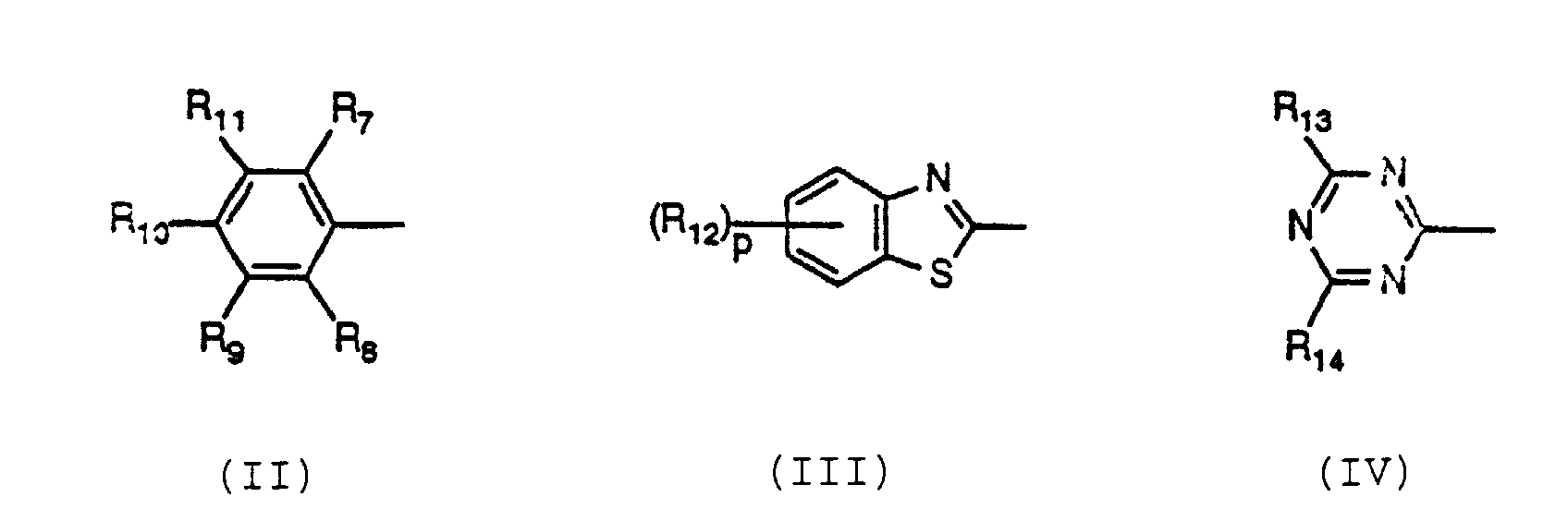 R2, R3, R4 et R5 représentent, indépendamment les uns des autres, un atome d'hydrogène, un groupe hydroxyle, alcoxy en C1 à C18, alcoxy en C2 à C18 qui est interrompu par un atome d'oxygène ou de soufre; un groupe alkyle en C1 à C25, alkyle en C2 à C25 qui est interrompu par un atome d'oxygène ou de soufre; alcényle en C2 à C24, cycloalkyle en C5 à C15 qui est non substitué ou substitué par un groupe alkyle en C1 à C4; cycloalcényle en C5 à C15 qui est non substitué ou substitué par un groupe alkyle en C1 à C4; phényle ou naphtyle qui sont non substitués ou substitués par un groupe alkyle en C1 à C4; phénylalkyle en C7 à C9 qui est non substitué ou substitué sur le noyau phényle par un groupe alkyle en C1 à C4; naphtylalkyle en C10 à C12 qui est non substitué ou substitué sur le système de cycle naphtylique par un groupe alkyle en C1 à C4; ou représentent -COR6, à condition que, si l'un des radicaux R2, R3, R4 et R5 est un radical hydroxyle, l'autre radical lié au même atome de carbone soit autre qu'hydroxyle; ou bien R2 et R3 ou R4 et R5, conjointement avec l'atome de carbone auquel ils sont liés, forment un cycle cycloalkylidène en C5 à C12 non substitué ou à substitution alkyle en C1 à C4,R6 est un groupe hydroxyle, alcoxy en C1 à C18, alcoxy en C2 à C18 qui est interrompu par un atome d'oxygène ou de soufre; ou représente
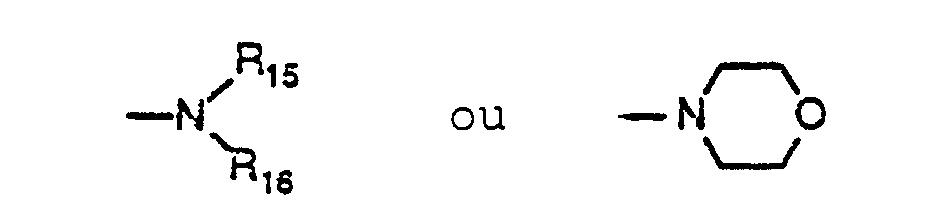 R7, R8, R9, R10 et R11 représentent, indépendamment les uns des autres, un atome d'hydrogène, un groupe hydroxyle, halogéno, nitro, cyano, CF3, -COR6, un groupe alkyle en C1 à C25, alkyle en C2 à C25 qui est interrompu par un atome d'oxygène ou de soufre; halogénoalkyle en C1 à C25, alcoxy en C1 à C18, alcoxy en C2 à C18 qui est interrompu par un atome d'oxygène ou de soufre; alkylthio en C1 à C18, alcényle en C2 à C24, cycloalkyle en C5 à C15, qui est non substitué ou substitué par un groupe alkyle en C1 à C4; cycloalcényle en C5 à C15 qui est non substitué ou substitué par un groupe alkyle en C1 à C4; phényle ou naphtyle qui sont non substitués ou substitués par un groupe alkyle en C1 à C4; phénylalkyle en C7 à C9 qui est non substitué ou substitué sur le noyau phényle par un groupe alkyle en C1 à C4; naphtylalkyle en C10 à C12 qui est non substitué ou substitué sur le système de cycle naphtylique par un groupe alkyle en C1 à C4; phénoxy ou naphtoxy qui est non substitué ou substitué par un groupe alkyle en C1 à C4; phénylalcoxy en C7 à C9 qui est non substitué ou substitué sur le noyau phényle par un groupe alkyle en C1 à C4; naphtylalcoxy en C10 à C12 qui est non substitué ou substitué sur le système de cycle naphtylique par un groupe alkyle en C1 à C4; ou bien les radicaux R8 et R9 ou les radicaux R9 et R10 ou les radicaux R10 et R11 ou les radicaux R7 et R11, conjointement avec les atomes de carbone auxquels ils sont liés, forment un noyau benzénique non substitué ou à substitution alkyle en C1 à C4, halogéno ou alcoxy en C1 à C4, à condition qu'au moins un des radicaux R7, R8, R9, R10 et R11 représente un atome d'hydrogène,R12 représente un groupe hydroxyle, halogéno, nitro, cyano, CF3, alkyle en C1 à C25, alkyle en C2 à C25, qui est interrompu par un atome d'oxygène ou de soufre; halogénoalkyle en C1 à C25, alcoxy en C1 à C18, alcoxy en C2 à C18 qui est interrompu par un atome d'oxygène ou de soufre; alkylthio en C1 à C18 ou alcényle en C2 à C24;R13 et R14 représentent, indépendamment l'un de l'autre, un atome d'hydrogène, un groupe alkyle en C1 à C25, alcoxy en C1 à C18, ou -Y-(CH2)SCOR6,R15 et R16 représentent, indépendamment l'un de l'autre, un atome d'hydrogène, un groupe alkyle en C1 à C25, alkyle en C3 à C25 qui est interrompu par un atome d'oxygène ou de soufre; alcényle en C2 à C24, cycloalkyle en C5 à C15 qui est non substitué ou substitué par un groupe alkyle en C1 à C4; phényle ou naphtyle qui sont non substitués ou substitués par un groupe alkyle en C1 à C4,X1 est une liaison directe, un atome d'oxygène, de soufre, C=O , un groupe alkylène en C1 à C18, alkylène en C2 à C18 qui est interrompu par un atome d'oxygène ou de soufre; alcénylène en C2 à C18, alcynylène en C2 à C18, alkylidène en C2 à C20, phénylalkylidène en C7 à C20 ou cycloalkylène en C5 à C8, avec la condition que, si m et n valent 0, X1 soit autre qu'un atome d'oxygène ou de soufre;Y est un atome d'oxygène ou N-RaRa est un atome d'hydrogène ou un groupe alkyle en C1 à C8,m et n représentent, indépendamment l'un de l'autre, des nombres entiers de 0 à 10,p est un nombre entier de 0 à 4,s est un nombre entier de 1 à 8, etdans laquelle
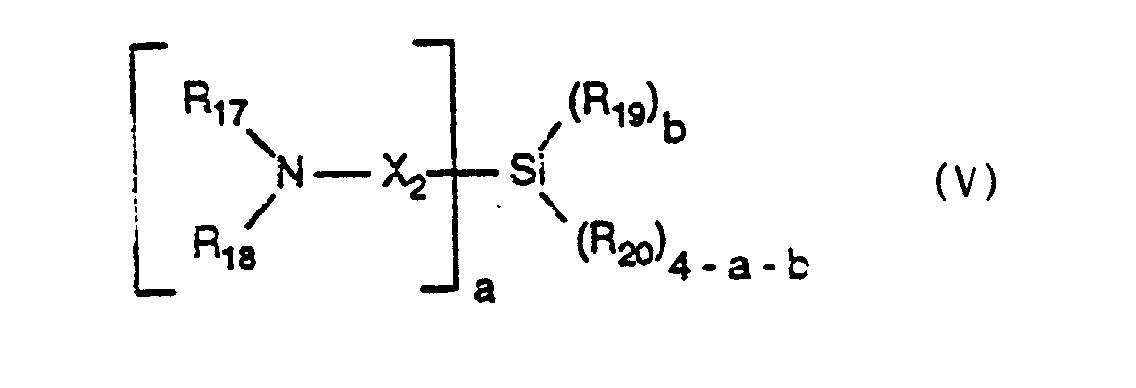 R17 et R18 représentent, indépendamment l'un de l'autre, un atome d'hydrogène, un groupe alkyle en C1 à C25, 2-hydroxyéthyle, alkyle en C3 à C25 qui est interrompu par un atome d'oxygène ou de soufre; alcényle en C2 ou C24 ou
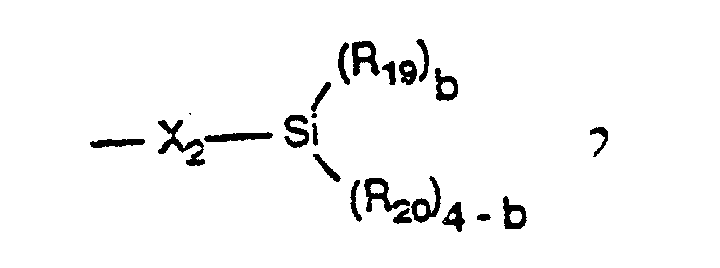 R19 est un groupe alkyle en C1 à C25, un groupe alkyle en C2 à C25 qui est interrompu par un atome d'oxygène ou de soufre; hydroxyle, alcoxy en C1 à C18 ou alcényle en C2 à C24;R20 est un groupe hydroxyle, alcoxy en C1 à C18 ou alcoxy en C2 à C18 qui est interrompu par un atome d'oxygène ou de soufre; et, si a et b ensemble valent 1, les trois radicaux R20 ensemble représentent N(CH2CH2O-)3,R21 est un atome d'hydrogène ou un groupe alkyle en C1 à C8,X2 représente un groupe alkylène en C1 à C18, un groupe alkylidène en C2 à C20, phénylalkylidène en C7 à C20, cycloalkylène en C5 à C8, phénylène ou naphtylène qui sont non substitués ou substitués par un groupe alkyle en C1 à C4; ou représente un groupe alkylène en C4 à C18 qui est interrompu par un atome d'oxygène, de soufre ou N-R21, avec la condition qu'en aucun cas, deux atomes d'azote soient liés au même atome de carbone,a vaut 1 ou 2, etb vaut 0, 1 ou 2.
- Composition de revêtement selon la revendication 1, dans laquelleR1 représente un groupe alkyle en C1 à C25, alkyle en C2 à C18 interrompu par un atome d'oxygène ou de soufre; alcényle en C2 à C18, cycloalkyle en C5 à C12 qui est non substitué ou substitué par un groupe alkyle en C1 à C4, et/ou carboxyle; cycloalcényle en C5 à C12 qui est non substitué ou substitué par un groupe alkyle en C1 à C4 et/ou carboxyle; polycycloalkyle en C13 à C26, phénylalkyle en C7 à C9, -COR6, un radical de formule II, III ou IV
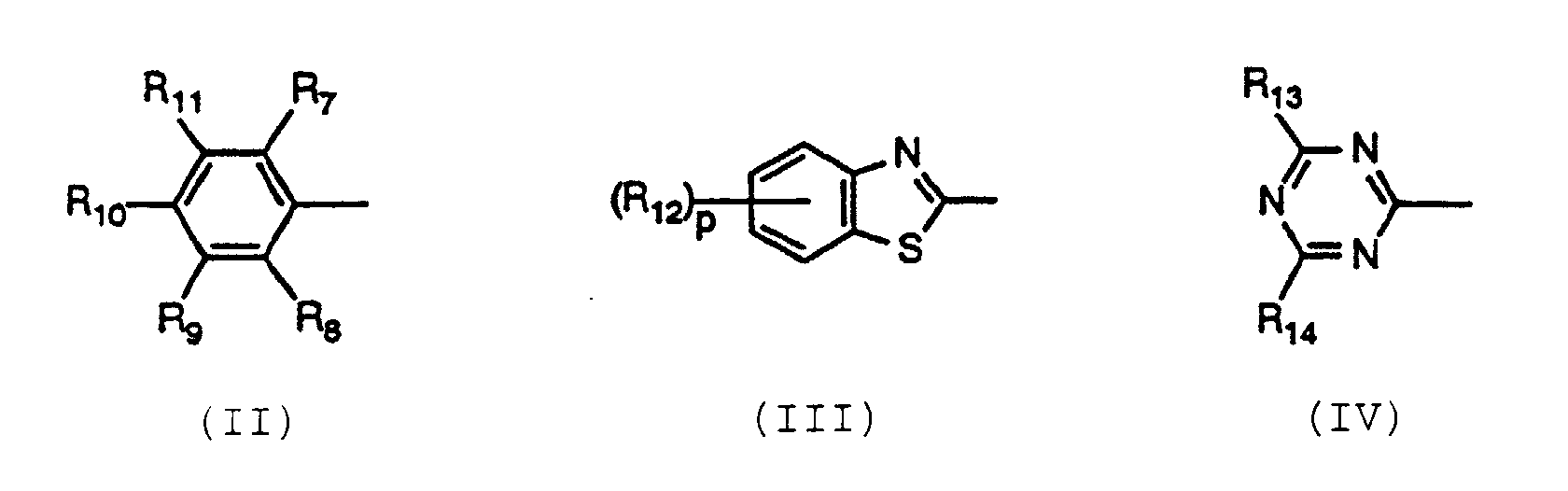 R2, R3, R4 et R5 représentent, indépendamment les uns des autres, un atome d'hydrogène, un groupe hydroxyle, alcoxy en C1 à C12, alcoxy en C2 à C12 qui est interrompu par un atome d'oxygène ou de soufre; un groupe alkyle en C1 à C18, alkyle en C2 à C18 qui est interrompu par un atome d'oygène ou de soufre; alcényle en C2 à C18, cycloalkyle en C5 à C12, cycloalcényle en C5 à C12, phényle, naphtyle, phénylalkyle en C7 à C9, naphtylalkyle en C10 à C12 ou -COR6, à condition que, si l'un des radicaux R2, R3, R4 et R5 est un radical hydroxyle, l'autre radical lié au même atome de carbone soit autre qu'hydroxyle; ou bien R2 et R3 ou R4 et R5, conjointement avec l'atome de carbone auquel ils sont liés, forment un cycle cycloalkylidène en C5 à C10,R6 est un groupe hydroxyle, alcoxy en C1 à C12, alcoxy en C2 à C12 qui est interrompu par un atome d'oxygène ou de soufre; ou représente
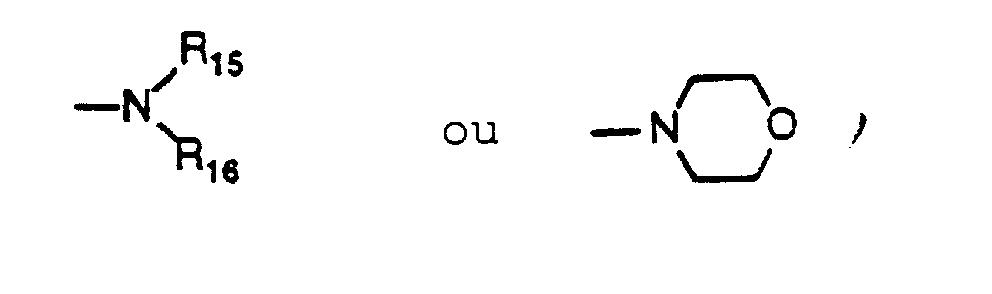 R7, R8, R9, R10 et R11 représentent, indépendamment les uns des autres, un atome d'hydrogène, un groupe hydroxyle, halogéno, nitro, cyano, CF3, -COR6, un groupe alkyle en C1 à C18, alkyle en C2 à C18 qui est interrompu par un atome d'oxygène ou de soufre; halogénoalkyle en C1 à C18, alcoxy en C1 à C12, alcoxy en C2 à C12 qui est interrompu par un atome d'oxygène ou de soufre; alkylthio en C1 à C12, alcényle en C2 à C18, cycloalkyle en C5 à C12, cycloalcényle en C5 à C12, phényle, naphtyle, phénylalkyle en C7 à C9, naphtylalkyle en C10 à C12, phénoxy, naphtoxy, phénylalcoxy en C7 à C9, naphtylalcoxy en C10 à C12, ou bien les radicaux R8 et R9 ou les radicaux R9 et R10 ou les radicaux R10 et R11 ou les radicaux R7 et R11, conjointement avec les atomes de carbone auxquels ils sont liés, forment un noyau benzénique, à condition qu'au moins un des radicaux R7, R8, R9, R10 ou R11 représente un atome d'hydrogène,R12 représente un groupe hydroxyle, halogéno, nitro, cyano, CF3, alkyle en C1 à C18, alkyle en C2 à C18 qui est interrompu par un atome d'oxygène ou de soufre; halogénoalkyle en C1 à C18, alcoxy en C1 à C12, alcoxy en C2 à C12 qui est interrompu par un atome d'oxygène ou de soufre; alkylthio en C1 à C12 ou alcényle en C2 à C18;R13 et R14 représentent, indépendamment l'un de l'autre, un atome d'hydrogène, un groupe alkyle en C1 à C18, alcoxy en C1 à C12 ou -Y-(CH2)SCOR6,R15 et R16 représentent, indépendamment l'un de l'autre, un atome d'hydrogène, un groupe alkyle en C1 à C18, alkyle en C3 à C18 qui est interrompu par un atome d'oxygène ou de soufre; alcényle en C2 à C18, cycloalkyle en C5 à C12, phényle, naphtyle,R17 et R18 représentent, indépendamment l'un de l'autre, un atome d'hydrogène, un groupe alkyle en C1 à C18, alkyle en C3 à C18 qui est interrompu par un atome d'oxygène ou de soufre; alcényle en C2 ou C18,R19 est un groupe alkyle en C1 à C18, un groupe alkyle en C2 à C18 qui est interrompu par un atome d'oxygène ou de soufre; hydroxyle, alcoxy en C1 à C12 ou alcényle en C2 à C18;R20 est un groupe hydroxyle, alcoxy en C1 à C12 ou alcoxy en C2 à C12 qui est interrompu par un atome d'oxygène ou de soufre; et, si a et b ensemble valent 1, les trois radicaux R20 ensemble représentent N(CH2CH2O-)3,R21 est un atome d'hydrogène ou un groupe alkyle en C1 à C6,X1 est une liaison directe, un atome d'oxygène, de soufre, C=O , un groupe alkylène en C1 à C12, alkylène en C2 à C12 qui est interrompu par un atome d'oxygène ou de soufre; alcénylène en C2 à C12, alcynylène en C2 à C12, alkylidène en C2 à C16, phénylalkylidène en C7 à C16 ou cycloalkylène en C5 à C8, avec la condition que, si m et n valent 0, X1 soit autre qu'un atome d'oxygène ou de soufre;X2 représente un groupe alkylène en C2 à C12, un groupe alkylidène en C2 à C16, phénylalkylidène en C7 à C16, cycloalkylène en C5 à C8, phénylène, naphtylène ou alkylène en C4 à C18 qui est interrompu par un atome d'oxygène, de soufre ou N-R21, avec la condition qu'en aucun cas, deux atomes d'azote soient liés au même atome de carbone,Y est un atome d'oxygène ou N-Ra,Ra est un atome d'hydrogène ou un groupe alkyle en C1 à C6,m et n représentent, indépendamment l'un de l'autre, des nombres entiers de 0 à 8,p est un nombre entier de 0 à 2, ets est un nombre entier de 1 à 6.
- Composition de revêtement selon la revendication 1, dans laquelleR1 représente un groupe alkyle en C1 à C25, alkyle en C2 à C12 interrompu par un atome d'oxygène; alcényle en C2 à C18, cycloalkyle en C5 à C12; cycloalcényle en C5 à C12 qui est non substitué ou substitué par un groupe alkyle en C1 à C4 et/ou carboxyle; phénylalkyle en C7 à C9, -COR6, un radical de formule II ou III
 R2, R3, R4 et R5 représentent, indépendamment les uns des autres, un atome d'hydrogène, un groupe alcoxy en C1 à C8, alkyle en C1 à C18, alkyle en C2 à C12 qui est interrompu par un atome d'oygène; alcényle en C2 à C18, cycloalkyle en C5 à C8, cycloalcényle en C5 à C8, phényle, naphtyle, benzyle ou -COR6, ou bien R2 et R3 ou R4 et R5, conjointement avec l'atome de carbone auquel ils sont liés, forment un cycle cycloalkylidène en C5 à C7,R6 est un groupe hydroxyle, alcoxy en C1 à C12, alcoxy en C2 à C12 qui est interrompu par un atome d'oxygène ou de soufre; ou représente
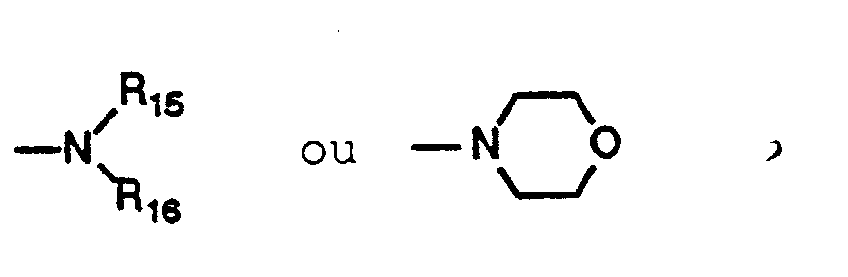 R7, R8, R9, R10 et R11 représentent, indépendamment les uns des autres, un atome d'hydrogène, un groupe hydroxyle, chloro, nitro, -COR6, alkyle en C1 à C12, alkyle en C2 à C12 qui est interrompu par un atome d'oxygène; alcoxy en C1 à C8; alkylthio en C1 à C8, alcényle en C2 à C12, cycloalkyle en C5 à C8, cycloalcényle en C5 à C8, phényle, naphtyle, benzyle, phénoxy, naphtoxy ou benzyloxy; ou bien les radicaux R9 et R10 ou les radicaux R10 et R11, conjointement avec les atomes de carbone auxquels ils sont liés, forment un noyau benzénique, à condition qu'au moins un des radicaux R7, R8, R9, R10 et R11 représente un atome d'hydrogène,R12 représente un groupe hydroxyle, chloro, alkyle en C1 à C12, alcoxy en C1 à C12; alcoxy en C2 à C12 qui est interrompu par un atome d'oxygène,R15 et R16 représentent, indépendamment l'un de l'autre, un atome d'hydrogène, un groupe alkyle en C1 à C12, alcényle en C2 à C12, cycloalkyle en C5 à C7, phényle ou naphtyle,X1 est une liaison directe, un atome de soufre, C=O, un groupe alkylène en C1 à C12, alkylène en C2 à C12 qui est interrompu par un atome d'oxygène; alcénylène en C2 à C12 ou cycloalkylène en C5 à C8, avec la condition que, si m et n valent 0, X1 soit autre qu'un atome de soufre,m et n représentent, indépendamment l'un de l'autre, des nombres entiers de 0 à 8, et p est un nombre entier de 0 à 2.
- Composition de revêtement selon la revendication 1, dans laquelleR1 représente un groupe alkyle en C1 à C25, alcényle en C2 à C18, cycloalkyle en C5 à C8; cycloalcényle en C5 à C8 qui est non substitué ou substitué par un groupe alkyle en C1 à C4 et/ou carboxyle; benzyle, -COR6 ou un radical de formule II ou III
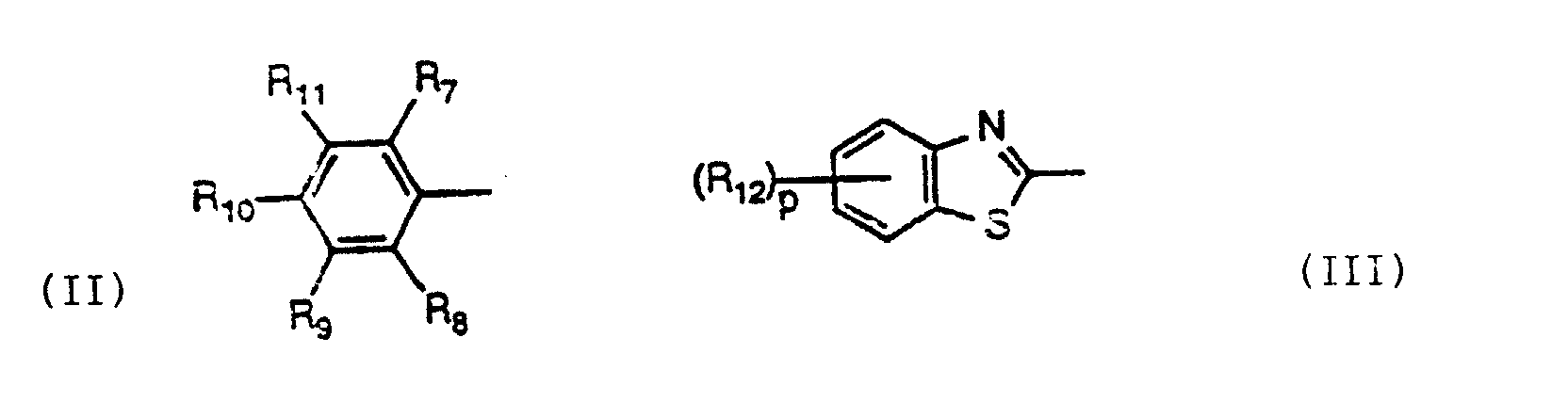 R2, R3, R4 et R9 représentent, indépendamment les uns des autres, un atome d'hydrogène, un groupe alkyle en C1 à C12, alcényle en C2 à C12, cycloalkyle, phényle, naphtyle, benzyle ou -COR6,R6 est un groupe hydroxyle, alcoxy en C1 à C8, ou
 R7 est un atome d'hydrogène, de chlore ou un groupe alkyle en C1 à C4,R8 est un atome d'hydrogène, un groupe hydroxyle alkyle en C1 à C4, nitro ou chloro,R9 est un atome d'hydrogène ou un groupe alkyle en C1 à C4,R10 est un atome d'hydrogène, de chlore, un groupe alkyle en C1 à C4, nitro ou -COR6,R11 est un atome d'hydrogène ou un groupe alkyle en C1 à C4,R12 représente un groupe chloro, alkyle en C1 à C8 ou alcoxy en C2 à C8,R15 et R16 représentent, indépendamment l'un de l'autre, un atome d'hydrogène ou un groupe alkyle en C1 à C4,X1 est une liaison directe, un atome de soufre, C=O, ou un groupe alkylène en C1 à C10, avec la condition que, si m et n valent 0, X1 soit autre qu'un atome de soufre,m et n représentent, indépendamment l'un de l'autre, des nombres entiers de 0 à 4, et
p vaut 1. - Composition de revêtement selon la revendication 1, dans laquelleR17 et R18 représentent, indépendamment l'un de l'autre, un atome d'hydrogène, un groupe alkyle en C1 à C12, alkyle en C3 à C18 qui est interrompu par un atome d'oxygène, ou alcényle en C2 ou C12,R19 représente un groupe alkyle en C1 à C12, alkyle en C3 à C12 qui est interrompu par un atome d'oxygène; hydroxyle, alcoxy en C1 à C10 ou alcényle en C2 à C12,R20 représente un groupe hydroxyle, alcoxy en C1 à C10 ou alcoxy en C2 à C10 qui est interrompu par un atome d'oxygène ; et, si a et b ensemble valent 1, les trois radicaux R20 ensemble représentent N(CH2CH2O-)3, R21 représente un atome d'hydrogène ou un groupe alkyle en C1 à C4,X2 représente un groupe alkylène en C2 à C10, alkylidène en C2 à C12, cycloalkylène en C5 à C8, phénylène ou alkylène en C4 à C12 qui est interrompu par N-R21, avec la condition qu'en aucun cas, deux atomes d'azote soient liés au même atome de carbone.
- Composition de revêtement selon la revendication 1, dans laquelleR17 et R18 représentent, indépendamment l'un de l'autre, un atome d'hydrogène, un groupe alkyle en C1 à C8,R19 représente un groupe alkyle en C1 à C8, hydroxyle, alcoxy en C1 à C8 ou alcényle en C2 à C8,R20 représente un groupe hydroxyle ou alcoxy en C1 à C8; et, si a et b ensemble valent 1, les trois radicaux R20 ensemble représentent N(CH2CH2O-)3,R21 représente un atome d'hydrogène ou un groupe alkyle en C1 à C4,X2 représente un groupe alkylène en C2 à C6, cycloalkylène en C5 à C8, phénylène ou alkylène en C4 à C8 qui est interrompu par N-R21, avec la condition qu'en aucun cas, deux atomes d'azote soient liés au même atome de carbone.a vaut 1, etb vaut 0 ou 1.
- Composition de revêtement selon la revendication 1, dans laquelleR1 représente un groupe alkyle en C1 à C25, alcényle en C2 à C16, 2-carboxy-4-méthylcyclohexényle, cyclohexyle, benzyle, -COR6 ou un radical de formule II ou III
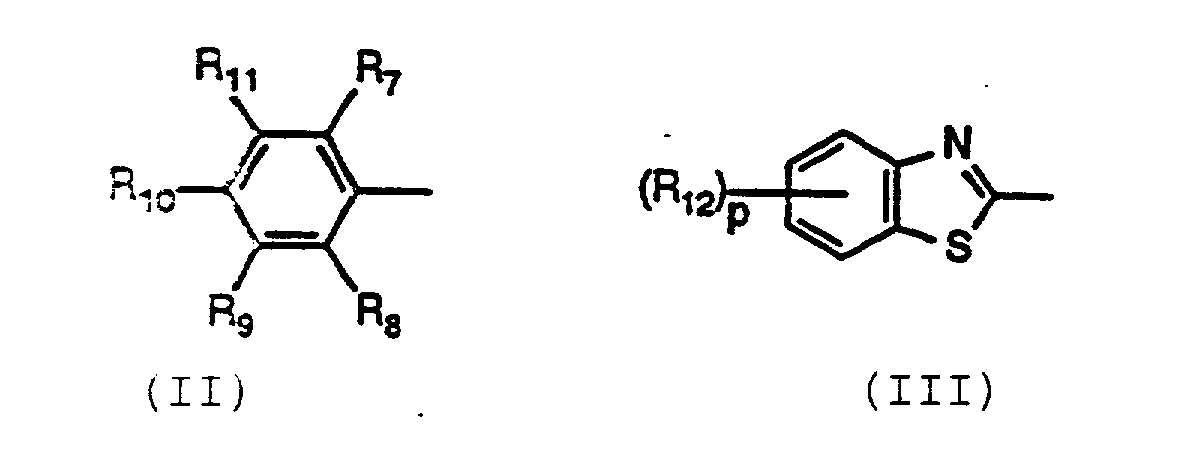 R2, R3, R4 et R5 représentent, indépendamment les uns des autres, un atome d'hydrogène, un groupe alkyle en C1 à C8, phényle, benzyle ou -COR6,R6 est un groupe hydroxyle, alcoxy en C1 à C4, ou
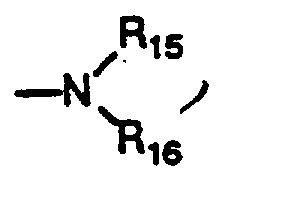 R7 est un atome d'hydrogène ou un groupe alkyle en C1 à C4,R8 est un atome d'hydrogène, un groupe hydroxyle, alkyle en C1 à C4, nitro ou chloro,R9 est un atome d'hydrogène ou un groupe alkyle en C1 à C4,R10 est un atome d'hydrogène, de chlore, un groupe alkyle en C1 à C4, nitro ou -COR6,R11 est un atome d'hydrogène ou un groupe alkyle en C1 à C4,R12 représente un groupe chloro, alkyle en C1 à C4 ou alcoxy en C1 à C4,R15 et R16 représentent, indépendamment l'un de l'autre, un atome d'hydrogène ou un groupe alkyle en C1 à C4,R17 et R18 représentent, indépendamment l'un de l'autre, un atome d'hydrogène ou un groupe alkyle en C1 à C4,R19 est un groupe alkyle en C1 à C6, alcényle en C2 à C6, hydroxyle ou alcoxy en C1 à C4;R20 est un groupe hydroxyle, alcoxy en C1 à C4, et, si a et b ensemble valent 1, les trois radicaux R20 ensemble représentent N(CH2CH2O-)3,R21 est un atome d'hydrogène ou un groupe alkyle en C1 à C4,X1 est une liaison directe, un atome de soufre, C=O ou un groupe alkylène en C1 à C10, avec la condition que, si m et n valent 0, X1 soit autre qu'un atome de soufre,X2 représente un groupe alkylène en C2 à C6, cyclohexylène ou alkylène en C4 à C8 qui est interrompu par N-R21, avec la condition qu'en aucun cas deux atomes d'azote soient liés au même atome de carbone,a vaut 1,b vaut 0 ou 1,m et n représentent, indépendamment l'un de l'autre, valent 0, 1 ou 2, et
p vaut 0 ou 1. - Composition de revêtement selon la revendication 1, dans laquelleR1 représente un groupe alkyle en C1 à C18, 2-carboxy-4-méthylcyclohexényle, -COR6 ou un radical de formule II ou III
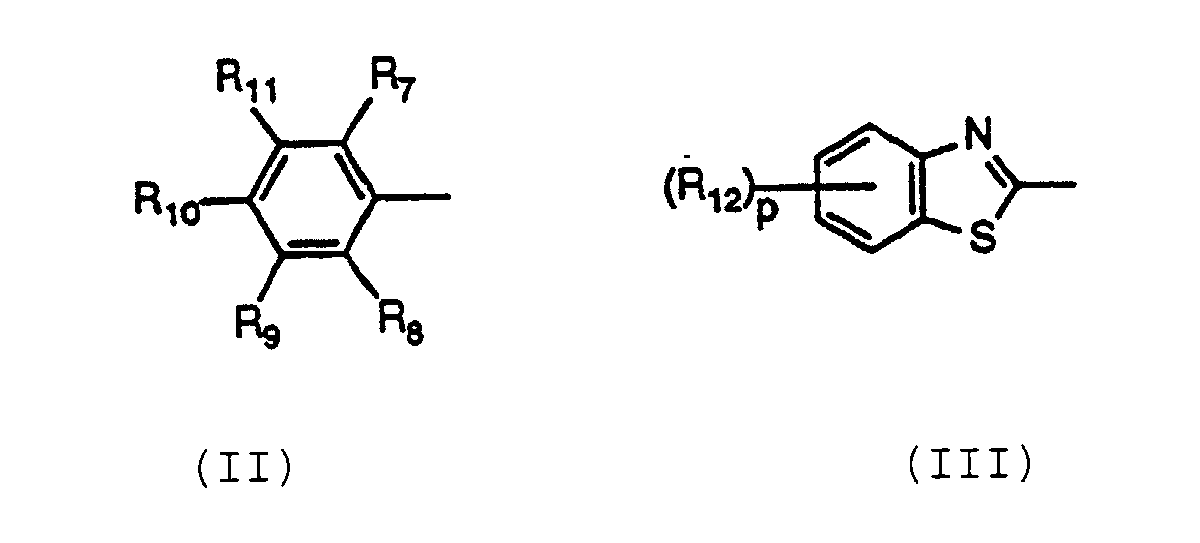 R2 représentent un atome d'hydrogène,R3 représentent un atome d'hydrogène ou -COR6,R4 et R5 représentent un atome d'hydrogène,R6 est un groupe hydroxyle,R7 est un atome d'hydrogène,R8 est un atome d'hydrogène, un groupe hydroxyle, alkyle en C1 à C4, nitro ou chloro,R9 est un atome d'hydrogène,R10 est un atome d'hydrogène, un groupe alkyle en C1 à C4 ou nitro,R11 est un atome d'hydrogène,R17 et R18 représentent un atome d'hydrogène ou un groupe méthyle,R19 est un groupe alkyle en C1 à C4, hydroxyle ou alcoxy en C1 à C4;R20 est un groupe hydroxyle ou alcoxy en C1 à C4, et, si a et b ensemble valent 1, les trois radicaux R20 ensemble représentent N(CH2CH2O-)3,R21 est un atome d'hydrogène,X1 est une liaison directe, un atome de soufre, C=O, ou un groupe alkylène en C1 à C8, avec la condition que, si m et n valent 0, X1 soit autre qu'un atome de soufre,X2 représente un groupe alkylène en C2 à C4 ou alkylène en C4 à C6 qui est interrompu par N-R21, avec la condition qu'en aucun cas, deux atomes d'azote soient liés au même atome de carbone,a vaut 1,b vaut 0 ou 1,m et n représentent, indépendamment l'un de l'autre, valent 0 ou 1, etp vaut 0.
- Composition de revêtement selon la revendication 1, dans laquelle le composant (β) est dérivé d'un aminosilane de formule V dan laquelle au moins un des radicaux R17 et R18 est un atome d'hydrogène.
- Composition de revêtement selon la revendication 1, dans laquelle le composant (α) est formé in situ dans la préparation de la composition de revêtement au moyen de l'addition séparée des deux composants (i) et (ii) et d'un mélange ultérieur de la composition de revêtement.
- Composition de revêtement selon la revendication 1, qui est une matière de revêtement de surface.
- Composition de revêtement selon la revendication 1, qui est une matière aqueuse de revêtement de surface.
- Composition de revêtement selon la revendication 1, dans laquelle le composant a) est une résine époxy, une résine polyuréthanne, une résine polyester, une résine de copolymère acrylique, une résine polyvinylique, une résine phénolique, une résine alkyde ou un mélange de telles résines.
- Composition de revêtement selon la revendication 1, comprenant de plus un ou plusieurs composants du groupe formé des pigments, des colorants, des charges, des agents rhéologiques, des dispersants, des agents thioxopriques, des promoteurs d'adhérence, des antioxydants, des stabilisants à la lumière et des catalyseurs de durcissement.
- Composition de revêtement selon la revendication 1, dans laquelle le composant (b) est présent en une quantité de 0,01 à 20% basée sur le poids de la teneur globale en solides de la composition de revêtement.
- Procédé de préparation d'une composition de revêtement comprenant un sel selon la revendication 1, qui consiste à mélanger un liant organique filmogène avec au moins un acide carboxylique de formule I selon la revendication 1 et avec au moins un aminosilane de formule V selon la revendication 1
- Sel dérivé i) d'un acide polyacrylique, d'un copolymère acide acrylique/acide maléique ou d'un acide carboxylique de formule Idans laquelle
 (ii) d'un aminosilane de formule VR1 représente un atome d'hydrogène, un groupe alkyle en C1 à C25, alkyle en C2 à C25 interrompu par un atome d'oxygène ou de soufre; alcényle en C2 à C24, cycloalkyle en C4 à C15 qui est non substitué ou substitué par un groupe alkyle en C1 à C4, et/ou carboxyle; cycloalcényle en C5 à C15 qui est non substitué ou substitué par un groupe alkyle en C1 à C4 et/ou carboxyle; polycycloalkyle en C13 à C26, phénylalkyle en C7 à C9 qui est non substitué ou substitué sur le noyau phénylique par un groupe alkyle en C1 à C4; -COR6, un hétérocycle à 5 ou 6 éléments qui est non substitué ou substitué par un groupe alkyle en C1 à C4, alcoxy en C1 à C4, un atome d'halogène ou un groupe carboxyle; un hétérocycle à 5 ou 6 éléments qui est benzocondensé et qui est non substitué ou substitué par un groupe alkyle en C1 à C4, alcoxy en C1 à C4, un atome d'halogène ou un groupe carboxyle; ou bien R1 est un radical de formule II, III ou IV
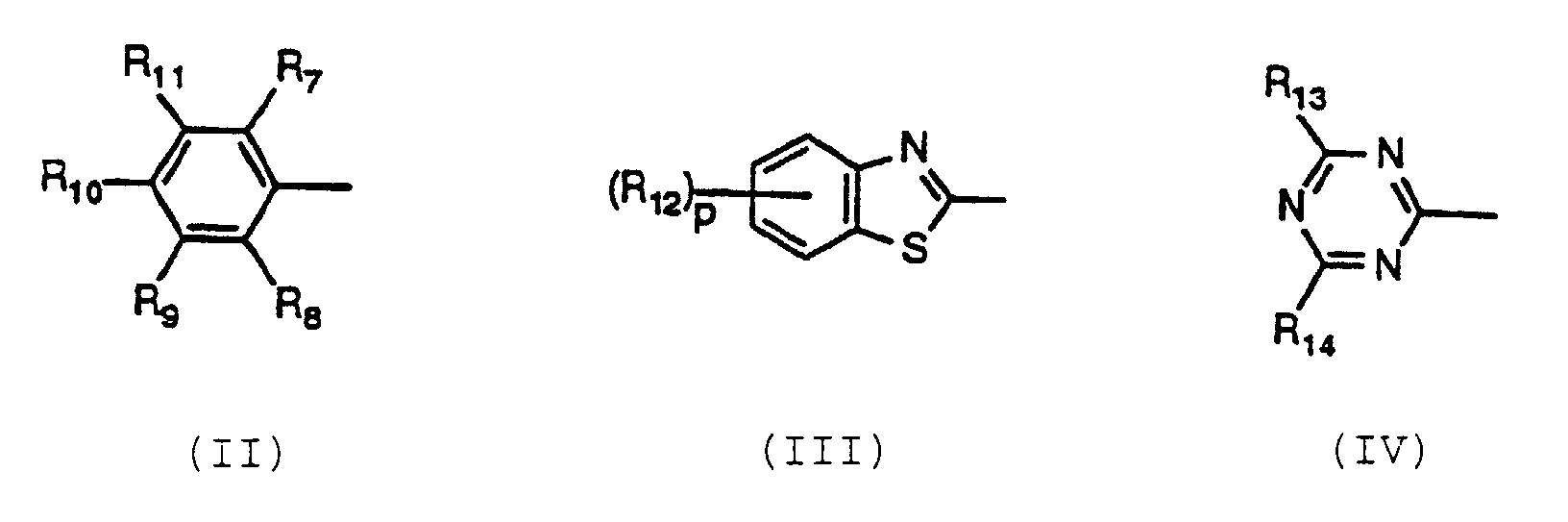 R2, R3, R4 et R5 représentent, indépendamment les uns des autres, un atome d'hydrogène, un groupe hydroxyle, alcoxy en C1 à C18, alcoxy en C2 à C18 qui est interrompu par un atome d'oxygène ou de soufre; un groupe alkyle en C1 à C25, alkyle en C2 à C25 qui est interrompu par un atome d'oxygène ou de soufre; alcényle en C2 à C24, cycloalkyle en C5 à C15 qui est non substitué ou substitué par un groupe alkyle en C1 à C4; cycloalcényle en C5 à C15 qui est non substitué ou substitué par un groupe alkyle en C1 à C4; phényle ou naphtyle qui sont non substitués ou substitués par un groupe alkyle en C1 à C4; phénylalkyle en C7 à C9 qui est non substitué ou substitué sur le noyau phényle par un groupe alkyle en C1 à C4; naphtylalkyle en C10 à C12 qui est non substitué ou substitué sur le système de cycle naphtylique par un groupe alkyle en C1 à C4; ou représentent -COR6, à condition que, si l'un des radicaux R2, R3, R4 et R5 est un radical hydroxyle, l'autre radical lié au même atome de carbone soit autre qu'hydroxyle; ou bien R2 et R3 ou R4 et R5, conjointement avec l'atome de carbone auquel ils sont liés, forment un cycle cycloalkylidène en C5 à C12 non substitué ou à substitution alkyle en C1 à C4,R6 est un groupe hydroxyle, alcoxy en C1 à C18, alcoxy en C2 à C18 qui est interrompu par un atome d'oxygène ou de soufre; ou représente
 R7, R8, R9, R10 et R11 représentent, indépendamment les uns des autres, un atome d'hydrogène, un groupe hydroxyle, halogéno, nitro, cyano, CF3, -COR6, un groupe alkyle en C1 à C25, alkyle en C2 à C25 qui est interrompu par un atome d'oxygène ou de soufre; halogénoalkyle en C1 à C25, alcoxy en C1 à C18, alcoxy en C2 à C18 qui est interrompu par un atome d'oxygène ou de soufre; alkylthio en C1 à C18, alcényle en C2 à C24, cycloalkyle en C5 à C15, qui est non substitué ou substitué par un groupe alkyle en C1 à C4; cycloalcényle en C5 à C15 qui est non substitué ou substitué par un groupe alkyle en C1 à C4; phényle ou naphtyle qui sont non substitués ou substitués par un groupe alkyle en C1 à C4; phénylalkyle en C7 à C9 qui est non substitué ou substitué sur le noyau phényle par un groupe alkyle en C1 à C4; naphtylalkyle en C10 à C12 qui est non substitué ou substitué sur le système de cycle naphtylique par un groupe alkyle en C1 à C4; phénoxy ou naphtoxy qui est non substitué ou substitué par un groupe alkyle en C1 à C4; phénylalcoxy en C7 à C9 qui est non substitué ou substitué sur le noyau phényle par un groupe alkyle en C1 à C4; naphtylalcoxy en C10 à C12 qui est non substitué ou substitué sur le système de cycle naphtylique par un groupe alkyle en C1 à C4; ou bien les radicaux R8 et R9 ou les radicaux R9 et R10 ou les radicaux R10 et R11 ou les radicaux R7 et R11, conjointement avec les atomes de carbone auxquels ils sont liés, forment un noyau benzénique non substitué ou à substitution alkyle en C1 à C4, halogéno ou alcoxy en C1 à C4, à condition qu'au moins un des radicaux R7, R8, R9, R10 et R11 représente un atome d'hydrogène,R12 représente un groupe hydroxyle, halogéno, nitro, cyano, CF3, alkyle en C1 à C25, alkyle en C2 à C25, qui est interrompu par un atome d'oxygène ou de soufre; halogénoalkyle en C1 à C25, alcoxy en C1 à C18, alcoxy en C2 à C18 qui est interrompu par un atome d'oxygène ou de soufre; alkylthio en C1 à C18 ou alcényle en C2 à C24;R13 et R14 représentent, indépendamment l'un de l'autre, un atome d'hydrogène, un groupe alkyle en C1 à C25, alcoxy en C1 à C18, ou -Y-(CH2)SCOR6,R15 et R16 représentent, indépendamment l'un de l'autre, un atome d'hydrogène, un groupe alkyle en C1 à C25, alkyle en C3 à C25 qui est interrompu par un atome d'oxygène ou de soufre; alcényle en C2 à C24, cycloalkyle en C5 à C15 qui est non substitué ou substitué par un groupe alkyle en C1 à C4; phényle ou naphtyle qui sont non substitués ou substitués par un groupe alkyle en C1 à C4,X1 est une liaison directe, un atome d'oxygène, de soufre C=O, un groupe alkylène en C1 à C18, alkylène en C2 à C18 qui est interrompu par un atome d'oxygène ou de soufre; alcénylène en C2 à C18, alcynylène en C2 à C18, alkylidène en C2 à C20, phénylalkylidène en C7 à C20 ou cycloalkylène en C5 à C8, avec la condition que, si m et n valent 0, X1 soit autre qu'un atome d'oxygène ou de soufre;Y est un atome d'oxygène ou N-Ra,Ra est un atome d'hydrogène ou un groupe alkyle en C1 à C8,m et n représentent, indépendamment l'un de l'autre, des nombres entiers de 0 à 10,p est un nombre entier de 0 à 4,s est un nombre entier de 1 à 8, etdans laquelle
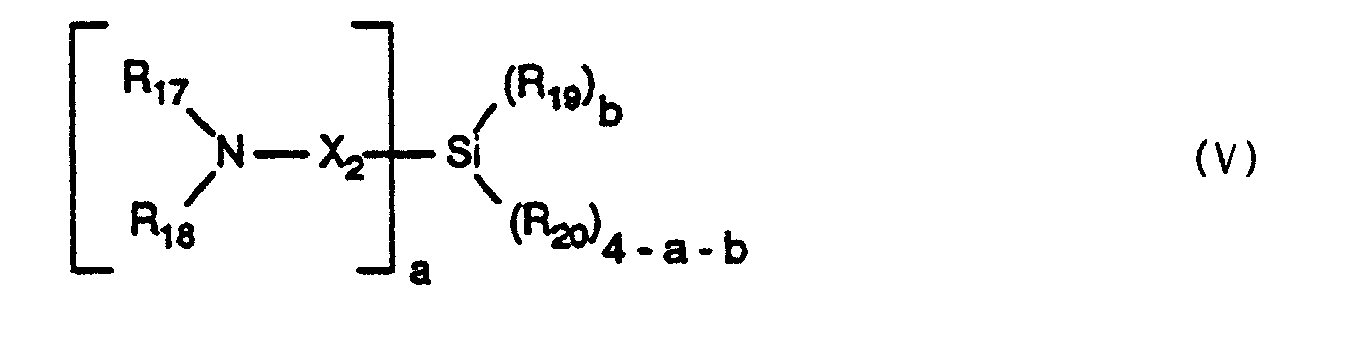 R17 et R18 représentent, indépendamment l'un de l'autre, un atome d'hydrogène, un groupe alkyle en C1 à C25, 2-hydroxyéthyle, alkyle en C3 à C25 qui est interrompu par un atome d'oxygène ou de soufre; alcényle en C2 ou C24 ou
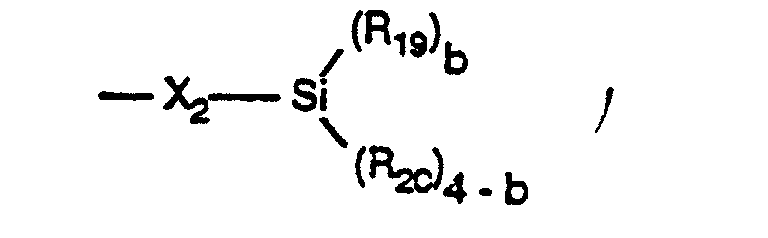 R19 est un groupe alkyle en C1 à C25, un groupe alkyle en C2 à C25 qui est interrompu par un atome d'oxygène ou de soufre; hydroxyle, alcoxy en C1 à C18 ou alcényle en C2 à C24;R20 est un groupe hydroxyle, alcoxy en C1 à C18 ou alcoxy en C2 à C18 qui est interrompu par un atome d'oxygène ou de soufre; et, si a et b ensemble valent 1, les trois radicaux R20 ensemble représentent N(CH2CH2O-)3,R21 est un atome d'hydrogène ou un groupe alkyle en C1 à C8,X2 représente un groupe alkylène en C1 à C18, un groupe alkylidène en C2 à C20, phénylalkylidène en C7 à C20, cycloalkylène en C5 à C8, phénylène ou naphtylène qui sont non substitués ou substitués par un groupe alkyle en C1 à C4; ou représente un groupe alkylène en C4 à C18 qui est interrompu par un atome d'oxygène, de soufre ou N-R21, avec la condition qu'en aucun cas, deux atomes d'azote soient liés au même atome de carbone,a vaut 1 ou 2, etb vaut 0, 1 ou 2.
- Sel selon la revendication 17, dérivé i) d'un acide d'un acide carboxylique de formule I
dans laquelle(ii) d'un aminosilane de formule V dans laquelleR1 représente un atome d'hydrogène, un groupe alkyle en C1 à C25, alkyle en C2 à C25 interrompu par un atome d'oxygène ou de soufre; alcényle en C2 à C24, cycloalkyle en C4 à C15 qui est non substitué ou substitué par un groupe alkyle en C1 à C4; cycloalcényle en C5 à C15 qui est non substitué ou substitué par un groupe alkyle en C1 à C4; polycycloalkyle en C13 à C26, phénylalkyle en C7 à C9 qui est non substitué ou substitué sur le noyau phénylique par un groupe alkyle en C1 à C4; -COR6, un hétérocycle à 5 ou 6 éléments qui est non substitué ou substitué par un groupe alkyle en C1 à C4, alcoxy en C1 à C4, halogéno ou carboxyle; un hétérocycle à 5 ou 6 éléments qui est benzocondensé et qui est non substitué ou substitué par un groupe alkyle en C1 à C4, alcoxy en C1 à C4, un atome d'halogène ou un groupe carboxyle; ou bien R1 est un radical de formule II, III ou IV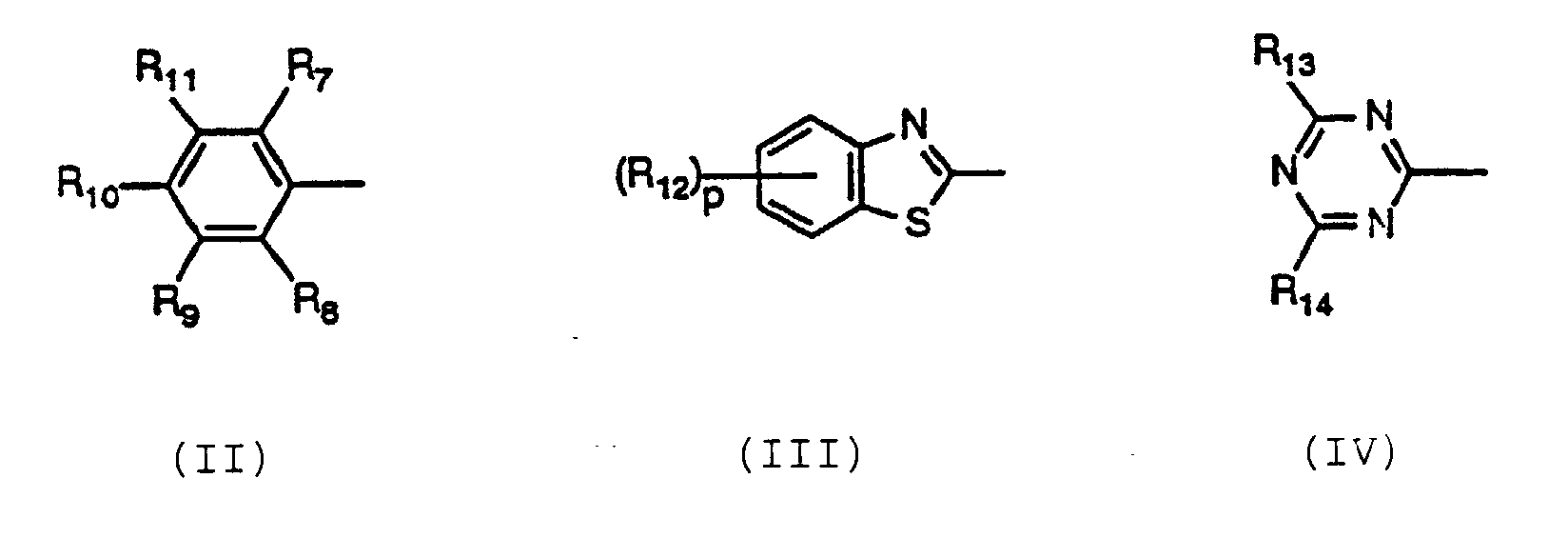 R2, R3, R4 et R5 représentent, indépendamment les uns des autres, un atome d'hydrogène, un groupe hydroxyle, alcoxy en C1 à C18, alcoxy en C2 à C18 qui est interrompu par un atome d'oxygène ou de soufre; un groupe alkyle en C1 à C25, alkyle en C2 à C25 qui est interrompu par un atome d'oxygène ou de soufre; alcényle en C2 à C24, cycloalkyle en C5 à C15 qui est non substitué ou substitué par un groupe alkyle en C1 à C4; cycloalcényle en C5 à C15 qui est non substitué ou substitué par un groupe alkyle en C1 à C4; phényle ou naphtyle qui sont non substitués ou substitués par un groupe alkyle en C1 à C4; phénylalkyle en C7 à C9 qui est non substitué ou substitué sur le noyau phényle par un groupe alkyle en C1 à C4; naphtylalkyle en C10 à C12 qui est non substitué ou substitué sur le système de cycle naphtylique par un groupe alkyle en C1 à C4; ou représentent -COR6, à condition que, si l'un des radicaux R2, R3, R4 et R5 est un radical hydroxyle, l'autre radical lié au même atome de carbone soit autre qu'hydroxyle; ou bien R2 et R3 ou R4 et R5, conjointement avec l'atome de carbone auquel ils sont liés, forment un cycle cycloalkylidène en C5 à C12 non substitué ou à substitution alkyle en C1 à C4,R6 est un groupe hydroxyle, alcoxy en C1 à C18, alcoxy en C2 à C18 qui est interrompu par un atome d'oxygène ou de soufre; ou représente
 R7, R8, R9, R10 et R11 représentent, indépendamment les uns des autres, un atome d'hydrogène, un groupe hydroxyle, halogéno, nitro, cyano, CF3, -COR6, un groupe alkyle en C1 à C25, alkyle en C2 à C25 qui est interrompu par un atome d'oxygène ou de soufre; halogénoalkyle en C1 à C25, alcoxy en C1 à C18, alcoxy en C2 à C18 qui est interrompu par un atome d'oxygène ou de soufre; alkylthio en C1 à C18, alcényle en C2 à C24, cycloalkyle en C5 à C15 qui est non substitué ou substitué par un groupe alkyle en C1 à C4; cycloalcényle en C5 à C15 qui est non substitué ou substitué par un groupe alkyle en C1 à C4; phényle ou naphtyle qui sont non substitués ou substitués par un groupe alkyle en C1 à C4; phénylalkyle en C7 à C9 qui est non substitué ou substitué sur le noyau phényle par un groupe alkyle en C1 à C4; naphtylalkyle en C10 à C12 qui est non substitué ou substitué sur le système de cycle naphtylique par un groupe alkyle en C1 à C4; phénoxy ou naphtoxy qui est non substitué ou substitué par un groupe alkyle en C1 à C4; phénylalcoxy en C7 à C9 qui est non substitué ou substitué sur le noyau phényle par un groupe alkyle en C1 à C4; naphtylalcoxy en C10 à C12 qui est non substitué ou substitué sur le système de cycle naphtylique par un groupe alkyle en C1 à C4; ou bien les radicaux R8 et R9 ou les radicaux R9 et R10 ou les radicaux R10 et R11 ou les radicaux R7 et R11, conjointement avec les atomes de carbone auxquels ils sont liés, forment un noyau benzénique non substitué ou à substitution alkyle en C1 à C4, halogéno ou alcoxy en C1 à C4, à condition qu'au moins un des radicaux R7, R8, R9, R10 et R11 représente un atome d'hydrogène,R12 représente un groupe hydroxyle, halogéno, nitro, cyano, CF3, alkyle en C1 à C25, alkyle en C2 à C25, qui est interrompu par un atome d'oxygène ou de soufre; halogénoalkyle en C1 à C25, alcoxy en C1 à C18, alcoxy en C2 à C18 qui est interrompu par un atome d'oxygène ou de soufre; alkylthio en C1 à C18 ou alcényle en C2 à C24;R13 et R14 représentent, indépendamment l'un de l'autre, un atome d'hydrogène, un groupe alkyle en C1 à C25, alcoxy en C1 à C18, ou -O-(CH2)SCOR6,R15 et R16 représentent, indépendamment l'un de l'autre, un atome d'hydrogène, un groupe alkyle en C1 à C25, alkyle en C3 à C25 qui est interrompu par un atome d'oxygène ou de soufre; alcényle en C2 à C24, cycloalkyle en C5 à C15 qui est non substitué ou substitué par un groupe alkyle en C1 à C4; phényle ou naphtyle qui sont non substitués ou substitués par un groupe alkyle en C1 à C4,X1 est une liaison directe, un atome d'oxygène, de soufre, C=O, un groupe alkylène en C1 à C18, alkylène en C2 à C18 qui est interrompu par un atome d'oxygène ou de soufre; alcénylène en C2 à C18, alcynylène en C2 à C18, alkylidène en C2 à C20, phénylalkylidène en C7 à C20 ou cycloalkylène en C5 à C8, avec la condition que, si m et n valent 0, X1 soit autre qu'un atome d'oxygène ou de soufre;m et n représentent, indépendamment l'un de l'autre, des nombres entiers de 0 à 10,p est un nombre entier de 0 à 4,s est un nombre entier de 1 à 8, etR17 et R18 représentent, indépendamment l'un de l'autre, un atome d'hydrogène, un groupe alkyle en C1 à C25, 2-hydroxyéthyle, alkyle en C3 à C25 qui est interrompu par un atome d'oxygène ou de soufre; ou représente un groupe alcényle en C2 ou C24 ou
 R19 est un groupe alkyle en C1 à C25, alkyle en C2 à C25 qui est interrompu par un atome d'oxygène ou de soufre; ou alcényle en C2 à C24;R20 est un groupe hydroxyle, alcoxy en C1 à C18 ou alcoxy en C2 à C18 qui est interrompu par un atome d'oxygène ou de soufre;R21 est un atome d'hydrogène ou un groupe alkyle en C1 à C8,X2 représente un groupe alkylène en C1 à C18, un groupe alkylidène en C2 à C20, phénylalkylidène en C7 à C20, cycloalkylène en C5 à C8, phénylène ou naphtylène qui sont non substitués ou substitués par un groupe alkyle en C1 à C4; ou représente un groupe alkylène en C4 à C18 qui est interrompu par un atome d'oxygène, de soufre ou N-R21, avec la condition qu'en aucun cas, deux atomes d'azote soient liés au même atome de carbone,a vaut 1 ou 2, etb vaut 0, 1 ou 2.
- Sel selon la revendication 17, dans lequelR1 représente un groupe alkyle en C1 à C25, alcényle en C2 à C16, 2-carboxy-4-méthylcyclohexényle, cyclohexyle, benzyle, -COR6 ou un radical de formule II ou III
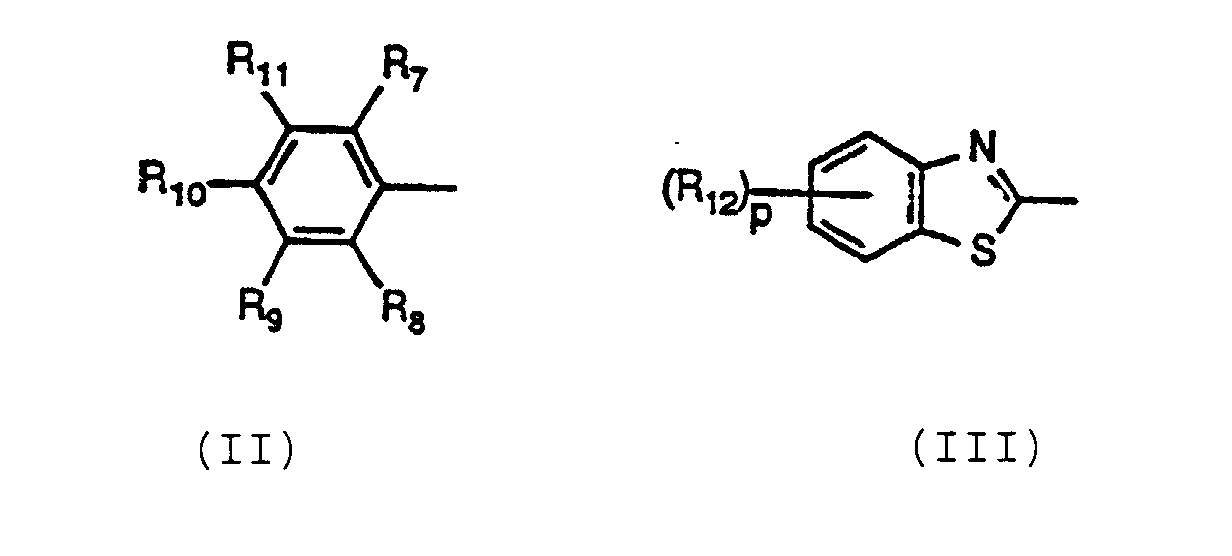 R2, R3, R4 et R5 représentent, indépendamment les uns des autres, un atome d'hydrogène, un groupe alkyle en C1 à C8, phényle, benzyle ou -COR6,R6 est un groupe hydroxyle, alcoxy en C1 à C4, ou
 R7 est un atome d'hydrogène ou un groupe alkyle en C1 à C4,R8 est un atome d'hydrogène, un groupe hydroxyle, alkyle en C1 à C4, nitro ou chloro,R9 est un atome d'hydrogène ou un groupe alkyle en C1 à C4,R10 est un atome d'hydrogène, de chlore, un groupe alkyle en C1 à C4, nitro ou -COR6,R11 est un atome d'hydrogène ou un groupe alkyle en C1 à C4,R12 représente un groupe chloro, alkyle en C1 à C4 ou alcoxy en C1 à C4,R15 et R16 représentent, indépendamment l'un de l'autre, un atome d'hydrogène ou un groupe alkyle en C1 à C4,R17 et R18 représentent, indépendamment l'un de l'autre, un atome d'hydrogène ou un groupe alkyle en C1 à C4,R19 est un groupe alkyle en C1 à C6, alcényle en C2 à C6, hydroxyle ou alcoxy en C1 à C4;R20 est un groupe hydroxyle, alcoxy en C1 à C4, et, si, a et b ensemble valent 1, les trois radicaux R20 ensemble représentent N(CH2CH2O-)3,R21 est un atome d'hydrogène ou un groupe alkyle en C1 à C4,X1 est une liaison directe, un atome de soufre, C=O, ou un groupe alkylène en C1 à C10, avec la condition que, si m et n valent 0, X1 soit autre qu'un atome de soufre,X2 représente un groupe alkylène en C2 à C6, cyclohexylène ou alkylène en C4 à C8 qui est interrompu par N-R21, avec la condition qu'en aucun cas deux atomes d'azote soient liés au même atome de carbone,a vaut 1,b vaut 0 ou 1,m et n représentent, indépendamment l'un de l'autre, valent 0, 1 ou 2, etp vaut 0 ou 1.
- Sel selon la revendication 17, dans lequelR1 représente un groupe alkyle en C1 à C18, 2-carboxy-4-méthylcyclohexényle, -COR6 ou un radical de formule II ou III
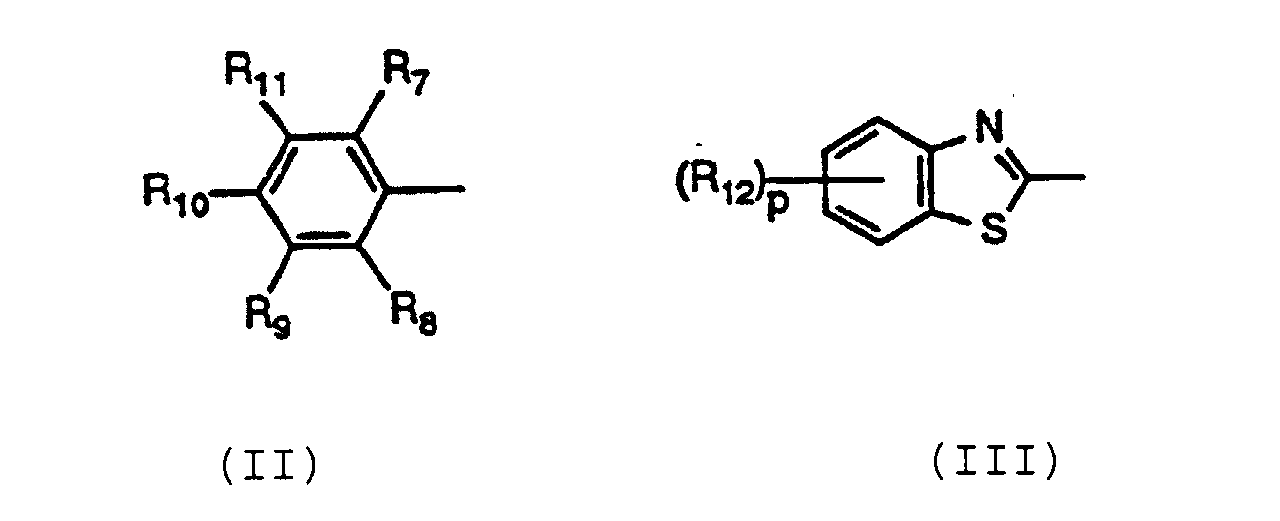 R2 représentent un atome d'hydrogène,R3 représentent un atome d'hydrogène ou -COR6,R4 et R5 représentent un atome d'hydrogène,R6 est un groupe hydroxyle,R7 est un atome d'hydrogène,R8 est un atome d'hydrogène, un groupe hydroxyle, alkyle en C1 à C4, nitro ou chloro,R9 est un atome d'hydrogène,R10 est un atome d'hydrogène, un groupe alkyle en C1 à C4 ou nitro,R11 est un atome d'hydrogène,R17 et R18 représentent un atome d'hydrogène ou un groupe méthyle,R19 est un groupe alkyle en C1 à C4, hydroxyle ou alcoxy en C1 à C4;R20 est un groupe hydroxyle ou alcoxy en C1 à C4, et, si a et b ensemble valent 1, les trois radicaux R20 ensemble représentent N(CH2CH2O-)3,R21 est un atome d'hydrogène,X1 est une liaison directe, un atome de soufre, C=O ou un groupe alkylène en C1 à C8, avec la condition que, si m et n valent 0, X1 soit autre qu'un atome de soufre,X2 représente un groupe alkylène en C2 à C4 ou alkylène en C4 à C6 qui est interrompu par N-R21, avec la condition qu'en aucun cas, deux atomes d'azote soient liés au même atome de carbone,a vaut 1,b vaut 0 ou 1,m et n représentent, indépendamment l'un de l'autre, valent 0 ou 1, et
p vaut 0. - Procédé de protection d'un substrat métallique corrodable, qui consiste à appliquer à ce substrat une composition de revêtement selon la revendication 1 puis à la sécher et/ou la durcir.
- Utilisation d'un sel ou d'un amide défini dans la revendication 1 en tant qu'inhibiteurs dans des compositions de revêtement pour des surfaces métalliques.
Applications Claiming Priority (3)
| Application Number | Priority Date | Filing Date | Title |
|---|---|---|---|
| CH1911/95 | 1995-06-29 | ||
| CH191195 | 1995-06-29 | ||
| PCT/EP1996/002600 WO1997001606A1 (fr) | 1995-06-29 | 1996-06-17 | Sels d'aminosilane et silanamides d'acides carboxyliques utilises en tant qu'inhibiteurs de corrosion |
Publications (2)
| Publication Number | Publication Date |
|---|---|
| EP0835289A1 EP0835289A1 (fr) | 1998-04-15 |
| EP0835289B1 true EP0835289B1 (fr) | 1999-05-19 |
Family
ID=4221483
Family Applications (1)
| Application Number | Title | Priority Date | Filing Date |
|---|---|---|---|
| EP96922816A Expired - Lifetime EP0835289B1 (fr) | 1995-06-29 | 1996-06-17 | Sels d'aminosilane et silanamides d'acides carboxyliques utilises en tant qu'inhibiteurs de corrosion |
Country Status (18)
| Country | Link |
|---|---|
| US (1) | US5879436A (fr) |
| EP (1) | EP0835289B1 (fr) |
| JP (1) | JPH11508927A (fr) |
| KR (1) | KR19990028652A (fr) |
| CN (1) | CN1117825C (fr) |
| AT (1) | ATE180269T1 (fr) |
| AU (1) | AU699265B2 (fr) |
| BR (1) | BR9609321A (fr) |
| CA (1) | CA2221776A1 (fr) |
| DE (1) | DE69602530T2 (fr) |
| DK (1) | DK0835289T3 (fr) |
| EA (1) | EA000794B1 (fr) |
| ES (1) | ES2133972T3 (fr) |
| MX (1) | MX9710433A (fr) |
| MY (1) | MY129135A (fr) |
| SG (1) | SG43378A1 (fr) |
| TW (1) | TW428018B (fr) |
| WO (1) | WO1997001606A1 (fr) |
Families Citing this family (42)
| Publication number | Priority date | Publication date | Assignee | Title |
|---|---|---|---|---|
| DE69900726T2 (de) * | 1998-05-28 | 2002-08-22 | Owens Corning, Toledo | Korrosionsinhibierende zusammensetzung für auf polyacrylsäure basierte bindemittel |
| US6087415A (en) * | 1998-06-11 | 2000-07-11 | Johnson & Johnson Vision Care, Inc. | Biomedical devices with hydrophilic coatings |
| US6500481B1 (en) | 1998-06-11 | 2002-12-31 | Johnson & Johnson Vision Care, Inc. | Biomedical devices with amid-containing coatings |
| RU2157397C1 (ru) * | 1999-10-18 | 2000-10-10 | Общество с ограниченной ответственностью "Элкон" | Композиция для защитного покрытия |
| RU2182582C2 (ru) * | 1999-12-23 | 2002-05-20 | Открытое акционерное общество "Химпром" | Композиция для термостойкого антикоррозионного покрытия |
| US6447845B1 (en) | 2000-03-03 | 2002-09-10 | Dow Corning Corporation | Barrier coatings using polyacids |
| US6877745B1 (en) * | 2000-03-14 | 2005-04-12 | Walker Digital, Llc | Games of chance with player-specified elements |
| US6503305B1 (en) | 2000-05-18 | 2003-01-07 | Hammond Group, Inc. | Non-toxic corrosion inhibitor |
| DE10147784A1 (de) * | 2001-09-27 | 2003-04-17 | Univ Friedrich Alexander Er | Polymere Schutzschichten |
| WO2003076534A1 (fr) * | 2002-03-05 | 2003-09-18 | Chemnova Technologies, Inc. | Formulation de couche de fond superficielle destinee a des alliages metalliques |
| WO2003101947A2 (fr) * | 2002-05-31 | 2003-12-11 | Ciba Specialty Chemicals Holding Inc. | Alkylaminosiloxanes utilises comme inhibiteurs de la corrosion |
| GB2400371B (en) * | 2003-04-04 | 2007-08-01 | Silberline Ltd | Metal pigment composition |
| CN101498002B (zh) | 2004-02-05 | 2011-06-22 | 日矿金属株式会社 | 金属的表面处理方法、表面处理过的金属表面以及印制布线基板 |
| ITTO20050074A1 (it) * | 2005-02-10 | 2006-08-11 | Sorin Biomedica Cardio Srl | Protesi valvola cardiaca |
| WO2008099904A1 (fr) * | 2007-02-09 | 2008-08-21 | Nippon Shokubai Co., Ltd. | Composé de silane, son procédé de production et composition de résine contenant le composé de silane |
| US9395352B2 (en) | 2007-04-06 | 2016-07-19 | Arizona Board Of Regents On Behalf Of Arizona State University | Devices and methods for target molecule characterization |
| WO2010042514A1 (fr) | 2008-10-06 | 2010-04-15 | Arizona Board Of Regents | Séquenceur d'adn basé sur des nanopores et des nanotubes de carbone et éléments de reconnaissance sériels |
| US10259973B2 (en) * | 2009-03-13 | 2019-04-16 | Hi-Shear Corporation | Anti-corrosion and low friction metal pigmented coating |
| KR102159909B1 (ko) | 2010-07-30 | 2020-09-25 | 알콘 인코포레이티드 | 수분이 풍부한 표면을 갖는 실리콘 히드로겔 렌즈 |
| WO2012051487A1 (fr) | 2010-10-15 | 2012-04-19 | Dow Corning Corporation | Matériaux contenant du silicium présentant une microsctructure ajustable |
| CN103917899B (zh) | 2011-10-12 | 2018-04-03 | 诺华股份有限公司 | 通过涂布制备uv吸收性眼用透镜的方法 |
| US9274430B2 (en) | 2012-10-10 | 2016-03-01 | Arizona Board Of Regents On Behalf Of Arizona State University | Systems and devices for molecule sensing and method of manufacturing thereof |
| US10338408B2 (en) | 2012-12-17 | 2019-07-02 | Novartis Ag | Method for making improved UV-absorbing ophthalmic lenses |
| RU2604241C2 (ru) * | 2013-02-19 | 2016-12-10 | Александр Валерьевич Бояринцев | Высокотехнологичное антикоррозийное теплоизоляционное покрытие с повышенными теплотехническими характеристиками |
| WO2015065985A1 (fr) * | 2013-10-31 | 2015-05-07 | Arizona Board Of Regents On Behalf Of Arizona State University | Réactifs chimiques pour immobiliser des molécules d'affinité sur des surfaces |
| CN105829081B (zh) | 2013-12-17 | 2017-12-19 | 诺华股份有限公司 | 具有交联的亲水性涂层的硅水凝胶镜片 |
| WO2015131073A1 (fr) | 2014-02-27 | 2015-09-03 | Arizona Board Of Regents Acting For And On Behalf Of Arizona State University | Molécules de lecture à base de triazole et procédés pour leur synthèse et leur utilisation |
| US11002884B2 (en) | 2014-08-26 | 2021-05-11 | Alcon Inc. | Method for applying stable coating on silicone hydrogel contact lenses |
| CN104327221B (zh) * | 2014-10-21 | 2017-08-25 | 岳阳东方雨虹防水技术有限责任公司 | 一种抗锈蚀型水工专用聚羧酸减水剂及其制备方法 |
| US10993441B2 (en) | 2014-11-04 | 2021-05-04 | Allied Bioscience, Inc. | Antimicrobial coatings comprising organosilane homopolymers |
| AU2015343153B2 (en) * | 2014-11-04 | 2018-05-24 | Allied Bioscience, Inc. | Composition and method to form a self decontaminating surface |
| US10258046B2 (en) | 2014-11-04 | 2019-04-16 | Allied Bioscience, Inc. | Antimicrobial coatings comprising quaternary silanes |
| US10980236B2 (en) | 2014-11-04 | 2021-04-20 | Allied Bioscience, Inc. | Broad spectrum antimicrobial coatings comprising combinations of organosilanes |
| EP3741816A1 (fr) | 2015-02-11 | 2020-11-25 | Allied Bioscience, Inc | Revêtement anti-microbien et procédé de formation de celui-ci |
| US20170114229A1 (en) * | 2015-10-21 | 2017-04-27 | Chemetall Us, Inc. | Amine-Functionalized Organosilane/Fatty Acid Combination Systems As Stain/Corrosion Inhibitors For The Application On Aluminum And Its Alloys |
| MY184638A (en) | 2015-12-15 | 2021-04-13 | Alcon Inc | Method for applying stable coating on silicone hydrogel contact lenses |
| RU2625382C1 (ru) * | 2016-06-15 | 2017-07-13 | Общество с ограниченной ответственностью "Центр коррозионных испытаний" (ООО "Центр коррозионных испытаний") | Ингибитор коррозии и коррозионного растрескивания под напряжением |
| WO2019070146A1 (fr) * | 2017-10-04 | 2019-04-11 | Общество С Ограниченной Ответственностью "Рустек" | Composition de peinture et de vernis pour obtenir des couches minces par dépôt électrochimique cathodique |
| MY201826A (en) | 2017-12-13 | 2024-03-19 | Alcon Inc | Method for producing mps-compatible water gradient contact lenses |
| TWI698442B (zh) * | 2018-12-10 | 2020-07-11 | 國立暨南國際大學 | 具遠紅外線放射性之二氧化矽複合粒子,其有機前驅物及複合粒子之應用 |
| US12365766B2 (en) * | 2021-09-02 | 2025-07-22 | Shin-Etsu Chemical Co., Ltd. | Organopolysiloxane composition |
| CN118835251B (zh) * | 2024-09-23 | 2024-12-03 | 成都恒固新材料科技有限公司 | 一种缓蚀剂组合物、其制备方法及应用 |
Family Cites Families (12)
| Publication number | Priority date | Publication date | Assignee | Title |
|---|---|---|---|---|
| US3773607A (en) * | 1971-06-17 | 1973-11-20 | Owens Corning Fiberglass Corp | Glass fiber reinforced elastomers |
| US4048206A (en) * | 1975-04-22 | 1977-09-13 | Mikhail Grigorievich Voronkov | Process for the production of 1-organylsilatranes and carbofunctional derivatives thereof |
| DE3338953A1 (de) * | 1983-10-27 | 1985-05-09 | Henkel KGaA, 4000 Düsseldorf | Verwendung von korrosionsinhibitoren in waessrigen systemen |
| DE3682088D1 (de) * | 1985-03-18 | 1991-11-28 | Mitsubishi Petrochemical Co | Verfahren zur herstellung von wasserabsorbierenden polymeren. |
| US4871788A (en) * | 1988-06-03 | 1989-10-03 | Dow Corning Corporation | Inomeric coupling agents based on amic acid-functional silanes |
| GB8918086D0 (en) * | 1989-08-08 | 1989-09-20 | Ciba Geigy | Coating compositions |
| GB9101468D0 (en) * | 1991-01-23 | 1991-03-06 | Ciba Geigy | Coating compositions |
| GB9201642D0 (en) * | 1992-01-25 | 1992-03-11 | Ciba Geigy | Corrosion inhibitors |
| ES2095143T3 (es) * | 1993-04-07 | 1997-02-01 | Ciba Geigy Ag | Sales de metales alcalinoterreos, de metales de transicion y complejos de metales de transicion de acidos cetocarboxilicos como inhibidores de la corrosion. |
| US5489447A (en) * | 1993-06-25 | 1996-02-06 | Ciba-Geigy Corporation | Carrier-bound ketocarboxylic acids as corrosion inhibitors |
| US5412011A (en) * | 1993-10-15 | 1995-05-02 | Betz Laboratories, Inc. | Composition and process for coating metals |
| TW327189B (en) * | 1994-01-18 | 1998-02-21 | Ciba Sc Holding Ag | Complexes of morpholine derivatives with keto-acids as corrosion inhibitors |
-
1996
- 1996-06-15 TW TW085107208A patent/TW428018B/zh active
- 1996-06-17 JP JP9504133A patent/JPH11508927A/ja not_active Ceased
- 1996-06-17 EA EA199800091A patent/EA000794B1/ru not_active IP Right Cessation
- 1996-06-17 DK DK96922816T patent/DK0835289T3/da active
- 1996-06-17 CA CA002221776A patent/CA2221776A1/fr not_active Abandoned
- 1996-06-17 DE DE69602530T patent/DE69602530T2/de not_active Expired - Fee Related
- 1996-06-17 WO PCT/EP1996/002600 patent/WO1997001606A1/fr not_active Ceased
- 1996-06-17 AU AU63560/96A patent/AU699265B2/en not_active Ceased
- 1996-06-17 ES ES96922816T patent/ES2133972T3/es not_active Expired - Lifetime
- 1996-06-17 KR KR1019970709974A patent/KR19990028652A/ko not_active Abandoned
- 1996-06-17 EP EP96922816A patent/EP0835289B1/fr not_active Expired - Lifetime
- 1996-06-17 BR BR9609321A patent/BR9609321A/pt not_active IP Right Cessation
- 1996-06-17 US US08/981,434 patent/US5879436A/en not_active Expired - Fee Related
- 1996-06-17 CN CN96195143A patent/CN1117825C/zh not_active Expired - Fee Related
- 1996-06-17 AT AT96922816T patent/ATE180269T1/de not_active IP Right Cessation
- 1996-06-17 MX MX9710433A patent/MX9710433A/es not_active IP Right Cessation
- 1996-06-19 MY MYPI96002468A patent/MY129135A/en unknown
- 1996-06-26 SG SG1996010162A patent/SG43378A1/en unknown
Also Published As
| Publication number | Publication date |
|---|---|
| US5879436A (en) | 1999-03-09 |
| ATE180269T1 (de) | 1999-06-15 |
| MY129135A (en) | 2007-03-30 |
| AU699265B2 (en) | 1998-11-26 |
| AU6356096A (en) | 1997-01-30 |
| EP0835289A1 (fr) | 1998-04-15 |
| EA199800091A1 (ru) | 1998-08-27 |
| BR9609321A (pt) | 1999-07-06 |
| ES2133972T3 (es) | 1999-09-16 |
| TW428018B (en) | 2001-04-01 |
| DK0835289T3 (da) | 1999-11-22 |
| EA000794B1 (ru) | 2000-04-24 |
| SG43378A1 (en) | 1997-10-17 |
| KR19990028652A (ko) | 1999-04-15 |
| MX9710433A (es) | 1998-03-31 |
| CA2221776A1 (fr) | 1997-01-16 |
| DE69602530T2 (de) | 1999-10-28 |
| JPH11508927A (ja) | 1999-08-03 |
| WO1997001606A1 (fr) | 1997-01-16 |
| DE69602530D1 (de) | 1999-06-24 |
| CN1189849A (zh) | 1998-08-05 |
| CN1117825C (zh) | 2003-08-13 |
Similar Documents
| Publication | Publication Date | Title |
|---|---|---|
| US5879436A (en) | Aminosilane salts and silanamides of carboxylic acids as corrosion inhibitors | |
| US5980619A (en) | Corrosion-inhibiting coating composition for metals | |
| RU2032767C1 (ru) | Средство для покрытия | |
| MXPA97001088A (en) | Composition of corrosion inhibitor coating for meta | |
| US5612093A (en) | Titanium and zirconium complexes of carboxylic acids as corrosion inhibitors | |
| US5458678A (en) | Alkaline earth metal salts, transition metal salts and transition metal complexes of ketocarboxylic acids as corrosion inhibitors | |
| US5489447A (en) | Carrier-bound ketocarboxylic acids as corrosion inhibitors | |
| US5519074A (en) | Complexes of morpholine derivatives with keto-acids as corrosion inhibitors | |
| US5198482A (en) | Corrosion-inhibiting coating compositions | |
| RU2164552C2 (ru) | Ингибирующая коррозию композиция для покрытий, способ ее получения и производные аминофосфоновых и аминофосфористых кислот и их соли | |
| WO2000043459A1 (fr) | Composition de revetement inhibant la corrosion pour metaux | |
| CH692344A5 (de) | Korrosionsinhibierende Ueberzugszusammensetzung für Metalle. | |
| CH691540A5 (de) | Korrosionsinhibierende Ueberzugszusammensetzung für Metalle. | |
| HK1003116A1 (en) | Corrosion-inhibiting coating compositions |
Legal Events
| Date | Code | Title | Description |
|---|---|---|---|
| PUAI | Public reference made under article 153(3) epc to a published international application that has entered the european phase |
Free format text: ORIGINAL CODE: 0009012 |
|
| 17P | Request for examination filed |
Effective date: 19971111 |
|
| AK | Designated contracting states |
Kind code of ref document: A1 Designated state(s): AT BE CH DE DK ES FR GB IT LI NL SE |
|
| GRAG | Despatch of communication of intention to grant |
Free format text: ORIGINAL CODE: EPIDOS AGRA |
|
| GRAG | Despatch of communication of intention to grant |
Free format text: ORIGINAL CODE: EPIDOS AGRA |
|
| GRAH | Despatch of communication of intention to grant a patent |
Free format text: ORIGINAL CODE: EPIDOS IGRA |
|
| 17Q | First examination report despatched |
Effective date: 19981029 |
|
| GRAH | Despatch of communication of intention to grant a patent |
Free format text: ORIGINAL CODE: EPIDOS IGRA |
|
| GRAA | (expected) grant |
Free format text: ORIGINAL CODE: 0009210 |
|
| AK | Designated contracting states |
Kind code of ref document: B1 Designated state(s): AT BE CH DE DK ES FR GB IT LI NL SE |
|
| REF | Corresponds to: |
Ref document number: 180269 Country of ref document: AT Date of ref document: 19990615 Kind code of ref document: T |
|
| REG | Reference to a national code |
Ref country code: CH Ref legal event code: EP |
|
| REF | Corresponds to: |
Ref document number: 69602530 Country of ref document: DE Date of ref document: 19990624 |
|
| ITF | It: translation for a ep patent filed | ||
| ET | Fr: translation filed | ||
| REG | Reference to a national code |
Ref country code: ES Ref legal event code: FG2A Ref document number: 2133972 Country of ref document: ES Kind code of ref document: T3 |
|
| REG | Reference to a national code |
Ref country code: DK Ref legal event code: T3 |
|
| PLBE | No opposition filed within time limit |
Free format text: ORIGINAL CODE: 0009261 |
|
| STAA | Information on the status of an ep patent application or granted ep patent |
Free format text: STATUS: NO OPPOSITION FILED WITHIN TIME LIMIT |
|
| 26N | No opposition filed | ||
| REG | Reference to a national code |
Ref country code: GB Ref legal event code: IF02 |
|
| PGFP | Annual fee paid to national office [announced via postgrant information from national office to epo] |
Ref country code: CH Payment date: 20030514 Year of fee payment: 8 |
|
| PGFP | Annual fee paid to national office [announced via postgrant information from national office to epo] |
Ref country code: NL Payment date: 20030516 Year of fee payment: 8 |
|
| PGFP | Annual fee paid to national office [announced via postgrant information from national office to epo] |
Ref country code: SE Payment date: 20030523 Year of fee payment: 8 |
|
| PGFP | Annual fee paid to national office [announced via postgrant information from national office to epo] |
Ref country code: DK Payment date: 20030527 Year of fee payment: 8 |
|
| PGFP | Annual fee paid to national office [announced via postgrant information from national office to epo] |
Ref country code: ES Payment date: 20030613 Year of fee payment: 8 |
|
| PGFP | Annual fee paid to national office [announced via postgrant information from national office to epo] |
Ref country code: AT Payment date: 20030630 Year of fee payment: 8 |
|
| PGFP | Annual fee paid to national office [announced via postgrant information from national office to epo] |
Ref country code: BE Payment date: 20030731 Year of fee payment: 8 |
|
| PG25 | Lapsed in a contracting state [announced via postgrant information from national office to epo] |
Ref country code: AT Free format text: LAPSE BECAUSE OF NON-PAYMENT OF DUE FEES Effective date: 20040617 |
|
| PG25 | Lapsed in a contracting state [announced via postgrant information from national office to epo] |
Ref country code: SE Free format text: LAPSE BECAUSE OF NON-PAYMENT OF DUE FEES Effective date: 20040618 Ref country code: ES Free format text: LAPSE BECAUSE OF NON-PAYMENT OF DUE FEES Effective date: 20040618 |
|
| PG25 | Lapsed in a contracting state [announced via postgrant information from national office to epo] |
Ref country code: LI Free format text: LAPSE BECAUSE OF NON-PAYMENT OF DUE FEES Effective date: 20040630 Ref country code: DK Free format text: LAPSE BECAUSE OF NON-PAYMENT OF DUE FEES Effective date: 20040630 Ref country code: CH Free format text: LAPSE BECAUSE OF NON-PAYMENT OF DUE FEES Effective date: 20040630 Ref country code: BE Free format text: LAPSE BECAUSE OF NON-PAYMENT OF DUE FEES Effective date: 20040630 |
|
| REG | Reference to a national code |
Ref country code: GB Ref legal event code: 732E |
|
| BERE | Be: lapsed |
Owner name: *CIBA SPECIALTY CHEMICALS HOLDING INC. Effective date: 20040630 |
|
| PG25 | Lapsed in a contracting state [announced via postgrant information from national office to epo] |
Ref country code: NL Free format text: LAPSE BECAUSE OF NON-PAYMENT OF DUE FEES Effective date: 20050101 |
|
| REG | Reference to a national code |
Ref country code: DK Ref legal event code: EBP |
|
| EUG | Se: european patent has lapsed | ||
| EUG | Se: european patent has lapsed | ||
| REG | Reference to a national code |
Ref country code: CH Ref legal event code: PL |
|
| NLV4 | Nl: lapsed or anulled due to non-payment of the annual fee |
Effective date: 20050101 |
|
| PG25 | Lapsed in a contracting state [announced via postgrant information from national office to epo] |
Ref country code: IT Free format text: LAPSE BECAUSE OF NON-PAYMENT OF DUE FEES Effective date: 20050617 |
|
| REG | Reference to a national code |
Ref country code: ES Ref legal event code: FD2A Effective date: 20040618 |
|
| PGFP | Annual fee paid to national office [announced via postgrant information from national office to epo] |
Ref country code: DE Payment date: 20070830 Year of fee payment: 12 |
|
| PGFP | Annual fee paid to national office [announced via postgrant information from national office to epo] |
Ref country code: GB Payment date: 20070412 Year of fee payment: 12 |
|
| PGFP | Annual fee paid to national office [announced via postgrant information from national office to epo] |
Ref country code: FR Payment date: 20070627 Year of fee payment: 12 |
|
| GBPC | Gb: european patent ceased through non-payment of renewal fee |
Effective date: 20080617 |
|
| REG | Reference to a national code |
Ref country code: FR Ref legal event code: ST Effective date: 20090228 |
|
| PG25 | Lapsed in a contracting state [announced via postgrant information from national office to epo] |
Ref country code: DE Free format text: LAPSE BECAUSE OF NON-PAYMENT OF DUE FEES Effective date: 20090101 |
|
| PG25 | Lapsed in a contracting state [announced via postgrant information from national office to epo] |
Ref country code: GB Free format text: LAPSE BECAUSE OF NON-PAYMENT OF DUE FEES Effective date: 20080617 |
|
| PG25 | Lapsed in a contracting state [announced via postgrant information from national office to epo] |
Ref country code: FR Free format text: LAPSE BECAUSE OF NON-PAYMENT OF DUE FEES Effective date: 20080630 |