EP0835569B1 - Verfahren zur wiederholung fehlerhaft übertragener daten - Google Patents
Verfahren zur wiederholung fehlerhaft übertragener daten Download PDFInfo
- Publication number
- EP0835569B1 EP0835569B1 EP96917275A EP96917275A EP0835569B1 EP 0835569 B1 EP0835569 B1 EP 0835569B1 EP 96917275 A EP96917275 A EP 96917275A EP 96917275 A EP96917275 A EP 96917275A EP 0835569 B1 EP0835569 B1 EP 0835569B1
- Authority
- EP
- European Patent Office
- Prior art keywords
- data
- data words
- transmission
- transmitted
- subscriber
- Prior art date
- Legal status (The legal status is an assumption and is not a legal conclusion. Google has not performed a legal analysis and makes no representation as to the accuracy of the status listed.)
- Expired - Lifetime
Links
- 238000000034 method Methods 0.000 title claims abstract description 20
- 230000005540 biological transmission Effects 0.000 claims abstract description 51
- 238000012432 intermediate storage Methods 0.000 claims description 2
- 238000003860 storage Methods 0.000 abstract description 3
- 238000001514 detection method Methods 0.000 description 3
- 230000003139 buffering effect Effects 0.000 description 2
- 238000010586 diagram Methods 0.000 description 2
- 230000002123 temporal effect Effects 0.000 description 2
- 238000012935 Averaging Methods 0.000 description 1
- 101000741965 Homo sapiens Inactive tyrosine-protein kinase PRAG1 Proteins 0.000 description 1
- 102100038659 Inactive tyrosine-protein kinase PRAG1 Human genes 0.000 description 1
- 230000002411 adverse Effects 0.000 description 1
- 230000002457 bidirectional effect Effects 0.000 description 1
- 238000006243 chemical reaction Methods 0.000 description 1
- 238000004891 communication Methods 0.000 description 1
- 238000011156 evaluation Methods 0.000 description 1
- 230000036039 immunity Effects 0.000 description 1
- 238000012545 processing Methods 0.000 description 1
- 238000012546 transfer Methods 0.000 description 1
Images
Classifications
-
- H—ELECTRICITY
- H04—ELECTRIC COMMUNICATION TECHNIQUE
- H04L—TRANSMISSION OF DIGITAL INFORMATION, e.g. TELEGRAPHIC COMMUNICATION
- H04L1/00—Arrangements for detecting or preventing errors in the information received
- H04L1/12—Arrangements for detecting or preventing errors in the information received by using return channel
- H04L1/16—Arrangements for detecting or preventing errors in the information received by using return channel in which the return channel carries supervisory signals, e.g. repetition request signals
- H04L1/18—Automatic repetition systems, e.g. Van Duuren systems
- H04L1/1829—Arrangements specially adapted for the receiver end
- H04L1/1835—Buffer management
- H04L1/1838—Buffer management for semi-reliable protocols, e.g. for less sensitive applications such as streaming video
-
- H—ELECTRICITY
- H04—ELECTRIC COMMUNICATION TECHNIQUE
- H04L—TRANSMISSION OF DIGITAL INFORMATION, e.g. TELEGRAPHIC COMMUNICATION
- H04L1/00—Arrangements for detecting or preventing errors in the information received
- H04L1/12—Arrangements for detecting or preventing errors in the information received by using return channel
- H04L1/16—Arrangements for detecting or preventing errors in the information received by using return channel in which the return channel carries supervisory signals, e.g. repetition request signals
- H04L1/18—Automatic repetition systems, e.g. Van Duuren systems
- H04L1/1867—Arrangements specially adapted for the transmitter end
- H04L1/1874—Buffer management
Definitions
- the invention relates to a method for repeating incorrectly transmitted Data, for transmission between participants with at least one transmission and at least one receiving part at the sending subscriber a data stream in Data words with a predeterminable length divided and combined into data words and the individual data words are buffered in a transmit buffer memory, possibly via a transmission unit, sent and, by the receiving subscriber, possibly in a receiving unit, received and after buffering in a receive buffer is output, one during transmission errors that have occurred are detected and via the transmitting part of the receiving subscriber and the Receiving part of the sending participant a command to retransmit the faulty transmitted data word is given to the transmitting part of the sending subscriber, wherein the ARQ retransmissions of the incorrectly transmitted data via an im Time-average constant, predeterminable portion of the average time transmitted number of data words can be performed.
- Such known ARQ methods are used in different ways Use cases to ensure error-free data transmission. This will the transmitted data word after receipt in an error detection unit a defined routine checked. If an incorrect data word occurs, the sending one Participants asked to repeat this until the receiving participant the correctness of the transfer is confirmed.
- a constant portion L R is provided for the repetition of incorrect data words.
- L R the longest stored words are repeated, while the rest have to wait for repetition in the next frame. If a data word cannot be repeated so often in the time period limited by the buffer memory in order to be able to receive it correctly, the receiver estimates this on the basis of the data words already received and replaces it in the information output on the basis of this estimated value.
- the object of the invention is based on the above Method to improve such a method that the data throughput kept essentially constant between sending and receiving subscriber can be.
- this is achieved in that when the for Repeat transmission intended portion due to incorrect data words erroneous data words from the receive buffer in one with their original Information that does not match, e.g. with a predeterminable value, be issued.
- the method according to the invention is basically suitable for all types of data transmission, but especially for Data streams that require a constant bit rate to establish temporal relationships different units, such as for coded and if necessary compressed data as required for video and / or audio transmission, applies.
- the proportion of approximately 3.3% of the retransmissions carried out over time are selected since in this case there is a very high constant transmission rate with good transmission quality can be achieved.
- the Data words from the transmit buffer memory are transferred faster than they are in it be registered, the resulting gap in the transmission by repeating is filled by one or more data words.
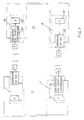
- FIG. 1 shows a block diagram for carrying out a Embodiment of the method according to the invention.
- a transmission 1, 10 and a receiving part 2, 20 are provided for each subscriber T1, T2.
- the subscriber T1 sending here divides the digital data coming from a data source 5 into data words of predeterminable length, so that a whole such word is always subjected to further processing.
- the term data word is to be understood in a very general way as a collection of digital data and is in no way restricted in terms of the number or type of data it contains. For example, a data word can contain only one but also several bits of digital information. Any possible type of data can also be used for this transmission method.
- an intermediate storage takes place in an ARQ transmit buffer memory 6 before they are converted into a transmit signal in a transmitter unit 7 and sent to the receiving subscriber T2, where they are converted again in a receiver unit 9.
- the transmission and reception unit which undertakes the conversion of a transmission or reception signal usually generated, for example, by modulation, can be omitted if the data are transmitted directly.
- An error that occurs during the transmission is recognized by an error detection unit (CRC) in an ARQ reception buffer memory 240 and a command is sent via the ARQ control to the transmitting part 10 of the receiving participant T2, which is sent via the transmitting unit 6 to the receiving part 2 of the transmitting participant T1 is transmitted and recognized there, then this command is given to the ARQ transmit buffer memory 6 for retransmission of the incorrectly transmitted data word to the transmit part 1 of the sending subscriber T1.
- the ARQ retransmissions of the incorrectly transmitted data are carried out over a constant, predeterminable proportion of the number of data words transmitted in the averaged period of time.
- the ARQ retransmissions of the erroneously transmitted data are thus carried out over a constant, predeterminable portion of the number of data words transmitted in each case in a predeterminable period of time.
- the successive predeterminable time periods are essentially limited by the storage capacity of the transmission or reception buffer memory. In the case of data transmissions, a specific portion is therefore kept free for the retransmission of incorrect data words in each defined time period and, if necessary, a corresponding number of data words are repeated in this time portion. The repetition can occur at any time within this predetermined period.
- the method according to the invention is suitable in principle for all types of data transmission, but in particular for data streams which require a constant bit rate in order to maintain temporal relationships between different units, such as, for example, for coded and optionally compressed data such as that for video and / or audio transmission are necessary.
- the data words are constantly written into the ARQ transmit buffer 6 when the data is being transmitted, and are forwarded from this to the transmitter unit 7.
- the data outgoing from the buffer 6 are transmitted faster than they are entered in this.
- the resulting gap in the transmission is filled by repeating one or more data words, but these are recognized by the receiver as a repeated block and are automatically eliminated. This means that in the event of an error-free transmission, there is always transmission with overcapacity. without the transmitted information content being greater.
- the excess of the incorrect data words from the receive buffer memory 240 is output transparently, ie in a form that does not match their original information, for example with a predeterminable value.
- the receiving subscriber T2 recognizes the error by means of its CRC error detection in the ARQ unit 240 and then gives the command for data repetition to the transmitting part 10 of the subscriber 2.
- this information is passed through after the receiver unit 8 has passed through Control command given to the ARQ buffer 6 to repeat the faulty transmission.
- a time-division multiplex method is to be given here, the transmission time frame having a plurality of time slots, of which, for example, a time slot can be provided for retransmissions on average. After an incorrect transmission, the retransmission is now carried out in one of the subsequent time frames, which can also extend over several successive time slots. Averaged over time, for example, only one time slot per frame can be used for the repetitions. The time period over which the time average is calculated is essentially determined by the capacity of the ARQ buffer memory 6. As soon as this is filled with information, no further repetitions can be carried out and the faulty data block must be output as transparent on the receiver side.
- the time period specified for the data repetitions is fixed in the time average according to the invention. It can't happen because of that. that due to a longer-lasting disturbance, the transmission is repeated until it is error-free and the transmission time is greatly increased.
- the data transmission is repeated even in the event of any faults until it is received without errors, but as a result the data throughput drops very sharply.
- the firm overcapacity which is between 2 and 7%, but preferably 3. 3%
- in the method according to the invention only repeats the transmission as often as is possible within the framework of the excess capacity in order to maintain the nominal data throughput. If one can no longer repeat and correctly receive several successive wrong data blocks, it is output transparently.
Landscapes
- Engineering & Computer Science (AREA)
- Computer Networks & Wireless Communication (AREA)
- Signal Processing (AREA)
- Multimedia (AREA)
- Detection And Prevention Of Errors In Transmission (AREA)
- Communication Control (AREA)
- Error Detection And Correction (AREA)
- Data Exchanges In Wide-Area Networks (AREA)
Description
Ein während der Übertragung aufgetretener Fehler wird durch eine Fehlererkennungseinheit (CRC) in einem ARQ-Empfangspufferspeicher 240 erkannt und über die ARQ-Steuerung an den Sendeteil 10 des empfangenden Teilnehmers T2 ein Befehl abgegeben, der über die Sendeeinheit 6 an den Empfangsteil 2 des sendenden Teilnehmers T1 übertragen und dort erkannt wird, sodann dieser Befehl an den ARQ-Sendepufferspeicher 6 zum nochmaligen Senden des fehlerhaft übertragenen Datenwortes an den Sendeteil 1 des sendenden Teilnehmers T1 gegeben wird.
Erfindungsgemäß werden die ARQ-Übertragungswiederholungen der fehlerhaft übertragenen Daten über einen im Zeitmittel konstanten, vorbestimmbaren Anteil der in der gemittelten Zeitspanne übertragenen Anzahl von Datenwörtern durchgeführt. Die ARQ-Übertragungswiederholungen der fehlerhaft übertragenen Daten werden somit über einen konstanten, vorbestimmbaren Anteil der in jeweils einer vorbestimmbaren Zeitspanne übertragenen Anzahl von Datenwörten durchgeführt. Die aufeinanderfolgenden vorbestimmbaren Zeitspannen sind im wesentlichen durch die Speicherkapazität des Sende- bzw. Empfangspufferspeichers begrenzt. Bei Datenübertragungen wird daher in jeder definierten Zeitspanne ein bestimmter Anteil für die Wiederholungsübertragung von fehlerhaften Datenwörtern freigehalten und bei Bedarf in diesem Zeitanteil eine entsprechende Anzahl von Datenwörtern wiederholt. Die Wiederholung kann zu irgendeinem Zeitpunkt innerhalb dieser vorbestimmten Zeitspanne geschehen.
Das erfindungsgemäße Verfahren eignet sich dabei grundsätzlich für alle Arten der Datenübertragung, jedoch im speziellen für Datenströme, welche eine konstante Bitrate benötigen, um zeitliche Beziehungen verschiedener Einheiten aufrecht zu erhalten, wie dies z.B. für kodierte und gegebenenfalls komprimierte Daten wie sie für eine Video- und/oder Audioübertragung notwendig sind. zutrifft.
Dazu werden beim Senden der Daten die Datenwörter ständig in den ARQ-Sendepuffer 6 eingeschrieben und von diesem an die Sendeeinheit 7 weitergegeben. Dabei werden die vom Puffer 6 abgehenden Daten schneller übertragen als sie in diesen eingetragen werden. Die entstehende Lücke in der Übertragung wird durch Wiederholen von einem oder mehreren Datenwörtern gefüllt, diese werden jedoch empfängerseitig als wiederholter Block erkannt und automatisch beseitigt. Somit wird im fehlerfreien Übertragungsfall ständig mit Überkapazität gesendet. ohne daß der übertragene Informationsgehalt größer ist. Wird der für die Übertragungswiederholung vorgesehene Anteil durch fehlerhafte Datenwörter überschritten, sodaß mehr fehlerhafte Datenwörter im Empfangsteil 20 eintreffen, als wiederholt werden können. so wird der Überschuß der fehlerhaften Datenwörter aus dem Empfangspufferspeicher 240 transparent, d.h. in einer mit ihrer ursprünglichen Information nicht übereinstimmenden Form, z.B. mit einem vorbestimmbaren Wert, ausgegeben.
Sobald ein Übertragungsfehler auftritt, erkennt der empfangende Teilnehmer T2 den Fehler mittels seiner CRC- Fehlererkennung in der ARQ-Einheit 240 und gibt darauf den Befehl zur Datenwiederholung an den Sendteil 10 des Teilnehmers 2. Beim Teilnehemr T1 wird diese Information nach Durchlaufen der Empfängereinheit 8 als Steuerbefehl an den ARQ-Puffer 6 gegeben, die fehlerhafte Übertragung zu wiederholen.
Für die Wiederholungsübertragung der fehlerhaften Datenwörter steht erfindungsgemäß im Zeitmittel nur ein fester vorbestimmbarer Anteil zur Verfügung, wobei bei vielen Anwendungen sich ein Anteil von 2 bis 7% als besonders vorteilhaft erwiesen hat. Besonders bewährt hat sich ein Anteil von ungefähr 3,3%, da in diesem Fall trotz fehlerhafter Übertragungen eine sehr hohe konstante Datenübertragungsrate erzielt werden konnte, wobei der übertragene Informationsgehalt weit höher war als der mit einem herkömmlichen ARQ-Verfahren erzielbaren.
Der Anteil und die Anzahl der Datenwörter für eine erfindungsgemäße Übertragungswiederholung sind in diesem Zusammenhang keiner Einschränkung unterworfen und können innerhalb des technisch Realisierbaren beliebig den jeweiligen Verhältnissen angepaßt werden.
Als praxisnahes Anwendungsbeispiel soll hier ein Zeitmultiplexverfahren angeführt sein, wobei der Übertragungs-Zeitrahmen mehrere Zeitschlitze aufweist, von denen z.B. im Zeitmittel ein Zeitschlitz für Übertragungswiederholungen vorgesehen sein kann.
Nach einer Fehlübertragung wird nun in einer der darauffolgenden Zeitrahmen die Wiederholungsübertragung durchgeführt, die sich auch über mehrere nacheinanderfolgende Zeitschlitze erstrecken kann. Gemittelt über die Zeit kann beispielsweise nur ein Zeitschlitz pro Rahmen für die Wiederholungen benutzt werden.
Die Zeitspanne, über die dabei das Zeitmittel berechnet wird, ist im wesentlichen durch die Kapazität des ARQ-Pufferspeichers 6 festgelegt. Sobald dieser mit Information vollgeschrieben ist, können keine weiteren Wiederholungen durchgeführt werden und der fehlerhafte Datenblock muß empfängerseitig als transparent ausgegeben werden.
Gegenüber einem herkömmlichen ARQ-Verfahren ist die für die Datenwiederholungen festgelegte Zeitspanne erfindungsgemäß im Zeitmittel fixiert. Dadurch kann es nicht passieren. daß aufgrund einer länger andauernden Störung die Übertragung solange wiederholt wird bis sie fehlerfrei ist und damit die Übertragungszeit sich stark erhöht. Durch das bekannte ARQ-Verfahren wird die Datenübertragung auch bei beliebigen Störungen solange wiederholt, bis sie fehlerfrei empfangen wird, wodurch der Datendurchsatz aber sehr stark sinkt. Hingegen wird durch die feste Überkapazität. die zwischen 2 und 7%, vorzugsweise aber bei 3. 3% liegt, im erfindungsgemäßen Verfahren die Übertragung nur so oft wiederholt, wie es im Rahmen der Überkapazität möglich ist, um den nominellen Datendurchsatz aufrecht zu erhalten. Kann bei mehreren aufeinanderfolgenden falschen Datenblöcken einer nicht mehr wiederholt und richtig empfangen werden, wird er transparent ausgegeben.
Claims (4)
- Verfahren zur Wiederholung fehlerhaft übertragener Daten (ARQ), wobei zur Übertragung zwischen Teilnehmern (T1, T2) mit jeweils zumindest einem Sende (1, 10)- und zumindest einem Empfangsteil (2, 20) beim sendenden Teilnehmer ein Datenstrom in Datenwörter mit vorbestimmbarer Länge unterteilt und zu Datenwörtern zusammengefaßt wird und die einzelnen Datenwörter in einem Sendepufferspeicher (6, 60) zwischengespeichert, gegebenenfalls über eine Sendeeinheit (7, 6), gesendet und, vom empfangenden Teilnehmer, gegebenenfalls in einer Empfangseinheit (9, 8), empfangen und nach Zwischenspeicherung in einem Empfangspufferspeicher (240, 24) ausgegeben werden, wobei ein während der Übertragung aufgetretener Fehler erkannt und über den Sendeteil (10, 1) des empfangenden Teilnehmers und den Empfangsteil (2, 20) des sendenden Teilnehmers ein Befehl zum nochmaligen Senden des fehlerhaft übertragenen Datenwortes an den Sendeteil (1, 10) des sendenden Teilnehmers gegeben wird, und wobei die ARQ-Übertragungswiederholungen der fehlerhaft übertragenen Daten über einen im Zeitmittel konstanten, vorbestimmbaren Anteil der in der gemittelten Zeitspanne übertragenen Anzahl von Datenwörtern durchgeführt werden, dadurch gekennzeichnet, daß bei Überschreiten des für die Übertragungswiederholung vorgesehenen Anteils durch fehlerhafte Datenwörter die fehlerhaften Datenwörter aus dem Empfangspufferspeicher (240, 24) in einer mit ihrer ursprünglichen Information nicht übereinstimmenden Form, z.B. mit einem vorbestimmbaren Wert, ausgegeben werden.
- Verfahren nach Anspruch 1, dadurch gekennzeichnet, daß der Anteil der im Zeitmittel durchgeführten Übertragungswiederholungen zwischen 2 und 7% gewählt wird.
- Verfahren nach Anspruch 1, dadurch gekennzeichnet, daß der Anteil der im Zeitmittel durchgeführten Übertragungswiederholungen ungefähr 3,3% gewählt wird.
- Verfahren nach Anspruch 1, 2 oder 3, dadurch gekennzeichnet, daß die Datenwörter aus dem Sendepufferspeicher (6, 60) schneller übertragen werden als sie in diesen eingeschrieben werden, wobei die entstehende Lücke in der Übertragung durch Wiederholen von einem oder mehreren Datenwörtern gefüllt wird.
Applications Claiming Priority (4)
| Application Number | Priority Date | Filing Date | Title |
|---|---|---|---|
| AT0108895A AT405588B (de) | 1995-06-26 | 1995-06-26 | Verfahren zur wiederholung fehlerhaft übertragener daten |
| AT108895 | 1995-06-26 | ||
| AT1088/95 | 1995-06-26 | ||
| PCT/AT1996/000111 WO1997001898A1 (de) | 1995-06-26 | 1996-06-21 | Verfahren zur wiederholung fehlerhaft übertragener daten |
Publications (2)
| Publication Number | Publication Date |
|---|---|
| EP0835569A1 EP0835569A1 (de) | 1998-04-15 |
| EP0835569B1 true EP0835569B1 (de) | 2001-05-23 |
Family
ID=3506332
Family Applications (1)
| Application Number | Title | Priority Date | Filing Date |
|---|---|---|---|
| EP96917275A Expired - Lifetime EP0835569B1 (de) | 1995-06-26 | 1996-06-21 | Verfahren zur wiederholung fehlerhaft übertragener daten |
Country Status (9)
| Country | Link |
|---|---|
| US (1) | US6163869A (de) |
| EP (1) | EP0835569B1 (de) |
| CN (1) | CN1193432A (de) |
| AT (2) | AT405588B (de) |
| AU (1) | AU705783B2 (de) |
| CA (1) | CA2224808A1 (de) |
| DE (1) | DE59606963D1 (de) |
| IL (1) | IL122552A (de) |
| WO (1) | WO1997001898A1 (de) |
Families Citing this family (9)
| Publication number | Priority date | Publication date | Assignee | Title |
|---|---|---|---|---|
| KR100418875B1 (ko) * | 1998-10-10 | 2004-04-17 | 엘지전자 주식회사 | 영상데이터재전송방법 |
| US6760781B1 (en) * | 2000-02-16 | 2004-07-06 | 3Com Corporation | Intelligent packet transmission engine |
| JP2002171245A (ja) * | 2000-12-05 | 2002-06-14 | Sony Corp | 再送データ合成方法および再送データ合成装置 |
| KR100857777B1 (ko) * | 2001-03-26 | 2008-09-09 | 엘지전자 주식회사 | 하이브리드 자동 재송 요구 방식을 이용한 가변 길이의 패킷 송수신 방법 |
| SE0103853D0 (sv) * | 2001-11-15 | 2001-11-15 | Ericsson Telefon Ab L M | Method and system of retransmission |
| KR100800807B1 (ko) * | 2001-11-20 | 2008-02-01 | 삼성전자주식회사 | 재전송을 지원하는 통신시스템에서 재전송의 변조방식결정 방법 및 장치 |
| JP4454320B2 (ja) | 2004-01-09 | 2010-04-21 | 富士通株式会社 | 伝送装置、伝送制御プログラム、及び伝送方法 |
| JP2007174644A (ja) * | 2005-12-22 | 2007-07-05 | Intuitive Surgical Inc | 同期データ通信 |
| CN102917403B (zh) * | 2012-09-29 | 2014-11-05 | 北京邮电大学 | 一种低时延并行重传方法及装置 |
Family Cites Families (3)
| Publication number | Priority date | Publication date | Assignee | Title |
|---|---|---|---|---|
| JPS4982202A (de) * | 1972-12-12 | 1974-08-08 | ||
| JPS5292413A (en) * | 1976-01-30 | 1977-08-03 | Toshiba Corp | Data transfer system |
| US5719883A (en) * | 1994-09-21 | 1998-02-17 | Lucent Technologies Inc. | Adaptive ARQ/FEC technique for multitone transmission |
-
1995
- 1995-06-26 AT AT0108895A patent/AT405588B/de not_active IP Right Cessation
-
1996
- 1996-06-21 IL IL12255296A patent/IL122552A/xx not_active IP Right Cessation
- 1996-06-21 CN CN96196291A patent/CN1193432A/zh active Pending
- 1996-06-21 AT AT96917275T patent/ATE201541T1/de not_active IP Right Cessation
- 1996-06-21 EP EP96917275A patent/EP0835569B1/de not_active Expired - Lifetime
- 1996-06-21 DE DE59606963T patent/DE59606963D1/de not_active Expired - Fee Related
- 1996-06-21 AU AU59909/96A patent/AU705783B2/en not_active Ceased
- 1996-06-21 US US08/981,798 patent/US6163869A/en not_active Expired - Lifetime
- 1996-06-21 CA CA002224808A patent/CA2224808A1/en not_active Abandoned
- 1996-06-21 WO PCT/AT1996/000111 patent/WO1997001898A1/de not_active Ceased
Also Published As
| Publication number | Publication date |
|---|---|
| US6163869A (en) | 2000-12-19 |
| EP0835569A1 (de) | 1998-04-15 |
| ATA108895A (de) | 1999-01-15 |
| DE59606963D1 (de) | 2001-06-28 |
| IL122552A0 (en) | 1998-06-15 |
| CN1193432A (zh) | 1998-09-16 |
| AU5990996A (en) | 1997-01-30 |
| ATE201541T1 (de) | 2001-06-15 |
| CA2224808A1 (en) | 1997-01-16 |
| IL122552A (en) | 2000-07-26 |
| AU705783B2 (en) | 1999-06-03 |
| AT405588B (de) | 1999-09-27 |
| WO1997001898A1 (de) | 1997-01-16 |
Similar Documents
| Publication | Publication Date | Title |
|---|---|---|
| EP0610999B1 (de) | Röntgenanlage | |
| DE60108465T2 (de) | Multicast radio kommunikationssystem und anordnung | |
| DE69433834T2 (de) | Kommunikationsverfahren mit der Qualität entsprechend veränderbarer Datenübertragungsrate | |
| DE69434503T2 (de) | Mobiles Funk-Übermittlungssystem | |
| DE3688732T2 (de) | Satellitenkommunikationssystem mit wahlfreiem Vielfachzugriff und Zeitschlitzreservierung. | |
| DE69433072T2 (de) | Satellitenübertragungssystem mit zufallsbedingtem Zugriff, in dem Zufallszahlen erzeugt werden, die in einem von der Kanallast abhängigen Bereich liegen | |
| DE3705530C2 (de) | ||
| DE69629911T2 (de) | Sendewiederholungssteuerungsverfahren für cdma-mobilkommunikation | |
| DE2246826A1 (de) | System zur gesicherten blockweisen uebertragung von binaer codierten daten | |
| DE60108501T2 (de) | Funksystem und -stationen für und verfahren zur multicast-kommunikation | |
| DE69031015T2 (de) | Zur Ausführung einer Wiederholungskontrolle pro Zeiteinheit fähiges Signalübertragungssystem | |
| DE3784168T2 (de) | Digitale paketvermittlungsnetzwerke. | |
| DE602005003492T2 (de) | Verfahren, Vorrichtung und System zum synchronisierten Kombinieren von Paketdaten | |
| AT405588B (de) | Verfahren zur wiederholung fehlerhaft übertragener daten | |
| DE69024336T2 (de) | Verfahren und Einrichtung zur Anforderung automatischer Sendewiederholungen für digitale Duplexübertragungseinrichtungen mit mindestens einem verrauschten Rückweg | |
| DE69011286T2 (de) | Verfahren und Einrichtung zur digitalen Nachrichtenübertragung mit Anforderung zur automatischen Sendungswiederholung oder "ARQ". | |
| DE10026927B4 (de) | Verfahren zur Übertragung von Datenpaketen in einem Kommunikationssystem zwischen einem Sender und einem Empfänger sowie entsprechender Sender und Empfänger | |
| WO2002067489A1 (de) | Datenübertragungsverfahren | |
| DE10022270B4 (de) | Verfahren und Kommunikationssystem zum Übertragen von kodierten Datenpaketen | |
| EP1362448B1 (de) | Verfahren und vorrichtung zur datenübertragung gemäss einem hybrid-arq-verfahren | |
| EP0060921B1 (de) | Schaltungsanordnung zum Verbinden von an einer Datenvermittlungsanlage angeschlossenen Telex-Teilnehmerstellen mit ebenfalls an der Datenvermittlungsanlage angeschlossenen Teletex-Teilnehmerstellen | |
| DE2747454C1 (de) | Nachrichtenuebertragungssystem mit Frequenzsprungverfahren | |
| DE102010023299B4 (de) | Verfahren zum Übertragen von Daten | |
| EP0406741A2 (de) | Verfahren zur quasisynchronen Entscheidung zum Kanalwechsel | |
| DE10225428A1 (de) | Verfahren zur Übertragung von Daten |
Legal Events
| Date | Code | Title | Description |
|---|---|---|---|
| PUAI | Public reference made under article 153(3) epc to a published international application that has entered the european phase |
Free format text: ORIGINAL CODE: 0009012 |
|
| 17P | Request for examination filed |
Effective date: 19980126 |
|
| AK | Designated contracting states |
Kind code of ref document: A1 Designated state(s): AT DE FR GB SE |
|
| 17Q | First examination report despatched |
Effective date: 19990906 |
|
| GRAG | Despatch of communication of intention to grant |
Free format text: ORIGINAL CODE: EPIDOS AGRA |
|
| GRAG | Despatch of communication of intention to grant |
Free format text: ORIGINAL CODE: EPIDOS AGRA |
|
| GRAH | Despatch of communication of intention to grant a patent |
Free format text: ORIGINAL CODE: EPIDOS IGRA |
|
| GRAH | Despatch of communication of intention to grant a patent |
Free format text: ORIGINAL CODE: EPIDOS IGRA |
|
| GRAA | (expected) grant |
Free format text: ORIGINAL CODE: 0009210 |
|
| AK | Designated contracting states |
Kind code of ref document: B1 Designated state(s): AT DE FR GB SE |
|
| REF | Corresponds to: |
Ref document number: 201541 Country of ref document: AT Date of ref document: 20010615 Kind code of ref document: T |
|
| PG25 | Lapsed in a contracting state [announced via postgrant information from national office to epo] |
Ref country code: AT Free format text: LAPSE BECAUSE OF NON-PAYMENT OF DUE FEES Effective date: 20010621 |
|
| REF | Corresponds to: |
Ref document number: 59606963 Country of ref document: DE Date of ref document: 20010628 |
|
| ET | Fr: translation filed | ||
| GBT | Gb: translation of ep patent filed (gb section 77(6)(a)/1977) |
Effective date: 20010815 |
|
| REG | Reference to a national code |
Ref country code: GB Ref legal event code: IF02 |
|
| PLBE | No opposition filed within time limit |
Free format text: ORIGINAL CODE: 0009261 |
|
| STAA | Information on the status of an ep patent application or granted ep patent |
Free format text: STATUS: NO OPPOSITION FILED WITHIN TIME LIMIT |
|
| 26N | No opposition filed | ||
| PGFP | Annual fee paid to national office [announced via postgrant information from national office to epo] |
Ref country code: SE Payment date: 20020531 Year of fee payment: 7 |
|
| PGFP | Annual fee paid to national office [announced via postgrant information from national office to epo] |
Ref country code: GB Payment date: 20030619 Year of fee payment: 8 Ref country code: FR Payment date: 20030619 Year of fee payment: 8 |
|
| PG25 | Lapsed in a contracting state [announced via postgrant information from national office to epo] |
Ref country code: SE Free format text: LAPSE BECAUSE OF NON-PAYMENT OF DUE FEES Effective date: 20030622 |
|
| PGFP | Annual fee paid to national office [announced via postgrant information from national office to epo] |
Ref country code: DE Payment date: 20030630 Year of fee payment: 8 |
|
| EUG | Se: european patent has lapsed | ||
| PG25 | Lapsed in a contracting state [announced via postgrant information from national office to epo] |
Ref country code: GB Free format text: LAPSE BECAUSE OF NON-PAYMENT OF DUE FEES Effective date: 20040621 |
|
| PG25 | Lapsed in a contracting state [announced via postgrant information from national office to epo] |
Ref country code: DE Free format text: LAPSE BECAUSE OF NON-PAYMENT OF DUE FEES Effective date: 20050101 |
|
| GBPC | Gb: european patent ceased through non-payment of renewal fee |
Effective date: 20040621 |
|
| PG25 | Lapsed in a contracting state [announced via postgrant information from national office to epo] |
Ref country code: FR Free format text: LAPSE BECAUSE OF NON-PAYMENT OF DUE FEES Effective date: 20050228 |
|
| REG | Reference to a national code |
Ref country code: FR Ref legal event code: ST |