EP0836334A2 - Procédé d'initiation d'un appel téléphonique pour une ligne éloignée - Google Patents
Procédé d'initiation d'un appel téléphonique pour une ligne éloignée Download PDFInfo
- Publication number
- EP0836334A2 EP0836334A2 EP97306348A EP97306348A EP0836334A2 EP 0836334 A2 EP0836334 A2 EP 0836334A2 EP 97306348 A EP97306348 A EP 97306348A EP 97306348 A EP97306348 A EP 97306348A EP 0836334 A2 EP0836334 A2 EP 0836334A2
- Authority
- EP
- European Patent Office
- Prior art keywords
- line
- remote
- voice
- telephone
- slave processor
- Prior art date
- Legal status (The legal status is an assumption and is not a legal conclusion. Google has not performed a legal analysis and makes no representation as to the accuracy of the status listed.)
- Withdrawn
Links
Images

Classifications
-
- H—ELECTRICITY
- H04—ELECTRIC COMMUNICATION TECHNIQUE
- H04Q—SELECTING
- H04Q3/00—Selecting arrangements
- H04Q3/0016—Arrangements providing connection between exchanges
-
- H—ELECTRICITY
- H04—ELECTRIC COMMUNICATION TECHNIQUE
- H04M—TELEPHONIC COMMUNICATION
- H04M3/00—Automatic or semi-automatic exchanges
- H04M3/22—Arrangements for supervision, monitoring or testing
- H04M3/2254—Arrangements for supervision, monitoring or testing in networks
Definitions
- This invention relates generally to a technique for initiating a telephone call on a remote line, such as a line maintained by a foreign carrier.
- Inter-exchange carriers such as AT&T, provide both domestic and international telecommunications services.
- the telecommunications services provided by inter-exchange carriers utilize telephone lines maintained by the inter-exchange carrier itself as well as lines maintained by other carriers.
- an inter-exchange carrier will utilize lines maintained by foreign carrier, such as a governmental Postal Telephone and Circuit (PTT).
- PTT Postal Telephone and Telephone
- AT&T constantly tests its lines and associated equipment, making sure that each operates properly.
- the ability to test the lines of other carriers, particularly, foreign carriers is often limited.
- Testing another carrier's lines generally requires an ability to initiate a call on that line. Initiating a call on a domestic carrier's line is usually straightforward. Initiating a call on a line maintained by a foreign location carrier for testing purposes is much more difficult. Depending on the foreign location, there may be a language barrier as well as a difference in time. Sending an individual to a foreign location simply to initiate a call from a line at that location for testing purposes is not cost justified.
- a technique for initiating a telephone call from a remote location.
- a master processor such as a personal computer, establishes a simultaneous voice and data connection with a slave processor, also a personal computer, tied a remote telephone line .
- the master processor signals the slave processor across the data channel to go off-hook on both the voice channel and on the remote line.
- the slave processor bridges the voice channel and the remote line.
- the master controller (or any telephone set connected to that processor), now receives dial tone on the voice channel via the remote line, assuming that the line is functioning properly.
- the master processor (or a human operator using the telephone set connected to the master processor) enters a set of digits, corresponding to a preselected destination number to initiate a call on the remote line.
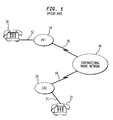
- FIGURE 1 depicts a the manner in which a telephone subscriber in a foreign country (represented by the telephone set 10), completes a telephone call to a telephone subscriber (represented by the telephone set 11) within another country, say the United States in accordance with the prior art.
- the foreign subscriber 10 goes off-hook.
- the foreign subscriber 10 enters the telephone number, including the country code, the area code, the exchange and the line number, of the U.S. subscriber 11.
- the dialed digits pass from the foreign subscriber's telephone 10 via a line 12 to a central office 14 in the foreign country that is typically maintained by the country's Post Conduct and Telephone (PTT) or such other domestic telecommunications carrier.
- PTT Post Committee for Telephone
- the PTT central office 14 Upon receipt of the dialed digits, the PTT central office 14, recognizing that the initiated call is directed to the United States (or another country), then seizes a trunk 16 to an international telephone network 18, such as the type maintained by AT&T.
- the international network 18, in turn, seizes a trunk 19 to a local exchange carrier 20 connected via a line 21 serving the dialed subscriber 11.
- the local exchange carrier 20 then rings the subscriber 11. and if subscriber answers, the call is completed.
- the carrier that maintains the international phone network 18 typically conducts test its network, as well as tests of the trunks 16 and 19. Testing of the lines 12 and 21 by the carrier that maintains the international telephone network 18 is usually problematic. This is particularly true if the international phone network 18 is based predominantly in the United States, while the line 12 exists within the foreign country. Coordinating the testing of telephone lines within a foreign country has proven difficult, especially because of differences in time zones. and possible differences in language.
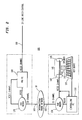
- FIGURE 2 depicts a system 100, in accordance with the invention, for initiating a telephone call on a remote line for the purpose of testing the line 12.
- the system 100 includes a master (controlling) processor 110, typically a personal computer of the type well known in the art.
- the processor 110 typically includes a storage device, such as a disk drive, that contains a stored program that directs the operation of the processor.
- a keyboard 120 Associated with the processor 110 is a keyboard 120 through which commands may be entered to the processor to initiate execution of the stored program, as well as to make modifications thereto.
- the processor 110 is also coupled to a display device in the form of a monitor (not shown).
- the processor 110 is connected to via a data channel (typically an RS-232 line) to a Simultaneous Voice and Data (SVD) modem 130.
- the SVD modem 130 simultaneously transmits data to and from the processor 110 across the data channel while transmitting voice across a voice channel to and from a voice device 140, such as a telephone set, having a microphone 142. a receiver 145 and a key pad 147 for entering DTMF signals.
- the SVD modem 130 is available from several sources, including AT&T Paradyne. Key Largo, Florida.
- the SVD modem 130 is connected via a communications line 150 to the international telephone network 18.
- the modem 130, together with the processor 110. the keyboard 120, the telephone set 140, as well as the display device (not shown) may be co-located in the international network 18 at a domestic location, as indicated by the dashed line enclosing the processor, keyboard and telephone set. However. it is not necessary for these elements to co-located with the international network 18.
- a second communication line 160 connects the international network 18 to a second SVD modem 170 that has its voice and data channels coupled to a Voice Response Unit (VRU) 180.
- VRU Voice Response Unit
- the VRU 180 typically takes the form of a personal computer or the like, that is also coupled to a remote telephone line 190.
- the VRU 180 and the SVD modem 170 are typically situated at, or in proximity to, the PTT 14 of FIG. 1 as represented by the dashed lines around these elements.
- FIGURE 3 illustrates the steps executed by a control program within the master processor 110 of FIG. 2 to initiate a phone call on the remote line 190 of FIG 2 to enable testing of the line 12.
- step 300 is executed during which the master processor 110 establishes a connection with the VRU 180 across the international network 18.
- the master processor 110 enters an address, typically in the form of a telephone number or the like, of the SVD modem 170 to the international network 18 across the line 150.
- the international network 18 establishes a link with the SVD modem 170 across the line 160.
- a connection is completed between the SVD modems 130 and 170, and hence, between the master processor 110 and the VRU 180.
- step 310 is executed, whereupon the master processor 110 sends an "off-hook" command across the data line to the SVD modem 130 for transmission across the data channel on the lines 150 and 160 to the SVD modem 170.
- the SVD modem 170 passes the "off-hook” command to the VRU 180 which, in turn, goes off hook on the line 190 in exactly the same way that a conventional telephone set (not shown) goes off-hook.
- the VRU 180 goes off-hook with respect to the voice channel of the SVD modem 170.
- Step 320 of FIG. 3 is executed following step 310. whereupon the VRU 180 bridges the line 190 with the voice channel of the SVD modem 170. Once the VRU 180 bridges the line 190 with the voice channel of the SVD modem 170, the line 190 now becomes connected to the SVD modem 130 through line 160, the international network 18 and the line 150. After the line 190 is bridged with the voice channel of the SVD modem 130, that modem signal the telephone set 140 of such a connection by supplying a ringing tone for receipt by the receiver 145. When the human operator answers the voice device following the signal from the SVD modem 130, the human operator will hear a dial tone on the receiver 145 corresponding to the dial tone present on the line 190.
- Step 330 is executed next, whereupon, then the digits of a destination telephone number, such as the number associated with the line 12, are entered to the SVD modem 130.
- the human operator enters the digits modem as DTMF signals via the keypad 147 of the telephone set 140.
- the voice channel of the SVD modem 130 could be connected to the master processor 110 (as indicated by the dashed lines), rather than to the telephone set 140, thereby allowing the master processor to automatically dial the remote telephone destination number.
- the digits of the remote destination telephone number entered to the SVD modem 130 pass via the line 150, the international network 18 and then to the line 160 for passage to the SVD modem 170 and ultimate receipt by the VRU 180.
- the VRU 180 dials the digits of the remote number (step 340). Assuming that the remote destination telephone number corresponds to the number associated with the line 12 of FIG. 1, then by dialing the digits, the VRU 180 effectively seizes the line 12 for testing purposes. Once the line 12 is seized, the line is tested (step 350). For example, a human operator may test the line simply by conducting a conversation with a subscriber via subscriber's telephone set 10 (see FIG. 1) once the subscriber has answered the call.
- the master processor 110 could conduct such testing automatically, by measuring selected parameters.
- the master processor 110 releases the line (step 360) by signaling the VRU 180, via the data channel of the SVD modems 130 and 170, to go on-hook on line 190.
Landscapes
- Engineering & Computer Science (AREA)
- Computer Networks & Wireless Communication (AREA)
- Signal Processing (AREA)
- Monitoring And Testing Of Exchanges (AREA)
- Mobile Radio Communication Systems (AREA)
- Data Exchanges In Wide-Area Networks (AREA)
- Communication Control (AREA)
- Telephonic Communication Services (AREA)
Applications Claiming Priority (2)
| Application Number | Priority Date | Filing Date | Title |
|---|---|---|---|
| US08/729,104 US5901202A (en) | 1996-10-11 | 1996-10-11 | Method for initiating a telephone call on a remote line |
| US729104 | 1996-10-11 |
Publications (2)
| Publication Number | Publication Date |
|---|---|
| EP0836334A2 true EP0836334A2 (fr) | 1998-04-15 |
| EP0836334A3 EP0836334A3 (fr) | 1999-05-12 |
Family
ID=24929597
Family Applications (1)
| Application Number | Title | Priority Date | Filing Date |
|---|---|---|---|
| EP97306348A Withdrawn EP0836334A3 (fr) | 1996-10-11 | 1997-08-20 | Procédé d'initiation d'un appel téléphonique pour une ligne éloignée |
Country Status (4)
| Country | Link |
|---|---|
| US (1) | US5901202A (fr) |
| EP (1) | EP0836334A3 (fr) |
| JP (1) | JPH10136122A (fr) |
| CA (1) | CA2210069C (fr) |
Families Citing this family (7)
| Publication number | Priority date | Publication date | Assignee | Title |
|---|---|---|---|---|
| US6330235B1 (en) * | 1997-11-24 | 2001-12-11 | Hughes Electronics Corporation | Method and apparatus providing data communication over an existing telephone network without interfering with normal telephony functions |
| US7068757B1 (en) * | 2000-04-24 | 2006-06-27 | Agilent Technologies, Inc. | Apparatus and method for automated testing of the quality of voice communications over data networks |
| JP4106866B2 (ja) * | 2000-12-12 | 2008-06-25 | 日本電気株式会社 | 携帯電話機及び携帯電話機のデータ通信制御方法 |
| US6775523B2 (en) * | 2002-01-03 | 2004-08-10 | Desa Ip, Llc | Wireless transmitter and doorbell system |
| US20090250295A1 (en) * | 2008-04-07 | 2009-10-08 | Laws David J | Portable Elevated Platform |
| US8121129B2 (en) * | 2008-12-15 | 2012-02-21 | International Business Machines Corporation | Optimizing throughput of data in a communications network |
| US20110222668A1 (en) * | 2011-05-23 | 2011-09-15 | Stephen Levenson | Method for In-Country Live Testing of International Telephone Numbers |
Family Cites Families (14)
| Publication number | Priority date | Publication date | Assignee | Title |
|---|---|---|---|---|
| CH541265A (de) * | 1972-02-29 | 1973-08-31 | Generaldirektion Ptt Hasler Ag | Verfahren zur Prüfung von Vierdrahtverbindungen zwischen zwei miteinander zu verbindenden Schaltstellen eines Fernmeldenetzes |
| US4839916A (en) * | 1987-09-25 | 1989-06-13 | Conway Engineering, Inc. | Telephone toll integrity checking system |
| DE4133385A1 (de) * | 1991-10-09 | 1993-04-15 | Philips Patentverwaltung | Hierarchisches netzmanagementsystem |
| US5502756A (en) * | 1992-10-28 | 1996-03-26 | At&T Corp. | Remote test call unit and service |
| US5426688A (en) * | 1993-05-12 | 1995-06-20 | Anand; Vivodh Z. J. | Telecommunication alarm method and system |
| US5537436A (en) * | 1993-06-14 | 1996-07-16 | At&T Corp. | Simultaneous analog and digital communication applications |
| US5440585A (en) * | 1993-06-14 | 1995-08-08 | At&T Corp. | Applications of simultaneous analog and digital communication |
| US5428608A (en) * | 1993-12-30 | 1995-06-27 | At&T Corp. | Call connection technique |
| US5521959A (en) * | 1994-02-09 | 1996-05-28 | Harris Corporation | Programmable source for supplying controllably variable AC/DC voltage output for telephone line measurement apparatus |
| US5528661A (en) * | 1994-02-09 | 1996-06-18 | Harris Corporation | Diagnostic mechanism for monitoring operational status of remote monitoring and test unit which controllably test and conditions subscriber line circuits |
| US5684825A (en) * | 1994-03-23 | 1997-11-04 | Paradyne Corporation | Independently switched voice and data calls using a simultaneous voice and data modem |
| US5559792A (en) * | 1994-04-20 | 1996-09-24 | Lucent Technologies Inc. | Sound modification for use in simultaneous voice and data communications |
| US5602846A (en) * | 1994-04-08 | 1997-02-11 | Paradyne Corporation | Simultaneous voice and data call establishment using a simultaneous voice and data modem pool and private branch exchange facilities |
| US5636282A (en) * | 1994-06-20 | 1997-06-03 | Paradyne Corporation | Method for dial-in access security using a multimedia modem |
-
1996
- 1996-10-11 US US08/729,104 patent/US5901202A/en not_active Expired - Fee Related
-
1997
- 1997-07-10 CA CA002210069A patent/CA2210069C/fr not_active Expired - Fee Related
- 1997-08-20 EP EP97306348A patent/EP0836334A3/fr not_active Withdrawn
- 1997-10-09 JP JP9276332A patent/JPH10136122A/ja not_active Ceased
Also Published As
| Publication number | Publication date |
|---|---|
| EP0836334A3 (fr) | 1999-05-12 |
| CA2210069A1 (fr) | 1998-04-11 |
| CA2210069C (fr) | 2000-03-14 |
| MX9707713A (es) | 1998-06-30 |
| US5901202A (en) | 1999-05-04 |
| JPH10136122A (ja) | 1998-05-22 |
Similar Documents
| Publication | Publication Date | Title |
|---|---|---|
| US5712902A (en) | Telecommunications answering feature method and apparatus | |
| US5903626A (en) | Diagnostic device for troubleshooting remote digital feature phones | |
| US4955047A (en) | Automated attendant with direct inward system access | |
| US5479473A (en) | Method and apparatus for testing call paths over long distance carrier networks | |
| JPH0823384A (ja) | パーソナル移動体通信方法およびシステム | |
| US4645879A (en) | Call-routing device | |
| US6009155A (en) | Communication system and its accounting method | |
| US5200951A (en) | Apparatus and method for transmitting messages between a plurality of subscriber stations | |
| US5901202A (en) | Method for initiating a telephone call on a remote line | |
| JPS61281664A (ja) | デ−タテレホン端末試験装置 | |
| MXPA97007713A (es) | Metodo para iniciar una llamada de telefono en una linea remota | |
| KR100469742B1 (ko) | 사설 교환시스템에서 디아디 기능을 이용한 디자 전용 국선설정 방법 | |
| JPS58184856A (ja) | 中継線経由のホツトライン接続方式 | |
| KR100285716B1 (ko) | 교환기에서아날로그가입자를위한발신번전송방법 | |
| KR100206304B1 (ko) | 내부 호 처리가 가능한 원격가입자 수용장치 및 그 제어방법 | |
| US5999615A (en) | Telephone exchange system and switching connection method improved in efficiency for long-distance calling | |
| RU2161870C2 (ru) | Устройство и способ для обработки вызовов в удаленном абонентском модуле электронной коммутационной системы | |
| JP3134397B2 (ja) | 電話交換機 | |
| JPH02164166A (ja) | オーダーワイヤ装置を備えた通信方式 | |
| KR0162841B1 (ko) | 사설교환 시스템에서 국선라인 사용통제방법 | |
| JPS62234454A (ja) | 複数端末収容型回線インタフェイス装置 | |
| KR930011206B1 (ko) | 사설교환기에서의 예약 서비스방법 | |
| JPH0472855A (ja) | 着信接続切替方式 | |
| JPH03175869A (ja) | 通話路設定方式 | |
| JPS59221061A (ja) | 自動構内交換機のステツプコ−ル方式 |
Legal Events
| Date | Code | Title | Description |
|---|---|---|---|
| PUAI | Public reference made under article 153(3) epc to a published international application that has entered the european phase |
Free format text: ORIGINAL CODE: 0009012 |
|
| AK | Designated contracting states |
Kind code of ref document: A2 Designated state(s): DE FR GB |
|
| AX | Request for extension of the european patent |
Free format text: AL;LT;LV;RO;SI |
|
| PUAL | Search report despatched |
Free format text: ORIGINAL CODE: 0009013 |
|
| AK | Designated contracting states |
Kind code of ref document: A3 Designated state(s): AT BE CH DE DK ES FI FR GB GR IE IT LI LU MC NL PT SE |
|
| AX | Request for extension of the european patent |
Free format text: AL;LT;LV;RO;SI |
|
| 17P | Request for examination filed |
Effective date: 19990611 |
|
| AKX | Designation fees paid |
Free format text: DE FR GB |
|
| STAA | Information on the status of an ep patent application or granted ep patent |
Free format text: STATUS: THE APPLICATION IS DEEMED TO BE WITHDRAWN |
|
| 18D | Application deemed to be withdrawn |
Effective date: 20030301 |