EP0837592A2 - Übertragungsendgerät - Google Patents
Übertragungsendgerät Download PDFInfo
- Publication number
- EP0837592A2 EP0837592A2 EP97117969A EP97117969A EP0837592A2 EP 0837592 A2 EP0837592 A2 EP 0837592A2 EP 97117969 A EP97117969 A EP 97117969A EP 97117969 A EP97117969 A EP 97117969A EP 0837592 A2 EP0837592 A2 EP 0837592A2
- Authority
- EP
- European Patent Office
- Prior art keywords
- data
- facsimile
- file data
- communication terminal
- file
- Prior art date
- Legal status (The legal status is an assumption and is not a legal conclusion. Google has not performed a legal analysis and makes no representation as to the accuracy of the status listed.)
- Granted
Links
Images


Classifications
-
- H—ELECTRICITY
- H04—ELECTRIC COMMUNICATION TECHNIQUE
- H04N—PICTORIAL COMMUNICATION, e.g. TELEVISION
- H04N1/00—Scanning, transmission or reproduction of documents or the like, e.g. facsimile transmission; Details thereof
-
- H—ELECTRICITY
- H04—ELECTRIC COMMUNICATION TECHNIQUE
- H04N—PICTORIAL COMMUNICATION, e.g. TELEVISION
- H04N1/00—Scanning, transmission or reproduction of documents or the like, e.g. facsimile transmission; Details thereof
- H04N1/32—Circuits or arrangements for control or supervision between transmitter and receiver or between image input and image output device, e.g. between a still-image camera and its memory or between a still-image camera and a printer device
- H04N1/32358—Circuits or arrangements for control or supervision between transmitter and receiver or between image input and image output device, e.g. between a still-image camera and its memory or between a still-image camera and a printer device using picture signal storage, e.g. at transmitter
- H04N1/32363—Circuits or arrangements for control or supervision between transmitter and receiver or between image input and image output device, e.g. between a still-image camera and its memory or between a still-image camera and a printer device using picture signal storage, e.g. at transmitter at the transmitter or at the receiver
- H04N1/32379—Functions of a still picture terminal memory associated with reception
- H04N1/3239—Forwarding image data, e.g. to an absent recipient
-
- H—ELECTRICITY
- H04—ELECTRIC COMMUNICATION TECHNIQUE
- H04N—PICTORIAL COMMUNICATION, e.g. TELEVISION
- H04N1/00—Scanning, transmission or reproduction of documents or the like, e.g. facsimile transmission; Details thereof
- H04N1/00127—Connection or combination of a still picture apparatus with another apparatus, e.g. for storage, processing or transmission of still picture signals or of information associated with a still picture
- H04N1/00204—Connection or combination of a still picture apparatus with another apparatus, e.g. for storage, processing or transmission of still picture signals or of information associated with a still picture with a digital computer or a digital computer system, e.g. an internet server
-
- H—ELECTRICITY
- H04—ELECTRIC COMMUNICATION TECHNIQUE
- H04N—PICTORIAL COMMUNICATION, e.g. TELEVISION
- H04N1/00—Scanning, transmission or reproduction of documents or the like, e.g. facsimile transmission; Details thereof
- H04N1/00127—Connection or combination of a still picture apparatus with another apparatus, e.g. for storage, processing or transmission of still picture signals or of information associated with a still picture
- H04N1/00204—Connection or combination of a still picture apparatus with another apparatus, e.g. for storage, processing or transmission of still picture signals or of information associated with a still picture with a digital computer or a digital computer system, e.g. an internet server
- H04N1/00206—Transmitting or receiving computer data via an image communication device, e.g. a facsimile transceiver
-
- H—ELECTRICITY
- H04—ELECTRIC COMMUNICATION TECHNIQUE
- H04N—PICTORIAL COMMUNICATION, e.g. TELEVISION
- H04N1/00—Scanning, transmission or reproduction of documents or the like, e.g. facsimile transmission; Details thereof
- H04N1/32—Circuits or arrangements for control or supervision between transmitter and receiver or between image input and image output device, e.g. between a still-image camera and its memory or between a still-image camera and a printer device
- H04N1/32358—Circuits or arrangements for control or supervision between transmitter and receiver or between image input and image output device, e.g. between a still-image camera and its memory or between a still-image camera and a printer device using picture signal storage, e.g. at transmitter
- H04N1/32363—Circuits or arrangements for control or supervision between transmitter and receiver or between image input and image output device, e.g. between a still-image camera and its memory or between a still-image camera and a printer device using picture signal storage, e.g. at transmitter at the transmitter or at the receiver
-
- H—ELECTRICITY
- H04—ELECTRIC COMMUNICATION TECHNIQUE
- H04N—PICTORIAL COMMUNICATION, e.g. TELEVISION
- H04N2201/00—Indexing scheme relating to scanning, transmission or reproduction of documents or the like, and to details thereof
- H04N2201/0008—Connection or combination of a still picture apparatus with another apparatus
- H04N2201/0065—Converting image data to a format usable by the connected apparatus or vice versa
- H04N2201/0067—Converting to still picture data
Definitions
- the present invention relates to a communication terminal apparatus and more specifically, to a communication terminal apparatus such as a facsimile device that is capable of transfer of file data including character code or binary data of a file format or the like used by a system such as a computer system, which file data differing from facsimile coded data used in normal facsimile communication such as MH or MR coding or the like.
- a communication terminal apparatus such as a facsimile device that is capable of transfer of file data including character code or binary data of a file format or the like used by a system such as a computer system, which file data differing from facsimile coded data used in normal facsimile communication such as MH or MR coding or the like.
- Relay communication is a function that relays information sent to a second facsimile device from a first facsimile device, to a third facsimile device specified beforehand by the first facsimile device, by transferring the information from the second facsimile device to the third facsimile device.
- broadcasting communication is a function that transmits the same information from one facsimile device to a plurality of other pre-specified other facsimile devices.
- the file transfer (BFT:Binary File Transfer) protocol has been determined. Using this protocol, it is possible to transmit and receive file data (such as binary data, character data) and facsimile coded data in the same call.
- file data such as binary data, character data
- facsimile coded data in the same call.
- the encoding regulations for binary file data have been set by ITU-T (International Telecommunications Union - Communication Standards Section) recommendation T.434.
- file transfer functions (hereafter, called file transfer functions) are optional, there are facsimile devices on which these functions are possible and those on which these are not. That is, there are facsimiles that can only transmit and receive facsimile coded data. Accordingly, when relay communication or broadcasting communication is to be performed by facsimile communication, file transfer can be carried out when it is aimed at only facsimile devices having file transfer functions. But when both types(those capable of file transfer and those not) are present together, only the transmission of facsimile coded data can be carried out.
- the first device to start the facsimile communication is often a personal computer and not a proper facsimile device that transmits facsimile coded data.
- the probability is high that the transmitted document is produced by a personal computer as a file of character code or binary image data (bitmap format, TIFF format etc.).
- the receiving side facsimile device is capable of file transfer functions, it is becomes necessary to convert file data and exchange facsimile coded data for reliable relaying despite the direct transmission as file data of character code or binary image data being more efficient.
- problems relating to the abilities of the various facsimile devices also arise when file data of the character code or binary image data file is to be transmitted after conversion to facsimile coded data. For example, problems with the font when character code is to be converted to facsimile coded data after being bitmapped in the memory, and problems with the resolution during conversion to facsimile coded data. Due to this, it may be desirable to perform a file transfer to a certain device by character code or binary image data and then convert that file to facsimile coded data at the font and resolution of that particular device.
- JPA 7-264376 describes how code data received from a host computer is transmitted after conversion to image data when a third party as the transmission destination is a G3 facsimile device and transmitted unchanged as code data when the third party is a G4 facsimile device.
- JPA 7-264376 describes how code data received from a host computer is transmitted after conversion to image data when a third party as the transmission destination is a G3 facsimile device and transmitted unchanged as code data when the third party is a G4 facsimile device.
- a communication terminal device such as a facsimile device which, when the facsimile device is specified to relay file data which has been file transferred from another device to yet another facsimile device, is capable of relay transmission and broadcasting transmission even if devices which are and which are not capable of file transfer are both present, by directly relaying when the destination facsimile device is capable of file transfer or by relaying after conversion of the file data to normal facsimile coded data when the destination facsimile device is not capable of file transfer.
- the communication terminal device of the present invention has a function that relays received information to a specified device and a transfer function of file data (BFT: binary file transfer function), transmits (relays) the received file data unchanged to a device having the file data transfer functions, and transmits(relays) the received file data after conversion to facsimile coded data to a device not having those functions.
- BFT binary file transfer function
- the received filed data is relayed by direct transmission.
- the relay destination communication terminal device does not have file data transfer functions, the received file data is relayed after conversion to facsimile coded data. Thus, it is no longer necessary to check beforehand whether the relay destination communication terminal device has file transfer functions.
- the communication terminal device of the present invention is provided with a character generator that converts the character code into a character pattern (the file data to be transferred by the communication terminal device may include character code).
- the communication terminal device of the present invention is provided with a character generator, when the transferred file data includes character code, a hard copy or soft copy may be directly produced.
- the file data to be transferred may include binary image data.
- the transferred file data includes binary image data
- a hard copy output is possible by the conversion of the file data to facsimile coded data.
- Figure 1 is block diagram showing an embodiment of a facsimile device of the present invention.
- Figure 2 is a block diagram showing an example of system arrangement when performing relay/broadcasting operations using the facsimile device of the present invention.
- Figure 3 is a flow chart for describing the actions of the facsimile device of the present invention.
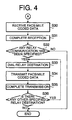
- Figure 4 is a flow chart for describing the actions of the facsimile device of the present invention.
- Figure 1 is a block diagram showing an example of arrangement of a facsimile device as one example of a communication terminal device according to the embodiment of the present invention.
- Numeral 11 is a CPU that functions as a control means and is connected via a bus 10 to a ROM 12 that stores the programs or the like of the operation procedures of the facsimile device, a RAM 13 that functions as a memory means for temporarily storing facsimile coded data, file data and other types of data, a printer 14 that functions as a printing output that prints the image signal on paper, a scanner 15 that outputs image data converted to binary by using a CCD (Charged Couple Device) or the like for scanning the document, an operation part 16 such as a key matrix or the like, a part that controls the communication functions such as an network control unit (NCU) 17 or modem 18 that connects the device to the external telephone lines, an encoding/decoding part (CODEC) 19 that performs encoding/decoding of the digitized binary image signal into facsimile coded data, a character generator 20 that generates a character pattern corresponding to the character code included in the received file data, a display part 21 which uses a display device
- the actions of the facsimile device of the present invention shown in figure 1 are controlled by the CPU 11 in accordance with the programs stored in the ROM 12.
- the general actions during facsimile communication by such a facsimile device are as described below. It should be noted that the execution of facsimile communication are carried out in 5 phases regulated by ITU-T. 30.
- phase A call establishment
- phase B pre-message procedures
- phase C messages transmission
- phase D post-message procedures
- the facsimile device of the present invention performs normal facsimile transmission
- the user makes the scanning part 15 scan the document to be transmitted, specifies that transmission is to be performed by operation of the operation part 16 and dials the telephone number of the third party.
- the CPU 11 first performs the call establishment of phase A.
- the CPU 11 connects to the communication network by commanding the NCU 17 and performs a call operation.
- the discrimination and selection of functions required at both devices is performed by the CPU 11 executing the phase B pre-message procedures.
- the digital signal scanned from the document by the scanning part 15 and converted to binary is sequentially stored in the RAM 13 after being encoded (compressed) in accordance with a coding method such as MH, MR or the like by the coding/decoding part 19. Then the phase C message transmission is performed while the CPU 11 is taking the signal phase and synchronization with the facsimile device of the communication third party connected by call establishment (in short, the encoded digital image signal (message) obtained from the document that is to be transmitted to the communication third party is transmitted via the modem 18 and NCU 17).
- a coding method such as MH, MR or the like
- the CPU 11 When transmission of the whole message is complete, the CPU 11 performs phase D post-message procedures, in short, completes the message and confirms this. Once this confirmation has been obtained, the CPU 11 cuts the lines by commanding the NCU 17 and performs phase E call release.
- the CPU 11 receives via the NCU 17 and modem 18 the encoded digital image signal of the document to be received through phase C message transmission and stores it in the RAM 13.
- the CPU 11 exchanges phase D post-message procedures with the calling device and once this has been confirmed, concludes communication by performing phase E line release.
- phase B pre-message procedures it is possible for the calling device and called device to confirm whether the other has file transfer abilities. More specifically, at phase B pre-message procedures, the absence or presence of file transfer functions (functions that transfer the file data such as binary data or character data) is informed from the called device to the calling device by the transmission of a predetermined control signal (DIS:Digital Identification Signal). Accordingly, file transfer is possible at the calling side when the called side has file transfer functions, and that fact is informed to the called side by the transmission of a predetermined control signal (DCS:Digital Command Signal). Due to this, the called device is able to know at the phase B pre-message procedures that the calling device will transfer file data.
- DCS Digital Command Signal
- FIG. 2 is a block diagram showing a system arrangement whereby file data comprising character code or binary image data of bitmap format or TIFF format saved or produced by a personal computer (PC) 100 is broadcast(and also relayed) to two facsimile devices (FAX2, FAX3) 301,302 by way of the facsimile device (FAX1) 200 of the present invention as a relay intermediator.
- FAX2, FAX3 facsimile devices
- FAX1 200 of the present invention as a relay intermediator.
- the facsimile device 200 of the present invention relays the file data received from the personal computer 100 to the facsimile device 301 having file transfer functions, it may perform direct file data transmission.
- the facsimile device 200 relays the file data received from the personal computer 100 to the facsimile device 302 not having file transfer functions, conversion of the file data to facsimile coded data is necessary before the transmission.
- the CPU 10 of the facsimile device 200 of the present invention is always checking whether any new data has been received or not and when there is a new data, it checks whether the received data is file data or not (step S12).
- the facsimile device 200 of the present invention receives this file data and stores it in the RAM 13 (step S12,S13) and once reception is complete, checks whether there is to be a relay communication, in short whether a relay destination has been specified or not (step S14,S15).
- the CPU 10 makes the NCU 17 dial the telephone number of that specified relay destination (step S16) and at the same time, checks whether the relay destination with that telephone number is a device capable of reception of file data (step S17).
- the CPU 10 firstly dials the telephone number of the facsimile device 301 having file transfer functions and as mentioned before, checks whether the facsimile device 301 has file transfer functions or not at the pre-message procedures of phase B (step S17).
- facsimile device 301 has those functions, the file data received from the personal computer 100 is transmitted directly to facsimile device 301 from the facsimile device 200 of the present invention (step S18). Then once transmission is complete (step S19), the CPU 10 checks whether another relay destination has been specified or not (step S20).
- the CPU 10 of the facsimile device 200 of the present invention then dials the telephone number of the facsimile device 302 (step S16) and similar to when dialing the facsimile device 301, checks whether the facsimile device 302 has file transfer functions or not at the pre-message procedures of phase B (step S17).
- the CPU 10 of the facsimile device 200 of the present invention converts the file data received from the personal computer 100 and stored in the RAM 13 to facsimile coded data at the coding/decoding part 19 and then transmits the facsimile coded data (step S21). Then, once transmission is complete (step S19), the CPU 10 checks whether another relay destination has been specified or not (step S20). In this example, as no other relay destination has been specified, processing is concluded at this point.
- step S15 When it turned out at step S15 that any relay communication has not been specified, the CPU 10 concludes processing at that point.
- the facsimile device 200 of the present invention receives facsimile coded data
- the facsimile coded data is directly received and stored in the RAM 13 (step S30,S31).
- reception is complete, a check is performed of whether there to be a relay communication or not, in short, whether a relay destination has been specified or not (step S32).
- the CPU 10 makes the NCU 17 dial the telephone number of that specified relay destination (step S33) and directly transmits the facsimile coded data received from the personal computer 100 to the facsimile device 301 (step S34).Then, once transmission is complete (step S35), the CPU 10 checks whether another relay destination has been specified or not (step S36).
- the transmission of the facsimile coded data is performed to that facsimile device as described earlier.
- the CPU 10 concludes processing at that point.
- the facsimile device 200 of the present invention is positioned to relay the transmission from the personal computer 100 to the facsimile device 301 having file transfer functions and a facsimile device 302 not having file transfer functions.
- the facsimile device 200 of the present invention may be positioned at the uppermost point in the flow of the communication instead of the personal computer 100 or may be optionally positioned at any position between the personal computer and the last relay destination at a multi-level relay system.
- the received file data is directly transmitted to a relay destination when the communication terminal device of that relay destination has file transfer functions and the received file data is transmitted after conversion to facsimile coded data when the communication terminal device of that relay destination does not have file transfer functions.
- the received file data is transmitted after conversion to facsimile coded data when the communication terminal device of that relay destination does not have file transfer functions.
Landscapes
- Engineering & Computer Science (AREA)
- Multimedia (AREA)
- Signal Processing (AREA)
- General Engineering & Computer Science (AREA)
- Computing Systems (AREA)
- Facsimiles In General (AREA)
- Facsimile Transmission Control (AREA)
- Computer And Data Communications (AREA)
Applications Claiming Priority (3)
| Application Number | Priority Date | Filing Date | Title |
|---|---|---|---|
| JP27667796 | 1996-10-18 | ||
| JP8276677A JPH10126548A (ja) | 1996-10-18 | 1996-10-18 | ファクシミリ装置 |
| JP276677/96 | 1996-10-18 |
Publications (3)
| Publication Number | Publication Date |
|---|---|
| EP0837592A2 true EP0837592A2 (de) | 1998-04-22 |
| EP0837592A3 EP0837592A3 (de) | 1999-11-10 |
| EP0837592B1 EP0837592B1 (de) | 2009-09-30 |
Family
ID=17572785
Family Applications (1)
| Application Number | Title | Priority Date | Filing Date |
|---|---|---|---|
| EP97117969A Expired - Lifetime EP0837592B1 (de) | 1996-10-18 | 1997-10-16 | Faxger?t mit effizienter Relaisf?higkeit f?r Dateidaten |
Country Status (7)
| Country | Link |
|---|---|
| US (1) | US6256114B1 (de) |
| EP (1) | EP0837592B1 (de) |
| JP (1) | JPH10126548A (de) |
| KR (1) | KR100366003B1 (de) |
| CN (1) | CN1151659C (de) |
| DE (1) | DE69739600D1 (de) |
| TW (1) | TW337629B (de) |
Cited By (4)
| Publication number | Priority date | Publication date | Assignee | Title |
|---|---|---|---|---|
| WO2000036818A1 (en) * | 1998-12-16 | 2000-06-22 | Nokia Networks Oy | Facsimile transmission method and system |
| FR2804566A1 (fr) * | 2000-02-02 | 2001-08-03 | Sagem | Procede d'edition d'un courrier electronique par un appareil de telecopie |
| US7072642B2 (en) | 2000-11-28 | 2006-07-04 | Ntt Docomo, Inc. | Receiving device and repeating device |
| EP1427178B1 (de) * | 1998-12-28 | 2016-12-14 | Panasonic System Networks Co., Ltd. | Kommunikationsapparat und -verfahren |
Families Citing this family (8)
| Publication number | Priority date | Publication date | Assignee | Title |
|---|---|---|---|---|
| JP4183922B2 (ja) * | 2000-06-14 | 2008-11-19 | 株式会社リコー | ファクシミリ装置 |
| US20030160998A1 (en) * | 2002-02-22 | 2003-08-28 | Murata Kikai Kabushiki Kaisha | Communication system, computer program, and communication device |
| KR100582992B1 (ko) * | 2003-12-24 | 2006-05-24 | 삼성전자주식회사 | 데이터 전송장치 및 전송방법 |
| JP4398410B2 (ja) * | 2005-06-29 | 2010-01-13 | 株式会社東芝 | 画像形成装置及び画像形成装置のファクシミリデータの転送方法 |
| JP6251569B2 (ja) | 2010-06-30 | 2018-01-10 | スリーエム イノベイティブ プロパティズ カンパニー | 空間的に選択的な複屈折性の減少を有する拡散反射光学フィルム |
| CN101951454A (zh) * | 2010-08-31 | 2011-01-19 | 上海闻泰电子科技有限公司 | 一种实现传真的方法 |
| JP2014176025A (ja) * | 2013-03-12 | 2014-09-22 | Fuji Xerox Co Ltd | 中継装置及びfax送受信プログラム |
| JP6769045B2 (ja) * | 2016-02-29 | 2020-10-14 | ブラザー工業株式会社 | 画像処理装置、および、コンピュータプログラム |
Family Cites Families (8)
| Publication number | Priority date | Publication date | Assignee | Title |
|---|---|---|---|---|
| JPS5752261A (en) | 1980-09-11 | 1982-03-27 | Canon Inc | Character processor |
| US5134501A (en) * | 1988-12-29 | 1992-07-28 | Murata Kikai Kabushiki Kaisha | Facsimile apparatus |
| JP3005101B2 (ja) * | 1992-01-22 | 2000-01-31 | キヤノン株式会社 | 画像通信装置 |
| AU5100593A (en) * | 1992-09-02 | 1994-03-29 | Octus, Inc. | Multimedia message transmitter |
| JP2755153B2 (ja) * | 1994-01-26 | 1998-05-20 | 富士ゼロックス株式会社 | ファイル転送機能を有するファクシミリ装置 |
| JP2755157B2 (ja) * | 1994-02-08 | 1998-05-20 | 富士ゼロックス株式会社 | ファクシミリ装置 |
| US5499109A (en) | 1994-02-18 | 1996-03-12 | Microsoft Corporation | System for transferring messages between input and output devices in a communication device |
| US5517324A (en) * | 1994-07-15 | 1996-05-14 | Microsoft Corporation | Method and system for increasing the compatibility of a fax machine |
-
1996
- 1996-10-18 JP JP8276677A patent/JPH10126548A/ja active Pending
-
1997
- 1997-08-16 TW TW086111804A patent/TW337629B/zh not_active IP Right Cessation
- 1997-09-22 CN CNB971165629A patent/CN1151659C/zh not_active Expired - Fee Related
- 1997-10-13 KR KR1019970052296A patent/KR100366003B1/ko not_active Expired - Fee Related
- 1997-10-16 US US08/951,422 patent/US6256114B1/en not_active Expired - Lifetime
- 1997-10-16 DE DE69739600T patent/DE69739600D1/de not_active Expired - Lifetime
- 1997-10-16 EP EP97117969A patent/EP0837592B1/de not_active Expired - Lifetime
Cited By (5)
| Publication number | Priority date | Publication date | Assignee | Title |
|---|---|---|---|---|
| WO2000036818A1 (en) * | 1998-12-16 | 2000-06-22 | Nokia Networks Oy | Facsimile transmission method and system |
| EP1427178B1 (de) * | 1998-12-28 | 2016-12-14 | Panasonic System Networks Co., Ltd. | Kommunikationsapparat und -verfahren |
| FR2804566A1 (fr) * | 2000-02-02 | 2001-08-03 | Sagem | Procede d'edition d'un courrier electronique par un appareil de telecopie |
| EP1122942A1 (de) * | 2000-02-02 | 2001-08-08 | Sagem Sa | Verfahren zum Editieren elektronischer Post mit einem Faxgerät |
| US7072642B2 (en) | 2000-11-28 | 2006-07-04 | Ntt Docomo, Inc. | Receiving device and repeating device |
Also Published As
| Publication number | Publication date |
|---|---|
| TW337629B (en) | 1998-08-01 |
| JPH10126548A (ja) | 1998-05-15 |
| CN1180970A (zh) | 1998-05-06 |
| KR19980032780A (ko) | 1998-07-25 |
| EP0837592B1 (de) | 2009-09-30 |
| CN1151659C (zh) | 2004-05-26 |
| KR100366003B1 (ko) | 2003-03-04 |
| US6256114B1 (en) | 2001-07-03 |
| DE69739600D1 (de) | 2009-11-12 |
| HK1010626A1 (en) | 1999-06-25 |
| EP0837592A3 (de) | 1999-11-10 |
Similar Documents
| Publication | Publication Date | Title |
|---|---|---|
| US5418628A (en) | Integrated data communication system | |
| US6256114B1 (en) | Communication terminal apparatus | |
| EP0853416B1 (de) | Verfahren zum Betreiben eines Faksimilegerätes | |
| JPH09233305A (ja) | ファクシミリのデータ受信方法 | |
| US5907632A (en) | Image information communication apparatus for notifying that an OCR method is applicable to image data to be transmitted | |
| JP2000069215A (ja) | ファクシミリ装置 | |
| JP2516033B2 (ja) | ファクシミリ通信方式 | |
| KR100264324B1 (ko) | 팩스 데이터의 전송상태를 확인하는 장치 및 방법 | |
| KR100318741B1 (ko) | 수신측의 출력방식에 따라 팩스 데이터의 전송을 제어하는 방법 | |
| KR100223001B1 (ko) | 교신시간 단축방법 | |
| EP0835018A1 (de) | Kommunikations-Endgerät und Kommunikationsschaltung | |
| KR100288705B1 (ko) | 송수신 데이터의 백업방법 | |
| JPH09214717A (ja) | ファクシミリ装置 | |
| JPH0993373A (ja) | 画像処理装置及びシステム | |
| KR100325817B1 (ko) | 메모리 잔량에 따른 해상도 변환방법 | |
| JPH1141458A (ja) | ファクシミリ装置 | |
| JPH11252342A (ja) | ファクシミリ装置 | |
| JP2002044401A (ja) | 通信端末装置 | |
| JP2000165589A (ja) | ファクシミリ装置 | |
| JPH01202932A (ja) | 無線ファクシミリ装置の伝送制御方式 | |
| KR19990070622A (ko) | 에러가 발생한 팩스 데이터를 송신측으로 전송하는 방법 | |
| JPH09214714A (ja) | ファクシミリ通信方法及びファクシミリ装置 | |
| JP2001077999A (ja) | 画情報通信装置及びその制御方法 | |
| HK1010626B (en) | Communication terminal device | |
| JPH07162578A (ja) | ファクシミリ装置 |
Legal Events
| Date | Code | Title | Description |
|---|---|---|---|
| PUAI | Public reference made under article 153(3) epc to a published international application that has entered the european phase |
Free format text: ORIGINAL CODE: 0009012 |
|
| AK | Designated contracting states |
Kind code of ref document: A2 Designated state(s): DE GB |
|
| PUAL | Search report despatched |
Free format text: ORIGINAL CODE: 0009013 |
|
| AK | Designated contracting states |
Kind code of ref document: A3 Designated state(s): AT BE CH DE DK ES FI FR GB GR IE IT LI LU MC NL PT SE |
|
| 17P | Request for examination filed |
Effective date: 20000228 |
|
| AKX | Designation fees paid |
Free format text: DE GB |
|
| 17Q | First examination report despatched |
Effective date: 20011119 |
|
| RTI1 | Title (correction) |
Free format text: FACSIMILE DEVICE WITH EFFICIENT RELAY CAPABILITY FOR FILE DATA |
|
| APBR | Date of receipt of statement of grounds of appeal recorded |
Free format text: ORIGINAL CODE: EPIDOSNNOA3E |
|
| APAF | Appeal reference modified |
Free format text: ORIGINAL CODE: EPIDOSCREFNE |
|
| APAF | Appeal reference modified |
Free format text: ORIGINAL CODE: EPIDOSCREFNE |
|
| APBT | Appeal procedure closed |
Free format text: ORIGINAL CODE: EPIDOSNNOA9E |
|
| GRAP | Despatch of communication of intention to grant a patent |
Free format text: ORIGINAL CODE: EPIDOSNIGR1 |
|
| GRAS | Grant fee paid |
Free format text: ORIGINAL CODE: EPIDOSNIGR3 |
|
| GRAA | (expected) grant |
Free format text: ORIGINAL CODE: 0009210 |
|
| PUAC | Information related to the publication of a b1 document modified or deleted |
Free format text: ORIGINAL CODE: 0009299EPPU |
|
| STAA | Information on the status of an ep patent application or granted ep patent |
Free format text: STATUS: THE APPLICATION HAS BEEN WITHDRAWN |
|
| AK | Designated contracting states |
Kind code of ref document: B1 Designated state(s): DE GB |
|
| REG | Reference to a national code |
Ref country code: GB Ref legal event code: FG4D |
|
| DB1 | Publication of patent cancelled | ||
| 18W | Application withdrawn |
Effective date: 20090908 |
|
| REF | Corresponds to: |
Ref document number: 69739600 Country of ref document: DE Date of ref document: 20091112 Kind code of ref document: P |