EP0838520A2 - Praktisch-verwendbare, gegen tiefgefrorenen Brottteig resistente Backhefe - Google Patents
Praktisch-verwendbare, gegen tiefgefrorenen Brottteig resistente Backhefe Download PDFInfo
- Publication number
- EP0838520A2 EP0838520A2 EP97402512A EP97402512A EP0838520A2 EP 0838520 A2 EP0838520 A2 EP 0838520A2 EP 97402512 A EP97402512 A EP 97402512A EP 97402512 A EP97402512 A EP 97402512A EP 0838520 A2 EP0838520 A2 EP 0838520A2
- Authority
- EP
- European Patent Office
- Prior art keywords
- yeast
- gene
- nth1
- haploid
- diploid
- Prior art date
- Legal status (The legal status is an assumption and is not a legal conclusion. Google has not performed a legal analysis and makes no representation as to the accuracy of the status listed.)
- Withdrawn
Links
Images







Classifications
-
- A—HUMAN NECESSITIES
- A21—BAKING; EDIBLE DOUGHS
- A21D—TREATMENT OF FLOUR OR DOUGH FOR BAKING, e.g. BY ADDITION OF MATERIALS; BAKING; BAKERY PRODUCTS
- A21D6/00—Other treatment of flour or dough before baking, e.g. cooling, irradiating or heating
- A21D6/008—Freeze-drying
-
- C—CHEMISTRY; METALLURGY
- C12—BIOCHEMISTRY; BEER; SPIRITS; WINE; VINEGAR; MICROBIOLOGY; ENZYMOLOGY; MUTATION OR GENETIC ENGINEERING
- C12N—MICROORGANISMS OR ENZYMES; COMPOSITIONS THEREOF; PROPAGATING, PRESERVING, OR MAINTAINING MICROORGANISMS; MUTATION OR GENETIC ENGINEERING; CULTURE MEDIA
- C12N1/00—Microorganisms; Compositions thereof; Processes of propagating, maintaining or preserving microorganisms or compositions thereof; Processes of preparing or isolating a composition containing a microorganism; Culture media therefor
- C12N1/14—Fungi; Culture media therefor
- C12N1/16—Yeasts; Culture media therefor
- C12N1/18—Baker's yeast; Brewer's yeast
-
- C—CHEMISTRY; METALLURGY
- C12—BIOCHEMISTRY; BEER; SPIRITS; WINE; VINEGAR; MICROBIOLOGY; ENZYMOLOGY; MUTATION OR GENETIC ENGINEERING
- C12N—MICROORGANISMS OR ENZYMES; COMPOSITIONS THEREOF; PROPAGATING, PRESERVING, OR MAINTAINING MICROORGANISMS; MUTATION OR GENETIC ENGINEERING; CULTURE MEDIA
- C12N1/00—Microorganisms; Compositions thereof; Processes of propagating, maintaining or preserving microorganisms or compositions thereof; Processes of preparing or isolating a composition containing a microorganism; Culture media therefor
- C12N1/14—Fungi; Culture media therefor
- C12N1/16—Yeasts; Culture media therefor
- C12N1/18—Baker's yeast; Brewer's yeast
- C12N1/185—Saccharomyces isolates
-
- C—CHEMISTRY; METALLURGY
- C12—BIOCHEMISTRY; BEER; SPIRITS; WINE; VINEGAR; MICROBIOLOGY; ENZYMOLOGY; MUTATION OR GENETIC ENGINEERING
- C12N—MICROORGANISMS OR ENZYMES; COMPOSITIONS THEREOF; PROPAGATING, PRESERVING, OR MAINTAINING MICROORGANISMS; MUTATION OR GENETIC ENGINEERING; CULTURE MEDIA
- C12N9/00—Enzymes; Proenzymes; Compositions thereof; Processes for preparing, activating, inhibiting, separating or purifying enzymes
- C12N9/14—Hydrolases (3)
- C12N9/24—Hydrolases (3) acting on glycosyl compounds (3.2)
- C12N9/2402—Hydrolases (3) acting on glycosyl compounds (3.2) hydrolysing O- and S- glycosyl compounds (3.2.1)
-
- C—CHEMISTRY; METALLURGY
- C12—BIOCHEMISTRY; BEER; SPIRITS; WINE; VINEGAR; MICROBIOLOGY; ENZYMOLOGY; MUTATION OR GENETIC ENGINEERING
- C12Y—ENZYMES
- C12Y302/00—Hydrolases acting on glycosyl compounds, i.e. glycosylases (3.2)
- C12Y302/01—Glycosidases, i.e. enzymes hydrolysing O- and S-glycosyl compounds (3.2.1)
- C12Y302/01028—Alpha,alpha-trehalase (3.2.1.28)
-
- C—CHEMISTRY; METALLURGY
- C12—BIOCHEMISTRY; BEER; SPIRITS; WINE; VINEGAR; MICROBIOLOGY; ENZYMOLOGY; MUTATION OR GENETIC ENGINEERING
- C12R—INDEXING SCHEME ASSOCIATED WITH SUBCLASSES C12C - C12Q, RELATING TO MICROORGANISMS
- C12R2001/00—Microorganisms ; Processes using microorganisms
- C12R2001/645—Fungi ; Processes using fungi
- C12R2001/85—Saccharomyces
- C12R2001/865—Saccharomyces cerevisiae
Definitions
- the present invention relates to extremely excellent, frozen dough-resistant, practical baker's yeast.
- Frozen dough as produced through the process of preparing dough with the frozen dough-resistant baker's yeast of the invention followed by incubating and freezing it is resistant to long-term frozen storage of 2 weeks or longer, from which is produced good bread.
- the long-term stored, frozen dough gives, when thawed and baked, better bread than that from the frozen dough as prepared with the conventional frozen dough-resistant baker's yeast and stored long.
- the NTH1 gene in practical baker's yeast having various excellent characteristics but not having resistance to frozen dough is inactivated, it has become possible to make the practical baker's yeast have frozen dough resistance that is comparable to or higher than that of ordinary commercially-available, frozen dough-resistant baker's yeast.
- the frozen dough-resistant, practical baker's yeast of the invention greatly contributes to developments in the frozen dough industry.
- NTH1 gene neutral trehalase gene
- URA3 uridylic acid synthetase gene
- baker's yeast includes haploids (a-type and ⁇ -type), diploids (a/ ⁇ -type, a/a-type, ⁇ / ⁇ -type), triploids (diploid x a-type or ⁇ -type), tetraploids (diploid x diploid), etc.
- haploids a-type and ⁇ -type
- diploids a/ ⁇ -type, a/a-type, ⁇ / ⁇ -type
- triploids diploid x a-type or ⁇ -type
- tetraploids diploid x diploid
- diploid baker's yeast For obtaining excellent diploid baker's yeast, known are two methods. one is to obtain a variety of mutants from original diploid yeast strain by spontaneous,or mitogen induced mutagenesis, and to screen them to select mutants with good properties; and the other is to mate haploid a-type yeast with good properties and a haploid ⁇ -type yeasts with good properties resptctivery, and to screen the resulting diploid yeasts to select hybrids with good properties.
- an a-type yeast and an ⁇ -type yeast of the same amount are mixed and cultivated together, whereupon in about 12 hours after conjugation of the two in which are formed hybrids. This technique is already known.
- the conventional gene manipulation of disrupting the NTH1 gene (neutral trehalase gene) in yeast may produce the increase in the amount of trehalose to be accumulated in the resulting yeast, but frozen dough-resistant, practical baker's yeast capable of finally giving delicious bread could not be obtained as yet.
- the object of the invention is to construct frozen dough-resistant, practical baker's yeast capable of finally giving delicious bread, to produce excellent frozen dough, and to produce delicious bread by thawing, fermenting and baking the frozen dough.
- freezing-resistant yeast could be constructed through NTH1 gene disruption, frozen dough-resistant, practical baker's yeast could not be obtained as yet.
- the present inventors desired to modify practical baker's yeast having excellent properties but not having resistance to frozen dough into frozen dough-resistant, practical baker's yeast still having its original excellent properties and additionally having frozen dough resistance that is comparable to or higher than that of ordinary, commercially-available freezing-resistant yeast.
- the investigate relates to a set of NTH1 gene-disrupted, haploid yeasts as produced through gene manipulation of disrupting the NTH1 gene in a set of haploid yeasts of which the original hybridized diploid is practical baker's yeast.
- the invention also relates to a diploid or higher polyploid, frozen dough-resistant, practical baker's yeast as produced through mating with one or more NTH1 gene-disrupted, haploid yeasts produced through gene manipulation of disrupting the NTH1 gene in a haploid yeast of which the diploid is practical baker's yeast.
- two or more yeasts are used in that mating, at least one of those is the NTH1 gene-disrupted, haploid yeast while the others may be yeasts with no gene disruption.
- the invention further relates to frozen dough-resistant, practical baker's yeast-containing, frozen dough, as produced by preparing dough with a diploid or higher polyploid, frozen dough-resistant, practical baker's yeast that is produced through mating with one or more NTH1 gene-disrupted, haploid yeasts produced through gene manipulation of disrupting the NTH1 gene in a haploid yeast of which the diploid is practical baker's yeast, then incubating it and thereafter freezing it.
- the frozen dough is thawed, fermented and baked to give delicious bread.
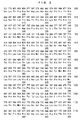
- Fig. 1 shows the starting part of the gene sequence of NTH1 gene.
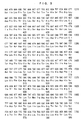
- Fig. 2 shows the part of the gene sequence of NTH1 gene that follows Fig. 1.
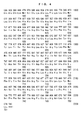
- Fig. 3 shows the part of the gene sequence of NTH1 gene that follows Fig. 2.
- Fig. 4 shows the last part of the gene sequence of NTH1 gene.
- Fig. 5 shows the former half of the gene sequence of URA3.
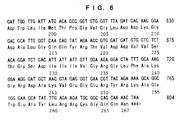
- Fig. 6 shows the latter half of the gene sequence of URA3.
- Fig. 7 shows a process of constructing a hybrid.
- Fig. 8 shows the construction of pNTHd1.
- Fig. 9 shows the construction of pNTHd2.
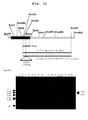
- Fig. 10 shows the confirmation of the disruption of NTH1 gene with pNTHd1.
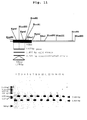
- Fig. 11 shows the confirmation of the disruption of NTH1 gene with pNTHd2.
- Fig. 12 shows the data of the gaseous volume of each dough sample as obtained through fermography, for which each dough sample comprising a different yeast was incubated for 60 minutes, then frozen and stored for 2 weeks, thawed, and thereafter subjected to fermography for 90 minutes.
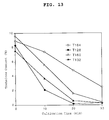
- Fig. 13 shows the time-dependent variation in the trehalose content of each strain of T164, T160, T122 and T128 in culture.
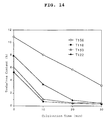
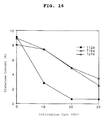
- Fig. 14 shows the time-dependent variation in the trehalose content of each strain of T156, T122, T150 and T118 in culture.
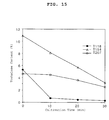
- Fig. 15 shows the time-dependent variation in the trehalose content of each strain of T118, T154 and T207 in culture.
- Fig. 16 shows the time-dependent variation in the trehalose content of each strain of T128, T164 and T216 in culture.
- Fig. 17 shows the time-dependent variation in the trehalose content of each strain of T117, T153 and T203 in culture.
- Fig. 18 shows the time-dependent variation in the trehalose content of each strain of commercially-available, freezing-resistant yeasts in culture.
- the screening of yeast strains for those to be subjected to gene manipulation is indispensable.
- haploid yeast strains which must be identified as to whether they are a-type ones or ⁇ -type ones.
- a selected haploid yeast could be conjugated with a previously prepared ⁇ -type haploid yeast in the culture of the two in a ratio of 1/1
- the haploid yeast is identified as an a-type one.
- the haploid yeast is identified as an ⁇ -type one.
- An a-type or ⁇ -type haploid yeast may be mated with an ⁇ -type or a-type haploid to construct an a/ ⁇ -type diploid yeast, which is then mass-cultivated.
- various bread samples are prepared, from which are selected excellent bread samples.
- the yeasts used in preparing the excellent bread samples are known, and they are determined to be haploid yeasts to be subjected to gene manipulation.
- the characteristics of the bread to be prepared by baking frozen dough that comprises the mated diploid yeast greatly vary. Therefore, the screening of the suitable haploid yeast to be subjected to gene manipulation is extremely difficult. However, in order to obtain the intended, frozen dough-resistant, practical baker's yeast, this screening step is indispensable.
- a marker gene such as URA3 (uridylic acid synthetase) (Gene 29: 113-124, (1984)), which is shown in Fig. 5 and Fig. 6, or ADE2 or LYS2
- NTH1 gene neutral trehalase gene
- a haploid yeast which is shown in Fig. 1, Fig. 2, Fig. 3 and Fig. 4, the NTH1 gene is disrupted and could no more be expressed in the yeast.
- the URA3 or other auxotrophic marker gene as inserted into the yeast is expressed, whereby the disruption of the NTH1 gene in the yeast is confirmed.
- the URA3 and other marker genes to be inserted into the yeast are preferably those derived from Saccharomyces cerevisiae , especially those from baker's yeast, for realizing their self-cloning.
- ura3 URA3-defective strain
- cells of the strain are screened in a 5-fluoro-orotic acid-containing medium.
- cells of a haploid strain are cultivated in an YPD liquid medium, centrifuged, and washed with a sterilized physiological saline solution.
- About 10 8 cells thus cultivated are applied onto a 5-fluoro-orotic acid-containing medium (0.7 % YEAST NITROGEN BASE (DIFCO), 2 % glucose, 0.1 % 5-fluoro-orotic acid, 0.05 % uracil, 2 % agar) and cultivated thereon, and the cells growing on the medium to give colonies thereon are selected.
- the cells having grown on the medium do not have intact URA3 gene, as having been pontaneously mutated.
- Such URA3-defective cells are obtained at a frequency of one cell per 10 6 to 10 7 cells.
- URA3-defective cells could not grow on an uracil-free medium, but could grow thereon only after having been transformed with an URA3-containing plasmid, such as YCp50 or the like. Therefore, through the transformation of those cells, the defect of URA3 therein can be confirmed.
- the object of the disruption of the NTH1 gene in haploid yeasts is to prevent the NTH1 gene from being expressed in the yeasts to give a neutral trehalase which decomposes trehalose. For this, therefore, all or a part of the gene sequence of the NTH1 gene is deleted.
- URA3 is inserted entirely or partly into the region of the NTH1 gene of a haploid yeast to thereby disrupt the NTH1 gene therein.
- a part of the gene sequence of the NTH1 gene shown in Fig. 1, Fig. 2, Fig. 3 and Fig. 4 is inserted into an E. coli vector, such as pUC19, then the URA3 gene shown in Fig. 5 and Fig. 6 is inserted into the partial region of the NTH1 gene in the vector.
- the resulting plasmid is proliferated in E. coli cells. From this plasmid, cleaved out is only the DNA fragment of NTH1 gene (former half) - URA3 - NTH1 gene (latter half).
- the thus-isolated DNA fragment is thereafter transformed into a haploid yeast, of which the diploid is a practical baker's yeast, in a lithium acetate method.
- NTH1 gene (former half) - URA3 - NTH1 gene (latter half) in the yeast is bonded and recombined whereby the NTH1 gene is completely divided into two, its former half and latter half, via URA3 therebetween, resulting in that the gene is disrupted.
- the NTH1 gene-disrupted haploid yeast obtained herein is either an a-type or ⁇ -type one, while having such necessary properties that its diploid yeast can be a practical baker's yeast.
- only the NTH1 gene is disrupted in the haploid yeast through the gene disruption, while the other genes in the resulting NTH1 gene-disrupted haploid yeast are not changed at all and still maintain their intrinsic properties.
- One or more NTH1 gene-disrupted haploid yeasts as prepared through the process of disrupting the NTH1 gene of a haploid yeast, of which the diploid is a practical baker's yeast, are mated with any other haploid yeasts to give diploid or higher polyploid, frozen dough-resistant, practical baker's yeasts.
- One preferred embodiment of the mating is to mate an a-type, NTH1 gene-disrupted haploid yeast is mated with an ⁇ -type, NTH1 gene-disrupted haploid yeast to give a diploid yeast.
- Fig. 7 shows an outline of the process of producing the diploid, frozen dough-resistant, practical baker's yeast of the invention.
- the anti-freezing property of the polyploid, frozen dough-resistant, practical baker's yeast of the invention is extremely excellent, especially in frozen dough as prepared by incubating dough and then freezing it.
- the production of bread from frozen dough has derived from the need for the improvement in the working conditions in bakeries.
- dough is frozen not directly but after having been incubated for about 60 minutes (this period is from the mixing of dough materials to the freezing of the resulting dough, for which the dough is substantially incubated), and thereafter the thus-expanded dough is frozen as it is.
- the frozen dough products are delivered to bakeries, in which they are stored for a while, and thereafter thawed, fermented (proofing) and baked depending on the working time.
- the baker's yeast to be used in the frozen dough must have good and long-lasting freezing resistance in the incubated and frozen dough.
- the polyploid, frozen dough-resistant, practical baker's yeast of the invention is well resistant even to incubated dough in the frozen condition.
- the frozen dough comprising the yeast of the invention is thawed and fermented, the yeast well exhibits its capacity, and the bread to be obtained by baking the thus-fermented dough is tasty and delicious.
- NTH1 gene is positioned just adjacent to the centromere in the fourth chromosome of Saccharomyces cerevisiae of baker's yeast, and its gene sequence is as in Fig. 1, Fig. 2, Fig. 3 and Fig. 4.
- the NTH1 gene of baker's yeast was obtained from the region containing the centromere in the fourth chromosome of a usually-available yeast vector, YCp50 through gene eviction, and its sequence was confirmed as in Fig. 1, Fig. 2, Fig. 3 and Fig. 4.
- pNTHd1 was constructed as in Fig. 8.
- NTH1 gene between KpnI-recgnition site in the 3'-side and EcoRI-recgnition site in the upstream site above it, which was about 770 bp, was cleaved at the both recognition sites, as in Fig. 8, and the resulting fragment was inserted into a commercially-available E. coli vector, pUC19, at the same restriction enzyme-recognition sites (KpnI and EcoRI-recognition sites) to obtain pNTH-KE.
- the resulting plasmid was cleaved at the XhoI-recognition site, and its terminals were blunted with a DNA polymerase.
- the URA3 gene in commercially-available YEp24 which is as in Fig. 5 and Fig. 6, was cleaved with HindIII and recovered.
- This URA3 fragment of about 1,170 bp was blunted with a DNA polymerase, and inserted into the XhoI-cleaved site of blunted as above the plasmid pNTH-KE through ligation with a ligase to obtain pNTHd1.
- pNTHd2 was constructed as in Fig. 9.
- the region of EcoRI-EcoRI fragment of about 1,420 bp in the 5'-side of NTH1 gene was cleaved, as in Fig. 9, and the resulting fragment was inserted into a E. coli vector, pBR322dH (this was prepared by recognition commercially-available E. coli vector, pBR322 with HindIII, blunting the terminals with a DNA polymerase, and recyclizing the resulting fragment with a ligase) at the EcoRI-recognition site to obtain pNTH-EE.
- the resulting plasmid was cleaved at the HindIII-recognition site.
- the URA3 gene in commercially-available YEp24 which is as in Fig. 5 and Fig. 6, was cleaved with HindIII.
- the resulting URA3 fragment of about 1,170 bp was inserted into the plasmid pNTH-EE, using a ligase, to obtain pNTHd2.
- pNTHd1 was cleaved with EcoRI and KpnI to isolate a DNA fragment of NTH1 gene (former half) - URA3 -NTH1 gene (latter half), with which each haploid yeast of No. 2, No. 7, No. 12, No. 13, No. 14, No. 18, No. 19 and No. 21, all shown in Table 1, was transformed in a lithium acetate process.
- chromosomal DNA extracted from each of those transformant strains was digested with EcoRI, and 0.5 ⁇ g of the DNA fragment was subjected to agarose gel electrophoresis followed by Southern hybridization, from which was confirmed the gene disruption as in Fig. 10.
- the left side column indicates the position of the bands of the molecular weight markers ( ⁇ DNA-HindIII digested).
- Each lane corresponds to the strain number as follows: Lane 1 is No. 2; lane 2 is No. 2d-1; lane 3 is No. 7; lane 4 is No. 7d-1; lane 5 is No. 12; lane 6 is No. 12d-1; lane 7 is No. 13; lane 8 is No. 13d-1; lane 9 is No.
- d-1 means that the strain was processed with pNTHdl for gene disruption, and the same shall apply to the strains in Table 2.
- the data in Fig. 10 verify the disruption of the NTH1 gene in those strains.
- pNTHd2 was cleaved with EcoRI to isolate a DNA fragment of NTH1 gene (former half) - URA3 -NTH1 gene (latter half), with which each haploid yeast of No. 2, No. 7, No. 12, No. 13, No. 14, No. 18, No. 19 and No. 21, all shown in Table 1, was transformed in a lithium acetate method.
- chromosomal DNA as extracted from each of those transformant strains was decomposed with RcoRI, and 0.5 ⁇ g of the DNA fragment was subjected to agarose gel electrophoresis followed by Southern hybridization, from which was confirmed the gene disruption as in Fig. 11.
- the left side column indicates the position of the bands of the molecular weight markers ( ⁇ DNA-HindIII decomposed).
- Each lane corresponds to the strain number as follows: Lane 1 is No. 2; lane 2 is No. T2d-2; lane 3 is No. 7; lane 4 is No. T7d-2; lane 5 is No. 12; lane 6 is No. T12d-2; lane 7 is No. 13; lane 8 is No.
- "T d-2" means that the strain was processed with pNTHd2 for gene disruption, and the same shall apply to the strains in Table 3.
- the data in Fig. 11 verify the disruption of the NTH1 gene in those strains.
- the mating matrix I in Table 2 shows various combinations of wild strain and pNTHd1-processed strain.
- strains in the uppermost row are all a-type ones, while those in the leftmost column are all ⁇ -type ones.
- strains with "d-1" are gene-disrupted ones as processed with pNTHd1; while those with no "d-1" are wild strains as in Table 1.
- the mating was effected as follows: First, a pair of a-type strain and ⁇ -type strain were separately cultivated and proliferated in YPD media at 30°C for one day. The number of the thus-proliferated cells of the both strains was nearly the same. The cells of the both strains were put into a fresh YPD medium and further cultivated therein at 30°C for 12 hours. Then, the conjugated yeast cells were isolated, applied onto an YPD-agar medium, and cultivated thereon at 30°C for one day. Relatively large colonies formed were taken out. It was confirmed that the cells in those colonies have no conjugating ability and that they are larger than the haploid cells through microscopic observation. Thus, the formation of diploid yeast cells was confirmed.
- the mating matrix II in Table 3 shows various combinations of pNTHd2-processed strains.
- the strains both in the uppermost row and in the leftmost column are all gene-disrupted ones as processed with pNTHd2.
- the strains in the uppermost row are ⁇ -type ones, while those in the leftmost column are a-type ones.
- Example 2 Many diploid, frozen dough-resistant, practical baker's yeasts obtained in Example 2 as in Table 2 and Table 3 were cultivated. For those, employed was industrial fed bach culture in which was used molasses as the carbon source. Briefly, the yeasts were cultivated in mini-jar fermenters (volume: 3 liters) and 30-liter jar fermenters according to conventional feeding culture.
- Each yeast was added to the dough having any of the above-mentioned compositions, mixed, and divided into plural portions each having a wheat flour content of 30 g. These were incubated at 30°C for 60 minutes, shaped, then frozen and stored for 2 weeks, and thereafter thawed, whereupon the gaseous volume of each sample as thawed and kept at 30°C for 90 minutes was measured through fermography.
- Yeasts shown in Table 4 which had been cultivated in mini-jars in Example 3, were used in preparing dough samples. After having been incubated, the samples were tested to measure their gas production for 120 minutes.
- the data obtained are shown in Table 5 below. Those data verify the following: The NTH1 gene-disrupted strain, T153 gave a higher ratio of (before frozen)/(after frozen) than the non-disrupted strain, T117, both in the dough samples frozen and stored for one week and in the dough samples frozen and stored for 2 weeks. Thus, the freezing resistance of the gene-disrupted strain T153 is higher than that of the non-disrupted strain T117.
- Yeasts shown in Tables 6 and 7 below which had been cultivated in 30-liter jars in Example 3, were used in preparing dough samples for loaves and sugarless dough samples for French bread. The samples were incubated for 60 minutes or 120 minutes. Before and after frozen, the amount of gas production of each sample was measured. The data obtained are shown in Table 6 and Table 7. Those data verify the following: The degree of retentiveness of the living yeast in both the sugarless dough samples and the low-sugar dough samples, which had been incubated for a floor time of 60 minutes or 120 minutes, was high, before and after freezing the samples. Thus, it was confirmed that the freezing resistance of the gene-disrupted strains in those dough samples was improved high. It was also confirmed that the hybrid strains, of which one of the parent strains was an NTH1 gene-disrupted one, also exhibited improved freezing resistance.
- the invention it is possible to obtain diploid or higher polyploid, practical baker's yeasts with good frozen dough resistance by mating one or more NTH1 gene-disrupted haploid yeasts as produced through gene manipulation of disrupting the NTH1 gene of a haploid yeast, of which the diploid is practical baker's yeast.
- the frozen dough-resistant,practical baker's yeast of the invention is reduce the ability of trehalose degradation at fermentation process brought by operation before freeze,whereby they posses trehalose at high concentrate ,and the dough comprising the yeast of the invention is improved the long term stability of the frozen dough.
- the NTH1 gene is represented by SEQ ID No 1 with the protein (see SEQ ID No 2) that it encodes
- URA3 marker is represented by SEQ ID No 3 with the protein (see SEQ ID No 4) that it encodes.
Landscapes
- Life Sciences & Earth Sciences (AREA)
- Chemical & Material Sciences (AREA)
- Health & Medical Sciences (AREA)
- Engineering & Computer Science (AREA)
- Organic Chemistry (AREA)
- Zoology (AREA)
- Genetics & Genomics (AREA)
- Bioinformatics & Cheminformatics (AREA)
- Wood Science & Technology (AREA)
- Mycology (AREA)
- Biotechnology (AREA)
- General Engineering & Computer Science (AREA)
- General Health & Medical Sciences (AREA)
- Biochemistry (AREA)
- Microbiology (AREA)
- Medicinal Chemistry (AREA)
- Biomedical Technology (AREA)
- Botany (AREA)
- Tropical Medicine & Parasitology (AREA)
- Virology (AREA)
- Molecular Biology (AREA)
- Food Science & Technology (AREA)
- Bakery Products And Manufacturing Methods Therefor (AREA)
- Micro-Organisms Or Cultivation Processes Thereof (AREA)
Applications Claiming Priority (3)
| Application Number | Priority Date | Filing Date | Title |
|---|---|---|---|
| JP29788696 | 1996-10-23 | ||
| JP297886/96 | 1996-10-23 | ||
| JP8297886A JPH10117771A (ja) | 1996-10-23 | 1996-10-23 | 冷凍生地耐性実用パン酵母 |
Publications (2)
| Publication Number | Publication Date |
|---|---|
| EP0838520A2 true EP0838520A2 (de) | 1998-04-29 |
| EP0838520A3 EP0838520A3 (de) | 1999-12-22 |
Family
ID=17852390
Family Applications (1)
| Application Number | Title | Priority Date | Filing Date |
|---|---|---|---|
| EP97402512A Withdrawn EP0838520A3 (de) | 1996-10-23 | 1997-10-23 | Praktisch-verwendbare, gegen tiefgefrorenen Brottteig resistente Backhefe |
Country Status (3)
| Country | Link |
|---|---|
| US (1) | US6410303B1 (de) |
| EP (1) | EP0838520A3 (de) |
| JP (1) | JPH10117771A (de) |
Cited By (2)
| Publication number | Priority date | Publication date | Assignee | Title |
|---|---|---|---|---|
| FR2779735A1 (fr) * | 1998-06-12 | 1999-12-17 | Lesaffre & Cie | Nouvelles souches "fil" resistantes au stress en condition de fermentation et/ou de croissance |
| EP0945511A3 (de) * | 1998-03-04 | 2001-06-13 | National Food Research Institute, Ministry Of Agriculture, Forestry and Fisheries | Trocknung beständige Backhefe |
Families Citing this family (4)
| Publication number | Priority date | Publication date | Assignee | Title |
|---|---|---|---|---|
| JP4580055B2 (ja) * | 2000-03-02 | 2010-11-10 | 独立行政法人農業・食品産業技術総合研究機構 | アミノ酸高蓄積実用パン酵母 |
| ES2382069T3 (es) * | 2000-04-20 | 2012-06-05 | Societe Des Produits Nestle S.A. | Método para introducir propiedades recesivas en una levadura de panadería |
| ES2607891T3 (es) * | 2004-07-16 | 2017-04-04 | Dsm Ip Assets B.V. | Ingeniería metabólica de células eucariotas que fermentan xilosa |
| US20090117227A1 (en) | 2006-02-28 | 2009-05-07 | Suntory Limited | Gene encoding trehalose-6-phosphate phosphatase and use thereof |
Family Cites Families (6)
| Publication number | Priority date | Publication date | Assignee | Title |
|---|---|---|---|---|
| US4547375A (en) * | 1983-04-20 | 1985-10-15 | The Procter & Gamble Co. | Gel formation in tomato products |
| EP0945515A3 (de) * | 1989-11-06 | 2002-08-21 | Cell Genesys, Inc. | Herstellung von Proteinen mittels homologer Rekombination |
| ATE133198T1 (de) | 1990-03-28 | 1996-02-15 | Gist Brocades Nv | Neue hefestämme mit erhöhtem trehalosegehalt, verfahren zur gewinnung solcher hefen und verwendung dieser hefen |
| US5312909A (en) * | 1990-03-28 | 1994-05-17 | Gist Brocades, N.V. | Recombinant DNA encoding neutral trehalase |
| US5580734A (en) * | 1990-07-13 | 1996-12-03 | Transkaryotic Therapies, Inc. | Method of producing a physical map contigous DNA sequences |
| US5422254A (en) | 1992-02-14 | 1995-06-06 | Oy Alko Ab | Method to increase the trehalose content of organisms by transforming them with the structural genes for the short and long chains of yeast trehalose synthase |
-
1996
- 1996-10-23 JP JP8297886A patent/JPH10117771A/ja active Pending
-
1997
- 1997-10-21 US US08/969,415 patent/US6410303B1/en not_active Expired - Lifetime
- 1997-10-23 EP EP97402512A patent/EP0838520A3/de not_active Withdrawn
Non-Patent Citations (1)
| Title |
|---|
| KOPP ET AL.: "Molecular analysis of the neutral trehalase gene from Saccharomyces cerevisiae", JOURNAL BIOL CHEM, vol. 268, no. 7, 5 March 1993 (1993-03-05), pages 4766 - 4774 * |
Cited By (2)
| Publication number | Priority date | Publication date | Assignee | Title |
|---|---|---|---|---|
| EP0945511A3 (de) * | 1998-03-04 | 2001-06-13 | National Food Research Institute, Ministry Of Agriculture, Forestry and Fisheries | Trocknung beständige Backhefe |
| FR2779735A1 (fr) * | 1998-06-12 | 1999-12-17 | Lesaffre & Cie | Nouvelles souches "fil" resistantes au stress en condition de fermentation et/ou de croissance |
Also Published As
| Publication number | Publication date |
|---|---|
| EP0838520A3 (de) | 1999-12-22 |
| US6410303B1 (en) | 2002-06-25 |
| JPH10117771A (ja) | 1998-05-12 |
Similar Documents
| Publication | Publication Date | Title |
|---|---|---|
| US5480798A (en) | Baker's yeast having a low temperature inactivation property | |
| EP4502138A1 (de) | Saccharomyces cerevisiae stamm, verfahren zu seiner untersuchung und verwendung davon | |
| EP0197497B1 (de) | Backhefe und Verfahren zur Brotherstellung | |
| EP0838520A2 (de) | Praktisch-verwendbare, gegen tiefgefrorenen Brottteig resistente Backhefe | |
| EP0921190A2 (de) | Praktisch-verwendbare,gegen tiefgefrorenen und stark gezuckerten Brotteig resistente Backhefe | |
| CA2012090C (en) | Bakers' yeast | |
| US6190707B1 (en) | Cold-sensitive bread-making yeasts | |
| Oda et al. | Hybridization of bakers' yeast by the rare-mating method to improve leavening ability in dough | |
| EP0229976B1 (de) | Hefestämme, Verfahren zur Herstellung derselben und deren Verwendung beim Backen | |
| JP4580055B2 (ja) | アミノ酸高蓄積実用パン酵母 | |
| JPH0779767A (ja) | 新規酵母及び該酵母を含有するパン生地 | |
| US9872504B2 (en) | Bread yeast strains | |
| US6172196B1 (en) | DNA encoding protein complementing yeast low temperature-sensitive fermentability | |
| US6551829B1 (en) | Drying-resistant, practical baker's yeast | |
| Ohshima et al. | Industrial application of artificially induced diploid strains of Torulaspora delbrueckii | |
| JP2003047391A (ja) | 乾燥耐性酵母 | |
| JP3142941B2 (ja) | パン酵母及びこれを用いた冷凍パン生地 | |
| KR102938621B1 (ko) | 제빵적성이 우수한 클루이베로마이세스 마르시아누스 mby2641 | |
| Oda et al. | Interspecific Hybrid Between Saccharomyces mikatae and Saccharomyces cerevisiae as an Alternative Strain for Bread Making | |
| WO1996038538A1 (en) | High sugar dough yeast strains | |
| US6924132B1 (en) | Protein complementing yeast low temperature-sensitivity fermentability | |
| CA2153559C (en) | Freeze-resistant baker's yeast having sugar resistance | |
| Wongkhalaung et al. | Characterization of new baker’s yeast strains and their leavening ability in bread dough | |
| JP3966887B2 (ja) | 新規酵母遺伝子 | |
| JP2001299347A (ja) | 産業用パン酵母の遺伝的バックグラウンドに劣性を導入する方法 |
Legal Events
| Date | Code | Title | Description |
|---|---|---|---|
| PUAI | Public reference made under article 153(3) epc to a published international application that has entered the european phase |
Free format text: ORIGINAL CODE: 0009012 |
|
| AK | Designated contracting states |
Kind code of ref document: A2 Designated state(s): DE FR GB NL |
|
| PUAL | Search report despatched |
Free format text: ORIGINAL CODE: 0009013 |
|
| AK | Designated contracting states |
Kind code of ref document: A3 Designated state(s): AT BE CH DE DK ES FI FR GB GR IE IT LI LU MC NL PT SE |
|
| 17P | Request for examination filed |
Effective date: 20000613 |
|
| AKX | Designation fees paid |
Free format text: DE FR GB NL |
|
| 17Q | First examination report despatched |
Effective date: 20020822 |
|
| STAA | Information on the status of an ep patent application or granted ep patent |
Free format text: STATUS: THE APPLICATION HAS BEEN WITHDRAWN |
|
| 18W | Application withdrawn |
Effective date: 20050525 |