EP0839205B1 - Leberspezifischer adenovirus-expressionsvektor - Google Patents
Leberspezifischer adenovirus-expressionsvektor Download PDFInfo
- Publication number
- EP0839205B1 EP0839205B1 EP96923829A EP96923829A EP0839205B1 EP 0839205 B1 EP0839205 B1 EP 0839205B1 EP 96923829 A EP96923829 A EP 96923829A EP 96923829 A EP96923829 A EP 96923829A EP 0839205 B1 EP0839205 B1 EP 0839205B1
- Authority
- EP
- European Patent Office
- Prior art keywords
- promoter
- liver
- vector
- gene
- enhancer
- Prior art date
- Legal status (The legal status is an assumption and is not a legal conclusion. Google has not performed a legal analysis and makes no representation as to the accuracy of the status listed.)
- Expired - Lifetime
Links
Images



Classifications
-
- C—CHEMISTRY; METALLURGY
- C12—BIOCHEMISTRY; BEER; SPIRITS; WINE; VINEGAR; MICROBIOLOGY; ENZYMOLOGY; MUTATION OR GENETIC ENGINEERING
- C12N—MICROORGANISMS OR ENZYMES; COMPOSITIONS THEREOF; PROPAGATING, PRESERVING, OR MAINTAINING MICROORGANISMS; MUTATION OR GENETIC ENGINEERING; CULTURE MEDIA
- C12N15/00—Mutation or genetic engineering; DNA or RNA concerning genetic engineering, vectors, e.g. plasmids, or their isolation, preparation or purification; Use of hosts therefor
- C12N15/09—Recombinant DNA-technology
- C12N15/63—Introduction of foreign genetic material using vectors; Vectors; Use of hosts therefor; Regulation of expression
- C12N15/79—Vectors or expression systems specially adapted for eukaryotic hosts
- C12N15/85—Vectors or expression systems specially adapted for eukaryotic hosts for animal cells
- C12N15/86—Viral vectors
-
- A—HUMAN NECESSITIES
- A61—MEDICAL OR VETERINARY SCIENCE; HYGIENE
- A61P—SPECIFIC THERAPEUTIC ACTIVITY OF CHEMICAL COMPOUNDS OR MEDICINAL PREPARATIONS
- A61P1/00—Drugs for disorders of the alimentary tract or the digestive system
- A61P1/16—Drugs for disorders of the alimentary tract or the digestive system for liver or gallbladder disorders, e.g. hepatoprotective agents, cholagogues, litholytics
-
- A—HUMAN NECESSITIES
- A61—MEDICAL OR VETERINARY SCIENCE; HYGIENE
- A61P—SPECIFIC THERAPEUTIC ACTIVITY OF CHEMICAL COMPOUNDS OR MEDICINAL PREPARATIONS
- A61P35/00—Antineoplastic agents
-
- A—HUMAN NECESSITIES
- A61—MEDICAL OR VETERINARY SCIENCE; HYGIENE
- A61K—PREPARATIONS FOR MEDICAL, DENTAL OR TOILETRY PURPOSES
- A61K48/00—Medicinal preparations containing genetic material which is inserted into cells of the living body to treat genetic diseases; Gene therapy
-
- C—CHEMISTRY; METALLURGY
- C12—BIOCHEMISTRY; BEER; SPIRITS; WINE; VINEGAR; MICROBIOLOGY; ENZYMOLOGY; MUTATION OR GENETIC ENGINEERING
- C12N—MICROORGANISMS OR ENZYMES; COMPOSITIONS THEREOF; PROPAGATING, PRESERVING, OR MAINTAINING MICROORGANISMS; MUTATION OR GENETIC ENGINEERING; CULTURE MEDIA
- C12N2710/00—MICROORGANISMS OR ENZYMES; COMPOSITIONS THEREOF; PROPAGATING, PRESERVING, OR MAINTAINING MICROORGANISMS; MUTATION OR GENETIC ENGINEERING; CULTURE MEDIA dsDNA viruses
- C12N2710/00011—Details
- C12N2710/10011—Adenoviridae
- C12N2710/10311—Mastadenovirus, e.g. human or simian adenoviruses
- C12N2710/10341—Use of virus, viral particle or viral elements as a vector
- C12N2710/10343—Use of virus, viral particle or viral elements as a vector viral genome or elements thereof as genetic vector
-
- C—CHEMISTRY; METALLURGY
- C12—BIOCHEMISTRY; BEER; SPIRITS; WINE; VINEGAR; MICROBIOLOGY; ENZYMOLOGY; MUTATION OR GENETIC ENGINEERING
- C12N—MICROORGANISMS OR ENZYMES; COMPOSITIONS THEREOF; PROPAGATING, PRESERVING, OR MAINTAINING MICROORGANISMS; MUTATION OR GENETIC ENGINEERING; CULTURE MEDIA
- C12N2710/00—MICROORGANISMS OR ENZYMES; COMPOSITIONS THEREOF; PROPAGATING, PRESERVING, OR MAINTAINING MICROORGANISMS; MUTATION OR GENETIC ENGINEERING; CULTURE MEDIA dsDNA viruses
- C12N2710/00011—Details
- C12N2710/10011—Adenoviridae
- C12N2710/10311—Mastadenovirus, e.g. human or simian adenoviruses
- C12N2710/10351—Methods of production or purification of viral material
-
- C—CHEMISTRY; METALLURGY
- C12—BIOCHEMISTRY; BEER; SPIRITS; WINE; VINEGAR; MICROBIOLOGY; ENZYMOLOGY; MUTATION OR GENETIC ENGINEERING
- C12N—MICROORGANISMS OR ENZYMES; COMPOSITIONS THEREOF; PROPAGATING, PRESERVING, OR MAINTAINING MICROORGANISMS; MUTATION OR GENETIC ENGINEERING; CULTURE MEDIA
- C12N2730/00—Reverse transcribing DNA viruses
- C12N2730/00011—Details
- C12N2730/10011—Hepadnaviridae
- C12N2730/10111—Orthohepadnavirus, e.g. hepatitis B virus
- C12N2730/10122—New viral proteins or individual genes, new structural or functional aspects of known viral proteins or genes
-
- C—CHEMISTRY; METALLURGY
- C12—BIOCHEMISTRY; BEER; SPIRITS; WINE; VINEGAR; MICROBIOLOGY; ENZYMOLOGY; MUTATION OR GENETIC ENGINEERING
- C12N—MICROORGANISMS OR ENZYMES; COMPOSITIONS THEREOF; PROPAGATING, PRESERVING, OR MAINTAINING MICROORGANISMS; MUTATION OR GENETIC ENGINEERING; CULTURE MEDIA
- C12N2830/00—Vector systems having a special element relevant for transcription
- C12N2830/008—Vector systems having a special element relevant for transcription cell type or tissue specific enhancer/promoter combination
Definitions
- the invention relates to an adenovirus vector for the liver-specific gene therapy; Areas of application are in the Medicine the treatment of genetic defects and tumor diseases the liver and molecular biology.
- Vectors derived from viruses are compared with non-viral transfer methods in which the therapeutic gene is embedded in protein or lipid shells.
- the coupling of these particles to ligands of specific receptors enables preferential uptake by cells which carry these receptors. This is advantageous for the gene therapy approach in vivo - despite systemic administration, the therapeutic gene only reaches tissues in which its activity is desired.
- viral vectors especially the virus groups Retrovius and Adenovirus, are currently preferred because of their greater effectiveness in vivo . Both viruses allow gene transfer in liver cells.
- the retroviral infection leads to a stable integration of the genetic material into the cellular genome.
- Adenoviruses are in all other vector types in theirs Effectiveness far superior. Almost 100% of the hepatocytes can be reached by the virus even when administered intravenously become. Adenoviruses are present in the cell as an episome.
- adenovirals Vectors most of the viral genome. Both originally used was only the E1 Region into the helper cell used for virus propagation (HEK293) and thus replication of the virus in the Target tissue prevented. Because the adenovirus envelope a maximum of 105% the genome size (40kb) was the El deletion also essential for the insertion of new genes. For expansion of the absorption capacity to a maximum of 8.3kb were additional Parts of the E3 region deleted (Bett et al./1994/ Proc. Natl. Acad. Sci. USA 91, 8802). Although the most essential Transactivators of adenoviral genes, products of the El Region, are missing in the target cell, in addition to therapeutic gene also expressed viral genes.
- a major disadvantage of existing adenovirus vectors consists in the lack of tissue specificity. Adenovirus receptors are present on a variety of cell types. The additional coupling of ligands of specific receptors the virus therefore appears unlikely.
- liver specificity is also due to the acquisition mode Use of liver-specific promoters possible.
- Various cellular promoters active in hepatocytes (albumin and alphal-antitrypsin promoter) were determined on their suitability for the Gene therapy in retroviruses examined (Rettinger et al./1994/ Proc. Natl. Acad. Sci. USA 91, 1460).
- DE-C-433992 discloses a liver-specific adenovirus expression vector with an albumin, PEPCK or OTC promoter / enhancer element. Because of their size however, they are for use in adenovirus vectors not suitable. Often used in the adenoviral context are strong viral promoters (CMV and RSV promoters) ubiquitous and become active in the liver after a short time switched off.
- CMV and RSV promoters strong viral promoters
- the aim of the invention is the construction of a vector on the Base of adenovirus, which has the merits of an adenovirus vector with the property of a liver specific Expression of therapeutic genes connects.
- An essential part of the invention is a short one highly active and liver-specific promoter on which the therapeutic gene is coupled. It consists of enhancer elements of the hepatitis B virus and an enhancer-free Minimal promoter and is possibly of SAR elements (scaffold attached regions). That happens to the Influence of adenoviral enhancers in the environment of the shield the inserted gene. As such an element will prefers the SAR region of the human interferon ⁇ gene used.
- the preferred enhancer element of the hepatitis B virus is the Enhancer II used, it is through positions 1628-1807 of the viral gene determined and related to the subtype ayw.
- the minimal promoter has one low base expression and is due to the hepatitis B virus Enhancer II can be activated.
- the preferred place for the insertion of the inventive expression unit consisting of enhancer, promoter and gene is the El region of the adenogenome.
- adenoviruses are before all subtypes 2 and 5 of this virus are used.
- the cDNA of the human LDL receptor is used as a therapeutic gene used. This gene is in patients with familial hypercholesterolemia mutated. The receptor is particularly strongly represented on hepatocytes; The therapy requires permanent high expression in these cells.
- the location of the cDNA of the LDL receptor can be the cDNAs other genes, if these at each treating disease is defective and mainly in the liver are active.
- the advantages of the vector according to the invention are: Association of high infection efficiency with high Specificity of expression for liver cells. Furthermore the promoter remains active in the liver for a long time if he in adenovirus vectors with reduced immunogenicity is used. This enables its use at a more effective therapy for congenital genetic defects of the liver.
- Adenoviruses are particularly suitable for in vivo gene transfer due to their high titer and stability in the blood.
- the natural target cells for adenoviruses are the cells of epitelial tissue. There is no particular tropism for hepatocytes. The organ specificity must therefore be brought about by special application routes or changes to the virus itself. Due to the complexity of the virus envelope and the still unexplained virus-receptor interaction, a modification of virus proteins for the selective infection of hepatocytes does not appear to be very promising. Alternatively, however, the expression of the transferred therapeutic gene can be restricted to hepatocytes by using liver-specific promoters.
- hepatitis B virus has a genome of 3.2 kb, the genes of which are controlled by 4 different promoters (preS1, S, core and X promoters). They are activated by two enhancers (enhancers I and II) to different degrees. All of these control elements comprise only a few hundred base pairs.
- promoters / enhancers were obtained by PCR from the cloned genome of the hepatitis B virus (subtype ayw) and cloned in front of a promoterless luciferase gene.
- the transient expression test determination of the luciferase activity
- the promoters were examined for their liver specificity and the promoter strength was compared with that of the CMV promoter.
- the transfection was carried out using the Ca 3 (PO 4 ) 2 precipitation technique and was standardized by coprecipitation of an RSV promoter-controlled ⁇ -galactosidase gene and measurement of ⁇ -galactosidase activity.
- the core promoter / enhancer II pCPluc, nt1628-1807
- the enhancer II was coupled with an easily activatable enhancer-less minimal promoter.
- the TATA box and transcription start region (nt-55- + 69) of the promoter of the early cytomegalovirus transcripts were used.
- the created artificial promoter (EIImCMV) achieves more than 25% of the CMV promoter activity in hepatocytes and can therefore be classified as a strong promoter.
- the selectivity for hepatocytes is largely preserved.
- the promoter is also highly active in primary mouse, pig and human hepatocytes. Long-term activity in hepatocytes is crucial for usability in gene therapy vectors.
- the promoters were fused with the ⁇ -galactosidase gene and cloned into the episomal expression vector pREP8 (Invitrogen).
- Stable hepatocyte lines (HuH7) were generated with the episome and the ⁇ -galactosidase expression was monitored over 3 months. There was no decrease in expression during this period.
- the promoters CP and EIImCMV as well as the CMV promoter were in the following with the cDNA of the human LDL receptor coupled.
- the receptor is mainly expressed in the liver.
- the Hereditary disease "familial hypercholesterolaemia" is based on a defect in this gene and is targeted by the Transfer of an active LDL prescription gene into the liver treatable.
- the expression unit from the respective promoter and theLDL receptor cDNA was inserted into the adenovirus transfer plasmid pdElsplA advertised in both possible orientations.
- pdElsplA adenovirus transfer plasmid
- pJM17 adenovirus genome
- Viruses from individual recombination events were isolated by plaque assay, multiplied in HEK293 cells, purified from the cell lysate by double sedimentation in the CsCl 2 gradient and the titer of the virus stocks was determined.
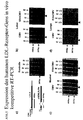
- the liver cell lines HepG2 and HuH7 and the non-liver cell lines HeLa and CV1 were infected with 50 viruses / cell and the expression of the LDL receptor gene was detected three days after infection at the RNA level by RNAse protection and at the protein level in the Western blot. While the activity of the CMV promoter-controlled gene reached a similar level in all investigated cell lines, high expression of CP and EIImCMV promoters was only found in hepatocyte cell lines (Fig. 3). The orientation of the expression unit in the virus had only a minor influence on the level of expression. The activity of the HBV / CMV hybrid promoter reached about 30% of the activity of the CMV promoter.
- Ad5-CMVLDLR Ad5-E2mCMVLDLR or the control vector Ad5-RSVbg
- mice outbred strain NMRI
- the animals were sacrificed 4 days after infection and the liver, lungs, diaphragm and kidney removed.
- the organs were pulverized in liquid nitrogen and used to extract RNA and DNA.
- the Southern blot showed that a substantial part of the viruses infected the liver. Little viral DNA was detected in the other organs.
- RNAse protection assay for transcripts of the human LDL receptor. While the expression of the CMV promoter was present in all three tissues, expression of the E2mCMV promoter could only be detected in the liver, but not in the muscles and lungs. The quality and quantity of the isolated RNA were verified by "RNAse protection assay" for the ubiquitously active GAPDH gene.
- RNA from the respective organ are mixed with increasing amounts of a shortened, in vitro synthesized LDL receptor RNA (competitor), reverse transcribed and an LDL receptor fragment amplified in a PCR.
- competitor RNA increases, the strength of the shorter PCR product increases, while the amount of the longer cellular RNA corresponding PCR product decreases.
- the amount of competitor in which the intensity of both bands in the agarose gel is identical, provides information about the content of LDL receptor RNA in the tissue.
- the results of competitive RT-PCR confirmed those of the "RNAse protection assay".
- the activity of the E2mCMV promoter exceeds that of the CMV promoter in the liver. In muscle and lungs, however, it lags behind that of the CMV promoter by a factor of 10-30.
- Adenovirus vectors were thus constructed which allow a high expression of the LDL receptor specifically in the liver even when the virus is administered systemically. This eliminates negative effects of expression in cells outside the liver.
- luciferase reporter gene controlled by different promoters in hepatocyte cell lines and cell lines of other origin, measured as the activity of the luciferase enzyme.
- the activity is given as% of that with the CMV promoter achieved activity.
- the values given are mean values from 4 independent transfection experiments each.
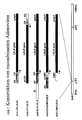
- adenoviruses that carry the human LDL receptor gene under control of the CMV or HBV derived Express promoters.
- CMV CMV immediate early promoter
- CP HBV core promoter
- EGG HBV Enhancer I
- EII HBV Enhancer II
- mCMV minimal CMV Promoter
- polyA Polyadenylation signal of the bovine Growth hormone.
- RNA and genomic DNA were pulverized and used equally for the isolation of RNA and genomic DNA. 10 ⁇ g total RNA was used in the RNA protection assay.
- An antisense RNA of the LDL receptor gene or the GAPDH gene which was synthesized in vitro using 32 P-labeled nucleotides using T7 RNA polymerase, serves as a sample. It is protected against RNAse digestion by the respective cellular transcript for a length of 304bp (LDLR) or 316bp (GAPDH).
- LDLR 304bp
- GPDH 316bp
- genomic DNA was analyzed in a Southern blot. 10 ⁇ g of genomic DNA was digested with Ncol and separated in an agarose gel. In the 5 'region of the adenovirus, a 1584 bp long fragment is released, which is detected by hybridization with a 32 P-labeled DNA probe (same fragment).
Landscapes
- Health & Medical Sciences (AREA)
- Life Sciences & Earth Sciences (AREA)
- Genetics & Genomics (AREA)
- Engineering & Computer Science (AREA)
- Chemical & Material Sciences (AREA)
- Organic Chemistry (AREA)
- Bioinformatics & Cheminformatics (AREA)
- Biotechnology (AREA)
- Biomedical Technology (AREA)
- Zoology (AREA)
- General Health & Medical Sciences (AREA)
- Wood Science & Technology (AREA)
- General Engineering & Computer Science (AREA)
- Molecular Biology (AREA)
- Veterinary Medicine (AREA)
- Medicinal Chemistry (AREA)
- Virology (AREA)
- General Chemical & Material Sciences (AREA)
- Physics & Mathematics (AREA)
- Biochemistry (AREA)
- Biophysics (AREA)
- Chemical Kinetics & Catalysis (AREA)
- Nuclear Medicine, Radiotherapy & Molecular Imaging (AREA)
- Pharmacology & Pharmacy (AREA)
- Plant Pathology (AREA)
- Microbiology (AREA)
- Public Health (AREA)
- Animal Behavior & Ethology (AREA)
- Gastroenterology & Hepatology (AREA)
- Medicines Containing Material From Animals Or Micro-Organisms (AREA)
- Medicines That Contain Protein Lipid Enzymes And Other Medicines (AREA)
Description
Dennoch werden gegenwärtig virale Vektoren, vor allem die Virusgruppen Retrovius und Adenovirus, aufgrund ihrer größeren Effektivität in vivo bevorzugt. Beide Viren erlauben den Gentransfer in Leberzellen. Die retrovirale Infektion führt zu einer stabilen Integration des genetischen Materials in das zelluläre Genom. Dieser Prozess ist auf Zellproliferation angewiesen - ein für Leberzellen in vivo seltenes Ereignis. Während Hepatozyten in Kultur effektiv infiziert werden, erfordert der Einsatz von Retroviren in der Leber deshalb einen Proliferationsstimulus durch Leberteilresektion (Ferry et al./1991/ Proc. Natl. Acad. Sci. USA 88, 8377) oder Verfahren, die zu einem akuten Absterben eines großen Teils der Hepatozyten führen (Lieber et al. Proc. Natl. Acad. Sci. USA in press).
Adenoviren sind für einen in vivo-Genetransfer aufgrund hoher Titer und Stabilität im Blut besonders geeignet. Die natürlichen Zielzellen für Adenoviren sind die Zellen epitelialer Gewebe. Ein besonderer Tropismus für Hepatozyten besteht nicht. Die Organspezifität muß also durch spezielle Applikationswege oder Veränderungen am Virus selbst herbeigeführt werden.
Aufgrund der Komplexität der Virushülle und der noch ungeklärten Virus-Rezeptor-Interaktion erscheint eine Modifikation von Virusproteinen für die selektive Infektion von Hepatozyten wenig aussichtsreich. Alternativ kann jedoch die Expression des transferierten therapeutischen Gens durch die Verwendung leberspezifischer Promotoren auf Hepatozyten beschränkt werden.
Zelluläre Promotoren mit bekannter Leberspezifität (Albuminpromotor, Alphal-Antitrypsinpromotor) sind aufgrund ihrer Größe nicht für eine Verwendung in adenoviralen Vektoren geeignet bzw. scheiden aufgrund strenger metabolischer Kontrolle (PEPCK-Promotor) aus.
Das Hepatitis B-Virus besitzt ein Genom von 3,2 kb, dessen Gene von 4 verschiedenen Promotoren (preS1-, S-, core- und X-Promotor) gesteuert werden. Sie werden von 2 Enhancern (Enhancer I und II) in unterschiedlichem Maße zusätzlich aktiviert. Alle diese Kontollelemente umfassen nur wenige hundert Basenpaare.
Mit Hilfe dieser Expressionsstudien wurde der core-Promotor/Enhancer II (pCPluc, nt1628-1807) als Promotor mit deutlicher Preferenz für Hepatozyten bei moderater Promotorstärke ausgewählt.
Es wurde angenommen, daß die Leberspezifität der Expression hauptsächlich durch den Enhancer II vermittelt wird. Um einen leberspezifischen Promotor mit höherer Aktivität zu erzeugen, wurde der Enhancer II mit einem gut aktivierbaren enhancerlosen Minimalpromotor gekoppelt. Als solcher Minimalpromotor wurden TATA-Box und Transkriptionstart-Region (nt-55-+69) des Promotors der frühen Cytomegalievirustranskripte verwendet. Der geschaffene künstliche Promotor (EIImCMV) erreicht in Hepatozyten mehr als 25% der CMV-Promotoraktivität und ist damit als starker Promotor einzustufen. Die Selektivität für Hepatozyten ist weitgehend erhalten. Der Promotor ist auch in primären Hepatozyten von Maus, Schwein und Mensch hochaktiv.
Entscheidend für eine Verwendbarkeit in Gentherapie-Vektoren ist die Langzeitaktivität in Hepatozyten. Für einen diesbezüglichen Test wurden die Promotoren mit dem β-Galaktosidasegen fusioniert und in den episomalen Expressionsvektor pREP8 (Invitrogen) kloniert. Es wurden stabile Hepatozytenlinien (HuH7) mit dem Episom erzeugt und die β-Galaktosidaseexpression über 3 Monate verfolgt. In diesem Zeitraum war kein Absinken der Expression feststellbar.
Während die Aktivität des CMV-Promotor-gesteuerten Gens in allen untersuchten Zellinien eine ähnliche Höhe erreichte,war eine hohe Expression von CP und EIImCMV-Promotoren nur in Hepatozytenzellinien zu finden (Abb.3). Die Orientierung der Expressionseinheit im Virus hatte nur geringfügigen Einfluß auf die Expressionshöhe. Die Aktivität des HBV/CMV-Hybridpromotors erreichte etwa 30% der Aktivität des CMV Promotors.
Es wurden also Adenovirusvektoren konstruiert, die eine hohe Expression des LDL-Rezeptors spezifisch in der Leber selbst bei systemischer Gabe des Virus zulassen. Negative Effekte einer Expression in Zellen außerhalb der Leber werden dadurch ausgeschlossen.
Zur Analyse der Infektionseffektivität wurde genomische DNA im Southernblot analysiert. 10 µg genomischer DNA wurden mit Ncol verdaut und im Agarosegel aufgetrennt. Im 5'Bereich des Adenovirus wird dabei ein 1584bp langes Fragment frei, das durch Hybridisierung mit einer 32P-markierten DNA-Sonde (gleiches Fragment) nachgewiesen wird.
Die Dreiecke geben das Mischungsverhältnis an, bei dem die PCR-Produkte in equivalenten Mengen vorliegen.
Claims (10)
- Leberspezifischer Adenovirus-Expressionsvektor, gekennzeichnet dadurch, daß ein therapeutisches Gen, das an einen leberspezifischen Promotor gekoppelt ist, welcher aus Enhancer-Elementen des Hepatitis B Virus und einem enhancerlosen Minimalpromotor besteht, in das Adenovirusgenom inseriert wird.
- Vektor nach Anspruch 1, gekennzeichnet dadurch, daß der Minimalpromotor von SAR-Elementen umgeben ist.
- Vektor nach Anspruch 1 und 2, gekennzeichnet dadurch, daß als therapeutisches Gen die cDNA eines Gens verwendet wird, das bei der zu behandelnden Krankheit defekt ist.
- Vektor nach Anspruch 1 bis 3, gekennzeichnet dadurch, daß als therapeutisches Gen die cDNA des humanen LDL-Rezeptors verwendet wird.
- Vektor nach Anspruch 1-4, gekennzeichnet dadurch, daß als Enhancer-Element der Enhancer II des Hepatitis B Virus verwendet wird.
- Vektor nach Anspruch 1-5, gekennzeichnet dadurch, daß als Enhancer-Element die Position 1628-1807 des viralen Gens, Subtyp ayw, verwendet wird
- Vektor nach Anspruch 1-6, gekennzeichnet dadurch, daß als enhancerloser Minimalpromotor ein Teil des frühen Promotors des Cytomegalievirus verwendet wird.
- Vektor nach Anspruch 1-7, gekennzeichnet dadurch, daß als enhancerloser Minimalpromotor ein Teil des frühen Promotors des Cytomegalievirus, Position -55 bis Position + 69 hinsichtlich des Transkriptionsstarts, die TATA-Box , den "cap-Ort" und die 5'-nichttranslatierte Region enthaltend, verwendet wird.
- Vektor nach Anspruch 1-8, gekennzeichnet dadurch, daß die Expressionseinheit aus Enhäncer, Promotor und Gen in die E1-Region des Adenogenoms inseriert wird.
- Vektor nach Anspruch 9, gekennzeichnet dadurch, daß die Insertion in die E1-Region des Genoms von Adenovirus 2 bzw. 5 erfolgt.
Applications Claiming Priority (3)
| Application Number | Priority Date | Filing Date | Title |
|---|---|---|---|
| DE19525900A DE19525900C1 (de) | 1995-07-15 | 1995-07-15 | Leberspezifischer Adenovirus-Expressionsvektor |
| DE19525900 | 1995-07-15 | ||
| PCT/DE1996/001253 WO1997004117A1 (de) | 1995-07-15 | 1996-07-08 | Leberspezifischer adenovirus-expressionsvektor |
Publications (2)
| Publication Number | Publication Date |
|---|---|
| EP0839205A1 EP0839205A1 (de) | 1998-05-06 |
| EP0839205B1 true EP0839205B1 (de) | 2000-02-02 |
Family
ID=7766966
Family Applications (1)
| Application Number | Title | Priority Date | Filing Date |
|---|---|---|---|
| EP96923829A Expired - Lifetime EP0839205B1 (de) | 1995-07-15 | 1996-07-08 | Leberspezifischer adenovirus-expressionsvektor |
Country Status (8)
| Country | Link |
|---|---|
| US (1) | US6025195A (de) |
| EP (1) | EP0839205B1 (de) |
| JP (1) | JPH11509412A (de) |
| AT (1) | ATE189481T1 (de) |
| CA (1) | CA2226926A1 (de) |
| DE (2) | DE19525900C1 (de) |
| ES (1) | ES2146404T3 (de) |
| WO (1) | WO1997004117A1 (de) |
Families Citing this family (15)
| Publication number | Priority date | Publication date | Assignee | Title |
|---|---|---|---|---|
| JP4812914B2 (ja) * | 1997-06-23 | 2011-11-09 | ユニバーシティ オブ サスカチュワン | ウシアデノウイルスタイプ3ゲノム |
| KR100616040B1 (ko) * | 1998-06-16 | 2006-08-28 | 바스프 악티엔게젤샤프트 | 상승 효과를 갖는 제초제 혼합물 |
| CA2365545A1 (en) | 1999-04-02 | 2000-10-12 | Hisamitsu Pharmaceutical Co., Inc. | Base sequences for expression of therapeutic genes and medicaments for gene therapy |
| DE10022687A1 (de) * | 1999-04-30 | 2001-02-01 | Karsten Brand | Mittel zur Gentherapie und zur Prävention von Metastasen bzw. zur Gentherapie von Primärtumoren |
| DE60034478T2 (de) | 1999-11-16 | 2008-01-10 | Genzyme Corp., Cambridge | Vektoren und transgene mit regulatorischen elementen zur genverabreichung in leber |
| PT1363676E (pt) * | 2001-01-22 | 2007-06-22 | Biogen Idec Inc | Processo para aumentar a libertação de um ácido nucleico terapêutico |
| DE10109780A1 (de) * | 2001-02-28 | 2002-09-05 | Cardion Ag | Episomale Vektoren enthaltend Matrix-Anheftungsregionen zur zellspezifischen Genexpression |
| GB0206357D0 (en) * | 2002-03-18 | 2002-05-01 | Univ Bath | Cells |
| WO2013032918A1 (en) | 2011-08-26 | 2013-03-07 | Yecuris Corporation | Fumarylacetoacetate hydrolase (fah)-deficient and immunodeficient rats and uses thereof |
| US10610606B2 (en) | 2018-02-01 | 2020-04-07 | Homology Medicines, Inc. | Adeno-associated virus compositions for PAH gene transfer and methods of use thereof |
| AU2019215152A1 (en) | 2018-02-01 | 2020-08-20 | Homology Medicines, Inc. | Adeno-associated virus compositions for restoring PAH gene function and methods of use thereof |
| JP7244547B2 (ja) | 2018-02-19 | 2023-03-22 | ホモロジー・メディシンズ・インコーポレイテッド | F8遺伝子機能を回復させるためのアデノ随伴ウイルス組成物及びその使用の方法 |
| GB201900741D0 (en) * | 2019-01-18 | 2019-03-06 | Synpromics Ltd | Liver-specifc inducible prometers and methods of use thereof |
| TW202140791A (zh) | 2020-01-13 | 2021-11-01 | 美商霍蒙拉奇醫藥公司 | 治療苯酮尿症之方法 |
| TW202208632A (zh) | 2020-05-27 | 2022-03-01 | 美商同源醫藥公司 | 用於恢復pah基因功能的腺相關病毒組成物及其使用方法 |
Family Cites Families (3)
| Publication number | Priority date | Publication date | Assignee | Title |
|---|---|---|---|---|
| AU5457294A (en) * | 1992-10-29 | 1994-05-24 | Board Of Regents, The University Of Texas System | Adenovirus-mediated ldl receptor gene transfer and targeting |
| DE4339922C1 (de) * | 1993-09-03 | 1994-10-06 | Max Planck Gesellschaft | Vektor für Leber-Gentherapie |
| WO1995016772A1 (en) * | 1993-12-14 | 1995-06-22 | Cornell Research Foundation, Inc. | Adenovirus gene expression system |
-
1995
- 1995-07-15 DE DE19525900A patent/DE19525900C1/de not_active Expired - Fee Related
-
1996
- 1996-07-08 AT AT96923829T patent/ATE189481T1/de active
- 1996-07-08 DE DE59604375T patent/DE59604375D1/de not_active Expired - Fee Related
- 1996-07-08 US US08/983,099 patent/US6025195A/en not_active Expired - Fee Related
- 1996-07-08 WO PCT/DE1996/001253 patent/WO1997004117A1/de not_active Ceased
- 1996-07-08 CA CA002226926A patent/CA2226926A1/en not_active Abandoned
- 1996-07-08 JP JP9506149A patent/JPH11509412A/ja active Pending
- 1996-07-08 EP EP96923829A patent/EP0839205B1/de not_active Expired - Lifetime
- 1996-07-08 ES ES96923829T patent/ES2146404T3/es not_active Expired - Lifetime
Also Published As
| Publication number | Publication date |
|---|---|
| EP0839205A1 (de) | 1998-05-06 |
| CA2226926A1 (en) | 1997-02-06 |
| US6025195A (en) | 2000-02-15 |
| DE59604375D1 (de) | 2000-03-09 |
| ES2146404T3 (es) | 2000-08-01 |
| ATE189481T1 (de) | 2000-02-15 |
| WO1997004117A1 (de) | 1997-02-06 |
| JPH11509412A (ja) | 1999-08-24 |
| DE19525900C1 (de) | 1996-12-12 |
Similar Documents
| Publication | Publication Date | Title |
|---|---|---|
| DE19525900C1 (de) | Leberspezifischer Adenovirus-Expressionsvektor | |
| DE69534791T2 (de) | Vektoren zur gewebsspezifischen replikation | |
| DE69834936T2 (de) | Vektor zur gewebespezifischen replikation und expression | |
| DE69838584T2 (de) | Enhancer des menschlichen glandulären kallikreingens, vektoren die ihn enthalten und methoden für seine verwendung | |
| DE69839071T2 (de) | Adenovirale vektoren spezifisch für zellen, welche alpha-fetoprotein exprimieren, sowie methoden zu deren verwendung | |
| DE69634300T2 (de) | Gentherapie mit hilfe von schaf-adenoviralen vektoren | |
| DE60034478T2 (de) | Vektoren und transgene mit regulatorischen elementen zur genverabreichung in leber | |
| DE69529174T2 (de) | Zellzyklus regulierte repressor und dna-element | |
| DE69634752T2 (de) | Adenovirale vektoren beinhaltend ein prostata spezifisches antigen (psa) "response element" | |
| DE69232497T2 (de) | Behandlung von krankheiten durch ortsspezifische instillation von zellen oder ortsspezifische transformation von zellen sowie ausrüstung dafür | |
| Smith | Viral vectors in gene therapy | |
| DE69615650T2 (de) | Virale vektoren für die gentherapie | |
| DE60035124T2 (de) | Ein oncolytisches adenovirus | |
| Dean et al. | Sequence requirements for plasmid nuclear import | |
| AU715526B2 (en) | Novel nucleic acid molecules comprising the prostate specific antigen (PSA) promoter and uses thereof | |
| DE69914382T2 (de) | Verwendung der Leserahmen der adenoviralen E4-Region zur Verbesserung der Genexpression | |
| DE69828167T2 (de) | Rekombinante adenovirale vektoren, die eine spleissequenz enthalten | |
| WO1996014875A9 (en) | Novel nucleic acid molecules comprising the prostate specific antigen (psa) promoter and uses thereof | |
| EP0763103A1 (de) | Genverabreichender vektor aus in adenvirus verpackter plasmid-dna und eine verpackungszellinie | |
| Lin et al. | MAR characteristic motifs mediate episomal vector in CHO cells | |
| Gonçalves et al. | Stable transduction of large DNA by high-capacity adeno-associated virus/adenovirus hybrid vectors | |
| EP0746624B1 (de) | Vektor für die leberspezifische genexpression | |
| Hyder et al. | Presence of an estradiol response region in the mouse c-fos oncogene | |
| DE69732246T2 (de) | Gewebespezifische expression des retinoblastoma-proteins | |
| DE60130465T2 (de) | Mutierte muskelspezifische enhancer |
Legal Events
| Date | Code | Title | Description |
|---|---|---|---|
| PUAI | Public reference made under article 153(3) epc to a published international application that has entered the european phase |
Free format text: ORIGINAL CODE: 0009012 |
|
| 17P | Request for examination filed |
Effective date: 19980126 |
|
| AK | Designated contracting states |
Kind code of ref document: A1 Designated state(s): AT BE CH DE DK ES FR GB GR IE IT LI LU NL PT SE |
|
| GRAG | Despatch of communication of intention to grant |
Free format text: ORIGINAL CODE: EPIDOS AGRA |
|
| 17Q | First examination report despatched |
Effective date: 19990224 |
|
| GRAG | Despatch of communication of intention to grant |
Free format text: ORIGINAL CODE: EPIDOS AGRA |
|
| GRAH | Despatch of communication of intention to grant a patent |
Free format text: ORIGINAL CODE: EPIDOS IGRA |
|
| GRAH | Despatch of communication of intention to grant a patent |
Free format text: ORIGINAL CODE: EPIDOS IGRA |
|
| GRAA | (expected) grant |
Free format text: ORIGINAL CODE: 0009210 |
|
| AK | Designated contracting states |
Kind code of ref document: B1 Designated state(s): AT BE CH DE DK ES FR GB GR IE IT LI LU NL PT SE |
|
| PG25 | Lapsed in a contracting state [announced via postgrant information from national office to epo] |
Ref country code: NL Free format text: LAPSE BECAUSE OF FAILURE TO SUBMIT A TRANSLATION OF THE DESCRIPTION OR TO PAY THE FEE WITHIN THE PRESCRIBED TIME-LIMIT Effective date: 20000202 Ref country code: GR Free format text: LAPSE BECAUSE OF NON-PAYMENT OF DUE FEES Effective date: 20000202 |
|
| REF | Corresponds to: |
Ref document number: 189481 Country of ref document: AT Date of ref document: 20000215 Kind code of ref document: T |
|
| REG | Reference to a national code |
Ref country code: CH Ref legal event code: EP |
|
| REF | Corresponds to: |
Ref document number: 59604375 Country of ref document: DE Date of ref document: 20000309 |
|
| ITF | It: translation for a ep patent filed | ||
| PG25 | Lapsed in a contracting state [announced via postgrant information from national office to epo] |
Ref country code: PT Free format text: LAPSE BECAUSE OF FAILURE TO SUBMIT A TRANSLATION OF THE DESCRIPTION OR TO PAY THE FEE WITHIN THE PRESCRIBED TIME-LIMIT Effective date: 20000502 Ref country code: DK Free format text: LAPSE BECAUSE OF FAILURE TO SUBMIT A TRANSLATION OF THE DESCRIPTION OR TO PAY THE FEE WITHIN THE PRESCRIBED TIME-LIMIT Effective date: 20000502 |
|
| REG | Reference to a national code |
Ref country code: IE Ref legal event code: FG4D Free format text: GERMAN |
|
| GBT | Gb: translation of ep patent filed (gb section 77(6)(a)/1977) |
Effective date: 20000518 |
|
| ET | Fr: translation filed | ||
| NLV1 | Nl: lapsed or annulled due to failure to fulfill the requirements of art. 29p and 29m of the patents act | ||
| PG25 | Lapsed in a contracting state [announced via postgrant information from national office to epo] |
Ref country code: LU Free format text: LAPSE BECAUSE OF NON-PAYMENT OF DUE FEES Effective date: 20000708 Ref country code: AT Free format text: LAPSE BECAUSE OF NON-PAYMENT OF DUE FEES Effective date: 20000708 |
|
| REG | Reference to a national code |
Ref country code: CH Ref legal event code: NV Representative=s name: BOVARD AG PATENTANWAELTE |
|
| PG25 | Lapsed in a contracting state [announced via postgrant information from national office to epo] |
Ref country code: BE Free format text: LAPSE BECAUSE OF NON-PAYMENT OF DUE FEES Effective date: 20000731 |
|
| REG | Reference to a national code |
Ref country code: ES Ref legal event code: FG2A Ref document number: 2146404 Country of ref document: ES Kind code of ref document: T3 |
|
| PLBE | No opposition filed within time limit |
Free format text: ORIGINAL CODE: 0009261 |
|
| STAA | Information on the status of an ep patent application or granted ep patent |
Free format text: STATUS: NO OPPOSITION FILED WITHIN TIME LIMIT |
|
| PG25 | Lapsed in a contracting state [announced via postgrant information from national office to epo] |
Ref country code: IE Free format text: LAPSE BECAUSE OF NON-PAYMENT OF DUE FEES Effective date: 20010109 |
|
| 26N | No opposition filed | ||
| BERE | Be: lapsed |
Owner name: MAX-PLANCK-GESELLSCHAFT ZUR FORDERUNG DER WISSENS Effective date: 20000731 |
|
| PG25 | Lapsed in a contracting state [announced via postgrant information from national office to epo] |
Ref country code: DE Free format text: LAPSE BECAUSE OF NON-PAYMENT OF DUE FEES Effective date: 20010501 |
|
| REG | Reference to a national code |
Ref country code: GB Ref legal event code: IF02 |
|
| PGFP | Annual fee paid to national office [announced via postgrant information from national office to epo] |
Ref country code: GB Payment date: 20020628 Year of fee payment: 7 |
|
| PGFP | Annual fee paid to national office [announced via postgrant information from national office to epo] |
Ref country code: FR Payment date: 20020717 Year of fee payment: 7 |
|
| PGFP | Annual fee paid to national office [announced via postgrant information from national office to epo] |
Ref country code: SE Payment date: 20020723 Year of fee payment: 7 |
|
| PGFP | Annual fee paid to national office [announced via postgrant information from national office to epo] |
Ref country code: ES Payment date: 20020724 Year of fee payment: 7 |
|
| PGFP | Annual fee paid to national office [announced via postgrant information from national office to epo] |
Ref country code: CH Payment date: 20020726 Year of fee payment: 7 |
|
| PG25 | Lapsed in a contracting state [announced via postgrant information from national office to epo] |
Ref country code: GB Free format text: LAPSE BECAUSE OF NON-PAYMENT OF DUE FEES Effective date: 20030708 |
|
| PG25 | Lapsed in a contracting state [announced via postgrant information from national office to epo] |
Ref country code: SE Free format text: LAPSE BECAUSE OF NON-PAYMENT OF DUE FEES Effective date: 20030709 Ref country code: ES Free format text: LAPSE BECAUSE OF NON-PAYMENT OF DUE FEES Effective date: 20030709 |
|
| PG25 | Lapsed in a contracting state [announced via postgrant information from national office to epo] |
Ref country code: LI Free format text: LAPSE BECAUSE OF NON-PAYMENT OF DUE FEES Effective date: 20030731 Ref country code: CH Free format text: LAPSE BECAUSE OF NON-PAYMENT OF DUE FEES Effective date: 20030731 |
|
| GBPC | Gb: european patent ceased through non-payment of renewal fee |
Effective date: 20030708 |
|
| EUG | Se: european patent has lapsed | ||
| REG | Reference to a national code |
Ref country code: CH Ref legal event code: PL |
|
| PG25 | Lapsed in a contracting state [announced via postgrant information from national office to epo] |
Ref country code: FR Free format text: LAPSE BECAUSE OF NON-PAYMENT OF DUE FEES Effective date: 20040331 |
|
| REG | Reference to a national code |
Ref country code: FR Ref legal event code: ST |
|
| REG | Reference to a national code |
Ref country code: ES Ref legal event code: FD2A Effective date: 20030709 |
|
| PG25 | Lapsed in a contracting state [announced via postgrant information from national office to epo] |
Ref country code: IT Free format text: LAPSE BECAUSE OF NON-PAYMENT OF DUE FEES;WARNING: LAPSES OF ITALIAN PATENTS WITH EFFECTIVE DATE BEFORE 2007 MAY HAVE OCCURRED AT ANY TIME BEFORE 2007. THE CORRECT EFFECTIVE DATE MAY BE DIFFERENT FROM THE ONE RECORDED. Effective date: 20050708 |