EP0840509B1 - Système et méthode pour accéder à des fichiers de données dans un réseau informatique - Google Patents
Système et méthode pour accéder à des fichiers de données dans un réseau informatique Download PDFInfo
- Publication number
- EP0840509B1 EP0840509B1 EP97307341A EP97307341A EP0840509B1 EP 0840509 B1 EP0840509 B1 EP 0840509B1 EP 97307341 A EP97307341 A EP 97307341A EP 97307341 A EP97307341 A EP 97307341A EP 0840509 B1 EP0840509 B1 EP 0840509B1
- Authority
- EP
- European Patent Office
- Prior art keywords
- page
- call
- telephone
- teletext page
- data file
- Prior art date
- Legal status (The legal status is an assumption and is not a legal conclusion. Google has not performed a legal analysis and makes no representation as to the accuracy of the status listed.)
- Expired - Lifetime
Links
Images


Classifications
-
- G—PHYSICS
- G06—COMPUTING OR CALCULATING; COUNTING
- G06F—ELECTRIC DIGITAL DATA PROCESSING
- G06F15/00—Digital computers in general; Data processing equipment in general
- G06F15/16—Combinations of two or more digital computers each having at least an arithmetic unit, a program unit and a register, e.g. for a simultaneous processing of several programs
-
- H—ELECTRICITY
- H04—ELECTRIC COMMUNICATION TECHNIQUE
- H04N—PICTORIAL COMMUNICATION, e.g. TELEVISION
- H04N7/00—Television systems
- H04N7/08—Systems for the simultaneous or sequential transmission of more than one television signal, e.g. additional information signals, the signals occupying wholly or partially the same frequency band, e.g. by time division
- H04N7/087—Systems for the simultaneous or sequential transmission of more than one television signal, e.g. additional information signals, the signals occupying wholly or partially the same frequency band, e.g. by time division with signal insertion during the vertical blanking interval only
- H04N7/088—Systems for the simultaneous or sequential transmission of more than one television signal, e.g. additional information signals, the signals occupying wholly or partially the same frequency band, e.g. by time division with signal insertion during the vertical blanking interval only the inserted signal being digital
- H04N7/0882—Systems for the simultaneous or sequential transmission of more than one television signal, e.g. additional information signals, the signals occupying wholly or partially the same frequency band, e.g. by time division with signal insertion during the vertical blanking interval only the inserted signal being digital for the transmission of character code signals, e.g. for teletext
-
- H—ELECTRICITY
- H04—ELECTRIC COMMUNICATION TECHNIQUE
- H04M—TELEPHONIC COMMUNICATION
- H04M3/00—Automatic or semi-automatic exchanges
- H04M3/42—Systems providing special services or facilities to subscribers
- H04M3/487—Arrangements for providing information services, e.g. recorded voice services or time announcements
- H04M3/493—Interactive information services, e.g. directory enquiries ; Arrangements therefor, e.g. interactive voice response [IVR] systems or voice portals
-
- H—ELECTRICITY
- H04—ELECTRIC COMMUNICATION TECHNIQUE
- H04M—TELEPHONIC COMMUNICATION
- H04M3/00—Automatic or semi-automatic exchanges
- H04M3/42—Systems providing special services or facilities to subscribers
- H04M3/487—Arrangements for providing information services, e.g. recorded voice services or time announcements
- H04M3/493—Interactive information services, e.g. directory enquiries ; Arrangements therefor, e.g. interactive voice response [IVR] systems or voice portals
- H04M3/4938—Interactive information services, e.g. directory enquiries ; Arrangements therefor, e.g. interactive voice response [IVR] systems or voice portals comprising a voice browser which renders and interprets, e.g. VoiceXML
-
- H—ELECTRICITY
- H04—ELECTRIC COMMUNICATION TECHNIQUE
- H04M—TELEPHONIC COMMUNICATION
- H04M7/00—Arrangements for interconnection between switching centres
- H04M7/006—Networks other than PSTN/ISDN providing telephone service, e.g. Voice over Internet Protocol (VoIP), including next generation networks with a packet-switched transport layer
-
- H—ELECTRICITY
- H04—ELECTRIC COMMUNICATION TECHNIQUE
- H04M—TELEPHONIC COMMUNICATION
- H04M7/00—Arrangements for interconnection between switching centres
- H04M7/12—Arrangements for interconnection between switching centres for working between exchanges having different types of switching equipment, e.g. power-driven and step by step or decimal and non-decimal
Definitions
- the present invention relates to a system and method for accessing data files in a computer network.
- the WWW comprises many pages or files of information, distributed across many different servers. Each page is identified by an individual address or "Universal Resource Locator (URL)". Each URL denotes both a server machine, and a particular file or page on that machine. There may be many pages or URLs resident on a single server.
- URL Universal Resource Locator
- a user runs a computer program called a Web browser on a client computer system such as a personal computer.
- client computer system such as a personal computer.
- Examples of widely available web browsers include the "WebExplorer” web browser provided by International Business Machines Corporation in the OS/2 Operating System software, or the "Navigator” Web browser available from Netscape Communications Corporation.
- the user interacts with the Web browser to select a particular URL.
- the interaction causes the browser to send a request for the page or file identified in selected URL to the server identified in the selected URL.
- the server responds to the request by retrieving the requested page, and transmitting the data for that page back to the requesting client.
- the client server interaction is usually performed in accordance with a protocol called the hypertext transfer protocol ("http").
- http hypertext transfer protocol
- the page received by the client is then displayed to the user on a display screen of the client.
- the client may also cause the server to launch an application, for example to search for WWW pages relating to particular topics.
- WWW pages are typically formatted in accordance with a computer programming language known as hypertext mark-up language ("html").
- a typically WWW page includes text together with embedded formatting commands, referred to as tags, that can be employed to control for example font style, font size, lay-out etc.
- the web browser parses the HTML script in order to display the text in accordance with the specified format.
- an html page also contain a reference, in terms of another URL, to a portion of multimedia data such as an image, video segment, or audio file.
- the Web Browser responds to such a reference by retrieving and displaying or playing the multimedia data.
- the multimedia data may reside on its own WWW page, without surrounding html text.
- Most WWW pages also contain one or more references to other WWW pages, which need not reside on the same server as the original page. Such references may be activated by the user selecting particular locations on the screen, typically by clicking a mouse control button. These references or locations are known as hyperlinks, and are typically flagged by the Web browser in a particular manner. For example, any text associated with a hyperlink may be displayed in a different colour. If a user selects the hyperlinked text, then the referenced page is retrieved and replaces the currently displayed page.
- set-top boxes each for linking a domestic television receiver to the WWW.
- step top boxes includes the Internet TV Terminal available from Phillips/Magnavox and the WebTV Internet Terminal available from Sony Corporation.
- a set-top box typically includes a modem communication link connectable to the WWW via a subscriber telephone line and a video output connectable to a domestic television receiver for displaying WWW pages down-loaded from the WWW via the modem link. It would be desirable to enable users to access the Internet access with no, or at most the bare minimum of, additional specialist hardware.
- European patent application EP-A-0723369 discloses a system which allows users to access via a telephone and a tv, information from a computer network as teletext pages, but not how this would be achieved.
- a system for accessing data files in a computer network comprising: means for receiving a call from a telephone; means for allocating a teletext page in a television signal in response to the call; means for writing data to the allocated teletext page; characterised by means for generating a menu of data files available via the computer network, each data file having a different identifier specified in the menu; means for writing the menu to the allocated teletext page; means for receiving the identifier corresponding to a selected data file from the telephone; means for retrieving the selected data file from the computer network; and, means for writing data from the selected data file to the allocated teletext page.
- the system preferably comprises means for sending a message identifying the allocated teletext page to the telephone.
- the system preferably comprises means for releasing the allocated teletext page for re-allocation in response to termination of the telephone call.
- each data file comprises a World Wide Web page.
- the call receiving means and the identifier receiving means may be responsive to a tone dialling signal.
- the call receiving means and the identifier receiving means each comprise a voice recognition sub-system.
- Examples of the present invention may also include means for sending a facsimile message containing data from the selected data file.
- a method for accessing data files in a computer network comprising: receiving a call from a telephone; allocating a teletext page in a broadcast television signal in response to the call; sending a message identifying the allocating teletext page to the telephone; generating a menu of data files available via the computer network, each data file having a different identifier specified in the menu; writing the menu to the allocated teletext page; receiving the identifier corresponding to a selected data file from the telephone; retrieving the selected data file from the computer network; and, writing data from the selected data file to the allocated teletext page.
- a server computer system for accessing data files in a computer network, the system comprising: a call handler for receiving a call from a telephone, for allocating a teletext page in a broadcast television signal in response to the call, for sending a message identifying the allocating teletext page to the telephone; a browser connected to the call handler for generating a menu of data files available via the computer network, each data file having a different identifier specified in the menu; means for writing the menu to the allocated teletext page; the call handler being adapted to receive the identifier corresponding to a selected data file from the telephone; the browser being adapted to retrieve the selected data file from the network; and a page convertor connected to the browser for writing data from the selected data file to the allocated teletext page.
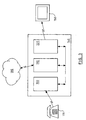
- a data communication network embodying the present invention comprises the Internet 100.
- a plurality of WWW server computer systems 110-130 are connected to Internet 100.
- a teletext server 100 Also connected to Internet 100 is a teletext server 100.
- Teletext server 140 is configured to receive an input from a subscriber telephone 170 with tone dialling capability.
- Teletext server 140 also provides a teletext output to a broadcast television receiver 150 capable of receiving teletext pages.
- Television receiver 150 can be instructed by user 180 to access different teletext pages via a remote control device 160.
- each WWW server 110-130 includes a keyboard 200 attached to a system unit 210 including a main CPU 220, system RAM 230, system ROM 240, and mass storage capability 250, typically in the form of multiple magnetic disk drives constituted in a RAID (redundant array of independent disks) arrangement.
- Each WWW server 110-130 has stored in its mass storage 250 at least one WWW page.
- Each WWW server 110-130 also includes a display 260 enabling direct interaction between the WWW server 110-130 and an administrator.
- Each WWW server 110-130 may also include other storage devices such as diskette drives and CD ROM drives.
- the display 260 and keyboard 200 of each WWW server 110-130 provided via an intermediate personal computer.
- teletext server 140 comprises a telephone call handler 300, a web browser 310, and a WWW page convertor 320 all interconnected to each other.
- telephone handler 300, web browser 310, and WWW page convertor 320 may be integrated into a single server computer system on the kind hereinbefore described with reference to Figure 2.
- teletext server 140 may comprise separate computer systems for implementing each of call handler 300, web browser 310, and page convertor 320.
- Call handler receives incoming telephones calls made to one or more pre-assigned telephone numbers. The pre-assigned telephone numbers may, for example, be premium rate telephone numbers.
- Web browser 310 is connected to the Internet for accessing www pages.
- WWW page convertor 320 is connected to a teletext input of a broadcast television signal generator (not shown).
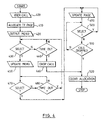
- call handler 300 responds to the incoming call by allocating a currently unused teletext page to the user. Call handler 300 automatically generates an audio message for indicating the number of the allocated teletext page to the user.
- Web browser 310 provides an initial subject menu to page convertor 320.
- page convertor 320 inserts the initial subject menu into the allocated teletext page.
- the teletext page including the menu is inserted in the broadcast television signal.
- the teletext page is recovered from broadcast television signal at television receiver 150, and the subject menu is displayed on the screen of television receiver 150.
- User 180 accesses the allocated teletext page and hence the subject menu by keying the number supplied via telephone 170 on remote control device 160.
- Television receiver displays the allocated teletext page in response to the corresponding output of remote control device 160.
- Each item on the subject menu corresponds to a different number.
- User 180 selects, at block 430, a particular item from the subject menu by keying the corresponding number into telephone 170.
- Call handler 300 detects the number keyed into telephone 170 and passes it to web browser 310.
- a search engine of web browser 310 scans internet 100 for WWW pages corresponding to the subject selected by the user.
- Web browser 310 then generates a WWW menu of WWW pages identified by the search engine.
- Each WWW page listed in the WWW menu is accompanied by a brief description of the content thereof, and each WWW page listed in the WWW menu is, once again associated with a different number.
- Web browser 310 compiles a look up table mapping each number to the URL of the corresponding WWW page.
- the WWW menu is passed by web browser 310 to page convertor 320 for inclusion in the teletext page allocated to user 180.
- call handler 300 releases the allocated teletext page for re-allocation to a new user. If however selection from the initial menu is made as hereinbefore described, user 180 is presented with the WWW menu on the screen of television receiver 150.
- user selects a WWW page of interest from WWW menu by keying the corresponding number into telephone 170. Call handler 300 detects the entered number and sends it to web browser 310.
- Web browser 310 then retrieves the URL corresponding to the entered number from the look up table and the WWW page corresponding to the URL from Internet 100.
- the retrieved WWW page is sent by web browser 310 to page convertor 320.
- page convertor 320 converts the WWW page supplied by web browser to a form suitable for inclusion in the allocated teletext page and updates the allocated teletext page to include the converted WWW page for presentation to user 180 on the screen of television receiver 150.
- user 180 fails to select a WWW page within a predetermined time out period then, at block 480, user 180 is returned to the initial menu for subject selection at block 430.
- Each hypertext link contained in the retrieved WWW page, if any, is converted by page convertor 320 into a number for inclusion in the allocated teletext page.
- Page convertor 320 instructs web browser to update the look-up table to include the number corresponding to each hypertext link.
- user 180 can select the hypertext link by keying the corresponding number displayed on the allocated teletext page into telephone 170. The number thus entered is detected by call handler 300 and sent to web browser 310.
- web browser 310 retrieves the URL corresponding to the entered number from the look-up table and retrieves the corresponding linked WWW page from Internet 100.
- the linked WWW page retrieved by web browser 310 is converted to teletext format by page convertor 320 and included in the allocated teletext page for display to user 180.
- user 180 can terminate the Internet session simply by terminating the call set up between telephone 170 and call handler 300.
- call handler releases the allocated teletext page for re-allocation to a new user.
- two tiers of menus are provided, with possible selections reverting to those of the initial menu in the event that no selection is made from the WWW menu within a predetermined time interval. It will however appreciated that, in other embodiments of the present invention, more than two tiers of menus may be provided with possible selections reverting to those of earlier menus in the event of no selection within a predetermined period. Equally, in some embodiments of the present invention, only a single menu of available WWW pages may provided.
- call handler 300 may include a voice recognition sub-system for permitting WWW page selection by voice input from telephone 170.
- call handler 300 may include a facsimile sub-system for providing a user having access to a facsimile receiver with a printed output of a selected WWW page.
- call handler 300 may include a "call-back on busy" sub-system for returning a call to telephone 170 when a teletext page is free for allocation in the event of an initial call from telephone 170 being made at a time when all teletext pages available to server 140 are already allocated to other users.
- At least one of the teletext pages available to server 130 is reserved by call handler 300 for providing on-screen help to user 180.
- a preferred embodiment of the present invention has been hereinbefore described in which there is provided a system for accessing data files in a computer network.
- the system comprises means for receiving a call from a telephone, means for allocating a teletext page in a television signal in response to the call, and means for writing data from one or more of the data files to the allocated teletext page.
Landscapes
- Engineering & Computer Science (AREA)
- Signal Processing (AREA)
- Theoretical Computer Science (AREA)
- Multimedia (AREA)
- Computer Hardware Design (AREA)
- Software Systems (AREA)
- General Engineering & Computer Science (AREA)
- General Physics & Mathematics (AREA)
- Physics & Mathematics (AREA)
- Information Transfer Between Computers (AREA)
- Telephonic Communication Services (AREA)
- Computer And Data Communications (AREA)
- Television Systems (AREA)
- Data Exchanges In Wide-Area Networks (AREA)
- Digital Computer Display Output (AREA)
- User Interface Of Digital Computer (AREA)
Claims (13)
- Système destiné à accéder à des fichiers de données dans un réseau informatique, le système comprenant : un moyen (300) destiné à recevoir un appel depuis un téléphone (170), un moyen (300) destiné à allouer une page de télétexte dans un signal de télévision en réponse à l'appel, un moyen (320) destiné à écrire des données sur la page de télétexte allouée,
caractérisé par un moyen (310) destiné à la génération d'un menu de fichiers de données disponible par l'intermédiaire du réseau informatique (100), chaque fichier de données ayant un identificateur différent spécifié dans le menu, un moyen (320) destiné à écrire le menu sur la page de télétexte allouée, un moyen (300) destiné à recevoir l'identificateur correspondant à un fichier de données sélectionné à partir du téléphone (170), un moyen (310) destiné à récupérer le fichier de données sélectionné à partir du réseau informatique (100), et un moyen (320) destiné à écrire des données à partir du fichier de données sélectionné sur la page de télétexte allouée. - Système selon la revendication 1, comprenant un moyen (300) destiné à envoyer un message identifiant la page de télétexte allouée au téléphone.
- Système selon la revendication 2, comprenant un moyen (310) destiné à générer des menus successifs de fichiers de données en réponse à des sélections successives reçues par l'intermédiaire du téléphone (170).
- Système selon l'une quelconque des revendications précédentes, comprenant un moyen (300) destiné à libérer la page de télétexte allouée en vue d'une réallocation en réponse à un arrêt de l'appel téléphonique.
- Système selon l'une quelconque des revendications précédentes, dans lequel chaque fichier de données comprend une page du réseau World Wide Web.
- Système selon l'une quelconque des revendications précédentes, dans lequel le moyen de réception d'appel (300) et le moyen de réception d'identificateur (300) sont sensibles à un signal de numérotation par tonalités.
- Système selon une revendication quelconque précédant la revendication 6, dans lequel le moyen de réception d'appel (300) et le moyen de réception d'identificateur (300) comprennent chacun un sous-système de reconnaissance vocale.
- Système selon l'une quelconque des revendications précédentes, comprenant un moyen (300) destiné à détecter si une page de télétexte est disponible en vue d'une allocation à un appel entrant et, dans le cas où aucune page de télétexte n'est disponible pour une allocation, renvoyer l'appel entrant lorsqu'une page de télétexte est libérée en vue d'une réallocation.
- Système selon l'une quelconque des revendications précédentes, comprenant un moyen (300) destiné à envoyer un message de fac-similé contenant des données à partir du fichier de données sélectionné.
- Procédé destiné à accéder à des fichiers de données dans un réseau informatique, le procédé comprenant : recevoir un appel d'un téléphone, allouer une page de télétexte dans un signal de télévision télédiffusé en réponse à l'appel, écrire des données sur la page de télétexte allouée,
caractérisé par la génération d'un menu de fichiers de données disponible par l'intermédiaire du réseau informatique, chaque fichier de données ayant un identificateur différent spécifié dans le menu, écrire le menu sur la page de télétexte allouée, recevoir l'identificateur correspondant au fichier de données sélectionné depuis le téléphone, récupérer le fichier de données sélectionné à partir du réseau informatique, et écrire des données à partir du fichier de données sélectionné sur la page de télétexte allouée. - Procédé selon la revendication 11, comprenant l'envoi d'un message identifiant l'allocation de la page de télétexte au téléphone.
- Système informatique serveur (140) destiné à accéder à des fichiers de données dans un réseau informatique (100), le système comprenant : un gestionnaire d'appels (300) destiné à recevoir un appel d'un téléphone (170) et à allouer une page de télétexte dans un signal de télévision télédiffusé en réponse à l'appel, un explorateur (310) destiné à accéder à un ou plusieurs fichiers de données à partir du réseau (100), un convertisseur de page (320) destiné à écrire des données sur la page de télétexte allouée,
caractérisé en ce que l'explorateur (310) est conçu pour générer un menu de fichiers de données disponible par l'intermédiaire du réseau informatique, chaque fichier de données ayant un identificateur différent spécifié dans le menu, le convertisseur de page (320) est conçu pour écrire le menu sur la page de télétexte allouée, le gestionnaire d'appels (300) est conçu pour recevoir l'identificateur correspondant à un fichier de données sélectionné depuis le téléphone (170), l'explorateur (310) est conçu pour récupérer le fichier de données sélectionné à partir du réseau, et le convertisseur de page (320) est conçu pour écrire des données à partir du fichier de données sélectionné sur la page de télétexte allouée. - Serveur selon la revendication 14, dans lequel le gestionnaire d'appels (300) est conçu pour envoyer un message identifiant l'allocation d'une page de télétexte au téléphone (170).
Applications Claiming Priority (2)
| Application Number | Priority Date | Filing Date | Title |
|---|---|---|---|
| GB9625599 | 1996-10-30 | ||
| GB9622599A GB2318942A (en) | 1996-10-30 | 1996-10-30 | Accessing data files in a computer network |
Publications (3)
| Publication Number | Publication Date |
|---|---|
| EP0840509A2 EP0840509A2 (fr) | 1998-05-06 |
| EP0840509A3 EP0840509A3 (fr) | 1999-12-08 |
| EP0840509B1 true EP0840509B1 (fr) | 2004-03-24 |
Family
ID=10802176
Family Applications (1)
| Application Number | Title | Priority Date | Filing Date |
|---|---|---|---|
| EP97307341A Expired - Lifetime EP0840509B1 (fr) | 1996-10-30 | 1997-09-22 | Système et méthode pour accéder à des fichiers de données dans un réseau informatique |
Country Status (9)
| Country | Link |
|---|---|
| US (1) | US6219709B1 (fr) |
| EP (1) | EP0840509B1 (fr) |
| JP (1) | JP3322188B2 (fr) |
| KR (1) | KR100291136B1 (fr) |
| CN (1) | CN1099807C (fr) |
| CA (1) | CA2215228C (fr) |
| DE (1) | DE69728232T2 (fr) |
| GB (1) | GB2318942A (fr) |
| TW (1) | TW467317U (fr) |
Cited By (1)
| Publication number | Priority date | Publication date | Assignee | Title |
|---|---|---|---|---|
| US6978475B1 (en) | 1999-11-24 | 2005-12-20 | Ecable, Llc | Method and apparatus for internet TV |
Families Citing this family (26)
| Publication number | Priority date | Publication date | Assignee | Title |
|---|---|---|---|---|
| US6760746B1 (en) | 1999-09-01 | 2004-07-06 | Eric Schneider | Method, product, and apparatus for processing a data request |
| DE19811103A1 (de) * | 1998-03-13 | 1999-09-16 | Thomson Brandt Gmbh | Verfahren zum Auffinden von einer Internet- und/oder Emailadresse |
| US6343318B1 (en) | 1998-05-29 | 2002-01-29 | Palm, Inc. | Method and apparatus for communicating information over low bandwidth communications networks |
| EP0980177A3 (fr) * | 1998-08-13 | 2003-04-23 | Ascii Corporation | Dispositif et procédé pour l'enregistrement de contenu |
| US6338082B1 (en) | 1999-03-22 | 2002-01-08 | Eric Schneider | Method, product, and apparatus for requesting a network resource |
| US8037168B2 (en) | 1999-07-15 | 2011-10-11 | Esdr Network Solutions Llc | Method, product, and apparatus for enhancing resolution services, registration services, and search services |
| US8667051B2 (en) * | 1999-03-22 | 2014-03-04 | Esdr Network Solutions Llc | Real-time communication processing method, product, and apparatus |
| USRE43690E1 (en) | 1999-03-22 | 2012-09-25 | Esdr Network Solutions Llc | Search engine request method, product, and apparatus |
| US7188138B1 (en) | 1999-03-22 | 2007-03-06 | Eric Schneider | Method, product, and apparatus for resource identifier registration and aftermarket services |
| US9141717B2 (en) | 1999-03-22 | 2015-09-22 | Esdr Network Solutions Llc | Methods, systems, products, and devices for processing DNS friendly identifiers |
| US6891633B1 (en) * | 1999-07-30 | 2005-05-10 | Xerox Corporation | Image transfer system |
| USRE44207E1 (en) | 1999-09-01 | 2013-05-07 | Esdr Network Solutions Llc | Network resource access method, product, and apparatus |
| JP2001156931A (ja) * | 1999-11-11 | 2001-06-08 | Internatl Business Mach Corp <Ibm> | ブラウザ付き電話機、及びブラウザ付き電話機においてurlを音声とともに留守録する方法 |
| US6587873B1 (en) * | 2000-01-26 | 2003-07-01 | Viaclix, Inc. | System server for channel-based internet network |
| EP1124374A1 (fr) * | 2000-02-08 | 2001-08-16 | Koninklijke Philips Electronics N.V. | Récepteur de télétext |
| US6751593B2 (en) * | 2000-06-30 | 2004-06-15 | Fujitsu Limited | Data processing system with block attribute-based vocalization mechanism |
| US20030078729A1 (en) * | 2000-08-04 | 2003-04-24 | Eriko Ohdachi | Route guide information generator, route guide information generating method, and navigation system |
| US7877444B2 (en) * | 2000-12-22 | 2011-01-25 | Nortel Networks Limited | Method and apparatus for providing a web page to a call member |
| US7565402B2 (en) * | 2002-01-05 | 2009-07-21 | Eric Schneider | Sitemap access method, product, and apparatus |
| JP4206673B2 (ja) * | 2002-03-04 | 2009-01-14 | セイコーエプソン株式会社 | 画像または音声の入出力制御 |
| SE0202807L (sv) * | 2002-09-23 | 2004-03-24 | Telia Ab | Klientterminal, förfarande och datorprogram för flexibel distribution av separerad undertextning, teletextinformation och TV-signal |
| SE0202808L (sv) * | 2002-09-23 | 2004-03-24 | Telia Ab | Extraheringsorgan, förfarande och datorprogramprodukt för separation av TV-signaler, teletextinformation och undertextning |
| SE0202806L (sv) * | 2002-09-23 | 2004-03-24 | Telia Ab | System, förfarande och datorprogramprodukt för flexibel distribution av teletextinformation |
| GB2425192A (en) * | 2004-11-25 | 2006-10-18 | Sms Card Ltd | Providing up-to-date contact information |
| US8555369B2 (en) | 2011-10-10 | 2013-10-08 | International Business Machines Corporation | Secure firewall rule formulation |
| CN107872710A (zh) * | 2016-09-28 | 2018-04-03 | 中兴通讯股份有限公司 | 一种机顶盒桌面的实现方法、装置及系统 |
Family Cites Families (25)
| Publication number | Priority date | Publication date | Assignee | Title |
|---|---|---|---|---|
| US4866770A (en) * | 1986-07-08 | 1989-09-12 | Scientific Atlanta, Inc. | Method and apparatus for communication of video, audio, teletext, and data to groups of decoders in a communication system |
| US5191410A (en) * | 1987-08-04 | 1993-03-02 | Telaction Corporation | Interactive multimedia presentation and communications system |
| US5212475A (en) | 1988-05-18 | 1993-05-18 | Siemens Aktiengesellschaft | Method for generating an alarm inhibit signal |
| US5270809A (en) | 1991-03-29 | 1993-12-14 | Scientific-Atlanta | Data return for a television transmission system |
| US5396546A (en) * | 1991-10-03 | 1995-03-07 | Viscorp | Apparatus and method for automatic and user configurable information appliance |
| US5748484A (en) * | 1992-09-23 | 1998-05-05 | Onkor, Ltd. | System for printing social expression cards in response to electronically transmitted orders |
| NL9301048A (nl) * | 1993-06-16 | 1995-01-16 | Nwt Datawave B V | Interaktief televisiestelsel. |
| DE69331140T2 (de) | 1993-08-03 | 2002-07-04 | Alcatel, Paris | Funkkommunikationssystem mit Multisensorempfangsstation und einer Vielzahl von Datenpaketen aussendenden Sendestationen |
| FR2713864B1 (fr) * | 1993-12-15 | 1996-02-02 | Henley Trading Ltd | Système de gestion de programmes de télévision. |
| BE1008029A3 (nl) * | 1994-01-18 | 1995-12-12 | Philips Electronics Nv | Werkwijze voor het overdragen van signalen tussen communicatie stations. |
| US5570295A (en) * | 1994-03-18 | 1996-10-29 | Lucent Technologies Inc. | System and method of capturing encoded data transmitted over a communications network in a video system |
| ATE204108T1 (de) * | 1994-03-23 | 2001-08-15 | Koninkl Philips Electronics Nv | Übertragung von abstimmdaten von rundfunksendern zu einem empfänger |
| US5500681A (en) * | 1994-05-24 | 1996-03-19 | Jones; Charles P. | Apparatus and method for generating product coupons in response to televised offers |
| US5644573A (en) | 1995-01-20 | 1997-07-01 | Amati Communications Corporation | Methods for coordinating upstream discrete multi-tone data transmissions |
| JPH08125723A (ja) | 1994-10-27 | 1996-05-17 | Toshiba Corp | 着信音の出力方法、電源供給方法及び携帯電話機 |
| EP0723369A1 (fr) | 1995-01-23 | 1996-07-24 | NTEX datacommunications bv | Méthode d'accès pour retrouver de l'information Internet par le télétexte/vidéotexte et vice versa |
| ATE192274T1 (de) * | 1995-05-31 | 2000-05-15 | Koninkl Philips Electronics Nv | Verfahren und vorrichtung zur übertragung von videotextseiten |
| US5761602A (en) * | 1995-09-13 | 1998-06-02 | Wagner Dsp Technologies | Hybrid multichannel data transmission system utilizing a broadcast medium |
| AU703492B2 (en) * | 1995-09-14 | 1999-03-25 | Matsushita Electric Industrial Co., Ltd. | Data broadcast receiving apparatus |
| JPH0993548A (ja) * | 1995-09-27 | 1997-04-04 | Toshiba Corp | 文字情報表示機能付きテレビ受信機 |
| GB9523869D0 (en) * | 1995-11-22 | 1996-01-24 | Philips Electronics Nv | Interactive television |
| US5805682A (en) * | 1995-11-30 | 1998-09-08 | Bell Atlantic Network Services, Inc. | Method for delivering call related information to a video display |
| US5819238A (en) * | 1996-12-13 | 1998-10-06 | Enhanced Investment Technologies, Inc. | Apparatus and accompanying methods for automatically modifying a financial portfolio through dynamic re-weighting based on a non-constant function of current capitalization weights |
| US5987029A (en) * | 1996-08-08 | 1999-11-16 | Fujitsu Limited | Information collecting apparatus, receiving information processing apparatus and information transmitting apparatus |
| US5982445A (en) * | 1996-10-21 | 1999-11-09 | General Instrument Corporation | Hypertext markup language protocol for television display and control |
-
1996
- 1996-10-30 GB GB9622599A patent/GB2318942A/en not_active Withdrawn
-
1997
- 1997-01-21 TW TW089212927U patent/TW467317U/zh not_active IP Right Cessation
- 1997-05-19 US US08/848,713 patent/US6219709B1/en not_active Expired - Fee Related
- 1997-06-25 KR KR1019970027053A patent/KR100291136B1/ko not_active Expired - Fee Related
- 1997-09-12 CA CA002215228A patent/CA2215228C/fr not_active Expired - Fee Related
- 1997-09-22 EP EP97307341A patent/EP0840509B1/fr not_active Expired - Lifetime
- 1997-09-22 DE DE69728232T patent/DE69728232T2/de not_active Expired - Lifetime
- 1997-09-29 CN CN97119216A patent/CN1099807C/zh not_active Expired - Lifetime
- 1997-10-24 JP JP29224997A patent/JP3322188B2/ja not_active Expired - Fee Related
Cited By (2)
| Publication number | Priority date | Publication date | Assignee | Title |
|---|---|---|---|---|
| US6978475B1 (en) | 1999-11-24 | 2005-12-20 | Ecable, Llc | Method and apparatus for internet TV |
| US7086079B1 (en) | 1999-11-24 | 2006-08-01 | Ecable, Llc | Method and apparatus for internet TV |
Also Published As
| Publication number | Publication date |
|---|---|
| US6219709B1 (en) | 2001-04-17 |
| GB9622599D0 (en) | 1997-01-08 |
| CA2215228A1 (fr) | 1998-04-30 |
| KR100291136B1 (ko) | 2001-06-01 |
| EP0840509A2 (fr) | 1998-05-06 |
| JPH10200572A (ja) | 1998-07-31 |
| CN1099807C (zh) | 2003-01-22 |
| TW467317U (en) | 2001-12-01 |
| GB2318942A (en) | 1998-05-06 |
| CN1181553A (zh) | 1998-05-13 |
| EP0840509A3 (fr) | 1999-12-08 |
| DE69728232D1 (de) | 2004-04-29 |
| DE69728232T2 (de) | 2005-01-27 |
| JP3322188B2 (ja) | 2002-09-09 |
| KR19980032183A (ko) | 1998-07-25 |
| CA2215228C (fr) | 2003-07-08 |
Similar Documents
| Publication | Publication Date | Title |
|---|---|---|
| US6219709B1 (en) | System and method for accessing data files in a computer network | |
| US6097375A (en) | System, method, and pointing device for remote operation of data processing apparatus | |
| CA2219093C (fr) | Systeme de messagerie vocale | |
| CA2260503C (fr) | Personnalisation de programmation affichee, par le biais de la transmission d'url | |
| US5854897A (en) | Network communications marketing system | |
| US5909671A (en) | System and method for controlling data access in a computer network | |
| CA2231810C (fr) | Equilibrage de charges parmi les processeurs d'un ordinateur de type serveur | |
| US6072521A (en) | Hand held apparatus for simulating two way connectivity for one way data streams | |
| US6018764A (en) | Mapping uniform resource locators to broadcast addresses in a television signal | |
| US6978475B1 (en) | Method and apparatus for internet TV | |
| US20090119717A1 (en) | Method and system for utilizing video content to obtain text keywords or phrases for providing content related to links to network-based resources | |
| CA2392396A1 (fr) | Gestion du contenu electronique provenant de differentes sources | |
| EP1053642A4 (fr) | Appareil hote permettant de simuler la connectivite bidirectionnelle pour des flux de donnees unidirectionnels | |
| EP1110394A4 (fr) | Simulation de connectivite double sens pour train de donnees pour parties multiples | |
| EP1320994A1 (fr) | Systemes et procedes d'interaction avec les utilisateurs dans un reseau de communication | |
| JP2001258013A (ja) | トリガ及びトリガ・フィルタを用いた、多重レベルの対話型テレビジョン・サービスの提供 | |
| JP2002269145A (ja) | 情報処理装置、端末装置、方法、媒体、およびプログラム | |
| US20020032700A1 (en) | System For Making And Publishing A Homepage | |
| JP2000227851A (ja) | 双方向通信システム及び記録媒体 | |
| US6425061B1 (en) | Apparatuses for exchanging information over computer and broadcast networks | |
| US20050160417A1 (en) | System, method and apparatus for multimedia display | |
| US20020097263A1 (en) | File delevery system and method for delivering file of style depending on request of each user terminal | |
| MXPA00001374A (en) | Methods and apparatus for remotely accessing call originating information |
Legal Events
| Date | Code | Title | Description |
|---|---|---|---|
| PUAI | Public reference made under article 153(3) epc to a published international application that has entered the european phase |
Free format text: ORIGINAL CODE: 0009012 |
|
| AK | Designated contracting states |
Kind code of ref document: A2 Designated state(s): DE FR GB NL |
|
| PUAL | Search report despatched |
Free format text: ORIGINAL CODE: 0009013 |
|
| AK | Designated contracting states |
Kind code of ref document: A3 Designated state(s): AT BE CH DE DK ES FI FR GB GR IE IT LI LU MC NL PT SE |
|
| 17P | Request for examination filed |
Effective date: 20000405 |
|
| AKX | Designation fees paid |
Free format text: DE FR GB NL |
|
| 17Q | First examination report despatched |
Effective date: 20021206 |
|
| GRAP | Despatch of communication of intention to grant a patent |
Free format text: ORIGINAL CODE: EPIDOSNIGR1 |
|
| GRAS | Grant fee paid |
Free format text: ORIGINAL CODE: EPIDOSNIGR3 |
|
| GRAA | (expected) grant |
Free format text: ORIGINAL CODE: 0009210 |
|
| AK | Designated contracting states |
Kind code of ref document: B1 Designated state(s): DE FR GB NL |
|
| PG25 | Lapsed in a contracting state [announced via postgrant information from national office to epo] |
Ref country code: NL Free format text: LAPSE BECAUSE OF FAILURE TO SUBMIT A TRANSLATION OF THE DESCRIPTION OR TO PAY THE FEE WITHIN THE PRESCRIBED TIME-LIMIT Effective date: 20040324 |
|
| REG | Reference to a national code |
Ref country code: GB Ref legal event code: FG4D |
|
| REF | Corresponds to: |
Ref document number: 69728232 Country of ref document: DE Date of ref document: 20040429 Kind code of ref document: P |
|
| NLV1 | Nl: lapsed or annulled due to failure to fulfill the requirements of art. 29p and 29m of the patents act | ||
| ET | Fr: translation filed | ||
| PLBE | No opposition filed within time limit |
Free format text: ORIGINAL CODE: 0009261 |
|
| STAA | Information on the status of an ep patent application or granted ep patent |
Free format text: STATUS: NO OPPOSITION FILED WITHIN TIME LIMIT |
|
| 26N | No opposition filed |
Effective date: 20041228 |
|
| REG | Reference to a national code |
Ref country code: GB Ref legal event code: 746 Effective date: 20080808 |
|
| PGFP | Annual fee paid to national office [announced via postgrant information from national office to epo] |
Ref country code: FR Payment date: 20110928 Year of fee payment: 15 |
|
| REG | Reference to a national code |
Ref country code: FR Ref legal event code: ST Effective date: 20130531 |
|
| PG25 | Lapsed in a contracting state [announced via postgrant information from national office to epo] |
Ref country code: FR Free format text: LAPSE BECAUSE OF NON-PAYMENT OF DUE FEES Effective date: 20121001 |
|
| PGFP | Annual fee paid to national office [announced via postgrant information from national office to epo] |
Ref country code: GB Payment date: 20160922 Year of fee payment: 20 |
|
| PGFP | Annual fee paid to national office [announced via postgrant information from national office to epo] |
Ref country code: DE Payment date: 20160928 Year of fee payment: 20 |
|
| REG | Reference to a national code |
Ref country code: DE Ref legal event code: R071 Ref document number: 69728232 Country of ref document: DE |
|
| REG | Reference to a national code |
Ref country code: GB Ref legal event code: PE20 Expiry date: 20170921 |
|
| PG25 | Lapsed in a contracting state [announced via postgrant information from national office to epo] |
Ref country code: GB Free format text: LAPSE BECAUSE OF EXPIRATION OF PROTECTION Effective date: 20170921 |