EP0843497A2 - Anrufschema für ein mobiles Übertragungssystem mit erhöhter Datenrate auf dem Anrufskanal - Google Patents
Anrufschema für ein mobiles Übertragungssystem mit erhöhter Datenrate auf dem Anrufskanal Download PDFInfo
- Publication number
- EP0843497A2 EP0843497A2 EP97120005A EP97120005A EP0843497A2 EP 0843497 A2 EP0843497 A2 EP 0843497A2 EP 97120005 A EP97120005 A EP 97120005A EP 97120005 A EP97120005 A EP 97120005A EP 0843497 A2 EP0843497 A2 EP 0843497A2
- Authority
- EP
- European Patent Office
- Prior art keywords
- paging channel
- paging
- data transmission
- channel
- transmission rate
- Prior art date
- Legal status (The legal status is an assumption and is not a legal conclusion. Google has not performed a legal analysis and makes no representation as to the accuracy of the status listed.)
- Granted
Links
Images




Classifications
-
- H—ELECTRICITY
- H04—ELECTRIC COMMUNICATION TECHNIQUE
- H04W—WIRELESS COMMUNICATION NETWORKS
- H04W68/00—User notification, e.g. alerting and paging, for incoming communication, change of service or the like
- H04W68/02—Arrangements for increasing efficiency of notification or paging channel
-
- H—ELECTRICITY
- H04—ELECTRIC COMMUNICATION TECHNIQUE
- H04W—WIRELESS COMMUNICATION NETWORKS
- H04W52/00—Power management, e.g. Transmission Power Control [TPC] or power classes
- H04W52/02—Power saving arrangements
- H04W52/0209—Power saving arrangements in terminal devices
- H04W52/0212—Power saving arrangements in terminal devices managed by the network, e.g. network or access point is leader and terminal is follower
- H04W52/0216—Power saving arrangements in terminal devices managed by the network, e.g. network or access point is leader and terminal is follower using a pre-established activity schedule, e.g. traffic indication frame
-
- H—ELECTRICITY
- H04—ELECTRIC COMMUNICATION TECHNIQUE
- H04W—WIRELESS COMMUNICATION NETWORKS
- H04W68/00—User notification, e.g. alerting and paging, for incoming communication, change of service or the like
Definitions
- the present invention relates to a scheme for paging in a mobile communication system having a plurality of base stations provided in respective cells, where each base station is transmitting a paging channel on which a paging signal for each mobile station is transmitted at intermittent timings such that each mobile station judges a presence or absence of a paging signal for the own station by receiving the paging channel at these intermittent timings.
- the base station At a time of call termination for a mobile station located within a cell of a base station, the base station carries out the paging with respect to the mobile station by using a downlink radio channel called paging channel.
- paging channel a downlink radio channel
- each frame of this paging channel is divided along the time axis into a plurality of time-slots (TS) as shown in Fig. 1, where which time-slot of the paging channel frame is to be used for the paging with respect to which mobile station is determined in advance. Consequently, while waiting for a call to the own station, it suffices for the mobile station to receive only the specific time-slot of the paging channel frame intermittently and there is no need to constantly receive the paging channel.
- TS time-slots
- each frame of the paging channel is divided into right time-slots, and the mobile station receives only one time-slot (TS3 in an example of Fig. 1) among them at a time of call waiting. Consequently, in this example, the intermittent ratio is 1/8 so that the power consumption of the mobile station at a time of call waiting can be reduced to 1/8.
- the intermittent ratio has been reduced by increasing a number of time-slots.
- the paging interval also increases as shown in Fig. 2, and consequently, an average time required for the paging is also increased so that there has been a limit to an extent by which the intermittent ratio can be reduced by the increase of a number of time-slots.
- a number of time-slots is increased to twelve from eight used in Fig. 1, so that the intermittent ratio is reduced from 1/8 to 1/12, but the average time required for the paging is also increased accordingly.
- this is realized in the present invention by using a higher data transmission rate for the paging channel so as to reduce a unit time-slot duration and then increasing a number of time-slots.
- a method of paging in a mobile communication system having a plurality of base stations provided in respective cells and mobile stations comprising the steps of: transmitting from each base station radio channels in a plurality of different data transmission rates, the radio channels including a paging channel on which a paging signal for each mobile station is transmitted at intermittent timings, the paging channel having a data transmission rate which is higher than a required paging channel rate of the mobile communication system, so as to shorten a transmission time of the paging signal for each mobile station; and judging at each mobile station a presence or absence of the paging signal for said each mobile station by receiving the paging channel at said intermittent timings.
- a base station device for use in a mobile communication system having a plurality of base stations provided in respective cells and mobile stations, comprising: a communication channel transmission unit for transmitting communication channels; and a control channel transmission unit for transmitting control channels in a plurality of different data transmission rates, the control channels including a paging channel on which a paging signal for each mobile station is transmitted at intermittent timings, the paging channel having a data transmission rate which is higher than a required paging channel rate of the mobile communication system, so as to shorten a transmission time of the paging signal for each mobile station.
- a mobile station device for use in a mobile communication system having a plurality of base stations provided in respective cells and mobile stations, comprising: a receiving unit for receiving signals from each base station, including a paging signal for each mobile station transmitted on a paging channel at intermittent timings, the paging channel being transmitted by each base station at a data transmission rate which is higher than a required paging channel rate of the mobile communication system; and a control unit for judging a presence or absence of the paging signal for said mobile station device by controlling the receiving unit to receive the paging channel at said intermittent timings according to the data transmission rate of the paging channel.
- a method of paging in a mobile communication system having a plurality of base stations provided in respective cells and mobile stations comprising the steps of: transmitting from each base station radio channels in a plurality of different data transmission rates, the radio channels including a paging channel on which a paging signal for each mobile station is transmitted at intermittent timings, the paging channel having a data transmission rate which is variable; and judging at each mobile station a presence or absence of the paging signal for said each mobile station by receiving the paging channel at said intermittent timings.
- a base station device for use in a mobile communication system having a plurality of base stations provided in respective cells and mobile stations, comprising: a communication channel transmission unit for transmitting communication channels; and a control channel transmission unit for transmitting control channels in a plurality of different data transmission rates, the control channels including a paging channel on which a paging signal for each mobile station is transmitted at intermittent timings, the paging channel having a data transmission rate which is variable.
- a mobile station device for use in a mobile communication system having a plurality of base stations provided in respective cells and mobile stations, comprising: a receiving unit for receiving signals from each base station, including a paging signal for each mobile station transmitted on a paging channel at intermittent timings, the paging channel being transmitted by each base station at a data transmission rate which is variable; and a control unit for judging a presence or absence of the paging signal for said mobile station device by controlling the receiving unit to receive the paging channel at said intermittent timings according to the data transmission rate of the paging channel.
- Fig. 1 is a diagram showing an exemplary paging channel according to a conventional paging scheme for a mobile communication system.
- Fig. 2 is a diagram showing another exemplary paging channel according to a conventional paging scheme for a mobile communication system, in which a number of time-slots is increased.
- Fig. 3 is a schematic diagram showing an exemplary configuration of a mobile communication system to which the paging scheme of the present invention is applied.
- Fig. 4 is a diagram showing an exemplary paging channel used in the first embodiment of the paging scheme according to the present invention.
- Fig. 5 is a schematic diagram showing an exemplary channel configuration used in the first embodiment of the paging scheme according to the present invention.
- Fig. 6 is a block diagram showing an exemplary configuration of a base station in the first embodiment of the paging scheme according to the present invention.
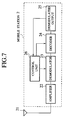
- Fig. 7 is a block diagram showing an exemplary configuration of a mobile station in the first embodiment of the paging scheme according to the present invention.
- Fig. 8 is a block diagram showing another exemplary configuration of a base station in the first embodiment of the paging scheme according to the present invention, for a case of CDMA system.
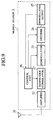
- Fig. 9 is a block diagram showing another exemplary configuration of a mobile station in the first embodiment of the paging scheme according to the present invention, for a case of CDMA system.
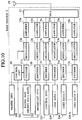
- Fig. 10 is a block diagram showing an exemplary configuration of a base station in the second embodiment of the paging scheme according to the present invention.
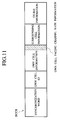
- Fig. 11 is a diagram showing an exemplary broadcast channel used in the second embodiment of the paging scheme according to the present invention.
- Fig. 12 is a block diagram showing another exemplary configuration of a base station in the second embodiment of the paging scheme according to the present invention, for a case of CDMA system.
- a first embodiment of a paging scheme for a mobile communication system according to the present invention will be described in detail.
- Fig. 3 shows an exemplary overall configuration of a mobile communication system used in the present invention, in which a base station (BS) 1 is provided in its cell 10, and communicating with a mobile station (MS) 2 located within the cell 10.
- BS base station
- MS mobile station
- the base station 1 transmits a paging channel (PCH) having a plurality of time-slots as shown in Fig. 4.
- PCH paging channel
- the base station 2 carries out the paging with respect to the mobile station 2 by using this paging channel of Fig. 4.
- Each frame of this paging channel (PCH) is divided along the time axis into a plurality of time-slots (TS) as shown in Fig. 4, where which time-slot of the paging channel is to be used for the paging with respect to which mobile station is determined in advance. Consequently, at a time of call waiting, it suffices for the mobile station 2 to receive only the specific time-slot (the time-slot TS3 in Fig. 4) of the paging channel frame intermittently, so that the power consumption of the mobile station 2 at a time of call waiting can be reduced considerably.
- the power consumption of the mobile station 2 at a time of call waiting can be further reduced by reducing the intermittent ratio.
- all the radio channels transmitted by the base station are in the same data transmission rate, so that the intermittent ratio has been reduced by increasing a number of time-slots.
- the paging channel of Fig. 4 uses the data transmission rate higher than that of the conventional case shown in Fig. 1, so that a unit time-slot duration for the same data amount is shorter in Fig. 4 compared with Fig. 1. Consequently, even when a number of time-slots is increased, an average time required for the paging is shorter compared with a case of a straightforward increase of a number of time-slots without using the higher data transmission rate as shown in Fig. 2.
- a number of time-slots is increased to sixteen, which is twice as much as that in a case of Fig. 1, so that the intermittent ratio is reduced to 1/16.
- a unit time-slot duration is reduced to 1/2 compared with a case of Fig. 1, so that the average time required for the paging is nearly the same as in a case of Fig. 1, and therefore this case of Fig. 4 is superior to the conventional case of Fig. 2 in this regard.
- Fig. 5 shows an exemplary channel configuration in the mobile communication system.
- the mobile communication system generally has radio channels with various data transmission rates, and a channel with the highest data transmission rate among them is allocated to the paging channel in this embodiment.
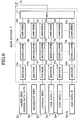
- Fig. 6 shows an exemplary internal configuration of the base station 1 in this embodiment, which comprises: a plurality of encoders 11 (11a to 11n) for respectively encoding paging information D1 (with a higher data rate), a broadcast information D2, a control information D3, and user data D4 (user data-1 D4-1 to user data-N D4-N) which are inputs of the base station 1; a plurality of modulators 13 (13a to 13n) for modulating respective encoded data; a plurality of amplifiers 15 (15a to 15n) for amplifying respective modulated signals; a multiplexer (MUX) 17 for multiplexing the modulated signals; and an antenna 19 for transmitting the multiplexed signals.
- a plurality of encoders 11 11a to 11n
- D1 with a higher data rate
- D2 broadcast information
- D3 control information
- user data D4 user data-1 D4-1 to user data-N D4-N
- the encoders 11 and the modulators 13 are capable of realizing a plurality of different data transmission rates so that this base station 1 can transmit radio channels in a plurality of different data transmission rates.
- the paging information to be transmitted by the paging channel is entered with a data rate higher than the other control information of the other control channels and the user data of the communication channel (the traffic channel). Consequently, the data transmission rate of the paging channel becomes higher, and as a result, the intermittent ratio of the intermittent reception by the mobile station 2 is made smaller.
- Fig. 7 shows an exemplary internal configuration of the mobile station 2 in this embodiment, which comprises: an antenna 21 for receiving signals from the base station 1; an amplifier 22 for amplifying the received signals; a demodulator 23 for demodulating the amplified signals; a decoder 24 for decoding the demodulated signals to obtain a demodulated output 25; and a control unit 26 for controlling the demodulator 23 and the decoder 24 according to the demodulated output 25.
- control unit 26 first controls the demodulator 23 and the decoder 24 into states suitable for receiving the paging channel according to the higher data transmission rate of the paging channel. Then, when the paging signal is detected in the demodulated output 25, the control unit 26 controls the demodulator 23 and the decoder 24 into states suitable for receiving the control channels and the communication channels according to the data transmission rates of the control channels and the communication channels.
- the maximum transmission rate available in the system can be used for the maximum effect.
- the higher transmission rate for the paging channel due to the system requirement, it is still possible to expect the similar effect by using the highest data transmission rate that can be used for the paging channel according to the system requirement.
- Such a limitation on the higher transmission rate for the paging channel due to the system requirement may arise, for example, as follows. Namely, when the data transmission rate of the paging channel is raised to be N times higher, there is a need to increase the transmission power N times in order to obtain the same receiving quality as before the data transmission rate is raised. However, the increase of the transmission power can lead to a transmission device in a larger scale, so that there is a limit to an extent by which the transmission power can be increased, and consequently there arises a limitation on the higher data transmission rate for the paging channel due to such a system requirement.
- the higher data transmission rate for the paging channel can be realized by setting the spreading factor (a ratio of spreading chip rate with respect to information bit rate, which is also referred to as a process gain) for the paging channel lower than that for the other channels appropriately, without enlarging the occupied frequency bandwidth.
- the spreading factor a ratio of spreading chip rate with respect to information bit rate, which is also referred to as a process gain
- the base station 1 has an exemplary internal configuration as shown in Fig. 8, which differs from Fig. 6 in that a plurality of spreaders 14 (14a to 14n) for spreading the respective modulated signals are provided between the modulators 13 and the amplifiers 15, where the spreader 14a for the paging channel is set to have a lower spreading factor than the other spreaders.
- the mobile station 2 has an exemplary internal configuration as shown in Fig. 9, which differs from Fig. 7 in that a despreader (correlator) 27 for despreading the amplified signals is provided between the amplifier 22 and the demodulator 23 and this despreader 27 is also controlled by the control unit 26 according to the demodulated output 25.
- a despreader (correlator) 27 for despreading the amplified signals is provided between the amplifier 22 and the demodulator 23 and this despreader 27 is also controlled by the control unit 26 according to the demodulated output 25.
- a second embodiment of a paging scheme for a mobile communication system according to the present invention will be described in detail.
- This second embodiment differs from the first embodiment described above in that the data transmission rate of the paging channel is made variable.
- the base station 1 has an exemplary internal configuration as shown in Fig. 10, which differs from Fig. 6 in that there is also provided a control unit 18 which controls the encoder 11a and the modulator 13a and generates a broadcast information D2 according to a traffic information D0, so as to realize the variable data transmission rate for the paging channel.
- the control unit 18 controls the encoder 11a and the modulator 13a according to the desired data transmission rate of the paging channel, while at the same time, generates the broadcast information including an information on the data transmission rate of the paging channel which is to be transmitted by the broadcast channel.
- the broadcast channel (BCCH) transmitted by the base station 1 includes, for example, a synchronization word to be used in establishing the frame synchronization, an own cell ID, own cell information (such as traffic state, frequencies or codes of various control channels, etc.
- the own cell information also contains an own cell paging channel rate information indicating the data transmission rate of the paging channel used in the cell of this base station.
- the following scheme can be adopted, for example.
- the higher data transmission rate for the paging channel can be realized by controlling the spreading factor for the paging channel to be lower than that for the other channels appropriately, without enlarging the occupied frequency bandwidth.
- the base station 1 has an exemplary internal configuration as shown in Fig. 12, which differs from Fig. 10 in that a plurality of spreaders 14 (14a to 14n) for spreading the respective modulated signals are provided between the modulators 13 and the amplifiers 15, where the spreader 14a for the paging channel is controlled to have a lower spreading factor than the other spreaders by the control unit 18.
- the mobile station 2 can have substantially the same configuration as that of Fig. 7 (or Fig. 9 in a case of CDMA), except that the control unit 26 controls the demodulator 23 and the decoder 24 into states suitable for receiving the broadcast channel first so as to obtain the paging channel rate information, and then controls the demodulator 23 and the decoder 24 into states suitable for receiving the paging channel according to the data transmission rate of the paging channel indicated by this paging channel rate information. Thereafter the operation in the mobile station 2 is the same as in the first embodiment.
- a paging scheme for a mobile communication system which is capable of suppressing the power consumption of the mobile station by reducing the intermittent ratio while keeping an average time required for the paging shorter than a case of merely increasing a number of time-slots, by using a higher data transmission rate for the paging channel so as to reduce a unit time-slot duration and then increasing a number of time-slots.
- a number of time-slots provided in each frame of the paging channel can be increased so that an intermittent ratio at each mobile station becomes lower, without causing an increase of the average time required for the paging.
Landscapes
- Engineering & Computer Science (AREA)
- Computer Networks & Wireless Communication (AREA)
- Signal Processing (AREA)
- Mobile Radio Communication Systems (AREA)
Applications Claiming Priority (3)
| Application Number | Priority Date | Filing Date | Title |
|---|---|---|---|
| JP30324596 | 1996-11-14 | ||
| JP303245/96 | 1996-11-14 | ||
| JP30324596 | 1996-11-14 |
Publications (3)
| Publication Number | Publication Date |
|---|---|
| EP0843497A2 true EP0843497A2 (de) | 1998-05-20 |
| EP0843497A3 EP0843497A3 (de) | 1999-09-15 |
| EP0843497B1 EP0843497B1 (de) | 2005-01-26 |
Family
ID=17918631
Family Applications (1)
| Application Number | Title | Priority Date | Filing Date |
|---|---|---|---|
| EP97120005A Expired - Lifetime EP0843497B1 (de) | 1996-11-14 | 1997-11-14 | Anrufschema für ein mobiles Übertragungssystem mit erhöhter Datenrate auf dem Anrufskanal |
Country Status (6)
| Country | Link |
|---|---|
| US (1) | US6208624B1 (de) |
| EP (1) | EP0843497B1 (de) |
| KR (1) | KR100289572B1 (de) |
| CN (1) | CN1101118C (de) |
| CA (1) | CA2220900C (de) |
| DE (1) | DE69732336T2 (de) |
Cited By (4)
| Publication number | Priority date | Publication date | Assignee | Title |
|---|---|---|---|---|
| WO2002056504A1 (en) | 2001-01-12 | 2002-07-18 | Matsushita Electric Industrial Co., Ltd. | Transmitting device and transmitting method |
| KR100361252B1 (ko) * | 1999-07-20 | 2002-11-18 | 모토로라 인코포레이티드 | 통신 장치의 전력 소모를 줄이는 방법 |
| WO2002043412A3 (en) * | 2000-10-19 | 2003-06-12 | Qualcomm Inc | Method and apparatus for adjusting parameters of a quick paging channel based on network load |
| US8914048B2 (en) | 2006-04-28 | 2014-12-16 | Qualcomm Incorporated | Method and apparatus for enhanced paging |
Families Citing this family (12)
| Publication number | Priority date | Publication date | Assignee | Title |
|---|---|---|---|---|
| KR100429540B1 (ko) * | 1998-08-26 | 2004-08-09 | 삼성전자주식회사 | 이동통신시스템의패킷데이터통신장치및방법 |
| US6847622B1 (en) * | 2000-11-15 | 2005-01-25 | Motorola, Inc. | Methods and apparatus for providing multiple wireless communication services having different bit rates |
| US7103021B2 (en) | 2001-09-25 | 2006-09-05 | Qualcomm Incorporated | Method and apparatus for communications of data rate control information in a CDMA communication system |
| JP3860762B2 (ja) * | 2002-02-14 | 2006-12-20 | 株式会社エヌ・ティ・ティ・ドコモ | 移動通信システム、チャネル同期確立方法、及び移動局 |
| JP4132979B2 (ja) * | 2002-05-27 | 2008-08-13 | 日本電気株式会社 | 無線基地局 |
| TWI257796B (en) | 2002-12-20 | 2006-07-01 | Interdigital Tech Corp | Scheduling data transmission by medium access control (MAC) layer in a mobile network |
| RU2234195C1 (ru) * | 2003-01-23 | 2004-08-10 | Военный университет связи | Многоканальная цифровая система связи |
| WO2004066661A1 (ja) * | 2003-01-23 | 2004-08-05 | Fujitsu Limited | 通信資源管理装置 |
| CN100359963C (zh) * | 2003-12-09 | 2008-01-02 | 华为技术有限公司 | 一种寻呼移动台的方法 |
| US8014416B2 (en) * | 2006-02-14 | 2011-09-06 | Sibeam, Inc. | HD physical layer of a wireless communication device |
| JP4899767B2 (ja) * | 2006-10-06 | 2012-03-21 | ソニー株式会社 | データ通信装置、データ通信方法、プログラム |
| US8509196B1 (en) | 2009-08-26 | 2013-08-13 | Sprint Spectrum L.P. | Method and system for allocating power among concurrent transmission attempts |
Family Cites Families (16)
| Publication number | Priority date | Publication date | Assignee | Title |
|---|---|---|---|---|
| DE3527329A1 (de) * | 1985-07-31 | 1987-02-05 | Philips Patentverwaltung | Digitales funkuebertragungssystem mit variabler zeitschlitzdauer der zeitschlitze im zeitmultiplexrahmen |
| US5392287A (en) * | 1992-03-05 | 1995-02-21 | Qualcomm Incorporated | Apparatus and method for reducing power consumption in a mobile communications receiver |
| US5404355A (en) * | 1992-10-05 | 1995-04-04 | Ericsson Ge Mobile Communications, Inc. | Method for transmitting broadcast information in a digital control channel |
| GB2300337B (en) | 1992-10-05 | 1997-03-26 | Ericsson Ge Mobile Communicat | Digital control channel |
| GB2278977B (en) | 1993-06-10 | 1997-05-28 | Roke Manor Research | Improvements in or relating to cellular mobile radio systems |
| TW306102B (de) | 1993-06-14 | 1997-05-21 | Ericsson Telefon Ab L M | |
| DE4319830A1 (de) | 1993-06-16 | 1995-03-09 | Philips Patentverwaltung | CDMA Übertragungssystem |
| US5491718A (en) | 1994-01-05 | 1996-02-13 | Nokia Mobile Phones Ltd. | CDMA radiotelephone having optimized slotted mode and long code operation |
| FI98426C (fi) | 1994-05-03 | 1997-06-10 | Nokia Mobile Phones Ltd | Järjestelmä pakettidatan siirtämiseksi digitaalisen aikajakomonikäyttöön TDMA perustuvan solukkojärjestelmän ilmarajapinnassa |
| US5511067A (en) * | 1994-06-17 | 1996-04-23 | Qualcomm Incorporated | Layered channel element in a base station modem for a CDMA cellular communication system |
| US5621723A (en) * | 1994-09-27 | 1997-04-15 | Gte Laboratories Incorporated | Power control in a CDMA network |
| ZA957816B (en) | 1994-09-30 | 1996-05-31 | Qualcomm Inc | Method and apparatus for providing broadcast messages in a communications network |
| US5529540A (en) * | 1995-04-18 | 1996-06-25 | Kcs Industries | Billiard ball rack incorporating a display area |
| US5673259A (en) * | 1995-05-17 | 1997-09-30 | Qualcomm Incorporated | Random access communications channel for data services |
| US5715526A (en) * | 1995-09-08 | 1998-02-03 | Qualcomm Incorporated | Apparatus and method for controlling transmission power in a cellular communications system |
| US5914949A (en) * | 1996-12-17 | 1999-06-22 | Lucent Technologies Inc. | Circuit and method for tracking finger off-set in a spread-spectrum rake receiver and wireless infrastructure employing the same |
-
1997
- 1997-11-12 CA CA002220900A patent/CA2220900C/en not_active Expired - Lifetime
- 1997-11-13 US US08/969,282 patent/US6208624B1/en not_active Expired - Lifetime
- 1997-11-13 KR KR1019970059798A patent/KR100289572B1/ko not_active Expired - Lifetime
- 1997-11-13 CN CN97122694A patent/CN1101118C/zh not_active Expired - Lifetime
- 1997-11-14 EP EP97120005A patent/EP0843497B1/de not_active Expired - Lifetime
- 1997-11-14 DE DE69732336T patent/DE69732336T2/de not_active Expired - Lifetime
Cited By (7)
| Publication number | Priority date | Publication date | Assignee | Title |
|---|---|---|---|---|
| KR100361252B1 (ko) * | 1999-07-20 | 2002-11-18 | 모토로라 인코포레이티드 | 통신 장치의 전력 소모를 줄이는 방법 |
| WO2002043412A3 (en) * | 2000-10-19 | 2003-06-12 | Qualcomm Inc | Method and apparatus for adjusting parameters of a quick paging channel based on network load |
| WO2002056504A1 (en) | 2001-01-12 | 2002-07-18 | Matsushita Electric Industrial Co., Ltd. | Transmitting device and transmitting method |
| EP1257075A4 (de) * | 2001-01-12 | 2009-09-23 | Panasonic Corp | Sendevorrichtung und sendeverfahren |
| EP2276184A1 (de) * | 2001-01-12 | 2011-01-19 | Panasonic Corporation | Übertragungsvorrichtung und Übertragungsverfahren |
| US8914048B2 (en) | 2006-04-28 | 2014-12-16 | Qualcomm Incorporated | Method and apparatus for enhanced paging |
| US8923896B2 (en) | 2006-04-28 | 2014-12-30 | Qualcomm Incorporated | Method and apparatus for enhanced paging |
Also Published As
| Publication number | Publication date |
|---|---|
| DE69732336T2 (de) | 2005-12-22 |
| CA2220900C (en) | 2002-02-12 |
| KR19980042394A (ko) | 1998-08-17 |
| EP0843497B1 (de) | 2005-01-26 |
| US6208624B1 (en) | 2001-03-27 |
| DE69732336D1 (de) | 2005-03-03 |
| CN1101118C (zh) | 2003-02-05 |
| EP0843497A3 (de) | 1999-09-15 |
| KR100289572B1 (ko) | 2001-05-02 |
| CN1183698A (zh) | 1998-06-03 |
| CA2220900A1 (en) | 1998-05-14 |
Similar Documents
| Publication | Publication Date | Title |
|---|---|---|
| EP0843497B1 (de) | Anrufschema für ein mobiles Übertragungssystem mit erhöhter Datenrate auf dem Anrufskanal | |
| EP1420538B1 (de) | Procédé de transmission intermittente dans un système de télécommunication à AMRC | |
| EP1157487B1 (de) | Datenübertragungsverfahren in einem cdma system | |
| AU746366B2 (en) | Reverse closed loop power control in control hold state for CDMA communication system | |
| US6072792A (en) | Power control apparatus, and an associated method, for TDMA transmitter | |
| US5390166A (en) | Method for recovering a data signal using diversity in a radio frequency, time division multiple access communication system | |
| US5878350A (en) | Scheme for controlling transmission powers during soft handover in a CDMA mobile communication system | |
| EP1113589B1 (de) | Bitratensteuerung auf Basis dem Verkehr und der Sendeleistung | |
| KR100252932B1 (ko) | 코드분할다중접속셀룰러전화시스템에서주파수간핸드오프제어방법 | |
| EP0991203A2 (de) | Kommunikationsendgerätevorrichtung für ein CDMA/TDD-System unter Verwendung von Signalen mit einer TDMA Rahmenstruktur | |
| KR19990058978A (ko) | 코드분할다중접속 셀룰러 시스템에서 다중코드를 이용한 주파수 간 핸드오프 제어방법 | |
| KR100492968B1 (ko) | 부호분할다중접속 통신시스템의 제어유지 부상태에서의 단속적채널 송신 장치 및 방법 | |
| JP4843692B2 (ja) | 移動無線通信システム用の電力制御装置 | |
| US6914889B1 (en) | Variable rate forward power control for multichannel applications | |
| EP0991204B1 (de) | Verfahren zur Sendeleistungsregelung mit Pilotensymbolmuster | |
| US7263365B2 (en) | Reception method and apparatus | |
| AU722795B2 (en) | Method of improving connection quality and system capacity, and a cellular radio system | |
| JP3423869B2 (ja) | 移動通信システムにおける着信呼び出し方法、基地局装置および移動局装置 | |
| JPH10145839A (ja) | Cdma移動通信システムにおけるパイロットチャネル送信方法 | |
| JPH0722271B2 (ja) | 間欠受信方式 | |
| AU734723B2 (en) | A data transmission method and base station for a TDMA radio system | |
| KR0165615B1 (ko) | 방송제어채널 수신전력 절전기능을 갖춘 개인통신용 단말기 | |
| WO2000049739A3 (en) | Method and apparatus for multiplexing multiple gsm control channels to a single carrier | |
| JP2004538713A (ja) | Cdmaシステムにおいて可変データレートをサポートするための方法 | |
| JP3380862B2 (ja) | 基地局及びリモート局 |
Legal Events
| Date | Code | Title | Description |
|---|---|---|---|
| PUAI | Public reference made under article 153(3) epc to a published international application that has entered the european phase |
Free format text: ORIGINAL CODE: 0009012 |
|
| 17P | Request for examination filed |
Effective date: 19971114 |
|
| AK | Designated contracting states |
Kind code of ref document: A2 Designated state(s): DE FR GB IT SE |
|
| AX | Request for extension of the european patent |
Free format text: AL;LT;LV;MK;RO;SI |
|
| PUAL | Search report despatched |
Free format text: ORIGINAL CODE: 0009013 |
|
| AK | Designated contracting states |
Kind code of ref document: A3 Designated state(s): AT BE CH DE DK ES FI FR GB GR IE IT LI LU MC NL PT SE |
|
| AX | Request for extension of the european patent |
Free format text: AL;LT;LV;MK;RO;SI |
|
| AKX | Designation fees paid |
Free format text: DE FR GB IT SE |
|
| 17Q | First examination report despatched |
Effective date: 20001116 |
|
| GRAP | Despatch of communication of intention to grant a patent |
Free format text: ORIGINAL CODE: EPIDOSNIGR1 |
|
| GRAS | Grant fee paid |
Free format text: ORIGINAL CODE: EPIDOSNIGR3 |
|
| RAP1 | Party data changed (applicant data changed or rights of an application transferred) |
Owner name: NTT DOCOMO, INC. |
|
| GRAA | (expected) grant |
Free format text: ORIGINAL CODE: 0009210 |
|
| AK | Designated contracting states |
Kind code of ref document: B1 Designated state(s): DE FR GB IT SE |
|
| REG | Reference to a national code |
Ref country code: GB Ref legal event code: FG4D |
|
| REF | Corresponds to: |
Ref document number: 69732336 Country of ref document: DE Date of ref document: 20050303 Kind code of ref document: P |
|
| REG | Reference to a national code |
Ref country code: SE Ref legal event code: TRGR |
|
| PLBE | No opposition filed within time limit |
Free format text: ORIGINAL CODE: 0009261 |
|
| STAA | Information on the status of an ep patent application or granted ep patent |
Free format text: STATUS: NO OPPOSITION FILED WITHIN TIME LIMIT |
|
| ET | Fr: translation filed | ||
| 26N | No opposition filed |
Effective date: 20051027 |
|
| REG | Reference to a national code |
Ref country code: FR Ref legal event code: PLFP Year of fee payment: 19 |
|
| REG | Reference to a national code |
Ref country code: FR Ref legal event code: PLFP Year of fee payment: 20 |
|
| PGFP | Annual fee paid to national office [announced via postgrant information from national office to epo] |
Ref country code: DE Payment date: 20161108 Year of fee payment: 20 Ref country code: FR Payment date: 20161014 Year of fee payment: 20 Ref country code: GB Payment date: 20161109 Year of fee payment: 20 |
|
| PGFP | Annual fee paid to national office [announced via postgrant information from national office to epo] |
Ref country code: SE Payment date: 20161111 Year of fee payment: 20 Ref country code: IT Payment date: 20161122 Year of fee payment: 20 |
|
| REG | Reference to a national code |
Ref country code: DE Ref legal event code: R071 Ref document number: 69732336 Country of ref document: DE |
|
| REG | Reference to a national code |
Ref country code: GB Ref legal event code: PE20 Expiry date: 20171113 |
|
| REG | Reference to a national code |
Ref country code: SE Ref legal event code: EUG |
|
| PG25 | Lapsed in a contracting state [announced via postgrant information from national office to epo] |
Ref country code: GB Free format text: LAPSE BECAUSE OF EXPIRATION OF PROTECTION Effective date: 20171113 |