EP0845194B1 - Procede et appareil d'acces a une pluralite de reseaux - Google Patents
Procede et appareil d'acces a une pluralite de reseaux Download PDFInfo
- Publication number
- EP0845194B1 EP0845194B1 EP96929262A EP96929262A EP0845194B1 EP 0845194 B1 EP0845194 B1 EP 0845194B1 EP 96929262 A EP96929262 A EP 96929262A EP 96929262 A EP96929262 A EP 96929262A EP 0845194 B1 EP0845194 B1 EP 0845194B1
- Authority
- EP
- European Patent Office
- Prior art keywords
- terminal
- services
- service
- network
- uim
- Prior art date
- Legal status (The legal status is an assumption and is not a legal conclusion. Google has not performed a legal analysis and makes no representation as to the accuracy of the status listed.)
- Expired - Lifetime
Links
Images




Classifications
-
- H—ELECTRICITY
- H04—ELECTRIC COMMUNICATION TECHNIQUE
- H04W—WIRELESS COMMUNICATION NETWORKS
- H04W8/00—Network data management
- H04W8/26—Network addressing or numbering for mobility support
- H04W8/28—Number portability ; Network address portability
-
- H—ELECTRICITY
- H04—ELECTRIC COMMUNICATION TECHNIQUE
- H04W—WIRELESS COMMUNICATION NETWORKS
- H04W48/00—Access restriction; Network selection; Access point selection
- H04W48/18—Selecting a network or a communication service
-
- H—ELECTRICITY
- H04—ELECTRIC COMMUNICATION TECHNIQUE
- H04W—WIRELESS COMMUNICATION NETWORKS
- H04W60/00—Affiliation to network, e.g. registration; Terminating affiliation with the network, e.g. de-registration
-
- H—ELECTRICITY
- H04—ELECTRIC COMMUNICATION TECHNIQUE
- H04W—WIRELESS COMMUNICATION NETWORKS
- H04W88/00—Devices specially adapted for wireless communication networks, e.g. terminals, base stations or access point devices
- H04W88/02—Terminal devices
- H04W88/06—Terminal devices adapted for operation in multiple networks or having at least two operational modes, e.g. multi-mode terminals
Definitions
- the present invention is generally related to telecommunication devices and system, and more particularly, to a method and apparatus for providing a number of different services.
- Telecommunications systems are offering an increasingly sophisticated set of services to end users.
- GSM Global System for Mobile Communications
- UMTS Universal Mobile Telecommunications System
- the next generation of telecommunications systems e.g. the Universal Mobile Telecommunications System (UMTS)
- UMTS Universal Mobile Telecommunications System
- the end user will be able to subscribe to a large number of different services and may require a plurality of different terminals for use with different services or sets of services.
- the end user may choose to have one terminal (mobile phone) for voice telephony services, a different terminal (fax machine) for fax services and yet another terminal (laptop computer) for packet data services.
- the dialable number is associated with a Subscriber Identity Module (SIM).
- SIM Subscriber Identity Module
- the SIM can be inserted into and removed from the terminal by the user in order to register and de-register with the network/service provider for telecommunications services.
- SIM Subscriber Identity Module
- Such a SIM cannot be used to register more than one terminal at the same time, because whenever the SIM is removed, the terminal is automatically de-registered.
- the result of this limitation is that if a user is engaged in a telecommunications service using one of his terminals, his other terminals are unavailable for other services.
- WO-A-9507009 discloses a means for enabling a network to route calls to subscribers who may be mobile. A subscriber registers his identity with a terminal whose location identity is transmitted to and stored in the network's memory.
- EP-A-0048868 discloses a communications system which allows a subscriber terminal to be registered simultaneously with a plurality of "domains" so that routing of incoming calls can be done more efficiently.
- a telecommunications system comprising: a service provider providing a plurality of services; a user set of one or more terminals; a controller having an identifier stored therein; the or each terminal having: means for reading the identifier, and characterised by, in the or each terminal means for selecting one or more of the plurality of services to be associated with the identifier as a first set of selected services, means in the or each terminal for communicating to the service provider the identifier and information as to the first set of selected services, and means in the or each terminal for selecting a mode of operation of the terminal where association between the terminal and the controller is not required to maintain the availability of the first set of selected services at the terminal, whereby the terminal can maintain availability of the first set of selected services of the service provider when the controller is no longer associated with the terminal.
- a method of simultaneously providing access at different terminals to different services offered by a service provider comprising the steps of: associating a controller having an identifier stored therein with one of the different terminals; reading by the terminal from the controller the identifier; and characterised by selecting to which of the different services the terminal shall provide access; storing a list of the selected services in the terminal; communicating by the terminal to the service provider the identifier and the list of selected services; selecting a first mode of the terminal wherein the association between the terminal and the controller is not required to maintain the availability of the selected services by the terminal; de-associating the controller from the terminal ; and repeating the above steps for as many different terminals and different selections of services as are required so that different terminals provide access to different services simultaneously.
- the method further comprises the steps of: reading by the terminal from the controller communication enabling information; and when the first mode is selected, storing the communication enabling information.
- the step of associating comprises inserting the controller, which is a removable module, into the or each terminal so that the terminal can read the identifier and any communication enabling information, and the step of de-associating comprises removing the controller from the terminal.
- the method further comprises the step of storing, in a storage means in the service provider, information regarding which services are currently selected for a particular identifier.
- the method further comprises the step of additionally storing, in the storage means, information regarding which sets of services are currently available for the particular identifier.
- the method further comprises the step of receiving, at the service provider, a request from a particular terminal to provide access to a requested set of one or more services for the particular identifier.
- the method further comprises the steps of comparing, by a comparator in the service provider, each service in the requested set with the currently selected services for the particular identifier and providing a first output when the requested service is the same as one of the currently selected services and a second output when the requested service is not the same as one of the currently selected services.
- the method further comprises the steps of, by a first control means, denying access to the requested service if the comparator provides the first output and allowing access to the requested service if the comparator provides the second output.
- the method further comprises the steps of creating and storing in the storage means a second set of selected services containing the requested set of services excluding any services to which access is denied.
- the method further comprises the steps of, when the comparator provides the first output, providing an indication of which set of selected services includes a service which is the same as the requested service.
- the method further comprises the steps of, by a second control means, creating and storing in the strorage means a new set of selected services containing the requested set of services and removing from any of the current set of selected services any service which is contained in the new set of selected services.
- the method further comprises the steps of, at the terminal, selecting which of the first control means and the second control means shall be used and communicating this selection to the service provider.
- the method of the present invention relies on the use of a removable User Identity Module (UIM), which can store information about multiple subscriptions to multiple networks.
- UIM User Identity Module
- the UIM preferably can store information including information about which services the user has subscribed to and with which networks these services have been subscribed.
- the information stored in the UIM also preferably includes information about which services are currently registered with which network.
- the UIM, or less advantageously the terminal is preferably adapted to use the information stored in the UIM to detect whether a specific service has been registered and with which network it is registered to prevent the registration of a service on one network if that service is already registered via a different network.
- the terminals preferably allow the user to select services for registration (e.g. via menu selection) and with which network.
- the serving network preferably indicates to the terminal (e.g. via broadcast messages) which services the network can support.
- the terminal also determines which of those services supported by the network it also supports, and the tariffs for those services.
- the terminal also preferably determines via information contained in the UIM, which of the services the user has subscribed to and consequently displays information about which services are accessible to the user via this terminal and this network, the services are currently registered and via which networks they are registered (e.g. via a display).
- the terminal also informs the user as to the outcome of the users attempt to register services (e.g. via a display).
- the UIM and the terminal together are adapted to exchange information regarding requested services for registration and the status of each service being proposed for registration.
- the terminal detects a first user set of services selected to be registered and the network with which these services are to be registered, taking account of the accessibility of services according to network, terminal and subscription capabilities.
- the terminal could be adapted to block any outgoing calls if the UIM is not in the device, while allowing incoming calls.
- the terminal informs the UIM of the first user set of services.
- this selection of the first user set of services could be automated by the terminal.
- the UIM checks the information stored in the UIM to test that none of the first user set of services are currently already registered with a different network.
- the terminal registers the first user set of services with the first network.
- the UIM is informed of the registration status of the first user set of services by the terminal while the user is informed of the registration status of the first user set of services by the terminal.
- the UIM preferably stores the registration status of all of the services in the first set of services.
- the UIM may be removed from the first terminal and inserted into a second terminal.
- a second user set of services to be registered and the networks with which these services are to be registered are selected.
- the registration for the second set of services does not essentially require the use of a second terminal. If the first terminal has the capability to access multiple networks simultaneously, then the second set of services can be registered via the first terminal. This process is repeated for as many user sets of services as appropriate.
- the present invention allows users to simultaneously have access to services from different networks whilst enabling the UIM to prevent any service from being simultaneously registered with two different networks, and allows all of the services subscribed and registered to be associated with the user's single identity where this is desirable.
- the visited network may reject the registration attempt for one or more of the services. Where this occurs, the terminal will inform the user and the UIM of this event.
- de-registration of services is achieved by inserting the UIM into a terminal, selecting the service(s) for deregistering from the user set of services and initiating the de-registration procedure for that service. Upon completion of this procedure, the information stored in the UIM is updated accordingly.
- a telecommunications system 100 includes a service provider 200, which provides one or more services to users of at least two terminals 301.
- a service provider 200 which provides one or more services to users of at least two terminals 301.
- a controller 400 which can be a socalled smartcard, comprises a microprocessor 410 and a memory 420.
- An alternate embodiment of the present invention shown in FIG. 2 includes at least two service providers, although three service providers 200, 201 and 202 are shown.
- Another service provider 200 might specialize in data services , such as facsimile services, only, whilst a third service provider 202 provides a comprehensive set of voice and data services, but at perhaps a slightly lower performance than the other two service providers 200 and 201.
- the service providers 200, 201 and 202 might choose to add more and more services as they compete for revenue and market share.
- the controller 400 can be a removable User Identity Module (UIM), having a single dialable number for the end user associated therewith, for example by having the dialable number and/or other identification information uniquely associated with the dialable number, as well as other information, stored as an identifier in an electronic memory 420, which is connected to the microprocessor 410 in the UIM 400.
- UIM User Identity Module
- Other information which can be stored in the memory 420 of the UIM 400 includes communications enabling information, such as encryption/decryption algorithms and/or service authorization information.
- At least one of the terminals includes a card reader.
- a representative terminal includes a reader 310 for reading the UIM 400 to determine the identifier that is associated with the UIM 400 and a memory 320 for storing the read information including the identifier and the communications enabling information.
- the reader 301 can be a contactless reader or can require contact with the UIM 400, for example by inserting the UIM 400 into a slot (not shown) in the terminal 300.
- the terminal 300 also includes a transmitter 330 for communicating, via antenna 315, the stored information to the service provider 200, as indicated by arrow 325.
- a services selector 340 for selecting one or more of the plurality of services to be associated with the identifier is provided so that the user can choose which services, of those offered by the service provider, are required.
- the services selector 340 can be menu driven, if the terminal has a display, or can be responsive to the selection of buttons corresponding to services to be selected.
- Information regarding the selected services is stored in the memory 320 for transmittal to the service provider together with the identifier.
- the terminal 300 also includes a mode switch 350, coupled to the memory 320 and the reader 310, to enable the user to switch between two modes of operation of the terminal 300. In one of the modes, the UIM 400 is required to be physically associated with the terminal 300 for availability of services to be maintained. If the UIM 400 is removed, the terminal 300 is automatically deregistered from the service provider, as in known systems. In the second mode, however, the physical presence of the UIM 400 in the terminal 300 is not required to maintain the availability of the selected services at the terminal 300.
- At least one of the service providers 200 includes a receiver 220, coupled to an aerial 215, for receiving the identifier and information regarding selected services transmitted (as shown by arrow 225) by the terminal 300, a memory 210 for storing the received identifier and information regarding which services are currently selected for the particular identifier, a comparator 230, a first controller 240 for allowing or denying access to the requested service depending upon the output of the comparator and for creating and storing in the memory 210 a new set of selected services and a second controller 250 for creating and storing in the memory 210 a new set of selected services and for removing from any existing set of services any service which is to be included in the new set of services.
- the UIM 400 is inserted into the terminal 300.
- the reader 315 of the terminal 300 reads the identifier and communication enabling information stored in the memory 420 of the UIM 400.
- the terminal 300 and the UIM 400 together provide a capability called hereinafter "Personality Capture”.
- Personality Capture is defined as the capability to duplicate the functionality and data stored in the UIM 400 and to store this functionality and data in the terminal 300 This can be achieved by the terminal 300 simply using the reader 310 to read the information stored in the memory 420 of the UIM 400 and storing this information in the memory 320 of the terminal 300.
- This mode of operation can be selected by the mode selector 350 and protected by a pre-determined authentication mechanism, such as password protection.
- This Personality Capture is invoked prior to the withdrawal of the UIM 400 from the terminal 300. Having completed the Personality Capture in the first terminal 300, and withdrawn the UIM 400 from the first terminal 300, the UIM 400 can subsequently be inserted into a second terminal 301.
- the first terminal 300 maintains the availability of the first set of services that were selected and a second set of services can then be selected at the second terminal 301 and can be made available at the second terminal 301.
- the user when the UIM 400 is inserted into one of the terminals 300, the user is able to select which services are to be accessible via that specific terminal 300 using the services selector 340.
- the terminal 300 will only accept those services for which it has the appropriate service capability. For example, if the terminal does not have a video display capability, then any service which is dependent upon video images will be rejected by the terminal.
- the user selects at the terminal using a service control selector 360 which of the two controllers 240 and 250 available in the service provider 200 are to be activated. These selections are communicated to the service provider 200 by the terminal 300 using the transmitter 330 and the receiver 220. This communication initiates the process of registration for these selected services.
- Registration of services is indicated to the service provider 200 as either a standard incremental service registration to complement the services already registered, or a superseding incremental registration.
- the user first selects (500) which of the services are to be registered at the terminal via the services selector.
- the user then also selects (510) which type of service registration (standard incremental registration or superceding incremental registration) is required using the service control selector.
- the terminal then communicates (515) the selections from the previous two steps (500 and 510) to the service provider, via the transmitter and the receiver.
- the information about the requested services is passed (520) by the service provider either to the first controller, if a standard incremental registration has been requested during the second step (510) or to the second controller if a superceding incremental registration has been requested during the second step (510) and the procedure comes to an END.
- the first controller then processes (530) the information and controls the service provider accordingly. This procedure is shown in more detail in FIG 7.
- the second controller then processes (540) the information and controls the service provider accordingly. This procedure is shown in more detail in FIG 8.
- the service provider 200 shall not cause a new incremental registration of services to supersede any previous registration of services. Furthermore the service provider 200 shall reject an incremental service registration which includes a service already registered. This process operates, as shown in FIG. 7, by the following steps:
- one of the requested services is selected (532) and passed to the comparator in the service provider.
- the comparator compares (534) this requested service with information already stored in the memory of the service provider to determine whether or not the requested service is already registered for the identifier associated with the particular controller. If the requested service is the same as one of the currently selected services, the comparator provides a first output. If the requested service is not the same as one of the currently selected services, the comparator provides a second output.
- the comparator provides the second output during the comparison step (534) and the requested service is accepted (536) and the service is entered into a service set associated with this registration and this information is stored in the memory. If the comparator provides the first output during the comparison step (534), the requested service is denied (538).
- the first controller determines (539) whether there are any remaining requested services and if so, the procedure is repeated from the first step (532) for the next requested service. For each requested service, the service provider may inform the terminal about the outcome of the registration process in the normal way. If there are no remaining requested services, the procedure ENDS.
- the service provider 200 knows that new services are being registered but if one of the new services being registered in the current registration attempt has previously been registered via another terminal, then the new registration takes precedence. This control process is executed using the comparator 230, the second controller 250 and the memory 210.
- This process operates, as shown in FIG. 8 commencing at START, with the first of the requested services being selected (542) and passed to the comparator in the service provider. Similarly to the standard incremental service procedure, the comparator then compares (544) this requested service with information already stored in the memory of the service provider to determine whether or not the requested service is already registered for the identifier associated with the particular controller. However, if the requested service is the same as one of the currently selected services, the comparator provides a first output and determines which of the existing service sets for the service sets contains the requested service. If the requested service is not the same as one of the currently selected services, the comparator provides a second output, as before.
- the requested service is accepted (546) and the service is immediately entered into a service set associated with this registration and this information is stored in the memory of the service provider. If, however, the comparator provides the first output during the comparison step (544), then the requested service is removed (548) from the set identified during the comparison step (544) and the information stored in the memory is updated to reflect this change. Following the completion of the step (548) of removal and update, the requested service is accepted (546) and the service is subsequently entered into a service set associated with this registration
- the second controller determines (549) whether there are any remaining requested services and if so, the procedure is repeated from the first step (542) for the next requested service.
- the service provider (200) may inform the terminal (300) about the outcome of the registration process in the normal way. If there are no remaining requested services, the procedure ENDS. This process of registering services at different terminals may be repeated for any additional terminal or terminals being used by the user.
- terminal identities or temporary terminal identities are used by the system, then these identities can easily be associated with the particular instance of registration by the service provider 200 in the memory 210.
- a flow chart shows the method for registering to multiple networks with a single UIM.
- a terminal receives the UIM, and determines whether the user of the UIM is a subscriber with multiple networks at a step 904. If the user is not a subscriber to multiple networks, the terminal registers to a first set of user services of a first network at a step 906. However, if the user is a subscriber to multiple networks, the terminal determines whether the set of user services is desired on a given network at a step 908. Although a set of users services is described, the set could comprise a single service. If a given network is desired, the terminal accesses the network which provides the set of user services at a step 910.
- the terminal then registers with the network at a step 912.
- the registration status is stored in the UIM at a step 913.
- the terminal determines whether there is another set of user services desired on a different network at a step 914. If another set of services is desired, the terminal accesses the different network which provides the set of user services at a step 910.
- the terminal receives the UIM.
- the terminal detects the set of user services selected for registration at a step 1004 (e.g. via manual selection).
- the terminal detects the network selected for each service at a step 1006 (e.g. via manual selection), and determines whether there is any selected service of the set of user services which is currently registered with a different network at a step 1008 by interrogating the UIM. If no service is registered with a different network, a "GO" status is transmitted by the UIM to the terminal at a step 1010.
- the terminal registers the set of user services with the network at a step 1012.
- the terminal also provides the registration status of the set of user services with the network to the UIM at a step 1014. Finally, the UIM receives and stores the registration status for the set of user services at a step 1016. If the terminal determines that additional services are desired at a step 1018 (e.g. manual input), the terminal detects the selection of additional services of the set of user services at a step 1004.
- additional services e.g. manual input
- the terminal displays a message indicating that the selected service is registered at a step 1022.
- the terminal determines whether a change of status of services is desired at a step 1024 by receiving feedback from the user (e.g. via manual input). If a change of status is required, the terminal determines whether the currently registered network is accessible at a step 1026. Because the different networks providing service may not be capable of or have an arrangement to exchange information, a network may not be able to change the status of service. If the registered networks are accessible (i.e. capable of exchanging information), the terminal instructs the network to deregister the current service at a step 1028 to enable registration to another network.
- the UIM After deregistering, the UIM transmits a "GO" status to the terminal at a step 1010. If the currently registered network is not accessible at step 1026, the network prevents registration of the service at a step 1030, and determines whether any additional services are desired at a step 1018.
- a UIM terminal is defined as a terminal having the UIM.
- a UIM network is a network providing service to the UIM terminal.
- a service terminal is any terminal not having a UIM.
- a service network is a network which is providing service to the service terminal.
- a service terminal may be provided by either the UIM network or the service network.
- the network determines whether it is in the UIM network state or service network state for that user at a step 1102. If the network is in the UIM network state, the UIM network determines, as set forth in FIG. 12, whether the UIM terminal instructs the UIM network to initiate remote deregistration at a step 1202. If the UIM terminal has instructed the UIM network to remote deregister another terminal which will be a service terminal, the UIM network then determines whether remote deregistration is required in the UIM network at a step 1204. That is, the UIM network determines whether the service terminal which is being remotely deregistered is being provided service by the UIM network or some other network.
- the UIM network would have access to the service terminal, and therefore instructs the service terminal to remote deregister at a step 1206.
- the network sets the deregistration status to "pass" at a step 1208 and indicates the deregistration status to the UIM terminal at a step 1210.
- the UIM network determines whether the service network is cooperating with the UIM network at a step 1214. If the networks are not cooperating, the UIM network sets the deregistration status to "fail" at a step 1216. However, if the networks are cooperating, the UIM network instructs the service network to remote deregister the service terminal at a step 1218. The UIM network then receives the deregistration status from the service network at a step 1220.
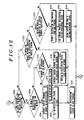
- the terminal determines whether it is in the UIM terminal state or the service terminal state at a step 1404. If the terminal is in the service terminal state, the terminal determines whether the network providing service has provided instructions to remote deregister at a step 1406. If remote deregistration is required at a step 1406, the terminal performs the deregistration process and indicates the registration status to the user at a step 1408. The terminal then determines whether a change of state to a UIM terminal occurs at a step 1410. As will be described in more detail in reference to the remaining figures, a change in states to the UIM terminal must be provided to the network providing service. In particular, many steps of the deregistration process are determined by whether the terminal is a UIM terminal or a service terminal.
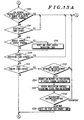
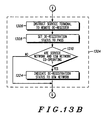
- the service network responds to commands from the UIM network according to the steps of FIG. 13. In particular, the service network determines whether the UIM network has instructed the service network to remote deregister the service terminal at a step 1302. If the UIM network has instructed the service network to remote deregister the service terminal, the service network performs remote deregistration according to step 1304. In particular, the service network instructs the service terminal to remote deregister at a step 1306. The service network sets the deregistration status to pass at a step 1308 and determines whether the service network and the UIM network are cooperating at a step 1310. If the networks are cooperating, the service network indicates the deregistration to the UIM network at a step 1312.
- the service network may also deregister the service terminal without an instruction from the UIM network.
- the service terminal may determine at a step 1314 whether a registration timer has expired. Such a timer may preferably be set to minimize inadvertent or unauthorized use of the network. If the registration timer has expired, the service network instructs the terminal to remote deregister at a step 1304. Alternatively, the service network could determine whether service is invoked at the service terminal at a step 1316. If service is invoked, the service network will reset and start a service invocation timer at a step 1318.
- the service network would then determine whether the service invocation timer has expired at a step 1320. Such a timer could also minimize excessive, inadvertent or unauthorized use of service provided by the network. If the service invocation timer has expired, the service terminal performs deregistration at step 1304. However, if the service invocation timer has not expired, the network determines whether an user inquiry timer has expired at a step 1321. If the user inquiry timer has expired, the service network then determines whether the service network and the UIM network are cooperating at a step 1322. If the networks are not cooperating, the service network performs remote deregistration according to steps 1304. If the networks are cooperating, the service network requests the UIM network for continuation of service terminal registration at a step 1324.
- the service network then receives a registration continue/discontinue status from the UIM network at a step 1326. If a registration discontinue status is received at a step 1328, the service network performs the deregistration function at step 1304. If the service network receives a registration continue status at step 1328, the service network resets and starts the user inquiry timer at step 1330. After the deregistration status has been indicated to the UIM network at step 1312 or after determining whether the user inquiry has expired at step 1321, the network may receive a terminal change of status indication at a step 1108.
- the timers are shown in connection with the operation of the service network, similar timers may be utilized in the UIM network although this option is not shown in FIGs. 11 and 12 to avoid redundancy. Also, timers based on other criteria may be utilized within the spirit and scope of the present invention. The timers described in reference to FIG. 3 are given by way of example.
- the UIM network determines whether the cooperating service network indicates remote deregistration status of the service terminal at a step 1222. If the service network indicates the remote deregistration status, the UIM network provides an indication of the deregistration status to the UIM terminal at step 1210. However, if the cooperating service network does not provide an indication of remote deregistration of a service terminal, the UIM network determines whether the service network has requested continuation of registration for the service terminal at a step 1224. If the service requests a continuation, the UIM networks requests registration continuation from the UIM terminal at a step 1226.
- the UIM terminal then provides a registration continue/discontinue status at a step 1228.
- the UIM network then informs the service network of the continue/discontinue status of the UIM network at a step 1230.
- the network determines whether it receives a terminal change of state indication at a step 1104. If a change of state of the terminal occurs, the resets and starts a registration timer, resets and starts a service invocation timer and resets and starts a user inquiry timer at a step 1106.
- Remote deregistration can either be performed manually by a user or automatically by a network. If the terminal is in the UIM terminal state at step 1404, the UIM terminal could initiate a remote deregistration according to the steps shown in FIG. 15.
- the terminal determines whether the user has instructed the terminal to initiate remote deregistration. If the user has instructed the UIM terminal to initiate a remote deregistration, the terminal accesses the UIM to obtain the ID of a corresponding service network for deregistration at a step 1504, assuming that multiple networks are employed in the system. In the embodiment of FIG. 1 where a single network is involved, step 1504 would not be necessary. Step 1504 would however be necessary for the embodiments of FIGs. 2 and 3.
- the UIM terminal then instructs the UIM network to initiate remote deregistration at a step 1506.
- the UIM terminal then receives a request acknowledgment from the UIM network at a step 1508.
- the terminal also determines whether a deregistration status of "pass" or "fail" is received at a step 1510. If a deregistration status of "pass” is received, the terminal instructs the UIM to store the deregistration status at a step 1512. In the embodiment of FIG. 1 where a single network is involved, step 1512 would not be necessary. Step 1512 would however be necessary for the embodiments of FIGs. 2 and 3.
- the terminal then indicates the registration/deregistration status to the user at a step 1514, and determines whether the terminal has changed a state to a service terminal at a step 1412. If the terminal has changed state at step 1412, the terminal informs the network of the change of terminal state at step 1414.
- the UIM terminal determines whether the UIM network has indicated that remote deregistration has occurred at a step 1516. If remote deregistration has occurred, the terminal instructs the UIM to store the deregistration status at a step 1512. The terminal then indicates the registration/deregistration status to the user at a step 1514. If remote deregistration has not occurred, the UIM terminal determines whether the UIM network has requested continued service at a remote service terminal at a step 1518. If the UIM network requests continued registration at a remote service terminal, the terminal then invites the user to select "continue” or "discontinue in response to the request at a step 1520. The UIM terminal then informs the UIM network of the confinue/discontinue status at a step 1522.
- the UIM causes the terminal to transfer local database information to the UIM network upon registration at a step 1602.
- the UIM network determines whether a multiple registration profile is desired at a step 1604. If a multiple registration profile is desired, the terminal sends a multiple registration profile inquiry to the UIM network at a step 1606.
- the UIM network determines whether the UIM is registered to multiple networks at a step 1608. If it is not registered to multiple networks, the UIM networks sends the multiple registration message to the terminal at a step 1610. However, if the UIM is registered to multiple networks, the UIM network determines whether the other networks are available at a step 1612.
- the UIM network transmits a message to the UIM terminal providing a status of terminals registered to the UIM terminal only at a step 1614. In this case, the UIM terminal then accesses the UIM to determine the multiple registration profile at a step 1615. However, if other networks are available, the UIM network will transmit a message to available service networks. UIM network will receive reply messages from the service networks indicating the status of terminals registered with service networks. The UIM network then transmits a message indicating the status of the terminals to the UIM terminal at a step 1616. The message would include the status of any terminal registered to the service networks.
- a service activity report informs the active terminals of services taking place based upon a predetermined set of criteria.
- the report could be generated based upon a certain event, on a periodic basis, or upon request after a predetermined period of time.
- a service activity report timer is reset. If a user requests a service activity report at a step 1704, the UIM network obtains an activity report from the service network for each cooperating service network at a step 1706. The UIM network then notifies the UIM terminal at a step 1708.
- the UIM terminal determines whether a service activity report timer is enabled and expires at a step 1710. If the timer is enabled that expired, the service activity report timer is reset at step 1712. The UIM network obtains the service activity report according to step 1706, and notifies the UIM terminal at step 1708. If the service activity timer is not enabled or has not expired, the UIM network determines whether it receives- an indication of service invoked at a service network and service activity is notifiable. If service is invoked at the service network and service activity is notifiable, the UIM network notifies the UIM terminal at a step 1708.
- the activity is not invoked at a service terminal or the service activity is not notifiable, it is determined whether the service is invoked at a service terminal in this network and the service activity is notifiable at a step 1716. If the service is invoked at a service terminal in this network and the service activity is notifiable, it is determined whether the network in the UIM network or the service network state at a step 1718. If the network is in the UIM network state, the UIM network notifies the UIM terminal at a step 1708. If the network is in the service network state at step 1718, it is determined whether the UIM network is a cooperating network at a step 1720. If so, the service network notifies the UIM network at a step 1722.
- Network apparatus 1800 for accessing multiple communications networks is shown.
- Network apparatus 1800 is adapted to perform the steps of the networks described herein and preferably includes a controller 1802 which is coupled to a transceiver 1804 for enabling RF communication with a terminal.
- a network-to-network interface port 1806 also provides information to controller 1802 to enable communication between networks.
- a memory 1808 having a cooperating network list is also coupled to controller 1802 to enable the controller to determine which networks will provide information regarding terminals on the network.
- Timers 1814 enable the controller to perform necessary timing functions of the network.
- a network state manager 1812 is coupled to the controller to provide network information.
Landscapes
- Engineering & Computer Science (AREA)
- Databases & Information Systems (AREA)
- Computer Networks & Wireless Communication (AREA)
- Signal Processing (AREA)
- Telephonic Communication Services (AREA)
- Data Exchanges In Wide-Area Networks (AREA)
- Mobile Radio Communication Systems (AREA)
- Computer And Data Communications (AREA)
- Sub-Exchange Stations And Push- Button Telephones (AREA)
Abstract
Claims (17)
- Système de télécommunication (100) comprenant :un fournisseur de service (200) fournissant une pluralité de services ;un poste d'abonné consistant en un ou plusieurs terminaux (300, 301, 302) ;un contrôleur (400) possédant un identifiant stocké à l'intérieur ;le ou chaque terminal possédant :un moyen (310) de lecture de l'identifiant, et étant caractérisé parun moyen (340), dans le ou chaque terminal, de sélection d'un ou de plusieurs de la pluralité de services qui doivent être associés à l'identifiant comme étant un premier jeu de services sélectionnés,un moyen (330), dans le ou chaque terminal, de communication, au fournisseur de service, de l'identifiant et de l'information ainsi qu'au premier jeu de services sélectionnés, etun moyen (350), dans le ou chaque terminal, de sélection d'un mode de fonctionnement du terminal lorsque l'association entre le terminal (300, 301, 302) et le contrôleur (400) n'est pas nécessaire pour maintenir la disponibilité du premier jeu de services sélectionnés au niveau du terminal, grâce à quoi le terminal peut maintenir la disponibilité du premier jeu de services sélectionnés du fournisseur de service lorsque le contrôleur n'est plus associé avec le terminal.
- Système de télécommunication (100) selon la revendication 1, dans lequel le jeu utilisateur comporte une pluralité de terminaux (300, 301, 302) et un contrôleur (400) est associé, de manière séquentielle, avec chaque terminal de sorte que les terminaux du jeu utilisateur peuvent fournir un accès aux différents jeux de services simultanément.
- Système de télécommunication (100) selon l'une ou l'autre des revendications 1 ou 2, dans lequel une pluralité de contrôleurs (400), chacun possédant un identifiant différent stocké à l'intérieur, est fournie de sorte qu'un terminal (300) peut fournir un accès aux jeux de services sélectionnés associés aux différents identifiants simultanément.
- Système de télécommunication (100) selon l'une quelconque des revendications précédentes, dans lequel le contrôleur (400) possède également des informations permettant la communication stockées à l'intérieur et le ou chaque terminal lit et stocke ces informations permettant la communication.
- Système de télécommunication (100) selon la revendication 4, dans lequel les informations permettant la communication comportent des algorithmes de chiffrage et/ou des informations d'autorisation de service.
- Système de télécommunication (100) selon l'une quelconque des revendications précédentes, dans lequel le système de télécommunication (100) est un système sans fil et un ou plusieurs terminaux (301) est (sont) mobile(s).
- Système de télécommunication (100) selon l'une quelconque des revendications précédentes, dans lequel le contrôleur (400) est un module amovible qui peut être inséré dans le ou chaque terminal (300, 301, 302) de sorte que le terminal peut lire l'identifiant et n'importe quelle information permettant la communication.
- Système de télécommunication (100) selon l'une quelconque des revendications précédentes, dans lequel le fournisseur de service (200) comprend un moyen de stockage (210) permettant de stocker les informations indiquant quels services sont actuellement sélectionnés pour un identifiant particulier.
- Système de télécommunication (100) selon la revendication 8, dans lequel le moyen de stockage (210) stocke, de plus, les informations indiquant quels jeux de services sont actuellement disponibles pour ledit identifiant particulier.
- Système de télécommunication (100) selon l'une ou l'autre des revendications 8 ou 9, dans lequel le fournisseur de service (200) comprend en outre un récepteur (220) pour recevoir une demande provenant d'un terminal particulier (300) afin de fournir un accès à un jeu demandé d'un ou de plusieurs service(s) pour ledit identifiant particulier.
- Système de télécommunication (100) selon la revendication 10, dans lequel le fournisseur de service (200) comprend en outre un comparateur (230) pour comparer chaque service demandé dans le jeu demandé avec les services actuellement sélectionnés pour ledit identifiant particulier et fournir une première sortie lorsque le service demandé est le même que l'un parmi les services actuellement sélectionnés et une seconde sortie lorsque le service demandé n'est pas le même que l'un des services actuellement sélectionnés.
- Système de télécommunication (100) selon la revendication 11, dans lequel le fournisseur de service (200) comprend un premier moyen de commande (240) pour refuser l'accès au service demandé si le comparateur (230) fournit la première sortie et autoriser l'accès au service demandé si le comparateur fournit la seconde sortie.
- Système de télécommunication (100) selon la revendication 12, dans lequel le premier moyen de commande (240) crée et stocke, dans le moyen de stockage (210), un second jeu de services sélectionnés contenant le jeu de services demandé à l'exclusion de tout service auquel l'accès a été refusé.
- Système de télécommunication (100) selon l'une quelconque des revendications 11, 12 ou 13, dans lequel le comparateur (230) fournit la première sortie, le comparateur (230) fournit également une indication disant quel jeu de services sélectionnés comporte un service qui est le même que le service demandé.
- Système de télécommunication (100) selon la revendication 14, dans lequel le fournisseur de service (200) comprend un second moyen de commande (250) pour créer et stocker, dans le moyen de stockage (210), un nouveau jeu de services sélectionnés contenant le jeu de services demandé et enlevant de tout jeu actuel de services sélectionnés, tout service qui est contenu dans le nouveau jeu de services sélectionnés.
- Système de télécommunication (100) selon la revendication 15, dans lequel le terminal (300, 301, 302) comprend en outre un moyen (360) pour sélectionner lequel parmi les premier moyen de commande (240) et second moyen de commande (250) sera utilisé et pour communiquer cette sélection au fournisseur de service.
- Procédé de fourniture simultanée d'un accès, au niveau de différents terminaux (300, 301, 302), à différents services offerts par un fournisseur de services (200), ce procédé comprenant les étapes suivantes :association d'un contrôleur possédant un identifiant stocké à l'intérieur, avec l'un des différents terminaux ;lecture (2002) par le terminal, à partir du contrôleur, de l'identifiant ; et caractérisé par :la sélection (500) de celui des différents services auquel le terminal fournira l'accès ;stockage d'une liste des services sélectionnés dans le terminal ;communication (515) par le terminal, au fournisseur de services, de l'identifiant et de la liste des services sélectionnés ;sélection d'un premier mode de terminal dans lequel l'association entre le terminal et le contrôleur n'a pas besoin de maintenir la disponibilité des services sélectionnés par le terminal ;suppression de l'association du contrôler à partir du terminal ; etrépétition des étapes ci-dessus pour autant de terminaux différents et de sélections de services différentes que nécessaire, de sorte que les différents terminaux fournissent un accès aux différents services, simultanément.
Applications Claiming Priority (5)
| Application Number | Priority Date | Filing Date | Title |
|---|---|---|---|
| GB9516870 | 1995-08-17 | ||
| GB9516870A GB2304490B (en) | 1995-08-17 | 1995-08-17 | A telecommunications system and a method of providing services to terminals in such a system |
| GB9614922A GB2315387B (en) | 1996-07-16 | 1996-07-16 | Method and apparatus for accessing a plurality of networks |
| GB9614922 | 1996-07-16 | ||
| PCT/EP1996/003615 WO1997007642A1 (fr) | 1995-08-17 | 1996-08-16 | Procede et appareil d'acces a une pluralite de reseaux |
Publications (2)
| Publication Number | Publication Date |
|---|---|
| EP0845194A1 EP0845194A1 (fr) | 1998-06-03 |
| EP0845194B1 true EP0845194B1 (fr) | 2001-10-24 |
Family
ID=26307583
Family Applications (1)
| Application Number | Title | Priority Date | Filing Date |
|---|---|---|---|
| EP96929262A Expired - Lifetime EP0845194B1 (fr) | 1995-08-17 | 1996-08-16 | Procede et appareil d'acces a une pluralite de reseaux |
Country Status (6)
| Country | Link |
|---|---|
| EP (1) | EP0845194B1 (fr) |
| CN (1) | CN1153491C (fr) |
| AU (1) | AU716953B2 (fr) |
| DE (1) | DE69616349T2 (fr) |
| ES (1) | ES2166907T3 (fr) |
| WO (1) | WO1997007642A1 (fr) |
Families Citing this family (13)
| Publication number | Priority date | Publication date | Assignee | Title |
|---|---|---|---|---|
| WO1999021392A1 (fr) * | 1997-10-16 | 1999-04-29 | At & T Wireless Services, Inc. | Selection dynamique de reseau sans fil offrant une fonction de service desiree |
| WO1999040744A2 (fr) * | 1998-02-06 | 1999-08-12 | Sonera Oyj | Systeme et procede permettant d'indiquer un abonnement telephonique actif |
| US6125283A (en) * | 1998-05-18 | 2000-09-26 | Ericsson Inc. | Multi-mode mobile terminal and methods for operating the same |
| FI981724A7 (fi) * | 1998-07-15 | 2000-01-16 | Nokia Corp | Palvelun toteutuksen valinta |
| US6556820B1 (en) | 1998-12-16 | 2003-04-29 | Nokia Corporation | Mobility management for terminals with multiple subscriptions |
| AU6099700A (en) * | 1999-09-07 | 2001-04-10 | Ericsson Inc. | Automatic deregistration of wireless communications devices having variable identity |
| US6594482B1 (en) | 1999-09-07 | 2003-07-15 | Ericsson Inc. | Controlled transmission of wireless communications device identity |
| FI120478B (fi) | 2000-02-24 | 2009-10-30 | Nokia Corp | Menetelmä ja laitteisto tietoliikenneverkkoon liittymiseksi |
| GB0007617D0 (en) * | 2000-03-29 | 2000-05-17 | Psion Dacom Plc | A short range radio transceiver device |
| KR100420670B1 (ko) * | 2001-11-05 | 2004-03-02 | 주식회사 케이티프리텔 | 개인 정보 관리 모듈을 이용한 무선 통신 서비스 제공시스템 및 방법 |
| ES2251290B1 (es) * | 2004-03-17 | 2007-06-16 | Vodafone España, S.A. | Sistema y metodo de aprovisionamiento de usuarios de telefonos moviles. |
| KR100725779B1 (ko) | 2005-12-21 | 2007-06-08 | 삼성전자주식회사 | 이동통신단말기에서 긴급호출을 위한 셀 검색 방법 |
| CN104780578A (zh) * | 2012-12-24 | 2015-07-15 | 青岛海信移动通信技术股份有限公司 | 一种安卓移动通信终端及网络切换方法 |
Family Cites Families (4)
| Publication number | Priority date | Publication date | Assignee | Title |
|---|---|---|---|---|
| DE3036380A1 (de) * | 1980-09-26 | 1982-05-13 | Siemens AG, 1000 Berlin und 8000 München | Kommunikationssystem, insbesondere fernsprechsystem |
| DE4317143C2 (de) * | 1993-05-24 | 1999-02-18 | Deutsche Telekom Mobil | Verfahren und Einrichtung zum Betrieb eines Mobilfunknetzes |
| NL9301492A (nl) * | 1993-08-31 | 1995-03-16 | Nederland Ptt | Stelsel voor mobiele communicatie bij overlappende communicatiedomeinen. |
| FR2711866B1 (fr) * | 1993-10-26 | 1996-05-24 | Alcatel Mobile Comm France | Installation de radio-téléphone numérique à terminaux mobiles. |
-
1996
- 1996-08-16 WO PCT/EP1996/003615 patent/WO1997007642A1/fr not_active Ceased
- 1996-08-16 EP EP96929262A patent/EP0845194B1/fr not_active Expired - Lifetime
- 1996-08-16 AU AU68734/96A patent/AU716953B2/en not_active Ceased
- 1996-08-16 CN CNB961971053A patent/CN1153491C/zh not_active Expired - Lifetime
- 1996-08-16 ES ES96929262T patent/ES2166907T3/es not_active Expired - Lifetime
- 1996-08-16 DE DE69616349T patent/DE69616349T2/de not_active Expired - Lifetime
Also Published As
| Publication number | Publication date |
|---|---|
| DE69616349T2 (de) | 2002-06-27 |
| WO1997007642A1 (fr) | 1997-02-27 |
| AU716953B2 (en) | 2000-03-09 |
| EP0845194A1 (fr) | 1998-06-03 |
| CN1153491C (zh) | 2004-06-09 |
| DE69616349D1 (de) | 2001-11-29 |
| CN1196858A (zh) | 1998-10-21 |
| ES2166907T3 (es) | 2002-05-01 |
| AU6873496A (en) | 1997-03-12 |
Similar Documents
| Publication | Publication Date | Title |
|---|---|---|
| US6526272B1 (en) | Reducing calling costs for wireless phones using multiple mobile identification numbers | |
| US5933785A (en) | Telephone and method for concurrent registration of two identification numbers using multi-number sim card | |
| US6029065A (en) | Remote feature code programming for mobile stations | |
| JP5377674B2 (ja) | 携帯無線電話機の管理システム | |
| EP0845194B1 (fr) | Procede et appareil d'acces a une pluralite de reseaux | |
| EP1488651A1 (fr) | Procede et appareil destines a acceder a un reseau au moyen d'informations d'identification d'abonne a distance | |
| WO1999060807A1 (fr) | Terminal mobile multimode et son procede d'exploitation | |
| KR100421576B1 (ko) | 통신시스템및그러한통신시스템내의단말기에서비스들을제공하는방법 | |
| GB2315387A (en) | Method and apparatus for accessing a plurality of networks | |
| JPH1098757A (ja) | 共有無線テナントサービスシステム | |
| KR20100118386A (ko) | 복수의 스마트 카드 장착이 가능한 이동 단말 및 그 이동 단말에서의 호 처리 방법 | |
| EP1661313B8 (fr) | Procede et appareil permettant de valider l'acces dans un environnement de reseau local sans fil | |
| CA2336268C (fr) | Systeme de telecommunications et procede approprie permettant de faire fonctionner un systeme de telecommunications | |
| KR100441122B1 (ko) | 이동통신시스템에서호전환부가서비스실시방법 | |
| JP3115452B2 (ja) | 通信網の通信制御方法及び通信網 | |
| KR100233910B1 (ko) | 개인 통신 교환기의 이동 단말기 분실에 따른 안내 방송서비스 방법 | |
| EP0854591A2 (fr) | Système et méthode pour téléphone multi-services terrestre et satellite | |
| GB2304490A (en) | A telecommunications system and a method of providing services to terminals in such a system | |
| JP2963707B2 (ja) | ファクシミリ蓄積交換装置 | |
| JPH0723460A (ja) | 移動電話システムのブラックリスト運用方法 | |
| JP3667157B2 (ja) | 無線端末装置 | |
| KR100247421B1 (ko) | 호 보류 처리 방법 | |
| KR100242702B1 (ko) | 호 보류 및 회의 통화 처리 방법 | |
| KR100242701B1 (ko) | 회의 통화 처리 방법 | |
| JP4176565B2 (ja) | 無線通信システムおよび無線通信端末 |
Legal Events
| Date | Code | Title | Description |
|---|---|---|---|
| PUAI | Public reference made under article 153(3) epc to a published international application that has entered the european phase |
Free format text: ORIGINAL CODE: 0009012 |
|
| 17P | Request for examination filed |
Effective date: 19980317 |
|
| AK | Designated contracting states |
Kind code of ref document: A1 Designated state(s): DE ES SE |
|
| 17Q | First examination report despatched |
Effective date: 20000405 |
|
| GRAG | Despatch of communication of intention to grant |
Free format text: ORIGINAL CODE: EPIDOS AGRA |
|
| GRAG | Despatch of communication of intention to grant |
Free format text: ORIGINAL CODE: EPIDOS AGRA |
|
| GRAH | Despatch of communication of intention to grant a patent |
Free format text: ORIGINAL CODE: EPIDOS IGRA |
|
| GRAH | Despatch of communication of intention to grant a patent |
Free format text: ORIGINAL CODE: EPIDOS IGRA |
|
| GRAA | (expected) grant |
Free format text: ORIGINAL CODE: 0009210 |
|
| RIN1 | Information on inventor provided before grant (corrected) |
Inventor name: VAN DEN HEUVEL, ANTHONY Inventor name: GIBBS, JONATHAN Inventor name: WHINNETT, NICHOLAS Inventor name: ROBINSON, WILLIAM |
|
| AK | Designated contracting states |
Kind code of ref document: B1 Designated state(s): DE ES SE |
|
| REF | Corresponds to: |
Ref document number: 69616349 Country of ref document: DE Date of ref document: 20011129 |
|
| REG | Reference to a national code |
Ref country code: ES Ref legal event code: FG2A Ref document number: 2166907 Country of ref document: ES Kind code of ref document: T3 |
|
| PLBE | No opposition filed within time limit |
Free format text: ORIGINAL CODE: 0009261 |
|
| STAA | Information on the status of an ep patent application or granted ep patent |
Free format text: STATUS: NO OPPOSITION FILED WITHIN TIME LIMIT |
|
| 26N | No opposition filed | ||
| PGFP | Annual fee paid to national office [announced via postgrant information from national office to epo] |
Ref country code: ES Payment date: 20050829 Year of fee payment: 10 |
|
| PGFP | Annual fee paid to national office [announced via postgrant information from national office to epo] |
Ref country code: SE Payment date: 20060804 Year of fee payment: 11 |
|
| EUG | Se: european patent has lapsed | ||
| PG25 | Lapsed in a contracting state [announced via postgrant information from national office to epo] |
Ref country code: SE Free format text: LAPSE BECAUSE OF NON-PAYMENT OF DUE FEES Effective date: 20070817 |
|
| REG | Reference to a national code |
Ref country code: ES Ref legal event code: FD2A Effective date: 20070817 |
|
| PG25 | Lapsed in a contracting state [announced via postgrant information from national office to epo] |
Ref country code: ES Free format text: LAPSE BECAUSE OF NON-PAYMENT OF DUE FEES Effective date: 20070817 |
|
| REG | Reference to a national code |
Ref country code: DE Ref legal event code: R082 Ref document number: 69616349 Country of ref document: DE Representative=s name: SCHUMACHER & WILLSAU PATENTANWALTSGESELLSCHAFT, DE |
|
| REG | Reference to a national code |
Ref country code: DE Ref legal event code: R082 Ref document number: 69616349 Country of ref document: DE Representative=s name: SCHUMACHER & WILLSAU PATENTANWALTSGESELLSCHAFT, DE Effective date: 20111108 Ref country code: DE Ref legal event code: R081 Ref document number: 69616349 Country of ref document: DE Owner name: MOTOROLA MOBILITY, INC., LIBERTYVILLE, US Free format text: FORMER OWNER: MOTOROLA LTD., BASINGSTOKE, HAMPSHIRE, GB Effective date: 20111108 Ref country code: DE Ref legal event code: R081 Ref document number: 69616349 Country of ref document: DE Owner name: MOTOROLA MOBILITY, INC., US Free format text: FORMER OWNER: MOTOROLA LTD., BASINGSTOKE, GB Effective date: 20111108 |
|
| REG | Reference to a national code |
Ref country code: DE Ref legal event code: R082 Ref document number: 69616349 Country of ref document: DE Representative=s name: SCHUMACHER & WILLSAU PATENTANWALTSGESELLSCHAFT, DE |
|
| REG | Reference to a national code |
Ref country code: DE Ref legal event code: R082 Ref document number: 69616349 Country of ref document: DE Representative=s name: SCHUMACHER & WILLSAU PATENTANWALTSGESELLSCHAFT, DE Effective date: 20120618 Ref country code: DE Ref legal event code: R081 Ref document number: 69616349 Country of ref document: DE Owner name: MOTOROLA MOBILITY, INC., LIBERTYVILLE, US Free format text: FORMER OWNER: MOTOROLA, INC., SCHAUMBURG, ILL., US Effective date: 20120618 |
|
| PGFP | Annual fee paid to national office [announced via postgrant information from national office to epo] |
Ref country code: DE Payment date: 20150827 Year of fee payment: 20 |
|
| REG | Reference to a national code |
Ref country code: DE Ref legal event code: R071 Ref document number: 69616349 Country of ref document: DE |
|
| P01 | Opt-out of the competence of the unified patent court (upc) registered |
Effective date: 20230520 |