EP0845759B1 - System zum Verbessern der auf Information basierten Zeichen und Frankiersicherheitsvorrichtung - Google Patents
System zum Verbessern der auf Information basierten Zeichen und Frankiersicherheitsvorrichtung Download PDFInfo
- Publication number
- EP0845759B1 EP0845759B1 EP97120449A EP97120449A EP0845759B1 EP 0845759 B1 EP0845759 B1 EP 0845759B1 EP 97120449 A EP97120449 A EP 97120449A EP 97120449 A EP97120449 A EP 97120449A EP 0845759 B1 EP0845759 B1 EP 0845759B1
- Authority
- EP
- European Patent Office
- Prior art keywords
- indicium
- program
- information
- indicia
- block
- Prior art date
- Legal status (The legal status is an assumption and is not a legal conclusion. Google has not performed a legal analysis and makes no representation as to the accuracy of the status listed.)
- Expired - Lifetime
Links
- 238000007639 printing Methods 0.000 claims description 44
- 230000007246 mechanism Effects 0.000 claims description 24
- 238000000034 method Methods 0.000 claims description 18
- 239000000976 ink Substances 0.000 description 22
- 239000000872 buffer Substances 0.000 description 18
- 230000008569 process Effects 0.000 description 16
- 238000004891 communication Methods 0.000 description 5
- 238000012545 processing Methods 0.000 description 4
- 238000005516 engineering process Methods 0.000 description 3
- 230000006870 function Effects 0.000 description 3
- 238000012937 correction Methods 0.000 description 2
- 230000000977 initiatory effect Effects 0.000 description 2
- 230000003993 interaction Effects 0.000 description 2
- 238000004519 manufacturing process Methods 0.000 description 2
- 238000012015 optical character recognition Methods 0.000 description 2
- 238000012360 testing method Methods 0.000 description 2
- 238000012546 transfer Methods 0.000 description 2
- 230000001174 ascending effect Effects 0.000 description 1
- 230000008901 benefit Effects 0.000 description 1
- 230000002950 deficient Effects 0.000 description 1
- 238000011161 development Methods 0.000 description 1
- 230000000694 effects Effects 0.000 description 1
- 230000010365 information processing Effects 0.000 description 1
- 230000005055 memory storage Effects 0.000 description 1
- 238000012805 post-processing Methods 0.000 description 1
- 230000004044 response Effects 0.000 description 1
- 238000012795 verification Methods 0.000 description 1
- 230000000007 visual effect Effects 0.000 description 1
Images




Classifications
-
- G—PHYSICS
- G07—CHECKING-DEVICES
- G07B—TICKET-ISSUING APPARATUS; FARE-REGISTERING APPARATUS; FRANKING APPARATUS
- G07B17/00—Franking apparatus
- G07B17/00459—Details relating to mailpieces in a franking system
- G07B17/00508—Printing or attaching on mailpieces
-
- G—PHYSICS
- G07—CHECKING-DEVICES
- G07B—TICKET-ISSUING APPARATUS; FARE-REGISTERING APPARATUS; FRANKING APPARATUS
- G07B17/00—Franking apparatus
- G07B17/00459—Details relating to mailpieces in a franking system
- G07B17/00508—Printing or attaching on mailpieces
- G07B2017/00572—Details of printed item
- G07B2017/0058—Printing of code
-
- G—PHYSICS
- G07—CHECKING-DEVICES
- G07B—TICKET-ISSUING APPARATUS; FARE-REGISTERING APPARATUS; FRANKING APPARATUS
- G07B17/00—Franking apparatus
- G07B17/00733—Cryptography or similar special procedures in a franking system
- G07B2017/00959—Cryptographic modules, e.g. a PC encryption board
- G07B2017/00967—PSD [Postal Security Device] as defined by the USPS [US Postal Service]
Definitions
- the invention relates generally to the field of franking machines and more particularly to the printing of specific type of indicia.
- postage meters have been mechanical and electromechanical devices that: maintain through mechanical or "electronic registers" (postal security devices) an account of all postage printed and the remaining balance of prepaid postage; and print postage postmarks (indicia) that are accepted by the postal service as evidence of the prepayment of postage.
- the Information Based Indicia Program specification includes both proposed specifications for the new indicium and proposed specifications for a postal security device (PSD).
- PSD postal security device
- the proposed Information - Based Indicium (IBI) consists of a two dimensional bar code containing hundreds of bytes of information about the mail piece and certain human-readable information.
- the indicium includes a digital signature to preclude the forgery of indicia by unauthorised parties.
- the postal security device is a unique security device that provides a cryptographic digital signature to the indicium and performs the function of postage meter registers.
- the United States Postal Service (USPS) is authorised to regulate the manufacture and use of postage meters. For the past several years the United States Postal Service has been actively proposing a solution to the problem of inadequate postage meter security. The United States Postal Service is also trying to solve the problem that currently available postal meter indicia are susceptible to counterfeiting. The United States Postal Service plans to solve the above problems by decertifying mechanical meters and implementing the Information - Based Indicia Program (IBIP).
- IBIP Information - Based Indicia Program
- the IBIP is a United States Postal Service initiative supporting the development and implementation of a new form of postal indicia.
- the IBIP specification is intended to address the counterfeiting threat.
- An IBIP indicium substitutes for a postage stamp or a postage meter imprint as evidence of the fact that postage has been paid on mail pieces.
- the postal security device (PSD) is expected to be a hardware component for use with either a computer based or postage meter based host system. Each PSD will be a unique security device.
- the PSD core security functions are cryptographic digital signature generation and verification, and secure management of the registers that track the remaining amount of money available following indicium creation i.e., descending register and the total postage value used by the PSD i.e., ascending register.
- the PSD will be a tamper - resistant device that may contain an internal random number generator, various storage registers, a date/time clock and other circuits necessary to perform the foregoing functions.
- the PSD will comply with Federal Information Processing Standard (FIPS) 140-1 published by the United States Department Of Commerce, National Bureau of Standards, and will be validated through the National Institute of Standards (NIST) Computer Systems Laboratory's Cryptographic Module Validation Program.
- FIPS Federal Information Processing Standard
- NIST National Institute of Standards
- the Information-Based Indicia technology of the United States Postal Service offers the postal customer a way to pay for postage without stamps. Envelopes are franked using the postal customer's personal computer, a personal computer compatible add on unit and the customer's printer.
- the PSD provides postal value storage and the link to the USPS and the manufacturer of the personal computer compatible add on.
- the USPS plans to bill mail that contains an Information - Based Indicium that can not be read by automated equipment to the Information - Based module provider unless the provider can show that the inability to read the indicium was caused by the mailer or was a Post Office error. It is estimated that it will cost approximately $15.00 to manually process and return each mail piece that contains an Information - Based Indicium that can not be read. The entire USPS IBIP program may fail because of the cost to manually process and return each mail piece that contains an indicium that can not be read. Thus, a problem with the prior art is that the cost to implement the processing and returning of indicia that cannot be read could remove the benefit to the USPS and the Information - Based Indicia module provider.
- a metering system comprising: a printing mechanism for affixing an information based indicium to a mailpiece; means for determining whether the characteristics of the printing mechanism are approved for use in printing postal indicia; and means for recording information relative to said characteristics of the printing mechanism on the mail piece, wherein the recorded information is recordable in the indicium or in the vicinity of the indicium.
- a method of affixing an indicium to a mail piece comprising: operating a printing mechanism for affixing an information based indicium to a mail piece; determining whether the characteristics of the printing mechanism are approved for use in printing postal indicia; and recording information relative to said characteristics of the printing mechanism on the mail piece, the recorded information being recorded in the indicium or in the vicinity of the indicium.
- the following describes a system that will supply permanent and human and machine readable evidence that a approved printer or unapproved printer was used to print the indicium in question.
- the system will first capture the postal customer's or mailer's printer type and configuration setting information, paper, ink, or toner combination and then use the foregoing information to enable printing of the Information - Based Indicium if the active printer going to print the indicium is found on a stored (local or remote) "Information - Based Indicia Approved Printer's List". Then the system will add this same printer information to the USPS defined Information - Based Indicia print field format so as to provide evidence that an approved printer or unapproved printer or proper supplies were used.
- printer information may be printed in a coded form on the Information - Based Indicium to automate the sortation of indicia that cannot be read.
- this system will improve the processing of Information - Based Indicia mail by reducing and eventually virtually eliminating the use of printers, printer settings, paper envelopes, inks and toners that can not be read by Information - Based Indicia scanners.
- this invention will improve the processing of mail.
- the foregoing is accomplished by collecting information about the indicia printer, the indicia printer settings, the paper on which the indicia is going to be printed and the ink or toner that is going to be used to print the indicia, using the program contained in the user computer. Then the program contained in the user computer decides if the printer, paper, ink, or toner combination is approved by the USPS to allow printing. At this point the program contained in the user computer notifies the user of the status of the selected printer, paper and ink, or toner. Now, the program contained in the Postal Security Device computer adds the coded representation of the selected printer, paper and ink or toner to the indicia to automate the post processing of mail pieces that have indicia that can not be read.
- the reference character 11 represents a USPS Information - Based Indicium that was printed on mail piece 12 by a printer.
- the postal indicium 11 contains a dollar amount 13, the date 14 that the postal indicium was affixed to the mail piece, the place the mail piece was mailed from 15, the postal meter serial number 16, a FIM code 17 and a 2D encrypted bar code 18.
- Mail piece 12 also contains an indication 19 of the class of mail piece 12. Mail piece 12 is going to be sent to the person and place indicated in address field 20.
- Fig. 2 is a drawing of an Information - Based Indicium containing a code 22 that represents the printer, printer settings, ink, or toner and paper in which the indicium was printed.
- the postal indicium 20 contains a dollar amount 13, the date 14 that the postal indicium was affixed to the mail piece, the place the mail piece was mailed from 15, the postal meter serial number 16, a FIM code 17 and a 2D encrypted bar code 18.
- Mail piece 12 is going to be sent to the person and place indicated in address field 20.
- Postal indicia 21 has a human readable or machine readable code 22 that represents the postal customer's or mailer's printer type and configuration setting information, paper, ink, or toner combination.
- Code 22 may be of the form A, B, C, D, E, F, G, H, I, J , K, L, M, N, O P and Q,. where, the positions held by letters A and B may be used to represent the manufacturer of the printer that printed indicia 21 and the positions held by letters C, D, and E may be used to represent the model of the printer that printed indicium 21.
- the position held by letter E may be used to represent the print density of the printer that printed indicium 21 and the position held by letter F may be used to represent the print dither type of the printer that printed indicium 21.
- the position held by letters G and H may be used to represent the envelope size of the envelope on which indicium 21 was affixed and the position held by letters I and J may be used to represent the paper type in which indicium 21 was affixed.
- the position held by letters K , L and M may be used to represent the type of ink that was used to print indicium 21 and the position held by letters N, O and P may be used to represent the toner type in which indicium 21 was affixed.
- Letter Q may be used as a control or for error correction.
- code 22 may have additional positions in order to represent additional information about the printer that printed indicium 21 It will also be obvious to one skilled in the art that code 22 may be printed in decimal, base 32, numerical, alphanumerical, bar code or other form.
- Fig. 3 is a block drawing of the system used to print information about the printer, printer settings, ink, or toner and paper in which the indicium was printed and the system used to read the above information.
- Postal security device (PSD) 36 is coupled to user computer 30 and computer 30 is coupled to modem 28.
- Computer 30 is also coupled to user printer 32.
- Printer 32 s capable of printing an envelope 12 with an indicium 21(shown in the description of Fig. 2 ) affixed thereto.
- Modem 28, computer 30, PSD 36, user printer 32 and envelope 12 may be found in the office of postal customer 50.
- Postal customer 50 will deposit envelope 12 in the mail.
- Envelope 12 will be read by USPS Information - Based Indicia code reader and sorter 37.
- Modem 45 is coupled to modem 45 and modem 45 is coupled to modem 48.
- Modem 48 is coupled to Information - Based Indicia print quality computer 25.
- Modem 48 is also coupled to Remote Video processing 400.
- Computer 25 is coupled to modem 26.
- Modem 48, computer 25 and modem 26 may be found at the site of quality inspector 49.
- Sorter 37, reader 33, security station 65, printer 66, modem 45 and envelope 12 may be found at USPS site 51.
- Modem 26 is coupled to PSD manufacture modem 41 via communications path 42 and modem 26 is coupled to postal user modem 28 via communications path 40.
- Modem 41 is coupled to PSD manufacturer's computer 35.
- Modem 41 and computer 35 are at PSD manufacturer site 52.
- Modem 41 is coupled to modem 28 via communications path 29.
- Information - Based Indicia print quality computer 25 stores in its memory information about the printers, printer settings, inks or toners and papers that have been approved by the USPS for the printing of indicium 21.
- Computer 25 transmits the aforementioned information to modem 26.
- Modem 26 transmits the above information to postal security device (PSD) manufacturer 35.
- PSD postal security device
- a specification for a PSD is set forth in the USPS Information Based Indicia Program Postal Security Device Specification, dated June 13, 1996, herein incorporated by reference.
- Computer 30 may receive information about the printers, printer settings, inks or toners and papers that have been approved by the USPS for the printing of indicia 21 from the manufacturer of postal security device 36.
- the aforementioned information may be sent to computer 30 by PSD computer 35 via modem 41 and 28 or by IBI computer 25 via modem 26 and 28.
- the above information may also be contained in a diskette or other memory storage device and then entered into the memory of computer 30.
- the operator of computer 30 will use the program described in the description of Fig. 4 to enter the printer, printer type, configuration setting information, paper, ink, or toner combination that is going to be used to print indicia 21.
- Computer 30 will inform the operator of computer 30, whether or not the printer type, configuration setting information, paper, ink, or toner combination selected to print indicium 21 has been approved by the USPS. Then, the operator of computer 30 will have the option to determine whether or not indicium 21 should or should not be printed. If, the operator of computer 30 determines that indicium 21 should be printed, the foregoing information will be used to print indicium 21.
- Computer 30 will transmit the foregoing information to printer 32.
- Printer 32 will then print indicium 21 on envelope 12.
- Indicium 21 will contain a code 22, described in the description of Fig. 2 , that contains information regarding the printer type, configuration setting information, paper, ink, or toner combination selected to print indicium 21. At some later time envelope 12 will be mailed.
- USPS Information - Based Indicia reader 37 at USPS site 51 will read indicium 21. If, code reader 37 is able to read indicium 21 on envelope 12, then envelope 12 will proceed along path A and the USPS will deliver envelope 12 to the addressee. If, reader 37 is unable to read indicium 21, then and in that event envelope 12 will proceed along path B and be scanned by reader 33. Reader 33 will read code 22. Code 22 provides evidence of the printer, printer type, configuration setting information, paper, ink, or toner combination that was used to print indicium 21. If, code 22 indicates that an improper printer, printer type, configuration setting information, paper, ink, or toner combination was used and envelope 12 was not damaged or printed correctly, envelope 12 may be returned to the mailer of envelope 12.
- the mailer of envelope 12 may be required to pay a fine to the USPS.
- the USPS may elect to notify the mailer of envelope 12, that indicium 21 is incorrect. This notification may be by ordinary mail or by transmitting the notification to computer 30 via Information - Based Indicia print quality computer 26, modem 26 and modem 28.
- the operator of computer 30 may inform the USPS to deliver envelope 12 and charge any fees to the owner of computer 30.
- the notification from computer 30 will be transmitted to computer 25 via modem 28, communications path 40 and modem 26.
- code 22 indicates that a proper printer, printer type, configuration setting information, paper, ink, or toner combination was used and envelope 12 was not damaged and indicium 21 was properly printed, envelope 12 will be returned to PSD manufacturer site 52.
- the manufacturer of the equipment used to print indicium 21 may be required to explain the reason for the inability to read indicium 21 or be required to pay a fine to the USPS
- the notification to PSD manufacturer site 52 may be via modem 26, communications path 42 and modem 41.
- Fig. 4 is a drawing of a flow chart of the print quality manager program contained in user computer 30.
- the user turns computer 30 on and in block 100 the operating system of computer 30 loads the print quality manager program into the memory of computer 30. Then the program goes to block 101 where computer 30 determines whether or not a compatible envelope program is installed in the memory of computer 30.
- a compatible envelope program may be the Dazzle Envelope Manager Software program manufactured by Dazzle of 247 High Street, Palo Alto, California 94301-1041. If, a compatible envelope program is not installed in the memory of computer 30, the program would proceed to block 102 and end.
- a compatible envelope program was installed in the memory of computer 30 the program would advance to block 103 and the program would read its operating system initiating files and determine what is the identification of active user printer 32 ( Fig. 3 ). Then the program would proceed to decision block 104 and determine whether or not printer 32 is listed in the data base as a IBI approved printer. If, the answer to the aforementioned question is no, the program would go to decision block 105.
- decision block 105 the program would determine whether or not active printer 32 is listed in the data base as a printer that is not an IBI approved printer. If, it was determine that printer 32 was listed as a printer that was not IBI approved, then the program would go to block 106 and set a warning message that printer 32 is not an IBI approved printer. Then the program would store the above warning message in print quality status message buffer 108. If, decision block 105 determined that the answer was no, the program would advance to block 107. Block 107 would compose a warning message indicating that it does not know if printer 32 is an IBI approved printer. The aforementioned warning message composed in block 107 will be stored in block 108 status message buffer. At this point the program would proceed to block 109. Block 109 would be a buffer that would request an update on the status of printer 32. If, decision block 104 had a positive answer, this fact would be stored in print quality status message buffer 108.
- the program would advance to block 110 where the program would read the operating systems initiating files to determine what is the current dither setting, graphic setting, resolution enhancement technology setting (if valid), paper identification, toner identification and/or ink identification of printer 32. Then the program would go to block 112 and look up each print parameter read in block 111 in the print quality data base. The program would also determine in block 112 whether the current settings of printer 32 are within the IBI approved ranges, out of the current IBI ranges or not found. Now, the program would go to decision block 114, where the program would sort and transfer the information received from block 111 to the proper buffers. If, the information was not found, this fact would be stored in block 109 request update buffer.
- the program would go to block 108 print quality message status buffer where this fact would be stored. If, the settings were within the IBI approved ranges the program would go to decision block 120. Decision block 120 would determine whether or not a compatible envelope program is being loaded. If, a compatible envelope program is not being loaded the program would go back to the input of block 120 and wait until a compatible envelope program is loaded. If, a compatible envelope program is being loaded, then the program would advance to block 124 to determine whether or not the user of computer 30 selected the print command. If, block 124 determines that the print command was not selected the program would go to decision block 125. Decision block 125 would determine whether or not the envelope program is going to be terminated by the user of computer 30.
- the envelope program is not going to be terminated then the program will go back to block 124. If, the envelope program is going to be terminated then the program will go to block 102 and the program will end. If, block 124 determines that the print command was selected the program would go to block 126 to read the contents of buffer 108 and buffer 109. Block 126 would use the aforementioned information that was read and compose a warning message that will appear on the display of computer 30.
- the program would advance to decision block 128 where the program would wait for the users response to the warnings. If, decision block 128 determines that the user of computer 30 wants to follow the warning message and / or messages the program would advance to block 129 where a request to update the print quality manger program may be made via modem 28 ( Fig. 3 ) or diskette (not shown). If, decision block 128 determines that the user of computer 30 does not want to follow the warning message and / or messages the program would advance to block 130 where the program would read the information contained in buffer 108 and buffer 109 and format a print quality message. Then the program will go to block 131 where the aforementioned print quality message will be sent to the data input of PSD 36 ( Fig. 3 ).
- Fig. 5 is a drawing of a flow chart of the program that controls PSD 32 of Fig. 3 , which is loaded into computer 30.
- the program begins in decision block 200, where the program determines whether or not the user of computer 30 ( Fig. 3 ) wants to compose the next IBI indicia. If, block 200 determines that the user does not want to compose the next IBI indicia, then the program goes to block 201 where the program ends. If, block 200 determines that the user wants to compose the next IBI indicia, then the program goes to block 202 where the program composes an IBI indicia image. Then the program goes to block 203, where the program reads the information transmitted to the input of the data port of PSD 36 ( Fig. 3 ).
- the information transmitted to the input of the data port of PSD 36 will be more fully described in the description of Fig. 6 .
- the program goes to block 204 where the information read from the input of the data port of PSD 36 is added to the IBI indicia graphic image composed in block 202.
- the program goes to block 205 where the program sends an acknowledgement to the print quality manager program, described in the description of Fig. 4 , that it added the aforementioned graphic image.
- the program goes to block 206 where the program informs computer 330 to request printer 32 to print an IBI indicia 21 containing a code 22.
- the program goes back to decision block 200.
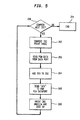
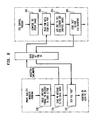
- Fig. 6 is a drawing of a flow chart of the interaction of the print quality manager program of Fig. 4 with the program of Fig. 5 that controls PSD 36.
- the print quality warning message and / or messages formatted in block 126 i.e. code 22 will be sent to block 131.
- Block 131 will then send code 22, i.e. A, B, C, D, E, F, G, H, I, J, K, L, M, N, O, P, and Q to the data port of PSD 36.
- Block 203 will receive code 22 from the data port of PSD 36 and block 205 will acknowledge receipt of code 22 to the data port of PSD 36.
- Fig. 7 is a drawing of a flow chart that shows how the real time video image processor 300 and 400 processes "no read” IBI indicia images so as to extract the print characteristics and to extract the "damage" image if there is one.
- the program begins at start and proceeds to decision block 301 next United States Postal service IBI video image. If, block 301 determines that there is no video image then the program proceeds to block 303 and the process is ended. If, block 301 determines that there is a video image then the program goes to block 302 segment image and isolate print quality manager data field. Then the program goes to block 320 to route a copy of the damaged image to the damaged template creation process. Then the program goes to block 450 damaged template database creation process.
- the program also goes to block 304 optical character recognition process all record print quality data field characters and checksum. Then the program proceeds to decision block 305 to determine whether or not the read accuracy was 100%. If, the read accuracy was less than 100% then the program proceeds to block 401 operator assisted remote video visual edit and correction process of the print quality manager text data line. Then the program proceeds to decision block 402 to determine whether or not it has 100% read accuracy. If block 402 determines that there was not 100% read accuracy then the program proceeds to block 403 to add the record to return the optical character recognition no read report for the United States Postal Service. If, block 402 determines that 100% read accuracy did exist then the program proceeds to block 306 to look up in the master print quality database.
- block 305 determined that the read accuracy was also 100% the program would also proceed to block 306 to look up in the master print quality database. Now the program would proceed to block 307 IBI print quality database to look up the relevant information. This information would be passed back to block 306 then the program would proceed to decision block 308 to determine whether or not a match was found in the print quality database. If, no match was found then the program would proceed to block 312 to add the record to the non approved printing usage report. If, a match was found in block 308 then the program would proceed to decision block 309 to determine whether or not all print parameters were found. If, not all of the print parameters were found then the program would proceed to block 311 to add the record to partially approved printing usage report. If, the program found all of the print parameters then the program would proceed to block 310 to add the record to the 100% approved printing usage report. After a decision was made in block 309 the program would proceed back to start.
- Fig. 8 is a flow chart of a drawing that describes how the print quality database 307 would update the printer, settings and supplies database.
- the program would begin in decision block 315 next data record.
- Decision block 315 may contain records from the United States Postal Service that indicate successful IBI code reads and print quality manager data records. Block 315 may also contain data that indicates the manufacturers submission of testing results data and independent testing agencies data. If, no next data record is available in block 315 then the program would proceed to block 316 and the process would end. If, the next data record was found then the program would proceed to block 317 and reformat the record as needed. At this point the program would proceed to block 318 to look up in the current print quality parameter database. Then the program would proceed to decision block 319 to determine whether or not the requested information was found.
- the program would proceed to block 320 to update the print quality database. Then the program would proceed to block 315 and wait for the next data record. If, block 319 determined that the record was found then the program would proceed back to decision block 315 and wait for the next data record.
- Fig. 9 is a drawing of a flow chart that shows how new "damage templates" are created and then added to the print quality database.
- the program would begin from the output of block 350 that was shown in Fig. 7 route a copy of damaged image to damaged template creation process. Then the program would proceed to block 451 image buffer to route the image to operator. The program would precede to decision block 452 to determine whether or not a record is in image buffer 451. If, there is nothing in buffer 451 the program would go to 453 batch transfer, new templates, If, there is something in buffer 451 the program would go to decision block 461 to determine whether or not the damage is from a mailer process. If, the damage was from a mailer process then the program would proceed to block 454 buffer new template images.
- decision block 461 had a negative answer from the operator then the program would proceed to decision block 462 to determine whether or not this damage is from a postal process. If, the damage was from a postal process then the program would proceed to block 454 buffer new template images. Then the program would proceed to block 463. If, block 463 determined that the damage was not suspicious the program would proceed to decision block 452. If the damage was suspicious then the program would proceed to block 313 to add the record to the United States Postal Service suspicious damage report. If, decision block 463 determined that the image was not suspicious then the program would proceed to block 451 for the image buffer to route the image to an operator.
- Indicia print quality database 307 contains block 330 printing standards data, block 310 which lists additional record to 100% approved printed usage report, block 311 which adds the record to a partially approved printing usage report, block 312 which adds a record to the non approved printing usage report and block 313 which adds the record to the United States Postal Service suspicious damage report.
Landscapes
- Engineering & Computer Science (AREA)
- Computer Security & Cryptography (AREA)
- Physics & Mathematics (AREA)
- General Physics & Mathematics (AREA)
- Record Information Processing For Printing (AREA)
- Accessory Devices And Overall Control Thereof (AREA)
Claims (17)
- Ein System, umfassend:ein Druckmechanismus (32) zum Aufbringen eines informationsbasierten Freimachungsvermerks auf ein Poststück;Mittel zum Bestimmen, ob die Eigenschaften des Druckmechanismus für die Verwendung beim Drucken von Postfreimachungsvermerken freigegeben sind; undMittel zum Aufzeichnen von Information bezüglich der Eigenschaften des Druckmechanismus auf dem Poststück, wobei die aufgezeichnete Information in dem Freimachungsvermerk oder in der Nähe des Freimachungsvermerks aufzeichenbar ist.
- Das System nach Anspruch 1, wobei die aufgezeichnete Information über den Druckmechanismus (32) der Hersteller des Druckmechanismus ist, der verwendet wird zum Drucken des Freimachungsvermerks (18).
- Das System nach Anspruch 1, wobei die aufgezeichnete Information über den Druckmechanismus (32) der Hersteller des Druckmechanismus (32) und die Modellnummer des Druckmechanismus ist, der verwendet wird zum Drucken des Freimachungsvermerks (18).
- Das System nach Anspruch 1, wobei die aufgezeichnete Information über den Druckmechanismus (32) der Hersteller des Druckmechanismus (32), die Modellnummer des Druckmechanismus ist und Druckmechanismuseinstellungen sind, die verwendet werden zum Drucken des Freimachungsvermerks.
- Das System nach einem der Ansprüche 1 bis 4, wobei die aufgezeichnete Information über den Druckmechanismus (32) in einem vom Menschen lesbaren Code aufgezeichnet ist.
- Das System nach einem der Ansprüche 1 bis 5, wobei die aufgezeichnete Information über den Druckmechanismus (32) in einem maschinenlesbaren Code aufgezeichnet ist.
- Das System nach einem der Ansprüche 1 bis 6, wobei die aufgezeichnete Information in einem vom Menschen lesbaren oder einem maschinenlesbaren Code gedruckt ist.
- Das System nach einem der vorangehenden Ansprüche, ferner umfassend Aufzeichnungsinformation in dem Freimachungsvermerk oder in der Nähe des Freimachungsvermerks, die den Typ des Papiers angibt, auf das der Freimachungsvermerk gedruckt wurde.
- Das System nach einem der vorangehenden Ansprüche, wobei die aufgezeichnete Information über das Papier in einem vom Menschen lesbaren oder einem maschinenlesbaren Code gedruckt ist.
- Das System nach einem der vorangehenden Ansprüche, ferner umfassend Aufzeichnungsinformation in dem Freimachungsvermerk oder in der Nähe des Freimachungsvermerks, die den Typ der Tinte angibt, die zum Drucken des Freimachungsvermerks verwendet wurde.
- Das System nach Anspruch 10, wobei die aufgezeichnete Information über die Tinte in einem vom Menschen lesbaren oder einem maschinenlesbaren Code gedruckt ist.
- Das System nach Anspruch 10 oder 11, ferner umfassend Aufzeichnungsinformation in dem Freimachungsvermerk oder in der Nähe des Freimachungsvermerks, die den Typ des Toners angibt, der zum Drucken des Freimachungsvermerks verwendet wurde.
- Das System nach einem der vorangehenden Ansprüche, ferner umfassend Mittel zum Lesen der Aufzeichnungsinformation über den Druckmechanismus, der den Freimachungsvermerk aufgezeichnet hat, und umfassend Mittel, die mit den Mittel zum Lesen gekoppelt sind, zum Bestimmen, ob der durch den Scanner gelesene Freimachungsvermerk durch den Postdienst freigegeben wurde.
- Das System nach einem der vorangehenden Ansprüche, ferner umfassend:erste Mittel zum Lesen der Aufzeichnungsinformation über die Vorrichtung, die den Freimachungsvermerk aufgezeichnet hat;zweite Mittel zum Lesen des Freimachungsvermerks, wenn das erste Mittel das Freimachungsvermerk nicht lesen können; und Mittel zum Bestimmen, ob der Freimachungsvermerk beschädigt wurde.
- Das System nach Anspruch 14, ferner umfassend:Mittel, die an das zweite Mittel gekoppelt sind, zum Drucken von Information über den Freimachungsvermerk, der durch das zweite Mittel nicht gelesen werden konnte.
- Das System nach Anspruch 14 oder 15, ferner umfassend:Mittel, die an das zweite Mittel gekoppelt sind, zum Drucken von Berichten über den Freimachungsvermerk, der durch das zweite Mittel nicht gelesen werden konnte.
- Ein Verfahren zum Aufbringen eines Freimachungsvermerks auf ein Poststück, umfassend:Betreiben eines Druckmechanismus (32) zum Aufbringen eines informationsbasierten Freimachungsvermerks (18) auf ein Poststück (12);Bestimmen, ob die Eigenschaften des Druckmechanismus für die Verwendung beim Drucken von Postfreimachungsvermerken freigegeben sind; undAufzeichnen von Information bezüglich der Eigenschaften des Druckmechanismus auf dem Poststück, wobei die aufgezeichnete Information in dem Freimachungsvermerk oder in der Nähe des Freimachungsvermerks aufzeichenbar ist.
Applications Claiming Priority (2)
| Application Number | Priority Date | Filing Date | Title |
|---|---|---|---|
| US08/753,236 US6574000B1 (en) | 1996-11-22 | 1996-11-22 | System for the enhancement of information based indicia and postage security devices |
| US753236 | 2000-12-29 |
Publications (3)
| Publication Number | Publication Date |
|---|---|
| EP0845759A2 EP0845759A2 (de) | 1998-06-03 |
| EP0845759A3 EP0845759A3 (de) | 2000-07-26 |
| EP0845759B1 true EP0845759B1 (de) | 2010-01-06 |
Family
ID=25029767
Family Applications (1)
| Application Number | Title | Priority Date | Filing Date |
|---|---|---|---|
| EP97120449A Expired - Lifetime EP0845759B1 (de) | 1996-11-22 | 1997-11-21 | System zum Verbessern der auf Information basierten Zeichen und Frankiersicherheitsvorrichtung |
Country Status (4)
| Country | Link |
|---|---|
| US (1) | US6574000B1 (de) |
| EP (1) | EP0845759B1 (de) |
| CA (1) | CA2221540C (de) |
| DE (1) | DE69739731D1 (de) |
Families Citing this family (8)
| Publication number | Priority date | Publication date | Assignee | Title |
|---|---|---|---|---|
| US7069247B1 (en) * | 1999-12-13 | 2006-06-27 | Ascom Hasler Mailing Systems, Inc. | Authentication system for mail pieces |
| DE10023145A1 (de) * | 2000-05-12 | 2001-11-15 | Francotyp Postalia Gmbh | Frankiermaschine und Verfahren zur Freigabe einer Frankiermaschine |
| GB0302269D0 (en) | 2003-01-31 | 2003-03-05 | Neopost Ltd | Item processing system |
| US7349115B2 (en) * | 2003-06-27 | 2008-03-25 | Pitney Bowes Inc. | Method and system for tracing corporate mail |
| US7299984B2 (en) * | 2003-08-21 | 2007-11-27 | Pitney Bowes Inc. | Postage indicia including encoded ink characteristic data |
| US20060064312A1 (en) * | 2004-09-23 | 2006-03-23 | Chandaria Ashok V | Method of providing time sensitive information and a system for accomplishing the same |
| US8736897B2 (en) * | 2006-08-31 | 2014-05-27 | Pitney Bowes Inc. | Method for printing address labels using a secure indicia printer |
| US9536356B2 (en) * | 2007-12-28 | 2017-01-03 | Pitney Bowes Inc. | Methods and systems for using multiple permanent postage rates in mailing machines |
Family Cites Families (21)
| Publication number | Priority date | Publication date | Assignee | Title |
|---|---|---|---|---|
| US4106060A (en) * | 1975-12-15 | 1978-08-08 | Rca Corporation | Electronic mail box |
| DE3220803C2 (de) * | 1982-06-03 | 1994-03-10 | Heidelberger Druckmasch Ag | Farbdichtemeßanlage zur Ermittlung der Farbdichtewerte von Druckprodukten |
| US4868757A (en) | 1983-12-16 | 1989-09-19 | Pi Electronics Corporation | Computerized integrated electronic mailing/addressing apparatus |
| US4835713A (en) | 1985-08-06 | 1989-05-30 | Pitney Bowes Inc. | Postage meter with coded graphic information in the indicia |
| GB8804689D0 (en) * | 1988-02-29 | 1988-03-30 | Alcatel Business Systems | Franking system |
| DE3914256A1 (de) * | 1989-04-29 | 1990-10-31 | Olympia Aeg | Verfahren zur automatischen identifizierung eines typenrades |
| US5031223A (en) | 1989-10-24 | 1991-07-09 | International Business Machines Corporation | System and method for deferred processing of OCR scanned mail |
| DE4003006A1 (de) * | 1990-01-30 | 1991-08-01 | Francotyp Postalia Gmbh | Verfahren zur identifikation von frankier- und wertstempelmaschinen |
| US5118369A (en) | 1990-08-23 | 1992-06-02 | Colorcode Unlimited Corporation | Microlabelling system and process for making microlabels |
| US5151684A (en) * | 1991-04-12 | 1992-09-29 | Johnsen Edward L | Electronic inventory label and security apparatus |
| US5543177A (en) * | 1992-11-05 | 1996-08-06 | Xerox Corporation | Marking materials containing retroreflecting fillers |
| JPH06238962A (ja) | 1993-02-22 | 1994-08-30 | Brother Ind Ltd | 印字装置 |
| WO1995000337A1 (en) * | 1993-06-17 | 1995-01-05 | The Analytic Sciences Corporation | Automated system for print quality control |
| US5480239A (en) | 1993-10-08 | 1996-01-02 | Pitney Bowes Inc. | Postage meter system having bit-mapped indicia image security |
| US5905232A (en) * | 1993-10-14 | 1999-05-18 | Ascom Hasler Mailing Systems, Inc. | Electronic postage scale system and method |
| US5489767A (en) * | 1994-02-14 | 1996-02-06 | Storage Technology Corporation | Media labeling system for data storage elements having a common form factor |
| US5557742A (en) * | 1994-03-07 | 1996-09-17 | Haystack Labs, Inc. | Method and system for detecting intrusion into and misuse of a data processing system |
| US5655023A (en) * | 1994-05-13 | 1997-08-05 | Pitney Bowes Inc. | Advanced postage payment system employing pre-computed digital tokens and with enhanced security |
| US5572010A (en) | 1995-01-03 | 1996-11-05 | Xerox Corporation | Distributed type labeling for embedded data blocks |
| US5675650A (en) * | 1995-05-02 | 1997-10-07 | Pitney Bowes Inc. | Controlled acceptance mail payment and evidencing system |
| JPH0969960A (ja) * | 1995-09-01 | 1997-03-11 | Brother Ind Ltd | 印刷出力装置 |
-
1996
- 1996-11-22 US US08/753,236 patent/US6574000B1/en not_active Expired - Fee Related
-
1997
- 1997-11-19 CA CA002221540A patent/CA2221540C/en not_active Expired - Fee Related
- 1997-11-21 DE DE69739731T patent/DE69739731D1/de not_active Expired - Lifetime
- 1997-11-21 EP EP97120449A patent/EP0845759B1/de not_active Expired - Lifetime
Also Published As
| Publication number | Publication date |
|---|---|
| EP0845759A3 (de) | 2000-07-26 |
| DE69739731D1 (de) | 2010-02-25 |
| EP0845759A2 (de) | 1998-06-03 |
| CA2221540C (en) | 2003-10-07 |
| CA2221540A1 (en) | 1998-05-22 |
| US6574000B1 (en) | 2003-06-03 |
Similar Documents
| Publication | Publication Date | Title |
|---|---|---|
| CA2236744C (en) | Digital printing, metering and recording of other post services on the face of the mail piece | |
| CA2246592C (en) | Metering incoming deliverable mail | |
| US6064995A (en) | Metering incoming mail to detect fraudulent indicia | |
| US6112193A (en) | Reading encrypted data on a mail piece to cancel the mail piece | |
| US5925864A (en) | Metering incoming deliverable mail to automatically enable address correction | |
| US6592027B2 (en) | Method for the recovery of unusable printed postage | |
| EP0741374B1 (de) | System zur kontrollierten Annahme der Bezahlung und des Nachweises von Postgebühren | |
| DE69935201T2 (de) | System und Verfahren zum Auswählen und Buchführen von Mehrwertdiensten mit einer Frankiermaschine mit geschlossenem System | |
| US6064994A (en) | Method and arrangement for data processing in a mail-shipping system with a postage meter machine | |
| US6282525B1 (en) | Method and arrangement for data processing in a mail shipping system having a postage meter machine wherein a carrier-identifying mark is scanned and processed | |
| EP2942757A1 (de) | Automatischer umsatzschutz und anpassung von freimachungsprodukten | |
| US6006211A (en) | Metering incoming deliverable mail to identify delivery delays | |
| US20030093389A1 (en) | Method to account for domestic and international mail fees | |
| EP1431926B1 (de) | Verfahren zum Erhalt von Rückzahlungen eines Zählers zur Herstellung dualer Postwertzeichen | |
| US6427139B1 (en) | Method for requesting and refunding postage utilizing an indicium printed on a mailpiece | |
| CA1278379C (en) | Verification for a mail processing system | |
| US6574000B1 (en) | System for the enhancement of information based indicia and postage security devices | |
| US6925451B1 (en) | Mail receipt terminal having deposit tracking capability | |
| JP2002507800A (ja) | 郵便料金メータ認証管理の装置と方法 | |
| EP1431929A2 (de) | Verfahren und System zum Etikettieren von Postsendungen | |
| US20040059690A1 (en) | Method for franking and processing deliveries | |
| WO2003044620A2 (en) | Systems and methods for detecting postage fraud using a unique mail piece indicium, reducing the size of postage indicia, and refunding postage |
Legal Events
| Date | Code | Title | Description |
|---|---|---|---|
| PUAI | Public reference made under article 153(3) epc to a published international application that has entered the european phase |
Free format text: ORIGINAL CODE: 0009012 |
|
| AK | Designated contracting states |
Kind code of ref document: A2 Designated state(s): DE FR GB |
|
| AX | Request for extension of the european patent |
Free format text: AL;LT;LV;MK;RO;SI |
|
| PUAL | Search report despatched |
Free format text: ORIGINAL CODE: 0009013 |
|
| AK | Designated contracting states |
Kind code of ref document: A3 Designated state(s): AT BE CH DE DK ES FI FR GB GR IE IT LI LU MC NL PT SE |
|
| AX | Request for extension of the european patent |
Free format text: AL;LT;LV;MK;RO;SI |
|
| 17P | Request for examination filed |
Effective date: 20010123 |
|
| AKX | Designation fees paid |
Free format text: DE FR GB |
|
| 17Q | First examination report despatched |
Effective date: 20080318 |
|
| GRAP | Despatch of communication of intention to grant a patent |
Free format text: ORIGINAL CODE: EPIDOSNIGR1 |
|
| GRAS | Grant fee paid |
Free format text: ORIGINAL CODE: EPIDOSNIGR3 |
|
| GRAA | (expected) grant |
Free format text: ORIGINAL CODE: 0009210 |
|
| AK | Designated contracting states |
Kind code of ref document: B1 Designated state(s): DE FR GB |
|
| REG | Reference to a national code |
Ref country code: GB Ref legal event code: FG4D |
|
| REF | Corresponds to: |
Ref document number: 69739731 Country of ref document: DE Date of ref document: 20100225 Kind code of ref document: P |
|
| PLBE | No opposition filed within time limit |
Free format text: ORIGINAL CODE: 0009261 |
|
| STAA | Information on the status of an ep patent application or granted ep patent |
Free format text: STATUS: NO OPPOSITION FILED WITHIN TIME LIMIT |
|
| 26N | No opposition filed |
Effective date: 20101007 |
|
| PGFP | Annual fee paid to national office [announced via postgrant information from national office to epo] |
Ref country code: GB Payment date: 20101124 Year of fee payment: 14 |
|
| REG | Reference to a national code |
Ref country code: FR Ref legal event code: ST Effective date: 20110801 |
|
| REG | Reference to a national code |
Ref country code: DE Ref legal event code: R119 Ref document number: 69739731 Country of ref document: DE Effective date: 20110601 Ref country code: DE Ref legal event code: R119 Ref document number: 69739731 Country of ref document: DE Effective date: 20110531 |
|
| PG25 | Lapsed in a contracting state [announced via postgrant information from national office to epo] |
Ref country code: DE Free format text: LAPSE BECAUSE OF NON-PAYMENT OF DUE FEES Effective date: 20110531 |
|
| PG25 | Lapsed in a contracting state [announced via postgrant information from national office to epo] |
Ref country code: FR Free format text: LAPSE BECAUSE OF NON-PAYMENT OF DUE FEES Effective date: 20101130 |
|
| GBPC | Gb: european patent ceased through non-payment of renewal fee |
Effective date: 20111121 |
|
| PG25 | Lapsed in a contracting state [announced via postgrant information from national office to epo] |
Ref country code: GB Free format text: LAPSE BECAUSE OF NON-PAYMENT OF DUE FEES Effective date: 20111121 |