EP0846193B1 - Korrosionshemmung bei ethoxylierten fettaminsalzen von maleinisierten ungesättigten säuren - Google Patents
Korrosionshemmung bei ethoxylierten fettaminsalzen von maleinisierten ungesättigten säuren Download PDFInfo
- Publication number
- EP0846193B1 EP0846193B1 EP96928259A EP96928259A EP0846193B1 EP 0846193 B1 EP0846193 B1 EP 0846193B1 EP 96928259 A EP96928259 A EP 96928259A EP 96928259 A EP96928259 A EP 96928259A EP 0846193 B1 EP0846193 B1 EP 0846193B1
- Authority
- EP
- European Patent Office
- Prior art keywords
- set forth
- carbon atoms
- liquid
- corrosion
- group
- Prior art date
- Legal status (The legal status is an assumption and is not a legal conclusion. Google has not performed a legal analysis and makes no representation as to the accuracy of the status listed.)
- Expired - Lifetime
Links
- 238000005260 corrosion Methods 0.000 title claims description 74
- 230000007797 corrosion Effects 0.000 title claims description 74
- -1 amine salts Chemical class 0.000 title claims description 17
- 230000005764 inhibitory process Effects 0.000 title description 16
- 239000002253 acid Substances 0.000 title description 8
- 150000007513 acids Chemical class 0.000 title description 6
- 239000003112 inhibitor Substances 0.000 claims description 83
- 238000000034 method Methods 0.000 claims description 48
- 125000004432 carbon atom Chemical group C* 0.000 claims description 37
- 239000007788 liquid Substances 0.000 claims description 36
- 239000002184 metal Substances 0.000 claims description 36
- 229910052751 metal Inorganic materials 0.000 claims description 36
- XEEYBQQBJWHFJM-UHFFFAOYSA-N iron Substances [Fe] XEEYBQQBJWHFJM-UHFFFAOYSA-N 0.000 claims description 26
- CWYNVVGOOAEACU-UHFFFAOYSA-N Fe2+ Chemical compound [Fe+2] CWYNVVGOOAEACU-UHFFFAOYSA-N 0.000 claims description 25
- XLYOFNOQVPJJNP-UHFFFAOYSA-N water Substances O XLYOFNOQVPJJNP-UHFFFAOYSA-N 0.000 claims description 22
- 125000000217 alkyl group Chemical group 0.000 claims description 21
- 150000001412 amines Chemical class 0.000 claims description 21
- 239000007795 chemical reaction product Substances 0.000 claims description 21
- 239000000203 mixture Substances 0.000 claims description 18
- 229910052742 iron Inorganic materials 0.000 claims description 17
- 235000014113 dietary fatty acids Nutrition 0.000 claims description 15
- 229930195729 fatty acid Natural products 0.000 claims description 15
- 239000000194 fatty acid Substances 0.000 claims description 15
- 229910001448 ferrous ion Inorganic materials 0.000 claims description 14
- 238000006243 chemical reaction Methods 0.000 claims description 13
- 229930195733 hydrocarbon Natural products 0.000 claims description 11
- 150000002430 hydrocarbons Chemical class 0.000 claims description 11
- 239000004215 Carbon black (E152) Substances 0.000 claims description 10
- 230000002401 inhibitory effect Effects 0.000 claims description 10
- 230000015572 biosynthetic process Effects 0.000 claims description 9
- 150000002148 esters Chemical class 0.000 claims description 9
- 239000000047 product Substances 0.000 claims description 9
- 125000003342 alkenyl group Chemical group 0.000 claims description 8
- 125000003710 aryl alkyl group Chemical group 0.000 claims description 8
- 125000003118 aryl group Chemical group 0.000 claims description 8
- LFQSCWFLJHTTHZ-UHFFFAOYSA-N Ethanol Chemical compound CCO LFQSCWFLJHTTHZ-UHFFFAOYSA-N 0.000 claims description 7
- UFHFLCQGNIYNRP-UHFFFAOYSA-N Hydrogen Chemical compound [H][H] UFHFLCQGNIYNRP-UHFFFAOYSA-N 0.000 claims description 7
- 125000002947 alkylene group Chemical group 0.000 claims description 7
- 239000001257 hydrogen Substances 0.000 claims description 7
- 229910052739 hydrogen Inorganic materials 0.000 claims description 7
- 125000004450 alkenylene group Chemical group 0.000 claims description 6
- 125000002877 alkyl aryl group Chemical group 0.000 claims description 6
- FPYJFEHAWHCUMM-UHFFFAOYSA-N maleic anhydride Chemical compound O=C1OC(=O)C=C1 FPYJFEHAWHCUMM-UHFFFAOYSA-N 0.000 claims description 6
- 125000001449 isopropyl group Chemical group [H]C([H])([H])C([H])(*)C([H])([H])[H] 0.000 claims description 3
- OYHQOLUKZRVURQ-IXWMQOLASA-N linoleic acid Natural products CCCCC\C=C/C\C=C\CCCCCCCC(O)=O OYHQOLUKZRVURQ-IXWMQOLASA-N 0.000 claims description 3
- 125000000962 organic group Chemical group 0.000 claims description 3
- JBYXPOFIGCOSSB-GOJKSUSPSA-N 9-cis,11-trans-octadecadienoic acid Chemical compound CCCCCC\C=C\C=C/CCCCCCCC(O)=O JBYXPOFIGCOSSB-GOJKSUSPSA-N 0.000 claims description 2
- 229940108924 conjugated linoleic acid Drugs 0.000 claims description 2
- 150000003839 salts Chemical class 0.000 claims description 2
- 239000002609 medium Substances 0.000 description 34
- 239000012530 fluid Substances 0.000 description 22
- 238000000576 coating method Methods 0.000 description 13
- CURLTUGMZLYLDI-UHFFFAOYSA-N Carbon dioxide Chemical compound O=C=O CURLTUGMZLYLDI-UHFFFAOYSA-N 0.000 description 10
- 150000004665 fatty acids Chemical class 0.000 description 10
- 239000011248 coating agent Substances 0.000 description 8
- 150000004670 unsaturated fatty acids Chemical class 0.000 description 7
- 235000021122 unsaturated fatty acids Nutrition 0.000 description 7
- OKKJLVBELUTLKV-UHFFFAOYSA-N Methanol Chemical compound OC OKKJLVBELUTLKV-UHFFFAOYSA-N 0.000 description 6
- 239000000654 additive Substances 0.000 description 6
- 230000000996 additive effect Effects 0.000 description 6
- 125000004122 cyclic group Chemical group 0.000 description 6
- 229910002092 carbon dioxide Inorganic materials 0.000 description 5
- 239000001569 carbon dioxide Substances 0.000 description 5
- 239000003921 oil Substances 0.000 description 5
- 230000002688 persistence Effects 0.000 description 5
- LYCAIKOWRPUZTN-UHFFFAOYSA-N Ethylene glycol Chemical compound OCCO LYCAIKOWRPUZTN-UHFFFAOYSA-N 0.000 description 4
- 238000007046 ethoxylation reaction Methods 0.000 description 4
- 239000000243 solution Substances 0.000 description 4
- KFZMGEQAYNKOFK-UHFFFAOYSA-N Isopropanol Chemical compound CC(C)O KFZMGEQAYNKOFK-UHFFFAOYSA-N 0.000 description 3
- 230000008901 benefit Effects 0.000 description 3
- 125000003178 carboxy group Chemical group [H]OC(*)=O 0.000 description 3
- 150000001875 compounds Chemical class 0.000 description 3
- 238000006352 cycloaddition reaction Methods 0.000 description 3
- 238000009472 formulation Methods 0.000 description 3
- 238000002347 injection Methods 0.000 description 3
- 239000007924 injection Substances 0.000 description 3
- 235000019198 oils Nutrition 0.000 description 3
- 238000005457 optimization Methods 0.000 description 3
- 239000000376 reactant Substances 0.000 description 3
- 239000002904 solvent Substances 0.000 description 3
- 238000012360 testing method Methods 0.000 description 3
- 238000005698 Diels-Alder reaction Methods 0.000 description 2
- 229910000831 Steel Inorganic materials 0.000 description 2
- UCKMPCXJQFINFW-UHFFFAOYSA-N Sulphide Chemical compound [S-2] UCKMPCXJQFINFW-UHFFFAOYSA-N 0.000 description 2
- 230000001464 adherent effect Effects 0.000 description 2
- 150000008064 anhydrides Chemical group 0.000 description 2
- 239000010779 crude oil Substances 0.000 description 2
- 230000003247 decreasing effect Effects 0.000 description 2
- 239000007789 gas Substances 0.000 description 2
- WGCNASOHLSPBMP-UHFFFAOYSA-N hydroxyacetaldehyde Natural products OCC=O WGCNASOHLSPBMP-UHFFFAOYSA-N 0.000 description 2
- 230000007246 mechanism Effects 0.000 description 2
- 238000012544 monitoring process Methods 0.000 description 2
- 125000005702 oxyalkylene group Chemical group 0.000 description 2
- 230000002085 persistent effect Effects 0.000 description 2
- 239000010959 steel Substances 0.000 description 2
- 239000003784 tall oil Substances 0.000 description 2
- 239000012085 test solution Substances 0.000 description 2
- OYHQOLUKZRVURQ-NTGFUMLPSA-N (9Z,12Z)-9,10,12,13-tetratritiooctadeca-9,12-dienoic acid Chemical compound C(CCCCCCC\C(=C(/C\C(=C(/CCCCC)\[3H])\[3H])\[3H])\[3H])(=O)O OYHQOLUKZRVURQ-NTGFUMLPSA-N 0.000 description 1
- GVNVAWHJIKLAGL-UHFFFAOYSA-N 2-(cyclohexen-1-yl)cyclohexan-1-one Chemical compound O=C1CCCCC1C1=CCCCC1 GVNVAWHJIKLAGL-UHFFFAOYSA-N 0.000 description 1
- 229910000897 Babbitt (metal) Inorganic materials 0.000 description 1
- 101150065749 Churc1 gene Proteins 0.000 description 1
- MBMLMWLHJBBADN-UHFFFAOYSA-N Ferrous sulfide Chemical compound [Fe]=S MBMLMWLHJBBADN-UHFFFAOYSA-N 0.000 description 1
- 238000005033 Fourier transform infrared spectroscopy Methods 0.000 description 1
- OYHQOLUKZRVURQ-HZJYTTRNSA-N Linoleic acid Chemical compound CCCCC\C=C/C\C=C/CCCCCCCC(O)=O OYHQOLUKZRVURQ-HZJYTTRNSA-N 0.000 description 1
- CTQNGGLPUBDAKN-UHFFFAOYSA-N O-Xylene Chemical compound CC1=CC=CC=C1C CTQNGGLPUBDAKN-UHFFFAOYSA-N 0.000 description 1
- 229910019142 PO4 Inorganic materials 0.000 description 1
- ISWSIDIOOBJBQZ-UHFFFAOYSA-N Phenol Chemical compound OC1=CC=CC=C1 ISWSIDIOOBJBQZ-UHFFFAOYSA-N 0.000 description 1
- 102100038239 Protein Churchill Human genes 0.000 description 1
- 238000007259 addition reaction Methods 0.000 description 1
- 239000002671 adjuvant Substances 0.000 description 1
- 150000001298 alcohols Chemical class 0.000 description 1
- 125000005024 alkenyl aryl group Chemical group 0.000 description 1
- 125000003277 amino group Chemical group 0.000 description 1
- 238000004458 analytical method Methods 0.000 description 1
- 239000012736 aqueous medium Substances 0.000 description 1
- 125000005018 aryl alkenyl group Chemical group 0.000 description 1
- 230000004888 barrier function Effects 0.000 description 1
- 230000009286 beneficial effect Effects 0.000 description 1
- 150000001721 carbon Chemical group 0.000 description 1
- 229910052799 carbon Inorganic materials 0.000 description 1
- 239000011203 carbon fibre reinforced carbon Substances 0.000 description 1
- 150000001735 carboxylic acids Chemical class 0.000 description 1
- 230000015556 catabolic process Effects 0.000 description 1
- 230000008021 deposition Effects 0.000 description 1
- 238000013461 design Methods 0.000 description 1
- 238000011161 development Methods 0.000 description 1
- 238000007598 dipping method Methods 0.000 description 1
- 239000006185 dispersion Substances 0.000 description 1
- 238000004090 dissolution Methods 0.000 description 1
- ZQPPMHVWECSIRJ-MDZDMXLPSA-N elaidic acid group Chemical class C(CCCCCCC\C=C\CCCCCCCC)(=O)O ZQPPMHVWECSIRJ-MDZDMXLPSA-N 0.000 description 1
- 238000005886 esterification reaction Methods 0.000 description 1
- RAQDACVRFCEPDA-UHFFFAOYSA-L ferrous carbonate Chemical compound [Fe+2].[O-]C([O-])=O RAQDACVRFCEPDA-UHFFFAOYSA-L 0.000 description 1
- 230000006872 improvement Effects 0.000 description 1
- 238000010348 incorporation Methods 0.000 description 1
- 230000000977 initiatory effect Effects 0.000 description 1
- 239000003350 kerosene Substances 0.000 description 1
- 230000000670 limiting effect Effects 0.000 description 1
- 235000020778 linoleic acid Nutrition 0.000 description 1
- 238000004519 manufacturing process Methods 0.000 description 1
- 235000021281 monounsaturated fatty acids Nutrition 0.000 description 1
- 239000003129 oil well Substances 0.000 description 1
- 235000019476 oil-water mixture Nutrition 0.000 description 1
- ZQPPMHVWECSIRJ-KTKRTIGZSA-N oleic acid group Chemical group C(CCCCCCC\C=C/CCCCCCCC)(=O)O ZQPPMHVWECSIRJ-KTKRTIGZSA-N 0.000 description 1
- 239000003960 organic solvent Substances 0.000 description 1
- 238000010422 painting Methods 0.000 description 1
- NBIIXXVUZAFLBC-UHFFFAOYSA-K phosphate Chemical compound [O-]P([O-])([O-])=O NBIIXXVUZAFLBC-UHFFFAOYSA-K 0.000 description 1
- 239000010452 phosphate Substances 0.000 description 1
- 125000003367 polycyclic group Polymers 0.000 description 1
- 238000002360 preparation method Methods 0.000 description 1
- 125000002924 primary amino group Chemical group [H]N([H])* 0.000 description 1
- 230000009467 reduction Effects 0.000 description 1
- 230000002829 reductive effect Effects 0.000 description 1
- 238000009877 rendering Methods 0.000 description 1
- 230000004044 response Effects 0.000 description 1
- 239000007320 rich medium Substances 0.000 description 1
- 238000005507 spraying Methods 0.000 description 1
- 239000000758 substrate Substances 0.000 description 1
- 150000004763 sulfides Chemical class 0.000 description 1
- 239000008096 xylene Substances 0.000 description 1
Classifications
-
- C—CHEMISTRY; METALLURGY
- C23—COATING METALLIC MATERIAL; COATING MATERIAL WITH METALLIC MATERIAL; CHEMICAL SURFACE TREATMENT; DIFFUSION TREATMENT OF METALLIC MATERIAL; COATING BY VACUUM EVAPORATION, BY SPUTTERING, BY ION IMPLANTATION OR BY CHEMICAL VAPOUR DEPOSITION, IN GENERAL; INHIBITING CORROSION OF METALLIC MATERIAL OR INCRUSTATION IN GENERAL
- C23F—NON-MECHANICAL REMOVAL OF METALLIC MATERIAL FROM SURFACE; INHIBITING CORROSION OF METALLIC MATERIAL OR INCRUSTATION IN GENERAL; MULTI-STEP PROCESSES FOR SURFACE TREATMENT OF METALLIC MATERIAL INVOLVING AT LEAST ONE PROCESS PROVIDED FOR IN CLASS C23 AND AT LEAST ONE PROCESS COVERED BY SUBCLASS C21D OR C22F OR CLASS C25
- C23F11/00—Inhibiting corrosion of metallic material by applying inhibitors to the surface in danger of corrosion or adding them to the corrosive agent
- C23F11/08—Inhibiting corrosion of metallic material by applying inhibitors to the surface in danger of corrosion or adding them to the corrosive agent in other liquids
- C23F11/10—Inhibiting corrosion of metallic material by applying inhibitors to the surface in danger of corrosion or adding them to the corrosive agent in other liquids using organic inhibitors
- C23F11/14—Nitrogen-containing compounds
- C23F11/145—Amides; N-substituted amides
-
- C—CHEMISTRY; METALLURGY
- C09—DYES; PAINTS; POLISHES; NATURAL RESINS; ADHESIVES; COMPOSITIONS NOT OTHERWISE PROVIDED FOR; APPLICATIONS OF MATERIALS NOT OTHERWISE PROVIDED FOR
- C09K—MATERIALS FOR MISCELLANEOUS APPLICATIONS, NOT PROVIDED FOR ELSEWHERE
- C09K8/00—Compositions for drilling of boreholes or wells; Compositions for treating boreholes or wells, e.g. for completion or for remedial operations
- C09K8/54—Compositions for in situ inhibition of corrosion in boreholes or wells
-
- C—CHEMISTRY; METALLURGY
- C23—COATING METALLIC MATERIAL; COATING MATERIAL WITH METALLIC MATERIAL; CHEMICAL SURFACE TREATMENT; DIFFUSION TREATMENT OF METALLIC MATERIAL; COATING BY VACUUM EVAPORATION, BY SPUTTERING, BY ION IMPLANTATION OR BY CHEMICAL VAPOUR DEPOSITION, IN GENERAL; INHIBITING CORROSION OF METALLIC MATERIAL OR INCRUSTATION IN GENERAL
- C23F—NON-MECHANICAL REMOVAL OF METALLIC MATERIAL FROM SURFACE; INHIBITING CORROSION OF METALLIC MATERIAL OR INCRUSTATION IN GENERAL; MULTI-STEP PROCESSES FOR SURFACE TREATMENT OF METALLIC MATERIAL INVOLVING AT LEAST ONE PROCESS PROVIDED FOR IN CLASS C23 AND AT LEAST ONE PROCESS COVERED BY SUBCLASS C21D OR C22F OR CLASS C25
- C23F11/00—Inhibiting corrosion of metallic material by applying inhibitors to the surface in danger of corrosion or adding them to the corrosive agent
- C23F11/08—Inhibiting corrosion of metallic material by applying inhibitors to the surface in danger of corrosion or adding them to the corrosive agent in other liquids
- C23F11/10—Inhibiting corrosion of metallic material by applying inhibitors to the surface in danger of corrosion or adding them to the corrosive agent in other liquids using organic inhibitors
- C23F11/14—Nitrogen-containing compounds
- C23F11/141—Amines; Quaternary ammonium compounds
- C23F11/143—Salts of amines
Definitions
- the present invention relates to corrosion inhibition and more particularly to inhibition of corrosion of metal surfaces by means of a corrosion inhibitive iron carboxylate coating formed over the surface.
- Corrosion of metal surfaces, especially corrosion of ferrous metal surfaces, in various media has long been a troublesome problem. Such surfaces are subjected or exposed to corrosive media in a wide variety of environments.
- One particularly conspicuous environment prone to corrosion may be found in oil and gas wells and fields, where carbon dioxide and sulfide corrosion of ferrous metal surfaces in oil and gas wells and pipelines is especially troublesome.
- compositions and techniques that form films that provide highly effective corrosion inhibition and cling more tenaciously to the metal surface, thereby to be more resistant to shear forces, are still being sought.
- the need for such compositions and techniques is especially significant with respect to the particularly serious corrosion problems associated with ferrous metal surfaces such as iron and steel surfaces, and with respect to corrosion caused by exposure of such surfaces to carbon dioxide and sulfides. It is also desired that such compositions and techniques be adaptable to the wide variety of media, allowing optimization for each medium, while maintaining formulatability of the inhibitor composition in an inhibitor product including in the composition and a solvent.
- U.S. patent 5,385,616 discloses that certain maleated unsaturated acids react with ferrous ions in corrosion product on a metal surface to form an iron carboxylate film that adheres tenaciously to the surface, thereby affording excellent corrosion protection.
- the maleated unsaturated acids of the noted patent are of limited use in certain respects. They are generally coordinated with the medium so as not to be soluble therein, thereby to avoid breakdown of the surface film by dissolution of the film into the medium. Indeed, soluble inhibitors generally do not maintain tenacious films or even substantial corrosion resistivity, particularly when the dissolved component is removed or lost as a result of fresh flow of medium over the surface.
- a water insoluble/hydrocarbon soluble inhibitor may be selected, while a water soluble/hydrocarbon insoluble inhibitor may be selected for a hydrocarbon medium. Because they are generally insoluble in the medium, they are usually applied to the surface itself, such as by painting, spraying or dipping techniques, rather than applied to the medium in which the metal surface is located.
- U.S. Patent No. 4,560,497 discloses a corrosion inhibiting amino ester and amino amide-ester which are readily soluble or dispersible in water.
- the compositions are obtained by reacting a maleinized polymeric fatty acid with a poly(oxyalkylene) glycol having an average molecular weight from 200 to 800, or alkoxypoly(oxyalkylene) glycol having an average molecular weight from 200 to 2000, wherein the recurring oxyalkylene groups contain 2 or 3 carbon atoms and a nitrogen containing compound such as polyoxypropyleneamine.
- These inhibitors are readily soluble or dispersible in water and are effective corrosion inhibitors when added to oil-water mixtures.
- the present invention is directed to a novel method for inhibiting corrosion in a liquid containing water and hydrocarbon of a metal surface that is susceptible to formation of ferrous ions upon corrosion.
- the method comprises applying to the liquid in an amount sufficient to inhibit corrosion a corrosion inhibitor comprising the reaction product of an ethoxylated amine and a dicarboxylic ester selected from the group consisting of wherein R is an alkyl, aryl, aralkyl or alkaryl group of from one to twenty carbons, R' is a linear organic moiety of from two to 20 carbon atoms and R" is hydrogen or a linear organic moiety of up to 20 carbon atoms, the total number of carbon atoms in R' and R" being from 10 to 20 carbon atoms, R 3 is an alkyl or alkenyl group of from two to fifteen carbons and R 4 is an alkylene or alkenylene group of from two to fifteen carbons.
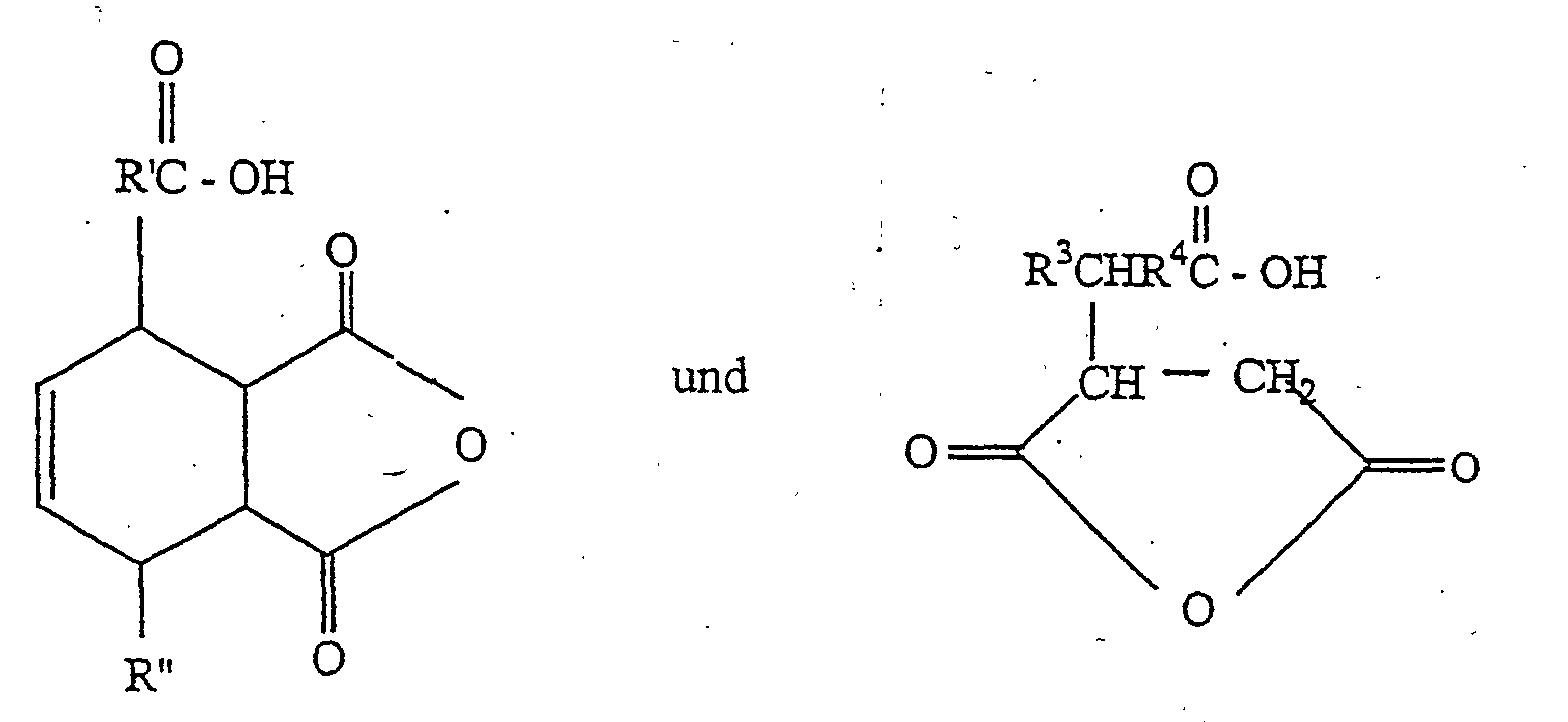
- the present invention is directed to a novel method for inhibiting corrosion of a metal surface in a liquid containing water and hydrocarbon, the metal surface being susceptible to formation of ferrous ions upon corrosion, in which the method comprises applying to the liquid a corrosion inhibitive amount of a salt of an ethoxylated amine and a reaction product of an alcohol and a fatty acid maleic anhydride adduct selected from the group consisting of wherein R' is a linear organic moiety of from two to 20 carbon atoms and R" is hydrogen or a linear organic moiety of up to 20 carbon atoms, the total number of carbon atoms in R' and R" being from 10 to 20 carbon atoms.
- the present invention is also directed to a composition
- a composition comprising the reaction product of an ethoxylated amine and a dicarboxylic ester selected from the group consisting of wherein R is an alkyl, aryl, aralkyl or alkaryl group of from one to twenty carbons, R' is a linear organic moiety of from two to 20 carbon atoms and R" is hydrogen or a linear organic moiety of up to 20 carbon atoms, the total number of carbon atoms in R' and R" being from 10 to 20 carbon atoms, R 3 is an alkyl or alkenyl group of from two to fifteen carbons and R 4 is an alkylene or alkenylene group of from two to fifteen carbons.
- R is an alkyl, aryl, aralkyl or alkaryl group of from one to twenty carbons
- R' is a linear organic moiety of from two to 20 carbon atoms
- R" is hydrogen or a linear organic moiety of up to 20 carbon atoms
- a method for inhibiting corrosion of ferrous ion-bearing metal surfaces in a liquid medium by application of a film-type inhibitor that affords better persistence against shear forces than do other inhibitors may be noted the provision of a method for inhibiting corrosion of ferrous ion-bearing metal surfaces in a liquid medium by application of a film-type inhibitor that affords better persistence against shear forces than do other inhibitors; the provision of such method which enables customization of the film to the liquid medium to which the surface is otherwise exposed, thereby permitting optimization of the film; the provision of such method in which the inhibitor is soluble in the liquid medium, yet forms the tenacious film over the surface; the provision of such method which allows application of the film by injection of the inhibitor into the liquid medium; and the provision of a corrosion inhibitor useful in such method.
- the ethoxylated amine and especially the degree of ethoxylation of the ethoxylated amine, may be selected for coordination with the fluid medium to which the coated metal surface is exposed, permitting customization of the solubility of the reaction product to the medium, and further coordination with the solvent to be used in the corrosion inhibitor product.
- inhibitors which are believed to be novel, therefore have the ability to be coordinated to the medium and to enable the formation of tenaciously adherent coatings with inhibitors designed specifically for solubility in the medium. This is in sharp contrast to the inhibitors of U.S. patent 5,385,616, in which inhibitor insolubility is desired for the formation of especially high persistence coatings in the media.
- the new customized coatings have been found to be more persistent than prior art films despite the solubility of the inhibitor in the medium.
- the maleated unsaturated fatty acid reactant may be prepared from maleic anhydride and any unsaturated fatty acid according to the method described in U.S. patent 5,385,616 for what is identified therein as a fatty acid maleic anhydride adduct. As noted therein, preparation of preferred adducts have been described previously; for example, in U.S. patents 4,658,036 and 4,927,669.
- the unsaturated fatty acid may be mono-, di- or poly-unsaturated.
- Tall oil fatty acids have been found to be especially useful and the most preferred fatty acid in conjugated linoleic acid, but unconjugated linoleic acid and other unsaturated, fatty carboxylic acids are suitable.
- acids it is preferred that they be at least di-unsaturated and, optimally, conjugated. It is also preferred that the acid have from fourteen to 22 carbon atoms, especially from sixteen to eighteen carbon atoms.
- Such acids may be represented by the idealized formula R * C(:O)OH, wherein R* is an unsaturated aryl, arylalkenyl, arylalkyl, alkylaryl, alkenylaryl or, optimally, alkenyl group, preferably at least di-unsaturated, of from thirteen to 21 carbons, preferably from fifteen to seventeen carbons.
- suitable acids may include, for example, oleic and elaidic acids.
- the fatty acid is di- or poly- unsaturated and the reaction between the maleic anhydride and unsaturated fatty acid may involve the conversion of double bonds to a cyclic structure and so maybe a cyclo- addition of a Diels-Alder type, particularly in the case in which the double bonds in fatty acid are conjugated.
- the resulting adduct may be of the formula wherein R' is a generally linear organic moiety of from two to 20 carbon atoms and R" is hydrogen or a generally linear organic moiety of up to 20 carbon atoms, the total number of carbon atoms in R' and R" being from 10 to 20 carbon atoms.
- the cyclo-addition reaction need not be of such type in that it does not require that the cyclic structure formed be six membered ring or that the unsaturated fatty acid be conjugated. It is believed that "endo", "ene” or other cyclo-addition reactions would yield suitable products.
- the reaction may be a simple addition reaction, especially in those situations in which the fatty acid is mono-unsaturated.
- the addition occurs at the carbon atom next to one which is double bonded to give compounds such as wherein R 3 is an alkyl or alkenyl group of from two to fifteen carbons and R 4 is an alkylene or alkenylene group of from two to fifteen carbons.
- the resulting product therefore, is mono-, di- or poly-cyclic, with one of the cyclic structures being the maleic anhydride moiety and another cyclic structure resulting from the reaction at the carbon-carbon double bond of the maleic anhydride reactant.
- the latter cyclic structure preferably includes at least one pendent chain that is a residue from the fatty acid.
- the chain terminates with a carboxyl group and may be represented by the formula -R'C(:O)OH, wherein R' is a generally linear organic moiety, preferably an alkylene or an alkenylene, especially of from five to ten carbons. Optimally, R' is an alkylene.
- the latter cyclic structure may also include another pendent chain that is a residue from the fatty acid. That chain is likewise a generally linear organic moiety. Preferably, it is an alkyl or alkenyl, especially alkyl, group of, for example, from one to ten carbons.
- the fatty acid is conjugated such that it may be represented as R"CH:CHCH:CHR'C(:O)OH, wherein R' is as described above and R" is an alkyl or alkenyl, especially alkyl, group such that the total carbons of the acid is from 14 to 22 (preferably, 16 to 18), the resulting adduct may be represented as noted above.
- the fatty acid maleic anhydride adduct is then reacted with an alcohol.
- the adduct is reacted with a composition of the form ROH, wherein R is an organic moiety.
- R is an organic moiety.
- the reaction is carried out under ambient conditions, preferably with an excess or alcohol.
- Preferred organic moieties include alkyl, aryl, aralkyl, alkaryl or amine groups.
- the composition ROH may be an ethoxylated alcohol or a phenol.
- the reaction is an esterification reaction that takes place at the anhydride moiety, converting the anhydride segment.
- the reaction product therefore includes at least three carboxyl groups.
- reaction of ROH with an adduct of the formula yields a compound of the formula or a mixture thereof.
- Reaction of an adduct of the formula yields a compound of the formula or a mixture thereof.
- reaction products are thus dicarboxylic esters and are then in turn reacted with an ethoxylated amine (or combination of the ethoxylated amines), such as of the formula R 5 N[(CH 2 CH 2 O) n H] 2 , wherein R 5 is a fatty organic group (preferably a fatty alkyl group of from six to thirty carbon atoms, more preferably twelve to eighteen carbon atoms) and n is an integer from one to fifty, preferably nine to fifteen.
- R 5 is a fatty organic group (preferably a fatty alkyl group of from six to thirty carbon atoms, more preferably twelve to eighteen carbon atoms) and n is an integer from one to fifty, preferably nine to fifteen.
- R 5 is a fatty organic group (preferably a fatty alkyl group of from six to thirty carbon atoms, more preferably twelve to eighteen carbon atoms) and n is an integer from one to fifty, preferably nine to fifteen.
- the reaction
- the degree of ethoxylation depends on the desired degree of water solubility/oil solubility desired (the greater the degree of water solubility desired, the greater the degree of ethoxylation), which in turn depends on the water and oil content of the fluid in which the surface to be treated is located.
- this additive and the method provide a simple mechanism for customization of the additive to the fluid. Often produced fluids may have a water content on the order of 50% to 70%, rendering significant water solubility desirable. It is desired to treat the surface by addition of the additive to the fluid itself. Accordingly, it is desired that the additive be soluble in the fluid. By "soluble" in this context, what is meant therefore is that the additive be at least dispersible in the fluid at the desired concentration of additive as discussed below.
- the metal surface should bear a film of ferrous ions for formation of an iron carboxylate coating by reaction of the ferrous ions with the inhibitor.
- the inhibitor may be injected into the fluid before the development of the film of ferrous ions, and then as the metal surface corrodes, the ferrous ions form, providing the film for adherence thereto of the inhibitor.
- the film may be heavily peppered and need not be uniform or continuous.
- a simple means for applying the film on a ferrous metal surface in a corrosive medium i.e., a medium in which the surface tends to corrode
- the inhibitor may be added to the fluid. The inhibitor then reacts with the iron ions on the metal surface, forming an iron carboxylate and halting the corrosion.
- the ability to add the inhibitor to the liquid in which the surface is located avoids the need to disrupt the system either to remove the metal surface from the liquid or to reach the metal surface with mechanical application means for application of the film.
- the inhibitor may be simply added to the liquid, even if the liquid is involved in a continuous flow operation. And despite the solubility that permits this advantage, the film remains tenaciously adherent and does not dissolve back into the liquid, even when the surface is exposed to fresh, inhibitor-free liquid, as may occur, for example, in open systems. Accordingly, continuous addition or repeated reapplication of inhibitor is unneeded. The amount of inhibitor needed to afford and to maintain corrosion inhibition therefore may be reduced dramatically by this method.
- the maleated unsaturated fatty acid is sufficiently dispersible in the fluid, it and the ethoxylated amine may be added individually to the fluid such that they react together in the fluid. Accordingly, the reaction product is incorporated in the medium, preferably by addition thereto, but also less preferably by formation therein.
- direct application to the surface as discussed with respect to the inhibitor of U.S. patent 5,385,616 is still available as an option.
- the inhibitor may be incorporated into a carrier such as a solvent; for example, methanol, kerosene or crude oil.
- a carrier such as a solvent
- the solubility of the inhibitor may be coordinated not only with the liquid that contains the metal surface, but with the carrier as well.
- Demulsifiers and other adjuvants may be included as desired.
- a typical formulation might comprise 40% by weight reaction product, 5% by weight alcohol such as isopropyl alcohol in the case in which the surface is in a water-rich medium, and 55% organic solvent such as xylene.
- Another formulation might comprise a 10 or 11% or even a 25% by weight solution of inhibitor in methanol or crude oil.
- a demulsifier may be added to this formulation if desired.
- an iron carboxylate complex is formed between the ethoxylated amine/dicarboxylic ester reaction product and the ferrous ions on the metal surface.
- the complex is believed to result from the electrostatic attraction between the negative charge at the double-bonded oxygens of the multiple carboxyl groups and the positively charged ferrous ions on the metal surface.
- superior film formation results from at least slight pre-corrosion of a ferrous metal surface before introduction of the amine/ester reaction product or at least before deposition on the surface. It is preferred that the surface include a film or coating of the ferrous composition thereby to provide a substrate for a continuous and complete inhibitor coating.
- the inhibitor affords substantial corrosion inhibition.
- inhibitor concentrations above a certain level are accompanied by decreased efficacy.
- concentration should not exceed about 1,000 ppm by weight.
- corrosion inhibition efficacy improvement has been found as the inhibitor concentration increases from 25 to 50 to 100 ppm by weight
- corrosion inhibition efficacy reduction has been noticed as concentrations exceed 250 ppm by weight.
- the preferred concentration range is from about 25 to about 1,000 ppm by weight, more preferably from about 50 to about 500 ppm by weight.
- the concentration range should be from about 50 to about 100 ppm by weight. All of these concentrations are for the active amine/ester reaction product and are based on the weight of the liquid into which the product is to be incorporated.
- the method of this invention provides a simple mechanism for customizing the corrosion inhibitor film to the system, thereby allowing optimization of film persistence in the particular system.
- an alcohol with an appropriate R group and an appropriate ethoxylated amine of desired degree of ethoxylation By selecting an alcohol with an appropriate R group and an appropriate ethoxylated amine of desired degree of ethoxylation, the solubility of the inhibitor in the liquid containing the surface (as well as in the inhibitor carrier) can be selected.
- the technique of this invention has been found to be particularly effective against carbon dioxide corrosion. It is believed that such superior efficacy is associated with protection against sulfide corrosion as well.
- the film may be customized for the particular medium for improved persistence and resistance to shear forces induced, for example, by flow or movement of the medium across the surface.
- a rotating cylinder electrode test was carried out in three distinct phases in a water and oil mixture.
- inhibitor was added and the monitoring continued for 22-23 more hours while an independent solution identical to the test solution was sparged with carbon dioxide without inhibitor present.
- the test solution was removed and replaced with the uninhibited pre-sparged solution and monitoring was continued.
- the iron count was about 2-3 mg/L, equivalent to about 200-300 mpy, for each of the three inhibitors.
- the iron count leveled out for each run and corrosion was under control for the 22-23 hour period of the second phase for each inhibitor.
- the inhibited fluids were replaced with the identical but inhibitor-free fluids and a dip in the iron count was noted in each case due to the absence of iron ions in the fresh fluids.
- the corrosion rate for the fluid formerly containing commercial inhibitor shot up to a level expected for unhibited corrosion with the fluid exceeding 10 mg/L iron within seven hours of phase three and reaching 40 mg/L within 24 hours.
- the inhibitors A and B maintained corrosion inhibition over the entire sixty hours of phase three, with the iron content of the fluid never reaching 10 mg/L for inhibitor A and never reaching even 5 mg/L for inhibitor B.
- Example 1 The procedure of Example 1, above, was carried out with various concentrations of inhibitors A and B; namely, 0 ppm (blank), 25 ppm, 50 ppm, 100 ppm, 250 ppm, 500 ppm, and 1000 ppm. It was found that corrosion inhibition (particularly in the phase three when the fluid no longer contains inhibitor) improved as the concentration increased from 25 to 50 to 100 ppm. However, as the concentration exceeded 250 ppm, corrosion inhibition (while remaining very good while inhibitor was present in the solution) decreased markedly when the fluid was replaced with inhibitor-free fluid, indicating a loss of film or film persistency.
- concentrations of inhibitors A and B namely, 0 ppm (blank), 25 ppm, 50 ppm, 100 ppm, 250 ppm, 500 ppm, and 1000 ppm. It was found that corrosion inhibition (particularly in the phase three when the fluid no longer contains inhibitor) improved as the concentration increased from 25 to 50 to 100 ppm. However, as the concentration exceeded 250 ppm
Landscapes
- Chemical & Material Sciences (AREA)
- Engineering & Computer Science (AREA)
- Materials Engineering (AREA)
- Organic Chemistry (AREA)
- Mechanical Engineering (AREA)
- Metallurgy (AREA)
- Life Sciences & Earth Sciences (AREA)
- General Life Sciences & Earth Sciences (AREA)
- Preventing Corrosion Or Incrustation Of Metals (AREA)
- Lubricants (AREA)
Claims (24)
- Verfahren zur Korrosionsinhibierung auf einer Metalloberfläche in einer Wasser und Kohlenwasserstoff enthaltenden Flüssigkeit, wobei die Metalloberfläche anfällig für die Bildung von Eisen(II)-Ionen während der Korrosion ist, wobei das Verfahren das Einmischen einer Menge eines Korrosionsinhibierungsmittels in die Flüssigkeit umfasst, die ausreicht, um Korrosion zu inhibieren, wobei das Korrosionsinhibitionsmittel das Reaktionsprodukt eines ethoxylierten Amins und eines Dicarbonsäureesters umfasst, ausgewählt aus der Gruppe, bestehend aus
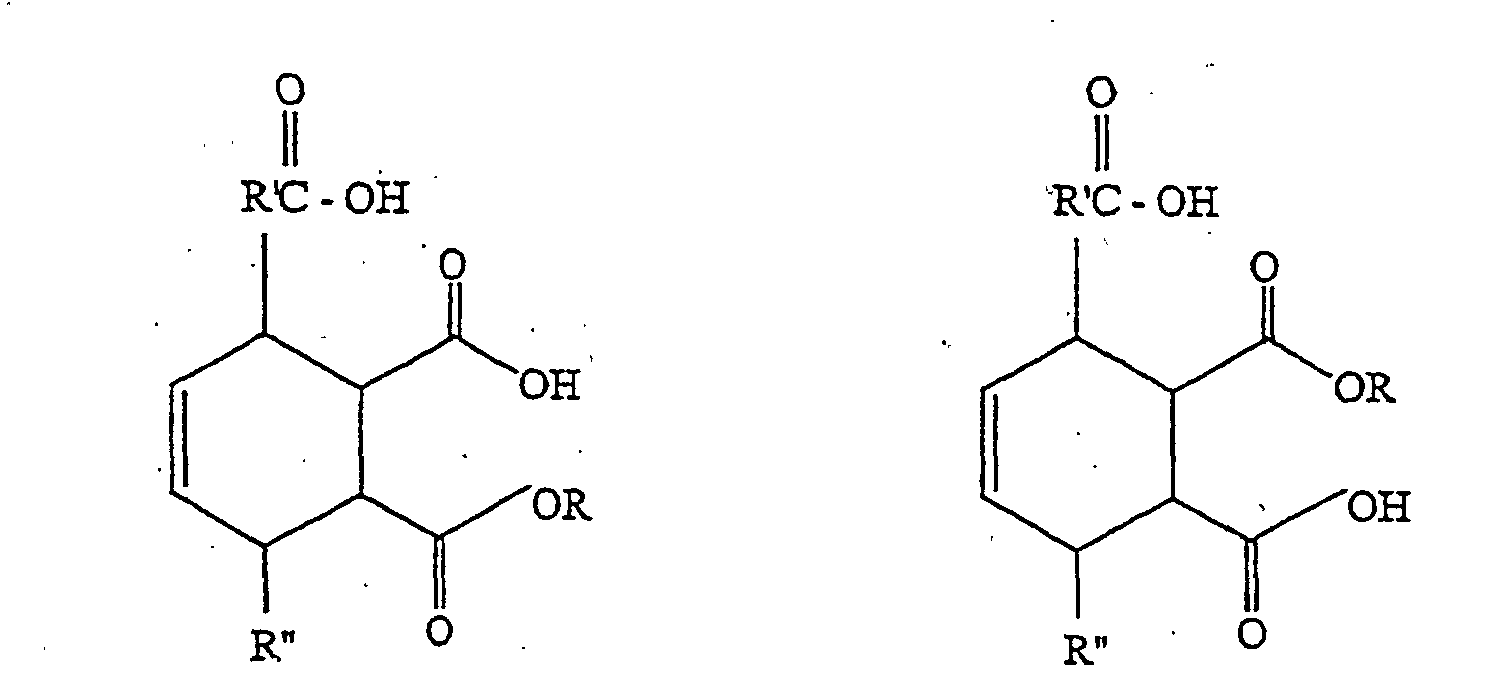 worin R eine Alkyl-, Aryl-, Aralkyl- oder Alkarylgruppe mit 1 bis 20 Kohlenstoffatomen ist, R' eine lineare organische Hälfte mit 2 bis 20 Kohlenstoffatomen ist, R" Wasserstoff oder eine lineare organische Hälfte mit bis zu 20 Kohlenstoffatomen ist, wobei die Gesamtzahl der Kohlenstoffatome von R' und R" 10 bis 20 Kohlenstoffatome beträgt, R3 eine Alkyl- oder Alkenylgruppe mit 2 bis 15 Kohlenstoffatomen ist und R4 eine Alkylen- oder Alkenylengruppe mit 2 bis 15 Kohlenstoffatomen ist.

- Verfahren gemäß Anspruch 1, bei dem sich Eisen(II)-Ionen auf der Metalloberfläche bilden und das Korrosionsinhibitionsmittel mit den Eisen(II)-Ionen reagiert, um ein Eisencarboxylat auf der Metalloberfläche zu bilden.
- Verfahren gemäß Anspruch 1, bei dem die Metalloberfläche ein Korrosionsprodukt trägt, das Eisen(II)-Ionen beinhaltet, wenn das Korrosionsinhibitionsmittel in die Flüssigkeit gemischt wird.
- Verfahren gemäß Anspruch 2, bei dem das ethoxylierte Amin zu einem Grad ethoxyliert ist, derart dass das Reaktionsprodukt in der Flüssigkeit löslich ist, wenigstens bis zu dem Ausmaß der Menge des der Flüssigkeit zugeführten Korrosionsinhibitionsmittels.
- Verfahren gemäß Anspruch 3, bei dem das ethoxylierte Amin zu einem derartigen Grad ethoxyliert ist, dass das Reaktionsprodukt wenigstens in der Menge, in der das Korrosionsinhibitionsmittel der Flüssigkeit beigemengt ist, in der Flüssigkeit dispergierbar ist.
- Verfahren gemäß Anspruch 5, bei dem die Menge an aktivem Korrosionsinhibitionsmittel etwa 25 bis etwa 1000 Gewichtsteile pro Million, bezogen auf das Gewicht der Flüssigkeit, beträgt.
- Verfahren gemäß Anspruch 6, bei dem das Korrosionsinhibitionsmittel der Flüssigkeit zugegeben wird und die Flüssigkeit wenigstens etwa 50 Gew.-% Wasser enthält.
- Verfahren gemäß Anspruch 1, bei dem das ethoxylierte Amin der Formel R5N[(CH2CH2O)nH]2 entspricht, in der R5 eine fettartige, organische Gruppe ist und n eine ganze Zahl von 1 bis 50 ist.
- Verfahren gemäß Anspruch 8, bei dem R5 eine fettartige Alkylgruppe mit 6 bis 30 Kohlenstoffatomen ist.
- Verfahren gemäß Anspruch 9, bei dem n eine ganze Zahl von 9 bis 15 ist.
- Verfahren gemäß Anspruch 10, bei dem R5 eine fettartige Alkylgruppe mit 12 bis 18 Kohlenstoffatomen ist.
- Verfahren gemäß Anspruch 1, bei dem die Flüssigkeit aus Wasser und Öl erzeugt wird.
- Verfahren zur Korrosionsinhibierung auf einer Metalloberfläche in einer Wasser und Kohlenwasserstoff enthaltenden Flüssigkeit, wobei die Metalloberfläche anfällig für die Bildung von Eisen(II)-Ionen während der Korrosion ist, wobei das Verfahren das Einmischen einer korrosionsinhibierenden Menge eines Salzes von einem ethoxylierten Amin und einem Reaktionsprodukt eines Alkohols und eines Fettsäure-Maleinsäureanhydrid-Addukts, in die Flüssigkeit umfasst, wobei das Fettsäure-Maleinsäureanhydrid-Addukt ausgewählt ist aus der Gruppe, bestehend ausworin R' eine lineare organische Hälfte mit 2 bis 20 Kohlenstoffatomen ist und R" ein Wasserstoffatom oder eine lineare organische Hälfte mit bis zu 20 Kohlenstoffatomen ist, wobei die Gesamtzahl der Kohlenstoffatome von R' und R" 10 bis 20 Kohlenstoffatome beträgt.
- Verfahren gemäß Anspruch 13, bei dem der Alkohol in der Form von ROH vorliegt, wobei R eine Alkyl-, Aryl oder Arylalkylgruppe mit 1 bis 30 Kohlenstoffatomen darstellt.
- Verfahren gemäß Anspruch 14, bei dem R eine Alkyl-, Aryl- oder Arylalkylgruppe mit 1 bis 10 Kohlenstoffatomen darstellt.
- Verfahren gemäß Anspruch 15, bei dem R eine Isopropylgruppe darstellt.
- Verfahren gemäß Anspruch 13, bei dem das ethoxylierte Amin der Formel R5N[(CH2CH2O)nH]2 entspricht, in der R5 eine fettartige, organische Gruppe und n eine ganze Zahl von 1 bis 50 ist.
- Verfahren gemäß Anspruch 17, bei dem R5 eine fettartige Alkylgruppe mit 6 bis 30 Kohlenstoffatomen ist.
- Verfahren gemäß Anspruch 18, bei dem n eine ganze Zahl von 9 bis 15 ist.
- Verfahren gemäß Anspruch 19, bei dem R5 eine fettartige Alkylgruppe mit 12 bis 18 Kohlenstoffatomen ist.
- Verfahren gemäß Anspruch 16, bei dem das Fettsäure-Maleinsäureanhydrid durch eine Reaktion zwischen Maleinsäureanhydrid und konjugierter Linolsäure erzeugt wurde.
- Verfahren gemäß Anspruch 13, bei dem die Flüssigkeit aus Wasser und Öl erzeugt wird.
- Verfahren gemäß Anspruch 13, bei dem die Menge des der Flüssigkeit beigemengten Korrosionsinhibitionsmittels etwa 25 bis etwa 1000 Gewichtsteile pro Million an aktivem Korrosionsinhibitionsmittel beträgt, bezogen auf das Gewicht der Flüssigkeit.
- Korrosionsinhibitionsmittelzusammensetzung, das Reaktionsprodukt eines ethoxylierten Amins und eines Dicarbonsäureesters enthaltend, ausgewählt aus der Gruppe bestehend aus
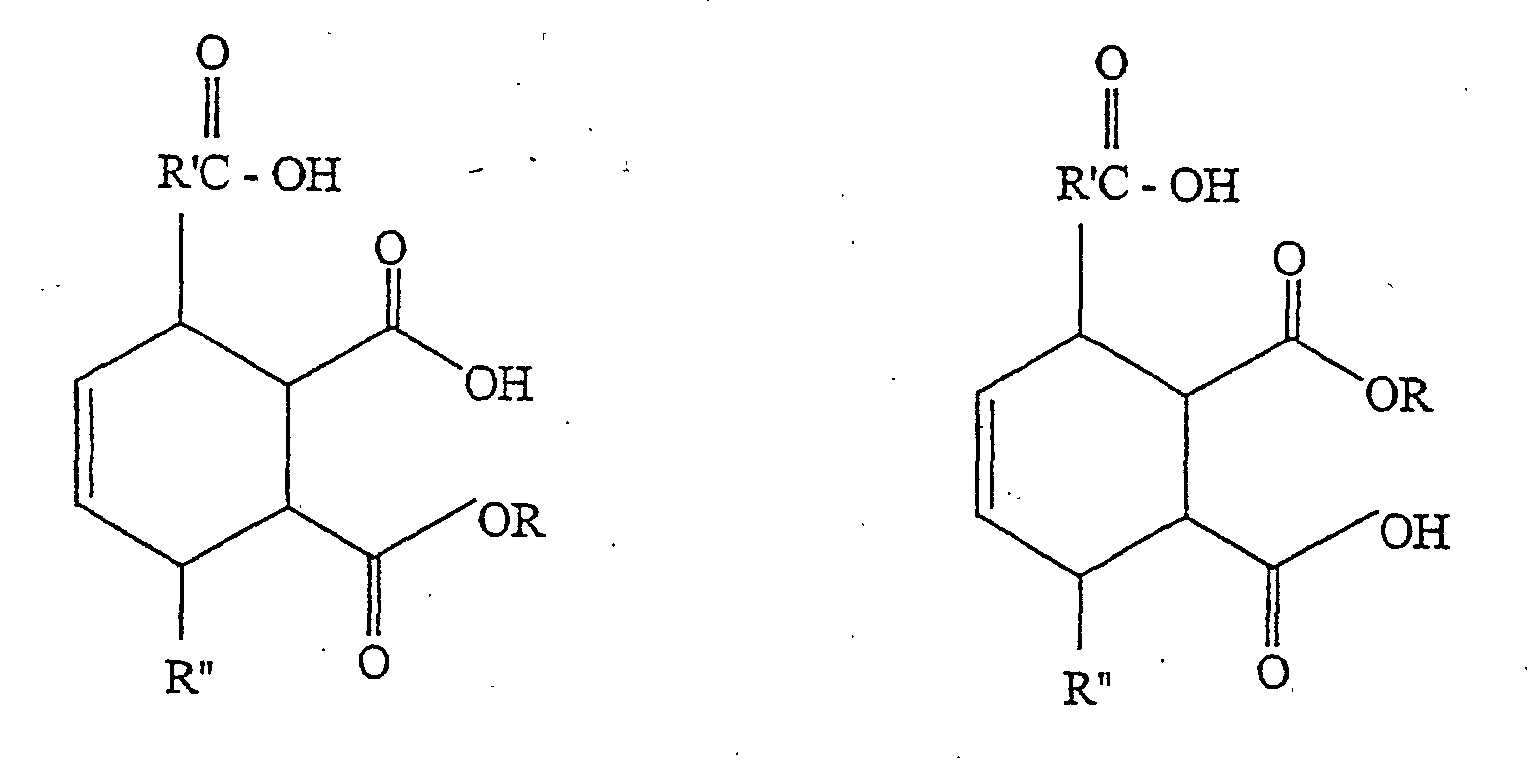 worin R eine Alkyl-, Aryl-, Aralkyl- oder Alkarylgruppe mit 1 bis 20 Kohlenstoffatomen ist, R' eine lineare organische Hälfte mit 2 bis 20 Kohlenstoffatomen, R" Wasserstoff oder eine lineare organische Hälfte mit bis zu 20 Kohlenstoffatomen ist, wobei die Gesamtzahl an Kohlenstoffatomen von R' und R" 10 bis 20 Kohlenstoffatome beträgt, R3 eine Alkyl- oder Alkenylgruppe mit 2 bis 15 Kohlenstoffatomen ist und R4 eine Alkylen- oder Alkenylengruppe mit 2 bis 15 Kohlenstoffatomen ist.

Applications Claiming Priority (3)
| Application Number | Priority Date | Filing Date | Title |
|---|---|---|---|
| US08/518,696 US5582792A (en) | 1995-08-24 | 1995-08-24 | Corrosion inhibition by ethoxylated fatty amine salts of maleated unsaturated acids |
| US518696 | 1995-08-24 | ||
| PCT/US1996/013630 WO1997024472A1 (en) | 1995-08-24 | 1996-08-22 | Corrosion inhibition by ethoxylated fatty amine salts of maleated unsaturated acids |
Publications (3)
| Publication Number | Publication Date |
|---|---|
| EP0846193A1 EP0846193A1 (de) | 1998-06-10 |
| EP0846193A4 EP0846193A4 (de) | 1998-11-25 |
| EP0846193B1 true EP0846193B1 (de) | 2001-06-20 |
Family
ID=24065085
Family Applications (1)
| Application Number | Title | Priority Date | Filing Date |
|---|---|---|---|
| EP96928259A Expired - Lifetime EP0846193B1 (de) | 1995-08-24 | 1996-08-22 | Korrosionshemmung bei ethoxylierten fettaminsalzen von maleinisierten ungesättigten säuren |
Country Status (8)
| Country | Link |
|---|---|
| US (1) | US5582792A (de) |
| EP (1) | EP0846193B1 (de) |
| AR (1) | AR003360A1 (de) |
| AT (1) | ATE202386T1 (de) |
| CA (1) | CA2230018C (de) |
| DE (1) | DE69613475T2 (de) |
| NO (1) | NO319517B1 (de) |
| WO (1) | WO1997024472A1 (de) |
Cited By (1)
| Publication number | Priority date | Publication date | Assignee | Title |
|---|---|---|---|---|
| WO2012089649A1 (en) * | 2010-12-28 | 2012-07-05 | Akzo Nobel Chemicals International B.V. | Polyester polyamine and polyester polyquaternary ammonium corrosion inhibitors |
Families Citing this family (12)
| Publication number | Priority date | Publication date | Assignee | Title |
|---|---|---|---|---|
| US5961821A (en) * | 1998-03-27 | 1999-10-05 | Exxon Research And Engineering Co | Removal of naphthenic acids in crude oils and distillates |
| US7137401B2 (en) * | 2001-04-19 | 2006-11-21 | Baker Hughes Incorporated | Drag reduction using maleated fatty acids |
| US6774094B2 (en) * | 2001-04-24 | 2004-08-10 | Baker Hughes Incorporated | Drag reduction using fatty acids |
| US8163675B2 (en) * | 2005-10-20 | 2012-04-24 | Akzo Nobel N.V. | Emulsifier based on polyamines and fatty acid/maleic anhydride |
| US8071715B2 (en) * | 2007-01-31 | 2011-12-06 | Georgia-Pacific Chemicals Llc | Maleated and oxidized fatty acids |
| CN101328443B (zh) * | 2007-06-20 | 2011-09-07 | 中国石油天然气股份有限公司 | 一种气体管道减阻组合物及其制备方法 |
| US20090065736A1 (en) * | 2007-07-03 | 2009-03-12 | Georgia-Pacific Chemicals Llc | Chemical modification of maleated fatty acids |
| EP2249967B1 (de) * | 2008-01-31 | 2019-03-13 | Ingevity South Carolina, LLC | Oxidierte und maleierte derivatzusammensetzung |
| AU2010268009B2 (en) | 2009-07-03 | 2013-08-01 | Akzo Nobel Chemicals International B.V. | Polymeric corrosion inhibitors |
| EA024280B1 (ru) * | 2010-08-30 | 2016-09-30 | Акцо Нобель Кемикалз Интернэшнл Б.В. | Применение сложнополиэфирполиаминных и четвертичных сложнополиэфирполиаммонийных соединений в качестве ингибиторов коррозии |
| EP2970821B1 (de) * | 2013-03-15 | 2019-02-13 | Ethox Chemicals, LLC | Dispergiermittel auf biobasis |
| CN104893691B (zh) | 2015-05-27 | 2016-02-10 | 中国石油大学(北京) | 二聚酸-有机胺共聚物及其制备方法和应用以及油包水乳化钻井液提切剂及钻井液 |
Family Cites Families (21)
| Publication number | Priority date | Publication date | Assignee | Title |
|---|---|---|---|---|
| US2343644A (en) * | 1941-07-30 | 1944-03-07 | Distillation Products Inc | Procedure for the preparation of substances containing conjugated double bonds |
| US2756210A (en) * | 1953-04-14 | 1956-07-24 | Shell Dev | Corrosion prevention method |
| DE1156788C2 (de) * | 1959-12-02 | 1973-11-22 | Brinckmann Harburger Fett | Verfahren zur Umwandlung von Fettsaeureestern einwertiger Alkohole mit isolierten Doppelbindungen (íÀIsolenfettsaeureesterníÂ) in Fettsaeureester mit konjugierten Doppelbindungen (íÀKonjuenfettsaeureesteríÂ) |
| US3753968A (en) * | 1971-07-01 | 1973-08-21 | Westvaco Corp | Selective reaction of fatty acids and their separation |
| DE2357951C3 (de) * | 1973-11-21 | 1978-10-19 | Basf Ag, 6700 Ludwigshafen | Verwendung von en-Addukten des Maleinsäureanhydrids als Korrosionsschutzmittel |
| DE2437920C3 (de) * | 1974-08-07 | 1980-02-14 | Basf Ag, 6700 Ludwigshafen | Verwendung von en-Addukten des Maleinsäureanhydrids als Korrosionsschutzmittel in Salzwasser-in-öl-Emulsionen |
| US4156095A (en) * | 1977-10-31 | 1979-05-22 | Henkel Corporation | Preparation of C21 dicarboxylic acid |
| JPS57152475A (en) * | 1981-03-13 | 1982-09-20 | Sanyo Chem Ind Ltd | Corrosion inhibitor |
| US4560497A (en) * | 1984-05-21 | 1985-12-24 | National Distillers And Chemical Corporation | Amino ester and amino amide-ester corrosion inhibitors for aqueous systems |
| US4556111A (en) * | 1984-08-30 | 1985-12-03 | Phillips Petroleum Company | Method for inhibiting corrosion |
| US4547224A (en) * | 1984-09-17 | 1985-10-15 | Westvaco Corporation | Emulsifiers for bituminous emulsions |
| US4658036A (en) * | 1985-10-03 | 1987-04-14 | Westvaco Corporation | Invert emulsifiers for oil-base drilling muds |
| US4676927A (en) * | 1985-10-03 | 1987-06-30 | Westvaco Corporation | Rapid and medium setting high float bituminous emulsions |
| US4861377A (en) * | 1988-04-18 | 1989-08-29 | Westvaco Corporation | Cationic aqueous bituminous emulsion-aggregate slurries |
| US4927669A (en) * | 1988-07-15 | 1990-05-22 | Westvaco Corporation | Oil field corrosion inhibition |
| US5167694A (en) * | 1989-01-19 | 1992-12-01 | Westvaco Corporation | Fatty acid and amide wetting agents for pesticide formulations |
| US5085702A (en) * | 1989-03-14 | 1992-02-04 | Westvaco Corporation | Accelerators for cationic aqueous bituminous emulsion-aggregate slurries |
| US5194640A (en) * | 1991-06-10 | 1993-03-16 | Westvaco Corporation | Process for making high-purity oleic acid |
| US5174913A (en) * | 1991-09-20 | 1992-12-29 | Westvaco Corporation | Polybasic acid esters as oil field corrosion inhibitors |
| US5292480A (en) * | 1992-06-11 | 1994-03-08 | Westvaco Corporation | Acid-anhydride esters as oil field corrosion inhibitors |
| US5385616A (en) * | 1994-02-14 | 1995-01-31 | Petrolite Corporation | Corrosion inhibition by formation of iron carboxylate |
-
1995
- 1995-08-24 US US08/518,696 patent/US5582792A/en not_active Expired - Lifetime
-
1996
- 1996-08-22 WO PCT/US1996/013630 patent/WO1997024472A1/en not_active Ceased
- 1996-08-22 EP EP96928259A patent/EP0846193B1/de not_active Expired - Lifetime
- 1996-08-22 CA CA002230018A patent/CA2230018C/en not_active Expired - Fee Related
- 1996-08-22 DE DE69613475T patent/DE69613475T2/de not_active Expired - Fee Related
- 1996-08-22 AT AT96928259T patent/ATE202386T1/de active
- 1996-08-26 AR ARP960104120A patent/AR003360A1/es not_active Application Discontinuation
-
1998
- 1998-02-23 NO NO19980754A patent/NO319517B1/no not_active IP Right Cessation
Cited By (6)
| Publication number | Priority date | Publication date | Assignee | Title |
|---|---|---|---|---|
| WO2012089649A1 (en) * | 2010-12-28 | 2012-07-05 | Akzo Nobel Chemicals International B.V. | Polyester polyamine and polyester polyquaternary ammonium corrosion inhibitors |
| CN103261482A (zh) * | 2010-12-28 | 2013-08-21 | 阿克佐诺贝尔化学国际公司 | 聚酯聚胺和聚酯聚季铵腐蚀抑制剂 |
| US20130274492A1 (en) * | 2010-12-28 | 2013-10-17 | Akzo Nobel Chemicals International B.V. | Polyester polyamine and polyester polyquaternary ammonium corrosion inhibitors |
| CN103261482B (zh) * | 2010-12-28 | 2015-06-24 | 阿克佐诺贝尔化学国际公司 | 聚酯聚胺和聚酯聚季铵腐蚀抑制剂 |
| US9228089B2 (en) | 2010-12-28 | 2016-01-05 | Akzo Nobel Chemicals International B.V. | Polyester polyamine and polyester polyquaternary ammonium corrosion inhibitors |
| EA026287B1 (ru) * | 2010-12-28 | 2017-03-31 | Акцо Нобель Кемикалз Интернэшнл Б.В. | Сложнополиэфирные полиаминные и сложнополиэфирные поличетвертичные аммониевые ингибиторы коррозии |
Also Published As
| Publication number | Publication date |
|---|---|
| NO980754D0 (no) | 1998-02-23 |
| DE69613475D1 (de) | 2001-07-26 |
| MX9801474A (es) | 1998-10-31 |
| NO980754L (no) | 1998-04-23 |
| NO319517B1 (no) | 2005-08-22 |
| AR003360A1 (es) | 1998-07-08 |
| US5582792A (en) | 1996-12-10 |
| EP0846193A1 (de) | 1998-06-10 |
| CA2230018C (en) | 2001-02-06 |
| DE69613475T2 (de) | 2002-04-25 |
| ATE202386T1 (de) | 2001-07-15 |
| WO1997024472A1 (en) | 1997-07-10 |
| CA2230018A1 (en) | 1997-07-10 |
| EP0846193A4 (de) | 1998-11-25 |
Similar Documents
| Publication | Publication Date | Title |
|---|---|---|
| US5582792A (en) | Corrosion inhibition by ethoxylated fatty amine salts of maleated unsaturated acids | |
| US7057050B2 (en) | Imidazoline corrosion inhibitors | |
| Flores et al. | Sodium phthalamates as corrosion inhibitors for carbon steel in aqueous hydrochloric acid solution | |
| CA2117737C (en) | Biodegradable corrosion inhibitors of low toxicity | |
| US4420414A (en) | Corrosion inhibition system | |
| US5385616A (en) | Corrosion inhibition by formation of iron carboxylate | |
| US5759485A (en) | Water soluble corrosion inhibitors | |
| US3981682A (en) | Corrosion inhibiting compositions and process for inhibiting corrosion of metals | |
| US5611992A (en) | Corrosion inhibitor blends with phosphate esters | |
| US4636256A (en) | Corrosion inhibiting system containing alkoxylated amines | |
| AU730939B2 (en) | Sulphydryl acid and imidazoline salts as inhibitors of carbon corrosion of iron and ferrous metals | |
| US4253876A (en) | Corrosion inhibitors | |
| US2368604A (en) | Anticorrosive | |
| GB2348199A (en) | Corrosion inhibitor compositions and methods of making them | |
| EP0517356B1 (de) | Zusammensetzung und Verfahren zur Korrosionsinhibierung und/oder Haftvermittlung von Metalloberflächen | |
| US5614268A (en) | Coating composition | |
| US7776233B2 (en) | Oleaginous corrosion resistant composition | |
| EP0277711B1 (de) | Korrosionsinhibierung | |
| US4744948A (en) | Thiol ester corrosion inhibition system | |
| US6063334A (en) | Sulfur based corrosion inhibitor | |
| US2805201A (en) | Corrosion prevention in oil wells | |
| US4759908A (en) | Polythioether corrosion inhibition system | |
| CA1259630A (en) | Alkanolamine salts of alkenyl succinic acid dialkyl semiamide corrosion inhibitors | |
| US3692675A (en) | Inhibitor to corrosive attack and method of use | |
| MXPA98001474A (en) | Inhibition of corrosion through sales of amino grease etoxilated of acidos maleatados insatura |
Legal Events
| Date | Code | Title | Description |
|---|---|---|---|
| PUAI | Public reference made under article 153(3) epc to a published international application that has entered the european phase |
Free format text: ORIGINAL CODE: 0009012 |
|
| 17P | Request for examination filed |
Effective date: 19980213 |
|
| AK | Designated contracting states |
Kind code of ref document: A1 Designated state(s): AT BE CH DE DK ES FI FR GB GR IE IT LI LU MC NL PT SE |
|
| RHK1 | Main classification (correction) |
Ipc: C23F 11/14 |
|
| A4 | Supplementary search report drawn up and despatched |
Effective date: 19981012 |
|
| AK | Designated contracting states |
Kind code of ref document: A4 Designated state(s): AT BE CH DE DK ES FI FR GB GR IE IT LI LU MC NL PT SE |
|
| 17Q | First examination report despatched |
Effective date: 19991029 |
|
| GRAG | Despatch of communication of intention to grant |
Free format text: ORIGINAL CODE: EPIDOS AGRA |
|
| GRAG | Despatch of communication of intention to grant |
Free format text: ORIGINAL CODE: EPIDOS AGRA |
|
| GRAH | Despatch of communication of intention to grant a patent |
Free format text: ORIGINAL CODE: EPIDOS IGRA |
|
| GRAH | Despatch of communication of intention to grant a patent |
Free format text: ORIGINAL CODE: EPIDOS IGRA |
|
| GRAA | (expected) grant |
Free format text: ORIGINAL CODE: 0009210 |
|
| AK | Designated contracting states |
Kind code of ref document: B1 Designated state(s): AT BE CH DE DK ES FI FR GB GR IE IT LI LU MC NL PT SE |
|
| PG25 | Lapsed in a contracting state [announced via postgrant information from national office to epo] |
Ref country code: NL Free format text: LAPSE BECAUSE OF FAILURE TO SUBMIT A TRANSLATION OF THE DESCRIPTION OR TO PAY THE FEE WITHIN THE PRESCRIBED TIME-LIMIT Effective date: 20010620 Ref country code: LI Free format text: LAPSE BECAUSE OF FAILURE TO SUBMIT A TRANSLATION OF THE DESCRIPTION OR TO PAY THE FEE WITHIN THE PRESCRIBED TIME-LIMIT Effective date: 20010620 Ref country code: IT Free format text: LAPSE BECAUSE OF FAILURE TO SUBMIT A TRANSLATION OF THE DESCRIPTION OR TO PAY THE FEE WITHIN THE PRE;WARNING: LAPSES OF ITALIAN PATENTS WITH EFFECTIVE DATE BEFORE 2007 MAY HAVE OCCURRED AT ANY TIME BEFORE 2007. THE CORRECT EFFECTIVE DATE MAY BE DIFFERENT FROM THE ONE RECORDED.SCRIBED TIME-LIMIT Effective date: 20010620 Ref country code: FI Free format text: LAPSE BECAUSE OF FAILURE TO SUBMIT A TRANSLATION OF THE DESCRIPTION OR TO PAY THE FEE WITHIN THE PRESCRIBED TIME-LIMIT Effective date: 20010620 Ref country code: CH Free format text: LAPSE BECAUSE OF FAILURE TO SUBMIT A TRANSLATION OF THE DESCRIPTION OR TO PAY THE FEE WITHIN THE PRESCRIBED TIME-LIMIT Effective date: 20010620 Ref country code: BE Free format text: LAPSE BECAUSE OF FAILURE TO SUBMIT A TRANSLATION OF THE DESCRIPTION OR TO PAY THE FEE WITHIN THE PRESCRIBED TIME-LIMIT Effective date: 20010620 Ref country code: AT Free format text: LAPSE BECAUSE OF FAILURE TO SUBMIT A TRANSLATION OF THE DESCRIPTION OR TO PAY THE FEE WITHIN THE PRESCRIBED TIME-LIMIT Effective date: 20010620 |
|
| REF | Corresponds to: |
Ref document number: 202386 Country of ref document: AT Date of ref document: 20010715 Kind code of ref document: T |
|
| REG | Reference to a national code |
Ref country code: CH Ref legal event code: EP |
|
| REG | Reference to a national code |
Ref country code: IE Ref legal event code: FG4D |
|
| REF | Corresponds to: |
Ref document number: 69613475 Country of ref document: DE Date of ref document: 20010726 |
|
| PGFP | Annual fee paid to national office [announced via postgrant information from national office to epo] |
Ref country code: DK Payment date: 20010803 Year of fee payment: 6 |
|
| PGFP | Annual fee paid to national office [announced via postgrant information from national office to epo] |
Ref country code: NL Payment date: 20010807 Year of fee payment: 6 |
|
| PG25 | Lapsed in a contracting state [announced via postgrant information from national office to epo] |
Ref country code: LU Free format text: LAPSE BECAUSE OF NON-PAYMENT OF DUE FEES Effective date: 20010822 Ref country code: IE Free format text: LAPSE BECAUSE OF NON-PAYMENT OF DUE FEES Effective date: 20010822 |
|
| PG25 | Lapsed in a contracting state [announced via postgrant information from national office to epo] |
Ref country code: SE Free format text: LAPSE BECAUSE OF FAILURE TO SUBMIT A TRANSLATION OF THE DESCRIPTION OR TO PAY THE FEE WITHIN THE PRESCRIBED TIME-LIMIT Effective date: 20010920 Ref country code: PT Free format text: LAPSE BECAUSE OF FAILURE TO SUBMIT A TRANSLATION OF THE DESCRIPTION OR TO PAY THE FEE WITHIN THE PRESCRIBED TIME-LIMIT Effective date: 20010920 Ref country code: DK Free format text: LAPSE BECAUSE OF FAILURE TO SUBMIT A TRANSLATION OF THE DESCRIPTION OR TO PAY THE FEE WITHIN THE PRESCRIBED TIME-LIMIT Effective date: 20010920 |
|
| PG25 | Lapsed in a contracting state [announced via postgrant information from national office to epo] |
Ref country code: GR Free format text: LAPSE BECAUSE OF FAILURE TO SUBMIT A TRANSLATION OF THE DESCRIPTION OR TO PAY THE FEE WITHIN THE PRESCRIBED TIME-LIMIT Effective date: 20010921 |
|
| ET | Fr: translation filed | ||
| NLV1 | Nl: lapsed or annulled due to failure to fulfill the requirements of art. 29p and 29m of the patents act | ||
| PG25 | Lapsed in a contracting state [announced via postgrant information from national office to epo] |
Ref country code: ES Free format text: LAPSE BECAUSE OF FAILURE TO SUBMIT A TRANSLATION OF THE DESCRIPTION OR TO PAY THE FEE WITHIN THE PRESCRIBED TIME-LIMIT Effective date: 20011220 |
|
| REG | Reference to a national code |
Ref country code: CH Ref legal event code: PL |
|
| REG | Reference to a national code |
Ref country code: GB Ref legal event code: IF02 |
|
| PG25 | Lapsed in a contracting state [announced via postgrant information from national office to epo] |
Ref country code: MC Free format text: LAPSE BECAUSE OF NON-PAYMENT OF DUE FEES Effective date: 20020301 |
|
| PLBE | No opposition filed within time limit |
Free format text: ORIGINAL CODE: 0009261 |
|
| STAA | Information on the status of an ep patent application or granted ep patent |
Free format text: STATUS: NO OPPOSITION FILED WITHIN TIME LIMIT |
|
| 26N | No opposition filed | ||
| REG | Reference to a national code |
Ref country code: IE Ref legal event code: MM4A |
|
| PGFP | Annual fee paid to national office [announced via postgrant information from national office to epo] |
Ref country code: FR Payment date: 20030820 Year of fee payment: 8 |
|
| PGFP | Annual fee paid to national office [announced via postgrant information from national office to epo] |
Ref country code: DE Payment date: 20030930 Year of fee payment: 8 |
|
| PG25 | Lapsed in a contracting state [announced via postgrant information from national office to epo] |
Ref country code: DE Free format text: LAPSE BECAUSE OF NON-PAYMENT OF DUE FEES Effective date: 20050301 |
|
| PG25 | Lapsed in a contracting state [announced via postgrant information from national office to epo] |
Ref country code: FR Free format text: LAPSE BECAUSE OF NON-PAYMENT OF DUE FEES Effective date: 20050429 |
|
| REG | Reference to a national code |
Ref country code: FR Ref legal event code: ST |
|
| PGFP | Annual fee paid to national office [announced via postgrant information from national office to epo] |
Ref country code: GB Payment date: 20140820 Year of fee payment: 19 |
|
| GBPC | Gb: european patent ceased through non-payment of renewal fee |
Effective date: 20150822 |
|
| PG25 | Lapsed in a contracting state [announced via postgrant information from national office to epo] |
Ref country code: GB Free format text: LAPSE BECAUSE OF NON-PAYMENT OF DUE FEES Effective date: 20150822 |