EP0847174B1 - Verfahren und Gerät für Datennetzwerkanrufverarbeitung - Google Patents
Verfahren und Gerät für Datennetzwerkanrufverarbeitung Download PDFInfo
- Publication number
- EP0847174B1 EP0847174B1 EP97309093A EP97309093A EP0847174B1 EP 0847174 B1 EP0847174 B1 EP 0847174B1 EP 97309093 A EP97309093 A EP 97309093A EP 97309093 A EP97309093 A EP 97309093A EP 0847174 B1 EP0847174 B1 EP 0847174B1
- Authority
- EP
- European Patent Office
- Prior art keywords
- called party
- network node
- computer
- network
- calling party
- Prior art date
- Legal status (The legal status is an assumption and is not a legal conclusion. Google has not performed a legal analysis and makes no representation as to the accuracy of the status listed.)
- Expired - Lifetime
Links
- 238000000034 method Methods 0.000 title claims description 19
- 238000004891 communication Methods 0.000 claims description 49
- 230000000977 initiatory effect Effects 0.000 claims description 38
- 230000005540 biological transmission Effects 0.000 description 5
- 238000004590 computer program Methods 0.000 description 3
- 230000006870 function Effects 0.000 description 3
- 108091007065 BIRCs Proteins 0.000 description 1
- 241000713321 Intracisternal A-particles Species 0.000 description 1
- 230000001413 cellular effect Effects 0.000 description 1
- 238000006243 chemical reaction Methods 0.000 description 1
- 230000001419 dependent effect Effects 0.000 description 1
- 238000010586 diagram Methods 0.000 description 1
- 230000003287 optical effect Effects 0.000 description 1
- 230000004044 response Effects 0.000 description 1
Images


Classifications
-
- H—ELECTRICITY
- H04—ELECTRIC COMMUNICATION TECHNIQUE
- H04M—TELEPHONIC COMMUNICATION
- H04M7/00—Arrangements for interconnection between switching centres
- H04M7/006—Networks other than PSTN/ISDN providing telephone service, e.g. Voice over Internet Protocol (VoIP), including next generation networks with a packet-switched transport layer
-
- H—ELECTRICITY
- H04—ELECTRIC COMMUNICATION TECHNIQUE
- H04M—TELEPHONIC COMMUNICATION
- H04M3/00—Automatic or semi-automatic exchanges
- H04M3/42—Systems providing special services or facilities to subscribers
- H04M3/46—Arrangements for calling a number of substations in a predetermined sequence until an answer is obtained
-
- H—ELECTRICITY
- H04—ELECTRIC COMMUNICATION TECHNIQUE
- H04M—TELEPHONIC COMMUNICATION
- H04M3/00—Automatic or semi-automatic exchanges
- H04M3/42—Systems providing special services or facilities to subscribers
- H04M3/46—Arrangements for calling a number of substations in a predetermined sequence until an answer is obtained
- H04M3/465—Arrangements for simultaneously calling a number of substations until an answer is obtained
-
- H—ELECTRICITY
- H04—ELECTRIC COMMUNICATION TECHNIQUE
- H04M—TELEPHONIC COMMUNICATION
- H04M2207/00—Type of exchange or network, i.e. telephonic medium, in which the telephonic communication takes place
- H04M2207/20—Type of exchange or network, i.e. telephonic medium, in which the telephonic communication takes place hybrid systems
- H04M2207/203—Type of exchange or network, i.e. telephonic medium, in which the telephonic communication takes place hybrid systems composed of PSTN and data network, e.g. the Internet
-
- H—ELECTRICITY
- H04—ELECTRIC COMMUNICATION TECHNIQUE
- H04M—TELEPHONIC COMMUNICATION
- H04M2242/00—Special services or facilities
- H04M2242/22—Automatic class or number identification arrangements
-
- H—ELECTRICITY
- H04—ELECTRIC COMMUNICATION TECHNIQUE
- H04M—TELEPHONIC COMMUNICATION
- H04M3/00—Automatic or semi-automatic exchanges
- H04M3/42—Systems providing special services or facilities to subscribers
- H04M3/42025—Calling or Called party identification service
- H04M3/42085—Called party identification service
- H04M3/42102—Making use of the called party identifier
-
- H—ELECTRICITY
- H04—ELECTRIC COMMUNICATION TECHNIQUE
- H04Q—SELECTING
- H04Q3/00—Selecting arrangements
- H04Q3/72—Finding out and indicating number of calling subscriber
Definitions
- This invention relates generally to call processing and more particularly to call processing in data networks.
- Packet data networks such as the Internet
- packet data networks are becoming increasingly popular.
- Such packet data networks are used for various communication purposes, such as file transfer, email, and distribution of multimedia information (e.g. the World Wide Web).
- multimedia information e.g. the World Wide Web
- Recently, packet data networks have been employed for telephony calls.
- Specialized computer software is available which allows parties connected to the Internet via a computer to carry on a voice conversation.
- the software configures the computer to receive voice signals from a user (e.g. from a microphone connected to the computer), convert the voice signals into packet data appropriate for transmission via the Internet, and transmit the signals to the other party via the Internet.
- the software configures the computer to receive the packet data from the Internet, convert the packet data to voice signals, and to send to the voice signals to a speaker such that a user can hear the voice of the transmitting party.
- IAP Internet access provider
- a predetermined time is often initiated by a calling party to the called party and the exact time of such initiation is unknown to the called party.
- the calling party first places a conventional telephone call to the called party and requests that the called party connect a computer to the Internet in anticipation of an Internet telephony call from the calling party. Both parties then terminate the conventional telephone call, connect their respective computers to the Internet via their IAPs, and the Internet telephony call may then be established.
- This solution is both inconvenient and costly because it requires a conventional telephone call (often long distance) to be placed for the sole purpose of setting up an Internet telephony call.
- WO 96/38018 discloses an "advanced personal telecommunications service" that enables a subscriber to be reached at one of several numbers.
- a subscriber is identified by a "personal user identifier", and when a call is placed to the personal user identifier the services calls the subscriber at the telephone numbers recorded for the subscriber against the identifier in a predefined order. The service connects the call to the number where the subscriber answers.
- the method of WO 96/38018 includes the steps of receiving, at a network node, a call initiation request from a calling party device; determining at said network node a highest priority called party device which is available to receive the call; and establishing communication between the calling party device and the highest priority called party device which is available.
- the priority order of the various devices of the called party is either preset in the network node or is specified by the called party.
- a first aspect of the present invention provides a method of processing data network communication calls as defined in claim 1.
- a second aspect of the present invention provides a network node for processing data network communication calls as defined in claim 13.
- a network node receives a call initiation request from a calling party device wherein the call initiation request includes information describing alternative called party devices and the relative priority of each device.
- This call initiation request informs the network node as to which called party device(s) the calling party wishes to initiate communication with and the priority to give to each device.
- the network node determines the highest priority called party device which is available and establishes communication between the calling party device and the highest priority called party device which is available.
- the calling party device is a computer and the highest priority called party device which is available is a computer.
- the network node establishes a data network communication call in which voice data is passed between the computers in order to facilitate a voice call.
- the calling party device is a computer and the highest priority called party device which is available is a telephone connected to the public switched telephone network.
- the network node establishes a data network connection with the calling party computer and a telephone connection with the called party telephone.
- the network node converts voice data received from the calling party computer into voice signals and transmits the voice signals to the called party telephone via the telephone network.
- the network node also converts voice signals received from the called party into voice data and transmits the voice data to the calling party computer via the data network.
- the calling party device is a computer and the highest priority called party device which is available is a mobile station connected to a wireless communication network.
- the network node establishes a data network connection with the calling party computer and a telephone connection with the called party telephone via the wireless communication network.
- the network node converts voice data received from said calling party computer into voice signals and transmits the voice signals to the called party telephone.
- the network node also converts voice signals received from the called party into voice data and transmits the voice data to the calling party computer.
- the calling party device is a computer and the highest priority called party device which is available is a pager connected to a paging network.
- the network node sends an appropriate data paging signal to the paging network.
- the network node sends status messages to the calling party device.
- the call initiation request contains information describing alternative called party devices, but may not contain relative priority of each called party device.
- the packet data network node attempts to initiate communication with all of the devices specified in the call initiation request concurrently by sending an appropriate request to each of the devices.
- the network node establishes communication between the calling party and the first called party device which responds to the request, or to the first called party device which becomes available.
- a communication system 100 in which the present invention may be employed is shown in Fig. 1.
- a calling party computer 102 is connected to a telephone local switch (LS) 106 via line 104.
- line 104 is a telephone line from a house to a local telephone company LS 106 which is part of the public switched telephone network (PSTN). As discussed in the background of the invention, this is a standard telephone line which links a home telephone to the PSTN and is generally shared by a conventional telephone (not shown) and with computer equipment.
- PSTN public switched telephone network
- a user of computer 102 will typically have a conventional telephone connected to the LS 106 via line 104, and will only have computer 102 connected to the LS 106 when connection to a data network is desired.
- line 104 may be a wireless communication link and the LS 106 may be a switch of a wireless telephone network.
- Packet data network 110 includes packet data network nodes 112, 118, and routing network 116, as shown.
- the packet data network nodes 112, 118 are nodes which generally belong to a packet data network access provider (PDNAP).
- PDNAP packet data network access provider
- a PDNAP provides subscribers with access to the packet data network 110.
- the packet data network nodes 112, 118 are connected to each other, and to other elements of the packet data network (not shown) via a routing network 116.
- One such packet data network which is well known in the art is the Internet.
- calling party computer 102 may have a direct connection to the packet data network node 112 and thus a direct connection to packet data network 110.
- Packet data network node 118 is connected to a wireless communication network 130 comprising a mobile switching center (MSC) 132, a radio base station (RBS) 134, and a mobile station (MS) 138, which will be described in further detail below. Packet data network node 118 is also connected to the PSTN 140 comprising a LS 142, telephones 144, 149, computer 146, and private branch exchange (PBX) 148, which will be described in further detail below. Packet data network node 118 is also connected to a paging network 160 comprising a paging terminal 162, an antenna 164, and a pager 166, which will be described in further detail below.
- MSC mobile switching center
- RBS radio base station
- MS mobile station
- PSTN 140 comprising a LS 142, telephones 144, 149, computer 146, and private branch exchange (PBX) 148, which will be described in further detail below.
- Packet data network node 118 is also connected to
- packet data network node 118 is shown being directly connected to wireless communication network 130, PSTN 140, and paging network 160.
- packet data network node 118 may be connected to wireless communication network 130, PSTN 140, and paging network 160 through some intermediate node, such as a local exchange carrier switch, an access tandem, the PSTN, or some other type of intermediate access switch.
- a calling party associated with computer 102 wishes to establish a packet data network voice telephony session with a called party associated with computer 146.
- the called party also has an associated: telephone 144 which shares with the computer 146 a single line 143 to the LS 142; telephone 149 connected to PBX 148 (e.g. an office telephone); a mobile station 138 (e.g. cellular telephone); and pager 166.
- PBX 148 e.g. an office telephone
- mobile station 138 e.g. cellular telephone
- the calling party if the calling party wishes to initiate a packet data network communication with the called party, the calling party connects computer 102 to the packet data network 110 via line 104 and LS 106, and sends a call initiation data packet to the packet data network node 112.
- the call initiation data packet contains information indicating the calling party preferences regarding which of the alternative called party devices (138, 144, 146, 149, 166) the calling party wishes to communicate with.
- the call initiation data packet also includes priority information indicating the relative priority which the calling party assigns to the devices.
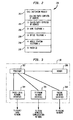
- call initiation data packet 200 An example of a call initiation data packet 200 is shown in Fig. 2.
- the header 202 of call initiation data packet 200 indicates that the calling party at computer 102 desires to initiate a packet data network call.
- the header 202 identifies the calling party computer by its IP address.
- IP addresses to identify computers in a packet data network is well known in the art.
- Each of the following fields 204, 206, 208, 210, 212, of the record 200 identify, in priority order, the alternative devices with which the calling party wishes to initiate communication.
- call initiation data packet 200 contains IP address of the called party computer 146 in field 204, indicating that the calling party desires to initiate communication with the called party computer 146 if that computer is available (i.e. connected to the packet data network 110).
- the packet data network node 112 Upon receipt of the call initiation data packet 200 the packet data network node 112 will route the packet 200 through the routing network 116 to terminating packet data network node 118. In an advantageous embodiment the routing will be efficient in the sense that the call initiation data packet 200 will be routed to a terminating packet data network node (e.g. packet data network node 118) which is geographically close to the connection to the called party device.
- a terminating packet data network node e.g. packet data network node 118
- the routing of data packets through data networks is well known in the art and will not be described further herein.
- Packet network node 118 is shown in further detail in Fig. 3.
- Packet network node 118 includes a processor 302 connected to a memory 308.
- the memory 308 contains computer program instructions which are executed by the processor 302 which control the operation of the packet network node.
- the memory 308 may be a RAM, ROM, magnetic disk, optical disk, or other type of computer storage medium. Further, memory 308 may be some combination of such computer storage media.
- Processor 302 is also connected to a packet data network interface 304 for communicating with the packet data network 110, a telephone network interface 306 for communicating with the PSTN 140 and the wireless communication network 130, and a paging network interface 310 for communicating with the paging network 160.
- Packet data network node 118 may also contain other components for carrying out other functions of the node (e.g. routing) but such other components are not described herein and would be well known to one skilled in the art. Although the functions of packet data network node 118 have been described herein as being controlled by processor 302 executing stored computer program instruction, it is to be understood that such functions could also be carried out by hardware, or a combination of software and hardware. It is also noted that packet data network node 112, as well as other packet data network nodes (not shown) in packet data network 110, may be configured as packet data network node 118 and may have the same functionality.
- the packet data network node 118 performs the steps shown in the flowchart of Fig. 4 upon receipt of the call initiation data packet 200.
- the next priority device is determined. Initially, this will be the first device indicated in the call initiation data packet 200, which in this example is the called party computer 146 as indicated by entry 204.
- a status message is sent to the calling party computer 102 indicating that the packet data network node 118 is determining whether the next priority device (at this point in this example the called party computer 146) is available.
- step 406 it is determined whether the device is available.
- packet data network node 118 will determine whether called party computer 146 is available (i.e. connected to the packet data network 110).
- LS 142 As described above, if the called party only has one connection to LS 142, then such connection will be shared by a conventional telephone 144 and a computer 146. Generally, telephone 144 will be connected to the LS 142 so that telephone calls can be made and received over the PSTN 140. Called party computer 146 will only be connected to LS 142 when the called party wishes to communicate with the packet data network 110 via packet data network node 118.
- the packet data network node 118 will establish and manage the connection in step 408 as follows.
- the packet data network node 118 will indicate to the called party computer 146 that the calling party computer 102 wishes to initiate a telephony connection.
- the calling party computer 102 is identified to the called party computer 146 by forwarding the calling party computer IP address from header 202 of the call initiation data packet 200.
- the calling party computer 102 and the called party computer 146 may then engage in a packet data network telephony session in accordance with the software being executed by the computers.
- the called party computer 146 may be considered unavailable if there is no response at the called party computer 146, even though it may be connected to the packet data network 110.
- the called party computer 146 may be connected to the packet data network 110, but the user of called party computer 146 may not be available for communication and thus may not respond to the call. In this situation, it is possible for the packet data network node 118 to recognize this situation and consider the called party computer 146 unavailable. Further processing in the event the called party computer 146 is considered unavailable is described below.
- step 406 (Fig. 4) would be "no" and control would pass to step 407 and a status message will be sent to the calling party computer 102 indicating that the device being checked (in this example the called party computer 146) was not available.
- Control passes to step 410 to determine if there are any more devices to check. In this example, there are additional devices to check, as indicated in fields 206, 208, 210, and 212 of the call initiation data packet 200. Control passes to step 411 and a status message is sent to the calling party computer 102 indicating that there are additional devices to check.
- step 404 the home telephone would be selected as the next highest priority device as indicated by the home telephone number present in field 206 of call initiation data packet 200.
- step 405 a status message is sent to the calling party computer 102 indicating that the packet data network node 118 is determining whether the home telephone is available.
- step 406 it would be determined whether home telephone 144 is available. Such a determination may be made as follows. Packet data network node 118 attempts to place a call to telephone 144 by sending appropriate signals via telephone network interface 306 to LS 142. Upon receipt of such signals, LS 142 will attempt to ring telephone 144. If the called party picks up the telephone 144, that indicates that the device is available and control will proceed to step 408 in which the packet data network node 118 will establish and manage a telephone connection with telephone 144 as follows.
- calling party computer 102 is connected to the packet data network node 118 via a packet data network link.
- Called party telephone 144 is connected to the packet data network node 118 via a telephone link.
- Packet data network node 118 manages the connection by converting signals as follows. Calling party will speak into a microphone of calling party computer 102 and the telephony software in computer 102 will convert the voice signals into data packets which are suitable for transmission to the packet data network node 118 via the packet data network 110. Upon receipt of such data packets, packet data network node 118 will convert the data into voice signals which are appropriate for transmission to telephone 144 via the telephone link and will transmit those signals. The called party will hear the voice signals via the speaker on telephone 144.
- packet data network node 118 When the called party speaks into telephone 144, voice signals will be transmitted via the telephone link to packet data network node 118. Upon receipt of such voice signals, packet data network node 118 will convert the voice signal into data which is appropriate for transmission to telephone 102 via data packets over the packet data network 110. Upon receipt of such data packets computer 102 will convert the data into voice signals in accordance with the telephony software in computer 102, and the calling party will hear the voice signals via a speaker attached to computer 102. The packet data network node 118 performs the above described conversions and processing under control of processor 302 (Fig. 3) by executing appropriate computer program instructions stored in memory 308.
- step 406 it is determined that called party telephone 144 is not available. This may be a result of no answer at telephone 144 or a busy signal at telephone 144. In such a case, the determination in step 406 (Fig. 4) would be "no" and control would pass to step to step 407 and a status message will be sent to the calling party computer 102 indicating that the called party telephone was not available. Control then passes to step 410 to determine if there are any more devices to check. In this example, there are additional devices to check, as indicated in fields 208, 210, and 212 of the call initiation data packet 200 and an appropriate status message is sent to the calling party computer 102 in step 411.
- step 404 the office telephone 149 would be selected as the next highest priority device as indicated by the office telephone number present in field 208 of call initiation data packet 200 and an appropriate status message is sent to the calling party computer 102 in step 405.
- step 406 it would be determined whether office telephone 149 is available through PBX 148. Further processing with respect to office telephone 149 would be similar to the processing described above in conjunction with home telephone 144 and will not be described in detail.
- step 406 If it were determined in step 406 that office telephone 149 is not available then the determination in step 406 (Fig. 4) would be "no", an appropriate status message would be sent to the calling party computer 102 in step 407, and control would pass to step 410 to determine if there are any more devices to check. In this example, there are additional devices to check, as indicated in fields 210, and 212 of the call initiation data packet 200 and an appropriate status message is sent to the calling party computer 102 in step 411. In step 404 the mobile station 138 would be selected as the next highest priority device as indicated by the mobile station telephone number present in field 210 of call initiation data packet 200, and an appropriate status message is sent to the calling party computer 102 in step 405.
- step 406 it would be determined whether mobile station 138 is available through the MSC 132 and RBS 134 of the wireless telephone network 130.
- the processing of wireless telephone calls is well known in the art. Further processing with respect to mobile station 138 would be similar to the processing described above in conjunction with home telephone 144 and will not be described in detail.
- step 406 If it were determined in step 406 that mobile station 138 is not available then the determination in step 406 (Fig. 4) would be "no", an appropriate status message would be sent to the calling party computer 102 in step 407, and control would pass to step 410 to determine if there are any more devices to check. In this example, there are additional devices to check, as indicated in field 212 of the call initiation data packet 200, and an appropriate status message is sent to the calling party computer 102 in step 411.
- step 404 the pager 166 would be selected as the next highest priority device as indicated by the pager identification number present in field 212 of call initiation data packet 200. With respect to the pager, it is assumed that a pager is always available, and therefore the determination of step 406 will be true.
- step 408 the packet data network node 118 will transmit a paging message to paging terminal 162 via the paging network interface 310.
- Paging terminal 162 will in turn format the message and transmit an appropriate paging signal via antenna 164 to pager 166.
- Paging systems are will known in the art and the details of such a system will not be described herein.
- step 412 the packet data network node 118 would send a message to the calling party computer 102 indicating that initiation of a call to the called party was unsuccessful because none of the devices identified in the call initiation data packet 200 were available.
- the packet data network node 118 determines the highest priority called party device which is available and establishes communication between the calling party device and the highest priority called party device which is available.
- the call initiation request contains information describing alternative called party devices, but may not contain relative priority of each called party device.
- the packet data network node attempts to initiate communication with all of the devices specified in the call initiation request concurrently by sending an appropriate request to each of the devices. The network node establishes communication between the calling party and the first called party device which responds to the request, or to the first called party device which becomes available.
Landscapes
- Engineering & Computer Science (AREA)
- Signal Processing (AREA)
- Computer Networks & Wireless Communication (AREA)
- Data Exchanges In Wide-Area Networks (AREA)
- Mobile Radio Communication Systems (AREA)
- Telephonic Communication Services (AREA)
- Computer And Data Communications (AREA)
- Use Of Switch Circuits For Exchanges And Methods Of Control Of Multiplex Exchanges (AREA)
- Small-Scale Networks (AREA)
Claims (17)
- Verfahren zur Verarbeitung von Datennetzwerk-Kommunikationsverbindungsrufen, die folgenden Schritte umfassend:in einem Netzwerkknoten (118) erfolgendes Empfangen einer Rufauslösungsanforderung von einer rufenden Teilnehmer-Vorrichtung (102);in dem Netzwerkknoten (118) erfolgendes Bestimmen einer prioritätshöchsten gerufenen Teilnehmer-Vorrichtung (146, 144, 149, 138, 166), die für den Empfang eines Rufes verfügbar ist; undAufbauen der Kommunikationsverbindung zwischen der rufenden Teilnehmer-Vorrichtung (102) und der prioritätshöchsten gerufenen Teilnehmer-Vorrichtung (146, 144, 149, 138, 166), die verfügbar ist, wobei das Verfahren dadurch gekennzeichnet ist, daß die Rufauslösungsanforderung Prioritätsdaten bezüglich der gerufenen Teilnehmer-Vorrichtung aufweist.
- Verfahren nach Anspruch 1 und ferner den folgenden Schritt umfassend: im Netzwerkknoten (118) erfolgendes Bestimmen, ob die prioritätshöchste gerufene Teilnehmer-Vorrichtung (146, 144, 149, 138, 166), die für den Empfang eines Rufes verfügbar ist, auf eine durch den Netzwerkknoten (118) an die Vorrichtung (146, 144, 149, 138, 166) gesendete Verbindungsauslösungsangabe antwortet, und Bestimmen, daß die Vorrichtung (146, 144, 149, 138, 166) nicht für den Empfang eines Rufes verfügbar ist, wenn die Vorrichtung (146, 144, 149, 138, 166) nicht antwortet.
- Verfahren nach Anspruch 1, wobei die rufende Teilnehmer-Vorrichtung ein Computer ist und wobei die prioritätshöchste gerufene Teilnehmer-Vorrichtung, die verfügbar ist, ein mit dem Datennetzwerk verbundener Computer ist, wobei der Kommunikationsverbindungsaufbauschrit ferner die folgenden Schritte umfaßt:Weiterleiten von Datenpaketen von dem rufenden Teilnehmer-Computer an den gerufenen Teilnehmer-Computer; undWeiterleiten von Datenpaketen von dem gerufenen Teilnehmer-Computer an den rufenden Teilnehmer-Computer.
- Verfahren nach Anspruch 1, wobei die rufende Teilnehmer-Vorrichtung ein Computer ist und wobei die prioritätshöchste gerufene Teilnehmer-Vorrichtung, die verfügbar ist, ein mit dem öffentlichen Fernsprechwählnetzwerk verbundenes Telefon ist, wobei der Kommunikationsverbindungsaufbauschritt ferner die folgenden Schritte umfaßt:Konvertieren von Sprachdaten, die in dem Netzwerkknoten von dem rufenden Teilnehmer-Computer über das Datennetzwerk empfangen werden, in Sprachsignale und Übertragen der Sprachsignale an das gerufene Teilnehmer-Telefon über das öffentliche Fernsprechwählnetzwerk; undKonvertieren von Sprachsignalen, die in dem Netzwerkknoten von dem gerufenen Teilnehmer über das öffentliche Fernsprechwählnetzwerk empfangen werden, in Sprachdaten und Übertragen der Sprachdaten an den rufenden Teilnehmer-Computer über das Datennetzwerk.
- Verfahren nach Anspruch 1, wobei die rufende Teilnehmer-Vorrichtung ein Computer ist und wobei die prioritätshöchste gerufene Teilnehmer-Vorrichtung, die verfügbar ist, eine mit einem drahtlosen Kommunikationsnetzwerk verbundene Mobilstation ist, wobei der Kommunikationsverbindungsaufbauschritt ferner die folgenden Schritte umfaßt:Konvertieren von Sprachdaten, die in dem Netzwerkknoten von dem rufenden Teilnehmer-Computer über das Datennetzwerk empfangen werden, in Sprachsignale und Übertragen der Sprachsignale an die gerufene Teilnehmer-Mobilstation über das drahtlose Kommunikationsnetzwerk; undKonvertieren von Sprachsignalen, die in dem Netzwerkknoten von dem gerufenen Teilnehmer über das drahtlose Kommunikationsnetzwerk empfangen werden, in Sprachdaten und Übertragen der Sprachdaten an den rufenden Teilnehmer-Computer über das Datennetzwerk.
- Verfahren nach Anspruch 1, wobei die prioritätshöchste rufende Teilnehmer-Vorrichtung, die verfügbar ist, ein drahtloser Personenrufempfänger ist, wobei der Kommunikationsverbindungsaufbauschritt ferner den folgenden Schritt umfaßt:Übertragen von Rufsignalen an den gerufenen Personenrufempfänger über ein Personenrufnetzwerk.
- Verfahren nach Anspruch 1, ferner den folgenden Schritt umfassend:Senden einer Statusnachricht an die rufende Teilnehmer-Vorrichtung.
- Verfahren nach Anspruch 1, wobei die rufende Teilnehmer-Vorrichtung ein rufender Teilnehmer-Computer (102) ist; wobei die Prioritätsdaten bezüglich der gerufenen Teilnehmer-Vorrichtung ein Rufauslösungs-Datenpaket mit einer Rufverbindungsalternative umfaßt; und wobei das Verfahren ferner die folgenden Schritte umfaßt:Aufbauen einer Paketdaten-Kommunikationsverbindungsstrecke zwischen dem rufenden Teilnehmer-Computer (102) und dem Netzwerkknoten (118);Aufbauen einer Paketdaten-Kommunikationsverbindungsstrecke zwischen dem Paketdaten-Netzwerkknoten (118) und dem gerufenen Teilnehmer-Computer (146), wenn der gerufene Teilnehmer-Computer (146) mit dem Paketdaten-Netzwerk (110) verbunden ist; undAufbauen einer alternativen Kommunikationsverbindungsstrecke zwischen dem Paketdaten-Netzwerkknoten (118) und einer alternativen gerufenen Teilnehmer-Vorrichtung (144, 149, 138, 166) auf der Grundlage der Rufverbindungsalternativen, wenn der gerufene Teilnehmer-Computer (146) mit dem Paketdaten-Netzwerk (110) verbunden ist.
- Verfahren nach Anspruch 8, wobei die alternative gerufene Teilnehmer-Vorrichtung ein Telefon ist und wobei der Schritt des Aufbauens einer alternativen Kommunikationsverbindungsstrecke ferner die folgenden Schritte umfaßt:Aufbauen einer Telefonverbindung zwischen dem Paketdaten-Netzwerkknoten und dem gerufenen Teilnehmer-Telefon;Konvertieren von Paketdaten, die in dem Paketdaten-Netzwerkknoten von dem rufenden Teilnehmer-Computer empfangen werden, in Sprachsignale und Übertragen der Sprachsignale an das gerufene Teilnehmer-Telefon über die Telefonverbindung; undKonvertieren von Sprachsignalen, die in dem Paketdaten-Netzwerkknoten von dem gerufenen Teilnehmer-Telefon empfangen werden, in Paketdaten und Übertragen der Paketdaten an den rufenden Teilnehmer-Computer über die Paketdaten-Kommunikationsverbindungsstrecke.
- Verfahren nach Anspruch 8, wobei die alternative gerufene Teilnehmer-Vorrichtung eine Mobilstation ist und wobei der Schritt des Aufbauens einer alternativen Kommunikationsverbindungsstrecke ferner die folgenden Schritte umfaßt:Aufbauen einer Telefonverbindung zwischen dem Paketdaten-Netzwerkknoten und der gerufenen Teilnehmer-Mobilstation über ein drahtloses Telefonnetzwerk;Konvertieren von Paketdaten, die in dem Paketdaten-Netzwerkknoten von dem rufenden Teilnehmer-Computer empfangen werden, in Sprachsignale und Übertragen der Sprachsignale an die gerufene Teilnehmer-Mobilstation über die Telefonverbindung; undKonvertieren von Sprachsignalen, die in dem Paketdaten-Netzwerkknoten von der gerufenen Teilnehmer-Mobilstation empfangen werden, in Paketdaten und Übertragen der Paketdaten an den rufenden Teilnehmer-Computer über die Paketdaten-Kommunikationsverbindungsstrecke.
- Verfahren nach Anspruch 8, wobei die alternative gerufene Teilnehmer-Vorrichtung ein Personenrufempfänger ist und wobei der Schritt des Aufbauens einer alternativen Kommunikationsverbindungsstrecke ferner den folgenden Schritt umfaßt:Übertragen von Rufsignalen an den gerufenen Personenrufempfänger über ein Personenrufnetzwerk.
- Verfahren nach Anspruch 8, ferner den folgenden Schritt umfassend:Senden einer Statusnachricht an den gerufenen Teilnehmer-Computer.
- Netzwerkknoten zur Verarbeitung von Datennetzwerk-Kommunikationsverbindungsrufen, umfassend:Mittel zum Bestimmen einer prioritätshöchsten gerufenen Teilnehmer-Vorrichtung, die für den Empfang eines Rufes verfügbar ist; undMittel zum Aufbauen der Kommunikationsverbindung zwischen einer rufenden Teilnehmer-Vorrichtung und der prioritätshöchsten gerufenen Teilnehmer-Vorrichtung, die verfügbar ist,wobei der Netzwerkknoten dadurch gekennzeichnet ist, daß er ferner Mittel zum Empfangen einer Rufauslösungsanforderung mit Prioritätsdaten bezüglich der gerufenen Teilnehmer-Vorrichtung von einer rufenden Teilnehmer-Vorrichtung umfaßt.
- Netzwerkknoten nach Anspruch 13, wobei die rufende Teilnehmer-Vorrichtung ein Computer ist und wobei die prioritätshöchste gerufene Teilnehmer-Vorrichtung, die verfügbar ist, ein mit dem öffentlichen Fernsprechwählnetzwerk verbundenes Telefon ist, wobei der Netzwerkknoten ferner umfaßt:Mittel zum Konvertieren von Sprachdaten, die in dem Netzwerkknoten von dem rufenden Teilnehmer-Computer über das Datennetzwerk empfangen werden, in Sprachsignale und zum Übertragen der Sprachsignale an das gerufene Teilnehmer-Telefon über das öffentliche Fernsprechwählnetzwerk; undMittel zum Konvertieren von Sprachsignalen, die in dem Netzwerkknoten von dem gerufenen Teilnehmer über das öffentliche Fernsprechwählnetzwerk empfangen werden, in Sprachdaten und zum Übertragen der Sprachdaten an den rufenden Teilnehmer-Computer über das Datennetzwerk.
- Netzwerkknoten nach Anspruch 13, wobei die rufende Teilnehmer-Vorrichtung ein Computer ist und wobei die prioritätshöchste gerufene Teilnehmer-Vorrichtung, die verfügbar ist, eine mit einem drahtlosen Kommunikationsnetzwerk verbundene Mobilstation ist, wobei der Netzwerkknoten ferner umfaßt:Mittel zum Konvertieren von Sprachdaten, die in dem Netzwerkknoten von dem rufenden Teilnehmer-Computer über das Datennetzwerk empfangen werden, in Sprachsignale und zum Übertragen der Sprachsignale an die gerufene Teilnehmer-Mobilstation über das drahtlose Kommunikationsnetzwerk; undMittel zum Konvertieren von Sprachsignalen, die in dem Netzwerkknoten von dem gerufenen Teilnehmer über das drahtlose Kommunikationsnetzwerk empfangen werden, in Sprachdaten und zum Übertragen der Sprachdaten an den rufenden Teilnehmer-Computer über das Datennetzwerk.
- Netzwerkknoten nach Anspruch 13, wobei die rufende Teilnehmer-Vorrichtung ein Computer ist und wobei die prioritätshöchste gerufene Teilnehmer-Vorrichtung, die verfügbar ist, ein Personenrufempfänger ist, wobei der Netzwerkknoten ferner umfaßt:Mittel zum Übertragen von Rufsignalen an den gerufenen Personenrufempfänger über ein Personenrufnetzwerk.
- Netzwerkknoten nach Anspruch 13, ferner umfassend:Mittel zum Senden einer Statusnachricht an die rufende Teilnehmer-Vorrichtung.
Applications Claiming Priority (2)
| Application Number | Priority Date | Filing Date | Title |
|---|---|---|---|
| US762550 | 1996-12-09 | ||
| US08/762,550 US6118778A (en) | 1996-12-09 | 1996-12-09 | Method and apparatus for data network call processing |
Publications (3)
| Publication Number | Publication Date |
|---|---|
| EP0847174A2 EP0847174A2 (de) | 1998-06-10 |
| EP0847174A3 EP0847174A3 (de) | 1999-10-20 |
| EP0847174B1 true EP0847174B1 (de) | 2007-05-02 |
Family
ID=25065384
Family Applications (1)
| Application Number | Title | Priority Date | Filing Date |
|---|---|---|---|
| EP97309093A Expired - Lifetime EP0847174B1 (de) | 1996-12-09 | 1997-11-12 | Verfahren und Gerät für Datennetzwerkanrufverarbeitung |
Country Status (8)
| Country | Link |
|---|---|
| US (2) | US6118778A (de) |
| EP (1) | EP0847174B1 (de) |
| JP (1) | JP3695563B2 (de) |
| BR (1) | BR9706067B1 (de) |
| CA (1) | CA2220707C (de) |
| DE (1) | DE69737675T2 (de) |
| NO (1) | NO975612L (de) |
| TW (1) | TW462004B (de) |
Families Citing this family (44)
| Publication number | Priority date | Publication date | Assignee | Title |
|---|---|---|---|---|
| US9286294B2 (en) | 1992-12-09 | 2016-03-15 | Comcast Ip Holdings I, Llc | Video and digital multimedia aggregator content suggestion engine |
| US7168084B1 (en) | 1992-12-09 | 2007-01-23 | Sedna Patent Services, Llc | Method and apparatus for targeting virtual objects |
| US6118778A (en) * | 1996-12-09 | 2000-09-12 | At&T Wireless Services, Inc. | Method and apparatus for data network call processing |
| US7031442B1 (en) | 1997-02-10 | 2006-04-18 | Genesys Telecommunications Laboratories, Inc. | Methods and apparatus for personal routing in computer-simulated telephony |
| US6104802A (en) | 1997-02-10 | 2000-08-15 | Genesys Telecommunications Laboratories, Inc. | In-band signaling for routing |
| US6480600B1 (en) * | 1997-02-10 | 2002-11-12 | Genesys Telecommunications Laboratories, Inc. | Call and data correspondence in a call-in center employing virtual restructuring for computer telephony integrated functionality |
| US6721306B1 (en) * | 1997-03-11 | 2004-04-13 | Verizon Services Corp. | Public wireless/cordless internet gateway |
| US6278705B1 (en) * | 1997-04-08 | 2001-08-21 | 3Com Corporation | Integrated architecture to support a single system image across multiple network access servers |
| US6711611B2 (en) | 1998-09-11 | 2004-03-23 | Genesis Telecommunications Laboratories, Inc. | Method and apparatus for data-linking a mobile knowledge worker to home communication-center infrastructure |
| US6985943B2 (en) | 1998-09-11 | 2006-01-10 | Genesys Telecommunications Laboratories, Inc. | Method and apparatus for extended management of state and interaction of a remote knowledge worker from a contact center |
| USRE46528E1 (en) | 1997-11-14 | 2017-08-29 | Genesys Telecommunications Laboratories, Inc. | Implementation of call-center outbound dialing capability at a telephony network level |
| US6519252B2 (en) * | 1997-12-31 | 2003-02-11 | Ericsson Inc. | System and method for connecting a call to a mobile subscriber connected to the Internet |
| US7907598B2 (en) | 1998-02-17 | 2011-03-15 | Genesys Telecommunication Laboratories, Inc. | Method for implementing and executing communication center routing strategies represented in extensible markup language |
| US6332154B2 (en) | 1998-09-11 | 2001-12-18 | Genesys Telecommunications Laboratories, Inc. | Method and apparatus for providing media-independent self-help modules within a multimedia communication-center customer interface |
| US6594230B1 (en) * | 1998-02-23 | 2003-07-15 | Lucent Technologies Inc. | System and method for providing advanced calling features to a packet network-based communication device and packet network employing the same |
| US6563814B2 (en) * | 1998-04-07 | 2003-05-13 | Northern Telecom Limited | Method and apparatus for controlling the operation of a digital telephone switchboard |
| US6795406B2 (en) | 1999-07-12 | 2004-09-21 | Genesys Telecommunications Laboratories, Inc. | Methods and apparatus for enhancing wireless data network telephony, including quality of service monitoring and control |
| US6078566A (en) * | 1998-04-28 | 2000-06-20 | Genesys Telecommunications Laboratories, Inc. | Noise reduction techniques and apparatus for enhancing wireless data network telephony |
| USRE46153E1 (en) | 1998-09-11 | 2016-09-20 | Genesys Telecommunications Laboratories, Inc. | Method and apparatus enabling voice-based management of state and interaction of a remote knowledge worker in a contact center environment |
| US6560216B1 (en) * | 1998-09-17 | 2003-05-06 | Openwave Systems Inc. | Data network computing device call processing |
| WO2000018097A1 (de) * | 1998-09-22 | 2000-03-30 | Siemens Aktiengesellschaft | Verfahren zur bestellung wenigstens einer telefonverbindung über das internet |
| US6816913B1 (en) * | 1998-11-04 | 2004-11-09 | Gateway, Inc. | Convenient system, method, and software for online computer users to summon offline computer users |
| JP3796408B2 (ja) | 1999-05-12 | 2006-07-12 | ノキア コーポレイション | 接続を確立する方法及びシステム |
| US7929978B2 (en) | 1999-12-01 | 2011-04-19 | Genesys Telecommunications Laboratories, Inc. | Method and apparatus for providing enhanced communication capability for mobile devices on a virtual private network |
| US7260078B1 (en) | 2000-02-08 | 2007-08-21 | Siemens Aktiengesellschaft | Method and system for providing management protocol mediation in wireless communications networks |
| US6466779B1 (en) * | 2000-03-07 | 2002-10-15 | Samsung Electronics Co., Ltd. | System and method for secure provisioning of a mobile station from a provisioning server using IWF-based firewall |
| FI112901B (fi) * | 2000-03-15 | 2004-01-30 | Elisa Oyj | Menetelmä tietoliikenteen ohjaamiseksi televerkossa |
| WO2001072110A2 (en) * | 2000-03-27 | 2001-10-04 | Nortel Networks Limited | Method and apparatus for managing a plurality of mobile nodes in a network |
| KR100367484B1 (ko) * | 2000-09-25 | 2003-01-10 | 텔슨전자 주식회사 | 이동통신망과 패킷 데이터망간의 호 설정 방법 |
| ES2656351T3 (es) * | 2000-12-14 | 2018-02-26 | Counterpath Corporation | Método de re-selección de teléfono móvil entre una red celular de conmutación de circuitos y una red de conmutación de paquetes |
| WO2002103486A2 (en) | 2001-06-18 | 2002-12-27 | Crandell Jeffrey L | Apparatus, systems and methods for managing incoming and outgoing communication |
| US7793326B2 (en) | 2001-08-03 | 2010-09-07 | Comcast Ip Holdings I, Llc | Video and digital multimedia aggregator |
| US7908628B2 (en) | 2001-08-03 | 2011-03-15 | Comcast Ip Holdings I, Llc | Video and digital multimedia aggregator content coding and formatting |
| CN1209895C (zh) * | 2001-08-14 | 2005-07-06 | 索尼公司 | 信息处理装置和信息处理方法 |
| US7385956B2 (en) | 2002-08-22 | 2008-06-10 | At&T Mobility Ii Llc | LAN based wireless communications system |
| US20040078327A1 (en) * | 2002-10-16 | 2004-04-22 | First Data Corporation | Wireless communication device account payment notification systems and methods |
| TW200427293A (en) * | 2003-05-16 | 2004-12-01 | Hon Hai Prec Ind Co Ltd | IP phone and method |
| CN100550881C (zh) * | 2003-12-11 | 2009-10-14 | 华为技术有限公司 | 一种实现多媒体优先业务的方法 |
| US7809381B2 (en) * | 2004-07-16 | 2010-10-05 | Bridgeport Networks, Inc. | Presence detection for cellular and internet protocol telephony |
| US7940746B2 (en) | 2004-08-24 | 2011-05-10 | Comcast Cable Holdings, Llc | Method and system for locating a voice over internet protocol (VoIP) device connected to a network |
| US9008075B2 (en) | 2005-12-22 | 2015-04-14 | Genesys Telecommunications Laboratories, Inc. | System and methods for improving interaction routing performance |
| US8442526B1 (en) * | 2007-09-24 | 2013-05-14 | Sprint Spectrum L.P. | Method and system for registering a mobile node via a registration proxy |
| US8040809B2 (en) * | 2008-11-25 | 2011-10-18 | Broadcom Corporation | Client QoS based connection session jogging |
| ES2702464T3 (es) | 2009-06-17 | 2019-03-01 | Bridgeport Networks Inc | Detección de presencia mejorada para decisiones de enrutamiento |
Family Cites Families (11)
| Publication number | Priority date | Publication date | Assignee | Title |
|---|---|---|---|---|
| DE3665967D1 (en) | 1985-02-18 | 1989-11-02 | Nec Corp | Mobile telephone system for automatically paging absent mobile subscriber |
| US5726984A (en) * | 1989-01-31 | 1998-03-10 | Norand Corporation | Hierarchical data collection network supporting packetized voice communications among wireless terminals and telephones |
| US5825865A (en) * | 1991-10-04 | 1998-10-20 | Motorola, Inc. | Temporary message routing and destination selection |
| MX9404062A (es) | 1993-06-03 | 1995-01-31 | Ericsson Telefon Ab L M | Transferencia de llamada dentro del sistema de comunicaciones celulares. |
| US5724409A (en) * | 1994-06-30 | 1998-03-03 | Bellsouth Corporation | Speed forwarding system for personal number communications system |
| US5600704A (en) | 1994-08-30 | 1997-02-04 | Ericsson Inc. | Systems and methods for prioritized routing of telephone calls to a subscriber |
| FI104869B (fi) * | 1995-05-24 | 2000-04-14 | Ericsson Telefon Ab L M | Menetelmä verkkojen välisen puheyhteyden muodostamiseksi ja älyverkkopalvelu |
| US6377576B1 (en) * | 1995-10-10 | 2002-04-23 | Intel Corporation | Telephone call setup procedure |
| US5802160A (en) * | 1996-01-19 | 1998-09-01 | Pilgrim Telephone, Inc. | Multi-ring telephone method and system |
| US6366575B1 (en) * | 1996-11-01 | 2002-04-02 | Teloquent Communications Corporation | Extended access for automatic call distributing system |
| US6118778A (en) * | 1996-12-09 | 2000-09-12 | At&T Wireless Services, Inc. | Method and apparatus for data network call processing |
-
1996
- 1996-12-09 US US08/762,550 patent/US6118778A/en not_active Expired - Lifetime
-
1997
- 1997-11-10 CA CA002220707A patent/CA2220707C/en not_active Expired - Fee Related
- 1997-11-12 DE DE69737675T patent/DE69737675T2/de not_active Expired - Lifetime
- 1997-11-12 EP EP97309093A patent/EP0847174B1/de not_active Expired - Lifetime
- 1997-12-03 TW TW086118162A patent/TW462004B/zh not_active IP Right Cessation
- 1997-12-03 BR BRPI9706067-4A patent/BR9706067B1/pt not_active IP Right Cessation
- 1997-12-04 NO NO975612A patent/NO975612L/no not_active Application Discontinuation
- 1997-12-05 JP JP33589597A patent/JP3695563B2/ja not_active Expired - Fee Related
-
1999
- 1999-11-30 US US09/451,401 patent/US6778527B1/en not_active Expired - Fee Related
Non-Patent Citations (1)
| Title |
|---|
| None * |
Also Published As
| Publication number | Publication date |
|---|---|
| EP0847174A2 (de) | 1998-06-10 |
| EP0847174A3 (de) | 1999-10-20 |
| MX9709392A (es) | 1998-06-30 |
| BR9706067B1 (pt) | 2009-05-05 |
| US6778527B1 (en) | 2004-08-17 |
| TW462004B (en) | 2001-11-01 |
| JP3695563B2 (ja) | 2005-09-14 |
| CA2220707C (en) | 2002-01-01 |
| US6118778A (en) | 2000-09-12 |
| NO975612D0 (no) | 1997-12-04 |
| CA2220707A1 (en) | 1998-06-09 |
| JPH10229417A (ja) | 1998-08-25 |
| BR9706067A (pt) | 1999-03-16 |
| DE69737675T2 (de) | 2008-01-10 |
| DE69737675D1 (de) | 2007-06-14 |
| NO975612L (no) | 1998-06-10 |
Similar Documents
| Publication | Publication Date | Title |
|---|---|---|
| EP0847174B1 (de) | Verfahren und Gerät für Datennetzwerkanrufverarbeitung | |
| EP2288095B1 (de) | Verfahren zur mobiltelefonwiederauswahl zwischen einem leitungsvermittelten zellularen netzwerk und einem paketvermittelten netzwerk | |
| KR100372036B1 (ko) | 전화이중장치 | |
| US7106848B1 (en) | Method and apparatus for in-progress call forwarding | |
| US5583914A (en) | Intelligent wireless signaling overlay for a telecommunication network | |
| US6118864A (en) | System and method for providing communication on a wide area network | |
| US7643466B2 (en) | Method and system for using either public or private networks in 1xEV-DO system | |
| CN1111082A (zh) | 接通呼叫的方法 | |
| US20010014614A1 (en) | Method of controlling call routing and a communication terminal | |
| US20030128831A1 (en) | System and method for call re-direction in h.323 network | |
| MXPA05003401A (es) | Llamada movil asistida por internet. | |
| JP3083852B2 (ja) | 遠距離リンクを介するリモートボコーディング | |
| US7110395B1 (en) | Method and apparatus for network telephony | |
| EP1360847B1 (de) | Verfahren und anordnung zum transparenten wechsel einer service option | |
| WO1999056478A1 (en) | An announcing system and method used in a communications network for holding incoming circuit switched calls | |
| US20080070560A1 (en) | Communication System and Communication Method | |
| JP2004350302A (ja) | サービス提供モードが指定されたデータサービスを実施する装置及び方法 | |
| US7024182B2 (en) | Subscriber activated, time limited cellular incoming call redirection system | |
| KR20010032899A (ko) | 고정 셀룰러 통신 시스템에서 호출자 인터페이스에 대역외다이얼 숫자 신호 제공 방법 및 장치 | |
| KR20010028310A (ko) | 통화중인 가입자에게 접속 요청을 알리는 방법 | |
| KR100540568B1 (ko) | 시 디 엠 에이 망에서 팩스및 데이타 정보 자동 수신 지정방법 | |
| WO2008130106A1 (en) | Local wire and wireless communication system, and method of inter-networking calls and performing handoff | |
| MXPA97009392A (en) | Method and apparatus for processing calls of da networks | |
| JPH11298968A (ja) | 事業所型プライベートシステムにおける呼制御方式および呼制御装置 | |
| JP2792474B2 (ja) | 通信中切替方式および切替方法 |
Legal Events
| Date | Code | Title | Description |
|---|---|---|---|
| PUAI | Public reference made under article 153(3) epc to a published international application that has entered the european phase |
Free format text: ORIGINAL CODE: 0009012 |
|
| AK | Designated contracting states |
Kind code of ref document: A2 Designated state(s): DE FI FR GB SE |
|
| AX | Request for extension of the european patent |
Free format text: AL;LT;LV;MK;RO;SI |
|
| PUAL | Search report despatched |
Free format text: ORIGINAL CODE: 0009013 |
|
| AK | Designated contracting states |
Kind code of ref document: A3 Designated state(s): AT BE CH DE DK ES FI FR GB GR IE IT LI LU MC NL PT SE |
|
| AX | Request for extension of the european patent |
Free format text: AL;LT;LV;MK;RO;SI |
|
| RIC1 | Information provided on ipc code assigned before grant |
Free format text: 6H 04M 3/00 A, 6H 04L 29/06 B, 6H 04M 7/00 B, 6H 04L 12/64 B |
|
| RAP1 | Party data changed (applicant data changed or rights of an application transferred) |
Owner name: AT&T WIRELESS SERVICES, INC. |
|
| 17P | Request for examination filed |
Effective date: 20000411 |
|
| AKX | Designation fees paid |
Free format text: DE FI FR GB SE |
|
| 17Q | First examination report despatched |
Effective date: 20031223 |
|
| GRAP | Despatch of communication of intention to grant a patent |
Free format text: ORIGINAL CODE: EPIDOSNIGR1 |
|
| GRAS | Grant fee paid |
Free format text: ORIGINAL CODE: EPIDOSNIGR3 |
|
| GRAA | (expected) grant |
Free format text: ORIGINAL CODE: 0009210 |
|
| AK | Designated contracting states |
Kind code of ref document: B1 Designated state(s): DE FI FR GB SE |
|
| REG | Reference to a national code |
Ref country code: GB Ref legal event code: FG4D |
|
| REG | Reference to a national code |
Ref country code: SE Ref legal event code: TRGR |
|
| REF | Corresponds to: |
Ref document number: 69737675 Country of ref document: DE Date of ref document: 20070614 Kind code of ref document: P |
|
| ET | Fr: translation filed | ||
| PGFP | Annual fee paid to national office [announced via postgrant information from national office to epo] |
Ref country code: FI Payment date: 20071128 Year of fee payment: 11 |
|
| PLBE | No opposition filed within time limit |
Free format text: ORIGINAL CODE: 0009261 |
|
| STAA | Information on the status of an ep patent application or granted ep patent |
Free format text: STATUS: NO OPPOSITION FILED WITHIN TIME LIMIT |
|
| 26N | No opposition filed |
Effective date: 20080205 |
|
| PG25 | Lapsed in a contracting state [announced via postgrant information from national office to epo] |
Ref country code: FI Free format text: LAPSE BECAUSE OF NON-PAYMENT OF DUE FEES Effective date: 20081112 |
|
| PGFP | Annual fee paid to national office [announced via postgrant information from national office to epo] |
Ref country code: FR Payment date: 20101109 Year of fee payment: 14 |
|
| PGFP | Annual fee paid to national office [announced via postgrant information from national office to epo] |
Ref country code: DE Payment date: 20101130 Year of fee payment: 14 |
|
| PGFP | Annual fee paid to national office [announced via postgrant information from national office to epo] |
Ref country code: SE Payment date: 20101022 Year of fee payment: 14 Ref country code: GB Payment date: 20101022 Year of fee payment: 14 |
|
| REG | Reference to a national code |
Ref country code: SE Ref legal event code: EUG |
|
| GBPC | Gb: european patent ceased through non-payment of renewal fee |
Effective date: 20111112 |
|
| REG | Reference to a national code |
Ref country code: FR Ref legal event code: ST Effective date: 20120731 |
|
| REG | Reference to a national code |
Ref country code: DE Ref legal event code: R119 Ref document number: 69737675 Country of ref document: DE Effective date: 20120601 |
|
| PG25 | Lapsed in a contracting state [announced via postgrant information from national office to epo] |
Ref country code: GB Free format text: LAPSE BECAUSE OF NON-PAYMENT OF DUE FEES Effective date: 20111112 Ref country code: SE Free format text: LAPSE BECAUSE OF NON-PAYMENT OF DUE FEES Effective date: 20111113 |
|
| PG25 | Lapsed in a contracting state [announced via postgrant information from national office to epo] |
Ref country code: FR Free format text: LAPSE BECAUSE OF NON-PAYMENT OF DUE FEES Effective date: 20111130 |
|
| PG25 | Lapsed in a contracting state [announced via postgrant information from national office to epo] |
Ref country code: DE Free format text: LAPSE BECAUSE OF NON-PAYMENT OF DUE FEES Effective date: 20120601 |