EP0848066A1 - Mittel und Verfahren zur Bestimmung von hydrolytischen Enzymen - Google Patents
Mittel und Verfahren zur Bestimmung von hydrolytischen Enzymen Download PDFInfo
- Publication number
- EP0848066A1 EP0848066A1 EP97121272A EP97121272A EP0848066A1 EP 0848066 A1 EP0848066 A1 EP 0848066A1 EP 97121272 A EP97121272 A EP 97121272A EP 97121272 A EP97121272 A EP 97121272A EP 0848066 A1 EP0848066 A1 EP 0848066A1
- Authority
- EP
- European Patent Office
- Prior art keywords
- solution
- indoxyl
- determination
- hydrolytic enzymes
- oxidizing agent
- Prior art date
- Legal status (The legal status is an assumption and is not a legal conclusion. Google has not performed a legal analysis and makes no representation as to the accuracy of the status listed.)
- Granted
Links
Images


Classifications
-
- C—CHEMISTRY; METALLURGY
- C12—BIOCHEMISTRY; BEER; SPIRITS; WINE; VINEGAR; MICROBIOLOGY; ENZYMOLOGY; MUTATION OR GENETIC ENGINEERING
- C12Q—MEASURING OR TESTING PROCESSES INVOLVING ENZYMES, NUCLEIC ACIDS OR MICROORGANISMS; COMPOSITIONS OR TEST PAPERS THEREFOR; PROCESSES OF PREPARING SUCH COMPOSITIONS; CONDITION-RESPONSIVE CONTROL IN MICROBIOLOGICAL OR ENZYMOLOGICAL PROCESSES
- C12Q1/00—Measuring or testing processes involving enzymes, nucleic acids or microorganisms; Compositions therefor; Processes of preparing such compositions
- C12Q1/34—Measuring or testing processes involving enzymes, nucleic acids or microorganisms; Compositions therefor; Processes of preparing such compositions involving hydrolase
- C12Q1/44—Measuring or testing processes involving enzymes, nucleic acids or microorganisms; Compositions therefor; Processes of preparing such compositions involving hydrolase involving esterase
-
- C—CHEMISTRY; METALLURGY
- C12—BIOCHEMISTRY; BEER; SPIRITS; WINE; VINEGAR; MICROBIOLOGY; ENZYMOLOGY; MUTATION OR GENETIC ENGINEERING
- C12Q—MEASURING OR TESTING PROCESSES INVOLVING ENZYMES, NUCLEIC ACIDS OR MICROORGANISMS; COMPOSITIONS OR TEST PAPERS THEREFOR; PROCESSES OF PREPARING SUCH COMPOSITIONS; CONDITION-RESPONSIVE CONTROL IN MICROBIOLOGICAL OR ENZYMOLOGICAL PROCESSES
- C12Q1/00—Measuring or testing processes involving enzymes, nucleic acids or microorganisms; Compositions therefor; Processes of preparing such compositions
- C12Q1/34—Measuring or testing processes involving enzymes, nucleic acids or microorganisms; Compositions therefor; Processes of preparing such compositions involving hydrolase
- C12Q1/42—Measuring or testing processes involving enzymes, nucleic acids or microorganisms; Compositions therefor; Processes of preparing such compositions involving hydrolase involving phosphatase
-
- C—CHEMISTRY; METALLURGY
- C12—BIOCHEMISTRY; BEER; SPIRITS; WINE; VINEGAR; MICROBIOLOGY; ENZYMOLOGY; MUTATION OR GENETIC ENGINEERING
- C12Q—MEASURING OR TESTING PROCESSES INVOLVING ENZYMES, NUCLEIC ACIDS OR MICROORGANISMS; COMPOSITIONS OR TEST PAPERS THEREFOR; PROCESSES OF PREPARING SUCH COMPOSITIONS; CONDITION-RESPONSIVE CONTROL IN MICROBIOLOGICAL OR ENZYMOLOGICAL PROCESSES
- C12Q2326/00—Chromogens for determinations of oxidoreductase enzymes
- C12Q2326/90—Developer
- C12Q2326/92—Nitro blue tetrazolium chloride, i.e. NBT
-
- C—CHEMISTRY; METALLURGY
- C12—BIOCHEMISTRY; BEER; SPIRITS; WINE; VINEGAR; MICROBIOLOGY; ENZYMOLOGY; MUTATION OR GENETIC ENGINEERING
- C12Q—MEASURING OR TESTING PROCESSES INVOLVING ENZYMES, NUCLEIC ACIDS OR MICROORGANISMS; COMPOSITIONS OR TEST PAPERS THEREFOR; PROCESSES OF PREPARING SUCH COMPOSITIONS; CONDITION-RESPONSIVE CONTROL IN MICROBIOLOGICAL OR ENZYMOLOGICAL PROCESSES
- C12Q2334/00—O-linked chromogens for determinations of hydrolase enzymes, e.g. glycosidases, phosphatases, esterases
- C12Q2334/50—Indoles
- C12Q2334/52—5-Bromo-4-chloro-3-indolyl, i.e. BCI
Definitions
- the invention relates to means and methods for determining hydrolytic Enzymes in liquid samples, e.g. in food and biological Solutions using solid reagent carriers and quantitative Determination using reflectometry.
- Hydrolytic enzymes in food either come from the Food itself or from microorganisms that make up the food contaminate. These enzymes are often the cause of food spoilage, especially if the enzymes by the methods of Disinfection of the food cannot be completely inactivated.
- Hydrolases are e.g. Lipases, ali- and aryl esterases, phosphatases, Sulfatases, glucuronidases, glucosidases, amylases and proteinases.
- Hydrolytic enzymes in biological solutions such as blood, plasma, serum, Urine, etc. are e.g. Lipase, amylase, proteinases, cholinesterases and Phosphatases.
- a change in their concentration can Show disease states or certain physiological states. The quick and sensitive determination of the concentration is for the Diagnosing these conditions is important.
- hydrolytic enzymes with the aid of absorbent carriers which contain both an indoxy ester and an oxidizing agent together on a carrier are known from GB 1128371 and EP 12957.
- a test paper for the detection of esterases in animal and vegetable tissues and microorganisms is known frommaschine 9 , 445 (1965), which contains indoxy acetate. Atmospheric oxygen serves as the oxidant. The time until a color reaction occurs allows an estimate of the esterase concentration.
- the disadvantage of the known methods is the limited sensitivity, especially for samples with high fat, protein, salt and Foreign matter content. It can also be evaluated visually Procedure the enzyme activity can only be estimated.
- the invention has for its object a means and method for To provide determination of hydrolytic enzymes with the much higher sensitivity compared to the state of the Technology can be achieved and the quantitative determinations possible.
- the invention relates to an agent for determining hydrolytic Enzymes in liquid samples with the help of indoxyl compounds and Oxidizing agent, which is characterized in that the indoxyl compounds on an absorbent carrier and the oxidizing agents in Solution.
- Another object of the invention is a method for determination of hydrolytic enzymes in liquid samples, which is characterized is that one is impregnated with an indoxyl compound absorbent carrier wetted with the sample solution in which the oxidizing agent containing solution immersed, incubated and reflectometric evaluates.
- the indoxyl compounds present on the absorbent carrier are specific enzyme substrates for the hydrolytic enzymes.
- Suitable Indoxyl compounds are e.g. Indoxy ester with 2-20 carbon atoms in the ester part such as indoxy acetate, butyrate, caprylate, palmitate, indoxyl glucuronide, -galactoside, -maltotriose, -phosphate, -sulfate, preferably with halogen substituted indoxy esters such as 5-bromoindoxyl, 6-chloroindoxyl, 5-bromo-6-chloroindoxyl, 5-bromo-4-chloroindoxylester, preferably 5-bromo-4-chloro-3-indoxylcaprylate, 5-bromo-4-chloro-indoxyl phosphate and indoxy acetate.
- absorbent carrier which is customary can be used are in use for such tests.
- the most common is Use of filter paper, however, can use other absorbent ones Cellulose or plastic products are used.
- the absorbent Carriers preferably filter paper, are used in a manner known per se Impregnated impregnation solutions containing the indoxyl compounds.
- the impregnated and dried papers can be square or rectangular zones are processed, which in turn in a known manner glued or sealed on plastic films, paper or metal strips can be.
- the absorbent carriers can also be in strip form before impregnation applied to a plastic tape and after impregnation cut into handy sticks perpendicular to the direction of the strip.
- the impregnation solution contains about 0.005-2 g, preferably 0.05 g of corresponding indoxyl compound in 100 ml of an organic Solvents, e.g. in ethanol, methanol, acetone. If necessary, the Impregnation solution also water, buffer substances, complexing agents and contain catalysts.
- the test paper is advantageously light and Moisture-protected stored at 4-8 ° C.
- the oxidizing agents present in solution are Tetrazolium salts such as nitroblue tetrazolium chloride, tetranitroblue tetrazolium chloride (TNBT), dimethylthiazolyldiphenyltetrazolium bromide (MTT), Tetrazolium chloride, triphenyltetrazolium chloride, iodophenylnitrophenylphenyltetrazolium chloride (INT), neotetrazolium chloride, phenylaminocarbonyltetrazolium bismethoxynitrobenzenesulfonic acid sodium salt (XTT), preferably nitro blue tetrazolium chloride (NBT).
- TBT tetranitroblue tetrazolium chloride
- MTT dimethylthiazolyldiphenyltetrazolium bromide
- Tetrazolium chloride triphenyltetrazolium chloride, iodophenylnitrophenylphenylt
- the tetrazolium salts are dissolved in a suitable solvent, preferably ethanol and with water to a concentration of 0.02-10 mg / ml, preferably 1 mg / ml.
- a suitable solvent preferably ethanol and with water to a concentration of 0.02-10 mg / ml, preferably 1 mg / ml.
- This solution can also contain stabilizing additives included, e.g. Detergents.
- the ratio of indoxyl compound to Oxidizer is not critical; it should be in the range of 5: 1 to 1:20, preferably about 1: 2.
- the sample is either directly used, diluted with a buffer or extracted.
- the buffer substances should have a pH range of 6-11, preferably a pH of about 8 can maintain.
- the buffer concentration to be used depends on the pH of the sample solution.
- a buffer are e.g. Tris / HCL buffer, HEPES buffer, MOPS buffer, sodium hydroxide / tartrate buffer, Sodium hydroxide solution / borate buffer, sodium carbonate / sodium hydrogen carbonate buffer, preferably Tris / HCL buffer.
- the absorbent carrier is placed in the sample solution for approximately 2 seconds immersed, shaken vigorously or stripped and so into the Tetrazolium salt solution dipped that the reaction zone completely is wetted.
- the dive time is between 1 and 60 minutes, preferably at about 15 minutes.
- the carrier is then removed from the sample solution, shaken vigorously and the resulting color is washed with a Reflectometer (340-700 nm) or using a color comparison scale evaluated.
- the determinations are carried out analogously to Example 1, the lipase standard solution being diluted with 0, 10, 20, 50, 100, 200, 500 and 1000 ⁇ g / l lipase instead of the buffer solution with human serum which is heated to 65 ° C. for 10 minutes.
- the result is shown in the table below. It shows that 2 ⁇ g / l lipase can still be reliably detected.
- test stick is immersed in the enzyme solution for about 2 seconds, shaken and immersed in about 1 ml of the reaction solution for 15 minutes. After this time, a blue color developed, which is measured in a reflectometer (576 nm). Conc. ( ⁇ g / l) 0 1 2nd 5 10th 20th 50 100 relative rem. (%) 78.8 75.5 72.1 71.8 67.4 59.6 44.1 32.3
- test paper was used which is impregnated with a solution of 56 mg of N-methyl-indoxy acetate and 112 mg of nitro blue tetrazolium chloride in 112 ml of ethanol, with the following result: Conc. ( ⁇ g / l) 0 1 2nd 5 10th 20th 5 100 relative rem. (%) 77.1 73.8 77 75.5 74.1 71.0 65.1 57.9
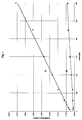
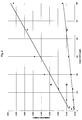
- the results from both experiments are graphical in FIG. 4 shown.
Landscapes
- Chemical & Material Sciences (AREA)
- Organic Chemistry (AREA)
- Life Sciences & Earth Sciences (AREA)
- Zoology (AREA)
- Wood Science & Technology (AREA)
- Proteomics, Peptides & Aminoacids (AREA)
- Health & Medical Sciences (AREA)
- Engineering & Computer Science (AREA)
- Microbiology (AREA)
- Immunology (AREA)
- Physics & Mathematics (AREA)
- Molecular Biology (AREA)
- Biotechnology (AREA)
- Biophysics (AREA)
- Analytical Chemistry (AREA)
- Biochemistry (AREA)
- Bioinformatics & Cheminformatics (AREA)
- General Engineering & Computer Science (AREA)
- General Health & Medical Sciences (AREA)
- Genetics & Genomics (AREA)
- Measuring Or Testing Involving Enzymes Or Micro-Organisms (AREA)
Abstract
Description
- 500 mmol/l
- Tris/HCl-Puffer, pH 8,0
- 4 mmol/l
- Magnesiumchlorid
- 2 mmol/l
- EDTA
- 0,1 mg/ml
- Rinderserumalbumin und
- 2 %
- Tween 20
| Konz. (µg/l) | 10 | 20 | 60 | 120 | 200 | 300 | 450 | 600 |
| relative Rem. (%) | 71,4 | 68,4 | 60,8 | 53,9 | 48,7 | 43,3 | 38 | 32,2 |
| Konz. (µg/l) | 10 | 20 | 60 | 120 | 200 | 300 | 450 | 600 |
| relative Rem. (%) | 86 | 80,9 | 79,2 | 75 | 77,1 | 73,5 | 67 | 56,4 |
| Konz. (µg/l) | 10 | 20 | 60 | 120 | 200 | 300 | 450 | 600 | |
| relative | 75,1 | 69,7 | 63,8 | 54,1 | 43,7 | 38,8 | 36,1 | 31,8 | (A) |
| Rem. (%) | 84,0 | 83,5 | 81,5 | 74,1 | 73,5 | 72,5 | 66,5 | 47,3 | (B) |
| Lipase in Serum (µg/l) | Teststäbchen | naßchemischer Test (U/l) | |
| R (% Remission) | Ro-R (% Remission) | ||
| 0 | Ro = 59,9 | 0,0 | 0 |
| 1 | 59,7 | 0,2 | 0 |
| 2 | 57,3 | 2,4 | 0 |
| 5 | 56,3 | 3,4 | 0 |
| 10 | 53,6 | 6,1 | 0 |
| 20 | 48,9 | 10,8 | 0 |
| 50 | 39,2 | 20,5 | 4 |
| 100 | 30,2 | 29,5 | 67 |
| 200 | 21,8 | 37,9 | 156 |
| 500 | 13,4 | 46,3 | 305 |
| 1000 | 9,0 | 50,7 | 753 |
| Konz. (µg/l) | 0 | 0,1 | 0,2 | 0,5 | 1 | 2 | 5 | 10 |
| relative Rem. (%) | 74,5 | 73,8 | 73,4 | 71,2 | 67 | 62,4 | 48,5 | 34,4 |
| Konz. (µg/l) | 0 | 0,1 | 0,2 | 0,5 | 1 | 2 | 5 | 10 |
| relative Rem. (%) | 76,8 | 75,7 | 76,1 | 74,5 | 73,1 | 71,2 | 61,5 | 54,5 |
- 20 mmol/l
- Tris/HCl-Puffer, pH 7,6
- 4 mmol/l
- Magnesiumchlorid
- 2 mmol/l
- EDTA und
- 0,1 mg/ml
- Rinderserumalbumin
| Konz. (µg/l) | 0 | 1 | 2 | 5 | 10 | 20 | 50 | 100 |
| relative Rem. (%) | 78,8 | 75,5 | 72,1 | 71,8 | 67,4 | 59,6 | 44,1 | 32,3 |
| Konz. (µg/l) | 0 | 1 | 2 | 5 | 10 | 20 | 5 | 100 |
| relative Rem. (%) | 77,1 | 73,8 | 77 | 75,5 | 74,1 | 71,0 | 65,1 | 57,9 |
Claims (5)
- Mittel zur Bestimmung von hydrolytischen Enzymen in flüssigen Proben mit Hilfe von Indoxylverbindungen und Oxidationsmitteln, dadurch gekennzeichnet, daß die Indoxylverbindungen auf einem saugfähigen Träger und die Oxidationsmittel in Lösung vorliegen.
- Mittel nach Anspruch 1, dadurch gekennzeichnet, daß die Indoxylverbindung Indoxylacetat, -butyrat, -caprylat, -palmitat, -glucuronid, -galactosid, -maltotriose, -phosphat, -sulfat ist.
- Mittel nach den Ansprüchen 1 und 2 dadurch gekennzeichnet, daß die Indoxylverbindung ein mit Halogen substituierter Indoxylester ist.
- Mittel nach den Ansprüchen 1 bis 3, dadurch gekennzeichnet, daß das Oxidationsmittel eine Tetrazoliumverbindung ist.
- Verfahren zur Bestimmung von hydrolytischen Enzymen in flüssigen Proben, dadurch gekennzeichnet, daß man den mit einer Indoxylverbindung imprägnierten saugfähigen Träger mit der Probelösung benetzt, in die das Oxidationsmittel enthaltende Lösung eintaucht, inkubiert und reflektometrisch auswertet.
Applications Claiming Priority (2)
| Application Number | Priority Date | Filing Date | Title |
|---|---|---|---|
| DE19651886A DE19651886A1 (de) | 1996-12-13 | 1996-12-13 | Mittel und Verfahren zur Bestimmung von hydrolytischen Enzymen |
| DE19651886 | 1996-12-13 |
Publications (2)
| Publication Number | Publication Date |
|---|---|
| EP0848066A1 true EP0848066A1 (de) | 1998-06-17 |
| EP0848066B1 EP0848066B1 (de) | 2003-11-12 |
Family
ID=7814603
Family Applications (1)
| Application Number | Title | Priority Date | Filing Date |
|---|---|---|---|
| EP97121272A Expired - Lifetime EP0848066B1 (de) | 1996-12-13 | 1997-12-04 | Mittel und Verfahren zur Bestimmung von hydrolytischen Enzymen |
Country Status (5)
| Country | Link |
|---|---|
| US (1) | US6004769A (de) |
| EP (1) | EP0848066B1 (de) |
| JP (1) | JP4077914B2 (de) |
| CA (1) | CA2224539A1 (de) |
| DE (2) | DE19651886A1 (de) |
Cited By (2)
| Publication number | Priority date | Publication date | Assignee | Title |
|---|---|---|---|---|
| WO2002027012A1 (fr) * | 2000-09-28 | 2002-04-04 | Arkray, Inc. | Procede de production de produits de degradation de proteines |
| WO2008018074A1 (en) * | 2006-08-10 | 2008-02-14 | Inverness Medical Switzerland Gmbh | Dry format sialidase assay |
Families Citing this family (3)
| Publication number | Priority date | Publication date | Assignee | Title |
|---|---|---|---|---|
| GB9615435D0 (en) * | 1996-07-23 | 1996-09-04 | Andaris Ltd | Spray-dried product and its therapeutic use |
| JP2006025608A (ja) * | 2004-07-12 | 2006-02-02 | Chisso Corp | 微生物培地 |
| US7704248B2 (en) * | 2005-12-21 | 2010-04-27 | Boston Scientific Scimed, Inc. | Ablation device with compression balloon |
Citations (8)
| Publication number | Priority date | Publication date | Assignee | Title |
|---|---|---|---|---|
| GB1128371A (en) * | 1965-10-04 | 1968-09-25 | Miles Lab | Diagnostic composition |
| US3699005A (en) * | 1966-11-29 | 1972-10-17 | Raymond O Foster | Method and article for detecting the fertile period |
| DE3000292A1 (de) * | 1980-01-05 | 1981-07-09 | Behringwerke Ag, 3550 Marburg | Indoxylmaltodextrine, verfahren zu ihrer herstellung und ihre verwendung |
| US4278763A (en) * | 1978-12-20 | 1981-07-14 | Boehringer Mannheim Gmbh | Diagnostic agents for the detection of proteolytic enzymes |
| EP0237394A1 (de) * | 1986-02-21 | 1987-09-16 | Arley-Guillaubey Laboratoires | Diagnostisches Agens und sein Herstellungsverfahren zum Nachweis von urogenitalen Infektionen |
| EP0290217A2 (de) * | 1987-05-07 | 1988-11-09 | The Procter & Gamble Company | Ein in vitro Diagnoseverfahren |
| US4892817A (en) * | 1987-09-21 | 1990-01-09 | Biogenex Laboratories | Stable phosphatase substrate composition |
| EP0381173A2 (de) * | 1989-02-02 | 1990-08-08 | Abbott Laboratories | Verfahren und Vorrichtung zur quantitativen Chromatographierung |
Family Cites Families (8)
| Publication number | Priority date | Publication date | Assignee | Title |
|---|---|---|---|---|
| DE2905531A1 (de) * | 1979-02-14 | 1981-01-08 | Boehringer Mannheim Gmbh | Diagnostisches mittel zum nachweis von leukozyten in koerperfluessigkeiten |
| US4801535A (en) * | 1986-03-18 | 1989-01-31 | Xytronyx, Inc. | Method for detection of periodontal disease |
| US4952495A (en) * | 1987-06-08 | 1990-08-28 | Eastman Kodak Company | Hydrolyzable compounds which release electron transfer agents and analytical use of same |
| IL85018A0 (en) * | 1988-01-03 | 1988-06-30 | Orgenics Ltd | Stable chromogenic substrate mixture of indoxyl phosphate and tetrazolium salt,method of making and using same in biological and diagnostic assays |
| US5202233A (en) * | 1988-07-11 | 1993-04-13 | Boehringer Mannheim Gmbh | Process for the detection of substances with hydrolase activity |
| US5200317A (en) * | 1989-02-02 | 1993-04-06 | Abbott Laboratories | Method and device for quantitative chromatography |
| DE4118440C2 (de) * | 1991-06-05 | 1993-12-16 | Ursula Maier | Bestimmung von Lipasen in Lebensmitteln |
| US5316906A (en) * | 1991-08-23 | 1994-05-31 | Molecular Probes, Inc. | Enzymatic analysis using substrates that yield fluorescent precipitates |
-
1996
- 1996-12-13 DE DE19651886A patent/DE19651886A1/de not_active Withdrawn
-
1997
- 1997-12-04 EP EP97121272A patent/EP0848066B1/de not_active Expired - Lifetime
- 1997-12-04 DE DE59710990T patent/DE59710990D1/de not_active Expired - Lifetime
- 1997-12-11 CA CA002224539A patent/CA2224539A1/en not_active Abandoned
- 1997-12-12 JP JP34241897A patent/JP4077914B2/ja not_active Expired - Fee Related
- 1997-12-12 US US08/989,774 patent/US6004769A/en not_active Expired - Fee Related
Patent Citations (8)
| Publication number | Priority date | Publication date | Assignee | Title |
|---|---|---|---|---|
| GB1128371A (en) * | 1965-10-04 | 1968-09-25 | Miles Lab | Diagnostic composition |
| US3699005A (en) * | 1966-11-29 | 1972-10-17 | Raymond O Foster | Method and article for detecting the fertile period |
| US4278763A (en) * | 1978-12-20 | 1981-07-14 | Boehringer Mannheim Gmbh | Diagnostic agents for the detection of proteolytic enzymes |
| DE3000292A1 (de) * | 1980-01-05 | 1981-07-09 | Behringwerke Ag, 3550 Marburg | Indoxylmaltodextrine, verfahren zu ihrer herstellung und ihre verwendung |
| EP0237394A1 (de) * | 1986-02-21 | 1987-09-16 | Arley-Guillaubey Laboratoires | Diagnostisches Agens und sein Herstellungsverfahren zum Nachweis von urogenitalen Infektionen |
| EP0290217A2 (de) * | 1987-05-07 | 1988-11-09 | The Procter & Gamble Company | Ein in vitro Diagnoseverfahren |
| US4892817A (en) * | 1987-09-21 | 1990-01-09 | Biogenex Laboratories | Stable phosphatase substrate composition |
| EP0381173A2 (de) * | 1989-02-02 | 1990-08-08 | Abbott Laboratories | Verfahren und Vorrichtung zur quantitativen Chromatographierung |
Cited By (3)
| Publication number | Priority date | Publication date | Assignee | Title |
|---|---|---|---|---|
| WO2002027012A1 (fr) * | 2000-09-28 | 2002-04-04 | Arkray, Inc. | Procede de production de produits de degradation de proteines |
| WO2008018074A1 (en) * | 2006-08-10 | 2008-02-14 | Inverness Medical Switzerland Gmbh | Dry format sialidase assay |
| US7591978B2 (en) | 2006-08-10 | 2009-09-22 | Inverness Medical Switzerland Gmbh | Solid phase test device for sialidase assay |
Also Published As
| Publication number | Publication date |
|---|---|
| JPH10179194A (ja) | 1998-07-07 |
| JP4077914B2 (ja) | 2008-04-23 |
| CA2224539A1 (en) | 1998-06-13 |
| US6004769A (en) | 1999-12-21 |
| EP0848066B1 (de) | 2003-11-12 |
| DE19651886A1 (de) | 1998-06-18 |
| DE59710990D1 (de) | 2003-12-18 |
Similar Documents
| Publication | Publication Date | Title |
|---|---|---|
| DE2409696C2 (de) | Prüfvorrichtung zur Bestimmung von Cholesterin | |
| EP0265933B1 (de) | Verfahren und Reagenz zur spezifischen Bestimmung des Cholesterins der HDL-Fraktion | |
| DE2625834C3 (de) | ||
| DE2847202A1 (de) | Verfahren zur bestimmung von triglyceriden | |
| DE60100241T2 (de) | Verfahren und Reagenz zur Bestimmung von Cholesterin in Rest-Lipoproteinpartikeln (Remnante Partikel) | |
| EP0207252A2 (de) | Aromatische Hydroxy- oder Thiol-Derivate von Carbonsäureestern als Lipasesubstrate | |
| EP0848066B1 (de) | Mittel und Verfahren zur Bestimmung von hydrolytischen Enzymen | |
| DE3125667C2 (de) | Verfahren und Mittel zum Nachweis von Wasserstoffperoxid | |
| DE69433003T2 (de) | Assayverfahren für biologische Komponenten | |
| EP0309882A2 (de) | Verfahren zur spezifischen Bestimmung des Serumfructosamingehalts sowie hierfür geeignetes Reagenzgemisch | |
| DE69219960T2 (de) | Vorrichtung und Verfahren zur Durchführung biologischer Assays, die ein Partikelsiebsystem enthalten | |
| EP0048347B1 (de) | Verfahren und Reagens zur Bestimmung von Glycerin | |
| DE2737288C2 (de) | Verfahren zur Bestimmung des freien und/oder in Form von Triglyceriden vorliegenden gebundenen Glycerins in wäßrigen Flüssigkeiten sowie Bestimmungsreagenz für die Durchführung des Verfahrens und Bestimmungsreagenz für die Bestimmung von Adenosintriphosphat | |
| DE2512605A1 (de) | Verfahren zur bestimmung des gesamt-cholesteringehaltes waessriger fluessigkeiten | |
| EP0067234B1 (de) | Verfahren zur aktivitätsbestimmung von cholinesterase | |
| EP0863995B1 (de) | Verbessertes verfahren zur bestimmung von lipase | |
| DE3006789A1 (de) | Verfahren und enzymzusammensetzung zur hydrolyse von glycerinestern | |
| CH646792A5 (de) | Testvorrichtung fuer die bestimmung von harnsaeure. | |
| EP0498260B1 (de) | Verfahren zur Stabilisierung von 1-Methylhydantoinase, Verwendung einer stabilisierten 1-Methylhydantoinase zur Bestimmung eines Analyten, entsprechendes Bestimmungsverfahren sowie hierfür geeignete Mittel | |
| US3413197A (en) | Controlled sensitivity galactose test composition and process | |
| DE4321807A1 (de) | Verfahren zur quantitativen Bestimmung von 1,5-Anhydroglucitol | |
| CH657919A5 (de) | Reagens zur beseitigung einer truebung in einer biologischen fluessigkeit. | |
| EP0089606B1 (de) | Verfahren und Reagenz zur Bestimmung von Glycerin | |
| DE2804356C2 (de) | Verfahren zur Hydrolyse von proteingebundenen Cholesterinestern | |
| DE3246090C2 (de) |
Legal Events
| Date | Code | Title | Description |
|---|---|---|---|
| PUAI | Public reference made under article 153(3) epc to a published international application that has entered the european phase |
Free format text: ORIGINAL CODE: 0009012 |
|
| AK | Designated contracting states |
Kind code of ref document: A1 Designated state(s): BE CH DE DK ES FR GB IT LI NL SE |
|
| AX | Request for extension of the european patent |
Free format text: AL;LT;LV;MK;RO;SI |
|
| 17P | Request for examination filed |
Effective date: 19981121 |
|
| AKX | Designation fees paid |
Free format text: BE CH DE DK ES FR GB IT LI NL SE |
|
| RBV | Designated contracting states (corrected) |
Designated state(s): BE CH DE DK ES FR GB IT LI NL SE |
|
| 17Q | First examination report despatched |
Effective date: 20010720 |
|
| GRAH | Despatch of communication of intention to grant a patent |
Free format text: ORIGINAL CODE: EPIDOS IGRA |
|
| GRAS | Grant fee paid |
Free format text: ORIGINAL CODE: EPIDOSNIGR3 |
|
| GRAA | (expected) grant |
Free format text: ORIGINAL CODE: 0009210 |
|
| AK | Designated contracting states |
Kind code of ref document: B1 Designated state(s): BE CH DE DK ES FR GB IT LI NL SE |
|
| PG25 | Lapsed in a contracting state [announced via postgrant information from national office to epo] |
Ref country code: NL Free format text: LAPSE BECAUSE OF FAILURE TO SUBMIT A TRANSLATION OF THE DESCRIPTION OR TO PAY THE FEE WITHIN THE PRESCRIBED TIME-LIMIT Effective date: 20031112 Ref country code: IT Free format text: LAPSE BECAUSE OF FAILURE TO SUBMIT A TRANSLATION OF THE DESCRIPTION OR TO PAY THE FEE WITHIN THE PRE;WARNING: LAPSES OF ITALIAN PATENTS WITH EFFECTIVE DATE BEFORE 2007 MAY HAVE OCCURRED AT ANY TIME BEFORE 2007. THE CORRECT EFFECTIVE DATE MAY BE DIFFERENT FROM THE ONE RECORDED.SCRIBED TIME-LIMIT Effective date: 20031112 |
|
| REG | Reference to a national code |
Ref country code: GB Ref legal event code: FG4D Free format text: NOT ENGLISH |
|
| REG | Reference to a national code |
Ref country code: CH Ref legal event code: EP |
|
| REF | Corresponds to: |
Ref document number: 59710990 Country of ref document: DE Date of ref document: 20031218 Kind code of ref document: P |
|
| PG25 | Lapsed in a contracting state [announced via postgrant information from national office to epo] |
Ref country code: LI Free format text: LAPSE BECAUSE OF NON-PAYMENT OF DUE FEES Effective date: 20031231 Ref country code: CH Free format text: LAPSE BECAUSE OF NON-PAYMENT OF DUE FEES Effective date: 20031231 Ref country code: BE Free format text: LAPSE BECAUSE OF NON-PAYMENT OF DUE FEES Effective date: 20031231 |
|
| PG25 | Lapsed in a contracting state [announced via postgrant information from national office to epo] |
Ref country code: SE Free format text: LAPSE BECAUSE OF FAILURE TO SUBMIT A TRANSLATION OF THE DESCRIPTION OR TO PAY THE FEE WITHIN THE PRESCRIBED TIME-LIMIT Effective date: 20040212 Ref country code: DK Free format text: LAPSE BECAUSE OF FAILURE TO SUBMIT A TRANSLATION OF THE DESCRIPTION OR TO PAY THE FEE WITHIN THE PRESCRIBED TIME-LIMIT Effective date: 20040212 |
|
| PG25 | Lapsed in a contracting state [announced via postgrant information from national office to epo] |
Ref country code: ES Free format text: LAPSE BECAUSE OF FAILURE TO SUBMIT A TRANSLATION OF THE DESCRIPTION OR TO PAY THE FEE WITHIN THE PRESCRIBED TIME-LIMIT Effective date: 20040223 |
|
| GBT | Gb: translation of ep patent filed (gb section 77(6)(a)/1977) |
Effective date: 20040218 |
|
| NLV1 | Nl: lapsed or annulled due to failure to fulfill the requirements of art. 29p and 29m of the patents act | ||
| BERE | Be: lapsed |
Owner name: *MERCK PATENT G.M.B.H. Effective date: 20031231 |
|
| REG | Reference to a national code |
Ref country code: CH Ref legal event code: PL |
|
| ET | Fr: translation filed | ||
| PLBE | No opposition filed within time limit |
Free format text: ORIGINAL CODE: 0009261 |
|
| STAA | Information on the status of an ep patent application or granted ep patent |
Free format text: STATUS: NO OPPOSITION FILED WITHIN TIME LIMIT |
|
| 26N | No opposition filed |
Effective date: 20040813 |
|
| PGFP | Annual fee paid to national office [announced via postgrant information from national office to epo] |
Ref country code: FR Payment date: 20081212 Year of fee payment: 12 |
|
| PGFP | Annual fee paid to national office [announced via postgrant information from national office to epo] |
Ref country code: GB Payment date: 20081203 Year of fee payment: 12 |
|
| GBPC | Gb: european patent ceased through non-payment of renewal fee |
Effective date: 20091204 |
|
| REG | Reference to a national code |
Ref country code: FR Ref legal event code: ST Effective date: 20100831 |
|
| PG25 | Lapsed in a contracting state [announced via postgrant information from national office to epo] |
Ref country code: FR Free format text: LAPSE BECAUSE OF NON-PAYMENT OF DUE FEES Effective date: 20091231 |
|
| PG25 | Lapsed in a contracting state [announced via postgrant information from national office to epo] |
Ref country code: GB Free format text: LAPSE BECAUSE OF NON-PAYMENT OF DUE FEES Effective date: 20091204 |
|
| PGFP | Annual fee paid to national office [announced via postgrant information from national office to epo] |
Ref country code: DE Payment date: 20161129 Year of fee payment: 20 |
|
| REG | Reference to a national code |
Ref country code: DE Ref legal event code: R071 Ref document number: 59710990 Country of ref document: DE |