EP0848372B1 - Sprachsynthesesystem und Wellenform-Datenbank mit verringerter Redundanz - Google Patents
Sprachsynthesesystem und Wellenform-Datenbank mit verringerter Redundanz Download PDFInfo
- Publication number
- EP0848372B1 EP0848372B1 EP97117604A EP97117604A EP0848372B1 EP 0848372 B1 EP0848372 B1 EP 0848372B1 EP 97117604 A EP97117604 A EP 97117604A EP 97117604 A EP97117604 A EP 97117604A EP 0848372 B1 EP0848372 B1 EP 0848372B1
- Authority
- EP
- European Patent Office
- Prior art keywords
- pitch
- waveform
- ids
- waveforms
- voice segments
- Prior art date
- Legal status (The legal status is an assumption and is not a legal conclusion. Google has not performed a legal analysis and makes no representation as to the accuracy of the status listed.)
- Expired - Lifetime
Links
Images





Classifications
-
- G—PHYSICS
- G10—MUSICAL INSTRUMENTS; ACOUSTICS
- G10L—SPEECH ANALYSIS TECHNIQUES OR SPEECH SYNTHESIS; SPEECH RECOGNITION; SPEECH OR VOICE PROCESSING TECHNIQUES; SPEECH OR AUDIO CODING OR DECODING
- G10L13/00—Speech synthesis; Text to speech systems
- G10L13/06—Elementary speech units used in speech synthesisers; Concatenation rules
- G10L13/07—Concatenation rules
Definitions
- the present invention relates to a speech synthesizing system and method which provide a more natural synthesized speech using a relatively small waveform database.
- each of speeches is divided into voice segments (phoneme-chained components or synthesis units) which are shorter in length than words used in the language.
- a database of waveforms for a set of such voice segments necessary for speech synthesis in the language is formed and stored.
- a synthesis process a given text is divided into voice segments and waveforms which are associated with the divided voice segments by the waveform database are synthesized into a speech corresponding to the given text.
- One of such speech synthesis systems is disclosed in Japanese Patent Unexamined Publication No. Hei8-234793 (1996).
- a voice segment is to be stored as a different one in the database even if there exist in the database one or more voice segments the waveforms of which in the most part are the same as that of the voice segment if the voice segment differs from any of the voice segments which have been stored in the database, which makes the database redundant. If the voice segments in the database are limited in number in order to avoid the redundancy, any of the limited voice segments has to be deformed for each of lacking voice segments in a speech synthesis process, causing the quality of the synthesized speech to be degraded.
- each of the waveforms corresponding to typical voice segments (phoneme-chained components) in a language is further divided into pitch waveforms, which are classified into groups of pitch waveforms which closely resemble each other.
- One of the pitch waveforms of each group is selected as a representative of the group and is given a pitch waveform ID.
- a waveform database at least comprises a (pitch waveform pointer) table each record of which comprises a voice segment ID of each of the voice segments and pitch waveform IDs the pitch waveforms of which, when combined in the listed order, constitute a waveform identified by the voice segment ID and a (pitch waveform) table of pitch waveform IDs and corresponding pitch waveforms.
- Speech synthesis system 1 of FIG. 1 comprises a speech synthesis controller 10 operating in accordance with the principle of the invention, a mass storage device 20 for storing a waveform database used in the operation of the controller 10, a digital to analog converter 30 for converting the synthesized digital speech signal into an analog speech signal, and a loudspeaker 50 for providing a synthesized speech output.
- the mass storage device 20 may be of any type with a sufficient storage capacity and may be, e.g., a hard disc, a CD-ROM (compact disc read only memory), etc.
- the speech synthesis controller 10 may be any suitable conventional computer which comprises a not-shown CPU (central processing unit) such as a commercially available microprocessor, a not-shown ROM (read only memory), a not-shown RAM (random access memory) and an interface circuit (not shown) as is well known in the art.
- a not-shown CPU central processing unit
- ROM read only memory
- RAM random access memory
- the waveform database according to the principle of the invention as described later is usually stored in the mass storage device 20 which is less expensive then IC memories, it may be embodied in the not-shown ROM of the controller 10.
- a program for use in the speech synthesis in accordance with the principles of the invention may be stored either in the not-shown ROM of the controller 10 or in the mass storage device 20.
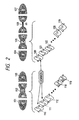
- the word 'iwashi' is synthesized by combining voice segments 104 through 107.
- the phonetic components 102, 105 and 106 are VCV components, the components 101 and 104 are ones for the beginning of a word, and the components 103 and 107 are ones for the ending of a word.
- FIG. 3 is a flow chart illustrating a procedure of forming a voiced sound waveform database according to an illustrative embodiment of the invention.
- a sample set of voice segments which seems to be necessary for the speech synthesis in Japanese are first prepared in step 300.
- various words and speeches including such voice segments are actually spoken and stored in memory.
- the stored phonetic waveforms are divided into VCV-based voice segments, from which necessary voice segments are selected and gathered together into a not-shown voice segment table (i.e., the sample set of voice segments), each record of which comprises a voice segment ID and a corresponding voice segment waveform.
- each of the voice segment waveforms in the voice segment table are further divided into pitch waveforms as shown again in FIG. 2.
- the division unit is not small enough to easily find similar phonemes in the divided phonemes. If a VCV voice segment 'ama' is divided into 'a', 'm' and 'a' for example, then it is impossible to consider the sounds of the leading and succeeding vowels 'a' to be the same, which does not contribute a reduction in the size of the waveform data base.
- the VCV voice segments 102 and 106 are subdivided into pitch waveforms 110 through 119 and 120 through 129, respectively. By doing this, it is possible to find a lot of closely similar pitch waveforms in the subdivided pitch waveforms.
- the pitch waveforms 110, 111 and 120 are very similar to one another.
- step 320 the subdivided pitch waveforms are classified into groups of pitch waveforms closely similar to one another.
- a pitch waveform is selected as a representative from each group in such a manner as described later, and a pitch waveform ID is assigned to the selected pitch waveform or the group so as to use the selected pitch waveform instead of the other pitch waveforms of the group.
- a pitch waveform table each record of which comprises a selected pitch waveform ID and data indicative of the selected pitch waveform is created, which completes a waveform database for the voiced sounds.
- a pitch waveform pointer table is created in which an ID of each of the voice segments of the sample set is associated with pitch waveform IDs of the groups to which the pitch waveforms constituting the voice segment belongs.
- a waveform database for the voiceless sounds may be formed in a conventional way.
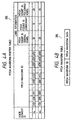
- FIG. 4A is a diagram showing an exemplary pitch waveform pointer table formed in step 350 of FIG. 3.
- the pitch waveform pointer table 360 comprises the fields of a voice segment ID, pitch waveform IDs, and label information .
- the pitch waveform ID fields contains IDs of the pitch waveforms which constitute the voice segment identified by the pitch waveform ID. If there are pitch waveforms which belong to the same pitch waveform group in a certain record of the table 360, then the IDs for such pitch waveforms will be identical.
- the label information fields contain the number of pitch waveforms in the leading vowel of the voice segment, the number of pitch waveforms in the consonant, and the number of pitch waveforms in the succeeding vowel of the voice segment.
- FIG. 4B is a diagram showing an exemplary arrangement of each record of the pitch waveform table created in step 340 of FIG. 3.
- Each record of the pitch waveform table comprises a pitch waveform ID and corresponding pitch waveform data as shown in FIG. 4B.
- step 320 of FIG. 3 The way of classifying the pitch waveforms into groups of pitch waveforms closely similar to one another in step 320 of FIG. 3 will be described in the following. Specifically, the classification by a spectrum parameter, e.g., the power spectrum and the LPC (linear predictive coding) cepstrum of pitch waveform will be discussed.
- a spectrum parameter e.g., the power spectrum and the LPC (linear predictive coding) cepstrum of pitch waveform
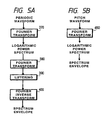
- a procedure as shown in FIG. 5A has to be followed.
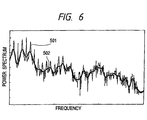
- a periodic waveform is subjected to a Fourier transform to yield a logarithmic power spectrum shown as 501 in FIG. 6 in step 370.
- the obtained spectrum is then subjected to another Fourier transform of step 380, a liftering of step 390 and a Fourier inverse transform of step 400 to finally yield a spectrum envelope shown as 502 in FIG. 6.
- the spectrum envelope of the pitch waveform can be obtained by Fourier transforming the pitch waveform into a logarithmic power spectrum in step 450.
- a power spectrum is calculated after subdivision into pitch waveforms.
- a correct classification can be achieved with a small quantity of calculations by classifying the phonemes by using a power spectrum envelope as the classifying scale.
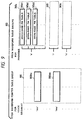
- FIG. 7 is a diagram illustrating a first exemplary method of selecting a representative pitch waveform from the pitch waveforms of a classified group in step 330 of FIG. 3.
- the reference numerals 601 through 604 denote synthesis units or voice segments.
- the latter half of the voice segment 604 is shown further in detail in the form of a waveform 605, which is subdivided into pitch waveforms.
- the pitch waveforms cut from the waveform 605 are classified into two groups, i.e., a group 610 comprising pitch waveforms 611 and 612 and a group 620 comprising pitch waveforms 621 through 625 which are similar in power spectrum.
- the pitch waveform with a maximum amplitude, (611, 621), is preferably selected as a representative from each of the groups 610 and 520 so as to avoid a fall in the S/N ratio which is involved in a substitution of the selected pitch waveform for a larger pitch waveform such as 621. For this reason, the pitch waveform 611 is selected in the group 610 and the pitch waveform 621 is selected in the group 620. Selecting representative pitch waveforms in this way permits the overall S/N ratio of the waveform database to be improved.
- FIG. 8 is a diagram illustrating a second exemplary method of selecting a representative pitch waveform from the pitch waveforms of a pitch waveform group in step 330 of FIG. 3.
- the reference numerals 710, 720, 730, 740 and 750 are pitch waveform groups obtained through a classification by the phoneme.
- the selection of pitch waveforms from the groups is so achieved that the selected pitch waveforms have a similar phase characteristic.
- a pitch waveform in which the positive peak value lies in the center thereof is selected from each group. That is, the pitch waveforms 714, 722, 733, 743 and 751 are selected in the groups 710, 720, 730, 740 and 750, respectively.
- a further precise selection is possible by analyzing the phase characteristic of each pitch waveform by means of, e.g., a Fourier transform.
- Selecting representative pitch waveforms in this way causes pitch waveforms with a similar phase characteristic to be combined even though the pitch waveforms are collected from different voice segment, which can avoid a degradation in the sound quality due to the difference in the phase characteristic.
- each voice segment has had only a single value and accordingly each pitch waveform had no pitch variation. This may be enough if a speech is synthesized only based on text data of the speech. However, if the speech synthesis is to be conducted based on not only text data but also pitch information of a speech to provide a more naturally synthesized speech, a waveform database as will be described below will be preferable.
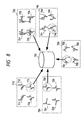
- FIG. 9 is a diagram showing an arrangement of a voiced sound waveform database in accordance with a preferred embodiment of the invention.
- Each pitch waveform table group365 ⁇ e.g., 365a, comprises pitch waveform tables 365a1, 365a2, 365a3,....365aN for predetermined pitch (frequency) bands----200-250 Hz, 250-300 Hz, 300-350 Hz,...., where N is the number of the predetermined pitch bands.
- the classification or grouping by phoneme may be achieved in any form, e.g., by actually storing the pitch waveform tables 365 ⁇ 1 through 365 ⁇ N of the same group in a associated folder or directory, or by using a table for associating phoneme ' ⁇ ' and pitch band ' ⁇ ' information with a corresponding pitch waveform table 365 ⁇ .
- FIG. 10 shows an exemplary structure of a pitch waveform pointer table, e.g., 306inu (for a phoneme-chained pattern 'inu') shown in FIG. 9.
- a pitch waveform pointer table is created for each phoneme-chained pattern.
- the pitch waveform pointer table 960inu is almost identical to the pitch waveform pointer table 360 of FIG. 4A except that the record ID has been changed from the phoneme-chained pattern (voice segment) ID to the pitch (frequency) band.
- Expressions such as 'i100', 'n100' and so on denote pitch waveform IDs.
- a pitch waveform pointer table for a phoneme-chained pattern IDp is hereinafter denoted by 960p.
- the pitch waveform IDs with a shading are IDs of either pitch waveforms which have been originated from a voice segment of the phoneme-chained pattern (IDp) of this pitch waveform pointer table 960p or pitch waveforms which are closely similar to those pitch waveforms and therefore have been cut from other voice segments. Accordingly, one shaded pitch waveform ID never fails to exist in a column. However, the other pitch waveform ID fields are not guaranteed the existence of a pitch waveform ID, i.e., there may not be IDs in some of the other pitch waveform ID fields.
- each pitch waveform pointer table 960p There are also label information fields in each pitch waveform pointer table 960p.
- the label information shown in FIG. 10 is the most simple example and has the same structure as that of FIG. 4A.
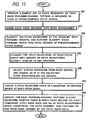
- FIG. 11 is a flow chart illustrating a procedure of forming the voiced sound waveform database 900 of FIG. 9.
- a sample set of voice segments is so prepared that each phoneme-chained pattern IDp is included in each of predetermined pitch bands in step 800.
- each voice segment is divided into pitch waveforms.
- the pitch waveforms are classified by the phoneme into phoneme groups, each of which is further classified into pitch groups of predetermined pitch bands.
- the pitch waveforms of each pitch group are classified into groups of pitch waveforms closely similar to one another.
- a pitch waveform is selected from each group, and an ID is assigned to the selected pitch waveform (or the group).
- step 850 a pitch waveform table of a selected waveform group of each pitch band is created. Then in step 860, for each phoneme-chained pattern, a pitch waveform pointer table is created in which each record at least comprises pitch band data and IDs of pitch waveforms which constitute the voice segment (the pattern) of the pitch band defined by the pitch band data.
- the voiceless sound waveform For each phoneme-chained (e.g., VCV-chained) voice segment including a voiceless sound (consonant), if the voiceless sound waveform is stored in a waveform table, this causes the table (or database) to be redundant. This can be avoided in the same manner as in case of the voiced sound.
- FIG. 12 is a diagram showing how different voice segment share a common voiceless sound.
- voice segments 'aka' 1102 is divided into pitch waveforms 1110,..., 1112, a voiceless sound 1115 and pitch waveforms 1118,...., 1119
- voice segments 'ika' 1105 is divided into pitch waveforms 1120,..., 1122, a voiceless sound 1125 and pitch waveforms 1128,...., 1129.
- the two voice segments 'aka' 1102 and 'ika' 1105 shares voiceless consonants 1115 and 1125.
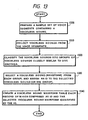
- FIG. 13 is a flow chart illustrating a procedure of forming a voiceless sound waveform table according to the illustrative embodiment of the invention.
- a sample set of voice segments containing a voiceless sound is prepared in step 1300.
- voiceless sounds are collected from the voice segments.
- the voiceless sounds are classified into groups of voiceless sounds closely similar to one another.
- a voiceless sound (waveform) is selected from each group, and an ID is assigned to the selected voiceless sound (or the group).
- a voiceless sound waveform table each record of which comprises one of the assigned IDs and the selected voiceless sound waveform identified by the ID.
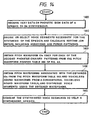
- FIG. 14 is a flow chart showing an exemplary flow of a speech synthesis program using the voiced sound waveform database of FIG.4.
- the controller 10 receives text data of a speech to be synthesized in step 1400.
- the controller 10 decides phoneme-chained patterns of voice segments necessary for the synthesis of the speech; and calculates rhythm (or meter) including durations and power patterns.
- the controller 10 obtains pitch waveform IDs used for each of the decided phoneme-chained patterns from the pitch waveform pointer table 360 of FIG. 4A.
- step 1430 the controller 10 obtains pitch waveform associated with the obtained IDs from the pitch waveform table 365 and voiceless sound waveforms from a conventional voiceless sound waveform table, and synthesizes voice segments using the obtained waveforms. Then in step 1440, the controller 10 combines the synthesized voice segments to yield a synthesized speech, and ends the program.
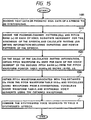
- FIG. 15 is a flow chart showing an exemplary flow of a speech synthesis program using the voiced sound waveform database of FIGs. 9 and 10.
- the steps 1400 and 1440 of FIG. 15 are identical to those of FIG. 14. Accordingly, only the steps 1510 through 1530 will be described.
- the controller 10 decides the phoneme-chained pattern (IDp) and pitch band ( ⁇ ) of each of voice segments necessary for the synthesis of the speech, and calculate rhythm (or meter) information including durations and power patterns of the speech in step 1510.
- IDp phoneme-chained pattern
- ⁇ pitch band
- the controller 10 obtains pitch waveform IDs used for each of the voice segment of the decided pitch band ( ⁇ ) from the pitch waveform pointer table 960idp as shown in FIG. 10 in step 1420.
- the controller 10 obtains pitch waveform associated with the obtained ids from the pitch waveform table 365 ⁇ and voiceless sound waveforms from a conventional voiceless sound waveform table, and synthesizes voice segments using the obtained waveforms.
- the controller 10 combines the synthesized voice segments to yield a synthesized speech, and ends the program.
- a speech synthesizing system using a redundancy-reduced waveform database is disclosed.
- Each waveform of a sample set of voice segments necessary and sufficient for speech synthesis is divided into pitch waveforms, which are classified into groups of pitch waveforms closely similar to one another.
- One of the pitch waveforms of each group is selected as a representative of the group and is given a pitch waveform ID.
- the waveform database at least comprises a pitch waveform pointer table each record of which comprises a voice segment ID of each of the voice segments and pitch waveform IDs the pitch waveforms of which, when combined in the listed order, constitute a waveform identified by the voice segment ID and a pitch waveform table of pitch waveform IDs and corresponding pitch waveforms. This enables the waveform database size to be reduced. For each of pitch waveforms the database lacks, one of the pitch waveform IDs adjacent to the lacking pitch waveform ID in the pitch waveform pointer table is used without deforming the pitch waveform.
Landscapes
- Engineering & Computer Science (AREA)
- Computational Linguistics (AREA)
- Health & Medical Sciences (AREA)
- Audiology, Speech & Language Pathology (AREA)
- Human Computer Interaction (AREA)
- Physics & Mathematics (AREA)
- Acoustics & Sound (AREA)
- Multimedia (AREA)
- Information Retrieval, Db Structures And Fs Structures Therefor (AREA)
- Compression, Expansion, Code Conversion, And Decoders (AREA)
- Electrophonic Musical Instruments (AREA)
- Management, Administration, Business Operations System, And Electronic Commerce (AREA)
Claims (12)
- Datenbankerzeugnis zur Verwendung in einem System zur Synthese von Sprache durch eine Verkettung vorbestimmter Sprachsegmente, mit:einer ersten Tabelleneinrichtung zur Verknüpfung jedes der vorbestimmten Sprachsegmente mit Tonhöhensignalverlauf-ID (Tonhöhensignalverlauf-Identifizierungen) von ausgewählten Tonhöhensignalverläufen, die bei einer Kombination in der aufgelisteten Reihenfolge der Tonhöhensignalverlauf-ID einen Signalverlauf des jeden der vorbestimmten Sprachsegmente bilden; undeiner zweiten Tabelleneinrichtung zur Verknüpfung jeder Tonhöhensignalverlauf-ID mit durch die jede Tonhöhensignalverlauf-ID identifizierten Tonhöhensignalverlaufdaten.
- Datenbankerzeugnis zur Verwendung in einem System zur Synthese von Sprache durch eine Verkettung von jeweils durch ein Phonemverkettungsmuster und ein Tonhöhenband definierten vorbestimmten Sprachsegmenten, mit:einer ersten Tabelleneinrichtung zur Verknüpfung jedes der vorbestimmten Sprachsegmente, das durch eine von vorbestimmten Tonhöhenband-ID und eine von vorbestimmten Phonemverkettungsmuster-ID identifiziert wird, mit Tonhöhensignalverlauf-ID von ausgewählten Tonhöhensignalverläufen, die bei einer Kombination in der aufgelisteten Reihenfolge der Tonhöhensignalverlauf-ID einen Signalverlauf des jeden der vorbestimmten Sprachsegmente bilden; undeiner zweiten Tabelleneinrichtung zur Ermöglichung einer Verwendung jeder der Tonhöhensignalverlauf-ID und der einen der vorbestimmten Tonhöhenband-ID zum Finden von mit der jeden der Tonhöhensignalverlauf-ID verknüpften Tonhöhensignalverlaufdaten.
- Datenbankerzeugnis nach Anspruch 2, wobei die erste Tabelleneinrichtung Tabellen gemäß Phonemverkettungsmustern umfaßt, wobei jeder Datensatz jeder der Tabellen eine der vorbestimmten Tonhöhenband-ID und Tonhöhensignalverlauf-ID von Tonhöhensignalverläufen umfaßt, die bei einer Kombination in der aufgelisteten Reihenfolge der Tonhöhensignalverlauf-ID einen durch ein mit der jeden der Tabellen verknüpftes Phonemverkettungsmuster und durch die eine der vorbestimmten Tonhöhenband-ID gekennzeichneten Signalverlauf bilden.
- Datenbankerzeugnis nach Anspruch 2, wobei:die zweite Tabelleneinrichtung Tabellengruppen gemäß Phonemen umfaßt, die durch Phonemverkettungsmuster-ID identifizierte Phonemverkettungsmuster bilden;jede der Tabellengruppen durch die vorbestimmten Tonhöhenband-ID identifizierte Tabellen umfaßt; undjeder Datensatz jeder der Tabellen eine von Tonhöhensignalverlauf-ID von Tonhöhensignalverläufen eines Phonemverkettungsmusters und ein mit der jeden der Tabellen verknüpftes Tonhöhenband und einen mit der einen der Tonhöhensignalverlauf-ID verknüpften Tonhöhensignalverlauf umfaßt.
- Datenbankerzeugnis nach Anspruch 1 oder 2, wobei alle Tonhöhensignalverlaufdaten in der Datenbank eine gleiche Phasenkennlinie aufweisen.
- Datenbankerzeugnis zur Verwendung in einem System zur Synthese von Sprache durch eine Verkettung vorbestimmter Sprachsegmente, mit:einer ersten Tabelleneinrichtung zur Verknüpfung jedes der vorbestimmten Sprachsegmente mit Tonhöhensignalverlauf-ID und ID von Signalverläufen stimmloser Töne von ausgewählten Tonhöhensignalverläufen und Signalverläufen stimmloser Töne, die bei einer Kombination in der aufgelisteten Reihenfolge der Signalverlauf-ID einen Signalverlauf des jeden der vorbestimmten Sprachsegmente bilden; undeiner zweiten Tabelleneinrichtung zur Verknüpfung jeder ID eines Signalverlaufs eines stimmlosen Tons mit durch die jede ID eines Signalverlaufs eines stimmlosen Tons identifizierten Daten eines Signalverlaufs eines stimmlosen Tons, wobei bei sehr ähnliche Signalverläufe stimmloser Töne umfassenden Sprachsegmenten den sehr ähnlichen Signalverläufen stimmloser Töne in der ersten Tabelle eine identische Signalverlauf-ID zugewiesen wird.
- Verfahren zur Ausbildung eines Datenbankerzeugnisses zur Verwendung in einem System zur Synthese von Sprache durch eine Verkettung vorbestimmter Sprachsegmente, mit den Schritten:Aufteilen jedes der vorbestimmten Sprachsegmente in Tonhöhensignalverläufe;Klassifizieren aller Tonhöhensignalverläufe in Gruppen von sehr ähnlichen Tonhöhensignalverläufen;Auswählen eines der sehr ähnlichen Tonhöhensignalverläufe in jeder der Gruppen;Zuweisen einer Tonhöhensignalverlauf-ID zu dem ausgewählten Tonhöhensignalverlauf jeder der Gruppen;Erzeugen einer ersten Tabelle, die für jede der Gruppen einen Datensatz mit der Tonhöhensignalverlauf-ID und Daten von dem ausgewählten Tonhöhensignalverlauf umfaßt; undErzeugen einer zweiten Tabelle, deren Datensatz-ID die ID der vorbestimmten Sprachsegmente umfassen, wobei jeder Datensatz der zweiten Tabelle Tonhöhensignalverlauf-ID umfaßt, die bei einer Kombination in der aufgelisteten Reihenfolge der Tonhöhensignalverlauf-ID einen durch die Datensatz-ID identifizierten Signalverlauf bilden.
- Verfahren nach Anspruch 7, wobei der Schritt des Klassifizierens aller Tonhöhensignalverläufe den Schritt des Klassifizierens aller Tonhöhensignalverläufe durch Spektralparameter jedes der Tonhöhensignalverläufe umfaßt.
- Verfahren nach Anspruch 7, wobei der Schritt des Auswählens eines der sehr ähnlichen Tonhöhensignalverläufe in jeder der Gruppen den Schritt des Auswählens eines Tonhöhensignalverlaufs der größten Energie in jeder der Gruppen umfaßt.
- Verfahren nach Anspruch 7, wobei der Schritt des Auswählens eines der sehr ähnlichen Tonhöhensignalverläufe in jeder der Gruppen derart ausgeführt wird, daß alle ausgewählten Tonhöhensignalverläufe die gleiche Phasenkennlinie aufweisen.
- System zur Synthese von Sprache durch eine Verkettung vorbestimmter Sprachsegmente, mit:einer Einrichtung zum Bestimmen von ID von für die Sprache erforderlichen Sprachsegmenten der vorbestimmten Sprachsegmente;einer Einrichtung zum Verknüpfen jeder der bestimmten ID mit Tonhöhensignalverlauf-ID, deren Tonhöhensignalverläufe bei einer Kombination in der aufgelisteten Reihenfolge der Tonhöhensignalverlauf-ID einen durch die jede der bestimmten ID identifizierten Signalverlauf bilden;einer Einrichtung zum Erhalten von mit den Tonhöhensignalverlauf-ID verknüpften ausgewählten Tonhöhensignalverläufen;einer Einrichtung zum Kombinieren der erhaltenen Tonhöhensignalverläufe zur Erzeugung der erforderlichen Sprachsegmente; undeiner Einrichtung zum Kombinieren der erforderlichen Sprachsegmente zur Gewinnung der Sprache.
- System zur Synthese von Sprache durch eine Verkettung von jeweils durch ein Phonemverkettungsmuster und ein Tonhöhenband definierten vorbestimmten Sprachsegmenten, mit:einer Einrichtung zum Bestimmen von ID von für die Sprache erforderlichen Sprachsegmenten der vorbestimmten Sprachsegmente;einer Einrichtung zum Verknüpfen jeder der bestimmten ID mit Tonhöhensignalverlauf-ID, deren Tonhöhensignalverläufe bei einer Kombination in der aufgelisteten Reihenfolge der Tonhöhensignalverlauf-ID einen durch die jede der bestimmten ID identifizierten Signalverlauf bilden;einer Einrichtung zum Erhalten von mit den Tonhöhensignalverlauf-ID verknüpften ausgewählten Tonhöhensignalverläufen;einer Einrichtung zum Kombinieren der erhaltenen Tonhöhensignalverläufe zur Erzeugung der erforderlichen Sprachsegmente; undeiner Einrichtung zum Kombinieren der erforderlichen Sprachsegmente zur Gewinnung der Sprache.
Applications Claiming Priority (3)
| Application Number | Priority Date | Filing Date | Title |
|---|---|---|---|
| JP32984596 | 1996-12-10 | ||
| JP32984596A JP3349905B2 (ja) | 1996-12-10 | 1996-12-10 | 音声合成方法および装置 |
| JP329845/96 | 1996-12-10 |
Publications (3)
| Publication Number | Publication Date |
|---|---|
| EP0848372A2 EP0848372A2 (de) | 1998-06-17 |
| EP0848372A3 EP0848372A3 (de) | 1999-02-17 |
| EP0848372B1 true EP0848372B1 (de) | 2003-01-08 |
Family
ID=18225884
Family Applications (1)
| Application Number | Title | Priority Date | Filing Date |
|---|---|---|---|
| EP97117604A Expired - Lifetime EP0848372B1 (de) | 1996-12-10 | 1997-10-10 | Sprachsynthesesystem und Wellenform-Datenbank mit verringerter Redundanz |
Country Status (7)
| Country | Link |
|---|---|
| US (1) | US6125346A (de) |
| EP (1) | EP0848372B1 (de) |
| JP (1) | JP3349905B2 (de) |
| CN (1) | CN1190236A (de) |
| CA (1) | CA2219056C (de) |
| DE (1) | DE69718284T2 (de) |
| ES (1) | ES2190500T3 (de) |
Families Citing this family (141)
| Publication number | Priority date | Publication date | Assignee | Title |
|---|---|---|---|---|
| US6321226B1 (en) * | 1998-06-30 | 2001-11-20 | Microsoft Corporation | Flexible keyboard searching |
| JP3644263B2 (ja) * | 1998-07-31 | 2005-04-27 | ヤマハ株式会社 | 波形形成装置及び方法 |
| JP3912913B2 (ja) * | 1998-08-31 | 2007-05-09 | キヤノン株式会社 | 音声合成方法及び装置 |
| EP1501075B1 (de) * | 1998-11-13 | 2009-04-15 | Lernout & Hauspie Speech Products N.V. | Sprachsynthese mittels Verknüpfung von Sprachwellenformen |
| US6208968B1 (en) * | 1998-12-16 | 2001-03-27 | Compaq Computer Corporation | Computer method and apparatus for text-to-speech synthesizer dictionary reduction |
| US7369994B1 (en) | 1999-04-30 | 2008-05-06 | At&T Corp. | Methods and apparatus for rapid acoustic unit selection from a large speech corpus |
| JP3841596B2 (ja) * | 1999-09-08 | 2006-11-01 | パイオニア株式会社 | 音素データの生成方法及び音声合成装置 |
| US8645137B2 (en) | 2000-03-16 | 2014-02-04 | Apple Inc. | Fast, language-independent method for user authentication by voice |
| JP2002091475A (ja) * | 2000-09-18 | 2002-03-27 | Matsushita Electric Ind Co Ltd | 音声合成方法 |
| JP4067762B2 (ja) * | 2000-12-28 | 2008-03-26 | ヤマハ株式会社 | 歌唱合成装置 |
| JP3838039B2 (ja) * | 2001-03-09 | 2006-10-25 | ヤマハ株式会社 | 音声合成装置 |
| US7233899B2 (en) * | 2001-03-12 | 2007-06-19 | Fain Vitaliy S | Speech recognition system using normalized voiced segment spectrogram analysis |
| CN1324556C (zh) | 2001-08-31 | 2007-07-04 | 株式会社建伍 | 生成基音周期波形信号的装置和方法及处理语音信号的装置和方法 |
| US6681208B2 (en) | 2001-09-25 | 2004-01-20 | Motorola, Inc. | Text-to-speech native coding in a communication system |
| JP2003108178A (ja) | 2001-09-27 | 2003-04-11 | Nec Corp | 音声合成装置及び音声合成用素片作成装置 |
| JP4407305B2 (ja) * | 2003-02-17 | 2010-02-03 | 株式会社ケンウッド | ピッチ波形信号分割装置、音声信号圧縮装置、音声合成装置、ピッチ波形信号分割方法、音声信号圧縮方法、音声合成方法、記録媒体及びプログラム |
| JP4080989B2 (ja) * | 2003-11-28 | 2008-04-23 | 株式会社東芝 | 音声合成方法、音声合成装置および音声合成プログラム |
| WO2006050238A1 (en) * | 2004-10-28 | 2006-05-11 | Voice Signal Technologies, Inc. | Codec-dependent unit selection for mobile devices |
| JP4762553B2 (ja) * | 2005-01-05 | 2011-08-31 | 三菱電機株式会社 | テキスト音声合成方法及びその装置、並びにテキスト音声合成プログラム及びそのプログラムを記録したコンピュータ読み取り可能な記録媒体 |
| JP4207902B2 (ja) * | 2005-02-02 | 2009-01-14 | ヤマハ株式会社 | 音声合成装置およびプログラム |
| JP4526979B2 (ja) * | 2005-03-04 | 2010-08-18 | シャープ株式会社 | 音声素片生成装置 |
| JP4551803B2 (ja) * | 2005-03-29 | 2010-09-29 | 株式会社東芝 | 音声合成装置及びそのプログラム |
| US8677377B2 (en) | 2005-09-08 | 2014-03-18 | Apple Inc. | Method and apparatus for building an intelligent automated assistant |
| US8224647B2 (en) | 2005-10-03 | 2012-07-17 | Nuance Communications, Inc. | Text-to-speech user's voice cooperative server for instant messaging clients |
| US8036894B2 (en) * | 2006-02-16 | 2011-10-11 | Apple Inc. | Multi-unit approach to text-to-speech synthesis |
| US9318108B2 (en) | 2010-01-18 | 2016-04-19 | Apple Inc. | Intelligent automated assistant |
| US8027837B2 (en) * | 2006-09-15 | 2011-09-27 | Apple Inc. | Using non-speech sounds during text-to-speech synthesis |
| US8977255B2 (en) | 2007-04-03 | 2015-03-10 | Apple Inc. | Method and system for operating a multi-function portable electronic device using voice-activation |
| US9330720B2 (en) | 2008-01-03 | 2016-05-03 | Apple Inc. | Methods and apparatus for altering audio output signals |
| US8996376B2 (en) | 2008-04-05 | 2015-03-31 | Apple Inc. | Intelligent text-to-speech conversion |
| US10496753B2 (en) | 2010-01-18 | 2019-12-03 | Apple Inc. | Automatically adapting user interfaces for hands-free interaction |
| US20100030549A1 (en) | 2008-07-31 | 2010-02-04 | Lee Michael M | Mobile device having human language translation capability with positional feedback |
| WO2010067118A1 (en) | 2008-12-11 | 2010-06-17 | Novauris Technologies Limited | Speech recognition involving a mobile device |
| CN101510424B (zh) * | 2009-03-12 | 2012-07-04 | 孟智平 | 基于语音基元的语音编码与合成方法及系统 |
| US9858925B2 (en) | 2009-06-05 | 2018-01-02 | Apple Inc. | Using context information to facilitate processing of commands in a virtual assistant |
| US10241752B2 (en) | 2011-09-30 | 2019-03-26 | Apple Inc. | Interface for a virtual digital assistant |
| US10241644B2 (en) | 2011-06-03 | 2019-03-26 | Apple Inc. | Actionable reminder entries |
| US10706373B2 (en) | 2011-06-03 | 2020-07-07 | Apple Inc. | Performing actions associated with task items that represent tasks to perform |
| US9431006B2 (en) | 2009-07-02 | 2016-08-30 | Apple Inc. | Methods and apparatuses for automatic speech recognition |
| US10679605B2 (en) | 2010-01-18 | 2020-06-09 | Apple Inc. | Hands-free list-reading by intelligent automated assistant |
| US10276170B2 (en) | 2010-01-18 | 2019-04-30 | Apple Inc. | Intelligent automated assistant |
| US10705794B2 (en) | 2010-01-18 | 2020-07-07 | Apple Inc. | Automatically adapting user interfaces for hands-free interaction |
| US10553209B2 (en) | 2010-01-18 | 2020-02-04 | Apple Inc. | Systems and methods for hands-free notification summaries |
| DE202011111062U1 (de) | 2010-01-25 | 2019-02-19 | Newvaluexchange Ltd. | Vorrichtung und System für eine Digitalkonversationsmanagementplattform |
| US8682667B2 (en) | 2010-02-25 | 2014-03-25 | Apple Inc. | User profiling for selecting user specific voice input processing information |
| JP5320363B2 (ja) * | 2010-03-26 | 2013-10-23 | 株式会社東芝 | 音声編集方法、装置及び音声合成方法 |
| US10762293B2 (en) | 2010-12-22 | 2020-09-01 | Apple Inc. | Using parts-of-speech tagging and named entity recognition for spelling correction |
| US9262612B2 (en) | 2011-03-21 | 2016-02-16 | Apple Inc. | Device access using voice authentication |
| US10057736B2 (en) | 2011-06-03 | 2018-08-21 | Apple Inc. | Active transport based notifications |
| US8994660B2 (en) | 2011-08-29 | 2015-03-31 | Apple Inc. | Text correction processing |
| US10134385B2 (en) | 2012-03-02 | 2018-11-20 | Apple Inc. | Systems and methods for name pronunciation |
| US9483461B2 (en) | 2012-03-06 | 2016-11-01 | Apple Inc. | Handling speech synthesis of content for multiple languages |
| US9280610B2 (en) | 2012-05-14 | 2016-03-08 | Apple Inc. | Crowd sourcing information to fulfill user requests |
| US9721563B2 (en) | 2012-06-08 | 2017-08-01 | Apple Inc. | Name recognition system |
| US9495129B2 (en) | 2012-06-29 | 2016-11-15 | Apple Inc. | Device, method, and user interface for voice-activated navigation and browsing of a document |
| US9576574B2 (en) | 2012-09-10 | 2017-02-21 | Apple Inc. | Context-sensitive handling of interruptions by intelligent digital assistant |
| US9547647B2 (en) | 2012-09-19 | 2017-01-17 | Apple Inc. | Voice-based media searching |
| EP4560630A3 (de) | 2013-02-07 | 2025-08-06 | Apple Inc. | Sprachauslöser für einen digitalen assistenten |
| US9368114B2 (en) | 2013-03-14 | 2016-06-14 | Apple Inc. | Context-sensitive handling of interruptions |
| WO2014144579A1 (en) | 2013-03-15 | 2014-09-18 | Apple Inc. | System and method for updating an adaptive speech recognition model |
| CN105027197B (zh) | 2013-03-15 | 2018-12-14 | 苹果公司 | 训练至少部分语音命令系统 |
| US9582608B2 (en) | 2013-06-07 | 2017-02-28 | Apple Inc. | Unified ranking with entropy-weighted information for phrase-based semantic auto-completion |
| WO2014197334A2 (en) | 2013-06-07 | 2014-12-11 | Apple Inc. | System and method for user-specified pronunciation of words for speech synthesis and recognition |
| WO2014197336A1 (en) | 2013-06-07 | 2014-12-11 | Apple Inc. | System and method for detecting errors in interactions with a voice-based digital assistant |
| WO2014197335A1 (en) | 2013-06-08 | 2014-12-11 | Apple Inc. | Interpreting and acting upon commands that involve sharing information with remote devices |
| US10176167B2 (en) | 2013-06-09 | 2019-01-08 | Apple Inc. | System and method for inferring user intent from speech inputs |
| EP3008641A1 (de) | 2013-06-09 | 2016-04-20 | Apple Inc. | Vorrichtung, verfahren und grafische benutzeroberfläche für gesprächspersistenz über zwei oder mehrere instanzen eines digitaler assistenten |
| HK1220313A1 (zh) | 2013-06-13 | 2017-04-28 | 苹果公司 | 用於由语音命令发起的紧急呼叫的系统和方法 |
| US10791216B2 (en) | 2013-08-06 | 2020-09-29 | Apple Inc. | Auto-activating smart responses based on activities from remote devices |
| US9620105B2 (en) | 2014-05-15 | 2017-04-11 | Apple Inc. | Analyzing audio input for efficient speech and music recognition |
| US10592095B2 (en) | 2014-05-23 | 2020-03-17 | Apple Inc. | Instantaneous speaking of content on touch devices |
| US9502031B2 (en) | 2014-05-27 | 2016-11-22 | Apple Inc. | Method for supporting dynamic grammars in WFST-based ASR |
| US9734193B2 (en) | 2014-05-30 | 2017-08-15 | Apple Inc. | Determining domain salience ranking from ambiguous words in natural speech |
| US10289433B2 (en) | 2014-05-30 | 2019-05-14 | Apple Inc. | Domain specific language for encoding assistant dialog |
| US10170123B2 (en) | 2014-05-30 | 2019-01-01 | Apple Inc. | Intelligent assistant for home automation |
| US9842101B2 (en) | 2014-05-30 | 2017-12-12 | Apple Inc. | Predictive conversion of language input |
| US9966065B2 (en) | 2014-05-30 | 2018-05-08 | Apple Inc. | Multi-command single utterance input method |
| US9760559B2 (en) | 2014-05-30 | 2017-09-12 | Apple Inc. | Predictive text input |
| US9430463B2 (en) | 2014-05-30 | 2016-08-30 | Apple Inc. | Exemplar-based natural language processing |
| US10078631B2 (en) | 2014-05-30 | 2018-09-18 | Apple Inc. | Entropy-guided text prediction using combined word and character n-gram language models |
| US9715875B2 (en) | 2014-05-30 | 2017-07-25 | Apple Inc. | Reducing the need for manual start/end-pointing and trigger phrases |
| US9785630B2 (en) | 2014-05-30 | 2017-10-10 | Apple Inc. | Text prediction using combined word N-gram and unigram language models |
| US9633004B2 (en) | 2014-05-30 | 2017-04-25 | Apple Inc. | Better resolution when referencing to concepts |
| US9338493B2 (en) | 2014-06-30 | 2016-05-10 | Apple Inc. | Intelligent automated assistant for TV user interactions |
| US10659851B2 (en) | 2014-06-30 | 2020-05-19 | Apple Inc. | Real-time digital assistant knowledge updates |
| US10446141B2 (en) | 2014-08-28 | 2019-10-15 | Apple Inc. | Automatic speech recognition based on user feedback |
| US9818400B2 (en) | 2014-09-11 | 2017-11-14 | Apple Inc. | Method and apparatus for discovering trending terms in speech requests |
| US10789041B2 (en) | 2014-09-12 | 2020-09-29 | Apple Inc. | Dynamic thresholds for always listening speech trigger |
| US10074360B2 (en) | 2014-09-30 | 2018-09-11 | Apple Inc. | Providing an indication of the suitability of speech recognition |
| US10127911B2 (en) | 2014-09-30 | 2018-11-13 | Apple Inc. | Speaker identification and unsupervised speaker adaptation techniques |
| US9646609B2 (en) | 2014-09-30 | 2017-05-09 | Apple Inc. | Caching apparatus for serving phonetic pronunciations |
| US9668121B2 (en) | 2014-09-30 | 2017-05-30 | Apple Inc. | Social reminders |
| US9886432B2 (en) | 2014-09-30 | 2018-02-06 | Apple Inc. | Parsimonious handling of word inflection via categorical stem + suffix N-gram language models |
| US10552013B2 (en) | 2014-12-02 | 2020-02-04 | Apple Inc. | Data detection |
| US9711141B2 (en) | 2014-12-09 | 2017-07-18 | Apple Inc. | Disambiguating heteronyms in speech synthesis |
| US9865280B2 (en) | 2015-03-06 | 2018-01-09 | Apple Inc. | Structured dictation using intelligent automated assistants |
| US9721566B2 (en) | 2015-03-08 | 2017-08-01 | Apple Inc. | Competing devices responding to voice triggers |
| US9886953B2 (en) | 2015-03-08 | 2018-02-06 | Apple Inc. | Virtual assistant activation |
| US10567477B2 (en) | 2015-03-08 | 2020-02-18 | Apple Inc. | Virtual assistant continuity |
| US9899019B2 (en) | 2015-03-18 | 2018-02-20 | Apple Inc. | Systems and methods for structured stem and suffix language models |
| US9842105B2 (en) | 2015-04-16 | 2017-12-12 | Apple Inc. | Parsimonious continuous-space phrase representations for natural language processing |
| US10083688B2 (en) | 2015-05-27 | 2018-09-25 | Apple Inc. | Device voice control for selecting a displayed affordance |
| US10127220B2 (en) | 2015-06-04 | 2018-11-13 | Apple Inc. | Language identification from short strings |
| US10101822B2 (en) | 2015-06-05 | 2018-10-16 | Apple Inc. | Language input correction |
| US9578173B2 (en) | 2015-06-05 | 2017-02-21 | Apple Inc. | Virtual assistant aided communication with 3rd party service in a communication session |
| US10255907B2 (en) | 2015-06-07 | 2019-04-09 | Apple Inc. | Automatic accent detection using acoustic models |
| US11025565B2 (en) | 2015-06-07 | 2021-06-01 | Apple Inc. | Personalized prediction of responses for instant messaging |
| US10186254B2 (en) | 2015-06-07 | 2019-01-22 | Apple Inc. | Context-based endpoint detection |
| US10671428B2 (en) | 2015-09-08 | 2020-06-02 | Apple Inc. | Distributed personal assistant |
| US10747498B2 (en) | 2015-09-08 | 2020-08-18 | Apple Inc. | Zero latency digital assistant |
| US9697820B2 (en) | 2015-09-24 | 2017-07-04 | Apple Inc. | Unit-selection text-to-speech synthesis using concatenation-sensitive neural networks |
| US11010550B2 (en) | 2015-09-29 | 2021-05-18 | Apple Inc. | Unified language modeling framework for word prediction, auto-completion and auto-correction |
| US10366158B2 (en) | 2015-09-29 | 2019-07-30 | Apple Inc. | Efficient word encoding for recurrent neural network language models |
| US11587559B2 (en) | 2015-09-30 | 2023-02-21 | Apple Inc. | Intelligent device identification |
| US10691473B2 (en) | 2015-11-06 | 2020-06-23 | Apple Inc. | Intelligent automated assistant in a messaging environment |
| US10049668B2 (en) | 2015-12-02 | 2018-08-14 | Apple Inc. | Applying neural network language models to weighted finite state transducers for automatic speech recognition |
| US10223066B2 (en) | 2015-12-23 | 2019-03-05 | Apple Inc. | Proactive assistance based on dialog communication between devices |
| US10446143B2 (en) | 2016-03-14 | 2019-10-15 | Apple Inc. | Identification of voice inputs providing credentials |
| US9934775B2 (en) | 2016-05-26 | 2018-04-03 | Apple Inc. | Unit-selection text-to-speech synthesis based on predicted concatenation parameters |
| US9972304B2 (en) | 2016-06-03 | 2018-05-15 | Apple Inc. | Privacy preserving distributed evaluation framework for embedded personalized systems |
| US10249300B2 (en) | 2016-06-06 | 2019-04-02 | Apple Inc. | Intelligent list reading |
| US10049663B2 (en) | 2016-06-08 | 2018-08-14 | Apple, Inc. | Intelligent automated assistant for media exploration |
| DK179588B1 (en) | 2016-06-09 | 2019-02-22 | Apple Inc. | INTELLIGENT AUTOMATED ASSISTANT IN A HOME ENVIRONMENT |
| US10586535B2 (en) | 2016-06-10 | 2020-03-10 | Apple Inc. | Intelligent digital assistant in a multi-tasking environment |
| US10490187B2 (en) | 2016-06-10 | 2019-11-26 | Apple Inc. | Digital assistant providing automated status report |
| US10509862B2 (en) | 2016-06-10 | 2019-12-17 | Apple Inc. | Dynamic phrase expansion of language input |
| US10192552B2 (en) | 2016-06-10 | 2019-01-29 | Apple Inc. | Digital assistant providing whispered speech |
| US10067938B2 (en) | 2016-06-10 | 2018-09-04 | Apple Inc. | Multilingual word prediction |
| DK179343B1 (en) | 2016-06-11 | 2018-05-14 | Apple Inc | Intelligent task discovery |
| DK179415B1 (en) | 2016-06-11 | 2018-06-14 | Apple Inc | Intelligent device arbitration and control |
| DK201670540A1 (en) | 2016-06-11 | 2018-01-08 | Apple Inc | Application integration with a digital assistant |
| DK179049B1 (en) | 2016-06-11 | 2017-09-18 | Apple Inc | Data driven natural language event detection and classification |
| US10043516B2 (en) | 2016-09-23 | 2018-08-07 | Apple Inc. | Intelligent automated assistant |
| US10593346B2 (en) | 2016-12-22 | 2020-03-17 | Apple Inc. | Rank-reduced token representation for automatic speech recognition |
| DK201770439A1 (en) | 2017-05-11 | 2018-12-13 | Apple Inc. | Offline personal assistant |
| DK179496B1 (en) | 2017-05-12 | 2019-01-15 | Apple Inc. | USER-SPECIFIC Acoustic Models |
| DK179745B1 (en) | 2017-05-12 | 2019-05-01 | Apple Inc. | SYNCHRONIZATION AND TASK DELEGATION OF A DIGITAL ASSISTANT |
| DK201770431A1 (en) | 2017-05-15 | 2018-12-20 | Apple Inc. | Optimizing dialogue policy decisions for digital assistants using implicit feedback |
| DK201770432A1 (en) | 2017-05-15 | 2018-12-21 | Apple Inc. | Hierarchical belief states for digital assistants |
| DK179549B1 (en) | 2017-05-16 | 2019-02-12 | Apple Inc. | FAR-FIELD EXTENSION FOR DIGITAL ASSISTANT SERVICES |
| WO2020026441A1 (ja) * | 2018-08-03 | 2020-02-06 | 三菱電機株式会社 | データ解析装置、システム、方法、及びプログラム |
Family Cites Families (11)
| Publication number | Priority date | Publication date | Assignee | Title |
|---|---|---|---|---|
| JP2761552B2 (ja) * | 1988-05-11 | 1998-06-04 | 日本電信電話株式会社 | 音声合成方法 |
| US5454062A (en) * | 1991-03-27 | 1995-09-26 | Audio Navigation Systems, Inc. | Method for recognizing spoken words |
| EP0515709A1 (de) * | 1991-05-27 | 1992-12-02 | International Business Machines Corporation | Verfahren und Einrichtung zur Darstellung von Segmenteinheiten zur Text-Sprache-Umsetzung |
| US5283833A (en) * | 1991-09-19 | 1994-02-01 | At&T Bell Laboratories | Method and apparatus for speech processing using morphology and rhyming |
| JPH06250691A (ja) * | 1993-02-25 | 1994-09-09 | N T T Data Tsushin Kk | 音声合成装置 |
| JPH07319497A (ja) * | 1994-05-23 | 1995-12-08 | N T T Data Tsushin Kk | 音声合成装置 |
| JP3548230B2 (ja) * | 1994-05-30 | 2004-07-28 | キヤノン株式会社 | 音声合成方法及び装置 |
| JP3085631B2 (ja) * | 1994-10-19 | 2000-09-11 | 日本アイ・ビー・エム株式会社 | 音声合成方法及びシステム |
| US5864812A (en) * | 1994-12-06 | 1999-01-26 | Matsushita Electric Industrial Co., Ltd. | Speech synthesizing method and apparatus for combining natural speech segments and synthesized speech segments |
| JP3233544B2 (ja) * | 1995-02-28 | 2001-11-26 | 松下電器産業株式会社 | Vcv連鎖波形を接続する音声合成方法およびその装置 |
| US5751907A (en) * | 1995-08-16 | 1998-05-12 | Lucent Technologies Inc. | Speech synthesizer having an acoustic element database |
-
1996
- 1996-12-10 JP JP32984596A patent/JP3349905B2/ja not_active Expired - Fee Related
-
1997
- 1997-10-10 DE DE69718284T patent/DE69718284T2/de not_active Expired - Lifetime
- 1997-10-10 ES ES97117604T patent/ES2190500T3/es not_active Expired - Lifetime
- 1997-10-10 EP EP97117604A patent/EP0848372B1/de not_active Expired - Lifetime
- 1997-10-23 CA CA002219056A patent/CA2219056C/en not_active Expired - Fee Related
- 1997-12-05 US US08/985,899 patent/US6125346A/en not_active Expired - Lifetime
- 1997-12-10 CN CN97114182A patent/CN1190236A/zh active Pending
Also Published As
| Publication number | Publication date |
|---|---|
| CN1190236A (zh) | 1998-08-12 |
| DE69718284T2 (de) | 2003-08-28 |
| DE69718284D1 (de) | 2003-02-13 |
| JP3349905B2 (ja) | 2002-11-25 |
| ES2190500T3 (es) | 2003-08-01 |
| EP0848372A2 (de) | 1998-06-17 |
| CA2219056A1 (en) | 1998-06-10 |
| CA2219056C (en) | 2002-04-23 |
| EP0848372A3 (de) | 1999-02-17 |
| US6125346A (en) | 2000-09-26 |
| JPH10171484A (ja) | 1998-06-26 |
Similar Documents
| Publication | Publication Date | Title |
|---|---|---|
| CA2219056C (en) | Speech synthesizing system and redundancy-reduced waveform database therefor | |
| EP0458859B1 (de) | System und methode zur text-sprache-umsetzung mit hilfe von kontextabhängigen vokalallophonen | |
| US7668717B2 (en) | Speech synthesis method, speech synthesis system, and speech synthesis program | |
| US5740320A (en) | Text-to-speech synthesis by concatenation using or modifying clustered phoneme waveforms on basis of cluster parameter centroids | |
| US4862504A (en) | Speech synthesis system of rule-synthesis type | |
| US4685135A (en) | Text-to-speech synthesis system | |
| US4398059A (en) | Speech producing system | |
| US20130085759A1 (en) | Speech samples library for text-to-speech and methods and apparatus for generating and using same | |
| US5633984A (en) | Method and apparatus for speech processing | |
| JP3242331B2 (ja) | Vcv波形接続音声のピッチ変換方法及び音声合成装置 | |
| EP0191531B1 (de) | Verfahren und Einrichtung zur Sprachsegmentierung | |
| KR100422261B1 (ko) | 음성코딩방법및음성재생장치 | |
| EP1632933A1 (de) | Einrichtung, verfahren und programm zur auswahl von voice-daten | |
| JP5175422B2 (ja) | 音声合成における時間幅を制御する方法 | |
| EP0144731B1 (de) | Sprachsynthesizer | |
| EP1543497A1 (de) | Verfahren zur synthese eines stationären klangsignals | |
| JPH06318094A (ja) | 音声規則合成装置 | |
| WO2004027756A1 (en) | Speech synthesis using concatenation of speech waveforms | |
| JP3771565B2 (ja) | 基本周波数パタン生成装置、基本周波数パタン生成方法、及びプログラム記録媒体 | |
| JP4430960B2 (ja) | 音声素片探索用データベース構成方法およびこれを実施する装置、音声素片探索方法、音声素片探索プログラムおよびこれを記憶する記憶媒体 | |
| JPH08263520A (ja) | 音声ファイル構成方式及び方法 | |
| EP0681729B1 (de) | System zur sprachsynthese und spracherkennung | |
| JP3133347B2 (ja) | 韻律制御装置 | |
| JPS63110497A (ja) | 音声スペクトルパタン生成装置 | |
| JP2001092480A (ja) | 音声合成方法 |
Legal Events
| Date | Code | Title | Description |
|---|---|---|---|
| PUAI | Public reference made under article 153(3) epc to a published international application that has entered the european phase |
Free format text: ORIGINAL CODE: 0009012 |
|
| 17P | Request for examination filed |
Effective date: 19971010 |
|
| AK | Designated contracting states |
Kind code of ref document: A2 Designated state(s): BE DE ES FR GB |
|
| AX | Request for extension of the european patent |
Free format text: AL;LT;LV;RO;SI |
|
| PUAL | Search report despatched |
Free format text: ORIGINAL CODE: 0009013 |
|
| AK | Designated contracting states |
Kind code of ref document: A3 Designated state(s): AT BE CH DE DK ES FI FR GB GR IE IT LI LU MC NL PT SE |
|
| AX | Request for extension of the european patent |
Free format text: AL;LT;LV;RO;SI |
|
| AKX | Designation fees paid |
Free format text: BE DE ES FR GB |
|
| GRAG | Despatch of communication of intention to grant |
Free format text: ORIGINAL CODE: EPIDOS AGRA |
|
| RIC1 | Information provided on ipc code assigned before grant |
Free format text: 7G 10L 13/06 A |
|
| 17Q | First examination report despatched |
Effective date: 20020416 |
|
| GRAG | Despatch of communication of intention to grant |
Free format text: ORIGINAL CODE: EPIDOS AGRA |
|
| GRAH | Despatch of communication of intention to grant a patent |
Free format text: ORIGINAL CODE: EPIDOS IGRA |
|
| RIN1 | Information on inventor provided before grant (corrected) |
Inventor name: ARAI, YASUHIKO Inventor name: MINOWA, TOSHIMITSU Inventor name: NISHIMURA, HIROFUMI |
|
| GRAH | Despatch of communication of intention to grant a patent |
Free format text: ORIGINAL CODE: EPIDOS IGRA |
|
| GRAA | (expected) grant |
Free format text: ORIGINAL CODE: 0009210 |
|
| AK | Designated contracting states |
Kind code of ref document: B1 Designated state(s): BE DE ES FR GB |
|
| REG | Reference to a national code |
Ref country code: GB Ref legal event code: FG4D |
|
| REF | Corresponds to: |
Ref document number: 69718284 Country of ref document: DE Date of ref document: 20030213 Kind code of ref document: P |
|
| ET | Fr: translation filed | ||
| REG | Reference to a national code |
Ref country code: ES Ref legal event code: FG2A Ref document number: 2190500 Country of ref document: ES Kind code of ref document: T3 |
|
| PLBE | No opposition filed within time limit |
Free format text: ORIGINAL CODE: 0009261 |
|
| STAA | Information on the status of an ep patent application or granted ep patent |
Free format text: STATUS: NO OPPOSITION FILED WITHIN TIME LIMIT |
|
| 26N | No opposition filed |
Effective date: 20031009 |
|
| PGFP | Annual fee paid to national office [announced via postgrant information from national office to epo] |
Ref country code: BE Payment date: 20100915 Year of fee payment: 14 |
|
| PGFP | Annual fee paid to national office [announced via postgrant information from national office to epo] |
Ref country code: ES Payment date: 20101026 Year of fee payment: 14 |
|
| BERE | Be: lapsed |
Owner name: *MATSUSHITA ELECTRIC INDUSTRIAL CO. LTD Effective date: 20111031 |
|
| PG25 | Lapsed in a contracting state [announced via postgrant information from national office to epo] |
Ref country code: BE Free format text: LAPSE BECAUSE OF NON-PAYMENT OF DUE FEES Effective date: 20111031 |
|
| REG | Reference to a national code |
Ref country code: ES Ref legal event code: FD2A Effective date: 20130604 |
|
| PG25 | Lapsed in a contracting state [announced via postgrant information from national office to epo] |
Ref country code: ES Free format text: LAPSE BECAUSE OF NON-PAYMENT OF DUE FEES Effective date: 20111011 |
|
| REG | Reference to a national code |
Ref country code: GB Ref legal event code: 732E Free format text: REGISTERED BETWEEN 20140612 AND 20140618 |
|
| REG | Reference to a national code |
Ref country code: DE Ref legal event code: R082 Ref document number: 69718284 Country of ref document: DE Representative=s name: TBK, DE |
|
| REG | Reference to a national code |
Ref country code: DE Ref legal event code: R082 Ref document number: 69718284 Country of ref document: DE Representative=s name: TBK, DE Effective date: 20140711 Ref country code: DE Ref legal event code: R081 Ref document number: 69718284 Country of ref document: DE Owner name: PANASONIC INTELLECTUAL PROPERTY CORPORATION OF, US Free format text: FORMER OWNER: PANASONIC CORPORATION, KADOMA-SHI, OSAKA, JP Effective date: 20140711 |
|
| REG | Reference to a national code |
Ref country code: FR Ref legal event code: TP Owner name: PANASONIC INTELLECTUAL PROPERTY CORPORATION OF, US Effective date: 20140722 |
|
| REG | Reference to a national code |
Ref country code: FR Ref legal event code: PLFP Year of fee payment: 20 |
|
| PGFP | Annual fee paid to national office [announced via postgrant information from national office to epo] |
Ref country code: FR Payment date: 20160919 Year of fee payment: 20 |
|
| PGFP | Annual fee paid to national office [announced via postgrant information from national office to epo] |
Ref country code: DE Payment date: 20161004 Year of fee payment: 20 Ref country code: GB Payment date: 20161005 Year of fee payment: 20 |
|
| REG | Reference to a national code |
Ref country code: DE Ref legal event code: R071 Ref document number: 69718284 Country of ref document: DE |
|
| REG | Reference to a national code |
Ref country code: GB Ref legal event code: PE20 Expiry date: 20171009 |
|
| PG25 | Lapsed in a contracting state [announced via postgrant information from national office to epo] |
Ref country code: GB Free format text: LAPSE BECAUSE OF EXPIRATION OF PROTECTION Effective date: 20171009 |