EP0849585A2 - Vorrichtung zur Kontrolle der Funktion von Mikroben und Zellen, Verfahren zu deren Steuerung, sowie Vorrichtung zur Detektion einer mikrobischen Umgebung - Google Patents
Vorrichtung zur Kontrolle der Funktion von Mikroben und Zellen, Verfahren zu deren Steuerung, sowie Vorrichtung zur Detektion einer mikrobischen Umgebung Download PDFInfo
- Publication number
- EP0849585A2 EP0849585A2 EP97310281A EP97310281A EP0849585A2 EP 0849585 A2 EP0849585 A2 EP 0849585A2 EP 97310281 A EP97310281 A EP 97310281A EP 97310281 A EP97310281 A EP 97310281A EP 0849585 A2 EP0849585 A2 EP 0849585A2
- Authority
- EP
- European Patent Office
- Prior art keywords
- electromagnetic wave
- microbes
- intensity
- cells
- wavelength
- Prior art date
- Legal status (The legal status is an assumption and is not a legal conclusion. Google has not performed a legal analysis and makes no representation as to the accuracy of the status listed.)
- Withdrawn
Links
- 230000003915 cell function Effects 0.000 title claims abstract description 15
- 230000000813 microbial effect Effects 0.000 title claims description 84
- 238000000034 method Methods 0.000 title claims description 24
- 238000010521 absorption reaction Methods 0.000 claims abstract description 134
- 230000005855 radiation Effects 0.000 claims abstract description 88
- 239000000126 substance Substances 0.000 claims description 32
- 241000282414 Homo sapiens Species 0.000 claims description 23
- 238000012545 processing Methods 0.000 claims description 22
- 208000002925 dental caries Diseases 0.000 claims description 21
- 238000011177 media preparation Methods 0.000 claims description 4
- 230000010355 oscillation Effects 0.000 claims description 4
- 239000000523 sample Substances 0.000 description 88
- 210000004027 cell Anatomy 0.000 description 62
- 230000001013 cariogenic effect Effects 0.000 description 50
- 229920001503 Glucan Polymers 0.000 description 35
- 244000052616 bacterial pathogen Species 0.000 description 30
- 230000006870 function Effects 0.000 description 29
- 238000005259 measurement Methods 0.000 description 19
- 230000001629 suppression Effects 0.000 description 18
- 241000894006 Bacteria Species 0.000 description 17
- 238000009395 breeding Methods 0.000 description 14
- 230000001488 breeding effect Effects 0.000 description 14
- 230000000694 effects Effects 0.000 description 14
- XLYOFNOQVPJJNP-UHFFFAOYSA-N water Substances O XLYOFNOQVPJJNP-UHFFFAOYSA-N 0.000 description 12
- 239000000463 material Substances 0.000 description 11
- 238000004458 analytical method Methods 0.000 description 10
- 230000008859 change Effects 0.000 description 8
- 239000003795 chemical substances by application Substances 0.000 description 8
- 238000001514 detection method Methods 0.000 description 8
- 229910052588 hydroxylapatite Inorganic materials 0.000 description 8
- 230000001717 pathogenic effect Effects 0.000 description 8
- XYJRXVWERLGGKC-UHFFFAOYSA-D pentacalcium;hydroxide;triphosphate Chemical compound [OH-].[Ca+2].[Ca+2].[Ca+2].[Ca+2].[Ca+2].[O-]P([O-])([O-])=O.[O-]P([O-])([O-])=O.[O-]P([O-])([O-])=O XYJRXVWERLGGKC-UHFFFAOYSA-D 0.000 description 8
- 238000001228 spectrum Methods 0.000 description 8
- 238000010586 diagram Methods 0.000 description 7
- 230000035945 sensitivity Effects 0.000 description 7
- 239000002904 solvent Substances 0.000 description 7
- 241000194019 Streptococcus mutans Species 0.000 description 6
- 230000001427 coherent effect Effects 0.000 description 6
- 230000036541 health Effects 0.000 description 6
- 210000003296 saliva Anatomy 0.000 description 6
- 239000006227 byproduct Substances 0.000 description 5
- 239000003814 drug Substances 0.000 description 5
- 230000003287 optical effect Effects 0.000 description 5
- 239000000047 product Substances 0.000 description 5
- 238000012360 testing method Methods 0.000 description 5
- 230000001988 toxicity Effects 0.000 description 5
- 231100000419 toxicity Toxicity 0.000 description 5
- 238000012546 transfer Methods 0.000 description 5
- 230000009466 transformation Effects 0.000 description 5
- 238000011282 treatment Methods 0.000 description 5
- 208000002064 Dental Plaque Diseases 0.000 description 4
- 108090000790 Enzymes Proteins 0.000 description 4
- 102000004190 Enzymes Human genes 0.000 description 4
- XAGFODPZIPBFFR-UHFFFAOYSA-N aluminium Chemical compound [Al] XAGFODPZIPBFFR-UHFFFAOYSA-N 0.000 description 4
- 229910052782 aluminium Inorganic materials 0.000 description 4
- 238000004364 calculation method Methods 0.000 description 4
- 235000013305 food Nutrition 0.000 description 4
- 239000012466 permeate Substances 0.000 description 4
- 230000000306 recurrent effect Effects 0.000 description 4
- OKTJSMMVPCPJKN-UHFFFAOYSA-N Carbon Chemical compound [C] OKTJSMMVPCPJKN-UHFFFAOYSA-N 0.000 description 3
- OAICVXFJPJFONN-UHFFFAOYSA-N Phosphorus Chemical compound [P] OAICVXFJPJFONN-UHFFFAOYSA-N 0.000 description 3
- 241001134658 Streptococcus mitis Species 0.000 description 3
- 241000194023 Streptococcus sanguinis Species 0.000 description 3
- 241000193987 Streptococcus sobrinus Species 0.000 description 3
- 238000007792 addition Methods 0.000 description 3
- 230000015572 biosynthetic process Effects 0.000 description 3
- 229910052799 carbon Inorganic materials 0.000 description 3
- 238000002425 crystallisation Methods 0.000 description 3
- 230000008025 crystallization Effects 0.000 description 3
- 201000010099 disease Diseases 0.000 description 3
- 208000037265 diseases, disorders, signs and symptoms Diseases 0.000 description 3
- 230000005686 electrostatic field Effects 0.000 description 3
- 230000003382 ingestive effect Effects 0.000 description 3
- 239000007788 liquid Substances 0.000 description 3
- 230000004060 metabolic process Effects 0.000 description 3
- 229910052698 phosphorus Inorganic materials 0.000 description 3
- 239000011574 phosphorus Substances 0.000 description 3
- 239000007787 solid Substances 0.000 description 3
- 238000003786 synthesis reaction Methods 0.000 description 3
- 241000251468 Actinopterygii Species 0.000 description 2
- 229920001817 Agar Polymers 0.000 description 2
- 241000194017 Streptococcus Species 0.000 description 2
- 229930006000 Sucrose Natural products 0.000 description 2
- CZMRCDWAGMRECN-UGDNZRGBSA-N Sucrose Chemical compound O[C@H]1[C@H](O)[C@@H](CO)O[C@@]1(CO)O[C@@H]1[C@H](O)[C@@H](O)[C@H](O)[C@@H](CO)O1 CZMRCDWAGMRECN-UGDNZRGBSA-N 0.000 description 2
- 241000700605 Viruses Species 0.000 description 2
- HCHKCACWOHOZIP-UHFFFAOYSA-N Zinc Chemical compound [Zn] HCHKCACWOHOZIP-UHFFFAOYSA-N 0.000 description 2
- 238000000862 absorption spectrum Methods 0.000 description 2
- 230000003213 activating effect Effects 0.000 description 2
- 239000008272 agar Substances 0.000 description 2
- 230000003042 antagnostic effect Effects 0.000 description 2
- 230000000844 anti-bacterial effect Effects 0.000 description 2
- 239000003899 bactericide agent Substances 0.000 description 2
- 238000005842 biochemical reaction Methods 0.000 description 2
- 210000002421 cell wall Anatomy 0.000 description 2
- 239000000919 ceramic Substances 0.000 description 2
- 238000003745 diagnosis Methods 0.000 description 2
- 230000005670 electromagnetic radiation Effects 0.000 description 2
- 238000001914 filtration Methods 0.000 description 2
- 239000012530 fluid Substances 0.000 description 2
- 230000002070 germicidal effect Effects 0.000 description 2
- 238000010438 heat treatment Methods 0.000 description 2
- 239000011261 inert gas Substances 0.000 description 2
- 230000002452 interceptive effect Effects 0.000 description 2
- 150000002500 ions Chemical class 0.000 description 2
- 238000003475 lamination Methods 0.000 description 2
- 230000004066 metabolic change Effects 0.000 description 2
- 238000012986 modification Methods 0.000 description 2
- 230000004048 modification Effects 0.000 description 2
- 239000006199 nebulizer Substances 0.000 description 2
- 235000015097 nutrients Nutrition 0.000 description 2
- 150000002978 peroxides Chemical class 0.000 description 2
- 230000008569 process Effects 0.000 description 2
- 239000000243 solution Substances 0.000 description 2
- 238000001179 sorption measurement Methods 0.000 description 2
- 238000003756 stirring Methods 0.000 description 2
- 239000005720 sucrose Substances 0.000 description 2
- 229910052714 tellurium Inorganic materials 0.000 description 2
- 239000011701 zinc Substances 0.000 description 2
- 229910052725 zinc Inorganic materials 0.000 description 2
- 241000271566 Aves Species 0.000 description 1
- 108010001478 Bacitracin Proteins 0.000 description 1
- 229920002307 Dextran Polymers 0.000 description 1
- 108010001682 Dextranase Proteins 0.000 description 1
- 241000196324 Embryophyta Species 0.000 description 1
- WQZGKKKJIJFFOK-GASJEMHNSA-N Glucose Natural products OC[C@H]1OC(O)[C@H](O)[C@@H](O)[C@@H]1O WQZGKKKJIJFFOK-GASJEMHNSA-N 0.000 description 1
- 241000238631 Hexapoda Species 0.000 description 1
- 241001465754 Metazoa Species 0.000 description 1
- 239000002253 acid Substances 0.000 description 1
- 201000007691 actinomycosis Diseases 0.000 description 1
- 230000002411 adverse Effects 0.000 description 1
- 150000007854 aminals Chemical class 0.000 description 1
- 239000003242 anti bacterial agent Substances 0.000 description 1
- 229940088710 antibiotic agent Drugs 0.000 description 1
- 229960003071 bacitracin Drugs 0.000 description 1
- 229930184125 bacitracin Natural products 0.000 description 1
- CLKOFPXJLQSYAH-ABRJDSQDSA-N bacitracin A Chemical compound C1SC([C@@H](N)[C@@H](C)CC)=N[C@@H]1C(=O)N[C@@H](CC(C)C)C(=O)N[C@H](CCC(O)=O)C(=O)N[C@@H]([C@@H](C)CC)C(=O)N[C@@H]1C(=O)N[C@H](CCCN)C(=O)N[C@@H]([C@@H](C)CC)C(=O)N[C@H](CC=2C=CC=CC=2)C(=O)N[C@@H](CC=2N=CNC=2)C(=O)N[C@H](CC(O)=O)C(=O)N[C@@H](CC(N)=O)C(=O)NCCCC1 CLKOFPXJLQSYAH-ABRJDSQDSA-N 0.000 description 1
- 230000035559 beat frequency Effects 0.000 description 1
- 230000009286 beneficial effect Effects 0.000 description 1
- BJQHLKABXJIVAM-UHFFFAOYSA-N bis(2-ethylhexyl) phthalate Chemical compound CCCCC(CC)COC(=O)C1=CC=CC=C1C(=O)OCC(CC)CCCC BJQHLKABXJIVAM-UHFFFAOYSA-N 0.000 description 1
- 238000006243 chemical reaction Methods 0.000 description 1
- 239000000701 coagulant Substances 0.000 description 1
- 238000001816 cooling Methods 0.000 description 1
- 239000013078 crystal Substances 0.000 description 1
- 238000009795 derivation Methods 0.000 description 1
- 238000013461 design Methods 0.000 description 1
- 235000005911 diet Nutrition 0.000 description 1
- 230000000378 dietary effect Effects 0.000 description 1
- 238000009826 distribution Methods 0.000 description 1
- 230000005672 electromagnetic field Effects 0.000 description 1
- 108010000165 exo-1,3-alpha-glucanase Proteins 0.000 description 1
- 235000003599 food sweetener Nutrition 0.000 description 1
- 208000007565 gingivitis Diseases 0.000 description 1
- 239000008103 glucose Substances 0.000 description 1
- 230000001900 immune effect Effects 0.000 description 1
- 239000012535 impurity Substances 0.000 description 1
- 238000000338 in vitro Methods 0.000 description 1
- 238000001727 in vivo Methods 0.000 description 1
- 230000001939 inductive effect Effects 0.000 description 1
- 238000002347 injection Methods 0.000 description 1
- 239000007924 injection Substances 0.000 description 1
- 238000001990 intravenous administration Methods 0.000 description 1
- 238000002955 isolation Methods 0.000 description 1
- FZWBNHMXJMCXLU-BLAUPYHCSA-N isomaltotriose Chemical compound O[C@@H]1[C@@H](O)[C@H](O)[C@@H](CO)O[C@@H]1OC[C@@H]1[C@@H](O)[C@H](O)[C@@H](O)[C@@H](OC[C@@H](O)[C@@H](O)[C@H](O)[C@@H](O)C=O)O1 FZWBNHMXJMCXLU-BLAUPYHCSA-N 0.000 description 1
- 238000012886 linear function Methods 0.000 description 1
- -1 liquidity Substances 0.000 description 1
- 238000004519 manufacturing process Methods 0.000 description 1
- 230000007269 microbial metabolism Effects 0.000 description 1
- 238000002156 mixing Methods 0.000 description 1
- 239000000203 mixture Substances 0.000 description 1
- 238000012806 monitoring device Methods 0.000 description 1
- 238000012544 monitoring process Methods 0.000 description 1
- 239000013307 optical fiber Substances 0.000 description 1
- 239000008188 pellet Substances 0.000 description 1
- 150000008442 polyphenolic compounds Chemical class 0.000 description 1
- 235000013824 polyphenols Nutrition 0.000 description 1
- 239000000843 powder Substances 0.000 description 1
- 238000002360 preparation method Methods 0.000 description 1
- 230000003449 preventive effect Effects 0.000 description 1
- 230000035755 proliferation Effects 0.000 description 1
- 108090000623 proteins and genes Proteins 0.000 description 1
- 102000004169 proteins and genes Human genes 0.000 description 1
- 239000013074 reference sample Substances 0.000 description 1
- 238000012216 screening Methods 0.000 description 1
- 230000008054 signal transmission Effects 0.000 description 1
- 230000000392 somatic effect Effects 0.000 description 1
- 150000003445 sucroses Chemical class 0.000 description 1
- 239000003765 sweetening agent Substances 0.000 description 1
- 238000011426 transformation method Methods 0.000 description 1
- 230000001052 transient effect Effects 0.000 description 1
- 230000000007 visual effect Effects 0.000 description 1
Images



Classifications
-
- C—CHEMISTRY; METALLURGY
- C12—BIOCHEMISTRY; BEER; SPIRITS; WINE; VINEGAR; MICROBIOLOGY; ENZYMOLOGY; MUTATION OR GENETIC ENGINEERING
- C12M—APPARATUS FOR ENZYMOLOGY OR MICROBIOLOGY; APPARATUS FOR CULTURING MICROORGANISMS FOR PRODUCING BIOMASS, FOR GROWING CELLS OR FOR OBTAINING FERMENTATION OR METABOLIC PRODUCTS, i.e. BIOREACTORS OR FERMENTERS
- C12M41/00—Means for regulation, monitoring, measurement or control, e.g. flow regulation
- C12M41/46—Means for regulation, monitoring, measurement or control, e.g. flow regulation of cellular or enzymatic activity or functionality, e.g. cell viability
-
- C—CHEMISTRY; METALLURGY
- C12—BIOCHEMISTRY; BEER; SPIRITS; WINE; VINEGAR; MICROBIOLOGY; ENZYMOLOGY; MUTATION OR GENETIC ENGINEERING
- C12Q—MEASURING OR TESTING PROCESSES INVOLVING ENZYMES, NUCLEIC ACIDS OR MICROORGANISMS; COMPOSITIONS OR TEST PAPERS THEREFOR; PROCESSES OF PREPARING SUCH COMPOSITIONS; CONDITION-RESPONSIVE CONTROL IN MICROBIOLOGICAL OR ENZYMOLOGICAL PROCESSES
- C12Q1/00—Measuring or testing processes involving enzymes, nucleic acids or microorganisms; Compositions therefor; Processes of preparing such compositions
- C12Q1/02—Measuring or testing processes involving enzymes, nucleic acids or microorganisms; Compositions therefor; Processes of preparing such compositions involving viable microorganisms
- C12Q1/04—Determining presence or kind of microorganism; Use of selective media for testing antibiotics or bacteriocides; Compositions containing a chemical indicator therefor
Definitions
- the invention relates to a microbe and cell function control device which controls promotion and suppress of microbes (virus, leaven or the like) and cells taken or cultured from human, aminals, birds, fish, plants and the like).
- the invention further relates to a microbial ecology detector device which detects an amount of the microbes or cells and detects whether the microbes or cells are present or not, and particularly suited to detecting germs in plaque of human teeth.
- the device has been hardly introduced which is capable of detecting germs in human mouth to specify them presented in the mouth so as to suppress the functions of the germs, and avoid the decay of the teeth as preventive and diagnostic measures of pathogenic gingivitis.
- the germicide agents there is a possibility to sterilize other useful germs there is a possibility to sterilize other useful germs for hygienic purposese.
- the germicide agents strong enough to terminate all the germs in the mouth, it would adversely affects on the human health.
- a dental device has been desired to be introduced which enables to a stable detection when detecting detecting the presence or absence of the microbial ecology. Because the individual observations often differ the resultant detection depending on the individual experience with much uncertainty to be left in the prior art visual observation.
- microbe and cell function control device which is capable of precisely controlling function of particular microbes and cells.
- a primary electromagnetic wave radiation member radiates electromagnetic wave on microbes and cells within a predetermined wave length range thereof.
- An electromagnetic wave measuring member measures an intensity of a predetermined range of the electromagnetic wave permeated or reflected from the microbes and cells.
- An absorption intensity distinction member determines wavelength the microbes and cells absorb based on the intensity of the electromagnetic wave measured by the electromagnetic wave measuring member.
- a secondary electromagnetic wave radiation member radiates the electromagnetic wave absorbed by the absorption intensity distinction member toward the microbes and cells. As a result, it effectuates the functional suppression of the specified microbes and cells so as to control the functional promotion and suppression of the specified microbes.
- the electromagnetic wave radiation device radiates the electromagnetic wave absorbed by microbes and cells on said microbe and cells. This makes it possible to control the functional promotion and suppression of the specified microbes.
- a primary electromagnetic wave radiation member radiates electromagnetic wave on microbes and cells within a predetermined wave length range thereof.
- An electromagnetic wave measuring member measures an intensity of a predetermined range of the electromagnetic wave permeated or reflected from the microbes and cells.
- An absorption intensity distinction member determines wavelength that the microbes and cells absorb based on the intensity of the electromagnetic wave measured by the electromagnetic wave measuring member.
- An electromagnetic wave absorption medium is administered to the microbes and cells so as to absorp the same wavelength of the electromagnetic wave determined by the absorption intensity distinction member. As a result, it effectuates the functional promotion and suppression of the specified microbes and cells so as to control the functional promotion and suppression of the specified microbes.
- the electromagnetic wave absorption medium is to absorbe the predetermined wavelength of the electromagnetic wave. It is possible to reduce the toxicity of the wave absorption medium so as to neutralize the influence on human body.
- a primary electromagnetic wave radiation member radiates electromagnetic wave on microbes and cells within a predetermined wave length range thereof.
- An electromagnetic wave measuring member measures an intensity of a predetermined range of the electromagnetic wave permeated or reflected from the microbes and cells.
- An absorption intensity distinction member determines wavelength the microbes and cells absorb based on the intensity of the electromagnetic wave measured by the electromagnetic wave measuring member.
- An electromagnetic wave absorption medium preparation member prepares an electromagnetic wave absorption medium administered to the microbes and cells so as to absorp the same wavelength of the electromagnetic wave determined by the absorption intensity distinction member. As a result, it effectuates the functional promotion and suppression of the specified microbes and cells so as to control the functional promotion and suppression of the specified microbes.
- the electromagnetic wave absorption medium is to absorbe the predetermined wavelength of the electromagnetic wave. It is possible to reduce the toxicity of the wave absorption medium so as to neutralize the influence on human health.
- an absorption medium preparation device prepares an electromagnetic wave absorption medium which absorps the same wavelength of the electromagnetic wave absorbed by the microbes and cells.
- the electromagnetic wave absorption medium is to absorbe the predetermined wavelength of the electromagnetic wave, and it is possible to reduce the toxicity of the wave absorption medium compared to the prior art counterpart, so as to neutralize the influence on human health.
- the electromagnetic wave absorption medium when administered to the specified microbes and cells, it effectuates the functional control of the microbes and cells.
- the electromagnetic wave absorption medium is to absorbe the predetermined wavelength of the electromagnetic wave. It is possible to reduce the toxicity of the wave absorption medium compared to the prior art counterpart, so as to neutralize the influence on human health.
- a primary electromagnetic wave is radiated toward microbes and cells within a predetermined wave length range thereof.
- An intensity of a predetermined range of the electromagnetic wave is measured which is permeated or reflected from the microbes and cells.
- a wavelength the microbes and cells absorb is detected based on the intensity of the electromagnetic wave measured by an electromagnetic wave measuring member.
- An electromagnetic wave absorption medium is administered to the microbes and cells so as to absorp the same wavelength of the electromagnetic wave determined by an absorption intensity distinction member while radiating the electromagnetic wave in the microbes and cells by a primary electromagnetic wave radiation member.
- the electromagnetic wave absorption medium is to absorbe the predetermined wavelength of the electromagnetic wave. It is therefore possible to reduce the toxicity of the wave absorption medium compared to the prior art counterpart, so as to neutralize the influence on human health.
- an electromagnetic wave radiation member radiates electromagnetic wave toward a microbial sample including microbes, cells and substances generated from the microbes and cells.
- An electromagnetic wave measuring member measures electromagnetic wave reflected from the microbial sample.
- a data processing member generates an output data in accordance with the electromagnetic wave measured by the electromagnetic wave measuring member.
- an electromagnetic wave radiation member radiates electromagnetic wave on a microbial sample including microbes, cells and substances generated from the microbes and cells.
- An electromagnetic wave measuring member measures electromagnetic wave permeated through the microbial sample.
- a data processing member generates an output data in accordance with the electromagnetic wave measured by the electromagnetic wave measuring member.
- the output data is thus attained in accordance with the type and quantity of the microbial ecology in the sample, it is possible to examine the microbial ecology in the sample.
- an electromagnetic wave radiation member radiates the electromagnetic wave on a microbial sample including microbes, cells and substances generated from the microbes and cells while radiating the electromagnetic wave on a reference blank background free from sundry microbial ecology.
- An electromagnetic wave measuring member measures first electromagnetic wave reflected from the microbial sample while measuring second electromagnetic wave reflected from the reference blank background.
- a data processing member compares said first electromagnetic wave with said second electromagnetic wave so as to generate output data based on the comparison.
- an electromagnetic wave radiation member radiates the electromagnetic wave on a microbial sample including microbes, cells and substances generated from the microbes and cells while radiating the electromagnetic wave toward a reference blank background free from sundry microbial ecology.
- An electromagnetic wave measuring member measures the first electromagnetic wave permeated through the microbial sample while measuring the second electromagnetic wave permeated through the reference blank background.
- a data processing member compares said first electromagnetic wave with said second electromagnetic wave so as to generate output data based on the comparison.
- the data processing member generates output data based on the intensity of the specified electromagnetic wavelength.
- the electromagnetic wave may have s single one or a plurality of wavelengths.
- output data are obtained based on an electromagnetic wave having a predetermined range of wavelength.
- the electromagnetic wave having the wavelengths (expressed in wave numbers) (especially 1038 cm -1 ) of approx 1038 cm -1 , 1100 cm -1 , 1140 cm -1 , 790 cm -1 and 1055 cm -1 , it is possible to readily detect an amount of ⁇ 1-3 bond site of glucan produced by the cariogenic microbes and/or an amount of glucan and substances engendered from glucan-related circuit imaginary possible such as cell wall, fuzzy coat, donor, receptor, acceptor, enzyme or the like which resides inside and outside the microbes, so as to effectuate the pathogenic diagnosis with an ease and rapidity.
- the electromagnetic wave having the wavelengths of 1026 cm -1 , 1015 cm -1 , 992 cm -1 , 855 cm -1 , 837 cm -1 and 820 cm -1 , it is possible to easily detect an amount of ⁇ 1-6 bond site of glucan produced by the cariogenic microbes and/or an amount of glucan and substances engendered from glucan-related circuit such as cell wall, fuzzy coat, donor, receptor, acceptor, enzyme or the like which resides inside and outside the microbes.
- a dental caries risk distinction member is provided to determine a dental caries risk by an intensity detected by a microbial ecology detector device.
- the sample when added to a solvent while stirring it, it means to mechanically or molecularly vibrate the sample together with the solvent.
- the measurement is effectuated in the suspended state, precipitated state and the transient state from the suspended state to the precipitated state.
- remarkable changes appear in the intensity of the specified wavelength of the electromagnetic wave.
- By measuring the frequency of the remarkable changes it is possible to improve the measurement precision. In particular, it is possible to increase S/N ratio of the absorption intensity at the wavelength 1038 cm -1 .
- a dental caries risk distinction member determines the present state of a dental caries by comparing the two or present state of a dental caries by comparing the two or more different wavelengths measured by the electromagnetic wave measuring member, it is possible to readily recognize the dental caries risk based on the sample taken from the patient's mouth.
- a comparator member compares and displays the intensity of the two or more different wavelengths measured by the electromagnetic wave measuring member, it is possible to readily recognize the present state of the dental caries taken as a sample from the patients on the basis of the displayed intensity of the two or more different wavelength.
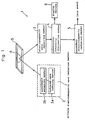
- the microbe and cell function control device 1 has a primary elctromagnetic wave radiation member 2 which radiates a predetermined wavelength range of electromagnetic wave (e.g., approx. wave numbers 300 ⁇ 800 cm -1 ) on a dental plaque (A) taken from a tooth of a patient.
- An electromagnetic wave measuring member 3 is provided to measure an intensity of the electromagnetic wave within a predetermined range of the wavelengths reflected or permeated from the dental plaque (A) with the plaque (A) as a sample including germs to be detected.
- An absorption intensity distinction member 4 is provided to determine a peak absorption of the wavelength based on the electromagnetic wave absorption intensity measured by the electromagnetic wave measuring member 3.
- a secondary electromagnetic wave radiation member 5 is provided to radiate the electromagnetic wave having the wavelength determined by the absorption intensity distinction member 4 inside the patient's mouth.
- a display device 6 is provided to display dental clinicians the distinction data obtained from the absorption intensity distinction member 4.
- a main control member is provided to control the above members although not shown.
- the absorption intensity distinction member 4 the display device 6 and the main control member may be constituted by a general-purpose computer.
- the patient's plaque (A) is placed on a measurement cell (S) which has a property of permeating the electromagentic wave such as zinc celenide, zinc celnium or the like.
- An aqueous component reducing member (hot-air generator) is provided to reduce a aqueous component such as, for example, saliva from the plaque (A) placed on the cell (S).
- the primary electromagnetic wave radiation member 2 radiates the electromagnetic wave (e.g., approx. 3000 ⁇ 800 cm -1 ) on the plaque (A) placed on the cell (S).
- the primary electromagnetic wave radiation member 2 has an infrared ray producing device 2a which emanates a wide range of the infrared ray beams, and having a wavelength selection device (band path filter) 2b which selects the electromagnetic wave having wavelength of 3000 ⁇ 800 cm -1 .
- the predetermined wavelength range of the electromagnetic wave may be continuously generated from the wavelength selection device 2b while changing the wavelength. Based on the intensity of the predetermined wavelength range of the electromagnetic wave emitted and detected by the electromagnetic wave measuring member 3, it is possible to calculate the absorption intensity of the electromagnetic wave against the sample with the use of Fourier transformation.
- the electromagnetic wave measuring member 3 uses a Hydrargyrum-Cadmium-Tellurium sensor to measure an intensity of the electromagnetic wave reflected from the plaque (A).
- the absorption intensity distinction member 4 is provided to specify the peak absorption of the wavelength based on the electromagnetic wave absorption intensity measured by the electromagnetic wave measuring member 3.
- the absorption intensity of the wavelength is determined based on the intensity of the electromagnetic wave measured by the electromagnetic wave measuring member 3.
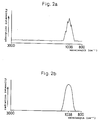
- the data processed by the absorption intensity distinction member 4 is displayed on the display device 6 for the dental clinicians in the form of absorption intensity curve against the wavelength.
- the secondary electromagnetic wave radiation member 5 has a combination of the infrared-generating device and the band path filter to emanate the electromagnetic wave having the wavelength determined by the absorption intensity distinction member 4 inside the mounth of the patient from which the plaque (A) is taken as the sample.
- the wavelength of the electromagnetic wave determined by the absorption intensity distinction member 4 is in the proximity of 1038 cm -1 , the electromagnetic wave (approx. 1038 cm -1) is emanated inside the patient's mouth.
- the germs which absorb the electromagnetic wave (approx. 1038 cm -1 ) is subjected to the functional suppression. From the data attained by the experimental test results, it was found that the germs subjected to the functional suppression were cariogenic bacteria.
- the electromagnetic wave (approx. 1038 cm -1 in Fig. 2b) inside the mouth, it is possible to suppress or control the functional promotion of the cariogenic bacteria.
- microbe and cell function control device 1 With the use of the microbe and cell function control device 1, it is possible to quickly effectuate the functional suppression of the germs in the mouth with the specified germs as the target. This reduces the time-consuming examination routine procedures, and effectuating to suppress the dental caries appropriately depending on the patient's health condition.
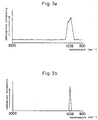
- the absorption peaks of the cariogenic bacteria are known, it is possible to radiate the electromagnetic wave (e.g., 1038 cm -1 ) inside the patient's mouth with the use of the single secondary electromagnetic wave radiation member 5 as a second embodiment of the invention. That is, when the absorption peaks (Fig. 3a) of the plaque (A) in the mouth is unknown, it is possible to emanate the electromagnetic wave (e.g., 1038 cm -1 in Fig. 3b) inside the patient's mouth with the use of the secondary electromagnetic wave radiation member.
- the electromagnetic wave e.g. 1038 cm -1
- a multiple wavelength light source, Fabry-Perot etalon, diffraction grating, band path filter, low path filter and high path filter may be used as the wavelength selection member 2b.
- a Globar light source, ceramic light source and infrared ray lamp can be used as the electromagnetic wave source of the electromagnetic wave radiation members.
- an appropriate electromagnetic wave source may be used.
- An interference wave may be used which is induced by interfering two or more light beams.
- LED can be applied.
- a plurality of light sources may be selected by the correspopnding wavelength selection member to synthesize them when in use. Instead of using the plurality of light sources, the light source may be divided into a plurality of light beams. This enables to a high degree of the intensity pattern of the electromagnetic wave.
- a quantum type photo-electromotive force sensor Hg-Cd-Te, In-As
- pyroelectric sensor TGS
- quantum type photo-conductive sensor PbS
- thermosensor thermo-pile
- thermoconductive sensor bolometer
- CCD and photodiode may be applied when using from ultraviolet rays to near infrared rays.
- antenna may be applied.
- the sensor of the electromagnetic wave measuring member 3 may preferably be in the form of array, however, it may be a single element.
- non-linear transfer function may be used. Otherwise, the non-linear transfer function may be rectified to be a linear function with a high precision.
- the absorption intensity distinction member 4 differentially treats the data from the electromagnetic wave measuring member to display the peak wavelength.
- the member 4 further may process the peak curve with a correlative matching procedure such as FFT, wavelet, lorenz or Gauss treatment in order to isolate the peak curve so as to display it.
- a half value width, area or Q value of the peak curve may be calculated.
- a convolution and deconvolution may be used in singularity or in combination with the convergence method.
- the electromagnetic wave pattern obtained from the above procedure may be used to control the electromagnetic wave.
- the absorption intensity distinction member 4 uses the average value.
- the absorption intensity distinction member 4 may use an integral calculation between wavelength sections appropriately predetermined so as to obtain the graphic representaion of Fig. 2b from Fig. 2a.
- a threshold value or offset may be used.
- the other band regions may be eliminated except for the absorption band region.
- a single spectrum type electromagnetic wave is used as shown in Fig. 3b.
- a plurality of spectra may be used.
- the electromagnetic wave may be radiated on each of the strains at the same time or different time.
- the range of the electromagnetic wave may be broadened.
- the graphic representaion of Fig. 2b (Fig. 3b) may be obtained from Fig. 2a (Fig. 3b).
- Fourier transformation or synthesis may be incorporated into the first and second embodiments of the invention.
- the member 3 may measures the electromagnetic wave permeated through the sample.
- the electromagnetic wave measuring member 3 may measure the electromagnetic wave reflected from the sample, and at the same time, measuring the wave permeated through the sample upon determining the intensity of the electromagnetic wave.
- the primary and secondary electromagnetic wave radiation members 2 and 5 may be united each other.
- a series of the measurement, distinction and electromagnetic wave radiation procedures may be used to form a loop. By tracing the loop repeatedly while changing the wavelength, it is possible to search, scan and converge the function of the germs.
- a reflection member (ATR crystallization) may be used to measure the electromagnetic wave reflected multiple between the microbial sample and the reflection member.
- an aqueous component adjusting member may be provided.
- the aqueous component adjusting member has at least an aqueous deprivation member which has a warm air supplying member, heating member and vacuum suction member in singularity or in combination.
- the aqueous component adjusting member deprives an aqueous component from the sample while giving it to the sample by means of an aqueous supplying member when necessary.
- the aqueous component adjusting member is energized to open an electromagnetic valve which is connected to a water reservior by way of a hose.
- a nebulizer, humidfier or atomizer may be used when the same effect is attained.
- the aqueous component adjusting member drives the aqueous deprivation member when the adsorption intensity at approx. 3300 cm -1 , 1632 cm -1 and 1642 cm -1 is more than the least value in singularity or in combination of the absorption intensity at approx. 1038 cm -1 , 1015 cm -1 , 855 cm -1 , 837 cm -1 and 992 cm -1 .
- a reference value or curve is prepared with the use in singularity or in combination of correlative matching procedure, recurrent curve and recurrent line in the form of primary and secondary functional curve by integrally handling the intensity curve obtained by scanning the wavelength band region from approx. 1000 cm -1 to 800 cm -1.
- the aqueous component adjusting member drives the aqueous deprivation member.
- the absorption intensity curve obtained by scanning approx. 1000 cm -1 to 800 cm -1 of the wavelength band region from approx. 1000 cm -1 to 800 cm -1 is differentially treated or calculated by a definite difference method to achieve the peak detection with the use of a calculation member.
- the aqueous component adjusting member drives the aqueous deprivation member.
- the aqueous component adjusting member compares the absorption intensity at approx. 1038 cm -1 , 1015 cm -1 or 992 cm -1 to the absorption intensity at approx. 1632 cm -1 and 1642 cm -1 .
- an aqueous deprivation signal is produced to activate the aqueous deprivation member.
- the former is greater than the latter, or the former is eqaul to the latter, the generation of the aqueous deprivation signal is suspended.
- the absorption intensity at approx. 1038 cm -1 , 1015 cm -1 or 992 cm -1 may be used in singularity or in combination. These wavelengths may be used at the same time or differently divided time.
- the aqueous deprivation member is activated. Then, the peak absorption intensity is compared with the absorption intensity at approx. 992 cm -1 by using a rectangular window function.
- the water supplying member may be activated when converging to the initial value. Any type of the water supplying member may be used as long as it ensures the same effect.
- the sample With the use of a sample transfer member (aluminum lamination), the sample may be taken out of the patient's mouth. With the use of the aluminum mesh or fibrinous material which does not overlap the peak absorption of the sample, it is possible to effectively absorb the aqueous component from the sample. On the other side of the sample, the aqueous component adjusting member is provided.
- a sample measurement chamber may be vacuum suctioned or may be filled with inert gas to measure it with a high precision.
- the electromagnetic wave (1500 ⁇ 950 cm -1 ) may be radiated against the sample because of the limited influence of the aqueous component.
- the transfer function of the distinction member may be modified to be a rectangular function in therange of 1500 ⁇ 950 cm -1 .
- various types of signal treatments may be provided.
- the absorption intensity of the electromagnetic wave may be measured after breeding the sample for a certain period of time.
- plaque (A) taken from the human mouth it is possible to suppress the function of the microbes (including leaven, virus and the cells taken from human, animals, fish, birds, insects, plants and the like, which are all outside the human mouth.
- the technique may be utilized to activate the antagonistic bacteria beneficial to ecology in an aim to prevent certain diseases.
- the wavelength is not restricted to 1038 cm -1 characteristic of the cariogenic bacteria, the combination of the wavelengths 1038 cm -1 , 1026 cm -1 and 1015 cm -1 may be used to cope with the cariogenic bacteria represented by these wavelength.
- a resultant wave of the peak wavelengths may be used as the electromagnetic wave radiation member.
- the technique may be used to prevent peridontal disease (porphyromonasgingivaris), actinomycosis or other diseases.
- a vibrator device may be provided to oscillate or control the oscillation against the sample.
- a mechanical vibrator or ultrasonic oscillator may be used.
- the vibration may be given to the sample depending on the temperature change.
- medium wave, light rays, radio wave, magnetic and electrostatic field may be provided.
- gaseous, liquid, solid, fluid and powdered medicaments or other materials may be administered. These administering members can be used as the control and measuring means in singularity or in combination.
- an electromagnetic wave absorption medium may be used which absorbs the same wavelength as absorbed in accordance with the absorption intensity distinction member 4.
- the absorption medium manufactured by an absorption medium preparing member is administered to the microbes and cells so as to suppress their functions.
- the electromagnetic wave absorption medium is prepared in correspondence to the absorption peak with the use of the absorption medium preparing member. With the use of the prepared absorption medium, it is possible to effectively control the function of the targetted microbes and cells.
- the electromagnetic wave absorption medium can be administered which corresponds to the wavelength (approx. 1038 cm -1 ).
- a hydroxyapatite can be prepared to have an 9 ⁇ m wavelength absorption band region.
- a hydroxyapatite generating device which has a wavelength shift addition device to add a wavelength shift agent such as carbon and phosphorus. That is, with impurity additions of the carbon and phosphorus, it is possible to lengthen the absorption wavelength from 8.8 ⁇ m to 9.6 ⁇ m to prepare an electromagnetic wave absorption pellet. This widens the peak wavelength absorption band region around 9.6 ⁇ m.
- the electromagnetic wave having the absorption peak wavelength on the microbes and cells Upon controlling the function of the microbes and cells, it is possible to radiate the electromagnetic wave having the absorption peak wavelength on the microbes and cells, and at same time, administering the electromagnetic wave absorption medium which absorbs the absorption peak wavelength.
- the electromagnetic wave absorption medium having the absorption peak wavelength approximately 1038 cm -1
- the electromagnetic wave and the absorption medium may be simultaneously or discretely applied.
- hydroxyapatite other substances may be used as long as they are compatible with the targetted microbes in view of the absorption wavelength.
- phosphorus and carbon other materials may be used.
- the materials may be in the form of powder, liquidity, solid, fluididity or semi-fluidity. These materials may be given by oral administration, arterial, intravenous and hypodermic injection when functionally controlling the microbes in the human body. Othrewise, these materials are used by mixing with water and paste-like substance.
- a suppression medicament may be used simultaneously to control the function of the pathogenic bacteria.
- oxides e.g., peroxide for cariogenic bacteria
- gulcan synthesis suppression media such as polyphenol, sucrose derivative, dextran-related substance, glucositase suppression agent and surface activate agent
- the enzymes for the pathogenic substance (glucan) such as dextranase and mutanase may be administered.
- passive or active immunological substances may be added. Accompanying these pathogenic resistant factors is effective when compared to discretely using the pathogenic resistant factors alone. Antagonistic substances against the pathogenic bacteria can be accumulated.
- a mechanically or chemically cleansing tool such as a tooth brush may be used.
- a radiation outlet may be attached to the tooth brush or in-between teeth brush.
- the electromagnetic wave radiation may be effective when using a wave guide conduit (e.g., optical fiber tube).
- Antibiotics, bacteria resistant medium, bactericide, protein coagulant medium as a bacteria suppression agent and ultraviolet rays as a bactericide medium can be used.
- a locally cooling procedure may be used to control optimal temperatures outside the range in which the pathogenic bacteria can proliferate.
- an electromagnetic wave receiving member may be installed to confirm the effect by monitoring the absorption wavelength radiation corresponding to the specified function.
- the radiation pattern may be divided into pulses, and the number and intervals of the pulses are adjusted to advantageously confirm the effect.
- a shielding member such as biosubstance. It enables to confirm the effect by fault-like distribution or indepth observation.
- the electromagnetic wave measuring member or an absorption wavelength detection and analysis member can be used.
- the electromagnetic wave can be directly or indirectly radiated based on a curve of the cariogenic microbes depending on varietal bacteria, strains of germs or serotypes each stored in the database.
- the electromagnetic wave radiation may be conducted by comparing or interrelating the peak wavelengths, fluctuation of the curve due to metabolic changes and data based on the peak shifts.
- the detected pattern data with the peak curve pattern detabase of the cariogenic microbe and the cariogenic related microbes (streptococcus mutans, streptococcus sobrinus, streptococcus sanguis and streptococcus mitis).
- the ratio of the former to the latter is determined to selectively deliver the electromagnetic wave on the sample.
- the radiation measurement may be conducted while measuring the electromagnetic wave radiation. This makes it possible to radiate the electromagnetic wave with a highest efficiency even when the shift occurs in the wavelengths.
- the range of the electromagnetic wave radiation may be broadened in a direction in which the wavelength is likely to shift.
- a prediction function may be stored into ROM to adjust the wavelength, the intensity and intensity pattern of the electromagnetic wave.
- the wavelength range of the electromagnetic wave at the absorption intensity includes approx. 790 cm -1 and 820 cm -1 .
- the wavelengths of the electromagnetic wave radiated may have as follows: 1794, 1786, 1770, 1760, 1757, 1744, 1732, 1724, 1713, 1711, 1697, 1670, 1680, 1670, 1658, 1451, 1641, 1646, 1636, 1631, 1628, 1606, 1591, 1587, 1576, 1564, 1554, 1549, 1543, 1537, 1525, 1512, 1508, 1489, 1481, 1471, 1464, 1456, 1450, 1443, 1437, 1427, 1417, 1410, 1398, 1386, 1381, 1373, 1361, 1354, 1338, 1331, 1315, 1307, 1287, 1280, 1277, 1253, 1244, 1240, 1228, 1223, 1217, 1213, 1194, 1182, 1128, 1149, 1143, 1140, 1126, 1113, 1111, 1103, 1100, 1080, 1093, 1082, 1064, 1055, 1041
- the electromagnetic wave radiation is controllably traced with the use of a shift distinction member.
- a risk distinction member calculates, determine and display a cariogenic risk so as to appropriately adjust the intensity of the electromagnetic wave radiation.
- wavelength band region may depend on the receptor, donor, acceptor, biochemical reaction cycles, enzyme and chemically bonded portion which rules the microbial function. Considering that which function is to be controlled or monitored depends on the desire of the dental clinicians, the wavelength of the electromagnetic wave to be radiated may be selected as desired. Depending on the functions to be controlled, the wavelength may be selected in singularity as well as in combination. An enire wavelength range may be used without employing a selection member.
- the electromagnetic wave may be amplitude, phase or frequency modulated.
- the amplitude modulated waveform obtained by the modulated waves 0 Hz ⁇ 100 Hz may be effective particularly in the range of 1 Hz, 15 Hz, 16 Hz, 20 Hz, 0.5 Hz ⁇ 30 Hz, 40 Hz, 60 Hz, 72 Hz and 100 Hz. These frequency range may be used in singularity as well as in combination.
- the radiation wavelength form may be selected as desired such as sine curve, pulse, burst curve. With the use of the waveform selecting member, a plurality of waves are synthesized by means of Fourier transformation. The 0 Hz is equivalant to being in the state of electrostatic and electromagnetic field.
- the electromagnetic wave may be radiated by way of a byproduct generated from the microbial metabolism.
- the radiation may be focused on the absorption band region of ⁇ 1-3, ⁇ 1-6 bond sites of the glucan including the glucan-related substances.
- a light emitting spectrum and non-absorption wavelength may be selected in singularity or in appropriate combination by the distinction member and the wavelength selection member upon radiating and measuring the electromagnetic wave. Then, the electromagnetic wave is scanned to search electromagnetic wave band region and the peak wavelength to attain the same effect as using the absorption spectra.
- the wavelength band region may be ahalf value width (224 nm) or may be from a narrow band region (a single wavelength e.g., laser beams) to aprox. 9 ⁇ 10 ⁇ m band region or a wider band region.
- the coherent of non-coherent light wave may be used.
- the wavelength and the wavelength region of the light source may be variously selected. When in use, the medium wave or non-medium wave may be available depending on the purpose.
- the electromagnetic wave may be selected with the use of the diffraction grating or filter.
- the multiple spectra light may be used to analyse the wave.
- the filter is used to determine its permeable band region characteristics of the half value width under the variation of the individuality of the cariogenic microbe, the filter however may be changed appropriately to detect the absorption intensity in the proximity of the targetted wavelength.
- the window function having the Lorenz, Gauss, rectangular or triangular waveform can be used as the band path filter.
- the N dB/oct filter (N: real number) of the at least one low path filter and high path filter may be used in individuality or in appropriate combination.
- the wavelength selection member may be used when operating the secondary electromagnetic wave radiation member or during the period when the singnals are processed. Additionally, the wavelength selection member may be used combinationally between the period during which the singnals are processed and the period during which the secondary electromagnetic wave radiation member is operated
- the signals detected by the measuring member may be processed with a multiple value (e.g., two-value), added mean value, filtering, FFT, correlative or wavelet treatment.
- a multiple value e.g., two-value
- added mean value e.g., filtering, FFT, correlative or wavelet treatment.
- the wavelength pattern selection member may be arranged in parallel or series each other.
- the radiation may be carried out at the same time or appropriately divided time.
- a few sheets of the narrow band region filters may be incorporated into the wavelength pattern selection member.
- a frequency analysis member may be provided to analyse the wavelengths with the use of the multiple spectra light source.
- the microbe alone, bacteria-generated byproduct, or both may be targetted. Based on the absorption wavelengths, the distinction member may select the wavelength to radiate the electromagnetic wave.
- the electromagnetic wave may be radiated on the sample in vivo or in vitro.
- the primary electromagnetic wave radiation member and the distinction member may detect and/or analyse the electromagnetic wave. Especially when applying Fourier transformation, the transformation method is effective in specifying the electromagnetic wave. It may be necessary to rectify the sensitivity when analysing the electromagnetic wave. When using a single wavelength, only the detection member is required. When using the wavelength determined by the biochemically analysed, only an electromagnetic wave analyser may be required. Any combination of these members can be available.
- the distinction member and the wavelength selection member Upon using the primary electromagnetic wave radiation member, the distinction member and the wavelength selection member, a microbial ecology detector device, a cariogenicity test or a cariogenicity test device may be employed.
- the distinction member may analyse the wavelength to obtain a representative value, mean value, central value, median, derivation value, maximum value and minimum value.
- the wavelength selection member may select the obtained values to feed it to each of the radiation members so as to store into a record medium such as ROM and hard disk.
- the electromagnetic wave measuring member, the primary electromagnetic wave radiation member, the distinction member and the wavelength selection member may be located in singularity or in combination discretely from the secondary electromagnetic wave radiation member.
- an intensity determining member such as a preparation time determining member and a design time determining member
- only the secondary electromagnetic wave radiation member may be installed on a dental clinic by remotely placing a wavelength absorption detector, analyser and wavelength selection member.
- a plurality of wavelength absorption detectors and analysers may be placed to measure a plurality of microbial spheres to synthesize, equalize or statistically treat the corresponding pathogenic control wavelengths to feed to at least one of the radiation members.
- a representative microbes may be detected, measured and analysed respectively to obtain a representative value by the electromagnetic wave measuring member and the distinction member. The representative value, thus obtained, may be fed to each of the radiation members.
- Each of the members may be placed remotely and accessed by means of internet, flopy disc or other record medium.
- the wavelengths indicated above are by way of examples only, and other wavelengths (including light rays) may be used as desired.
- the procedures, thus described, may be applied not only to the carirogenic bacteria but also other varietal strains of the microbes.
- Fig. 4 shows a block diagram of a reflexive type microbial ecology detector device 11 which measures an amount of an ⁇ 1-3 bond site of the glucan including the glucan-related sustances, for example, the byproduct of the cariogenic microbes contained in the plaque (Ao).
- the microbial ecology detector device 11 has an electromagnetic wave radiation member 12 which radiates the electromagnetic wave on a microbial sample (e.g., plaque Ao) taken from inside the human mouth.
- the plaque (Ao) contains the target microbial ecology precipitated in a cell (So).
- An electromagnetic wave measuring member 13 is provided to measure the electromagnetic wave reflected from the sample.
- a data processing member 14 is provided to generate output data in correspondence to the electromagnetic wave measured by the electromagnetic wave measuring member 13.
- a display device 15 is provided to exhibit the output data produced by the data processing member 14.
- the plaque (Ao) is kept within the transparent cell (So) dissolved by solvent (Yo) such as, for example, water.
- solvent (Yo) such as, for example, water.
- the solution is oscillated to precipitate the plaque (Ao) on which the electromagnetic wave is radiated.
- the electromagnetic wave radiation member 12 is to emanate the electromagnetic wave on the plaque (Ao) placed in the cell (So). On the the plaque (Ao), radiated is the electromagnetic wave having the wavelengths of 1038 cm -1 and 3300 cm -1 .
- the former is enamated to detect the amount of the ⁇ 1-3 bond site of the glucan including the glucan-related substances in the cariogenic microbes, and the latter is to measure a peak absorption wavelength of the water to use it as a reference value.
- the electromagnetic wave radiation member 12 further has an infrared generator device 12a and a wavelength selection device (band path filter) 12b which permeates the specified electromagnetic wave emanated from the infrared generator device 12a.
- a wavelength selection device band path filter
- the two types of the electromagnetic wave may be emanated in turn from the wavelength selection device 12b. Otherwise, the electromagnetic wave including the two types of waves may be first emanated to search reflected peak intensity around the two types of wavelengths based on the intensity of the electromagnetic wave detected by the electromagnetic wave measuring member 13 with the use of Fourier transformation.
- the electromagnetic wave measuring member 13 uses e.g., an Hg-Cd-Te sensor to measure an intensity of the electromagnetic wave reflected from the plaque (Ao) precipitated on the bottom of the cell (So).
- the data processing member 14 analyses the electromagnetic wave measured by the electromagnetic wave measuring member 13 to generate output data in accordance with the analysed results.
- a calculation member is provided to input various basal data depending on the intensity of the two types of electromagnetic wavelengths measured by the electromagnetic wave measuring member 13 while comparing the basal data with the analysed data of the intensity of the two types of electromagnetic wavelengths measured by the electromagnetic wave measuring member 13 so as to produce an output in accordance with the comparison.
- the data processing member 14 previously stores the basal data in accordance with the difference between the intensity of the electromagnetic wave (approx. 1038 cm -1 ) and the intensity of the electromagnetic wave (approx. 3300 cm -1 ).
- the basal data are compared with the difference between the two intensities to determine the output data.
- the difference between the two intensities is minimum, the output is generated that the amount of the ⁇ 1-3 bond site of the glucan (including the glucan-related substances) is zero percent.
- the difference between the two intensities is maximum, the output is generated that the amount of the ⁇ 1-3 bond site of the glucan is (including the glucan-related substances) 100 percent.
- the output data thus treated by the data processing member 14 is exhibited the dental clinicians on a display device 15.
- the microbial ecology detector device 11 With the use of the microbial ecology detector device 11, it is possible to quickly measure the amount of the ⁇ 1-3 bond site of the glucan including the glucan-related substances the cariogenic microbes contained in the plaque (Ao). This makes it possible to readily obtain the cariogenicity information inside the patient's mouth. It may help the dental clinicians access the practical information to determine the diagnostic guidance and daily care for the dental patient.
- Fig. 5 shows a block diagram of the reflexive type microbial ecology detector device 11 which measures the cariogenic condition according to another embodiment of the invention.
- the microbial ecology detector device 11 has the electromagnetic wave radiation member 12 which emanates the electromagnetic wave having several (e.g., three) wavelengths on the microbial sample (plaque Ao). Instead of the data processing member 14, a cariogenic risk distinction member 16 is provided to recognize the cariogenic risk of the dental patient.
- the electromagnetic wave radiation member 12 emanates the electromagnetic wave (approx. 1015 cm -1 , 855 cm -1 and 837 cm -1 ) on the plaque (Ao) placed in the cell (So) so as to measure the amount of the three varietal strains of the cariogenic microbes. In this instance, the aqueous component has been previously taken out of the plaque (Ao).
- the cariogenic risk distinction member 16 regards the peak intensities of the electromagnetic waves having the wavelength of aprox. 1015 cm -1 , 855 cm -1 and 837 cm -1 as degrees I1, I2 and I3 respectively.
- the cariogenic risk distinction member 16 compares the degrees I1, I2 and I3 to generate the output data in accordane with the comparison.
- the output data from the cariogenic risk distinction member 16 is exhibited the dental clinicians on the display device 15.
- an ATR crystallization member may be provided so that the measuring member 13 can measure the electromagnetic wave reflected multiple between the ATR crystallization member and the sample.
- a quantum type photo-electromotive force sensor Hg-Cd-Te, In-As
- pyroelectric sensor TGS
- quantum type photo-conductive sensor PbS
- thermosensor thermoconductive sensor
- bolometer thermoconductive sensor
- CCD and photodiode may be applied when using from ultraviolet rays to near infrared rays.
- antenna may be applied.
- the sensor of the electromagnetic wave measuring member 3 may preferably be in the form of array, however, it may be a single element.
- a Globar light source, ceramic light source and infrared ray lamp can be usesd.
- an appropriate electromagnetic wave source may be used.
- LED or lamp can be applied.
- the antenna can be used. With the use of laser beams, it is possible to cover a wide range from X-rays to farinfrared rays.
- the electromagnetic wave permeated through the sample may be measured.
- Two or more bundles of lights can be radiated on the sample to detect the interfering waves (1038 cm -1 ) which reflects or permeates from the sample. With the use of two or more bundles of lights incident on the same angle, the mutual reaction of the individual wavelengths and beat frequency may be utilized.
- the electromagnetic wave measuring member 13 may measures the electromagnetic waves both reflected and permeated from the sample as described hereinafter in Fig. 7.
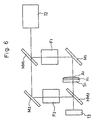
- Fig. 6 illustrates an example to measure the electromagnetic waves both reflected and permeated from the sample.
- Notation S1 shows a transparent sheet, Y1 a breeding medium (e.g., agar) for breeding the microbial ecology, and A1 a microbial sample.
- the breeding medium In the cell, placed is the breeding medium in which nutrients or a mixture of the substance for the specified germs is contained.
- Streptococcus related germs, its colony or palque (A1) is planted appropriately. Any cell will be applied as long as it can permeate the electromagnetic wave and preserve the sample.
- the breeding medium may be eliminated depending on the situation.
- HM1 and HM2 show half mirrors, M1 and M2 means mirrors and F1, F2 are frequency shifters.
- the electromagnetic wave emanated from the radiation member 12 introduced into two ways, one of which directs the wave to permeate the sample (A1), the breeding medium Y1 and the transparent sheet S1 so as to be measured at the intensity by the electromagnetic wave measuring member 13. At least one of the frequency shifters F1, F2 may be eliminated.
- the beams of the electromagnetic wave may be deformed by means of a beam magnifier tool.
- the heterodyne frequency and beat wave may be used to determine the wavelengths to be 9.4, 9.6 and/or 9.8 ⁇ m by the frequency shifters F1, F2 and the electromagnetic wave measuring member 13 so as to be appropriate for observation in singularity or in combination.
- the laser beams can be used which enables to emit the wavelength having 9.4, 9.6, 9.8 ⁇ m and/or 1 ⁇ 20 ⁇ m appropriate for observation in singularity or in combination.
- the sythesized coherent light waves may be radiated on the sample (A1).
- the light waves reflected or permeated from the sample may be measured by the measuring member 12 as shown in Fig. 7.
- the measuring member 12 may be a combination of a plurality of laser beams. By using one or more non-linear optical crystal diodes or laser beams, a plurality of wavelengths of the light waves may be induced.
- hologram may be formed by the reflected or permeated light waves with the wave of the radiation member 12 as reference light rays. This ensures to register with a realtime observation.
- the materials used herein are depending on the electromagnetic wave and the dimension of the sample.
- a test sample may be placed on one optical path, and a reference sample placed on the other optical path.
- the synthesized light wave may be measured.
- the cariogenic microbes can be observed at realtime as shown in Figs. 6 and 7.
- the optical elements used herein are prepared in accordance with the observation wave of the electromagnetic wave source and the frequency shifters.
- the material used herein and coated on the mirrors, and a beam splitter are appropriately selected.
- a peak absorption wavelength of the liquid sucrose may be used.
- the reference intensity of the electromagnetic wave may be the wave reflected or permeated from the solvent (Yo) containing cell (So) without the sample. It may be the tranparent sheet (S1) and the breeding medium (Y1) in Figs. 6 and 7.
- the wavelength (1038 cm -1 ) may be exclusively used.
- the sample may be examined after breeding it in the cell (So) for a predetermined time period.
- Saliva may be taken out of the patient's mouth to examine the germs, microbes and their byproduct in the saliva instead of the plaque (Ao). Other germs, microbes, cells, leaven and their byproduct outside the mouth may be examined.
- two or more types of electromagnetic waves may be used to radiate the wave on the sample so as to utilize the wave reflected or permeated from the sample.
- wave pattern the strains of the bacteria may be identified to enhance the measurement precision.
- two types of the electromagnetic waves may be used instead of three.
- Four or more types of the electromagnetic waves may be used with the reference intensity of the electromagnetic wave.
- the cariogenicity distinction may be detected by the intensity change of the electromagnetic wave with the elapse of time.
- the pluralistic intensities of the electromagnetic wave are compared to detect the cariogenicity.
- the data about pluralistic intensities are displayed on the displace device to provide information to help the dental clinicians judge the cariogenicity.
- the absorption intensity of the electromagnetic wave ( ⁇ 1-3 bond site of the glucan including the glucan-related substance: 1038 cm -1 , ⁇ 1-6 bond site of the glucan including the glucan-related substances: 1015 cm -1 ). This may be done based on the maximum intensity peak wavelength or an amount of its shift by scanning a predetermined wavelength band region.
- the data processing member 14 differentially treats the data from the electromagnetic wave measuring member to display the peak wavelength.
- the member 14 further may process the peak curve with a correlative matching such as FFT, wavelet, lorenz or Gauss treatment in order to isolate the peak curve so as to display it.
- a half value width, area or Q value of the peak curve may be calculated.
- a convolution and deconvolution may be used in singularity or in combination with the convergence method.
- the electromagnetic wave pattern obtained from the above procedures may be used to control the electromagnetic wave.
- the electromagnetic wave radiation may be emitted by comparing or interrelating the peak wavelengths and the fluctuation of the curve due to the metabolic changes and the data based on the peak shifts. As one example, this is done by comparing the detected pattern data with the peak curve pattern based on the detabase of the cariogenic microbe and the cariogenic related microbes (streptococcus mutans, streptococcus sobrinus, streptococcus sanguis and streptococcus mitis). The ratio of the former to the latter is determined to selectively deliver the electromagnetic wave on the sample.
- the cariogenic condition is highly in the progress when the absorption intensity shifts toward the shorter wavelength with a high Q value.
- the cariogenic risk can be judged.
- the risk may be judged by the product of glucan considering the glucan-related production changes under the influence of aerobic, anerobic or moderate atmosphere.
- the wavelength 1015 cm -1 may be used for ⁇ 1-6 bond site of the glucan including the glucan-related substances.
- the data processing member 14 it is possible to compare the ⁇ 1-3 bond site of the glucan product and the ⁇ 1-6 bond site of the glucan-related product to calculate its ratio to display the ratio on the display device. From the data, it is possible for the risk distinction member to judge the cariogenicity depending on the amount of the ⁇ 1-3 bond site of the glucan-related product by way of the display device.
- the wavelength 1055 cm -1 may be used. Any wavelength will do as long as the same effect can be obtained.
- I3 means the absorption intensity at the wavelength 992 cm -1 .
- the cariogenic risk may be displayed when the Q value is highe at the wavelengths 1000 ⁇ 1100 cm -1 , 1055 cm -1 , 1038 cm -1 and 1015 cm -1 . It holds ture when the larger area or narrow half value width is obtained.
- the wave adsorption range of the ⁇ 1-3 and ⁇ 1-6 bond sites of the glucan-related product varies
- RO registering media
- the Streptococcus mutans of pure strain it repressents the wavelengths 1020 ⁇ 1014 cm -1 .
- the variation may be stored into ROM as a prediction function since the wavelength range varies depending on the breeding conditions.
- a sensitivity is rectified to attain a flat section at the characteristic curve.
- the peak wavelength of the rectified sensitivity tends to shift toward shorter wavelengths.
- the shift may be amended by rectifying the sensitivity and the wavelength with the use of ROM.
- the wavelength range of the electromagnetic wave at the absorption intensity includes approx. 790 cm -1 and 820 cm -1 .
- the wavelengths of the electromagnetic wave radiated may have as follows: 1794, 1786, 1770, 1760, 1757, 1744, 1732, 1724, 1713, 1711, 1697, 1680, 1670, 1658, 1646, 1641, 1636, 1631, 1628, 1606, 1591, 1587, 1576, 1564, 1554, 1549, 1543, 1537, 1525, 1512, 1508, 1489, 1481, 1471, 1464, 1456, 1451, 1450, 1443, 1437, 1427, 1417, 1410, 1398, 1386, 1381, 1373, 1361, 1354, 1338, 1331, 1315, 1307, 1287, 1280, 1277, 1253, 1244, 1240, 1228, 1223, 1217, 1213, 1194, 1182, 1149, 1149, 1128, 1126, 1113,
- the electromagnetic wave radiation is controllably traced with the use of a shift distinction member. Based on the shift information, it is possible to judge the cariogenic microbes by recognizing the shift when metaphmorphose glucan from glucose.
- the light waves used herein may be provided by the diffrafction grating and filter.
- the multiple spectra may be divided by the wavelength.
- the filter is used to determine its permeable band region characteristics of the half value width under the variation of the individuality of the cariogenic microbe, the filter however may be changed appropriately to detect the absorption intensity in the proximity of the targetted wavelengths.
- the window function having the Lorenz, Gauss, rectangular or triangular waveform can be used as the band path filter.
- the N dB/oct filter (N: real number) of the at least one low path filter and high path filter may be used in individuality or in appropriate combination.
- the wavelength selection member may be used when activating the secondary electromagnetic wave radiation member or during the period when the singnals are processed. Additionally, the wavelength selection member may be used combinationally between the period during which the singnals are processed and the period during which the secondary electromagnetic wave radiation member is operated.
- An inner space of a sample chamber may be vacuumed or replaced by inert gas to enhance the measurement precision.
- the wavelength pattern selection member may be arranged in parallel or series each other.
- the radiation may be carried out at the same time or appropriately divided time.
- a few sheets of the narrow band region filters may be incorporated into the wavelength pattern selection member.
- a frequency analysis member may be provided to analyse the wavelengths with the use of the multiple spectra light source.
- a reference absorption intensity detection member may be provided with the microbial ecology detector device. Instead of the reference absorption intensity detection member, the data may be used which memorizes the background to use the data when measuring the intensity of the electromagnetic wave. Signals detected by the measuring member may be processed with a multiple value (e.g., two-value), added mean value, filtering, FFT, correlative or wavelet treatment.
- a multiple value e.g., two-value
- added mean value e.g., filtering, FFT, correlative or wavelet treatment.
- a vibrator device may be provided to oscillate or control the oscillation against the sample.
- a mechanical vibrator or ultrasonic oscillator may be used.
- the vibration may be given to the sample depending on the temperature change.
- the solvent (Yo) is contained in the sample, the solvent (Yo) is also exposed to the vibration.
- aqueous component adjusting member hot-air generator; hygroscopic member
- the aqueous component adjusting member may be provided.
- the aqueous component adjusting member has at least an aqueous deprivation member which has a hot air supplying member, heating member and vacuum suction member in singularity or in combination.
- the aqueous component adjusting member deprives an aqueous component from the sample while giving it to the sample by means of an aqueous supplying member when necessary.
- the aqueous component adjusting member is energized to open an electromagnetic valve which is connected to a water reservior by way of a hose.
- a nebulizer, humidfier or atomizer may be used when the same effect is attained.
- the aqueous component adjusting member drives the aqueous deprivation member when the absorption intensity at approx. 3300 cm -1 , 1632 cm -1 and 1642 cm -1 is more than the least value of singularity or combination of the absorption intensity at approx. 1038 cm -1 , 1015 cm -1 , 855 cm -1 , 837 cm -1 and 992 cm -1 .
- a reference value or curve is prepared with the use of singularity or combination of corelation matching, recurrent curve and recurrent line in the form of primary and secondary functional curve by integrally treating the intensity curve obtained by scanning the wavelength band region from approx. 1000 cm -1 to 800 cm -1 .
- the aqueous component adjusting member drives the aqueous deprivation member.
- the absorption intensity curve obtained by scanning approx. 1000 cm -1 to 800 cm -1 of the wavelength band region from approx. 1000 cm -1 to 800 cm -1 is differentially treated or calculated by a definite difference method to achieve the peak detection with the use of a calculation member.
- the aqueous component adjusting member drives the aqueous deprivation member.
- the aqueous component adjusting member compares the absorption intensity at approx. 1038 cm -1 , 1015 cm -1 and/or 992 cm -1 to the absorption intensity at approx. 1632 cm -1 and/or 1642 cm -1 .
- an aqueous deprivation signal is produced to activate the aqueous deprivation member.
- the former is greater than the latter, or the former is eqaul to the latter, the generation of the aqueous deprivation signal is suspended.
- the absorption intensity at approx. 1038 cm -1 , 1015 cm -1 or 992 cm -1 may be used in singularity or in combination. These wavelengths may be used at the same time or differently divided time.
- the aqueous deprivation member is activated. Then, the peak absorption intensity is compared with the absorption intensity at approx. 992 cm -1 by using a rectangular window function.
- the water supplying member may be activated when converging to the initial value when regarding the peak of (H 2 O) as the reference. Any type of the water supplying member may be used as long as it ensures the same effect.
- the sample may be taken out of the patient's mouth.
- the aluminum mesh or fibrinous material which does not overlap the peak absorption of the sample, it is possible to effectively absorb the aqeous component from the sample.
- the vibration may be given to the sample or sample molecules depending on the temperature change.
- medium wave, light rays, radio wave, magnetic and electrostatic field may be provided.
- gaseous, liquid, solid, fluid and powdered medicaments or other materials may be administered. These administering members can be used as the control and measuring means in singularity or in combination.
- the cariogenic sugar e.g., sucrose
- the cariogenic sugar may be added to the water solution and breeding medium to stay for observation. This makes it possible to judge the risk against the cariogenicity.
- the cariogenic microbes (hydroxyapatite) or preferential agent of its influential microbes may be added to the breeding medium.
- bacitracin may be added. This eliminates the influence of the sundry germs without using sterilized water. Considering that the the Streptococcus mutans has fondness for the hydroxyapatite as an habitat and breeding place, an entry of the hydroxyapatite activates the proliferation and metabolism of the Streptococcus.
- known strains of microbes may be used to serve as a biochemical reaction device as represented by Nos. of IFO.
- an electromagnetic wave radiation member a operant member (e.g., substance administering member) may be provided.
- the wavelengths, intensities, intensity patterns are merely by way of example, and not confined to those thus far described in the embodiments of the invention.
- the preceding two embodiments of the invention may be combined to examine pluralistic strains of microbes with the single microbial ecology detector device 11.
- the electromagnetic wave may be radiated through a polarized filter to detect the dependency of the microbes on the substances outside the microbes while changing the depth to be detected.
- the electromagnetic wave may be radiated through the polarized filter to effectuate an in-depth suppression of the microbes with the least hazard on the somatic texture.
Landscapes
- Chemical & Material Sciences (AREA)
- Life Sciences & Earth Sciences (AREA)
- Organic Chemistry (AREA)
- Health & Medical Sciences (AREA)
- Wood Science & Technology (AREA)
- Zoology (AREA)
- Engineering & Computer Science (AREA)
- Bioinformatics & Cheminformatics (AREA)
- Genetics & Genomics (AREA)
- Proteomics, Peptides & Aminoacids (AREA)
- Biotechnology (AREA)
- Microbiology (AREA)
- Analytical Chemistry (AREA)
- Biochemistry (AREA)
- General Engineering & Computer Science (AREA)
- General Health & Medical Sciences (AREA)
- Cell Biology (AREA)
- Toxicology (AREA)
- Biomedical Technology (AREA)
- Physics & Mathematics (AREA)
- Biophysics (AREA)
- Sustainable Development (AREA)
- Immunology (AREA)
- Molecular Biology (AREA)
- Investigating Or Analysing Materials By Optical Means (AREA)
- Apparatus Associated With Microorganisms And Enzymes (AREA)
- Physical Or Chemical Processes And Apparatus (AREA)
Applications Claiming Priority (14)
| Application Number | Priority Date | Filing Date | Title |
|---|---|---|---|
| JP35439396 | 1996-12-18 | ||
| JP354393/96 | 1996-12-18 | ||
| JP110238/97 | 1997-04-11 | ||
| JP11023897 | 1997-04-11 | ||
| JP255918/97 | 1997-09-03 | ||
| JP25591897 | 1997-09-03 | ||
| JP333501/97 | 1997-11-17 | ||
| JP33362497 | 1997-11-17 | ||
| JP33350197 | 1997-11-17 | ||
| JP333624/97 | 1997-11-17 | ||
| JP332154/97 | 1997-12-02 | ||
| JP33215497A JP3891518B2 (ja) | 1997-04-11 | 1997-12-02 | 微小生態検査装置 |
| JP33454997A JPH11196857A (ja) | 1996-12-18 | 1997-12-04 | 細菌・細胞の制御装置および制御方法 |
| JP334549/97 | 1997-12-04 |
Publications (2)
| Publication Number | Publication Date |
|---|---|
| EP0849585A2 true EP0849585A2 (de) | 1998-06-24 |
| EP0849585A3 EP0849585A3 (de) | 1998-09-02 |
Family
ID=27565770
Family Applications (1)
| Application Number | Title | Priority Date | Filing Date |
|---|---|---|---|
| EP97310281A Withdrawn EP0849585A3 (de) | 1996-12-18 | 1997-12-18 | Vorrichtung zur Kontrolle der Funktion von Mikroben und Zellen, Verfahren zu deren Steuerung, sowie Vorrichtung zur Detektion einer mikrobischen Umgebung |
Country Status (2)
| Country | Link |
|---|---|
| US (1) | US6373972B1 (de) |
| EP (1) | EP0849585A3 (de) |
Families Citing this family (5)
| Publication number | Priority date | Publication date | Assignee | Title |
|---|---|---|---|---|
| DE10304711B4 (de) * | 2003-02-06 | 2007-10-18 | Daimlerchrysler Ag | Verfahren zur Steuerung eines Elektromagnetventils, insbesondere für ein Automatikgetriebe eines Kraftfahrzeugs |
| JPWO2004109560A1 (ja) * | 2003-06-05 | 2006-07-20 | 富士通株式会社 | 回路解析と電磁波解析との連携による電磁界強度算出装置および算出方法 |
| WO2008130380A2 (en) * | 2006-10-25 | 2008-10-30 | Bruce Reiner | Method and apparatus of providing a radiation scorecard |
| US8412544B2 (en) | 2007-10-25 | 2013-04-02 | Bruce Reiner | Method and apparatus of determining a radiation dose quality index in medical imaging |
| CA3113400A1 (en) * | 2018-09-21 | 2020-03-26 | Honda Motor Co., Ltd. | Vehicle inspection system |
Family Cites Families (15)
| Publication number | Priority date | Publication date | Assignee | Title |
|---|---|---|---|---|
| US4178917A (en) * | 1979-01-03 | 1979-12-18 | Shapiro Howard M | Method and system for non-invasive detection of zinc protoporphyrin in erythrocytes |
| JPS57165312A (en) * | 1981-04-03 | 1982-10-12 | Handai Biseibutsubiyou Kenkyukai | Production of oral composition |
| US4479499A (en) * | 1982-01-29 | 1984-10-30 | Alfano Robert R | Method and apparatus for detecting the presence of caries in teeth using visible light |
| US5034235A (en) | 1983-11-23 | 1991-07-23 | Maxwell Laboratories, Inc. | Methods for presevation of foodstuffs |
| US4931053A (en) | 1988-01-27 | 1990-06-05 | L'esperance Medical Technologies, Inc. | Method and apparatus for enhanced vascular or other growth |
| DE3903777A1 (de) * | 1989-02-09 | 1990-08-16 | Bruker Analytische Messtechnik | Verfahren zur schnellen detektion von mikroorganismen in proben und vorrichtung zur durchfuehrung des verfahrens |
| US5622939A (en) * | 1992-08-21 | 1997-04-22 | Alpha-Beta Technology, Inc. | Glucan preparation |
| US5164597A (en) | 1989-09-29 | 1992-11-17 | University Of Kentucky Research Foundation | Method and apparatus for detecting microorganisms within a liquid product in a sealed vial |
| AU663869B2 (en) | 1991-02-21 | 1995-10-26 | Exoxemis, Inc. | Methods and compositions for the treatment of infection and control of flora |
| DE4200741C2 (de) * | 1992-01-14 | 2000-06-15 | Kaltenbach & Voigt | Einrichtung zum Erkennen von Karies an Zähnen |
| US5382163A (en) * | 1992-07-20 | 1995-01-17 | Putnam; David L. | Method and apparatus for detecting the presence of dental plaque or calculus |
| CA2102884A1 (en) * | 1993-03-04 | 1994-09-05 | James J. Wynne | Dental procedures and apparatus using ultraviolet radiation |
| US5658148A (en) | 1995-04-26 | 1997-08-19 | Ceramoptec Industries, Inc. | Dental laser brushing or cleaning device |
| WO1997001298A1 (fr) * | 1995-06-28 | 1997-01-16 | Philips Electronics N.V. | Brosse a dents electrique munie de moyens pour localiser une plaque dentaire |
| DE19541686B4 (de) * | 1995-11-08 | 2009-08-06 | Kaltenbach & Voigt Gmbh & Co. Kg | Vorrichtung zum Erkennen von Karies, Plaque oder bakteriellem Befall an Zähnen |
-
1997
- 1997-12-18 EP EP97310281A patent/EP0849585A3/de not_active Withdrawn
- 1997-12-18 US US08/993,713 patent/US6373972B1/en not_active Expired - Fee Related
Also Published As
| Publication number | Publication date |
|---|---|
| EP0849585A3 (de) | 1998-09-02 |
| US6373972B1 (en) | 2002-04-16 |
Similar Documents
| Publication | Publication Date | Title |
|---|---|---|
| KR100632839B1 (ko) | 구조를 검출하고/하거나 영향을 주기 위해 공명 음향및/또는 공명 음향-em 에너지를 사용하는 방법 | |
| CA2259254C (en) | Implantable sensor and system for in vivo measurement and control of fluid constituent levels | |
| US5062431A (en) | In vivo fluorescence photometer | |
| US5205291A (en) | In vivo fluorescence photometer | |
| JP4391714B2 (ja) | 放射線プルーブ及び齲歯検知 | |
| JP4406091B2 (ja) | 生体および生体器官の光力学的処理装置 | |
| JP3212996B2 (ja) | 生体内の血糖レベルを測定するための装置 | |
| US5360004A (en) | Non-invasive determination of analyte concentration using non-continuous radiation | |
| US5813403A (en) | Optical measurement of tissue pH | |
| US20080287856A1 (en) | Process and apparatus for treating biological organisms | |
| US20100016732A1 (en) | Apparatus and method for neural-signal capture to drive neuroprostheses or control bodily function | |
| JPH07503863A (ja) | 血液もしくは組織の各種成分の濃度を決定するための非侵襲性装置並びに方法 | |
| WO2002008740A2 (en) | Apparatus and method for probing light absorbing agents in biological tissues | |
| US20090099459A1 (en) | Device, System And Method For Determining The Effect Of Photodynamic Or Photothermal Tumor Therapy | |
| US6373972B1 (en) | Microbe and cell function control device, a microbial ecology detector device, and a method of controlling a microbe and cell function control device | |
| EP2312992A1 (de) | Verfahren und vorrichtung zur nervensignalerfassung für die ansteuerung von neuroprothesen oder zur steuerung von körperfunktionen | |
| JPH05507216A (ja) | 無侵襲医療用センサ | |
| Inaba | Photonic sensing technology is opening new frontiers in biophotonics | |
| JPH11196857A (ja) | 細菌・細胞の制御装置および制御方法 | |
| JPH11342142A (ja) | 生体検査装置、方法 | |
| UA10194U (uk) | Спосіб неінвазивної комплексної діагностики | |
| Zubovich et al. | The CAM Model for Measuring the Changes in Blood Vessels in-Vivo After Photodynamic Therapy | |
| AU2012254943A1 (en) | A device, system and method for determining the effect of photodynamic or photothermal tumor therapy | |
| HK1021126B (en) | Implantable sensor and system for in vivo measurement and control of fluid constituent levels | |
| HK1021126A1 (en) | Implantable sensor and system for in vivo measurement and control of fluid constituent levels |
Legal Events
| Date | Code | Title | Description |
|---|---|---|---|
| PUAI | Public reference made under article 153(3) epc to a published international application that has entered the european phase |
Free format text: ORIGINAL CODE: 0009012 |
|
| AK | Designated contracting states |
Kind code of ref document: A2 Designated state(s): CH DE FI FR GB IT LI NL SE |
|
| AX | Request for extension of the european patent |
Free format text: AL;LT;LV;MK;RO;SI |
|
| PUAL | Search report despatched |
Free format text: ORIGINAL CODE: 0009013 |
|
| AK | Designated contracting states |
Kind code of ref document: A3 Designated state(s): AT BE CH DE DK ES FI FR GB GR IE IT LI LU MC NL PT SE |
|
| AX | Request for extension of the european patent |
Free format text: AL;LT;LV;MK;RO;SI |
|
| 17P | Request for examination filed |
Effective date: 19990107 |
|
| AKX | Designation fees paid |
Free format text: CH DE FI FR GB IT LI NL SE |
|
| RBV | Designated contracting states (corrected) |
Designated state(s): CH DE FI FR GB IT LI NL SE |
|
| 17Q | First examination report despatched |
Effective date: 20030220 |
|
| STAA | Information on the status of an ep patent application or granted ep patent |
Free format text: STATUS: THE APPLICATION HAS BEEN WITHDRAWN |
|
| 18W | Application withdrawn |
Effective date: 20040211 |