EP0851366A1 - Adressage amélioré dans un système de fichiers - Google Patents
Adressage amélioré dans un système de fichiers Download PDFInfo
- Publication number
- EP0851366A1 EP0851366A1 EP97203853A EP97203853A EP0851366A1 EP 0851366 A1 EP0851366 A1 EP 0851366A1 EP 97203853 A EP97203853 A EP 97203853A EP 97203853 A EP97203853 A EP 97203853A EP 0851366 A1 EP0851366 A1 EP 0851366A1
- Authority
- EP
- European Patent Office
- Prior art keywords
- pointer
- data
- address
- entry
- indirect
- Prior art date
- Legal status (The legal status is an assumption and is not a legal conclusion. Google has not performed a legal analysis and makes no representation as to the accuracy of the status listed.)
- Granted
Links
Images


Classifications
-
- G—PHYSICS
- G06—COMPUTING OR CALCULATING; COUNTING
- G06F—ELECTRIC DIGITAL DATA PROCESSING
- G06F16/00—Information retrieval; Database structures therefor; File system structures therefor
- G06F16/10—File systems; File servers
Definitions
- This invention relates to indirect addressing of files in a file system. More particularly, this invention relates to modifying the indirect addressing with additional controlled information.
- a file appears as a contiguous region of disk space addressed as bytes 0 through the size of the file minus one.
- such a file is stored as various physical blocks of data scattered throughout the disk. Accordingly, some address translation method is required to convert, or translate, the file offsets provided by the application to physical addresses in the data storage device.
- a very common translation method uses a tree of fixed-sized indirect address blocks.
- Exemplary of this translation method is the Unix File System (UFS).
- UFS Unix File System
- An indirect address block is a block of metadata containing an array of block pointers. These block pointers point to other lower-level indirect address blocks. At the lowest level of metadata, the indirect address blocks point to fixed-sized blocks of data.
- the control block for the file which in Unix is the I-node, points to the top level indirect address block.
- the translation method begins by using the most significant bits of the offset as an index to the root indirect address block.
- the pointer to the second-level indirect address block is retrieved.
- the next significant bits of the offset are used as the index in the second level indirect address block to fetch a pointer to the third-level indirect address block.
- the next significant bits of the offset are used to find the pointer in third level indirect address block. That pointer may point to yet another indirect address block, or may point to the data block. It is the least-significant set of offset bits that are used as the byte index with the pointer from the last indirect address block to find the data in the data block.
- the tree of indirect address blocks culminating in a data block has a fixed depth.
- To support a 32-bit (4 gigabyte) file system with four kilobyte indirect address blocks and four kilobyte data blocks (a traditional UNIX File System) requires two levels of indirect address blocks. Each level uses ten bits (1024 four byte block pointers), and the data block uses twelve bits.
- the indirect addressing file system assumes that file data blocks are scattered throughout a file system or throughout at least a large number of small contiguous regions.
- many application programs for efficiency and speed of operation will make an effort to store required files in contiguous space in the file system.
- a block of indirect addresses may have a sequential arrangement of pointers.
- a sequential arrangement of pointers meaning that each of the pointers in the indirect address block points to the next adjacent data block.
- each file is defined by a list of physical addresses with a length for each block at each physical address.
- a file with noncontiguous blocks might be defined by the following list of physical address length pairs: First entry, 1000,50; the second entry 4000,800; third and last entry 3500,20.
- this file first has 50 blocks of data beginning at physical address 1000; i.e., physical blocks 1000 through 1049.
- the file continues with 800 blocks of data starting at physical address 4000; i.e., 4000-4799.
- the file is completed with 20 blocks beginning at physical address 3500, i.e., blocks 3500-3519.
- the above problem has been solved by translating a file's logical address into a physical address in an indirect addressing file system where the pointer entries have a pointer and a pointer data indicator.
- the translation process uses computer implemented steps and begins by retrieving a pointer entry.
- the pointer data indicator in the pointer entry indicates a first state when the pointer points to a physical address in the data storage area and indicates a second state when the pointer points to a lower level indirect address block.
- the process takes two possible operative paths. If the pointer data indicator is in the first state, the pointer is combined with the logical address to set the physical address.
- the logical address is split into an index and an offset, The logical address is updated to the offset. Further when the pointer data indicator is in the second state, the next pointer entry is retrieved from an indirect address block pointed to by the present pointer and from a location in the pointed-to indirect address block identified by the index. The translation process repeats these steps until the physical address is set by combining the physical address and logical address.
- apparatus for translating a logical address and a pointer entry for a file in an indirect address file system into a physical address has a decision module, a set module, a split module, an update module and a retrieve module.
- the decision module tests a pointer flag in a present pointer entry.
- the pointer entry has a pointer and a pointer flag to identify whether the pointer points to a data storage area or a metadata storage area.
- the decision module indicates the pointer is a data pointer or a metadata pointer.
- the set module in response to the decision module indicating the pointer is a data pointer, combines the data pointer with the logical address to generate a physical address.
- the split module in response to the decision module indicating the pointer is a metadata pointer, divides the logical address into a first portion as an index value and a remaining portion as an offset value.
- the update module then sets the logical address to the offset value.
- the retrieve module combines the metadata pointer with the index value to get the next pointer entry.
- the retrieve module sends the next pointer entry to the decision module for testing whether the pointer flag in the next pointer entry indicates the pointer is a data pointer or a metadata pointer. All of the modules continue to handle pointer entries in this manner until the set module generates a physical address.
- a first pointer entry is provided by a file control block, or inode in the UNIX file system, for the file.
- each metadata pointer points to a next successive level of indirect addressing in the plurality of levels of indirect addressing.
- each data pointer points directly to the data storage area.
- the great advantage and utility of the present invention is that when a pointer flag or pointer data indicator is set, the indirect addressing process will circumvent all of the unnecessary levels of indirect addressing and go directly to the data storage area. Further, if a pointer flag is not set, then the indirect addressing will work just as it has in an indirect addressing file system.
- FIGURE 1 is an address data flow diagram illustrating the structure of modified indirect addressing in accordance with a preferred embodiment of the invention.
- FIGURE 2 illustrates a distributed processing computer system with a server and multiple clients connected in a communications network so that the server and clients may perform the logical operations of the invention when addressing data.
- FIGURE 3 shows the operation flow of logical operations to translate a file offset address to a physical address in accordance with the preferred embodiment of the invention.
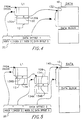
- FIGURE 4 shows the address data flow where the modified indirect address points to the data block from the highest level of indirect address blocks.
- FIGURE 5 shows the address data flow where the modified indirect address points to the data block from a middle level indirect address block.
- FIGURE 1 illustrates the structure of the modified indirect addressing as used in an embodiment of the invention.
- the example in FIGURE 1 has three levels of indirect addressing.
- the number of levels of indirect addressing is not important to the invention. The number of levels depends on the size of the file, the size of the indirect address blocks, the size of the data blocks and the size of the pointers in the indirect address blocks. Illustrated in FIGURE 1 is a three-level system, accommodating a single file.
- the data blocks are stored in area 10 of a storage device.
- the storage device could be memory, but more typically would be disk file space.
- a data block in area 10 is addressed through the indirect address blocks illustrated at levels 1, 2 and 3 (L1, L2 and L3).
- level 1 is a single root indirect address block 12.
- the size of the indirect address block 12 depends upon the number of root addresses provided in the file system and is limited by the number of bits used in the root index portion of the offset used to address files in the file system.
- the size of the indirect address blocks 14, 16 and 18 at L2 depends upon the number of bits used in the level 2 index portion of the offset used to address files in the file system.
- the offset 20 is divided into four sections. Each of the first three sections, which are used to index to addresses in indirect address blocks in levels L1, L2 and L3, respectively, will have ten bits, and the fourth section has 13 bits. Accordingly, the maximum size of an indirect address block in level 2 or level 3 is 1,024 pointer entries.
- each pointer entry contains two pieces of information. It contains a pointer and a pointer data bit.
- a pointer data bit indicates whether the pointer points to a data block in the data file area 10, or the pointer points to an indirect address block in the next lower level. If the pointer data bit is set, the pointer points to a data block in the data file area 10. If the pointer data bit is not set, the pointer points to an indirect address block in the next lower level of address blocks.
- pointer entry 28 contains a pointer 28A and a pointer data bit 28B. The pointer data bit 28B is a 1; therefore, pointer 28A points to an entry point in the data block storage area 10.
- Pointer entry 30 in indirect address block 14 is an example of an entry pointing to another indirect address block in the next lower level.
- Pointer entry 30 contains a pointer 30A and a pointer data bit 30B.
- Pointer data bit 30B is set to zero and, therefore, pointer 30A points to an indirect address block 22 in the next lower level, level 3 (L3).
- Offset information in offset 20 is combined with these pointers in various ways to identify a data block in area 10 for retrieval.
- Index entries in offset 20 are used as an index to be combined with a pointer to identify the pointer entry in the next lower level of indirect addressing.
- a portion of the offset 20 may be used as an offset to identify a data block location in area 10 relative to a start location in 10 pointed to by a pointer.
- Indirect addressing begins with a pointer entry in the file "inode" for the UNIX file.
- the pointer in the inode pointer entry points to the start address of the root indirect address block in level 1 (L1).
- Index 1 from offset 20 is combined with the start address for the root indirect address block to find the pointer entry in the root indirect address block
- the pointer entry in the inode may likewise contain a pointer data bit. If that pointer data bit was set then the pointer in the inode points directly to a start address in data storage area 10 and the entire offset would index from that start address to the file data to be retrieved. Normally, however the inode pointer entry has a pointer pointing to the root indirect address block.
- Pointer entry 32 has a pointer 32A pointing to start address 34 at the top of storage area 10.
- Pointer entry 32 contains a pointer data bit 32B set to 1 that indicates pointer 32 is pointing to a data storage area 10.
- the actual location of the data block to be retrieved from area 10 is defined by start address identified by the pointer and data offset 1 portion of the offset 20. Thus, for example, if pointer 32A pointed to physical address 11,000 and data offset 1 was 350. Then the physical address in area 10 from which data would be retrieved is 11,350. Accordingly, the data block at 11,350 would be retrieved in response to a root address pointing to pointer entry 32 with an offset of 350.
- the pointer entry in the root address block in level 1 had a pointer data bit set to 0, then the pointer would point to an indirect address block in L2. For example, if the pointer in the root address block pointed to indirect address block 14 in L2, the pointer entry in address block 14 would be retrieved based on index 2 in the offset 20. In other words, the most significant bits in offset 20 would serve as an index to be combined with the pointer from the pointer entry in root address block 12 to find a pointer entry in an indirect address block in level 2.
- pointer entry retrieved in L2 has a pointer data bit set to 1, as for example pointer entry 28 in indirect address block 14, then the remainder, data offset 2, of offset 20 is used as a data offset, or index, to be combined with the pointer in the pointer entry 28 to find the data block in storage area 10. For example, if pointer 28A points to physical address 2,000 in area 10, and data offset 2 in offset 20 is 400, then the data block at physical address 2400 would be retrieved from storage area 10.
- This structure when all three levels are used provides no advantage over conventional indirect addressing.
- this structure when contiguous data blocks exist, provides a structure for addressing a larger data block of contiguous space directly from a higher indirect address level.
- a pointer data bit indicates that a pointer in a higher level pointer entry points directly to a physical address in the storage area 10.
- Second this higher level pointer to a physical address is combined with all, or a portion of, the offset depending on the level the pointer entry, to data retrieve from a physical address in the storage area 10. In this way, unnecessary lower level indirect addressing may be circumvented.
- the operating environment in which the present invention is used, encompasses a stand-alone computing system as well as the general distributed computing system.
- general purpose computers, work-stations, or personal computers are connected in a client-server arrangement via communication links of various types, wherein programs and data, many in the form of objects, are made available by various members of the system.
- FIG. 2 Some of the elements of a stand-alone computer or a general purpose work-station computer are shown in FIG. 2.
- Users at remote work-stations in a network such as client processors 35, communicate through the network to a computer server 20.
- Server 20 includes processor 21 having an input/output section 22, a central processing unit 23, and a memory section 42.
- the input/output section 22 is optionally connected to a keyboard 25, a display or monitor 26, and a disk storage unit 29.
- the input/output unit 22 includes a communications adapter (not shown) for communicating on the network 46 to the remote client stations 35.
- Application programs 45 operate on client station 35 which may access or modify files maintained by server 20.
- the computer program products to effectuate the apparatus and methods of the present invention may reside in the memory section 42 or on the disk storage unit 29 or similar storage media (not shown), or reside on storage mediums used by clients 35.
- Examples of computing systems that may be used as either a server 20 or a client 35 include the SPARCJ systems offered by Sun Microsystems, Incorporated, personal computers offered by IBM Corporation and by other manufacturers of IBM compatible personal computers and systems running the UNIX. OS/2, HP-UX, AIX, DOS, etc. operating systems.
- client 35 and server 20 communicate over network 46 which provides client 35 with access to the files maintained on disk 29 of the server. Conversely, client 35 also transfers file data over network 46 for files maintained on the server.
- Figure 3 illustrates the logical operations in a preferred embodiment of the invention as they translate logical addresses in the modified indirect addressing structure of the invention to physical addresses and retrieve a data block at the physical address.
- the translate operations begin when operation 100 retrieves the offset and sets a logical address to the offset as the initial address for the file. Operation 102 then retrieves a pointer entry from the file control block (inode) for the file.
- Decision operation 106 tests whether or not the pointer entry just retrieved by retrieve module 102 has a pointer data bit set. If the pointer data bit is set, the translate operation knows, the pointer points to the data storage area. The operation flow branches "Yes" from decision operation 106 to retrieve operation 108. Retrieve operation 108 retrieves the pointer from the pointer entry, and operation 110 then sets the physical address for the file to the pointer plus the logical address. In this case the logical address is the entire offset 20 (Fig. 20). The physical address set in operation 110 is then used by retrieve operation 112 to retrieve the data block at that physical address. With the data block retrieved, the translate operation is complete.
- retrieve module 104 in Fig. 2 now retrieves the root indirect address block pointed to by the pointer in the pointer entry from the inode.
- split module 114 splits the logical address set to offset 20 (Fig. 1) by operation 100 into an index portion and an offset portion. In this case, the logical address is split into Index 1 and Data Offset 1 (Fig. 1).
- Operation 116 sets a new logical address to the offset divided out of the previous logical address in operation 114. As a result the logical address has now been set to Data Offset 1 in Fig. 1.
- Operation 118 which may proceed before, or in parallel with, operation 116 uses the index split from the previous logical address by operation 114 to find the new pointer entry. Operation 118 retrieves the new pointer entry from the indirect address block retrieved by module 104 at the location identified by the index. In this case of Fig. 1, the pointer points to root indirect address block 12, and Index 1 identifies pointer entry 32. After the new pointer entry 32 is retrieved by operation 118, operation flow returns to decision operation 106.
- operation 104 retrieves the indirect address block pointed to by the pointer in the pointer entry just retrieved by operation 118 during the previous pass.
- Split module 114 splits the logical address, which was updated in the previous pass, into an index and an offset value. In the example of FIGURE 1, the second pass through loop 120 would split the offset 20 into Index 2 and Data Offset 2. Also, the logical address in the second pass would be updated to Data Offset 2 by operation 116, and the next pointer entry would be retrieved by operation 118.
- the next pointer entry is located at Index 2 location in the indirect address block in level 2 (L2) retrieved by operation 104. For example, if pointer entry 33 had been retrieved from the root indirect address block during the first pass, then operation 104 retrieves indirect address block 16 during the second pass and operation 118 might retrieve pointer entry 36 based on Index 2 during the second pass.
- split operation 114 splits the new offset into Index 3 and Data Offset 3.
- an indirect address block in level 3 (L3) is retrieved, and a pointer entry in that indirect address is retrieved by operation 118.
- This pointer entry at the lowest level L3 must have a pointer data bit set to 1. Accordingly, at the end of the third pass, decision operation 106 must branch "Yes.” Now operation 108 and 110 will set the physical address to the pointer from the pointer entry in level 3 plus the logical address which is now Data Offset 3.
- pointer entries as in the above described example, have pointer data bits set to "0," there is no advantage over conventional indirect addressing.
- the utility and great advantage of the invention is that if the pointer data bit in the pointer entry is set to "1" at any point from the inode through any of the levels higher than the lowest level, then the pointer and remaining offset can address directly a data block in storage area 10 of FIGURE 1. An example where the pointer entry in the inode points to data storage area 10 has already been discussed with reference to FIG. 1.
- FIG. 4 is an example where the pointer data bit in the inode pointer entry was set to "0" (not pointing to data) and the pointer data bit 130A in the pointer entry 130 in level 1 or the root indirect address block 12 is set to "1" (pointing to data).
- Pointer entry 130 is located by combing Index 1 with the pointer from the inode.
- Pointer 130B in pointer entry points to start address 132 in the data storage area 10.
- the data in the file is found at physical address equal to the start address 132 plus Data Offset 1.
- levels L2 and L3 of indirect addressing have been by-passed.
- FIG. 5 is an example where the pointer data bit is not set until pointer entry 134 at level 2. Now two passes through loop 120 in FIG. 3 are required. During the second pass through loop 120, Index 2 will be used with the pointer 136B from pointer entry 136 in root indirect address block 12 of level 1 to find the pointer entry 134 in level 2. Data Offset 2 is used with pointer 134 in pointer entry 134 of indirect address block 138 in level 2 to point directly to data start address in data storage area 10. The data location in the file is found at a physical address equal to start address 140 plus Data Offset 2. In this example level L3 of indirect addressing has been by-passed.
Landscapes
- Engineering & Computer Science (AREA)
- Theoretical Computer Science (AREA)
- Data Mining & Analysis (AREA)
- Databases & Information Systems (AREA)
- Physics & Mathematics (AREA)
- General Engineering & Computer Science (AREA)
- General Physics & Mathematics (AREA)
- Information Retrieval, Db Structures And Fs Structures Therefor (AREA)
Applications Claiming Priority (2)
| Application Number | Priority Date | Filing Date | Title |
|---|---|---|---|
| US08/777,415 US5991862A (en) | 1996-12-30 | 1996-12-30 | Modified indirect addressing for file system |
| US777415 | 1996-12-30 |
Publications (2)
| Publication Number | Publication Date |
|---|---|
| EP0851366A1 true EP0851366A1 (fr) | 1998-07-01 |
| EP0851366B1 EP0851366B1 (fr) | 2000-04-26 |
Family
ID=25110201
Family Applications (1)
| Application Number | Title | Priority Date | Filing Date |
|---|---|---|---|
| EP97203853A Expired - Lifetime EP0851366B1 (fr) | 1996-12-30 | 1997-12-08 | Adressage amélioré dans un système de fichiers |
Country Status (4)
| Country | Link |
|---|---|
| US (1) | US5991862A (fr) |
| EP (1) | EP0851366B1 (fr) |
| JP (1) | JPH10198587A (fr) |
| DE (1) | DE69701786T2 (fr) |
Cited By (5)
| Publication number | Priority date | Publication date | Assignee | Title |
|---|---|---|---|---|
| WO2000069141A3 (fr) * | 1999-05-07 | 2001-07-19 | Commercequest Inc | Systeme de transfert de fichier et procede |
| EP1049029A3 (fr) * | 1999-04-28 | 2003-07-09 | Emc Corporation | Système de fichiers avec adressage indirect et polyvalent |
| WO2002054290A3 (fr) * | 2000-12-29 | 2004-02-26 | Storage Technology Corp | Schema de correspondance virtuelle a changement dynamique |
| US6895418B1 (en) | 1999-04-28 | 2005-05-17 | Emc Corporation | Versatile indirection in an extent based file system |
| CN106231252A (zh) * | 2016-07-29 | 2016-12-14 | 银江股份有限公司 | 一种大规模视频监控存储方法 |
Families Citing this family (40)
| Publication number | Priority date | Publication date | Assignee | Title |
|---|---|---|---|---|
| US6353837B1 (en) * | 1998-06-30 | 2002-03-05 | Emc Corporation | Method and apparatus providing mass storage access from systems using different meta-data formats |
| US6654772B1 (en) * | 1999-04-28 | 2003-11-25 | Emc Corporation | Multi-volume extent based file system |
| JP2001184303A (ja) * | 1999-12-22 | 2001-07-06 | Nec Corp | 可変長情報データアクセス方式 |
| US6910115B2 (en) * | 2001-10-31 | 2005-06-21 | Hewlett-Packard Development Company, L.P. | System and method for configuring a removable storage medium |
| US20030145199A1 (en) * | 2002-01-31 | 2003-07-31 | Miller Layne B. | Data pool with validity detection |
| US20050108486A1 (en) * | 2003-08-05 | 2005-05-19 | Miklos Sandorfi | Emulated storage system supporting instant volume restore |
| US8938595B2 (en) * | 2003-08-05 | 2015-01-20 | Sepaton, Inc. | Emulated storage system |
| CN100483365C (zh) * | 2003-08-05 | 2009-04-29 | 赛帕顿有限公司 | 仿真存储系统 |
| US20050193235A1 (en) * | 2003-08-05 | 2005-09-01 | Miklos Sandorfi | Emulated storage system |
| US8898339B2 (en) * | 2003-12-12 | 2014-11-25 | Napatech A/S | Method of transferring data implying a network analyser card |
| US7526622B1 (en) * | 2004-05-26 | 2009-04-28 | Sun Microsystems, Inc. | Method and system for detecting and correcting data errors using checksums and replication |
| US7284101B2 (en) * | 2004-08-04 | 2007-10-16 | Datalight, Inc. | Reliable file system and method of providing the same |
| US7765244B2 (en) * | 2006-06-30 | 2010-07-27 | Broadcom Corporation | Fast and efficient method for deleting very large files from a filesystem |
| US7660837B2 (en) * | 2006-06-30 | 2010-02-09 | Broadcom Corporation | Method for automatically managing disk fragmentation |
| KR100899147B1 (ko) * | 2007-05-04 | 2009-05-27 | 한양대학교 산학협력단 | 메타 데이터 저장 방법 및 메타 데이터 저장 시스템 |
| US8219534B2 (en) * | 2008-02-27 | 2012-07-10 | Dell Products L.P. | Multiple file compaction for network attached storage |
| US8224831B2 (en) | 2008-02-27 | 2012-07-17 | Dell Products L.P. | Virtualization of metadata for file optimization |
| US9678879B2 (en) * | 2008-05-29 | 2017-06-13 | Red Hat, Inc. | Set partitioning for encoding file system allocation metadata |
| JP5338260B2 (ja) * | 2008-10-31 | 2013-11-13 | アイシン・エィ・ダブリュ株式会社 | データリスト読み書き装置及びその方法 |
| US8572036B2 (en) | 2008-12-18 | 2013-10-29 | Datalight, Incorporated | Method and apparatus for fault-tolerant memory management |
| JP5407430B2 (ja) * | 2009-03-04 | 2014-02-05 | 日本電気株式会社 | ストレージシステム |
| US8190850B1 (en) * | 2009-10-01 | 2012-05-29 | Emc Corporation | Virtual block mapping for relocating compressed and/or encrypted file data block blocks |
| US8819208B2 (en) | 2010-03-05 | 2014-08-26 | Solidfire, Inc. | Data deletion in a distributed data storage system |
| US9054992B2 (en) | 2011-12-27 | 2015-06-09 | Solidfire, Inc. | Quality of service policy sets |
| US9838269B2 (en) | 2011-12-27 | 2017-12-05 | Netapp, Inc. | Proportional quality of service based on client usage and system metrics |
| US9542401B1 (en) | 2012-03-30 | 2017-01-10 | EMC IP Holding Company LLC | Using extents of indirect blocks for file mapping of large files |
| KR102050725B1 (ko) * | 2012-09-28 | 2019-12-02 | 삼성전자 주식회사 | 컴퓨팅 시스템 및 컴퓨팅 시스템의 데이터 관리 방법 |
| US20150244795A1 (en) | 2014-02-21 | 2015-08-27 | Solidfire, Inc. | Data syncing in a distributed system |
| US9372789B2 (en) * | 2014-05-30 | 2016-06-21 | Netapp, Inc. | Log-structured filed system with file branching |
| US9798728B2 (en) | 2014-07-24 | 2017-10-24 | Netapp, Inc. | System performing data deduplication using a dense tree data structure |
| US10133511B2 (en) | 2014-09-12 | 2018-11-20 | Netapp, Inc | Optimized segment cleaning technique |
| US9671960B2 (en) | 2014-09-12 | 2017-06-06 | Netapp, Inc. | Rate matching technique for balancing segment cleaning and I/O workload |
| US9836229B2 (en) | 2014-11-18 | 2017-12-05 | Netapp, Inc. | N-way merge technique for updating volume metadata in a storage I/O stack |
| US9720601B2 (en) | 2015-02-11 | 2017-08-01 | Netapp, Inc. | Load balancing technique for a storage array |
| US9762460B2 (en) | 2015-03-24 | 2017-09-12 | Netapp, Inc. | Providing continuous context for operational information of a storage system |
| US9710317B2 (en) | 2015-03-30 | 2017-07-18 | Netapp, Inc. | Methods to identify, handle and recover from suspect SSDS in a clustered flash array |
| US9740566B2 (en) | 2015-07-31 | 2017-08-22 | Netapp, Inc. | Snapshot creation workflow |
| US10929022B2 (en) | 2016-04-25 | 2021-02-23 | Netapp. Inc. | Space savings reporting for storage system supporting snapshot and clones |
| US10642763B2 (en) | 2016-09-20 | 2020-05-05 | Netapp, Inc. | Quality of service policy sets |
| KR20230101394A (ko) | 2021-12-29 | 2023-07-06 | 삼성전자주식회사 | 간접 액세스 모듈을 포함하는 스토리지 장치, 이의 동작하는 방법, 및 이를 포함하는 스토리지 시스템의 동작하는 방법 |
Citations (2)
| Publication number | Priority date | Publication date | Assignee | Title |
|---|---|---|---|---|
| US4914577A (en) * | 1987-07-16 | 1990-04-03 | Icon International, Inc. | Dynamic memory management system and method |
| US5586283A (en) * | 1993-10-07 | 1996-12-17 | Sun Microsystems, Inc. | Method and apparatus for the reduction of tablewalk latencies in a translation look aside buffer |
Family Cites Families (3)
| Publication number | Priority date | Publication date | Assignee | Title |
|---|---|---|---|---|
| US5696925A (en) * | 1992-02-25 | 1997-12-09 | Hyundai Electronics Industries, Co., Ltd. | Memory management unit with address translation function |
| US5465337A (en) * | 1992-08-13 | 1995-11-07 | Sun Microsystems, Inc. | Method and apparatus for a memory management unit supporting multiple page sizes |
| US5732405A (en) * | 1992-10-02 | 1998-03-24 | Motorola, Inc. | Method and apparatus for performing a cache operation in a data processing system |
-
1996
- 1996-12-30 US US08/777,415 patent/US5991862A/en not_active Expired - Lifetime
-
1997
- 1997-12-08 DE DE69701786T patent/DE69701786T2/de not_active Expired - Fee Related
- 1997-12-08 EP EP97203853A patent/EP0851366B1/fr not_active Expired - Lifetime
- 1997-12-24 JP JP9354773A patent/JPH10198587A/ja active Pending
Patent Citations (2)
| Publication number | Priority date | Publication date | Assignee | Title |
|---|---|---|---|---|
| US4914577A (en) * | 1987-07-16 | 1990-04-03 | Icon International, Inc. | Dynamic memory management system and method |
| US5586283A (en) * | 1993-10-07 | 1996-12-17 | Sun Microsystems, Inc. | Method and apparatus for the reduction of tablewalk latencies in a translation look aside buffer |
Non-Patent Citations (1)
| Title |
|---|
| "MEDIA DIRECTORY WITH IMPROVED FIRST ACCESS TO FRAGMENTED DATA", RESEARCH DISCLOSURE, no. 308, 1 December 1989 (1989-12-01), pages 974, XP000096147 * |
Cited By (9)
| Publication number | Priority date | Publication date | Assignee | Title |
|---|---|---|---|---|
| EP1049029A3 (fr) * | 1999-04-28 | 2003-07-09 | Emc Corporation | Système de fichiers avec adressage indirect et polyvalent |
| US6895418B1 (en) | 1999-04-28 | 2005-05-17 | Emc Corporation | Versatile indirection in an extent based file system |
| WO2000069141A3 (fr) * | 1999-05-07 | 2001-07-19 | Commercequest Inc | Systeme de transfert de fichier et procede |
| US6850962B1 (en) | 1999-05-07 | 2005-02-01 | Commercequest, Inc. | File transfer system and method |
| US6912537B2 (en) | 2000-06-20 | 2005-06-28 | Storage Technology Corporation | Dynamically changeable virtual mapping scheme |
| US7392365B2 (en) | 2000-06-20 | 2008-06-24 | Storage Technology Corporation | Dynamically changeable virtual mapping scheme |
| WO2002054290A3 (fr) * | 2000-12-29 | 2004-02-26 | Storage Technology Corp | Schema de correspondance virtuelle a changement dynamique |
| CN106231252A (zh) * | 2016-07-29 | 2016-12-14 | 银江股份有限公司 | 一种大规模视频监控存储方法 |
| CN106231252B (zh) * | 2016-07-29 | 2019-04-05 | 银江股份有限公司 | 一种大规模视频监控存储方法 |
Also Published As
| Publication number | Publication date |
|---|---|
| DE69701786T2 (de) | 2000-12-28 |
| DE69701786D1 (de) | 2000-05-31 |
| JPH10198587A (ja) | 1998-07-31 |
| EP0851366B1 (fr) | 2000-04-26 |
| US5991862A (en) | 1999-11-23 |
Similar Documents
| Publication | Publication Date | Title |
|---|---|---|
| EP0851366B1 (fr) | Adressage amélioré dans un système de fichiers | |
| US6029170A (en) | Hybrid tree array data structure and method | |
| US4611272A (en) | Key-accessed file organization | |
| US5652865A (en) | Linked file storage in a computer memory system | |
| US10346363B2 (en) | Deduplicated file system | |
| US5809494A (en) | Method for rapidly and efficiently hashing records of large databases | |
| EP0805395B1 (fr) | Procédé pour mettre en antémémoire des accès au réseau et au CD-ROM en utilisant un disque dur local | |
| US6850929B2 (en) | System and method for managing file system extended attributes | |
| US6865577B1 (en) | Method and system for efficiently retrieving information from a database | |
| US5974421A (en) | Cache-efficient object loader | |
| US11580162B2 (en) | Key value append | |
| EP1302873A2 (fr) | Système partitionné de base de données | |
| US6002866A (en) | Partitioning within a partition in a disk file storage system | |
| EA006640B1 (ru) | Способ навигации в базе данных | |
| JPH09212528A (ja) | データベースを記憶する方法、データベースからレコードを検索する方法、および、データベース記憶/検索システム | |
| US5293552A (en) | Method for storing bibliometric information on items from a finite source of text, and in particular document postings for use in a full-text document retrieval system | |
| US20220129428A1 (en) | Database key compression | |
| JP2003114816A (ja) | コンピュータメモリにインデックスを記憶するデータ構造 | |
| KR20010022028A (ko) | 데이터-베이스 구조 | |
| US6449613B1 (en) | Method and data processing system for hashing database record keys in a discontinuous hash table | |
| Lomet | A simple bounded disorder file organization with good performance | |
| US20210209087A1 (en) | Reorganization of Databases by Sectioning | |
| US7590625B1 (en) | Method and system for network load balancing with a compound data structure | |
| JP3731859B2 (ja) | ハンドヘルド装置のデータ記憶およびデータ取出しのための方法および装置 | |
| US9747363B1 (en) | Efficient storage and retrieval of sparse arrays of identifier-value pairs |
Legal Events
| Date | Code | Title | Description |
|---|---|---|---|
| PUAI | Public reference made under article 153(3) epc to a published international application that has entered the european phase |
Free format text: ORIGINAL CODE: 0009012 |
|
| AK | Designated contracting states |
Kind code of ref document: A1 Designated state(s): DE FR GB NL SE |
|
| AX | Request for extension of the european patent |
Free format text: AL;LT;LV;MK;RO;SI |
|
| 17P | Request for examination filed |
Effective date: 19980720 |
|
| AKX | Designation fees paid |
Free format text: DE FR GB NL SE |
|
| RBV | Designated contracting states (corrected) |
Designated state(s): DE FR GB NL SE |
|
| 17Q | First examination report despatched |
Effective date: 19990315 |
|
| RAP1 | Party data changed (applicant data changed or rights of an application transferred) |
Owner name: SUN MICROSYSTEMS, INC. |
|
| GRAG | Despatch of communication of intention to grant |
Free format text: ORIGINAL CODE: EPIDOS AGRA |
|
| GRAG | Despatch of communication of intention to grant |
Free format text: ORIGINAL CODE: EPIDOS AGRA |
|
| GRAH | Despatch of communication of intention to grant a patent |
Free format text: ORIGINAL CODE: EPIDOS IGRA |
|
| GRAH | Despatch of communication of intention to grant a patent |
Free format text: ORIGINAL CODE: EPIDOS IGRA |
|
| GRAA | (expected) grant |
Free format text: ORIGINAL CODE: 0009210 |
|
| AK | Designated contracting states |
Kind code of ref document: B1 Designated state(s): DE FR GB NL SE |
|
| PG25 | Lapsed in a contracting state [announced via postgrant information from national office to epo] |
Ref country code: NL Free format text: LAPSE BECAUSE OF FAILURE TO SUBMIT A TRANSLATION OF THE DESCRIPTION OR TO PAY THE FEE WITHIN THE PRESCRIBED TIME-LIMIT Effective date: 20000426 |
|
| REF | Corresponds to: |
Ref document number: 69701786 Country of ref document: DE Date of ref document: 20000531 |
|
| ET | Fr: translation filed | ||
| PG25 | Lapsed in a contracting state [announced via postgrant information from national office to epo] |
Ref country code: SE Free format text: LAPSE BECAUSE OF FAILURE TO SUBMIT A TRANSLATION OF THE DESCRIPTION OR TO PAY THE FEE WITHIN THE PRESCRIBED TIME-LIMIT Effective date: 20000726 |
|
| NLV1 | Nl: lapsed or annulled due to failure to fulfill the requirements of art. 29p and 29m of the patents act | ||
| PLBE | No opposition filed within time limit |
Free format text: ORIGINAL CODE: 0009261 |
|
| STAA | Information on the status of an ep patent application or granted ep patent |
Free format text: STATUS: NO OPPOSITION FILED WITHIN TIME LIMIT |
|
| 26N | No opposition filed | ||
| REG | Reference to a national code |
Ref country code: GB Ref legal event code: IF02 |
|
| PGFP | Annual fee paid to national office [announced via postgrant information from national office to epo] |
Ref country code: GB Payment date: 20031203 Year of fee payment: 7 |
|
| PGFP | Annual fee paid to national office [announced via postgrant information from national office to epo] |
Ref country code: FR Payment date: 20031210 Year of fee payment: 7 |
|
| PGFP | Annual fee paid to national office [announced via postgrant information from national office to epo] |
Ref country code: DE Payment date: 20031218 Year of fee payment: 7 |
|
| PG25 | Lapsed in a contracting state [announced via postgrant information from national office to epo] |
Ref country code: GB Free format text: LAPSE BECAUSE OF NON-PAYMENT OF DUE FEES Effective date: 20041208 |
|
| PG25 | Lapsed in a contracting state [announced via postgrant information from national office to epo] |
Ref country code: DE Free format text: LAPSE BECAUSE OF NON-PAYMENT OF DUE FEES Effective date: 20050701 |
|
| GBPC | Gb: european patent ceased through non-payment of renewal fee |
Effective date: 20041208 |
|
| PG25 | Lapsed in a contracting state [announced via postgrant information from national office to epo] |
Ref country code: FR Free format text: LAPSE BECAUSE OF NON-PAYMENT OF DUE FEES Effective date: 20050831 |
|
| REG | Reference to a national code |
Ref country code: FR Ref legal event code: ST |