EP0852854B1 - Verfahren zur erhöhung der reichweite in einem tdma-system - Google Patents
Verfahren zur erhöhung der reichweite in einem tdma-system Download PDFInfo
- Publication number
- EP0852854B1 EP0852854B1 EP96932905A EP96932905A EP0852854B1 EP 0852854 B1 EP0852854 B1 EP 0852854B1 EP 96932905 A EP96932905 A EP 96932905A EP 96932905 A EP96932905 A EP 96932905A EP 0852854 B1 EP0852854 B1 EP 0852854B1
- Authority
- EP
- European Patent Office
- Prior art keywords
- timeslots
- mobile station
- timeslot
- timing advance
- distance
- Prior art date
- Legal status (The legal status is an assumption and is not a legal conclusion. Google has not performed a legal analysis and makes no representation as to the accuracy of the status listed.)
- Expired - Lifetime
Links
- 238000000034 method Methods 0.000 title claims abstract description 26
- 230000010267 cellular communication Effects 0.000 claims abstract description 6
- 230000005540 biological transmission Effects 0.000 claims description 14
- 230000008859 change Effects 0.000 claims description 5
- 238000013459 approach Methods 0.000 claims description 4
- 230000001413 cellular effect Effects 0.000 description 5
- 230000001934 delay Effects 0.000 description 5
- 230000003111 delayed effect Effects 0.000 description 4
- 230000008569 process Effects 0.000 description 4
- 230000002452 interceptive effect Effects 0.000 description 2
- 230000008901 benefit Effects 0.000 description 1
- 238000004891 communication Methods 0.000 description 1
- 238000010586 diagram Methods 0.000 description 1
- 230000000694 effects Effects 0.000 description 1
- 238000002955 isolation Methods 0.000 description 1
- 238000005259 measurement Methods 0.000 description 1
- 238000010295 mobile communication Methods 0.000 description 1
- 238000012986 modification Methods 0.000 description 1
- 230000004048 modification Effects 0.000 description 1
- 230000009467 reduction Effects 0.000 description 1
- 230000002459 sustained effect Effects 0.000 description 1
- 230000001360 synchronised effect Effects 0.000 description 1
Images


Classifications
-
- H—ELECTRICITY
- H04—ELECTRIC COMMUNICATION TECHNIQUE
- H04B—TRANSMISSION
- H04B7/00—Radio transmission systems, i.e. using radiation field
- H04B7/24—Radio transmission systems, i.e. using radiation field for communication between two or more posts
- H04B7/26—Radio transmission systems, i.e. using radiation field for communication between two or more posts at least one of which is mobile
- H04B7/2643—Radio transmission systems, i.e. using radiation field for communication between two or more posts at least one of which is mobile using time-division multiple access [TDMA]
- H04B7/2656—Radio transmission systems, i.e. using radiation field for communication between two or more posts at least one of which is mobile using time-division multiple access [TDMA] for structure of frame, burst
-
- H—ELECTRICITY
- H04—ELECTRIC COMMUNICATION TECHNIQUE
- H04W—WIRELESS COMMUNICATION NETWORKS
- H04W72/00—Local resource management
- H04W72/50—Allocation or scheduling criteria for wireless resources
- H04W72/51—Allocation or scheduling criteria for wireless resources based on terminal or device properties
-
- H—ELECTRICITY
- H04—ELECTRIC COMMUNICATION TECHNIQUE
- H04W—WIRELESS COMMUNICATION NETWORKS
- H04W72/00—Local resource management
- H04W72/04—Wireless resource allocation
- H04W72/044—Wireless resource allocation based on the type of the allocated resource
- H04W72/0446—Resources in time domain, e.g. slots or frames
Definitions
- the present invention relates to a method for allocating time slots to mobile stations in a cellular communication system so as to extend the range of a time division multiple access (TDMA) cellular communication system.
- TDMA time division multiple access
- the mobile stations and the respective base stations of a TDMA system communicate across time division multiple access channels whereby multiple mobile stations share the same transmission and reception frequencies, but are assigned separate timeslots within those frequencies.
- the mobile stations transmit bursts at certain times allowing for propagation delays so that the bursts are received at a base station in their assigned timeslots. Otherwise, transmissions from different mobile stations collide or overlap, resulting in mutual interference in reception at the base station.
- a guard band is inserted between the timeslots to help prevent the bursts from overlapping.
- the guard bands are generally only a few symbols wide and as a result only guard against small time alignment errors.
- the mobile station In the Global System for Mobile Communications (GSM), the mobile station is effectively synchronized to the downlink from the base station and therefore the "local" time at the mobile station is effectively always somewhat slow compared to the base station because of the time taken by the propagation of the downlink signal. Uplink bursts are further delayed because of the finite speed of light. Therefore, uplink signals from mobile stations at different distances will arrive with varying degrees of lateness unless compensating measures are taken.
- GSM Global System for Mobile Communications
- the base station is able to measure of degree of "lateness" of a received uplink burst, and using a parameter known as timing advance value, is able to instruct the mobile to transmit its burst earlier, such that allowing for the propagation delay for the uplink signal, the burst is received at the base station at exactly the right time. In other words, the burst is actually transmitted by the mobile station in advance of its nominal timing.
- Timing advance parameter is periodically resent to the mobile station, and therefore changes in the propagation delays due to the movement of the mobile station can be compensated for before problems arise.
- the timing advance has a maximum value which corresponds to a maximum cell radius.
- the timing advance is a 6 bit variable value ranging from 0 to 63.
- the limited range of the timing advance value effectively restricts the maximum size of the cell.
- the timing advance has a value of 63, the cell radius is approximately 35 kilometers in GSM. If the mobile station exceeds this radius, the burst can not be advanced any further and as a result, the burst received at the base station will start to slide back into the next timeslot corrupting both bursts.
- One method for extending the range of a cell in a TDMA system is to assign a mobile station two consecutive timeslots rather than one timeslot as illustrated in Figure 1.
- an 8-timeslot frame has been divided into 4 groups 10, 12, 14, and 16 which each contain two consecutive timeslots.
- the "white" inner box 18 illustrates the nominal position of a burst, which has slid backward while its actual arrival time is illustrated by the shaded boxes.
- the burst will slide back further and further into the second timeslot.
- a new limit is reached when the burst slides back an entire timeslot. In the GSM system, this new limit corresponds to approximately 100 km. If the mobile station goes any further from the base station, the burst will then start to slide into the next, i.e., third, timeslot which may corrupt a burst in the following timeslot.
- a mobile station is assigned to an available timeslot regardless of the propagation delay of the mobile station. This is illustrated in Figure 1, where the burst in window 2 is seen to have slid less than the burst in window 1.
- a digital time multiplexed system assigns time slot channels to a plurality of mobile stations such that the mobile stations to which the propagation time is shortest is assigned a first time slot, the mobile station to which the propagation delay is the next shortest is assigned a second subsequent time slot, and so on. After the last time slot in the time frame, a guard time common to all time slots prevents transmission overlaps at a base station receiver.
- One of the novel principles of this method is that since the mobiles are rigorously ordered in increasing distance order, either physical or virtual distance.
- the uplink burst from the most distant mobile station at extreme range will slide backwards into the idle timeslot or timeslots at the back of the extended range group.
- a method for allocating timeslots to mobile stations in a cell in a cellular communication system is disclosed. First, the distance from each of a plurality of mobile stations to the base station is determined. Normal timeslots may exist in isolation and be assigned as today, however a group of three or more contiguous timeslots may be utilized as an extended range group. This group may begin with any timeslot allowing for the fact that timeslots 7 and 0 are contiguous in a TDMA system with 8 timeslots per frame, such as GSM.
- Mobile stations are allocated timeslots within the extended range group according to the order of their distance from the base station, the closest mobile station being at the front of the extended range group of timeslots and the unused timeslots are idle, that are not filled, and no carrier is transmitted.
- the group always contains at least one contiguous idle timeslot at the rear of the group to allow bursts to slide backward into that space, however there may be other idle timeslots within the group.
- timing advance does not need to be used for timeslots within the group, however, timing advance can be used if it is applied to all of the mobile stations within the group. If a timing advance is applied, all of the mobile stations within the normal maximum radius will have their bursts arrive in the nominal position and will only start to slide backwards when the normal range limit is exceeded. The degree of extended range which can be supported by allowing the burst to slide backwards up to one or more entire timeslots is therefore added to the existing 35 km range limit. Where timing advance is not used, all uplink bursts will slide back to some extent, even from mobile stations quite close to the base station.
- the maximum cell radius is given only by the distance over which propagation delays cause the uplink burst to slide back one or more entire timeslots, to the back of the idle timeslots at the trailing end of the extended range group.
- Applying timing advance in addition to the support for sliding bursts effectively absorbs up to the first 35 km of propagation delay, as normal.
- the new maximum cell radius is 35 km greater.
- timing advance values can be used in a novel way in the timeslot allocation method.
- the system determines the distance each mobile station is from a base station in the cell.
- the system now introduces an offset to the timing with which the mobile station transmits its bursts by instructing the mobile station to apply a certain timing advance value. Due to the finite speed of light, it will be realized by one skilled in the art that any change in timing is equivalent to a change in distance. For example, a burst transmitted slightly later and therefore received slightly later is indistinguishable from a burst transmitted on time from slightly further away. Conversely a burst transmitted slightly earlier will appear to come from slightly closer.
- the effect of such a physical distance plus some timing offset shall be called a virtual distance.
- the system assigns each mobile station a timeslot based upon the virtual distance each mobile station is from the base station, wherein the timeslots within a contiguous group of timeslots are assigned to the mobile stations in the order of the mobile stations increasing virtual distance from the base station and one or more timeslots at the back of the extended range group are reserved so as to allow a burst from the mobile stations to slide into the next timeslot.
- the advantage of using virtual distances rather than physical distances in this manner is that for any given set of physical distances (which cannot be controlled), it is possible to compute a set of timing offsets which will give any desired ordering of the mobile stations by virtual distance. Thus changes in the relative distances between the mobile stations and the BTS can be absorbed without having to reallocate the timeslots.
- the range of the cellular system can be extended without causing uplink bursts to overlap and hence interfere by allocating timeslots to mobile stations based upon the physical distance the mobile station is from a base station and by not assigning at least one timeslot in a group of contiguous timeslots, which may or may not be the entire TDMA frame.
- the timeslots By arranging the timeslots so that they are allocated to mobile stations in the order of their increasing distance from the base station, the transmission bursts contained in the timeslots will be delayed by an increasing amount due to the propagation delays.
- the mobile stations are assigned timeslots in such an order so that the burst of a mobile station in a next timeslot is delayed by at least as much as the burst in the present timeslot.
- at least one timeslot i.e., the last timeslot or timeslots in the contiguous group are not assigned to a mobile station, thus allowing the other timeslots in the frame or group to slide back a total of one or more timeslots. In the GSM system, this would extend the range of a cell substantially in excess of the normal limiting cell radius.
- Figure 2 illustrates a frame containing eight timeslots which can support up to seven transmission bursts, wherein at least the last timeslot is not assigned to a mobile station so as to allow the seven transmission bursts to slide back up to an entire timeslot.
- the time at which the seven bursts might arrive from mobile stations at different distances is shown as a shaded box.
- the seventh burst has slid so far as to be wholly within the eighth timeslot, which is arranged to be nominally idle.
- the present invention applies to other systems in which the number of timeslots per frame is greater or less than eight.
- the group does not have to be the same size as the frame or start at the beginning of the frame.
- the capacity of the system was reduced by 50% in order to extend the range of a cell.
- the present invention substantially increases the range of a cell while potentially only sacrificing one timeslot per frame, i.e., a 12.5% reduction in capacity if there are eight timeslots per frame.
- the range of the cellular system is increased without drastically reducing the capacity of the system.
- This embodiment can be further modified by using timing advance values as long as the traditional usage of timing advance is applied to all of the mobile stations within the group. If a timing advance is applied, all of the mobile stations within the effective radius will have their bursts arrive in the nominal position and this maximizes the effective radius limit which can be sustained for any given number of idle timeslots at the rear of the group. This also allows the front boundary of the group to be adaptively allocated.
- timing advance values can be used in a novel way in the timeslot allocation process.
- the base station includes a transmitter portion, a receiver portion, and a control portion, the latter being implemented by a CPU, as illustrated in Figure 3.
- the control portion of the base station implements the timing advance control (TA-LOGIC) in TDMA systems constructed according to the GSM model.
- a base station control function (BS-control) is also implemented in a CPU.
- the receiver includes, among other elements, a correlator.
- the correlator produces an output signal to both BS-control and TA-logic.
- the correlator maintains a reference time base and times the occurrence of an incoming signal in relation to the timeslot window. The results of the measurements are sent to the CPU.
- the CPU in turn provides new parameters for the channel allocation and timing advance.
- timeslot (channel) allocation is preformed within the base station controller, and TA-logic is performed within the base station, but other implementations of TDMA systems may place these functions differently.
- the timing advance values are used by mobile stations to adjust the transmissions of their bursts so that each is received in its assigned timeslot.
- the present invention uses the timing advance values as an offset to modify the time of arrival of bursts from a mobile station at a given distance by up to the limits of the timing advance value range.
- the timing advance value can be used to change the distance that a mobile station appears to be from the base station. Therefore, the timing advance can be seen to be equivalent to a distance offset which is added to the physical distance between the mobile station and the base station to give a virtual distance.
- timing advance is to maintain a virtual distance of zero, that is apply a timing offset specifically computed to compensate for the propagation delays between the base station and a mobile station, such that the uplink bursts are always received without any delay.
- the novelty of this particular embodiment of the present invention is to use different values of timing advance to generate variable, and specifically non-zero virtual distances.
- a base station operates on a set of radio channels and communicates with a plurality of mobile stations.
- the base station is controlled by the base station controller which controls such functions as handover and channel allocation.
- the virtual distance to the mobile station rather than the real distance is used when assigning a timeslot to the mobile station. It will be appreciated that the ability to generate any virtual distance for a mobile station with a given instantaneous real distance by adjusting the timing advance values gives considerable flexibility in allocating timeslots when calls are setup. It will be realized by one skilled in the art that the purpose of extended range is to allow mobiles to operate over a distance range greater than the 0..35 km supported by the available range of timing advance values.
- the flexibility to allocate timeslots is less than complete, however it is sufficient to substantially reduce the need for internal handovers to reallocate timeslots as mobile stations move relative to each other, as the physical movement can be compensated for by varying the offset, the timing advance values, so that the virtual distances remain rigorously ordered by increasing distance.
- the vast majority of calls over a cellular telephony system are rather short, during which time the mobile station typically moves far less than 35 km.
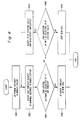
- Step S100 the distance to the mobile station from the base station is determined using one of a plurality of known methods in step S100.
- the system looks at the available timeslots to determine which idle timeslot corresponds the closest to the distance the mobile station is from the base station in step S102. In other words, if the mobile station is close to the base station an idle timeslot near the front of the frame should be selected and if the mobile station is far from the base station an idle timeslot near the end of the frame should be selected.
- the network determines, in step S104, whether the timing advance for signals from the mobile stations can be adjusted within the timing advance limit range so that the signal is received at an appropriate time so that the burst is received without overlapping either the preceding or trailing burst, should such exist. If the timing advance can be properly adjusted, the new call is allocated the selected timeslot in step S106. Thus, the virtual distance rather than the real distance is used in the timeslot allocation process.
- step S104 determines whether the timing advance of existing calls can be adjusted to free a timeslot in the proper range for the new call in step S108. If the existing calls can not be adjusted in such a manner to open up an appropriate timeslot for the new call the call is dropped in step S112. However, if the timing advance values for the existing calls can be changed to open a timeslot for the new call, the timing advance values for at least one of the existing calls are adjusted and the new call is allocated a timeslot in step S110.
- the mobile station using timeslot 5 has a real distance of 40 km and a virtual distance of 50 km.
- timeslot 6 can not immediately be assigned to the new mobile station (MS1) since the maximum virtual distance of the new mobile station is less than the virtual distance of the mobile station (MS2) using timeslot 5.
- the system has several options.
- the virtual distance of the mobile station MS2 could be adjusted by changing the timing advance value of MS2 so that the virtual distance of MS2 is less than 45 km, for example 35 km.
- the mobile station MS 1 can now be assigned to timeslot 6 by setting the timing advance values so that the virtual distance is equal to 40 km.
- the system could have reallocated new timeslots to the mobile stations using timeslot 3-5 and allocated timeslot 3 to the new mobile station.
- the system After allocation of the timeslots, the system continuously monitors the movements of the mobile stations and adjusts their timing advance values accordingly so that the burst arrival time of signals from the mobile stations are in their correct order based upon each mobile stations virtual distance so as to avoid mutual interference. Furthermore, the system also can manipulate the timing advance values in such a way that existing idle timeslots can be used to support any new call that might arise regardless of its distance from the base station without having to perform an emergency reallocation. However, if a timing advance value begins to approach their range limit, i.e., 0 and 63 in GSM, the system may reallocate at least one of the timeslots and adjusts the timing advance values of the mobile stations so that the timing advance value is no longer near the range limit.
- range limit i.e., 0 and 63 in GSM
- the last two timeslots rather than the last timeslot can be nonassigned so that the remaining six timeslots can slide up to two full timeslots in order to increase the range of the system even further. It will be appreciated by one skilled in the art that any number of consecutive timeslots at the end of a frame or a contiguous group of timeslots can be non-assigned so as to allow the remaining assigned timeslots to slide back varying distances.
- timeslots other than those at the end of the contiguous group which are deliberately kept idle to allow bursts to slide may also be idle.
- an idle timeslot can be treated as though an "imaginary mobile" were present, with a suitable virtual distance to avoid interfering with the leading or trailing burst, and that its burst has zero amplitude (and is of zero interest): the only matter of importance is that real bursts never overlap and thus mutually interfere. The practical significance of this is that there is no necessity to constantly reallocate timeslots whenever calls terminate in order to "close up the gaps" in the contiguous sequence of timeslots.
Landscapes
- Engineering & Computer Science (AREA)
- Computer Networks & Wireless Communication (AREA)
- Signal Processing (AREA)
- Mobile Radio Communication Systems (AREA)
Claims (20)
- Verfahren zur Zuordnung von Zeitschlitzen zu Mobilstationen in einer Zelle (S100) eines zellularen Kommunikationssystems, in welchem der physische Abstand jeder Mobilstation zur Basisstation in der Zelle bestimmt wird (S100), wobei das Verfahren gekennzeichnet wird durch Verschiebung des Zeitpunkts der Sendung des Aufwärtsstrecken-Bursts aus jeder Mobilstation an die Basisstation um einen Betrag, der einem virtuellen Abstand der Mobilstation zur Basisstation äquivalent ist, wobei dieser virtuelle Abstand mit dem Sendezeitpunkt über die Lichtgeschwindigkeit in Beziehung steht, und dem Sendezeitpunkt entspricht, der in Beziehung steht mit dem physischen Abstand zwischen der Mobilstation und der Basisstation, verschoben um einen Zeitavancierungswert eines vorbestimmten Betrags (S110); und die Zuweisung eines Zeitschlitzes zu jeder Mobilstation beruhend auf dem virtuellen Abstand jeder Mobilstation zur Basisstation (S106), wobei die Zeitschlitze innerhalb einer aneinander liegenden Gruppe von Zeitschlitzen den Mobilstationen in der Reihenfolge des zunehmenden virtuellen Abstands der Mobilstationen von der Basisstation zugewiesen werden (S102), und mindestens ein Zeitschlitz innerhalb der aneinander liegenden Gruppe nicht zugewiesen ist, um es somit einem Burst aus den Mobilstationen zu erlauben, in den nächsten Zeitschlitz zu gleiten.
- Verfahren nach Anspruch 1, wobei die aneinander liegende Gruppe acht Zeitschlitze enthält.
- Verfahren nach Anspruch 1, wobei bis zu n-1 Bursts unterstützt werden können pro Frequenz in einem TDMA-System mit n Zeitschlitzen pro Rahmen.
- Verfahren nach Anspruch 1, wobei zumindest der letzte Zeitschlitz nicht zugewiesen ist, um es somit Bursts in den verbleibenden Zeitschlitzen zu gestatten, um zumindest einen Zeitschlitz zurückzugleiten.
- Verfahren nach Anspruch 1, wobei der Abstand verschoben wird unter Verwendung von Zeitavancierungswerten für jede Mobilstation.
- Verfahren nach Anspruch 5, wobei die Ankunftszeit eines Bursts modifiziert wird durch den Zeitavancierungswert.
- Verfahren nach Anspruch 5, wobei die Zeitavancierungswerte den virtuellen Abstand um bis zu dem Abstand des Bereichs der in einem TDMA-System verfügbaren Zeitavancierungswerte verändern können.
- Verfahren nach Anspruch 7, ferner umfassend den Schritt:
Neuzuweisung eines Zeitschlitzes zu einer Mobilstation, wenn der Zeitavancierungswert für die Mobilstation sich einer Grenze nähert. - Verfahren nach Anspruch 5, ferner umfassend den Schritt:
periodische Einstellung der Zeitavancierungswerte für jede Mobilstation, um jede Bewegung der Mobilstation zu kompensieren, so dass der virtuelle Abstand für jede Mobilstation unverändert bleibt. - Verfahren nach Anspruch 1, wobei einer oder mehrere Zeitschlitze innerhalb der Gruppe von aneinander liegenden Zeitschlitzen leer sein können, wobei einer oder mehrere Zeitschlitze zwischen den leeren Zeitschlitzen und dem nicht zugewiesenen Zeitschlitz am Ende der Gruppe besetzt sind.
- Zuordnungssystem zur Zuordnung von Zeitschlitzen zu Mobilstationen in einer Zelle (S100) eines zellularen Kommunikationssystems, mit Mitteln zur Bestimmung des physischen Abstands jeder Mobilstation zur Basisstation in der Zelle, wobei das System dadurch gekennzeichnet ist, dass es Mittel umfasst zur Verschiebung des Zeitpunkts der Übertragung des Aufwärtsstrecken-Bursts in jeder Mobilstation zur Basisstation um einen Betrag, der äquivalent ist zum virtuellen Abstand zwischen der Mobilstation und der Basisstation, wobei dieser virtuelle Abstand in Beziehung steht mit dem Übertragungszeitpunkt über die Lichtgeschwindigkeit, und dem Übertragungszeitpunkt entspricht, der mit dem physischen Abstand der Mobilstation zur Basisstation in Beziehung steht, verschoben um einen Zeitavancierungswert um einen vorbestimmten Betrag (S110); und
Mittel, um jeder Mobilstation einen Zeitschlitz zuzuweisen, beruhend auf dem virtuellen Abstand jeder Mobilstation zur Basisstation (S106), wobei die Zeitschlitze innerhalb einer aneinander liegenden Gruppe von Zeitschlitzen den Mobilstationen in der Reihenfolge des zunehmenden virtuellen Abstands der Mobilstationen zur Basisstation (S102) zugewiesen werden, und mindestens ein Zeitschlitz innerhalb der aneinander liegenden Grenze nicht zugewiesen ist, um es somit einem Burst aus den Mobilstationen zu gestatten, in den nächsten Zeitschlitz zu gleiten. - Zuordnungssystem nach Anspruch 11, wobei die aneinander liegende Gruppe acht Zeitschlitze enthält.
- Zuordnungssystem nach Anspruch 11, wobei bis zu n-1 Bursts unterstützt werde können pro Frequenz in einem TDMA-System mit n Zeitschlitzen pro Rahmen.
- Zuordnungssystem nach Anspruch 11, wobei mindestens der letzte Zeitschlitz nicht zugewiesen ist, um somit Bursts in den verbleibenden Zeitschlitzen zu gestatten, um bis zu mindestens einem Zeitschlitz zurückzugleiten.
- Zuordnungssystem nach Anspruch 11, wobei der Abstand verschoben wird unter Verwendung von Zeitavancierungswerten für jede Mobilstation.
- Zuordnungssystem nach Anspruch 15, wobei die Ankunftszeit eines Bursts modifiziert wird durch den Zeitavancierungswert.
- Zuordnungssystem nach Anspruch 15, wobei die Zeitavancierungswerte den virtuellen Abstand verändern können um bis zu dem Abstand des Bereichs der in einem TDMA-System verfügbaren Zeitavancierungswerten.
- Zuordnungssystem nach Anspruch 17, ferner umfassend:
Mittel zur Neuzuweisung eines Zeitschlitzes an eine Mobilstation, wenn der Zeitavancierungswert für die Mobilstation sich einer Grenze nähert. - Zuordnungssystem nach Anspruch 15, ferner umfassend:
Mittel zur periodischen Einstellung der Zeitavancierungswerte für jede Mobilstation, um eine Bewegung der Mobilstationen zu kompensieren, so dass der virtuelle Abstand für jede Mobilstation unverändert bleibt. - Zuordnungssystem nach Anspruch 11, wobei einer oder mehrere Zeitschlitze innerhalb der Gruppe von aneinander liegenden Zeitschlitzen leer sein kann, wobei einer oder mehrere Zeitschlitze zwischen den leeren Zeitschlitzen und dem nicht zugewiesenen Zeitschlitz am Ende der Gruppe, besetzt sind.
Applications Claiming Priority (3)
| Application Number | Priority Date | Filing Date | Title |
|---|---|---|---|
| US08/536,052 US5642355A (en) | 1995-09-29 | 1995-09-29 | Method of supporting extended range in a TDMA system |
| US536052 | 1995-09-29 | ||
| PCT/SE1996/001198 WO1997012451A1 (en) | 1995-09-29 | 1996-09-25 | A method of supporting extended range in a tdma system |
Publications (2)
| Publication Number | Publication Date |
|---|---|
| EP0852854A1 EP0852854A1 (de) | 1998-07-15 |
| EP0852854B1 true EP0852854B1 (de) | 2001-01-24 |
Family
ID=24136923
Family Applications (1)
| Application Number | Title | Priority Date | Filing Date |
|---|---|---|---|
| EP96932905A Expired - Lifetime EP0852854B1 (de) | 1995-09-29 | 1996-09-25 | Verfahren zur erhöhung der reichweite in einem tdma-system |
Country Status (5)
| Country | Link |
|---|---|
| US (1) | US5642355A (de) |
| EP (1) | EP0852854B1 (de) |
| AU (1) | AU7151096A (de) |
| DE (1) | DE69611684T2 (de) |
| WO (1) | WO1997012451A1 (de) |
Cited By (1)
| Publication number | Priority date | Publication date | Assignee | Title |
|---|---|---|---|---|
| WO2016144145A3 (en) * | 2015-03-12 | 2016-10-27 | Samsung Electronics Co., Ltd. | Method and apparatus for controlling uplink coverage in wireless communication system |
Families Citing this family (40)
| Publication number | Priority date | Publication date | Assignee | Title |
|---|---|---|---|---|
| US5761622A (en) * | 1995-05-18 | 1998-06-02 | Ericsson Inc. | Method and apparatus for controlling operation of a portable or mobile battery-operated radios |
| EP0765047A1 (de) * | 1995-09-22 | 1997-03-26 | ALCATEL BELL Naamloze Vennootschap | Verfahren zur Messung der Signalübertragungsverzögerung, Station, Endstelle und Netzwerk zur Ausführung dieses Verfahrens |
| WO1997034385A1 (en) * | 1996-03-15 | 1997-09-18 | Ntt Mobile Communications Network Inc. | Mobile communication system |
| US5812544A (en) * | 1996-10-03 | 1998-09-22 | Ericsson Inc. | Dual mode portable telephone unit |
| FR2754408B1 (fr) * | 1996-10-08 | 1998-11-13 | France Telecom | Transfert d'une communication dans une constellation de satellites non-geostationnaires |
| US5901355A (en) * | 1996-11-01 | 1999-05-04 | Airnet Communications Corp. | Method using different frequencies and antenna types for remotes located in an inner or outer region of a cell |
| US6031846A (en) * | 1996-12-06 | 2000-02-29 | Philips Electronics North America Corp. | Method and apparatus for improved time division multiple access (TDMA) communication |
| GB2328837B (en) * | 1997-08-29 | 2002-12-18 | Motorola Ltd | Synchronisation apparatus and method therefor |
| US6016322A (en) * | 1997-09-22 | 2000-01-18 | Kor Electronics, Inc. | Apparatus and method for self synchronization in a digital data wireless communication system |
| FI110351B (fi) * | 1997-11-11 | 2002-12-31 | Nokia Corp | Menetelmä radiosignaalin lähetyksen aikavälien tahdistamiseksi sekä menetelmän mukainen radiopuhelinverkko, tukiasema-alajärjestelmä ja matkaviestin |
| US6304759B1 (en) * | 1998-08-31 | 2001-10-16 | Lucent Technologies Inc. | Method for extending the range of a wireless communication system |
| ES2369527T3 (es) * | 1999-06-01 | 2011-12-01 | Qualcomm Incorporated | Procedimiento para la extensión celular en un sistema de telefonía celular tdma. |
| US6665289B1 (en) | 1999-06-01 | 2003-12-16 | Nokia Corporation | Wireless telecommunications system employing dynamic multislot class |
| EP1210617A1 (de) * | 1999-09-02 | 2002-06-05 | Nokia Corporation | Abstandsschätzung zwischen sender und empfänger |
| WO2001084861A1 (en) * | 2000-04-28 | 2001-11-08 | Hi-G-Tek Ltd. | Apparatus and methods for cellular communication |
| JP3583355B2 (ja) * | 2000-07-28 | 2004-11-04 | 松下電器産業株式会社 | 基地局装置およびチャネル割当て方法 |
| US7411495B2 (en) * | 2002-08-27 | 2008-08-12 | Hi-G-Tek Ltd. | Smart container monitoring system |
| US6753775B2 (en) | 2002-08-27 | 2004-06-22 | Hi-G-Tek Ltd. | Smart container monitoring system |
| US6778083B2 (en) * | 2002-08-27 | 2004-08-17 | Hi-G-Tek Ltd. | Electronic locking seal |
| US7042354B2 (en) * | 2002-12-11 | 2006-05-09 | Hi-G-Tek Ltd. | Tamper-resistant electronic seal |
| US6822969B2 (en) | 2003-04-03 | 2004-11-23 | Motorola, Inc. | Method and apparatus for scheduling asynchronous transmissions |
| KR100504835B1 (ko) * | 2003-05-15 | 2005-07-29 | 엘지전자 주식회사 | 이동 통신 단말기의 지역시간 보정 방법 |
| KR100526526B1 (ko) * | 2003-07-31 | 2005-11-08 | 삼성전자주식회사 | 셀 서비스 영역을 확장하기 위한 이동통신단말기의 액세스방법 및 이동통신시스템에서의 확장 영역 셀 서비스 방법 |
| DE10343458A1 (de) * | 2003-09-19 | 2005-05-12 | Thomson Brandt Gmbh | Verfahren zur Bearbeitung von über eine erste Schnittstelle empfangenen Datenpaketen und Vorrichtung zur Durchführung des Verfahrens |
| US20050157694A1 (en) * | 2004-01-21 | 2005-07-21 | Nec Laboratories America, Inc. | Time division duplex system and method with improved guard time |
| US8068027B2 (en) | 2004-03-30 | 2011-11-29 | Hi-G-Tek Ltd. | Monitorable locking assemblies |
| CN101005306A (zh) * | 2006-01-18 | 2007-07-25 | 华为技术有限公司 | 一种时分多址系统中的分组方法 |
| TWI726632B (zh) | 2006-06-09 | 2021-05-01 | 美商進化無線責任有限公司 | 行動通訊系統中傳送資料之方法和裝置 |
| US8345621B2 (en) * | 2006-08-08 | 2013-01-01 | Lg Electronics Inc. | Method and apparatus for transmitting signals according to the segmented access |
| EP1892853A1 (de) * | 2006-08-21 | 2008-02-27 | Siemens Aktiengesellschaft | Verfahren, Zugangsknoten und Benutzergerät zur Verwaltung von Funkbetriebsmitteln in einem Funkkommunikationssystem |
| US7768965B2 (en) * | 2006-09-11 | 2010-08-03 | Lg Electronics Inc. | Method for transmitting and receiving signals based on segmented access scheme and method for allocating sequence for the same |
| US8675629B2 (en) * | 2011-06-27 | 2014-03-18 | General Motors Llc | Timing adjustment for extending the wireless range of a vehicle telematics unit |
| US10764871B2 (en) * | 2017-01-16 | 2020-09-01 | Qualcomm Incorporated | Extension of data transmission from ULRB to ULCB |
| US12250064B2 (en) | 2017-03-02 | 2025-03-11 | Lynk Global, Inc. | Method and apparatus for handling communications between spacecraft operating in an orbital environment and terrestrial telecommunications devices that use terrestrial base station communications |
| US10742311B2 (en) | 2017-03-02 | 2020-08-11 | Lynk Global, Inc. | Simplified inter-satellite link communications using orbital plane crossing to optimize inter-satellite data transfers |
| US10084535B1 (en) | 2017-04-26 | 2018-09-25 | UbiquitiLink, Inc. | Method and apparatus for handling communications between spacecraft operating in an orbital environment and terrestrial telecommunications devices that use terrestrial base station communications |
| US10951305B2 (en) | 2018-04-26 | 2021-03-16 | Lynk Global, Inc. | Orbital base station filtering of interference from terrestrial-terrestrial communications of devices that use protocols in common with orbital-terrestrial communications |
| WO2022150518A1 (en) | 2021-01-06 | 2022-07-14 | Lynk Global, Inc. | Satellite communication system transmitting navigation signals using a wide beam and data signals using a directive beam |
| US12227309B2 (en) * | 2021-02-19 | 2025-02-18 | Mitsubishi Electric Corporation | Method for forming unified satellite constellation, unified data library, and unified satellite constellation |
| US12389213B1 (en) | 2021-03-08 | 2025-08-12 | Lynk Global, Inc. | Routing emergency cellular communications and associated detected location information using orbital base stations |
Family Cites Families (5)
| Publication number | Priority date | Publication date | Assignee | Title |
|---|---|---|---|---|
| SE455750B (sv) * | 1987-06-11 | 1988-08-01 | Ericsson Telefon Ab L M | Digitalt tidsmultiplext mobiltelefonisystem med ett effektivt utnyttjande av varje tidsram |
| JP2723691B2 (ja) * | 1991-04-30 | 1998-03-09 | 日本電気株式会社 | 可変タイミング信号発生回路 |
| FR2695776B1 (fr) * | 1992-09-15 | 1994-10-14 | Alcatel Radiotelephone | Procédé de transmission d'une information d'avance temporelle à un mobile évoluant dans des cellules d'un réseau GSM à BTS asynchrones. |
| FR2702320B1 (fr) * | 1993-03-03 | 1995-04-14 | Alcatel Radiotelephone | Procédé pour allouer un intervalle de temps au sein d'une trame à un mobile accédant à une cellule de communication et station émettrice-réceptrice de base mettant en Óoeuvre ce procédé. |
| FI106824B (fi) * | 1993-07-05 | 2001-04-12 | Nokia Networks Oy | Tukiasema |
-
1995
- 1995-09-29 US US08/536,052 patent/US5642355A/en not_active Expired - Lifetime
-
1996
- 1996-09-25 EP EP96932905A patent/EP0852854B1/de not_active Expired - Lifetime
- 1996-09-25 WO PCT/SE1996/001198 patent/WO1997012451A1/en not_active Ceased
- 1996-09-25 AU AU71510/96A patent/AU7151096A/en not_active Abandoned
- 1996-09-25 DE DE69611684T patent/DE69611684T2/de not_active Expired - Lifetime
Cited By (2)
| Publication number | Priority date | Publication date | Assignee | Title |
|---|---|---|---|---|
| WO2016144145A3 (en) * | 2015-03-12 | 2016-10-27 | Samsung Electronics Co., Ltd. | Method and apparatus for controlling uplink coverage in wireless communication system |
| US10075959B2 (en) | 2015-03-12 | 2018-09-11 | Samsung Electronics Co., Ltd. | Method and apparatus for controlling uplink coverage in wireless communication system |
Also Published As
| Publication number | Publication date |
|---|---|
| DE69611684T2 (de) | 2001-05-17 |
| AU7151096A (en) | 1997-04-17 |
| WO1997012451A1 (en) | 1997-04-03 |
| DE69611684D1 (de) | 2001-03-01 |
| EP0852854A1 (de) | 1998-07-15 |
| US5642355A (en) | 1997-06-24 |
Similar Documents
| Publication | Publication Date | Title |
|---|---|---|
| US5642355A (en) | Method of supporting extended range in a TDMA system | |
| US5301188A (en) | Shared-carrier frequency hopping | |
| EP1555771B1 (de) | Verfahren und Vorrichtung zur Zuweisung von Zeitschlitzen in einem TDD-System | |
| JP3252911B2 (ja) | 時分割多元接続無線システム、セル内容量割当て方法、及びセル内ハンドオーバを実行する方法 | |
| US5805576A (en) | Method and apparatus for TDMA wireless communication employing collector arrays for range extension | |
| EP1303928B1 (de) | Adaptive zuweisung von zeitschlitzen zwischen aufwärts- und abwärtsabrichtungen in einem hybriden drahtlosen kommunikationssystem mit zeit-kodemultiplexvielzugriffsverfahren | |
| AU688414B2 (en) | Extended radio cell | |
| KR100598655B1 (ko) | 송신 시간 슬롯의 타이밍 제어 방법 및 원격통신국을 갖는 원격통신 시스템 | |
| AU5401696A (en) | An asymmetric high-speed data transmission method in a mobile communications network | |
| JP2003046437A (ja) | 移動通信システム、基地局装置、及び、移動通信システムの制御方法 | |
| FI108198B (fi) | Menetelmä aikaennakkotiedon siirtämiseksi solukkoradiopuhelinverkossa etenevälle liikkuvalle asemalle, vastaavat liikkuva asema, tukiasema ja siirtojärjestelmä | |
| WO1999025125A3 (en) | A method of synchronising radio signal transmission slots in packet radio telephone services | |
| KR101992815B1 (ko) | Tdma 시스템에서 자원 효율을 위한 프레임 구조를 생성하는 중심 노드 및 동적 타임슬롯 할당 장치 | |
| US20040165547A1 (en) | Method for providing a communication channel in time division duplexing (tdd) mode between a tdd mobile and a tdd base station | |
| JP3386586B2 (ja) | 移動通信方法 | |
| GB2330729A (en) | Communications System Using Different Transmission Schemes for Uplink and Downlink | |
| KR102035791B1 (ko) | Tdma 시스템에서 자원 효율을 위한 프레임 구조를 생성하는 중심 노드 | |
| EP1092332B1 (de) | Verfahren zur funkübertragung von daten und funkübertragungsgerät | |
| EP1182899A1 (de) | Rotierende Kanalzuordnung in einem TDMA-basierten Funkkommunikationssystem | |
| EP0860060B1 (de) | Frequenzzuteilung in einem zellularen telekommunikationsnetz |
Legal Events
| Date | Code | Title | Description |
|---|---|---|---|
| PUAI | Public reference made under article 153(3) epc to a published international application that has entered the european phase |
Free format text: ORIGINAL CODE: 0009012 |
|
| 17P | Request for examination filed |
Effective date: 19980210 |
|
| AK | Designated contracting states |
Kind code of ref document: A1 Designated state(s): DE GB IT |
|
| 17Q | First examination report despatched |
Effective date: 19990312 |
|
| GRAG | Despatch of communication of intention to grant |
Free format text: ORIGINAL CODE: EPIDOS AGRA |
|
| GRAG | Despatch of communication of intention to grant |
Free format text: ORIGINAL CODE: EPIDOS AGRA |
|
| GRAH | Despatch of communication of intention to grant a patent |
Free format text: ORIGINAL CODE: EPIDOS IGRA |
|
| GRAH | Despatch of communication of intention to grant a patent |
Free format text: ORIGINAL CODE: EPIDOS IGRA |
|
| GRAA | (expected) grant |
Free format text: ORIGINAL CODE: 0009210 |
|
| AK | Designated contracting states |
Kind code of ref document: B1 Designated state(s): DE GB IT |
|
| REF | Corresponds to: |
Ref document number: 69611684 Country of ref document: DE Date of ref document: 20010301 |
|
| ITF | It: translation for a ep patent filed | ||
| EN | Fr: translation not filed | ||
| PLBE | No opposition filed within time limit |
Free format text: ORIGINAL CODE: 0009261 |
|
| STAA | Information on the status of an ep patent application or granted ep patent |
Free format text: STATUS: NO OPPOSITION FILED WITHIN TIME LIMIT |
|
| REG | Reference to a national code |
Ref country code: GB Ref legal event code: IF02 |
|
| 26N | No opposition filed | ||
| PGFP | Annual fee paid to national office [announced via postgrant information from national office to epo] |
Ref country code: IT Payment date: 20070926 Year of fee payment: 12 |
|
| PG25 | Lapsed in a contracting state [announced via postgrant information from national office to epo] |
Ref country code: IT Free format text: LAPSE BECAUSE OF NON-PAYMENT OF DUE FEES Effective date: 20080925 |
|
| REG | Reference to a national code |
Ref country code: DE Ref legal event code: R082 Ref document number: 69611684 Country of ref document: DE Representative=s name: EIP EUROPE LLP, GB Ref legal event code: R082 |
|
| REG | Reference to a national code |
Ref country code: DE Ref legal event code: R081 Ref document number: 69611684 Country of ref document: DE Owner name: UNWIRED PLANET INTERNATIONAL LTD., IE Free format text: FORMER OWNER: TELEFONAKTIEBOLAGET LM ERICSSON (PUBL), STOCKHOLM, SE Effective date: 20130903 Ref country code: DE Ref legal event code: R081 Ref document number: 69611684 Country of ref document: DE Owner name: UNWIRED PLANET LLC, US Free format text: FORMER OWNER: TELEFONAKTIEBOLAGET LM ERICSSON (PUBL), STOCKHOLM, SE Effective date: 20130903 |
|
| PGFP | Annual fee paid to national office [announced via postgrant information from national office to epo] |
Ref country code: DE Payment date: 20130919 Year of fee payment: 18 |
|
| PGFP | Annual fee paid to national office [announced via postgrant information from national office to epo] |
Ref country code: GB Payment date: 20130919 Year of fee payment: 18 |
|
| REG | Reference to a national code |
Ref country code: GB Ref legal event code: 732E Free format text: REGISTERED BETWEEN 20140116 AND 20140122 |
|
| REG | Reference to a national code |
Ref country code: GB Ref legal event code: 732E Free format text: REGISTERED BETWEEN 20140605 AND 20140611 |
|
| REG | Reference to a national code |
Ref country code: DE Ref legal event code: R082 Ref document number: 69611684 Country of ref document: DE Representative=s name: EIP EUROPE LLP, GB |
|
| REG | Reference to a national code |
Ref country code: DE Ref legal event code: R082 Ref document number: 69611684 Country of ref document: DE Representative=s name: EIP EUROPE LLP, GB Effective date: 20140731 Ref country code: DE Ref legal event code: R082 Ref document number: 69611684 Country of ref document: DE Representative=s name: EIP EUROPE LLP, GB Effective date: 20130903 Ref country code: DE Ref legal event code: R081 Ref document number: 69611684 Country of ref document: DE Owner name: UNWIRED PLANET INTERNATIONAL LTD., IE Free format text: FORMER OWNER: UNWIRED PLANET LLC, RENO, NEV., US Effective date: 20140731 |
|
| REG | Reference to a national code |
Ref country code: DE Ref legal event code: R119 Ref document number: 69611684 Country of ref document: DE |
|
| GBPC | Gb: european patent ceased through non-payment of renewal fee |
Effective date: 20140925 |
|
| REG | Reference to a national code |
Ref country code: DE Ref legal event code: R119 Ref document number: 69611684 Country of ref document: DE Effective date: 20150401 |
|
| PG25 | Lapsed in a contracting state [announced via postgrant information from national office to epo] |
Ref country code: GB Free format text: LAPSE BECAUSE OF NON-PAYMENT OF DUE FEES Effective date: 20140925 Ref country code: DE Free format text: LAPSE BECAUSE OF NON-PAYMENT OF DUE FEES Effective date: 20150401 |