EP0853443A2 - System zur Programmierung von Hörhilfegeräte - Google Patents
System zur Programmierung von Hörhilfegeräte Download PDFInfo
- Publication number
- EP0853443A2 EP0853443A2 EP97403015A EP97403015A EP0853443A2 EP 0853443 A2 EP0853443 A2 EP 0853443A2 EP 97403015 A EP97403015 A EP 97403015A EP 97403015 A EP97403015 A EP 97403015A EP 0853443 A2 EP0853443 A2 EP 0853443A2
- Authority
- EP
- European Patent Office
- Prior art keywords
- card
- hearing aid
- pcmcia
- programming
- host computer
- Prior art date
- Legal status (The legal status is an assumption and is not a legal conclusion. Google has not performed a legal analysis and makes no representation as to the accuracy of the status listed.)
- Withdrawn
Links
Images


Classifications
-
- H—ELECTRICITY
- H04—ELECTRIC COMMUNICATION TECHNIQUE
- H04R—LOUDSPEAKERS, MICROPHONES, GRAMOPHONE PICK-UPS OR LIKE ACOUSTIC ELECTROMECHANICAL TRANSDUCERS; ELECTRIC HEARING AIDS; PUBLIC ADDRESS SYSTEMS
- H04R25/00—Electric hearing aids
- H04R25/70—Adaptation of deaf aid to hearing loss, e.g. initial electronic fitting
-
- H—ELECTRICITY
- H04—ELECTRIC COMMUNICATION TECHNIQUE
- H04R—LOUDSPEAKERS, MICROPHONES, GRAMOPHONE PICK-UPS OR LIKE ACOUSTIC ELECTROMECHANICAL TRANSDUCERS; ELECTRIC HEARING AIDS; PUBLIC ADDRESS SYSTEMS
- H04R25/00—Electric hearing aids
- H04R25/50—Customised settings for obtaining desired overall acoustical characteristics
- H04R25/502—Customised settings for obtaining desired overall acoustical characteristics using analog signal processing
-
- H—ELECTRICITY
- H04—ELECTRIC COMMUNICATION TECHNIQUE
- H04R—LOUDSPEAKERS, MICROPHONES, GRAMOPHONE PICK-UPS OR LIKE ACOUSTIC ELECTROMECHANICAL TRANSDUCERS; ELECTRIC HEARING AIDS; PUBLIC ADDRESS SYSTEMS
- H04R25/00—Electric hearing aids
- H04R25/55—Electric hearing aids using an external connection, either wireless or wired
- H04R25/558—Remote control, e.g. of amplification, frequency
Definitions
- This invention relates generally to a programming system for programmable hearing aids; and, more particularly relates to a portable hearing aid programming system utilizing a portable host computer in conjunction with a plug-in programming Card that is powered by the host computer and operates with a well-defined port to the host.
- Hearing aids have been developed to ameliorate the effects of hearing losses in individuals. Hearing deficiencies can range from deafness to hearing losses where the individual has impairment of responding to different frequencies of sound or to being able to differentiate sounds occurring simultaneously.
- the hearing aid in its most elementary form usually provides for auditory correction through the amplification and filtering of sound provided in the environment with the intent that the individual can hear better than without the amplification.
- Prior art hearing aids offering adjustable operational parameters to optimize hearing and comfort to the user have been developed. Parameters, such as volume or tore, may easily be adjusted, and many hearing aids allow for the individual user to adjust these parameters. It is usual that an individual's hearing loss is not uniform over the entire frequency spectrum of audible sound. An individual's hearing loss may be greater at higher frequency ranges than at lower frequencies. Recognizing these differentiations in hearing loss considerations between individuals, it has become common for a hearing health professional to make measurements that will indicate the type of correction or assistance that will be the most beneficial to improve that individual's hearing capability. A variety of measurements may be taken, which can include establishing speech recognition scores, or measurement of the individual's perceptive ability for differing sound frequencies and differing sound amplitudes.
- the resulting score data or amplitude/frequency response can be provided in tabular form or graphically represented, such that the individual's hearing loss may be compared to what would be considered a more normal hearing response.
- AGC automatic gain control
- programmable hearing aids have become well-known. It is known for programmable hearing aids to have a digital control section which stores auditory parameters and which controls aspects of signal processing characteristics. Such programmable hearing aids also have a signal processing section, which may be analog or digital, and which operates under control of the control section to perform the signal processing or amplification to meet the needs of the individual.
- Hearing aid programming systems have characteristically fallen into two categories: (a) programming systems that are utilized at the manufacturer's plant or distribution center, or (b) programming systems that are utilized at the point of dispensing the hearing aid.
- One type of programming system for programming hearing aids are the stand-alone programmers that are self-contained and are designed to provide the designed programming capabilities.
- Examples of the stand-alone programmers are the Sigma 4000, available commercially from Unitron of Kitchenor, Ontario, Canada, and the Solo II available commercially from dbc-mifco of Portsmouth, New Hampshire. It is apparent that stand-alone programmers are custom designed to provide the programming functions known at the time. Stand-alone programmers tend to be inflexible and difficult to update and modify, thereby raising the cost to stay current. Further, such stand-alone programmers are normally designed for handling a limited number of hearing aid types and lack versatility. Should there be an error in the system that provides the programming, such stand-alone systems tend to be difficult to repair or upgrade.
- Another type of programming system is one in which the programmer is connected to other computing equipment.
- An example of cable interconnection programming systems is the Hi Pro, available from Madsen of Copenhagen, Denmark.
- a system where multiple programming units are connected via telephone lines to a central computer is described in U.S. Patent No. 5,226,086 to J. C. Platt.
- Another example of a programming system that allows interchangeable programming systems driven by a personal computer is described in U.S. Patent No. 5,144,674 to W. Meyer et al.
- Other U.S. patents that suggest the use of some form of computing device coupled to an external hearing aid programming device are U.S. Patent No. 4,425,481 to Mansgold et al.; U.S. Patent No.
- Yet another type of hearing aid programmer available in the prior art is a programmer that is designed to install into and become part of a larger computing system.
- An example of such a plug-in system is available commercially and is known as the UX Solo available from dbc-mifco.
- Hearing aid programmers of the type that plug into larger computers are generally designed to be compatible with the expansion ports on a specific computer.
- Past systems have generally been designed to plug into the bus structure known as the Industry Standard Architecture (ISA) which has primarily found application in computers available from IBM.
- ISA expansion bus is not available on many present-day hand-held or lap top computers. Further, plugging cards into available ISA expansion ports requires opening the computer cabinet and appropriately installing the expansion card.
- the prior art systems do not readily provide for a hearing aid programming system that can be easily affixed to a personal computer such as a lap top computer or a hand-held computer for rendering the entire programming system easily operable and easily transportable. Further, the prior art systems tend to be relatively more expensive, and are not designed to allow modification or enhancement of the software while maintaining the simplicity of operation.
- the primary objective of the invention in providing a small, highly transportable, inexpensive, and versatile system for programming hearing aids is accomplished through the use of host computer means for providing at least one hearing aid program, where the host computer means includes at least one uniformly specified expansion port for providing power circuits, data circuits, and control circuits, and a pluggable card means coupled to the specified port for interacting with the host computer means for controlling programming of at least one hearing aid, the programming system including coupling means for coupling the card means to at least one hearing aid to be programmed.
- Another primary objective of the invention is to utilize a standardized specification defining the port architecture for the host computer, wherein the hearing aid programming system can utilize any host computer that incorporates the standardized port architecture.
- the personal computer memory card international association (PCMCIA) specification for the port technology allows the host computer to be selected from lap top computers, notebook computers, or hand-held computers where such PCMCIA ports are available and supported.
- PCMCIA personal computer memory card international association
- Another objective of the invention is to provide a highly portable system for programming hearing aids to thereby allow ease of usage by hearing health professionals at the point of distribution of hearing aids to individuals requiring hearing aid support.
- the programming circuitry is fabricated on a Card that is pluggable to a PCMCIA socket in the host computer and is operable from the power supplied by the host computer.
- the PCMCIA card means includes a card information structure (CIS) that identifies the host computer of the identification and configuration requirements of the programming circuits on the card.
- the CIS identifies the PCMCIA Card as a serial port such that standardized serial port drivers in the host computer can service the PCMCIA Card.
- the CIS identifies the PCMCIA Card as a unique type of hearing aid programmer card such that the host computer would utilize drivers supplied specifically for use with that card.
- the CIS identifies the PCMCIA Card as a memory card, thereby indicating to the host computer that the memory card drivers will be utilized.
- Still another object of the invention is to provide a hearing aid programming system that can be readily programmed and in which the adjustment programs can be easily modified to correct errors.
- the programming software is stored in the memory of a host computer and is available for ease of modification or debugging on the host computer. In operation, then, the programming software is downloaded to the PCMCIA Card when the Card is inserted in the host computer.
- the programming software is stored on the PCMCIA Card in nonvolatile storage and is immediately available without downloading upon insertion of the Card.
- the nonvolatile storage means can be selected from various programmable devices that may be alterable by the host computer.
- the nonvolatile storage device is electrically erasable programmable read-only memory (EEPROM).
- Another objective of the invention is to provide an improved hearing aid programming system wherein the hearing aid programming circuitry is mounted on a Card that meets the physical design specifications provided by PCMCIA.
- the Card is fabricated to the specifications of either a Type I Card, a Type II Card, or a Type III Card depending upon the physical size constraints of the components utilized.
- Yet another objective of the invention is to provide an improved hearing aid programming system wherein the tyke of hearing aid being programmed can be identified.
- a coupling means for coupling the hearing aid programming circuitry to the hearing aid or hearing aids being programmed includes cable means for determining the type of hearing aid being programmed and for providing hearing aid identification signals to the host computer.
- a person's hearing loss is not normally uniform over the entire frequency spectrum of hearing. For example, in typical noise-induced hearing loss, that the hearing loss is greater at higher frequencies than at lower frequencies. The degree of hearing loss at various frequencies varies with individuals.
- the measurement of an individual's hearing ability can be illustrated by an audiogram. An audiologist, or other hearing health professionals, will measure an individual's perceptive ability for differing sound frequencies and differing sound amplitudes. A plot of the resulting information in an amplitude/frequency diagram will graphically represent the individual's hearing ability, and will thereby represent the individual's hearing loss as compared to an established range of normal hearing for individuals.
- the audiogram represents graphically the particular auditory characteristics of the individual.
- Other types of measurements relating to hearing deficiencies may be made. For example, speech recognition scores can be utilized. It is understood that the auditory characteristics of an individual or other measured hearing responses may be represented by data that can be represented in various tabular forms as well as in the graphical representation.
- a hearing aid consists of a sound actuatable microphone for converting environmental sounds into an electrical signal.
- the electrical signal is supplied to an amplifier for providing an amplified output signal.
- the amplified output signal is applied to a receiver that acts as a loudspeaker for converting the amplified electrical signal into sound that is transmitted to the individual's ear.
- the various kinds of hearing aids can be configured to be “completely in the canal” known as the CIC type of hearing aid.
- Hearing aids can also be embodied in configurations such as “in the ear”, “in the canal”, “behind the ear”, embodied in an eyeglass frame, worn on the body, and surgically implanted.
- Each of the various types of hearing aids have differing functional and aesthetic characteristics.
- a programmable hearing aid typically has a digital control section and a signal processing section.
- the digital control section is adapted to store an auditory parameter, or a set of auditory parameters, which will control an aspect or set of aspects of the amplifying characteristics, or other characteristics, of the hearing aid.
- the signal processing section of the hearing aid then will operate in response to the control section to perform the actual signal processing, or amplification, it being understood that the signal processing may be digital or analog.
- Yet another type of prior art programming system is utilized wherein the programming system is located near the hearing health professional who would like to program the hearing aid for patients.
- each location it is common for each location to have a general purpose computer especially programmed to perform the programming function and provide it with an interface unit hard-wired to the computer for providing the programming function to the hearing aid.
- the hearing professional enters the audiogram or other patient-related hearing information into the computer, and thereby allows the computer to calculate the auditory parameters that will be optimal for the predetermined listening situations for the individual.
- the computer then directly programs the hearing aid.
- Such specific programming systems and hard-wired interrelationship to the host computer are costly and do not lend themselves to ease of altering the programming functions.
- the system and method of programming hearing aids of the present invention provides a mechanism where all of the hearing aid programming system can be economically located at the office of each hearing health professional, thereby overcoming many of the described deficiencies of prior art programming systems.
- PCMCIA Personal Computer Memory Card International Association Technology
- PCMCIA provides one or more standardized ports in the host computer where such ports are arranged to cooperate with associated PCMCIA PC cards, hereinafter referred to as "Cards".
- the Cards are utilized to provide various functions, and the functionality of PCMCIA will be described in more detail below.
- the PCMCIA specification defines a standard for integrated circuit Cards to be used to promote interchangeability among a variety of computer and electronic products. Attention is given to low cost, ruggedness, low power consumption, light weight, and portability of operation.
- FIG. 1 is a pictorial view of an improved hearing aid programming system of this invention.
- a host computer 10 which can be selected from among lap top computers; notebook computers; personal computers; work station computers; or the like, includes a body portion 12, a control keyboard portion 14, and a display portion 16. While only one PCMCIA port 18 is illustrated, it is understood that such ports may occur in pairs.
- Various types of host computers 10 are available commercially from various manufacturers, including, but not limited to, International Business Machines and Apple Computer, Inc.
- Another type of host computer is the hand-held computer 20 such as the APPLE® NEWTON®, or equivalent.
- the hand-held host 20 includes a body portion 22, a screen portion 24, a set of controls 26 and a stylus 28.
- the stylus 28 operates as a means for providing information to the hand-held host computer 20 by interaction with screen 24.
- a pair of PCMCIA ports 32 and 34 are illustrated aligned along one side 36 of the hand-held host computer 20. Again, it should be understood that more or fewer PCMCIA ports may be utilized. Further, it will be understood that it is possible for the PCMCIA ports to be position in parallel and adjacent to one another as distinguished from the linear position illustrated.
- a hand-held host computer is available from various sources, such as the Newton model available from Apple Computer, Inc.
- a PCMCIA Card 40 has a first end 42 in which a number of contacts 44 are mounted. In the standard, the contacts 44 are arranged in two parallel rows and number sixty-eight contacts.
- the outer end 60 has a connector (not shown in this figure) to cooperate with mating connector 62.
- This interconnection provide signals to and from hearing aids 64 and 66 via cable 68 which splits into cable ends 70 and 72.
- Cable portion 70 has connector 74 affixed thereto and adapted for cooperation with jack 76 in hearing aid 64.
- cable 72 has connector 78 that is adapted for cooperation with jack 80 in hearing aid 66.
- This configuration allows for programming of hearing aid 64 and 66 in the ears of the individual to use them, it being understood that the cable interconnection may alternatively be a single cable for a single hearing aid or two separate cables with two separations to the Card 40.
- card 40 and the various components are not shown in scale with one another, and that the dashed lines represent directions of interconnection.
- a selection can be made between portable host 10 or hand-held host 20. If host 10 is selected, card 40 is moved in the direction of dashed lines 82 for insertion in PCMCIA slot 18. Alternatively, if a hand-held host 20 is to be used, Card 40 is moved along dashed lines 84 for insertion in PCMCIA slot 32.
- Connector 62 can be moved along dashed line 86 for mating with the connector (not shown) at end 60 of card 40.
- Connector 74 can be moved along line 88 for contacting jack 76, and connector 78 can be moved along dashed line 90 for contacting jack 80.
- FIG. 2 is a perspective view of a Type I plug-in Card.
- Type I Card 40I has a width W1 of 54 millimeters and a thickness T1 of 3.3 millimeters. Other elements illustrated bear the same reference numerals as in FIG. 1.
- FIG. 3 is a perspective view of a Type II plug-in Card.
- Card 40II has a width W2 of 54 millimeters and has a raised portion 100. With the raised portion, the thickness T2 is 5.0 millimeters. The width W3 of raised portion 100 is 48 millimeters. The purpose of raised portion 100 is to provide room for circuitry to be mounted on the surface 102 of card 40II.
- FIG. 4 is a perspective view of a Type III plug-in Card.
- Card 40III has a width W4 of 54 millimeters, and an overall thickness T3 of 10.5 millimeters.
- Raised portion 104 has a width W5 of 51 millimeters, and with the additional depth above the upper surface 106 allows for even larger components to be mounted.
- Type II Cards are the most prevalent in usage, and allow for the most flexibility in use in pairs with stacked PCMCIA ports.
- the PCMCIA slot includes two rows of 34 pins each.
- the connector on the Card is adapted to cooperate with these pins.
- the sequencing of pin lengths allow the host system to properly sequence application of power and ground to the Card. It is not necessary for an understanding of the invention to consider the sequencing in detail, it being automatically handled as the Card is inserted.
- the shortest pins are the card detect pins and are responsible for routing signals that inform software running on the host of the insertion or removal of a Card. The shortest pins result in this operation occurring last, and functions only after the Card has been fully inserted. It is not necessary for an understanding of the invention that each pin and its function be considered in detail, it being understood that power and ground is provided from the host to the Card.
- FIG. 5 is a diagram representing the PCMCIA architecture.
- the PCMCIA architecture is well-defined and is substantially available on any host computer that is adapted to support the PCMCIA architecture.
- it is not necessary that the intricate details of the PCMCIA architecture be defined herein, since they are substantially available in the commercial marketplace. It is, however, desirable to understand some basic fundamentals of the PCMCIA architecture in order to appreciate the operation of the invention.
- the PCMCIA architecture defines various interfaces and services that allow application software to configure Card resources into the system for use by system-level utilities and applications.
- the PCMCIA hardware and related PCMCIA handlers within the system function as enabling technologies for the Card.
- PCMCIA resources that are capable of being configured or mapped from the PCMCIA bus to the system bus are memory configurations, input/output (I/O) ranges and Interrupt Request Lines (IRQs).
- I/O input/output
- IRQs Interrupt Request Lines
- the PCMCIA architecture involves a consideration of hardware 200 and layers of software 202. Within the hardware consideration, Card 204 is coupled to PCMCIA socket 206 and Card 208 is coupled to PCMCIA socket 210. Sockets 206 and 210 are coupled to the PCMCIA bus 212 which in turn is coupled to the PCMCIA controller 214. Controllers are provided commercially by a number of vendors. The controller 214 is programmed to carry out the functions of the PCMCIA architecture, and responds to internal and external stimuli. Controller 214 is coupled to the system bus 216. The system bus 216 is a set of electrical paths within a host computer over which control signals, address signals, and data signals are transmitted.
- the control signals are the basis for the protocol established to place data signals on the bus and to read data signals from the bus.
- the address lines are controlled by various devices that are connected to the bus and are utilized to refer to particular memory locations or I/O locations.
- the data lines are used to pass actual data signals between devices.
- the PCMCIA bus 212 utilizes 26 address lines and 16 data lines.
- the Socket Services 218 is the first level in the software architecture and is responsible for software abstraction of the PCMCIA sockets 206 and 210. In general, Socket Services 218 will be applicable to a particular controller 214. In general, Socket Services 218 uses a register set (not shown) to pass arguments and return status. When interrupts are processed with proper register settings, Socket Services gains control and attempts to perform functions specified at the Application Program Interfaces (API).
- API Application Program Interfaces
- Card Services 220 is the next level of abstraction defined by PCMCIA and provides for PCMCIA system initialization, central resource management for PCMCIA, and APIs for Card configuration and client management. Card Services is event-driven and notifies clients of hardware events and responds to client requests. Card Services 220 is also the manager of resources available to PCMCIA clients and is responsible for managing data and assignment of resources to a Card. Card Services assigns particular resources to Cards on the condition that the Card Information Structure (CIS) indicates that they are supported. Once resources are configured to a Card, the Card can be accessed as if it yere a device in the system. Card Services has an array of Application Program Interfaces to provide the various required functions.
- CIS Card Information Structure
- Memory Technology Driver 1 (MTD) 222, Memory Technology Driver 2, label 224, and Memory Technology Driver N, label 226, are handlers directly responsible for reading and writing of specific memory technology memory Cards. These include standard drivers and specially designed drivers if required.
- Card Services 220 has a variety of clients such as File System Memory clients 228 that deal with file system aware structures; Memory Clients 230, Input/Output Clients 232; and Miscellaneous Clients 234.
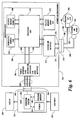
- FIG. 6 is a block diagram illustrating the functional interrelationship of a host computer and a Card used for programming hearing aids.
- a Host 236 has an Operating System 238.
- a Program Memory 240 is available for storing the hearing aid programming software.
- the PCMCIA block 242 indicates that the Host 236 supports the PCMCIA architecture.
- a User Input 244 provides input control to Host 236 for selecting hearing aid programming functions and providing data input to Host 236.
- a Display 246 provides output representations for visual observation.
- PCMCIA socket 248 cooperates with PCMCIA jack 250 mounted on Card 252.
- the PCMCIA Interface 254 includes the Card Information Structure (CIS) that is utilized for providing signals to Host 236 indicative of the nature of the Card and setting configuration parameters.
- CIS Card Information Structure
- the CIS contains information and data specific to the Card, and the components of information in CIS is comprised of tuples, where each tuple is a segment of data structure that describes a specific aspect or configuration relative to the Card. It is this information that will determine whether the Card is to be treated as a standard serial data port, a standard memory card, a unique programming card or the like.
- the combination of tuples is a metaformat.
- a Microprocessor shown within dashed block 260 includes a Processor Unit 262 that receives signals from PCMCIA Interface 254 over lines 264 and provides signals to the Interface over lines 266.
- An onboard memory system 268 is provided for use in storing program instructions.
- the Memory 268 is a volatile static random access memory (SRAM) unit of 1K capacity.
- SRAM static random access memory
- a Nonvolatile Memory 370 is provided. The Nonvolatile Memory is 0.5K and is utilized to store initialization instructions that are activated upon insertion of Card 352 into socket 348. This initialization software is often referred to as "boot-strap" software in that the system is capable of pulling itself up into operation.
- a second Memory System 272 is provided. This Memory is coupled to Processor Unit 262 for storage of hearing aid programming software during the hearing aid programming operation.
- Memory 272 is a volatile SRAM having a 32K capacity.
- the programming software will be transmitted from the Program Memory 240 of Host 236 and downloaded through the PCMCIA interface 254.
- Memory System 272 can be a nonvolatile memory with the hearing aid programming software stored therein Such nonvolatile memory can be selected from available memory systems such as Read Only Memory (ROM), Programmable Read Only Memory (PROM), Erasable Programmable Read Only Memory (EPROM), or Electrically Erasable Programmable Read Only Memory (EEPROM). It is, of course, understood that Static Random Access Memory (SRAM) memory systems normally do not hold or retain data stored therein when power is removed
- a Hearing Aid Interface 274 provides the selected signals over lines 274 to the interface connector 276.
- the Interface receives signals on lines 278 from the interface connector.
- the Hearing Aid Interface 274 functions under control of the Processor Unit 262 to select which hearing aid will be programmed, and to provide the digital to analog selections, and to provide the programmed impedance levels.
- a jack 280 couples with connector 276 and provides electrical connection over lines 282 to jack 284 that couples to hearing aid 286.
- conductors 288 coupled to jack 290 for making electrical interconnection with hearing aid 292.
- the hearing aid programming system is initialized by insertion of Card 252 into socket 248.
- the insertion processing involves application of power signals first since they are connected with the longest pins. The next longest pins cause the data, address and various control signals to be made. Finally, when the card detect pin is connected, there is a Card status change interrupt.
- Card Services queries the status of the PCMCIA slot through the Socket Services, and if the state has changed, further processing continues. At this juncture, Card Services notifies the I/O clients which in turn issues direction to Card Services to read the Card's CIS.
- the CIS tuples are transmitted to Card Services and a determination is made as to the identification of the Card 252 and the configurations specified. Depending upon the combination of tuples, that is, the metaformat, the Card 252 will be identified to the Host 236 as a particular structure. In a preferred embodiment, Card 252 is identified as a serial memory port, thereby allowing Host 236 to treat with data transmissions to and from Card 252 on that basis. It is, of course, understood that Card 252 could be configured as a serial data Card, a Memory Card or a unique programming Card thereby altering the control and communication between Host 236 and Card 252.
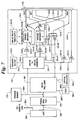
- FIG. 7 is a functional block diagram of the hearing aid programming Card.
- the PCMCIA jack 250 is coupled to PCMCIA Interface 254 via PCMCIA bus 256, and provides VCC power to the card via line 256-1.
- the Microprocessor 260 is coupled to the Program Memory 272 via the Microprocessor Bus 260-1.
- a Reset Circuit 260-2 is coupled via line 260-3 to Microprocessor 260 and functions to reset the Microprocessor when power falls below predetermined limits.
- a Crystal Oscillator 260-4 is coupled to Microprocessor 260 via line 260-5 and provides a predetermined operational frequency signal for use by Microprocessor 260.
- the Hearing Aid Interface shown enclosed in dashed block 274 includes a Digital to Analog Converter 274-1 that is coupled to a Reference Voltage 274-2 via line 274-3.
- the Reference Voltage is established at 2.5 volts DC.
- Digital to Analog Converter 274-1 is coupled to Microprocessor Bus 260-1.
- the Digital to Analog Converter functions to produce four analog voltages under control of the programming established by the Microprocessor.
- One of the four analog voltages is provided on Line 274-5 to amplifier AL, labeled 274-6, which functions to convert 0 to reference voltage levels to 0 to 15 volt level signals.
- a second voltage is provided on line 274-7 to amplifier AR, labeled 274-8, which provides a similar conversion of 0 volts to the reference voltage signals to 0 volts to 15 volt signals.
- a third voltage is provided on line 274-9 to the amplifier BL, labeled 274-10, and on line 274-11 to amplifier BR, labeled 274-12.
- Amplifiers BL and BR convert 0 volt signals to reference voltage signals to 0 volts to 15 volt signals and are used to supply power to the hearing aid being adjusted.
- amplifier BL provides the voltage signals on line 278-3 to the Left hearing aid
- amplifier BR provides the selected voltage level signals on line 274-3 to the Right hearing aid.
- An Analog Circuit Power Supply 274-13 provides predetermined power voltage levels to all analog circuits.
- a pair of input Comparators CL labeled 274-14 and CR labeled 274-15 are provided to receive output signals from the respective hearing aids.
- Comparator CL receives input signals from the Left hearing aid via line 278-4 and Comparator CR receives input signals from the Right hearing aid via line 274-4.
- the fourth analog voltage from Digital to Analog Converter 274-1 is provided on line 274-16 to Comparators CL and CR.
- a plurality of hearing aid programming circuit control lines pass from Microprocessor 260 and to the Microprocessor via lines 274-17.
- the output signals provided by comparators CL and CR advise Microprocessor 260 of parameters concerning the CL and CR hearing aids respectively.
- a Variable Impedance A circuit and Variable Impedance B circuit 274-20 each include a predetermined number of analog switches and a like number of resistance elements. In a preferred embodiment as will be described in more detail below, each of these circuits includes eight analog switches and eight resistors.
- the output from amplifier AL is provided to Variable Impedance A via line 274-21 and selection signals are provided via line 274-22. The combination of the voltage signal applied and the selection signals results in an output being provided to switch SW1 to provide the selected voltage level.
- the output from Amplifier R is provided on line 274-23 to Variable Impedance B 274-20, and with control signals on line 274-24, results in the selected voltage signals being applied to switch SW2.
- Switches SW1 and SW2 are analog switches and are essentially single pole double throw switches that are switched under control of signals provided on line 274-25.
- switch SW1 When the selection is to program the left hearing aid, switch SW1 will be in the position shown and the output signals from Variable Impedance A will be provided on line 278-1 to LF hearing aid.
- the output from Variable Impedance B 274-20 will be provided through switch SW2 to line 278-2.
- the control signals on line 274-25 will cause switches SW1 and SW2 to switch. This will result in the signal from Variable Impedance A to be provided on line 274-1, and the output from Variable Impedance B to be provided on line 274-2 to the Right hearing aid.
- Program Memory 272 the program that resides in Program Memory 272 in conjunction with the control of Microprocessor 260 will result in application of data and control signals that will read information from Left and Right hearing aids, and will cause generation of the selection of application and the determination of levels of analog voltage signals that will be applied selectively the Left and Right hearing aids.
- a more detailed circuit diagram of the functional elements will be set forth below.
Landscapes
- Health & Medical Sciences (AREA)
- General Health & Medical Sciences (AREA)
- Neurosurgery (AREA)
- Otolaryngology (AREA)
- Physics & Mathematics (AREA)
- Engineering & Computer Science (AREA)
- Acoustics & Sound (AREA)
- Signal Processing (AREA)
- Headphones And Earphones (AREA)
- Stored Programmes (AREA)
- Storage Device Security (AREA)
Applications Claiming Priority (2)
| Application Number | Priority Date | Filing Date | Title |
|---|---|---|---|
| US78232897A | 1997-01-13 | 1997-01-13 | |
| US782328 | 1997-01-13 |
Publications (2)
| Publication Number | Publication Date |
|---|---|
| EP0853443A2 true EP0853443A2 (de) | 1998-07-15 |
| EP0853443A3 EP0853443A3 (de) | 2001-09-19 |
Family
ID=25125702
Family Applications (1)
| Application Number | Title | Priority Date | Filing Date |
|---|---|---|---|
| EP97403015A Withdrawn EP0853443A3 (de) | 1997-01-13 | 1997-12-11 | System zur Programmierung von Hörhilfegeräte |
Country Status (3)
| Country | Link |
|---|---|
| US (3) | US6424722B1 (de) |
| EP (1) | EP0853443A3 (de) |
| CA (1) | CA2223660A1 (de) |
Cited By (8)
| Publication number | Priority date | Publication date | Assignee | Title |
|---|---|---|---|---|
| WO2001035695A3 (en) * | 1999-11-12 | 2002-01-24 | Siemens Hearing Instr Inc | Patient isolating programming interface for programming hearing aids |
| US6424722B1 (en) * | 1997-01-13 | 2002-07-23 | Micro Ear Technology, Inc. | Portable system for programming hearing aids |
| DE10147811C1 (de) * | 2001-09-27 | 2003-06-18 | Siemens Audiologische Technik | Verfahren zum Programmieren eines Hörgerätes, System zur Durchführung des Verfahrens sowie Hörgerät |
| WO2003081948A3 (en) * | 2002-03-19 | 2004-02-05 | Siemens Hearing Instr Inc | A hearing instrument adjustment system |
| EP1118249A4 (de) * | 1998-09-14 | 2004-08-25 | Micro Ear Technology Inc | System zur programmierung von hörgeräten |
| US7787647B2 (en) | 1997-01-13 | 2010-08-31 | Micro Ear Technology, Inc. | Portable system for programming hearing aids |
| US8300862B2 (en) | 2006-09-18 | 2012-10-30 | Starkey Kaboratories, Inc | Wireless interface for programming hearing assistance devices |
| US9344817B2 (en) | 2000-01-20 | 2016-05-17 | Starkey Laboratories, Inc. | Hearing aid systems |
Families Citing this family (43)
| Publication number | Priority date | Publication date | Assignee | Title |
|---|---|---|---|---|
| US6366863B1 (en) * | 1998-01-09 | 2002-04-02 | Micro Ear Technology Inc. | Portable hearing-related analysis system |
| DE19933192A1 (de) * | 1999-05-21 | 2000-11-23 | Bosch Gmbh Robert | Verfahren zum kundenindividuellen Anpassen eines Autoradios |
| US6904402B1 (en) * | 1999-11-05 | 2005-06-07 | Microsoft Corporation | System and iterative method for lexicon, segmentation and language model joint optimization |
| US7596237B1 (en) * | 2000-09-18 | 2009-09-29 | Phonak Ag | Method for controlling a transmission system, application of the method, a transmission system, a receiver and a hearing aid |
| CA2357236C (en) * | 2000-10-17 | 2011-09-06 | Spx Development Corporation | Plug-in module for portable computing device |
| US7050306B1 (en) * | 2000-10-17 | 2006-05-23 | Spx Corporation | Plug-in module for portable computing device |
| US7650004B2 (en) * | 2001-11-15 | 2010-01-19 | Starkey Laboratories, Inc. | Hearing aids and methods and apparatus for audio fitting thereof |
| US20040252855A1 (en) * | 2003-06-16 | 2004-12-16 | Remir Vasserman | Hearing aid |
| FI116177B (fi) * | 2004-03-04 | 2005-09-30 | Abb Oy | Taajuusmuuttajan konfigurointi |
| US7903827B1 (en) | 2004-04-13 | 2011-03-08 | Sonic Innovations, Inc. | Hearing aid programming interface with configuration on demand |
| US8095073B2 (en) * | 2004-06-22 | 2012-01-10 | Sony Ericsson Mobile Communications Ab | Method and apparatus for improved mobile station and hearing aid compatibility |
| US8073170B2 (en) * | 2005-04-12 | 2011-12-06 | Panasonic Corporation | Hearing aid adjuster |
| EP1717662A1 (de) * | 2005-04-29 | 2006-11-02 | Emma Mixed Signal C.V. | Überwachungs- und Kontrollschaltung und deren Betriebsverfahren |
| US7620195B2 (en) * | 2005-11-09 | 2009-11-17 | Zounds, Inc. | Rechargeable hearing aid |
| US8538050B2 (en) * | 2006-02-17 | 2013-09-17 | Zounds Hearing, Inc. | Method for communicating with a hearing aid |
| US7747030B2 (en) * | 2006-02-17 | 2010-06-29 | Zounds Hearing, Inc. | Method for identifying a hearing aid |
| US8948426B2 (en) * | 2006-02-17 | 2015-02-03 | Zounds Hearing, Inc. | Method for calibrating a hearing aid |
| CA2538622A1 (en) * | 2006-03-02 | 2007-09-02 | Jacques Erpelding | Hearing aid systems |
| US9100764B2 (en) * | 2007-03-21 | 2015-08-04 | Starkey Laboratory, Inc. | Systems for providing power to a hearing assistance device |
| DE102007054603B4 (de) * | 2007-11-15 | 2018-10-18 | Sivantos Pte. Ltd. | Hörvorrichtung mit gesteuerter Programmierbuchse |
| US8718288B2 (en) | 2007-12-14 | 2014-05-06 | Starkey Laboratories, Inc. | System for customizing hearing assistance devices |
| US7929722B2 (en) * | 2008-08-13 | 2011-04-19 | Intelligent Systems Incorporated | Hearing assistance using an external coprocessor |
| EP2327015B1 (de) * | 2008-09-26 | 2018-09-19 | Sonova AG | Drahtloses aktualisieren von hörgeräten |
| US20100150386A1 (en) * | 2008-12-16 | 2010-06-17 | Starkey Laboratories, Inc. | Universal serial bus interfaces for a hearing aid |
| US9319813B2 (en) * | 2009-03-31 | 2016-04-19 | Starkey Laboratories, Inc. | Fitting system with intelligent visual tools |
| US8437486B2 (en) * | 2009-04-14 | 2013-05-07 | Dan Wiggins | Calibrated hearing aid tuning appliance |
| US20100290652A1 (en) * | 2009-04-14 | 2010-11-18 | Dan Wiggins | Hearing aid tuning system and method |
| US20100290654A1 (en) * | 2009-04-14 | 2010-11-18 | Dan Wiggins | Heuristic hearing aid tuning system and method |
| US8359283B2 (en) * | 2009-08-31 | 2013-01-22 | Starkey Laboratories, Inc. | Genetic algorithms with robust rank estimation for hearing assistance devices |
| US9198800B2 (en) | 2009-10-30 | 2015-12-01 | Etymotic Research, Inc. | Electronic earplug for providing communication and protection |
| US8792661B2 (en) * | 2010-01-20 | 2014-07-29 | Audiotoniq, Inc. | Hearing aids, computing devices, and methods for hearing aid profile update |
| US8542842B2 (en) * | 2010-01-21 | 2013-09-24 | Richard Zaccaria | Remote programming system for programmable hearing aids |
| US8538049B2 (en) | 2010-02-12 | 2013-09-17 | Audiotoniq, Inc. | Hearing aid, computing device, and method for selecting a hearing aid profile |
| US8503708B2 (en) | 2010-04-08 | 2013-08-06 | Starkey Laboratories, Inc. | Hearing assistance device with programmable direct audio input port |
| US8761421B2 (en) | 2011-01-14 | 2014-06-24 | Audiotoniq, Inc. | Portable electronic device and computer-readable medium for remote hearing aid profile storage |
| WO2011159349A1 (en) | 2010-06-14 | 2011-12-22 | Audiotoniq, Inc. | Hearing aid system |
| US9167339B2 (en) | 2010-07-07 | 2015-10-20 | Iii Holdings 4, Llc | Hearing damage limiting headphones |
| EP2422830A1 (de) * | 2010-08-23 | 2012-02-29 | F. Hoffmann-La Roche AG | Lautstärkenoptimierung akustischer Warnsignale in ambulanten medizinischen Systemen |
| US8515110B2 (en) | 2010-09-30 | 2013-08-20 | Audiotoniq, Inc. | Hearing aid with automatic mode change capabilities |
| US10687150B2 (en) | 2010-11-23 | 2020-06-16 | Audiotoniq, Inc. | Battery life monitor system and method |
| CN104798382B (zh) * | 2012-12-21 | 2017-11-07 | 唯听助听器公司 | 助听器装配系统和装配助听器系统的方法 |
| EP3320696B1 (de) | 2015-07-09 | 2025-01-29 | Widex A/S | System und verfahren zur funktionsverwaltung bei einem hörgerät |
| US11032656B2 (en) | 2017-06-06 | 2021-06-08 | Gn Hearing A/S | Audition of hearing device settings, associated system and hearing device |
Family Cites Families (281)
| Publication number | Priority date | Publication date | Assignee | Title |
|---|---|---|---|---|
| US3527901A (en) | 1967-03-28 | 1970-09-08 | Dahlberg Electronics | Hearing aid having resilient housing |
| JPS52125251A (en) | 1976-02-23 | 1977-10-20 | Bio Communication Res | Electric filter and method of designing same |
| US4419544A (en) | 1982-04-26 | 1983-12-06 | Adelman Roger A | Signal processing apparatus |
| US4366349A (en) | 1980-04-28 | 1982-12-28 | Adelman Roger A | Generalized signal processing hearing aid |
| US4637402A (en) | 1980-04-28 | 1987-01-20 | Adelman Roger A | Method for quantitatively measuring a hearing defect |
| US4396806B2 (en) | 1980-10-20 | 1998-06-02 | A & L Ventures I | Hearing aid amplifier |
| SE428167B (sv) | 1981-04-16 | 1983-06-06 | Mangold Stephan | Programmerbar signalbehandlingsanordning, huvudsakligen avsedd for personer med nedsatt horsel |
| DE3205686A1 (de) | 1982-02-17 | 1983-08-25 | Robert Bosch Gmbh, 7000 Stuttgart | Hoergeraet |
| US4471490A (en) | 1983-02-16 | 1984-09-11 | Gaspare Bellafiore | Hearing aid |
| US4472747A (en) | 1983-04-19 | 1984-09-18 | Compusound, Inc. | Audio digital recording and playback system |
| US4682248A (en) | 1983-04-19 | 1987-07-21 | Compusonics Video Corporation | Audio and video digital recording and playback system |
| US4755889A (en) | 1983-04-19 | 1988-07-05 | Compusonics Video Corporation | Audio and video digital recording and playback system |
| DE8318579U1 (de) | 1983-06-27 | 1983-11-17 | Siemens AG, 1000 Berlin und 8000 München | Hörgerät |
| JPS60103798A (ja) | 1983-11-09 | 1985-06-08 | Takeshi Yoshii | 変位型骨導マイクロホン |
| CH662026A5 (de) | 1984-02-21 | 1987-08-31 | Gfeller Ag | In-dem-ohr-hoergeraet. |
| US4756312A (en) | 1984-03-22 | 1988-07-12 | Advanced Hearing Technology, Inc. | Magnetic attachment device for insertion and removal of hearing aid |
| US4628907A (en) | 1984-03-22 | 1986-12-16 | Epley John M | Direct contact hearing aid apparatus |
| US4760778A (en) * | 1984-07-20 | 1988-08-02 | Nabisco Brands, Inc. | Peanut applicator and process of making a confectionery product |
| US4548082A (en) | 1984-08-28 | 1985-10-22 | Central Institute For The Deaf | Hearing aids, signal supplying apparatus, systems for compensating hearing deficiencies, and methods |
| US4791672A (en) | 1984-10-05 | 1988-12-13 | Audiotone, Inc. | Wearable digital hearing aid and method for improving hearing ability |
| ATA374784A (de) | 1984-11-26 | 1986-04-15 | Viennatone Gmbh | Hoergeraet zum tragen im ohr oder im ohrkanal |
| IT209301Z2 (it) | 1984-12-15 | 1988-09-20 | Siemens Ag | Protesi uditiva. |
| US4712245A (en) | 1985-01-24 | 1987-12-08 | Oticon Electronics A/S | In-the-ear hearing aid with the outer wall formed by rupturing a two-component chamber |
| US4735759A (en) | 1985-02-04 | 1988-04-05 | Gaspare Bellafiore | Method of making a hearing aid |
| US4617429A (en) | 1985-02-04 | 1986-10-14 | Gaspare Bellafiore | Hearing aid |
| US4776322A (en) | 1985-05-22 | 1988-10-11 | Xomed, Inc. | Implantable electromagnetic middle-ear bone-conduction hearing aid device |
| US4606329A (en) | 1985-05-22 | 1986-08-19 | Xomed, Inc. | Implantable electromagnetic middle-ear bone-conduction hearing aid device |
| DE3540579A1 (de) | 1985-11-15 | 1987-05-27 | Toepholm & Westermann | Im-ohr-hoergeraet |
| US4947432B1 (en) | 1986-02-03 | 1993-03-09 | Programmable hearing aid | |
| US5303305A (en) | 1986-04-18 | 1994-04-12 | Raimo Robert W | Solar powered hearing aid |
| DE8613349U1 (de) | 1986-05-16 | 1987-10-29 | Siemens AG, 1000 Berlin und 8000 München | Halterung für einen Hörer |
| US4870688A (en) | 1986-05-27 | 1989-09-26 | Barry Voroba | Mass production auditory canal hearing aid |
| CH671490A5 (de) | 1986-06-18 | 1989-08-31 | Phonak Ag | |
| US4731850A (en) | 1986-06-26 | 1988-03-15 | Audimax, Inc. | Programmable digital hearing aid system |
| US4879749A (en) | 1986-06-26 | 1989-11-07 | Audimax, Inc. | Host controller for programmable digital hearing aid system |
| US4966160A (en) | 1986-10-02 | 1990-10-30 | Virtual Corporation | Acoustic admittance measuring apparatus with wide dynamic range and logarithmic output |
| CA1274184A (en) | 1986-10-07 | 1990-09-18 | Edward S. Kroetsch | Modular hearing aid with lid hinged to faceplate |
| US5068902A (en) | 1986-11-13 | 1991-11-26 | Epic Corporation | Method and apparatus for reducing acoustical distortion |
| US4811402A (en) | 1986-11-13 | 1989-03-07 | Epic Corporation | Method and apparatus for reducing acoustical distortion |
| US5002151A (en) | 1986-12-05 | 1991-03-26 | Minnesota Mining And Manufacturing Company | Ear piece having disposable, compressible polymeric foam sleeve |
| US4880076A (en) | 1986-12-05 | 1989-11-14 | Minnesota Mining And Manufacturing Company | Hearing aid ear piece having disposable compressible polymeric foam sleeve |
| US4870689A (en) | 1987-04-13 | 1989-09-26 | Beltone Electronics Corporation | Ear wax barrier for a hearing aid |
| DE3736591C3 (de) | 1987-04-13 | 1994-04-14 | Beltone Electronics Corp | Hörgerät mit Ohrschmalzschutz |
| JP2935266B2 (ja) | 1987-05-11 | 1999-08-16 | ジャンポルスキー、アーサー | 逆説的補聴器 |
| US5003607A (en) | 1987-06-03 | 1991-03-26 | Reed James S | Hearing aid with audible control for volume adjustment |
| US4817609A (en) | 1987-09-11 | 1989-04-04 | Resound Corporation | Method for treating hearing deficiencies |
| DE8712957U1 (de) | 1987-09-25 | 1989-01-19 | Siemens AG, 1000 Berlin und 8000 München | In-dem-Ohr-Hörgerät |
| US4800982A (en) | 1987-10-14 | 1989-01-31 | Industrial Research Products, Inc. | Cleanable in-the-ear electroacoustic transducer |
| US4867267A (en) | 1987-10-14 | 1989-09-19 | Industrial Research Products, Inc. | Hearing aid transducer |
| US4887299A (en) | 1987-11-12 | 1989-12-12 | Nicolet Instrument Corporation | Adaptive, programmable signal processing hearing aid |
| US4920570A (en) | 1987-12-18 | 1990-04-24 | West Henry L | Modular assistive listening system |
| US4834211A (en) | 1988-02-02 | 1989-05-30 | Kenneth Bibby | Anchoring element for in-the-ear devices |
| US4882762A (en) | 1988-02-23 | 1989-11-21 | Resound Corporation | Multi-band programmable compression system |
| JPH01137691U (de) | 1988-03-15 | 1989-09-20 | ||
| DK159357C (da) | 1988-03-18 | 1991-03-04 | Oticon As | Hoereapparat, navnlig til anbringelse i oeret |
| US5111419A (en) | 1988-03-23 | 1992-05-05 | Central Institute For The Deaf | Electronic filters, signal conversion apparatus, hearing aids and methods |
| US5016280A (en) | 1988-03-23 | 1991-05-14 | Central Institute For The Deaf | Electronic filters, hearing aids and methods |
| US5357251A (en) | 1988-03-23 | 1994-10-18 | Central Institute For The Deaf | Electronic filters, signal conversion apparatus, hearing aids and methods |
| US5225836A (en) | 1988-03-23 | 1993-07-06 | Central Institute For The Deaf | Electronic filters, repeated signal charge conversion apparatus, hearing aids and methods |
| US4972487A (en) | 1988-03-30 | 1990-11-20 | Diphon Development Ab | Auditory prosthesis with datalogging capability |
| US4869339A (en) | 1988-05-06 | 1989-09-26 | Barton James I | Harness for suppression of hearing aid feedback |
| DE8816422U1 (de) | 1988-05-06 | 1989-08-10 | Siemens AG, 1000 Berlin und 8000 München | Hörhilfegerät mit drahtloser Fernsteuerung |
| US4961230B1 (en) | 1988-05-10 | 1997-12-23 | Minnesota Mining & Mfg | Hearing aid programming interface |
| US4989251A (en) | 1988-05-10 | 1991-01-29 | Diaphon Development Ab | Hearing aid programming interface and method |
| DK159190C (da) | 1988-05-24 | 1991-03-04 | Steen Barbrand Rasmussen | Oereprop til stoejbeskyttet kommunikation mellem brugeren af oereproppen og omgivelserne |
| US5048077A (en) | 1988-07-25 | 1991-09-10 | Reflection Technology, Inc. | Telephone handset with full-page visual display |
| US5201007A (en) | 1988-09-15 | 1993-04-06 | Epic Corporation | Apparatus and method for conveying amplified sound to ear |
| NL8802355A (nl) | 1988-09-26 | 1990-04-17 | Philips Nv | In-het-oor hoorapparaat. |
| US4977976A (en) | 1988-09-27 | 1990-12-18 | Microsonic, Inc. | Connector for hearing air earmold |
| DE3834962A1 (de) | 1988-10-13 | 1990-04-19 | Siemens Ag | Digitales programmiergeraet fuer hoergeraete |
| US5027410A (en) | 1988-11-10 | 1991-06-25 | Wisconsin Alumni Research Foundation | Adaptive, programmable signal processing and filtering for hearing aids |
| JP2546271Y2 (ja) | 1988-12-12 | 1997-08-27 | ソニー株式会社 | 電気音響変換器 |
| DE3900588A1 (de) | 1989-01-11 | 1990-07-19 | Toepholm & Westermann | Fernsteuerbares, programmierbares hoergeraetesystem |
| DK45889D0 (da) | 1989-02-01 | 1989-02-01 | Medicoteknisk Inst | Fremgangsmaade til hoereapparattilpasning |
| US5014016A (en) | 1989-04-13 | 1991-05-07 | Beltone Electronics Corporation | Switching amplifier |
| US5303306A (en) * | 1989-06-06 | 1994-04-12 | Audioscience, Inc. | Hearing aid with programmable remote and method of deriving settings for configuring the hearing aid |
| JP2571128B2 (ja) | 1989-06-16 | 1997-01-16 | フオスター電機株式会社 | ヘッドホン |
| DE58909119D1 (de) | 1989-07-26 | 1995-04-20 | Siemens Audiologische Technik | Verfahren und Vorrichtung zur Herstellung einer Gehäuseschale eines In-dem-Ohr-Hörgerätes sowie nach dem Verfahren hergestellte Gehäuseschale. |
| US5083312A (en) | 1989-08-01 | 1992-01-21 | Argosy Electronics, Inc. | Programmable multichannel hearing aid with adaptive filter |
| DK406189A (da) | 1989-08-18 | 1991-02-19 | Otwidan Aps Forenede Danske Ho | Fremgangsmaade og apparat til klassifikation af et blandet tale- og stoejsignal |
| US5003608A (en) | 1989-09-22 | 1991-03-26 | Resound Corporation | Apparatus and method for manipulating devices in orifices |
| US6320969B1 (en) | 1989-09-29 | 2001-11-20 | Etymotic Research, Inc. | Hearing aid with audible alarm |
| US4953215A (en) | 1989-10-05 | 1990-08-28 | Siemens Aktiengesellschaft | Arrangement to prevent the intrusion of foreign matter into an electro-acoustical transducer |
| CH679966A5 (de) | 1989-11-29 | 1992-05-15 | Ascom Audiosys Ag | |
| NO169689C (no) | 1989-11-30 | 1992-07-22 | Nha As | Programmerbart hybrid hoereapparat med digital signalbehandling samt fremgangsmaate ved deteksjon og signalbehandlingi samme. |
| DK0448764T3 (da) | 1990-03-30 | 1994-10-03 | Siemens Audiologische Technik | Programmerbart elektrisk høreapparat |
| US5208867A (en) | 1990-04-05 | 1993-05-04 | Intelex, Inc. | Voice transmission system and method for high ambient noise conditions |
| US5185802A (en) | 1990-04-12 | 1993-02-09 | Beltone Electronics Corporation | Modular hearing aid system |
| US5061845A (en) * | 1990-04-30 | 1991-10-29 | Texas Instruments Incorporated | Memory card |
| US5226086A (en) | 1990-05-18 | 1993-07-06 | Minnesota Mining And Manufacturing Company | Method, apparatus, system and interface unit for programming a hearing aid |
| US5319163A (en) | 1990-06-07 | 1994-06-07 | Scott Robert T | Waterproof earmold-to-earphone adapter |
| US5046580A (en) | 1990-08-17 | 1991-09-10 | Barton James I | Ear plug assembly for hearing aid |
| JP2960544B2 (ja) | 1990-08-20 | 1999-10-06 | コマンディト セルスキャブ ヒンプ | 補聴器及びその製造方法 |
| JP2794920B2 (ja) | 1990-09-07 | 1998-09-10 | 松下電器産業株式会社 | イヤホン |
| ATE116091T1 (de) | 1990-10-12 | 1995-01-15 | Siemens Audiologische Technik | Hörgerät mit einem datenspeicher. |
| US5259032A (en) | 1990-11-07 | 1993-11-02 | Resound Corporation | contact transducer assembly for hearing devices |
| US5101435A (en) | 1990-11-08 | 1992-03-31 | Knowles Electronics, Inc. | Combined microphone and magnetic induction pickup system |
| US5298692A (en) | 1990-11-09 | 1994-03-29 | Kabushiki Kaisha Pilot | Earpiece for insertion in an ear canal, and an earphone, microphone, and earphone/microphone combination comprising the same |
| US5166659A (en) | 1990-11-09 | 1992-11-24 | Navarro Marvin R | Hearing aid with cerumen collection cavity |
| FR2669802B1 (fr) | 1990-11-23 | 1993-06-18 | Intrason France | Dispositif electronique formant prothese auditive programmable miniature, en particulier du type intra-conduit. |
| DE69233156T2 (de) | 1991-01-17 | 2004-07-08 | Adelman, Roger A. | Verbessertes hörgerät |
| DE4104358A1 (de) | 1991-02-13 | 1992-08-20 | Implex Gmbh | Implantierbares hoergeraet zur anregung des innenohres |
| US5282253A (en) | 1991-02-26 | 1994-01-25 | Pan Communications, Inc. | Bone conduction microphone mount |
| US5133016A (en) | 1991-03-15 | 1992-07-21 | Wallace Clark | Hearing aid with replaceable drying agent |
| ATE157838T1 (de) | 1991-04-01 | 1997-09-15 | Resound Corp | Unauffälliges kommunikationsverfahren unter verwendung einer elektromagnetischen fernbedienung |
| US5195139A (en) | 1991-05-15 | 1993-03-16 | Ensoniq Corporation | Hearing aid |
| DK0517323T3 (da) * | 1991-06-07 | 1995-12-18 | Philips Electronics Nv | Høreapparat til placering inden i øregangen |
| US5395168A (en) | 1991-06-07 | 1995-03-07 | U.S. Philips Corporation | In the ear hearing aid having extraction tube which reduces acoustic feedback |
| DE4121312C1 (de) | 1991-06-27 | 1992-05-14 | Siemens Ag, 8000 Muenchen, De | |
| US5278912A (en) | 1991-06-28 | 1994-01-11 | Resound Corporation | Multiband programmable compression system |
| DE4227826C2 (de) | 1991-08-23 | 1999-07-22 | Hitachi Ltd | Digitales Verarbeitungsgerät für akustische Signale |
| CA2079612C (en) | 1991-10-11 | 1999-08-17 | Horst Arndt | Portable programmer for hearing aids |
| DE9213343U1 (de) | 1991-10-16 | 1993-02-11 | N.V. Philips' Gloeilampenfabrieken, Eindhoven | Ausziehdraht zur Befestigung an einem Hörgerät |
| US5220612A (en) | 1991-12-20 | 1993-06-15 | Tibbetts Industries, Inc. | Non-occludable transducers for in-the-ear applications |
| US5338287A (en) | 1991-12-23 | 1994-08-16 | Miller Gale W | Electromagnetic induction hearing aid device |
| US5347477A (en) * | 1992-01-28 | 1994-09-13 | Jack Lee | Pen-based form computer |
| US5197332A (en) | 1992-02-19 | 1993-03-30 | Calmed Technology, Inc. | Headset hearing tester and hearing aid programmer |
| US5500901A (en) | 1992-02-20 | 1996-03-19 | Resistance Technology, Inc. | Frequency response adjusting device |
| US5420930A (en) | 1992-03-09 | 1995-05-30 | Shugart, Iii; M. Wilbert | Hearing aid device |
| US5422855A (en) * | 1992-03-31 | 1995-06-06 | Intel Corporation | Flash memory card with all zones chip enable circuitry |
| US5375222A (en) * | 1992-03-31 | 1994-12-20 | Intel Corporation | Flash memory card with a ready/busy mask register |
| TW200624B (en) | 1992-04-06 | 1993-02-21 | American Telephone & Telegraph | A universal authentication device for use over telephone lines |
| DE69232313T2 (de) | 1992-05-11 | 2002-06-20 | Jabra Corp., San Diego | Unidirektionales ohrmikrophon und verfahren dafür |
| US5373555A (en) | 1992-05-11 | 1994-12-13 | Jabra Corporation | Unidirectional ear microphone and gasket |
| US5402496A (en) | 1992-07-13 | 1995-03-28 | Minnesota Mining And Manufacturing Company | Auditory prosthesis, noise suppression apparatus and feedback suppression apparatus having focused adaptive filtering |
| US5302947A (en) | 1992-07-31 | 1994-04-12 | Motorola, Inc. | Method and apparatus for loading a software program from a radio modem into an external computer |
| US5345509A (en) | 1992-08-04 | 1994-09-06 | Stanton Magnetics, Inc. | Transducer with ear canal pickup |
| US5717818A (en) | 1992-08-18 | 1998-02-10 | Hitachi, Ltd. | Audio signal storing apparatus having a function for converting speech speed |
| AU4380393A (en) | 1992-09-11 | 1994-04-12 | Goldberg, Hyman | Electroacoustic speech intelligibility enhancement method and apparatus |
| US5343319A (en) | 1993-06-14 | 1994-08-30 | Motorola, Inc. | Apparatus for adapting an electrical communications port to an optical communications port |
| DE4233813C1 (de) | 1992-10-07 | 1993-11-04 | Siemens Audiologische Technik | Programmierbares hoerhilfegeraet |
| US5448637A (en) | 1992-10-20 | 1995-09-05 | Pan Communications, Inc. | Two-way communications earset |
| AU5552294A (en) * | 1992-11-12 | 1994-06-08 | New Media Corporation | Reconfigureable interface between a computer and peripheral devices |
| US5487161A (en) | 1992-11-25 | 1996-01-23 | Norand Corp. | Computerized data terminal with switchable memory address for start-up and system control instructions |
| US5327500A (en) | 1992-12-21 | 1994-07-05 | Campbell Donald E K | Cerumen barrier for custom in the ear type hearing intruments |
| US5531787A (en) | 1993-01-25 | 1996-07-02 | Lesinski; S. George | Implantable auditory system with micromachined microsensor and microactuator |
| JP2807853B2 (ja) | 1993-01-29 | 1998-10-08 | リオン株式会社 | 出力回路 |
| US5373149A (en) * | 1993-02-01 | 1994-12-13 | At&T Bell Laboratories | Folding electronic card assembly |
| US5416847A (en) | 1993-02-12 | 1995-05-16 | The Walt Disney Company | Multi-band, digital audio noise filter |
| DE4308157A1 (de) | 1993-03-15 | 1994-09-22 | Toepholm & Westermann | Fernsteuerbares, insbesondere programmierbares Hörgerätesystem |
| US5666125A (en) | 1993-03-17 | 1997-09-09 | Luxon; Norval N. | Radiation shielding and range extending antenna assembly |
| US5365593A (en) | 1993-03-19 | 1994-11-15 | Jeanie Hearring, Inc. | Decorative and operative hearing aid attachment |
| US5696970A (en) * | 1993-04-01 | 1997-12-09 | Intel Corporation | Architecture for implementing PCMCIA card services under the windows operating system in enhanced mode |
| DK39393D0 (da) | 1993-04-01 | 1993-04-01 | Madsen Electronics A S | Probe til audiometrisk apparat |
| DK46493D0 (da) | 1993-04-22 | 1993-04-22 | Frank Uldall Leonhard | Metode for signalbehandling til bestemmelse af transientforhold i auditive signaler |
| EP0629101B1 (de) | 1993-06-11 | 2001-09-05 | Ascom Audiosys Ag | Im Ohr zu tragende Hörhilfe und Verfahren zu deren Herstellung |
| EP0632609A3 (de) | 1993-06-30 | 1995-12-27 | At & T Corp | Verfahren und Vorrichtung zur Reduktion von elektromagnetischen Störungen. |
| DE4321788C1 (de) | 1993-06-30 | 1994-08-18 | Siemens Audiologische Technik | Interface für serielle Datenübertragung zwischen einem Hörgerät und einem Steuergerät |
| US5357576A (en) | 1993-08-27 | 1994-10-18 | Unitron Industries Ltd. | In the canal hearing aid with protruding shell portion |
| US5479522A (en) | 1993-09-17 | 1995-12-26 | Audiologic, Inc. | Binaural hearing aid |
| US5481616A (en) * | 1993-11-08 | 1996-01-02 | Sparkomatic Corporation | Plug-in sound accessory for portable computers |
| US5544222A (en) | 1993-11-12 | 1996-08-06 | Pacific Communication Sciences, Inc. | Cellular digtial packet data mobile data base station |
| DE4339898A1 (de) * | 1993-11-23 | 1995-06-01 | Lux Wellenhof Gabriele | Hörtestvorrichtung sowie Verfahren zum Betrieb einer solchen Hörtestvorrichtung |
| US5696993A (en) * | 1993-12-03 | 1997-12-09 | Intel Corporation | Apparatus for decoding and providing the decoded addresses to industry standard PCMCIA card through the data lines of the parallel port |
| DK174851B1 (da) | 1993-12-10 | 2003-12-22 | Madsen Electronics As | Oto-akustisk emissions-analysator |
| US5515424A (en) | 1993-12-13 | 1996-05-07 | At&T Corp. | System and method for providing selected video images to local telephone stations |
| US5555490A (en) * | 1993-12-13 | 1996-09-10 | Key Idea Development, L.L.C. | Wearable personal computer system |
| US5540597A (en) * | 1993-12-15 | 1996-07-30 | International Business Machines Corporation | All flex PCMCIA-format cable |
| DE4343702C1 (de) | 1993-12-21 | 1995-03-09 | Siemens Audiologische Technik | Am Kopf tragbares Hörgerät |
| US5736727A (en) * | 1994-01-11 | 1998-04-07 | Nakata; Eiichi | IC communication card |
| US5440449A (en) * | 1994-01-26 | 1995-08-08 | Intel Corporation | Wireless communication connector and module for notebook personal computers |
| US5561446A (en) * | 1994-01-28 | 1996-10-01 | Montlick; Terry F. | Method and apparatus for wireless remote information retrieval and pen-based data entry |
| US5574654A (en) | 1994-02-24 | 1996-11-12 | Dranetz Technologies, Inc. | Electrical parameter analyzer |
| DK0674462T3 (da) | 1994-03-23 | 2002-12-16 | Siemens Audiologische Technik | Indretning til tilpasning af programmerbare høreapparater |
| EP0676909A1 (de) | 1994-03-31 | 1995-10-11 | Siemens Audiologische Technik GmbH | Programmierbares Hörgerät |
| US5502769A (en) | 1994-04-28 | 1996-03-26 | Starkey Laboratories, Inc. | Interface module for programmable hearing instrument |
| DE59410235D1 (de) | 1994-05-06 | 2003-03-06 | Siemens Audiologische Technik | Programmierbares Hörgerät |
| US5445525A (en) * | 1994-05-12 | 1995-08-29 | Intel Corporation | Interconnection scheme for integrated circuit card with auxiliary contacts |
| DE4418203C2 (de) | 1994-05-25 | 1997-09-11 | Siemens Audiologische Technik | Verfahren zum Anpassen der Übertragungscharakteristik eines Hörgerätes |
| ITGE940067A1 (it) | 1994-05-27 | 1995-11-27 | Ernes S R L | Protesi acustica endoauricolare. |
| US5572683A (en) * | 1994-06-15 | 1996-11-05 | Intel Corporation | Firmware selectable address location and size for cis byte and ability to choose between common memory mode and audio mode by using two external pins |
| US5500902A (en) | 1994-07-08 | 1996-03-19 | Stockham, Jr.; Thomas G. | Hearing aid device incorporating signal processing techniques |
| US5603096A (en) | 1994-07-11 | 1997-02-11 | Qualcomm Incorporated | Reverse link, closed loop power control in a code division multiple access system |
| US5590373A (en) | 1994-07-25 | 1996-12-31 | International Business Machines Corporation | Field programming apparatus and method for updating programs in a personal communications device |
| US6095820A (en) | 1995-10-27 | 2000-08-01 | Rangestar International Corporation | Radiation shielding and range extending antenna assembly |
| US5559501A (en) | 1994-08-12 | 1996-09-24 | Lucent Technologies Inc. | Plug-in wireless module for operation with portable wireless enabled host equipment |
| US5645074A (en) | 1994-08-17 | 1997-07-08 | Decibel Instruments, Inc. | Intracanal prosthesis for hearing evaluation |
| US5825894A (en) | 1994-08-17 | 1998-10-20 | Decibel Instruments, Inc. | Spatialization for hearing evaluation |
| US5785661A (en) | 1994-08-17 | 1998-07-28 | Decibel Instruments, Inc. | Highly configurable hearing aid |
| FR2724080B1 (fr) | 1994-08-23 | 1996-12-20 | Ebauchesfabrik Eta Ag | Telephone portatif sans fil laissant les mains libres |
| US5659621A (en) | 1994-08-31 | 1997-08-19 | Argosy Electronics, Inc. | Magnetically controllable hearing aid |
| US5553152A (en) | 1994-08-31 | 1996-09-03 | Argosy Electronics, Inc. | Apparatus and method for magnetically controlling a hearing aid |
| US5546590A (en) | 1994-09-19 | 1996-08-13 | Intel Corporation | Power down state machine for PCMCIA PC card applications |
| US5572594A (en) | 1994-09-27 | 1996-11-05 | Devoe; Lambert | Ear canal device holder |
| WO1996015517A2 (en) | 1994-11-02 | 1996-05-23 | Visible Interactive Corporation | Interactive personal interpretive device and system for retrieving information about a plurality of objects |
| US5640490A (en) | 1994-11-14 | 1997-06-17 | Fonix Corporation | User independent, real-time speech recognition system and method |
| US5581747A (en) | 1994-11-25 | 1996-12-03 | Starkey Labs., Inc. | Communication system for programmable devices employing a circuit shift register |
| US6466678B1 (en) | 1994-11-30 | 2002-10-15 | Etymotic Research, Inc. | Hearing aid having digital damping |
| US5926388A (en) | 1994-12-09 | 1999-07-20 | Kimbrough; Thomas C. | System and method for producing a three dimensional relief |
| US5602925A (en) | 1995-01-31 | 1997-02-11 | Etymotic Research, Inc. | Hearing aid with programmable resistor |
| CA2168087A1 (en) | 1995-02-13 | 1996-08-14 | James S. Coman | Operating system based remote communication system |
| US5619396A (en) * | 1995-02-21 | 1997-04-08 | Intel Corporation | Modular PCMCIA card |
| DK21096A (da) | 1995-03-01 | 1996-09-02 | Siemens Audiologische Technik | I øregangen bærbart, programmerbart høreapparat |
| US5649001A (en) | 1995-03-24 | 1997-07-15 | U.S. Robotics Mobile Communications Corp. | Method and apparatus for adapting a communication interface device to multiple networks |
| JP2993396B2 (ja) | 1995-05-12 | 1999-12-20 | 三菱電機株式会社 | 音声加工フィルタ及び音声合成装置 |
| AT401595B (de) | 1995-05-18 | 1996-10-25 | Viennatone Ag | Hörgerät |
| US6078675A (en) | 1995-05-18 | 2000-06-20 | Gn Netcom A/S | Communication system for users of hearing aids |
| US5626629A (en) | 1995-05-31 | 1997-05-06 | Advanced Bionics Corporation | Programming of a speech processor for an implantable cochlear stimulator |
| US5721783A (en) * | 1995-06-07 | 1998-02-24 | Anderson; James C. | Hearing aid with wireless remote processor |
| US5606621A (en) | 1995-06-14 | 1997-02-25 | Siemens Hearing Instruments, Inc. | Hybrid behind-the-ear and completely-in-canal hearing aid |
| US6041046A (en) | 1995-07-14 | 2000-03-21 | Omnipoint Corporation | Cyclic time hopping in time division multiple access communication system |
| US5601091A (en) | 1995-08-01 | 1997-02-11 | Sonamed Corporation | Audiometric apparatus and association screening method |
| US5737706A (en) | 1995-08-03 | 1998-04-07 | Bell Atlantic Network Services, Inc. | Power system supporting CDPD operation |
| US5664228A (en) * | 1995-08-09 | 1997-09-02 | Microsoft Corporation | Portable information device and system and method for downloading executable instructions from a computer to the portable information device |
| FR2738426B1 (fr) | 1995-08-29 | 1998-02-13 | Univ Neuchatel | Dispositif de traitement numerique d'un signal analogique devant etre restitue sous forme analogique |
| US5822442A (en) | 1995-09-11 | 1998-10-13 | Starkey Labs, Inc. | Gain compression amplfier providing a linear compression function |
| US5862238A (en) | 1995-09-11 | 1999-01-19 | Starkey Laboratories, Inc. | Hearing aid having input and output gain compression circuits |
| EP0763903A1 (de) | 1995-09-15 | 1997-03-19 | Hagenuk Telecom GmbH | Übertragungsgerät |
| US6002776A (en) | 1995-09-18 | 1999-12-14 | Interval Research Corporation | Directional acoustic signal processor and method therefor |
| US5812936A (en) | 1995-09-19 | 1998-09-22 | Lucent Technologies, Inc. | Energy-efficient time-division radio that reduces the induction of baseband interference |
| EP0765042A3 (de) | 1995-09-19 | 2000-01-19 | AT&T Corp. | Zeitmultiplexfunkgerät mit reduzierter Basisbandinterferenz |
| US5819162A (en) | 1995-09-29 | 1998-10-06 | Northern Telecom Limited | Electro-magnetic interference shield for a telephone handset |
| EP0855129A1 (de) | 1995-10-10 | 1998-07-29 | AudioLogic, Incorporated | Digitales signalverarbeitendes hörgerät mit verarbeitungsstrategiewahl |
| US6118877A (en) | 1995-10-12 | 2000-09-12 | Audiologic, Inc. | Hearing aid with in situ testing capability |
| WO1997017819A1 (en) | 1995-11-07 | 1997-05-15 | Siemens Hearing Instruments, Inc. | System for programming programmable hearing aids and updating database of patient information |
| DE19541648C2 (de) | 1995-11-08 | 2000-10-05 | Siemens Audiologische Technik | Einrichtung zur Übertragung von Programmierdaten an Hörhilfegeräte |
| WO1997019573A1 (en) | 1995-11-20 | 1997-05-29 | Resound Corporation | An apparatus and method for monitoring magnetic audio systems |
| US6016962A (en) * | 1995-11-22 | 2000-01-25 | Itt Manufacturing Enterprises, Inc. | IC communication card |
| US5809017A (en) | 1995-12-19 | 1998-09-15 | Telefonaktiebolaget Lm Ericsson | Method of minimizing undersirable RF emissions within a TDMA system |
| JPH09182194A (ja) | 1995-12-27 | 1997-07-11 | Nec Corp | 補聴器 |
| CA2166357C (en) * | 1995-12-29 | 2002-07-02 | Albert John Kerklaan | Infrared transceiver for an application interface card |
| DE19600234A1 (de) | 1996-01-05 | 1997-07-10 | Auric Hoersysteme Gmbh & Co Kg | Verfahren und Anordnung zum Einstellen und Anpassen von Hörgeräten |
| US6122500A (en) | 1996-01-24 | 2000-09-19 | Ericsson, Inc. | Cordless time-duplex phone with improved hearing-aid compatible mode |
| US5842115A (en) | 1996-01-25 | 1998-11-24 | Ericsson Inc. | Time-duplex wireless telephone with improved hearing-aid compatibility |
| FR2744817B1 (fr) | 1996-02-08 | 1998-04-03 | Ela Medical Sa | Dispositif medical implantable actif et son programmateur externe a mise a jour automatique du logiciel |
| US6009311A (en) | 1996-02-21 | 1999-12-28 | Etymotic Research | Method and apparatus for reducing audio interference from cellular telephone transmissions |
| US5671368A (en) * | 1996-02-22 | 1997-09-23 | O2 Micro, Inc. | PC card controller circuit to detect exchange of PC cards while in suspend mode |
| US5740165A (en) | 1996-02-29 | 1998-04-14 | Lucent Technologies Inc. | Wireless TDMA transmitter with reduced interference |
| US5824022A (en) | 1996-03-07 | 1998-10-20 | Advanced Bionics Corporation | Cochlear stimulation system employing behind-the-ear speech processor with remote control |
| US5784628A (en) | 1996-03-12 | 1998-07-21 | Microsoft Corporation | Method and system for controlling power consumption in a computer system |
| NL1002783C2 (nl) | 1996-04-03 | 1997-10-06 | Microtronic Nederland Bv | Geïntegreerde microfoon/versterker-eenheid, en versterkermodule daarvoor. |
| US5917812A (en) | 1996-04-16 | 1999-06-29 | Qualcomm Incorporated | System and method for reducing interference generated by a digital communication device |
| US6205190B1 (en) | 1996-04-29 | 2001-03-20 | Qualcomm Inc. | System and method for reducing interference generated by a CDMA communications device |
| US5811681A (en) | 1996-04-29 | 1998-09-22 | Finnigan Corporation | Multimedia feature for diagnostic instrumentation |
| US5915031A (en) | 1996-04-30 | 1999-06-22 | Siemens Hearing Instruments, Inc. | Modularized hearing aid circuit structure |
| US6088465A (en) | 1996-04-30 | 2000-07-11 | Siemens Hearing Instruments, Inc. | Door-dependent system for enabling and adjusting options on hearing aids |
| US5890016A (en) | 1996-05-07 | 1999-03-30 | Intel Corporation | Hybrid computer add in device for selectively coupling to personal computer or solely to another add in device for proper functioning |
| US5887067A (en) | 1996-05-10 | 1999-03-23 | General Signal Corporation | Audio communication system for a life safety network |
| US5864708A (en) | 1996-05-20 | 1999-01-26 | Croft; Daniel I. | Docking station for docking a portable computer with a wireless interface |
| US5926500A (en) | 1996-05-28 | 1999-07-20 | Qualcomm Incorporated | Reduced peak-to-average transmit power high data rate CDMA wireless communication system |
| US5930230A (en) | 1996-05-28 | 1999-07-27 | Qualcomm Incorporated | High data rate CDMA wireless communication system |
| US5996022A (en) | 1996-06-03 | 1999-11-30 | Webtv Networks, Inc. | Transcoding data in a proxy computer prior to transmitting the audio data to a client |
| EP0814634B1 (de) | 1996-06-21 | 2002-10-02 | Siemens Audiologische Technik GmbH | Programmierbares Hörgerätesystem und Verfahren zum Ermitteln optimaler Parametersätze bei einem Hörhilfegerät |
| US6493453B1 (en) | 1996-07-08 | 2002-12-10 | Douglas H. Glendon | Hearing aid apparatus |
| US5883927A (en) | 1996-07-31 | 1999-03-16 | Nextwave Telecom, Inc. | Digital wireless telecommunication device for reduced interference with hearing aids |
| US5814095A (en) | 1996-09-18 | 1998-09-29 | Implex Gmbh Spezialhorgerate | Implantable microphone and implantable hearing aids utilizing same |
| US5870481A (en) | 1996-09-25 | 1999-02-09 | Qsound Labs, Inc. | Method and apparatus for localization enhancement in hearing aids |
| US5784602A (en) | 1996-10-08 | 1998-07-21 | Advanced Risc Machines Limited | Method and apparatus for digital signal processing for integrated circuit architecture |
| US5909497A (en) | 1996-10-10 | 1999-06-01 | Alexandrescu; Eugene | Programmable hearing aid instrument and programming method thereof |
| US6058197A (en) | 1996-10-11 | 2000-05-02 | Etymotic Research | Multi-mode portable programming device for programmable auditory prostheses |
| US6112103A (en) | 1996-12-03 | 2000-08-29 | Puthuff; Steven H. | Personal communication device |
| DE19651126A1 (de) | 1996-12-09 | 1998-06-18 | Siemens Audiologische Technik | Serielles, bidirektionales Datenübermittlungsverfahren |
| US5757933A (en) | 1996-12-11 | 1998-05-26 | Micro Ear Technology, Inc. | In-the-ear hearing aid with directional microphone system |
| US5953506A (en) | 1996-12-17 | 1999-09-14 | Adaptive Media Technologies | Method and apparatus that provides a scalable media delivery system |
| US5864820A (en) | 1996-12-20 | 1999-01-26 | U S West, Inc. | Method, system and product for mixing of encoded audio signals |
| US5864813A (en) | 1996-12-20 | 1999-01-26 | U S West, Inc. | Method, system and product for harmonic enhancement of encoded audio signals |
| US5845251A (en) | 1996-12-20 | 1998-12-01 | U S West, Inc. | Method, system and product for modifying the bandwidth of subband encoded audio data |
| US7787647B2 (en) * | 1997-01-13 | 2010-08-31 | Micro Ear Technology, Inc. | Portable system for programming hearing aids |
| US6424722B1 (en) * | 1997-01-13 | 2002-07-23 | Micro Ear Technology, Inc. | Portable system for programming hearing aids |
| US6449662B1 (en) | 1997-01-13 | 2002-09-10 | Micro Ear Technology, Inc. | System for programming hearing aids |
| US5987513A (en) | 1997-02-19 | 1999-11-16 | Wipro Limited | Network management using browser-based technology |
| US5827179A (en) | 1997-02-28 | 1998-10-27 | Qrs Diagnostic, Llc | Personal computer card for collection for real-time biological data |
| US5956330A (en) | 1997-03-31 | 1999-09-21 | Resound Corporation | Bandwidth management in a heterogenous wireless personal communications system |
| US6144748A (en) | 1997-03-31 | 2000-11-07 | Resound Corporation | Standard-compatible, power efficient digital audio interface |
| US5751820A (en) | 1997-04-02 | 1998-05-12 | Resound Corporation | Integrated circuit design for a personal use wireless communication system utilizing reflection |
| US6021207A (en) | 1997-04-03 | 2000-02-01 | Resound Corporation | Wireless open ear canal earpiece |
| US6181801B1 (en) | 1997-04-03 | 2001-01-30 | Resound Corporation | Wired open ear canal earpiece |
| US5960346A (en) | 1997-04-03 | 1999-09-28 | Ericsson, Inc. | Apparatus and method for reducing magnetic fields in radio telephones |
| US6236731B1 (en) | 1997-04-16 | 2001-05-22 | Dspfactory Ltd. | Filterbank structure and method for filtering and separating an information signal into different bands, particularly for audio signal in hearing aids |
| US5825631A (en) | 1997-04-16 | 1998-10-20 | Starkey Laboratories | Method for connecting two substrates in a thick film hybrid circuit |
| EP0976302B1 (de) | 1997-04-16 | 2004-12-15 | DSPFactory Ltd. | Gerät und verfahren zur programmierung eines hörhilfegerätes |
| US6240192B1 (en) | 1997-04-16 | 2001-05-29 | Dspfactory Ltd. | Apparatus for and method of filtering in an digital hearing aid, including an application specific integrated circuit and a programmable digital signal processor |
| US6684063B2 (en) | 1997-05-02 | 2004-01-27 | Siemens Information & Communication Networks, Inc. | Intergrated hearing aid for telecommunications devices |
| DE19721982C2 (de) | 1997-05-26 | 2001-08-02 | Siemens Audiologische Technik | Kommunikationssystem für Benutzer einer tragbaren Hörhilfe |
| CA2207184A1 (en) | 1997-05-27 | 1998-11-27 | Eugene Alexandrescu | Hearing instrument with head activated switch |
| US6032866A (en) * | 1997-09-10 | 2000-03-07 | Motorola, Inc. | Foldable apparatus having an interface |
| US6009480A (en) | 1997-09-12 | 1999-12-28 | Telxon Corporation | Integrated device driver wherein the peripheral downloads the device driver via an I/O device after it is determined that the I/O device has the resources to support the peripheral device |
| US6366863B1 (en) | 1998-01-09 | 2002-04-02 | Micro Ear Technology Inc. | Portable hearing-related analysis system |
| GB9814414D0 (en) * | 1998-07-03 | 1998-09-02 | Celltech Therapeutics Ltd | Chemical compounds |
| DE29905172U1 (de) | 1999-03-20 | 1999-06-10 | auric Hörsysteme GmbH & Co. KG, 48429 Rheine | Handprogrammer |
| US6490427B2 (en) | 2000-12-11 | 2002-12-03 | Xerox Corporation | Stationary toner delivery device with clock pulses |
-
1997
- 1997-07-18 US US08/896,484 patent/US6424722B1/en not_active Expired - Lifetime
- 1997-12-04 CA CA002223660A patent/CA2223660A1/en not_active Abandoned
- 1997-12-11 EP EP97403015A patent/EP0853443A3/de not_active Withdrawn
-
2002
- 2002-03-11 US US10/096,335 patent/US6888948B2/en not_active Expired - Lifetime
-
2005
- 2005-01-14 US US11/036,197 patent/US7451256B2/en not_active Expired - Fee Related
Cited By (14)
| Publication number | Priority date | Publication date | Assignee | Title |
|---|---|---|---|---|
| US7054957B2 (en) | 1997-01-13 | 2006-05-30 | Micro Ear Technology, Inc. | System for programming hearing aids |
| US6424722B1 (en) * | 1997-01-13 | 2002-07-23 | Micro Ear Technology, Inc. | Portable system for programming hearing aids |
| US7929723B2 (en) | 1997-01-13 | 2011-04-19 | Micro Ear Technology, Inc. | Portable system for programming hearing aids |
| US7787647B2 (en) | 1997-01-13 | 2010-08-31 | Micro Ear Technology, Inc. | Portable system for programming hearing aids |
| EP1118249A4 (de) * | 1998-09-14 | 2004-08-25 | Micro Ear Technology Inc | System zur programmierung von hörgeräten |
| WO2001035695A3 (en) * | 1999-11-12 | 2002-01-24 | Siemens Hearing Instr Inc | Patient isolating programming interface for programming hearing aids |
| JP2003534674A (ja) * | 1999-11-12 | 2003-11-18 | シーメンス ヒアリング インストルメンツ インコーポレイテッド | 補聴器をプログラムするための患者分離プログラムインターフェース |
| US6590986B1 (en) | 1999-11-12 | 2003-07-08 | Siemens Hearing Instruments, Inc. | Patient-isolating programming interface for programming hearing aids |
| US9344817B2 (en) | 2000-01-20 | 2016-05-17 | Starkey Laboratories, Inc. | Hearing aid systems |
| US9357317B2 (en) | 2000-01-20 | 2016-05-31 | Starkey Laboratories, Inc. | Hearing aid systems |
| EP1252799B2 (de) † | 2000-01-20 | 2022-11-02 | Starkey Laboratories, Inc. | Hörhilfegerät-systeme |
| DE10147811C1 (de) * | 2001-09-27 | 2003-06-18 | Siemens Audiologische Technik | Verfahren zum Programmieren eines Hörgerätes, System zur Durchführung des Verfahrens sowie Hörgerät |
| WO2003081948A3 (en) * | 2002-03-19 | 2004-02-05 | Siemens Hearing Instr Inc | A hearing instrument adjustment system |
| US8300862B2 (en) | 2006-09-18 | 2012-10-30 | Starkey Kaboratories, Inc | Wireless interface for programming hearing assistance devices |
Also Published As
| Publication number | Publication date |
|---|---|
| EP0853443A3 (de) | 2001-09-19 |
| US6888948B2 (en) | 2005-05-03 |
| US6424722B1 (en) | 2002-07-23 |
| US20050196002A1 (en) | 2005-09-08 |
| US20020168075A1 (en) | 2002-11-14 |
| CA2223660A1 (en) | 1998-07-13 |
| US7451256B2 (en) | 2008-11-11 |
Similar Documents
| Publication | Publication Date | Title |
|---|---|---|
| EP0853443A2 (de) | System zur Programmierung von Hörhilfegeräte | |
| EP1118249B1 (de) | System zur programmierung von hörgeräten | |
| EP1596633B1 (de) | Tragbares System zur Programmierung von Hörhilfegeräten | |
| US6895345B2 (en) | Portable hearing-related analysis system | |
| AU614825B2 (en) | Calibration device and auditory prosthesis having calibration information | |
| JP2516793Y2 (ja) | 補聴器プログラミング装置 | |
| US8027496B2 (en) | Hearing device with peripheral identification units | |
| EP2071875B1 (de) | System zur Anpassung von Hörhilfevorrichtungen | |
| US5710820A (en) | Programmable hearing aid | |
| CN105933838B (zh) | 使听力装置适应用户耳朵的方法及听力装置 | |
| EP2061274A1 (de) | Hörgerät mit Empfängern mit verschiedenen Leistungseigenschaften | |
| EP2637423A1 (de) | Testvorrichtung für ein Lautsprechermodul einer Hörvorrichtung | |
| JP2003339760A (ja) | 聴覚人工器官にデータを記録する方法、聴覚人工器官、コンピュータプログラムおよびデータ担体 | |
| US20040208330A1 (en) | Device and method to adjust a hearing device | |
| US6954675B2 (en) | Audio chip with switchable audio output pathways | |
| Widin | Evolution of digital technology in hearing aids |
Legal Events
| Date | Code | Title | Description |
|---|---|---|---|
| PUAI | Public reference made under article 153(3) epc to a published international application that has entered the european phase |
Free format text: ORIGINAL CODE: 0009012 |
|
| AK | Designated contracting states |
Kind code of ref document: A2 Designated state(s): AT BE CH DE DK ES FI FR GB GR IE IT LI LU MC NL PT SE Kind code of ref document: A2 Designated state(s): BE CH DE DK FR GB IT LI NL |
|
| AX | Request for extension of the european patent |
Free format text: AL;LT;LV;MK;RO;SI |
|
| PUAL | Search report despatched |
Free format text: ORIGINAL CODE: 0009013 |
|
| AK | Designated contracting states |
Kind code of ref document: A3 Designated state(s): AT BE CH DE DK ES FI FR GB GR IE IT LI LU MC NL PT SE |
|
| AX | Request for extension of the european patent |
Free format text: AL;LT;LV;MK;RO;SI |
|
| RIC1 | Information provided on ipc code assigned before grant |
Free format text: 7H 04R 25/00 A, 7G 06F 1/16 B |
|
| 17P | Request for examination filed |
Effective date: 20020314 |
|
| AKX | Designation fees paid |
Free format text: BE CH DE DK FR GB IT LI NL |
|
| 17Q | First examination report despatched |
Effective date: 20070529 |
|
| STAA | Information on the status of an ep patent application or granted ep patent |
Free format text: STATUS: THE APPLICATION IS DEEMED TO BE WITHDRAWN |
|
| 18D | Application deemed to be withdrawn |
Effective date: 20110210 |