EP0854190A2 - Composition améliorée à base de cellulase pour le traitement de textiles contenant de la cellulose - Google Patents
Composition améliorée à base de cellulase pour le traitement de textiles contenant de la cellulose Download PDFInfo
- Publication number
- EP0854190A2 EP0854190A2 EP97660126A EP97660126A EP0854190A2 EP 0854190 A2 EP0854190 A2 EP 0854190A2 EP 97660126 A EP97660126 A EP 97660126A EP 97660126 A EP97660126 A EP 97660126A EP 0854190 A2 EP0854190 A2 EP 0854190A2
- Authority
- EP
- European Patent Office
- Prior art keywords
- cellulase
- cellulase composition
- egii
- cellulose
- textile materials
- Prior art date
- Legal status (The legal status is an assumption and is not a legal conclusion. Google has not performed a legal analysis and makes no representation as to the accuracy of the status listed.)
- Granted
Links
Images


Classifications
-
- D—TEXTILES; PAPER
- D06—TREATMENT OF TEXTILES OR THE LIKE; LAUNDERING; FLEXIBLE MATERIALS NOT OTHERWISE PROVIDED FOR
- D06P—DYEING OR PRINTING TEXTILES; DYEING LEATHER, FURS OR SOLID MACROMOLECULAR SUBSTANCES IN ANY FORM
- D06P5/00—Other features in dyeing or printing textiles, or dyeing leather, furs, or solid macromolecular substances in any form
- D06P5/02—After-treatment
-
- C—CHEMISTRY; METALLURGY
- C12—BIOCHEMISTRY; BEER; SPIRITS; WINE; VINEGAR; MICROBIOLOGY; ENZYMOLOGY; MUTATION OR GENETIC ENGINEERING
- C12N—MICROORGANISMS OR ENZYMES; COMPOSITIONS THEREOF; PROPAGATING, PRESERVING, OR MAINTAINING MICROORGANISMS; MUTATION OR GENETIC ENGINEERING; CULTURE MEDIA
- C12N9/00—Enzymes; Proenzymes; Compositions thereof; Processes for preparing, activating, inhibiting, separating or purifying enzymes
- C12N9/14—Hydrolases (3)
- C12N9/24—Hydrolases (3) acting on glycosyl compounds (3.2)
- C12N9/2402—Hydrolases (3) acting on glycosyl compounds (3.2) hydrolysing O- and S- glycosyl compounds (3.2.1)
- C12N9/2405—Glucanases
- C12N9/2434—Glucanases acting on beta-1,4-glucosidic bonds
- C12N9/2437—Cellulases (3.2.1.4; 3.2.1.74; 3.2.1.91; 3.2.1.150)
-
- C—CHEMISTRY; METALLURGY
- C12—BIOCHEMISTRY; BEER; SPIRITS; WINE; VINEGAR; MICROBIOLOGY; ENZYMOLOGY; MUTATION OR GENETIC ENGINEERING
- C12Y—ENZYMES
- C12Y302/00—Hydrolases acting on glycosyl compounds, i.e. glycosylases (3.2)
- C12Y302/01—Glycosidases, i.e. enzymes hydrolysing O- and S-glycosyl compounds (3.2.1)
- C12Y302/01004—Cellulase (3.2.1.4), i.e. endo-1,4-beta-glucanase
-
- D—TEXTILES; PAPER
- D06—TREATMENT OF TEXTILES OR THE LIKE; LAUNDERING; FLEXIBLE MATERIALS NOT OTHERWISE PROVIDED FOR
- D06L—DRY-CLEANING, WASHING OR BLEACHING FIBRES, FILAMENTS, THREADS, YARNS, FABRICS, FEATHERS OR MADE-UP FIBROUS GOODS; BLEACHING LEATHER OR FURS
- D06L4/00—Bleaching fibres, filaments, threads, yarns, fabrics, feathers or made-up fibrous goods; Bleaching leather or furs
- D06L4/40—Bleaching fibres, filaments, threads, yarns, fabrics, feathers or made-up fibrous goods; Bleaching leather or furs using enzymes
-
- D—TEXTILES; PAPER
- D06—TREATMENT OF TEXTILES OR THE LIKE; LAUNDERING; FLEXIBLE MATERIALS NOT OTHERWISE PROVIDED FOR
- D06M—TREATMENT, NOT PROVIDED FOR ELSEWHERE IN CLASS D06, OF FIBRES, THREADS, YARNS, FABRICS, FEATHERS OR FIBROUS GOODS MADE FROM SUCH MATERIALS
- D06M16/00—Biochemical treatment of fibres, threads, yarns, fabrics, or fibrous goods made from such materials, e.g. enzymatic
- D06M16/003—Biochemical treatment of fibres, threads, yarns, fabrics, or fibrous goods made from such materials, e.g. enzymatic with enzymes or microorganisms
Definitions
- the present invention is directed to a cellulase composition having an elevated content of EGII type cellulase.
- Said cellulase composition is obtainable from bacteria or fungi, especially from Trichoderma.
- the invention is also related to treatment media containing said cellulose composition as well as to methods for treating and finishing textile materials.
- Biofinishing has been used to remove all kinds of impurities and individual loose fibre ends that protrude from the textile surface.
- the key benefits offered by biofinishing with cellulases are permanent improval of depilling, cleared surface structure by reduced fuzz, improved textile handle, such as softness, smoothness and a silkier feel, improved drapability and brighter colors of the textile and an improved capability of absorbing moisture.
- cellulases have been used to impart a stone-washed appearance to denims. Complete biodegradation of cellulases is an advantage of cellulase treatment, which consequently stands out as an environmentally-friendly alternative for chemical treatment.
- Strength loss of the fabric is a problem associated with cellulase treatment.
- the strength loss is caused by cellulase-induced hydrolysis of beta-1,4-glucosidic bonds of cellulose, which in turn results in partial degradation of cellulosic polymer, and further, can result in strength loss of the fabric.
- cellulase derived from fungi for example from Trichoderma reesei
- cellulase being composed of cellobiohydrolase (CBH), endoglucanase (EG) and beta-glucosidase (BG) type components.
- CBH and EG components can further be divided into CBHI and CBHII types and into several various EG types, the main types of the latter being EGI and EGII.
- the BG components do not react with cellulosic polymers, but further cleave the degradation products, for example cellobiose, that are formed as a result of the synergistic effect of the CBH and EG components.
- a method for treating cotton fabrics, prior to dyeing and finishing, with cellulase solution in order to remove lint and loose surface fibres to impart a better appearance to the fabric is disclosed in the US Patent No. 5,232,851.
- the employed cellulase can be produced, for example, by Trichoderma reesei, T. koningii, Penicillium sp or Humicola insolens species.
- CYTOLASE 123 -cellulase (Genencor Int.) was used with no detailed composition given in said publication.
- the cellulase solution may contain buffers, surfactants, abrasion agents, and the like. After treatment, the tensile strength of the cotton woven fabric was reported to be at least 50 percent of the tensile strength of untreated fabric.
- the original cellulase composition obtainable from the fermentation medium which is derived directly from the microbes, for example from T . reesei fungi, is seldom suitable as such to give a desired result.
- the original cellulase composition may comprise about 45-80% CBHI, 10-25% CBHII, 5-15% EGI and 8-15% EGII of the total cellulase protein content.
- the interrelations of the CBH and EG components contained in a composition may hence be changed by various methods known to persons skilled in the art. Such methods include, for example, fractionation and genetic engineering.
- the US Patent No. 5,120,463 for example discloses a detergent composition comprising a surfactant and additionally 0.002 to 10 weight percent of cellulase composed of CBHI type and EG type components with the ratio of CBHI to (EGI + EGII) being ⁇ 10:1.
- the International Patent Application WO 93/22428 discloses a method for treating cotton fabrics with fungal cellulase compositions comprising CBHI type and EG type components in a weight ratio greater than 10:1.
- the application mentions that the tensile strength of treated fabric is at least about 50 percent of the tensile strength of untreated fabric. No test results, however, are given.
- the cellulase compositions contain all EG type components to all CBH type components in a ratio of greater than 5:1.
- Cellulases have been employed also in the finishing of denim fabrics or denim garments, in order to impart a stone-washed appearance to the fabric.
- pumice stones The stone-wash was traditionally performed using so-called pumice stones.
- pumice stones causes laundries several problems, such as the heaviness of handling the stones, the laborious picking by hand of the stones from among the garments, significant wear to the machines with resulting high repair and investment costs, the growing amounts of waste caused by broken stones and, additionally, the complicated access to pumice stones, as the mining of pumice stones is forbidden in certain countries on environmental grounds.
- a method for imparting a stone-washed appearance to denim garments by cellulase enzymes is disclosed, for example, in the US Patent No. 4,832,864. Also in this case, the problem is the weakening, i.e. strength loss, of denim as a result of sole enzyme treatment employed to impart a stone-washed appearance to the fabric.
- the activity of the cellulase composition depends on the acidity of the environment in which the treatment is carried out. Most generally, the activity is at its highest at slightly acid pHs, even though compositions functioning in a neutral environment may also be employed, and even such cellulase compositions are known to act in alkaline conditions. However, compositions used in a neutral or alkaline environment have a prolonged reaction time, i.e. the compositions are acting slower. Because time means money, time consuming treatments are not only less time-effective but also less cost-effective. Alternatively, more equipment is required to treat the same amount of fabrics in the same time. This is also expensive and requires additional space and facilities. Naturally, buffers known to persons skilled in the art are used to adjust the acidity of cellulase treatment media, but it does not solve all the problems.
- a detergent composition containing substantially pure EGIII is described.
- the composition contains no more than 5 weight percent of CBHI type components.
- the International Patent Publication WO 92/06210 describes a cellulase composition, which is enriched with unspecified endoglucanase type components.
- the ratio of EG type components to all CBHI type components is greater than 5:1.
- the composition is said to impart improved softening properties as well as retention/restoration properties to the detergent composition when used in acidic, neutral or alkaline washing media.
- US Patent No. 5,246,853 discloses an improved method for treating cotton-containing fabrics with fungal cellulase compositions which are essentially free from CBH I type cellulase components, but contains at least 10 % of unspecified EG type components based on the total weight of proteins in the cellulase solution.
- composition contains 0.01 - 5 weight percent cellulase components.
- the compositions contains one or more unspecified EG type components and of all cellulase components less than 5 weight percent is of CBH I type components.
- the International Patent Publication WO 95/25840 describes a cellulase composition, which is essentially free from CBH I type cellulase components and has a weight ratio of all EG-type components to all CBH I type components of greater than 5:1.
- Said International Patent Application corresponds to US Patent No. 5,525,507, which discloses a composition useful for treating non-cotton material.
- the composition is essentially free of all CBHI type cellulase components and the improved properties are achieved by modifying the naturally complete fungal cellulase composition by adding at least 10 percent of unspecified endoglucanase components.
- the International Patent Publication WO 92/17572 describes a cellulase composition, which is essentially free from CBH I type cellulase components and comprises at least about 20 weight percent of unspecified EG type components.
- the International Patent Publication WO 92/17574 describes a cellulase composition, which comprises one or more unspecified EG component and one more CBHI component and the ratio of all EG to all CBHI components is greater than 5:1.
- the objective of the present invention is to provide an improved cellulase composition for treating cellulose-containing textile materials that gives a smooth feel, improved appearance and softness as well as permanent depilling to the textile.
- the objective of the present invention is to provide an improved cellulase composition for treating cellulose-containing textile materials that would not result in significant strength loss of the textile as a result of the treatment.
- the objective of the present invention is to provide an improved cellulase composition for imparting an acceptable stone-washed appearance to denims and denim garments without causing significant strength loss to the denims or denim garments.
- the objective of the present invention is to provide an improved treatment medium for cellulose-containing textile materials that may comprise, in addition to the cellulase composition of this invention, for example, surfactants, polymers, buffers, bulk agents, preservatives, stabilizers and/or abrasion agents.
- the objective of the present invention is to provide compositions with a decreased reaction time, i.e. compositions which act more rapidly. This means more time- and cost-effective treatment procedures and savings in equipment as well as treatment facilities.
- the objective of the present invention is additionally to provide an improved method for treating cellulose-containing textile materials so as to preserve the strength properties, as well as to obtain an improved appearance and smooth feel of the textile.
- a most import objective of the present invention is to carry out the production more cost-effectively.
- the composition of the present invention is cheaper, because less activity is required, because the enzyme is more effective than other enzymes. Thus, the amount required in the treatment medium is also smaller.
- a further objective is to obtain a color tones which are pleasant to the customers. It has been shown that greyish tones which are especially pleasant to the eye and appreciated by customers are obtainable with the composition of the present invention.
- the described objectives of the present invention have been achieved by employing a cellulase composition which comprises elevated amounts of EGII type cellulase as compared to the complete cellulase compositions as well as other cellulase compositions known from prior art.
- the improved cellulase composition of the present invention is obtainable from a cellulase solution produced by cultivating fungi or bacteria and collecting the spent essentially cell-free fermentation broth or medium containing the naturally occurring complete background cellulase components such as CBH and EG components, but above all an elevated content of EGII components as compared to the natural complete cellulase compositions and the prior art cellulase compositions with different CBH and EG ratios.
- the elevated content of EGII should be such that the desired effects are achieved.
- the EGII type cellulase being the component which is essential for obtaining the objectives and benefits of the present invention.
- the present invention is related to an improved cellulase composition for treating cellulose-containing textile materials during their manufacture or for their finishing.
- the improved cellulase composition comprises a desired, at least somewhat elevated content of EGII type components as compared to the natural complete cellulase composition obtainable from a cell-free fermentation medium.
- EGII EGII type components
- results are improved biofinishing effects and/or stone-washed appearance and essentially no strength loss in the textile materials as compared with the results obtainable with prior art ratio modified or natural complete cellulase compositions.
- the improved cellulase composition of the present invention comprises an elevated content of the EGII type component as compared to previously used complete and modified cellulase compositions.
- the amount of EGII being at least 15 - 100 weight percent, preferably at least 20 - 60 weight percent, most preferably at least 25 - 40 weight percent of the cellulase composition.
- the ratio of EG:CBH in T . reesei ALKO3529 the EGII overproducing strain is estimated to be approximately 0.6-1:1 and the ratio of CBHI:EG is estimated to be approximately 1-1.4:1.
- the improved cellulase composition of the present invention can also be essentially free from substantially all CBH type components and/or from substantially all EG type component except the EGII type component.
- the improved cellulase composition of the present invention is obtainable from fungi or bacteria, especially from fungi such as Trichoderma, Penicillium, Aspergillus, Humicola or Fusarium genera.
- the most preferred source of the cellulase composition being a Trichoderma reesei species, especially EGII overproducing Trichoderma reesei strains.
- the present invention also provides an improved treatment medium (composition) for treating cellulose-containing textile materials.
- Said treatment medium also contains the improved cellulase composition with the increased amount of EGII type cellulase as compared to prior art modified noncomplete and natural complete cellulase compositions.
- the cellulase containing treatment medium not only gives improved properties during manufacturing and finishing to the cellulose-containing textile materials but also has the same or less strength loss when compared with cellulose-containing materials treated under the same conditions with cellulase compositions without the elevated EGII content.
- the treatment medium is useful for biofinishing of cellulose-containing textile materials and for imparting a stone-washed appearance to denim fabrics or garments.
- Said medium contains surfactants, polymers, buffers, bulking agents, preservatives, stabilizers and/or abrasion agents.
- the present invention is also related to a method for treating cellulose-containing textile materials, wherein the medium defined above is used for treating or finishing of cellulose-containing textile materials.
- Said modifiable cellulose-containing textile materials are cotton, flax, linen, hemp, ramie, jute, viscose, Polynosic, Modal, lyocell, Cupro, etc.
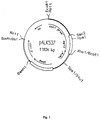
- Fig. 1 shows the plasmid map of pALK537.
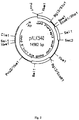
- Fig. 2 shows the plasmid map of pALK540.
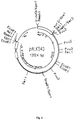
- Fig. 3 shows the plasmid map of pALK546.
- Fig. 4 shows the plasmid map of pALK543.
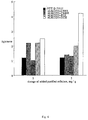
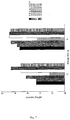
- Fig. 5 shows the lightness of the denim fabrics after 1 hour treatment in Launder-Ometer with VTT-D-79125 cellulase preparation and with VTT-D-79125 cellulase preparation added with different amounts of purified Trichoderma cellulases.
- Fig. 6 shows the lightness of the denim fabrics after 2 hours treatment in Launder-Ometer with VTT-D-79125 cellulase preparation and with VTT-D-79125 cellulase preparation added with different amounts of purified Trichoderma cellulases.
- Fig. 7 shows the pilling removal from woven cotton fabrics after 1 hour treatment in Launder-Ometer with different dosages of cellulase preparations of VTT-D-79125, ALKO3760, ALKO3798, ALKO4097, ALKO2656, ALKO3529 and ALKO3528.
- cellulose-containing textile materials or fabrics refers to textile material composed solely or partly of cellulosic fibres.
- the textile material includes fibre, yarn, woven fabric, knit, or a ready-made garment, in whose manufacture cotton, flax, linen, hemp, ramie, jute or man-made cellulosic fibres, for example, viscose, Polynosic, Modal, lyocell (e.g. Tencel R ), Cupro, etc., have been used as raw material.
- the amount of cellulosic fibre in the textile material has to be at least 30 percent, preferably over 50 percent.
- Complete cellulase composition refers to cellulases derived from fungi, for example from Trichoderma reesei .
- Such cellulase being composed of cellobiohydrolase (CBH), endoglucanase (EG) and beta-glucosidase (BG) type components.
- CBH and EG components can further be divided into CBHI and CBHII types and into several various EG types, the main types of the latter being EGI and EGII.
- the BG components do not react with cellulosic polymers, but further cleave the degradation products, for example cellobiose, that are formed as a result of the synergistic effect of the CBH and EG components.
- the strain VTT-D-79125 is used in the present invention.
- the original cellulase composition obtainable from the fermentation medium, which is derived directly from the microbes, for example from T. reesei fungi having a cellulase composition comprising about 45-80% CBHI, 10-25% CBHII, 5-15% EGI and 8-15% EGII of the total cellulase protein content is considered to be the complete cellulase composition according to the present invention.
- the ratio of EG:CBH in T. reesei AL-KO3529 the EGII overproducing strain is estimated to be approximately 0.6-1:1 and the ratio of CBHI:EG is estimated to be approximately 1-1.4:1.
- Modified cellulase composition refers to the complete cellulase composition in which the interrelations of the CBH and EG components contained in a composition have been changed by various methods known to persons skilled in the art. Such methods include, for example, fractionation and genetic engineering as well as combining different cellulase solutions.
- CBH-type component s Essentially free from CBH-type component s means that at least one CBH-type component selected from a group consisting of CBHI, CBHII or both are missing from the cellulase composition, i.e. said composition is produced by a host from which the genes encoding said proteins are removed.
- EG-type components Essentially free from EG-type components means that at least one EG-type component selected from a group consisting of EGI, EGIII, EGV or all or any combination of said EG-proteins are missing, i.e. said composition is produced by a host from which one or more genes encoding said proteins are removed.
- Biostoning of fabric or garment means the use of enzymes in place of, or in addition to, the use of pumice stones for the treatment of fabric or garment, especially denim.
- Biofinishing refers to the use of enzymes in a controlled hydrolysis of cellulosic fibers in order to modify the fabric or yarn surface in a manner that prevents permanently pilling, improves fabric handle like softness and smoothness, clears the surface structure by reducing fuzzing, which results in clarification of colors, improves the drapability of the fabric, improves moisture absorbability and which may improve also the dyeability.
- Backstaining Released dye has a tendency to redeposit on the surface of the fabric fibers. This effect is termed "backstaining.”
- detergent By detergent is meant a cleansing agent that can contain surface active agents (anionic, non-ionic, cationic and ampholytic surfactants), builders and other optional ingredients such as antiredeposition and soil suspension agents, optical brighteners, bleaching agents, dyes and pigments and hydrolases. Suitable listing of the contents of detergents is given in U.S. Patent No. 5,433,750, a suitable list of surfactants is given in U.S. Patent No. 3,664,961.
- Enzyme preparation is meant a composition containing enzymes.
- the enzymes have been extracted from (either partially or completely purified from) a microbe or the medium used to grow such microbe.
- Extracted from means that the desired enzymes are separated from the cellular mass. This can be performed by any method that achieves this goal, including breaking cells and also simply removing the culture medium from spent cells. Therefore, the term “enzyme preparation” includes compositions containing medium previously used to culture a desired microbe(s) and any enzymes that have been released from the microbial cells into such medium during the culture or downstream processing steps.
- a host that is "substantially incapable" of synthesizing one or more enzymes is meant a host in which the activity of one or more of the listed enzymes is depressed, deficient, or absent when compared to the wild-type.
- an amino acid sequence that is an "equivalent" of a specific amino acid sequence is meant an amino acid sequence that is not identical to the specific amino acid sequence, but rather contains at least some amino acid changes (deletions, substitutions, inversions, insertions, etc) that do not essentially affect the biological activity of the protein as compared to a similar activity of the specific amino acid sequence, when used for a desired purpose.
- the biological activity of a cellulase is its catalytic activity, and/or its ability to bind to cellulosic material.
- an "equivalent" amino acid sequence contains at least 80%-99% identity at the amino acid level to the specific amino acid sequence, most preferably at least 90% and in an especially highly preferable embodiment, at least 95% identify, at the amino acid level.
- a cloning vehicle is a plasmid or phage DNA or other DNA sequence (such as a linear DNA) that provides an appropriate nucleic acid carrier environment for the transfer of a gene of interest into a host cell.
- the cloning vehicles of the invention may be designed to replicate autonomously in prokaryotic and eukaryotic hosts. In fungal hosts such as Trichoderma, the cloning vehicles generally do not autonomously replicate and instead, merely provide a vehicle for the transport of the gene of interest into the Trichoderma host for subsequent insertion into the Trichoderma genome.
- the cloning vehicle may be further characterized by one or a small number of endonuclease recognition sites at which such DNA sequences may be cut in a determinable fashion without loss of an essential biological function of the vehicle, and into which DNA may be spliced in order to bring about replication and cloning of such DNA.
- the cloning vehicle may further contain a marker suitable for use in the identification of cells transformed with the cloning vehicle. Markers, for example, are antibiotic resistance. Alternatively, such markers may be provided on a cloning vehicle which is separate from that supplying the gene of interest. The word "vector" is sometimes used for "cloning vehicle.”
- An expression vehicle is a cloning vehicle or vector similar to a cloning vehicle but which is capable of expressing a gene of interest, after transformation into a desired host.
- the gene of interest is preferably provided to a fungal host as part of a cloning or expression vehicle that integrates into the fungal chromosome, or allows the gene of interest to integrate into the host chromosome. Sequences that are part of the cloning vehicle or expression vehicle may also be integrated with the gene of interest during the integration process.
- sites of integration to which the gene of interest can be directed include the cbh and/or the egl loci.
- the gene of interest is directed to replace one or more genes encoding undesirable characteristics.
- the gene of interest is also preferably placed under the control of (i.e., operably linked to) certain control sequences such as promoter sequences provided by the vector (which integrate with the gene of interest).
- control sequences can be those at the insertion site.
- expression control sequences of an expression vector will vary depending on whether the vector is designed to express a certain gene in a prokaryotic or in a eukaryotic host (for example, a shuttle vector may provide a gene for selection in bacterial hosts).
- Expression control sequences can contain transcriptional regulatory elements such as, promoters, enhancer elements, and transcriptional termination sequences, and/or translational regulatory elements, such as, for example, translational initiation and termination sites.
- a cellulase composition which comprised an increased amount of EGII type cellulase component in an otherwise natural complete cellulase composition
- a cellulose-containing textile product with essentially the same or improved properties could be produced.
- the cotton containing textile material also had an improved nice appearance and feel, and showed a reduced tendency of pilling, and additionally maintained its strength.
- denims and denim garments treated with the cellulase composition containing elevated amounts of EGII achieved the same or improved stone-washed appearance as compared to modified and natural complete cellulase compositions.
- the cellulase composition or treatment media containing compositions should have more or less elevated EGII contents.
- the cellulase composition of the present invention improved appearance, softness, drapability, absorption of moisture, and brighter colors of cellulose-containing textile materials is achieved. Also a reduced tendency of pilling and fuzzing is obtained. Additionally, the cellulase composition of this invention can be used in the finishing of so-called denims to create an improved so-called stone-washed appearance.
- Fungi and bacteria can be used as source material for producing the cellulase composition of the present invention.
- the cellulase compositions of this invention are derived from fungi, for example from species of Trichoderma, Penicillium, Aspergillus, Humicola or Fusarium genera. Trichoderma reesei being the fungi of preference for producing the cellulase composition.
- the natural complete cellulase compositions comprising CBH components and various EG components, are not as such applicable to the treatment of cellulose-containing textile materials for producing the desired end result.
- the suggested methods of producing compositions which are modified to give different ratios between the CBH and EG are neither necessary to achieve the desired results.
- An elevated EGII-content in the complete cellulase background composition is the only thing required to obtain the desired results.
- the cellulase composition contains a more or less significantly increased amount of EGII type endoglucanases of Trichoderma.
- the cellulase composition of the present invention comprises in addition to the elevated EGII-content, EGI components and possibly minor amounts of other EG components, such as EGIII and EGV as well as CBHI and perhaps CBHII components, but said more or less undesired EG and CBH components, the ratio of which is of no major importance, can also be removed using conventional recombinant and fractionation techniques.
- the ratio of EG:CBH in T. reesei ALKO3529 the EGII overproducing strain is estimated to be approximately 0.6-1:1 and the ratio of CBHI:EG is estimated to be approximately 1-1.4:1.
- the increased EGII content can be provided in cellulase compositions with a relative ratio of CBHI or EGI to other components increased or decreased by methods known per se in the art, but as discussed above it is no prerequisite for obtaining the desired results.
- the ratios of the weights of CBH and EG components are not crucial. It is more important that the amount of EGII type components in the composition is more or less significantly elevated over the normal level in a complete cellulase compositions. This means that the proportion of EGII should be at least 15-100 weight percent of the total weight of the complete composition of cellulase proteins.
- the amount of EGII should be at least 20-60 weight percent, and most preferably at least 25-40 weight percent of the cellulase composition.
- the cellulase composition can comprise almost 100 weight percent of EGII of the total cellulase content, but this is in no way the preferred embodiment and not necessarily required for obtaining the desired results.
- the preferred mode of the present invention is a natural complete background cellulase composition with elevated EGII-content.
- Enzyme activity is one concept applied in determining the properties of enzymes.
- the enzyme activities used in the present patent application are ECU, FPU and MUL, which are defined as follows:
- the endo-1,4-beta-glucanase in the sample hydrolyses the hydroxyethylcellulose substrate, and the resulting reducing sugars are assayed spectrophotometrically using a dinitrosalicylic acid reagent (DNS).
- DNS dinitrosalicylic acid reagent
- the cellulase in the sample hydrolyses the filter paper used as a substrate, and the resulting reducing sugars are assayed spectrophotometrically using a DNS reagent.
- the cellobiohydrolase (CBHI) and endoglucanase (EGI) of the sample hydrolyse the 4-methylumbelliferyl-beta-D-lactoside that acts as a substrate, whereby methylumbelliferone is released that can be measured spectrophotometrically.
- the method can be applied in the determination of cellobiohydrolase I (CBHI) activity.
- the method also measures the endoglucanase I (EGI) activity, the proportion of which can be determined by inhibiting the activity of cellobiohydrolase using 5 mM of cellobiose.
- One MUL unit is the amount of enzyme activity that in one second under the determination conditions, releases 1 nmol of methylumbelliferone from 4-methylumbelliferyl-beta-D-lactoside (van Tilbeurgh et al. , 1988).
- Treatment of cellulose-containing textile materials with the cellulase composition of the present invention imparts a smooth feel, depilling, softness and good appearance to the textiles.
- the treated cotton-containing fibres treated with the composition of this invention have kept their structure as well as or better than cellulase compositions comprising prior or conventional cellulase compositions.
- Treatment media of cellulose-containing textile materials with compositions disclosed in the present invention may contain, in addition to enzymes, e.g. surfactants, polymers as for example PVA and PVP polymers, buffers as for example citrates, acetates and phosphates for regulating the acidity of the solutions, possibly bulk agents, conventional preserving agents, stabilizers and abrasion agents.
- enzymes e.g. surfactants, polymers as for example PVA and PVP polymers
- buffers as for example citrates, acetates and phosphates for regulating the acidity of the solutions, possibly bulk agents, conventional preserving agents, stabilizers and abrasion agents.
- Suitable cellulase dosages as disclosed in the present invention correspond to the dosages of typical commercial liquid cellulases, as for example Ecostone L, Ecostone L 20, Biotouch L (Primalco Ltd, Biotec, Nurmijärvi, Finland).
- the suitable dosages thus fall within the range of 0.05 to 15 percent, more preferably within 0.5 to 6 percent of the weight of the textile material being treated.
- the suitable enzyme dosages for imparting biofinishing treatment to textile materials depend on the desired result, on the treatment method and the activity of the enzyme product.
- the dosages are about 0.05 to 10 percent, more preferably about 0.5 to 5 percent of the weight of the treated textile material, these dosages corresponding to the dosages of typical commercial liquid cellulases, as for example Biotouch L, Biotouch C 601, Ecostone L 20 or Ecostone C 80 (Primalco Ltd, Biotec, Nurmijärvi, Finland).
- the cellulase compositions of this invention can be successfully employed to replace the use of pumice stones.
- the result is a high-quality stone-washed appearance and essentially the same or better strength properties than those achieved in fabrics treated with textile treatment media containing no elevated amounts of EGII components.
- the suitable enzyme dosages for imparting a stone-washed appearance to the fabric depend on the desired result, on the treatment method, and on the activity of the enzyme product, and are about 0.05 to 5 percent, more preferably about 0.5 to 2 percent of the weight of the treated fabric, these dosages corresponding to the dosages of typical commercial liquid cellulases, as for example Ecostone L, Ecostone L 20, Ecostone L Plus (Primalco Ltd, Biotec, Nurmijärvi, Finland).
- the pH range for applying the cellulase composition of this invention is dependent on the pH activity profile of the enzyme.
- the pH of the application environment is preferably within the range of 3.5 to 7, more preferably within the range of 4 to 5.5.
- the cellulase composition of the present invention which contains considerable amounts of Trichoderma EGII type endoglucanases, can be produced by e.g. fractionation or mutation of the used production strain, or by genetic engineering.
- a cellulase composition with elevated amounts of EGII type endoglucanases can be prepared correspondingly.
- the most convenient way of producing a product with increased amount of EGII protein is to add copies of the gene encoding the EGII protein to the production strain, e.g. to the Trichoderma strain, as described in Example 1.
- the selected Trichoderma strain or other employed production organism can be a wild type strain, or a strain more suitable for use as a production organism developed from the wild type strain by further mutation or genetic engineering.
- suitable strains include, for example, the wild type strain T. reesei QM6a and the derived mutant strains, e.g. QM9414 and RutC-30, developed for cellulase production, and strains further developed from these, in which e.g. the cellulase and/or hemicellulase level has been further raised, and/or in which the level of produced protease has been lowered.
- VTT-D-79125 and ALKO2221 (a mutant strain with a low level of protease production) and their derivatives, as for example the strain overproducing the EGII enzyme, whose construction is disclosed in Example 1, are examples of strains that have been further developed.
- one or more gene coding for CBH or EGs others than EGII can be replaced with a gene encoding EGII.
- a general description of the methods for inserting the gene encoding the EGII protein, and of the method for increasing the production level of the EGII protein in Trichoderma reesei is described in the following. Applying the same method, it is possible to change the ratios of cellulases also in other species and, for example, to add copies of genes encoding Trichoderma EGII type cellulase(s) or to replace some native genes with genes encoding Trichoderma EGII type cellulase(s).
- the gene encoding the EGII protein (egl2; Saloheimo et al., 1988; in the publication the gene egl2 is referred to as egl3, which is the original name of the gene) can be inserted into the selected Trichoderma strain or for example, replace a gene encoding EGI (egl1; Penttilä et al., 1986), or another gene encoding a not required protein or by simply adding the copy number by insertions without deleting anything.
- the eg12 gene replaces, e.g. the egll gene, the EGII activity of the enzyme mixture produced by the strain is higher than in the enzyme mixture produced by strains from which the eg12 gene is deleted or exist only in one copy.
- Any marker suitable for Trichoderma can be employed as a marker gene, as for example amdS (e.g. from plasmid p3SR2; Kelly and Hynes, 1985), hygB (e.g. from plasmid pRLM ex 30; Mach et al., 1994) and ble (e.g. from plasmid pAN8-1, Mattern and Punt, 1988).
- amdS e.g. from plasmid p3SR2; Kelly and Hynes, 1985
- hygB e.g. from plasmid pRLM ex 30; Mach et al., 1994
- ble e.g. from plasmid pAN8-1, Mattern and Punt, 1988.
- the complementary gene for the auxotrophy concerned can also be employed as a marker.
- the selected marker gene and the egl2 gene are ligated between the 5' and 3' flanking regions of the target gene forming a targeting plasmid.
- flanking regions homologous recombination can occur and the desired genes can be targeted to give place for an inserted eg12 gene.
- the principle of gene replacement is described by Suominen et al. (1993).
- the flanking regions must be long enough, e.g. in Trichoderma at least 1.5 kb in length; examples of flanking regions suitable for replacing cellulase genes have been described by Suominen et al. (1993).
- the necessary flanking regions of the cellulase gene can be isolated from the Trichoderma gene bank.
- Strains of EGII-overproducing phenotypes can be selected from among transformants, for example, by analysing the culture media on the basis of their increased endoglucanase activity as compared to the host strain (ECU activity, Bailey and Nevalainen, 1981).
- the production level of the EGII protein can be raised in a selected strain, for example in the Trichoderma reesei strain (examples of applicable T. reesei strains have been given in the foregoing) by mutation or by increasing the copy number of the egl2 gene, as described in Example 1A.
- a selected strain for example in the Trichoderma reesei strain (examples of applicable T. reesei strains have been given in the foregoing) by mutation or by increasing the copy number of the egl2 gene, as described in Example 1A.
- cbhl promoter also other promoters, suitable for the selected strain, can be used for the expression of the egl2 gene.
- Any marker suitable for Trichoderma may be used as a marker gene in the transformation, as has been described in the foregoing.
- T. reesei EGII overproducing strain the parental T. reesei strain VTT-D-79125 was transformed with the expression cassette from the plasmid pALK537 (Fig. 1). In the cassette EGII is expressed from the strong cbh l promoter. T. reesei VTT-D-79125 is a hypercellulolytic mutant strain that contains all the main Trichoderma cellulases (Nevalainen, 1985).
- the plasmid pALK537 contains:
- oligonucleotides used in the PCR-reactions and in sequencing reactions were synthetized by a ABI (Applied Biosystems, USA). Sequencing of the fusion was carried out by the automated sequencer (Applied Biosystems 373A, USA).
- T. reesei VTT-D-79125 was transformed with the 9.2 kb linear Not I fragment of pALK537 as described by Penttilä et al. (1987).
- T. reesei transformants were transferred on a selective medium and purified through conidia.
- the purified transformants were grown in shake flasks in a medium containing 4 % whey, 1.5 % complex nitrogen source derived from grain, 1.5 % KH 2 PO 4 and 0.5 % (NH 4 ) 2 SO 4 , pH 5.5. Cultures were grown at 30°C and 250 rpm for 7 days. The activity against hydroxyethylcellulose (HEC) was measured from the culture media of the transformants.
- HEC hydroxyethylcellulose
- T. reesei EGI and EGII without CBHI and CBHII
- the expression cassette from the plasmid pALK540 (Fig. 2) was transformed to T. reesei ALKO2698 (Karhunen et al., 1993).
- ALKO2698 is an EGI overproducer that does not contain the cbh l gene.
- EGII is expressed from the strong cbh l promoter.
- the plasmid pALK540 contains:
- T. reesei ALK02698 was transformed with the 11.6 kb Cla I - Pvu I fragment of pALK540 as described by Penttilä et al. (1987).
- the transformed protoplasts were plated onto surface of MnR plates osmotically stabilized with 0.44 M saccharose and incubated for 6 h at 30°C, prior to the addition of 5 ml of molten MnR as an overlay containing 300 ⁇ g/ml phleomycin (Cayala, France).
- the transformants were purified on selective MnR-medium supplemented with 50 ⁇ g/ml of phleomycin through single spore before transferring to MnR-slants containing 50 ⁇ g/ml phleomycin for three generations and after that to PD slants.
- the purified transformants were grown on microtiter plates for detection of the CBHII protein by Western blotting with CBHII monoclonal antibody.
- ALKO3528 was one of the CB-HII-negative transformants and it contains one copy of the egl2 expression cassette in the place of cbh 2 (Southern blot).
- ALKO3528 transformant was cultivated as in example 1A for measuring the activity against HEC (ECU/ml) from the culture medium.
- the activity against HEC was increased about 2 fold in ALKO3528 strain compared to the parent strain ALKO2698 and by 4 fold compared to the VTT-D-79125 strain which is a parent strain of ALKO2698.
- T. reesei CBHII expression cassette from the plasmid pALK546 (Fig. 3) was transformed to T. reesei ALKO2221 (VTT-D-79125 mutant strain possessing a low level of protease activity).
- T. reesei ALKO2221 VTT-D-79125 mutant strain possessing a low level of protease activity.
- the cassette of pALK546 CBHII is expressed from the strong cbh 1 promoter.
- the plasmid pALK546 contains:
- pALK546 was constructed according to examples 1A and 1C.
- T. reesei ALKO2221 was transformed with the 11.8 kb Eco RI - Bam HI fragment of pALK546 accordingly to example 1C.
- the purified transformants were cultivated as in example 1A and the amount of secreted CBHII cellulase was quantitated by ELISA method (Buehler, 1991) with CBHII monoclonal antibody.
- the amount of CBHII protein was increased 4 fold compared to the parental strain ALKO2221.
- ALKO3798 contains one copy of the cbh2 expression cassette.
- T. reesei CBHI and CBHII without EGI and EGII expression cassette from the plasmid pALK543 (Fig. 4) was transformed to the eg12 locus of T. reesei ALKO3761.
- ALKO3761 is a CBHI overproducing EGI-negative strain. Construction of the ALKO3761 strain is described in WO 96/34945 hereby incorporated by reference, except that the EGI-negative transformants were screened by Western blot with EGI monoclonal antibody.
- AL-KO3761 contains one copy of the expression cassette in the egl 1 locus and the secreted amount of the CBHI cellulase rose compared to the parental strain ALKO2221. In the cassette of pALK543 cbh 2 is expressed under its own promoter.
- the plasmid pALK543 contains:
- pALK543 was constructed according to examples 1A and 1C.
- T. reesei ALKO3761 was transformed with the 11.2 kb Bam HI fragment of pALK543 and the transformants were screened accordingly to examples 1C and 1E.
- ALKO4097 was one of the EGII-negative transformants and according to Southern blot analysis it contains 1 copy of the cbh 2 expression cassette in the eg12 locus. In ALKO4097 the amount of secreted CBHII protein was increased 3 fold compared to the parental strain ALKO3761.
- VTT-D-79125 is a hypercellulolytic Trichoderma reesei mutant strain, (Nevalainen, 1985).
- Denim fabric was prewashed 10 min at 60°C with Ecostone A 200 (1ml/liter, Primalco Ltd, Biotec, Finland). The fabric was then cut into 12 x 12 cm swatches. The color was measured from the fabric as reflectance values with the Minolta (Osaka, Japan) Chroma Meter 1000R L*a*b*system.
- the experimental set up was as in example 2. 3 and 6 mg of the total protein in cellulase preparations per g of fabric was used in each experiment. The washing times were 1 and 2 hours at 50°C.
- L Lightness unit of the fabric after treatment minus lightness unit of the fabric before the treatment
- Results show that after 1 hour treatment with 3 mg/g dosage the stone-washing effect measured as lightness units is almost equal with VTT-D-79125, ALKO3528, ALKO3760, ALKO3529 and AL-KO3798 cellulase preparations. No clear increase in lightness units is obtained with ALKO4097 or ALKO2656 preparations. With 6 mg/g dosage after 1 hour treatment the ALKO3529 shows the highest increase in lightness units compared to VTT-D-79125, ALKO3528, ALKO4097 or ALKO3760 preparations. After 2 hours treatment with 3 mg/g dosage the best stone-washing effect measured as lightness units is obtained with ALKO3529 preparation.
- Trichoderma cellulase preparations in biofinishing of cotton-containing woven fabric
- 100 % cotton woven fabric obtained from Pirkanmaan Uusi Värjäämö Ltd, Finland was subjected to treatment with VTT-D-79125, ALKO2656, ALKO3529, ALKO3528, ALKO3760, ALKO3798, ALKO4097 cellulase preparations (example 1) in Launder-Ometer.
- 20 g of undyed prewashed fabric was used in each experiment.
- the cellulase treatment conditions were as described in example 2 except that the liquid ratio (volume of liquid per weight of fabric) was 1:15. 2 and 6 mg of total protein in cellulase preparations per g of fabric was used in each experiment.
- the washing time was 1 hour at pH 5, 50°C. After rinsing with alkaline and water, the treated fabrics were dried in a tumble drier (Cylinda 7703, Sweden).
- Weight loss of the treated fabrics was defined as percentage from weight of the fabric before and after the test (before weighting the fabrics were conditioning in an atmosphere of 21+/-2°C and 50+/-2 % RH). Weight loss was used to describe the amount of fuzz removed from the fabrics surface.
- Trichoderma cellulase preparations in biofinishing of cotton-containing woven fabric
- 100 % cotton knit obtained from Apropos Finland, Ltd, Finland was subjected to treatment with VTT-D-79125, ALKO2656, ALKO3529, ALKO3528, ALKO3760, ALKO3798 and ALKO4097 cellulase preparations (example 1) in Launder-Ometer.
- 20 g of undyed knit was used in each experiment and the cellulase treatment conditions were as described in example 2 except that the liquid ratio (volume of liquid per weight of fabric) was 1:15.
- 1, 2 and 4 mg of total protein in cellulase preparations per g of fabric was used in each experiment.
- the washing time was 1 hour at pH 5, 50 °C. After rinsing with alkaline and water the treated knits were dried in tumble drier.
- Results are shown in Table VI. Weight loss, visual appearance and pilling of the cotton knits treated in Gavazzi Campiocolor with different cellulase preparations. preparation weight loss % visual appearance pilling after 200 cycles - 2.7 1 1.1 VTT-D-79125 4.2 3.4 2.3 ALKO3760 4.6 2.6 2.5 ALKO3798 5.2 3.4 3.1 ALKO2656 4.6 3.6 2.8 ALKO3529 5.7 3.8 3.5 ALKO3528 3.6 2.9 2.6
- Trichoderma cellulase preparations Use of different Trichoderma cellulase preparations in biofinishing of lyocell fabric
- the ALKO3760, ALKO3798, ALKO4097, ALKO3529, ALKO2656 and AL-KO3528 (example 1) cellulase preparations were used in fibrillation control and biofinishing of 100 % Tencel R (lyocell).
- the fabric was prefibrillated in a semi-industrial drum-washer (Esteri 20 HS-P) with 2.5 g/l of sodium carbonate at 60°C.
- the cellulase treatments were performed in Gavazzi s.r.l. Campiocolor mod. RD/1 (Italy).
- About 70 g of prefibrillated fabric and 10 liter of water was used in each experiment at pH 5.
- the enzyme dosages was 6 mg of total protein in cellulase preparations per g of fabric.
- the washing time was 2 hours at pH 5 50°C.
- results are shown in Table VIII.
- preparation visual appearance fibrillation index - 1 10.2 ALKO3760 3.6 6.1 ALKO3798 3.3 8.1 ALKO4097 3.3 8.0 ALKO2656 3.7 8.2 ALKO3529 4.4 6.8 ALKO3528 3.1 6.4
- Fibrillation index is an average of two analyses.
- Visual appearance is an average from right and reverse side of the fabrics.
- Hynes M., Corrick, C. and King, S. 1983. Isolation of genomic clones containing the amdS gene of Aspergillus nidulans and their use in the analysis of the structural and regulatory mutations. Mo.Cell.Biol. 3:1430-1439.
Landscapes
- Chemical & Material Sciences (AREA)
- Engineering & Computer Science (AREA)
- Life Sciences & Earth Sciences (AREA)
- Health & Medical Sciences (AREA)
- Organic Chemistry (AREA)
- Biochemistry (AREA)
- Textile Engineering (AREA)
- Bioinformatics & Cheminformatics (AREA)
- Genetics & Genomics (AREA)
- Microbiology (AREA)
- Wood Science & Technology (AREA)
- Zoology (AREA)
- General Health & Medical Sciences (AREA)
- General Engineering & Computer Science (AREA)
- Molecular Biology (AREA)
- Biotechnology (AREA)
- Biomedical Technology (AREA)
- Medicinal Chemistry (AREA)
- Chemical Kinetics & Catalysis (AREA)
- General Chemical & Material Sciences (AREA)
- Chemical Or Physical Treatment Of Fibers (AREA)
- Enzymes And Modification Thereof (AREA)
- Polysaccharides And Polysaccharide Derivatives (AREA)
- Treatments For Attaching Organic Compounds To Fibrous Goods (AREA)
- Yarns And Mechanical Finishing Of Yarns Or Ropes (AREA)
Applications Claiming Priority (2)
| Application Number | Priority Date | Filing Date | Title |
|---|---|---|---|
| FI964691 | 1996-11-25 | ||
| FI964691A FI964691A0 (fi) | 1996-11-25 | 1996-11-25 | Foerbaettrad cellulassammasaettning foer behandling av textilmaterial som innehaoller cellulosa |
Publications (3)
| Publication Number | Publication Date |
|---|---|
| EP0854190A2 true EP0854190A2 (fr) | 1998-07-22 |
| EP0854190A3 EP0854190A3 (fr) | 2001-11-28 |
| EP0854190B1 EP0854190B1 (fr) | 2007-08-01 |
Family
ID=8547126
Family Applications (1)
| Application Number | Title | Priority Date | Filing Date |
|---|---|---|---|
| EP97660126A Expired - Lifetime EP0854190B1 (fr) | 1996-11-25 | 1997-11-24 | Composition améliorée à base de cellulase pour le traitement de textiles contenant de la cellulose |
Country Status (8)
| Country | Link |
|---|---|
| US (1) | US5874293A (fr) |
| EP (1) | EP0854190B1 (fr) |
| AT (1) | ATE368744T1 (fr) |
| DE (1) | DE69737964T2 (fr) |
| DK (1) | DK0854190T3 (fr) |
| ES (1) | ES2290963T3 (fr) |
| FI (1) | FI964691A0 (fr) |
| PT (1) | PT854190E (fr) |
Families Citing this family (14)
| Publication number | Priority date | Publication date | Assignee | Title |
|---|---|---|---|---|
| DE19729323A1 (de) * | 1997-07-09 | 1999-01-14 | Wolff Walsrode Ag | Verfahren zur Herstellung von Cellulose-Derivaten |
| US6015703A (en) * | 1998-03-10 | 2000-01-18 | Iogen Corporation | Genetic constructs and genetically modified microbes for enhanced production of beta-glucosidase |
| US7534568B2 (en) | 1999-10-29 | 2009-05-19 | Hologic Inc. | Methods for detection of a target nucleic acid by forming a cleavage structure with a cleavage resistant probe |
| US7118860B2 (en) * | 1999-10-29 | 2006-10-10 | Stratagene California | Methods for detection of a target nucleic acid by capture |
| US6528254B1 (en) * | 1999-10-29 | 2003-03-04 | Stratagene | Methods for detection of a target nucleic acid sequence |
| GB0001388D0 (en) * | 2000-01-22 | 2000-03-08 | Coats Viyella Clothing Limited | Textile treatment |
| CN1172053C (zh) * | 2001-02-09 | 2004-10-20 | 广东溢达纺织有限公司 | 免烫耐洗纯棉针织物的生产工艺 |
| US7256032B2 (en) * | 2005-12-22 | 2007-08-14 | Ab Enzymes Oy | Enzymes |
| DK1969123T3 (en) | 2005-12-22 | 2017-08-28 | Ab Enzymes Oy | Hitherto UNKNOWN ENZYMS |
| US7361487B2 (en) * | 2006-04-13 | 2008-04-22 | Ab Enzymes Oy | Enzyme fusion proteins and their use |
| US8609388B2 (en) | 2010-03-11 | 2013-12-17 | Novozymes A/S | Modified family 5 cellulases and uses thereof |
| CN103459586A (zh) | 2011-02-09 | 2013-12-18 | 诺维信公司 | 用于去球的纤维素酶混合物以及其用途 |
| US9127401B2 (en) | 2013-01-31 | 2015-09-08 | University Of New Brunswick | Wood pulp treatment |
| US9145640B2 (en) * | 2013-01-31 | 2015-09-29 | University Of New Brunswick | Enzymatic treatment of wood chips |
Family Cites Families (22)
| Publication number | Priority date | Publication date | Assignee | Title |
|---|---|---|---|---|
| US3664961A (en) * | 1970-03-31 | 1972-05-23 | Procter & Gamble | Enzyme detergent composition containing coagglomerated perborate bleaching agent |
| FI841500A0 (fi) * | 1984-04-13 | 1984-04-13 | Valtion Teknillinen | Foerfarande foer uppbygnande av cellulolytiska jaeststammar. |
| US4832864A (en) * | 1987-09-15 | 1989-05-23 | Ecolab Inc. | Compositions and methods that introduce variations in color density into cellulosic fabrics, particularly indigo dyed denim |
| US5120463A (en) * | 1989-10-19 | 1992-06-09 | Genencor International, Inc. | Degradation resistant detergent compositions based on cellulase enzymes |
| DK0531372T4 (da) * | 1990-05-09 | 2004-08-09 | Novozymes As | Cellulasepræparat omfattende et endoglucanaseenzym |
| ES2170748T3 (es) * | 1990-10-05 | 2002-08-16 | Genencor Int | Procedimientos para el tratamiento de tejidos que contienen algodon con celulasa. |
| WO1992006210A1 (fr) * | 1990-10-05 | 1992-04-16 | Genencor International, Inc. | Compositions de detergent contenant des compositions de cellulase enrichies en constituants du type endoglucanase acide |
| WO1992006221A1 (fr) * | 1990-10-05 | 1992-04-16 | Genencor International, Inc. | Procedes de traitement a la cellulase de tissus contenant du coton |
| US5650322A (en) * | 1990-10-05 | 1997-07-22 | Genencor International, Inc. | Methods for stonewashing fabrics using endoglucanases |
| US5290474A (en) * | 1990-10-05 | 1994-03-01 | Genencor International, Inc. | Detergent composition for treating cotton-containing fabrics containing a surfactant and a cellulase composition containing endolucanase III from trichoderma ssp |
| US5246853A (en) * | 1990-10-05 | 1993-09-21 | Genencor International, Inc. | Method for treating cotton-containing fabric with a cellulase composition containing endoglucanase components and which composition is free of exo-cellobiohydrolase I |
| US5525507A (en) * | 1990-10-05 | 1996-06-11 | Genencor International, Inc. | Methods for treating cotton-containing fabric with cellulase composition containing endoglucanase component and which is free of all CBH I component |
| US5232851A (en) * | 1990-10-16 | 1993-08-03 | Springs Industries, Inc. | Methods for treating non-dyed and non-finished cotton woven fabric with cellulase to improve appearance and feel characteristics |
| EP0577722A4 (fr) * | 1991-03-29 | 1995-01-18 | Genencor Int | Procede de traitement par la cellulase des tissus contenant du coton. |
| WO1992017572A1 (fr) * | 1991-03-29 | 1992-10-15 | Genencor International, Inc. | Procedes de traitement par la cellulase des tissus contenant du coton |
| ATE189695T1 (de) * | 1991-06-11 | 2000-02-15 | Genencor Int | Cellulasezusammensetzungen mit einem defizit an komponenten des typs-cbh i enthaltende reinigungsmittelzusammensetzungen |
| FI945122A7 (fi) * | 1992-05-01 | 1994-10-31 | Genencor Int | Menetelmiä puuvillakankaiden käsittelemiseksi CBH I:n suhteen rikastetulla sellulaasilla |
| EP0692041A1 (fr) * | 1993-03-30 | 1996-01-17 | Genencor International, Inc. | Procedes de reduction de la formation de coton egraine lors du traitement de tissus cellulosiques contenant du coton et ne contenant pas de coton |
| AU3979195A (en) * | 1994-12-05 | 1996-06-26 | Novo Nordisk A/S | A method of obtaining a cellulosic textile fabric with reduced tendency to pilling formation |
| CN102080070B (zh) * | 1995-03-17 | 2016-01-20 | 诺沃奇梅兹有限公司 | 新的内切葡聚糖酶 |
| FI952165A0 (fi) * | 1995-05-05 | 1995-05-05 | Primalco Oy | Cellulaskomposition foer behandling av cellulosainnehaollande materialer |
| US5866407A (en) * | 1997-03-18 | 1999-02-02 | Iogen Corporation | Method and enzyme mixture for improved depilling of cotton goods |
-
1996
- 1996-11-25 FI FI964691A patent/FI964691A0/fi not_active Application Discontinuation
-
1997
- 1997-01-31 US US08/792,345 patent/US5874293A/en not_active Expired - Lifetime
- 1997-11-24 PT PT97660126T patent/PT854190E/pt unknown
- 1997-11-24 ES ES97660126T patent/ES2290963T3/es not_active Expired - Lifetime
- 1997-11-24 DK DK97660126T patent/DK0854190T3/da active
- 1997-11-24 EP EP97660126A patent/EP0854190B1/fr not_active Expired - Lifetime
- 1997-11-24 AT AT97660126T patent/ATE368744T1/de not_active IP Right Cessation
- 1997-11-24 DE DE69737964T patent/DE69737964T2/de not_active Expired - Lifetime
Also Published As
| Publication number | Publication date |
|---|---|
| EP0854190B1 (fr) | 2007-08-01 |
| ATE368744T1 (de) | 2007-08-15 |
| DE69737964T2 (de) | 2008-04-17 |
| DE69737964D1 (de) | 2007-09-13 |
| DK0854190T3 (da) | 2007-11-05 |
| US5874293A (en) | 1999-02-23 |
| FI964691A0 (fi) | 1996-11-25 |
| PT854190E (pt) | 2007-10-29 |
| ES2290963T3 (es) | 2008-02-16 |
| EP0854190A3 (fr) | 2001-11-28 |
Similar Documents
| Publication | Publication Date | Title |
|---|---|---|
| US6562612B2 (en) | Cellulase producing actinomycetes, cellulase produced therefrom and method of producing same | |
| EP0932688B1 (fr) | Cellulase obtenue par chrysosporium et procedes d'utilisation | |
| EP1408108B1 (fr) | Actinomycètes produisant une cellulase, cellulase obtenue et procédé d'obtention de celle-ci | |
| EP1141336B1 (fr) | Nouvelles compositions de variants de cellulases de type egiii | |
| FI119820B (fi) | Menetelmä ja koostumuksia selluloosapitoisten kankaiden käsittelemiseksi käyttämällä typistettyjä sellulaasientsyymejä käsittäviä koostumuksia | |
| EP0739982A1 (fr) | Cellulase obtenue de bacilles et ces applications | |
| US6287839B1 (en) | Cellulase producing actinomycetes, cellulase produced therefrom and method of producing same | |
| CA2145873A1 (fr) | Methodes utilisant des endoglucanases pour un lavage abrasif de tissus | |
| EP0854190B1 (fr) | Composition améliorée à base de cellulase pour le traitement de textiles contenant de la cellulose | |
| US5858767A (en) | Cellulase composition for biofinishing cellulose-containing textile materials | |
| CA2675592A1 (fr) | Endoglucanase ii modifiee et ses procedes d'utilisation | |
| US6187732B1 (en) | Mutant EGIII cellulase, DNA encoding such EGIII compositions and methods for obtaining same | |
| EP0866165B1 (fr) | Procédé et composition enzymatique pour améliorer le déboulochage des articles en coton | |
| CN101346464B (zh) | 新型酶 | |
| AU4229893A (en) | Methods for treating cotton-containing fabrics with cbh i enriched cellulase | |
| EP0824584A1 (fr) | Composition a base de cellulase pour le traitement de textiles contenant de la cellulose | |
| US6187577B1 (en) | Cellulase producing Actinomycetes cellulase produced therefrom and method of producing same | |
| HK1060748B (en) | Cellulase producing actinomycetes, cellulase produced therefrom and method of producing same | |
| HK1060748A1 (en) | Cellulase producing actinomycetes, cellulase produced therefrom and method of producing same | |
| MXPA99003367A (en) | Chrysosporium |
Legal Events
| Date | Code | Title | Description |
|---|---|---|---|
| PUAI | Public reference made under article 153(3) epc to a published international application that has entered the european phase |
Free format text: ORIGINAL CODE: 0009012 |
|
| 17P | Request for examination filed |
Effective date: 19971229 |
|
| AK | Designated contracting states |
Kind code of ref document: A2 Designated state(s): AT BE CH DE DK ES FI FR GB GR IE IT LI LU MC NL PT SE |
|
| AX | Request for extension of the european patent |
Free format text: AL PAYMENT 971229;LT PAYMENT 971229;LV PAYMENT 971229;MK;RO PAYMENT 971229;SI PAYMENT 971229 |
|
| PUAL | Search report despatched |
Free format text: ORIGINAL CODE: 0009013 |
|
| AK | Designated contracting states |
Kind code of ref document: A3 Designated state(s): AT BE CH DE DK ES FI FR GB GR IE IT LI LU MC NL PT SE |
|
| AX | Request for extension of the european patent |
Free format text: AL PAYMENT 19971229;LT PAYMENT 19971229;LV PAYMENT 19971229;MK;RO PAYMENT 19971229;SI PAYMENT 19971229 |
|
| AKX | Designation fees paid |
Free format text: AT BE CH DE DK ES FI FR GB LI |
|
| AXX | Extension fees paid |
Free format text: AL PAYMENT 19971229;LT PAYMENT 19971229;LV PAYMENT 19971229;RO PAYMENT 19971229;SI PAYMENT 19971229 |
|
| RBV | Designated contracting states (corrected) |
Designated state(s): AT BE CH DE DK ES FI FR GB GR IE IT LI LU MC NL PT SE |
|
| 17Q | First examination report despatched |
Effective date: 20020829 |
|
| RAP1 | Party data changed (applicant data changed or rights of an application transferred) |
Owner name: AB ENZYMES GMBH |
|
| GRAP | Despatch of communication of intention to grant a patent |
Free format text: ORIGINAL CODE: EPIDOSNIGR1 |
|
| RIC1 | Information provided on ipc code assigned before grant |
Ipc: C11D 3/386 20060101ALI20070213BHEP Ipc: D06M 16/00 20060101ALI20070213BHEP Ipc: C12N 9/42 20060101ALI20070213BHEP Ipc: C12N 15/56 20060101AFI20070213BHEP |
|
| GRAS | Grant fee paid |
Free format text: ORIGINAL CODE: EPIDOSNIGR3 |
|
| GRAA | (expected) grant |
Free format text: ORIGINAL CODE: 0009210 |
|
| AK | Designated contracting states |
Kind code of ref document: B1 Designated state(s): AT BE CH DE DK ES FI FR GB GR IE IT LI LU MC NL PT SE |
|
| AX | Request for extension of the european patent |
Extension state: AL LT LV RO SI |
|
| REG | Reference to a national code |
Ref country code: GB Ref legal event code: FG4D |
|
| REG | Reference to a national code |
Ref country code: CH Ref legal event code: EP |
|
| REG | Reference to a national code |
Ref country code: IE Ref legal event code: FG4D |
|
| REF | Corresponds to: |
Ref document number: 69737964 Country of ref document: DE Date of ref document: 20070913 Kind code of ref document: P |
|
| REG | Reference to a national code |
Ref country code: PT Ref legal event code: SC4A Free format text: AVAILABILITY OF NATIONAL TRANSLATION Effective date: 20071016 |
|
| REG | Reference to a national code |
Ref country code: DK Ref legal event code: T3 |
|
| REG | Reference to a national code |
Ref country code: GR Ref legal event code: EP Ref document number: 20070403138 Country of ref document: GR |
|
| LTIE | Lt: invalidation of european patent or patent extension |
Effective date: 20070801 |
|
| REG | Reference to a national code |
Ref country code: CH Ref legal event code: PL |
|
| REG | Reference to a national code |
Ref country code: ES Ref legal event code: FG2A Ref document number: 2290963 Country of ref document: ES Kind code of ref document: T3 |
|
| PG25 | Lapsed in a contracting state [announced via postgrant information from national office to epo] |
Ref country code: CH Free format text: LAPSE BECAUSE OF FAILURE TO SUBMIT A TRANSLATION OF THE DESCRIPTION OR TO PAY THE FEE WITHIN THE PRESCRIBED TIME-LIMIT Effective date: 20070801 Ref country code: AT Free format text: LAPSE BECAUSE OF FAILURE TO SUBMIT A TRANSLATION OF THE DESCRIPTION OR TO PAY THE FEE WITHIN THE PRESCRIBED TIME-LIMIT Effective date: 20070801 Ref country code: LI Free format text: LAPSE BECAUSE OF FAILURE TO SUBMIT A TRANSLATION OF THE DESCRIPTION OR TO PAY THE FEE WITHIN THE PRESCRIBED TIME-LIMIT Effective date: 20070801 |
|
| EN | Fr: translation not filed | ||
| PG25 | Lapsed in a contracting state [announced via postgrant information from national office to epo] |
Ref country code: BE Free format text: LAPSE BECAUSE OF FAILURE TO SUBMIT A TRANSLATION OF THE DESCRIPTION OR TO PAY THE FEE WITHIN THE PRESCRIBED TIME-LIMIT Effective date: 20070801 |
|
| PLBE | No opposition filed within time limit |
Free format text: ORIGINAL CODE: 0009261 |
|
| STAA | Information on the status of an ep patent application or granted ep patent |
Free format text: STATUS: NO OPPOSITION FILED WITHIN TIME LIMIT |
|
| PG25 | Lapsed in a contracting state [announced via postgrant information from national office to epo] |
Ref country code: MC Free format text: LAPSE BECAUSE OF NON-PAYMENT OF DUE FEES Effective date: 20071130 Ref country code: SE Free format text: LAPSE BECAUSE OF FAILURE TO SUBMIT A TRANSLATION OF THE DESCRIPTION OR TO PAY THE FEE WITHIN THE PRESCRIBED TIME-LIMIT Effective date: 20071101 |
|
| 26N | No opposition filed |
Effective date: 20080506 |
|
| PG25 | Lapsed in a contracting state [announced via postgrant information from national office to epo] |
Ref country code: FR Free format text: LAPSE BECAUSE OF FAILURE TO SUBMIT A TRANSLATION OF THE DESCRIPTION OR TO PAY THE FEE WITHIN THE PRESCRIBED TIME-LIMIT Effective date: 20080328 |
|
| PG25 | Lapsed in a contracting state [announced via postgrant information from national office to epo] |
Ref country code: IE Free format text: LAPSE BECAUSE OF NON-PAYMENT OF DUE FEES Effective date: 20071126 |
|
| PG25 | Lapsed in a contracting state [announced via postgrant information from national office to epo] |
Ref country code: LU Free format text: LAPSE BECAUSE OF NON-PAYMENT OF DUE FEES Effective date: 20071124 |
|
| PGFP | Annual fee paid to national office [announced via postgrant information from national office to epo] |
Ref country code: DK Payment date: 20141119 Year of fee payment: 18 |
|
| PGFP | Annual fee paid to national office [announced via postgrant information from national office to epo] |
Ref country code: DE Payment date: 20141119 Year of fee payment: 18 Ref country code: GB Payment date: 20141119 Year of fee payment: 18 Ref country code: FI Payment date: 20141112 Year of fee payment: 18 Ref country code: GR Payment date: 20141125 Year of fee payment: 18 Ref country code: ES Payment date: 20141126 Year of fee payment: 18 |
|
| PGFP | Annual fee paid to national office [announced via postgrant information from national office to epo] |
Ref country code: PT Payment date: 20141121 Year of fee payment: 18 Ref country code: NL Payment date: 20141119 Year of fee payment: 18 |
|
| PGFP | Annual fee paid to national office [announced via postgrant information from national office to epo] |
Ref country code: IT Payment date: 20141124 Year of fee payment: 18 |
|
| REG | Reference to a national code |
Ref country code: PT Ref legal event code: MM4A Free format text: LAPSE DUE TO NON-PAYMENT OF FEES Effective date: 20160524 |
|
| REG | Reference to a national code |
Ref country code: DE Ref legal event code: R119 Ref document number: 69737964 Country of ref document: DE |
|
| REG | Reference to a national code |
Ref country code: DK Ref legal event code: EBP Effective date: 20151130 |
|
| GBPC | Gb: european patent ceased through non-payment of renewal fee |
Effective date: 20151124 |
|
| PG25 | Lapsed in a contracting state [announced via postgrant information from national office to epo] |
Ref country code: IT Free format text: LAPSE BECAUSE OF NON-PAYMENT OF DUE FEES Effective date: 20151124 Ref country code: GR Free format text: LAPSE BECAUSE OF NON-PAYMENT OF DUE FEES Effective date: 20160602 |
|
| REG | Reference to a national code |
Ref country code: NL Ref legal event code: MM Effective date: 20151201 |
|
| PG25 | Lapsed in a contracting state [announced via postgrant information from national office to epo] |
Ref country code: PT Free format text: LAPSE BECAUSE OF NON-PAYMENT OF DUE FEES Effective date: 20160524 |
|
| PG25 | Lapsed in a contracting state [announced via postgrant information from national office to epo] |
Ref country code: NL Free format text: LAPSE BECAUSE OF NON-PAYMENT OF DUE FEES Effective date: 20151201 |
|
| REG | Reference to a national code |
Ref country code: GR Ref legal event code: ML Ref document number: 20070403138 Country of ref document: GR Effective date: 20160602 |
|
| PG25 | Lapsed in a contracting state [announced via postgrant information from national office to epo] |
Ref country code: DK Free format text: LAPSE BECAUSE OF NON-PAYMENT OF DUE FEES Effective date: 20151130 Ref country code: DE Free format text: LAPSE BECAUSE OF NON-PAYMENT OF DUE FEES Effective date: 20160601 Ref country code: GB Free format text: LAPSE BECAUSE OF NON-PAYMENT OF DUE FEES Effective date: 20151124 |
|
| REG | Reference to a national code |
Ref country code: ES Ref legal event code: FD2A Effective date: 20161227 |
|
| PG25 | Lapsed in a contracting state [announced via postgrant information from national office to epo] |
Ref country code: ES Free format text: LAPSE BECAUSE OF NON-PAYMENT OF DUE FEES Effective date: 20151125 |
|
| PG25 | Lapsed in a contracting state [announced via postgrant information from national office to epo] |
Ref country code: FI Free format text: LAPSE BECAUSE OF NON-PAYMENT OF DUE FEES Effective date: 20151124 |