EP0855593A1 - Procédé de détermination de la stérilité d'un échantillon - Google Patents
Procédé de détermination de la stérilité d'un échantillon Download PDFInfo
- Publication number
- EP0855593A1 EP0855593A1 EP97200161A EP97200161A EP0855593A1 EP 0855593 A1 EP0855593 A1 EP 0855593A1 EP 97200161 A EP97200161 A EP 97200161A EP 97200161 A EP97200161 A EP 97200161A EP 0855593 A1 EP0855593 A1 EP 0855593A1
- Authority
- EP
- European Patent Office
- Prior art keywords
- sterile
- sterility
- sample
- product
- area
- Prior art date
- Legal status (The legal status is an assumption and is not a legal conclusion. Google has not performed a legal analysis and makes no representation as to the accuracy of the status listed.)
- Withdrawn
Links
- 230000036512 infertility Effects 0.000 title claims abstract description 27
- 238000000034 method Methods 0.000 title claims description 12
- 238000001228 spectrum Methods 0.000 claims abstract description 30
- 239000007788 liquid Substances 0.000 claims abstract description 8
- 238000004458 analytical method Methods 0.000 claims description 16
- 238000004806 packaging method and process Methods 0.000 claims description 7
- 238000004566 IR spectroscopy Methods 0.000 abstract 1
- 239000000523 sample Substances 0.000 description 19
- 238000005259 measurement Methods 0.000 description 11
- 230000001066 destructive effect Effects 0.000 description 4
- 238000000265 homogenisation Methods 0.000 description 4
- 238000002329 infrared spectrum Methods 0.000 description 4
- 230000010354 integration Effects 0.000 description 2
- 235000020191 long-life milk Nutrition 0.000 description 2
- 244000005700 microbiome Species 0.000 description 2
- 239000002245 particle Substances 0.000 description 2
- 241000193830 Bacillus <bacterium> Species 0.000 description 1
- 241000589516 Pseudomonas Species 0.000 description 1
- 240000004808 Saccharomyces cerevisiae Species 0.000 description 1
- 241000191967 Staphylococcus aureus Species 0.000 description 1
- 238000012512 characterization method Methods 0.000 description 1
- 235000020140 chocolate milk drink Nutrition 0.000 description 1
- 238000001514 detection method Methods 0.000 description 1
- 230000006870 function Effects 0.000 description 1
- 238000011065 in-situ storage Methods 0.000 description 1
- 238000011534 incubation Methods 0.000 description 1
- 238000009827 uniform distribution Methods 0.000 description 1
Images




Classifications
-
- C—CHEMISTRY; METALLURGY
- C12—BIOCHEMISTRY; BEER; SPIRITS; WINE; VINEGAR; MICROBIOLOGY; ENZYMOLOGY; MUTATION OR GENETIC ENGINEERING
- C12Q—MEASURING OR TESTING PROCESSES INVOLVING ENZYMES, NUCLEIC ACIDS OR MICROORGANISMS; COMPOSITIONS OR TEST PAPERS THEREFOR; PROCESSES OF PREPARING SUCH COMPOSITIONS; CONDITION-RESPONSIVE CONTROL IN MICROBIOLOGICAL OR ENZYMOLOGICAL PROCESSES
- C12Q1/00—Measuring or testing processes involving enzymes, nucleic acids or microorganisms; Compositions therefor; Processes of preparing such compositions
- C12Q1/02—Measuring or testing processes involving enzymes, nucleic acids or microorganisms; Compositions therefor; Processes of preparing such compositions involving viable microorganisms
- C12Q1/22—Testing for sterility conditions
-
- G—PHYSICS
- G01—MEASURING; TESTING
- G01N—INVESTIGATING OR ANALYSING MATERIALS BY DETERMINING THEIR CHEMICAL OR PHYSICAL PROPERTIES
- G01N21/00—Investigating or analysing materials by the use of optical means, i.e. using sub-millimetre waves, infrared, visible or ultraviolet light
- G01N21/17—Systems in which incident light is modified in accordance with the properties of the material investigated
- G01N21/25—Colour; Spectral properties, i.e. comparison of effect of material on the light at two or more different wavelengths or wavelength bands
- G01N21/31—Investigating relative effect of material at wavelengths characteristic of specific elements or molecules, e.g. atomic absorption spectrometry
- G01N21/35—Investigating relative effect of material at wavelengths characteristic of specific elements or molecules, e.g. atomic absorption spectrometry using infrared light
- G01N21/3577—Investigating relative effect of material at wavelengths characteristic of specific elements or molecules, e.g. atomic absorption spectrometry using infrared light for analysing liquids, e.g. polluted water
-
- G—PHYSICS
- G01—MEASURING; TESTING
- G01N—INVESTIGATING OR ANALYSING MATERIALS BY DETERMINING THEIR CHEMICAL OR PHYSICAL PROPERTIES
- G01N21/00—Investigating or analysing materials by the use of optical means, i.e. using sub-millimetre waves, infrared, visible or ultraviolet light
- G01N21/17—Systems in which incident light is modified in accordance with the properties of the material investigated
- G01N21/25—Colour; Spectral properties, i.e. comparison of effect of material on the light at two or more different wavelengths or wavelength bands
- G01N21/31—Investigating relative effect of material at wavelengths characteristic of specific elements or molecules, e.g. atomic absorption spectrometry
- G01N21/35—Investigating relative effect of material at wavelengths characteristic of specific elements or molecules, e.g. atomic absorption spectrometry using infrared light
- G01N21/359—Investigating relative effect of material at wavelengths characteristic of specific elements or molecules, e.g. atomic absorption spectrometry using infrared light using near infrared light
Definitions
- the invention relates to a method for determining the sterility or non-sterility of a sample arranged in a package, said sample being a product liquid, semi-liquid or viscous.
- US patent 5,164,597 relates to a device to determine the sterility of a sample, in which we make a spectrum in the near infrared of the sample to be studied and we compare this spectrum with reference spectra performed on samples sterile and non-sterile.
- the problem with this type of device is that it includes a multi-beam incident light with a mirror, which leads to a device not very robust and which is easily adjusted.
- the making different spectra and comparing them doesn't not lead to a very reliable and very sensitive process.
- the object of the present invention is to develop a method for determining the sterility of a sample also based on a measurement in the near infrared, but with a more robust device and said method giving results with more guarantee.
- the invention relates to a method for determining the sterility or non-sterility of a sample arranged in a package, said sample being a product liquid, semi-liquid or viscous, in which spectra in the near infrared domain for a product given on sterile samples and non-sterile samples, so as to define for each spectrum a point in a multidimensional coordinate system called main product analysis and thus creating an area known as the product area sterile and an area called non-product area sterile and in which we then carry out a spectrum in the same near infrared domain for the product at analyze as well as its main product analysis, so as to see if said analysis point falls in the area sterile or the non-sterile area.
- the measuring principle according to the invention in the infrared near is based on the measurement of the reflection of a beam incident falling on the sample to be studied by making vary the wavelength, in this case between 10,000 and 4000 cm-1.
- the amount of reflected light is a function of the product analyzed.
- the type of photometer used to make the spectra near infrared is not critical.
- a spectrophotometer from the Bühler Company, know the device called "NIRVIS” (registered trademark). This device is used as is.
- the measurement as such with the device used is carried out in a very short time, of the order of 15 seconds. It is of course first necessary to calibrate the device to define the sterility and non-sterility zones. On the type of product to be analyzed, the different spectra are made with the sterile product. To make the spectra on non-sterile samples, various microorganisms are injected onto the product to be analyzed, for example Pseudomonas spp, Micrococci spp, Bacillus spp, yeasts and molds as well as Staphylococcus aureus which are left to incubate for a few days before do the photometric spectrum. With the device used, a detection limit of 10 3 CFU / ml is reached.
- the spectra obtained depend on the temperature at which we work. We prefer to work at a temperature of around 30 ° C.
- the spectrophotometer probe directly on the packaging, if it is transparent to near infrared, for example on a flexible bag containing a solution of product for enteral or parenteral feeding: in this case of a non-destructive analysis. It is also possible to work in destructive analysis, namely with a opaque near infrared packaging, requiring opening the packaging to take the measurement. case, after opening the packaging, we introduce the probe and the measurement is carried out in situ.
- the spectrophotometer used is known in its functionality of obtaining a near infrared spectrum for the characterization of a product analyzed.
- the present invention takes advantage of this possibility of making spectra, to draw from them, thanks to spectrum integration software, conclusions with regard to the sterility or even the non-sterility of a sample.
- the invention therefore also relates to the use of a mono-beam analysis device in the near infrared for the determination of sterility or non-sterility of a sample.
- UHT milk samples are filled in bags in plastic and we inject it in half microorganisms mentioned above and the second half remains as is. We let them incubate for a few days at 30 ° C and then perform a close IR spectrum with a Nirvis device from the Bühler Company.
- Figure 1 represents the spectrum with in A the curve obtained for the sterile sample therefore not infected and at B the curve for the infected sample: the abscissa gives the length wave and ordinate reflectance.
- Calibration therefore consists in defining these 2 zones C and D. When these zones have been defined, sterility tests can be carried out on samples from the same family. These measurements are very rapid, of the order of 7 to 15 seconds and make it possible to demonstrate a concentration of less than 10 3 CFU / ml.
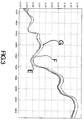
- Figure 3 gives near infrared spectra for the same sterile product at different temperatures, at know the curve E taken at 20 ° C, the curve F at 30 ° C and the curve G at 55 ° C.
- Figure 4 shows the sterility zones corresponding for this product, namely zone I at 20 ° C, zone H at 30 ° C and zone K at 55 ° C. It is to highlight that we measure at the temperature at which we did incubation.
- Figure 5 gives spectra of a product not having undergoing homogenization
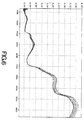
- Figure 6 gives the spectra of the same product but having undergone homogenization.
Landscapes
- Physics & Mathematics (AREA)
- Chemical & Material Sciences (AREA)
- Life Sciences & Earth Sciences (AREA)
- Health & Medical Sciences (AREA)
- Spectroscopy & Molecular Physics (AREA)
- Organic Chemistry (AREA)
- Analytical Chemistry (AREA)
- Biochemistry (AREA)
- Immunology (AREA)
- General Health & Medical Sciences (AREA)
- Zoology (AREA)
- General Physics & Mathematics (AREA)
- Pathology (AREA)
- Wood Science & Technology (AREA)
- Proteomics, Peptides & Aminoacids (AREA)
- Engineering & Computer Science (AREA)
- Public Health (AREA)
- Microbiology (AREA)
- Molecular Biology (AREA)
- Biotechnology (AREA)
- Biophysics (AREA)
- Epidemiology (AREA)
- Bioinformatics & Cheminformatics (AREA)
- General Engineering & Computer Science (AREA)
- Genetics & Genomics (AREA)
- Investigating Or Analysing Materials By Optical Means (AREA)
Abstract
Description
Claims (5)
- Procédé de détermination de la stérilité ou de la non-stérilité d'un échantillon disposé dans un emballage,ledit échantillon étant un produit liquide, semi-liquide ou visqueux, dans lequel on fait des spectres dans le domaine de l'infra-rouge proche pour un produit donné sur des échantillons stériles et des échantillons non stériles, de manière à définir pour chaque spectre un point dans un système de coordonnées multi-dimensionnels appelé analyse principale de produit et réalisant ainsi une zone qu'on appelle zone stérile et une zone qu'on appelle zone non stérile et dans lequel on effectue ensuite un spectre dans le même domaine de l'infra-rouge proche pour le produit à analyser ainsi que son analyse principale de produit, de manière à voir si ledit point d'analyse tombe dans la zone stérile ou dans la zone non stérile.
- Procédé selon la revendication 1, caractérisé en ce que le spectre est effectué entre 10000 et 4000 cm-1.
- Procédé selon l'une des revendications 1 ou 2, caractérisé en ce qu'on opère sur l'emballage fermé ou l'emballage ouvert.
- Procédé selon l'une des revendications 1 à 3, caractérisé en ce qu'on homogénéise le produit avant d'effectuer le spectre.
- Utilisation d'un appareil mono-faisceau d'analyse dans l'infra-rouge proche pour la détermination de la stérilité ou de la non-stérilité d'un échantillon.
Priority Applications (1)
| Application Number | Priority Date | Filing Date | Title |
|---|---|---|---|
| EP97200161A EP0855593A1 (fr) | 1997-01-20 | 1997-01-20 | Procédé de détermination de la stérilité d'un échantillon |
Applications Claiming Priority (1)
| Application Number | Priority Date | Filing Date | Title |
|---|---|---|---|
| EP97200161A EP0855593A1 (fr) | 1997-01-20 | 1997-01-20 | Procédé de détermination de la stérilité d'un échantillon |
Publications (1)
| Publication Number | Publication Date |
|---|---|
| EP0855593A1 true EP0855593A1 (fr) | 1998-07-29 |
Family
ID=8227945
Family Applications (1)
| Application Number | Title | Priority Date | Filing Date |
|---|---|---|---|
| EP97200161A Withdrawn EP0855593A1 (fr) | 1997-01-20 | 1997-01-20 | Procédé de détermination de la stérilité d'un échantillon |
Country Status (1)
| Country | Link |
|---|---|
| EP (1) | EP0855593A1 (fr) |
Citations (4)
| Publication number | Priority date | Publication date | Assignee | Title |
|---|---|---|---|---|
| US4889992A (en) * | 1987-11-12 | 1989-12-26 | Max Hoberman | Automatic infrared microorganism detection instrument |
| US5068798A (en) * | 1989-03-03 | 1991-11-26 | Precision Systems, Inc. | Process environment monitoring system |
| US5164597A (en) | 1989-09-29 | 1992-11-17 | University Of Kentucky Research Foundation | Method and apparatus for detecting microorganisms within a liquid product in a sealed vial |
| WO1995021936A1 (fr) * | 1994-02-15 | 1995-08-17 | Minnesota Mining And Manufacturing Company | Indicateur biologique a lecture rapide |
-
1997
- 1997-01-20 EP EP97200161A patent/EP0855593A1/fr not_active Withdrawn
Patent Citations (4)
| Publication number | Priority date | Publication date | Assignee | Title |
|---|---|---|---|---|
| US4889992A (en) * | 1987-11-12 | 1989-12-26 | Max Hoberman | Automatic infrared microorganism detection instrument |
| US5068798A (en) * | 1989-03-03 | 1991-11-26 | Precision Systems, Inc. | Process environment monitoring system |
| US5164597A (en) | 1989-09-29 | 1992-11-17 | University Of Kentucky Research Foundation | Method and apparatus for detecting microorganisms within a liquid product in a sealed vial |
| WO1995021936A1 (fr) * | 1994-02-15 | 1995-08-17 | Minnesota Mining And Manufacturing Company | Indicateur biologique a lecture rapide |
Non-Patent Citations (1)
| Title |
|---|
| F.J. SWENSON: "DEVELOPMENT AND EVALUATION OF OPTICAL SENSORS FOR THE DETECTION OF BACTERIA", SENSORS AND ACTUATORS B, vol. 11, 1993, LAUSANNE CH, pages 315 - 321, XP002031968 * |
Similar Documents
| Publication | Publication Date | Title |
|---|---|---|
| JP3693361B2 (ja) | 透明な容器を光学的に検査するための方法および装置 | |
| Etzion et al. | Determination of protein concentration in raw milk by mid-infrared Fourier transform infrared/attenuated total reflectance spectroscopy | |
| Blanco et al. | NIR spectroscopy: a rapid-response analytical tool | |
| Kulmyrzaev et al. | Determination of lactulose and furosine in milk using front-face fluorescence spectroscopy | |
| US8936754B2 (en) | Automatic analysis device | |
| Chao et al. | Raman and IR spectroscopic modality for authentication of turmeric powder | |
| US20070282647A1 (en) | Methods of assessing and designing an application specific measurement system | |
| US20080165364A1 (en) | Method and apparatus for assessing purity of vegetable oils by means of terahertz time-domain spectroscopy | |
| Wehling | Infrared spectroscopy | |
| JP2002122538A (ja) | 近赤外分光法を用いた液状試料の分析法および分析装置 | |
| Katsumata et al. | Quantitative analysis of fat and protein concentrations of milk based on fibre-optic evaluation of back scattering intensity | |
| CA3115935A1 (fr) | Recipient d'echantillon avec element de reflexion interne integre | |
| Vermeulen et al. | Authentication and traceability of agricultural and food products using vibrational spectroscopy | |
| CA3135861A1 (fr) | Procede pour configurer un dispositif de spectrometrie | |
| Gao et al. | Non-intrusive prediction of fruit spoilage and storage time via detecting volatiles in sealed packaging using laser spectroscopy | |
| EP3126842B1 (fr) | Méthode d'analyse microbiologique d'un échantillon dans un conteneur unique | |
| EP0855593A1 (fr) | Procédé de détermination de la stérilité d'un échantillon | |
| Yulia et al. | Investigation on the influence of temperature in L-ascorbic acid determination using FTIR-ATR terahertz spectroscopy Calibration model with temperature compensation | |
| EP3183571B1 (fr) | Détermination d'une propriété liée à un constituant d'un échantillon multi-constituant | |
| EP0985920A1 (fr) | Procédé et dispositif de contrôle de qualité d'effluents | |
| EP3732466B1 (fr) | Procédé de détermination d'un degré de polymérisation d'un polymère | |
| EP1664735B1 (fr) | Mesure en ligne des caracteristiques d'un système disperse s'ecoulant | |
| Wacogne et al. | Optical spectroscopy methods to monitor cells and bacteria concentrations and to detect contamination during cell culture: application to the fabrication of ATMPs | |
| Compton et al. | Examination of packaged consumer goods by using FT-Raman spectrometry | |
| EP3366196A1 (fr) | Procede et dispositif d'introduction d'au moins une substance exogene dosee, dans un liquide endogene |
Legal Events
| Date | Code | Title | Description |
|---|---|---|---|
| PUAI | Public reference made under article 153(3) epc to a published international application that has entered the european phase |
Free format text: ORIGINAL CODE: 0009012 |
|
| AK | Designated contracting states |
Kind code of ref document: A1 Designated state(s): AT BE CH DE DK ES FI FR GB GR IE IT LI LU NL PT SE |
|
| AX | Request for extension of the european patent |
Free format text: AL;LT;LV;RO;SI |
|
| 17P | Request for examination filed |
Effective date: 19990129 |
|
| AKX | Designation fees paid |
Free format text: AT BE CH DE DK ES FI FR GB GR IE IT LI LU NL PT SE |
|
| AXX | Extension fees paid |
Free format text: SI PAYMENT 990129 |
|
| RBV | Designated contracting states (corrected) |
Designated state(s): AT BE CH DE DK ES FI FR GB GR IE IT LI LU NL PT SE |
|
| STAA | Information on the status of an ep patent application or granted ep patent |
Free format text: STATUS: THE APPLICATION IS DEEMED TO BE WITHDRAWN |
|
| 18D | Application deemed to be withdrawn |
Effective date: 20060717 |