EP0855824A2 - Überwachung einer Paket-Fernsprecheinrichtung durch eine Steuervorrichtung - Google Patents
Überwachung einer Paket-Fernsprecheinrichtung durch eine Steuervorrichtung Download PDFInfo
- Publication number
- EP0855824A2 EP0855824A2 EP98100700A EP98100700A EP0855824A2 EP 0855824 A2 EP0855824 A2 EP 0855824A2 EP 98100700 A EP98100700 A EP 98100700A EP 98100700 A EP98100700 A EP 98100700A EP 0855824 A2 EP0855824 A2 EP 0855824A2
- Authority
- EP
- European Patent Office
- Prior art keywords
- network
- packet
- packet telephony
- control
- telephony device
- Prior art date
- Legal status (The legal status is an assumption and is not a legal conclusion. Google has not performed a legal analysis and makes no representation as to the accuracy of the status listed.)
- Withdrawn
Links
Images

Classifications
-
- H—ELECTRICITY
- H04—ELECTRIC COMMUNICATION TECHNIQUE
- H04L—TRANSMISSION OF DIGITAL INFORMATION, e.g. TELEGRAPHIC COMMUNICATION
- H04L43/00—Arrangements for monitoring or testing data switching networks
-
- H—ELECTRICITY
- H04—ELECTRIC COMMUNICATION TECHNIQUE
- H04L—TRANSMISSION OF DIGITAL INFORMATION, e.g. TELEGRAPHIC COMMUNICATION
- H04L12/00—Data switching networks
- H04L12/64—Hybrid switching systems
- H04L12/6418—Hybrid transport
-
- H—ELECTRICITY
- H04—ELECTRIC COMMUNICATION TECHNIQUE
- H04M—TELEPHONIC COMMUNICATION
- H04M1/00—Substation equipment, e.g. for use by subscribers
- H04M1/24—Arrangements for testing
-
- H—ELECTRICITY
- H04—ELECTRIC COMMUNICATION TECHNIQUE
- H04M—TELEPHONIC COMMUNICATION
- H04M3/00—Automatic or semi-automatic exchanges
- H04M3/22—Arrangements for supervision, monitoring or testing
-
- H—ELECTRICITY
- H04—ELECTRIC COMMUNICATION TECHNIQUE
- H04M—TELEPHONIC COMMUNICATION
- H04M7/00—Arrangements for interconnection between switching centres
- H04M7/006—Networks other than PSTN/ISDN providing telephone service, e.g. Voice over Internet Protocol (VoIP), including next generation networks with a packet-switched transport layer
-
- H—ELECTRICITY
- H04—ELECTRIC COMMUNICATION TECHNIQUE
- H04L—TRANSMISSION OF DIGITAL INFORMATION, e.g. TELEGRAPHIC COMMUNICATION
- H04L12/00—Data switching networks
- H04L12/64—Hybrid switching systems
- H04L12/6418—Hybrid transport
- H04L2012/6424—Access arrangements
- H04L2012/6427—Subscriber Access Module; Concentrator; Group equipment
-
- H—ELECTRICITY
- H04—ELECTRIC COMMUNICATION TECHNIQUE
- H04L—TRANSMISSION OF DIGITAL INFORMATION, e.g. TELEGRAPHIC COMMUNICATION
- H04L12/00—Data switching networks
- H04L12/64—Hybrid switching systems
- H04L12/6418—Hybrid transport
- H04L2012/6472—Internet
-
- H—ELECTRICITY
- H04—ELECTRIC COMMUNICATION TECHNIQUE
- H04L—TRANSMISSION OF DIGITAL INFORMATION, e.g. TELEGRAPHIC COMMUNICATION
- H04L12/00—Data switching networks
- H04L12/64—Hybrid switching systems
- H04L12/6418—Hybrid transport
- H04L2012/6475—N-ISDN, Public Switched Telephone Network [PSTN]
-
- H—ELECTRICITY
- H04—ELECTRIC COMMUNICATION TECHNIQUE
- H04L—TRANSMISSION OF DIGITAL INFORMATION, e.g. TELEGRAPHIC COMMUNICATION
- H04L12/00—Data switching networks
- H04L12/64—Hybrid switching systems
- H04L12/6418—Hybrid transport
- H04L2012/6486—Signalling Protocols
-
- H—ELECTRICITY
- H04—ELECTRIC COMMUNICATION TECHNIQUE
- H04L—TRANSMISSION OF DIGITAL INFORMATION, e.g. TELEGRAPHIC COMMUNICATION
- H04L43/00—Arrangements for monitoring or testing data switching networks
- H04L43/08—Monitoring or testing based on specific metrics, e.g. QoS, energy consumption or environmental parameters
- H04L43/0805—Monitoring or testing based on specific metrics, e.g. QoS, energy consumption or environmental parameters by checking availability
- H04L43/0817—Monitoring or testing based on specific metrics, e.g. QoS, energy consumption or environmental parameters by checking availability by checking functioning
-
- H—ELECTRICITY
- H04—ELECTRIC COMMUNICATION TECHNIQUE
- H04M—TELEPHONIC COMMUNICATION
- H04M1/00—Substation equipment, e.g. for use by subscribers
- H04M1/253—Telephone sets using digital voice transmission
- H04M1/2535—Telephone sets using digital voice transmission adapted for voice communication over an Internet Protocol [IP] network
Definitions
- This invention relates to packet telephony in general and, more particularly, provides a way of increasing reliability of and extending network management and operations to end devices for packet telephony.
- Packet telephony involves the use of a packet network, such as the Internet or an "intranet” (modeled in functionality based upon the Internet and used by a companies locally or internally) for telecommunicating voice, pictures, moving images and multimedia (e.g., voice and pictures) content.
- packet telephony typically involves the use of a "packet phone” or "Internet phone” at one or both ends of the telephony link, with the information transferred over a packet network using packet switching techniques.
- a "packet phone” or “Internet phone” typically includes a personal computer (PC) running application software for implementing packetized transmission of audio signals over a packet network (such as the Internet); in addition, the PC-based configuration of a packet or Internet phone typically includes additional hardware devices, such as a microphone, speakers and a sound card, which are plugged or incorporated into the PC.
- PC personal computer
- additional hardware devices such as a microphone, speakers and a sound card, which are plugged or incorporated into the PC.
- packet telephony includes a broad spectrum of media or signal types.
- POTS plain old telephone service
- packet telephony includes --in addition to voice/data -- pictures or images, moving pictures, and multimedia content. Incorporating the capability of handling multimedia content increases the complexity of end devices for packet telephony.
- Regular telephone devices used with POTS networks are simple, highly reliable devices. Users typically do not tamper with them during the life of the telephone. The reliability of regular telephones is limited only by the manufacturing process.
- devices used for packet telephony such as PC-based packet phones
- PCs used for packet phones are not dedicated telephony devices, so the reliability of a PC-based packet phone may well be limited by other applications that may run on the PC; for example, a crash caused by any other application that renders the PC inoperative (i.e., the computer is "hung") would also render the PC-based packet phone inoperative.
- some PC products contain as a feature the ability of a PC to wake up, receive a phone call and go back to sleep, such a feature requires an operational PC; if the PC has crashed, the "wake up" phone call feature will be rendered inoperable.
- An illustrative embodiment of the present invention is directed to a control device operationally coupled to both a packet telephony device (such as a PC-based packet phone) and a communications network (e.g., telephone network or packet network).
- the control device may have its own network address separate from that of the packet telephony device.
- the control device enables monitoring of the operation of the packet telephony device and basic maintenance, such as re-booting of that device if it is no longer responding to input commands.
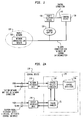
- FIG. 1 is a functional diagram illustrating the interconnection between various components used in packet telephony in accordance with the present invention.
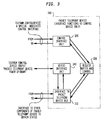
- FIGS. 2A and 2B show two embodiments of a control device in accordance with the present invention.
- FIG. 3 shows a structure for functions incorporated in a primary device in accordance with the present invention.
- Embodiments of the present invention enable monitoring of a packet telephony device, such as a PC-based packet phone, and basic maintenance of that device, such as re-setting or re-booting the packet telephony device if it is no longer responding to input commands.
- a packet telephony device such as a PC-based packet phone
- basic maintenance of that device such as re-setting or re-booting the packet telephony device if it is no longer responding to input commands.
- the invention comprises connection of a control device to both a packet telephony device and a network (e.g., the public switched telephone network or the Internet).
- the packet telephony device may be a computer (e.g., a PC) attached to a network for computer-computer communications (e.g., an Ethernet or a token-ring) via a network adapter (e.g., a LAN access card or a dial-up voiceband data connection).
- Network packets destined for the packet telephony device are sent to its network address or, where present, the network address of the adapter.
- the control device may have its own network address, separate from that of the packet telephony device, so that the control device can send and receive information even when the packet telephony device is no longer responding to input commands.
- the control device may also have the same address as the packet telephony device, however such a configuration may not provide the same level of robustness as would be the case wioth separate addresses.
- the control device monitors the operation of the packet telephony device (e.g., status, faults, etc.) through a control connection between the packet telephony device and the control device, for the purpose of detecting a condition of inoperability.
- the control device can also apply basic maintenance functions (e.g., reset or boot, cycle power, etc.).
- the monitoring of the packet telephony device can be done in many ways.
- the packet telephony device could write certain data, e.g. a time stamp, on a regular or periodic basis into, e.g., a memory or register accessible by the control device, and the control device would check the same memory or register periodically, to ensure that the packet telephony device is functioning properly (i.e., making progress).
- the control device would detect a condition of inoperability with respect to the packet telephony device if, in checking the memory or register, it found that the packet telephony device had not written the expected data into the memory or register.
- the control device could also monitor operation of the packet telephony device by observing whether or not the packet telephony device is sending responsive signals to the network or to the control device; such a responsive signal could include any type of signal that would ordinarily be sent by the packet telephony device in response to one or more signals received by the packet telephony device from the network or from the control device. A cessation of such responsive signals coming from the packet telephony device would indicate that the packet telephony device is inoperable.
- the control device uses its own network connection to report information about the packet telephony device and receive control commands intended for the packet telephony device.
- the control device should use a separate network or channel (in addition to a separate adapter, if an adapter required).
- the control device and the packet telephony device may be attached to separate Ethernets.
- the control device could use the D-channel, while the packet telephony device could use the B-channel(s).
- control via voice band encoded control signals is possible.
- the control device could further be connected both to a network or channel separate from the packet telephony device as well as to the same network or channel connected to the packet telephony device.
- the control device In its operation, the control device will typically have simple, well-tested software. Furthermore, changes to that software will be very rare and under strict control of the network administrator; software updates could be downloaded over the network. Keeping the software operating on the control device less susceptible to modification (e.g., by use of micro-code) makes it more robust. In contrast, the packet telephony device is vulnerable to crashes which may result from updates of software unrelated or related to packet telephony. To ensure that the packet telephony device returns to a controllable state after being re-booted by the control device, the packet telephony device may be configured to re-boot with only the absolutely necessary software when it is instructed to do so by the control device. Thus, the control device may command the packet telephony device to re-boot or reset with such limited operational functionality. This could ensure that the possibly offending software does not get automatically restarted.
- FIG. 1 illustrates the functional role of the various network components with respect to the embodiment.
- Packet telephony device 100 is connected through network adapter 110 to network 120.
- Control device 130 is connected to network 120, and is also connected to the packet telephony device through control connection 140. Both the primary and the control device are attached to a network so that they can exchange data and commands with other functional units in the network.
- Packet telephony device 100 and control device 130 need not be connected to the same network; packet telephony device 100 and control device 130 may be connected to different networks, or even different types of networks, without sacrificing the advantages of the present invention.
- packet telephony device 100 may be connected to a packet network, such as the Internet, while the control device may be connected to another packet network (such as an intranet).
- a packet network such as the Internet
- another packet network such as an intranet
- the packet telephony device could be connected to a fiber network, while the control device is connected to a wireless network.
- network administration server 150 is a remote network-based server that acts to administer the network.
- Network server 150 can retrieve information and apply control operations to the packet telephony device, which can be accomplished either directly between network server 150 and packet telephony device 100 or via control device 130.
- control of the packet telephony device will only be possible through the direct interface between the control device and the packet telephony device.
- FIG. 2A illustrates a structure for an embodiment of the control device in accordance with the present invention.
- the control device 200 (which is shown as 130 in FIG. 1) includes network interface unit 210 that makes it accessible via a network (e.g., network 120 from FIG. 1).
- Network interface unit 210 may be constructed as any number of possible combinations of hardware and/or software that implement the operation of providing an interface for the control device with the network. For example, if the control device is attached to an Ethernet network, network interface unit 210 will be an Ethernet-compatible interface unit.
- the network interface unit 210 in combination with control request handler 220 will execute the hardware/software protocols necessary for communication with other entities on the network. Control request handler 220 also implements the main logic for receiving requests from the network (via the network interface), processing such requests, and sending replies.
- Control data store 230 is a data store including a memory element used to store code and/or data, and also loadable threshold data for automated control device intervention.
- the control data storage device 230 can be any of a number of known memory units, such as a disk, flash-ram, processor-resident memory, a PROM or any other kind of suitably-defined memory.
- Device interface unit 240 is the interface that connects the control device 200 to the packet telephony device (100 in FIG. 1). This interface may include a serial or a parallel port, etc.
- Status handler 250 operates under the control of the control request handler 220. For example, if the control request handler 220 determines that it must re-boot the packet telephony device, it instructs the status handler 250 to output the appropriate signals to the packet telephony device via device interface unit 240.
- Controlling the power on the packet telephony device could in principle be done by sending appropriate control signals to the packet telephony device over the connection between the packet telephony device and the control device via device interface unit 240. This would allow the power management system on the packet telephony device to take appropriate action (e.g., save something on disk). However, because the packet telephony device may be hung, it may not respond to signals received via interface 240 from the control device 200.
- control device 200 may, as shown in an alternate embodiment of the control device in FIG. 2B, include a separate power control handler 260 to control power on the packet telephony device directly.
- Power control handler 260 would include the necessary associated logic for controlling the power to the packet telephony device, as commanded by control request handler 220 and status handler 250.
- control request handler 220 and status handler 250 Those skilled in the art will recognize that, in many conditions, the re-setting effect of turning the packet telephony device power off and on can be accomplished, effectively, by triggering a logical reset through a connection between power control handler 260 and a logical reset input within the packet telephony device, such as that typically included with microprocessors or microcomputers used in PCs or other computer-based devices.
- the packet telephony device may be a PC-based packet phone which is also programmed to run other non telephony-related software, which software is the cause of the PC entering the hung state; re-booting the PC may cause the offending software to be executed again and re-create the hung scenario.
- a special command or series of commands can be issued, through device interface unit 240 or through power control handler 260, to initiate a limited restoration of operation of the packet telephony device so that the device manages only a limited set of functions.
- device interface unit 240 or power control handler 260 can issue a special command (or set of commands) which would initiate a limited re-boot or the PC, such that only telephony-related functions of the PC would be enabled.
- the packet telephony device could be configured such that any attempt to reset or re-boot that comes directly from power control handler 260 would result in the limited function reset described above.
- Control request handler 220, status handler 250, control data store 230 and, with respect to the alternative embodiment described above, power control handler 260 are, in combination, the logic unit (depicted as 270 in FIGS. 2A and 2B) for the control device of the present invention.
- control request handler 220, status handler 250 and, where present, power control handler 260 included with logic unit 270 could be implemented using one or more logic circuits or one or more programmable processors that are programmed to implement the functions for each handler, as described above, or a combination of logic circuits and processors; and further that control data store 230 could, as described above, include a separate memory element or be included as part of a logic circuit and/or processor.
- Interface to packet telephony device bus 310 is the component that allows the functional components of FIG. 3 to communicate with the rest of the packet telephony device's components (not shown in FIG. 3).
- Control interface unit 320 is a special dedicated interface for connecting the packet telephony device to the control device of FIGS. 2A and 2B (which control device is also shown as 100 in FIG. 1). Through control interface unit 320, the packet telephony device reports status information to the control device and receives control commands from the control device.
- Request buffer and control 330 handles the logic for communications between the packet telephony device and the control device.
- Power control handler 340 is the component that controls power to the packet telephony device.
- power control handler 340 connects internally to the packet telephony device and may receive commands from the control device through the path consisting of control interface unit 320, request buffer and control 330, and interface to primary bus 310.
- control interface unit 320 may receive commands from the control device through the path consisting of control interface unit 320, request buffer and control 330, and interface to primary bus 310.
- control interface unit 320 may receive commands from the control device through the path consisting of control interface unit 320, request buffer and control 330, and interface to primary bus 310.
- control device instructed the packet telephony device to shut down, it would preferably do so by sending a command through one of the above-enumerated pathways, so that the control logic within the power control handler 340 would decode the command and shut down, possibly after causing appropriate action to take place (e.g., save current status or memory on disk).
- Another embodiment of the present invention includes (in conjunction with the embodiment shown in FIG. 2B above) a separate control line that comes into the power control handler directly from the control device; this is essentially in function a power on/off switch or a power reset control line. Because of the hung device scenario mentioned above, it may be preferable to include this direct power reset control so that the packet telephony device can successfully be restarted even if it is non-responsive to other external controls. Implementation of the functions of FIG. 3 may be accomplished, for example, by using an adapter card that attaches to the packet telephony device's system bus.
- another embodiment of the present invention combines the control device with the regular primary network adapter.
- the control device is, essentially, built or installed into the primary network.
- Such a configuration would sacrifice some of the fault tolerance (e.g, a single adapter failure could render both the primary and the control devices inaccessible).
- the combined device adapter would respond to two addresses (where the control device has an address separate from that of the packet telephony device) such that packets destined for the packet telephony device would be passed on following the normal route, while packets addressed to the control device would be intercepted and interpreted locally by the micro-code running on the combined device.
- control device is combined with the packet telephony device itself (i.e., built or installed into the packet telephony device). This configuration also sacrifices some of the fault tolerance as, e.g., a single power failure could render both the packet telephony device and the control device inoperable.
- control device might be a standalone battery powered device or might be supported by the POTS network power -- much like a POTS handset is today.
- POTS network power much like a POTS handset is today.
- Such a configuration may be particularly useful to ensure continuous connectivity even in the presence of line power failures or when a PC crashes, making the packet phone inaccessible. The latter may be a consideration, since a PC-based packet phone will be limited by the unreliability of the host PC, such that a reliable second access to the network may be critical.
- re-setting or re-booting of the packet telephony device when it becomes inoperable is a form of basic maintenance of the packet telephony device, and that other forms of basic maintenance activities, such as updating programmable elements or features of the packet telephony device, are also enhanced by present invention.
- software updates intended, e.g., for a packet phone can be scheduled and implemented by the control device in a way that minimizes interruption of the availability of the packet phone.
- the benefits of the present invention can be extended to other primary network devices used in connection with communications networks.
- Large numbers of computer-based primary network devices such as, e.g., private branch exchange communications equipment or any other form of network terminal
- a computer-based primary network device has entered a state in which it is no longer capable of normal operation (e.g., it has crashed), and may require manual intervention. Also, it may not be easily determinable whether the fault has been the result of a network or adapter failure or the result of a computer crash.
- a control device may be utilized in conjunction with a primary network device in accordance with the methods and architectures described above with respect to packet telephony devices, in order to obtain improvements in reliability and network management for primary network devices similar to those that may be obtained for packet telephony devices.
- the present invention describes a way of improving the reliability of packet telephony using a control device attached to both a packet telephony device (such as a PC-based packet phone) and a network (e.g., telephone network or packet network).
- a packet telephony device such as a PC-based packet phone
- a network e.g., telephone network or packet network.
- the control device enables monitoring of the operation of the packet telephony device and basic maintenance (such as re-booting) of that device if it is no longer responding to input commands.
Landscapes
- Engineering & Computer Science (AREA)
- Signal Processing (AREA)
- Computer Networks & Wireless Communication (AREA)
- Data Exchanges In Wide-Area Networks (AREA)
Applications Claiming Priority (2)
| Application Number | Priority Date | Filing Date | Title |
|---|---|---|---|
| US787669 | 1985-10-15 | ||
| US08/787,669 US6128285A (en) | 1997-01-24 | 1997-01-24 | Monitoring of a packet telephony device via a control device |
Publications (2)
| Publication Number | Publication Date |
|---|---|
| EP0855824A2 true EP0855824A2 (de) | 1998-07-29 |
| EP0855824A3 EP0855824A3 (de) | 2001-10-17 |
Family
ID=25142221
Family Applications (1)
| Application Number | Title | Priority Date | Filing Date |
|---|---|---|---|
| EP98100700A Withdrawn EP0855824A3 (de) | 1997-01-24 | 1998-01-16 | Überwachung einer Paket-Fernsprecheinrichtung durch eine Steuervorrichtung |
Country Status (4)
| Country | Link |
|---|---|
| US (2) | US6128285A (de) |
| EP (1) | EP0855824A3 (de) |
| CA (1) | CA2227367C (de) |
| MX (1) | MX9800606A (de) |
Cited By (13)
| Publication number | Priority date | Publication date | Assignee | Title |
|---|---|---|---|---|
| WO1999043182A1 (de) * | 1998-02-17 | 1999-08-26 | Nova-Technik Entwicklung Von Und Handel Mit Medizinischen Geräten Gmbh | Verfahren zur übertragung von digitalisierten audioinformationen und anordnung zur durchführung des verfahrens |
| WO2000011904A3 (de) * | 1998-08-19 | 2000-05-18 | Nova Technik Entwicklung Von U | Verfahren und anordnung zur übertragung von digitalisierten informationen |
| EP1075129A1 (de) * | 1999-08-06 | 2001-02-07 | BRITISH TELECOMMUNICATIONS public limited company | Prüfverfahren für Computer Telefonie |
| WO2001063825A3 (en) * | 2000-02-24 | 2002-03-28 | Numerex Corp | Non-invasive remote monitoring and reporting of digital communications systems |
| EP1328106A1 (de) * | 2002-01-11 | 2003-07-16 | Alcatel | Verfahren zur ferngesteuerten Ermittlung der Audio-Qualität eines IP Sprach-Terminals und entsprechendes Sprach-Terminal |
| US7151943B2 (en) | 1999-09-20 | 2006-12-19 | Cellemetry, Llc | System for communicating messages via a forward overhead control channel for a programmable logic control device |
| US7233802B2 (en) | 1999-10-29 | 2007-06-19 | Cellemetry, Llc | Interconnect system and method for multiple protocol short message services |
| US7245928B2 (en) | 2000-10-27 | 2007-07-17 | Cellemetry, Llc | Method and system for improved short message services |
| US7272494B2 (en) | 2002-03-28 | 2007-09-18 | Numerex Investment Corp. | Communications device for conveying geographic location information over capacity constrained wireless systems |
| US7323970B1 (en) | 2004-01-21 | 2008-01-29 | Numerex Corporation | Method and system for remote interaction with a vehicle via wireless communication |
| US7680471B2 (en) | 2006-05-17 | 2010-03-16 | Numerex Corp. | System and method for prolonging wireless data product's life |
| US7783508B2 (en) | 1999-09-20 | 2010-08-24 | Numerex Corp. | Method and system for refining vending operations based on wireless data |
| US8265605B2 (en) | 2007-02-06 | 2012-09-11 | Numerex Corp. | Service escrowed transportable wireless event reporting system |
Families Citing this family (12)
| Publication number | Priority date | Publication date | Assignee | Title |
|---|---|---|---|---|
| US6266328B1 (en) | 1996-08-26 | 2001-07-24 | Caritas Technologies, Inc. | Dial up telephone conferencing system controlled by an online computer network |
| JP4137333B2 (ja) * | 1999-03-19 | 2008-08-20 | 富士通株式会社 | メディア通信制御方法及びシステム |
| TW518458B (en) * | 2001-06-27 | 2003-01-21 | Ind Tech Res Inst | Computer telephony system for detecting breakdown and automatically resetting, and the method thereof |
| JP2003131956A (ja) * | 2001-10-25 | 2003-05-09 | Fuji Xerox Co Ltd | デバイス制御システム |
| US7539127B1 (en) * | 2001-12-13 | 2009-05-26 | Cisco Technology, Inc. | System and method for recovering from endpoint failure in a communication session |
| US7483390B2 (en) * | 2003-06-30 | 2009-01-27 | Intel Corporation | System and method for dynamically configuring and transitioning wired and wireless networks |
| US20040267921A1 (en) * | 2003-06-30 | 2004-12-30 | Rover Jeremy L. | System and method for describing network components and their associations |
| US20040267922A1 (en) * | 2003-06-30 | 2004-12-30 | Rover Jeremy L. | System and method for the design and description of networks |
| US7386629B2 (en) * | 2003-06-30 | 2008-06-10 | Intel Corporation | System and method for synchronous configuration of DHCP server and router interfaces |
| US7383340B2 (en) * | 2003-06-30 | 2008-06-03 | Intel Corporation | System and method for programmatically changing the network location of a network component |
| JP2010140361A (ja) * | 2008-12-12 | 2010-06-24 | Fujitsu Microelectronics Ltd | コンピュータシステム及び異常検出回路 |
| US10181991B1 (en) * | 2015-09-30 | 2019-01-15 | The Directv Group, Inc. | Method and system for resetting processors of a gateway device |
Family Cites Families (6)
| Publication number | Priority date | Publication date | Assignee | Title |
|---|---|---|---|---|
| US5528595A (en) * | 1974-06-09 | 1996-06-18 | U.S. Robotics, Inc. | Modem input/output signal processing techniques |
| US5195130A (en) * | 1988-05-05 | 1993-03-16 | Transaction Technology, Inc. | Computer and telephone apparatus with user friendly computer interface and enhanced integrity features |
| WO2004088337A1 (ja) * | 1993-09-29 | 2004-10-14 | Shigeo Tanaka | 電子機器システム |
| JP3430579B2 (ja) * | 1993-10-05 | 2003-07-28 | 株式会社デンソー | 車両用通信システムの異常検出装置 |
| JP2730534B2 (ja) * | 1995-12-18 | 1998-03-25 | 日本電気株式会社 | データ通信網端末のデータバックアップ方法とその装置 |
| US6163849A (en) * | 1997-05-13 | 2000-12-19 | Micron Electronics, Inc. | Method of powering up or powering down a server to a maintenance state |
-
1997
- 1997-01-24 US US08/787,669 patent/US6128285A/en not_active Expired - Lifetime
-
1998
- 1998-01-16 EP EP98100700A patent/EP0855824A3/de not_active Withdrawn
- 1998-01-19 CA CA002227367A patent/CA2227367C/en not_active Expired - Fee Related
- 1998-01-21 MX MX9800606A patent/MX9800606A/es unknown
-
2000
- 2000-08-18 US US09/640,798 patent/US6404741B1/en not_active Expired - Lifetime
Cited By (26)
| Publication number | Priority date | Publication date | Assignee | Title |
|---|---|---|---|---|
| WO1999043182A1 (de) * | 1998-02-17 | 1999-08-26 | Nova-Technik Entwicklung Von Und Handel Mit Medizinischen Geräten Gmbh | Verfahren zur übertragung von digitalisierten audioinformationen und anordnung zur durchführung des verfahrens |
| WO2000011904A3 (de) * | 1998-08-19 | 2000-05-18 | Nova Technik Entwicklung Von U | Verfahren und anordnung zur übertragung von digitalisierten informationen |
| EP1075129A1 (de) * | 1999-08-06 | 2001-02-07 | BRITISH TELECOMMUNICATIONS public limited company | Prüfverfahren für Computer Telefonie |
| WO2001011854A1 (en) * | 1999-08-06 | 2001-02-15 | British Telecommunications Public Limited Company | Test method for computer telephony links |
| US7783508B2 (en) | 1999-09-20 | 2010-08-24 | Numerex Corp. | Method and system for refining vending operations based on wireless data |
| US7151943B2 (en) | 1999-09-20 | 2006-12-19 | Cellemetry, Llc | System for communicating messages via a forward overhead control channel for a programmable logic control device |
| US7233802B2 (en) | 1999-10-29 | 2007-06-19 | Cellemetry, Llc | Interconnect system and method for multiple protocol short message services |
| WO2001063825A3 (en) * | 2000-02-24 | 2002-03-28 | Numerex Corp | Non-invasive remote monitoring and reporting of digital communications systems |
| US7680505B2 (en) | 2000-10-27 | 2010-03-16 | Cellemetry, Llc | Telemetry gateway |
| US7245928B2 (en) | 2000-10-27 | 2007-07-17 | Cellemetry, Llc | Method and system for improved short message services |
| US8060067B2 (en) | 2000-10-27 | 2011-11-15 | Cellemetry Llc | Method and system for efficiently routing messages |
| US8543146B2 (en) | 2000-10-27 | 2013-09-24 | Cellemetry, Llc | Method and system for efficiently routing messages |
| US7676290B2 (en) | 2002-01-11 | 2010-03-09 | Alcatel | Method for remotely evaluating the audio quality of an IP terminal and corresponding terminal |
| EP1328106A1 (de) * | 2002-01-11 | 2003-07-16 | Alcatel | Verfahren zur ferngesteuerten Ermittlung der Audio-Qualität eines IP Sprach-Terminals und entsprechendes Sprach-Terminal |
| US7272494B2 (en) | 2002-03-28 | 2007-09-18 | Numerex Investment Corp. | Communications device for conveying geographic location information over capacity constrained wireless systems |
| US8269618B2 (en) | 2004-01-21 | 2012-09-18 | Numerex Corp. | Method and system for remotely monitoring the location of a vehicle |
| US7323970B1 (en) | 2004-01-21 | 2008-01-29 | Numerex Corporation | Method and system for remote interaction with a vehicle via wireless communication |
| US9084197B2 (en) | 2004-01-21 | 2015-07-14 | Numerex Corp. | Method and system for interacting with a vehicle over a mobile radiotelephone network |
| US7880599B2 (en) | 2004-01-21 | 2011-02-01 | Numerex Corp. | Method and system for remotely monitoring the operations of a vehicle |
| US7936256B2 (en) | 2004-01-21 | 2011-05-03 | Numerex Corp. | Method and system for interacting with a vehicle over a mobile radiotelephone network |
| US8041383B2 (en) | 2006-05-17 | 2011-10-18 | Numerex Corporation | Digital upgrade system and method |
| US8483748B2 (en) | 2006-05-17 | 2013-07-09 | Numerex Corp. | Digital upgrade system and method |
| US8868059B2 (en) | 2006-05-17 | 2014-10-21 | Numerex Corp. | Digital upgrade system and method |
| US7680471B2 (en) | 2006-05-17 | 2010-03-16 | Numerex Corp. | System and method for prolonging wireless data product's life |
| US8265605B2 (en) | 2007-02-06 | 2012-09-11 | Numerex Corp. | Service escrowed transportable wireless event reporting system |
| US8543097B2 (en) | 2007-02-06 | 2013-09-24 | Numerex Corp. | Service escrowed transportable wireless event reporting system |
Also Published As
| Publication number | Publication date |
|---|---|
| US6128285A (en) | 2000-10-03 |
| CA2227367A1 (en) | 1998-07-24 |
| MX9800606A (es) | 1998-10-31 |
| US6404741B1 (en) | 2002-06-11 |
| CA2227367C (en) | 2002-05-07 |
| EP0855824A3 (de) | 2001-10-17 |
Similar Documents
| Publication | Publication Date | Title |
|---|---|---|
| US6128285A (en) | Monitoring of a packet telephony device via a control device | |
| US7788356B2 (en) | Remote management of a client computer via a computing component that is a single board computer | |
| EP1532799B1 (de) | Hochverfügbarkeitssoftware auf der basis einer kontaktzentrale | |
| JP3790333B2 (ja) | 分散型のコンピュータ・システム | |
| US20020188713A1 (en) | Distributed architecture for a telecommunications system | |
| JP2003188986A (ja) | ゲートウェイ装置 | |
| WO2008156730A2 (en) | System and method for providing multi-protocol access to remote computers | |
| CN1507721A (zh) | 用于在局域网内实现快速恢复进程的方法和系统 | |
| KR100476455B1 (ko) | 미디어 게이트웨이 시스템에서 보이스 프로세싱 유니트의n:1 이중화 장치 및 그 방법 | |
| JP6006227B2 (ja) | コールドブートとウォームブートとを区別する方法およびデバイス | |
| JP4343282B2 (ja) | 複合通信端末装置管理システム及び複合通信端末装置 | |
| US7434085B2 (en) | Architecture for high availability using system management mode driven monitoring and communications | |
| JP2003078567A (ja) | 分散配置型高信頼通信システムおよびその制御装置、ならびに障害検知方法とそのプログラムと記録媒体 | |
| JP7716153B2 (ja) | 電源断監視装置、方法及び外部保護装置 | |
| US9123225B2 (en) | Robust alarm system with auxiliary processing sub-system | |
| JP3465637B2 (ja) | サーバ及びその制御方法 | |
| KR20060105045A (ko) | 공간적으로 분리된 스위칭 시스템들을 백업 스위칭하기위한 방법 | |
| KR100233245B1 (ko) | 고속무선호출 시스템에서의 이중화 제어방법 | |
| KR100645520B1 (ko) | 이중화된 cti 시스템의 링크 장치 및 방법 | |
| CN1855838A (zh) | 一种接口倒换方法 | |
| JP4017298B2 (ja) | 構内電話交換機システム | |
| KR101873713B1 (ko) | PoE 디바이스 폴트 감시 및 하드웨어 리셋 제공 시스템 | |
| CN1322705C (zh) | 一种转发设备的数据平面复位方法 | |
| US20050185637A1 (en) | Integrated IP-capable telephonic communications system, IP terminal information management method, IP terminal information management program, and protocol control device | |
| CN116962575A (zh) | 软电话管理方法、装置、坐席终端及可读存储介质 |
Legal Events
| Date | Code | Title | Description |
|---|---|---|---|
| PUAI | Public reference made under article 153(3) epc to a published international application that has entered the european phase |
Free format text: ORIGINAL CODE: 0009012 |
|
| AK | Designated contracting states |
Kind code of ref document: A2 Designated state(s): AT BE CH DE DK ES FI FR GB GR IE IT LI LU MC NL PT SE |
|
| AX | Request for extension of the european patent |
Free format text: AL;LT;LV;MK;RO;SI |
|
| PUAL | Search report despatched |
Free format text: ORIGINAL CODE: 0009013 |
|
| AK | Designated contracting states |
Kind code of ref document: A3 Designated state(s): AT BE CH DE DK ES FI FR GB GR IE IT LI LU MC NL PT SE |
|
| AX | Request for extension of the european patent |
Free format text: AL;LT;LV;MK;RO;SI |
|
| RIC1 | Information provided on ipc code assigned before grant |
Free format text: 7H 04M 3/22 A, 7H 04M 1/24 B, 7H 04M 7/00 B |
|
| AKX | Designation fees paid | ||
| REG | Reference to a national code |
Ref country code: DE Ref legal event code: 8566 |
|
| STAA | Information on the status of an ep patent application or granted ep patent |
Free format text: STATUS: THE APPLICATION IS DEEMED TO BE WITHDRAWN |
|
| 18D | Application deemed to be withdrawn |
Effective date: 20020418 |