EP0859529A2 - Système et méthode fournissant un système intélligent d'accès sans fil - Google Patents
Système et méthode fournissant un système intélligent d'accès sans fil Download PDFInfo
- Publication number
- EP0859529A2 EP0859529A2 EP97306346A EP97306346A EP0859529A2 EP 0859529 A2 EP0859529 A2 EP 0859529A2 EP 97306346 A EP97306346 A EP 97306346A EP 97306346 A EP97306346 A EP 97306346A EP 0859529 A2 EP0859529 A2 EP 0859529A2
- Authority
- EP
- European Patent Office
- Prior art keywords
- call
- wire
- digital switch
- incoming call
- cellular phone
- Prior art date
- Legal status (The legal status is an assumption and is not a legal conclusion. Google has not performed a legal analysis and makes no representation as to the accuracy of the status listed.)
- Withdrawn
Links
Images



Classifications
-
- H—ELECTRICITY
- H04—ELECTRIC COMMUNICATION TECHNIQUE
- H04W—WIRELESS COMMUNICATION NETWORKS
- H04W16/00—Network planning, e.g. coverage or traffic planning tools; Network deployment, e.g. resource partitioning or cells structures
- H04W16/24—Cell structures
- H04W16/32—Hierarchical cell structures
-
- H—ELECTRICITY
- H04—ELECTRIC COMMUNICATION TECHNIQUE
- H04M—TELEPHONIC COMMUNICATION
- H04M3/00—Automatic or semi-automatic exchanges
- H04M3/42—Systems providing special services or facilities to subscribers
- H04M3/42229—Personal communication services, i.e. services related to one subscriber independent of his terminal and/or location
-
- H—ELECTRICITY
- H04—ELECTRIC COMMUNICATION TECHNIQUE
- H04W—WIRELESS COMMUNICATION NETWORKS
- H04W84/00—Network topologies
- H04W84/02—Hierarchically pre-organised networks, e.g. paging networks, cellular networks, WLAN [Wireless Local Area Network] or WLL [Wireless Local Loop]
- H04W84/10—Small scale networks; Flat hierarchical networks
- H04W84/16—WPBX [Wireless Private Branch Exchange]
Definitions
- This invention relates to the transmission of wireless (e.g., cellular) communications. More particularly, this invention relates to systems and methods for providing integrated wireless and wire-based telecommunications and for extending public wireless service (e.g., cellular/PCS) into business premises.
- wireless e.g., cellular
- PCS public wireless service
- Telephone systems are traditionally either wire-based or wireless.
- Wire-based systems are traditionally formed by having telephones coupled to a switch (for example, in an office PBX system) and that switch is connected to the local exchange carrier ("LEC") central office switches and then to the outside world.
- LEC local exchange carrier
- the call goes from the LEC switches and through the PBX system to the recipient, with the PBX system providing the proper signaling (e.g., a double-ring to signify an outside call).
- Wireless systems are now often cellular systems, though wireless systems may also include the older, two-way mobile communications systems (which typically required a single large powerful transmitter to cover a given geographic area).
- Cellular systems commonly include a series of small base stations that define small, individual cells within the geographic area that a wireless service provider covers. Each of the base stations are controlled by a base station controller and in turn by a central office switch commonly known as a Mobile Switching Center (“MSC”) that provides the necessary switching functions so that calls are properly transferred when an individual passes from one base station to another during an active call.
- MSC also includes one or more interfaces to the wire-based telephone system which is known as the Public Switched Telephone Network ("PSTN"). Calls between the cellular system and the PSTN are controlled as cellular calls and the owner of the cellular telephone is billed for the call regardless of whether the owner originated the call (versus wire-based calls where the originator always pays).
- PSTN Public Switched Telephone Network
- wireless calls are treated as wire-based calls (e.g., as cordless phone calls) when the recipient is located in close proximity to the wire-based phone.
- the above and other objects of the invention are met by the present invention in which wireless services are transparently integrated with wire-based services in business premises environments.
- the present invention provides that incoming calls placed to a given telephone number may be answered by either a wireless phone or a wire-based phone, depending on the location of the called party, without the calling party knowing the method used to answer the call.
- Wireless service is provided in existing environments by establishing one or more microcells that provides cellular coverage within the customer's premises.
- the microcell system is coupled to both the standard macrocell system (i.e., the primary cellular system of the wireless service provider) and the wire-based system via an intelligent radio port interface ("IRP").
- IRP intelligent radio port interface
- the intelligent radio port is connected to a digital switch via as an Integrated Services Digital Network ("ISDN”) basic rate interface (“ISDN/BRI”) that provides two voice channels and a data channel (“2B+D").
- ISDN Integrated Services Digital Network
- B+D data channel
- the digital switch is connected to a controller which can be located on the customer's premises or in the service provider's central office. The controller controls the transmission and receipt of calls to the subtending IRP cell phones, and also provides the signaling interfaces between the microcell system and the standard macrocell system of the wireless service provider to handle subscriber registration, authentication and services feature applications.
- the digital switch may also be connected to a LEC through digital trunk interfaces.
- FIG. 1 For example, a business having an existing wire-based telephone system desires to utilize wireless technology without incurring the expense and complexity of having to upgrade its existing system.
- the wireless systems and methods of the present invention provide that business with one or more microcells, as necessary to provide coverage within the business environment.
- the microcells are coupled together via a controller that operates such that calls placed within the microcells are treated the same as if someone had simply dialed an extension using the wire-based system. Calls placed from the wire-based system to cell phones within the microcells are treated in the same manner, for example, by only requiring the dialing of an extension for internal calls.
- the dialed extension rings two telephones instead of just one; the wire-based desk phone and the cell phone for the called individual. As soon as either phone is answered, the ringing stops on the other phone. If the cell phone was answered, the IRP controller knows the call came through the IRP and handles the call appropriately. Calls placed through the microcell system by dialing wire-based telephone directory numbers can be treated as if they were wire-based calls (e.g., no charges for air-time). Calls placed through the microcell by dialing the Mobile Identification Number ("MIN”) can still be treated as wireless calls and handled differently (e.g., by charging for air-time). Therefore, all calls placed to the cell phone that are answered via the IRP can be processed as wire-based calls.
- MIN Mobile Identification Number
- FIG. 1 shows microcell 100 as a self-contained wireless system that may be integrated easily within an existing telecommunications environment, such as a standard PBX system in an office.
- Microcell 100 includes digital switch 102, IRP controller 104 and IRPs 106-112 (while only four (4) IRPs are shown, persons skilled in the art will appreciate that any number of IRPs may be used, depending on the physical size of the microcell system). Also shown in FIG.
- cellular phones 114, 116 and 118 are cellular phones 114, 116 and 118, macrocell system 120 (i.e., a wireless service provider), customer switch 122 and PSTN 124.
- macrocell system 120 i.e., a wireless service provider
- customer switch 122 and PSTN 124 are shown as dashed lines to indicate the various options, as set forth in more detail below, that may be used in accordance with the present invention.
- Digital switch 102 is preferably a stand-alone programmable ISDN switch that supports ISDN/Basic Rate Interface (“ISDN/BRI”) (ISDN/BRI provides two 64 kbps B-channels and one 16 kbps D-channel), ISDN/Primary Rate Interface (“ISDN/PRI”)(ISDN/PRI provides twenty-three 64 kbps B-channels and one 16 kbps D-channel), and the standard Tip/Ring interface.
- ISDN/BRI ISDN/Basic Rate Interface
- ISDN/PRI ISDN/Primary Rate Interface
- Digital switch 102 provides local switching for the IRPs, all switching and transport of incoming and outgoing calls to macrocell 120 (in conjunction with IRP controller 104), and the ability to integrate microcell 100 with customer switch 122.
- digital switch 102 handles communications between each of IRPs 106-112 and IRP controller 104 via the ISDN/BRI D-channel s X.25 user-to-user (or peer-to-peer) application layer protocol.
- the connection between digital switch 102 and customer switch 122 (which may be, for example, a PBX system) may be a standard T1 trunk or an analog subscriber loop interface, such that simultaneous ringing occurs of the wire-based telephone and its associated cell phone upon an incoming call.
- IRP controller 104 provides the core communication and control functions through the open standard interfaces (e.g., ISDN/BRI) within microcell 100.
- controller 104 interacts with the wireless service provider network to provide subscriber registration, roaming, authentication and call routing operations. In this manner, digital switch 102's switching and transport operations are performed based on command received from IRP controller 104 so that mobility between the private network (microcell 100) and the public network (macrocell 120) is maintained.
- IRP controller 104 maintains a visitor location register ("VLR") for registration and authentication, as well as interfacing with macrocell 120's home location register (“HLR”) via an SS7/IS-41 interface to support mobility management and to assist the IRP s in call processing. Additionally, controller 104 coordinates information between the IRP s and the wireless service provider to support the billing process, as described more fully below.
- VLR visitor location register
- HLR home location register
- controller 104 coordinates information between the IRP s and the wireless service provider to support the billing process, as
- IRPs 106-112 are intelligent radio ports that provide standard wireless functions within the microcell environment. Each IRP is envisioned as a small, self-contained, plug-and-play base station that supports one or more RF carriers, each having at least two digital traffic channels and one digital control channel to provide voice services. An additional digital control channel should also be provided for signaling communications between the IRP and other wireless terminals. Each of IRPs 106-112 is connected to digital switch 102 via an ISDN interface such as ISDN/BRI. The IRPs provide the standard air interface control functions, including the necessary registration and terminal handoff functions for mobile calls.
- Cellular telephones 114, 116 and 118 are standard cellular telephones that may operate either with microcell 100 or macrocell 120, depending on the location of the cell phone when a call is received. Persons skilled in the art will appreciate that the cellular telephones described herein may also be standard paging devices or combinations thereof. If the cell phone is within the physical proximity of one of the IRPs and the IRP answers the call, then, in accordance with the principles of the present invention, the call is processed in the same manner as a wire-based call. If, however, a standard cell base station answers the call, then the call is simply processed as a cell call and the called party is billed for air time, etc. Once the cell phone is turned on (and assuming that the cell phone is located within the reception area of an IRP), the cell phone initiates a registration and authentication procedure that is accomplished in conjunction with the answering IRP and IRP controller 104, as shown in FIG. 2.
- FIG. 2 shows a flow diagram of a preferred method of accomplishing registration and authentication of cell phones that are turned on while located within the reception area of a microcell IRP.
- the cell phone transmits a registration request to the IRP in a step 202.
- the IRP verifies the registration request by accessing the IRP s visitor database in a step 204.
- a test is made to determine if the cell phone s user profile exists in the IRP visitor database. If the user profile exists, an acknowledgment is sent to the cell phone in a step 216, otherwise, in a step 208, the IRP forwards the request to IRP controller 104.
- IRP controller 104 performs a similar test, in a step 210, to determine if the cell phone user profile is in its visitor database. If the profile exists, the cell phone is currently registered within microcell 100, but registered to another IRP. Therefore, controller 104, in a step 214, deregisters the cell phone from its current IRP and registers the cell phone to the requesting IRP. If the user profile does not exist in the controller database, controller 104, in a step 212, requests the user profile from the wireless service provider. If the user profile does not exist at the wireless service provide, the registration request is rejected, in a step 218. Once the cell phone is registered at the requesting IRP (and deregistered anywhere else), the requesting IRP, in a step 216, sends an acknowledgment to the cell phone and calls may be processed.
- FIG. 3 shows a flow diagram of a preferred method of processing calls between two cell phones within microcell 100.
- Processing begins in a step 302 when the extension of the called phone is dialed on the calling phone, which causes a call request to be sent to the calling phone s IRP.
- the calling IRP receives the call request and initiates a route request to controller 104.
- Controller 104 determines the Mobile Identification Number ("MIN") of the called cell phone (based on the dialed extension and the last registered IRP for the called cell phone) and forwards the MIN to the calling IRP.
- MIN Mobile Identification Number
- the calling IRP initiates ISDN call setup via digital switch 102 and transmits the MIN to the called IRP in a step 308.
- the called IRP receives the MIN and initiates paging procedures between the called IRP and the called cell phone.
- the called cell phone acknowledges the IRP in a step 312.
- the called IRP assigns a traffic channel for the call.
- the called cell phone in a step 316, completes the call. Because the call is processed entirely within microcell 100, macrocell 120 is not involved and no air time is charged to the customer.
- FIG. 4 shows a flow diagram of a preferred method of processing incoming calls to a telecommunication system having a customer switch and a microcell, such as the system shown in FIG. 1.
- the connection shown between digital switch 102 and PSTN 124 would not exist, but the connection between digital switch 102 and customer switch 122, and the connection between customer switch 122 and PSTN 124 would exist (thus, incoming calls from the "outside wire-based world" all come through customer switch 122).
- customer switch 122 is not required, in which case the connection between digital switch 102 and PSTN 124 would provide microcell 100 with access to incoming wire-based calls.
- Incoming call processing begins in a step 402 when customer switch 122 receives an incoming call.
- customer switch 122 is preferably a PBX system, but any conventional system or switch may be utilized as customer switch 122, provided that customer switch 122 can process telephone calls.
- customer switch 122 switches the incoming call to the extension that corresponds to the dialed number and also switches the call to the associated bridge to digital switch 102.
- the bridge to digital switch 102 is a bridge that functions to transfer all incoming calls and the associated extensions (i.e., the extension corresponding to the dialed number) to digital switch 102.
- IRP controller 104 which monitors digital switch 102, detects the ringing associated with the incoming call and receives the associated extension in a step 406. Controller 104 determines the MIN and the registered IRP that corresponds to the associated extension in a step 408. In a step 410, controller 104 routes the incoming call from digital switch 102 to the registered IRP.
- the registered IRP in a step 412, receives the call request and initiates a paging procedure to the proper cell phone based on the MIN information.
- the called cell phone in a step 414 sends the IRP an acknowledgment. After receiving the acknowledgment, the IRP assigns the traffic channel for the call in a step 416. Once the traffic channel is assigned, the called cell phone, in a step 418, completes the call.
- the ringing stops at the other phone.
- the type of phone used to answer the call is transparent to the phone caller, who only needs to know a single phone number to dial a party.
- An additional advantage of the present invention is the fact that the microcell system may be easily integrated into existing digital phone systems. All that is required is a simple programming change so that all incoming calls are forwarded to a second number simultaneously with the forwarding to the associated desk extension phone. The second number corresponds to the digital switch which, in cooperation with the IRP controller, determines which cell phone, if any, the call should be routed to.
- the call is treated the same as a wire-based call, and the caller is billed for wire-based telephone time (no billing for air time is required because the macrocell is not involved).
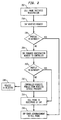
- FIG. 5 shows a flow diagram of a preferred method of handing off calls between IRPs within microcell 100.
- the IRP constantly monitors neighbor signal strength measurements received from the associated cell phone, in a step 502.
- the called IRP Upon the detection of a handoff condition, based on the neighbor signal strength measurement, the called IRP, in a step 504, initiates a handoff request to digital switch 102, preferably via the ISDN D-channel signal.
- the handoff request is transferred to the new IRP, in a step 506, which initiates a connection to digital switch 102 in preparation for the incoming cell phone signal.
- the new IRP sends the old IRP a response to the handoff request that contains the new RF channel and timeslot that the cell phone is to switch to.
- the new IRP issues a Mobile On Channel signal to the old IRP.
- the old IRP Upon receipt of the Mobile On Channel signal, the old IRP sends a fast transfer request to IRP controller 104 in a step 512.
- Controller 104 commands digital switch 102 to switch the connection between the IRPs in a step 514.
- controller 104 in a step 516, issue a termination command to the old IRP.
- the old IRP in a step 518, disconnects the bearer channel and completes the handoff process. In this manner, mobile calls within the private microcell system are transferred without involving the public macrocell system.
Landscapes
- Engineering & Computer Science (AREA)
- Signal Processing (AREA)
- Computer Networks & Wireless Communication (AREA)
- Mobile Radio Communication Systems (AREA)
- Sub-Exchange Stations And Push- Button Telephones (AREA)
- Exchange Systems With Centralized Control (AREA)
- Telephonic Communication Services (AREA)
Applications Claiming Priority (2)
| Application Number | Priority Date | Filing Date | Title |
|---|---|---|---|
| US08/802,187 US20010041553A1 (en) | 1997-02-18 | 1997-02-18 | Systems and methods for providing intelligent wireless access systems |
| US802187 | 1997-02-18 |
Publications (2)
| Publication Number | Publication Date |
|---|---|
| EP0859529A2 true EP0859529A2 (fr) | 1998-08-19 |
| EP0859529A3 EP0859529A3 (fr) | 1999-10-20 |
Family
ID=25183078
Family Applications (1)
| Application Number | Title | Priority Date | Filing Date |
|---|---|---|---|
| EP97306346A Withdrawn EP0859529A3 (fr) | 1997-02-18 | 1997-08-20 | Système et méthode fournissant un système intélligent d'accès sans fil |
Country Status (5)
| Country | Link |
|---|---|
| US (1) | US20010041553A1 (fr) |
| EP (1) | EP0859529A3 (fr) |
| JP (1) | JPH10294789A (fr) |
| CN (1) | CN1191459A (fr) |
| CA (1) | CA2210939A1 (fr) |
Families Citing this family (16)
| Publication number | Priority date | Publication date | Assignee | Title |
|---|---|---|---|---|
| US6810257B1 (en) * | 1997-06-26 | 2004-10-26 | At&T Wireless Services, Inc. | Method and apparatus for providing partitioned telecommunication services |
| US6208627B1 (en) * | 1997-12-10 | 2001-03-27 | Xircom, Inc. | Signaling and protocol for communication system with wireless trunk |
| US6760778B1 (en) * | 1998-09-09 | 2004-07-06 | At&T Wireless Services, Inc. | System and method for communication between airborne and ground-based entities |
| US7177939B2 (en) * | 1999-05-14 | 2007-02-13 | Cingular Wireless Ii, Llc | Aircraft data communications services for users |
| US6564056B1 (en) * | 1999-08-03 | 2003-05-13 | Avaya Technology Corp. | Intelligent device controller |
| US6490450B1 (en) * | 1999-11-24 | 2002-12-03 | Ag Communication Systems Corporation | Capturing and modifying of mobile subscriber information |
| US6556818B1 (en) * | 2000-04-24 | 2003-04-29 | Bell Atlantic Mobile, Inc. | Fixed calling party pays charges |
| KR100362569B1 (ko) * | 2000-05-24 | 2002-11-29 | 삼성전자 주식회사 | 공중 및 사설 공용 이동통신 시스템에서의 발 호서비스방법 및 그를 위한 장치 |
| KR100744064B1 (ko) * | 2001-01-05 | 2007-07-30 | 삼성전자주식회사 | 무선 통신을 이용한 전시 정보 서비스 시스템 및 방법 |
| AU2004200579B2 (en) * | 2003-02-12 | 2006-03-30 | Samsung Electronics Co., Ltd. | System for interconnecting wired and wireless phone services and method for processing call |
| US7865186B2 (en) | 2003-02-12 | 2011-01-04 | Samsung Electronics Co., Ltd. | Method for operating wired and wireless phone services interconnectively |
| JP2004357152A (ja) * | 2003-05-30 | 2004-12-16 | Toshiba Corp | 電話交換システムにおける呼救済方法および電話交換機 |
| US7319864B2 (en) * | 2004-11-15 | 2008-01-15 | Cisco Technology, Inc. | Single number reachability using cellular and desktop telephones |
| CN100421400C (zh) * | 2005-04-07 | 2008-09-24 | 华为技术有限公司 | 一种无线有线网络的综合接入系统 |
| CN101262525B (zh) * | 2007-06-20 | 2010-09-29 | 中兴通讯股份有限公司 | 把群内号码对手机号码的呼叫转为群内呼叫的方法及系统 |
| FR2996713B1 (fr) * | 2012-10-10 | 2014-12-05 | Sagemcom Broadband Sas | Systeme de telephonie comportant un dispositif maitre et au moins un dispositif esclave relies par un reseau de communication |
Family Cites Families (1)
| Publication number | Priority date | Publication date | Assignee | Title |
|---|---|---|---|---|
| US5734699A (en) * | 1995-05-04 | 1998-03-31 | Interwave Communications International, Ltd. | Cellular private branch exchanges |
-
1997
- 1997-02-18 US US08/802,187 patent/US20010041553A1/en not_active Abandoned
- 1997-07-21 CA CA002210939A patent/CA2210939A1/fr not_active Abandoned
- 1997-08-20 EP EP97306346A patent/EP0859529A3/fr not_active Withdrawn
-
1998
- 1998-02-12 CN CN98103736A patent/CN1191459A/zh active Pending
- 1998-02-18 JP JP10035306A patent/JPH10294789A/ja active Pending
Also Published As
| Publication number | Publication date |
|---|---|
| US20010041553A1 (en) | 2001-11-15 |
| EP0859529A3 (fr) | 1999-10-20 |
| MX9801270A (es) | 1998-08-30 |
| CN1191459A (zh) | 1998-08-26 |
| JPH10294789A (ja) | 1998-11-04 |
| CA2210939A1 (fr) | 1998-08-18 |
Similar Documents
| Publication | Publication Date | Title |
|---|---|---|
| US6073029A (en) | Method and system for providing wireless communications to a subscriber of a private wireline network | |
| US5890064A (en) | Mobile telecommunications network having integrated wireless office system | |
| EP0549126B1 (fr) | Méthode et appareil pour alerter plusieurs téléphones pour un appel entrant | |
| US5960340A (en) | Automatic cellular telephone registration for universal telephone number service | |
| US5610969A (en) | Personal communication service registration system and method | |
| EP0950329B1 (fr) | Procede et dispositif permettant l'utilisation de telephone mobile dans un reseau radio de bureau | |
| US5353331A (en) | Personal communications service using wireline/wireless integration | |
| US6584317B2 (en) | Concurrent ringing on multiple network telephones | |
| US5440613A (en) | Architecture for a cellular wireless telecommunication system | |
| EP0859529A2 (fr) | Système et méthode fournissant un système intélligent d'accès sans fil | |
| CA2259987A1 (fr) | Appel de teleconference a l'interieur d'une zone de rattachement | |
| WO1999009760A3 (fr) | Transfert d'identification de la partie appelante dans un systeme de communication mobile | |
| EP0583137B1 (fr) | Architecture pour système de télécommunications cellulaire "sans-fil" | |
| US5999810A (en) | Architecture for a wireless telecommunication system | |
| EP0881847A2 (fr) | Traduction de numéros d'abonnés | |
| CA2353898C (fr) | Service d'etablissement d'appel cellulaire-fixe et de transfert d'appels provenant d'un fournisseur de services de reseau cellulaire | |
| KR100640367B1 (ko) | 이동통신 시스템에서 착신 이동망 가입자의 음성사서함서비스 처리 방법 | |
| WO1993020642A1 (fr) | Appareil et methode de desserte d'abonnes en radio-telephonie dans un environnement de lignes filaires | |
| MXPA98001270A (es) | Sistemas y metodos para proporcionar sistemas deacceso inalambrico inteligentes | |
| JP2000358280A (ja) | Phsにおける圏外移動時の自動転送システムおよび方法 | |
| KR20040072388A (ko) | 비동기 이동통신 시스템에서의 이동통신 응용 부프로토콜을 이용한 음성 사서함 서비스 제공 방법 | |
| MXPA00000811A (en) | Providing wireless communications to a subscriber of a private wireline network | |
| KR19980030938A (ko) | 코드분할다중접속방식(cdma)의 마이크로시스템 및 그 호처리 방법 | |
| JPH1188956A (ja) | 簡易携帯電話システムの自動転送装置 | |
| JPH04137831A (ja) | Isdnの加入者系・移動電話システム |
Legal Events
| Date | Code | Title | Description |
|---|---|---|---|
| PUAI | Public reference made under article 153(3) epc to a published international application that has entered the european phase |
Free format text: ORIGINAL CODE: 0009012 |
|
| 17P | Request for examination filed |
Effective date: 19970919 |
|
| AK | Designated contracting states |
Kind code of ref document: A2 Designated state(s): AT BE CH DE DK ES FI FR GB GR IE IT LI LU MC NL PT SE |
|
| AX | Request for extension of the european patent |
Free format text: AL;LT;LV;RO;SI |
|
| PUAL | Search report despatched |
Free format text: ORIGINAL CODE: 0009013 |
|
| AK | Designated contracting states |
Kind code of ref document: A3 Designated state(s): AT BE CH DE DK ES FI FR GB GR IE IT LI LU MC NL PT SE |
|
| AX | Request for extension of the european patent |
Free format text: AL;LT;LV;RO;SI |
|
| STAA | Information on the status of an ep patent application or granted ep patent |
Free format text: STATUS: THE APPLICATION HAS BEEN WITHDRAWN |
|
| 18W | Application withdrawn |
Withdrawal date: 20000324 |