EP0864978A2 - Echantillonage à haute fréquence pour des compteurs de performance - Google Patents
Echantillonage à haute fréquence pour des compteurs de performance Download PDFInfo
- Publication number
- EP0864978A2 EP0864978A2 EP98104161A EP98104161A EP0864978A2 EP 0864978 A2 EP0864978 A2 EP 0864978A2 EP 98104161 A EP98104161 A EP 98104161A EP 98104161 A EP98104161 A EP 98104161A EP 0864978 A2 EP0864978 A2 EP 0864978A2
- Authority
- EP
- European Patent Office
- Prior art keywords
- buffer
- performance data
- processor
- overflow
- hash
- Prior art date
- Legal status (The legal status is an assumption and is not a legal conclusion. Google has not performed a legal analysis and makes no representation as to the accuracy of the status listed.)
- Granted
Links
Images








Classifications
-
- G—PHYSICS
- G06—COMPUTING OR CALCULATING; COUNTING
- G06F—ELECTRIC DIGITAL DATA PROCESSING
- G06F11/00—Error detection; Error correction; Monitoring
- G06F11/30—Monitoring
- G06F11/34—Recording or statistical evaluation of computer activity, e.g. of down time, of input/output operation ; Recording or statistical evaluation of user activity, e.g. usability assessment
- G06F11/3466—Performance evaluation by tracing or monitoring
- G06F11/348—Circuit details, i.e. tracer hardware
-
- G—PHYSICS
- G06—COMPUTING OR CALCULATING; COUNTING
- G06F—ELECTRIC DIGITAL DATA PROCESSING
- G06F11/00—Error detection; Error correction; Monitoring
- G06F11/30—Monitoring
- G06F11/34—Recording or statistical evaluation of computer activity, e.g. of down time, of input/output operation ; Recording or statistical evaluation of user activity, e.g. usability assessment
- G06F11/3409—Recording or statistical evaluation of computer activity, e.g. of down time, of input/output operation ; Recording or statistical evaluation of user activity, e.g. usability assessment for performance assessment
-
- G—PHYSICS
- G06—COMPUTING OR CALCULATING; COUNTING
- G06F—ELECTRIC DIGITAL DATA PROCESSING
- G06F11/00—Error detection; Error correction; Monitoring
- G06F11/30—Monitoring
- G06F11/34—Recording or statistical evaluation of computer activity, e.g. of down time, of input/output operation ; Recording or statistical evaluation of user activity, e.g. usability assessment
- G06F11/3466—Performance evaluation by tracing or monitoring
- G06F11/3495—Performance evaluation by tracing or monitoring for systems
-
- G—PHYSICS
- G06—COMPUTING OR CALCULATING; COUNTING
- G06F—ELECTRIC DIGITAL DATA PROCESSING
- G06F2201/00—Indexing scheme relating to error detection, to error correction, and to monitoring
- G06F2201/86—Event-based monitoring
-
- G—PHYSICS
- G06—COMPUTING OR CALCULATING; COUNTING
- G06F—ELECTRIC DIGITAL DATA PROCESSING
- G06F2201/00—Indexing scheme relating to error detection, to error correction, and to monitoring
- G06F2201/88—Monitoring involving counting
-
- G—PHYSICS
- G06—COMPUTING OR CALCULATING; COUNTING
- G06F—ELECTRIC DIGITAL DATA PROCESSING
- G06F2201/00—Indexing scheme relating to error detection, to error correction, and to monitoring
- G06F2201/885—Monitoring specific for caches
Definitions
- the present invention relates generally to computer systems, and more particularly to collecting performance data in computer systems.
- performance data is collected over extended periods of time, such as many days, or weeks.
- performance monitoring systems are hand crafted. Costly hardware and software modifications may need to be implemented to ensure that operations of the system are not affected by the monitoring systems.
- Performance counters "count" occurrences of significant events in the system. Significant events can include, for example, cache misses, instructions executed, I/O data transfer requests, and so forth. By periodically sampling the performance counters, the performance of the system can be deduced.
- the performance of a computer system can be monitored without modifying the software. It is also desired that the sampling rate can be fixed or variable, and that the rate can be very high. Furthermore, during high frequency sampling, it is desired to keep the overhead of the sampling to a minimum, so that the performance data accurately reflects the operation of the system. Keeping the overhead low is particularly difficult in a multiprocessor system where data accesses need to be synchronized, and the sampling rate can be very high, for example 50 to 100 thousand samples per second.
- the invention provides an apparatus for collecting performance data in a computer system.
- the computer system includes a plurality of processors for concurrently executing instructions of a program.
- the apparatus comprises a plurality of sets of performance counters. There is one set of performance counters coupled to each processor.
- the performance counters are for storing performance data generated by each processor while executing the instructions.
- the invention in its broad form, resides in an apparatus for sampling performance data of a computer system, as recited in claim 1, and a method therefor, as recited in claim 9.
- An interrupt handler executes on each processors.
- the interrupt handler is for sampling the performance data of the processor in response to interrupts.
- a first memory includes a hash table associated with each interrupt handler. The hash table stores the performance data sampled by the interrupt handler executing on the processor.
- a second memory includes an overflow buffer, the overflow buffer is for storing the performance data while portions of the hash tables are inactive, and while the portions are full.
- a third memory includes a user buffer. In addition, means are provided for periodically flushing the performance data from the hash tables and the overflow to the user buffer.
- the hash table of the first memory is organized as a multi-way set-associative cache.
- multi-way set-associative cache further includes a plurality of chunks, where each chunk is a unit of data transfer between the first and third memories.
- Each chunk further includes a plurality of lines, and associated with each chunk is an active_chunk flag and a flush_chunk flag for respectively indicating if the corresponding chunk is inactive and full.
- the lines of each chunk are further partitioned into a plurality of entries, and each entry includes a plurality of fields for storing the performance data.
- the fields of the performance data include a processor identification, a program counter, a processor event identification; and a processor event counter field.
- means are provided for generating a hash index from the processor identification, program counter, and processor event identification.
- the hash index is used to probe the lines of the hash table associated with a particular processor to generate a hit or miss signal.
- performance data stored at a current entry indexed by a current hash index is moved from the hash table to the overflow buffer.
- the current entry is overwritten with the performance data sampled by the interrupt handler.
- the processor event counter stored at the current entry indexed by the current hash index is incremented.
- the performance data is stored in the entries in a compressed form.
- the overflow buffer of the second memory includes a first and second buffer organized as a double buffer.
- Each buffer includes a plurality of slots for storing the performance data of the entries of the hash tables.
- a computer system 100 includes a processor 110, a memory sub-system (memories) 120, input/output interfaces (I/O) 130 connected to each other by a bus 140.
- the system 100 can be an embedded system, a PC, a workstation, a mainframe, or a member of a cluster of systems linked by a network.
- the processor 110 can be configured as one or more individual processor chips 111 having either CISC or RISC architectures. Associated with each processor 111 is a set of performance counters 112. Each set of performance counters 112 can be implemented as a plurality of registers. The registers can count the occurrences of significant events in the system which are indicative of the system's performance.
- the memories 120 can include separate static, dynamic, random, sequential, volatile, and persistent storage elements, or combinations thereof. Some of the memories can be arranged hierarchically.
- the storage elements can be registers, caches, DRAM, disk, tape, and the like.
- the memories 120 store software programs 121 in the form of machine executable instructions, and data 122 accessed by the instructions.
- the software programs can include operating system, device driver, and application programs.
- the I/O 130 can include interfaces to input and output devices such as printers, terminals, and keyboards.
- the I/O 130 can also connect via lines 150 to a network (NET) 160 for communicating data with other computer systems.
- NET network
- the bus 140 typically is implemented as a plurality of lines for carrying address, data, control, and timing signals between the various components.
- the instructions of the programs 121 are executed by the one or more processors 111.
- the instructions generally, either control the execution flow of the programs, or access (load, store, read and write) the data 122. It is desired to collect performance data of the system 100 without significantly disturbing the normal operating environment. Analysis of the performance data can be used to optimize the design of the hardware and software components of the system 100. The performance data can also be used to determine operating problems such as pipeline stalls.
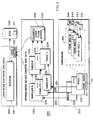
- a performance data collection sub-system 200 includes various hardware devices 220, kernel-mode programs and data structures 230, and user-mode program and data structures 260.
- the programs and data 230 and 260 can be stored in the memories 120 of Figure 1.
- the hardware 220 can include a plurality of individual processors 221-223. Associated with each processor is a set of performance counters or registers 201. The sets of registers 201 can be co-resident with the associated processor on the same semiconductor die. Each set 201 can include a plurality of registers 1-M.
- Each of the registers 1-M can include a multiple number of bits to store a count of performance events. The total number of occurrences of a specific event that can be accumulated in any one counter depends on the size, or number of bits of the registers 1-M.
- the sets of registers 201 can be enabled, disabled, paused, resumed, reset (cleared), read, and written.
- the registers generate interrupts 251-253 on overflow (a carry out in some specified bit position).
- the registers 201 can be sampled (read).
- an interrupt may be generated on the setting of a specific bit of one of the registers to count frequencies corresponding to integer powers of two.
- signals or "events,” e.g., (E 1 , ..., E M ) 241-244 representing various operating characteristics of the system cause the corresponding register to be incremented.
- the exact events which are signaled are usually system specific.
- Typical events which can increment the registers can include, for example, cache misses, branch mispredictions, pipeline stalls, instructions issued, arithmetic operations, processor cycles, replay traps, translation buffer misses, I/O requests, processes active, and so forth.
- One or more specific number of events can be selected for sampling at any one time.
- the kernel-mode components 230 of the sub-system 200 includes device drivers or interrupt handlers (programs) 231-233, and tables 234-236. There is one handler and associated table for each of the processors. As an advantage, having one hash table for each processor eliminates the need to synchronize most processing activities between the various processes.
- there is an overflow buffer 238 which is shared by all the handlers 231-233. Access to the buffer 238 is controlled by a lock (L) 239.
- each handler can be associated with a private buffer to further reduce the number of events that need to synchronized.
- an interrupt activates a corresponding handler.
- the handlers 231-233 can operate as multiple concurrently executing processes or threads.
- the handlers read the performance data from the registers and store the data in one of the associated tables 234-236 as described in greater detail below. If any of the tables become full or are inaccessible, the overflow data can be stored in the overflow buffer. In order to write to the buffer 238, a process must first acquire the lock 239 to ensure data consistency.
- the user-mode components 260 include a daemon process 261, one or more user buffers 262, and processed performance data 251.
- the data 251 can be stored on a disk 250 or other forms of non-volatile storage which can be part of the memories 120 of Figure 1.
- the daemon 261 can periodically flush (empty) the hash tables and overflow buffer into the user buffer 262.
- the daemon 261 can further process the accumulated performance data to produce, for example, execution profiles, histograms, and other statistical data that are useful for analyzing the performance of the system 100.
- each of the tables 234-236 is constructed as a hash table 300.
- a hash table is a data structure which is accessed by a hash index.
- a hash index is some deterministically computed address which tends to randomly distribute data over a range of addresses.
- Hashing functions are well known.
- hash tables are used to reduce the memory bandwidth required to transfer data between kernel and user processes. More specifically as described below, each hash table can be implemented as a multi-way set-associative cache to reduce the bandwidth for the memory sub-system.
- the preferred embodiment of the invention uses four-way associativity in the hash table 300.
- the hash table 300 is partitioned into a plurality of chunks 301-303.
- the chunk is the unit of data transfer between the kernel and user mode components.
- Each chunk of the hash table 300 is further partitioned into a plurality of lines 311-314.
- a line typically is a coherent unit of data transfer which is efficiently handled by the memory transfer logic and caches of the system.
- the (four-way) associativity of the hash table 300 is carefully selected to match the size of hardware cache lines 311-314, for example, each cache line includes 64 bytes.
- active_chunk and flush_chunk flags 315 and 316 are associated with each of the chunks 301-303.
- the active_chunk flag 315 can be set when one of the handlers is modifying (updating) data stored in one of the chunks of the hash table. When the flag is clear, the corresponding chunk is inactive, or not being written to.
- the flush_chunk flag 316 can be set when data are copied from the hash table into a user buffer. The unsynchronized handling of the tables and buffer is described in greater detail below.
- Each line includes a plurality of set-associative entries 320.
- Each entry 320 includes a plurality of fields 321-324.
- the fields 321-324 respectively store a process identification (pid), a program counter (pc) and event identification (event) and a counter value (count).
- the data stored in the entries 320 of the lines 311-314 is highly compressed to reduce the number of cache misses. By matching the associativity to the size of the cache lines, a maximum number of entries can be probed in case of a single cache miss. Storing the sample data as compressed cache lines reduces the bandwidth and stress on the memory-subsystem 120.
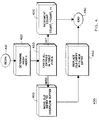
- Figure 4 shows a process 400 of the handlers of Figure 2.
- the process 400 is for updating the entries 320 of the lines of the hash table 300 of Figure 3.
- the process begins, typically in response to an interrupt, at step 410.
- step 420 determine a hash index H i .
- step 450 In case of a miss, that is, there is no hit at any entry for the index, H i , move an entry at index H i to the overflow buffer 238 of Figure 4 in step 450. Store the new entry at the index H i in the hash table, step 460, and set the count to 1. In either case of a hit or a miss, the process completes in step 490.
- a particular interrupt handler must access several pieces of global data.
- the global data include the pointer to the hash table for the processor on which the handler is running, the line of the hash table indexed by the value of the hash function for the new entry, the pointers to the overflow buffers, several global variables used to control the state of the data structures (e.g., the next index for insertion into the active overflow buffer, and a counter indicating which entry in a given line should be evicted on the next miss in the hash table), and miscellaneous other global variables.
- the amount of time for handling interrupts can be reduced by using several different handlers, each handler optimized for particular situations. For example, in one embodiment with multiple overflow buffers described below, the interrupt handler checks at the beginning whether it should bypass the hash table. Most of the time, this check will be false.
- a version of the interrupt handler can be produced that does not check the flag to see if it should bypass the hash table. Instead, the handler assumes that it should access the hash table. Whenever the flag is changed to indicate whether or not the hash table should be bypassed, a system-level interrupt vector can be changed to point to the appropriate interrupt handler. In the common case when the hash table should not be bypassed, this ensures that no check is needed, and thus several processor cycles are saved. A careful analysis of all the different flags and their settings in the common cases, and the use of specialized versions of the interrupt handler for the common cases, can result in much faster performance.
- Synchronization of access to the hash table and the overflow buffer is managed as follows. First, there are separate hash tables 234-236 for each processor; hence, the interrupt handlers 231-233 running on the different processors do not need to synchronize with each other while manipulating the hash tables. However, the handlers share the overflow buffer 238, and hence access to the overflow buffer needs to be synchronized as described below.
- procedures are provided by the kernel-mode device drivers to permit the user-level daemon 261 to retrieve all sample data from the tables and overflow buffer of the kernel into the user buffer 262 to ensure that the daemon 261 has current information.
- Separate routines called flush_hash " and flush_overflow, " are provided to retrieve data from the hash tables and the overflow buffers respectively. These routines need to synchronize with the handlers 231-233 as described below.
- the interrupt handler While a hash table for a particular processor is being flushed, the interrupt handler cannot be allowed to access the table. Therefore during this time, the interrupt handler stores sample data directly into the overflow buffer 238. To minimize the number of samples that are written directly to the overflow buffer 238, the hash table is flushed a chunk at the time. A sample whose hash index falls into a chunk being flushed is written directly to the overflow buffer. However, a sample whose chunk is not being flushed is written into the hash table as described above.
- the active_chunk and the flush_chunk flags 315-316 respectively indicate which chunks are in use by the interrupt handler and the flush_hash routine. Each flag records the name of a chunk; a chunk is named by the index of its first entry. The value -1 is used in the active_chunk and flush_chunk flags to indicate that no chunk is in use, e.g., the chunk is inactive.
- the synchronization in the flush_hash routine is subtle, in part, because the routine is intended to be used on a system with multiple high-speed processors, and where the memory model is not sequentially consistent, see, L. Lamport, " How to make a multiprocessor computer that correctly executes multiprocess programs ", IEEE Transactions on Computers C-28, (September 1979) pp. 690-691.
- a memory model is sequentially inconsistent when the ordering of operations is only guaranteed under certain conditions.
- Processors can issue and execute instructions in a first order, however, the memory sub-system may complete accesses in a second order (the "memory order").
- the memory order is transitive: if A occurs before B and B occurs before C, then A occurs before C.
- the order in which operations actually happen is determined by the memory order according to the following constraints.
- the memory barrier instruction takes a relatively long time to execute. Therefore, it is desirable to minimize the use of the MB instruction on frequently traversed execution paths.
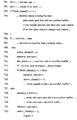
- the handler can execute the code beginning on line 704, 707, or on lines 709-722. Each of these cases is discussed in turn below.
- the handler executes the code beginning on line 704, the handler does not need to access the hash table at all.
- the sample is written directly to the overflow buffer 238, which is synchronized as discussed below to avoid lost or double-counted samples. It is possible in this case, that the handler decides on line 703 to execute line 704, even though the variable flush_chunk[i] has been set by the flush_hash routine (running on a different processor) to a value other than c.
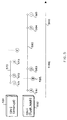
- Figure 5 shows possible timings for hash table accesses.
- line 560 shows overall time increasing from left-to-right
- line 570 indicates the timing of events of an interrupt handler 531 of one processor (cpu j)
- line 580 shows the timing of events of the flush_hash routine of another processor (cpu i) 532.
- the interrupt handler (cpu j) 531 executes several actions: it reads the flush_chunk flag (event C 571); it finds a hit in the hash table; it reads the count for the matching entry in the hash table (event D 572); and it writes the incremented count back into the hash table (event E 573).
- flush_hash routine is not concurrently running to flush the overflow buffer 238, then the incremented count is written back correctly. However, it is possible, even though the interrupt handler has checked the active_chunk flag 315, and determined that it was not set for the chunk it needed, that the flush_hash routine is in fact concurrently flushing that chunk. In this rare case, a careful analysis of the timing, as discussed below, shows that it is possible for a single sample to be lost, however, samples cannot be double-counted.
- event E 573 occurs (in memory order) before event G 583, then the incremented count is copied to the user buffer at the time of event G 583, and the count is reset to zero at the time of event H 584. In this case, the sample is counted exactly once. This is rare.
- event E 573 occurs after event H 584, the incremented count will be written back into the hash table after the count in the entry has been set to zero. This would lead to the samples represented by original count in this entry to be counted twice, once by being copied to the user buffer at the time of event G, and again the next time this entry is evicted or flushed from the hash table. This is not acceptable, since a single hash-table entry can have a large count representing many samples.
- Double-counting cannot happen as long as event E 573 occurs before event H 584. This is guaranteed by the constraints set out below on the following variables.
- max_prop be the maximum time it can take for a stored value to propagate to all processors.
- max_intr be the maximum time for the interrupt routine when it executes line 707 of Figure 7.
- min_flush be the minimum time from event A (561) to event H (484) for the same entry (i.e., the minimum time from when the flush_chunk flag 316 is set until the time flag 316 is cleared by the flush_hash routine.
- the timing in a specific processor implementation can be measured to determine max_prop and max_intr. Then the chunk size can be chosen to be big enough to ensure that min_flush is large enough.
- the handler executes lines 709-722, it must move an entry from the hash table to the overflow buffer, and then write a new entry with a count of one into the hash table. To avoid loss or double-counting of the entry being moved
- the interrupt handler simply bypasses the hash table on lines 714-716 when the desired chunk is not available. Also, in the very unlikely event that the overflow buffer is full, the interrupt handler simply returns, discarding the sample. As an advantage, the result is that in this case, when the handler executes lines 709-722, no samples are lost or double-counted.
- lines 710, 714, and 718 can be optimized; getting a slot in the overflow buffer on line 711 requires acquiring and releasing a lock. Acquiring the lock involves a memory barrier, as does releasing it, so the memory barrier at line 710 can be eliminated. Also, if the lock release is moved to after the conditional test on line 713 (i.e., the lock release is performed on lines 714 and 718), the memory barriers on lines 714 and 718 can be removed as well.
- the overflow buffer 238 is actually split into two portions to permit one piece to be flushed while another piece is being accessed by a handler. This type of technique is sometimes called double buffering. "
- the lock 239 on the overflow buffer 238 is held only while pointers into the buffer are manipulated, not while entries are being written into it. This improves efficiency by allowing handlers to write entries into the same overflow buffer in parallel.
- overflow buffer 238 For clarity, the description of the overflow buffer 238 above was simplified as if it were a single buffer, and a slot is identified by a value of type slot_index. Here, the details of how the buffer and a slot_index are represented are provided.
- An index (slot_index) into the buffers is composed of a buffer id (either 0 or 1), and the index of a slot in that buffer.
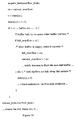
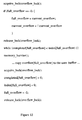
- the global variables shared by the handlers and flush_overflow are shown in Figure 9; the procedures used by the handlers to determine the next free slot and to write an entry into the overflow buffer are shown in Figures 10 and 11; and the flush_overflow routine is shown in Figure 12.
- the flush_overflow routine flushes a single overflow buffer. If a full one is waiting to be read, it is flushed; otherwise, the current partially full buffer is flushed while overflows go to the other buffer.
- overflow_lock A single lock (overflow_lock) is used to synchronize access to the variables of Figure 9 and to manage the buffer (index, completed, current_overflow, and full_overflow). All updates to these variable are performed while holding the overflow_lock.
- index[i] is the index of the next slot to be written into.
- Entries are written into the overflow buffer without holding the lock; instead, a slot is reserved in buffer i by incrementing index[i]. Only the processor that reserved that slot is allowed to write to it. When the processor is done writing to the slot, it increments completed[i] as described with respect to Figure 11. Thus, slots may be written in any order (although they are reserved in a specific order).
- the while loop in the flush_overflow routine waits until completed[i] is equal to index[i]. This means that the writes to all slots that were reserved have completed. Note that index[full_overflow] cannot change while the flush_overflow routine is in the while loop, since slots are not reserved for a full overflow buffer. Also note that completed[full_overflow] is incremented monotonically; since read operations are atomic, it is okay to read completed[full_overflow] without holding the lock, since once a value equal to index[full_overflow] is seen, all writes to reserved slots must have completed.
- the memory barrier after the while loop on line 805 of Figure 8 is needed to make sure that the memory operations involved in copying the full overflow buffer to the user buffer occur after the test that compares completed[full_overflow] to index[full_overflow], in other words, after the writes to the buffer have actually completed.
- the method above with per-processor hash tables and a single shared overflow buffer can be augmented with an additional small overflow buffer for each processor.
- an interrupt handler wants to write to an overflow buffer, it first checks its local overflow buffer. If that buffer is not full, it simply writes to that buffer. When that buffer is full, it acquires the lock on the shared overflow buffer and copies its entire local buffer to the shared buffer. This reduces the frequency of acquiring locks and also the frequency with which shared cache lines are written, thus improving performance on multiprocessors.
- a variation on this method with per-processor local overflow buffers further modifies the method by eliminating the hash tables entirely. This has higher memory traffic than the other methods described above, but still has small overhead for locks and accesses to shared memory on a multiprocessor because writes to the shared overflow buffer are still infrequent.
- a different synchronization technique can be used to reduce the cost of hash-table synchronisation, and overflow-buffer access at the expense of using additional overflow buffers, i.e., two buffers per processor, instead of the single double buffer shared by all processors.
- each processor owns " a private hash table (as before) plus a pair of private (double) overflow buffers.
- "owning” means that all modifications, with one exception, to the state of active buffers and hash tables is made by that processor, eliminating many of the memory synchronization operations present in the single double buffer technique described above.
- Lines 1305-1310 show the other path through the interrupt handler. If the new sample matches one of the entries in the hash table (lines 1305-1306), then the handler simply increments the count associated with the matching entry. Otherwise (lines 1308-1310), the handler picks one of the existing entries for eviction. This entry is removed from the hash table and written into the overflow buffer. The new sample is written into the empty slot in the hash table.
- the interrupt handler and the flush_hash routine synchronize correctly because "bypass_hash[cpu]" is read and written only on the processor numbered "cpu".
- the interprocessor interrupts are set to run at the same interrupt priority level as the interrupt handler for performance counter overflow, ensuring that they execute atomically with respect to each other.
- Other communication mechanisms such as sending a message, can also be used instead of interprocessor interrupts, as long as the same level of atomicity is ensured.
- the interrupt handler sometimes writes entries to the overflow buffers.
- the flush_overflow routine periodically copies the contents of the overflow buffers to user space. These two activities are synchronized by marking one of the buffers as the "active" buffer. The interrupt handler is only allowed to write into the "active" buffer, and the flush_overflow routine is only allowed to read from the inactive buffer.
- the interrupt handler When the active buffer is full, the interrupt handler tries to switch (flip) buffers by marking the old active buffer as inactive, and the old inactive buffer as active.
- the flag "allow_flip[cpu]” is used to prevent this change from happening while “flush_overflow” is copying the old inactive buffer to user space.
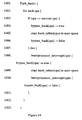
- a routine to add an entry to the overflow buffers for a particular processor is shown in Figure 15. If the active buffer is not full (line 1502), the routine simply appends the sample to the active buffer. If the active buffer is full, then the routine tries to flip (switch) buffers.
- the routine first checks to determine whether or not a flip is allowed (line 1505.) If a flip is allowed, then it flips buffers, and prepares the new active buffer for writing by dropping all samples from the new active buffer (line 1508.) After the buffers have been flipped, the routine notifies the user-level daemon to make it read out the full inactive buffer (line 1507.) The new sample is added to the new active buffer. If the flip is not allowed, then the routine drops the new sample and returns (line 1511).
- the write_to_overflow routine drops samples in two cases. In the first case, after a flip, any unread samples in the new active buffer are dropped (line 1505.) It is extremely unlikely that any samples will actually be dropped because these samples were available to the flush_overflow routine to read since the time of the last flip, and flips occur very infrequently.
- the second case is when the active buffer is full and flips are not allowed. Again this case is extremely unlikely. A flip is disallowed only when the flush_overflow routine is reading out the inactive buffer.
- the inactive buffer was ready to be read at the time of the last flip, and since flips occur very infrequently in this system, it is unlikely that the flush_overflow routine is still copying out the inactive buffer.
- any samples are dropped, it is an indication that the flush_overflow routine is not being called quickly enough by the user-level daemon in response to an overflow buffer filling up.
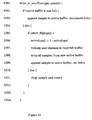
- the pseudo-code for the "flush_overflow” routine is shown in Figure 16.
- This routine copies the inactive buffer to user space for a particular processor.
- the routine uses the "allow_flip[cpu]” flag to prevent the "write_to_overflow” routine from accessing the inactive buffer while it is being copied to user space.
- interprocessor interrupts are used to ensure that all accesses to "allow_flip[cpu]” occur on the processor numbered "cpu” and are therefore synchronized correctly.
- program counter values can be sampled for selected instructions.
- base addresses can also be collected.
- the performance monitoring system as described herein can collect performance data for many aspects of the operation of a computer system, including kernel software, input/output device drivers, application programs, shared libraries. This is accomplished by delivering and processing sampling interrupts at a very high rate without unduly disturbing the normal operation of the system.
Landscapes
- Engineering & Computer Science (AREA)
- General Engineering & Computer Science (AREA)
- Theoretical Computer Science (AREA)
- Computer Hardware Design (AREA)
- Quality & Reliability (AREA)
- Physics & Mathematics (AREA)
- General Physics & Mathematics (AREA)
- Memory System Of A Hierarchy Structure (AREA)
- Debugging And Monitoring (AREA)
- Multi Processors (AREA)
Applications Claiming Priority (2)
| Application Number | Priority Date | Filing Date | Title |
|---|---|---|---|
| US08/812,899 US5796939A (en) | 1997-03-10 | 1997-03-10 | High frequency sampling of processor performance counters |
| US812899 | 1997-03-10 |
Publications (3)
| Publication Number | Publication Date |
|---|---|
| EP0864978A2 true EP0864978A2 (fr) | 1998-09-16 |
| EP0864978A3 EP0864978A3 (fr) | 1999-11-03 |
| EP0864978B1 EP0864978B1 (fr) | 2003-07-30 |
Family
ID=25210914
Family Applications (1)
| Application Number | Title | Priority Date | Filing Date |
|---|---|---|---|
| EP98104161A Expired - Lifetime EP0864978B1 (fr) | 1997-03-10 | 1998-03-09 | Echantillonage à haute fréquence pour des compteurs de performance |
Country Status (5)
| Country | Link |
|---|---|
| US (1) | US5796939A (fr) |
| EP (1) | EP0864978B1 (fr) |
| JP (1) | JP4209959B2 (fr) |
| CA (1) | CA2231584A1 (fr) |
| DE (1) | DE69816686T2 (fr) |
Cited By (1)
| Publication number | Priority date | Publication date | Assignee | Title |
|---|---|---|---|---|
| EP1024432A3 (fr) * | 1999-01-27 | 2002-11-06 | Sun Microsystems, Inc. | Compteur de performance pour la surveillance d'une pluralité événéments |
Families Citing this family (83)
| Publication number | Priority date | Publication date | Assignee | Title |
|---|---|---|---|---|
| US6669690B1 (en) * | 1995-04-06 | 2003-12-30 | Olympus Optical Co., Ltd. | Ultrasound treatment system |
| US6151688A (en) | 1997-02-21 | 2000-11-21 | Novell, Inc. | Resource management in a clustered computer system |
| US5970439A (en) * | 1997-03-13 | 1999-10-19 | International Business Machines Corporation | Performance monitoring in a data processing system |
| US6295601B1 (en) * | 1997-05-30 | 2001-09-25 | Sun Micro Systems, Inc. | System and method using partial trap barrier instruction to provide trap barrier class-based selective stall of instruction processing pipeline |
| US6233531B1 (en) * | 1997-12-19 | 2001-05-15 | Advanced Micro Devices, Inc. | Apparatus and method for monitoring the performance of a microprocessor |
| US6098169A (en) * | 1997-12-23 | 2000-08-01 | Intel Corporation | Thread performance analysis by monitoring processor performance event registers at thread switch |
| US6055650A (en) * | 1998-04-06 | 2000-04-25 | Advanced Micro Devices, Inc. | Processor configured to detect program phase changes and to adapt thereto |
| GB2345557A (en) * | 1999-01-07 | 2000-07-12 | Ibm | Fast trace log for a multi-processing environment |
| US7941647B2 (en) | 1999-01-28 | 2011-05-10 | Ati Technologies Ulc | Computer for executing two instruction sets and adds a macroinstruction end marker for performing iterations after loop termination |
| US8074055B1 (en) | 1999-01-28 | 2011-12-06 | Ati Technologies Ulc | Altering data storage conventions of a processor when execution flows from first architecture code to second architecture code |
| US7111290B1 (en) * | 1999-01-28 | 2006-09-19 | Ati International Srl | Profiling program execution to identify frequently-executed portions and to assist binary translation |
| US7013456B1 (en) * | 1999-01-28 | 2006-03-14 | Ati International Srl | Profiling execution of computer programs |
| US8121828B2 (en) | 1999-01-28 | 2012-02-21 | Ati Technologies Ulc | Detecting conditions for transfer of execution from one computer instruction stream to another and executing transfer on satisfaction of the conditions |
| US8127121B2 (en) | 1999-01-28 | 2012-02-28 | Ati Technologies Ulc | Apparatus for executing programs for a first computer architechture on a computer of a second architechture |
| US7065633B1 (en) | 1999-01-28 | 2006-06-20 | Ati International Srl | System for delivering exception raised in first architecture to operating system coded in second architecture in dual architecture CPU |
| US6978462B1 (en) | 1999-01-28 | 2005-12-20 | Ati International Srl | Profiling execution of a sequence of events occuring during a profiled execution interval that matches time-independent selection criteria of events to be profiled |
| US6763452B1 (en) | 1999-01-28 | 2004-07-13 | Ati International Srl | Modifying program execution based on profiling |
| US6954923B1 (en) | 1999-01-28 | 2005-10-11 | Ati International Srl | Recording classification of instructions executed by a computer |
| US7275246B1 (en) | 1999-01-28 | 2007-09-25 | Ati International Srl | Executing programs for a first computer architecture on a computer of a second architecture |
| US6779107B1 (en) | 1999-05-28 | 2004-08-17 | Ati International Srl | Computer execution by opportunistic adaptation |
| US6560655B1 (en) * | 1999-06-22 | 2003-05-06 | Microsoft Corporation | Synchronization manager for standardized synchronization of separate programs |
| US7254806B1 (en) | 1999-08-30 | 2007-08-07 | Ati International Srl | Detecting reordered side-effects |
| US6961930B1 (en) | 1999-09-22 | 2005-11-01 | Hewlett-Packard Development Company, L.P. | Efficient, transparent and flexible latency sampling |
| US6934832B1 (en) | 2000-01-18 | 2005-08-23 | Ati International Srl | Exception mechanism for a computer |
| US6775640B1 (en) * | 2000-04-28 | 2004-08-10 | Hewlett-Packard Development Company, L.P. | Performance adder for tracking occurrence of events within a circuit |
| US6609208B1 (en) | 2000-07-07 | 2003-08-19 | Hewlett-Packard Development Company | Energy-based sampling for performance monitoring |
| US6785893B2 (en) * | 2000-11-30 | 2004-08-31 | Microsoft Corporation | Operating system event tracker having separate storage for interrupt and non-interrupt events and flushing the third memory when timeout and memory full occur |
| US7448025B2 (en) * | 2000-12-29 | 2008-11-04 | Intel Corporation | Qualification of event detection by thread ID and thread privilege level |
| JP4445160B2 (ja) * | 2001-05-18 | 2010-04-07 | 富士通株式会社 | イベント計測装置および方法並びにイベント計測プログラムおよび同プログラムを記録したコンピュータ読取可能な記録媒体並びにプロセッサシステム |
| US7089430B2 (en) * | 2001-12-21 | 2006-08-08 | Intel Corporation | Managing multiple processor performance states |
| US20040139072A1 (en) * | 2003-01-13 | 2004-07-15 | Broder Andrei Z. | System and method for locating similar records in a database |
| US7373557B1 (en) * | 2003-04-04 | 2008-05-13 | Unisys Corporation | Performance monitor for data processing systems |
| US20040267489A1 (en) * | 2003-06-24 | 2004-12-30 | Frederic Reblewski | Data compaction and pin assignment |
| US20050034108A1 (en) * | 2003-08-15 | 2005-02-10 | Johnson Erik J. | Processing instructions |
| US7395527B2 (en) | 2003-09-30 | 2008-07-01 | International Business Machines Corporation | Method and apparatus for counting instruction execution and data accesses |
| US8381037B2 (en) * | 2003-10-09 | 2013-02-19 | International Business Machines Corporation | Method and system for autonomic execution path selection in an application |
| US20050125784A1 (en) * | 2003-11-13 | 2005-06-09 | Rhode Island Board Of Governors For Higher Education | Hardware environment for low-overhead profiling |
| US7415705B2 (en) | 2004-01-14 | 2008-08-19 | International Business Machines Corporation | Autonomic method and apparatus for hardware assist for patching code |
| US7895382B2 (en) | 2004-01-14 | 2011-02-22 | International Business Machines Corporation | Method and apparatus for qualifying collection of performance monitoring events by types of interrupt when interrupt occurs |
| US20050183065A1 (en) * | 2004-02-13 | 2005-08-18 | Wolczko Mario I. | Performance counters in a multi-threaded processor |
| US7421592B1 (en) * | 2004-02-13 | 2008-09-02 | Microsoft Corporation | High performance counter for realistic measurement of computer system load |
| US20050240806A1 (en) * | 2004-03-30 | 2005-10-27 | Hewlett-Packard Development Company, L.P. | Diagnostic memory dump method in a redundant processor |
| US20060020852A1 (en) * | 2004-03-30 | 2006-01-26 | Bernick David L | Method and system of servicing asynchronous interrupts in multiple processors executing a user program |
| US20060095559A1 (en) * | 2004-09-29 | 2006-05-04 | Mangan Peter J | Event counter and signaling co-processor for a network processor engine |
| US7478219B2 (en) * | 2005-04-14 | 2009-01-13 | International Business Machines Corporation | Retrieving event data for logical partitions |
| US7765527B2 (en) * | 2005-09-29 | 2010-07-27 | International Business Machines Corporation | Per thread buffering for storing profiling data |
| US7975263B2 (en) * | 2006-01-10 | 2011-07-05 | Intel Corporation | Method and apparatus for generating run time profiles for program compilation |
| US8443341B2 (en) * | 2006-11-09 | 2013-05-14 | Rogue Wave Software, Inc. | System for and method of capturing application characteristics data from a computer system and modeling target system |
| US7971190B2 (en) * | 2006-11-30 | 2011-06-28 | Intel Corporation | Machine learning performance analysis tool |
| JP4378386B2 (ja) * | 2007-02-26 | 2009-12-02 | 富士通株式会社 | キャッシュウェイ縮退監視装置、キャッシュウェイ縮退監視方法およびキャッシュウェイ縮退監視プログラム |
| US7657500B2 (en) * | 2007-03-12 | 2010-02-02 | Sun Microsystems, Inc. | Concurrent extensible cuckoo hashing |
| US7716534B2 (en) * | 2007-05-04 | 2010-05-11 | Alcatel-Lucent Usa Inc. | Methods and apparatus for measuring performance in processing system |
| US7987345B2 (en) * | 2007-09-28 | 2011-07-26 | Broadcom Corporation | Performance monitors in a multithreaded processor architecture |
| US8838817B1 (en) * | 2007-11-07 | 2014-09-16 | Netapp, Inc. | Application-controlled network packet classification |
| JP5119994B2 (ja) * | 2008-03-14 | 2013-01-16 | 富士通株式会社 | 性能モニタリングプログラム、性能モニタリング方法、性能モニタリング装置 |
| US8291389B2 (en) * | 2008-08-21 | 2012-10-16 | International Business Machines Corporation | Automatically detecting non-modifying transforms when profiling source code |
| US8255604B2 (en) * | 2010-04-06 | 2012-08-28 | International Business Machines Corporation | Interrupt vector piggybacking |
| US9158660B2 (en) | 2012-03-16 | 2015-10-13 | International Business Machines Corporation | Controlling operation of a run-time instrumentation facility |
| US9430238B2 (en) | 2012-03-16 | 2016-08-30 | International Business Machines Corporation | Run-time-instrumentation controls emit instruction |
| US9405541B2 (en) | 2012-03-16 | 2016-08-02 | International Business Machines Corporation | Run-time instrumentation indirect sampling by address |
| US9442824B2 (en) | 2012-03-16 | 2016-09-13 | International Business Machines Corporation | Transformation of a program-event-recording event into a run-time instrumentation event |
| US9250902B2 (en) | 2012-03-16 | 2016-02-02 | International Business Machines Corporation | Determining the status of run-time-instrumentation controls |
| US9483268B2 (en) | 2012-03-16 | 2016-11-01 | International Business Machines Corporation | Hardware based run-time instrumentation facility for managed run-times |
| US9411591B2 (en) | 2012-03-16 | 2016-08-09 | International Business Machines Corporation | Run-time instrumentation sampling in transactional-execution mode |
| US9280447B2 (en) | 2012-03-16 | 2016-03-08 | International Business Machines Corporation | Modifying run-time-instrumentation controls from a lesser-privileged state |
| US9465716B2 (en) | 2012-03-16 | 2016-10-11 | International Business Machines Corporation | Run-time instrumentation directed sampling |
| US9454462B2 (en) | 2012-03-16 | 2016-09-27 | International Business Machines Corporation | Run-time instrumentation monitoring for processor characteristic changes |
| US9471315B2 (en) | 2012-03-16 | 2016-10-18 | International Business Machines Corporation | Run-time instrumentation reporting |
| US9367316B2 (en) | 2012-03-16 | 2016-06-14 | International Business Machines Corporation | Run-time instrumentation indirect sampling by instruction operation code |
| JP6070712B2 (ja) | 2012-10-01 | 2017-02-01 | 富士通株式会社 | 情報処理装置及び性能解析データの収集方法 |
| US9069485B2 (en) * | 2012-12-20 | 2015-06-30 | Oracle International Corporation | Doorbell backpressure avoidance mechanism on a host channel adapter |
| EP3022653B1 (fr) * | 2013-07-18 | 2020-12-02 | NXP USA, Inc. | Appareil et procédé de détection d'anomalie |
| US10505757B2 (en) | 2014-12-12 | 2019-12-10 | Nxp Usa, Inc. | Network interface module and a method of changing network configuration parameters within a network device |
| US9612881B2 (en) | 2015-03-30 | 2017-04-04 | Nxp Usa, Inc. | Method, apparatus, and system for unambiguous parameter sampling in a heterogeneous multi-core or multi-threaded processor environment |
| US9760283B2 (en) * | 2015-09-28 | 2017-09-12 | Zscaler, Inc. | Systems and methods for a memory model for sparsely updated statistics |
| US10437785B2 (en) | 2016-03-29 | 2019-10-08 | Samsung Electronics Co., Ltd. | Method and apparatus for maximized dedupable memory |
| US9966152B2 (en) * | 2016-03-31 | 2018-05-08 | Samsung Electronics Co., Ltd. | Dedupe DRAM system algorithm architecture |
| JP6920107B2 (ja) * | 2016-05-20 | 2021-08-18 | 三星電子株式会社Samsung Electronics Co.,Ltd. | データの取得方法及び格納方法並びに重複除去モジュール |
| US10628352B2 (en) | 2016-07-19 | 2020-04-21 | Nxp Usa, Inc. | Heterogeneous multi-processor device and method of enabling coherent data access within a heterogeneous multi-processor device |
| US9875167B1 (en) | 2017-03-29 | 2018-01-23 | Google Inc. | Distributed hardware tracing |
| US10365987B2 (en) * | 2017-03-29 | 2019-07-30 | Google Llc | Synchronous hardware event collection |
| US11650965B2 (en) * | 2020-03-05 | 2023-05-16 | Zscaler, Inc. | Systems and methods for efficiently maintaining records in a cloud-based system |
| CN117083599A (zh) * | 2021-03-25 | 2023-11-17 | 英特尔公司 | 硬件辅助的存储器访问跟踪 |
Family Cites Families (10)
| Publication number | Priority date | Publication date | Assignee | Title |
|---|---|---|---|---|
| US5193179A (en) * | 1988-08-09 | 1993-03-09 | Harris Corporation | Activity monitor system non-obtrusive statistical monitoring of operations on a shared bus of a multiprocessor system |
| US5151981A (en) * | 1990-07-13 | 1992-09-29 | International Business Machines Corporation | Instruction sampling instrumentation |
| JPH052508A (ja) * | 1991-06-21 | 1993-01-08 | Fujitsu Ltd | プログラム動作解析装置 |
| JPH06290079A (ja) * | 1993-03-30 | 1994-10-18 | Hitachi Ltd | 情報処理システム |
| US5675729A (en) * | 1993-10-22 | 1997-10-07 | Sun Microsystems, Inc. | Method and apparatus for performing on-chip measurement on a component |
| AU2364095A (en) * | 1994-05-12 | 1995-12-05 | Ast Research, Inc. | Cpu activity monitoring through cache watching |
| US5537541A (en) * | 1994-08-16 | 1996-07-16 | Digital Equipment Corporation | System independent interface for performance counters |
| US5557548A (en) * | 1994-12-09 | 1996-09-17 | International Business Machines Corporation | Method and system for performance monitoring within a data processing system |
| US5642478A (en) * | 1994-12-29 | 1997-06-24 | International Business Machines Corporation | Distributed trace data acquisition system |
| US5748855A (en) * | 1995-10-02 | 1998-05-05 | Iinternational Business Machines Corporation | Method and system for performance monitoring of misaligned memory accesses in a processing system |
-
1997
- 1997-03-10 US US08/812,899 patent/US5796939A/en not_active Expired - Lifetime
-
1998
- 1998-03-09 DE DE69816686T patent/DE69816686T2/de not_active Expired - Lifetime
- 1998-03-09 CA CA002231584A patent/CA2231584A1/fr not_active Abandoned
- 1998-03-09 EP EP98104161A patent/EP0864978B1/fr not_active Expired - Lifetime
- 1998-03-10 JP JP05806598A patent/JP4209959B2/ja not_active Expired - Fee Related
Cited By (1)
| Publication number | Priority date | Publication date | Assignee | Title |
|---|---|---|---|---|
| EP1024432A3 (fr) * | 1999-01-27 | 2002-11-06 | Sun Microsystems, Inc. | Compteur de performance pour la surveillance d'une pluralité événéments |
Also Published As
| Publication number | Publication date |
|---|---|
| US5796939A (en) | 1998-08-18 |
| CA2231584A1 (fr) | 1998-09-10 |
| JP4209959B2 (ja) | 2009-01-14 |
| JPH10260869A (ja) | 1998-09-29 |
| EP0864978B1 (fr) | 2003-07-30 |
| DE69816686T2 (de) | 2004-06-03 |
| DE69816686D1 (de) | 2003-09-04 |
| EP0864978A3 (fr) | 1999-11-03 |
Similar Documents
| Publication | Publication Date | Title |
|---|---|---|
| EP0864978B1 (fr) | Echantillonage à haute fréquence pour des compteurs de performance | |
| Joshi et al. | Efficient persist barriers for multicores | |
| Ogleari et al. | Steal but no force: Efficient hardware undo+ redo logging for persistent memory systems | |
| Minh et al. | An effective hybrid transactional memory system with strong isolation guarantees | |
| US8661204B2 (en) | Mechanism to support flexible decoupled transactional memory | |
| US5893155A (en) | Cache memory for efficient data logging | |
| Saha et al. | Architectural support for software transactional memory | |
| Larus et al. | Transactional memory | |
| Nguyen et al. | Picl: A software-transparent, persistent cache log for nonvolatile main memory | |
| EP0514024B1 (fr) | Procédé et dispositif pour une architecture de mémoire améliorée | |
| JP2902976B2 (ja) | キャッシュフラッシュ装置 | |
| Cohen et al. | Efficient logging in non-volatile memory by exploiting coherency protocols | |
| US8789028B2 (en) | Memory access monitoring | |
| JPH11316711A (ja) | メモリシステムトランザクションの特性の統計値を推定する方法 | |
| Boyd-Wickizer et al. | OpLog: a library for scaling update-heavy data structures | |
| Tse et al. | CPU cache prefetching: Timing evaluation of hardware implementations | |
| CN110291507B (zh) | 用于提供对存储器系统的加速访问的方法和装置 | |
| Voskuilen et al. | Timetraveler: exploiting acyclic races for optimizing memory race recording | |
| Braun et al. | PLayer: Expanding coherence protocol stack with a persistence layer | |
| Litz et al. | EXCITE-VM: Extending the virtual memory system to support snapshot isolation transactions | |
| Buck et al. | Locality and performance of page-and object-based DSMs | |
| Wang et al. | Multiversioned page overlays: Enabling faster serializable hardware transactional memory | |
| Tabbakh et al. | An efficient sequential consistency implementation with dynamic race detection for GPUs | |
| Stewart et al. | Non-stop monitoring and debugging on shared-memory multiprocessors | |
| Dewan et al. | Paving the way for distributed non-blocking algorithms and data structures in the partitioned global address space model |
Legal Events
| Date | Code | Title | Description |
|---|---|---|---|
| PUAI | Public reference made under article 153(3) epc to a published international application that has entered the european phase |
Free format text: ORIGINAL CODE: 0009012 |
|
| AK | Designated contracting states |
Kind code of ref document: A2 Designated state(s): DE FR GB |
|
| AX | Request for extension of the european patent |
Free format text: AL;LT;LV;MK;RO;SI |
|
| PUAL | Search report despatched |
Free format text: ORIGINAL CODE: 0009013 |
|
| AK | Designated contracting states |
Kind code of ref document: A3 Designated state(s): AT BE CH DE DK ES FI FR GB GR IE IT LI LU MC NL PT SE |
|
| AX | Request for extension of the european patent |
Free format text: AL;LT;LV;MK;RO;SI |
|
| RAP1 | Party data changed (applicant data changed or rights of an application transferred) |
Owner name: COMPAQ COMPUTER CORPORATION |
|
| 17P | Request for examination filed |
Effective date: 20000420 |
|
| AKX | Designation fees paid |
Free format text: DE FR GB |
|
| 17Q | First examination report despatched |
Effective date: 20000818 |
|
| GRAG | Despatch of communication of intention to grant |
Free format text: ORIGINAL CODE: EPIDOS AGRA |
|
| GRAG | Despatch of communication of intention to grant |
Free format text: ORIGINAL CODE: EPIDOS AGRA |
|
| GRAH | Despatch of communication of intention to grant a patent |
Free format text: ORIGINAL CODE: EPIDOS IGRA |
|
| GRAH | Despatch of communication of intention to grant a patent |
Free format text: ORIGINAL CODE: EPIDOS IGRA |
|
| GRAA | (expected) grant |
Free format text: ORIGINAL CODE: 0009210 |
|
| AK | Designated contracting states |
Designated state(s): DE FR GB |
|
| REG | Reference to a national code |
Ref country code: GB Ref legal event code: FG4D |
|
| REF | Corresponds to: |
Ref document number: 69816686 Country of ref document: DE Date of ref document: 20030904 Kind code of ref document: P |
|
| ET | Fr: translation filed | ||
| PLBE | No opposition filed within time limit |
Free format text: ORIGINAL CODE: 0009261 |
|
| STAA | Information on the status of an ep patent application or granted ep patent |
Free format text: STATUS: NO OPPOSITION FILED WITHIN TIME LIMIT |
|
| 26N | No opposition filed |
Effective date: 20040504 |
|
| REG | Reference to a national code |
Ref country code: GB Ref legal event code: 732E |
|
| PGFP | Annual fee paid to national office [announced via postgrant information from national office to epo] |
Ref country code: GB Payment date: 20070327 Year of fee payment: 10 |
|
| PGFP | Annual fee paid to national office [announced via postgrant information from national office to epo] |
Ref country code: FR Payment date: 20070319 Year of fee payment: 10 |
|
| GBPC | Gb: european patent ceased through non-payment of renewal fee |
Effective date: 20080309 |
|
| REG | Reference to a national code |
Ref country code: FR Ref legal event code: ST Effective date: 20081125 |
|
| PG25 | Lapsed in a contracting state [announced via postgrant information from national office to epo] |
Ref country code: FR Free format text: LAPSE BECAUSE OF NON-PAYMENT OF DUE FEES Effective date: 20080331 |
|
| PG25 | Lapsed in a contracting state [announced via postgrant information from national office to epo] |
Ref country code: GB Free format text: LAPSE BECAUSE OF NON-PAYMENT OF DUE FEES Effective date: 20080309 |
|
| REG | Reference to a national code |
Ref country code: DE Ref legal event code: R082 Ref document number: 69816686 Country of ref document: DE |
|
| REG | Reference to a national code |
Ref country code: DE Ref legal event code: R082 Ref document number: 69816686 Country of ref document: DE Representative=s name: BOEHMERT & BOEHMERT ANWALTSPARTNERSCHAFT MBB -, DE Effective date: 20120326 Ref country code: DE Ref legal event code: R081 Ref document number: 69816686 Country of ref document: DE Owner name: HEWLETT-PACKARD DEVELOPMENT COMPANY, L.P., HOU, US Free format text: FORMER OWNER: COMPAQ COMPUTER CORP., HOUSTON, TEX., US Effective date: 20120329 |
|
| PGFP | Annual fee paid to national office [announced via postgrant information from national office to epo] |
Ref country code: DE Payment date: 20130221 Year of fee payment: 16 |
|
| REG | Reference to a national code |
Ref country code: DE Ref legal event code: R119 Ref document number: 69816686 Country of ref document: DE |
|
| REG | Reference to a national code |
Ref country code: DE Ref legal event code: R119 Ref document number: 69816686 Country of ref document: DE Effective date: 20141001 |
|
| PG25 | Lapsed in a contracting state [announced via postgrant information from national office to epo] |
Ref country code: DE Free format text: LAPSE BECAUSE OF NON-PAYMENT OF DUE FEES Effective date: 20141001 |